Europe’s Forgotten Enslavement: The Brutal Islamic Slave Raids That Captured Millions

While America grapples with its own dark past of slavery, a massive chapter of history gets buried by academics who fixate on Western guilt.

Justin Marozzi’s eye-opening book, Captives and Companions, shines a light on the Islamic world’s slave trade, spanning over a millennium with unmatched scale and savagery. This isn’t ancient news, but it is a wake-up call for historians.

Marozzi estimates that from the 7th century to the 20th, up to 17 million Africans and Europeans were enslaved in Muslim lands, dwarfing the transatlantic trade’s 11-15 million.

Brutal raids targeted black Africans for labor and white Europeans for markets in North Africa and the Middle East. The sheer numbers reveal a system that caused more deaths and misery than often admitted.

In the opulent courts of Abbasid Baghdad, slave concubines like the poet ʿInān rose to fame, dazzling with wit and beauty while navigating deadly risks.

These women, often captured from distant lands, became cultural icons but remained property, their lives hanging on a ruler’s whim. Yet, their stories mix triumph with tragedy, showing resilience amid cruelty.

Raiders from Barbary coasts struck fear across Europe, hitting places like Devon, Cornwall, and even Iceland in 1627, where pirates abducted over 400 people into lifelong bondage.

Witnesses recounted horrors: families torn apart, villages burned, and captives sold far from home. This white slavery terrorized coasts for centuries, a truth sidelined in today’s narratives.

Castration created eunuchs for harems, with Victorian-era Sudan alone seeing 35,000 boys die yearly from botched operations to supply 3,500 survivors.

Female slaves faced routine violation, arriving in Egypt or Arabia rarely as virgins after brutal journeys. Such practices highlight a level of barbarism that demands honest reckoning.

Today, descent-based slavery traps over 200,000 in Mali, where people inherit bondage through ancestry, facing violence for resisting.

UN experts urge criminalization, but cultural norms and weak laws let it persist. Victims like one defiant man in Bamako declare inner freedom despite poverty.

In Morocco, King Hassan II kept dozens of young concubines until his 1999 death, echoing royal traditions.

Saudi Arabia holds 740,000 in modern slavery, fueled by migrant exploitation under kafala systems. These nations cling to a “tradition” of foreign enslavement dating back ages.

Marozzi’s fearless history exposes this ongoing nightmare we pretend ended long ago. He also illuminates a forgotten chapter of world history that many historians have conveniently overlooked, enabling them to attribute all conceivable evils to the Western world.

The post Europe’s Forgotten Enslavement: The Brutal Islamic Slave Raids That Captured Millions appeared first on The Gateway Pundit.

Deep State Nightmare: Weaponized Courts Target J6 Defender, Strip Her of Son for Supporting Trump

Guest post by Jonathon Moseley, founder of Patriot Legal Defense

A disturbing story of political persecution is unfolding not just in the courtrooms of Washington, D.C., but in the lives of those who dare to defend the accused.  

A paralegal with Patriot Legal Defense, an organization I founded to support the politically persecuted, particularly January 6 defendants, now finds herself in a heart-wrenching custody battle—her child taken, her life upended, for her work and beliefs.  

Because of doxxing and attacks, this paralegal, a dedicated conservative reporter and an important part of our mission at Patriot Legal Defense, has lost temporary custody of her 5-year-old son in a nearly year-long legal battle.  

Her advocacy for falsely accused January 6 demonstrators and exposing the crooked trials in D.C. courts was specifically named as reasons why she is not suited to raising their child. 

The dispute, sparked last summer, stems from a false affidavit filed by her bitter ex-spouse, who cited to the court her work with January 6 prisoners as “dangerous”. 

While assisting January 6 defendants with pro se lawsuits against the Bureau of Prisons for alleged medical deprivation, the paralegal — whose identity is withheld to protect her case — became a target.  

She has been the sole provider and caretaker of her son his entire life. Yet, her ex-spouse weaponized her vocation and her support for former President Donald Trump, convincing the court to strip her of her child. 

In an exclusive interview with The Gateway Pundit, she shared her ordeal: “After filing the lawsuit against the Bureau of Prisons for medical deprivation of January 6 prisoners who were beaten and tortured, I was followed. The same car trailed me for miles on my hour-long drive from the D.C. courthouse to my hotel. That week, my email and social media accounts were hacked and suspended.” 

“I turned to my ex-husband for support, confiding in him about my work,” she continued. “Weeks later, a subpoena arrived at my door. He filed for custody, repeatedly citing ‘J6,’ claiming the political prisoners I assisted are ‘terrorists.’ He told the court my work and potential federal surveillance made me ‘dangerous.’ The court agreed, and my son was ripped away from me.” 

The paralegal has spent nearly $30,000 on legal fees, draining her savings, and the implication that her work is dangerous is stifling her ability to work.   

*PLEASE SUPPORT THIS PATRIOTIC MOM’S LEGAL DEFENSE HERE* 

Having been a Virginia attorney for 22 years, I have seen how difficult it is for my family, friends, or people in need to retain a capable attorney in the particular field at a decent rate.  Domestic relations cases are one of the biggest rackets in my experience. 

She now appeals for public support to continue her fight.  

“The stress of being separated from my son for no reason other than my political views is overwhelming,” she said. “I’ve spent everything I have on this custody battle. I’m growing weak and sick from it. Finding an attorney was nearly impossible — most won’t touch January 6 cases and somehow, I am receiving the same biased treatment for working on their defense. I’ve worked with numerous criminal defense lawyers for political prisoners, but none are licensed in my state or deal with family law. I joined Patriot Legal Defense to serve, but now I understand the risks firsthand.” 

“With Democrats controlling our intelligence agencies, media, and judicial system, the Biden administration’s weaponization of government against dissent marks a dark chapter in our nation’s history. I never imagined that wielding a pen in defense of truth could be so ‘dangerous.’”  

This paralegal’s case is not isolated.

Attorneys and advocates like our paralegal have faced severe repercussions — government surveillance, threats to their licenses, and personal upheaval — for defending those targeted in politically motivated prosecutions.  

As the founder of Patriot Legal Defense, I’ve faced my own battles. 

Family courts are increasingly weaponized against conservatives. 

As The Gateway Pundit reported in April, a U.S. Navy veteran and his wife faced the government’s wrath when Child Protective Services, backed by armed deputies, seized their one-month-old infant. 

“Farzin Yazdani, a Navy veteran, father, and engineer, has become the latest victim of a weaponized family court system—a system increasingly aligned with radical bureaucrats and progressive ideologues who seem hellbent on dismantling the American family under the guise of state welfare,” TGP noted. 

*PLEASE SUPPORT THIS PATRIOTIC MOM’S LEGAL DEFENSE HERE* 

Patriot Legal Defense is also supporting Jeff Younger, a Texas father fighting to prevent his ex-wife from chemically castrating their son.  

Several pardoned January 6 defendants are also battling for custody of their children after their spouses turned against them during their incarceration. 

We’ve launched a crowdfunding campaign to cover our paralegal’s legal fees, and I urge you to contribute at our website. 

As the nation grapples with these divisive times, stories like this raise tough questions about the cost of standing up for what you believe.  

Here’s a woman—a mother, a patriot—doing the Lord’s work, standing up for people the Biden regime branded as enemies of the state for daring to question an election.  

And what does she get? Her kids ripped away, her life turned upside down, all because she dared to wield a pen in defense of the truth.  

The left wants you silenced. They want you scared. They’ll come for your job, your family, your kids if you step out of line.  

Ronald Reagan was right—freedom’s always one generation away from extinction, and we’re seeing that fight play out right now.  

***Please stand with this patriot mom—donate now to help her fight to reunite with her son at Patriot Legal Defense’s crowdfunding page** 


The post Deep State Nightmare: Weaponized Courts Target J6 Defender, Strip Her of Son for Supporting Trump appeared first on The Gateway Pundit.

Attorney General Pam Bondi Orders FBI to Investigate Vicious Cincinnati Mob Beating of White Man and Woman

Attorney General Pam Bondi confirmed reports Monday night that she has ordered the FBI to investigate the vicious beating in downtown Cincinnati late Friday night/early Saturday morning of a white man and woman by a mostly Black mob that received national attention after videos of the attack went viral.

AG Pam Bondi talks with Shannon Bream on “Fox News Sunday” 4/6/25

The viral video was originally posted on Saturday by Cory Bowman, half-brother of Vice President J.D. Vance and Republican candidate for Cincinnati mayor.

Post Millennial copy of the video:

Viral screen images showed a man on the ground being attacked by a mob and an unconscious woman with blood streaming from her mouth:

Bondi commented on a post by Ohio U.S. Senator Bernie Moreno (R), saying, “Thank you @berniemoreno for connecting us with the victim and for caring so much.”

Moreno had commented on a report by Florida Voice, posting, “It’s FAFO time for these derelicts and there is no better person to ensure justice than @AGPamBondi The do-nothing, extreme liberal Mayor @AftabPureval won’t lift a finger to protect his streets and restore order, so it’s time to bring in professionals who will.”

Florida Voice’s Eric Daugherty had posted Monday evening, “BREAKING: Attorney General Pam Bondi has now ordered the FBI to GET INVOLVED in the incident where a gang of people was beating up individuals at the Cincinnati Jazz Festival, DOJ official tells @FLVoiceNews The FBI is ALREADY conducting interviews with suspects, and investigating. YES. LAY DOWN THE HAMMER. It’s UNREAL how much federal involvement was required here. The authorities only named suspects after @AAGDhillon called them out.”

Harmeet Dhillon, Assistant Attorney General for Civil Rights, put the Cincinnati government on notice Saturday evening in a reply to Moreno, “Our federal hate crimes laws apply to ALL Americans. We @CivilRights will monitor closely how local authorities handle this attack. Nobody in our great nation should be the victim of such a crime, and where race is a motivation, federal law may apply.”

Dhillon followed up on Monday, “EVERY American is entitled to the equal protection of our laws. Federal law enforcement is on it and we will ensure that justice is done.” Dhillion added, “This behavior is unacceptable — and un-American!”

Cincinnati Police Chief Teresa Theetge told reporters Monday afternoon five people have been charged, with more expected.

The post Attorney General Pam Bondi Orders FBI to Investigate Vicious Cincinnati Mob Beating of White Man and Woman appeared first on The Gateway Pundit.

China’s Arctic Research Vessel Threatens US Sovereignty

American vigilance in the Arctic is ramping up as the U.S. Coast Guard spots a Chinese research vessel encroaching on our sovereign waters.

The icebreaker Xue Long 2, flagged by China and run by their Polar Research Institute, was detected 290 nautical miles north of Utqiagvik, Alaska, deep inside our Extended Continental Shelf.

This area, extending beyond 200 nautical miles from shore, grants America exclusive rights to manage vital resources, both living and mineral.

A Coast Guard C-130J Hercules aircraft swiftly responded, capturing images of the intruder about 130 nautical miles into U.S. territory.

Rear Admiral Bob Little emphasized America’s commitment to defending against foreign threats, stating the Guard works with partners to monitor and counter malign activities near our borders.

This incident highlights growing concerns over China’s bold Arctic push, challenging American interests in a resource-rich region.

Xue Long 2, China’s first domestically built polar icebreaker at 122.5 meters long and capable of smashing through 1.5 meters of ice, departed Shanghai on July 5 for its latest expedition.

Two more Chinese vessels, Jidi and Tan Suo San Hao, are en route to the Arctic, signaling Beijing’s expanding footprint amid melting ice opening new shipping lanes.

US Coast Guard’s Healy icebreaker patrols nearby, about 400 nautical miles east, standing guard against these incursions.

Canada joins the watch, using aircraft from Alaska to track Xue Long 2 outside their waters, showing allied resolve against foreign overreach.

Just days earlier, NORAD tracked four Russian military planes in the Alaska Air Defense Identification Zone, a critical buffer for national security.

These events echo last year’s first-ever joint Russian-Chinese bomber flights near Alaska, underscoring the need for a robust U.S. presence in the Arctic.

Beijing downplays the intrusion, with state media accusing America of hyping a “scientific” voyage, but experts warn it’s part of China’s strategy to militarize the Arctic.

Such foreign maneuvers threaten American sovereignty and economic stakes in untapped oil, gas, and rare earth minerals essential for our tech and energy independence.

With Russia and China teaming up, as seen in their 2024 joint patrols near our shores, it’s clear adversaries are testing our defenses.

Letting China map our seabed could hand them advantages in future conflicts over Arctic routes. America must lead, not follow, in securing our northern frontier for generations to come.

The post China’s Arctic Research Vessel Threatens US Sovereignty appeared first on The Gateway Pundit.

WATCH: Close Call as Fighter Jet Almost Crashes Into a Beach Full of People During Air Show in Spain

Did the pilot almost lose control?/Image @X.

The maneuver almost goes very, very wrong.

Footage is going viral online of a fighter jet making an exceedingly low pass over terrified beach-goers during an air show in Spain.

Daily Mail reported:

“Footage circulating online shows a Spanish Air Force EF-18 Hornet fighter jet hurtling towards the sea and the beach packed full of sunbathers after executing an acrobatic stunt in the sky.

Puffs of black smoke escape from the jet as it turns upside down in the air, before swooping down to what appears to be just meters above the golden sand.”

Spanish Air Force EF-18 Hornet fighter – Photo: Jim van de Burgt/ Wiki Commons

It was a lovely summer day on San Lorenzo Beach in Asturias, Spain, when disaster almost came crashing down.

In the myriads of different videos online about the close call, people are heard to scream in panic.

“The jet was performing as part of the nineteenth edition of the Gijón Air Festival held on Sunday, July 27, over San Lorenzo Bay in Asturias, Spain.

After momentarily swooping near onlookers on the sand, the loud jet can be seen continuing its flight away from the populated beach.”

The incident had people online arguing as to whether the stunt was planned, or a result of the pilot losing control.

Eventually, Spanish Air Force informed that the F-18 ‘was forced to make a sudden evasive maneuver after encountering a flock of birds’ during the Gijón Airshow.

Read more:

SHOCK VIDEOS: Orlando Drone Show Goes Horribly Wrong as Out of Control UAVs Hit the Crowd at Full Speed – Seriously Injured 7-Year-Old Boy Is Recovering After Heart Surgery

The post WATCH: Close Call as Fighter Jet Almost Crashes Into a Beach Full of People During Air Show in Spain appeared first on The Gateway Pundit.

Forced Labor and the First Amendment

Forced Labor and the First Amendment

A salacious case out of California raises important questions about the state’s ability to regulate a wide variety of interpersonal relationships.

Wooden,Gavel,,A,Wooden,Legal,Gavel,On,An,Office,Desk,

Credit: image via Shutterstock

Last week, the Second Circuit tossed a federal conspiracy case against the meme publisher Douglass Mackey, a development many are rightly hailing as an important free speech victory. Soon, that same court will likely confront another conspiracy case with similar First Amendment stakes.

Nicole Daedone and Rachel Cherwitz were previously executives at OneTaste, Inc., a California company that promoted the practice of “orgasmic meditation.” As I pointed out elsewhere, despite the sex-laced, R-rated allegations in the indictment, Daedone and Cherwitz were not prosecuted for trafficking or sexually assaulting former OneTaste employees. The two women were charged with forced labor conspiracy under the Victims of Trafficking and Violence Protection Act.

At trial, the prosecution conceded that Daedone and Cherwitz did not physically imprison anyone, and even that “every single one of th[e] [alleged] victims did leave” the company. What, exactly, were Daedone and Cherwitz’s crimes? According to prosecutors, they “used aspects of [Daedone’s] teachings to force OneTaste employees to provide labor in combination with many, many other tactics.” One of those was the threat of employees being “spiritually ruined” should they stray from Daedone’s teachings. Working together, Daedone and Cherwitz “compelled” their female employees “through serious harm to believe that they had no reasonable choice not to work.” The jury convicted Daedone and Cherwitz, and now they each face up to 20 years in prison.

During their closing arguments, prosecutors assured the jury that Daedone and Cherwitz were not on trial for engaging in “just high school tactics, a case of being kicked out of the group chat, name calling, a demanding boss, cross-fit.” According to prosecutors, the victims testified to a “coercive reality that caused them significant trauma.”

The government’s desire to downsize the prosecution’s scope is understandable. But it is difficult to discern the limiting principle. These questions must be asked: When it comes to forced labor conspiracy, on what basis are prosecutions for “high school tactics” off the table? Daedone and Cherwitz’s convictions are under statute that, on its face, criminalizes a swath of conduct arising out of ordinary relationships, including church–parishioner, employer–employee, and parent–child relationships. What prevents prosecutors from charging conduct within these relationships as federal crimes? What does that mean for institutions like the family, the church, and other organizations which many have long viewed as a critical bulwark against an overreaching state?

Perhaps the limiting principle is financial. The prosecution asserted that Daedone made a “$12 million gain on the backs of these victims’ labor.” Any abusive employer could be said to enjoy similar ill-gotten gains by victimizing employees. Is the amount of the gain the distinguishing factor? How are these lines drawn? Who decides? 

When the Supreme Court took up an involuntary servitude prosecution in 1988, it read the statute at issue in that case narrowly to avoid these problems. The government’s “interpretation” of the law in that case, the Court observed, “would criminalize a broad range of day-to-day activity,” including “a parent who coerced an adult son or daughter into working in the family business by threatening withdrawal of affection” or “a religious leader who obtains personal services by means of religious indoctrination.” At the same time, this would “delegate to prosecutors and juries the inherently legislative task of determining what type of coercive activities are so morally reprehensible that they should be punished as crimes.” 

The world the court conjured is here. As in Mackey’s case, federal prosecutors pursued an aggressive conspiracy theory of criminal liability against Daedone and Cherwitz. Whatever you think of Mackey’s tweets or OneTaste’s teachings, none of this is good for faith, family, or the First Amendment. 

The post Forced Labor and the First Amendment appeared first on The American Conservative.

Zelensky’s Lack of Democratic Credibility Stymies Ukraine’s EU Hopes

Zelensky’s Lack of Democratic Credibility Stymies Ukraine’s EU Hopes

The champion of “democracy” is acting awfully autocratically.

UKRAINE-RUSSIA-CONFLICT-WAR-POLITICS-DIPLOMACY
(Photo by YURIY DYACHYSHYN/AFP via Getty Images)

Since the beginning of the war in Ukraine, the U.S. has framed it as “the great battle for freedom: a battle between democracy and autocracy.”

But Russia has never listed Ukraine’s democracy as a reason for its war. It has never been concerned with Ukraine’s choice of system of government; it has been concerned with that government’s choice to pursue NATO membership and to become a heavily weaponized anti-Russian bridgehead on its border. Moscow’s concerns have not been political concerns, but security concerns. 

As Paul Robinson says in his new book, Russia’s World Order: How Civilizationism Explains the Conflict with the West, “Russia has shown itself to be consistently indifferent to other states’ political systems, being far more concerned with whether those states are friendly than with what sort of regime they have…. Russian leaders have never expressed a dislike of democracy per se, merely a dislike of the foreign policy pursued by the democratic states of the West.”

Since Russia’s invasion of Ukraine, it may have been Ukraine’s President Volodymyr Zelensky, more than Russia’s President Vladimir Putin, who has waged a battle against Ukraine’s democracy.

Leading up to the 2023 NATO summit, then U.S. President Joe Biden said, “Ukraine isn’t ready for NATO membership.” Prominent among the reasons was the need for reforms, including “political reforms,” and key to those political reforms was “democratization.”

With NATO membership never really on the horizon, Ukraine’s problems with democracy have become a serious impediment to European Union membership.

The autocratic charge is not new. It has dogged Zelensky since the first days of the war, when he banned opposition political parties and consolidated media and restricted freedom of speech. As early as October 2023, the former minister of internal affairs and former prosecutor general of Ukraine Yuriy Lutsenko was accusing  Zelensky of ruling “as a sole decision-making autocrat” who “makes decisions alone.”

In March 2022, only weeks into the war, Zelensky signed a law that formally banned 11 opposition political parties, including the Opposition Platform for Life party that was once the second-largest party in the Ukrainian parliament. Though the case has been made that the parties were sympathetic to Russia, the sociologist Volodymyr Ishchenko of Freie University in Berlin undermines that defense by pointing out that “practically every leader and sponsor of these parties with any real influence in Ukraine condemned Russia’s invasion, and such people are now contributing to Ukraine’s defense.” Rather than helping the war effort, the ban helped Zelensky to remove parties who would defend the cultural rights of ethnic Russian in Ukraine and to consolidate his hold on power.

The undemocratic move removed a party that was gaining in popularity and passing Zelensky’s party in some polls.  The same may be said for the exiling of the former Commander-in-Chief of the Armed Forces of Ukraine Valerii Zaluzhny, the person most quickly passing Zelensky in the polls, to the Ukrainian embassy in London. In February of this year, Ukraine’s former President Petro Poroshenko, a major declared challenger to Zelensky, was charged with high treason and had sanctions imposed on him that effectively bar him for running against Zelensky when the next elections finally happen. 

Zelensky has orchestrated similar restrictions on media and freedom of speech. From the start of the war, “the people of Ukraine have had access,” the New York Times reports, “to a single source of television news.” That single source, Telemarathon United News, was enacted by a presidential decree on March 19, 2022 and unified all information onto a single channel. 

That consolidation has raised democratic concerns. The Times reports that “journalists and groups monitoring press freedoms are raising alarms over what they say are increasing restrictions and pressures on the media in Ukraine under the government of President Volodymyr Zelensky.” Yuriy Lutsenko, the same ex-official who first raised concerns about Zelensky’s growing autocracy, says that “freedom of speech and freedom of the press are very seriously limited.”

A March 2023 law extended the censorship powers of a body appointed by the president and parliament to print and online media. Nicolai Petro, professor of political science at the University of Rhode Island, told The American Conservative that the council “now has the authority to review the content of all Ukrainian media, prohibit content it deems a threat to the nation, and issue mandatory directives to media outlets.”

The restrictive measures so challenging to democracy have extended to religious freedom and language rights. Recently, the undemocratic activity of Zelensky’s government has also taken the form of investigating journalists, activists and opposition politicians. Under the cover of martial law, Zelensky has even replaced some democratically elected officials, including mayors, with military administrators. 

But the most damaging blow of all may have come from Zelensky’s signing of draft law number 12414 intro law. The law, which has sent thousands of protestors into the streets, ends the independence of two of Ukraine’s anticorruption agencies. The new law places Ukraine’s anticorruption agencies under the control of Ukraine’s prosecutor general, who is appointed by the president. That places all the power of agencies to investigate government corruption under the control of the government.

The law is a blow to Ukraine’s EU aspirations. Corruption is a serious problem in Ukraine and reining it in is a key requirement for Ukraine to be considered for membership. The formation of these bodies was central to addressing that goal. The National Anticorruption Bureau of Ukraine, one of the two weakened agencies, was created under the pressure of the U.S. in 2015 with the assistance and technical support of the FBI. Its creation was a condition for Western financial support when the conflict in Crimea and the Donbas originally began with Russia in 2014.

But the agency apparently got too close to Zelensky when it asserted its rights and independence and began investigating top ministers and senior officials in the Zelensky government. “When investigations began—for the first time in Ukraine’s history—that dealt with sitting high-ranking officials, it was obvious that this immediately became uncomfortable, specifically for the government in power,” Artem Sytnyk, the first head of the National Anticorruption Bureau of Ukraine, said.

European Commission president Ursula von der Leyen has warned that the new direction taken by Zelensky could be an impediment to Ukraine joining the European Union: “The respect for the rule of law and the fight against corruption are core elements of the European Union. As a candidate country, Ukraine is expected to uphold these standards fully. There cannot be a compromise.”

Ukraine’s EU campaign was already running out of steam and in jeopardy. Richard Sakwa, emeritus professor of Russian and European Politics at the University of Kent, told TAC in a recent correspondence that “a growing number of member states are growing uncomfortable with the idea of Ukraine’s membership in the European Union.”

The most apparent uncomfortable state is Hungary, whose Prime Minister Viktor Orban has recently promised to “do everything” to prevent Ukraine from joining the EU. But Ukraine’s longtime EU ambassador, Olha Stefanishyna, has said that it is not only Hungary that has concerns about Ukraine joining the EU. Public support in some other countries, including the Czech Republic, is low. And Poland’s new president, Karol Nawrocki, has also promised to block Ukraine’s accession to the EU.

The first round of formal negotiations on Ukraine’s accession were supposed to take place on July 18. They never did. Stefanishyna says the EU is “not currently prepared to take the decisions” that Ukraine had hoped for. 

But the recent law has made Ukraine’s case even more difficult to make. In response to the passage of Zelensky’s new law, the EU has now said it will withhold €1.5 billion, or $1.7 billion, from a fund that is intended to help nonmilitary rebuilding of Ukraine from war damage and that is dependent on Kiev’s achieving certain standards of good governance, including reining in corruption. The rebuke is one of the first signs that Ukraine’s staunch European allies are willing to criticize and punish it during the war. 

Faced with street protests that Zelensky has not seen since the war began and with the rebuke from the EU, Zelensky gave in and submitted a new bill to restore the independence of the two agencies. But the concession may have come too late. Zelensky’s clear legislative display of intent has sent waves of concern through Europe about the sincerity of his commitment to anticorruption reform and to democracy.

Zelensky’s past actions have called into question his desire to commit to battle against autocracy under the banner of democracy. But his most recent autocratic action has alarmed his European supporters and further jeopardized Ukraine’s hopes of joining the West as a member of the European Union.

The post Zelensky’s Lack of Democratic Credibility Stymies Ukraine’s EU Hopes appeared first on The American Conservative.

Blonde Women and Money from the Wall

Blonde Women and Money from the Wall

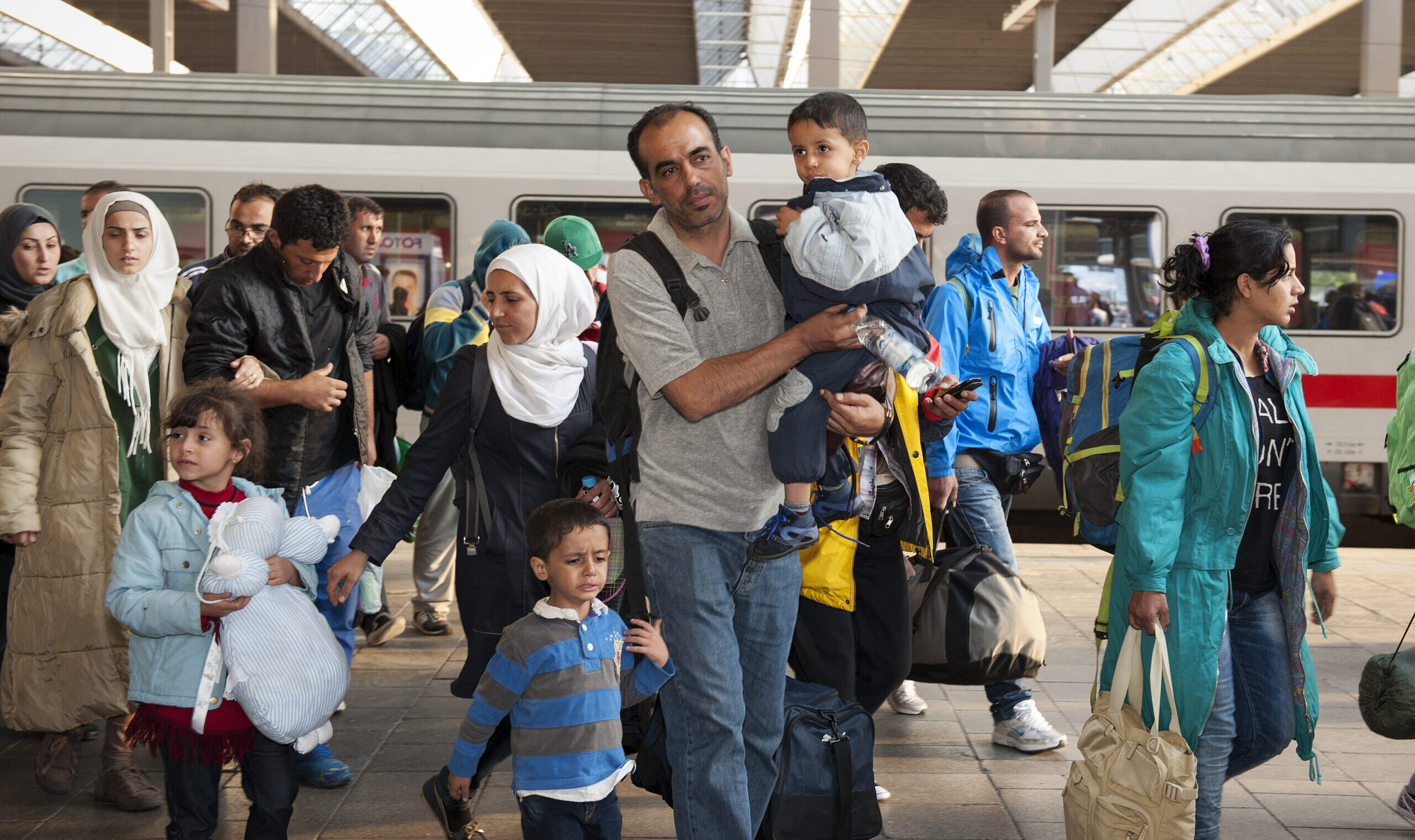
European societies must radically alter their immigration rhetoric.

Munich,,Germany,-,September,10,,2015:,Refugees,From,Syria,,Afghanistan

The second Trump administration’s “resistance” is coalescing around the topic of immigration, but that hasn’t stopped the president from hammering the issue. He even brought his concerns about mass migration to Europe during a visit this weekend to Scotland. “On immigration, you better get your act together,” he told reporters, criticizing European leaders. “You’re not going to have Europe anymore.” Europe’s struggle between liberalism and democracy rarely strays far from that topic, as I’ve witnessed first-hand during my travels across the continent.

Bácsalmás, Hungary

I recently joined a small expedition to Hungary’s southern border with Serbia, a frontier of the European Union. Bácsalmás is an agricultural community far from tourist destinations on either side of the Serbo-Hungarian border. It should be largely untouched by the forces of globalization, except for the arbitrary post-World War I border that bisects the farmland. Fence signs in Arabic and Pashto surely were far from the minds of European statesmen who last century drew the lines on a map.

Recently, while questioning some young Afghan men intercepted at the border, our officer-guide used a translation app to learn the men wanted to come to Europe for “blonde women and money from the wall.” Further questioning revealed the latter referred to ATMs. This anecdotal episode fits with the European experience of the past quarter-century or longer, an experience that has been frustratingly slow to enter mainstream discourse. It is also a reminder that such arrivals are neither forced to migrate, nor particularly destitute. The desperately poor cannot afford the journey. (Consider migrants’ ubiquitous use of cell phones during the 2015-16 migration crisis and the enormous human-smuggler costs—estimated at €2,500 for just the leg from northern Serbia into Hungary.)

Two Pakistani smugglers were recently found dead on the Serbian side of the border. They had been fighting over control of a human-smuggling tunnel. These men have ample incentive to clash. This business generates billions of euros annually. As such, the fence signs and loudspeaker recordings in Arabic, Pashto, and Urdu, not to mention the UN-approved low-voltage fencing, surely leave more of an impression on visitors than on the smugglers. The high-tech system of aerial surveillance, sensory technology, and rapid-response infrastructure, stretching for miles into Hungary, is a different matter. As border technology improves, the smugglers adapt. They are perfectly willing to exploit children to advance their aims, garnering sympathy, fabricating “family units,” or even diverting the attention of border patrol.

By contrast, our hosts from the Hungarian border police were thoroughly decent, far from the sadistic praetorians portrayed in Western media. Bácsalmás and the surrounding towns are their homes. They appear to find fulfillment in their contributions to the homeland. They seem to perceive their work apolitically. The older guards recall an era when they worked to prevent people from leaving the country. When I made a flippant remark about Prime Minister Donald Tusk’s border policies in Poland, our guide noted seriously that this wasn’t his area of competence, and he couldn’t comment on it. His life’s work, and that of his colleagues, is the security of Hungary. 

Zagreb, Croatia

At a café in Zagreb, my server voluntarily explained that Croatia is no longer a democracy. The government has moved migrants into a hostel next to her apartment building, even though its proximity to a school makes this technically illegal. The new arrivals—invariably young men—leer and shout at her when she walks her dog. She is thinking about getting a more aggressive canine companion—or emigrating. She inquired about Croatian organizations that might help her obtain a work permit in Trump’s America. 

That weekend, Zagreb was preparing for a mayoral race between a leftist and a challenger reasonably described as a Macronist. Leftist Tomislav Tomašević prevailed handily, though few locals seemed to notice. Nationalist forces delivered Croatian independence during the traumatic early 1990s, but even Franjo Tuđman’s once-sovereigntist HDZ party now toes the liberal European line. 

New Europe’s entry into the continental migration debacle is uneven. Croats and Poles are actively struggling with the immigration issue, while Hungarians and Slovaks insist current migration trends will have a negligible impact on their national demographics.

In the first quarter of this year, the Croatian government issued over 12,000 work permits to Nepali citizens and approximately 6,000 each to Filipinos and Indians. Furthermore, now that the country is part of the Schengen Zone, it features the EU’s largest external land border, across which tens of thousands of illegal migrants have entered Croatian territory since Schengen accession.

In Poland, migration has become arguably the most prominent political topic. The issue might reasonably be credited for conservative Karol Nawrocki’s razor-thin victory in the country’s June 1 presidential contest. A Venezuelan migrant’s attempted rape and subsequent murder of a young Polish woman is the latest in Poland’s now-regular progression of migrant crime, a concept that was virtually nonexistent a decade ago. Poles of all political stripes oppose the influx, but migrants continue arriving thanks to policies of Belarus and Germany, Warsaw and Brussels.

Hanau, Germany

It wasn’t long ago that Croats and Poles made up many of the migrants in Germany. In Hanau, near Frankfurt, traces of new and old attest to the state of modern Europe. After World War II, the city housed a displaced-persons camp for years, and then a U.S. military base for decades. A single plaque notes these historical convulsions. A handful of restaurants and shops showcase the Croatian and Polish immigrant communities, now largely middle-aged or older.

These characteristics of the cityscape are now almost incidental, for little about Hanau strikes the visitor as German, or even European. By my estimate, half of the people populating Hanau appeared to be of Middle Eastern or African origin. This tracks with Frankfurt’s recent milestone of becoming the first major German city to have a minority ethnic-German population. After accounting for age, the demographic realities are starker still; the sight of a few high-school-aged children of European origin on a street corner caught my attention, for it represented a noticeable departure from the norm.

Throughout town, niqab-clad women push strollers alongside trains of small children. Muslim women oversee the cash registers at German bakeries and halal eateries alike; their male family members captain the local rideshare fleet. In a wrinkle I haven’t noticed in other countries in Europe or North America, the German Uber app assures passengers its drivers have been thoroughly vetted for safety. Reflecting on the societal culpability of corporations like Uber does not require a tremendous mental leap.

It is precisely this tech milieu that needs Hanau. They would have us believe that all people, irrespective of culture, are interchangeable units of production in the never-ending quest for growth. A walk around Hanau unveils this lie. The conspicuous police presence evokes European stereotypes of American law-enforcement practices. Crime is increasingly of an unhinged, random nature; this month, a 22-year-old “resident” was arrested for exposing himself to a young woman in a courtyard. The Hanau cityscape is plastered with graffiti and trash. It recalls the crude depiction of Bratislava—meant to characterize post-communist Central and Eastern Europe—in the 2004 comedy EuroTrip. Ironically, Bratislava is beautiful, clean, and safe, while Western European cities increasingly resemble this cinematic hellscape. An observer can reach his own conclusions about the niqab, its impact upon a cultural landscape, and its relationship to beauty and goodness.

In February 2020, a schizophrenic German man conducted a shooting spree aimed at people of foreign origin in Hanau and its vicinity, killing nine and injuring five, before slaying his mother and himself. The gunman had espoused white-supremacist and incel views online and appeared to target victims based on their ethnicity. The German Interior Minister labeled the shooting spree an act of terrorism. Since then, Hanau has been invoked countless times in support of various pro-migration policies and talking points, producing what might be called the “Hanau Illusion.” 

The Hanau Illusion provides necessary ammunition to capitalists, politicians, bureaucrats, and NGO functionaries alike. According to this narrative, racism and anti-migrant violence represent an equal or greater societal threat than the influx itself. Only a racist like the Hanau gunman could fail to appreciate the benefits of cheap labor and ethnic restaurants. However much the city visibly degenerates, the Hanau Illusion maintains its currency in polite society.

To be sure, mass immigration has rocketed to the fore of European political discourse, having been a carefully restrained niche issue just 15 or 20 years ago. Policy achievements, though, have largely consisted of rearranging deck chairs on the Titanic. Germany’s recent, highly touted deportation of 81 Afghans would not make a dent even in a small German city. Establishment politicians in France, Britain, and elsewhere promise to get tough around election time and deliver token solutions like this German one. Across much of the Old Continent, anti-migration parties are still effectively blocked from power. With each passing year, progressive European elites make their cities progressively less livable.

Polite society still speaks in terms of asylum and racism, multiculturalism and growth. It is long past time to talk about blonde women and money from the wall.

The post Blonde Women and Money from the Wall appeared first on The American Conservative.

Colorado Democrat Says it’s ‘Dangerous’ for Tulsi Gabbard to Make Accusations Against Obama (VIDEO)

Screencap from Twitter/X video.

Colorado Dem Rep. Jason Crow appeared on FOX News over the weekend and accused Tulsi Gabbard of pushing ‘conspiracy theories’ about former President Obama, which he branded as ‘dangerous.’ Crow was referring to Gabbard’s recent revelations about Obama’s direct participation in the Russiagate hoax.

This makes absolutely no sense.

Was it a conspiracy theory when Democrats constantly pushed the lie that Trump colluded with Russia? Was that also dangerous? If not, why not? Democrats have called Trump a Nazi, Hitler, and a threat to democracy. Was any of that dangerous?

The answer is simple. Democrats live in a world of: We can do this to you but you can’t do it to us, even if it’s true.

Breitbart News reports:

Dem Rep. Crow: Obama Allegations by Tulsi Gabbard Are ‘Dangerous’

Host Shannon Bream said, “I’ve pored through these documents. I hope you’ve had a chance to go through them, too. Do you think a special counsel is warranted at this point, or some type of investigation to reassure people, regardless of party, that they can be assured that top officials are not going to be up to no good?”

Crow said, “Well, you know, the allegations and the conspiracy theories by Tulsi Gabbard would be sad if they weren’t so dangerous. She has turned herself into basically a weapon of mass distraction, is what I’ve been calling it, because it’s very clear what’s happening here. She’s trying to curry favor and get back into favor with Donald Trump, and has concocted these theories to do so.”

He added, “But let’s be really clear here that the Russian investigation and allegations of Russian interference into the election, have been the most examined and reexamined finding in the intelligence community history.

Here’s the clip:

Democrat lies almost got President Trump assassinated. Twice. Was any of that dangerous?

The post Colorado Democrat Says it’s ‘Dangerous’ for Tulsi Gabbard to Make Accusations Against Obama (VIDEO) appeared first on The Gateway Pundit.

Bill Maher Admits He Was Wrong About Trump’s Tariffs: ‘I Gotta Own It’ (VIDEO)

Screencap from YouTube video.

During a recent episode of his podcast, Bill Maher admitted that he was wrong about Trump’s tariffs saying ‘I gotta own it.’ Maher may be a liberal but it sure is refreshing to hear someone in media admit they were wrong about something regarding Trump.

It’s impossible to ignore Trump’s economic strategy now that he has successfully negotiated fantastic trade deals with everyone from Japan to the European Union.

When are Democrats and the majority of cable news hosts going to admit that they were also wrong? We won’t hold our breath.

The Daily Caller has details:

Although many economists predicted that Trump’s widespread tariffs would cause higher inflation and other negative effects, several economic indicators have shown strength. Maher said on his podcast that he was among those forecasting economic doom that has not materialized thus far, based on the stock market and his own experience.

“I remember I, along with probably most people, were saying at the beginning, ‘Oh, you know, by the 4th of July’ — somebody had a thing — how the economy was going to be tanked by then,” Maher said. “And I was kind of like, ‘Well, that seems right to me.’ But that didn’t happen. Now, it could happen tomorrow. I’m just saying that’s reality.”

“[T]he truth is, I don’t know what his strategy is. But look, the stock market is at record highs. I know not everybody lives by the stock market, but I also drive around,” he added. “I don’t see a country in a depression at all. I see people out there just living their lives. And I would have thought — and I gotta own it — that these tariffs were going to fucking sink this economy by this time — and they didn’t.”

Watch the video:

If things keep going the way they are now, a lot of Democrats and cable news hosts are going to have to eat a lot of crow. Trump is transforming the global economy and making it better for America every day.

The post Bill Maher Admits He Was Wrong About Trump’s Tariffs: ‘I Gotta Own It’ (VIDEO) appeared first on The Gateway Pundit.