OpenAI Unveils ‘Agent’ Feature That Can Control Your Computer and Perform Tasks Automatically

OpenAI CEO Sam Altman

OpenAI is preparing to launch a new feature that may mark the latest leap forward in the artificial intelligence revolution.

On Thursday, the company unveiled ChatGPT Agent, a tool designed to carry out tasks independently using its own built-in “virtual computer.”

The Verge has more details:

In a briefing and demo with The Verge, Yash Kumar and Isa Fulford — product lead and research lead on ChatGPT Agent, respectively — said it’s powered by a new model that OpenAI developed specifically for the product.

The company said the new tool can perform tasks like looking at a user’s calendar to brief them on upcoming client meetings, planning and purchasing ingredients to make a family breakfast, and creating a slide deck based on its analysis of competing companies.

The model behind ChatGPT Agent, which has no specific name, was trained on complex tasks that require multiple tools — like a text browser, visual browser, and terminal where users can import their own data — via reinforcement learning, the same technique used for all of OpenAI’s reasoning models. OpenAI said that ChatGPT Agent combines the capabilities of both Operator and Deep Research, two of its existing AI tools.

To develop the new tool, the company combined the teams behind both Operator and Deep Research into one unified team. Kumar and Fulford told The Verge that the new team is made up of between 20 and 35 people across product and research.

Despite stiff competition from the likes of Google’s Gemini, Elon Musk’s Grok and China’s DeepSeek, OpenAI remains the most popular and advanced large language model currently on the market.

ChatGPT already offers an incredible range of features including a voice mode, real-time web browsing, image and video creation, coding and intepreting images.

However, there are also growing concerns that these platforms may already be having a detrimental affect on the human physche.

Last month, an alarming study from the Massachusetts Institute of Technology (MIT) found hat extensive use of services ChatGPT may be rotting our brains.

MIT Media Lab researchers conducted a study in which participants were asked to write SAT-style essays and split into three groups: one used ChatGPT, another used Google, and a third relied solely on their own knowledge — the “brain-only” group. EEG machines tracked brain activity to measure engagement during the writing process.

The findings revealed that those using ChatGPT had the lowest levels of brain activity and produced the weakest results in thinking, writing quality, and concentration.

Terrifying MIT Study Finds ChatGPT is Rotting Our Brains

The post OpenAI Unveils ‘Agent’ Feature That Can Control Your Computer and Perform Tasks Automatically appeared first on The Gateway Pundit.

URGENT: Help Save 32 American Allies from Being Murdered by the Taliban

URGENT: HELP SAVE 32 AMERICAN ALLIES FROM BEING MURDERED BY TALIBAN TERRORIST REGIME 

Award-winning journalist Lara Logan is asking for your help to help save American allies from being murdered by the Taliban. 

I am writing to alert you to an urgent matter concerning a U.S. ally, the UAE, and Taliban terrorists who have targeted a small group of Afghan-US allies who made it the safety of a refugee camp in Dubai after the disastrous American withdrawal under the Biden administration and are now being delivered right into the hands of their terrorist enemies. Some 32 Afghans families who worked closely with the U.S., have been given hours to decide if they will ‘self-deport” after the Arab head of the refugee camp brought in the Taliban “Ambassador” to the UAE and numerous other Taliban members to a hall at the camp where they had ordered the Afghan refugee families to assemble.

The day before, on Wednesday July 16th, the camp authorities had ordered them to surrender their passports so they were already holding their passports when they brought the Taliban into the camp. These Afghan families are effectively their prisoners, with no rights and no freedom of movement outside of the camp for the past four years.

Unlike those who made it to the U.S. fraudulently/under false pretenses, these people are genuine American allies who have followed the legal process and are now being sent to their deaths after waiting patiently year after year to be processed by the U.S. State Dept under the Biden Administration. While the Taliban who visited them promised “amnesty”, the entire world saw before what amnesty from this terrorist regime meant as they hunted down American allies and murdered them one after another. To this day, my digital files are filled with the bodies of Afghan commandos, soldiers, police, female activists/teachers/doctors/nurses and so on who were all promised the same fake “amnesty” and instead were raped, tortured, imprisoned & murdered, often along with their families.

These 32 Afghans were given until noon Dubai time on Friday to decide if they will “self-deport”. This is simply a death sentence and these people, who have all been background checked by U.S. agencies and never notified of a single issue in four years, are now begging to be saved. They need urgent assistance from the U.S.  who needs to immediately fly them to safety in the U.S. or any allied country where they will be beyond the reach of the terrorist regime in Kabul and their allies across the world, but now most notably in the UAE.

(Lara can provide the names, birth dates and locations of these families.)

On behalf of all those who worked so hard to save our Afghan allies when they were left behind, we are begging you to save these people from certain death. I was one of the people responsible for getting them to the camp and have all the background information anyone may need. Please do not hesitate to reach out and comment at this post or reach out to Lara at her website – laralogan.app.

We cannot let these people be murdered.

Yours sincerely,

Lara Logan

The post URGENT: Help Save 32 American Allies from Being Murdered by the Taliban first appeared on Joe Hoft.

The post URGENT: Help Save 32 American Allies from Being Murdered by the Taliban appeared first on The Gateway Pundit.

BRUTAL: Joy Reid MELTS DOWN After Piers Morgan TORCHES Her for Playing the Race Card Over MSNBC Firing

Piers Morgan tore into the disgraced former MSNBC host during a fiery segment on Piers Morgan Uncensored, exposing the hollow race-baiting excuse Reid offered for her firing from the far-left cable network.

The exchange quickly spiraled after Morgan rolled tape of Reid emotionally melting down over her ouster — a clip that showed her crying and suggesting she was fired because she’s black.

It can be recalled that Reid posted a video of herself crying while addressing the show’s cancellation.

“My show had value…And that,” Reid began before starting to cry. “I’m sorry…What I was doing had value.”

She then started bragging about how many far-left issues her show addressed while continuing to struggle with her emotions.

“What I will just say is that in the end,” she continued while an assistant handed her a tissue. “Is where I land is that the moment of guilt that I felt that I went hard on so many issues, whether it was the Black Lives Matter images of a young baby or a mom or dad that was killed.”

She continued to pat herself on the back for supposedly standing up for Asian Americans facing discrimination, defending illegal aliens, and bashing President Trump before turning her attention to the racist 1619 project, which she called “the real founding of this country.”

Reid then turned her attention to the Israel-Hama war, where she expressed sympathy for the Jewish State’s oppressors.

“The American people have a right to object to little babies being bombed,” she stated. “I’m not sorry that I stood up for those things because those things are of God, and I’m a church girl.”

“So, I’m not sorry. I’m just proud of my show.”

WATCH: Joy Reid Breaks Down in Tears as She Speaks Out for the First Time Since Losing Her MSNBC Show and Leaving the Network

Morgan didn’t hold back during the interview.

“Let’s be honest. I don’t think you were fired after all those years because of your skin color or because you’re a Black woman. I think you were fired because your show just got increasingly unpopular. It happens all the time in TV — that’s why you got let go. Why play the race card?” Morgan asked.

BOOM. Cue the meltdown.

Joy Reid lashed out, stating, “First of all, I love the fact that your play the race card is your version of the race card. You literally are so fixated on trying to racialize conversations with me, Piers. I find it actually quite charming.”

The two begin shouting at each other in a heated exchange.

WATCH:

The post BRUTAL: Joy Reid MELTS DOWN After Piers Morgan TORCHES Her for Playing the Race Card Over MSNBC Firing appeared first on The Gateway Pundit.

Trump Releases Statement After House Passes Rescissions Package Slashing $9B in Foreign Aid and Biased Media

Late Thursday, the House of Representatives narrowly approved a Trump-backed rescissions package that slashes nearly $9 billion in prior-authorized funding.

Roughly $8 billion redirected or rescinded from programs once overseen by USAID—now folded into the State Department—covering realms like disaster relief, global health, and agriculture. $1.1 billion clawed back from the Corporation for Public Broadcasting, which funds over 1,500 NPR and PBS stations

The package, long championed by Trump and a new wave of fiscal hawks in the GOP, reverses years of wasteful globalist spending that has funneled billions overseas while neglecting American families at home.

It also finally takes aim at far-left media outlets like NPR and PBS, which have been openly hostile to conservatives while cashing checks from U.S. taxpayers.

Despite public claims of “neutrality,” both NPR and PBS have increasingly acted as mouthpieces for the radical left, pushing identity politics, climate extremism, and woke ideology on the American public — all on the taxpayer’s dime.

The final tally: 216–213, with two Republicans defecting. House Speaker Mike Johnson celebrated the victory as “fiscal sanity,” while Democrats accused the move of eroding bipartisan fiscal hawkishness.

With House approval, the bill now heads to Trump’s desk for his long-awaited signature.

Within hours, former President Trump took to Truth Social to rip into both the left and the press.

“HOUSE APPROVES NINE BILLION DOLLAR CUTS PACKAGE, INCLUDING ATROCIOUS NPR AND PUBLIC BROADCASTING, WHERE BILLIONS OF DOLLARS A YEAR WERE WASTED. REPUBLICANS HAVE TRIED DOING THIS FOR 40 YEARS, AND FAILED….BUT NO MORE. THIS IS BIG!!!”

The post Trump Releases Statement After House Passes Rescissions Package Slashing $9B in Foreign Aid and Biased Media appeared first on The Gateway Pundit.

The Gen Z Stare: Blank Eyes Killing American Grit and Grace

madylamb via TikTok

That vacant emotionless gaze some young adults flash during everyday interactions finally has been given a name, “The Gen Z Stare”.

Whether it’s a simple “hi” or taking a food order, this blank look leaves many feeling ignored. For hardworking Americans, it signals a shift away from traditional courtesy that the nation has long valued.

This trend exploded on TikTok recently, with videos mocking the stare going viral. Older generations are baffled by the dead-eyed response to small talk.

The stare often appears in service jobs, where Gen Z workers dismiss their behaviors as dealing with entitled customers. They claim it is a way to process dense requests without snapping back, but well-meaning customers report experiencing their cold stares as well.

Jarrod Benson, a millennial content creator, calls it a “perfect storm” from endless social media and pandemic isolation. He recalls a silent waiter staring blankly as his table ordered. Benson says small talk, though painful, builds community.

In retail or restaurants, the stare replaces warm greetings with awkward silence.

Brenda Alarcon, a 20-year-old student, saw plenty of stares while waitressing in California. She compensated by being extra friendly to cover for her co-workers. Alarcon admits she’s received the glare when ordering food herself, making her uncomfortable enough to leave.

Gen Z isn’t alone; millennials have their “pause” at video starts, a brief silence before speaking. Boomers get teased for the “lead paint stare,” a deadpan look from aging or past exposures. Every generation has quirks, but this one feels tied to screens over real talk.

One CEO warns the stare could backfire, hurting Gen Z’s career prospects in a competitive. Data shows younger workers struggle with feedback, leading to higher turnover. Hard work and adaptability have always been key to success.

Employers are noticing the stare at work, calling it a barrier to teamwork. It shows up when young hires are asked to learn new tasks, sparking tension.

Some Gen Zers blame ADHD or trauma for the blank expression, saying it’s not intentional rudeness. Others reject the label entirely, insisting it’s universal in tough customer service. Yet, many agree it’s amplified by constant online scrolling.

The debate rages on forums like Reddit, where users lament Gen Z’s immaturity.

At its core, the Gen Z Stare symbolizes generational friction in a divided workforce. Half of managers report tension from younger hires.

Young people are split on the trend with some embracing it as rebellion, while others deny it exists. One TikToker called it “making sense” of nonsense.

Benson predicts Gen Alpha will be even worse, molded by more isolation. As cohorts age, we laugh at these habits while cringing. In the end, it’s all in good fun, but we must remember to teach kids real-world grit.

Still, fostering politeness now could prevent future stares. Americans thrive on connection, not blank screens. Let’s encourage the next generation to look up and engage.

The post The Gen Z Stare: Blank Eyes Killing American Grit and Grace appeared first on The Gateway Pundit.

House Passes Trump-Backed Rescissions Package Slashing $9 BILLION in Bloated Spending — FOREIGN AID, NPR, and PBS on the Chopping Block — Two Republicans Voted “No”

House Republicans passed a sweeping $9 billion rescissions package late Thursday that delivers a knockout punch to globalist pet projects and leftist propaganda machines like NPR and PBS.

The vote was 216–213, with only two Republicans—Reps. Brian Fitzpatrick and Mike Turner—breaking ranks to side with Democrats in opposition.

“President Trump and House Republicans promised fiscal responsibility and government efficiency. Today, we’re once again delivering on that promise,” House Speaker Johnson wrote on X.

“This package eliminates $9 billion in unnecessary and wasteful spending at the State Department, USAID, and the Corporation for Public Broadcasting. The American people will no longer be forced to fund politically biased media and more than $8 billion in outrageous expenses overseas.

“While Republicans continue to deliver real accountability, restore fiscal discipline, and protect taxpayer dollars, Democrats continue to defend waste, fraud, and abuse. This isn’t the end, it’s the beginning. We look forward to passing additional rescissions bills throughout the 119th Congress.”

“Tonight, the House passed a rescissions bill to cut funding from USAID, NPR, and PBS. Don’t let Congress take any victory laps though. This needs to be the first of many. Keep pressing for deeper cuts to waste, fraud, and abuse across the board.”

It can be recalled that the Republican-controlled Senate narrowly approved a sweeping Trump-endorsed rescission bill during a late-night vote Wednesday.

The bill slashes nearly $9 billion in previously approved federal spending—including full defunding of PBS and NPR and deep cuts to U.S. foreign aid—by a razor-thin 51–48 vote.

The measure advanced through a late-night vote-a-rama.

Only two GOP senators—Susan Collins (R‑ME) and Lisa Murkowski (R‑AK)—sided with Democrats to try to block Trump’s efforts to restore fiscal sanity.

Democrat Sen. Tina Smith (D-MN) was notably absent from the vote — her staff citing a hospital stay “out of an abundance of caution,” according to Politico.

This is the first time in over 25 years a president has used rescission authority to claw back previously approved federal funds—a bolt from Washington’s rusted machinery.

Politico reported:

The House’s 216-213 vote to clear the Senate-amended package comes less than 24 hours after the Senate voted to tweak the administration’s original proposal that would have cut an additional $400 million from the global AIDS fighting program, PEPFAR. Senate Republicans also added language vowing that certain food assistance programs would be protected, and staved off impacts to other food aid, maternal health, malaria and tuberculosis-related initiatives.

“This bill tonight is part of continuing that trend of getting spending under control. Does it answer all the problems? No. Nine billion dollars is a good start,” said House Majority Leader Steve Scalise.

Two House Republicans, Reps. Mike Turner of Ohio and Brian Fitzpatrick of Pennsylvania, voted against the measure for the second time, having also opposed it when the House first voted on the package last month. But Republican Reps. Nicole Malliotakis of New York and Mark Amodei of Nevada flipped to “yes,” heartened by the Senate deal to strike the proposed cut to AIDS-prevention efforts.

The package was advanced in the House under a fast-track process: Instead of voting directly on the bill, lawmakers triggered passage by voting for a procedural measure that’s typically used to set up debate. It meant lawmakers would not have to take an additional vote.

It also helped House Republicans move quickly to pass the bill, which needed to be shipped to Trump’s desk by Friday night or the rescissions request would expire and the administration would be forced to spend the money as Congress originally intended.

This rescissions package is the first to succeed in more than 30 years, and it’s already causing trouble for the annual appropriations process just 10 weeks before the Sept. 30 deadline to reach a funding deal or launch a government shutdown.

The post House Passes Trump-Backed Rescissions Package Slashing $9 BILLION in Bloated Spending — FOREIGN AID, NPR, and PBS on the Chopping Block — Two Republicans Voted “No” appeared first on The Gateway Pundit.

Watch Mamdani the Commie Say That He’s OK With the ‘Abolition of Private Property’ (VIDEO)

People on the left keep insisting that New York City Democrat nominee for mayor, Zohran Mamdani is not a communist, yet clip after clip of this guy talking reveals him to be an outspoken Marxist through and through.

This time, it’s a clip of him on some podcast saying that he is fine with the abolition of private property.

Note how he frames it. He wraps these comments in claims that he just cares so much about making sure that everyone has housing that he is open to doing away with private property. See? It’s just because he cares so much that he might have to take homes away from some people in order to make sure that other people have homes. It’s all about caring.

FOX News reports:

Zohran Mamdani’s past comments are once again coming back to haunt his New York City mayoral campaign, as a resurfaced video reveals the socialist candidate floated the “abolition of private property.”

“My platform is that every single person should have housing, and I think faced with these two options, the system has hundreds of thousands of people unhoused, right? For what?” Mamdani questioned in a resurfaced video that has been clipped and reposted across conservative social media.

“If there was any system that could guarantee each person housing, whether you call it the abolition of private property or you call it, you know, just a statewide housing guarantee, it is preferable to what is going on right now,” Mamdani said.

“People try and play like gotcha games about these kinds of things, and it’s like, look, I care more about whether somebody has a home,” he said.

The clip drew widespread condemnation from conservatives, including GOP Rep. Nicole Malliotakis, who told Fox News Digital, “He claims to be a socialist, whether it’s wanting to abolish private property or wanting to seize the means of production, these are communist ideas right out of the playbook of Karl Marx.”

Here’s the video:

The left wing outlet ‘Politifact’ said that it is ‘FALSE’ to say Mamdani is a communist.

What more could he possibly say to prove that he is, in fact, a communist?

The post Watch Mamdani the Commie Say That He’s OK With the ‘Abolition of Private Property’ (VIDEO) appeared first on The Gateway Pundit.

Judge Dismisses Lawsuits Seeking to Block DOJ From Publicly Identifying FBI Employees Involved in January 6 Cases

A federal judge on Thursday dismissed lawsuits brought by two groups of FBI agents seeking to block the Justice Department from publicly identifying names of employees involved in January 6 cases and Trump investigations.

US District Judge Jia Cobb, a Biden appointee, sided with the Trump Administration and dismissed the lawsuits.

In February, two groups of FBI agents anonymously filed a lawsuit to block the Justice Department from accessing their names.

CNN reported Tuesday afternoon that the FBI turned over the names of the 5,000 employees who worked on J6 and Trump investigations.

According to NBC News, there were more than 2,400 cases in total – but 5,000 officials involved.

The FBI officials who worked on the J6 cases and Trump investigations were identified by a case management system.

NBC reporter Ken Dilanian said that the list does not include names of the agents, rather, the agents were identified by a number called a “unique employee identifier.”

“The Justice Department, of course, can match the numbers with names on the payroll. But by leaving the names off, the FBI ensure that for now there is not a master list floating around of the names of people who worked on January 6th,” he said.

FBI Agents are in fear of being outed, demoted or denied promotions in the future.

“Plaintiffs legitimately fear that the information being compiled will be accessed by persons who are not authorized to have access to it,” the FBI agents argued in their class action lawsuit, according to Politico. “Plaintiffs further assert that even if they are not targeted for termination, they may face other retaliatory acts such as demotion, denial of job opportunities or denial of promotions in the future.”

Reuters reported:

A U.S. judge on Thursday dismissed lawsuits brought by FBI agents seeking to prevent President Donald Trump’s administration from publicly identifying those who worked on the investigation into the January 6, 2021, attack on the U.S. Capitol by Trump supporters.

U.S. District Judge Jia Cobb in Washington found that the risk of Justice Department leadership disclosing the names of FBI agents is “too speculative” to allow them to sue.

“They do not plausibly allege that Defendants are about to engage in any of the conduct agents are worried about,” Cobb wrote in her ruling, which granted the Trump administration’s bid to dismiss the cases.

The post Judge Dismisses Lawsuits Seeking to Block DOJ From Publicly Identifying FBI Employees Involved in January 6 Cases appeared first on The Gateway Pundit.

What on Earth Is Happening to the Democrats?

What on Earth Is Happening to the Democrats?

The boys and girls in blue are going back to the future.

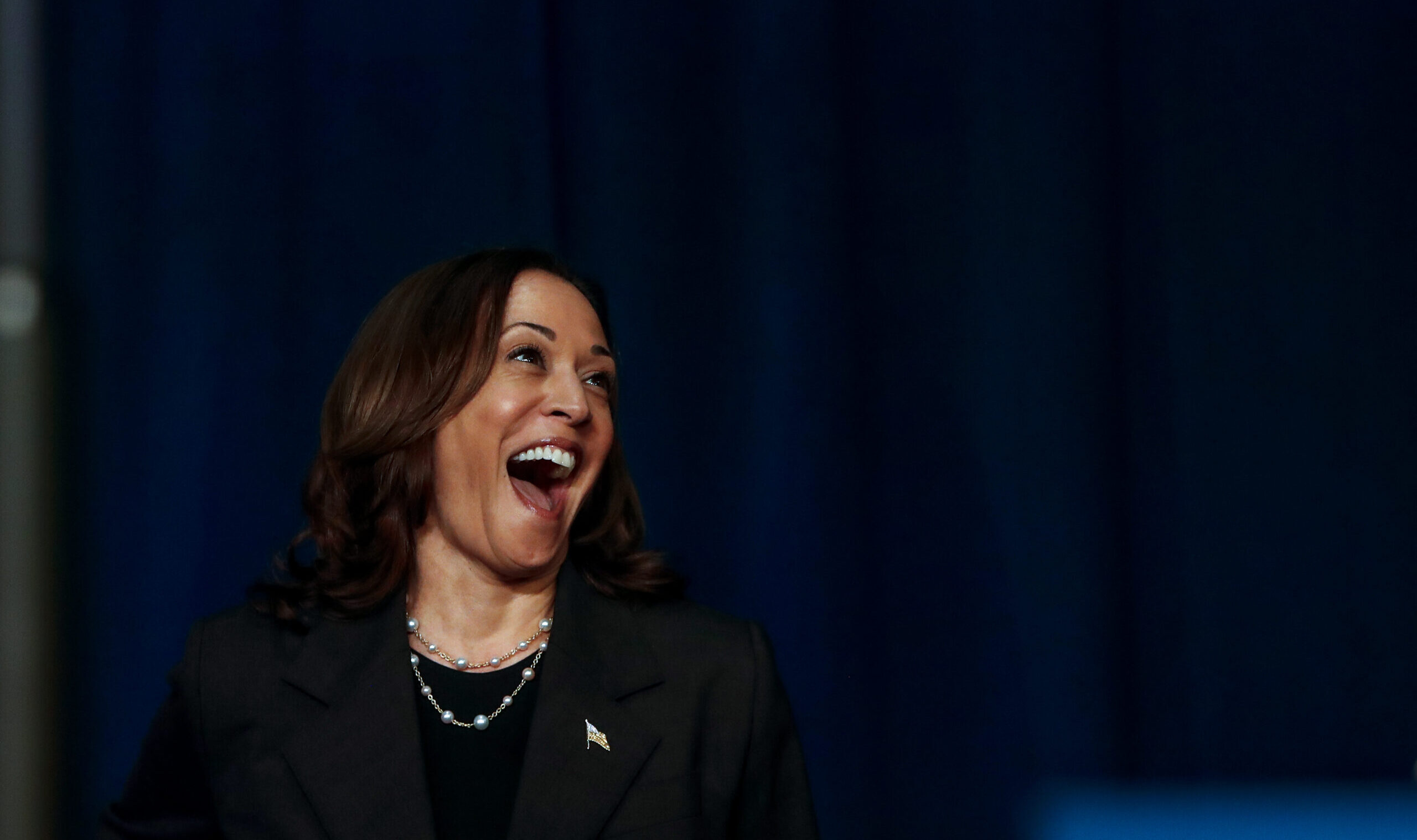
Vice President Harris Holds Campaign Event In Kalamazoo, Michigan

Credit: Chris duMond/Getty Images

Parties go through secular periods of decline and crudescence: the Republicans in the ’30s and ’40s, Democrats in the ’70s and ’80s. No matter what boneheaded antics the other team got up to, the party on hard times just couldn’t get a toehold. (Even with the gift of Watergate, the premier scandal of American political history, the best the Democrats could manage was Jimmy Carter’s single hapless term.) There are a few usual reasons for this. The country simply becomes tired of a party, often after their long period in power comes to a bad end, as happened to the Republicans at the dawn of the Depression. Or the party elite gets sclerotic and its base gets restless, as in the Democrats’ ’68 and ’72 presidential nomination races, and this inaugurates a season of infighting.

You wonder whether something like this is happening again when you look at the Democrats now. They should be looking down on midterms from a position of strength. While Trump decisively won the 2024 election, it was hardly the landslide that his most ardent propagandists claimed; about half the country would rather vote for Kamala Harris—Kamala Harris—than for Trump. Not even the Democrats enjoy taking a loss, but it didn’t look like a blowout that would inaugurate seven lean years for the Democrats. Clearing a little room at the top of the party would make way for the rising cohort of telegenic younger talent like Gretchen Whitmer, Gavin Newsom, and Chris Murphy. The Republican legislative majority is very small, not exactly the stuff of quasi-permanent mandate. The first six months of the Trump administration have been checkered at best—bungled trade policy rollouts, floundering in foreign affairs, a budget bill nobody liked, ongoing economic anxiety as inflation remains higher than we’d like and growth lower. Trump’s approval rating is comfortably underwater, as usual, and his issue ratings for immigration and the economy are slipping. Absolved from the obligation of having to make policy, you’d think the boys and girls in blue would be having a field day on Medicaid cuts, fly-by-night military improvisation, and Epsteinmania.

They’re not, though. Midterms polling is equivocal at best; while the Democrats seem to have an enthusiasm advantage, the American people seem to pretty much loathe both parties—28 percent approval for the Ds and 33 percent for the Rs, per a CNN poll published Thursday. CNN’s Harry Enten observed that the Dems have only a slight lead on the generic ballot and appear to be losing on a seat-by-seat basis. This is not the stuff of the classic midterm blowout. What gives?

Well, let’s go through what we said can go wrong at the start of this column. Institutional sclerosis and rebellion seem to be the main things. There is still internal foment within the Democratic Party between the hardline, often identity-based “groups” and the increasingly embattled-looking moderates. While the country may have for now moved on from “peak wokeness,” the enwokened still have a big share of the money, power, and especially enthusiasm in the party, and it is not at all clear that they’re going anywhere. Something similar happened in the New Left’s takeover of the party in the ’70s and ’80s, well after the peak of the counterculture. They weren’t strong enough with the general electorate to get candidates over the top, but they were strong enough consistently to pull the party in their own direction.

In the long run, there is a warning here for the right: The New Left eventually got it together and professionalized. Twenty-five years after the 1968 Chicago meltdown, a dope-smoking, free-love Deadhead was president. (I am more than half convinced that the most important chronicle of the Democratic Party in the latter half of the 20th century is Jann Wenner’s badly written but revelatory memoir, Like a Rolling Stone.) Maybe the woke Democrats will find a viable synthesis the way the New Left did, but they’re not there. While a Pramila Jayapal or a Cori Bush can win in a safely deep-blue district, it’s not clear the hard left can take competitive districts (yet). The Woke Clinton may not even have entered the arena, although, if you made me pick the likeliest active politician to fill the role, I’d say AOC—radical on paper, but increasingly institutionalist. 

Much can happen very quickly, of course, and the Republicans aren’t immune to blowing it bigly. An economic downturn, a war, an administration scandal—the GOP isn’t immune to any of these. Their choices could still catch up with them. But, for the time being, the Democrats are not looking like contenders.

The post What on Earth Is Happening to the Democrats? appeared first on The American Conservative.

The Origin—and Limits—of Trump’s Ukraine Pivot

The Origin—and Limits—of Trump’s Ukraine Pivot

Reform does not occur in a political vacuum.

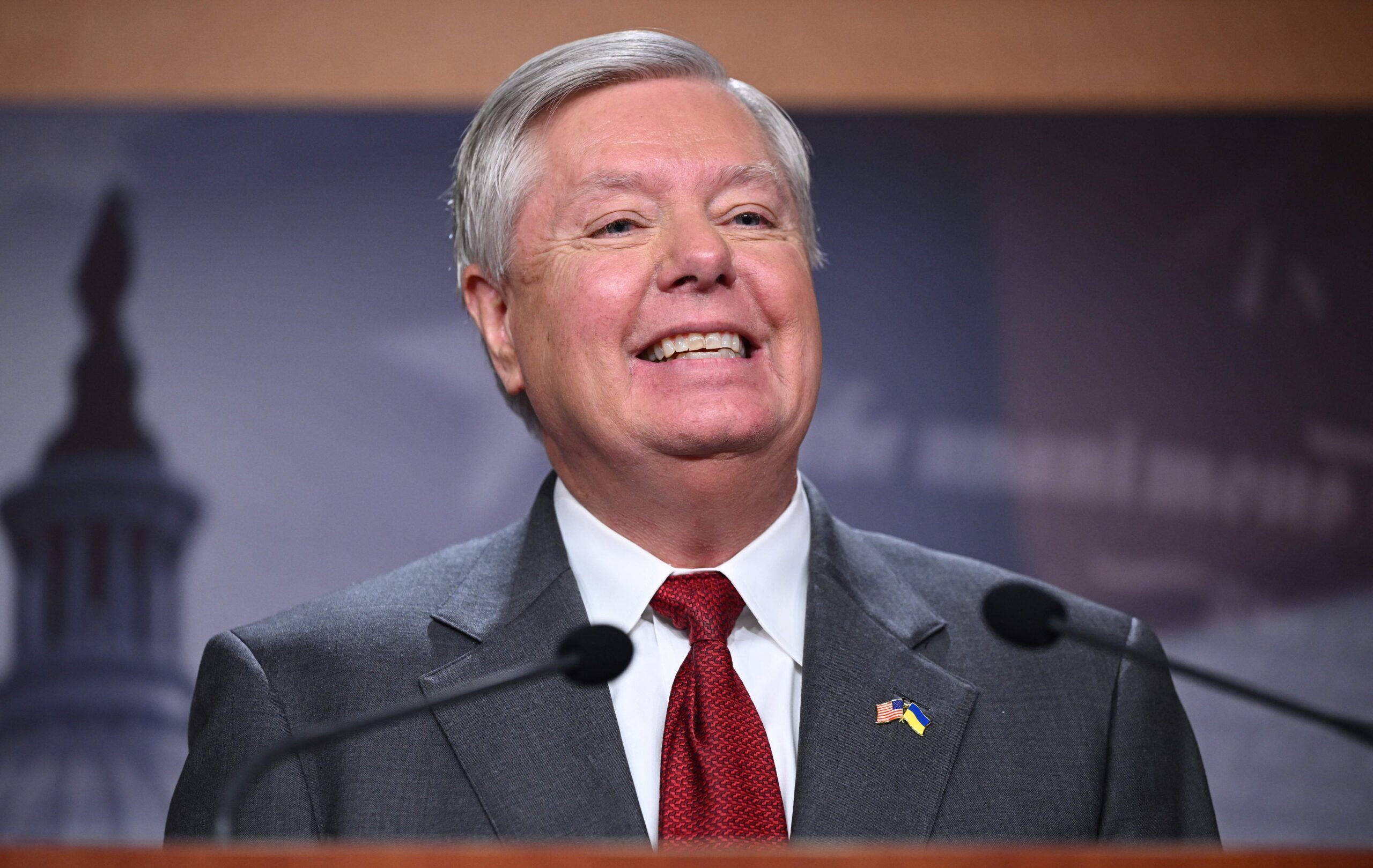
US-UKRAINE-POLITICS-CONFLICT

About a month ago, Senator Lindsey Graham (R-SC) took a trip to Ukraine to advocate for greater pressure against Russia. 

“President Trump said Ukraine doesn’t have good cards…but the world has a lot of cards against Russia,” Graham said. “And one of those cards we have is about to be played in the United States Senate.” 

He continued the analogy: “In America you have more than one person at the card table. We have three branches of government, and the House and the Senate are poised to act.” 

In other words, the Senator saw himself as working against President Donald Trump’s stated foreign policy agenda regarding Russia and Ukraine. But after the president’s recent announcement that the U.S. will now be sending more weapons to the latter and potentially imposing additional sanctions on the former, both Trump and Graham now appear to be playing for the same team. What changed?

As so often tends to be the case in foreign policy, the answer is almost certainly tied to domestic political considerations. 

In March, Graham proposed the Sanctioning Russia Act with the Democratic senator from Connecticut Richard Blumenthal. That legislation would have not only imposed yet another tranche of primary sanctions on Russia primarily focused on its energy export industry, but it would have also levied secondary sanctions on countries such as India, China, and even certain EU states like Slovakia and Hungary that receive Russian energy products; those secondary sanctions include a minimum 500 percent tariff on imports to the United States of products coming from those same countries.

That provocative bill was sidelined while the president attempted to pass his signature budget legislation, the One, Big Beautiful Bill Act. Now Trump seems to be taking a different path to the same end. The president has set a 50-day deadline, before which Russia must renege on its strategic objectives, cede its ability to secure those objectives on the battlefield, and effectively accept political defeat. If those demands are not met, the United States will allegedly impose up to 100 percent tariffs on goods exported to the United States from countries in the Middle East, Asia, and South America who do business with Russia. Most notably, that would include India and China. In a departure from the Senate bill, primary sanctions have not as of yet been threatened by Trump as a possible repercussion.

It is very unlikely Russia will accede to those demands. It is also hard to believe that the president does not recognize that reality, not only due to his instinctive grasp of the war’s dynamics but also the geopolitical wherewithal of many within the administration (many, who also happen to be those who are most loyal to Trump’s reform agenda). So again: What has changed?

For one, avoiding the passage of the Senate bill provides much more flexibility for the president to deal with the war. Maximalist threats followed by moderate compromise are part and parcel of Trump’s approach. Even if one disagrees with the effectiveness of that approach, it is hard to deny that there is a clearly discernable, systematic quality to it. Retaining as much discretionary power in the hands of the executive will allow Trump to haggle his way down from the 100 percent tariff initially proposed—which, considering precedent, will almost certainly happen.

But, as mentioned, domestic political considerations were probably the definitive factor in the recent change in course. 

The president’s political agenda first and foremost required the passage of the OBBBA; thus, priority number one was ensuring the necessary votes in a shaky and uncertain Senate. The Graham and Blumenthal sanctions bill has gathered the support of 84 cosponsors in the Senate (51 at the time of its initial introduction in April, growing to 84 this month), including 41 Republicans—many of whom needed to be won over for the landmark bill.

Importantly for many of those Republicans, Trump’s recent announcement that the weapons supplies will increase to Ukraine means an increase in U.S. defense production. While European countries send their own stocks of weapons systems to Ukraine, the United States will sell additional products to those countries in order to restock their inventories. This is certainly a concern for Graham himself. Boeing, Lockheed Martin, and General Electric all maintain production facilities in South Carolina. 

The support of men like Graham—and Kentucky’s Senator Mitch McConnell, whose state also has important ties to the defense industry—was absolutely essential in passing Trump’s OBBBA. Notably, Senator Tom Cotton’s Arkansas maintains one of the primary facilities for the production of the interceptor portion of Patriot missile systems, which is set to be one of the primary systems being sent to Ukraine via Europe. 

As such, the apparent change in policy course is not hard to imagine as being the result of backroom dealmaking that won the support of Senate hawks. This is unfortunate for the president’s immediate foreign policy agenda, not to mention for the many losing their lives because of the war’s prolongation. Sanctions and the delivery of additional weapons systems will not change the strategic dynamics. While the increased aerial defense capabilities in the form of Patriot missile batteries specifically will aid Kiev, they will still do nothing to counter the primary factors that compose Russia’s strategic advantage (namely, manpower and industrial capacity).

But such is the world of politics: Reform must take place within the system, and that means prioritization and dealmaking, especially when one is attempting to progress an agenda that goes against the status quo. Reclaiming our national sovereignty begins with securing the border and addressing the immigration crisis, and the OBBBA was an unprecedented step towards that end. 

At the same time, bombastic rhetoric aside, Trump does not want a war with Russia—nor does Russia want war with the U.S. One would therefore expect that there are back-channel communications with Moscow ensuring certain red lines will not be crossed. Additional limitations will also be inherent to U.S. provisions, not least due to the fact that significant support is likely needed in the operation and especially targeting of those weapons.

The recent change in tack may very well have been the most realistic option for an executive operating within a hostile system. But it still remains unlikely that Trump will allow his hand to be forced into open hostilities against Russia. Just like with the strikes on Iran, the intention will be to retain a certain image while finding a path to deescalation. This “new” course will therefore likely do little to significantly change the situation on the ground or the general U.S. posture towards the conflict.

This is nonetheless a risky state of affairs. It also raises important questions about sovereignty and political control of American policy, considering that Trump was elected on a platform of reducing U.S. involvement in the Russo–Ukrainian War. Nor should anyone discount unforeseen developments, or cease championing the substantive meaning of a truly sovereign America First agenda. 

The post The Origin—and Limits—of Trump’s Ukraine Pivot appeared first on The American Conservative.