Man Charged with Homicide After Slipping Abortion Pills to Girlfriend – Do Officials Realize What They’re Admitting?

Emerson Evans is facing charges of intentional homicide of an unborn child, according to police in Bloomington, Illinois.

Emerson Evans is facing charges of intentional homicide of an unborn child, according to police in Bloomington, Illinois.

An Illinois man is facing homicide charges after allegedly slipping abortion pills to his girlfriend without her consent.

WMBD-TV reported that 31-year-old Emerson Evans of the community of Normal appeared Monday in McLean County Circuit Court.

Judge Amy McFarland agreed to prosecutors’ request to detain Evans pending a trial.

Evans faces two counts of intentional homicide of an unborn child, a felony comparable to first-degree murder.

The charges carry a minimum sentence of 20 years in prison for each count, IPM News reported.

According to the report, police were called to the home Friday for a report of a pregnant woman suffering a medical emergency.

The woman told them she was seven weeks along, but had just told Evans of the pregnancy that day.


Evans had told her that he wanted her to have an abortion.

The woman denied ordering abortion pills and said she did not want to end her pregnancy.

Later in the day, she said she began to feel very sick.

“She experienced medical complications and suffered a miscarriage, resulting in the loss of her pregnancy,” police said, according to the New York Post.

At first, Evans denied doing anything, but police said he later admitted he  “made the decision for her.” He said he bought mifepristone “on campus” for $50 with the intent to end the pregnancy.

Mifepristone is an abortion drug that Planned Parenthood pushes online.

He is scheduled to return to court in early September for arraignment.

Prosecutors are correct to charge him with homicide.

But their actions expose a glaring contradiction in the left’s abortion arguments.

By charging Evans with intentional homicide of an unborn child, they are admitting that unborn children can be murder victims.

That logic is irreconcilable with the left’s rhetoric on abortion.

If the victim had taken the same pills on her own, abortion advocates would have called it “bodily autonomy.”

But because Evans gave her the pills, the state now says it was homicide.

This is flawed logic that insults all those who set out to protect those who cannot protect themselves.

What prosecutors in Illinois have done is admit what the pro-abortion movement denies — that unborn children are human, and that killing them is murder.

This article appeared originally on The Western Journal.

The post Man Charged with Homicide After Slipping Abortion Pills to Girlfriend – Do Officials Realize What They’re Admitting? appeared first on The Gateway Pundit.

Governor Murphy’s Green New Deal Exacerbates NJ Energy Crisis

Photo: The White House from Washington, DC, Wikimedia Commons

This story originally was published by Real Clear Wire.

By Gabriella Hoffman
Real Clear Wire

New Jerseyans are feeling the pain of higher electricity bills. They should blame Governor Phil Murphy and the New Jersey Board of Public Utilities (BPU) for inviting this energy crisis.

The BPU was slated to approve a 20% rate hike in June, but delayed the rate hike until September 30. On August 14, the BPU announced a $100 Residential Universal Bill Credit to help lower bills in September and October. This is a way to use taxes to disguise the cost of utility bills, but New Jerseyans are still shouldering these costs.

When announcing this relief measure, Governor Murphy didn’t accept responsibility for higher prices. Instead, he blamed PJM Interconnection, a grid operator servicing New Jersey and 12 other states, for creating a “cost crisis.” Earlier this summer, he urged residents to set their air conditioners to 76-78 degrees Fahrenheit and delay appliance usage until 8 p.m. But Garden Staters aren’t buying what Murphy is selling.

Earlier this month, a Farleigh Dickenson University poll found a plurality of New Jersey residents blame utility companies (26%) and the Murphy administration (19%) for higher electricity costs. Utility companies that deliver electricity, however, don’t set prices. But the BPU—officials appointed by Governor Murphy to carry out his climate agenda—does. It’s Governor Murphy and his radical plan to force New Jersey to change how the state gets its power that have caused this crisis and driven prices up.

The governor’s Energy Master Plan mandated a transition to 100% wind, solar, battery energy, and electric vehicles by 2035. Murphy’s green transition plan, if fully implemented, will result in $1.4 trillion in lost income, or $140,000 per average New Jerseyan over the next 25 years, while yielding no meaningful environmental benefits. It’s understandable New Jersey families feel pain. Some family energy bills have exceeded $500 per month.

Since Governor Murphy entered office in 2017, six power plants—including five coal plants and Oyster Creek nuclear reactor—were shut down. This represents a loss of 2,500 megawatts (MW) of net capacity. As a result, the state consumes more energy than it produces. It imported 20% of its electricity from out-of-state power generators—namely, Pennsylvania. Imported electricity is more expensive due to higher fuel and transmission costs. One analysis found NJ’s green “transition” “has outpaced its replacement infrastructure, raising concerns about grid stability, cost volatility, and energy independence.” Yet, there is no transition occurring. Natural gas and nuclear have cumulatively supplied over 90% of the state’s net electricity generation since 2011. Renewables, including solar, barely supply 8%.

But don’t take my word for it. States with clean energy mandates—including renewable standard portfolios (RPS) that mandate electric utilities set renewable energy targets—generally have higher electricity costs compared to states without them. As of this writing, New Jersey electricity rates are the 12th most expensive in the nation, averaging 20.49¢ per kilowatt-hour (kWh). That’s 17.3% higher than the national average (17.47¢ per kWh). For context, the average American household uses about 10,800 kWh annually.

PJM warned against prematurely retiring power plants and replacing them with solar and wind. The North American Electric Reliability Corporation (NERC) equally stressed in its 2025 Summer Reliability Assessment that solar and battery additions will “introduce more complexity and energy limitations into the resource mix.” Nevertheless, the Murphy administration continues to scapegoat PJM and energy producers, instead of looking inward.

Even net-zero proponents concede the Garden State’s green policies have increased electricity prices. The Regional Plan Association (RPA), a pro-renewable civic organization covering the New York City Metropolitan area, said New Jersey’s green agenda could raise electricity prices when not enough power from renewables is generated and renewable energy goals can “increase prices if the states do not meet those goals when they are supposed to….”

The Murphy administration could fix its self-imposed energy crisis in two ways: exploring the feasibility of small modular reactors (SMRs) and reforming the Energy Master Plan to deemphasize unreliable solar and wind energy. With New Jersey already boasting two nuclear power plants, smaller reactors that are portable and easier to construct will supplement existing projects, produce more reliable energy, and help the state reduce its reliance on imported electricity. Instead of learning from its mistakes, the Murphy administration wants to codify its costly Energy Master Plan into law by year’s end.

Our organization, Independent Women’s Voice, recently polled swing voters about energy issues in the state. The poll revealed 80% of swing voters expressed concern about energy reliability. When respondents learned that the Murphy administration’s climate policies, including Energy Master Plan, invited the 20% electricity rate hike, 53% of women were less inclined to  support phaseouts of oil, natural gas, and coal.

Governor Murphy’s Green New Deal is exacerbating the Garden State’s energy crisis. Decline is a choice, and New Jersey voters plan to choose energy reliability at the ballot box.


Gabriella Hoffman is the director of the Center for Energy and Conservation at Independent Women. Follow her on X at @Gabby_Hoffman

This article was originally published by RealClearEnergy and made available via RealClearWire.

The post Governor Murphy’s Green New Deal Exacerbates NJ Energy Crisis appeared first on The Gateway Pundit.

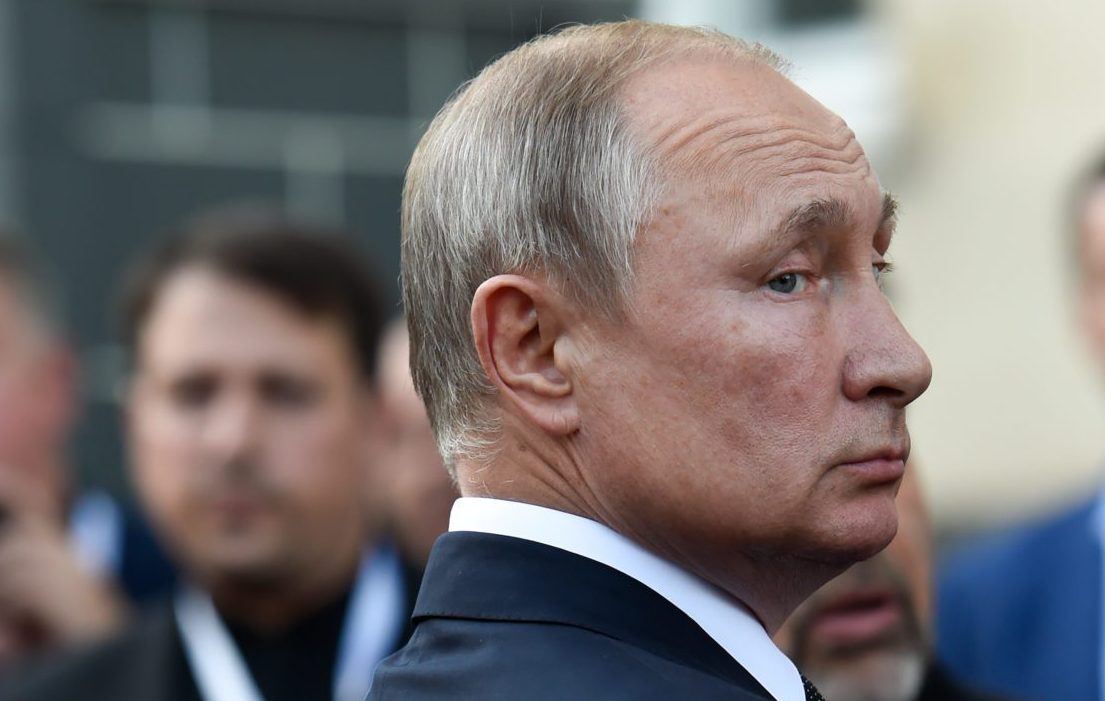
How Far Will Putin Compromise?

How Far Will Putin Compromise?

Despite what the Western media says, the Russian leader has offered concessions.

Yerevan,,Armenia,-,1,October,2019:,Russian,President,Vladimir,Putin
(Asatur Yesayants/Shutterstock)

The attempt to isolate Russia and its president, Vladimir Putin, has never been a smashing success. Nevertheless, it has been a key component of the West’s response to the Russian invasion of Ukraine, and it’s proved out of touch and unaligned with the emerging multipolar reality. Outside the West, America’s arrogant attempt to enforce its hegemony did the opposite of isolating Russia, pushing it into closer and firmer relations with China, India, Africa, and the broader BRICS+ community. Within the West, the isolation of Putin and Russia was much more successful.

But on August 15, that isolation was shattered. Putin’s plane landed on American soil for the first in-person talks between the leaders of Russia and the U.S.—indeed, the first major talks between Putin and any Western leader—since the war in Ukraine began.

The summit, held in Alaska, seems to have been a success, assuming realistic expectations of a first “feel-out meeting,” as Trump called it. Going into the summit, Trump offered some metrics for evaluating whether it was going well. The president said he would know how it would go in the first minutes. After Putin arrived, Trump looked him in the eye, laughed, warmly shook Putin’s hand, and invited him to ride in his presidential limousine. Trump also said that if the summit went well, he would talk to the press with Putin; if it went badly, he would address them alone. The leaders spoke together. Trump added that if it wasn’t a success, there would be severe consequences for Russia. After the summit, the threatened sanctions were off, for now (though secondary tariffs targeting India remained).

Putin, for his part, said they had reached an understanding that he hoped could help bring about peace. Trump insisted the meeting was “extremely productive” and that “many points were agreed upon with only a very few left unresolved.” One unnamed point of disagreement, Trump said, was significant, but there was “a very good chance of getting there.”

Putin seems to have won an important diplomatic victory on the structure of negotiations. Trump came out of the summit saying that the best course of action was “to go directly to a Peace Agreement, which would end the war, and not a mere Ceasefire Agreement” and that now “it’s really up to President Zelensky to get it done.” 

Russia has consistently refused the unconventional idea, pushed by the U.S. and Europe, of a ceasefire coming before negotiating the war’s underlying disputes. Years after Ukraine and Europe had used the Minsk accords with Russia as a deception to buy time to build an army for a military solution instead of the diplomatic solution the accord purported to guarantee, Russia resolved to put the ceasefire after the agreements. Before the Russians gave Ukraine time to restock weapons and raise troops, they were going to settle the issues that led to the war, whether on the battlefield or at the negotiating table. 

There were other important points that Trump and Putin agreed upon, too. The one significant point that remained unsolved may have been the complicated question of security guarantees for Ukraine.

Trump’s reversal on an immediate ceasefire was a major takeaway for Putin, but the U.S. president is not the only one who made concessions. Though largely ignored by the western media, Putin also seems to have made significant concessions to keep diplomacy alive. A source close to the Kremlin told Reuters that “Putin is ready for peace—for compromise. That is the message that was conveyed to Trump.” Any compromises that Putin has made pertain to Western demands that, though approaching Moscow’s red lines, do not cross them. Conversely, he has not compromised on the fundamental issues that cross the very red lines over which Russia went to war.

The most significant concession by Putin regards territorial demands. Back in 2022, Putin redrew the map of Russia to include the Crimean peninsula, the eastern Donbas region, and the southern provinces Kherson and Zaporizhzhia. Moscow has insisted that this new reality be recognized. In the summit with Trump, Putin offered the compromise that Russia would agree to freeze the current lines in Zaporizhzhia and Kherson in exchange for Ukraine giving up the Donbas, including parts it still hangs on to. Moreover, in return for the parts of the Donbas that Kiev still holds, Moscow would return small areas of Kharkiv, Sumy, and Dnipropetrovsk provinces.

This compromise is consistent with Moscow’s red lines because the Donbas provinces, Luhansk and Donetsk, matter more to the Kremlin than the other provinces it has occupied, due to the threat to ethnic Russians’ lives and rights there beginning in 2014 and the military threat to the Donbas since the days before Russia’s invasion in February 2022. Plus, completing the capture of Zaporizhzhia and Kherson would require either a very long, difficult war or significantly escalating the current one.

Putin has not, and will not, abandon Moscow’s reddest of red lines. He will not compromise on the demand that NATO never expand to Ukraine. And, after the broken promise of no NATO expansion eastward at the end of the Cold War, Russia will not settle for a gentleman’s agreement. This time, the guarantee that Ukraine can never join NATO will have to be delivered in a legally binding form.

Though Putin cannot compromise on NATO, he seems to have compromised on Ukrainian–Western relations by greenlighting Kiev’s joining the European Union. Though this concession is a compromise by Putin on Russia’s original position, it is not a recently won compromise: Moscow was open to EU membership for Ukraine at the Istanbul talks in the weeks following the invasion.

The third compromise is less certain. While some sources report that Putin is holding to his original position that Ukraine must agree to limits on its armed forces, other sources report that Putin has allowed this demand to slip away. This point may be one that Moscow is willing to negotiate. As long as there is a prohibition against long-range weapons that are capable of reaching Russia, Putin could feel that Moscow’s red lines can accommodate this concession. First, such limits would be nearly impossible to enforce, especially with Ukraine producing some of its own simpler weapons. Second, with Ukraine not in NATO and NATO not in Ukraine and the Donbas safely protected within Russia, Moscow may feel it can compromise on the size and capabilities of Ukraine’s armed forces.

This thorny question of post-war security for Ukraine—and for Russia—may be the significant one to which Trump was referring when he talked about issues that have not yet yielded agreement. Still, the Trump administration has signaled that some progress was made on the issue. After the Alaska summit, Trump said that Putin had “agreed that Russia would accept security guarantees for Ukraine” and said that this concession was a “very significant step.” The White House even said that Putin was open to “Article 5-style” security guarantees for Ukraine, referring to the collective defense provision of the NATO charter.

If this is true, this would be a very significant compromise by Putin. But there is a caveat. Moscow and European capitals differ critically on who would provide that Article 5-like guarantee. Europe and Ukraine insist that the security guarantee would be backed by Europe. In one proposal, if Russia attacked Ukraine again, European leaders would have 24 hours to decide if they would provide military support to Ukraine. In Russia’s version, that security guarantee must come, not only from the UK, France, and the United States, but also from China and even Russia itself.

Kiev and Europe object that this is an absurd proposal designed to give Moscow an effective veto over whether the guarantors would come to Ukraine’s defense and is intended to kill the negotiations. They also see it as a poison pill intended to doom negotiations.

But there may be a more charitable way of reading Moscow’s demand. The five countries that Moscow included are the five permanent members of the United Nations Security Council. Moscow seems to prefer that the UN, and not the anti-Russian Western bloc, oversee the security guarantee.

Russia insists that it not be excluded from decisions on how a security guarantee for Ukraine would be enacted and enforced. Russian Foreign Minister Sergei Lavrov says that security cannot be “unilateral,” that Russia cannot be excluded from the security arrangement, and that the final arrangement must be based “on the principles of indivisible security.” That means the West cannot advance its own security at the expense of Russia’s, which Putin argues the West has been doing since the end of the Cold War with NATO’s encroachment to its very borders. 

Though Trump originally suggested that the U.S. was prepared to send troops to Ukraine, he seems to have gone back on that decision, to the great disappointment of Europe and Ukraine. The U.S. increasingly has little appetite for challenging this Russian red line. Elbridge Colby, the Pentagon’s top policy official, told European military leaders that the U.S. will play only a minimal role in any security guarantee for Ukraine.

Vice President J.D. Vance has been clear on the subject. “I think that we should expect, and the president certainly expects, Europe to play the leading role here,” Vance told Fox News last week. The vice president explained that Europe would “carry the burden” and take the “lion’s share” of the responsibility for guaranteeing Ukraine’s security.

The White House has been emphatic that the U.S. will not put boots on the ground. Trump has said that “European nations are going to take a lot of the burden” and provide the “first line of defence,” while the U.S. was “going to help them.” Trump said this help will come not from NATO and that it will come “by air,” leaving vague whether that means fighter jets, surveillance drones, intelligence, or air-defense systems.

Though the Western media consistently reports that Putin has been uncompromising and is not truly interested in a diplomatic end to the war, he has made some compromises, including a significant concession on Russia’s territorial demands. He has also made concessions on EU membership for Ukraine and thus its ability to reorient itself to the West. And perhaps he has made, or is willing to make, concessions on the strength of the Ukrainian armed forces. Crucially, Moscow also seems to have agreed to security guarantees for Ukraine, so long as those guarantees are not just NATO in disguise. The Kremlin insists: There can be no European or American troops on Ukrainian soil. But there are lots of non-European countries, including in BRICS+ and elsewhere in the Global South, who have an interest in a fair diplomatic conclusion to the war and who could act as peacekeepers. Russia wants those peacekeepers to be keeping a peace that is part of a broader security arrangement that embraces all of Europe, including Russia. The U.S., too, should seek to replace the security arrangement that has isolated and threatened Russia since the missed opportunity provided by the end of the Cold War.

The post How Far Will Putin Compromise? appeared first on The American Conservative.

Trump Should Stay Out of South Korean Politics

Trump Should Stay Out of South Korean Politics

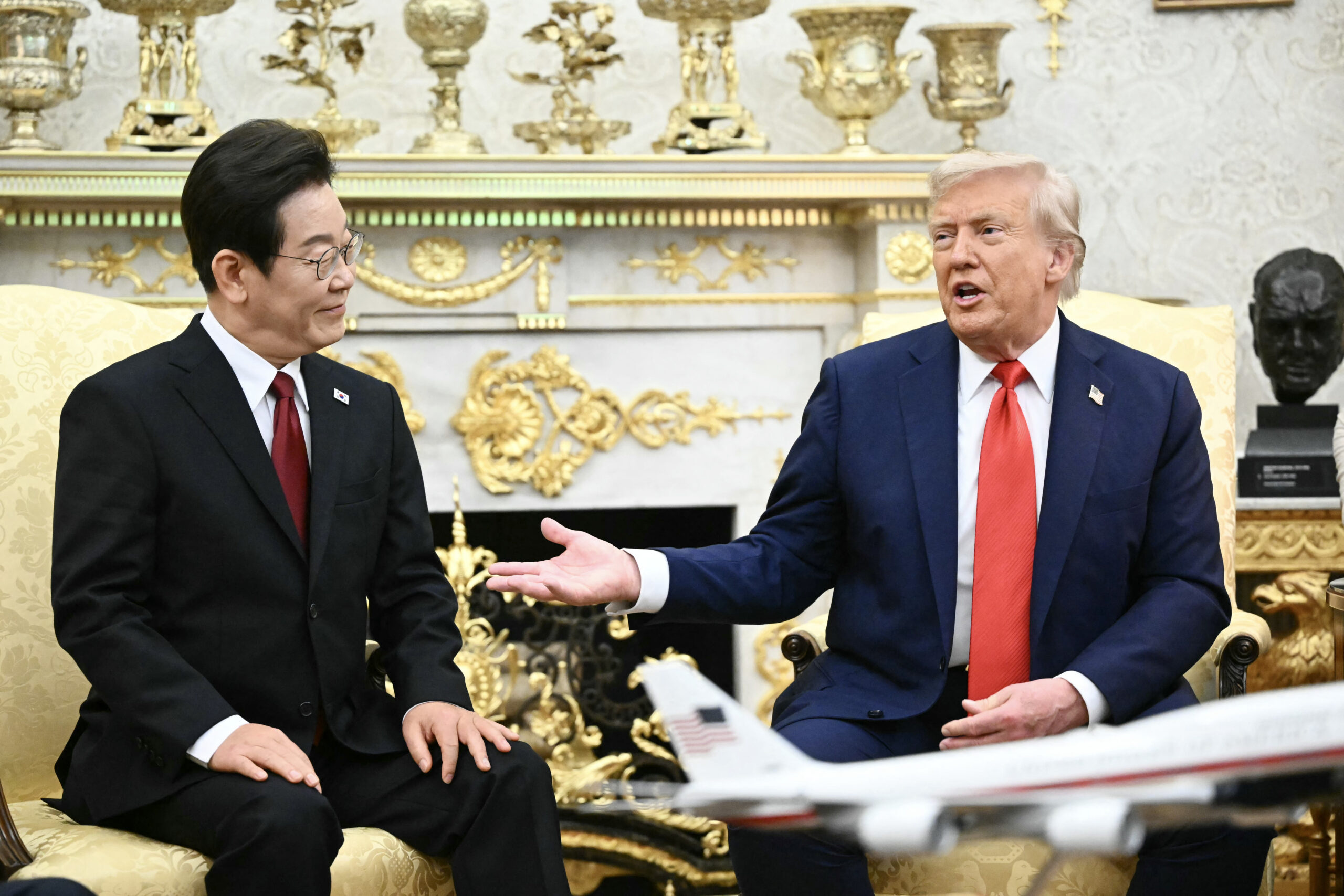
The White House meeting with President Lee Jae Myung on Monday went better than many feared.

TOPSHOT-US-SKOREA-DIPLOMACY

President Donald Trump and South Korean President Lee Jae Myung held their long-anticipated summit on Monday. The meeting was overdue but had to wait for the Republic of Korea to restore stable governance by electing a replacement for the ousted Yoon Suk-yeol.

By all accounts, the session went well. Lee said that the two leaders “had very good conversations” and the experience “was beyond my expectations.” Acting as Flatterer-in-Chief, the South Korean president spread praise of Trump thick and wide. 

However, Jeongmin Kim of NKNews reports the summit “nearly veered off course before it began, exposing just how vulnerable the U.S.-ROK alliance is to Trump’s impulsive messaging and the disinformation networks surrounding him.” Indeed, Lee later said he had feared “a Zelensky moment.” Three hours before the two presidents were scheduled to meet, Trump spluttered on Truth Social: “WHAT IS GOING ON IN SOUTH KOREA? Seems like a Purge or Revolution. We can’t have that and do business there.” He then told reporters that he “heard that there were raids on churches over the last few days, very vicious raids on churches by the new government in South Korea.”

Lee, along with members of Washington’s “blobby” Korea policy community, held their collective breath. There was much for the two presidents to talk about, starting with the broad if disputed trade agreement reached in response to Trump’s protectionist assault. Alliance management, too, was on the agenda. South Korean National Defense Minister Ahn Gyu-back has been pushing for a “future-oriented comprehensive strategic alliance.” Also of pressing concern was policy toward North Korea, a special priority in Seoul, with Unification Minister Chung Dong-young proposing to scale back joint military exercises. That is also a priority, albeit a less pressing one, in Washington, with Trump seeking a reprise of his first-term summitry.

Luckily, when Trump and Lee met, the former dismissed his own prior outburst, explaining that he was “sure it’s a misunderstanding.” Trump added: “I feel very warmly toward South Korea.” There was speculation that Trump had been referring to raids on the Unification Church in connection with a corruption investigation of former first lady Kim Keon-hee. 

Perhaps even more important have been complaints in MAGA circles about the current government’s prosecution of the ousted president Yoon for last December’s autogolpe. Last month, Fred Fleitz, vice chairman of the American First Policy Institute and former National Security Council staffer in the first Trump administration, posted on X: “The perception that former President Yoon is being persecuted or unfairly prosecuted will be received very badly by the Trump administration.” He reportedly told Lee’s national security adviser, Wi Sung-lac, that Yoon should not be investigated or prosecuted “unfairly.” Fleitz explained to the Chosun Ilbo that “the perception that former President Yoon is being unfairly treated, persecuted, or given an excessive sentence would be viewed very negatively in the U.S.” He added, “Although the situations differ, Trump also faced political persecution after leaving office. Many in Trump’s circle are closely watching South Korea’s political situation, especially the recent presidential election and its aftermath.”

When speaking to visiting parliamentarians, Fleitz apparently voiced concerns about judicial integrity. Na Kyung-won, a member of Yoon’s People Power Party, commented: “The fact that they addressed the fairness of legal proceedings involving the former president from a human rights perspective struck me as a significant message to the ruling party and administration.” Of course, Trump’s first term was notable for its lack of “a human rights perspective” and of concerns over “the fairness of legal proceedings.” After Saudi Crown Prince Mohammed bin Salman had dissident journalist Jamal Khashoggi murdered and dismembered, Trump infamously gloated that “I saved his ass” and “was able to get Congress to leave him alone.” If the liberal Lee was being prosecuted by the conservative Yoon administration, it is unlikely that Fleitz or anyone else associated with Trump would object.

Fleitz said he was speaking for himself, but he is part of a group of American conservatives, including China doomsayer Gordon Chang and Liberty University Professor Morse Tan, who have been promoting dubious claims that Beijing rigged South Korea’s National Assembly elections last year, one of Yoon’s justifications for seizing power, and also manipulated this year’s presidential poll. Indeed, Tan has advanced these views in South Korea as well. The reporter Jeongmin Kim said, “The resulting feedback loop between conservative U.S. and ROK political media raises questions about the extent to which domestic disinformation can distort alliance management.” Critical sentiments have evidently infiltrated the White House, which indirectly included a seeming caveat when congratulating Lee on his victory in June: “The U.S.-ROK Alliance remains ironclad. While South Korea had a free and fair election, the United States remains concerned and opposed to Chinese interference and influence in democracies around the world.”

Added to the dubious claim of Chinese interference is Trump’s identification with foreign coup plotters on the political right. For instance, he imposed a 50 percent tariff on Brazil for prosecuting former president Jair Bolsonaro for allegedly attempting to seize power there. “This happened to me, times 10,” Trump declared, adding that he “will be closely monitoring the witch hunt of Jair Bolsonaro, his family, and thousands of his supporters. Leave Bolsonaro alone!” There is, however, no doubt that Bolsonaro’s followers sought to overturn the election, while his involvement in the resulting “criminal organization” is contested. President Luiz Inácio Lula da Silva, known as Lula, understandably rejected Trump’s demand.

It would be even more disturbing for Trump to endorse Yoon. Despite desperate attempts to minimize the disgraced former president’s culpability, he plotted with friendly generals and political cronies to dismantle South Korean democracy and return to military rule, which was more brutal than most Americans realize. General Park Chung-hee seized control in 1961. Although he modernized and liberalized the economy, sparking the ROK’s dramatic economic take-off, he established a savage dictatorship. His pretense of democracy fooled no one. The reference website Facts and Details documents:  

Park cracked down on intellectuals, students, religious leaders, workers and justified his actions by accusing them of collaborating with Communists. Dissidents were followed and had their tax records scrutinized. Church meetings were monitored by men who “never sing hymns, refuse the collection plate and frequently take pictures of worshipers.” Teachers were arrested for failing to teach their students that Park’s regime was the leader of the world’s greatest liberal democracy. Park ran South Korea with an iron fist. He ruthlessly cracked down on unions and the press, routinely imprisoned and purged anyone who spoke up against him, and used the Korean Central Intelligence Agency (KCIA) to torture and silence and opponents. At one time it was estimated that there were 30,000 KCIA agents.

Park was assassinated in 1979. Soon taking power through another coup was the equally vicious Chun Doo-hwan. Amid growing public protests he stepped down in 1987. Choi Jin, director of the Institute for Presidential Leadership in Seoul said after Chun’s death: “His positive achievements are far outweighed by his negative legacies—the illegitimate way he came to power and the dictatorial streak that ran through his term.” The low point of his rule was the violent suppression of demonstrations in the city of Gwangju, into which he “sent special forces, including tanks and helicopter gunships … . Soldiers beat civilians in the streets, and tanks and helicopters fired indiscriminately.” Hundreds were killed. Years later he was convicted of sedition and mutiny and sentenced to death, though that penalty was eventually commuted. 

Unexpectedly, Lieutenant Colonel Kim Oh-rang, who died resisting Chun’s coup, has returned to public view. Two weeks ago a Seoul court ruled that the state “is responsible for paying compensation for the mental suffering suffered by the bereaved family due to the manipulation of the substantive truth about the circumstances of Lieutenant Colonel Kim’s death by the rebels and related public officials after Lieutenant Colonel Kim’s death.” A similar tragedy was avoided in December only because soldiers were unwilling to wage war on their countrymen.

Yoon bears heavy responsibility. He called out the troops and planned to disperse the national legislature, seize critical media, arrest leading political figures (including Lee, then leader of the Democratic Party, and Han Dong-hoon, head of Yoon’s own PPP), torture National Election Commission members, and even execute other figures. There also are credible allegations that Yoon loosed drones upon the North in hopes of provoking a military response, to justify his declaration of martial law. 

For all this he offered no serious defense: The president acted, the troops moved, and the participants confessed. When facing impeachment and under indictment, he hid in the presidential residence behind friendly crowds. So egregious was his conduct that members of his own party provided the extra votes required to impeach him. Since his ouster by the Constitutional Court, dominated by conservative appointees, he has increasingly engaged in self-parody. Earlier this month, reported CNN, Yoon “again refused to attend questioning by investigators Friday, using a new method to resist: He took off his prison uniform and lay down on the floor at his detention room.” 

Moreover, the now-opposition PPP demonstrates shocking indifference to Yoon’s assault on a democracy barely four decades removed from military rule. The party recently chose as chairman lawmaker Jang Dong-hyuk, who called the attempted coup “God’s will” and threatened to expel those who backed impeachment. For other South Koreans, however, the fairness demanded by Fleitz requires punishment of Yoon. Park Sang-hyuk, a DP spokesman, observed: “in accordance with a just legal order, if convicted of insurrection, he will face either the death penalty or life imprisonment and spend the rest of his life behind bars.”

Indeed, Lee could not maintain his own credibility if he yielded to foreign pressure over the judgment on someone who planned to jail Lee and many of those serving in his administration. Policing South Korean politics should be up to the South Koreans, not Washington.

President Trump was right to drop the issue. Perhaps he is beginning to recognize the benefits, and limits, of diplomacy. Arrogance by a nation that purports to lead the free world is both unbecoming and dangerous. “Power tends to corrupt, and absolute power corrupts absolutely,” intoned the historian Lord Acton, and that aphorism applies to the United States. The president was elected to govern America, not anointed to run the affairs of other nations—including those of a proud, nationalist people like the South Koreans.

The post Trump Should Stay Out of South Korean Politics appeared first on The American Conservative.

The Democrats’ Crime Convulsion

The Democrats’ Crime Convulsion

Downplaying public order to stick it to Trump is a risky bet.

Washington,,Dc,,Usa,-,August,18,,2025:,The,National,Guard

Democrats are in denial about crime in big, blue cities. You can quibble about the statistics—many large cities became less safe during the height of the pandemic, have seen noticeable improvements since then, but have not returned to their pre-COVID rates of criminality—but to pretend that Washington, DC or Chicago is Andy Griffith’s Mayberry is delusional.

Like the hirsute comedic actor Seth Rogen, many liberals have low standards for what constitutes acceptable city life. Which is fine if you are a celebrity—crime may be bad, but is it Superbad?—an academic, or a progressive pundit, but is less than ideal if you are hoping to hold elected office or govern urban areas.

A perceived indifference to crime was among the reasons the party of FDR, JFK, and LBJ lost its national majority coalition and was soon on the wrong end of 49-state landslides nationally. At that time, it was only the most liberal elements of the Democratic Party who subscribed to the theory that “law and order” was merely synonymous with “white backlash” against the civil-rights movement. 

The reality of racism, with the segregationist George Wallace winning nearly 10 million votes as a third-party presidential candidate in 1968, did not mean there was no sincere concern about elevated crime rates. People of all races and backgrounds rather dislike fearing for their lives, families, and property. 

It took many years of losing presidential elections for Bill Clinton to walk his party back from the abyss. The Clinton crime bill didn’t solve all the Democrats’ problems—conservative voters associated it more with gun control and social spending on programs like midnight basketball than new police officers on the beat, while progressives and libertarians would come to blame it for mass incarceration—but his triangulation bought them some time as crime rates fell. 

Now a wider slice of the Democratic Party is up to its old, pre-Clinton tricks. And while some of their resistance to crackdowns on crime are of the same pedigree as the white backlash talk of the 1960s and early ’70s, as evidenced by the George Floyd protests of 2020, much of it boils down to one man: President Donald Trump.

The apparent reduction in anxiety about crime in Democratic DC outstrips any claimed reduction in crime itself. Affluent white liberals are unlikely to be captured by ICE as they partake of Restaurant Week at their favorite Georgetown or Dupont Circle haunts. Refusing to go out is nevertheless a bold stand to take against the authoritarian Orange Man (although there is some dispute about how many bien pensants are actually denying themselves the pleasures of the nightlife).

Which brings us back to the radicalization of a bigger swathe of Democrats as Trump Derangement Syndrome becomes violent crime denialism. When Marion Barry was reelected as DC mayor after his release from prison, more than 40 percent of the city’s voters actually supported his Republican opponent. Barry’s underwhelming victory and the capital’s fiscal crisis led, however temporarily, to a bigger clawback of home rule than anything Trump has so far proposed. The year before Barry’s return, New York City and Los Angeles elected Republican mayors rather than acquiesce to high crime and ungovernable cities. 

While Rudy Giuliani’s star has faded and anti-police politicking has returned, New York City is in many ways still safer than it was in the early 1990s. And while the front-running Democratic mayoral candidate Zohran Mamdani has wisely prioritized the high prices at bodegas and exorbitant rents over defunding the police in his own campaign, the Big Apple is another blue city with a much different mood than all those years ago.

Not every idea Trump floats about how to deal with crime is truly within the president’s or even the federal government’s purview. Trump and some of his more overzealous aides exaggerate the extent to which major cities, including DC, are dystopian hellholes. 

But if the question could be separated from a referendum on Trump’s personality, how many Americans would agree with him or Maryland Gov. Wes Moore, a rising star in the national Democratic Party, about whether even an improved Baltimore should set the standard for an acceptable level of crime?

As with immigration, Democrats are letting their distaste for Trump commit them to positions on crime that have been perilous for them in the past, though they hope the culture wars can insulate them from the damage. We’ll see whether history repeats itself, as tragedy and farce at the same time.

The post The Democrats’ Crime Convulsion appeared first on The American Conservative.

Former Counsel to House Democrats Says Party Has Become a ‘Cult That Worships Weird Progressive Idols’ (VIDEO)

Screencap of YouTube video.

Julian Epstein, the former chief counsel to the Democratic House Judiciary Committee, blasted the Democrat party during a recent appearance on FOX News, saying that the party has become a ‘cult’ that ‘worships weird progressive idols.’

Epstein was reacting to the DNC summer meeting, which opened with a ‘land acknowledgement’ that claimed Minneapolis is built on stolen land.

Like many others, Epstein also noted the party’s horrible poll numbers and their seeming inability to craft any message that appeals to a majority of the American people.

Partial transcript via Breitbart News:

Discussing the DNC’s Summer Meeting in Minneapolis, Minnesota, Epstein said, “I think what I was watching yesterday looked more like a Star Trek convention. This is a party that has almost no self-awareness. The approval numbers, two-thirds of Americans disapprove of the party. Their fundraising numbers, the voter registration numbers are all dropping through the floor as the party associates itself with things like gender sterilization for minors, open borders, high crime.

The party is almost becoming like a cult that worships these weird progressive idols. As and then sort of the only thing they have to offer is these insults, like Tim Walsh body shaming the president, you know, Tim Walz going around body shaming to me is like the Taliban criticizing someone for religious intolerance.”

He added, “This is a party that just stands for negativity and for aligning itself on issues that are far to the left of the median voter and not, as Carolyn, I think, points out, putting forward any ideas that any of the voters, certainly in the middle, can relate to in any way.

This video is cued to start at the 4:30 mark, so just press play:

It’s impossible to disagree with Epstein’s analysis. Democrats have not seemed to learn anything from the 2024 election.

The post Former Counsel to House Democrats Says Party Has Become a ‘Cult That Worships Weird Progressive Idols’ (VIDEO) appeared first on The Gateway Pundit.

Democrat VA Gubernatorial Candidate Abigail Spanberger Wants to Turn Virginia Into a Sanctuary State for Illegal Aliens

Screencap of YouTube video.

Abigail Spanberger, the Democrat candidate for governor of Virginia, is vowing to turn the commonwealth into a sanctuary state by reversing the immigration policies put in place by the current governor, Republican Glenn Youngkin.

Spanberger has also made it clear that she is an ally to the transgender agenda, and would allow boys in girls’ locker rooms and bathrooms.

On nearly every issue, Spanberger embraces the unpopular positions of the far left that the majority of the country rejected in the 2024 election.

Spanberger made her comments about immigration in an interview with the Virginia Mercury:

Spanberger vows to scrap Youngkin’s immigration order if elected governor

Democratic nominee for governor Abigail Spanberger says one of her first acts if elected would be to undo Gov. Glenn Youngkin’s February directive requiring Virginia law enforcement to help carry out federal immigration crackdowns — a policy she argues wastes local resources and undermines community trust.

“I would rescind his executive order, yes,” Spanberger told The Mercury in a lengthy policy interview earlier this month, referring to Youngkin’s Executive Order 47 issued in February. The order gave state police and corrections officers authority to perform certain immigration duties and also urged local jails to fully cooperate with federal deportation operations.

The governor said at the time the measure was meant to keep “dangerous criminal illegal immigrants” off Virginia’s streets. Spanberger countered that Youngkin’s approach illustrates how immigration enforcement can pull local agencies away from their core responsibilities while pushing state agencies into federal civil enforcement.

“Our immigration system is absolutely broken,” she said. “The idea that we would take local police officers or local sheriff’s deputies in amid all the things that they have to do, like community policing or staffing our jails or investigating real crimes, so that they can go and tear families apart … that is a misuse of those resources.”

Spanberger has been leading her Republican opponent Winsome Earle-Sears, the current Lieutenant Governor of Virginia, for weeks but Sears has rapidly closed the polling gap just within the last ten days. The race is now nearly tied.

The choice for Virginia voters could not be more clear. Spanberger wants an immediate return to everything that made Biden unpopular.

The post Democrat VA Gubernatorial Candidate Abigail Spanberger Wants to Turn Virginia Into a Sanctuary State for Illegal Aliens appeared first on The Gateway Pundit.

“Sovereign Citizen” Kills Police Officers in Australia During a Raid on His Property

Merrrittt, CC BY-SA 4.0 <https://creativecommons.org/licenses/by-sa/4.0>, via Wikimedia Commons


Dezi Bird Freeman, 56, is the subject of a major manhunt in Victoria, Australia, after allegedly killing two police officers and injuring a third during a raid on his property. Born Desmond Christopher Filby, Freeman is a self-proclaimed “sovereign citizen” who rejects government authority and has a long history of clashes with police and courts.

Freeman’s radicalization accelerated during Australia’s draconian Covid lockdowns. He refused to wear masks, rejected vaccinations, and railed against government restrictions, calling police “terrorist thugs” and comparing them to Nazis. While Australian authorities saw this defiance as dangerous, many American conservatives would view such resistance as a reasonable rejection of violations of basic freedoms and rights.

His history with the law is quite colorful. Freeman once attempted to arrest a magistrate in court and joined an effort to charge the state premier with treason, a case that was quickly dismissed.

Court records show repeated driving charges, frequent insults toward judges, and attempts to claim legal immunity as a “sovereign citizen.” Freeman is believed to be an experienced bushman, familiar with local wilderness and caves, complicating the search. Police warn he is “heavily armed” and may have stolen the officers’ guns.

Australian authorities stress that the sovereign citizen movement poses a risk of violence, having gained traction during the country’s Covid lockdowns. But the movement is not unique to Australia. It also exists in the United States.

The U.S. sovereign citizen movement is a loosely organized anti-government ideology that first emerged in the 1970s and has since evolved over several decades. Its adherents believe the federal government is illegitimate and often claim they can declare themselves “sovereign,” placing themselves outside the reach of most federal, state, and local laws.

They typically argue that the “real” Constitution ended with the original 13 amendments, that later amendments such as the 14th or 16th are invalid, or that the federal government operates as a corporation rather than a legitimate authority.

The movement’s roots can be traced to earlier tax protest groups, conspiracy theories about banking and monetary systems, and misinterpretations of admiralty law and the Uniform Commercial Code.

In practice, sovereign citizens frequently engage in what experts call “paper terrorism,” filing frivolous lawsuits, liens, and pseudo-legal documents to harass government officials, law enforcement, and private citizens. Other common tactics include refusing to obtain driver’s licenses or vehicle registrations, creating their own identification papers, refusing to pay taxes, and claiming diplomatic immunity.

Some sovereign citizens have rejected U.S. legal tender and attempted to create their own forms of money or payment systems, reflecting their broader rejection of federal authority and their belief that the current monetary system is illegitimate. They have tried to bypass the use of Federal Reserve notes through various means, including promoting the use of gold and silver coins, arguing that only precious metals constitute “real” money under the Constitution.

Others have advocated direct barter systems as a way to exchange goods and services without relying on official currency. A smaller number have gone further by attempting to issue their own private coins, certificates, or digital currencies, though these efforts have always failed to gain widespread acceptance.

Several notable cases have highlighted this trend. The Liberty Dollar case, led by Bernard von NotHaus, involved the creation of silver coins and warehouse receipts that were marketed as an alternative to Federal Reserve notes. Other incidents have centered on “redemption” schemes, where adherents claimed they could access secret government accounts through complex pseudo-legal financial instruments.

Sovereign citizens often face legal consequences for their actions. Creating or circulating alternative currency can violate federal counterfeiting laws, while refusing to recognize official money frequently leads to tax evasion charges. Under the Constitution, the federal government has exclusive authority over legal tender.

Their rejection of official currency is rooted in the belief that the Federal Reserve system is unconstitutional, that Federal Reserve notes are not “real” money, and that the United States should have remained on the gold standard. Others see paper money itself as illegitimate government control. Although these ideas remain central to the movement, efforts to act on them have consistently ended in criminal charges and failed experiments in alternative currency.

The FBI has identified sovereign citizens as a domestic terrorism threat because some adherents have attacked police during traffic stops or court proceedings. However, most rely on bureaucratic tactics, such as clogging up courts with nuisance filings and counterfeit documents, rather than violence. Courts at every level have repeatedly dismissed their arguments as frivolous, noting that the movement’s theories have no basis in constitutional or statutory law.

Recent cases illustrate the pattern. In May 2025, 33-year-old Devonte Arthur was arrested in Richland County, South Carolina, for driving with a counterfeit license plate typical of sovereign citizen claims. That same month in Richmond, police arrested another self-proclaimed sovereign citizen who led officers on a slow-speed pursuit, refused to recognize their authority, and created a standoff at the Bay Bridge Toll Plaza that ended only after chemical agents were deployed.

According to the Southern Poverty Law Center, 2024 saw six violent incidents involving sovereign citizens targeting local and state law enforcement, leaving one officer dead, three hospitalized with gunshot wounds, and four more injured. None of the attackers survived.

Those who did, wound up in jail. Curtis Gregory Smith Jr. of Middletown, Pennsylvania, convicted and sentenced to 56 years for possessing firearms, body armor, and thousands of rounds of “NATO grade” ammunition, and Wayne R. Lund of Oak Park Heights, Minnesota, who was caught with pipe bombs during a traffic stop, claiming they were for his “rocket hobby.”

The post “Sovereign Citizen” Kills Police Officers in Australia During a Raid on His Property appeared first on The Gateway Pundit.

REPORT: Gavin Newsom’s Wife Rakes in Hundreds of Thousands Per Year From Major Political Donors, Non-Profit

Credit: Wikimedia Commons

Jennifer Siebel Newsom, the wife of California’s Democrat Governor Gavin Newsom is a documentary filmmaker, but apparently makes a very good living through her association with a non-profit and major political donors.

She reportedly makes hundreds of thousands of dollars a year in this way.

It must be great to be a high-profile Democrat. There seem to be endless streams of income available for the taking and the media looks the other way to protect you.

The New York Post reports:

Gavin Newsom’s wife, Jennifer, raking in as much as $300K a year from political mega-donors and nonprofit: Sources

The wife of California governor Gavin Newsom runs companies stacked with her husband’s former Democratic aides and confidants — while raking in hundreds of thousands of dollars in fees from the state and lobbyists, according to public records.

Documentary filmmaker Jennifer Siebel Newsom, the self-described “First Partner” of California, also received donations to her Representation Project nonprofit from companies that lobbied her husband, according to reports.

The Sacramento-based Representation Project, which describes itself as “the leading gender watchdog organization,” pays Siebel Newsom $150,000 a year for a 40-hour work week, according to tax filings.

Its largest independent contractor is Girls Club Entertainment LLC, a for-profit film company which Siebel Newsom also controls.

In 2024, the nonprofit paid Girls Club $150,000 for “writer/producer/director” services, according to that year’s federal filings…

“It is no surprise Gavin and Jennifer Newsom have leveraged their business and non-profit endeavors for personal and political gain,” said Caitlin Sutherland, executive director of Americans for Public Trust, a non-partisan watchdog group.

What are the donors getting in return?

One can’t help but wonder if the non-profits associated with Ms. Newsom received any of the ‘FireAid’ money that was supposed to go to wildfire victims.

The post REPORT: Gavin Newsom’s Wife Rakes in Hundreds of Thousands Per Year From Major Political Donors, Non-Profit appeared first on The Gateway Pundit.

Washington, DC Mayor Muriel Bowser Acknowledges Success of Trump’s Law Enforcement Surge in the City (VIDEO)

Screencap of Twitter/X video.

Washington, DC Mayor Muriel Bowser had some positive things to say about Trump’s law enforcement surge in the city today, noting the drastic drop in crimes, most notably carjackings.

This is sure to cause some anger on the left. This is precisely what most Democrats do not want to hear. They’re still trying to run with the narrative that this was some sort of authoritarian takeover of the city.

What they can’t argue with is numbers, like the ones Bowser is citing here.

NBC News reported:

“We greatly appreciate the surge of officers that enhance what MPD has been able to do in this city,” the mayor, a Democrat, told reporters about the expansion of federal law enforcement and its partnership with the Metropolitan Police Department.

Carjackings, she said, were the “most troubling” crime that plagued D.C. in 2023 and they have decreased in recent years. Bowser said that in the 20 days since the federal takeover, there has been an 87% drop in carjackings compared to the same period last year. The data cited also showed a 15% fall in crime overall in the district during that same period last year.

“We know that when carjackings go down, when use of gun goes down, when homicide or robbery go down, neighborhoods feel safer and are safer, so this surge has been important to us,” said Bowser, who added that she has been personally engaged with Attorney General Pam Bondi and White House chief of staff Susie Wiles…

The mayor said that since the increase in federal law enforcement officers, there have been more stops that have resulted in the seizure of illegal guns and there has been more “accountability in the system” that “is driving down illegal behavior.”

Here’s the video:

More details here:

It’s a shame that most Democrats are so filled with hatred of Trump that they don’t want this to work. They would actually prefer crime over Trump solving the problem.

The post Washington, DC Mayor Muriel Bowser Acknowledges Success of Trump’s Law Enforcement Surge in the City (VIDEO) appeared first on The Gateway Pundit.