The British Populist Left Secures Its First Victory

The British Populist Left Secures Its First Victory

The Greens dominated the Gorton and Denton by-election with a combination of social leftism and pandering to immigrants.

Gorton and Denton by-election
UK Special Coverage

It is 10 years since the French author Michel Houellebecq published his satirical novel, Submission, about an electoral alliance between the metropolitan left and Islamism. The bestseller caused a storm of criticism for its alleged racism and Islamophobia. But this morning it looks rather more like a prescient forecast of the destination of British electoral politics.


The all-important Gorton and Denton by-election was won this morning by the Green Party, not on climate change or the environment, but largely by appealing to the prejudices and preoccupations of the Muslim community in Manchester. It won its first-ever by-election victory by campaigning in minority languages, waving Palestinian and Pakistani flags, and condemning Zionism and “genocide in Gaza.”

In election leaflets, the Greens portrayed the Labour prime minister, Sir Keir Starmer, as a friend of the Indian Hindu nationalist leader, Narendra Modi. This importation of the sectarian politics of another country—Modi is anathema to the Pakistani Muslim community in Manchester—is not entirely new in British politics, but never on this scale.

The defeated Reform candidate, Matt Goodwin, said the victorious Hannah Spencer had united a coalition of “Islamists and woke progressives that came together to dominate a constituency.” Reform, which has been leading recent UK opinion polls, had hoped to win in Gorton and Denton and in the end came a poor second. But they do not seem too disappointed. Nigel Farage’s upstart populists pushed the Labour candidate into third place in what was supposedly the governing party’s sixth-safest parliamentary seat. The Conservatives returned only 706 votes and lost their deposit.

The Greens didn’t just win this by-election. They trounced the establishment parties, winning a majority of 4,000 and 41 percent of the vote in what was supposed to have been a close race. The Labour Party, which regards northern cities like Manchester as its home ground, is in a state of profound shock today. In the 2024 general election Labour won over 50 percent of the votes in Gorton and Denton.  

Two things will now happen in the aftermath. The pressure on Starmer to step down will renew after a few weeks in which he had appeared to have been consolidating his position. The party he leads is also likely to move sharply to the left in an attempt to claw back the votes lost in unprecedented numbers in this heartland seat.

It will almost certainly tone down its recent rhetoric on immigration. The Labour government’s recent moves to control illegal migration are deeply resented here. It may also accelerate its much-criticized plans to make “Islamophobia,” defined as hostility to “Muslimness,” a criminal offense. The Labour government recently squashed moves to ban first-cousin marriages, which are prevalent in British Pakistani communities.

Of course, Gorton and Denton is only one midterm by-election, but it comes at a pivotal moment in British politics and culture. The polling guru Professor John Curtice of Strathclyde told BBC Radio this morning that the result “raises major, major questions about the future of our traditional Labour–Conservative duopoly.” It also raises major questions about the extent to which Britain is fragmenting into what are called “parallel communities” in which British democratic values no longer apply.

There was significant evidence of family voting in Gorton and Denton yesterday. This illegal practice involves members of minority ethnic families being lined up in polling booths and effectively being told how to vote, usually by the patriarch. Democracy Volunteers, the accredited observers of the by-election, said they had seen “the highest levels of family voting at any election in our 10-year history of observing elections in the UK.”

The victorious candidate, Hannah Spencer, who calls herself a “plumber,” did not campaign entirely on the ethnic vote. She also capitalized on resentment at the cost-of-living crisis and the collapse in the jobs market for graduates. But there was no disguising the character of this campaign by the Greens. It is the fruit of the party’s change under its charismatic new leader, Zack Polanski, who blames society’s ills on “billionaires not paying their share,” wants to legalize hard drugs, and aspires to “a world without borders”.

But no mainstream party has so blatantly appealed to sectarian sentiment in British politics. This was another humiliation for the Labour–Tory duopoly, sometimes called the “uniparty,” which has dominated British politics for the last century. It will also be seen as confirmation that mass immigration has altered British culture and introduced tribalism into politics. Ultimately, this could benefit Reform and other anti-progressive parties. The U.S. Secretary of State Marco Rubio would no doubt cite Gorton and Denton as a prime example of what he calls “civilizational erasure.”

The post The British Populist Left Secures Its First Victory appeared first on The American Conservative.

Breaking New York City: The Destructive Economics of Mamdani’s Rent Control

A man in a suit sits in front of a world map, alongside a street view of brick buildings with fire escapes in an urban setting.

A man in a suit sits in front of a world map, alongside a street view of brick buildings with fire escapes in an urban setting.
New York City Mayor Zohran Mamdani now has the votes he needs to freeze rents in rent-stabilized apartments, which will cause all other rents to skyrocket.

Mayor Mamdani has the votes to implement his destructive socialist rent-freeze program.

The rent freeze, a day-one promise that critics said was impossible, is likely coming this June through the New York City Rent Guidelines Board (RGB), rather than the City Council or State Legislature.

As of February 2026, Mayor Mamdani reshaped the board by appointing a majority aligned with his campaign pledge to freeze rents for the city’s nearly one million rent-stabilized apartments.

This month, three board members originally appointed under Eric Adams resigned or stepped aside, allowing Mamdani to appoint six members to the nine-member board. That effectively stacked the deck for a June 2026 vote.

While the mayor cannot legally order a rent freeze, his power to appoint board members is his primary lever of control.

Critics, including landlord groups such as the New York Apartment Association, have already signaled potential legal challenges, arguing that the board must base its decision on economic data, such as inflation and building costs, rather than political mandates.

Mayor Mamdani immediately appointed six new members, including a new chair, Chantella McChill.

This gives him a decisive hand-picked majority on the nine-member board much earlier than expected. On the surface, this sounds like a victory for tenants staring at a lease renewal, but in economics, there are no solutions, only trade-offs.

Looking at the data from St. Paul and San Francisco shows that rent freezes not only hurt landlords, but also cause new construction to grind to a halt and units to be removed from the rental market.

In 2021, St. Paul, Minnesota, passed one of the strictest rent-control laws in the United States, a 3 percent cap with no exemption for new construction.

Immediately after the law passed, housing permits in St. Paul dropped by 80 percent, while permits in neighboring Minneapolis, which had no such cap, rose.

Developers and lenders argued that with frozen or capped revenue, they could not secure the bank loans needed to build. By 2022 and 2023, the city was forced to water down the law, exempting new buildings for 20 years just to restart construction.

A well-known 2018 Stanford study analyzed the long-term effects of San Francisco’s rent-control expansion in 1994. While the law kept current tenants in their homes 20 percent more often, it also incentivized landlords to exit the rental market.

Landlords reduced the supply of rental housing by 15 percent by converting apartments into luxury condominiums or tenancies-in-common to escape the regulations.

This reduction in supply drove citywide rents up by 5.1 percent for everyone else. Instead of keeping the city affordable, it accelerated gentrification by replacing middle-income rental units with high-end, owner-occupied housing.

A rent freeze not only reduces costs for renters, it also decreases income for landlords. While socialists are conditioned to view landlords as parasitic enemies, the economic reality is that they are businesspeople who operate to achieve a positive return on investment. That becomes difficult under rent control, which freezes revenue while costs continue to rise.

Last year, insurance premiums for multifamily buildings in New York rose by roughly 12 percent. Electricity prices increased by 10 percent and water by 8.5 percent in 2024, and they continued rising through 2025 and into 2026.

As a result of these cost increases and others, overall operating costs for buildings in New York City rose by 11.5 percent, while revenue to landlords increased by zero percent.

Landlords are already operating on thin profit margins, and those margins evaporate when costs increase but rent does not. The impact appears in cuts to maintenance and repairs.

Painting and plastering, such as repainting hallways or fixing non-structural cracks, are delayed indefinitely. Cleaning services for hallways and lobbies are reduced from daily to weekly or stop entirely, leading to trash buildup and odors. Landscaping and lighting, including replacing burnt-out bulbs or maintaining greenery, fall to the bottom of the list.

Boiler and HVAC service shifts from preventive maintenance to emergency repair. Instead of annual tune-ups to ensure efficiency, landlords wait until the boiler breaks before calling a technician, resulting in more frequent no-heat days for tenants.

Roof and gutter cleaning is neglected, leading to slow leaks that eventually cause mold, which is far more expensive to repair. Elevator service contracts may be reduced and routine inspections skipped, resulting in more frequent “Out of Service” signs.

Property tax accounts for about 30 percent of New York City’s budget. Building values, for resale, lending, and tax assessment, are determined largely by income potential.

When rent is frozen, potential revenue declines and building values fall. That makes it harder or even impossible for landlords to borrow against their properties.

It also makes it more difficult to buy, sell, or finance new construction. At the same time, lower valuations reduce property-tax revenue to the city government.

This creates a revenue hole. A 2025 estimate from the New York Apartment Association suggested that a multi-year rent freeze could cost the city more than $1.3 billion in lost tax revenue over four years due to declining property valuations.

From a renter’s perspective, anyone with a rent-frozen apartment will remain in that unit as long as possible. Consequently, turnover decreases, potentially dropping to near zero. The total supply of apartments available to new tenants shrinks, driving prices up.

In the end, Mamdani’s socialist policy to help renters will cause a shortage of apartments, an increase in average rents, and a collapse of services in rent-frozen buildings, while also decreasing city revenues

The post Breaking New York City: The Destructive Economics of Mamdani’s Rent Control appeared first on The Gateway Pundit.

DOJ’s Harmeet Dhillon on Rep. Ilhan Omar: ‘There Are Serious Questions About the Circumstances of the Paperwork Around That Naturalization — I’ll Just Leave It at That’ (VIDEO)

Two hosts engaged in conversation on The Benny Show, with bookshelves and an American flag in the background, discussing current events and issues.

Two hosts engaged in conversation on The Benny Show, with bookshelves and an American flag in the background, discussing current events and issues.

In a recent appearance on “The Benny Show,” Assistant Attorney General for Civil Rights Harmeet Dhillon issued a stark warning regarding potential immigration fraud committed by Rep. Ilhan Omar.

Dhillon, speaking with host Benny Johnson, highlighted longstanding questions about Omar’s naturalization process and emphasized that fraud in obtaining citizenship could result in denaturalization.

During the interview, Dhillon stated, “It’s a truism of immigration law that if you commit fraud in the course of obtaining your citizenship… if you lie about your marriage status on which your citizenship depends or your familial status or what have you, if you fake any of those documents or you lie that’s a grounds for denaturalization and so I think it’s been credibly alleged that there are serious questions about the circumstances of the paperwork around that naturalization. I’ll just leave it at that.”

Dhillon, who is not directly involved in investigating Omar, noted that the allegations have been well-covered in the press but stressed the importance of policing such matters seriously. She expressed pride in her own naturalized citizenship and argued that it should not be taken lightly.

WATCH:

Omar, who was born in Somalia and became a U.S. citizen in 2000, has long faced scrutiny over the circumstances of her and her brother’s immigration.

Allegations include claims that she married her brother in 2009 to facilitate his immigration, potentially constituting fraud.

Congressional Republicans, including Rep. Nancy Mace, have pushed for subpoenas related to Omar’s records and family ties, but so far, the efforts have been blocked.

“Democrats and Republicans teamed up to kill our motion to subpoena the records,” Rep. Mace said in a press release in January. “Washington did what it always does: protect its own. The American people are sick of backroom deals and selective accountability.”

“If these allegations are true, they raise grave concerns involving potential marriage fraud, immigration fraud, and violations of federal and state law,” Mace continued. “No one, no matter how politically protected, should be above the law.”

More recently, the Justice Department has been investigating Omar’s finances, including a dramatic increase in her net worth since entering Congress.

Trump announced the investigation in January, as part of the broader fraud probes in Minnesota’s Somali community.

In a post to Truth Social on January 26, the president wrote, “a major investigation is going on with respect to the massive 20 Billion Dollar, Plus, Welfare Fraud that has taken place in Minnesota, and is at least partially responsible for the violent organized protests going on in the streets. Additionally, the DOJ and Congress are looking at ‘Congresswoman’ Illhan Omar, who left Somalia with NOTHING, and is now reportedly worth more than 44 Million Dollars. Time will tell all. Thank you for your attention to this matter! President DJT”

Omar has denied all allegations, claiming that they are politically motivated attacks.

The post DOJ’s Harmeet Dhillon on Rep. Ilhan Omar: ‘There Are Serious Questions About the Circumstances of the Paperwork Around That Naturalization — I’ll Just Leave It at That’ (VIDEO) appeared first on The Gateway Pundit.

ARREST HIM: Frenzy Explodes Over SOTU Guest…

Democrat lawmakers turned President Trump’s 2026 State of the Union address into a political spectacle by inviting suspected illegal immigrants and individuals arrested for obstructing ICE enforcement as their guests, sparking outrage from the Department of Homeland Security and exposing a brazen defiance of immigration law.

See the video below.

Democrats Showcase Immigration Activists at National Address

Seven Democrat lawmakers brought controversial guests to President Trump’s State of the Union address on February 24, 2026, transforming the annual event into a platform for immigration activism. The guest list included individuals with active ICE cases, suspected illegal immigrants, and someone arrested for obstructing federal immigration enforcement. Representatives Ilhan Omar, Jesus Garcia, Mike Levin, and Robert Menendez Jr., along with Senators Richard Durbin, Charles Schumer, and John Hickenlooper, coordinated the invitations. The Department of Homeland Security responded by publicly releasing the guest list, calling attention to what it characterized as Democrats elevating lawbreakers over law-abiding Americans during a time of heightened immigration enforcement under Trump’s second term.

Guest List Reveals Active Immigration Cases

Representative Ilhan Omar invited Aliya Rahman, who was detained January 13, 2026, for obstructing ICE officers during an operation in Minneapolis targeting a separate individual. Senate Minority Leader Charles Schumer hosted the mother of Dylan Josue Lopez Contreras, a Venezuelan arrested in May 2025 after illegal entry and placed in expedited removal proceedings. Representative Jesus Garcia brought Marimar, previously shot by Border Patrol and labeled by authorities in a separate incident.

Senator Richard Durbin’s guest was a DREAMer who met education or military criteria, while Senator John Hickenlooper invited Carolina Dias-Goncalves, a University of Utah student who was briefly detained following a traffic stop. Representative Mike Levin hosted Stephanie Quintino, whose parents faced deportation to Colombia, and Representative Robert Menendez Jr. brought Adriana Quiroz Zapata, a Colombian asylum seeker.

Trump Confronts Democrats During Prime-Time Speech

President Trump directly addressed the guest controversy during his State of the Union remarks, accusing Democrats of “putting illegal aliens above American citizens.” The moment crystallized when Democrat lawmakers remained seated as Trump emphasized prioritizing citizens over illegal immigrants, creating a stark visual contrast broadcast to millions of viewers. Senator Charles Schumer later defended his party’s decision not to stand, framing it as opposition to Trump’s immigration agenda rather than disrespect for American citizens.

The confrontation served Trump’s broader legislative push for the SAVE America Act, which would mandate voter ID and eliminate sanctuary city policies. This public rebuke underscored the administration’s strategy of using high-profile events to pressure Democrats on immigration enforcement, particularly as DHS funding remained stalled due to Democrat opposition.

Political Theater Masks Serious Border Enforcement Issues

The guest invitations occurred against a backdrop of Trump’s second-term immigration crackdown reversing Biden-era policies that DHS claims released millions of border crossers, including violent criminals. The Department of Homeland Security emphasized its commitment to “arrest, detention and removal” of individuals who entered illegally, citing operations targeting pedophiles, rapists, and violent offenders. Democrats defended their guests as representing courage in the face of what they characterized as brutal enforcement tactics. The event amplified existing tensions over sanctuary policies and immigration enforcement, with some Democrats like Senator John Fetterman creating intra-party division by applauding when Trump honored crime victims and veterans while sitting during immigration-related applause lines. This reveals growing fractures within the Democrat caucus on immigration issues heading into the election season.

Constitutional Concerns and Law Enforcement Priorities

The controversy highlights a fundamental clash over federal immigration authority and state cooperation with enforcement. While Democrats framed their guest invitations as humanitarian gestures supporting immigrant communities, the action undermines the rule of law by elevating individuals who either entered illegally or obstructed lawful ICE operations. The Constitution grants Congress authority over immigration policy, yet Democrat lawmakers used a ceremonial event to publicly oppose the enforcement of existing laws.

This creates a dangerous precedent where elected officials signal that immigration violations deserve accommodation rather than consequences. For Americans frustrated with years of open-border policies under the Biden administration, this spectacle confirmed their concerns that Democrats prioritize political theater over public safety. The Trump administration’s response through DHS transparency and legislative proposals like the SAVE America Act represents appropriate pushback against lawmakers who abuse their positions to obstruct immigration enforcement.

Sources:

Dems tap ICE detainees, suspected illegal immigrants as guests to Trump’s speech: DHS – Fox News

Schumer defends Dems – Politico

Fetterman says he applauded victims, veterans at Trump address as other Democrats sat – CBS Austin

Trump’s State of the Union BROKE the Democrat Party (VIDEO)

Politicians reacting during a speech, featuring a concerned expression from one individual and another pointing in the audience, highlighting political tensions.

Politicians reacting during a speech, featuring a concerned expression from one individual and another pointing in the audience, highlighting political tensions.

WATCH: Trump’s State of the Union BROKE the Democrat Party

The latest episode of The Patriot Perspective examined why President Donald Trump’s State of the Union address was not merely long or energetic, but strategically effective. At more than 107 minutes, it became the longest State of the Union in American history. Length alone does not determine impact. Structure does.

The episode’s central argument was straightforward: the speech was engineered to create contrast, and Democrats reinforced it through their visible reactions.

Trump framed the address around affordability, border enforcement, public safety, and national confidence. He cited tariff revenue, increased energy production, declining prices on key consumer goods, and job growth.

Whether one supports every mechanism is secondary to the message’s coherence. The administration is positioning affordability as the defining issue heading into the midterms and presenting measurable indicators to support that claim.

Yet the most politically consequential moments were not economic charts. When Trump asked members of Congress to stand if they opposed illegal immigration and supported prioritizing American citizens, the chamber divided itself.

Republicans rose. Most Democrats remained seated. That image reduced a policy debate to a visible alignment: citizen-first enforcement versus continued resistance to stricter border policy.

Democrat leadership frequently describes the party as pragmatic and centrist, particularly in competitive districts.

Yet in a nationally televised address, members declined to stand for a proposition framed around border enforcement and public safety. Voters evaluate that contrast without assistance.

The same pattern emerged throughout the evening. Families of crime victims were recognized—a Coast Guard officer credited with saving more than 100 lives received acknowledgment.

Individuals representing service and sacrifice were seated in the gallery as embodiments of policy consequences. In multiple instances, applause from the Democrat side was limited or absent.

Symbolic behavior in these moments carries weight. Civic acknowledgment does not require policy agreement.

Standing for a grieving parent or a decorated service member is not an endorsement of an entire legislative agenda. Rather, it is a baseline expression of respect.

When that response is withheld, the absence becomes politically significant.

The episode also addressed the opposition’s demeanor.

Visible disengagement, scattered interruptions, and performative protest elements reinforced an image of internal fragmentation rather than disciplined counterargument.

For a party attempting to project stability heading into midterms, appearance matters.

The broader strategic takeaway was clear. Trump structured the address around people rather than politics.

Each policy category was paired with a face, a family, or a story. That design constrained the opposition. Democrat members of Congress refused to participate in those moments or declined to do so in full view of the electorate.

Political persuasion often depends less on rhetorical flourish than on structured contrast.

This State of the Union repeatedly created that contrast. 

The episode concluded that the speech succeeded not only because of what the president argued, but because Democrat reactions validated the narrative that they are further from the political center than they claim.

In a midterm cycle defined by affordability and public safety, that perception could prove decisive.

The Patriot Perspective has recently switched its main platform from Rumble to YouTube, and we would greatly appreciate it if our old subscribers would subscribe to us there. [HERE]

The post Trump’s State of the Union BROKE the Democrat Party (VIDEO) appeared first on The Gateway Pundit.

Surgeon General Nominee Aligns With Secretary Kennedy on Vaccines and Pesticides

A woman in a blue dress speaks at a podium, while a man in a suit poses in front of a flag, highlighting a political event.

A woman in a blue dress speaks at a podium, while a man in a suit poses in front of a flag, highlighting a political event.
Casey Means, President Trump’s nominee for surgeon general, supports Health Secretary Robert F. Kennedy Jr.’s Make America Healthy Again agenda. Photos from Wikipedia.

Casey Means, President Trump’s nominee for surgeon general, faced intense questioning before the Senate Health Committee over her views on vaccines, pesticides, business ties, and her alignment with Health Secretary Robert F. Kennedy Jr.’s Make America Healthy Again agenda.

She is largely against pesticides and chemicals in food, so I imagine the left will suddenly be all in on both. They will claim it is Republican misinformation to suggest that chemicals in food can be harmful.

Means, a Stanford-trained physician and health entrepreneur, found bipartisan support for her focus on chronic disease and reducing Americans’ reliance on ultra-processed foods.

Mainstream media claimed that she sidestepped vaccine questions because she said, “vaccines save lives” and are an “important part of the public health strategy,” but stopped short of encouraging mothers to have their children vaccinated against measles and flu. It is dishonest to say she sidestepped the question. She answered that vaccines save lives while arguing for informed consent and questioning whether every vaccine in the current schedule is necessary.

She did not explicitly state that vaccines do not cause autism and questioned whether certain vaccines, such as the hepatitis B shot, should be universally administered at birth. She has been particularly critical of giving the hepatitis B vaccine to all newborns on their first day of life, questioning its necessity in every case.

She advocates “shared clinical decision-making” between families and their doctors rather than automatic adherence to a blanket schedule. While acknowledging the “overwhelming body of evidence” refuting a link between vaccines and autism, she also told senators that “science is never settled” and supported further investigation into environmental factors. Several senators pressed her on whether flu and hepatitis B vaccines reduce hospitalizations and deaths, and she acknowledged population-level benefits.

Refusing to encourage mothers to give their children a flu shot, saying more research is needed to determine whether vaccines are linked to autism, supporting informed consent, and suggesting that certain vaccines should possibly be removed from the standard childhood schedule is not sidestepping. It expresses a different viewpoint, which the left hates.

Dr. Means is a vocal critic of the prevalence of chemicals in the environment, which she links to rising rates of chronic disease. Her primary focus is on what she calls a broken food system and the dangers of ultra-processed foods and chemical additives.

She blames the chronic disease epidemic largely on the marketing and widespread consumption of ultra-processed foods, which she argues are structured against human health. She supports the Make America Healthy Again agenda to scrutinize and potentially remove food dyes and additives that are banned in other countries but still allowed in the United States.

Her philosophy centers on metabolic health, arguing that the medical establishment focuses too much on pushing pills rather than addressing how the American diet contributes to cellular dysfunction.

Lawmakers scrutinized her past criticism of pesticides. She has labeled many common pesticides toxic and suggested that reducing exposure could significantly improve health. During her hearing, she acknowledged that American farmers are in an impossible situation because the current food system depends on these chemicals to maintain affordability and scale.

She advocates a long-term transition to more sustainable farming practices that reduce reliance on toxic chemicals, recognizing that such changes would need to be gradual to avoid destabilizing agriculture.

Democrats questioned her financial ties to wellness companies, noting she earned significant income from partnerships with supplement and diagnostic testing brands. Some senators suggested she may have failed to properly disclose sponsored content. Means denied intentional wrongdoing and said she would correct any inadvertent disclosure issues.

Her medical background also drew attention. Though trained as a physician, she left her residency more than seven years ago and placed her Oregon medical license on inactive status, meaning she currently cannot practice medicine there.

Throughout the hearing, Means framed her mission as leading a national effort to combat chronic disease and promote healthier living. The exchange highlighted tensions over vaccines, federal health policy, and Kennedy’s reshaping of public health leadership under President Trump’s second term. As a close ally of Health Secretary Robert F. Kennedy Jr. and a leader in the Make America Healthy Again movement, Dr. Means emphasizes root-cause medicine over pharmaceutical interventions.

It is ironic that the left and their media allies are framing Dr. Means’s alignment with Secretary of Health Kennedy as a disadvantage rather than recognizing that having two leaders aligned and working toward similar goals will be more effective in bringing about positive change for the United States.

The post Surgeon General Nominee Aligns With Secretary Kennedy on Vaccines and Pesticides appeared first on The Gateway Pundit.

Walmart to Pay $100 Million in Driver Pay Settlement

Walmart has agreed to pay $100 million in a settlement surrounding allegations that it deceived delivery drivers about pay, per a Thursday Federal Trade Commission  press release. The case was brought by the FTC and 11 states against Walmart.

The FTC alleges that Walmart, since 2021, made false claims to workers in its Spark delivery network. According to the FTC, the company misled drivers about how much they could make in base pay and tips.

“Labor markets cannot function efficiently without truthful and non-misleading information about earnings and other material terms,” stated the FTC’s Bureau of Consumer Protection director, Christopher Mufarrige.

Walmart has stated that it will pay drivers affected by the allegedly deceptive conduct. 

The post Walmart to Pay $100 Million in Driver Pay Settlement appeared first on The American Conservative.

The UK’s New Grooming Gang Scandal

The UK’s New Grooming Gang Scandal

Illegal immigration is fueling another wave of crimes against women.

Migrant accommodation
UK Special Coverage

In borderless Britain, it seems as if barely a day goes by without some monstrosity being committed by a migrant who should never have been in the country in the first place. The world is now familiar with the ongoing scandal of Britain’s predominantly Pakistani rape gangs. Yet what is also unfolding right now is a wave of brutal sexual violence committed by illegal arrivals, often asylum seekers from Afghanistan.

Take the case of Afghan national Ahmad Mulakhil, convicted last month for raping a 12-year-old girl in a park in Nuneaton, Warwickshire. Alongside one count of rape, 23-year-old Mulakhil was also found guilty of child abduction, two counts of sexual assault, and taking indecent photos of a child. He had already confessed to a charge of oral rape. 

Mulakhil arrived in the UK illegally, crossing the English Channel from France in a small boat in July 2025. This being post-borders Britain, he was not detained or punished for this incursion. He was instead offered free accommodation and financial support, initially in Kent on England’s south coast, before he was relocated to Nuneaton, a quiet market town, where he was placed in social housing, at the taxpayers’ expense. Six weeks later, he approached his 12-year-old victim as she was playing on the swings in a park. His identity was confirmed when, after the attack, he went to purchase some cans of Red Bull in a nearby shop, using the preloaded debit card issued to him by the UK Home Office.

A few weeks later, just a few miles down the road in Leamington Spa, two Afghan 17-year-olds abducted a 15-year-old from a park, took her to a secluded area, and then raped her. Another Afghan illegal migrant raped a 15-year-old in broad daylight in Falkirk town center in Scotland in 2023. Sadeq Nikzad sought to defend himself by citing language barriers and “cultural differences.” These cases are barely the tip of the iceberg. You can open a newspaper on any day in Britain and expect to read about a gruesome crime committed by a small-boats migrant, more often than not from Afghanistan.

In a twisted way, the Falkirk rapist, Sadeq Nikzad, sort of had a point, even if the courts rightly rejected the notion that “cultural differences” were a reasonable defence. It is surely not for nothing that so many high-profile sex attacks in Britain are being committed by Afghans. Although data on the ethnicity and nationality of criminals are notoriously difficult to compile (made deliberately so by authorities beholden to political correctness), research by the Telegraph suggests that Afghan nationals are 20 times more likely to be convicted of a sexual offense than the average person in England and Wales. Afghans have the highest rate of sexual offending of all nationalities in the UK.

Should this really be a surprise? Of course, it would be wrong to tar every Afghan with the worst crimes imaginable. Yet it would be equally absurd to assume that Afghans shed their upbringings and cultural assumptions as soon as they arrive in Europe or on Britain’s shores. 

According to the Georgetown Institute’s Women, Peace and Security Index, Afghanistan ranks last out of 181 countries on almost every measure of women’s wellbeing, from the threat of partner violence to gender-based political persecution and women’s safety in general. Since the Taliban retook power in 2021, women have been relegated to below second-class status. The Islamic Republic of Iran looks like a feminist utopia by comparison. Women are forbidden from leaving the house without a male relative, and must be fully veiled when they do so. All girls are banned from attending school and one in three is forced into a child marriage. Rape is rampant. and, while men go unpunished, female victims can be prosecuted and punished for “adultery,” including by being stoned to death. To call this misogyny “medieval” is an insult to the actual medievals.

Britons who grew up in the 1990s, 2000s or 2010s will remember the “feminist” campaigns to ban the sale of soft pornography on in supermarkets and newsagents. The Sun, once Britain’s bestselling tabloid newspaper, used to feature a bare-breasted woman on “Page Three” every day. “Lads mags”—bawdy magazines for men—would feature topless models, sex tips, and lewd anecdotes. These relatively harmless, anodyne fixtures of British public life were regularly denounced by the great and the good as “proof” that the UK had a “rape culture.”

Yet now a very real “rape culture” has been imported from Afghanistan and is tearing through Britain. It is doing so with the connivance of the state, thanks to its porous borders combined with an overly generous interpretation of who should be deemed a refugee. Meanwhile, establishment feminists are either silent at best or at worst, happily complicit in the erosion of Britain’s borders and indifferent to the now-constant abuse of women and girls this has entailed. Any suggestion that thousands of young, unattached men from the most misogynistic nation on the planet might pose a non-negligible risk to women and girls is dismissed as “divisive,” “racist” and even “fascist.”

This is not to malign everyone who arrives from Afghanistan. Not only are there many genuinely deserving of asylum from their tyrannical government (women, for instance, though they are notable for their absence among small-boats arrivals); there are also many Afghans whom the British government specifically has a duty to protect. Following the U.S.-UK withdrawal from Afghanistan in 2021, many interpreters and others who supported the British war effort were left stranded as the Taliban retook Kabul. Worse, a UK Ministry of Defence data breach led to more than 250 of their names being made public, effectively handing the Taliban a kill list of traitors. Here the case for asylum seems inarguable. Such people were placed in immediate danger of death by the rank incompetence of the British state. And so the British state has a responsibility to protect them.

But what also seems inarguable is that the British state’s primary responsibility ought to be to protect its own citizens. Instead, our “compassionate,” “open-hearted” elites are rolling out the red carpet for tens of thousands of mostly male, young, totally unvetted illegal migrants arriving at random on the southern coast. As far as the establishment is concerned, those men are the real victims deserving of the state’s charity. The women and girls that are being on a horrifyingly regular basis are treated as mere collateral damage. 

Britain desperately needs a reckoning with the Afghan crime wave—and with the political leaders who have allowed and enabled it.

The post The UK’s New Grooming Gang Scandal appeared first on The American Conservative.

Why Trump’s Right to Pursue Russia–Ukraine Peace

Why Trump’s Right to Pursue Russia–Ukraine Peace

A settlement would stabilize Europe and enable U.S. retrenchment.

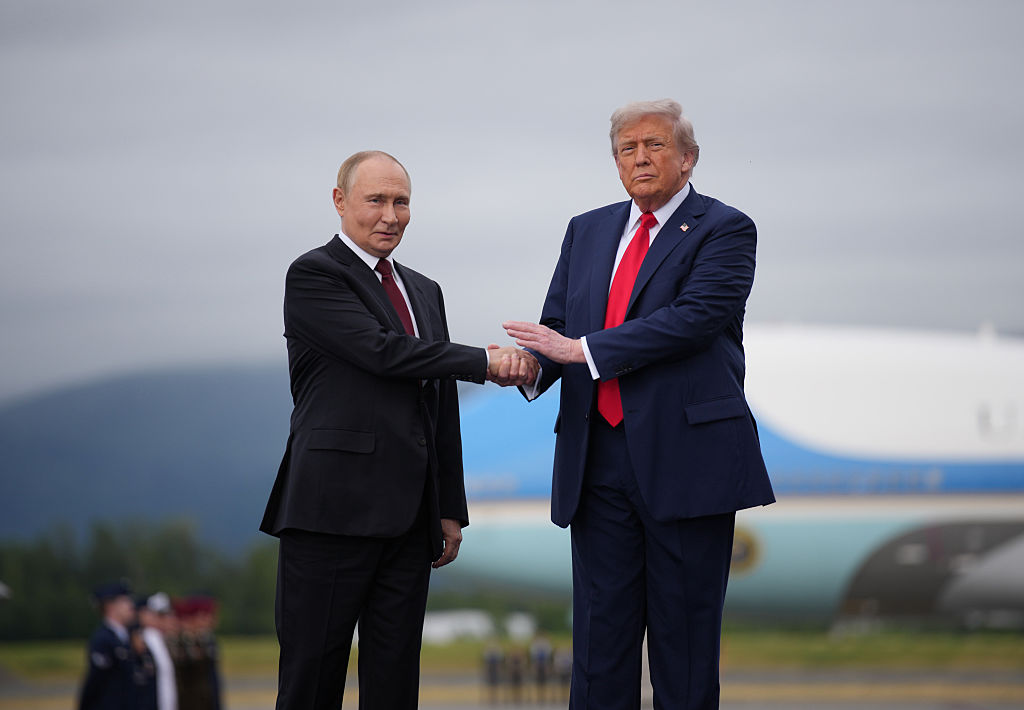
U.S. President Trump And Russian  President Putin Meet On War In Ukraine At U.S. Air Base In Alaska
(Photo by Andrew Harnik/Getty Images)

The debate in Washington over Ukraine peace talks has, since negotiations began in earnest after the August 2025 Anchorage summit between President Donald Trump and Russian President Vladimir Putin, largely centered on feasibility concerns: Are the sides dealing in good faith and is there a viable path to a settlement? Lost in all the posturing over optics and narrative control is a clear sense of why the administration has worked around the clock to craft one of the most technically complex, geopolitically ambitious draft peace deals of the post-Cold War period. As the war enters its fifth year, it’s worthwhile, on this inauspicious occasion, to revisit the strategic basis for continued U.S. engagement in this peace process. 

Top administration officials have reiterated over the past year that this is “not our war,” a stark departure from the Biden administration’s ideologized narrative of Ukraine as ground zero in a global battle between autocracy and democracy into which every American citizen is ipso facto conscripted. But that’s a rather different proposition from the idea that major U.S. interests are not at stake in this conflict. It is important here to proceed with due nuance. 

There is unquestionably a level on which this is an attrition war between two Eastern European countries. Americans would be quite justified in the belief that U.S. interests do not hinge on where exactly the future line of contact between Russia and Ukraine is drawn and the other bilateral terms on which the war ends. But this has never been simply a bilateral conflict on NATO’s eastern outskirts. It is in essence a strategic confrontation between Russia and NATO that is unfolding on Ukrainian soil, and the U.S. is deeply invested in advancing a diplomatic framework not just to end the immediate conflict but to defuse the geopolitical confrontation underpinning it. 

Take, by way of illustration, the guideposts that the administration set for itself in the National Security Strategy (NSS) and National Defense Strategy (NDS). The U.S. rightly seeks to retrench from Europe and to devote its scarce resources to other theaters, particularly the Western Hemisphere and Indo-Pacific, but this policy shift will prove difficult or even impossible to execute while the European continent is roiled by its most dangerous and destructive war since 1945. Though direct U.S. aid has been drastically scaled back, American arms and materiel are still flowing to Ukraine through European middlemen via the PURL program. Consequently, money that could have been spent by European states on bolstering European defense capabilities is being diverted to keep Ukraine’s war effort afloat. The Europeanization of European defense requires a credible defense-industrial base, which, in turn, demands significant long-term investments by the EU’s leading member states. But the war and its effects have crippled Europe’s macroeconomic performance in ways that, contrary to what this administration wants, will facilitate its continued dependence on the U.S. 

Policymakers must reckon with the reality that the U.S. cannot scale back its military footprint in Europe and renegotiate its longstanding role as the continent’s offshore balancer while NATO remains locked in a spiraling confrontation with Russia. The only way to secure lasting retrenchment—namely, the kind that ensures America will not be sucked back into European military affairs somewhere down the line—is to work toward a new regional security architecture that stabilizes NATO’s eastern flank over the long term. Such an outcome can only come from a framework peace deal that doesn’t just end the bilateral conflict between Russia and Ukraine but also plants the seeds of East–West stability on the continent. 

This means embarking on a set of deconfliction measures and confidence-building initiatives that have long been in American interests. Ukraine peace talks provide a uniquely opportune opening to, as stated in the NSS, end the perception and reality of NATO as a “perpetually expanding alliance” by formally agreeing to abstain from enlargement in the post-Soviet sphere in exchange for Russia’s concessions on its regional force posture. The relationship between Russia and Europe will be characterized by deterrence for the foreseeable future, but deterrence without dialogue and pragmatic engagement is a recipe for escalatory spirals. The dialogue initiated by Ukraine peace talks provides a diplomatic point of departure not just on nuclear arms control but on reciprocal limitations to conventional forces on both sides of NATO’s eastern flank, mitigating escalatory risks between Russia and Europe. Though many of these diplomatic linkages are valuable to ending the war on the best possible terms for America and Ukraine, they are also a vehicle for realizing aims that are inherently beneficial to the U.S. Not since the Helsinki Final Act of 1975 has there been a more attractive opportunity to advance a slew of American security and diplomatic interests in one go.

Anyone still unconvinced by the significance these talks hold is invited to explore the counterfactual: What if there is no deal? If the war ends with the exhaustion of one or both sides and a Korea-style armistice instead of a settlement that addresses underlying regional tensions, there is a serious likelihood that the conflict will either resume in the medium term or spread to other flashpoints (Belarus or Moldova being the most at-risk) in the post-Soviet sphere. Europe would find itself on the cusp of a new Cold War with fewer rules and safeguards than the last one, China and Russia will continue their consolidation into an anti-Western bloc increasingly capable of challenging American interests across the world, and retrenchment will become an ever-distant dream as the U.S. is forced to divert more resources to containing a hostile Russia.

The Ukraine peace process, from the standpoint of American grand strategic interests, is about preventing this kind of future. It’s about advancing a European security architecture that doesn’t just keep the peace between Russia and Ukraine but also lowers the odds of a conflagration anywhere else on NATO’s eastern flank, leaving the U.S. with maximum flexibility to pursue other priorities from a stronger geopolitical position. What’s at stake here is something much larger than an end to the war, painful and tragic as the past four years have been. This is the clearest chance at a course correction in European security since the Russia–Ukraine crisis began in 2014. That is the weight of this moment, and, if we stay the course, the promise of these negotiations.

The post Why Trump’s Right to Pursue Russia–Ukraine Peace appeared first on The American Conservative.

Cuba and the U.S. Are Bogged Down in History

Cuba and the U.S. Are Bogged Down in History

Heavy-handed efforts to coerce change in Cuba are liable to backfire.

IMG_5111
Image Credit: Benjamin Young

Murals of Che Guevara and posters of Fidel Castro proclaiming the Cuban Revolution’s success remain a common sight on the streets of Havana. The Cuban regime’s commitment to anti-colonial internationalism is equally visible, evident for instance in schools named after the Angolan liberation movement and memorials dedicated to Fidel’s anti-apartheid friend, Nelson Mandela. It is a country frozen in its revolutionary past and nostalgic for the Cold War days when the small island nation punched far above its geopolitical weight.  

The streets of Cuba reflect this stasis. Havana is eerily barren, and the numbers tell a stark story: Roughly 18 percent of the Cuban population left the island between 2022 and 2023. For most modern countries, this catastrophic demographic change would signal a need for internal reforms. But Cuba is not an ordinary country. It is a frozen republic that is trapped in its own internal contradictions and revolutionary relics. 

When I visited Cuba in January 2024, there was little traffic, and the streets were absent of people. Cheap pizza was the mainstay on local restaurant menus. Meat was a luxury. Apart from local herbal remedies, the shelves of a local pharmacy were barren. 

Much of the regime’s legitimacy is based on nostalgia. Cuba’s once-proud healthcare system is in tatters. Cuban doctors earn more money driving taxis for tourists. Buildings are in ruins. Garbage overflows onto the streets, leading to an epidemic of mosquito-driven diseases on the island. Even Cuba’s once iconic sugarcane industry is in steep decline. 

It is ludicrous to think that this deeply impoverished island nation, with its Soviet-era military equipment and massive fuel shortages, is a real threat to U.S national security. Nonetheless, that is what the Trump administration wants the American public to believe. On January 29, the White House ludicrously called the Cuban government “an unusual and extraordinary threat” to the U.S. 

Much like Cuba’s anachronistic condition, U.S policy towards Cuba is trapped in a museum of absurdities and Cold War–style red-baiting. It pretends that the Cuba of today is the same one that hosted Soviet nuclear missile sites in 1962 and almost dragged the world into nuclear armageddon. 

Marco Rubio, the son of Cuban immigrants and chief architect of the Trump administration’s Cuba policy, seems hell-bent on overthrowing the government in Havana. Triumphant after the capture of Venezuelan dictator Nicolas Maduro, Rubio is intent on putting the final nail in the coffin of the Cuban Revolution. 

The Trump administration has implemented a total blockade of foreign oil into Cuba, which has halted public transportation on the island. Farmers cannot get their produce to market. University students cannot attend their classes. The already debilitated country has come to a standstill. But if the goal of this oil blockade is to convince the Cuban people to rise up and overthrow the leadership, it will fail. 

While Rubio makes it no mystery that he hopes to bring down the communist regime in Havana, the Trump administration should be careful of what might come next. Although the communists in Havana have long been a nuisance to Washington, Cuba could be worse. It is not Haiti. If the U.S continues to block the import of oil into the island, however, the U.S risks turning Cuba into a Spanish-speaking Haiti only 90 miles off its coast. 

Unlike Haiti, Cuba does not have a gang violence problem, drug issues, or a child trafficking problem. While the contemporary condition of Cuba is depressing, it is not a completely failed state. For example, the Cuban government has long taken a hard stance on drugs. In 2024, the U.S State Department stated that Cuba “is not a major consumer, producer, or transshipment point for illicit drugs.” In 2025, Cuba arrested and extradited Chinese fentanyl kingpin, Zhi Dong Zhang, to Mexico and then the U.S to face trial. The unpopular fact is that Cuba has been a vital security partner to the U.S government in combatting regional drug trafficking. 

Moreover, unlike Venezuela’s Delcy Rodriguez, there is no immediate replacement for Miguel Díaz-Canel, the former engineer and present-day leader of Cuba. As unsavory as he is, there is no one who can easily step in for him. He is more or less a figurehead for the old guard political elite and military hardliners in the Cuban Communist Party, which really runs the show. Unlike Maduro’s Venezuela, Cuba’s system resembles a collective communist leadership. Replacing the leader at the top will not change the entire direction of the party’s apparatus.

Equally importantly, Cubans have already demonstrated a willingness to leave the island. The Trump administration risks further erosion of its already low public approval should images of Cubans adrift on makeshift rafts in the shark-infested Florida Straits find their way onto television screens across America. Will the Trump administration then deport these refugees back to poverty-stricken Cuba? 

Instead of further suffocating an already struggling island, the Trump administration should reconsider its Cuba strategy. If Trump truly seeks to be remembered as a president of peace, he should finish what Barack Obama began.

Normalizing diplomatic relations and lifting the oil blockade would not reward repression; it would empower the Cuban people. Greater economic engagement would create space for civil society and increase public pressure for meaningful reform. At the same time, it would narrow Havana’s ability to scapegoat the U.S. embargo for its own structural inefficiencies and policy failures.

Improved relations would also advance U.S. security interests. Expanded cooperation with Cuban authorities could strengthen maritime interdiction and anti–drug trafficking efforts in the Caribbean, reducing the flow of illicit narcotics, including fentanyl, toward American shores.

A strategy rooted in engagement rather than isolation would better serve both the Cuban people and U.S. national interests. Unfortunately, Rubio seems intent on making Cuba into another Haiti. 

The post Cuba and the U.S. Are Bogged Down in History appeared first on The American Conservative.