Saudi Arabia SLAMS “Brutal Iranian Aggression” Against Bahrain, Qatar, UAE, Jordan, and Kuwait — Gulf States Vow FULL RIGHT to Retaliate After Tehran’s Attack

Smoke billows from a building in a city skyline, with a body of water and boats in the foreground, indicating a possible explosion or fire incident.

A major geopolitical flashpoint erupted across the Middle East on Saturday after Iran launched missile and drone attacks targeting multiple Gulf nations, prompting Saudi Arabia to issue a blistering condemnation of what it described as “brutal Iranian aggression.”

Saudi officials made it clear that Riyadh is standing in full solidarity with the nations targeted in Saturday’s coordinated Iranian assault.

In its statement, the Kingdom warned that the attacks represent blatant violations of international law and expressed its readiness to assist its regional allies with “all its capabilities.”

According to a statement from the Saudi Foreign Ministry:

The Kingdom of Saudi Arabia condemns and denounces in the strongest terms the treacherous Iranian aggression and the blatant violation of the sovereignty of each of the United Arab Emirates, the Kingdom of Bahrain, the State of Qatar, the State of Kuwait, and the Hashemite Kingdom of Jordan, affirming its full solidarity and standing by the side of the sister states, and placing all its capabilities at their disposal to support them in all measures they take, and warning of the grave consequences of the continued violation of the sovereignty of states and the principles of international law.

WATCH:

Jordanian forces also reportedly intercepted ballistic missiles entering its airspace, as regional air defense systems were activated amid fears of a broader regional war.

In the UAE, air defense systems intercepted several incoming ballistic missiles, though falling debris reportedly killed one civilian in Abu Dhabi and caused property damage in a residential area, according to The Guardian.

According to the statement from the Ministry of Defence of the United Arab Emirates:

The UAE announces successful interception of several Iranian missiles targeting the country

The Ministry of Defense announced that the United Arab Emirates was subjected today to a brazen attack with Iranian ballistic missiles, which the UAE air defenses handled with the highest efficiency, successfully intercepting several of the missiles.

The relevant authorities in the country also dealt with the fallout of debris in a residential area in the city of Abu Dhabi, which resulted in some material damage and the death of an individual of Asian nationality.

The competent authorities confirm that the security situation in the country is under control, and all concerned parties are monitoring developments around the clock.

The Ministry condemned this attack in the strongest terms, affirming the country’s categorical rejection of targeting civilian facilities, installations, and national institutions, emphasizing that such acts represent a dangerous escalation and a cowardly act that threatens the security and safety of civilians and undermines stability.

The Ministry stressed that this targeting constitutes a flagrant violation of national sovereignty and international law, and that the country reserves its full right to respond to this escalation and take all necessary measures to protect its lands, people, and residents, in a manner that ensures the preservation of its sovereignty, security, and stability, and protects its interests and national capabilities.

The Ministry affirmed that it is on high alert and readiness to deal with any threats, and that it is taking all necessary measures to firmly counter everything that targets the disruption of the country’s security and stability, adding that the safety of citizens, residents, and visitors represents an utmost priority that cannot be compromised.

The Ministry urges the honorable public to obtain information from official sources in the country and to avoid circulating rumors or unverified information.

The State of Qatar has issued a strong condemnation following the attack:

The State of Qatar expresses its strongest condemnation of the targeting of Qatari territories with Iranian ballistic missiles, considering it a flagrant violation of its national sovereignty, a direct assault on its security and the safety of its lands, and an unacceptable escalation that threatens the security and stability of the region.
The Ministry of Foreign Affairs affirms that the State of Qatar reserves its full right to respond to this targeting, in accordance with the provisions of international law and in proportion to the nature of the aggression, in defense of its sovereignty and to safeguard its security and national interests.

The Ministry of Foreign Affairs emphasizes that the State of Qatar has been and remains among the first to call for dialogue with the Islamic Republic of Iran, and has advocated for continuing on this principle as the optimal foundation for addressing differences and resolving disputes through peaceful means, thereby sparing the region the risks of escalation.

The Ministry of Foreign Affairs affirms that the targeting of Qatari territories is inconsistent with the principles of good neighborliness and cannot be accepted under any pretext or justification, as the State of Qatar has always endeavored to distance itself from regional conflicts and sought to facilitate dialogue between the Iranian side and the international community. However, the renewed targeting of its territories does not reflect good faith and threatens the foundation of understandings upon which bilateral relations between the two countries were built.

The Ministry of Foreign Affairs also expresses the State of Qatar’s condemnation of the violation of the sovereignty of the State of Kuwait, the United Arab Emirates, the Hashemite Kingdom of Jordan, and the Kingdom of Bahrain in the treacherous Iranian aggression, affirming the State of Qatar’s full solidarity with these sister states in all measures they take to preserve their sovereignty, security, and stability.

The Ministry of Foreign Affairs renews the State of Qatar’s call for an immediate halt to any escalatory actions, a return to the table of dialogue, the prioritization of the language of reason and wisdom, and efforts to contain the crisis in a manner that preserves the security of the region, safeguards the interests of its peoples, and prevents slippage toward broader confrontations.

The post Saudi Arabia SLAMS “Brutal Iranian Aggression” Against Bahrain, Qatar, UAE, Jordan, and Kuwait — Gulf States Vow FULL RIGHT to Retaliate After Tehran’s Attack appeared first on The Gateway Pundit.

Iran Launches Retaliatory Missile Strikes on Israel After Joint U.S.–Israeli Attack on Tehran

Aerial view of a coastal city featuring buildings, a sandy beach, and ships in the Mediterranean Sea under clear skies.

Aerial view of a coastal city featuring buildings, a sandy beach, and ships in the Mediterranean Sea under clear skies.

Iran has launched retaliatory missile strikes against Israel hours after coordinated attacks by the United States and Israel on key strategic targets inside the Islamic Republic.

On Saturday, Israel confirmed it had launched a pre-emptive strike on Iranian territory, joined by a broader U.S. military offensive targeting military and nuclear sites across Tehran and other major cities, including areas near the office of Supreme Leader Ayatollah Ali Khamenei.

The Israeli Defence Minister declared the operation necessary “to remove threats to the State of Israel,” framing Tehran’s missile and nuclear ambitions as existential dangers.

President Donald Trump then released a video statement early Saturday morning confirming that the United States has begun what he described as “major combat operations in Iran.”

In response, Iranian state media and military sources reported missiles launched toward Israeli territory, triggering air-raid sirens across the nation and prompting civil defence alerts.

“A short while ago, the IDF identified missiles launched from Iran toward Israel. Defensive systems are operating to intercept the threat. In the past few minutes, the Home Front Command has sent a precautionary directive directly to mobile phones in the relevant areas,” IDF wrote on X.

Sirens blared across Tel Aviv, central Israel, and border communities, forcing thousands into shelters and safe rooms as air-defence systems engaged inbound threats. Israel’s Home Front Command has urged civilians to obey all instructions and seek immediate protection.

“Sirens were sounded in several areas across the country following the identification of missiles launched from Iran toward Israel. At this time, the IAF is operating to intercept and strike threats where necessary to remove the threat.”

Israeli Air Force wrote on X:

Another barrage has been launched toward the State of Israel. You are requested to continue to heed the instructions of the Home Front Command and the guidelines disseminated to you; remain in a protected space until an official announcement on the matter.

The IDF Spokesperson reiterates and emphasizes not to publish or share locations and documentation of impacts.

The Air Defense Array identifies and intercepts threats at all times.


The post Iran Launches Retaliatory Missile Strikes on Israel After Joint U.S.–Israeli Attack on Tehran appeared first on The Gateway Pundit.

Iranian Tyrant Ayatollah Ali Khamenei Reportedly FLEES Tehran, Transferred to “Secure Location” as Explosions Rock Capital

Iranian leader waving during a public address, with an Iranian flag in the background and a blue curtain setting.

Iranian leader waving during a public address, with an Iranian flag in the background and a blue curtain setting.

Iran’s Supreme Leader, Ayatollah Ali Khamenei, is reportedly no longer in Tehran and has been transferred to a secure location amid escalating military strikes targeting the Iranian regime’s infrastructure, The Jerusalem Post reported.

According to multiple breaking international reports, Khamenei was moved out of the Iranian capital after explosions rocked Tehran early Saturday morning, following what Israel described as a “pre-emptive strike” against regime targets tied to Iran’s military and intelligence apparatus.

Authorities reportedly shut down roads around the Supreme Leader’s compound as strikes were carried out near key government facilities, including locations in proximity to Khamenei’s own offices in downtown Tehran.

Founder Iran Israel Alliance, Emily Schrader, wrote on X, “In addition to the supreme leader’s office, air strikes are also targeting Imam Ali Missile Base and Qom nuclear facilities in the past few minutes. One of the targeted assassinations was Amir Hatami, the Commander-in-Chief of the Army.”

The Jerusalem Post reported:

Iranian Supreme Leader Ayatollah Ali Khamenei is not in Tehran and has been transferred to a “secure location,” an Iranian official confirmed to Reuters.

[…]

At the time of the IDF’s surprise attack, the military sent a national warning to all citizens to stay near protected spaces.

“This is a proactive alert to prepare the public for the possibility of missiles being launched toward the State of Israel,” the IDF said.

Iranian media reported strikes targeting the IRGC Intelligence Directorate, as well as hits in central Tehran. The country has closed its airspace in response to the strikes.

An Israeli security official tells Reuters that the operation was planned for months and its timing was set several weeks ago.

Sources in the defense establishment stated one of the objectives of the strikes, named ‘Shield of Judah,’ will be to “remove threats to the Israeli home front, with an emphasis on missile launchers and unmanned aerial vehicle bases.”

The post Iranian Tyrant Ayatollah Ali Khamenei Reportedly FLEES Tehran, Transferred to “Secure Location” as Explosions Rock Capital appeared first on The Gateway Pundit.

BREAKING: U.S. and Israel Attack Iran

Editor’s note: This is a developing story.

The U.S. and Israel attacked Iran Saturday morning. Iranian state media reported strikes on Tehran, the capital, and broadcast footage of smoke rising after rocket fire.

U.S. officials said the attack targeted Iran’s military infrastructure and that retaliation from Iran against American bases and assets was expected. In recent weeks, President Donald Trump has deployed warships, air defense systems, and fighter jets to the region.

Explosions were heard in several cities across Iran and air raid sirens sounded in Israel early Saturday morning.

The number of casualties has not been confirmed.

The post BREAKING: U.S. and Israel Attack Iran appeared first on The American Conservative.

BREAKING: President Trump Releases Fiery Late-Night Statement on Iran as U.S. Begins “Major Combat Operations”

Former President speaking at a podium with the presidential seal, flanked by U.S. flags, wearing a cap that says "USA."

Former President speaking at a podium with the presidential seal, flanked by U.S. flags, wearing a cap that says "USA."
Screenshot

President Donald J. Trump released a statement early Saturday morning following reports that the United States has begun what he described as “major combat operations in Iran” after Israeli forces launched pre-emptive strikes on Iranian targets overnight.

The Commander-in-Chief confirmed that American forces are now engaged in what he described as a “massive and ongoing operation” aimed at neutralizing the Iranian regime’s ability to threaten U.S. troops, American allies, and the homeland itself.

President Trump outlined a decades-long pattern of Iranian aggression, reminding Americans that the regime has openly chanted “Death to America” since its inception in 1979 while backing terrorist attacks that have killed U.S. service members across the Middle East.

He specifically cited:

  • The 1979 U.S. Embassy hostage crisis in Tehran, where dozens of Americans were held captive for 444 days
  • The 1983 Beirut Marine barracks bombing that killed 241 U.S. military personnel
  • Iranian-backed militias responsible for killing and maiming hundreds of American troops in Iraq
  • Continued proxy attacks against U.S. forces and commercial vessels in Middle Eastern shipping lanes

From Lebanon and Syria to Iraq and Yemen, the President warned that Tehran has spent decades funding and training terrorist militias responsible for destabilizing the region and spilling innocent blood.

Trump also pointed to Iran’s role in backing Hamas, which carried out the brutal October 7 attacks on Israel that killed more than 1,000 civilians, including dozens of Americans, and resulted in U.S. citizens being taken hostage.

Trump issued a direct appeal to the Iranian people, urging them to reclaim control of their nation from the country’s ruling Islamic regime.

President Trump:
A short time ago, the United States military began major combat operations in Iran. Our objective is to defend the American people by eliminating imminent threats from the Iranian regime—a vicious group of very hard, terrible people—whose menacing activities directly endanger the United States, our troops, our bases overseas, and our allies throughout the world.

For 47 years, the Iranian regime has chanted “Death to America” and waged an unending campaign of bloodshed and mass murder, targeting the United States, our troops, and innocent people in many, many countries. Among the regime’s very first acts was backing a violent takeover of the U.S. Embassy in Tehran, holding dozens of American hostages for 444 days.

In 1983, Iran’s proxies carried out the Marine barracks bombing in Beirut that killed 241 American military personnel. In 2000, they knew of—and were probably involved with—the attack on the USS Cole. Many died. Iranian forces killed and maimed hundreds of American service members in Iraq. The regime’s proxies have continued to launch countless attacks against American forces stationed in the Middle East in recent years, as well as against U.S. naval and commercial vessels in international shipping lanes.

It’s been mass terror, and we’re not going to put up with it any longer.

From Lebanon to Yemen, and Syria to Iraq, the regime has armed, trained, and funded terrorist militias that have soaked the Earth with blood and guts. And it was Iran’s proxy, Hamas, that launched the monstrous October 7th attacks on Israel, slaughtering more than 1,000 innocent people—including 46 Americans—while taking 12 of our citizens hostage. It was brutal—something like the world has never seen before.

Iran is the world’s number one state sponsor of terror and has recently killed tens of thousands of its own citizens on the streets as they protested. It has always been the policy of the United States—particularly my administration—that this terrorist regime can never have a nuclear weapon. I’ll say it again: they can never have a nuclear weapon.

That is why, in Operation Midnight Hammer last June, we obliterated the regime’s nuclear program at Fordow, Natanz, and Isfahan, Iran. After that attack, we warned them never to resume their malicious pursuit of nuclear weapons, and we repeatedly sought to make a deal. We tried. They wanted to do it—they didn’t. They wanted to do it—again—they didn’t want to do it.

They didn’t know what was happening. They just wanted to practice evil. But Iran refused, just as it has for decades and decades. They rejected every opportunity to renounce their nuclear ambitions, and we can’t take it anymore.

Instead, they attempted to rebuild their nuclear program and continue developing long-range missiles that can now threaten our very good friends and allies in Europe, our troops stationed overseas, and could soon reach the American homeland. Just imagine how emboldened this regime would be if they ever had—and were actually armed with—nuclear weapons as a means to deliver their message.

For these reasons, the United States military has undertaken a massive and ongoing operation to prevent this very wicked, radical dictatorship from threatening America and our core national security interests. We are going to destroy their missiles and raze their missile industry to the ground. It will be totally—again—obliterated.

We’re going to eliminate their navy. We’re going to ensure that the regime’s terrorist proxies can no longer destabilize the region or the world, attack our forces, or use their IEDs—or roadside bombs, as they are sometimes called—to so gravely wound and kill thousands and thousands of people, including many Americans.

And we will ensure Iran does not obtain a nuclear weapon. It’s a very simple message: they will never have a nuclear weapon. This regime will soon learn that no one should challenge the strength and might of the United States Armed Forces.

I built and rebuilt our military in my first administration, and there is no military on Earth even close to its power, strength, or sophistication. My administration has taken every possible step to minimize the risk to U.S. personnel in the region.

Even so—and I do not make this statement lightly—the Iranian regime seeks to kill. The lives of courageous American heroes may be lost, and we may have casualties. That often happens in war. But we’re doing this not for now—we’re doing this for the future—and it is a noble mission.

We pray for every service member as they selflessly risk their lives to ensure that Americans and our children will never be threatened by a nuclear-armed Iran. We ask God to protect all of our heroes in harm’s way, and we trust that, with His help, the men and women of the Armed Forces will prevail. We have the greatest in the world, and they will prevail.

To the members of the Islamic Revolutionary Guard, the armed forces, and all of the police, I say tonight: you must lay down your weapons and have complete immunity—or, in the alternative, face certain death.

So lay down your arms. You will be treated fairly, with total immunity—or you will face certain death.

Finally, to the great, proud people of Iran, I say tonight that the hour of your freedom is at hand. Stay sheltered. Don’t leave your homes. It’s very dangerous outside. Bombs will be dropping everywhere.

When we are finished, take over your government. It will be yours to take. This will probably be your only chance for generations. For many years, you have asked for America’s help—but you never got it. No president was willing to do what I am willing to do tonight.

Now you have a president who is giving you what you want—so let’s see how you respond. America is backing you with overwhelming strength and devastating force.

Now is the time to seize control of your destiny and unleash the prosperous and glorious future that is close within your reach. This is the moment for action.

Do not let it pass. May God bless the brave men and women of America’s Armed Forces. May God bless the United States of America. May God bless you all.

WATCH:

The post BREAKING: President Trump Releases Fiery Late-Night Statement on Iran as U.S. Begins “Major Combat Operations” appeared first on The Gateway Pundit.

BREAKING: United States and Israel Conduct Joint Attack on Iran

Smoke rises over a city skyline, indicating a possible explosion or fire, with buildings visible in the foreground.

Smoke rises over a city skyline, indicating a possible explosion or fire, with buildings visible in the foreground.

The United States and Israel have just launched a joint strike against Iran.

The New York Times has reported that both American and Israeli officials have confirmed they conducted a joint attack on Tehran.

Videos in Tehran show smoke rising near the offices where the Iranian Supreme Leader, Ayatollah Ali Khamenei, normally spends most of his time.

WATCH:

Per The New York Times:

The United States and Israel attacked Iran on Saturday, according to American and Israeli officials, as multiple explosions resounded in Tehran.

The attack followed months of rising regional tensions amid threats by President Trump to attack.

Israel Katz, the Israeli defense minister, announced the strike in a statement, adding that the country would be under a state of emergency. The U.S. and Israeli officials spoke on the condition of anonymity to discuss national security matters.

Three massive explosions were heard in central Tehran, according to the semiofficial news agency Fars. The casualties and targets were not immediately clear. In Israel, air-raid sirens blared across the country, warning Israelis to expect potential Iranian retaliation.


It’s unclear whether Khamenei was assassinated in the attack.

This is a developing story…

The post BREAKING: United States and Israel Conduct Joint Attack on Iran appeared first on The Gateway Pundit.

WATCH: An Exhausted Bill Clinton Releases Video Statement on His Epstein Deposition

Former President Bill Clinton speaks on various topics, with a bookshelf filled with books and decorative items in the background.

Former President Bill Clinton speaks on various topics, with a bookshelf filled with books and decorative items in the background.

Former President Bill Clinton released a video statement on his Epstein deposition.

On Friday Bill Clinton testified before the House Oversight Committee on his connections to Jeffrey Epstein from an office in Chappaqua, New York.

House Oversight Committee Chairman James Comer told reporters that Bill Clinton testified that to his knowledge President Trump was not involved with Epstein.

“Trump has never said anything to me to make me think he was involved with Epstein,” Comer said.

Fox News also reported that Bill Clinton’s lawyers stepped in several times to stop him from talking too much during the deposition.

Later Friday evening, a hoarse Bill Clinton broke his silence after his 7-hour deposition.

“I just finished testifying in front of the House Oversight Committee. I did it for two reasons. First, I live my country, including our Constitution. And America was built on the idea that no person is above the law. Even presidents. Especially presidents and that we should all live under the same set of rules,” Bill Clinton said.

“Though my brief acquaintance with Epstein ended years before his crimes came to light, and though I never witnessed during our limited interactions any indication of what was truly going on, I offered the little I do know in hopes that it might prevent anything like this from ever happening again,” Clinton said.

“I know what I saw, and more importantly, what I didn’t see. And I know what I did, and more importantly, what I didn’t do,” Clinton said echoing his opening statement to the Committee.

Bill Clinton also lashed out at the Oversight Committee for deposing Hillary Clinton.

“I also have to say something personal. Republicans made Hillary testify yesterday and she had nothing to do with Jeffrey Epstein, nothing. She has no memory of even meeting him,” Clinton said.

WATCH:

President Trump earlier Friday appeared to defend Bill Clinton.

“I don’t like seeing him deposed, but they certainly went after me a lot more than that,” Trump said.

WATCH:

The post WATCH: An Exhausted Bill Clinton Releases Video Statement on His Epstein Deposition appeared first on The Gateway Pundit.

The Tender Mercy of Robert Duvall

The Tender Mercy of Robert Duvall 

From Mac Sledge to Col. Kilgore, Duvall’s characters embodied the soul of our nation.

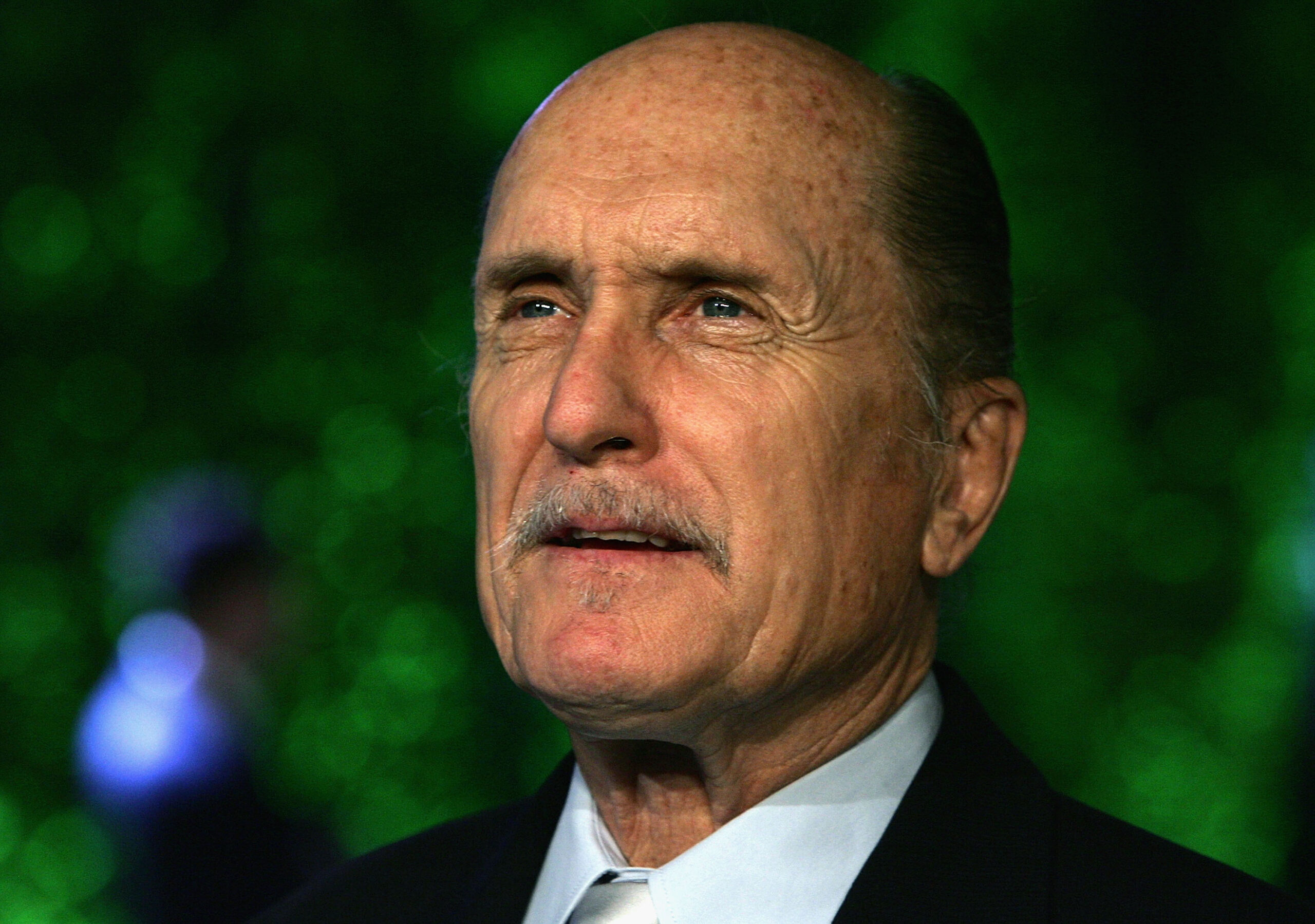
Vanity Fair Oscar Party - Arrivals

Back in the old America, where country music still mattered and real men donned decent blue jeans and 10-gallon hats and sang until their hearts turned blue, Robert Duvall crooned beneath the heavens in front of a 40-foot wide Lonestar State Flag. In a dusty, dim Texas bar, couples held hands and swayed slowly as Mac Sledge, a washed-up country singer portrayed by Duvall in Bruce Beresford’s incredible 1983 film, Tender Mercies, sang the beautiful medley “If You’ll Hold The Ladder (I’ll Climb To The Top).”

There are so many indomitable performances by Duvall throughout his career that it’s difficult to choose a favorite, but for me, his redemptive arc as Sledge in Tender Mercies takes the very top prize. Always the real deal, Duvall had told Beresford he would only take on the role if Beresford promised Duvall he could sing the songs in the music-heavy film without autotune and in his own voice. 

For that magnetic, majestic performance of true grit and faded misery, Duvall won the award for Best Actor at the 56th Academy Awards in 1984. The country music star Dolly Parton, who co-presented the award standing next to a youthful Sylvester Stallone, screamed with delight as she tore open the envelope. 

There is no easy answer to the film, no sudden flash of light that completes the blighted canvas. That’s what made it so great. After all, life’s a lot like that too. “I don’t trust happiness,” Sledge tells his girlfriend Rosa Lee (played by Tess Harper), a young widow living on the edge of nowhere with her impressionable son. “I never did, I never will.” 

But happiness is exactly what Duvall brought to America and viewers from around the world in a career that spanned country music barrooms to the war-torn beaches of Vietnam. He didn’t dance for fun or toss away one-liners for laughter. His characters were tough men, broken men, decent men, and devout men. They were the type of men that rarely seem to exist anymore in the new world we have conjured with pixels and irony. His loss is a tragedy not only to the giant empire of film but the one we built and lost somewhere between New York City and Los Angeles. 

Duvall, one of the great American actors of the 20th century, passed away peacefully at his home in Middleburg, Virginia on Sunday, February 15. He was 95 years old and remembered for his great passion and dedication to the silver screen in a statement released the next day by his wife Luciana.

“Bob gave everything to his characters and to the truth of the human spirit they represented,” Luciana wrote. “In doing so, he leaves something lasting and unforgettable to us all.” Duvall played many memorable characters in a career that spanned seven decades. The actor and director starred in lead roles in The Great Santini, Tender Mercies, and The Apostle, earning nominations for best leading actor in each at the Academy Awards. 

In 2003, Duvall portrayed Robert E. Lee in Ronald F. Maxwell’s Civil War drama Gods and Generals. A personal favorite of mine was his domineering force as crew chief and car builder Harry Hogge in the sports action film Days of Thunder featuring a young Tom Cruise. An old-school mechanic in Gone in 60 Seconds, a mysterious neighbor in To Kill a Mockingbird, and a fatherly CEO in Adam Sandler’s basketball love story Hustle, Duvall’s range was immense.

Duvall is perhaps best remembered for his brief role in Francis Ford Coppola’s tour de force Apocalypse Now. Though on screen for barely 15 minutes, Duvall delivered one of the most indelible performances in film history. Descending into the battlefield via a helicopter blaring “Ride of the Valkyries” in the middle of a burning jungle, the raw energy of Duvall’s character, the maniacal Col. Bill Kilgore, embodies the pure anarchy, chaos, and violence of the Vietnam War. 

“You smell that?” Kilgore screams over the roar of a helicopter after landing on a bombed-out beachfront. “Napalm, son. Nothing else in the world smells like that. I love the smell of napalm in the morning. You know that gasoline smell? Smells like victory.” 

Surveying the destruction wrought by his boys, Kilgore opens a deck of playing cards and begins tossing a card on each dead body he passes. A lieutenant in the background, via translator, yells at frightened Vietnamese civilians: “We are here to help you.” Duvall’s Kilgore is insane and completely untamed, emblematic of the on-the-ground reality for what became a red, white, and blue killing field. It’s why, nearly 50 years after its premiere, audiences can still instantly recall his stunning performance in the Palme d’Or-winning film. 

Duvall is also remembered for his iconic portrayal of Tom Hagen, the quiet intellect of the Corleone mob family in Coppola’s 1972 film, The Godfather, and its 1974 sequel, The Godfather II. Though born a German-Irish orphan, Duvall’s character becomes consigliere and lawyer for mob boss Vito Corleone, acting as the trusted advisor and confidant for the crime family. Duvall’s character is the order amid Corleone chaos. He anchors the film in a way that no other character can. It’s a role that only an actor as skilled as Duvall could portray. 

Duvall could be raw and electrifying, remorseful and forlorn, direct and blistering, calculated and charismatic. He was one of the greatest to ever do it. He often portrayed a side of America that is now fleeting, in honest and mercurial ways. He will be missed, immensely. See you on the other side, Mr. Duvall.

The post The Tender Mercy of Robert Duvall appeared first on The American Conservative.

Trump Seeks to Extend Domestic Spying Powers He Once Condemned

Trump Seeks to Extend Domestic Spying Powers He Once Condemned

The White House is pushing Congress to extend the government’s surveillance authority.

Inside the National Security Administration

In an April 10, 2024 post on Truth Social, then-candidate for president Trump urged Republicans in Congress to “KILL FISA,” referring to the U.S. law establishing procedures for foreign surveillance. “IT WAS ILLEGALLY USED AGAINST ME, AND MANY OTHERS. THEY SPIED ON MY CAMPAIGN!!!” Yet now that he has entered the White House for a second term, Trump is seeking to extend those spying powers he once denounced.

As POLTICO reported last week, the Trump administration, in an effort led by White House deputy chief of staff Stephen Miller, is quietly pressing Congress to approve a “clean” extension of Section 702 surveillance authorities, potentially through 2027. 

Section 702 of the Foreign Intelligence Surveillance Act originally became law in 2008 after the U.S. Congress voted to retroactively authorize parts of a secret, unconstitutional warrantless surveillance program constructed under the George W. Bush administration during the War on Terror after it was exposed to the American public in December 2005 by James Risen of the New York Times. As Risen and a colleague wrote at the time, citing anonymous U.S. officials,

Under a presidential order signed in 2002, the intelligence agency [NSA] has monitored the international telephone calls and international e-mail messages of hundreds, perhaps thousands, of people inside the United States without warrants over the past three years in an effort to track possible “dirty numbers” linked to Al Qaeda.

We later learned through the brave whistleblowing of Edward Snowden and reporting from Glenn Greenwald that the NSA’s secret data collection program extends well beyond the originally reported “hundreds, perhaps thousands” of Americans; the NSA’s internal motto is “collect it all,” and that organization engages in surveillance and bulk data collection against every American citizen.

Under the pretext of targeting foreigners abroad, Section 702 of FISA has expanded the federal government’s ability to warrantlessly collect Americans’ private communications, then later search through those communications using Americans’ personal data. So-called “incidental” or “backdoor” searches have long allowed intelligence agencies like the FBI to access constitutionally protected private communications without ever going to a judge. Congress has nominally required intelligence agencies to estimate the frequency of such database queries, yet when intelligence officials are—albeit rarely—confronted by lawmakers, they have repeatedly failed to produce meaningful numbers. With the FBI and other intel agencies ignoring even minimal legal mandates to keep a tally of its own “backdoor searches,” the true scope of warrantless access to Americans’ communications remains largely unknown.

Even so, Americans do not have to wonder whether or not those vast spying powers will ever be wielded for political purposes against them. That has already happened.

In a 2019 report, Justice Department Inspector General Michael Horowitz found that the FBI made “fundamental errors” and provided misleading information to the secret FISA court in order to obtain surveillance authorization targeting 2016 Trump campaign official Carter Page. In April 2022, the Office of the Director of National Intelligence released its annual transparency report on the intelligence community’s use of national security surveillance authorities, revealing that the FBI conducted up to 3.4 million warrantless queries of Americans’ data in 2021.

Those high profile spying abuses led to a legislative battle in April 2024 between the House intelligence committee—which had proposed a version of FISA that kept all of the U.S. security state’s abilities to surveil and collect data on American citizens in tact—and the House judiciary committee—which sought to introduce reforms to prevent intelligence agencies from engaging in those surveillance activities against Americans.

House Speaker Mike Johnson (R-LA)—who in July 2023 claimed that the unchecked power of intelligence agencies “is what keeps [him] up at night” and denounced how “the top law enforcement agency in the country, that is supposed to be protecting and serving the American people, is being used against them, it’s violating the privacy of Americans”—ultimately cast the deciding vote to reject an amendment requiring law enforcement to obtain a warrant before searching Americans under Section 702, extending the U.S. security state’s authority until its scheduled sunset on April 20, 2026.

In January 2025, a federal district court ruled that law enforcement agencies must obtain a warrant before searching Americans’ communications collected under Section 702 of FISA, rejecting the government’s longstanding reliance on a “foreign intelligence” exception. But the current version of Section 702 that Miller and the Trump administration are pushing through Congress does not include an official warrant requirement for querying Americans’ data, signaling the administration’s willingness to openly violate the Constitution and continue the now decades-long process of shredding Americans’ fourth amendment protections. Congress, which has routinely abdicated its own responsibilities to the executive branch on matters of war and intelligence oversight, will likely follow their lead.

The post Trump Seeks to Extend Domestic Spying Powers He Once Condemned appeared first on The American Conservative.

Killing Cartel Bosses Won’t Solve Mexico’s Organized Crime Problems

Killing Cartel Bosses Won’t Solve Mexico’s Organized Crime Problems

Cartel violence and drug trafficking can’t be fixed with just bullets or explosives.

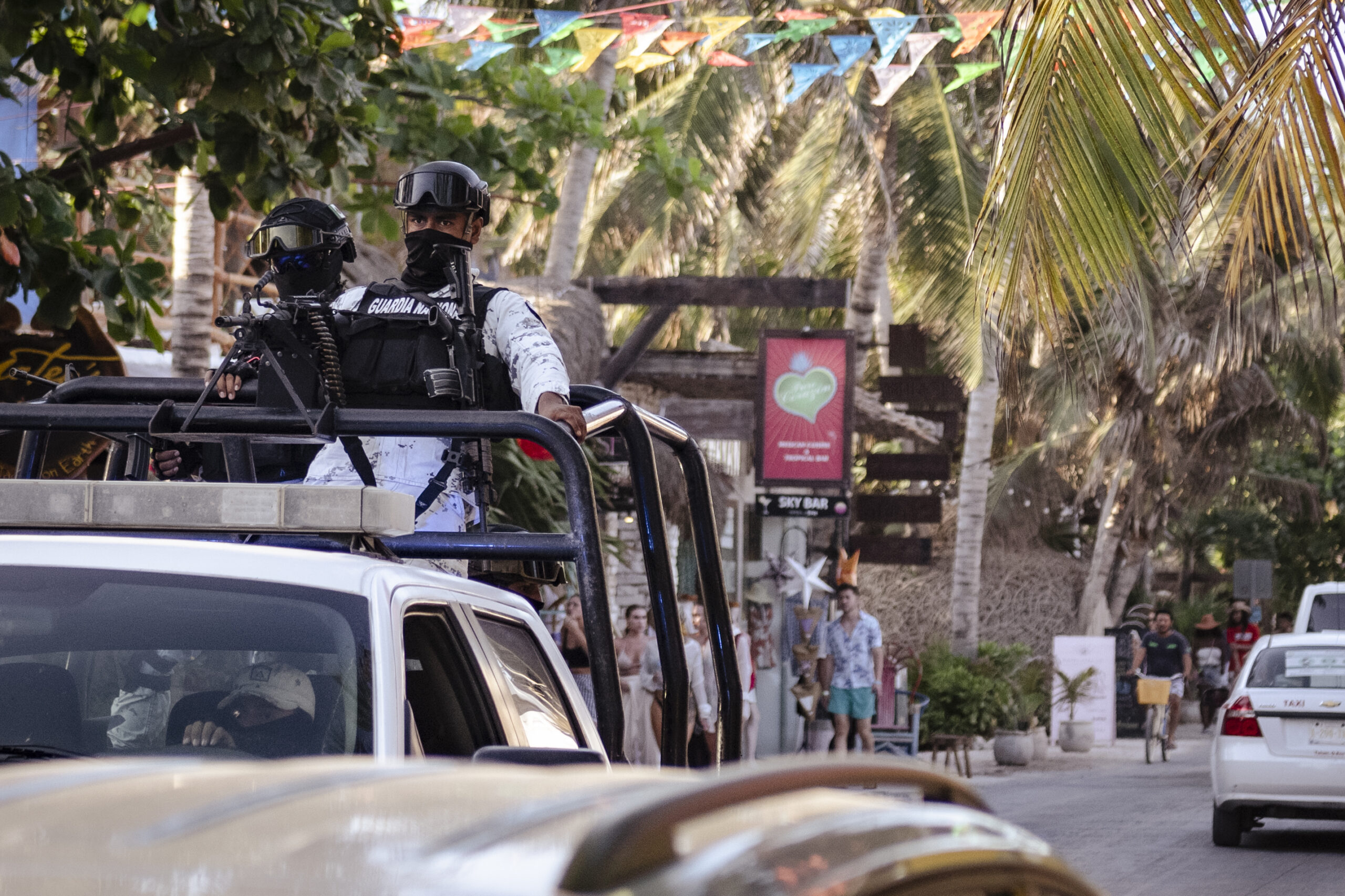
Mexican National Guard responding to a shooting in Tulum, Mexico

The Mexican Army on Sunday closed the net on Nemesio “El Mencho” Oseguera Cervantes, the leader of the brutal Jalisco New Generation Cartel (CJNG), one of Mexico’s largest and most violent criminal organizations. Oseguera decided to go down fighting, and the operation turned into a vicious gunfight that left the kingpin mortally wounded and eight cartel members dead.

The cartels responded aggressively to the Mexican government’s takedown of one of their most prominent leaders. Attacks against Mexican military and police forces broke out across the country, and cartels burned hundreds of vehicles in the streets, a tactic used to disrupt and delay state reaction to cartel activity and terrorize civilian bystanders. In the state of Jalisco, the government reported Monday that cartel attacks killed 25 Mexican national guardsmen, a state prosecutor, and a private citizen; Mexican security forces returning fire killed 30 cartel gunmen.

The operation was made possible by American intelligence, which pinpointed the cartel leader’s location, although the attempted capture was carried out by Mexican troops alone. The U.S. has placed increasing pressure on the Mexican government to crack down on cartels as part of its border security plan, something Mexico under the Morena party has long been hesitant to do. Its previous president, Andrés Manuel López Obrador, largely ignored organized crime under his “hugs, not bullets” campaign to end violence by attempting to solve its “root causes” of poverty and youth unemployment.

The American right broadly has taken an aggressive stance against the cartels, and support for further militarization of anti-cartel operations is popular among MAGA influencers and the Republican party base. “I am once again calling to bomb the cartels,” Jack Posobiec wrote in a popular post on X earlier this week, and the sentiment has been echoed by figures as diverse as Elon Musk, Sen. Ted Cruz (R-TX), and Rep. Dan Crenshaw (R-TX).

The Trump administration itself has hinted at an endorsement of this approach, with President Donald Trump at times suggesting that the U.S. would begin conducting airstrikes against cartel assets on the ground similar to the strikes the U.S. military has conducted on drug boats in the Caribbean and Pacific. 

The Mexican government has responded to U.S. pressure by scaling up the intensity of anti-cartel operations and cracking down on its northern border. Since President Claudia Sheinbaum’s election, Mexican forces have seized hundreds of tons of illegal drugs and imprisoned tens of thousands of participants in drug production and trafficking and organized crime. Sheinbaum also took the remarkable step of extraditing 55 of the country’s imprisoned cartel leaders to the U.S. to face justice on American soil.

But while aggressive and flashy military operations and the capture and killing of drug kingpins may appeal to the imaginations of the American right, the truth of the matter is that cartels are not a problem that can be solved by bombs, drones, special ops teams, or even large-scale military deployments. We know because Mexico and the U.S. have attempted this strategy before, during the presidencies of Vicente Fox and most notably Felipe Calderón. With U.S. assistance in the form of the Mérida Initiative, the Mexican Army swept through cartel strongholds with the intent to kill as many gangsters as they could, destroy their redoubts, and shatter their leadership and morale.

The results were disastrous. The Mexican Army was able to kill thousands of criminals, but cartels adapted and hit back hard. Organized crime became increasingly militarized and significantly more violent than it had in the 20th century, and cartels adopted guerilla and insurgent tactics, killing Mexican soldiers in ambushes and bombings and then melting away to blend in with the civilian populace. Mexican police and military forces became frustrated and paranoid, and reports soon followed about civilians shot by nervous soldiers at checkpoints or killed by police in firefights with fleeing criminals. Cartels began targeting civilians in reprisals against government crackdowns, and the military occasionally attacked civilians who they suspected of harboring or protecting cartel operatives. The murder rate in Mexico skyrocketed, and has never come down to pre-21st century levels, but the quantity of drugs crossing the border to the U.S. did not significantly decline.

In 2009, Calderón published a list of Mexico’s most wanted criminals, naming 37 cartel leaders and drug kingpins. By 2015, 33 of the 37 had been captured or confirmed dead, but their elimination had little apparent effect on the volume of drug trafficking or cartel violence. Taking out a cartel leader often weakened or sometimes even destroyed his gang, but the territory was simply taken over by competing groups, sometimes sparking turf wars that further escalated violent crime in the region.

The death of “El Mencho” is likely to have the same effect. His son and heir, “El Menchito,” is currently imprisoned in the U.S., leaving the CJNG without leadership. That is more likely to result in a fight as other cartels muscle in to take over their operations and CJNG subordinates fight for the throne than in a material decline in drug trafficking.

The fundamental problem facing Mexico is not one of guns or manpower. The cartels are overwhelmingly outmatched militarily by the Mexican Army and National Guard, regardless of the photographs of cartel gunmen looking tough in fatigues and armored cars that circulate on the internet. 

Ultimately, the issue is one of state capacity and economics. The Mexican army can kill cartel operators and capture cartel bosses, but the Mexican government and police forces can’t stop new entrants from moving into the territory, intimidating civilians, buying off government officials, and purchasing local complaisance with the largesses of the drug trade. Drug trafficking is lucrative enough to create a practically endless appetite for expansion and promises wages high enough to make recruitment from Mexico’s youth functionally limitless.

Adding American weapons and manpower to the equation will not change these realities. The U.S. military cannot govern the country for the Mexicans, nor can it turn off the massive consumer market in the U.S. that funds the drug trade. If the U.S. is not careful, its pressure to crack down on cartels could lead to a less stable situation south of the border.

Instead of fantasizing about airstriking the cartels into oblivion, the American right should take seriously the need to cooperate to build Mexican state capacity and choke off the cartels economically. This has already been a major theme of Sheinbaum’s security policy, which aims to increase centralization and federal control over policing via the National Guard and building up Mexico’s intelligence services. Increasing intelligence penetration and identifying the means of disrupting cartel supply chains and operations in ways that cause the greatest cost and reduce the economic viability of drug trafficking is the most durable way to reduce the volume of drugs and crime that reach American soil. This requires the use of military force and police action, to be sure, but force alone will not be sufficient; it must be well used.

Additional work needs to be done to increase the professionalization and integrity of local government and the Mexican judicial system—the latter of which has recently become more vulnerable to exploitation after the recent judicial reform which subjects judges to popular election. Only once the Mexican government, national and local, is capable of holding its own against cartel influence will eliminating cartels function as a way to reduce organized crime and drug trafficking rather than simply opening new territory for other gangs to fight over.

This kind of work is not glamorous. It is not easy, the way smashing sicarios with cruise missiles or drones would be. But it is the only serious and durable approach to dealing with the cartel problem that the U.S. and Mexico face.

The post Killing Cartel Bosses Won’t Solve Mexico’s Organized Crime Problems appeared first on The American Conservative.