Report: Trump Weighing ‘Final Blow’ Options to End Iran War

Vibrant flames and colorful smoke rise into the night sky during a fireworks display, illuminating the surrounding area with bright colors and sparks.

Vibrant flames and colorful smoke rise into the night sky during a fireworks display, illuminating the surrounding area with bright colors and sparks.

The Pentagon is planning for one massive blow to end the war with Iran if existing talks fail, according to a new report.

The report from Axios says multiple options for the War Department’s “final blow” include American troops holding sensitive Iranian positions. The report notes that no decision has been made on any option.

Seizing or blockading Kharg Island, which is Iran’s export hub for oil, has been discussed publicly for weeks and tops the list of options.

Larak Island in the Strait of Hormuz is another potential target because Iranian bases troops there.

Taking Abu Musa Island in the Persian Gulf is also under consideration, as is taking control of any Iranian oil tankers.

U.S. forces could also come into play by seizing highly enriched uranium that lies underneath facilities severely damaged in June by U.S. bombing.

On Wednesday, White House press secretary Karoline Leavitt signaled that the Trump administration was in no mood to allow Iran to drag out the talks, according to Fox News.

“President Trump does not bluff, and he is prepared to unleash hell,” she said.

“Iran should not miscalculate again. Their last miscalculation cost them their senior leadership, their navy, their air force and their air defense system,” she said.

“Any violence beyond this point will be because the Iranian regime refused to understand they have already been defeated and refused to come to a deal.”

Leavitt noted that Iran has suffered “the largest elimination of a navy over a three-week period since World War II. Again, let me reiterate, this is the largest elimination of a navy on the face of the planet in a three-week period since World War II.”

“Their ambitions of building a nuclear weapon have also been crushed to an even greater degree than they were in Operation Midnight Hammer in June 2025. That’s why you’re beginning to see the regime look for an exit ramp.”

“There does not need to be any more death and destruction, but if Iran fails to accept the reality of the current moment, if they fail to understand that they have been defeated militarily and will continue to be, President Trump will ensure they are hit harder than they have ever been hit before,” she warned.

To complete the devastation, an Israeli attack killed the top leaders of Iran’s navy, according to the Times of Israel.

Israel announced that Admiral Alireza Tangsiri, commander of the Islamic Revolutionary Guard Corps Navy, was killed along with all key commanders of the IRGC Navy.

This article appeared originally on The Western Journal.

The post Report: Trump Weighing ‘Final Blow’ Options to End Iran War appeared first on The Gateway Pundit.

EXPLOSIVE: Whistleblower Exposes Massive Election Fraud Ring in California — Claims Voter Reg Office Hands Lists of Stolen Names Directly to Gangbangers to Rig Petitions with Paid Homeless Signers

Image depicting a blurred figure discussing illegal activities related to voter registration and gang involvement, with text highlighting various unlawful tactics for obtaining registered voters.

Image depicting a blurred figure discussing illegal activities related to voter registration and gang involvement, with text highlighting various unlawful tactics for obtaining registered voters.
Screenshot

It’s worse than we thought. As the radical left continues to fight tooth and nail against basic election transparency and the SAVE America Act, independent journalists are exposing exactly why they want the system vulnerable.

Higby, working alongside a group dubbed the “Citizen Justice League,” which includes conservative investigative heavyweights like James O’Keefe and Savannah Hernandez, spent weeks disguised as a homeless man on Skid Row to capture this sickening corruption on hidden camera.

The Gateway Pundit broke coverage of James O’Keefe Media Group’s devastating undercover videos exposing the full street-level operation on Los Angeles Skid Row.

In Part II of the “Cash for Ballots” series, O’Keefe and Higby captured hidden camera footage of petitioners paying desperate homeless individuals $2–$3 per forged signature to impersonate real registered voters using pre-printed lists of actual California voter names and addresses.

Circulators hovered over the signatures, making sure the homeless forgers got the names and handwriting “just right” before handing over the cash.

O’Keefe and Higby then went door-to-door to the real addresses on those lists, only to find longtime residents confirming the named voters hadn’t lived there in years, yet election mail was still being delivered to ghosts.

Check our previous reporting on California fraud below:

During an interview with Alex Jones, investigative journalist James O’Keefe said that he and associate Cam Higby have obtained whistleblower testimony from within a Democrat Party–affiliated operation.

In an exclusive sit-down interview posted on YouTube on Thursday, Cam Higby spoke with an anonymous member of the illicit operation, who admitted EVERYTHING on tape.

According to Higby, “the gangbangers obtain the lists of names from the registration office and then distribute the names to the petitioners on the streets.”

WATCH:

Here is how the massive fraud ring operates, according to the whistleblower:

  • Bribing the Homeless: Petition circulators are illegally paying homeless drug addicts a couple of bucks to sign ballot initiatives and register to vote.

  • Widespread Identity Theft: Because valid signatures require registered voters, the fraudsters use preprinted lists of random people’s names. The homeless individuals are then paid to forge signatures using these stolen identities.

  • The “75% Rule”: According to the whistleblower, circulators only get their full payout if at least 75% of their signatures come from verified registered voters, heavily incentivizing them to fake the data.

  • GANG INVOLVEMENT: It gets worse. The fraudsters admitted that local street gangs are heavily involved, selling lists of names and acting as enforcers on the street.

  • The Subcontractor Loophole: The massive organizations funding these petitions shield themselves from criminal liability by using a web of “middleman” companies and independent subcontractors, keeping their hands completely clean.

Perhaps the most terrifying revelation from the interview is where the gangs and fraudsters are getting the names of the registered voters to forge.

When Higby asked where the names come from, the whistleblower

dropped a massive truth bomb: they are allegedly buying them directly from corrupt voter registration databases.

“They get it from the registration office. They pay a lot of money… from the registration office directly,” the fraudster admitted on tape, calling the state offices “corrupt as hell.”

These foot soldiers are reportedly making $30 an hour, plus cash per signature, all handed out by shadowy middlemen operating in downtown LA. And what kind of policies are they pushing through with this massive fraud? According to the insider, they are overwhelmingly “liberal” laws.

The radical left is allegedly using gangbangers, stolen identities from the state, and homeless individuals to hijack the democratic process and push through their extreme agenda.

Watch the full explosive interview below:


The post EXPLOSIVE: Whistleblower Exposes Massive Election Fraud Ring in California — Claims Voter Reg Office Hands Lists of Stolen Names Directly to Gangbangers to Rig Petitions with Paid Homeless Signers appeared first on The Gateway Pundit.

Trump Again Pauses Iran Power Plant Ultimatum

President Donald Trump announced on Truth Social that he would push back the date by which Iran must agree to a ceasefire or have its power plants destroyed by U.S. airstrikes.

“As per Iranian government request, please let this statement serve to represent that I am pausing the period of energy plant destruction by 10 days to Monday, April 6, 2026 at 8 PM Eastern time,” Trump wrote.

The president said that “talks are ongoing and despite erroneous statements to the contrary by the fake news media, and others, they are going very well.” Iranian officials have repeatedly stated that they are not engaged in negotiations with the United States.

The post Trump Again Pauses Iran Power Plant Ultimatum appeared first on The American Conservative.

MUST SEE: Susan Kokinda Breaks Down President Trump’s Brilliant Restructuring of the Global Diplomatic Architecture

Elderly woman with short gray hair and glasses speaking in a cozy room, conveying a message of importance and sincerity.

Elderly woman with short gray hair and glasses speaking in a cozy room, conveying a message of importance and sincerity.
Susan Kokinda breaks down how President Trump a new global diplomatic architecture. It looks like the EU and London are absent from the table and look more and more irrelevant as the days go by.

Susan Kokinda has been studying the US – European relationship for decades now.

Her podcasts, along with her fellow members at Promethean Action are not to miss.

This week Susan discussed the how Trump is reorganizing the global community.

This was an exceptional podcast.

Susan Kokinda: President Trump is not only dealing with the right people in Iran, he’s dealing with the right people in the region, the ones who matter in this conflict: Pakistan, the Gulf states, Turkey, and back channels into Iran itself.

Now look at who is not in that room, who he is not dealing with? the United Kingdom, the European Union, NATO. Not only are they not in the room, but the British, the Europeans, and their insane green policies are literally out in the cold. And with them, their proxy war in Ukraine.

But that’s not what the mainstream media says. They say Trump backed down or blinked. That’s the story they’re selling. But what the media covers up, or what too much of the MAGAsphere just doesn’t get, is that Donald Trump has created a new diplomatic space where nations and their real economies are the currency of the realm. —not imperial manipulation.

I’m Susan Kokinda. I’ve spent decades studying the Empire’s Great Game and how financial control, managed conflict, and energy dependence are used to keep sovereign nations in line. I know what the map looks like when the system is losing. And right now it is losing.

So if you want to understand the transformation taking place in the world, like, share, and subscribe so you can stay in touch and we can expand our reach. Here’s what I’m going to cover today. First, who is at the table as Trump works to settle the Iran conflict and the new diplomatic architecture it represents.

Second, who is not at the table—why Europe has reduced itself to irrelevance.

And third, Ukraine and why Zelensky’s frantic maneuvering this week tells the whole story.

So who is actually doing the diplomacy to resolve this conflict? The Wall Street Journal told the story this week, and the roster is pretty remarkable. Foreign ministers from Egypt, Turkey, Saudi Arabia, and Pakistan gathered before dawn in Riyadh last week to work out a diplomatic off-ramp. Egyptian intelligence opened a direct channel to Iran’s Revolutionary Guard. Turkey worked the phones between Iran and Egypt. Oman carried messages on maritime security. And the president confirmed it himself, first in these remarks to the press: We have very much in mind our partners in the Middle East.

And then the president acknowledged Pakistan’s role by reposting Prime Minister Sharif’s statement, which said, subject to the concurrence by the United States and Iran, Pakistan stands ready and honored to be the host to facilitate meaningful and conclusive talks for a comprehensive settlement of the ongoing conflict.

Now look at that roster. Pakistan, Saudi Arabia, Egypt, Turkey, the Gulf states. All of these countries are members of Trump’s board of peace. The architecture he began building with the Abraham Accords and now operating at full speed under the pressure of a shooting war while still lining up billions in investment for rebuilding Gaza.

And that pressure is doing something else entirely. Something the media is completely ignoring. Iran and its proxies in neighboring countries are being isolated and defanged. In early March, the Lebanese government banned Hezbollah and told it to turn over its weapons. Then the Palestinian Authority publicly condemned Iran and sided with Saudi Arabia.

Did you catch that? The Palestinian Authority condemning Iranian attacks on Gulf states and reaffirming solidarity with Saudi Arabia. And Hamas, Iran’s own proxy in Gaza, is now seriously considering a disarmament proposal from Trump’s Board of Peace. The entire Axis of Resistance rhetorical edifice has crumbled.

This was an incredible take on the evolving global community and who’s winning.

Watch the entire video below.

The post MUST SEE: Susan Kokinda Breaks Down President Trump’s Brilliant Restructuring of the Global Diplomatic Architecture appeared first on The Gateway Pundit.

The Francis Scott Key Bridge in Baltimore Collapsed Two Years Ago – The Rebuild is Going a Little Slow (VIDEO)

Do you remember when the Francis Scott Key Bridge in Baltimore collapsed after being hit by a cargo ship? That was two years ago today.

How is the rebuild going in blue, Democrat controlled Maryland? You might say it’s a little slow.

It may be a very large bridge, but it seems like this process is being intentionally dragged out.

It’s not exactly a picture of government efficiency.

In related news, the NTSB has released their final report on the collapse.

From FOX 45 in Baltimore:

NTSB’s final report

In December 2025, the NTSB released its final report on the collision of the Dali and the Key Bridge.

The NTSB found that “due to a loose signal wire connection to a terminal block stemming from the improper installation of wire-label banding, resulting in the vessel’s loss of propulsion and steering close to the bridge.”

During the announcement, it was revealed that a single wire had caused the initial outage, which triggered a series of failures that ultimately led to the bridge’s collapse.

Following the first blackout, a second blackout occurred due to insufficient fuel pressure.

The NTSB stated that crew members had been misusing a flushing pump intended for cleaning purposes to supply fuel to the Dali’s diesel generators. Investigators labeled this an “operational oversight” because that pump is not designed to restore fuel pressure on its own after a power outage.

Investigators also discovered that the Dali’s high-voltage breakers were set to manual mode rather than automatic.

An NTSB official noted that this “would have shortened the initial underway blackout from 58 seconds to 10 seconds, providing more time for the crew to attempt to recover critical systems.”

Maybe Baltimore should have hired the Amish to rebuild the bridge. It’d probably already be finished.

The post The Francis Scott Key Bridge in Baltimore Collapsed Two Years Ago – The Rebuild is Going a Little Slow (VIDEO) appeared first on The Gateway Pundit.

Where Are the Houthis?

Where Are the Houthis?

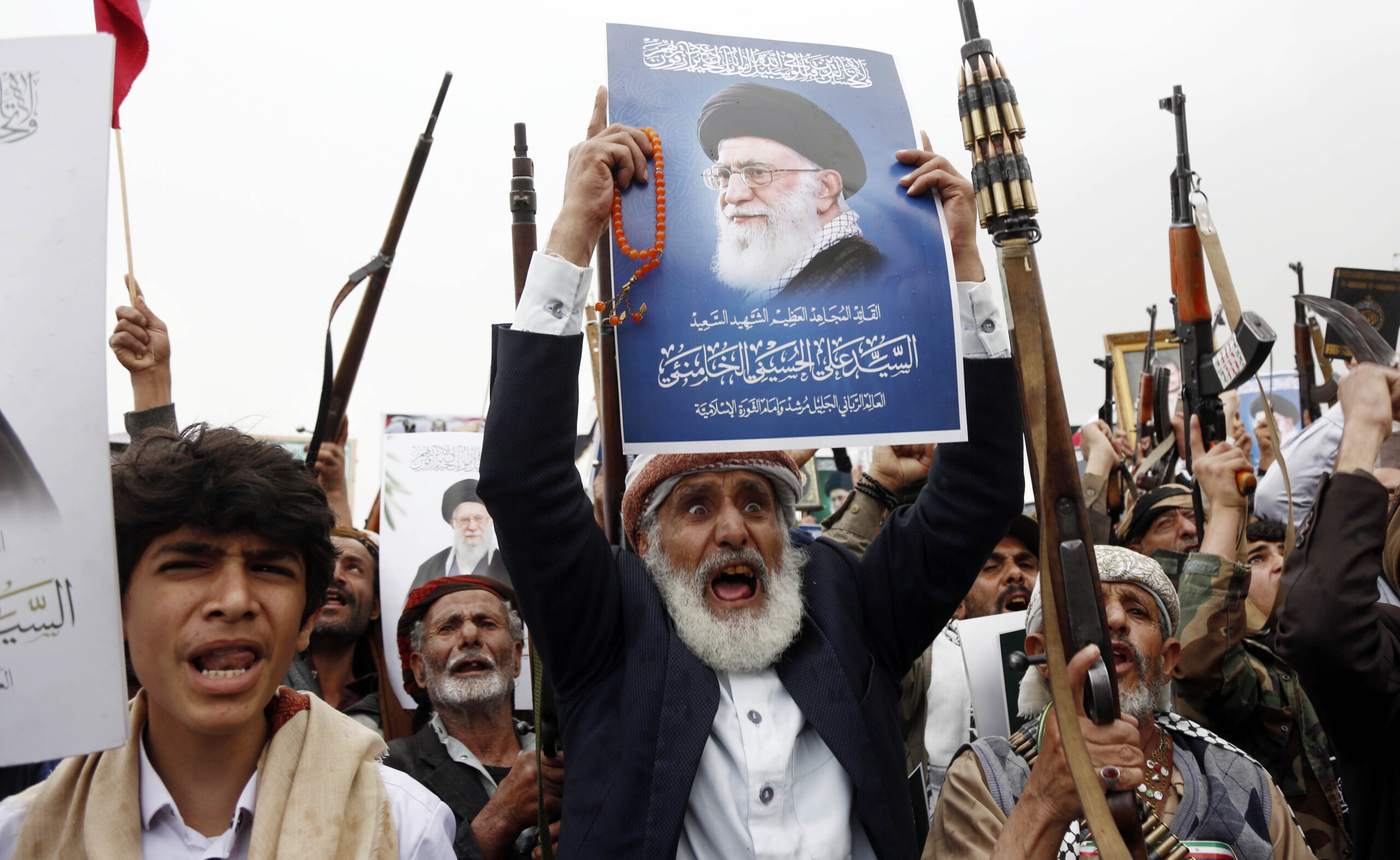
The Yemeni militant group has good reasons to delay joining the war on Iran’s side.

Houthis in Yemen protest US and Israeli strikes on Iran

Unable to match the might of the militaries who have long opposed and threatened them, Iran has relied, in part, on the forward deterrent of its proxies and partners in the region. Hamas has been effectively removed from the picture, but within days of the bombs falling on Iran, Hezbollah in Lebanon and militias allied with Iran in Iraq came to Tehran’s aid. Hezbollah has reportedly launched 779 waves of attacks since the war on Iran began. Over 70 percent of those attacks have used missiles. Iraqi militias have launched drone strikes on U.S. bases in the region. But, although they have expressed solidarity with Iran, Yemen’s heavily armed, reliable, and plucky Houthis have, so far, kept their missile launchers silent and stayed out of the war.

In recent wars, the Houthis have immediately come to the aid of their partners and friends. In the wake of October 7, the Houthis shut down oil shipping through the Bab el-Mandeb Strait in the Red Sea and sent waves of missiles and drones toward Israel. During their two-year blockade, the Houthis fired hundreds of missiles and drones at U.S. warships and commercial oil tankers. During the 12-day war on Iran last June, the Houthis expanded their attacks on behalf of the “Iranian people” and, in coordination with Tehran, launched ballistic missile strikes on Israel.

In the current war, however, that pattern has not repeated itself. But there are signs that, under the right conditions, that may be about to change. Despite intense efforts by American and Saudi diplomats to keep the Houthis out of the war, there are unconfirmed reports that, if certain criteria are met, the Houthis may be on the verge of entering it.

There are unverified reports that Iran and Hezbollah are increasing their pressure on the Houthis to enter the war and that it could happen soon. Iran’s military has reportedly told local media that, if the U.S. launches a ground invasion of Iran, the Houthis could blockade the Bab el-Mandeb Strait. On March 24, an Iranian military source pointed out that “The Bab el-Mandeb Strait is considered one of the world’s strategic straits.” Without naming the Houthis, he said, “If the enemy wants to take action on land in the Iranian islands or anywhere else in our lands…. Iran has both the will and the ability to create a completely credible threat against it.” The Houthi foreign ministry released a statement saying, “The Yemeni Republic is following developments and will take the appropriate step regarding them and will not stand with arms crossed.”

The imminent entry of the Houthis has not been confirmed. But rhetoric from the Houthis has intensified, and there are signs of increasing preparedness. They appear to be recruiting additional fighters and sending reinforcements near the Red Sea. In the days leading up to the war, the Houthis moved missile launchers and radars to the coast. On March 5, the Houthis’ leader, Abdul-Malik al-Houthi, announced, “Regarding military escalation and action, our fingers are on the trigger at any moment should developments warrant it.” Houthi politburo member Mohammed al-Bukhaiti said that “Yemen joining the conflict is only a matter of time.” He has said that “the decision to stand alongside Iran has already been made.”

There are several possible explanations for the Houthis’ delayed entrance into the war, assuming it comes at all. The Houthis have a deep concern for Iranian interests and Iranian support for them, but they also need to be concerned with their own very complex domestic interests.

Annelle Sheline, Research Fellow for the Middle East program at the Quincy Institute, told The American Conservative that there is also the question of self-preservation. Unlike Iran and Hezbollah who, though their leaders are very important, can survive leadership transitions, the Houthis’ “system of government does rely heavily on the Al Houthi family, given their prominent role as descendants of the Prophet Mohammed.” Iran and Hezbollah have had their leaders assassinated; decapitation strikes could conceivably be a more existential blow to the Houthis. The group’s officials say they have been alerted that the cellphones of political leaders are under surveillance. Fearing assassination, they have been counselled to stay out of public view.

There is also the possibility, though there is no evidence, that Iran is holding back the formidable power of the Houthis until it can be most effective. It is possible that Iran is deploying its other partners first to exhaust missile interceptors and will then unleash the Houthis and their powerful long-range missiles in coordination with Iranian missiles at a time when key targets are most vulnerable.

The Houthis entering the war could change everything. They can help Iran in its two key objectives: strikes on military targets to make the war painful and expensive for America and Israel, and strikes designed to cause economic damage by cutting off oil shipments. 

The Houthis have formidable long-range capacity. But they also have the unique capacity to help Iran close off oil laneways. With the Strait of Hormuz effectively closed, some Middle Eastern oil can partially circumnavigate that constraint by sailing through the strait at Bab el-Mandeb that links the Red Sea to the Gulf of Aden. The Houthis have proven that they can shut down that route. Coupled with the 20 percent of global oil Iran has shut off at the Strait of Hormuz, Houthi entry into the war and the closing of the strait of Bab el-Mandeb would turn off the tap on 40 percent of the world’s oil. The U.S. “should be careful not to add another strait to their problem,” an Iranian military source said. “If the Americans want to think of a solution for the Strait of Hormuz with stupid measures,” he added, “their action will not only be of no benefit to them but will also double their costs.”

The post Where Are the Houthis? appeared first on The American Conservative.

The UK’s Fiscal Apocalypse

The UK’s Fiscal Apocalypse

Public spending is ballooning even as Labour degrades the British economy.

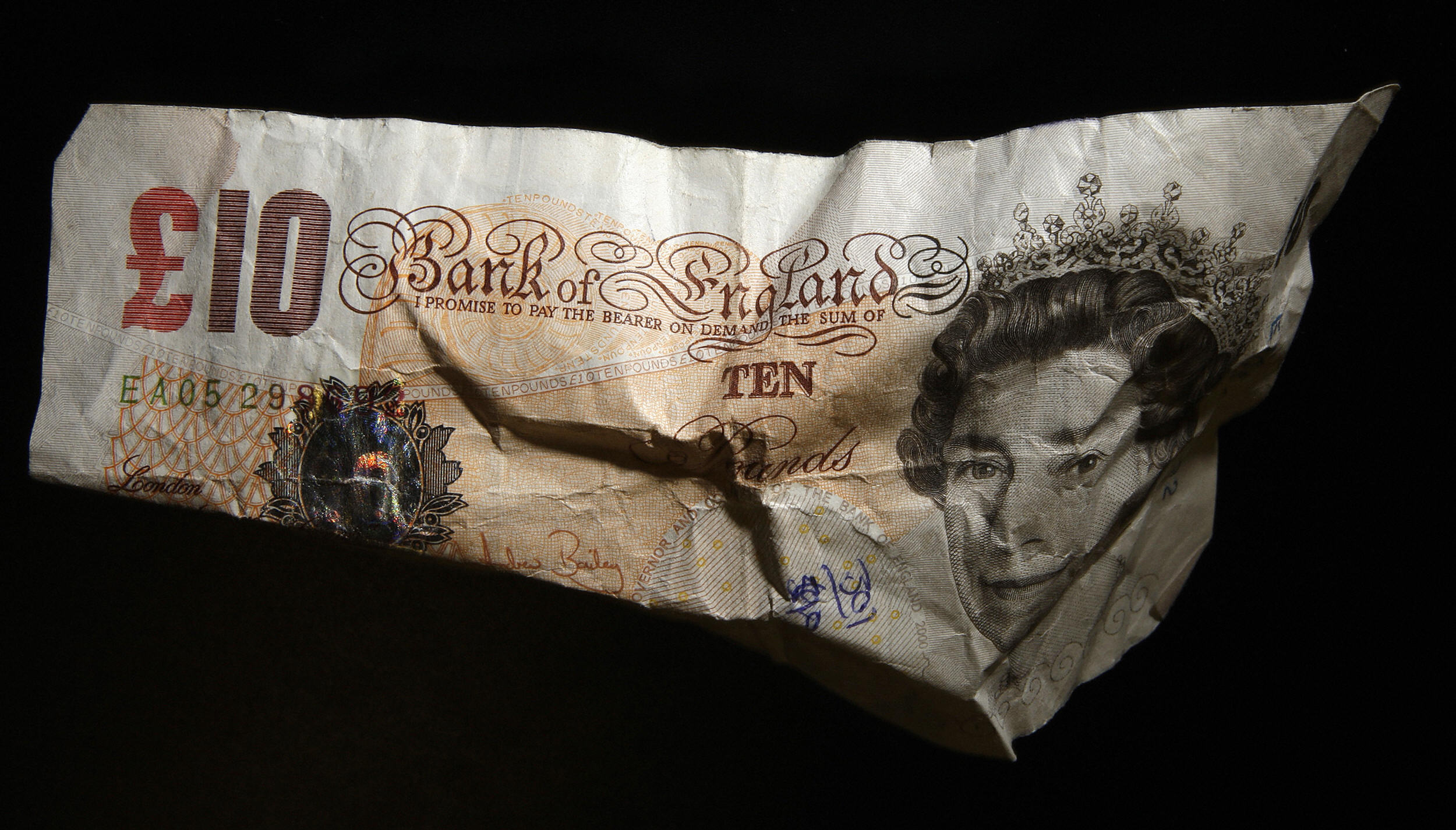
A Sterling pound note is pictured in Lon
UK Special Coverage

This week I came across a truly jaw-dropping statistic. Britain now spends more on benefits than it raises in income tax: £334 billion against £306 billion respectively. The UK, it seems, now taxes working people in order to pay other people not to work.

Of course, there are other sources of government revenue than income tax: VAT, corporation tax, fuel duty, to name but three. But the tax/benefit ratio is a prime index of economic irrationality. 

The British economy has, to paraphrase Hemingway, been tanking slowly for years and is now about to tank very fast. The Iran War is about to throw the British economy and its febrile politics into their greatest crisis certainly since Covid.

This week, the UK learned that Iran apparently has the capacity to send ballistic missiles over 2,300 miles, far enough to reach not only the British overseas territory of Diego Garcia, but also London itself. Many argue that, though Britain may not have realized it yet, it is effectively at war. There is mounting pressure to abandon the nation’s broadly pacifist public morality and to devote huge expenditure on restoring the recklessly debased UK defense infrastructure. But where is the money to come from?

Borrowing? The Labour Chancellor Rachel Reeves borrowed a record £14.3 billion last month alone. Britain now spends twice as much on debt interest—around £120 billion—as on its entire defense budget of £60 billion. That figure’s another marmalade-dropper, as we Brits say.  

Taxes are already higher than at any time since the Second World War. It’s only going to get worse. The Bank of England had to cancel its planned cut in interest rates last week because bond yields have surged past 5 percent on expectations of further fiscal tightening. Mortgages have frozen as markets sense an imminent recession brought on by the UK’s dependence on imported oil and gas.

Consumers are tightening their belts again as they are warned of a 20 percent increase in already sky-high energy bills by July. Petrol and diesel prices have jumped, fertilizer is becoming a precious commodity, and the oil majors are even pulling out of renewable energy projects in the North Sea. Spring may have arrived, but the British economy is entering a deep freeze.

There seems to be a complete lack of original thinking, or even a sense of urgency, either in the musty corridors of the Palace of Westminster or in the concrete and glass towers of the civil service. The UK political parties are all at sea, while voters are increasingly turning to populists of the right and left.

The antigrowth Green Party has been riding high in the opinion polls following its victory in the crucial Gorton and Denton parliamentary by-election. Its leader Zack Polanski, who makes the former leftist Labour leader Jeremy Corbyn sound like a fiscal conservative, has been ranting on TV about “billionaires” being behind every economic misfortune.

Like the Labour left, he is eager to impose ever greater wealth taxes to encourage well-heeled people to depart Britain’s shores—and take their businesses with them, as many, including the oil tycoon Sir Jim Ratcliffe and the vacuum cleaner billionaire Sir James Dyson, have already done.

It is an irony lost on radicals like Polanski and the Labour left that hatred of capitalism seems to have gripped the imagination of the young in Britain, even though it is only capitalism—investment and growth—that can bring Britain out of its slough of despond. Yet, according to YouGov opinion polls, wealth taxes and universal basic income are increasingly popular.

Anyway, when it comes to job-destroying wealth taxes, nobody does it better than Reeves, who has broken every taxation promise made by Labour before it was elected in July 2024 and added £80 billion to the nation’s tax bill, already the highest since the 1950s. She has directly increased taxes on jobs by increasing employers’ National Insurance levy, and spent it on giveaways to benefit claimants so that they can afford more than two children.

The most obvious thing to do to restore confidence in the British economy and lower borrowing costs would be to give the go-ahead for the development of the known new oil and gas fields in the UK sector of the North Sea. Two of them—the Rosebank oil and gas field off Shetland and the Cambo field off Aberdeen—are ready to roll, but have been halted by Energy Secretary Ed Miliband on the grounds that development would be “an exercise in climate vandalism.” The vandalism is entirely to the edifice of British public finances.

While development of new fields would not cut oil prices overnight, a resumption of drilling in the North Sea would greatly boost confidence in the British economy, increase tax revenues, and generate much-needed employment. It would also demonstrate to skeptical markets that Britain is prepared to do whatever it takes to reduce dependence on costly imports of oil and gas, which are more damaging to the environment anyway.

It is a grim irony that Britain survived the last great oil shock after the Yom Kippur War in the 1970s because it had recently discovered oil and gas in the North Sea. This time around, in the Iran war— “the greatest supply disruption in history” according to the International Energy Agency—Britain has elected to close down its oil and gas fields altogether, thus squandering its energy security.

The UK has been importing millions of tons of liquefied natural gas from the U.S., 3,000 miles by tanker over the Atlantic, instead of developing its own known resources. If there is a better illustration of economic madness, I can’t think of one. Britain is also increasingly importing more than half of its gas from Norway. This is extracted by the Norwegian state oil company, Equinor, from the same North Sea basin in which British governments have banned drilling and exploration.

The canny Norwegians never stopped exploiting fossil fuels and are even now drilling in the Arctic. They are also finding new fields in the North Sea almost by the month in areas like Troll, Castberg, and Sleipner. The North Sea is no longer what it was in the ’70s and ’80s, but it is still capable of producing a lot of the black stuff. The British field is estimated to contain around 14 billion barrels, according to analysts at Wood Mackenzie.

It’s hard not to agree with the columnist and former BBC TV presenter, Andrew Neil, that Britain is “stuck in an oil and gas crisis—and there’s a bunch of clueless inadequates at the tiller.” The bond markets have clocked that the UK political leadership is incapable of taking tough decisions and is addicted to borrowing to pay for a burgeoning benefits bill. Hence the surging cost of borrowing to service Britain’s £3 trillion national debt pile.

This cannot go on. Yet it almost certainly will. Prime Minister Keir Starmer has been served notice of a future leadership challenge from his left-wing former deputy, Angela Rayner. She resigned last year over her failure to pay taxes, which is also grimly ironic, since her agenda, backed by most Labour MPs, is to increase taxes and borrowing even more to fuel Britain’s benefits economy. 

Forget Epic Fury. This is epic fantasy.

The post The UK’s Fiscal Apocalypse appeared first on The American Conservative.

To End the Iran War, Trump Must Divorce Israel

To End the Iran War, Trump Must Divorce Israel

The president should tell Netanyahu to kick rocks.

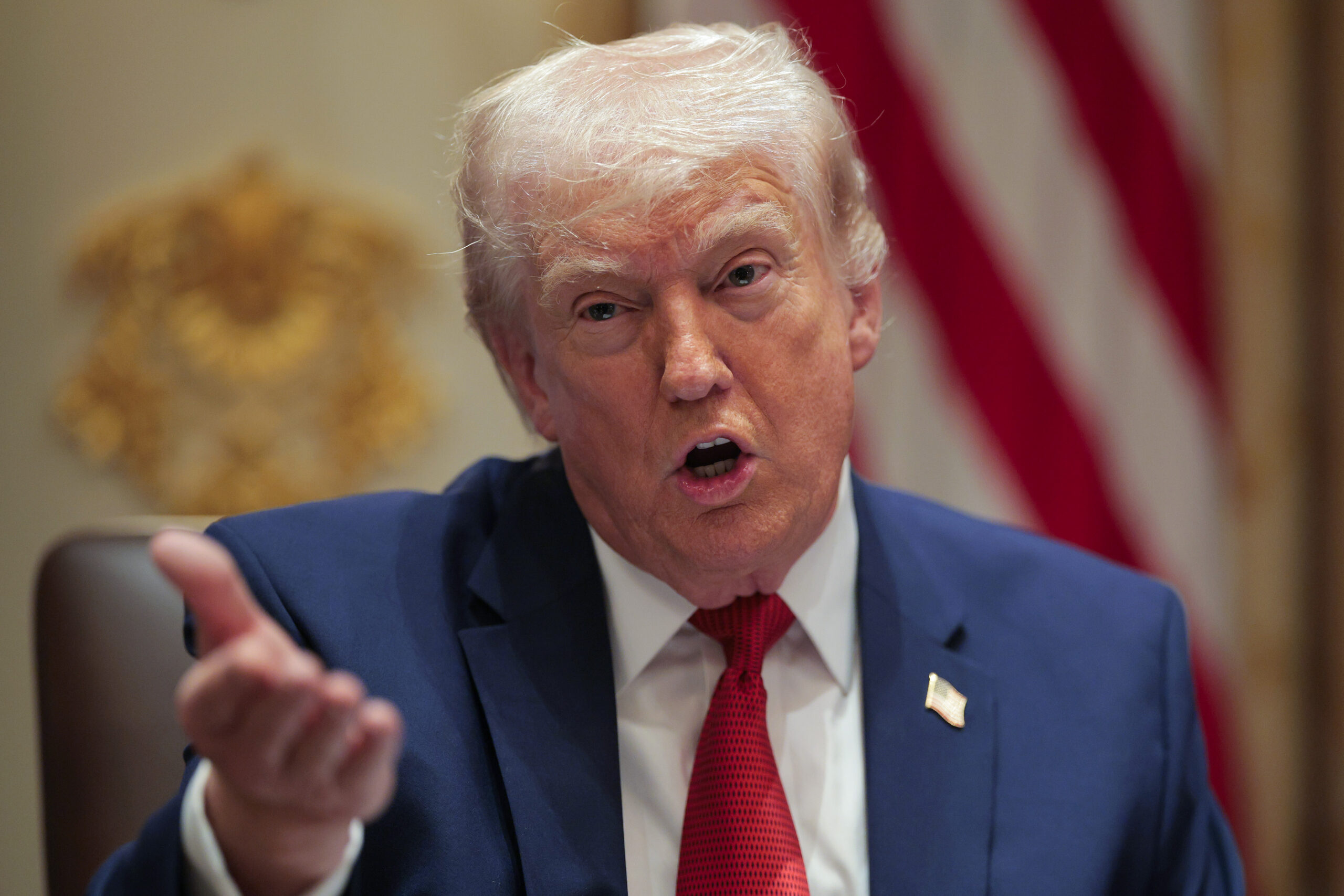
President Trump Meets With His Cabinet At The White House

President Donald Trump believes in the power of positive thinking. That’s why he’s always bragging about how “big” and “beautiful” everything he does is. In fact, his 1987 book The Art of the Deal—“the number-one-selling business book of all time, at least I think,” Trump has said—was inspired by the self-help classic The Power of Positive Thinking.

Lately, Trump has been expressing positive thoughts about a dreary topic: the war with Iran. Seemingly, he’s doing so in an effort to bring that war to a close. “I think we’re gonna end it,” Trump told reporters on Tuesday. That wasn’t positive enough. “This war has been won,” he quickly added.

Days earlier, Trump said that the White House had held “very good and productive conversations” with Iran over the weekend—a claim the Islamic Republic denies and no expert seems to believe. Maybe messages were exchanged, but this war ain’t over, and certainly not won. This week, Iranian missiles destroyed buildings in Tel Aviv, Tehran continued to limit traffic through the Strait of Hormuz, and the Islamic Republic appeared to think that they were winning.

Unfortunately, this isn’t the kind of predicament that Trump can wishcast his way out of. As analysts have emphasized, Tehran “gets a vote” as to when this war ends, and it doesn’t plan to stop until the U.S. and Israel learn that attacking Iran comes with high costs and shouldn’t be repeated in the future.

The U.S., unable to hammer out an agreement, has been hammering Iran to coerce it to the negotiating table. Secretary of Defense Pete Hegseth said this week that “we negotiate with bombs.” (Perhaps that ugly phrase can replace “talking to a brick wall” in our national lexicon.) Press Secretary Karoline Leavitt warned, “The President doesn’t bluff and he is ready to unleash hell.” On Truth Social, Trump threatened that Iran better take diplomacy more seriously “before it is too late, because once that happens, there is NO TURNING BACK, and it won’t be pretty!”

The Trump administration misunderstands the nature of the problem. To end the war, it needs to get tough not with America’s adversary, but with its cobelligerent: Israel. As Curt Mills, executive director of The American Conservative, said Tuesday on a podcast, “This war is not going to end until President Trump says no to Israel.”

To understand why, consider recent history.

Trump was on track, last year, to get a nuclear deal with Iran—until Israel disrupted negotiations. That’s what Joe Kent—who resigned last week from a top counterterrorism position in protest of the war—told TAC two days after leaving the White House.

“The way I saw members of the Israeli government come in and deal with us at that senior level, and the level of access that they had, especially in the lead-up to the 12-Day War—that opened up my eyes,” Kent said.

In Kent’s telling, Trump simply wanted to ensure Iran couldn’t develop a nuclear weapon, and Tehran was willing to offer that concession. But the Israelis had other plans: to “take down the regime.” 

As such, Kent said, they set out to “break up the agreement” that Washington and Tehran were on the cusp of signing. Israel and its American lobby inflated the threat from Iran and pushed a demand that Tehran would not accept: zero enrichment of uranium, even for civilian nuclear purposes.

That narrative is consistent with my own reporting from the run-up to the 12-Day War last June. At the time, many experts depicted the “no enrichment” demand as a poison pill prescribed by Israel and pro-Israel think tanks, notably the Foundation for Defense of Democracies. Moreover, Trump himself admitted (more accurately, boasted) last August that he had entered that war and bombed Iran “for Israel.”

Much evidence indicates that Trump launched the current round of fighting for Israel, too. The New York Times and others have reported that Israeli officials, including Prime Minister Benjamin Netanyahu, lobbied hard for an attack. Indeed, Netanyahu has for decades been pushing America to hit Iran. Now that he’s gotten his wish, he’ll keep pushing to make sure America doesn’t stop.

Throughout the war, Israel’s conduct has often seemed designed to perpetuate the conflict, notably by killing potential negotiating partners in Tehran, according to Ellie Geranmayeh of the European Council on Foreign Relations. “Without doubt, the Israeli assassination campaign has provoked a shift in Tehran towards an even more hardline and securitised leadership,” Geranmayeh told TAC. She said that Israel is trying to lock Washington and Tehran “in a forever conflict.” 

Despite Israel’s best efforts, there may be some Iranian leaders still living whom the White House can talk to. There’s been a lot of chatter, but not a lot of evidence, that the U.S. and Iran are arranging high-level talks to end the war. Regardless, the biggest obstacle to peace remains: Israel. Netanyahu “is concerned Trump might strike a deal that falls well short of Israel’s objectives,” Axios reported Tuesday.

The proposal of any deal that Iran could be expected to sign would likely transform Netanyahu’s concern into panic. Trita Parsi of the Quincy Institute told TAC that Trump would need to offer Iran sanctions relief, and that he had better do so fast. “Both sides will need a way to declare victory in order to take an off-ramp,” Parsi said. “But if this war goes on for too long, chances are that neither will find such a narrative and all off-ramps will be lost.”

Geranmayeh says the U.S. would also need to address “Iran’s security concerns about a war resuming in a few months’ time as part of a game of Whack-a-Mole by the U.S. and Israel.” To get a deal, she added, Trump “will need to be firm with Israel that his negotiating partners cannot be eliminated.”

Parsi—like Mills, Kent, and Geranmayeh—thinks Trump needs to put Israel in its place before he can reach any kind of stable peace agreement with Iran. “U.S. and Israeli interests vis-a-vis Iran strongly diverge, and as long as Trump continues to defer to Israel, it will be Tel Aviv’s and not Washington’s interest that will be prioritized,” Parsi said. 

The U.S. president may be wising up to that divergence of interests. Axios reported on Wednesday that last week, after Netanyahu suggested urging Iranians to protest their government, Trump replied, “Why the hell should we tell people to take to the streets when they’ll just get mowed down?” 

It’s a good question—and a good sign that the president posed it. But opponents of the Iran war shouldn’t get their hopes up just yet. “Trump has in the past proven that he can say no to the Israelis, but he has not proven that he can sustain that no,” Parsi observed.

Trump may be worried that Israel and its American supporters will cause political problems for him if he tells Netanyahu no and holds firm. But compared to an escalating war with Iran—which itself brings mounting political costs—that seems like a problem that positive thinking is powerful enough to solve. Ending the “special relationship” with Israel, after all, would be a very good—no, the biggest and by far most beautiful thing that any president of my lifetime has achieved.

The post To End the Iran War, Trump Must Divorce Israel appeared first on The American Conservative.

JUST IN: Minnesota Sues Trump Administration Over ICE-Involved Shootings – Walz Says He’s Building Case with Leftist Nonprofits and the UN (VIDEO)

Minnesota Governor Tim Walz speaks during a televised interview with a city skyline in the background.

Minnesota Governor Tim Walz speaks during a televised interview with a city skyline in the background.
Screenshot

The State of Minnesota has filed a lawsuit against the Trump Administration in its ongoing attempt to investigate ICE and CBP agents who were involved in shootings during law enforcement activities.

The incidents include the shooting deaths of Renee Good and Alex Pretti, two crazed leftists who attacked ICE agents, and Julio Cesar Sosa-Celis, a criminal illegal alien who was wounded while attacking ICE agents in northern Minneapolis in January.

Minnesota is suing for evidence and information on the shootings, for which the FBI previously denied state investigators access.

On Thursday, Tim Walz discussed the lawsuit on MSNow, revealing that he is working with the American Civil Liberties Union, pro-immigrant groups, and even the UN to build his case, while accusing the Trump Administration of human rights abuses.

He further trashed President Trump, stating that he will continue fighting for so-called justice until “the final days of this administration and beyond.”

WATCH:

Walz: We’ve always partnered with our federal authorities when needed, and I made the move yesterday, using my executive authority to put a commission together. We are capturing all of the stories. We being the ACLU, a lot of groups, especially immigrant groups, folks at the United Nations and in Geneva are working because what happened in Minnesota and the absolute horrific assault on this state, if this happened in another country— it wasn’t that long ago that the United States was a voice of reason, decency and human rights— We would investigate those things.

We’re going to do that here, and we’re going to capture these stories. And so if Donald Trump, like so many things, thinks he can move on from Greenland, Venezuela, pirate of the war in Iran that he started, till his till the final days of this administration and beyond, Minnesotans will ask for justice. We demand it. We have to do that.

Per Propublica:

After an Immigration and Customs Enforcement agent shot and killed Renee Good, a 37-year-old mother of three who’d recently moved to Minneapolis, local law enforcement officials requested a partnership with the federal government to investigate the case, as they’d done in past shootings involving federal agents.

This week, prosecutors from Hennepin County and the state of Minnesota took the next step to force the Trump administration’s hand. They filed a federal lawsuit against the departments of Homeland Security and Justice over the evidence in the shootings, an action that Hennepin County Attorney Mary Moriarty, whose jurisdiction covers Minneapolis, characterized as “unprecedented in American history.”

The Trump administration has declined to release the names of the agents involved in the shootings, even after the Minnesota Star Tribune and ProPublica identified the officers involved in the Good and Pretti incidents.

“The federal government has refused to cooperate with state law enforcement, which is unique, rare and simply cannot be tolerated,” Minnesota Attorney General Keith Ellison told reporters. “[We] can’t sit around and let them do it.”

State prosecutors are also potentially weighing charges for the agents involved in shootings. “State prosecutors across the country are going to be watching what happens in Minnesota really closely,” Alicia Bannon, director of the judiciary program at the Brennan Center for Justice, said.

This is a developing story. 

The post JUST IN: Minnesota Sues Trump Administration Over ICE-Involved Shootings – Walz Says He’s Building Case with Leftist Nonprofits and the UN (VIDEO) appeared first on The Gateway Pundit.

White House Posts Cryptic Messages to X (VIDEO)

Blurred image of a man in a blue suit seated at a desk, likely during a press conference or interview setting.

The White House on Thursday posted a series of cryptic photos on X after posting and deleting a cryptic video.

Late Wednesday night the White House posted a mysterious video – then quickly deleted it, sparking a buzz.

X users pointed out that it sounded like White House Press Secretary Karoline Leavitt saying, “It’s launching soon, right?”

A male voices responds, “Yes.”

The White House posted another video later Wednesday night with a phone ping notification sound.

On Thursday afternoon, the White House posted a pixilated photo.

Later Thursday, the White House two more pixilated photos.

Another one…

The FCC responded to the White House with a pixilated photo.

The White House did not comment on the deleted video.

It is unclear if the video was accidentally posted to the White House’s social media accounts.

The post White House Posts Cryptic Messages to X (VIDEO) appeared first on The Gateway Pundit.