Keep Paying Up To 25% – Or Take Two Minutes To Check If You Qualify For 0%  

A person using a tablet to navigate a financial app displaying a 0% intro APR offer and a button to transfer balance, with credit cards and a calculator nearby.

Note: The information provided here or in any related communications is for informational purposes only and should not be considered as financial advice. We do not provide personalized investment, financial, or legal advice. Gateway Pundit benefits from purchases made through our sponsors.

A person using a tablet to navigate a financial app displaying a 0% intro APR offer and a button to transfer balance, with credit cards and a calculator nearby.

Here’s a number worth sitting with for a second: $899 billion.

That’s how much Americans ran through 0% Intro APR credit cards in a year, according to the federal government’s own data. Nearly a trillion dollars in purchases and balance transfers made without paying a single cent in interest.

These weren’t financial geniuses. They weren’t people with some secret inside knowledge. They were regular people who saw a straightforward offer, took two minutes to apply, and stopped handing their money to a bank charging them up to 25% to carry a balance.

That’s it. That’s the whole secret.

And right now, you have one last shot to do the same thing.

Up to 21 months at 0% APR. No annual fee. Check your eligibility without it touching your credit score. Apply in minutes. If you’re approved, initiate a balance transfer today and stop the interest clock before your next statement closes.

But this offer has a window – and that window is closing.

We’re not going to dress that up with fake countdown timers or manufactured pressure. The enrollment period on promotional APR offers is real, it is finite, and when it ends, the 0% rate goes with it. The next chance to lock in terms like these could be months away. Meanwhile the interest keeps running.

You’ve read about this before. You know what’s at stake.

Click here. Check if you qualify. Take the two minutes. 

Or don’t – and explain to yourself next month why you’re still paying up to 25% interest on money you already owe.

The post Keep Paying Up To 25% – Or Take Two Minutes To Check If You Qualify For 0%   appeared first on The Gateway Pundit.

Cause of Death Revealed for Idaho Mayor Who Suddenly Collapsed in Middle of Town Hall Speech

Nampa, Idaho, Mayor Rick Hogaboam died Wednesday after experiencing a medical emergency during a meeting of government officials.

Nampa, Idaho, Mayor Rick Hogaboam died Wednesday after experiencing a medical emergency during a meeting of government officials.
Nampa, Idaho, Mayor Rick Hogaboam died Wednesday after experiencing a medical emergency during a meeting of government officials. (@nypost / X screen shot)

The cause of death for a newly-elected Idaho mayor who suddenly collapsed in the middle of a speech has been officially revealed.

As The Gateway Pundit reported, 47-year-old Nampa Mayor Rick Hogaboam experienced a medical emergency on Wednesday evening while giving a speech during a regional town hall event.

Hogaboam received CPR from Eagle Mayor Brad Pike, who is a former firefighter, but despite the rescue efforts, Hogaboam was later pronounced dead.

Hours before he died, Hogaboam attended a training session with the Nampa Fire Department. He described being “mesmerized by the beautiful day.”

The New York Post reported that Mayor Hogaboam died from a rare cardiac complication called a cardiac tamponade. It is found in only 2 out of every 10,000 people.

Here are the details of the condition via the Cleveland Clinic:

Cardiac tamponade happens when the fluid sac around your heart fills with too much blood or other fluid and puts pressure on your heart. This prevents your heart’s chambers from filling properly.

When your heart can’t fill with blood properly, it can’t pump as much, and your blood pressure drops. Your heart may beat faster (more than 100 beats per minute) to try to pump more blood.

Cancer, infections, trauma, and certain diseases can cause cardiac tamponade. Such diseases include HIV, Tuberculosis, and End-stage kidney disease.

Without treatment, it’s life-threatening.

In November, Hogaboam won his election with nearly 63% of the vote, becoming Nampa’s 31st mayor.

He leaves behind a wife, five children, and a grandchild.

“Our hearts are broken, because we wanted to serve with a great man,” Councilwoman Debbie Skaug told the Idaho Statesman.

In a statement on X, a spokesperson for the Idaho GOP wrote, “Rick Hogaboam was everything we want our political leaders to be. He was a husband, a father, a dedicated public servant, and a good man.”

The New York Post notes that the Nampa City Council has 90 days to appoint its next mayor, who will serve until the next election in November 2027.

The post Cause of Death Revealed for Idaho Mayor Who Suddenly Collapsed in Middle of Town Hall Speech appeared first on The Gateway Pundit.

United Kingdom, France, Germany, Italy, the Netherlands, Japan, and Canada Will Now Join US to Keep the Strait of Hormuz Open

Naval operations featuring a submarine surfacing in the ocean with a warship and helicopter in the background under clear skies.

Naval operations featuring a submarine surfacing in the ocean with a warship and helicopter in the background under clear skies.
STRAIT OF HORMUZ (Dec. 21, 2020) The Ohio-class guided-missile submarine USS Georgia (SSGN 729) transits with the Ticonderoga-class guided-missile cruiser USS Port Royal (CG 73) and the Ticonderoga-class guided-missile cruiser USS Philippine Sea (CG 58), not shown, in the Strait of Hormuz, Dec. 21, 2020. (U.S. Navy photo by Mass Communication Specialist 2nd Class Indra Beaufort)

The leaders of the United Kingdom, France, Germany, Italy, the Netherlands, Japan, and Canada have now signaled they will join the United States in a coalition to secure and keep open the critical Strait of Hormuz, the vital oil chokepoint the bloodthirsty Iranian regime has turned into a terrorist kill zone.

As The Gateway Pundit previously reported, the radical Islamic mullahs in Tehran launched a desperate campaign of economic terrorism after U.S. and Israeli strikes hammered their nuclear sites and terror infrastructure.

Iran mined the strait, attacked unarmed commercial vessels, targeted oil facilities, and effectively closed the waterway that carries nearly 20-25% of the world’s oil supply.

President Trump refused to let America shoulder the entire burden alone. He blasted the freeloading “allies,” took to Truth Social, and demanded that nations dependent on Middle Eastern oil step up and send warships.

“Hopefully China, France, Japan, South Korea, the UK, and others, that are affected by this artificial constraint, will send Ships to the area so that the Hormuz Strait will no longer be a threat by a Nation that has been totally decapitated,” Trump said.

He even threatened to “finish off” Iran and let NATO and Asia handle the mess if they wouldn’t get in gear. As we reported, the initial responses from Europe were weak and uninspiring, classic globalist foot-dragging.

Now, with Iran’s attacks growing more brazen and the Strait’s security directly tied to global oil flows, those same allies are signaling that they are prepared to stand with the United States.

That does not yet mean all seven countries have announced warship deployments.

The joint statement so far supports that they have formally backed efforts to keep passage open and are ready to contribute, while some governments are still working through what their exact role will be.

Britain, for example, has been publicly discussing possible deployments, including ships and mine-countermeasure assets, but final national commitments appear to remain in motion.

Read the joint statement from the leaders of the United Kingdom, France, Germany, Italy, the Netherlands, Japan and Canada:

“We condemn in the strongest terms recent attacks by Iran on unarmed commercial vessels in the Gulf, attacks on civilian infrastructure including oil and gas installations, and the de facto closure of the Strait of Hormuz by Iranian forces.

We express our deep concern about the escalating conflict. We call on Iran to cease immediately its threats, laying of mines, drone and missile attacks and other attempts to block the Strait to commercial shipping, and to comply with UN Security Council Resolution 2817.

Freedom of navigation is a fundamental principle of international law, including under the United Nations Convention on the Law of the Sea.

The effects of Iran’s actions will be felt by people in all parts of the world, especially the most vulnerable.

Consistent with UNSC Resolution 2817, we emphasise that such interference with international shipping and the disruption of global energy supply chains constitute a threat to international peace and security. In this regard, we call for an immediate comprehensive moratorium on attacks on civilian infrastructure, including oil and gas installations.

We express our readiness to contribute to appropriate efforts to ensure safe passage through the Strait. We welcome the commitment of nations who are engaging in preparatory planning.

We welcome the International Energy Agency decision to authorise a coordinated release of strategic petroleum reserves. We will take other steps to stabilise energy markets, including working with certain producing nations to increase output.

We will also work to provide support for the most affected nations, including through the United Nations and the IFIs.

Maritime security and freedom of navigation benefit all countries. We call on all states to respect international law and uphold the fundamental principles of international prosperity and security.”

Trump’s leadership is once again proving that strength works. While the radical left and RINO warmongers screamed about endless wars, President Trump is forcing our so-called allies to finally pay their fair share instead of freeloading off the U.S. military for decades.

The post United Kingdom, France, Germany, Italy, the Netherlands, Japan, and Canada Will Now Join US to Keep the Strait of Hormuz Open appeared first on The Gateway Pundit.

Democrats’ Dirty War: Funding Hungary’s Fake Opposition to Crush Prime Minister Orbán and MAGA

Former US President Donald Trump and Hungarian Prime Minister Viktor Orbán pose together outside the White House, showcasing a diplomatic meeting amid lush greenery.

Former US President Donald Trump and Hungarian Prime Minister Viktor Orbán pose together outside the White House, showcasing a diplomatic meeting amid lush greenery.
Credit: The White House

Guest post by Officer Mike Robertson (Ret.)

With the MAGA movement exploding worldwide, the entrenched globalist cabal and Democrat power brokers are in panic mode, fighting tooth and nail to maintain their stranglehold ─ and Europe has become the epicenter of this fierce ideological battle.

The Hungarian government doubled down on March 12, 2026, with its warnings about foreign meddling in the opposition Tisza Party.

Prime Minister Viktor Orbán, addressing the nation on state media, spotlighted a classified national security report slated for declassification that proves Ukrainian involvement in funneling cash to Tisza.

“This is not speculation or a suspicion; it’s documented in a written report submitted to the national security committee,” Orbán declared.

He revealed that Hungarian authorities seized tens of millions in cash connected to Ukraine’s bank right on Hungarian territory. And those sums exactly match the amount Tisza Party leader Péter Magyar said his group urgently required.

This Ukrainian link isn’t isolated; it’s a glaring symptom of wider foreign influences, often aligned with Democrat agendas through U.S. aid pipelines and shadowy proxy networks in Eastern Europe, all aimed at infiltrating Hungarian politics and destabilizing sovereign governments like Orbán’s.

Democrats’ Long Game: Funding Through NED and USAID

For decades, Democrats have masterminded a web of coordinated financial streams via venture funds and NGOs, all designed to forge a “compliant” regime in Budapest. This isn’t about fostering democracy.

It’s a calculated strategy to erode national borders and install leaders who toe the globalist line. The evidence is damning, rooted in the operations of USAID and the National Endowment for Democracy (NED) ─ taxpayer-funded vehicles that masquerade as benevolent aid but function as tools of political subversion.

Since 2008, USAID has poured resources into Hungarian NGOs, with at least $20.2 million disbursed between 2021 and 2025 alone to opposition-aligned outlets like 444.hu and Átlátszó, crafting an “artificial civil society” to challenge Orbán.

The agency’s Central Europe Program, launched in 2022, funneled millions more under the guise of bolstering “democratic institutions”  ─ a euphemism for undermining Hungary’s elected government.

In 2023-2024, Átlátszó drew 10-15% of its budget from these USAID backchannels, while by 2025, Hungary’s Sovereignty Protection Office had pinpointed USAID as the financier behind groups like the Autonomy Foundation, which redistributed funds to activist cells.

NED’s role is equally insidious, having granted funds to anti-government media and civil groups since 2008. Their annual reports boast of supporting over 2,000 projects worldwide each year, including Hungary’s share.

In 2018, NED-backed entities like the Hungarian Helsinki Committee were branded “Soros mercenaries” for sowing discord.

Total grants exceeded $5 million from 2008 to 2016, ostensibly for “media pluralism” amid economic turmoil. Until Trump’s 2016 triumph disrupted their control, Democrats wielded these channels unchecked, meddling in Hungarian affairs with impunity.

The Pivot: Higher Ground Laboratories Enters the Fray

Reeling from their 2016 electoral humiliation and sensing an existential peril to their European globalist blueprint, Democrats rallied under the banner of “saving democracy.”

In 2017, Higher Ground Laboratories (HGL) emerged, founded by Obama-Biden campaign alumni like Betsy Hoover, Shomik Dutta, and Elizabeth MacLaughlin ─ a Chicago-based venture fund laser-focused on progressive political tech.

By 2021, HGL had deployed over $50 million across 46 startups, expanding their arsenal for electoral warfare.

That year, HGL seized a majority stake: over 80% via Fund Three Limited Partnership in DatAdat, a political tech firm rebranded as Estratos Digital and headquartered in California, though active in Europe.

This acquisition wasn’t benign; it exported Democrat tech prowess directly into Hungarian opposition campaigns, equipping them with sophisticated voter targeting and data tools. It’s a classic case of foreign tech infiltration, weaponized to erode sovereign elections.

The Lunda Platform: A Gateway for Foreign Manipulation

At the core of this scheme lies the Lunda fundraising platform, owned and operated by Estratos Digital and exploited by the Tisza Party, as revealed by publicly disclosed donor data from a 2026 leak.

The February breach exposed sensitive details (names, phone numbers, emails, and transaction histories of thousands) to the dark web forum LeakBase, laying bare the opposition’s vulnerabilities.

Hungary’s Sovereignty Protection Office sounded the alarm in 2024, flagging Lunda’s servers in Austria, its opaque operations, and suspected links to Ukrainian IT companies.

A 2025 report tied its developers to Ukrainian nationals entangled in U.S. intelligence networks, granting foreign actors unchecked access to Hungarian voter and donor intelligence.

Leaked profiles trace straight back to these Ukrainian IT operatives, priming the ground for outright election tampering. If this isn’t a blueprint for subversion, what is?

Action for Democracy: Soros’s $5.5 Million Assault

The plot thickens with the Action for Democracy (A4D) foundation ─ a Soros-backed entity that transferred roughly $5.5 million to Hungary’s united opposition in 2022.

The lion’s share flowed through Péter Márki-Zay’s “Everybody’s Hungary”  movement, masked as contracts for data and advertising.

Hungarian intelligence reports confirm the details: A4D wired HUF 3.174 billion (about $7.9 million at the time) to opposition outfits, with 58% landing in “Everybody’s Hungary” coffers and remnants propping up media proxies.

Márki-Zay himself admitted receiving HUF 1.8 billion from A4D for “culture-change” initiatives devoid of party branding. A Swiss conduit added HUF 887 million to Oraculum 2020 Kft., fueling the propaganda site Ezalényeg.hu. In total, over HUF 4 billion in illicit funds distorted the 2022 elections. This is a stark testament to how Soros’s network exports chaos to crush conservative strongholds.

Reclaiming Sovereignty

As Democrats escalate their showdown with Republicans, the Democratic Party machine is aggressively advancing globalist schemes within the EU, with Hungary’s April 12, 2026 parliamentary elections at the heart of this clash.

The goal? To topple Viktor Orbán, a rock-solid ally of Donald Trump, and install a pliant puppet regime. Democrats have long meddled here, bankrolling opposition forces and rigging the game with unfair tactics, much like their playbook in Romania.

This brazen interference not only endangers Hungary’s sovereignty but also weakens the entire MAGA-fronted pushback against globalist overreach in Europe.

With polls swinging wildly (Tisza edging ahead at 39-53% while Fidesz holds 37-48%) it’s clear the left is deploying every dirty trick to tip the scales.

Without exposing and halting these clandestine financial arteries, globalists will manipulate the April 2026 elections, potentially swinging results against Trump’s allies and toward his foes.

The Sovereignty Protection Office’s investigations into A4D and its ilk underscore the peril, with forthcoming declassifications poised to unmask the full rot.

True sovereignty demands accountability: Preserving MAGA stalwarts like Orbán is non-negotiable in dismantling the Democrats’ machine. Hungarians must reject this fabricated opposition. The pattern is unmistakable: Democracy isn’t saved by foreign cash. It’s defended by the unyielding voice of the people.

The post Democrats’ Dirty War: Funding Hungary’s Fake Opposition to Crush Prime Minister Orbán and MAGA appeared first on The Gateway Pundit.

Current US Gas Prices Are Not Even Close to the Records Set by Joe Biden

The current gas prices are making headlines in the far-left legacy media.

Prices shot up when the Iran War started two weeks ago.

US Treasury Secretary Scott Bessent announced on Thursday that the US may lift sanctions on Iranian oil already in transit to ease gas prices. According to the UPI this move by the US could release about 140 million barrels of oil, which would provide approximately 10 days to two weeks of supply that would otherwise have gone to China.

This move, if taken, will also immediately bring down price of gas at the pump.

The Trump administration is never shy to tackle a problem head-on in order to help American families.

What is interesting is that that the last time gas prices were higher than they are today, the legacy media was mostly silent.

In 2022, BEFORE the Nord Stream pipeline explosion, gas prices had already surged above $4 per gallon – a new US all-time record! Prices remained elevated above $4 per gallon for nearly six months.

The media was silent.

Joe Biden blamed gas station owners for his record gas prices.

Line graph depicting the 60-month average retail price of regular gas in the USA, showing fluctuations from 2021 to 2026.
Line graph depicting the 60-month average retail price of regular gas in the USA, showing fluctuations from 2021 to 2026. Clearly gas prices were much higher during the Biden years. (Gas Buddy chart)

Hopefully, the Iran War will end shortly. The evil Khamenei regime will no longer be in control of Iran, and the Trump administration will reside over the cheapest gas prices in decades.

The post Current US Gas Prices Are Not Even Close to the Records Set by Joe Biden appeared first on The Gateway Pundit.

DNI Tulsi Gabbard Confirms SEIZURE of Puerto Rico Voting Machines — Locked Down in Secure ODNI Facility for Forensic Audit

Congressional hearing featuring representatives discussing key issues, with one member speaking passionately while another listens intently at the table.

Congressional hearing featuring representatives discussing key issues, with one member speaking passionately while another listens intently at the table.

Director of National Intelligence Tulsi Gabbard confirmed that her office took custody of voting machines from Puerto Rico and that those machines are now being held inside a secure ODNI facility for forensic examination.

As The Gateway Pundit previously reported, Puerto Rico’s June 2024 primary elections were plagued with deeply troubling irregularities:

  • Vote totals reported lower than paper ballot counts
  • Some machines reversed candidate totals
  • Others reported zero votes for candidates who clearly received ballots

At the time, officials brushed off the alarming discrepancies as a mere “software issue,” according to Puerto Rico Election Commission interim president Jessika Padilla-Rivera.

Months later, an “exclusive” from Reuters revealed that a team under Gabbard’s Office of the Director of National Intelligence had quietly launched an investigation into Puerto Rico’s voting systems.

According to Reuters:

The sources said the goal was to work with the FBI to investigate claims that Venezuela had hacked voting machines in Puerto Rico, but added the probe did not produce any clear evidence of Venezuelan interference in the U.S. territory’s elections. Reuters first reported the investigation.

Gabbard’s office, in a statement to Reuters, confirmed the May investigation but denied a link to Venezuela, saying its focus was on vulnerabilities in the island’s electronic voting systems. Her team took an unspecified number of Puerto Rico’s voting machines and additional copies of data from the machines as part of its investigation, a spokesperson for Gabbard’s Office of the Director of National Intelligence said.

A source with direct knowledge of the investigation confirmed that the event in May did happen, but it was not tied to any specific claim of Venezuelan interference, nor was the scope of the investigation specific to foreign interference.  However, there was evidence of foreign involvement discovered, but no country was pointed out specifically by our source.

Further, authorities in Puerto Rico requested the investigation into the voting systems in the American territory following the “software issues” from the previous elections.

Our source did confirm that “ODNI found extremely concerning cyber security and operational deployment practices that pose a significant risk to U.S. elections,” however, that can be said for most black box voting systems with proprietary software and source code.

Read more:

Reuters Claims Office of DNI Investigated Puerto Rico Election Machines For “Claims That Venezuela Had Hacked Voting Machines” in the U.S. Territory

During the ODNI threat assessment hearing, Ranking Member Rep. Jim Himes (D-CT) pressed Gabbard on the unprecedented seizure.

Jim Himes:
Okay, Director, the ODNI has confirmed on the record that your office took custody of voting machines from Puerto Rico last May. I’m not aware of any previous DNI taking similar actions. Did your office promptly notify the committee about taking custody of Puerto Rico’s voting machines?

DNI Tulsi Gabbard:
I don’t believe we did. However, this was done at the request of the Puerto Rico AUSA attorney.

Jim Himes:
It’s a yes-or-no question. The answer, as you have acknowledged, is no. You did not inform the committee about the taking of a territory’s voting machines. Is there a specific foreign threat? I’ve read the reporting that you were looking for possible foreign threats, but is there a specific foreign threat that drove you to take this action?

DNI Tulsi Gabbard:
There were questions about whether or not there were vulnerabilities that a threat could have taken advantage of, and that was the purpose for their requesting us to look into those vulnerabilities.

Jim Himes:
Where are those voting machines now?

DNI Tulsi Gabbard:
I believe they are held in a secure facility at ODNI.

Jim Himes:
Have you or other ODNI officials taken any other state or territories’ voting equipment into custody?

DNI Tulsi Gabbard:
Not to my knowledge.

Video via MJTruthUltra:

The post DNI Tulsi Gabbard Confirms SEIZURE of Puerto Rico Voting Machines — Locked Down in Secure ODNI Facility for Forensic Audit appeared first on The Gateway Pundit.

Republican Lawmakers Uneasy About $200 Billion Iran War Funding Request Reportedly in the Works

United States Capitol building showcasing its iconic dome and architectural details under a cloudy sky.

United States Capitol building showcasing its iconic dome and architectural details under a cloudy sky.

Republican lawmakers are expressing deep concern about a radical escalation in funding for the ongoing Iran conflict, following reports of the Pentagon asking for an additional $200 billion.

Secretary of War Pete Hegseth said that figure “could move,” however, according to Axios.

“As far as $200 billion, I think that number could move,” he said at a news conference on Thursday. “Obviously, it takes money to kill bad guys, so we’re going back to Congress and our folks there to ensure that we’re properly funded for what’s been done, for what we may have to do in the future, ensure that our ammunition is refilled, and not just refilled, but above and beyond.”

The news of the Pentagon’s request was first reported by The Washington Post, citing a “senior administration official” as the source.

The staggering figure will likely startle several Republicans in Congress — where the GOP holds a thin margin — along with virtually every Democrat, as there has been little bipartisanship since Trump assumed office last January.

Such a large amount could open the White House to deep scrutiny, given the fact that President Donald Trump has told the public that U.S. involvement in Iran is going to be short.

Despite these hurdles, House Speaker Mike Johnson is seemingly open to extra defense spending, saying Congress has to “adequately fund defense,” per Politico.

Senate Majority Leader John Thune was singing a different tune.

“THUNE said it ‘remains to be seen’ if the Senate could pass $200 billion in funding for Iran war,” PunchBowl News writer Samantha Handler wrote on the social media website X. “Said Trump admin will have to show Congress how they want to use the money.”

Sen. Roger Marshall, a Republican from Kansas, said the $200 billion request is “a little tall” during a Fox Business interview.

He added, “They do need to come to… Capitol Hill and tell us what that money is going to be spent on. I think we give the Pentagon a trillion dollars a year, you would think that would be enough, but we’re going to have to do something.”

This article appeared originally on The Western Journal.

The post Republican Lawmakers Uneasy About $200 Billion Iran War Funding Request Reportedly in the Works appeared first on The Gateway Pundit.

The UK Treasury’s Big New Idea: A Tax On Paying Taxes

The UK Treasury’s Big New Idea: A Tax On Paying Taxes

The British state somehow aims to raise more tax by preventing taxpayers from paying their tax.

HMRC Offices
TakiMag

The acerbic American novelist Lionel Shriver, who lived in the UK for over 30 years, recently moved to sunny Portugal to live there instead. For the sand and the sea? No, because she was sick of wasting her entire life filling out endless stupid forms.

Writing in the Spectator, Shriver revealed a multitude of reasons for her emigrating from a nation clearly in terminal decline, but the final “straw that broke the camel’s British residency” was something surprisingly mundane: a new tax-reporting system being implemented starting this year by His Majesty’s Revenue & Customs (HMRC), the UK equivalent of America’s IRS.   

At first sight, this sounds a bit extreme. Is a new method of tax self-assessment really enough to warrant someone fleeing the country? In this particular case, yes it is. 

HMRC’s incoming new scheme, applicable from this April, is called Making Tax Digital (MTD) and it is, as Shriver rightly observes, an exercise in “death-by-bureaucracy.” Without going into all the mind-numbing details, MTD commands all self-employed taxpayers earning at least £20,000 per year to cease simply filling in either a simple paper or online form once per year, and instead to file complicated computerized accounts five times per year, together with scanned-in invoices, and much, much more confusing Kafkaesque nonsense besides.

Faced with this prospect, Shriver simply upped sticks and sailed for Lisbon—taking all her lovely tax revenue with her. 

I thought: that’s the limit. I refuse. You cannot make me, and if you’re intent on imposing this death-by-bureaucracy, I will leave. So, note to HMRC: please mark me down as one of the loads of self-employed workers ensuring your unreasonable new obligations will backfire for the Exchequer. Articles and comment sections are chocka with older entrepreneurs announcing that, thanks to this onerous, complex and laborious regime, they are retiring early and closing shop … An HMRC spokesman assures us, inanely, ‘Making Tax Digital will make it easier for sole traders … to get their tax right by providing a more real-time overview of their finances, freeing up their time to focus on growing their business’. Really? Why not file 10 times a year, then, or every day?

Shriver is lucky she got out to Portugal when she did. Rumor has it the Treasury will soon want you to file your returns five times a day, like the government-mandated fruit and vegetable servings.

As an example of how byzantine and all-encompassing the new regulations are, consider the case of Tony Pearson, a 71-year-old retiree who, due to insanely obscure reasons no normal mortal can even comprehend, has had his home driveway classed as a small business in the shape of a “dormant limited company” that must file MTD returns regardless of its incomings and outgoings. 

Every year, Tony’s driveway makes a net profit of £0, with an income and turnover of £0, and net costs of £0—because it is a home driveway. It is a small, paved piece of land next to his lawn which he and his family use for parking their cars on, not a convenience store, arms manufacturing plant, or leading international advertising agency. But, for daring to own this quite literally common-or-garden facility, HM Government unfathomably consider Tony a small businessman, compelling him to lodge electronic MTD accounts five times per year informing them that he owes them absolutely nothing.

Yet the MTD software necessary to tell the taxman this is not, in itself, generally free. Recent estimates are that the initial switchover fee for using such software will be an average £320 per taxpayer, followed by a £110 annual subscription fee—although some experts warn it could rise to up to four times as much.     

Tony could always employ an accountant to file his accounts instead; but the average cost of this service to a UK small business is £1,500. And, thanks to the simple laws of supply and demand, with huge numbers of MTD self-employed taxpayers now due to pass responsibility for filing their impenetrable new accounts over to the professionals, accountants are poised to raise their charges per client by 10 percent; so, it would in theory cost Tony £1,650 per annum just for the privilege of informing HMRC he owes them zero. Tony should just dig up his driveway once and for all, and bury the tax inspector under it. 

HMRC’s pathetic “rationale” for introducing MTD is that, somehow, it will earn them an extra £780 million per year from the 4 million or so poor souls due ultimately to be forcibly sucked into it. How? 

Imagine a self-employed assassin earns £10,000 in each quarter of the financial year. Under MTD, he reports this income four times per year online, then adds it up in his final fifth end-of-year tax return and files that too. The sum total is £40,000, or £10,000 x4. Under the previous, more sensible, system, meanwhile, this same man picks up a pen, once per year, adds up all his earnings, then fills the resultant total in on his paper tax-return. The sum total is £40,000, or £40,000 x1. It’s the same exact amount! 

Even professional accountancy firms state MTD will earn the government no additional money whatsoever. So where does HMRC’s claimed extra £780 million of income come from, then? From imposing a series of escalating fines on confused elderly taxpayers who don’t know how to use computers properly, and can’t afford to hire an accountant.  

At first, this sounds like a good wheeze on behalf of HMRC; until you stop to consider the simple fact that many taxpayers, angry at what is effectively a new unannounced tax upon paying tax, will, one way or another, simply stop doing so. Lionel Shriver has gone so far as to flee the country entirely, but others will avoid complying in other, less drastic, ways too.

It seems blatantly predictable that MTD will cost the Treasury cash, not rake in more. It is estimated that British businesses and self-employed persons will have to waste a sum total of 114 hours dealing with setting up this meaningless farrago, 114 hours they could be spending doing something more useful, like actually turning a profit, or firebombing Downing Street; 1 in 7 affected self-employed taxpayers say they will reduce billable hours in order to cope. The Administrative Burdens Advisory Board watchdog has conducted polling demonstrating that 65 percent of affected taxpayers could see “no benefit” in MTD to them whatsoever—and the other 35 percent were probably all accountants planning to hike their fees to take advantage of the first 65 percent.

Is there any way out of this administrative prison? Officially, no, it is compulsory. Unofficially, yes, and the means are laughably obvious to anyone. I accessed a randomly chosen online discussion group for taxpayers who simply refuse to comply, where the following pieces of simple, sweary advice were on offer:

  • “Just do more cash[in-hand] jobs. Fuck them. Their plan is to drive all small independent businesses out of business for big corporations so we all beg for the Universal Basic Income to save us from poverty.”
  • “My work strangely will show 49k, 29k and 19k [turnovers] by 2028, LOL [these being the declining turnover thresholds for having to participate in MTD from 2026 onwards]. Then I’ll throw the towel in until a decent government comes in.”
  • “Nothing. If HMRC won’t accept a bank transfer or cheque, as they have done for the last 20 years without question, then that’s their problem, not mine.”
  • “It pushed me to retire early.”
  • “We’re keeping our gobs shut [about our true earnings] and not getting taxed!” 
  • “Waiting for the Russian invasion.”

That’s how bad things are for ordinary taxpayers in Great Britain now: They are actively hoping to be invaded and conquered by Vladimir Putin, because then they will be less unfree.

When he came to power in 2024, Prime Minister Keir Starmer, the complete merchant banker now pushing all this unnecessary idiocy through, promised the country he would lead a government which would “tread more lightly on your lives.” By repeatedly kicking taxpayers in the head with a slipper rather than a jackboot? 

Starmer has already been forced into a prior taxation U-turn after farmers kept on killing themselves in despair at his plans to rob them of their family livelihoods, earning him the nickname of “the Farmer Harmer.” The first few self-employed pensioners to top themselves likewise will soon see him dubbed “the Taxpayer Slayer,” and then it’ll be taxation U-turn number two.   

Meanwhile, the reasonable question might be asked: If the Treasury really does reckon it’ll get £780 million per year extra in taxpayer income via Making Tax Digital, what are they actually planning to spend it on? Well, according to the latest estimates, MTD has so far cost the state £850 million to set up, rising to £1.3 billion in coming years. So, the taxman needs to implement MTD to raise enough cash just to be able to implement MTD in the first place. Brilliant.

Back in the days when it still at least aimed to be user-friendly, HMRC’s old slogan used to be “Tax Doesn’t Have To Be Taxing.” It does now.

The post The UK Treasury’s Big New Idea: A Tax On Paying Taxes appeared first on The American Conservative.

Labour’s Doomed Pivot Toward Europe

Labour’s Doomed Pivot Toward Europe

The British government is wistfully hoping to relitigate Brexit, but it won’t work.

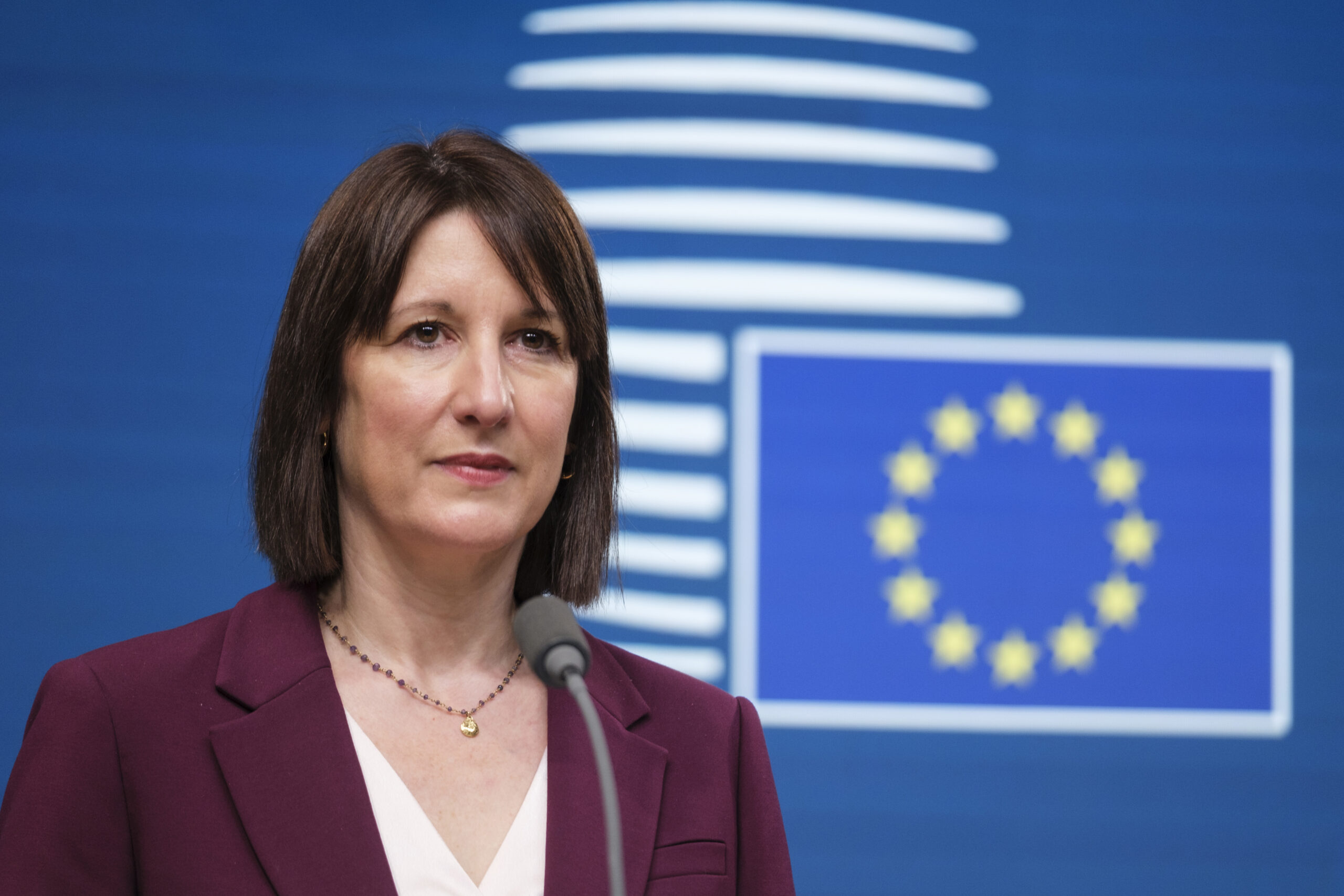
Eurogroup Ministers Meeting
UK Special Coverage

When the British Chancellor of the Exchequer Rachel Reeves was asked by the Times last week to choose between Donald Trump and Ursula von der Leyen, the head of the European Commission, she replied without a moment’s hesitation: “Ursula von der Leyen.” 

“I believe that our future is closely intertwined with Europe,” she added. Take that, MAGA man.

You might have expected Reeves to have given a rather more diplomatic answer, given that the American president is the effective boss of NATO and her leader, Prime Minister Keir Starmer, has been trying to secure a comprehensive trade deal with the United States for the last 18 months. So eager has Starmer been to promote personal ties with Trump that he awarded him an unprecedented second state visit, complete with banquets at Buckingham Palace and flattery from King Charles.

But it looks very much as if Britain is now drifting back into the European orbit, 10 years after the referendum vote to leave the EU. Hostility to MAGA among the political classes has been compounded by the Iran war and the recent fallout over the closure of the Strait of Hormuz. It has pitched the Labour government, at least rhetorically, in a decidedly European direction.

Not that it needed much encouragement. The dream of reentering the European Union, or at least the Single Market, is one of the few issues that unites the right and left of the Labour movement. Reeves may have said repeatedly that reversing Brexit is “not going to happen,” but her actions belie her words.

In her annual Mais Lecture on Tuesday, Reeves made the case for ever-closer alignment with Europe as a “strategic imperative,” insisting that Brexit had been “bad for Britain.” Her civil servants are to conduct a major audit of all sectors of the economy to identify industries that could benefit by aligning themselves more closely with European regulations.

The UK has already started aligning with EU rules on food and agriculture standards in an effort to remove SPS checks and other red tape. Reeves wants this extended to chemicals, aerospace, and other high-tech areas. Labour’s ambition is to make Britain a global hub for artificial intelligence.

But joining the European Union’s dense regulatory environment might not seem the obvious way to do this. For years, Brussels has been placing roadblocks in the path of tech companies like GDPR, the Digital Markets Act, and the like. It is no accident that Europe, despite its highly educated population, has generated no big tech company to rival Apple, Microsoft, Amazon, etc.

The European Union prides itself on being a “regulatory superpower.” Many of its rules and laws will prevent the UK from accessing tech markets, however much Labour tries to emulate them. The European Union has always been one of the world’s great protectionist blocs, but it is becoming ever more so.

Its current “Made in Europe” agenda requires 70 percent of components in many goods sold in the single market, like wind turbines and electric vehicles, to be of European origin. Reeves seems to think that, by voluntarily shadowing EU regulations, whatever the cost, Brussels will start regarding components made in the UK as essentially European. It assuredly won’t.

The EU is firmly against what it calls “cherry-picking,” meaning gaining sectoral access to the single market. It’s all or nothing. If the Brits want friction-free access, they are going to have to pay up or start negotiations to rejoin the trading bloc. Recent attempts at sectoral alignment, such as gaining access to European defense procurement, have come with such a high price tag that the UK had to stop negotiating.

But many academics, media organizations, and politicians of all parties dearly wish to reverse Brexit and get back into Europe. So would many multinationals, who used the UK as a means of entry to the Single Market. The EU is one of the great divides between the educated elites, often called the “lanyard classes,” and lower-class Brits who are suspicious of globalization and the loss of sovereignty. Parties like the Greens and the Liberal Democrats are making rejoining Europe a headline policy.

But the hard reality is that reentry isn’t going to happen, and not just because Nigel Farage’s Reform UK, which is resolutely anti-Europe, is leading the opinion polls right now. Brussels isn’t ready to make nice. There is no way the UK could be restored to the European Union, or even to the European Economic Area, without accepting conditions that many British voters would find onerous.

Before 2016, Britain had a unique deal with Brussels. It had opt-outs from the Single European Currency and from the borderless Schengen zone. It also had a hefty rebate from its contributions to the EU budget. If Britain applied to rejoin it would have to agree to adopt the euro, accept freedom of movement, and make a gross contribution to the EU bureaucracy of £21–£26 billion per year.

Britain would also have to abandon or revoke bilateral trade deals with non-EU countries negotiated since Brexit. For example, British membership in the Indo-Pacific trading partnership, the CPTPP, covering countries like Japan, Australia, and Mexico, would be incompatible with renewed membership of the Single Market. Finally, reentry to the EU would surely plunge the UK into another bitter and divisive referendum campaign just when the wounds from the last one were beginning to heal.

So why is the Labour government flogging this apparently dead horse? Well, a lot of it is performative. Blaming Brexit has become the number one excuse for the UK’s current economic problems of low growth, high debt, and a lingering cost-of-living crisis. It provides an alternative narrative to divert attention from Reeves’s £80 billion tax increases, which have crucified small and medium-sized businesses, caused job losses, and increased inflation.

There is a plausible argument that the British economy has been damaged by Brexit and Europe’s subsequent trade barriers. The independent Office for Budget Responsibility estimated that the UK’s GDP would be up to 4 percent higher long term had it remained in the single market. Yet this is highly speculative.

There have been so many shocks to the system in the last decade—Covid, Ukraine, and successive energy crises—that it is difficult to isolate the Brexit factor. Britain is not alone in experiencing weak GDP growth. In fact it has performed rather better in recent years than European economies like Germany.

The global poster-child for growth in the West has been the United States, from which the UK now seems to be content to turn away. The UK government seems to think that the current disruption to the global economy is none of its business, and Starmer is congratulating himself for not getting involved in the Iran war.

Nor does the European Union seem to think its wellbeing could be affected by what happens in the Strait of Hormuz. But Britain and Europe are dangerously exposed to international competition, soaring energy prices, and potential coercion from Russia and China as well as Iran. By choosing the EU over the U.S., Rachel Reeves may be backing a loser.

The post Labour’s Doomed Pivot Toward Europe appeared first on The American Conservative.

Thanks to the Iran Hawks, Nuclear Nonproliferation Is Dead

Thanks to the Iran Hawks, Nuclear Nonproliferation Is Dead

Who now would negotiate away a nuclear weapons program?

2024 Frontliner Ukraine Archive

The Iran hawks got the war they’d been seeking for the past decade or more—and they managed to kill off not just nuclear nonproliferation, but the concept of nuclear negotiations altogether. Every regime around the world remotely hostile to superpower interests will have to consider investing in nuclear weapons, as those have proven to be the only way to ensure any given regime’s survival. Given what just happened in Iran, the concept of negotiating that away has been torched, not unlike Golestan Palace in Tehran. 

In the post–Cold War era significant steps were taken towards denuclearization. President Reagan had signed the 1987 Intermediate-Range Nuclear Forces (INF) Treaty with Gorbachev, which eliminated a number of nuclear missiles, and in the 1990s, following the dissolution of the USSR, Belarus, Ukraine, and Kazakhstan all opted to return their nuclear weapons to the newly founded Russian Federation. It’s not to say this era had no nuclear proliferation; India joined the nuclear club in 1974 and achieved weaponization in the late 1990s, followed shortly after by Pakistan, whose technology was later used by North Korea when they achieved the same milestone.  

While their experience has varied, it has been across the board better than the experience of those who have opted against nuclear weapons or who have made the in retrospect foolish decision to negotiate the end or even negotiate at all. This is not unique to any superpower—Ukraine turned over its nuclear weapons with assurances from the Russian Federation and the United States, and got invaded for its trouble. The West and the United States have not been much better. Libya’s Muammar Gaddafi famously gave up his nuclear ambitions in part as a response to the 2003 invasion of Iraq, and his reward was to be sodomized with a bayonet not even a decade later after Western weapons helped carve up his country—a decision that Europeans are still dealing with. 

Iran is an especially bleak case because it demonstrates not only the folly of ending a program but of negotiating one at all. The original sin of the Iran nuclear deal negotiated by the Obama administration was that it was solely about nuclear weapons. Criticism of it tended to elide this basic reality, and argument often centered on other Iranian actions such as proxies in the region. These, while certainly problems, were not a nuclear problem. This fault was readily apparent during the first Trump administration when General James Mattis, then secretary of defense, repeatedly testified that Iran was in compliance up until the U.S. decided to pull out of the deal and slap sanctions back onto the Iranian state. 

President Joe Biden didn’t prioritize a deal in the same way his Democratic predecessor did. Even if he had, it’s unclear he’d have been able to get the Iranians to agree, as the U.S. government had previously demonstrated that their word was not reliable. Trump was then reelected in part promising to not fight more wars in the Middle East, which gave some hope that he might look to continue negotiations. This was not to be, and in February the bombing began again after the overture of the June 2025 strikes. 

Countries like Pakistan or North Korea that are far closer to falling apart have seen what happens when you engage at all with the West on nuclear weapons and are unlikely to forget this lesson. This is not necessarily a new lesson—Pakistan’s Prime Minister Zulfikar Bhutto famously said in the 1960s that his countrymen would eat grass if that was the cost of a nuclear weapon. The intervening years and the fact that his country has survived while Tehran lies in rubble is in some sense vindication of the chlorophyll-based diet.

It is worth reflecting on what the quest for regime change in Iran is worth. Is it worth a world with warped incentives towards less nuclear negotiations and more nuclear weapons? Is it worth the deaths of so many? Iranian and American casualties are mounting. There are likely to be many more: Iran is a country of 90 million and American officials are talking seriously about the potential for boots on the ground. Hawks argued that the negotiations were just forestalling war; they have succeeded in making the prophecy come true. 

The post Thanks to the Iran Hawks, Nuclear Nonproliferation Is Dead appeared first on The American Conservative.