The Baseball Cap Maketh the Man

The Baseball Cap Maketh the Man

The loss of distinctions in dress and speech has made the world sadder and more vulgar.

US-IRAN-ISRAEL-WAR
TakiMag

President Trump has been criticized, in my view rightly, for wearing a baseball cap at a ceremony for U.S. servicemen killed in the war against Iran. His cap is undignified at best and wearing it at the ceremony was lacking in respect for men who had died carrying out his policy. 

No doubt by wearing the cap he was showing himself to be a man of the people, and doing so in a sense quite accurately: It is true that much of the population of the Western world has lost any notion that there are different registers in the way one should speak or dress, and that what is appropriate in one social circumstance is inappropriate in another. Informality has triumphed over any manifestation of ceremoniousness, the former supposedly being democratic and the latter supposedly being snobbish.

Informality of dress on all occasions is a tribute that the rich pay to the subliminal but nonetheless prevalent (and false) Marxist idea that private wealth is illegitimate, necessarily distilled from the blood of the workers. By their informality, they hope that the difference in wealth between them and the workers will thereby go unperceived by those who might otherwise be enraged by it. I need hardly add that there is a deal of bogusness in this conscious, ideological adoption of informality. 

There are other tributaries flowing into the great river of modern slovenliness. When I was young, I was slovenly myself, believing that appearance, being merely external, was also superficial. It was the inner man that counted, not the outer; to judge a person by the way he dressed was like judging a book by its cover. 

Now as it happens, I have had quite a lot to do with books in my life, and covers, while not infallible guides to the value of the contents, at least create first impressions, and attract or repel according to one’s interests and propensities. Publishers devote considerable attention to the covers of their books, and they are not stupid, though they may on occasion be foolish. (Incidentally, the best cover known to me is that of the giant French publisher Gallimard, which has used the same simple but elegant design for the covers of its books for more than a century, the design now standing in the minds of sophisticated book-buyers as a guarantee of at least a minimum degree of literary merit.)

Naturally, no sensible person would make a full and final judgment of a book by its cover, but equally no sensible person would take no notice whatever of such a cover. Pulp fiction tends to have different covers from serious historical studies. 

The romantic idea that it is only the inner being that counts is, of course, a license for degradation. Many of the worst criminals I knew when I worked in prison as a doctor would claim that their despicable actions were not a reflection of the real them; their immaculate cores remained unsullied by anything as vulgar, trivial and superficial as the way that they had actually behaved. Criminals who claimed that they had lost their memories for what they had done—either through drink, drugs, lying, or psychogenic amnesia—would also claim that they couldn’t have done the things they were accused of having done because they were not the kind of things they did, and they claimed this even when there was a clear and indisputable record of repeated such behaviour.

In a certain way, it comes as a relief to think that outward appearance is unimportant, because trying to present a smart outward appearance imposes a discipline, an effort, whereas the doctrine of the inner man imposes none. It is like the difference between being religious and being spiritual. The former imposes obligations, the latter imposes nothing, except possibly obedience to whim, such as hanging wind-chimes in the garden (often a pleasant enough sound, though apt to become irritating if continued too long). When I hear someone say that he, or more often she, is spiritual but not religious, I feel a mixture of irritation and contempt—though of course, believing as I do in the importance of the outer man, I say nothing. 

Anyway, I was cured of the romantic notion that outward dress is completely unimportant in Africa, where I saw really poor people—not billionaires or chief executive officers—making a great effort to make themselves look good, at least on special occasions. In conditions in which washing clothes, let alone pressing them, was difficult, they nonetheless managed to make themselves a pleasure to the eye. Deliberate, ideological carelessness as to their appearance was unknown to them, no doubt because when they wore worn-out clothes with holes in them, it was through necessity, not choice. Their guys and dolls were never deliberately slovens and slatterns.

As with all things, there is in the matter of outward appearance a happy medium. Care for how one appears to others—self-respect—can degenerate into vanity. But a dandy, though he may be ridiculous, is at least not harmful, and indeed a leavening of dandyism makes social life more pleasant. 

Along with an indifference to outer appearance, and a failure to dress differently for difference occasions (I have been to funerals where the mourners, if that is what they were, made no special effort to differentiate the way they dressed a funeral from the way they dressed for an excursion to a convenience store), I have noticed a similar absence of difference in the mode of address that young people employ. They believe—they have in effect been taught—that to speak differently to different kinds of people on different occasions about different subjects is a sign of insincerity, and insincerity is the worst of qualities. They cannot differentiate between friendliness and friendship, the latter having been hollowed out in any case by the spread of social media. They seem not to understand that where everyone is your friend, no one is your friend. (The paranoid, by contrast, think that universal enmity is possible.) Not long ago, a young man said to me, when I suggested to him that there were and ought to be different ways of speaking to different people in different situations, that he always spoke in the same way to all, because he wanted everyone to be his friend and he wanted to be the friend of everyone. 

I thought this was sad. It was a mark of profound loneliness.

The post The Baseball Cap Maketh the Man appeared first on The American Conservative.
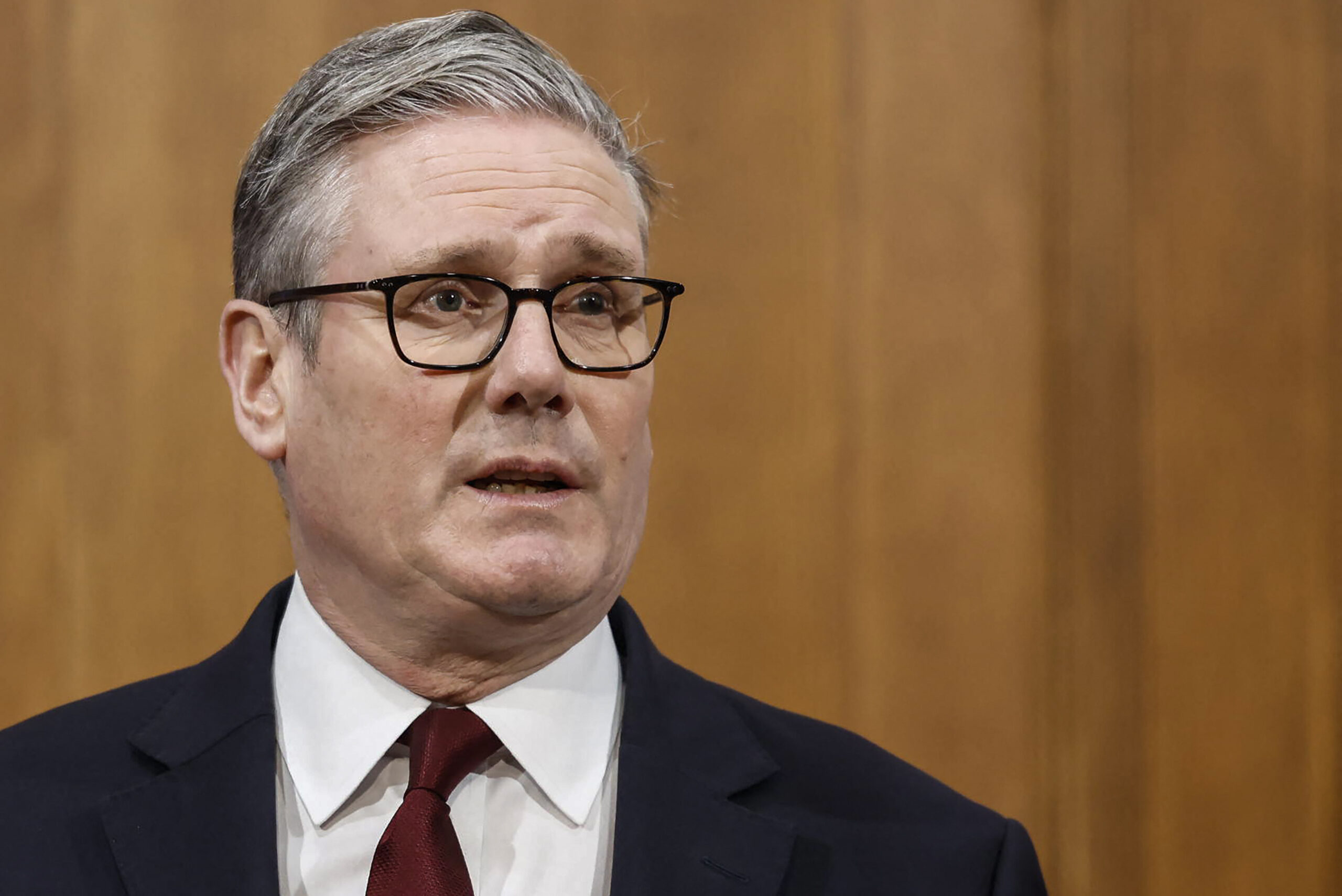
The Iran War Roils UK Politics

The Iran War Roils UK Politics

Each party faces difficulties in orienting itself toward an unpopular war.

BRITAIN-POLITICS-IRAN-US-ISRAEL-WAR
UK Special Coverage

The UK may have chosen not to join the American-Israeli airstrikes on Iran, but it has not been able to escape the political fallout. The question of whether to intervene has proven agonizing for both the Labour government and its opponents on the right. It has also painfully exposed the limits of Britain’s power in the 21st century.

Keir Starmer’s decision before the bombing began not to allow the U.S. to use British airbases was initially seen as a product of the PM’s slavish devotion to international law (a hangover from his pre-parliamentary career as a human-rights barrister). Any pre-emptive action, UK government lawyers concluded, would be illegal unless Iran posed an “imminent” threat to Britain. The truth, it now seems, is more nuanced. Starmer reportedly made the case to his cabinet that, while the UK should not get involved in the war directly, it should allow the U.S. to use British bases, as this would help them hit their targets more quickly. He also felt it was important not to put unnecessary strain on the relationship with the Americans, or give the mercurial Trump any excuse to rip up recent U.S.-UK trade agreements.

But a weakened Starmer, who had just barely survived the scandalous appointment of a friend of Jeffrey Epstein as UK ambassador to Washington, failed to make this case to his cabinet. The “soft left” faction of his government, best represented by the Net Zero minister and former party leader Ed Miliband, urged against intervening—partly on pacifist grounds, citing the disasters of Iraq and Afghanistan; partly based on an intense dislike of Donald Trump; and most extraordinary of all, partly out of fears that it would upset British Muslims. 

In fact, only the day before the war began, Labour lost one of its safest parliamentary seats in a by-election in Greater Manchester. The Green Party pulled off a decisive victory by aggressively courting the Muslim bloc vote, including by producing campaign material in Urdu, the national language of Pakistan. Even before Labour’s bruising by-election defeat, the question of “Will it go down well with Muslims?” is now central to foreign-policy decisions. (A senior diplomat recently suggested Starmer’s recognition of a Palestinian state was driven by appeasement of Islamic sectarian voters.)

In any case, perhaps it doesn’t matter much what a British prime minister may want to do. Starmer’s actions have been constrained not only by domestic politics, but also by Britain’s waning military capabilities. On 1 March, when a Hezbollah drone strike hit a Royal Air Force base in Cyprus (considered British sovereign territory), the UK was initially in no position to respond. For the first time in years, there were no active Royal Navy ships in either the Mediterranean or the Gulf. Even when Starmer had taken the decision to send a single ship—HMS Dragon, an air-defense destroyer—to defend Cyprus, it sat idle for a week before it could set sail. It is expected to take another week before it arrives in the Eastern Mediterranean to defend the RAF base.

For a nation whose identity is wrapped up in “ruling the waves,” the Cyprus affair has been experienced as yet another humiliating reminder of Britain’s diminished global status. On the plus side, it has injected some much-needed realism into the national discussion on Iran—and something resembling a debate on what might be in Britain’s national interest. 

One political scientist has suggested you’d have to go back to the Suez crisis of the 1950s to find opposition parties opposing the government’s line on British military action. The right has always been more militaristic and Atlanticist, and thus predisposed to getting involved in American military ventures. The left, meanwhile, has supported various interventions and wars on “humanitarian” grounds. The Labour Party backed Margaret Thatcher’s invasion of the Falklands in 1982. The Conservatives, when in opposition, backed Tony Blair’s adventures in Iraq and Afghanistan. Even Miliband, who led the cabinet revolt against Britain’s involvement in Iran, supported the Tories’ war in Libya to topple Muammar Gaddafi. Yet, with each Middle Eastern intervention proving disastrous, the elite consensus in favour of Britain meddling in global affairs has frayed considerably over the past two decades.

As a result, British politicians have struggled to find their footing on Iran. Starmer seems to have landed, almost by accident, on a position that’s broadly aligned with public opinion: using military force to defend Britain’s own bases, but without getting involved in the broader war. For the Greens—a pacifist, anti-NATO, anti-Israel, and increasingly Islamist-tinged party—there was never any chance they would back British involvement in Iran.

For the main parties of the right, adjusting to the prevailing mood has proven more difficult. When the American-Israeli airstrikes began, the Conservative Party leader Kemi Badenoch immediately hit out at Starmer for failing to endorse them and for not himself taking ‘offensive’ action against Iranian missile sites. Yet she was immediately forced to clarify that she did not want the UK to join the war fully.

The party with the most difficult tightrope to walk is Reform UK, with polls suggesting its voters are evenly split on intervention. Nigel Farage gave his immediate and full-throated backing to “the Americans in this vital fight against Iran,” only to climb down within a week, citing the Cyprus debacle. We “don’t have a navy” and “cannot get involved directly in another foreign war,” Farage told a press conference. Robert Jenrick, Reform’s shadow chancellor, put it more pithily: “We are the party for working people, not drawn-out wars in faraway places.”

As well as the broader opinion polling on the unpopularity of the war, Farage has also faced opposition from his right. Rupert Lowe, a former Reform MP, recently set up the Restore party, which takes a far harder line on migration than even Reform and is starting to stake out an “isolationist” foreign policy. Although most Britons have no idea who Lowe is, he has a vocal and assertive online following, particularly on X, where he is boosted by retweets from Elon Musk. As such, Lowe’s interventions do seem to worry Reform insiders. One thing that can certainly be said of him is that he’s been far more consistent on Iran than Farage, stating unequivocally at the start of the war: “ZERO British troops on the ground—in Iran or Ukraine. Our priority is the British people – that is our only priority.”

Farage initially tried to make a virtue out of “not following popular opinion,” but his misreading of the public mood on Iran has been a rare misstep. Since Iraq and Afghanistan, most Brits don’t want to get involved in another American military quagmire. Making this war even more unpopular is that it’s being prosecuted by Trump, who is widely seen as an erratic agent of chaos, a view seemingly confirmed by his threats to annex Greenland and his administration’s relentless scolding of Europe. All that, combined with an increasing animus towards Israel in certain sections of society, and you end up with a war that only about a quarter of Brits would support joining, compared with about half who say the UK should only take defensive actions. Whatever the right course of action may be, for Britain or the Middle East, Farage was clearly out of tune with the public’s skepticism. 

Trump recognised in 2016 that the mood in America, even among Republicans, had turned against foreign military misadventures. There is a similar skepticism in Britain, but whether Reform UK can credibly speak to it has suddenly been thrown into doubt.

The post The Iran War Roils UK Politics appeared first on The American Conservative.

Yes, MAGA’s Fracturing Over Iran

Yes, MAGA’s Fracturing Over Iran

President Trump’s movement might not survive the war.

House Homeland 12/11/25

I AM THAT I AM.

Thus spake God to Moses, instructing him to “say unto the children of Israel, I AM hath sent me unto you.”

President Donald Trump has been saying something similar lately: I AM MAGA!

Trump’s latest declaration of his MAGA-ness came in a long post on Truth Social defending the Israel-first blowhard Mark Levin, who has gotten into recent spats on social media with conservatives who criticize the war with Iran. Trump wrote:

Those that speak ill of Mark will quickly fall by the wayside, as do the people whose ideas, policies, and footings are not sound. THEY ARE NOT MAGA, I AM, and MAGA includes not allowing Iran, a Sick, Demented, and Violent Terrorist Regime, to have a Nuclear Weapon to blow up the United States of America, the Middle East and, ultimately, the rest of the World. MAGA is about stopping them cold.

Many Trump voters have been surprised to learn that “MAGA is about” war on Iran. To be sure, Trump hasn’t always been rhetorically consistent on matters of war and peace, but in 2016 he distinguished himself in the Republican primary by lambasting the Forever Wars, in particular the one in Iraq. And in the 2020 and 2024 elections he bragged about not starting any new wars in his first term.

“We will measure our success not only by the battles we win but also by the wars that we end—and perhaps most importantly, the wars we never get into,” Trump said in the best line of his inaugural address last January. “My proudest legacy will be that of a peacemaker and unifier.”

Fourteen months later, Trump is proving a warmaker and divider. The MAGA movement and the Republican Party will suffer as a result.

Hogwash, the White House might say. Press secretary Karoline Leavitt last week highlighted polling which showed that upwards of 85 percent of MAGA-identified voters support the strike on Iran. That’s been the standard sort of reply to claims that MAGA is fracturing: Joe Kent, an America First Trump official, may have just resigned in protest of the Iran war, and right-wing influencers like Tucker Carlson may be jumping ship, but MAGA voters remain on board.

Sure, but there are a few problems. First, even MAGA diehards don’t seem terribly gung-ho about striking Iran, whatever they may tell pollsters. At an otherwise raucous Kentucky rally last week, Trump’s announcement that the U.S. had “won” the war met with awkward silence.

No one denies that MAGA has stuck with Trump through numerous political scandals and likely won’t turn against him now (and wouldn’t have if he instead had made a deal, not a war, with Iran). But MAGA-identified voters constitute around only 15 percent of the electorate, so Trump didn’t win the White House on the strength of their support alone. Rather, he also won over traditional Republicans and independents.

The former group is much less supportive of the Iran war than they initially had been of George W. Bush’s military adventures, while the latter group is broadly opposed. Even in the polls that Leavitt shared, a meager 24 to 32 percent of independents said they supported Iran strikes. And according to a soon-to-be-published survey by the Quincy Institute, around a quarter of Trump’s 2024 voters oppose the decision to go to war with Iran. 

You don’t need a PhD in political science to know those are bad numbers in our two-party system. And wars tend to get less popular over time.

Worsening the PR challenge, the Iran war is already alienating opinion makers from the Trump administration. The 2024 presidential campaign was called the “podcast bro” election because of the influential role played by anti-establishment voices like Joe Rogan, who endorsed Trump. But now, those figures are fed up with Trump, and many of their listeners surely agree. 

“It just seems so insane based on what he ran on,” said Joe Rogan on a podcast episode that aired last week. “This is why a lot of people feel betrayed, right? He ran on ‘no more wars’, ‘end these stupid senseless wars’, and then we have one that we can’t even really clearly define why we did it.”

A dip in enthusiasm from traditional Republicans and a substantial loss of support from independents would mean lights out for the GOP in this year’s midterms and in 2028. After all, despite all the talk of a “landslide victory” in 2024, Trump won the popular vote by a smaller margin than Hillary Clinton did in 2016.

And let’s not forget: Trump won’t be on the ballot in future elections. Whatever personal connection he’s formed with MAGA voters—and no one can deny it’s a deep and abiding one—won’t matter much after J.D. Vance or Marco Rubio take over. 

The next Republican nominee will face significant headwinds if the Iran war turns into a quagmire, as it seems likely to do. Certainly, he will have difficulty convincing voters that opposition to stupid wars is a credible plank of the modern GOP platform. If the war continues for a long while, then the Democrats can recapture the antiwar energy that helped propel Barack Obama to victory in 2008.

Second-order effects of the war won’t help matters either. Inflation—or, more precisely, high prices—was perhaps the main issue that motivated the American people to return Trump to the White House. But Iran’s closing of the Strait of Hormuz, through which flows a fifth of the world’s traded oil, has already sent energy prices soaring and threatens to kick off a global recession. Working-class voters will be most affected, and they’ll blame Trump and punish his party at the polls.

As the Trump administration hurtles toward a political crisis, we’ve seen signs that it will crack down on civil liberties to stifle dissent. This weekend Brendan Carr, the head of the Federal Communications Commission, threatened not to renew the licenses of broadcasters based on their coverage of the war. 

And Laura Loomer—an apparent sociopath who regularly whispers in Trump’s ear—claims she’s been informing the president of traitors in his midst. In one post on X, she called for a new “McCarthyism,” referring to the Cold War campaign against suspected communists. In another post, Loomer said she had created a “list” of conservatives, including Carlson, who she alleges are taking money from U.S. adversaries and deserve “jail time.”

Carlson and other major conservative figures have tended to criticize Trump’s hawkish policies without speaking ill of the man himself. But if they start to think Trump is facilitating their political persecution, that could change, and many of their fans will come to see the president in a new, and much darker, light.

Trump, without question, has created one of the most impressive populist movements in political history. But MAGA, to remain a significant force, needs to be a coherent ideological faction, not a personality cult, and it will need to keep independents and traditional Republicans in its coalition. Sadly, much evidence suggests that the project won’t survive the war with Iran.

The post Yes, MAGA’s Fracturing Over Iran appeared first on The American Conservative.

Shockingly Low Share of Americans Have a Biblical Worldview, New Survey Claims

After the shocking assassination of Turning Point USA founder Charlie Kirk, some argued that America was having a surprising — but very much welcome — resurgence of conservative Christian faith.

But such narratives do not match the reality in the culture — at least according to one survey from Arizona Christian University.

The school’s Cultural Research Center issued the latest version of its “American Worldview Inventory” on March 3, finding that “any increased interest in the Christian faith spurred by Kirk’s assassination has not produced positive growth when it comes to biblical worldview.”

In both 2023 and 2026, only 4 percent of American adults had a biblical worldview.

By way of comparison, 12 percent of Americans had a biblical worldview in 1994, a figure which dropped to 6 percent by 2020.

The findings were based on a survey of 2,000 adult respondents undertaken in January via phone and online, with a plus-or-minus 2 percentage point sampling error.

Among adults in Generation Z, who are between 18 and 29 years old, only 1 percent have a biblical worldview — a much lower share than the 2 percent of Millennials and 7 percent of Gen X, Baby Boomers, and Seniors who have a biblical worldview.

In their analysis, the Cultural Research Center broke respondents into three categories — Integrated Disciples, Emergent Followers, and World Citizens.

Integrated Disciples are those with a biblical worldview. Emergent Followers are those “who do not have a biblical worldview, but are leaning in that direction, possessing a substantial number of beliefs and behaviors that are consistent with biblical principles.”

World Citizens are meanwhile “people who may embrace some biblical principles, but generally believe and behave in ways that conflict with biblical teaching.”

Beyond a trend away from biblical worldview in the culture, ignorance of the Christian faith increasingly reigns within the professing church.

The survey results noted that “evangelical churches, once the stronghold of biblical preaching and belief, have experienced a sharp decline in the proportion of adherents with a biblical worldview.”

While 12 percent of self-professed “born-again Christians” have biblical worldviews — a rate three times higher than the rest of the population — 19 percent had biblical worldviews in 2020.

Meanwhile, the largest share of American adults describing themselves as Christians are what the Cultural Research Center called “Notional Christians” — defined as “those who self-identify as Christian but do not embrace eternal salvation through a personal confession of sin and accepting Jesus Christ as their personal savior.”

The Cultural Research Center reiterated that “despite the increased attention given to faith matters after the Charlie Kirk murder, and the growth in church attendance and individuals purchasing Bibles immediately after that incident, there is no hint of improvement when it comes to biblical worldview.”

George Barna, the veteran researcher who oversaw the survey, likewise discussed the dismal results — especially with respect to Generation Z.

“Make no mistake about it, we are losing American society and all that it has historically represented because we have succumbed to the influence of the culture instead of the exhortations and promises of God,” he commented.

“Entertainment and media messages as well as public policies and errant public education have distorted the thinking and behavior of our young people.”

Barna nevertheless said that with proper education in the Christian faith — which he sees at places like Arizona Christian University — there is reason for hope.

“It is time to reclaim the culture for Christ,” he concluded.

This article appeared originally on The Western Journal.

The post Shockingly Low Share of Americans Have a Biblical Worldview, New Survey Claims appeared first on The Gateway Pundit.

WHAT A SHAME: Ratings for the Oscars Were Down Nine Percent From Last Year – Lowest Since 2022

Screencap of YouTube video.

If you didn’t watch the Academy Awards this year, you’re not alone. In fact, most people didn’t watch the show.

This year, host Conan O’Brien and others couldn’t resist taking cheap shots at President Trump, First Lady Melania, Republicans in general, Turning Point USA, our ally Israel and more. These woke celebrities just can’t help themselves.

Their entire industry is going down the drain and they refuse to do any course correction whatsoever. What are they going to do when no one is watching at all anymore?

Variety reports:

Oscars Ratings Hit 17.9 Million Viewers, Down 9% From Last Year and Lowest Since 2022

The 98th annual Academy Awards drew 17.86 million viewers on ABC and Hulu, which makes it the least-watched Oscars telecast since 2022. The number is down 9% from last year’s 19.7 million viewers, which had been a five-year high for the telecast.

The telecast averaged a 3.92 rating among adults 18-49, down from last year’s 4.54 but up from 2024’s 3.82 rating. Despite this year’s dip, the 98th Academy Awards now rates as the No. 1 primetime entertainment telecast of the 2025-2026 season, according to Disney.

The declines for Sunday night’s broadcast, which was hosted by Conan O’Brien, matches similar dips seen by other major awards shows this winter, with the Golden Globes down 6% (8.66 million viewers) in January and the Grammys down 6% (14.4 million viewers) in February.

All of the ratings are via Nielsen’s big data plus panel ratings. The Oscars easily ranked as the No. 1 program on Sunday in viewers and across all key demos.

ABC also reported that social impressions were up +42.4% this year (184,314,3702) and Academy social platforms were up to 21.6 million this year vs. 19.7 million last year, including more than 129 million video views throughout the night.

Notice how the Variety article keeps trying to suggest that there’s some good news in there? There isn’t. In a country of 350 million people, a very small percentage tuned in to watch, and most of them were probably journalists and people who work in the entertainment industry.

The truth is that most Americans are completely sick of these people. They get paid millions of dollars to play pretend and get treated like royalty, then turn around and act like morally superior scolds while dumping on more than half of the country.

Here’s hoping that they are enjoying it while it lasts. If things keep going the way they are, many of these people will be unemployed in a few short years.

The post WHAT A SHAME: Ratings for the Oscars Were Down Nine Percent From Last Year – Lowest Since 2022 appeared first on The Gateway Pundit.

Resurfaced 2022 Video Shows Texas Democrat Senate Candidate James Talarico Wearing a Mask While Pushing Veganism to Fight Climate Change

Screencap of Twitter/X video.

James Talarico is the supposed Christian that Democrats have nominated to run for a U.S. Senate seat in Texas, a choice they may end up regretting before election day.

In a newly resurfaced video from 2022, Talarico is shown wearing a mask and talking about embracing veganism in order to fight climate change.

Conservative analyst Mollie Hemingway recently said that it would be difficult to get Talarico elected in San Francisco and this is exactly what she was talking about.

The worst part for Talarico and his party is that there is no shortage of these types of clips and they will be running from now until election day.

Townhall has details:

Video Resurfaces of James Talarico Pushing Veganism to End ‘Existential’ Threat of Climate Change

James Talarico, the Democrat nominee for the U.S. Senate race in Texas, had yet another insane video resurface on Monday. In the video from 2022, Talarico claims that the world needs to lower their meat consumption to combat the “existential” threat of climate change and touts his progressive move to become a “non-meat” campaign.

“We have, I think, heard more and more of issues of animal welfare,” Talarico said. “I think not just because it’s the right thing to do and the moral thing to do, but it’s also—as all of you know—necessary to fight climate change.”

“It is now existential that we try to reduce our meat consumption and that we try to respect animals in all aspects of society,” Talarico continued telling the Texas crowd. “I am proud to say that our campaign has officially become a non-meat campaign…we are only buying vegan products from our local vegan businesses.”

Here’s the clip:

Remember during the 2024 election when Democrats tried to claim that J.D. Vance is weird? What would you call this guy?

Isn’t it amazing to see someone in a mask? All of that madness already seems like a million years ago.

The post Resurfaced 2022 Video Shows Texas Democrat Senate Candidate James Talarico Wearing a Mask While Pushing Veganism to Fight Climate Change appeared first on The Gateway Pundit.

Report: Hakeem Jeffries Is Facing a ‘Rebellion’ from His Own Democratic Caucus

U.S. Congressman delivering a speech in front of American flags and congressional seals, emphasizing his political agenda and initiatives.

U.S. Congressman delivering a speech in front of American flags and congressional seals, emphasizing his political agenda and initiatives.

If the Democrats take back the House of Representatives in November, one of the first casualties might be Hakeem Jeffries’ role as leader.

Axios reported that more than 80 Democratic House candidates for 2026 are either noncommittal or outright opposed to Jeffries becoming the next speaker of the House, characterizing the development as a “rebellion.”

Mai Vang, the leading progressive primary challenger to Rep. Doris Matsui of California, told Axios last week, “The Democratic Party and its leadership — Chuck Schumer and Hakeem Jeffries — have failed to mobilize meaningful opposition to [President Donald] Trump’s illegal war and their silence as AIPAC and corporations flood Congressional primaries with millions of dollars is deafening.”

“I cannot support this kind of leadership,” Vang added. “If we want to defeat Trump and rebuild trust with working Americans, we need new leadership and a new direction.”

AIPAC stands for the American Israel Public Affairs Committee. Rep. Ilhan Omar of Minnesota has made similar claims as Vang about Jewish money influencing U.S. elections, prompting a censure motion.

Adam Hamawy, a Democratic candidate in New Jersey’s 12th district, told Axios regarding Jeffries, “Most Democrats are agreed that he’s been failing to meet the moment.”

The candidate explained that he’s “looking for someone that’s gonna stand up to the administration.”

Meanwhile, New York Mayor Zohran Mamdani-backed congressional candidate Claire Valdez, a current New York State Assembly member, told Axios that “there would need to be some conversations” when asked if she would support Jeffries’ leadership.

Jeffries spokesperson Justin Chermol said in a statement, “Leader Jeffries is focused on addressing the affordability crisis, stopping the bombing in the Middle East, reining in ICE and taking back the House to stop Republican extremists from destroying America.”

Axios concluded, “Whether Jeffries waltzes to the speakership or faces a repeat of Kevin McCarthy’s 15-ballot slog in 2023 would depend on how these progressives fare in their primaries and, of course, whether he wins the House and by how many seats.”

Jeffries has come out firmly in opposition to Operation Eric Fury directed against Iran. He posted Monday on social media, “Billions to drop bombs overseas. Not a dime to lower costs for the American people. It’s time to end this reckless war of choice.”

Republicans would likely point to the “Big Beautiful Bill” with its provision for no tax on tips, overtime, and Social Security as steps the administration and the Republicans have taken to address affordability.

Regarding the issue of immigration enforcement, which Democrats say is their reason for refusing to fund the Department of Homeland Security, Fox News congressional correspondent Bill Melugin pointed out, “One could argue Democrats have already secured a handful of wins for their base on DHS. Kristi Noem is out. [Border Patrol Commander-at-Large Gregory] Bovino has been reassigned & will reportedly retire.”

He added, “Roving patrols are over. Minnesota operation is over. Things have calmed down since Homan took the reins and enforcement has largely moved back to targeted operations. Republicans are highly unlikely to budge on Dem demands of judicial warrants and unmasking of agents. *Especially* judicial warrants.”

This article appeared originally on The Western Journal.

The post Report: Hakeem Jeffries Is Facing a ‘Rebellion’ from His Own Democratic Caucus appeared first on The Gateway Pundit.

Obama Judge Orders Release of Four-Time Deported Illegal Alien MS-13 Gang Member with History of Rape

Close-up of a man with short hair and a serious expression, set against an indoor background with blurred figures and various objects.

Close-up of a man with short hair and a serious expression, set against an indoor background with blurred figures and various objects.

Another day, another far-left activist judge.

US District Judge Susan Nelson, an Obama appointee, ordered the release of a four-time deported MS-13 gang member from El Salvador with a history of rape.

In January, ICE arrested Carlos Antonio Flores-Miguel during a raid in Minnesota.

“Today in Minnesota, ICE arrested Carlos Flores Miguel — a four-time-deported criminal, illegal alien, convicted sex offender, and assailant of federal law enforcement,” ICE said in January.

Judge Nelson ordered ICE to release Carlos Flores-Miguel, according to Fox News.

Fox News reported:

A federal judge has ordered federal immigration authorities to release an illegal immigrant gang member with multiple unlawful entries into the United States and whose criminal history includes rape and robbery, Fox News Digital has learned.

Earlier this month, U.S. District Judge Susan Richard Nelson, an Obama appointee, ordered the release of Carlos Antonio Flores-Miguel, an MS-13 gang member from El Salvador, from U.S. Immigration and Customs Enforcement (ICE) custody, the Department of Homeland Security (DHS) said.

“This activist, Obama-appointed judge RELEASED Carlos Antonio Flores-Miguel, a criminal illegal alien from El Salvador and MS-13 gang member, from ICE Custody,” said Acting Assistant Secretary Lauren Bis. “Releasing violent criminals is inexcusably reckless and now this criminal will be able to perpetrate more crimes against innocent Americans.”

Flores-Miguel was released into the United States under the Biden administration in 2022, DHS said.

On Jan. 20, he was arrested by ICE in Minneapolis, when he violently resisted by punching and kicking ICE law enforcement officers, authorities said. In addition, he allegedly grabbed an ICE officer’s gun holster.

A separate Obama-appointed judge ordered the release of MS-13 gang member Kilmar Abrego Garcia.

Judge Paula Xinis recently ordered ICE to release Abrego Garcia from custody.

The post Obama Judge Orders Release of Four-Time Deported Illegal Alien MS-13 Gang Member with History of Rape appeared first on The Gateway Pundit.

The Cuban dictatorship announced that Cuban citizens residing abroad will be able to invest in and own businesses on the island

Close-up of a man wearing a suit and earbud, engaged in conversation at a professional event.

Close-up of a man wearing a suit and earbud, engaged in conversation at a professional event.

This is a Gateway Hispanic article.

The post The Cuban dictatorship announced that Cuban citizens residing abroad will be able to invest in and own businesses on the island appeared first on The Gateway Pundit.

Declassified Doc Confirms China Did, in Fact, Breach US Election Security Leading up to 2020 Election

With Republicans working to pass the SAVE America Act in the Senate to safeguard election integrity, a new report out of Washington is highlighting a potential danger to American elections that Democrats don’t want to talk about.

And it turns out there’s a good reason for that — since it could cast a shadow over Joe Biden’s victory in the 2020 vote that has never quite set right with the American right.

It’s a danger that comes from the People’s Republic of China — the United States’ most dangerous enemy on the global stage.

According to a document obtained by Just the News, and confirmed with officials who had knowledge of the investigation, Beijing was able to electronically infiltrate unidentified American election systems as part of a cyber-espionage campaign.

“[Redacted] Chinese intelligence officials analyzed multiple U.S. states’ [Redacted] election voter registration data, [Redacted] to conduct public opinion analysis on the 2020 US general election,” a portion of an April 2020 National Intelligence Council document stated.

The memo, titled “Cyber Operations Enabling Expansive Authoritarianism,” was “quietly declassified” in 2022, but received no attention from either President Joe Biden’s administration or from the establishment media.

“That means six years later that the U.S. intelligence community has yet to fully inform the American people or the Congress on the breadth of evidence it possesses of China’s actions, how Beijing got the data, and what operations it has taken or contemplated,” wrote Just the News founder John Solomon and chief investigative correspondent Jerry Dunleavy.

The information in question relates to voter registration — not actual voting systems. But that doesn’t make it unimportant.

“Voter registration data is not the same as ballots, where Americans choose their candidates,” Solomon and Dunleavy wrote. “But it contains sensitive personally identifying information, including driver’s license data and partial Social Security numbers. The data is considered so sensitive that several Democrat states are currently trying to keep the Trump Justice Department from obtaining it and liberal groups claim it is a holy grail of election integrity.”

And who was the only intel official sounding serious warnings about Chinese activities? Trump’s director of national intelligence in 2020, John Ratcliffe.

Just a reminder, too, that President Joe Biden’s administration made a big to-do about this sort of thing happening in the United Kingdom. From The Wall Street Journal, April of 2024:

The Biden administration hit alleged Chinese hackers with sanctions and criminal charges on Monday while the British government accused Beijing of hacking the U.K.’s electoral register to steal the personal details of tens of millions of voters, part of a global push by allies to condemn China’s expanding aggression in cyberspace. … 

The alleged hackers, alongside five other defendants, were also indicted on criminal charges unsealed by the U.S. Justice Department, and the U.S. State Department offered a $10 million reward for information about the group.

“The United States will continue its work to disrupt the dangerous and irresponsible actions of cyber actors targeting critical infrastructure,” said Brian Nelson, a senior Treasury Department official. “Through continued close coordination with our U.K. partners, and a unified, whole of government approach, we will protect our citizens from the catastrophic risks these reckless cyber activities pose.”

The U.K.’s Electoral Commission, which manages elections, said last year that hackers had accessed the nation’s voter-registration records—which included the names and addresses of around 40 million people—as well as the commission’s email system and information about political donors. The hackers accessed the system in 2021 but were only detected in late 2022, the commission said at the time.

Why not go public with the knowledge that the Chinese government had also tried similar shenanigans in the United States? A charitable reading might be that we wouldn’t want our adversaries to know what we know about them.

A more uncharitable reading might be 1) we were all supposed to pretend 2020 was The Safest and Most Secure Election Ever™ and 2) this would have made the alleged Russian meddling in the 2016 election — never proven beyond penny-ante hijinks — look piddling by comparison.

Reading the memo, you realize this isn’t like what the Democrats alleged handed Donald Trump the election eight years ago: A handful of dodgy Moldovan fake news sites making claims like Hillary Clinton killed a man in Reno just to watch him die (or whatever).

Here we have a National Intelligence Council assessment from the heat of the 2020 election confirming that China had wide swaths of voter data and was looking to export its cyber-despotism beyond Beijing, Hong Kong, Xinjiang and the like. That’s kind of a big deal.

And for four years, there were crickets from the Biden administration, all as the president was pushed around by a bellicose Xi Jinping. (Funny, he seems a bit quieter these days, especially since Operation Epic Fury. But I digress.)

Remember when Joe Biden told us he was the defender of democracy? That he was the only thing standing between America and real, live despotism? So why, then, did he not talk about this with the American people?

Damn being charitable. We know full well that the Democratic narrative was that the Russians supposedly handed Trump the 2016 election, which they didn’t. That needed to be preserved at all cost. So, too, did the idea that the United States had no worries about its election integrity.

Thus, barely a word was breathed about the Chinese getting access to voter data in 2020, which they did.

The SAVE America Act, which has passed in the House and is facing an uncertain future in the Senate, might not have prevented the Chinese operations, but it’s at least a much-needed step in the direction of shoring up American election security.

And if American election security had a higher priority, future administrations might not be so casual about covering up revelations that a foreign power is interested in hacking U.S. election systems.

And which party is trying desperately to keep the SAVE America Act from passing?

It’s yet more proof that the Democrats really are an anti-compass: You can always navigate true by going in the exact opposite direction they point to.

This article appeared originally on The Western Journal.

The post Declassified Doc Confirms China Did, in Fact, Breach US Election Security Leading up to 2020 Election appeared first on The Gateway Pundit.