Joe Hoft with Grant Stinchfield on Todd Blanche’s Actions While in DOJ

Why Todd Blanche MUST NOT be AG. Our recommendation to the @realDonaldTrump administration. Thank you to my good friends, @stinchfield1776 and @realJoeHoft for the solidarity. Keep watching, commenting and sharing…more … Read more

The post Joe Hoft with Grant Stinchfield on Todd Blanche’s Actions While in DOJ appeared first on Joe Hoft.

The post Joe Hoft with Grant Stinchfield on Todd Blanche’s Actions While in DOJ appeared first on The Gateway Pundit.

REPORT: Iran Is Hours Away From Doomsday — Here Is Its Only Way Out

Image depicting a serious discussion on U.S.-Iran relations, featuring an Iranian official and Donald Trump, with an oil facility and Iranian flag in the background.

Image depicting a serious discussion on U.S.-Iran relations, featuring an Iranian official and Donald Trump, with an oil facility and Iranian flag in the background.

WATCH: Iran Is Hours Away From Doomsday — Here’s Its Only Way Out

As tensions with Iran continue to escalate, the focus has shifted away from isolated military engagements and toward a broader, more consequential strategy. 

The central development discussed in this episode is the ultimatum issued by Donald Trump: reopen the Strait of Hormuz or face direct strikes on critical infrastructure, including power plants and oil facilities.

This is not a routine escalation. It represents a deliberate shift in how the United States is attempting to alter Iran’s strategic calculations.

The Strait of Hormuz is one of the most important chokepoints in the global economy. A significant portion of the world’s oil supply passes through it, and Iran’s ability to disrupt or control that flow provides leverage far beyond its conventional military capabilities. 

By threatening to keep the Strait closed—or restrict access through selective permissions—Iran has positioned itself as a gatekeeper to global energy markets.

The ultimatum directly targets that leverage.

Rather than engaging solely through conventional military strikes or prolonged conflict, the strategy discussed in this episode centers on economic and infrastructural pressure. 

The idea is straightforward: if Iran continues to weaponize its geographic position, the United States will respond by degrading the systems that allow the regime to function. 

This approach reflects a broader understanding of how modern conflicts are fought. Direct regime change is not the immediate objective, and the episode makes clear that such an outcome is unlikely during active warfare. 

Instead, the goal is to weaken the regime’s internal stability over time. Economic collapse, energy shortages, and logistical disruption create conditions that can eventually lead to internal pressure from within the population.

At the same time, the ultimatum carries significant risks.

Iran is not operating in isolation. Its strategy relies on creating global consequences that extend far beyond the region. Countries across Europe and Asia depend heavily on energy flowing through the Strait of Hormuz. 

As a result, many of these nations are caught in a difficult position. They cannot fully support Iranian actions, but they also cannot afford a prolonged disruption of energy supplies. 

This creates a fragmented international response, where public statements may diverge from actual strategic behavior.

The episode also highlights a key dynamic: credibility.

An ultimatum of this scale only works if it is believed. Donald Trump has built a political reputation around following through on threats, even while leaving room for negotiation. 

That combination—pressure paired with a potential off-ramp—is central to the current strategy. Iran must now decide whether the risk of escalation outweighs the benefits of maintaining control over the strait.

The United States is attempting to redefine the balance of power not through prolonged war, but through targeted pressure aimed at the core of Iran’s capabilities. 

Whether that strategy succeeds will depend on two factors: Iran’s willingness to absorb the consequences, and the United States’ willingness to follow through.

The Patriot Perspective has recently switched its main platform from YouTube, and we would greatly appreciate it if you subscribed to us there. [HERE]

Have a question for the show? Like the video and comment your question, and we will be sure to answer it in our next episode’s letters segment. [HERE]

The post REPORT: Iran Is Hours Away From Doomsday — Here Is Its Only Way Out appeared first on The Gateway Pundit.

IDF Issues Chilling Nationwide Warning to Iranian Civilians — “Stay Off Trains” Ahead of Suspected Rail Strikes

Soldier operating a drone at sunset in a damaged urban environment, showcasing military technology and aerial reconnaissance capabilities.

Soldier operating a drone at sunset in a damaged urban environment, showcasing military technology and aerial reconnaissance capabilities.
IDF Drone

The situation inside Iran is rapidly escalating.

On Tuesday morning, the Israel Defense Forces (IDF) issued a rare and highly specific warning directly to Iranian civilians, urging them to avoid all train travel and railway infrastructure for roughly 12 hours.

According to reports, the warning was delivered in Farsi on social media and explicitly stated:

Urgent Warning to Users and Train Passengers in the Country of Iran.

Dear Citizens, for the sake of your security, we kindly request that from this moment until 21:00 Iran time, you refrain from using and traveling by train throughout Iran.

Your presence on trains and near railway lines endangers your life.

The directive remains in effect until approximately 9:00 PM local time in Iran.

War Secretary Pete Hegseth told reporters on Monday that Iran would face its heaviest round of US strikes ahead of Trump’s deadline for Iran to make a deal and reopen the Strait of Hormuz or face “complete demolition.”

He further revealed that the President had ordered “the largest volume of strikes since day one of this operation” before tomorrow’s deadline, where bombs will rain down “even more than today.”

“And then Iran has a choice. Choose wisely because this President does not play around. You can ask Soleimani, you can ask Maduro, you can ask Khamenei,” Hegseth declared.

Read more:

WATCH: “We’re Going to Bring Them Back to the Stone Ages” – Trump Says Iran Strikes Will Continue and All Objectives Will Be Completed “Very Shortly”, Suggests He Will Let the Strait of Hormuz Reopen “Naturally”

The post IDF Issues Chilling Nationwide Warning to Iranian Civilians — “Stay Off Trains” Ahead of Suspected Rail Strikes appeared first on The Gateway Pundit.

TAC Media Appearances: 3/30–4/5

The post TAC Media Appearances: 3/30–4/5 appeared first on The American Conservative.

Iran Signals “Critical Stage” in Pakistan-Brokered Talks as War Deadline Looms

Diplomat standing between the flags of Iran and Pakistan, symbolizing diplomatic relations and cooperation between the two countries.

Diplomat standing between the flags of Iran and Pakistan, symbolizing diplomatic relations and cooperation between the two countries.
Reza Amiri Moghadam (Credit: Government of Pakistan)

Iran’s ambassador to Pakistan signaled that diplomatic efforts are reaching a “critical, sensitive stage.”

Reza Amiri Moghadam, the Iranian Ambassador to Pakistan, took to social media to announce that secret “diplomatic endeavors” to end the current regional war are reaching a “critical, sensitive stage.”

Moghadam is now praising Pakistan for its “Good Will and Good Office” in trying to stop the conflict.

Moghadam wrote on X:

“Pakistan positive and productive endeavours in Good Will and Good Office to stop the war is approaching a critical, sensitive stage … Stay Tuned for more.”

This comes after President Trump made it crystal clear that the 10-day grace period he personally granted the Iranian regime at their own begging request is NOT getting pushed back again.

When pressed by a reporter asking if he was prepared to move the deadline back again, Trump fired back.

“HIGHLY unlikely. They’ve had plenty of time! In fact, they asked for 7 days, I said I gonna give you 10! But at the end of 10, ALL HELL is gonna break out if you don’t get things done.”

Iran initially rejected a Pakistan-brokered ceasefire proposal and instead delivered a defiant 10-point counteroffer outlining sweeping demands to end the war.

The terrorist regime transmitted its response to the United States through Pakistani intermediaries, dismissing calls for a temporary truce and insisting instead on a “permanent end to the war” on its own terms.

According to Reuters, Iranian officials outlined a 10-point counterproposal that reportedly includes:

  1. A full and permanent end to all “hostilities” (read: no more accountability for attacking U.S. interests or choking global oil supplies)
  2. Immediate lifting of all crippling U.S. economic sanctions
  3. Establishment of a new “security framework” in the region that would neuter America’s allies and legitimize Iran’s terror proxies
  4. Ironclad guarantees for “safe passage” through the Strait of Hormuz — under Iranian terms, of course
  5. Massive Western-funded reconstruction commitments to repair the damage from their own provocations
  6. No restrictions whatsoever on Iran’s nuclear weapons program
  7. An end to any curbs on its ballistic missile development
  8. U.S. withdrawal of forces from key areas of the Persian Gulf
  9. Reparations payments for “damages” caused by Trump’s targeted strikes
  10. Formal recognition of Iran’s “legitimate” influence across the Middle East (including its Hezbollah, Houthis, and Hamas terror networks)

Iran’s latest statement about “critical” negotiations may sound like progress. The Gateway Pundit will continue to monitor this deal.

The post Iran Signals “Critical Stage” in Pakistan-Brokered Talks as War Deadline Looms appeared first on The Gateway Pundit.

Billy Bush Tells Sean Hannity That After the 2016 Election, ABC News Had an Entire ‘Division’ of People Dedicated to Bringing Down Trump (VIDEO)

Screencap of Twitter/X video.

Billy Bush recently appeared on the new Sean Hannity podcast and said that after the 2016 election, ABC News devoted an entire division of people to taking down Trump.

This is not exactly shocking news, but it is a third party confirmation of what Trump supporters have known for years – That the media has been out to ‘get’ Trump since the moment he won the presidency. Before that, even.

Of course, left wing networks like MSNOW are devoted to the same purpose, but at least they are up front about their biases. ABC News pretends to maintain some semblance of objectivity.

Townhall has details:

Not that you didn’t already know this, but the media hates Donald Trump. Still, the resources they dedicate to ending this man’s career in public life are staggering, yet they still fail to stop him. At every turn, Trump and his team outthink, outmaneuver, and even humiliate the liberal media…

During an episode of Sean Hannity’s podcast, Billy Bush revealed that ABC News has a 75-person team dedicated solely to finding ways to undermine Donald Trump. In 2016, Bush was criticized for joking with Trump.

He was caught on audio from an old segment where the soon-to-be-president discussed grabbing women; it was considered a non-issue. However, it cost Bush his job on the Today Show, where he was suspended and later fired. His wife eventually divorced him.

You know, other outlets have similar crews, and yet the man got his job back in 2024, even when everyone thought he was finished after the 2020 contest.

Never count out Trump. Also, it’s funny how the ’24 race was a cycle: the polls were wrong again, the pundits were wrong again, the night was short again, the Democrats got walloped again, and the liberal media thought the Democrat would cruise to another win.

See the video below:

Again, this isn’t breaking news, but it is still nice to hear people confirm such things once in a while.

The post Billy Bush Tells Sean Hannity That After the 2016 Election, ABC News Had an Entire ‘Division’ of People Dedicated to Bringing Down Trump (VIDEO) appeared first on The Gateway Pundit.

City of Boston Sends a Social Worker to Respond to an Emergency Call – He Ends Up Getting Attacked With a Sword

Police officer in a Violent Crimes Task Force uniform stands in front of a group, highlighting law enforcement's focus on addressing serious criminal activities.

Police officer in a Violent Crimes Task Force uniform stands in front of a group, highlighting law enforcement's focus on addressing serious criminal activities.
Credit: FBI Boston

Ever since George Floyd, the left has been pushing to not only defund the police, but to replace them with social workers in some cases.

It’s an incredibly stupid idea. Even seasoned police never really know what they’re walking into when they get an emergency call.

In the liberal city of Boston, they recently sent a social worker on a call and he ended up getting attacked by a crazy man with a sword. Luckily, there were police on scene as well. The suspect was shot and ultimately died.

Mass Daily News reports:

After George Floyd they promised social workers would replace cops — one just got attacked with a sword in Boston

In the summer of 2020, after the death of George Floyd and the protests that followed, the far left decided cops were the problem. Their theory? Armed officers escalate mental health crises. Send social workers and clinicians instead, and people would stop getting hurt. On Saturday in Boston, one of those clinicians was attacked with a sword.

The clinician was knocked to the ground inside an apartment building on Hemenway Street, steps from Northeastern University’s campus. A police officer was stabbed in the arm. The man who attacked them, apparently in the grip of paranoid delusions, was shot by other officers and later died at a hospital. He had spent close to 45 minutes talking to the clinician through his locked door before he opened it…

They called in a worker from Boston’s BEST program, a co-responder model where master’s-level mental health professionals ride alongside officers to de-escalate crisis calls. This isn’t some half-baked experiment. The program has been running since 2011, nine years before George Floyd, and handled 4,230 encounters in 2023 alone with twelve clinicians working the streets seven days a week.

The clinician talked to the man through the door for the better part of an hour. Then he opened it and attacked, striking both the clinician and an officer with what Police Commissioner Michael Cox described as “some sort of sword.” Officers fired a Taser and their weapons. The man was rushed to a hospital and pronounced dead.

Who could have predicted such a thing? Besides everyone.

Even Democrats have begun to admit that the idea of defunding the police was a massive mistake.

And remember, this is what Zohran Mamdani now wants to do in New York City, which has a much more serious crime problem than Boston, just by nature of its size. What could possibly go wrong?

The post City of Boston Sends a Social Worker to Respond to an Emergency Call – He Ends Up Getting Attacked With a Sword appeared first on The Gateway Pundit.

The Donald’s Doomed Persian Adventure

The Donald’s Doomed Persian Adventure

The president probably hasn’t read Thucydides, but he can still see when it’s time to cut losses.

Daily life continues in Tehran under the shadow of attacks
TakiMag

Predicting the outcome of war is a tricky business, especially nowadays with the Donald at the helm playing Alexander the Great while listening to Iago Netanyahu. So, any wisdom offered is from the past, Athens and Sparta to be exact, the former back then being the equivalent of the United States today. We all know the result: Athens, the Greek superpower, took on more than it could accomplish. 

Back in 431 BC, when the Peloponnesian War began, Athens was the richest and most powerful state in the Mediterranean world; its navy had humiliated the Persians, and it ruled the archipelagos on its east and its west. It was also a democracy, just like the good old U.S. of A. is today. And like Uncle Sam, Athens wished to export its democratic system, even by force, if necessary. Sparta, on the other hand, was a military oligarchy, undefeated in war and proud of its military prowess. (A bit like North Korea, but with very handsome male warriors at the helm. Ugly or fat men were considered inferior.) The Spartans viewed the Athenians with suspicion; today they might have called them girlie men. 

The story of the war was told by the greatest of historians, Thucydides, an Athenian senior commander who was exiled for failing in a battle. (For some strange reason, I do not think the Donald has read Thucydides.) The great Athenian leader Pericles died from the plague, and the golden age of Athens ground to a halt. Athens did not help herself by the Sicilian adventure, where she lost an enormous amount of men and even her best admiral, Nicias, who had wisely advised against the invasion. As a child with a Spartan mother, I rooted for her birthplace against my own, but looking back it was a childish wish. 

Spartan imperialism came to an end rather quickly—she ran out of manpower—and Athens rebuilt herself and her long walls and her democracy. But the city was economically and militarily shattered.  The lesson to be learned by the omnipotent Uncle Sam today is obvious: spread yourself thin all over central Asia and South America, and one day you’ll find yourself having to learn Chinese in order to please a superior power.

A rules-based international order following the collapse of communism existed in name only. NATO attacked Serbia in 1999, we attacked Iraq and Afghanistan in the 2000s, and we attempted regime-changes in Libya, Syria, Belarus, Georgia, Moldova, and Ukraine. The idea that it’s Trump who is warmongering is true, but so were those that came before him. Let’s face it: Uncle Sam likes to interfere, and when it doesn’t go his way, he goes to war. 

But back to the Peloponnesian War. Arrogance led to the Athenian demise, no doubt about it. Despite democratic checks and balances, elite Athenians were not predisposed to living democratically. They asserted themselves relentlessly and savagely against those who did not obey them. Humans generally are not predisposed to living democratically. Democracy is unnatural because it is against our impulses and instincts. Self-assertion is much more to our taste; scratch the surface of man and you will find a miniature Napoleon.

The Donald’s case is no different. Now that he can, he will, and to hell with the consequences–which are terrible suffering for the Iranian people, whose great misfortune is to live where American and Israeli bombs will do away with electricity, clean water, and  hospitals. 

Mind you, it is not the first time American and allied bombs kill the innocent: Back in 1945, after the British ogre Bomber Harris ordered Dresden to be incinerated (having already killed 45,000 civilians in Hamburg earlier), Curtis Le May, an American commander, had his planes incinerate Tokyo. More than 105,000 civilians burned to death, mostly women and children. Most Japanese men were away fighting at the front. The two atomic bombs came later. So, spare the Donald for the moment. He has not reached, nor does he seek to reach, such horrible numbers.

But war is war, and bad things happen. The First World War, with its millions of dead, was a tragic and needless event that had nothing inevitable about it. In the critical days leading up to the war, the German foreign minister was away on his honeymoon, while the Brits were, as always, shooting innocent birds. Twenty million dead later, people were amazed how lackadaisical those responsible had been. History is the best teacher in the world, but people don’t seem to listen to it very much nowadays. Sending the 6,000-year-old civilization of Persia back to the stone age does not enhance America’s image. And as Napoleon said, “Never interrupt your enemy when he’s making a mistake.” Russia and China are benefitting from the spike in oil prices and advancing China’s reputation as a stabilizing superpower.

My message to the Donald is not to bother with Thucydides, but demand Iran give up the highly enriched uranium; in return he forgets about regime change.  “Punto basta,” as they say in the land of pasta.

The post The Donald’s Doomed Persian Adventure appeared first on The American Conservative.

Congress Can End Trump’s Unconstitutional War in Iran

Congress Can End Trump’s Unconstitutional War in Iran

Legislators have the power of the purse; they should use it.

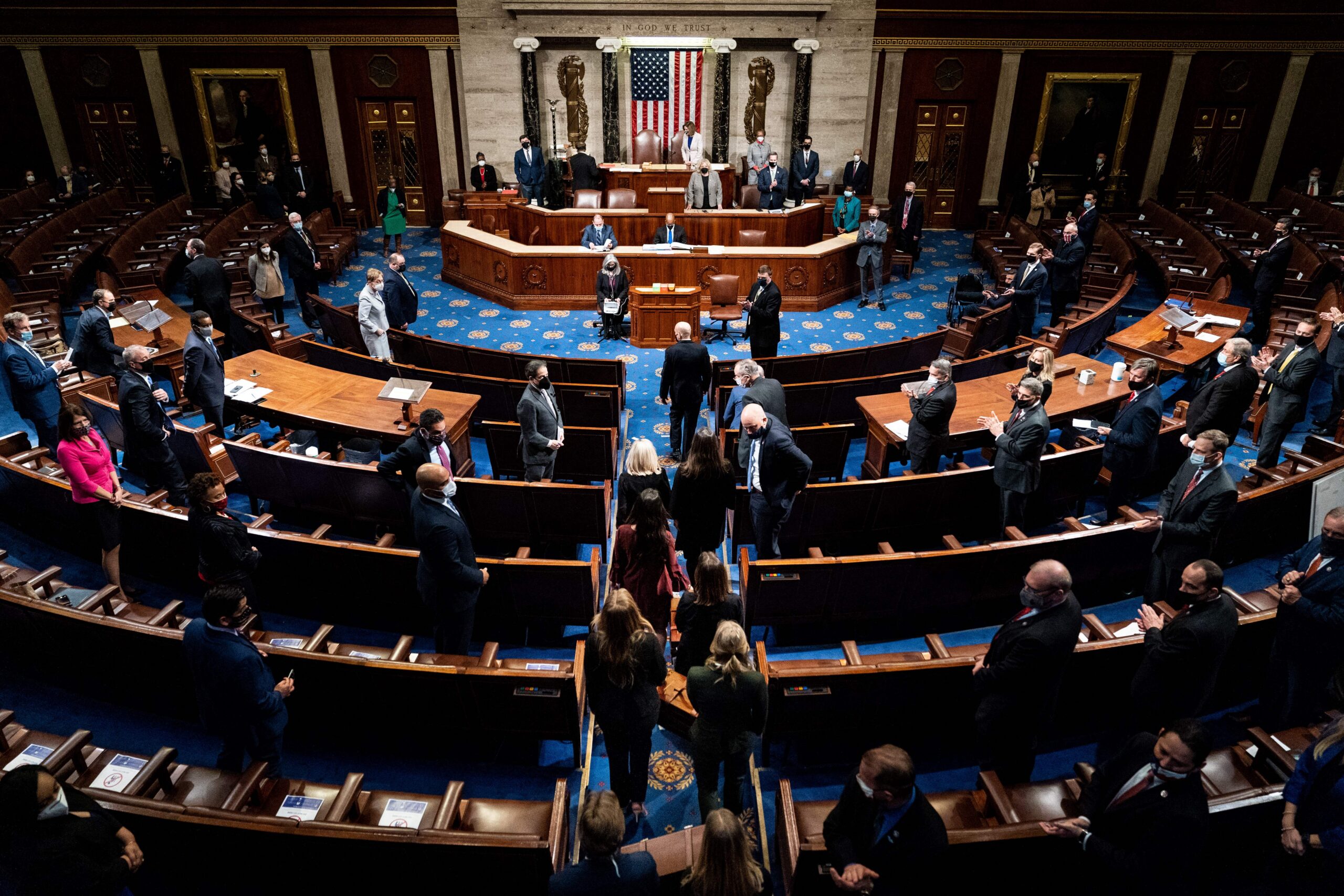
US-VOTE-POLITICS

Congress can brandish the power of the purse to end President Donald Trump’s unconstitutional attack on Iran, a criminal war of aggression as defined by the postwar Nuremberg Tribunal. Congress ended the Vietnam War through the power of the purse. All Congress needs today is a fraction of the courage displayed by the 56 signatories to the American Declaration of Independence who signed their death warrants in defense of unalienable rights to life, liberty, and the pursuit of happiness 250 years ago.

The Continuing Appropriations Resolution for FY1974 (H.J. Res. 636, P.L. 93-52), signed by President Richard Nixon on July 1, 1973, prohibited expenditures to conduct combat operations “in or over or from off the shores of North Vietnam, South Vietnam, Laos or Cambodia” after August 15, 1973. That funding termination put the nail in the coffin to the gratuitous, trillion-dollar war precipitated by the Gulf of Tonkin Resolution, which was itself predicated on a lie about a second North Vietnamese torpedo attack on twin United States destroyers. 

Ending the Vietnam War proved a congressional stroke of genius. Vietnam has since evolved from an enemy to an ally or semi-ally of America in containing Chinese hegemony in Asia. Among other things, Vietnam enjoys permanent normal trade relations with the United States.

The various Boland Amendments from 1982–86 were first cousins to Congress’s use of the power of the purse to arrest presidential misadventures abroad. They prohibited intelligence agencies, including the CIA and the Department of Defense, from expenditures to overthrow the Nicaraguan government. The amendments invited circumvention by limiting the spending ban to “intelligence agencies,” leaving non-intelligence agencies or foreign governments acting on behalf of the United States free from the prohibition.

The Selective Training and Service Act of 1940 is also an informative precedent. It restricted draftees to service within the Western Hemisphere, or U.S. territories or possessions. 

The Constitution contemplates congressional control over spending enshrined in Article I, section 9, clause 7 as an invincible check on executive abuses. James Madsion, father of the Constitution, elaborated in Federalist 58: “This power over the purse may, in fact, be regarded as the most complete and effectual weapon with which any constitution can arm the immediate representatives of the people, for obtaining a redress of every grievance, and for carrying into effect every just and salutary measure.”

Congress should enact the following bill: “No monies of the United States may be expended to conduct combat operations against Iran without a congressional declaration of war or in self-defense in response to an Iranian invasion of the United States. Further, no member of the United States Armed Forces may be deployed to undertake combat against Iran absent a prior congressional declaration of war or in self-defense to an unprovoked actual attack on the United States.” 

Suppose the president vetoes the bill. Congress is empowered to override the veto by two-thirds majorities in the House and Senate, which was done in response to President Richard Nixon’s veto of the War Powers Resolution of 1973. Moreover, Congress could also terminate the criminal war of aggression against Iran by refusing to appropriate funds for its continuance. The Pentagon has asked the White House to approve a more than $200 billion request. The president is powerless to veto congressional inaction.

The case for congressional termination is overwhelming. Section 6(a) of the Charter of the International Military Tribunal at Nuremberg criminalized wars of aggression or in violation of treaties. Twelve high ranking Nazi officials were sentenced to death for participation in the conduct of aggressive wars, including Hermann Göring, Joachim von Ribbentrop, Wilhelm Keitel, Alfred Jodl, and Alfred Rosenberg.

Trump’s war against Iran is flagrantly unconstitutional. Article I, section 8, clause 11 endows Congress with exclusive power to take the nation from a state of peace to war. Madison amplified in Helvidius 4: 

In no part of the constitution is more wisdom to be found than in the clause which confides the question of war or peace to the legislature, and not to the executive department. Beside the objection to such a mixture of heterogeneous powers: the trust and the temptation would be too great for any one man…War is in fact the true nurse of executive aggrandizement. In war a physical force is to be created, and it is the executive will which is to direct it. In war the public treasures are to be unlocked, and it is the executive hand which is to dispense them. In war the honors and emoluments of office are to be multiplied; and it is the executive patronage under which they are to be enjoyed. It is in war, finally, that laurels are to be gathered, and it is the executive brow they are to encircle. The strongest passions, and most dangerous weaknesses of the human breast; ambition, avarice, vanity, the honorable or venial love of fame, are all in conspiracy against the desire and duty of peace.

Hence it has grown into an axiom that the executive is the department of power most distinguished by its propensity to war: hence it is the practice of all states, in proportion as they are free, to disarm this propensity of its influence.

Trump’s attack on Iran in partnership with Israel was not in self-defense. It is a criminal war of aggression, plain and simple, including a violation of the United Nations Charter. Iran had not invaded the United States or threatened to do so. It sported no military bases near the perimeter of the United States, in contrast to America’s military establishments among Iran’s neighbors, including Qatar, Bahrain, and Kuwait. Iran’s nuclear ambitions are dwarfed by Israel’s hundreds of nuclear warheads and the arsenal of over 5,000 possessed by America. Israel and the United States prohibit any outside inspection of their nuclear arsenals, whereas Iran permits some however imperfect. Iran’s premier atomic scientists had been assassinated. It was struggling to suppress domestic insurrection fueled by religious bigotry and a decrepit economy strangled by economic and trade sanctions. 

This is not to defend Iran’s despotism. But Iran is not alone in that category. North Korea or Myanmar are worse. China’s repression of Uighurs and Tibetans is notorious. But the United States cannot alleviate oppression by wars of aggression against their oppressors. We cannot summon into being the civil society necessary for self-government and the rule of law. Our $2 trillion misadventure in Afghanistan, spanning two decades and ending with a restoration of the Taliban, is proof enough. As Secretary of State John Quincy Adams explained in a July 4, 1821 address to Congress, we wish freedom and independence well everywhere. But we resist going abroad in search of monsters to destroy. We fight only in self-defense to escape dictatorship at home.

Congress is our deliverance from the crime of aggressive war. It has declared war in only five conflicts over 237 years, and only after being convinced that an aggressor had already broken the peace: the War of 1812, the Mexican–American War, the Spanish–American War, the First World War, and the Second World War. Trump has refrained from asking Congress to declare war against Iran because he knows his request would be Dead on Arrival, just as Congress rebuffed President Barack Obama’s 2013 request for a declaration of war against Syria. 

In sum, all that is necessary to end Trump’s unconstitutional and criminal war of aggression against Iran is for Congress to do its job.

The post Congress Can End Trump’s Unconstitutional War in Iran appeared first on The American Conservative.

Yes, Trump Might Use Nukes in Iran

Yes, Trump Might Use Nukes in Iran

We should all be very worried about this war’s trajectory.

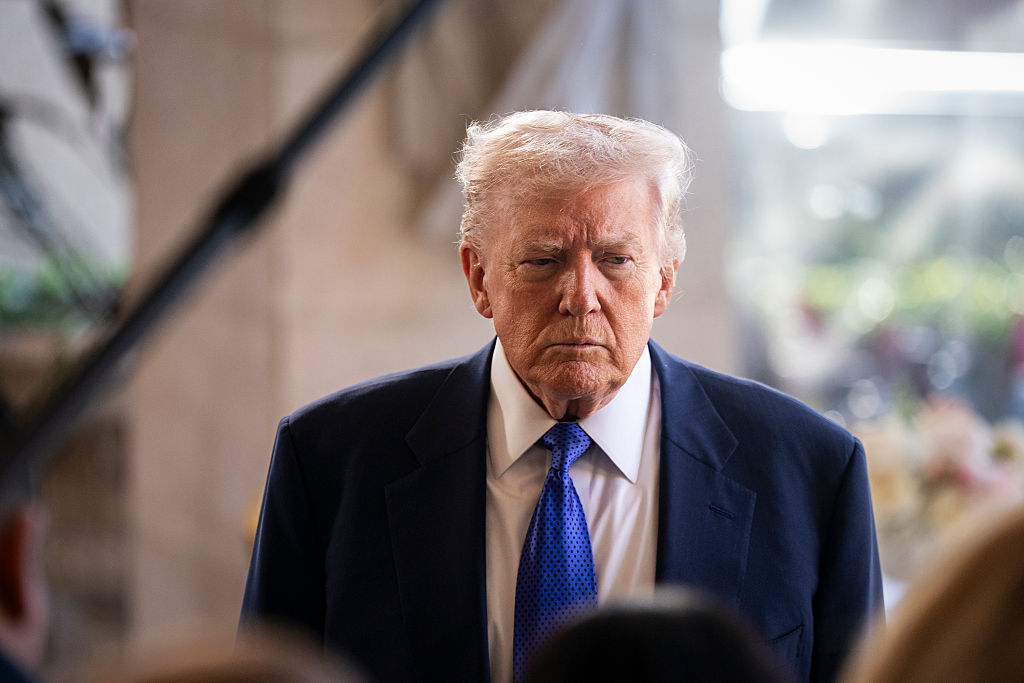
President Trump Attends Dan Scavino's Wedding At Mar-a-Lago

President Donald Trump on Easter morning promised to destroy Iran’s critical infrastructure unless it opens the Strait of Hormuz. “Tuesday will be Power Plant Day, and Bridge Day, all wrapped up in one, in Iran. There will be nothing like it!!!” Trump wrote on Truth Social. “Open the F— Strait, you crazy bastards, or you’ll be living in Hell.” 

Trump reiterated and intensified the threat during a Monday news conference. “The entire country could be taken out in one night, and that night might be tomorrow night,” he said.

Maybe these statements were just bluster, maybe not. Regardless, if Tehran doesn’t budge, Trump will feel pressure to follow through and turn Iran into an apocalyptic hellscape before tomorrow morning.

Trump might even be tempted to accomplish this monstrous objective with the use of nuclear weapons. Amid muddled messaging from the White House, one of the most consistent themes has been the declared intention to “obliterate” Iran—and nuclear weapons offer the surest way to do that.

A new rhetorical theme emerged last week, when Trump threatened to bomb Iran “back to the Stone Ages.” The phrase is associated with Curtis LeMay, who served as Air Force chief of staff during the Vietnam war. LeMay is known for something else too: his promotion of nuclear weapons and complaint that Americans had a “phobia” of using them.

Trump doesn’t seem to share that deranged perspective, but nuclear anxieties are growing thanks to his belligerence. Two weeks ago, a United Nations representative resigned from his post and leaked the disturbing information that “the UN is preparing for possible nuclear weapon use in Iran.” Days earlier, officials from the World Health Organization told POLITICO they were worried about a possible nuclear attack.

Last month, Arta Moeini of the Institute for Peace and Diplomacy told The American Conservative that the U.S. could launch a nuclear strike as “one last Hail Mary of trying to get Iran to capitulate.”

During the Cold War, the prospect of “mutually assured destruction” helped prevent America and the Soviet Union from resorting to nuclear weapons. A whole genre of game theory evolved to make sense of the novel standoff situation. But in the war with Iran, that logic doesn’t apply, since Tehran possesses neither nuclear weapons nor allies who would use them on its behalf.

Moreover, Trump doesn’t seem to have internalized the “nuclear taboo,” the idea that strategic planners consider the nuclear option illegitimate and uncomfortable to even contemplate. Joe Scarborough of MSNBC reported during the 2016 presidential race that Trump had questioned a foreign policy adviser about the impermissibility of using nuclear weapons. “Three times he asked at one point, if we had them, why can’t we use them,” Scarborough said. 

Campaign officials denied the report, but Trump had said something very similar months earlier during an MSNBC town hall. The moderator, Chris Matthews, pressed Trump on his prior refusal to rule out using nuclear weapons in Europe and the Middle East, leading to a remarkable exchange:

Trump: First of all, you don’t want to say, “Take everything off the table,” because you’d be a bad negotiator if you did that.

Matthews: Just nuclear.

Trump: Look, nuclear should be off the table. But would there be a time when it could be used? Possibly, possibly. 

Matthews: OK. The trouble is, when you said that, the whole world heard it. [Then–Prime Minister] David Cameron in Britain heard it. The Japanese, where we bombed them in ’45, heard it. They’re hearing a guy running for president of the United States talking of maybe using nuclear weapons. Nobody wants to hear that about an American president.

Trump: Then why are we making them? Why do we make them?

Arguably, Trump had a point. After all, a president can’t take nuclear weapons “off the table” without thereby negating their deterrence value. Still, the exchange suggests Trump approaches the issue with less gravity and forbearance than the average world leader.

The president doesn’t seem to have become more cautious about nuclear weapons in the past decade. This year, he allowed the last remaining U.S.–Russia nuclear arms control agreement to expire without an agreement to prolong its restrictions—despite clear signals from Moscow that it favored an extension—and he’s proposed resuming nuclear weapons testing.

If Trump decides to go further and actually push the big red button, at least one of his main advisors likely wouldn’t object. Secretary of Defense Pete Hegseth has echoed Trump’s threat to send Iran back to the Stone Age, and he says U.S. armed forces should aim for “maximum lethality, not tepid legality.”

Other Trump insiders might even encourage Trump to go nuclear. The late Sheldon Adelson, who went on to become a Trump megadonor, said in 2013 that the U.S. should detonate a nuclear weapon in an Iranian desert to demonstrate toughness. “And then you say, ‘See? The next one is in the middle of Tehran,’” he explained. Adelson’s widow, Miriam Adelson, remains a top Trump whisperer and Iran superhawk. Might she be giving similar advice today?

At least some elites in Israel, America’s cobelligerent in the war, would like to see nuclear weapons used against Iran. Speaking last week on Israeli television, the journalist Shimon Riklin said, “The time has come for Israel to use an atomic bomb in Iran.” Seated nearby, Itamar Ben-Gvir, Israel’s national security minister, laughed with apparent approval.

Even if Trump isn’t actually planning to annihilate Iran or expecting to force total surrender, a nuclear strike could still fulfill one of his apparent objectives. Military analysts say that Trump wants to exit the Iran war but thinks he’ll need to go out with a bang.

“President Trump is clearly frustrated and looking for an off ramp to end the war, but seems to want to put some kind of exclamation point on the campaign,” Jennifer Kavanagh of Defense Priorities told The American Conservative. “He’s hoping for a big win that he can use to sell the war as a massive success. This could push him to escalate, even as the returns are diminishing.”

Trump may have tried and failed to achieve such an “exclamation point” this weekend. The U.S. lost several military aircraft in what the government described as a search-and-rescue operation to retrieve an airman stranded in Iran after his own plane was shot down. On X, many users speculated that the mission had actually been “an attempt to seize Iran’s stockpile of enriched uranium.” The Iranian government has raised that possibility as well.

“If this theory is true,” wrote the journalist Robert Wright (my former boss) on Monday, “Trump was probably hoping this cinematic win would be his exit ramp, and he wouldn’t have to deliver on his vile threats to obliterate Iran. No such luck.”

Trump’s luck has indeed run out in Iran, as I had predicted it would. He seems poised to escalate further, but conventional air power hasn’t managed to deliver a knockout blow, and ground force operations would bring significant risks with limited upside. Trump appears to be trapped, and I fear he thinks a mushroom cloud would offer him enough cover to get out.

The post Yes, Trump Might Use Nukes in Iran appeared first on The American Conservative.