


This is a Gateway Hispanic article.
The post Matt Schlapp and Liz Truss Announce the Launch of CPAC Great Britain for July 2026 at the InterContinental London The O2 as an International Summit appeared first on The Gateway Pundit.
The post Matt Schlapp and Liz Truss Announce the Launch of CPAC Great Britain for July 2026 at the InterContinental London The O2 as an International Summit appeared first on The Gateway Pundit.


Pakistan has reportedly brokered a last-minute ceasefire framework dubbed the “Islamabad Accord” to prevent the total annihilation of the Iranian terror state.
According to Reuters, citing two sources familiar with the matter, both Washington and Tehran have now received the proposal, which calls for an immediate ceasefire, reopening of the Strait of Hormuz, and a short window to hammer out a permanent settlement.
Pakistan’s army chief, Field Marshal Asim Munir, has reportedly been in round-the-clock meetings with US Vice President JD Vance, special envoy Steve Witkoff, and Iranian Foreign Minister Abbas Araqchi.
The proposed agreement follows a two-phase structure:
Iran International reported:
Iran is reviewing Pakistan’s proposal for an immediate ceasefire but is not open to a “temporary ceasefire,” a senior Iranian official told Reuters on Monday.
The official said Tehran would not reopen the Strait of Hormuz in exchange for a temporary truce and viewed Washington as not ready for a permanent ceasefire.
The official also said Iran would not accept pressure to make a decision under deadlines.
BREAKING: Iran and the U.S. have received a two-tier plan to end the war between the two countries, a source aware of the proposals has told the Reuters news agency.
Read more: https://t.co/rJW2VdIYU2
Sky 501 and YouTube pic.twitter.com/Op3Al9M6m0
— Sky News (@SkyNews) April 6, 2026
This breakthrough comes just as Trump’s latest 48-hour deadline was set to expire.
As The Gateway Pundit has reported for weeks, Trump first issued a blistering 48-hour ultimatum back on March 21, vowing to obliterate Iran’s power plants, starting with the biggest ones, if the Strait wasn’t opened “FULLY, WITHOUT THREAT.”
When the mullahs begged for more time, Trump graciously extended the deadline by 10 days to Monday, April 6 at 8 P.M. ET. Iran responded by playing games, selectively letting a few tankers through while still choking global oil supplies and driving prices through the roof.
President Donald Trump took to Truth Social on Saturday to deliver a final, bone-chilling warning to the radical mullahs in Tehran: Open the Strait of Hormuz now, or face total annihilation.
“Remember when I gave Iran ten days to MAKE A DEAL or OPEN UP THE HORMUZ STRAIT. Time is running out – 48 hours before all Hell will reign down on them. Glory be to GOD!” Trump wrote.
In a series of Truth Social posts this Easter Sunday, the Commander-in-Chief set a definitive drop-dead deadline for the Islamic Republic to cease its hostilities or face a military response.
Trump wrote:
“Tuesday will be Power Plant Day, and Bridge Day, all wrapped up in one, in Iran. There will be nothing like it!!! Open the Fuckin’ Strait, you crazy bastards, or you’ll be living in Hell – JUST WATCH! Praise be to Allah. President DONALD J. TRUMP”
In a follow-up post, Trump wrote: “Tuesday, 8:00 P.M. Eastern Time!”
The Iranian regime has a long history of lying, cheating, and using “ceasefires” as nothing more than breathing room to rearm. But one thing is crystal clear: the terror regime in Tehran is on the ropes because Donald Trump refused to play by the weak, failed rules of the Washington swamp.
The post “Islamabad Accord” — Pakistan Scrambles to Broker Last-Minute Ceasefire Between U.S. and Iran After Trump’s Final Ultimatum to Terror Regime appeared first on The Gateway Pundit.
The Alternative for Germany party is rethinking the Western alliance.
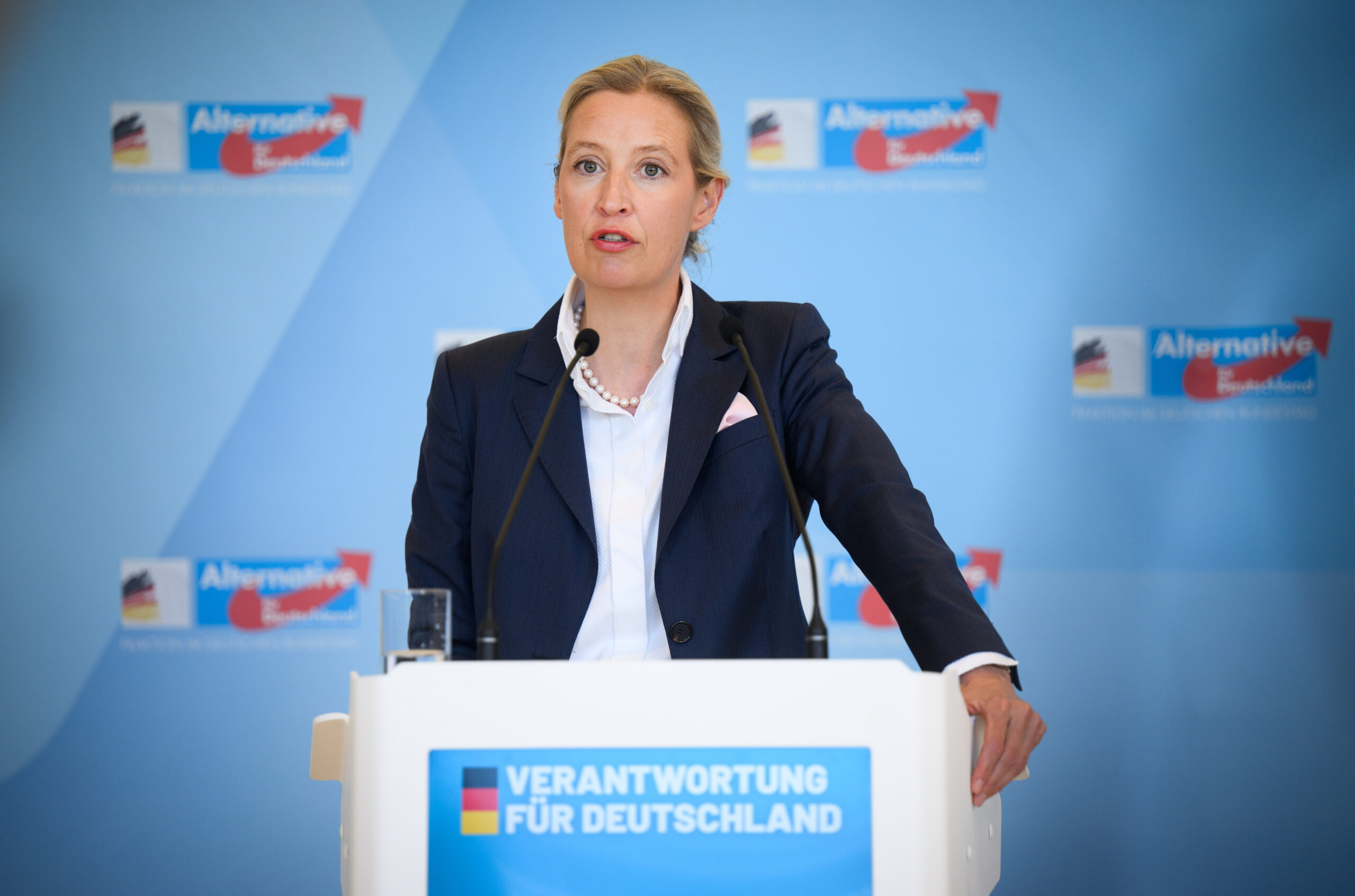
The Iran war has become a test for Germany’s strategic independence and economic resilience. Germany, so far, appears to be failing the test. As Germans debate the issue and reconsider past policy choices, no party has seized the moment more deliberately than the Alternative for Germany, now one of the strongest political forces and the clearest nationalist challenge to Berlin’s governing consensus.
The conflict is not simply a distant war in the Middle East, but yet another sign of deeper disorder within the Western alliance. After the U.S. and Israeli strikes on Iranian targets at the end of February, Tehran responded with disruptions in the Strait of Hormuz, a vital chokepoint for global energy supplies. The result has been a sharp rise in oil and gas prices, with immediate and painful effects on European economies, including Germany.
The AfD’s response rests on a clear insistence that this is not Germany’s war. In a recent speech at the party conference in Saxony, co-chair Tino Chrupalla argued that Berlin must not allow itself to be drawn into foreign conflicts. German security, he warned, would not be aided by joining another Middle Eastern escalation. He pointed to Spain’s refusal to allow its bases to be used in the conflict as a model of sovereign decision-making. Germany, he declared, should not commit itself to a conflict without a defined objective or a realistic path to disengagement.
Increasingly AfD leaders say that Germany does not benefit from the “protection” afforded by the United States. The latest war underscores the point. Germany does not determine the course of events, yet it will inevitably absorb the fallout. Party leader Alice Weidel has warned that a prolonged conflict could have devastating economic consequences, driving inflation, raising energy costs, and further weakening an already strained industrial base. These risks are no longer theoretical. Energy prices in Europe have surged dramatically, placing direct pressure on German households and industry through higher fuel and heating costs.
Within Germany’s nationalist camp, these arguments resonate far beyond foreign policy, and here is where the AfD challenge to the Berlin establishment becomes visible. The crisis is increasingly understood as a direct threat to domestic stability and social cohesion. Rising energy costs, industrial uncertainty, and further economic decline are long-standing concerns that have now gained urgency. Moreover, anxieties about migration flows and internal security have become inseparable from the external situation. In this reading, the crisis does not stand alone or outside the borders. It reinforces a broader pattern in which Berlin’s policy decisions produce domestic burdens exacerbated by events shaped in foreign capitals.
For some Germans, political responsibility appears to be ambiguous, but for AfD the current crisis reflects a broader issue: Germany’s political class has become more responsive to international expectations than to the needs of its own citizens, strengthening the appeal of the AfD’s position. And it’s worth remembering that Berlin has joined Washington in previous interventions, including Afghanistan, which was justified in the language of alliance solidarity but in practice produced long-term commitments, unclear outcomes, and limited direct benefit for German security.
The Iran war raises a fundamental question: What, exactly, are Germany’s core interests, and would they be served by its involvement? While the Chancellor Friedrich Merz has ruled out direct participation in the U.S.–Israeli war, the crisis extends beyond questions of war and peace. They expose deeper structural weaknesses in Germany’s social model of mass migration and deindustrialization.
The consequences for Germany of the Iran war are not simply imported from abroad but result from deliberate policy choices that have left the country vulnerable to precisely this kind of external shock. Years of energy policy decisions have weakened the industrial base, reducing resilience and increasing dependence on volatile global markets. These pressures are not temporary disruptions, but long-standing vulnerabilities now exposed under geopolitical stress. Reliable and affordable energy sources have been replaced by more expensive and politically dependent alternatives, including liquefied natural gas from the United States and the Gulf region. If the war sparks a refugee crisis, Germany’s porous borders could allow unvetted outsiders to enter.
Germany already faces higher costs and greater exposure to geopolitical volatility, while losing the competitive advantages that once underpinned its industrial strength. Higher fuel prices illustrate the problem with particular clarity. They are not simply the result of global supply dynamics. Domestic policy decisions, including taxation and regulatory burdens, amplify their impact. A significant portion of fuel costs is determined by state-imposed charges, meaning that price increases generate additional revenue even as they strain consumers. Perhaps for that reason, government “solutions” have largely taken the form of symbolic measures, rather than addressing the underlying drivers of inflation.
What is required instead is a fundamental reorientation. Lower energy taxes, the removal of carbon pricing mechanisms, and a reassessment of sanctions that restrict supply would provide immediate relief and improve long-term stability. Without such changes, the risk is not only temporary economic hardship, but a sustained erosion of Germany’s industrial base.
In many respects, this debate mirrors familiar arguments in the United States. Questions about the limits of intervention, the economic costs of global commitments, and the risks associated with entering conflicts without a clearly defined national interest have become central to American political discourse. They are now emerging with increasing force in Germany as well.
Germans have been reassessing America, whose recent policy decisions, especially the willingness to escalate conflicts in the Middle East with limited European consultation, have imposed significant social, economic, and strategic costs on its allies. The crisis reinforces the perception that Washington often sets the direction, while European nations, including Germany, bear a disproportionate share of the consequences through economic strain and migration. Germans do not necessarily reject the bilateral relationship, but they demand a genuine partnership based on mutual respect and balanced burdens.
This logic extends directly to NATO. While the alliance itself is not in question, its structure, dominated by American priorities, deserves scrutiny. The war with Iran affects European security directly, but because it is a war of aggression, NATO’s collective defense provision hasn’t been triggered. Washington is pressuring European allies to join the fight, but doing so would pose great risk for Germany, which is likely within range of Iran’s ballistic missiles. Even America’s use of bases in Germany exposes the country to possible retaliation.
Clearly, Germany must build greater strategic autonomy: the ability to assess each conflict on its own merits and decline participation when vital interests are not served. This includes a serious discussion about the scale and purpose of foreign military presence on German soil.
Even within the AfD, this question is not entirely settled. While calls for greater sovereignty and a reduced American military presence are central to the party’s outlook, a more cautious strain of thinking emphasizes current strategic realities. Beatrix von Storch has argued that any reduction of American forces must be tied to Germany’s actual ability to defend itself and fulfill its obligations within NATO. Given Germany’s limited military capabilities and continued reliance on the American nuclear umbrella, she has warned against premature steps that could weaken deterrence. This reflects a broader tension within the nationalist right between long-term strategic ambition and short-term security constraints.
Another shift in political thinking is becoming visible, with growing skepticism toward military intervention and declining confidence in automatic alignment with American strategy. Clearly defined national interests are once again being reasserted across the political spectrum, even if different parties draw different conclusions.
For American readers, this development carries wider significance. Debates now unfolding in Germany reflect concerns that have long been present in the United States. Questions about intervention, alliance structures, and economic sovereignty are no longer confined to one side of the Atlantic. They are becoming central to Western politics as a whole. The Iran war has not created this shift but has accelerated it and brought it into sharper focus.
These are complex debates, but some conclusions are obvious: Germany should avoid entanglement in distant conflicts that do not serve its interests. It should reassess the degree of its dependence on external powers, in particular the United States. It should assert control over its own borders to reduce exposure to foreign crises. And it should restore the economic foundations necessary to sustain genuine sovereignty. For Germany, the Iran war is not an isolated event. It is a signal of deeper structural challenges that can no longer be ignored.
The post How the German Right Sees Iran appeared first on The American Conservative.
The programs engineering a “diverse” Foreign Service are in limbo.
Despite President Donald Trump and Secretary of State Marco Rubio working to do away with Obama and Biden-era diversity, equity, and inclusion (DEI; the State Department added an “A” for accessibility under Biden, so DEIA) programs and their enforcement bureaucracy, Democrats in the Senate are pushing to revive two programs, the Charles Rangel and Thomas Pickering Fellowships. Both exist to provide an alternative pathway into the Foreign Service with benefits not available through the standard hiring process, with a focus on increasing representation of underrepresented groups. Both programs are currently suspended, unless the Democrats get their way.
Sen. Chris Van Hollen, (D-MD) joined by 21 other Senate Democrats, recently sent a letter to Rubio urging him to hire the more than 50 fellows now in the pipeline, claiming that “taxpayers have invested millions of dollars in these diplomats” and diplomatic readiness has been affected. Van Hollen also wants State to “clarify the situation for future cohorts” in reviving the fellowships as the two programs are no longer accepting applicants “pending updates from the U.S. Department of State.”
What are the two programs the Democrats are stumping for, and what have they done for the State Department?
Since the Rogers Act of 1924, State has used some sort of written test (similar to the SAT with more history and less math) as a gateway into its elite diplomatic corps. While the test was revised with the times to be more like the LSAT, the emphasis was on a merit-based entry mechanism to replace the way of choosing diplomats in place since Thomas Jefferson, i.e., selecting applicants who were “male, pale, and Yale” and usually wealthy and well-connected. Despite many accusations that the written test was being progressively “dumb-downed” over the years, State’s incoming classes were stubbornly still mostly white men. Various solutions were tried in the intake process, to include a famously difficult all-day oral assessment, several different flavors of essays and self-assessments, and open-ended “suitability checks.” The winners stayed very white and male, even as State lost lawsuits charging discrimination brought by women and blacks.
State believed, alongside most of society’s liberal institutions and universities of the time, that the test and assessment process must be inherently biased against people of color and women; that’s why they failed. The answer was a significant effort to attract more diverse applicants and to increase their odds. The department created positions for 16 new senior diplomats-in-residence (DIR; State did have one lone DIR in the field since 1965) posted throughout the country. The program flourished in the 2000s. Since the DIRs were designed to reach populations with lower percentages in the Foreign Service than their share of the general population, many DIRs were based at historically black colleges and universities (HBCUs). The DIRs in the southern U.S. and Washington, DC, were based at Morehouse College and Howard University, both HBCUs. Other DIRs operated out of the University of New Mexico and the University of California, Los Angeles, both of which have high Hispanic enrollment. The DIR program did not result in State’s intended representation of the most desired minorities and was shut down in 2025 under the Trump administration.
Congress also started a new, independent track into a Foreign Service job especially for underrepresented groups. In 1992, they established the Pickering Foreign Affairs Fellowship, followed in 2002 by the Charles B. Rangel International Affairs Fellowship. Both these programs were designed from the ground up to focus on ethnic minorities, although a few fellows represent other “underserved” groups, such as those from poor backgrounds or who were the first in their family to attend college. The Rangel and Pickering programs are administered by Howard University, which has less than 2 percent percent white students. Technically the fellowships were open to all applicants, regardless of race.
Both fellowships offer a very good deal unavailable to those who apply to the Foreign Service via the traditional test. The fellowships offer a graduate scholarship, a paid summer internship at a U.S. embassy abroad, a second summer internship either in Congress or at State Department headquarters, and significant mentoring. After all this on-the-job experience, a graduate degree, and mentoring, Fellows are required to eventually pass the standard written test and oral assessment before being offered a five-year appointment to the Foreign Service. While fellows must technically pass the same assessments, their prior training, mentorship, and institutional visibility may create implicit pressure on evaluators. Fellows are identified as such to those administering the required oral exam. In my own experience administering the exam, failing a fellow required justification up the chain. I do not recall a fellow who did not pass.
But did the fellowships actually work to increase the diversity of the Foreign Service? It is almost impossible to know, because neither the fellowships nor the State Department publicly release comprehensive demographic data, making independent evaluation of the programs difficult.
Van Hollen thinks the programs have succeeded, citing in his letter to Rubio that “as of 2022, these… fellowships have increased the number of Foreign Service generalists from underrepresented groups by 33 percent and the number of women by six percent.” His citation for the statistics was an article written in 2022 in State’s own internal house magazine by Kenya James, who actually sits on the Pickering and Rangel Fellow Association board. The article provides none of the individual racial statistics necessary to understand whether the fellowships seek to solve apparent discrimination by discrimination among their own applicants. The Pickering Fellows website removed its group photo of the 2024 fellows, limiting even informal public visibility into cohort composition. According to one report, pre-Trump, Pickering and Rangel accounted for around 20 percent of Foreign Service recruitment, and a majority of the black officer intake. There remains no public dataset on the Fellows racial make-up.
In the absence of official data, artificial intelligence was used to examine dozens of publicly listed fellows across years of cohorts, program descriptions emphasizing underrepresented recruitment, academic research noting perceived racial composition, the composition of known pipeline effects into Foreign Service hiring, and sampling of publicly listed Fellows to create a non-scientific estimate of the racial composition of the Pickering and Rangel cohort. The results suggest a heavy skew toward underrepresented minority groups, with relatively few white participants. AI suggested that the fellows were roughly 80 percent black, multiracial, or Hispanic, and less than 20 percent white. The actual Foreign Service, brought in via the traditional testing process, remains approximately 80 percent percent white.
Why does State not release these numbers itself? The reason is likely to avoid legal action, as State continues to factor race into its decisions long after the Supreme Court struck down its use in academic admissions.
In Students for Fair Admissions Inc. v. President & Fellows of Harvard College and its companion case, Students for Fair Admissions, Inc. v. University of North Carolina, the Court sharply limited the use of race in admissions, particularly where it shapes outcomes or substitutes for race-neutral alternatives. The court has simply realigned itself and college admissions with American thought; a survey found 73 percent percent of Americans said colleges and universities should not consider race when making decisions about student admissions. The logic of Students for Fair Admissions raises unresolved questions about whether explicitly diversity-targeted federal hiring pipelines can survive similar scrutiny.
America has changed since the Obama-Biden years. The real question is no longer whether these programs increase diversity. It is whether a government hiring pipeline explicitly designed to shape demographic outcomes by replacing “bad” discrimination with “good” discrimination can be justified under current law, and whether it should be.
The post Is DEI Still Entrenched at the State Department? appeared first on The American Conservative.
The Iran War demonstrates why no “true MAGA” candidate will ever replace Trump.
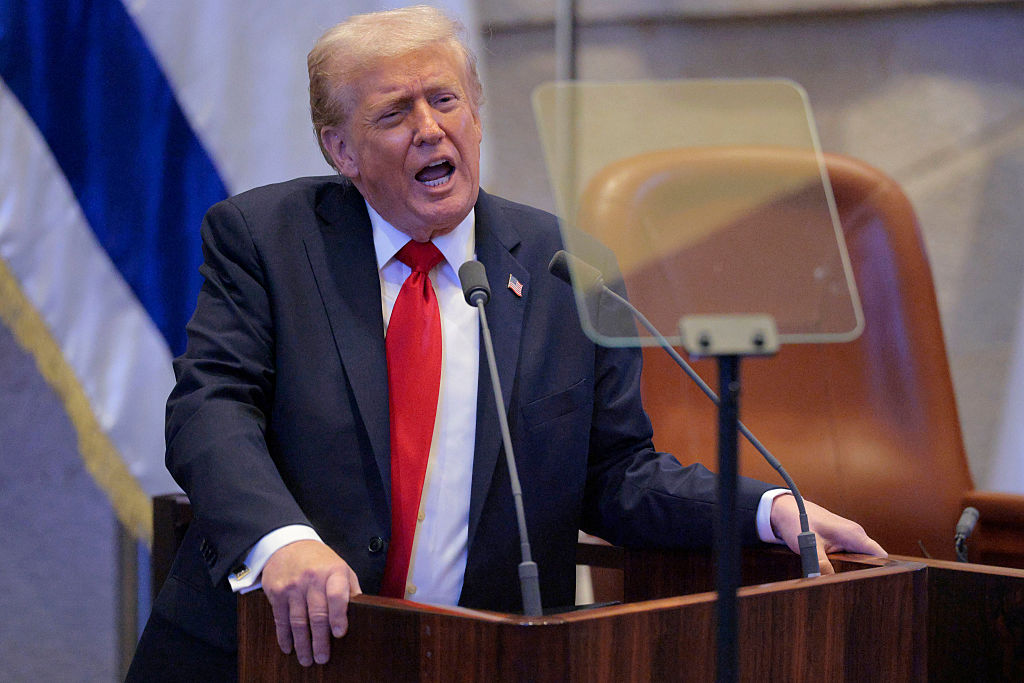
Strange bedfellows defined the coalition that carried Donald Trump to the presidency in 2016 and 2024. Evangelicals, libertarians, nationalists, and traditional Republicans, groups with little agreement on core policy, laid down their knives on those November Tuesdays to rally behind a whimsical, big-city showman who built, and often mismanaged, his inherited empire.
Trump was their champion—a comedian, a performer, but, most importantly, a fighter. If MAGA was anything, it was a coalition bound less by shared policy goals than by a shared sense of grievance and a love for the game.
And we were played. I should know. I voted for the man. His faults now exposed for the world to see are, in part, my own.
Trump has abandoned the America First, antiwar message that catapulted him from outsider to president. The great promises of MAGA have not been met. Gas prices are surging and new home sales are stalling. Six-figure earners in America admit that homeownership is beyond reach and those who earn less say they can no longer dine out or plan a vacation. Polling data reflects that shift. A CNN poll conducted in July 2025 found that 40 percent approval of Trump’s handling of the economy. By March of this year, that number had dropped to 31 percent, a decline exacerbated by the Iran War.
Other polling tells the same story. Nearly half of Americans say groceries are “unaffordable.” A new car is unattainable for nearly 75 percent of Americans. And on the price of gas, more than one in four respondents said prices are too expensive. The one bright spot in the poll, which was conducted before the war began, has been completely obliterated by this administration’s war of choice, which has sent oil prices skyrocketing. But if you listen to Trump, the “affordability crisis”—which he has begrudgingly admitted is real, despite first claiming it was “fake news” spun up by Democrats—has been effectively solved.
Never mind new reports on Tuesday that found the U.S. hiring rate fell to 3.1 percent in February, the lowest number since April 2020, the nadir of the Covid shutdown economy. Never mind beef prices hitting an all-time high amid the widening war. Never mind the stern warning by Mohamed El-Erian, Wharton School Rene Kern professor and chief economic advisor at Allianz, who told CNBC on Monday that the Iran War could lead to “shock inflation” across the country. Nothing is breaking through.
None of that seems to matter to Trump’s core base. In March, CNN’s Harry Enten noted that Trump maintained near-total approval among self-identified MAGA voters. On the war, an astonishing 90 percent of Trump’s base said they approve of his decision in the Middle East. “Those who disapprove of Trump are not MAGA at this point,” roared Enten at the end of the segment.
The figures were difficult to comprehend for those in conservative media who have staked their careers on Trump’s rise. Major conservative commentators who once argued Trump represented a break from Bush-era foreign policy now insist he has been deceived. By advisers, by media figures—by anyone but himself. For those who really believed in the MAGA doctrine as promised, it is easier to blame the figures surrounding Trump than to confront the possibility that this is simply who he is.
Conservative commentators who question the war generally stop short of fully breaking with him. Criticism is often hedged, softened, or redirected at the hawkish coalition Trump has amplified. When Trump told reporters that Tucker Carlson had “lost his way,” Carlson replied that he’ll “always love him no matter what he says about me.” When Megyn Kelly read a Trump tweet arguing that anyone who disagrees with Mark Levin “cannot be MAGA,” Kelly replied: “I will stay MAGA-adjacent.”
These reactions reveal something telling about the movement Trump built. It doesn’t constrain him because he defines it. The president can shift positions, attack allies, and abandon core principles, and the movement he built will simply adjust in real-time to meet his new demands. Even as MAGA shows signs of fracturing, its loudest advocates remain loyal not to a set of ideas, but to the man himself. By and large, self-identified MAGA voters appear not to have elected Trump because of the policy he promised but because of the myth of a man who has redefined his beliefs over decades of public life.
For many commentators who once attempted to intellectualize Trump’s movement, the explanation for his turnabout is simple: He has been misled. Convinced by the wrong people, led astray. But taken to its logical conclusion, this argument absolves Trump completely. It conveniently assigns blame to those around him, never the man himself. Trump, for his part, has made clear the voices he values and it is certainly not the foreign-policy restrainers and realists. He has spent the war promoting those who cheer for escalation in the region despite the economic warning signs that threaten both the United States and its allies.
The fact that such a high percentage of MAGA voters and conservative commentators remain loyal to Trump as he amends the policy he campaigned on reveals the substance of the movement the president has built. Trump can be openly hostile and break the rules of his own movement because he is the movement. He possesses immense flexibility to strike out at allies or completely change his political positions and his most ardent followers will stay the course.
Some commentators believe a “true” America First candidate will emerge in 2028. Speaking this week, the commentator Glenn Greenwald argued that such a figure could mount a serious challenge to the 2028 Republican primary. “I hope it’s Tucker,” said Greenwald before suggesting Rep. Thomas Massie (R-KY) or the former Rep. Marjorie Taylor Greene (R-GA) as alternatives. “There will be someone who runs on a real America First platform,” Greenwald said, arguing that voters will still desire a candidate committed to avoiding foreign wars and prioritizing domestic concerns.
Nevertheless, though figures such as Massie and Greene can imitate the rhetoric and Carlson can articulate the worldview, none of them can replicate the one thing that made MAGA so durable and potent: Trump himself. The truth is that MAGA was never an ideology waiting to be inherited. It was always a movement built around a single man. And it will end the way it began: with Trump. MAGA Champion Need Not Apply.
The post MAGA Champion Need Not Apply appeared first on The American Conservative.


President Trump on Sunday honored Sheridan Gorman, the young woman senselessly murdered by one of Joe Biden’s illegal aliens.
18-year-old Sheridan Gorman was murdered by one of Joe Biden’s illegal aliens in the sanctuary state of Democrat-run Illinois.
Last month, the Loyola University student was shot and killed near campus in Chicago.
A masked gunman approached a group of students walking in Rogers Park and opened fire.
Gorman was shot in the head and died at the scene.
Last week it was confirmed that the masked gunman who killed Gorman is a 25-year-old illegal alien from Venezuela who entered the US under the Biden Regime.
The Department of Homeland Security blasted the Biden Regime and Illinois Governor JB Pritzker.
“Sheridan Gorman had her whole life ahead of her before this cold-blooded killer decided to end her life. She was failed by open border policies and sanctuary politicians who RELEASED this illegal alien TWICE before he went on to commit this heinous murder,” said Acting Assistant Secretary Lauren Bis.
“We are calling on Governor Pritzker and Chicago’s sanctuary politicians to commit to not releasing this criminal illegal alien from jail back into American neighborhoods,” the DHS said.
President Trump honored Sheridan Gorman on Easter Sunday.
“Such a shining light. Rest in peace, Sheridan, you will be greatly missed!!!” President Trump said.
Full statement from Gorman’s family via ABC 7 Chicago:
“Our beloved daughter, Sheridan, was taken from us this morning in Chicago. There is no way to soften this-this was murder. Sheridan was the light of our lives. She made people feel seen, safe, and loved simply by being who she was. She lived her faith with kindness, compassion, and joy, and she loved her family and friends deeply.
We trusted that she would be safe. That trust was broken. Someone made a deliberate choice that stole our daughter and forever changed our family. We are demanding answers, and we will not stop until the person responsible is identified and brought to justice.
We are deeply grateful for the outpouring of support from the various communities connected to our family. It has carried us through moments we could not endure alone. We take comfort in our faith, but nothing can lessen the devastation of this loss.
If you know anything, please come forward. We ask for privacy as we grieve. Sheridan was our light. And she always will be.”
The post President Trump Honors Sheridan Gorman, Loyola University Student Murdered by One of Biden’s Illegal Aliens appeared first on The Gateway Pundit.


John Cleese — a British actor who mocked Christianity through his work — drew backlash for lamenting the decline of the faith in the United Kingdom amid the rise of Islam.
Cleese was a member of the comedy group Monty Python, which released a movie called “Life of Brian” — a project that in many ways served as an extended mockery of Christianity and even Jesus Himself.
But Cleese is now much less hostile toward the faith he once lambasted as his nation increasingly witnesses the alternative.
“The UK has always been based at the deepest level on Christian values, regardless of dogma,” he said Monday on social media, sharing a video about the importance of Britain as a Christian nation.
The UK has always been based at the deepest level on Christian values, regardless of dogma
Despite the many mistakes made by churches, for centuries British people have been influenced by Christ’s teaching
If these values are replaced by Islamic ones, this will not be Britain… https://t.co/7wbwlz5lIC
— John Cleese (@JohnCleese) March 16, 2026
“Despite the many mistakes made by churches, for centuries British people have been influenced by Christ’s teaching,” Cleese added.
“If these values are replaced by Islamic ones, this will not be Britain any more.”
Fellow social media users immediately observed the irony of Cleese’s statement — and noted how his work directly contributed to the decline in Christianity he is now bemoaning.
“Mr Cleese, you and your boomer celeb ilk mocked Christianity relentlessly, and not just through Life Of Brian… and now you are wondering what happened to the Britain of Christian values… do you read what you have written?” one commenter said.
“I agree wholeheartedly, but have you not spent your career mocking these values only to find that they were what held society together?” another added.
“But cultures are not preserved by just history or slogans. They are shaped by continual, living faith. If Christians want Christ’s values to endure, we must actually believe, speak, disciple, and live as salt and light today,” a third noted, commending actual belief in the Christian faith rather than merely retaining some of its ethics.
Cleese is not the only British public figure of his generation to walk back contempt for Christianity when presented with mass Islamic immigration and its consequences.
Richard Dawkins, who spent decades publicly militating in favor of atheism, said in 2024 that the United Kingdom is “culturally a Christian country” — and even described himself as “a cultural Christian.”
Interesting comments from Richard Dawkins:
“We are culturally a Christian country and I call myself a cultural Christian. I feel at home in the Christian ethos. If I had to choose between Christianity and Islam, I’d choose Christianity every single time.”pic.twitter.com/I5FJx3qsKH
— Citizen Free Press (@CitizenFreePres) April 1, 2024
“I feel at home in the Christian ethos. If I had to choose between Christianity and Islam, I’d choose Christianity every single time,” he said.
Men like Cleese and Dawkins are not only hypocritically walking back decades of anti-Christian subversion in the twilight years of their lives — and quite possibly the twilight years of Britain as we know it.
They are also trying to retain the effects of Christianity on their culture without the actual cause — namely, the sort of living faith in Jesus Christ that transforms individual hearts, and eventually everything else.
Believing that Britain or any other nation can have a Christianity without Christ is greater comedy than anything ever produced by Monty Python.
This article appeared originally on The Western Journal.
The post British Actor Who Mocked Christianity Receives Scorn for Mourning Rise of Islam appeared first on The Gateway Pundit.

To fly a drone over a Chinese city may result in a jail sentence.
China now dominates the global drone industry, but it has become one of the toughest places to fly an FPV due to the new regulations.
Headquarters of DJI, the Chinese company that shapes & leads the drone industry. pic.twitter.com/eaqgTuDvu6
— Li Zexin 李泽欣 (@XH_Lee23) April 2, 2026
The New York Times reported:
“New regulations are sharply tightening rules for recreational and civilian operators. Since January, officials have ramped up the penalties for unauthorized flying of drones to include possible jail time. Starting in May, all drones must be registered with the owners’ real names, requiring operators to link their flight equipment to their official identification or cellphone number.
Permits will be required at least a day in advance in restricted zones, which cover most cities. The rules make an exception for small drones flying below 400 feet in some open areas, but those areas are very limited.”
Flight data will be transmitted to the government in real time, and in cities like Beijing, a near-total drone ban is now in force.
More and more Chinese youth are working as professional drone transport pilots, representing a new career in China. pic.twitter.com/VsRxyTo3Sz
—
Drone owners can register their crafts with the police by April 30, but they can only have three drones at the same address.
“China has required drones to be registered and limited to certain areas since 2024. But as the crackdown has escalated in recent months, many drone users say overzealous enforcement has grounded most flights, even for what they believe are legitimate uses. Chinese social media platforms are filled with accounts of users being questioned, fined, detained and having their drones confiscated by the police across the country.”
China unveils a new heavy-lift helicopter-type drone capable of carrying up to 600 kg to hard-to-reach or dangerous areas; mountains, disaster zones or combat regions. pic.twitter.com/SWBvezXN60
— Clash Report (@clashreport) April 2, 2026
“The Ministry of Public Security said that tighter regulations were necessary to protect public safety, noting the risks of drone information systems being hacked as well as incidents in which drones had flown at a high altitude, even threatening civil aviation safety. It cited a case in which it said an operator had flown a drone within 800 meters, or about 2,600 feet, of a civil aircraft, and another in which it said a user had flown a drone into a no-fly zone near an airport to film planes’ landing paths. Last year, two drones collided midair and crashed onto a Shanghai skyscraper.”
Read more:
The post NO-FLY ZONE: China is Dominant in Today’s Drone Industry – But It’s Tightening Penalties for Civilian Operators To Include Prison Time appeared first on The Gateway Pundit.


There are currently 25,000 Christians in Islamabad, Pakistan, who are suddenly being asked to leave their homes by the nation’s Islamic authorities.
Christian families living in the capital city were told that they must leave within the next few days, per a report from International Christian Concern.
These families were resettled in Islamabad after the Rimsha Masih case in 2013, during which Masih, then a 14-year-old girl, was arrested on blasphemy charges.
Authorities claimed that she desecrated pages from the Quran.
Two weeks later, the Muslim cleric who reported her to the police was arrested for allegedly planting the pages in her bag, and she was eventually acquitted.
International Christian Concern noted that because Masih was a Christian, the case created “serious threats against the Christian community.”
Many families were moved to the communities in Islamabad “so they could live without fear,” and have built new lives there over more than a decade.
But now they are being asked to leave.
The government’s Capital Development Authority is claiming that the housing communities are not legal.
“There is no proper resettlement plan, no alternative land, and no clear compensation being offered to these families. This has raised serious concerns among the community,” International Christian Concern added.
Believers are praying and protesting, asking government leaders to halt the evictions until a solution is found.
Most of the families come from low-income backgrounds.
Some are not going to work because they fear that their homes could be demolished while they are gone.
“They work in jobs such as sanitation, domestic work, and other day labor,” International Christian Concern said. “Missing work even for a day is difficult for them, but the fear of losing their homes is even greater.”
Pakistan ranks eighth on Open Doors’ World Watch List for Christian persecution.
Beyond the specific threat against the Christians in Islamabad, Pakistan’s authorities have been using blasphemy laws to threaten Christians, with false accusations frequently emerging.
Those found guilty of blasphemy can even face the death penalty.
There is also a threat of mob violence against Christians, who have limited protection from the Islamic authorities.
This article appeared originally on The Western Journal.
The post Thousands of Christian Families Are Facing Eviction in This Muslim Country appeared first on The Gateway Pundit.

Senator Chris Murphy (D-CT) decided to shoot his mouth off on Easter Sunday about President Trump before an old video emerged showing what a fraud he is.
As The Gateway Pundit reported, Trump took to Truth Social on Easter Sunday to tease a massive operation that is coming this Tuesday unless Iran finally opens the Strait of Hormuz:
Tuesday will be Power Plant Day, and Bridge Day, all wrapped up in one, in Iran. There will be nothing like it!!!
Open the Fu**in’ Strait, you crazy b*stards, or you’ll be living in H*ll – WATCH! Praise be to Allah.
President DONALD J. TRUMP
As TGP readers know, Iran has blocked oil shipments and the flow of shipping in the waterway, driving oil prices sky-high across the world.
Trump has asked NATO and Asia for help securing the Strait, but they refused.
A furious Murphy responded to Trump’s provocative post by insinuating that the President was mentally incompetent and should be removed from office.
Specifically, Murphy demanded that members of Trump’s cabinet stab him in the back and invoke the 25th Amendment.
“If I were in Trump’s Cabinet, I would spend Easter calling constitutional lawyers about the 25th Amendment,” he whined.
“This is completely, utterly unhinged. He’s already killed thousands. He’s going to kill thousands more.”
If I were in Trump’s Cabinet, I would spend Easter calling constitutional lawyers about the 25th Amendment.
This is completely, utterly unhinged. He’s already killed thousands. He’s going to kill thousands more. pic.twitter.com/vB0TAp3RuK
— Chris Murphy
(@ChrisMurphyCT) April 5, 2026
But X user Western Lensman hit Murphy with a devastating reminder about what he said two years ago about Joe Biden.
During a February 2024, “Meet the Press” appearance, Murphy gushed about how “incredibly competent” and “incredibly effective” the obviously senile Biden was.
“Listen, I’m someone who has worked intimately with the President,” Murphy said. “I know that he is ready for this campaign; I have seen how effective he is up close and personal.”
“Joe Biden is incredibly competent, and he’s incredibly effective.”
WATCH:
Chris Murphy, Feb 2024: “Joe Biden is incredibly competent and he’s incredibly effective.” https://t.co/idjF7jzPMS pic.twitter.com/aaD41hpNHs
— Western Lensman (@WesternLensman) April 5, 2026
Of course, Biden proved those criticizing his mental faculties correct four months later with arguably the worst debate performance in American history. He was then forced out of the 2024 race a few weeks later.
The post Unhinged Democrat Senator Chris Murphy Hit With a Brutal Reminder After Demanding the 25th Amendment be Invoked on Trump Over Provocative Iran Post (VIDEO) appeared first on The Gateway Pundit.
