Several INCREDIBLE New Details Emerge on the Legendary Rescue of 2nd F-15 Pilot in Iran, Including a Clever Trick the CIA Pulled on the Iranians and a Final Twist

Four military aircraft in flight, showcasing a mix of vintage and modern designs, including a P-51 Mustang, F-16, and F-22 Raptor.

Four military aircraft in flight, showcasing a mix of vintage and modern designs, including a P-51 Mustang, F-16, and F-22 Raptor.
Military planes in flight. Credit: Wikimedia Commons

As Americans wake up this Easter morning, more remarkable details are now emerging about the mission to save the second F-15 pilot after the plane was downed in Iran on Friday.

As The Gateway Pundit previously reported, the second pilot/WSO from the downed F-15 fighter jet on Friday was saved in an on-ground US rescue mission Saturday night, which involved an epic and grueling battle with Iranian forces.

The pilot was successfully rescued and exfiltrated following an intense firefight. He was injured after ejecting himself from the F-15 but is now safe.

What an incredible miracle on the eve of Easter, thanks to our tireless heroes in uniform!

Fox News’s Jennifer Griffin revealed that no Americans were killed during the operation. The Fox News journalist additionally noted that different branches of the US military were involved in the rescue.

“It was a very complex operation to retrieve the downed service member,” a well-placed source told Griffin.

Griffin also confirmed that the A10 Warthog that crashed on Friday was providing cover for the rescue teams searching for the pilot. The A10 crashed in Kuwait, but the pilot managed to eject safely and was later rescued by Americans.

Several videos emerged on X showing the mission’s difficulty and violence.

Now, we are learning some incredible new details about the mission, which may all appear in a movie one day:

• In addition to no deaths, there were NO Injuries to U.S. Forces.

An official confirmed to the New York Times that not a single American hero was wounded during the complex and violent operation.

What makes this even more remarkable is that the operation involved hundreds of special operations forces, several warplanes and helicopters, and advanced intelligence capabilities involving cyber and space.

Not to mention Iranian terrorists unleashing hellfire on them as the rescue mission unfolded.

• The CIA pulled off a clever trick on the Iranian enemy.

Per the Daily Mail, the mission’s success was aided when Iranian forces were deceived after the CIA spread the word that US forces had already found the colonel.

• In a final twist, two US transport planes were sent to extract the team became stranded at a remote base inside Iran, but our military had a solution.

Commanders ordered them destroyed rather than risk sensitive equipment falling into enemy hands, flying in replacement aircraft to complete the escape, the Times reported.

• The airman himself performed feats of ingenuity to save himself from Iranian forces, despite being injured.

In details confirmed by The New York Times, the wounded pilot avoided being captured and possibly killed by terrorists and bloodthirsty civilians while dealing with mountainous terrain.

He moved away from the plane wreckage and hid on higher ground while signaling for assistance. He had only a pistol to protect himself.

• There were TWO raids, including one in broad daylight that lasted 7 hours over Iranian territory.

“The second raid came after the first one, where we rescued the pilot in broad daylight, also unusual, spending seven hours over Iran,” President Trump revealed on Truth Social.

• Iranian forces were “getting close” to the downed crew before extraction.

“The Iranian Military was looking hard, in big numbers, and getting close,” Trump wrote.

The post Several INCREDIBLE New Details Emerge on the Legendary Rescue of 2nd F-15 Pilot in Iran, Including a Clever Trick the CIA Pulled on the Iranians and a Final Twist appeared first on The Gateway Pundit.

Bounty Hunters ATTACK Unarmed Civilians…

.

Two Oklahoma bounty hunters now face felony charges after brandishing replica firearms and firing pepper balls at unarmed anti-ICE protesters outside a Minneapolis jail, raising serious questions about unregulated private enforcers operating without oversight while law-abiding citizens face the consequences of federal immigration policies gone wrong.

Unregulated Bounty Hunters Escalate Minneapolis Confrontation

James Reginal Willis, 54, and Garrett Christopher Willis, 28, both Oklahoma-based bounty hunters, face felony charges after an incident outside Hennepin County jail in downtown Minneapolis. On March 3, 2026, while attempting to leave after delivering a detainee, the pair brandished weapons at anti-ICE protesters surrounding their van. Garrett allegedly pointed a handgun-like replica at demonstrators and pulled the trigger twice, while James fired pepper balls at civilians’ feet from a rifle-like pepper ball gun. Their van nearly struck two protesters as they departed.

Self-Defense Claims Contradict Available Evidence

The Willis bounty hunters admitted to police they used less-lethal weapons modeled after a Glock 17 handgun and assault rifles, claiming protesters threatened to “scalp, kill, or shoot them.” However, court documents reveal no audio or video evidence supports these allegations, and civilians appeared unarmed in footage that captured the confrontation. Witnesses described the experience as “so scary and terrifying,” while viral videos spread across social media showing the weapons being pointed at unarmed individuals. The handgun remains unrecovered, leaving its actual status unconfirmed.

Federal Immigration Policies Fuel Community Tensions

This confrontation occurred against the backdrop of Operation Metro Surge, a nearly three-month federal immigration enforcement campaign that left the Minneapolis community “reeling” from civilian deaths by federal officers, including Renee Good and Alex Pretti. The Trump administration’s immigration enforcement operations, while intended to address illegal immigration concerns, have created volatile situations where protesters clash with both federal agents and private contractors. The bounty hunters were lawfully apprehending a fugitive on a warrant, but the heightened tensions from federal operations created a powder keg environment outside the jail.

Calls for Regulation Highlight Government Overreach Gaps

Hennepin County Attorney Mary Moriarty filed charges on April 1, 2026, and issued arrest warrants for both men, with a first court appearance scheduled for April 21. Moriarty condemned the actions as “disturbing, unlawful” and proposed comprehensive bounty hunter regulations including mandatory licensing, bonding, minimum $1 million insurance, 20 hours of classroom training plus 40 hours of arrest training, proper documentation, and prohibitions against misrepresenting themselves as law enforcement. Minnesota currently lacks state licensing or insurance requirements for bounty hunters, creating a regulatory vacuum where private enforcers operate with minimal accountability.

Additional charges remain possible if the two protesters nearly struck by the van come forward to provide testimony. This case highlights how federal immigration enforcement policies can create chaotic situations where both protesters exercising First Amendment rights and private contractors performing lawful duties find themselves in dangerous confrontations. While the bounty hunters’ weapons were confirmed as less-lethal replicas, their realistic appearance terrorized civilians already traumatized by federal operations that resulted in deaths. The lack of state oversight allowed these out-of-state operators to brandish weapons and fire on unarmed Minnesotans without proper training, insurance, or accountability measures that protect both public safety and individual liberty.

Sources:

Charges filed against bounty hunters who drew ‘replica firearms’ at anti-ICE protesters – MPR News

Oklahoma bounty hunters brandished replica guns in Minneapolis – CBS Minnesota

Bounty hunters charged after pointing guns at civilians in Minneapolis – FOX 9

The Islamic State Spreads Images of Christian Executions in An Naba from Northern Nigeria and Issues Ultimatum of Conversion, Taxes or Murder to the Infidels

Image depicting a group of individuals in orange attire kneeling, while others in military uniforms stand behind them in a barren landscape.

Image depicting a group of individuals in orange attire kneeling, while others in military uniforms stand behind them in a barren landscape.

This is a Gateway Hispanic article.

The post The Islamic State Spreads Images of Christian Executions in An Naba from Northern Nigeria and Issues Ultimatum of Conversion, Taxes or Murder to the Infidels appeared first on The Gateway Pundit.

City of Houston Deletes Tweet Referring to Easter as the ‘Spring Holiday’

Wooden cross on a decorative altar cloth with embroidered red and white elements, symbolizing a religious setting.

Wooden cross on a decorative altar cloth with embroidered red and white elements, symbolizing a religious setting.

Renaming Good Friday wasn’t such a good idea.

The city government of Houston, Texas, was the target of national outrage over an announcement that its offices would be closed on Friday in observance of “the Spring Holiday.”

In apparent response, the city deleted the post from the social media platform X, but by then, the damage had already been done.

Conservative radio host and commentator Todd Starnes was one of those calling out the disrespect to Good Friday — the prelude to Easter, the holiest day on the Christian calendar. He compared it to Houston’s treatment of Eid al-Fitr, which marks the end of the Islamic holy month of Ramadan.

“Notice the difference in how Houston City Hall celebrates a Christian holiday compared to a Muslim holiday,” Starnes wrote.

The image on the right is from the official X account of the Houston mayor’s office.

Houston’s mayoral office is technically nonpartisan, but its mayor, John Whitmire, is a lifelong Democrat who defeated fellow Democrat Sheila Jackson Lee for the post in 2023.

Whitmire’s office did not respond to requests for comment, according to the Houston Chronicle.

But there was plenty of comment on social media about the nation’s fourth largest city, and it wasn’t good for Houston at all.

Even after the controversy, and the post being deleted from X, either the city’s social media team wasn’t fully informed of the decision or it decided to split the difference, but the “Spring Holiday” post is still active on the city’s Instagram account, as the Houston Chronicle noted.

In previous years, the city’s announcements had no problem referring to Good Friday or Easter by their names, according to the outlet.

This article appeared originally on The Western Journal.

The post City of Houston Deletes Tweet Referring to Easter as the ‘Spring Holiday’ appeared first on The Gateway Pundit.

Save Your Solidarity

Save Your Solidarity

What does the lion have to do with the gazelle?

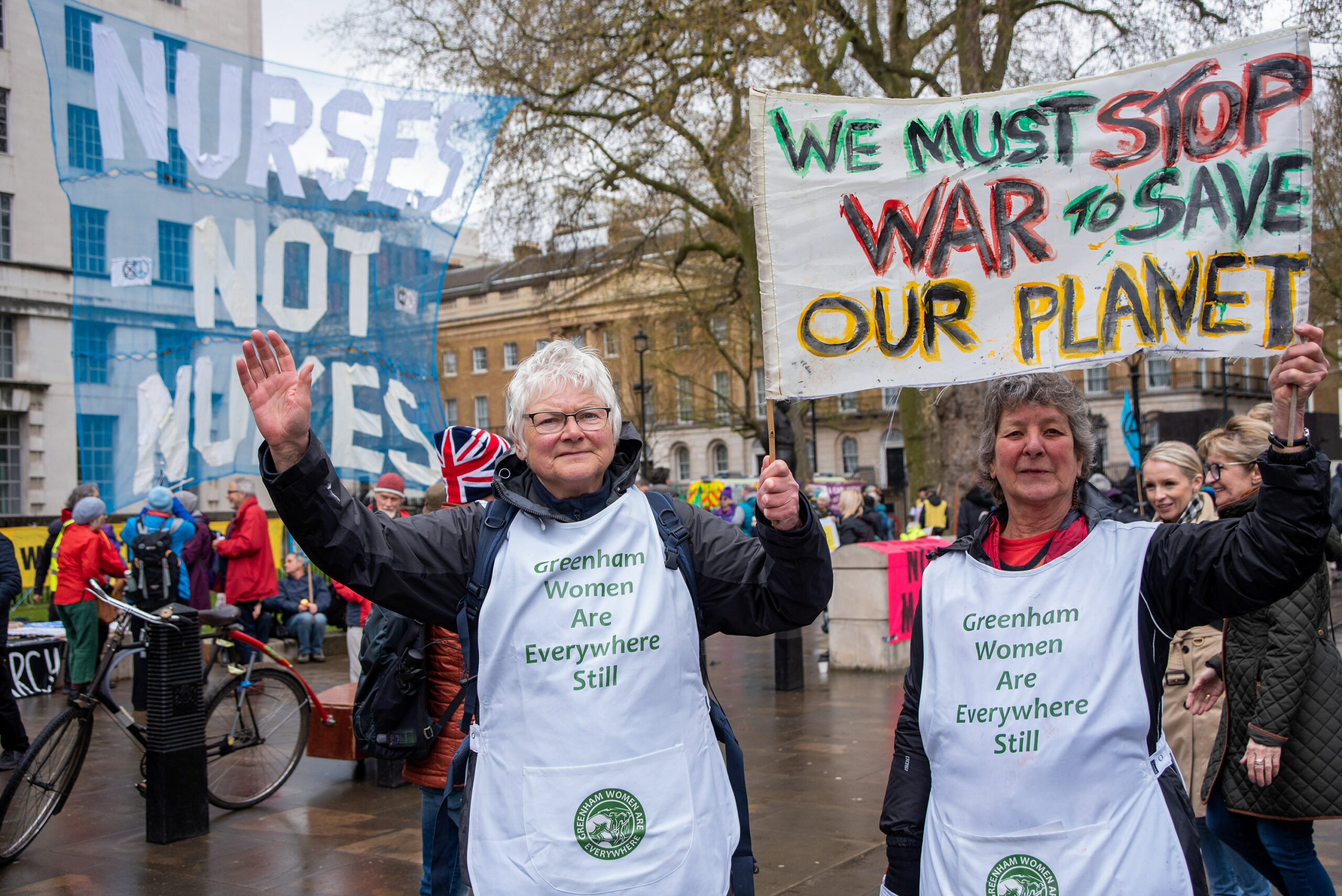
Two women wearing aprons/uniforms hold a banner that says, '
TakiMag

Driving recently through a small French town with a left-wing council, I noticed an official poster with the following slogan:

Let’s globalize solidarity, not poverty.

I felt slightly nauseated, as I did when, in the window of the Oxfam shop in my town in England, I saw a poster with the unctuous words, “Thank you for being humankind.”

No doubt the person who thought up that little slogan was very pleased with himself: How can someone who thinks up a morally impeccable and politically correct pun be other than a good person? It made me want to throw a brick through the window—I who can’t hurt a fly without thinking of the lines from Blake:

Little Fly
Thy summers play
My thoughtless hand
Has brush’d away.
Am not I 
A fly like thee?
Or art not thou 
A man like me?

Bad philosophy this may be, but it has at least genuine and generous feeling in it: it is not merely an exhibition of self-righteousness. 

No doubt globalization has had its bad effects. It has hollowed out the industrial base of advanced countries and resulted in strategic as well as domestic problems for them. But the one thing it has not done is increase world poverty. On the contrary, it has lifted hundreds of millions of people out of abject poverty, and if everyone has not benefited equally—well, no economic policy ever devised has benefited everyone equally, without leaving some behind.

What of globalized solidarity? I can’t think of anything more depressing; thank goodness that it’s impossible. You might as well ask the lion to show solidarity with the gazelle or the crocodile with the gnu—simply because they share the same continent, Africa.

Globalized solidarity is an intrinsically totalitarian notion, because it requires that all the people in the world should have identical desires, goals, attitudes to life and interests. It implies that, at heart, all conflict is illusory: if only the people who engaged in it would recognise their own best interest! History demonstrates where that naïve thought leads; and it is obvious that you cannot show solidarity both with the anti-regime demonstrators in Iran and with the Revolutionary Guard who mowed them down by the thousand. Moreover, it is not even easy to know what showing solidarity entails in the case of the demonstrators.

Because I do not believe in global solidarity, it does not follow that I believe that human life is merely a war of each against all and that the best policy is always the utmost ruthlessness and egoistic pursuit of one’s own narrow interests. But universal agreement about what is just or desirable will not soon be reached, and the interests of each are unlikely ever to be the interests of all. A civilized society is not one in which there is no conflict, but one in which conflict does not lead to murder—as the attempt to eliminate conflict altogether always does.

We seem to live in an increasingly sloganeering society, in which the followers of Mr. Pecksniff have triumphed. Mr. Pecksniff, you might remember, is a character in Dickens’s novel, Martin Chuzzlewit, a villainous religious hypocrite who calls his daughters Charity and Mercy and then draws attention to the holiness of the names he has given them. 

You can hardly get away from Pecksniffian expressions of virtue these days. I am sitting in my kitchen and I pick up at random three items nearby: a product to degrease saucepans, a bottle of spring water, and the box containing greaseproof paper. The first tells me, via something called its Ecolabel, to be sure to dispose of the container in the right dustbin or trashcan, for the sake of the planet; the second tells me that the bottle top being undetachable from the rest of the bottle, it limits the damage to the environment, and if I want to know more, I can consult a website where it seems that my further questions on the environmental effects of the bottle and its proper disposal will be answered by a character in the form of a giant panda; and the third tells me that the product, or the producers of the product, are “for a responsible forestry.” This statement is accompanied by a picture of two leaves that look to me like leaves of basil. An asterisk takes me to an elaboration, where the wrapping is given a personal identity, for it says “I am made of materials that come from forests that are responsibly managed.”

The constant reiteration of even the most desirable goals results in irrational resistance to, or reaction against them. It is true that few people read very carefully the labels of such products as I have mentioned, but I cannot help thinking here of Vance Packard and his book, The Hidden Persuaders, in which he claimed that subliminal messages nevertheless exerted their effects. One should not lightly draw comparisons with North Korea and its ubiquitous propaganda, but I can’t help feeling sometimes that we are undergoing a slow process of Pyongyangization for both political and commercial ends.

The other day I picked up in the street a squashed can of some disgusting chemical concoction purporting to be a fruit drink, ruthlessly marketed and sold by a giant corporation to the undiscriminating, less prosperous, and less educated members of the younger generation. The list of ingredients, which of course only a lunatic such as I would read, and which I did through a magnifying glass, was like a chemistry textbook, both organic and inorganic. The list alone was enough to make me feel quite ill, even without drinking the terrible stuff.

But what really appalled me was the high-minded sentiment also expressed on the can. Some of the profits were going to be ploughed back into “the community,” it said, such as literacy courses, when it was perfectly obvious that the only decent thing for the company to do was to stop manufacturing the noxious substance. 

But the world is a complex place. Halting production of this terrible concoction would harm the livelihoods of many, and no doubt destroying the pleasure that even more take in drinking it. We are more or less doomed to live in a world whose whole economic system, better than any other known to Man, depends completely on the insolvent consuming the unnecessary.

In the meantime, Down with slogans!

The post Save Your Solidarity appeared first on The American Conservative.

Naval Expert: The U.S. Knew Iran Would Close Hormuz

Naval Expert: The U.S. Knew Iran Would Close Hormuz

Sal Mercogliano talks to The American Conservative about the closure of the Strait of Hormuz and the economic fallout.

The Persian Gulf Islands

When Israel and the United States struck Iran on February 28, Tehran declared the Strait of Hormuz closed, warning that any vessel attempting to pass without its permission could be attacked. 

The Trump administration and many of its supporters have characterized the present crisis as “short term pain for long term gain.” But with Iran and Oman reportedly developing a plan to control traffic through the Strait in any post-war period, the U.S. decision to attack Iran will likely have lasting consequences on global shipping and the U.S.-led world order. 

I spoke with Sal Mercogliano, a maritime historian and naval expert, whose YouTube series tracks shipping through the strait in real time. He breaks down what is actually happening, the legal and strategic stakes of Iran’s closure, and the historic shift in freedom of navigation we are now witnessing.

Freedom of navigation as a principle has been enshrined in international law for centuries. It was codified through the Law of the Seas four decades ago, and the general principle has been considered customary international law for more than four centuries.

When Israel and the United States decided to attack Iran on February 28, Iran did what many predicted it would do, which is to declare the Strait of Hormuz closed, putting vessels under threat of attack if they attempted to pass without permission of the Iranian government. It really seems like we are witnessing this historic transformation to freedom of navigation. Can you explain a bit how so?

Yes. I think that freedom of navigation has been under attack even before this. I mean, if you go back to the Houthis and the Red Sea and even the creation of the dark fleet with Venezuela, Iran, and and more importantly, with Russia following Russia’s invasion of Ukraine, we’re seeing that.

You’re exactly right. I go back to the end of World War II when literally you create the great blue commons, where ocean travel is basically assured. The allied navies vanquished the German and the Japanese navies and for 80 years, we have not had an issue. There have been minor events but largely, ocean traffic was free to move and, under those conditions, what we’ve done over 80 years is increase the volume and velocity by which we move goods. And we got used to that… 

Now that’s being threatened. It’s being threatened economically because we’re seeing higher costs associated with it. We’re seeing geopolitical threats. You can’t sail through this area. You’ve got to divert around. And then we’re seeing the other elements, which is the creation of what I like to call the parallel fleet: ships that are out there, operating outside the bounds of the traditional system that’s been established, insurance, registry, classification, evading Western sanctions. 

One of the other challenges, especially in recent weeks, is simply trying to figure out what’s even going on. There’s claims from a variety of popular aggregator accounts on platforms like X, like Polymarket for example, which have millions of followers, and have claimed that traffic is now surging in the Strait of Hormuz. 

Now, if people watch your excellent YouTube series, they very quickly discover that all those sensational headlines are very far from true, that shipping traffic through the Strait of Hormuz remains in the single digits. It’s down from a daily average of about 130 vessels per day. Can you give us an update on what traffic through the Strait looks like right now and could you try to explain why you think we’ve seen so much misreporting on this topic?

Well, I think a lot of it has to do with sea blindness. A lot of people don’t understand how shipping works. If your first moment is viewing marine traffic and looking at ships moving, it seems to be maybe, okay, ships are moving. This seems to be okay. Until you go, and what I’ve done, especially with Polymarket and other sites, is I post the Strait of Hormuz traffic for February 27, the day before the attacks. And what you see there is a swarm of ships. On that day about 150 went through the Strait of Hormuz. On March 31, there were five. It’s a substantial difference. 

Another problem is how those boats are even going through the Strait of Hormuz. The traffic we’re seeing now isn’t going through the center of the Strait, the normal place we see them. Vessels are going through Iranian territorial waters. They’re taking this huge securitist route between Larek and Kisham Island because the Iranians have set up this toll booth. They’re controlling the flow in and out of the Strait of Hormuz. 

And I think it’s important to note, since the beginning of the operation, we’ve had maybe 21, 22 ships attacked. Which isn’t a great deal when you consider the fact there’s about a thousand deep draft vessels stuck in the Persian Gulf. But you don’t need a lot of attacks to cause problems. You just need a few attacks and a few very visible ones, which is what the Iranians have been able to do. They’ve inflicted damage. They’ve inflicted losses. They’ve killed people. 

And that’s enough to convince ships not to make the transit. What they do is they bottle everything up.

But the problem is it’s very hard to aggregate against these huge accounts that sit there and say everything is fine, you know everything is going well. And especially when you get the president of the United States and Fox News saying “eight to 10 tankers” went out even though they did not. We’re not seeing those numbers. Those numbers are not materializing. And they’re not even with the dark fleet, the mast vessels that turn off their AIS [automatic identification system]. Because we do have visualizations of those. We have satellites. We pick them up when they get out of the straits. So we know that this is not happening. 

It’s just hard when literally the accounts that we rely on, the mainstream—and I’m not just talking about mainstream media, I’m talking about the president and his cabinet—when they voice a narrative that’s not meeting with what the data is showing. That’s a problem.

Right. Trump said that Iran gave us this gift, originally 10, but he raised it to 20 Pakistan-flagged ships that were allowed to cross the Strait of Hormuz. How many ships does Pakistan even have? Do they even have 20?

No, they don’t have 20 tankers. I guarantee you that. And there’s not 20 Pakistani ships inside the Strait of Hormuz. So there was one, the Karachi, that came out.

In terms of the long-term consequences of this new status quo in the Strait of Hormuz, just this week, Iran’s parliament voted to formalize a toll system. They will partner with Oman and reportedly charge about 2 million dollars in Iranian Riyal for each vessel to pass through. They say they’ll continue to block vessels linked to the United States and Israel. When it comes to this new toll, do you expect that consumers would have to eat those costs on the variety of commodities that flow through the strait, not just oil and gas but helium, fertilizer, and other important resources?

Yeah, I believe so, tremendously. They seem to have used the same playbook in the Red Sea. We think the Houthis did the same exact thing, except the difference with the Houthis in the Red Sea was there was an alternative. You can go around Africa, you can take the bypass, which for shipping companies, they complained about it, but in truth, it generated a lot of revenue for them. So they would say vocally, “Oh, we hate this,” but at the same time, man, they were pocketing good money.

But there’s no shortcut around the Persian Gulf. It’s a cul-de-sac of oil and energy. You’ve got to get in there. You’ve got some access with pipelines, but some countries, Kuwait, Bahrain, Qatar, they don’t have any other outlet. They’re stuck. Southern Iraq, they’re stuck. They don’t have an outlet. The Saudis do. The UAE does. Nobody else does.

That’s going to be a bane for them. We’ve got five U.S. ships stuck inside the Persian Gulf with 100 crew members on board that can’t get out. I mean, this is a problem. Iran now has a toll booth. This cost is going to get translated to everyone.

When it came to the Red Sea, we weren’t able to deter the Houthis. The Americans tried it twice and were unsuccessful. They shot down a lot of missiles and drones, but they could not get 100 percent success. And so shipping didn’t fully return. You’re going to see the same thing here. And if you’re a country like Saudi Arabia, for example, two of the three access points to get to the ocean are now in the hands of Iranians or Iranian clients.

And there is now a chance of the Houthis coming back in. If you’re loading tankers in Yambu and the Houthis start attacking, that’s a big problem.

I will say this about the Houthis: they don’t have a great track record at targeting ships. And what I mean by that is not just hitting them, but hitting ships that are directly owned by the U.S. or Israel. If you look at the data, of the 120 something ships they attacked, maybe about 40 percent of them can be linked back to the U.S. and Israel. The rest of them aren’t. In global shipping generally, it’s hard to know who controls what, who owns what, because there are shell corporations. We do everything we can to really mask ownership. 

So if the Houthis suspect a U.S. or Israeli ship is sailing by, the fear is they attack them. This is going to jack up insurance rates. One of the things we saw, the reason the ships went around Africa really wasn’t because the Houthis were masters at anti-ship operations. They really weren’t. But the insurance rates went up. This is what stopped ships going through the Strait of Hormuz. The insurance rates went up and everybody had to go get new insurance.

The Houthi are going to be a threat if all of a sudden you cannot sail very large crude carriers. These are the big supertankers. These are the one to two million barrel supertankers through the Babel Mandab, that little narrow strait between Yemen and Africa. Now, all of a sudden, if you want to get that seven, eight million barrels a day out of that pipeline that’s in Yambu, you’ve now got to sail all the way around Africa, go through the Suez Canal and go to Yambu. And by the way, you can’t take a fully loaded VLCC, very large crude carrier through the Suez. So you’re talking about shuttling fuel. This is going to make everything more expensive.

And it’s also worth pointing out that this could have all been avoided if we didn’t attack in the first place. The Strait of Hormuz was open. Nobody was paying any tolls on February 27.

I’m going to add this to it too, Harrison: The U.S. knew this would be Iran’s play.

Everybody knew this. I mean, I worked for the military 30 years ago and we all knew Iran’s going to play for the Strait of Hormuz. Everybody knew this. This is not a surprise.

The post Naval Expert: The U.S. Knew Iran Would Close Hormuz appeared first on The American Conservative.

The UK Biomess

The UK Biomess

Wishcasting is not a viable energy policy.
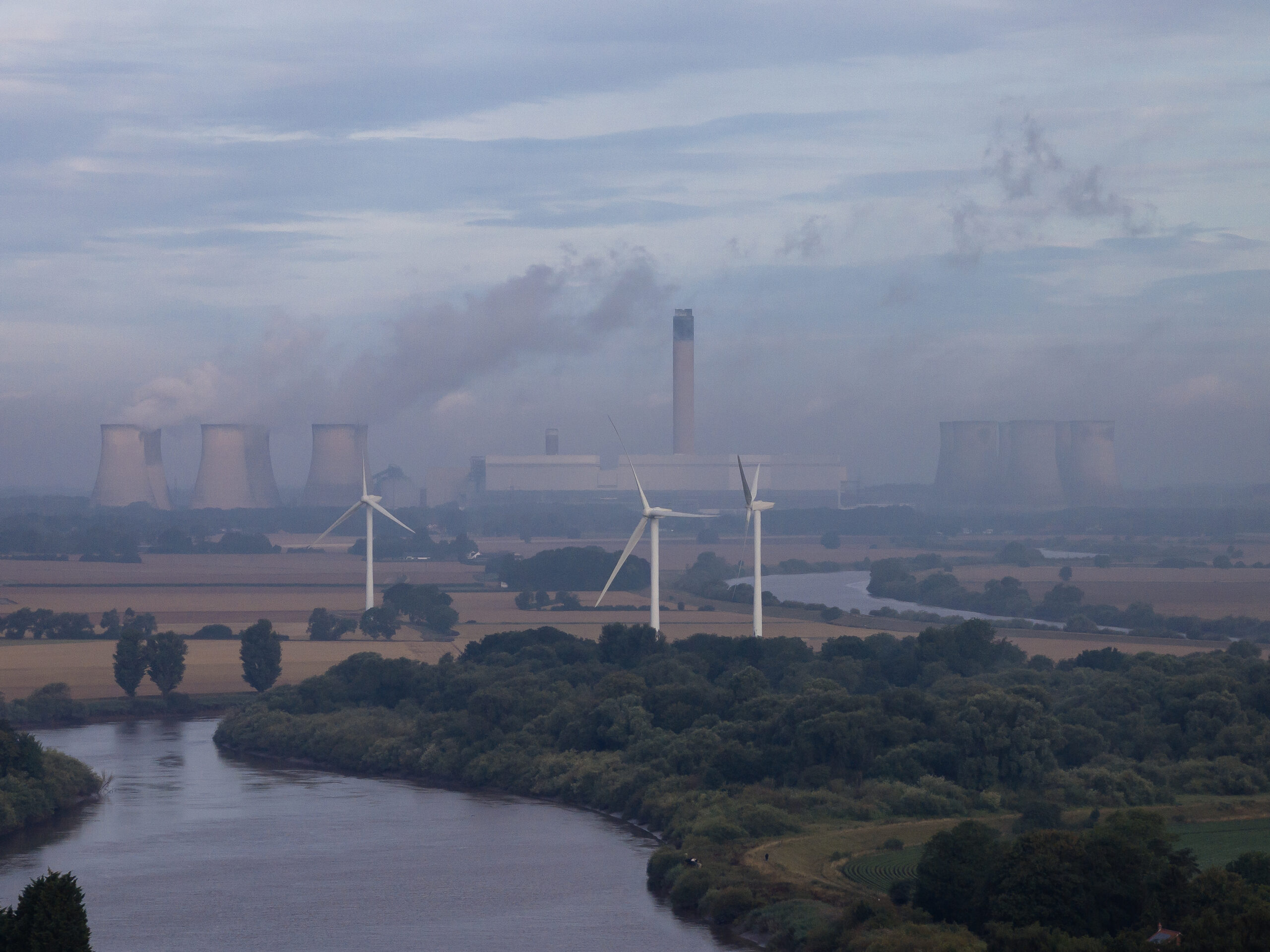
In Focus - Drax Power Station
UK Special Coverage

“The emission factor for biomass shall be zero.” Thus spoke the EU, in its Emissions Trading System Directive, the cap-and-trade law that went into effect in 2005. And zero it has been for the purposes of energy and climate policy, net-zero accounting, and ascertaining whether a power producer qualifies for “renewables” subsidies.

But thermodynamics, chemistry, planetary physics, and other stubborn corners of reality are subject neither to repeal nor to gaming, not even by Brussels. And one of those stubborn corners is in North Yorkshire, England, site of the 2.6 gigawatt Drax Power Station, a biomass (primarily wood-burning) facility that for 10 straight years has been the UK’s number-one emitter of CO2, while receiving an average of £766 million per year (more than £2 million per day) in public subsidies for being “green” (post-Brexit UK having taken with it the EU’s fanciful way of making certain emissions disappear from the public record, if not from the atmosphere).

But Drax hasn’t simply been the largest emitter. It has been so by a significant factor. In 2024, its CO2 emissions exceeded those of the next four largest emitters combined, those four being two steelworks, a refinery, and a combined-cycle gas power plant that is the largest of its kind in the UK and the second largest in all of Europe. In fact, Drax’s 2024 emissions (13.3 million tons’ worth of CO2 equivalent) exceeded those of the six most-emitting natural-gas plants put together. And the installed capacity of those six gas plants adds up to roughly 8.4 gigawatts, 3.25 times that of Drax. Taking installed capacity as the point of comparison, this means that Drax vis-à-vis those gas plants is generating less than a third the electricity per ton of CO2 equivalent emitted.

Nevertheless, installed capacity doesn’t indicate the amount of energy a power source actually produces, which can vary for multiple reasons. Solar, for instance, generates electricity only a quarter of the time on average, since night makes up half of the diurnal cycle and since half of the daytime hours over the course of a typical year are affected to some degree by cloud cover. So solar has what is called a “capacity factor” of 25 percent. This means, for instance, that 8 megawatts of installed solar will yield only 2 megawatts of electricity production over the course of an average year (some days more, some days less, some days barely any at all). With onshore wind, you get a capacity factor of roughly 34 percent, about a third of your installed capacity over the course of the average year (again, some days more, some days less, some days not at all, depending on whether and how much the wind is blowing). The capacity factor of nuclear, by comparison, is above 90 percent, because nuclear is what’s called a dispatchable power source, generating electricity on demand, day or night, winter or summer, and regardless of weather conditions. Its only downtime is generally related to routine maintenance. All of which is to say that talk of installed capacity can be—and sometimes is—rhetorically misleading. And at any rate, the examples in this paragraph all involve emissions-free sources of electricity production.

Where fuel-based production and emissions are concerned, it’s most accurate to compare not installed capacity or even capacity factors but, rather, emissions per unit of energy produced. (This is partly because the capacity factors of such power plants can be significantly influenced not by physical limitations, as with wind and solar, but by policymaker discretion—i.e., how much or how little those policymakers want to use this or that type of power source.) As noted, in 2024 the Drax biomass plant emitted 13.3 million tons of CO2 equivalent, while producing 14.6 terawatt hours of energy. By comparison, in 2022 the Pembroke Power Station, a 2.2 gigawatt combined-cycle natural-gas plant in Wales, emitted 5.3 million tons of CO2 equivalent while producing 15.3 TWh. This means Drax emitted nearly a million tons of CO2 per TWh, whereas Pembroke emitted slightly more than a third of a million per TWh.

These differences are mostly owing, again, to stubborn thermodynamics, chemistry, and the like. Natural gas has an energy density (55 megajoules per kilogram) far greater than that of wood pellets (17.3 MJ/kg) and even torrefied—i.e., roasted—wood pellets (23 MJ/kg). In fact, where the energy density of fuel sources is concerned, natural gas is bested only by hydrogen (142 MJ/kg) and fissile uranium (79 million MJ/kg). Unfortunately, hydrogen has thus far proved very difficult—and therefore uneconomical—to extract, transport, store, and use at scale, and nuclear energy has many opponents, despite its exponential and emissions-free power potential.

Where energy density and impurities are concerned, biomass is down there with coal. Wood pellets are a bit better than lignite, the soft, “dirty” brown coal that has a high moisture content. Torrefied wood pellets are in the ballpark of bituminous coal. And both kinds of pellets are well worse than anthracite, the “black,” cleaner-burning coal. As a consequence, biomass emissions are worse than those associated with burning both gas and coal. According to the Partnership for Policy Integrity, biomass power plants emit 1.5 times the CO2 of coal-fired plants and three to four times that of natural-gas plants per unit of energy produced.

So how is it that a biomass plant like Drax can belch carbon emissions to dwarf those of steelworks and refineries while having its emissions erased from cap-and-trade calculations and while also qualifying for hundreds of millions of pounds per year in “renewables” subsidies? First, for the record, wood of course is renewable, like dung, another premodern fuel source that burns dirty. But the belief that burning biomass can in fact be carbon neutral rests on a simple logic—which is to say an oversimplified logic, one that is certainly at odds with the doom-laden rhetoric that has long surrounded talk of carbon emissions.

The idea is that all the CO2 released in the incineration of a tree’s worth of biomass will be “resequestered” by the growing tree that has been planted to take its place, and—what’s more—that the CO2 being released was itself recently sequestered, so its return to the atmosphere even at such volumes is not excessive in the way that smaller volumes of fossil-fuel emissions would be. It’s a perfect bit of yin-yang harmony. Yet incinerating that tree’s worth of biomass is a matter of seconds, or at most minutes, in a 2.6 gigawatt facility, whereas it takes decades for the average tree to grow to maturity, or even just to the height at which it too is cut and fed to the boiler. So you end up with large amounts of CO2 being released rapidly and then only slowly, on a multidecadal scale, being resequestered. Even assuming this resequestration will truly happen—after some future date when biomass burning is phased out and new trees begin reabsorbing, over decades, all the excess CO2 previously spewed into the environment in the name of harmony—do we really have the time to spare?

The rhetoric of climate alarm, ripe with warnings of imminent tipping points being reached without the immediate and significant reduction of CO2 emissions, would seem to argue against the wisdom of intensifying the release of CO2 as part of a spew-now-resequester-later scheme—even one that, through the magic of bureaucratic fiat, is deemed green. CO2 is CO2, whether it comes from an SUV or an incinerated spruce, and whether it was sequestered in recent decades or not. And if CO2 is the problem, Mother Earth, on the brink of her tipping point, will find biomass emissions no more congenial than those of anything else. The yin-yang promise that things will start righting themselves later, decades hence, seems dubious in the context of constant warnings that humanity—any day now—will functionally run out of “later.” One is forced to ask, Which is it: no tomorrow, or time and emissions to spare?

We must assume it’s the latter if we’re to retain any faith in Brussels and in those who, like UK policymakers, take their guidance from it on these issues. But even then we run into another stubborn corner of reality: math. Cap-and-trade being an economic scheme, and the biomass carbon-neutrality exclusion being predicated on the idea of investing in future resequestration, it’d be nice if the numbers at least made sense in their own investment terms. But they don’t.

Taking it on faith that the saplings of the future will, on a one-to-one basis, be able to resequester the CO2 emitted from the burning of individual trees today, what of the excess emissions that result from the burning of biomass instead of, say, natural gas? Again, per unit of energy produced, biomass emits three to four times the CO2 that natural gas does, an opportunity cost or inflationary element that makes recovering your measure of emissions decades from now akin to getting back pence on the pound, assuming your goal is really to reduce CO2 concentrations overall (or at least not add to them gratuitously). At best, in the manner of digging a hole only to fill it in, you can hope to get today’s pound back decades later. No loss, no earnings. Nothing accomplished. Trees harvested, trees burned, trees planted to be harvested and burned anew, all to achieve nothing in the way of changing overall CO2 concentrations. You’re right back where you were decades prior. This gives a different and unflattering meaning to the phrase carbon neutrality.

Would it not make more sense—mathematically as well as environmentally—to burn a cleaner fuel and maybe plant some trees? You’d be putting significantly less CO2 into the atmosphere than you are by burning biomass (both per unit of energy produced and in absolute terms), and you’d also be starting the process of taking excess CO2—not just what you’re putting in now—out of the atmosphere through means of forestation. In a sense, you’d be earning interest, actually accomplishing something, making progress toward mitigating an environmental problem. But to do so one would have to get over the reflexive binary that says fossil fuels are only ever environmentally bad and biofuels only ever better. The energy stored eons ago in natural gas burns cleaner and more efficiently than the energy stored lately in trees. To burn the latter at scale anyway, emitting three to four times the CO2 in the process while subsidizing the effort as something green, is to dirty up the atmosphere in the name of cleaning it. It doesn’t seem to make a bit of environmental sense.

But perhaps there’s a strategic reason to burn biomass—something to do with energy security, self-sufficiency, and a decreased reliance on imports. As of 2024, for instance, 12 percent of Finland’s electricity sector was powered by biofuels (same as the UK’s), which makes sense in a heavily forested country. And to whatever extent Finland cares about emissions (whether the real and therefore pernicious ones or the ones the EU nullifies by fiat and then perversely incentivizes, which in the case of biomass are one and the same), it’s notable that more than 80 percent of Finland’s electricity sector that year was both emissions-free and locally sourced: 39 percent nuclear (recently expanded), 25 percent wind, and 17 percent hydro. And of that, the bulk of it (the nuclear and hydro) was dispatchable. Given this, it’s not surprising to learn that electricity production in Finland grew 19 percent from 2020 to 2024, and its electricity imports dropped 29 percent in that same period, to a paltry 4 percent. That’s energy security and self-reliance.

In the UK, we find a different story playing out. Although natural gas, in 2024, still accounted for 37 percent of the country’s energy supply and 30 percent of its electricity generation, domestic natural-gas production dropped 73 percent from 2020 to 2024, with half the gas used in the UK being imported as of 2024. Gas’s contribution to electricity production dropped more than 20 percent in that time, and nuclear’s dropped nearly as much—output from both, it should be said, decreased in absolute as well as relative terms. Wind output grew by about 10 percent, but coincidental with all of this—and hardly surprising—there was a 24 percent drop in electricity production and a 206 percent increase in electricity imports from 2020 to 2024, with imports topping 12 percent of the electricity consumed in the UK in 2024.

Is biomass some kind of exception to these trends, a bastion of UK energy security and self-sufficiency? Not in the least. Ninety-nine percent of the biomass burned at the Drax Power Station is imported, mostly from North America, which compounds not only the UK’s reliance on imports but also the CO2 problem associated with Drax’s emissions. Upstream of the power station itself, there’s the large-scale cutting and harvesting of North American forests, the industrial-scale processing of that wood into pelletized form, and the transporting of that material across the Atlantic. This isn’t just the sensible “waste not, want not” use of forestry scraps and deadfall, something that—given its modest scale—might be considered tangentially green (if not in terms of forest ecology itself, but that’s another matter). No, this is a dirty, extractive, far-flung operation that arrives on UK shores having already made its own significant contribution to CO2 emissions, before Drax even does its thing.

All of this—the move away from reliable, dispatchable, relatively clean if not emissions-free energy like natural gas and nuclear (both of which can be had within the national domain); the expectation that intermittent, weather-dependent, and therefore unreliable wind will be able to fill the gap created; the need to increase electricity imports when the preceding proves incorrect; and the “greening” and subsidizing of a fuel, biomass, whose emissions exceed those of coal—looks inevitably like the work of policymakers more interested in pantomiming climate progress and energy security than in actually making gains on either front. As both energy and climate policy, this is a travesty, its chief accomplishment being to serve as a negative example for policymakers elsewhere.

Drax’s subsidies are scheduled to be reduced starting next year, and the station’s power output will drop commensurately. Yet it’s expected that Drax, even while operating below typical capacity, will remain the UK’s top emitter for the balance of the decade. Assuming that comes to pass, Drax will have enjoyed that greenwashed honor for roughly 15 straight years.

Beyond that, there’s talk of an eventual biomass phaseout, which—from an emissions standpoint—will only be a welcome development. But one thing you can say in defense of biomass is that it’s a dispatchable source of electricity generation (always available, on demand, like coal, hydro, natural gas, and nuclear). EU bureaucrats were shameless in effacing its emissions for reporting purposes, but their doing so was part of a devil’s bargain that let them use such dirty fuel (no fossils!) to keep the lights on while they struggled to somehow replace dispatchable power with emissions-free but intermittent power. The ruse made it seem on paper like they’d preserved reliability while also making measurable strides toward carbon neutrality, and that ruse was apparently enough to satisfy many (including, over the years, policymakers in both Conservative and Labour governments) who were eager to believe, and who wouldn’t know on a nightly or even yearly basis that gratuitous amounts of CO2 were being sent aloft to flatter their beliefs.

The post The UK Biomess appeared first on The American Conservative.

“WE GOT HIM!” President Trump Releases Statement on Rescue of Fighter Pilot

Former President Donald Trump seated at his desk in the Oval Office, discussing policies with the American flag and official seals in the background.

Former President Donald Trump seated at his desk in the Oval Office, discussing policies with the American flag and official seals in the background.

President Trump late Saturday night into early Sunday morning released a statement on the rescue of the fighter pilot who went missing earlier this week after Iran shot down an F-15E fighter jet.

The fighter jet went down in a remote part of Iran on Friday. One pilot was rescued and the other pilot, the ‘gunner,’ went missing.

The missing fighter pilot was rescued early Sunday morning local time.

President Trump celebrated the rescue in a Truth Social post.

The pilot sustained injuries but the president said he will be “just fine.”

Full statement from President Trump:

WE GOT HIM! My fellow Americans, over the past several hours, the United States Military pulled off one of the most daring Search and Rescue Operations in U.S. History, for one of our incredible Crew Member Officers, who also happens to be a highly respected Colonel, and who I am thrilled to let you know is now SAFE and SOUND!

This brave Warrior was behind enemy lines in the treacherous mountains of Iran, being hunted down by our enemies, who were getting closer and closer by the hour, but was never truly alone because his Commander in Chief, Secretary of War, Chairman of the Joint Chiefs of Staff, and fellow Warfighters were monitoring his location 24 hours a day, and diligently planning for his rescue.

At my direction, the U.S. Military sent dozens of aircraft, armed with the most lethal weapons in the World, to retrieve him. He sustained injuries, but he will be just fine.

This miraculous Search and Rescue Operation comes in addition to a successful rescue of another brave Pilot, yesterday, which we did not confirm, because we did not want to jeopardize our second rescue operation. This is the first time in military memory that two U.S. Pilots have been rescued, separately, deep in Enemy Territory.

WE WILL NEVER LEAVE AN AMERICAN WARFIGHTER BEHIND! The fact that we were able to pull off both of these operations, without a SINGLE American killed, or even wounded, just proves once again, that we have achieved overwhelming Air Dominance and Superiority over the Iranian skies.

This is a moment that ALL Americans, Republican, Democrat, and everyone else, should be proud of and united around. We truly have the best, most professional, and lethal Military in the History of the World. GOD BLESS AMERICA, GOD BLESS OUR TROOPS, AND HAPPY EASTER TO ALL!

The post “WE GOT HIM!” President Trump Releases Statement on Rescue of Fighter Pilot appeared first on The Gateway Pundit.

Trump Set to Appoint Firebrand Attorney Harmeet Dhillon After Sudden Resignation of Current No. 3: Report

Donald Trump and a woman shaking hands in front of two American flags, smiling at the camera during a formal event.

Donald Trump and a woman shaking hands in front of two American flags, smiling at the camera during a formal event.
(Photo: Harmeet Dhillon/X)

President Donald Trump is reportedly preparing to tap civil rights chief Harmeet Dhillon for a powerful promotion to Associate Attorney General, the third-highest position inside the Department of Justice.

Multiple reports indicate Dhillon, who currently serves as Assistant Attorney General for the Civil Rights Division, is a leading contender for the role amid ongoing shake-ups following the removal of Attorney General Pam Bondi, CBS News reported.

A source familiar with the matter also said Stanley Woodward, who previously held the position, resigned earlier on Saturday, according to Daily Wire.

Dhillon has emerged as one of the most reliable legal warriors in Trump’s second administration.

After being confirmed in 2025 to lead the DOJ’s Civil Rights Division, she quickly set about reshaping the office in line with the president’s agenda, targeting DEI programs, challenging election practices, and taking aggressive legal action on cultural and constitutional issues.

The reported move comes on the heels of a major DOJ shake-up after Trump ousted Bondi, citing dissatisfaction with high-profile investigations and lack of prosecutions.

While Deputy Attorney General Todd Blanche is currently serving as acting AG, insiders say Trump is assembling a more aggressive and loyal leadership team and Dhillon appears to be at the center of that transformation.

Recent reporting also confirms that Dhillon has been floated among top candidates for senior DOJ roles as the administration recalibrates its legal strategy.

CBS News reported:

The changes are most likely to affect Associate Attorney General Stanley Woodward, the No. 3 official at the Justice Department and Harmeet Dhillon, the Assistant Attorney General for the Civil Rights Division.

Senior officials have discussed promoting Dhillon to one of the top department roles, while demoting Woodward, the sources added. It was unclear if final decisions had been made yet.

[…]

A Justice Department spokesperson declined to comment on personnel matters.

Mr. Trump named Deputy Attorney General Todd Blanche as acting attorney general earlier this week. It is unclear whether he will eventually be the permanent replacement. Other front-runners include Lee Zeldin, a former congressman who currently leads the Environmental Protection Agency, CBS previously reported.

Woodward previously served as a defense attorney representing many prominent Trump allies in the past, including White House adviser Peter Navarro, FBI Director Kash Patel and Walt Nauta, who was charged by Special Counsel Jack Smith in the classified documents case.

Related story:

JUST IN: Trump Impending Leadership Changes May Affect Two More Top Roles

The post Trump Set to Appoint Firebrand Attorney Harmeet Dhillon After Sudden Resignation of Current No. 3: Report appeared first on The Gateway Pundit.

Woke Boise Mayor Forced to Remove LGBT Flag From City Hall in Light of New Flag Law

Rainbow flag waving against a blue sky with clouds, symbolizing LGBTQ+ pride and diversity.

Rainbow flag waving against a blue sky with clouds, symbolizing LGBTQ+ pride and diversity.
Image: Wikicommons/Creative Commons Attribution-Share Alike 4.0 International license.

The woke Mayor of Boise, Idaho, Lauren McLean (D), was finally forced to remove the rainbow LGBT “pride” flag from its City Hall following implementation of a new flag law.

McLean tried to circumvent a prior law by formally designating the flag as the “official flag of our city” through a resolution.

In 2025, Idaho passed House Bill 96, which limited the flags that state and local governments (cities, counties, schools, etc.) could display on government property.

It generally restricted flying to the U.S. flag, the Idaho state flag, and a narrow list of approved flags (such as POW/MIA flags, official military flags, or certain historical flags).

Following efforts by some cities, like Boise, to attempt workarounds, HB 561 was introduced as a follow-up “cleanup” bill to close those loopholes and add real penalties.

On March 31, 2026. Idaho Republican Gov. Brad Little (R) ended efforts to play games with the language by signing House Bill 561 into law.

HB 561:

  • Expands the definition of “governmental entity” and “government property” to include not just buildings but also adjoining land, parks, roads, boulevards, etc.
  • Limits local flags: Cities and counties can only fly their own “official” flags if those were formally designated before January 1, 2023.
  • Adds enforcement teeth: Imposes a civil penalty of $2,000 per day, per offending flag.
  • Gives the Idaho Attorney General (Raúl Labrador) the authority to enforce the law, including issuing warnings and filing lawsuits.
  • Requires a 10-day “cure” period (warning) before fines kick in.
  • Removes or tightens some previous exceptions for other flags.
  • Includes some carve-outs added during the legislative process (e.g., allowances for certain historic international/cross-border flags or the Basque flag in specific contexts).

KTVB reports that the new rules have forced Boise to back down.

“Today, Governor Little signed HB 561 into law—a bill written with one purpose in mind: to prevent Boise from expressing our values by flying our official Pride flag, something we have done with the support of our community for more than a decade,” she wrote.

The mayor explained that the financial penalties would fall on taxpayers, which led the city to remove the flags from city property. According to the new law, a governmental entity that does not comply with the law will be asked to pay $2,000 per flag for each day the flag is displayed.

“Because the law includes a substantial penalty – one that would ultimately fall on the taxpayers of Boise to shoulder—I decided to take down the city’s official Pride flag,” McLean stated. “But let me be clear: Boise’s values have not changed, and they are not defined by any single action taken at the Statehouse.”

Governor Little signed the bill privately on Tuesday, March 31, 2026, at 11:44 a.m. Shortly after (around noon), the City of Boise removed the Pride flag from City Hall.

A video was shared of the flag removal while a subdued crowd gathered, like it was a solemn changing of the guard at Arlington, while crooning a self-soothing pride ballad.

Watch here.


The post Woke Boise Mayor Forced to Remove LGBT Flag From City Hall in Light of New Flag Law appeared first on The Gateway Pundit.