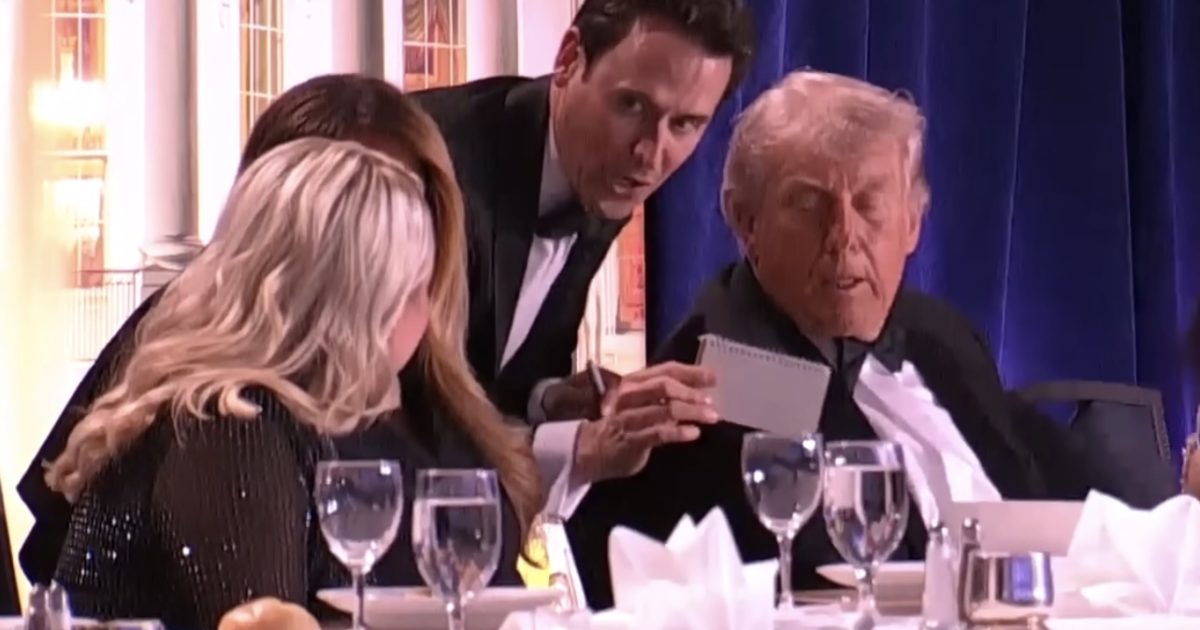
The post Images of Those Most Impacted by the Shooting at the White House Press Dinner appeared first on The Gateway Pundit.


The post Images of Those Most Impacted by the Shooting at the White House Press Dinner appeared first on The Gateway Pundit.
The plight of dumb beasts is an issue where the Starmer government is showing a surprising vulnerability.
Keir Starmer, who has elevated the political U-turn to something approaching an art form, now appears ready to abandon his pledge to ban imports of foie gras and fur. The explanation, we are told, lies somewhere between trade negotiations and the lingering ambition to edge Britain back toward the European Union. Principle, once again, is invited to wait outside while pragmatism conducts its business.
At first blush, the specifics may seem surprising. Animal welfare is assumed to sit only within the modern center-left’s moral repertoire. Starmer, a North London pescetarian, seems almost comically well-cast for the role of animal defender. But contemporary politics has a habit of sorting moral questions into tidy ideological boxes, as though compassion were less a human instinct than a partisan accessory; we know that for many centrist Labour voters, Brexit and closer ties with Europe, seem, bizarre as it may seem, a more compelling moral issue than animal welfare.
Within this framework, concern for animals has been gently ushered into the progressive camp, where it sits alongside plant-based diets, environmental consciousness, and a broader skepticism of markets. The right, meanwhile, is cast as the land of conscience-free realism: steaks sizzling, markets humming, and a heroic indifference to the fate of dairy cows that live such abbreviated lives on UK farms. It is a convenient dichotomy—one that reinforces the familiar caricature of the left as naïve and the right as callous.
Convenient, but perhaps misleading. In fact, a serious conservative or libertarian philosophy bursts with the intellectual resources to engage deeply with questions of animal welfare. Indeed, it may be uniquely equipped to do so. Concepts such as responsibility, stewardship, and restraint are not decorative words to be trotted out at party conferences by the seaside; they are central to how power is understood and justified.
The question is not whether human beings exercise power over animals. That contest was settled some time ago. The question is what obligations follow from that power. A coherent conservative answer cannot simply be: whatever is permissible, or whatever proves profitable. To accept that logic would be to hollow out the very idea of moral responsibility.
Stewardship, a concept frequently invoked in discussions of land and institutions, is a very Middle England concern, with their traditional, nostalgic view of English heritage. But it applies no less to living creatures. It is not an imported sensibility from the political left but a principle embedded in religious and philosophical traditions long claimed by conservatives themselves. To be a steward is to care for what one did not create and to be judged by the manner of that care. Animals, no less than landscapes or cultural inheritances, fall within that domain.
Libertarian thought, too, emphasizes personal responsibility—the idea that individuals bear moral accountability for their choices. Yet this principle often seems to dissolve at the supermarket checkout. Purchasing decisions are treated as morally neutral, even when they sustain intensive farming practices that would be traumatizing if directly witnessed. But consumption is not passive. It is participatory. To buy is, in a meaningful sense, to endorse and perpetuate the conditions under which goods are produced.
At this juncture, the language of liberty is frequently invoked as a defense and any attempt to interrogate such choices is framed as an encroachment on personal freedom. But liberty, properly understood, is not license. It is freedom exercised within a structure of responsibility. The man who insists on doing as he pleases regardless of consequence is not a defender of freedom; he is merely its most tedious beneficiary.
There is also something distinctly un-conservative about the refusal to acknowledge limits. A society that cannot restrain itself—whether in consumption, industry, or its treatment of the vulnerable—is not demonstrating strength but decay. Restraint, after all, is a precondition of continuity.
Animals are, obviously, vulnerable. They possess no political voice, no capacity to organize, no means of legal redress. If the protection of the powerless is not a legitimate concern for conservatism, it becomes difficult to articulate what is.
So much for theory. How is this working in practice? In the United States, Robert F. Kennedy Jr. has floated plans to restrict or even eliminate certain forms of animal experimentation. Regardless of one’s view on the feasibility of such measures, their proposal within a broadly conservative or heterodox political context is noteworthy. It suggests that concern for animal suffering need not be confined to the left but can arise from a broader moral seriousness.
In the United Kingdom, the most recent figures indicate that millions of animal experiments are conducted annually. At MBR Acres near Cambridge, beagle puppies are bred for laboratory use. While operators maintain that they adhere to regulatory standards, investigative footage has at times raised troubling questions about the conditions in which these animals are kept.
One might expect such revelations to galvanize sustained attention from progressive media and advocacy networks. Yet coverage has been uneven. In some cases, it has been GB News and Talk TV, channels associated with the political right, that have been more willing to highlight these concerns. This is not because they have undergone a sudden conversion to animal rights activism, but because the moral terrain here is less comfortably mapped onto existing ideological loyalties.
The debate over halal slaughter offers a parallel example. Criticism of the practice has been more readily voiced on the right, while parts of the left have approached the issue cautiously, wary of appearing culturally or religiously insensitive. To be sure, some critiques are advanced in bad faith. But it does not follow that all are. For some, the concern stems from a genuine belief in minimizing animal suffering, grounded in principles of stewardship rather than hostility.
For conservatives here, there is a political as well as philosophical opportunity. Engaging seriously with animal welfare could help disrupt the simplistic moral binary that casts the right as indifferent to suffering. It could also resonate with the voters of Middle England.
There are caveats to the stereotype of the English as animal lovers but, like many stereotypes, it emerged from something true. The world’s first animal cruelty prevention legislation was introduced here in 1822. Two years later, it became the first country in the world to start a welfare charity for animals, the RSPCA. That heritage continues to shape the nation’s voters.
The challenge is not to frame animal welfare as a niche or sentimental concern but to recognize it as a reflection of broader societal values. How a society treats the most vulnerable—human or otherwise—offers a window into its character.
If conservatives and libertarians are committed to the principles they often espouse—responsibility, stewardship, and the disciplined exercise of power—then animal welfare should not be an afterthought. It is, rather, a natural extension of those commitments. And if the political right cannot articulate a compelling case for the humane treatment of defenseless creatures, it raises an uncomfortable question: what, precisely, is it seeking to conserve?
The post Is Animal Welfare an Opening for the British Right? appeared first on The American Conservative.
Iran’s increased support for and reliance on Hezbollah suggests a fresh pivot for nuclear concessions.
One of the important conclusions to draw from the Iran War is how much importance Tehran attaches to Hezbollah, its long-time Lebanese Shiite ally. This is not to be dismissed as business as usual, but rather reflects a major shift whereby supporting Hezbollah has become even more necessary for Iran’s national security.
Lebanon emerged as a major sticking point during the Islamabad talks to end the war. After apparently agreeing to an Iranian demand for a Lebanese–Israeli ceasefire as part of a potential broader deal, the Trump administration appeared to renege on this demand at the behest of Israel’s Prime Minister Benjamin Netanyahu.
Shortly after the start of the ceasefire, Israel conducted an intense bombing spree in Lebanon in what became known as Black Wednesday, resulting in the death of over 350 civilians. In response Tehran reasserted control over the Strait of Hormuz.
Against the backdrop of this Iranian intransigence on Lebanon, Trump announced a 10-day ceasefire between Lebanon and Israel. This episode demonstrated how Iran remained firmly committed to its alliance with Hezbollah, which joined the Iran war in support of its patron in early March by launching a missile attack against Israel.
Recent statements by senior Iranian officials further revealed the importance Tehran attaches to its alliance with Hezbollah.
While Iran said that its more recent seizure of the Strait of Hormuz was in response to the American naval blockade on Iranian ports, there are indications that the situation in Lebanon also weighed heavily on Tehran’s decision.
In remarks to Iranian television on April 18, Iran’s Speaker of Parliament Mohammad-Bagher Ghalibaf—who led Tehran’s delegation to Islamabad—said that his country retook the Strait in response to Israeli violations of the ceasefire with Lebanon.
“We have always sought normalization of traffic in the Strait of Hormuz, and we still do,” said Qalibaf. “If it was stopped now, it was because the ceasefire had not been fully established in Lebanon.”
It is fair to say that Iran appears to be doubling down on its support for Hezbollah. The alliance has become a national security imperative for the Islamic Republic.
This owes to the shifts in Tehran’s threat environment, which today is its most challenging since the eight-year war with Iraq.
There are two dynamics that support this argument: Israel’s aggressiveness and regional ambitions in the response to the October 7 attacks, and Bashar Al-Assad’s ouster from power in Syria.
After October 7, Israel went on a regional offensive that saw it target the Iranian homeland. This included the assassination of the Hamas leader Ismail Haniyeh in Tehran and the 12-Day War. Most recently, the Israelis successfully lobbied the Trump administration into conducting a joint military operation aimed at regime change in Iran in late February.
While Israel failed to achieve its war objectives in Iran, what happened illustrated how it went from being a geopolitical foe for Tehran to also becoming a threat to its national security.
One could argue that it is because of Iranian support for Hezbollah and the wider Axis of Resistance that Iran came under direct Israeli attack. By this line of argument, the Islamic Republic would cease to face such a threat should it end its support for Hezbollah and the other Axis of Resistance members.
This, however, ignores Israeli aspirations to Middle Eastern regional hegemony. In line with these aspirations, Israel has sought to demonize Turkey following the rise of Ankara’s role in post-Assad Syria, with Israeli politicians accusing Turkey of leading a “radical Sunni axis” that rivals Iran’s “Shiite axis.” This demonstrated that Israel’s hegemonic ambitions place regional counterweight nations in its crosshairs, regardless of their support for the Axis of Resistance.
Syria meanwhile has gone from being a close ally to a national security threat for Tehran, after the toppling of the former president Bashar al-Assad and the rise to power of Ahmad al-Sharaa, once the leader of an Al Qaeda-linked militia.
This has been evident in official Iranian threat assessments, with Iran’s Ministry of Intelligence issuing an unusual warning in August last year that Syria-based Salafi jihadis were preparing to travel to Iran and carry out attacks in the country.
While these warnings failed to materialize, the Salafi jihadi threat emanating from Syria has only grown more acute. There has been a gradual ISIS comeback in post-Assad Syria, with the terrorist group recently declaring that it would intensify its campaign against al-Sharaa and his government. American intelligence agencies have also reportedly warned that more ISIS members are at large in Syria after a mass exodus of individuals that were being held at the al-Hol camp in the northeast of the country.
It is worth recalling that ISIS is responsible for the worst ever terrorist attack in Iran, when a twin bombing claimed the lives of at least 95 people in the province of Kerman during the annual commemoration of the death of the former IRGC commander Qassem Soleimani.
Hezbollah is uniquely positioned to serve as a bulwark against these twin dangers, given its geopolitical proximity to Israel and Syria and its relatively successful record against both the Israeli military and Salafi jihadi groups in Syria.
The group managed to fight Israel to a standstill in 2006 in a war that was deemed a major failure by an Israeli inquiry commission. Notwithstanding the heavy losses inflicted by Israel against Hezbollah since that time, including the assassination of its former leader Hassan Nasrallah and the famous pager detonation operation that took out a large number of its fighters, the group has nevertheless put up a strong fight against Israel in the latest round of confrontations.
Similarly, in Syria Hezbollah proved to be instrumental against Salafi jihadis and in turning the tide in favor of the former Assad government against these forces. It was only after Hezbollah’s heavy losses in late 2024 that the anti-Assad forces were able to oust Assad.
This points to a fundamental transformation in the Iran-Hezbollah alliance from one serving a purpose of expanding Iranian influence in the Arab Shiite world to one which is rooted in Tehran’s national security considerations. That effectively makes the alliance with Hezbollah more vital for the Islamic Republic.
This dynamic actually creates an opportunity for Trump in future talks with Iran. Given how vital Hezbollah has become for Tehran, the Islamic Republic may be willing to cede some ground in its nuclear program in exchange for Washington deprioritizing the dismantling of Hezbollah. Based on Trump’s public proclamations, this might just be a workable arrangement, as he has consistently maintained that his first priority with Iran is that it cannot have nuclear weapons, with support for “proxies” coming further down the list.
This would, however, face fierce opposition from Israel and its allies in Washington, and there are also signs that Trump remains closely wedded to the Israeli agenda in Lebanon. Washington is presiding over the first ever direct Lebanese–Israeli talks since 1993. During the first round of these talks, which brought together the Lebanese and Israeli ambassadors in Washington, Secretary of State Marco Rubio described the process as part of a broader effort aimed at “bringing a permanent end to 20 or 30 years of Hezbollah’s influence in this part of the world.” The president himself has reiterated that the U.S. continues to demand that Iran stop its backing of proxy groups in the Mideast, including Hezbollah, as part of any deal between Washington and Tehran to end the U.S. war on Iran.
”Yeah, they’ll have to cut that,” Trump said to a reporter’s question Thursday about aiding the militant group. “That’s a must.”
This strongly suggests that Washington is placating Netanyahu by remaining committed to the dismantling of Hezbollah. Given the growing importance Iran attaches to its Lebanese ally, this would seriously undermine the chances of a broader deal in which Tehran may be willing to make tangible concessions on its nuclear program.
The post Is the Lebanon File the Key to Ending the Iran War? appeared first on The American Conservative.
Politicized calls to rename entire nations continue with the ongoing war of Persia versus Turtle Island.
With President Donald Trump’s already towering ego further enlarged with each day he spends in office, foreign diplomats have cynically begun pandering to his colossal narcissism as their most efficient available means of statecraft. The latest embarrassing example comes with Ukrainian negotiators aiming to exploit his vanity and lock in his support of their war with Russia by sycophantically suggesting renaming a portion of the invaded country “Donnyland,” an appealingly (to Trump) crass fusion of “Donald” and “Disneyland.”
An imaginary green and gold flag and anthem have been generated for the place too, but the Ukrainians should be careful about heading down this particular path. Vladimir Putin could easily outbid them for Trump’s support by promising to rechristen the entire Donbas region as the Donaldbass, and win his favor for Russia’s continued military conquest that way.
The Burden of Atlas
Renaming a portion of the world after a white man, as with Donnyland, rather than renaming it to take a white man’s name off it, goes against present prevailing political trends, however. So self-abnegating has Western society now become that no linguistic length is too great to pursue to accommodate the supposed “needs” of diverse incomers.
In search of more Chinese cash flooding into the nation’s coffers, back in 2015 marketing men from a subsidiary of the UK Government invited Chinese tourists to enter a “GREAT names for GREAT Britain” competition to officially rename leading national landmarks and thereby enhance their appeal in Chinese-language marketing materials. Winning entries included “Huge Stone Clusters” for Stonehenge, “Strong Man Skirt Contest” for the Highland Games, “Big White Streaker” for the famously nude Cerne Abbas Giant, and “Obvious Giant Communist Spy-Center” for the new Chinese Embassy in London. (Okay, that last one I made up myself.)
For over a decade now, the tourist organization responsible for the above total sell-out, VisitBritain, has been running a parallel campaign called GREAT Britain, intended to make gullible aliens jet to the rainy, miserable island in question by printing the initial word of its name in big capital letters, to misleadingly imply that everything there is just GREAT, when it clearly isn’t.
So less-than-great is the place that some British critics thought the GREAT Britain slogan was in itself deeply racist, a mere bigoted exercise in “assumed glory,” suggesting the location’s name should be clipped simply to “Britain” in marketing materials, as the failed land “needs to get beyond the rhetoric and thinking of itself as ‘great’ Britain” altogether.
Perhaps such defeatist thinking helps explain why, following Brexit, some left-wing satirists also launched an unsuccessful online petition to go even further and call it the “Former United Kingdom” instead—I’ll let you spell out the intended acronym there for yourself. As an extra clue, it’s a word, and a spelling, that is not unknown in the Chinese language itself.
A Word In Urea
Former colonial possessions of GREAT Britain have joined the call to throw off the shackles of slavery by renaming themselves on global maps. At 2023’s G20 summit, attendees were invited to attend a dinner with “the President of Bharat,” a confusing offer, as no such nation appears to even exist. It turns out this is just what the natives call India in Hindi, “India” itself being an exonym, or place-name given by outsiders, in this case the evil white English during the era of the Raj. India’s many Muslims, however, far from embracing this proposed name as anti-colonial praxis in action, instead complained, seeing it as an intentional slight towards them and their own frequent language of Urdu on behalf of the present Hindu nationalist government. The much more tolerant native Urdu-language name for the old British India is, of course, “Pakistan.”
Many former European colonial possessions have changed their identities throughout the post-war decades: Swaziland became Eswatini; Rhodesia became Zimbabwe; Upper Volta became Burkina Faso; Europe became Wakanda; and Iraq, Syria, and Libya were all turned into Lebanon, following Western military intervention.
The latest African country to get in on the act is Nigeria, which is only one short extra letter “g” away from being a genuine geographical hate-crime, hence the current suggestion it be rechristened the United African Republic, or UAR. One posited new name for UAR’s inhabitants is Ureas, which suggests someone can’t spell very well.
South Africa, meanwhile, is subject to a crusade to rename the land Azania, promoted by something called the African Transformation Movement, whose initials, ATM, imply they may only be in it for the money. Azania’s mistaken advocates think the word is an expression of pro-black, pan-African, anti-colonialist solidarity, but it turns out it is really derived from an old racist term used by Arab slave-traders to insult their dark-skinned human cattle.
Sudden Persianality Change
Given his own current mania for renaming everything possible after himself, maybe Trump would prefer it if South Africa went back to calling itself the Orange Free State, as in the days of the Boers. Anticipating the current diplomatic attempts to rename Ukraine after Trump, other now-eponymous items, buildings, and locations lately retitled by Donald include the U.S. Navy’s Trump Class battleships, the Donald J. Trump Centre for the Performing Arts, and, most cunningly of all from a military disinformation point of view, the Donald J. Trump Institute of Peace. A few weeks after renaming this last one, Trump bombed Iran.
Or did he? Iran was traditionally known in the West as “Persia,” but since the Islamist revolution of 1979, it has officially been known as the Islamic Republic of Iran, by order of the ayatollahs. Hence, present-day opponents of the regime have launched an online propaganda operation to get the name changed back as part of moves to overthrow the present oppressive theocracy, under the Trump-imitating slogan “Make Iran Persia Again.” Naturally, due to the murderous nature of the mullahs, most of these online agitators live and post from abroad. Mainly, in Israel, funnily enough.
Elsewhere in the world, there is a nomenclature-based jihad against Israel itself, called “Make Israel Palestine Again.” Settlers in the West Bank, meanwhile, use the Biblical terms “Judea and Samaria” for the territory.
Across the Atlantic, activists seek to have the United States of America renamed “Turtle Island,” as the entire North American continent was supposedly called by several tribes of the Native Indians (surely Native Bharatians?). In ultra-woke Canada, white post-colonial authorities have become keen to admit the historic sin of their forefathers by ritually reciting a spoken acknowledgement that public meetings are taking place upon stolen land, land which by rights should really be called Turtle Island once again. Donald Trump also has a new term for Canada: the 51st State.
Gulfs of Understanding
Trump’s most famous act of renaming was calling the Gulf of Mexico the Gulf of America; he originally considered calling it the Gulf of Trump, but eventually decided this sounded too immodest. When it seemed he had “succeeded” in coaxing Iran to reopen the Strait of Hormuz, Trump mulled calling it the Strait of Trump instead.
According to the POTI (President of Turtle Island), his current actions in Persia represent a purely defensive operation, as Benjamin Netanyahu had told him that the ayatollahs intend to build nuclear bombs and ICBMs to blast both Judea and Turtle Island alike off the world’s recently redrawn maps. No country will be safe if Tehran gains such weapons, no matter what it chooses to call itself; even if Iceland renames itself Niceland to prove it is no threat whatsoever to the region, it will still be nuked nonetheless.
Unfortunately for Trump’s presentation of his war as a purely defensive operation, he has also renamed something else rather important of late too: namely, the Department of Defense (DOD), which has become the Department of War (DOW). Some may prefer to imitate Homer Simpson and call it D’OH, or Department of Hegseth, after the blunderer placed in charge of turning defense into aggression by the president. According to Patriot Pete, the relabeling was necessary, as the only reason Turtle Island hadn’t won a meaningful major conflict since the end of WWII was not due to its leaders’ continual poor decisions of strategy, but the simple fact that some fool in Washington had created a self-fulfilling prophecy by removing all reference to winning wars from the Department’s name:
We changed the name after World War II from the Department of War to the Department of Defense and… we haven’t won a major war since. And that’s not to disparage our warfighters… That’s to recognize that this name change is not just about renaming, it’s about restoring; words matter.
Why don’t you just call it the Department of Winning, then? Possibly because, these days, the Department generally isn’t. Maybe America really should rechristen itself Turtle Island. Then it might finally learn how to pull its head back inside its shell.
The post Putting Trump’s Name on the Map appeared first on The American Conservative.

Tech companies Apple and Google were found to have been leading users — specifically children — to apps that could effectively pornify images through artificial intelligence.
Last Wednesday, 9to5Mac reported the findings from January published by the Tech Transparency Project, which concluded both the Apple App Store and Google Play “are helping users to find apps that create deepfake nude images of women.”
The stores were even found promoting these apps and autocompleting search results for them.
About 40 percent of the top 10 apps appearing in searches for “nudify,” “undress,” and “deepnude” could “render women nude or scantily clad.”
These are apps where users can take two different images — one normal and one sexually explicit — and generate an image where components of both are used, sexualizing the person from the normal one.
9to5Mac reached out to the developer for one of these apps, and were told they “had no idea it was capable of producing such extreme content.”
On Thursday, Apple responded to the outlet, saying the apps were not allowed on their store given their review guidelines prohibit sexual content.
The company said it has removed 15 apps, with others receiving notice they will be removed if they continue to be in violation.
In January, California Democratic Gov. Gavin Newsom went after social media platform X with a similar allegation.
“xAI’s decision to create and host a breeding ground for predators to spread nonconsensual sexually explicit AI deepfakes, including images that digitally undress children, is vile,” he said.
“I am calling on the Attorney General to immediately investigate the company and hold xAI accountable.”
xAI’s decision to create and host a breeding ground for predators to spread nonconsensual sexually explicit AI deepfakes, including images that digitally undress children, is vile.
I am calling on the Attorney General to immediately investigate the company and hold xAI…
— Governor Gavin Newsom (@CAgovernor) January 14, 2026
Of course, X is owned by billionaire businessman Elon Musk, who has distanced himself from Newsom’s Democratic Party in recent years while purchasing the company and refusing to allow it to be an echo chamber for left-wing ideologues.
Why isn’t Newsom hammering Apple and Google in the same way?
Apple is based in Cupertino, California, and Google in Mountain View.
If he’s outraged at X, he should really be disgusted now.
This article appeared originally on The Western Journal.
The post Apple, Google Caught ‘Helping Users’ Find Apps That Can Deepfake Nude Pictures of Real People, and Worse Kids Are Vulnerable Too appeared first on The Gateway Pundit.


President Trump on Sunday evening blasted ’60 Minutes’ anchor Norah O’Donnell for reading portions of the White House Correspondents’ Dinner shooter’s manifesto.
A heavily armed man stormed the lobby of the Washington Hilton Saturday night, sprinted past a Secret Service checkpoint and shot at a Secret Service agent.
The shooter, identified as Cole Allen, 31, of Torrence, California, was taken into custody and charged with using a firearm during a crime of violence and assaulting a federal officer with a dangerous weapon.
On Sunday it was revealed that Cole Allen wrote a manifesto and expressed his hatred for “pedophile, rapist” Trump.
Cole Allen’s manifesto sounded like Democrat-media talking points. He called himself a ‘friendly federal assassin.’
“Turning the other cheek is for when you yourself are oppressed. I’m not the person raped in a detention camp. I’m not the fisherman executed without trial,” Cole Allen wrote in the manifesto.
“I’m not a schoolkid blown up, or a child starved, or a teenage girl abused by the many criminals in this administration. Turning the other cheek when *someone else* is oppressed is not Christian behavior; it is complicity in the oppressor’s crimes,” he wrote.
“I am no longer willing to permit a pedophile, rapist, and traitor to coat my hands with his crimes,” Allen wrote.
Trump sat down with Norah O’Donnell to discuss the third ‘close call’ assassination attempt against him.
Norah O’Donnell was nasty to President Trump and read aloud portions of Cole Allen’s manifesto.
“I was waiting for you to read that because I knew you would, because you’re horrible people. Horrible people,” Trump said to Norah O’Donnell. “Yeah, he did write that. I’m not a rapist. I didn’t rape anybody.”
O’Donnell doubled down and tried to get Trump in a ‘gotcha’ moment: “Oh, do you think he was referring to you?”
Trump went full steam ahead, “I’m not a pedophile.”
“You read that crap from some sick person. I got associated with stuff that has nothing to do with me. I was totally exonerated,” Trump said seemingly referring to Jeffrey Epstein.
President Trump blasted Norah O’Donnell after she kept pushing back.
“You should be ashamed of yourself for reading that, because I’m not any of those things,” Trump said. “Excuse me! Excuse me! You shouldn’t be reading that on ‘60 Minutes.’ You’re a disgrace, but go ahead, let’s finish the interview.”
WATCH:
The post “You Should be Ashamed of Yourself” – Trump Blasts ’60 Minutes’ Anchor Norah O’Donnell to Her Face For Reading WHCD Shooter’s Manifesto (VIDEO) appeared first on The Gateway Pundit.


As The Gateway Pundit previously reported, the suspect in the attempted shooting at the White House Correspondents’ Dinner has been identified as 31-year-old Cole Tomas Allen of Torrance, California.
Allen was taken into custody alive in the Hilton lobby near the security screening area.
But the more important part of this story is not just what happened—it is who the suspect is.
Allen is a highly educated professional. Reports indicate he attended the California Institute of Technology and recently earned a master’s degree in computer science.
More importantly, he worked as a teacher and was even named “Teacher of the Month” in December 2024 at C2 Education in Torrance.
It’s not fair to say every teacher is responsible for this. That would be dishonest. There are many teachers who do their jobs well, focus on academics, and avoid pushing political views in the classroom.
But ignoring the broader pattern would be just as dishonest.
I spend a significant amount of time looking at how education functions in this country. The trend is clear. Schools have increasingly shifted away from neutral instruction and toward ideological influence.
Students are often exposed to one-sided narratives on complex political issues, with little room for disagreement or serious debate.
When education becomes less about teaching students how to think and more about telling them what to think, the consequences extend far beyond the classroom.
Trust in institutions begins to erode. Students become less willing to question ideas. Families start to view schools as political environments rather than academic ones.
This case should not be used to generalize about every educator. But it should force a conversation that many people have avoided.
Teachers operate within a broader system. That system includes unions openly aligned with the Left.
When those institutions take clear ideological positions, it inevitably shapes the environment in which teachers work.
Political figures like Zohran Mamdani have built support in part through education-aligned networks that promote the socialist rhetoric they advocate. That connection reinforces the perception that schools are not neutral spaces, but extensions of broader political movements.
I am not arguing that teachers should avoid all discussions of politics. Schools must play a role in encouraging political discourse. Schools should be places where difficult topics are examined. But there is a difference between presenting multiple perspectives and pushing a single narrative.
That line has become increasingly blurred.
When students consistently hear one perspective framed as correct and others dismissed, it shapes how they view the world. Over time, that environment discourages independent thinking and replaces it with conformity.
If a teacher is willing to carry out an attack like this, then it would be ignorant not to consider the possibility that the same individual could have attempted to indoctrinate students.
When teachers’ unions promote protests against an administration, endorse far-left candidates, and education funding has more than doubled since the 1990s—even after adjusting for inflation—while outcomes remain stagnant, it is time to reconsider the structure of the education system.
The attempted attack at the White House Correspondents’ Dinner was stopped. But in a decade, when students shaped by increasingly ideological environments enter the real world, the consequences could be far worse than what we see today.
Education is almost never discussed as a serious policy concern. This is largely because it is rarely viewed as urgent. There are only a handful of moments when education is treated as an immediate issue, such as during campus protests in support of the terrorist organization Hamas.
But the reality is that education is the most pressing issue we face because it connects to everything. The people who shape a student’s worldview influence how that student understands politics, society, and reality itself.
The post WHCD Shooting Should Force a Serious Conversation About Teacher Bias in K–12 Education appeared first on The Gateway Pundit.


In the latest Harvard left wing insanity Campus Reform is reporting “Harvard University students have launched a petition opposing a proposed grading reform, arguing the policy could have racially disparate impacts.”
This immature petition urges Harvard to reject this policy that would limit the amount of top grades given.
Harvard has been at the center of liberal protests and chaos.
Organizers of the petition “claim the policy would “mirror and reinforce existing racial and socioeconomic hierarchies,” according to the petition’s description.”
The policy was originally introduced by Harvard in order to “address grade inflation.”
“Professors would limit “flat A” grades to about 20 percent of students in a class, though there would be no cap on A-minus grades.”
Nothing about this is racist except to people who see the whole world through race.
“The plan follows internal data showing that more than 60 percent of grades awarded in 2025 were A’s, compared to roughly one-third in 2010.”
Student organizers sent an absurd letter “described the proposal as “blatantly racist” and warned it could increase competition among students.”
Proponents of grading reform at Harvard argue the changes would restore high academic standards and that grading should reflect academic performance not race or demographics.
Wokeness is unAmerican and has been rejected by the American public. Apparently Harvard is still grappling with this.
DEI has been rejected and is on its way out.
Harvard has apparently not received the memo!
We will see if Harvard caves to the leftist unreasonable grading demands.
The post Insanity: Harvard Students Call Grading Reform Racist appeared first on The Gateway Pundit.


The US Air Force is investigating the incident.
News arose today that a fire has broken out at an air base that is currently used by the USAF in the military conflict against Iran.
Major fire reported at RAF Fairford overnight, a British airbase hosting a sizeable forward-deployed contingent of USAF bombers for Iran strikes.
The fire reportedly gutted a commissary building. pic.twitter.com/cveufpjC1t
— OSINTtechnical (@Osinttechnical) April 26, 2026
The Telegraph reported:
“Several crews were deployed to the incident at RAF Fairford in the early hours of Sunday morning.
Footage taken overnight appears to show smoke billowing from what is claimed to be the base’s commissary, a shop that provides food and equipment.
Other pictures from the scene show that the building’s roof collapsed as firefighters brought the blaze under control. No one was injured and no RAF aircraft was damaged.”
Watch: USAF has the ‘big guns’ on Fairford.
Trump brings in the big guns
Two U.S. B-52 Stratofortress bombers have reportedly arrived at RAF Fairford in the UK.
It has flown in more conflicts than any other aircraft, including serving as a nuclear deterrent at the height of the Cold War.pic.twitter.com/O38kPXZE2o https://t.co/VWJq0xFDAB
— Mario Nawfal (@MarioNawfal) March 29, 2026
U.S. Air Force B-52 strategic bombers deployed at RAF Fairford in the United Kingdom are continuing training flights in an almost continuous tempo. pic.twitter.com/igeL2H4tEN
— Visioner (@visionergeo) April 25, 2026
The US Air Force is investigating the cause of the fire that started in an old, abandoned building.
“A spokesman for the Gloucestershire Fire and Rescue Service said: ‘We are responding to a fire in a commercial building in the Fairford area. Residents are advised to keep their doors and windows closed due to smoke from the fire’.”
Read more:
The post Major Fire Breaks Out at British RAF Fairford Base, Used by the USAF for Air Strikes on Iran appeared first on The Gateway Pundit.

Barack Obama on Sunday evening released a statement on yet another assassination attempt against President Trump and his officials.
31-year-old Cole Allen stormed the lobby of the Washington Hilton on Saturday evening and opened fire at the White House Correspondents’ Dinner.
President Trump, First Lady Melania and other Cabinet officials were rushed out of the ballroom by Secret Service Agents.
Footage shows Cole Allen sprinting past a Secret Service checkpoint as federal agents opened fire on him.
On Sunday it was revealed that Cole Allen wrote a manifesto and expressed his hatred for “pedophile, rapist” Trump.
Cole Allen said he was specifically targeting Trump and his officials.
“Turning the other cheek is for when you yourself are oppressed. I’m not the person raped in a detention camp. I’m not the fisherman executed without trial,” Allen wrote in the manifesto.
“I’m not a schoolkid blown up, or a child starved, or a teenage girl abused by the many criminals in this administration. Turning the other cheek when *someone else* is oppressed is not Christian behavior; it is complicity in the oppressor’s crimes.”
“I am no longer willing to permit a pedophile, rapist, and traitor to coat my hands with his crimes,” Allen wrote.
Barack Obama absurdly claimed we just don’t know the motives of the shooter after his manifesto specifically detailed his hatred for Trump.
“Although we don’t yet have the details about the motives behind last night’s shooting at the White House Correspondents Dinner, it’s incumbent upon all us to reject the idea that violence has any place in our democracy,” Obama said.
It’s also a sobering reminder of the courage and sacrifice that U.S. Secret Service Agents show every day. I’m grateful to them – and thankful that the agent who was shot is going to be okay,” Obama said.
Although we don’t yet have the details about the motives behind last night’s shooting at the White House Correspondents Dinner, it’s incumbent upon all us to reject the idea that violence has any place in our democracy. It’s also a sobering reminder of the courage and sacrifice…
— Barack Obama (@BarackObama) April 26, 2026
Obama got roasted.
We literally have the entire manifesto and know exactly why he did it. pic.twitter.com/qdMvJzUrtc
— Matt Van Swol (@mattvanswol) April 26, 2026
> Democrat Assassin: ‘I want to kill Trump’
> Democrats assassin tries to kill Trump with a gun on camera
> Leaves note describing in great detail how much they want Trump dead
> Posts on social media about killing Trump
> Obama: No motive
— Benny Johnson (@bennyjohnson) April 26, 2026
A. the rhetoric that’s triggering these people are coming from people like you and your supporters. B. we do NOT have a “democracy,” it’s a constitutional representative republic C. when will you name names of those outwardly asking for President Trump’s death?
— Joe Pags Pagliarulo (@JoeTalkShow) April 26, 2026
You brought this chaos with your division and racism, dipsht.
You own the violence from the left.
— Gunther Eagleman
(@GuntherEagleman) April 26, 2026
Stop lying. We know the full motive. The shooter wrote a manifesto. The shooter wanted to kill President Trump and his cabinet. Why are you lying?
— DataRepublican (small r) (@DataRepublican) April 26, 2026
The post Barack Obama Gets ROASTED for Claiming ‘We don’t Have Details’ About Motives of WHCD Shooter After Manifesto Reveals Hatred For Trump appeared first on The Gateway Pundit.