Same County That Prosecuted Cops in the George Floyd Case Is Now Hunting ICE Agents — County Attorney Brags About It on MSNOW

Image features a split screen with a speaker discussing a significant case in Minnesota and a protest highlighting immigration issues, showcasing activism and community engagement.

Image features a split screen with a speaker discussing a significant case in Minnesota and a protest highlighting immigration issues, showcasing activism and community engagement.

A county prosecutor in Minnesota is taking a legally questionable and structurally dangerous step: prosecuting a federal immigration agent for actions taken in the line of duty.

As previously covered by The Gateway Pundit, Mary Moriarty, the Hennepin County attorney, has announced charges against an ICE agent stemming from an incident involving an unmarked vehicle and alleged firearm use during a highway encounter.

According to the criminal complaint cited in the interview, motorists claimed they were approached by a black SUV without identifying markings, leading to confusion over whether the individual was law enforcement.

That claim, however, underscores a central issue: a criminal complaint is not proof. Rather, it is an allegation, often built on limited testimony, and in this case, the publicly presented evidence appears to rely heavily on witness accounts without corroborating physical evidence.

Under normal legal standards, that threshold raises serious questions about whether a warrant should have been issued at all.

More importantly, the legal foundation of the case itself is highly unstable. State prosecutors generally do not have the authority to charge federal agents for actions taken within the scope of their duties.

That principle exists for a reason. Without it, federal law enforcement would be subject to a patchwork of politically driven prosecutions across different states, effectively undermining the ability of agencies like ICE to function.

Yet during an interview on MSNOW, Moriarty framed the case as part of a broader effort to “hold ICE agents accountable,” even suggesting that additional charges against other agents could follow.

The implication is clear: this is not an isolated legal decision, but part of a broader political strategy.

The interview itself revealed just as much about media framing as it did about the case. 

Rather than pressing on the jurisdictional limits of state authority or the evidentiary standards required to justify a warrant, the segment focused on narratives of “accountability” and community impact.

That framing aligns closely with the messaging of progressive prosecutors, who often prioritize symbolic action over legal durability.

Hennepin County also prosecuted former officer Derek Chauvin following the death of George Floyd, a case that became a national flashpoint. That history is now being invoked to position the county as a model for aggressive prosecution of law enforcement. 

However, applying that approach to federal agents introduces an entirely different set of constitutional and jurisdictional concerns.

Even Moriarty acknowledged how rare such cases are. Charging a federal agent for on-duty conduct is highly unusual, precisely because of the legal protections afforded to federal officers operating under federal authority. Those protections are not procedural technicalities; they are structural safeguards designed to maintain a functional national law enforcement system.

The broader implications extend beyond a single case. If state prosecutors begin pursuing federal agents based on contested witness accounts and politically charged narratives, the result is not increased accountability—it is institutional conflict. Federal agents may hesitate to act, knowing that routine enforcement decisions could expose them to local prosecution in hostile jurisdictions.

Law enforcement, particularly at the federal level, depends on clarity of authority and consistency of legal standards. When those standards are replaced with localized political pressure, the result is fragmentation.

Moriarty’s actions, amplified by sympathetic media coverage, represent a shift away from legal restraint and toward prosecutorial activism.

The long-term consequences of that shift are not limited to ICE or immigration enforcement. They affect the foundational balance between federal and state authority—one that cannot be redefined through selective enforcement and media narratives.

The Patriot Perspective has recently switched its main platform from YouTube, and we would greatly appreciate it if you subscribed to us there. [HERE]

The post Same County That Prosecuted Cops in the George Floyd Case Is Now Hunting ICE Agents — County Attorney Brags About It on MSNOW appeared first on The Gateway Pundit.

The John Eastman Story Is A Telltale For What Is At Stake For Justice In America

President Trump and John Eastman (Credit: White House)

If a few had been deluded into believing that America had moved past its lawfare era, that belief should have been shattered with last week’s news that California’s Supreme Court, the highest tribunal in the state, upheld John Eastman’s disbarment.

The Eastman story is a travesty of justice, made worse by the fact that his egregious situation is not a one-off, but follows a series of Trump-supporting attorneys, including Rudy Giuliani, Jeff Clark, and Ed Martin, who have been punished by bar associations nationwide simply for representing their client, Donald J. Trump.

The silver lining with the Eastman situation is that it is a reminder to all conservatives, particularly right-leaning attorneys and those who pay close attention to the justice system, about the long road still ahead for justice in America.

Far from moving beyond that dark chapter in American history, one that reached its apex under the Biden regime, America still is in the throes of this battle, whose outcome is yet determined, underscoring the dramatic stakes this nation faces.

Eastman, like Giuliani and Clark, was subject to disbarment – ruining his impeccable reputation and livelihood along the way – because he chose to represent Donald Trump and did so zealously and with complete respect for his client’s interests and for the rule of law.

The legal system in the aftermath of the 2020 presidential election made a collective decision that certain legal topics were off the table for debate.

Chief among those topics was any discussion surrounding the 2020 race, which extended all the way from investigators looking to evaluate the evidence of widespread fraud to attorneys who advocated for legal theories in support of a view held by at least half the country that the 2020 election was, in fundamental respects, illegitimate.

But because now the window for allowable debate has been so constricted by the powers that be in the legal profession to issues that only they deem appropriate, the effect has been cataclysmic on the precept of fair and equitable justice, or the cornerstone of American liberty.

A legal system that has become a rank adversary of due process and attorney representation is one that is on the precipice of forfeiting its purpose outright.

The Left has taken a blowtorch to the bill of rights, exemplified in the cases of Eastman, Clark, and Giuliani, all of whom, as attorneys, represented their client on the basis of what the Constitution delineates, and the canons of legal professional ethics demands.

However, because the client they chose to represent held views the power brokers in the profession (at least who control the bar associations) deem odious, the professionals have made clear that the Constitution no longer applies in such cases.

In other words, a constitutional invocation is only permissible in cases where left wing persons and causes are supported.  But God forbid someone on the right also advances their interests under the auspices of the Constitution, they may be subject to a disbarment if not a felony!

The Left has already made significant headway towards creating a chilling effect for all lawyers.  The lawyer need not himself be a conservative or right-leaning; any principled moderate or even liberal, as Alan Dershowitz might attest, who still takes to heart the principles that are supposed to guide America’s legal system, and make it exceptional compared to other legal regimes, are subject to reprimand.

Putting aside having to retain a lawyer and spend hundreds of thousands, if not millions, of dollars in legal fees to clear one’s name – as occurred and is still ongoing for Eastman, Clark, and Giuliani – an indignity of epic proportions for any career lawyer.

But even the smaller penalties for attorneys who may not be as deep in the weeds as the three above-mentioned, but who nevertheless associate themselves with some cause deemed improper by Leftist advocates can be enough to deter anyone from taking a stand against injustice.

And the prospects of the profession do not fare so great.  Most incoming law students, particularly at the nation’s top law schools, are overwhelmingly liberal.

Much like their undergraduate peers, they have been programmed to think only one way. But it’s insufficient for the system’s managers to learn that their foot soldiers are brainwashed to be liberal.

Not only must the next generation of lawyers be woke and liberal, but they must perceive alternative opinions which fall outside the range of their increasingly stifled worldview of acceptable opinions as wrong – meaning, immoral.

Differing thoughts, in the form of right-leaning views, are not just perceived as a misguided perspective by the ascendant generation of lawyers, but gravely immoral – and hence warranting expungement from the profession, by any and all means.

It is bad enough that most university students are indoctrinated to think this way; when lawyers, who are supposed to be officers for the courts and laws on which this republic is based, start also thinking in this manner – effectively abandoning the Constitution in toto – mere anarchy is loosed upon the world.

Unfortunately, today, these new lawyers are getting the completely wrong message from judges, prosecutors, and bar associations who feed their vengeful desires about legal conservatives through the actions taken against men like John Eastman.

It is also the perfect exhibition of the two-tiered justice system: the John Eastmans of the world are getting disbarred, even under a Republican president, meanwhile the worst purveyors of lawfare, from judges like Juan Merchan, to district attorneys like Alvin Bragg and Fani Willis, to prosecutors like Jack Smith, and attorneys general like Merrick Garland, roam the halls of justice scot-free.

To even compare Eastman, a man of the highest integrity and recipient of the most venerable accolades of the legal profession, to the other names mentioned is a travesty of justice unto itself.

Eastman stood his neck out and paid steep costs for upholding the Constitution at its darkest hour in living memory.

Meanwhile, Fani Willis and Jack Smith made a mockery of that same Constitution, ripping to shreds its core principles and making a charade of America’s legal system.

Yet they remain in place in their cushy, powerful offices, largely unscathed from professional reprimand.

It is this tug of war between the powers of good, represented by Eastman, and evil, represented by those purveyors of weaponization, that will ultimately determine the lasting power of American justice.

We have reached an inflection point in our history where for the first time due process is on the chopping block.

Unless there is a great awakening for the legal profession, the justice system – and the rights, protections, immunities, and freedoms American justice uniquely makes possible – may become a relic of the past.

At which point no American will be spared the crisis of weaponization waging lawfare on anyone who holds an opinion counter to the professional class.

The post The John Eastman Story Is A Telltale For What Is At Stake For Justice In America appeared first on The Gateway Pundit.

U.S. Troops Leave Syria

The United States finished handing over all its major military bases in Syria to the new government, ending a decade of American military presence in the country. U.S. troops were first stationed there in 2015 as part of the fight against the Islamic State of Iraq and Syria (ISIS).

Syria’s foreign ministry and the U.S. military’s Central Command said Thursday that the transfer of major sites was complete, marking a new phase of cooperation without permanent American outposts. The U.S. will continue training and assisting Syrian security forces, including in operations against ISIS remnants in the country, but without maintaining a permanent force there.

The withdrawal is a major political coup for Syria’s President Ahmed al-Sharaa, as his government works to consolidate control after the country’s civil war and deepen ties with Washington. Sharaa and his once Al Qaeda–linked paramilitary group, Hay’at Tahrir al-Sham, toppled Bashar Assad’s government in late 2024.

The post U.S. Troops Leave Syria appeared first on The American Conservative.

Democrat Congressman Greg Stanton Rants That Trump Is Losing Young Voters — Gen Z Reacts

Gen Z student confronts Democrat congressman in a debate, highlighting political engagement among young voters during the 2024 election.

Gen Z student confronts Democrat congressman in a debate, highlighting political engagement among young voters during the 2024 election.

In a recent interview on MSNOW, Democrat Rep. Greg Stanton claimed that Republicans are somehow “disengaged” from young voters and that conservative values lack appeal among Gen Z.

The argument does not hold up under even basic scrutiny, especially after what unfolded in the 2024 election.

The data and the momentum both point in the opposite direction. In the 2024 race between President Donald Trump and Democrats, younger voters moved toward Republicans in numbers that would have been unthinkable just a few election cycles ago.

That shift was the result of a sustained effort to engage younger audiences where they actually are, led largely by figures like Charlie Kirk and his organization, Turning Point USA.

Stanton’s claim ignores a structural change in political communication. For years, Democrats held an advantage with younger voters through cultural dominance and institutional messaging. That advantage has weakened.

Conservative voices have built parallel ecosystems across social media, campus networks, and independent platforms, allowing Republican ideas to reach younger voters without being filtered through legacy media narratives.

This interview itself reflects a broader pattern. Rather than engaging with why younger voters are shifting, Democrats are dismissing the trend altogether. That approach mirrors previous miscalculations, including the assumption that Gen Z would remain uniformly aligned with progressive politics.

Stanton also leaned on familiar talking points about midterm trends and polling narratives, referencing outlets like The Atlantic to argue that Republicans are facing structural disadvantages.

That argument lacks context. Midterm outcomes historically vary based on economic conditions, presidential approval, and turnout patterns. The 2022 midterms under former President Joe Biden, for example, did not produce the kind of dominant Democrat performance seen in 2018, despite similar expectations.

More importantly, focusing on midterm cycles misses the central issue: voter realignment. Younger voters are no longer a guaranteed Democrat bloc.

Economic concerns, foreign policy developments, and dissatisfaction with institutional messaging have all contributed to a more competitive landscape.

Many young conservatives are rejecting the premise entirely, pointing to their own experiences and engagement. The idea that conservative values are “unpopular” among Gen Z becomes harder to defend when those same voters are actively organizing, attending events, and influencing online discourse at scale.

There is also a credibility gap in Stanton’s argument. Dismissal of an observable shift as nonexistent does not persuade voters already participating in it. 

Rather, it signals a refusal to engage with reality instead of a serious attempt to understand it.

If Democrats continue to misread the youth vote, they risk losing further ground in a demographic that was once considered reliably supportive. 

Meanwhile, Republicans have an opportunity to solidify gains by continuing targeted outreach and maintaining a presence in the spaces where younger voters are most active.

Stanton’s comments may resonate within certain media circles, but they do not align with the electorate’s direction. The youth vote is no longer predictable, and pretending otherwise does not change the numbers.

The Patriot Perspective has recently switched its main platform from YouTube, and we would greatly appreciate it if you subscribed to us there. [HERE]

The post Democrat Congressman Greg Stanton Rants That Trump Is Losing Young Voters — Gen Z Reacts appeared first on The Gateway Pundit.

Strait of Hormuz: Why Iran’s Small Speed Boats Are Difficult to Defend Against

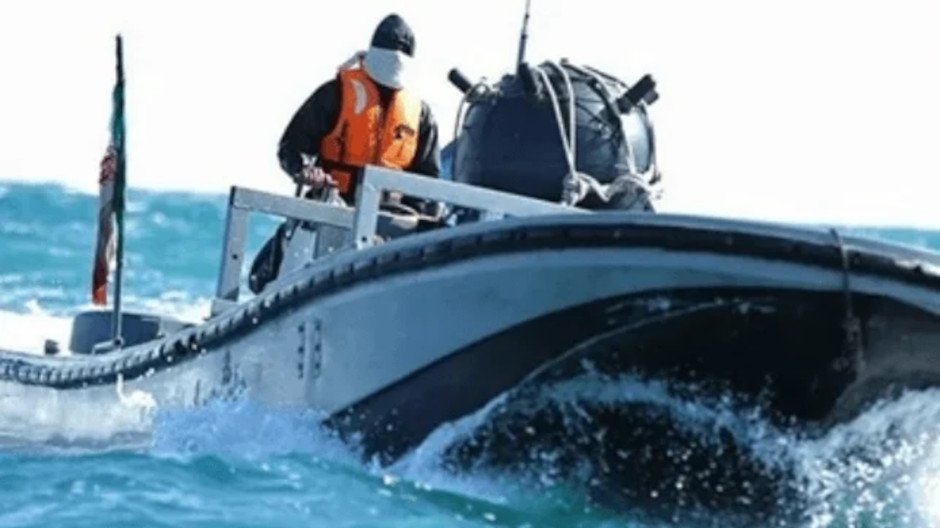
A person in an orange life jacket operates a small boat on choppy blue waters, with a flag visible in the background.

A person in an orange life jacket operates a small boat on choppy blue waters, with a flag visible in the background.
Iran can lay naval mines using small boats, including speedboats, which are difficult for the U.S. Navy to detect and counter. Photo courtesy of H. I. Sutton / Covert Shores (hisutton.com).


Iran’s military declared on April 18 that the Strait of Hormuz had returned to closed status, reversing a brief opening announced the day before after Trump confirmed the U.S. naval blockade of Iranian ports would remain in place. The UK Maritime Trade Operations center confirmed that IRGC gunboats opened fire on a tanker transiting the strait on April 19, describing the vessel and crew as safe.

At least two additional vessels came under fire during the same period. Iran’s parliamentary speaker and chief negotiator Mohammad Bagher Ghalibaf stated on Iranian state television: “It is impossible for others to pass through the Strait of Hormuz while we cannot.”

Understanding the current threat requires distinguishing between two separate Iranian naval forces. Iran’s conventional navy, the Islamic Republic of Iran Navy, known as IRIN,  has sustained severe losses and is assessed by U.S. officials as largely combat-ineffective.

The force actually controlling the strait is the IRGC Navy, a separate organization with different doctrine, equipment, and command structure. CENTCOM reported more than 155 Iranian vessels damaged or destroyed, but U.S. public statements did not consistently specify which navy those losses came from. The Soufan Center assessed that the strait closure was accomplished primarily by IRGC fast-attack craft using direct fire against tankers, without requiring missiles or drones, and that this represented Iran’s most effective strategic tool, causing global shipping companies to anchor vessels and refuse transit rather than risk attack.

The Wall Street Journal, cited by the Times of Israel and Roya News, reported that more than 60 percent of IRGC fast-attack boats remain intact. Former Pentagon official David de Roches, quoted in that reporting, stated that smaller vessels are significantly harder to detect using satellite surveillance than conventional warships. Jane’s defense reference, one of the most authoritative open-source defense databases, identifies the IRGC Navy as the most prominent practitioner of small boat swarm tactics combining speed, mass, coordinated maneuver, and low radar signature, though this characterization was accessed through secondary sourcing rather than directly from Jane’s.

That low radar signature is structural. Fiberglass-hulled small boats operating at sea level return a radar cross-section comparable to wave clutter, making them difficult to distinguish from the sea surface in waters where hundreds of legitimate small craft operate daily.

The engagement window problem compounds the detection challenge. By the time a boat emerges from a concealed coastal position, closes on a vessel, and fires, the time available for a defensive response is extremely short.

CENTCOM has acknowledged both threat categories as distinct and persistent. In response, it has deployed A-10 Thunderbolt II jets specifically against fast-attack watercraft and AH-64 Apache gunships specifically against one-way attack drones.

The pre-war size of the IRGC small boat fleet is genuinely unknown and the figures in circulation vary dramatically. The one verifiable Western data point is a 2007 U.S. Office of Naval Intelligence estimate of 1,000 IRGC speedboats, described at the time as a growing fleet. Figures ranging from 3,000 to 5,000 vessels attributed to 2020 reporting appear only in Wikipedia’s IRGC Navy article without a traceable citation and may be the result of iRGC propaganda efforts.

Similarly, figures of 33,000 Basij Navy boats and 55,000 Basij sailors exist only in that same Wikipedia article with no sourcing. A 2024 research note by France’s Foundation for Strategic Research, drawing on 2019 U.S. Navy intelligence data, listed the IRGC fleet as consisting primarily of MK13, Peykaap I/II/III, and Ashoora coastal patrol boats without providing a total vessel count, and stated explicitly that the exact number of vessels is not publicly known.

One Iranian news outlet claimed at least 1,500 speedboats of specific named classes in 2022, but Iranian open-source figures cannot be independently verified. A Basij parade in November 2020 reportedly featured around 1,000 boats, but that figure came from Al Manar TV, a Hezbollah-affiliated outlet. Farzin Nadimi, among the most cited Western specialists on the IRGC Navy, declined to provide a specific number.

The reliable working range from credible Western sources is therefore several hundred to several thousand fast boats, with the pre-war baseline genuinely unknown. Furthermore, there is no clearly defined, quantified, and verified number for the boats destroyed since the beginning of the conflict.

Some media have claimed that roughly half of Iran’s naval capabilities remain intact. However, the baseline was never defined. If the IRGC small-boat pool numbered in the thousands before the conflict, CENTCOM claims of destroying 155 total Iranian vessels across both navies would represent only a small fraction of that pool, not half.

If the “half” claim refers only to formally classified IRGC warships, which numbered roughly 50 named craft, including 10 Houdong missile boats, 25 Peykaap II missile boats, five C-14 boats, and ten MK13 boats as of June 2025 reporting, then CENTCOM strikes may have destroyed close to all of them. Media framing appears to conflate these two distinct categories.

The practical conclusion is that Iran’s formal naval warfighting capacity is largely gone, while its capacity to deploy armed speedboats against tankers, drawn from a pool of uncertain but substantial size, has not been meaningfully degraded.

On missiles and drones, DIA director Lt. Gen. James Adams told Congress in a written statement submitted to the House Armed Services Committee that Iran retains thousands of missiles and one-way attack drones, that the remaining systems can threaten U.S. and partner forces throughout the region despite degradations, and that Iran poses a persistent threat to freedom of navigation in the Persian Gulf, Strait of Hormuz, and Gulf of Oman.

Approximately half of Iran’s roughly 470 pre-war ballistic missile launchers are assessed as intact, with around 200 destroyed and 80 rendered non-operational. Underground tunnel and cave networks built over decades have been the primary reason launchers have survived. Mobile platforms that fire and relocate have compounded targeting, a problem U.S. forces encountered similarly with Houthi forces in Yemen.

The Shahed-136 one-way attack drone presents a separate problem. It is cheap, produced in simple factories, and requires no complex launcher. Despite a slow airspeed that makes it theoretically vulnerable to helicopter interception, many have penetrated U.S. and Gulf air defense systems throughout the conflict. As one analyst cited by Al Jazeera put it, maintaining a credible threat matters more than launch volume.

IRGC Aerospace Force commander Brig. Gen. Seyed Majid Mousavi stated on Iranian state media during the ceasefire that Iran had repaired missiles and drone launchers and that the speed of replenishment exceeded the pre-war rate. Iranian state television broadcast footage of missiles and drones in warehouses alongside mobile launch activity. These are Iranian government claims and carry the caveat that Tehran has incentives to overstate recovery.

On mines, the evidence is contested and the public record is contradictory. At a mid-March Pentagon briefing, Joint Chiefs Chairman Gen. Dan Caine stated that missiles, not mines, were the primary threat to merchant shipping, and that the U.S. had seen no mine-laying activity by unmanned surface vessels in the Gulf. Defense Secretary Hegseth stated there was no clear evidence Iran was mining the strait, and that no ships had struck mines.

CNN reported in early March, citing unnamed intelligence sources, that Iran had begun laying a few dozen mines. The New York Times reported, citing senior U.S. officials, that the IRGC mined the strait chaotically using small boats in the immediate aftermath of the February 28 strikes, without a clear command chain or recorded coordinates, meaning Iran subsequently could not locate all mines it had placed and lacked the capacity to remove them. The IRGC’s navigation notice to mariners stated there was a “likelihood of the presence of various types of anti-ship mines in the main traffic zone.” U.S. officials later said fewer than ten mines had been laid.

Mine-clearing operations began April 11 with USS Frank E. Petersen and USS Michael Murphy transiting the strait. USNI News, which tracked the conflict’s maritime incidents throughout, reported that there had been no confirmed instance of any vessel striking a mine, with the 29 vessels hit by Iranian projectiles all attributed to missiles, drones, or direct gunfire.

Iran’s choice to use projectiles rather than rely primarily on mines reflects a strategic calculation noted by analysts at the American Enterprise Institute’s Critical Threats Project: projectiles allow Tehran to selectively permit or deny passage, whereas indiscriminate mining would endanger Iranian-approved ships and Chinese vessels, undermining the political and economic leverage the strait closure is designed to create.

The post Strait of Hormuz: Why Iran’s Small Speed Boats Are Difficult to Defend Against appeared first on The Gateway Pundit.

Artemis II Commander Shares Incredible iPhone Footage of Earth Disappearing Behind The Moon (VIDEO)

Earth rising over the lunar surface, showcasing the textured moon landscape against a dark space backdrop.

Earth rising over the lunar surface, showcasing the textured moon landscape against a dark space backdrop.
Screenshot of the iPhone footage taken by Artemis II commander Reid Wiseman from behind the moon.

Artemis II commander Reid Wiseman has released video showing the Earth disappearing from view as the crew traveled around the Moon.

In a post on X, Wiseman said he “could barely see the Moon through the docking hatch window,” adding that the iPhone was “the perfect size to catch the view.”

“Only one chance in this time,” Wiseman wrote. “Like watching sunset at the beach from the most foreign seat in the cosmos, I couldn’t resist a cell phone video of Earthset.”

“I could barely see the Moon through the docking hatch window but the iPhone was the perfect size to catch the view,” he continued.

“This is uncropped, uncut with 8x zoom which is quite comparable to the view of the human eye. Enjoy.”

The footage comes after Wiseman and the Artemis II crew returned to Earth earlier this month following their mission around the Moon, splashing down in the Pacific Ocean.

Wiseman previously said the experience left a lasting emotional impact.

“I’m not really a religious person, but there was just no other avenue for me to explain anything or to experience anything, so I just asked for the Navy chaplain to come visit us for a minute,” he said.

“When that man walked in — I’d never met him before in my life, but I saw the cross on his collar, and I just broke down in tears. It’s very hard to fully grasp what we just went through.”

The post Artemis II Commander Shares Incredible iPhone Footage of Earth Disappearing Behind The Moon (VIDEO) appeared first on The Gateway Pundit.

Christian in Egypt Faces Terrorism Charges for Simply Declaring His Faith in Jesus in Legal Docs: Report

Person's hands clasped in contemplation or prayer, illuminated by soft light in a dimly lit room.

Person's hands clasped in contemplation or prayer, illuminated by soft light in a dimly lit room.

A Christian convert in Egypt faces a trial over his attempt to change his legal documents to reflect his newfound faith.

Said Abdelrazek, who turned from Islam to Christianity, has been accused of terrorism merely for trying to amend the papers, according to a report from International Christian Concern.

The ministry noted that Abdelrazek will therefore face proceedings before the First Criminal Terrorism Circuit in Badr — a court that is notorious for disappearing convicts and practicing other “opaque proceedings” — on April 21.

“The Badr court complex, where Abdelrazek’s hearing will take place, has drawn increasing concern from international observers,” International Christian Concern warned.

“Critics argue that its terrorism circuits operate with minimal transparency and routinely deny defendants basic legal protections.”

Other prisoners have indeed faced extended pretrial detention and minimal access to attorneys.

Egyptian law requires all citizens to display their religion on their legal documents — with only Islam, Christianity, and Judaism being officially recognized.

Roughly 90 percent of citizens are Sunni Muslims, while 10 percent are Christians — with the vast majority of them belonging to the Coptic Orthodox Church, according to a 2023 report from the U.S. State Department.

International Christian Concern said that converting from Islam is not technically a crime in Egypt, but is still heavily discouraged.

The ministry said that “advocates and family members” of Abdelrazek “describe the case as emblematic of the risks faced by religious converts in Egypt, where apostasy — leaving Islam for another faith — is not formally codified as a crime but is often prosecuted under broadly defined security charges.”

Open Doors noted that although Egypt’s Christian community has endured for millennia, believers in the nation face and a constant threat of persecution.

Even when the government allows Christians to operate more freely, Muslim citizens impose their own pressures.

“In Egypt, most persecution happens at the community level, such as harassment of Christian women or mobs expelling Christians after alleged blasphemy. These kinds of incidents are a particular problem when Islamic extremists are present,” the group noted.

Christians in rural areas also face heightened targeting by their neighbors.

But the persecution is indeed most severe when a former Muslim converts to Christianity.

This article appeared originally on The Western Journal.

The post Christian in Egypt Faces Terrorism Charges for Simply Declaring His Faith in Jesus in Legal Docs: Report appeared first on The Gateway Pundit.

Illegal Moroccan Migrants Are Hiding and Abandoning Parks and Plazas Across Madrid and Other Major Spanish Cities

People gathered in a public square under a large tree, with scaffolding visible on a nearby building and pigeons scattered on the ground.

People gathered in a public square under a large tree, with scaffolding visible on a nearby building and pigeons scattered on the ground.

This is a Gateway Hispanic article.

The post Illegal Moroccan Migrants Are Hiding and Abandoning Parks and Plazas Across Madrid and Other Major Spanish Cities appeared first on The Gateway Pundit.

MAGA’s Dead. What’s Next?

MAGA’s Dead. What’s Next?

True liberalism is a right-wing ideology.

Screen Shot 2023-10-27 at 1.44.52 PM

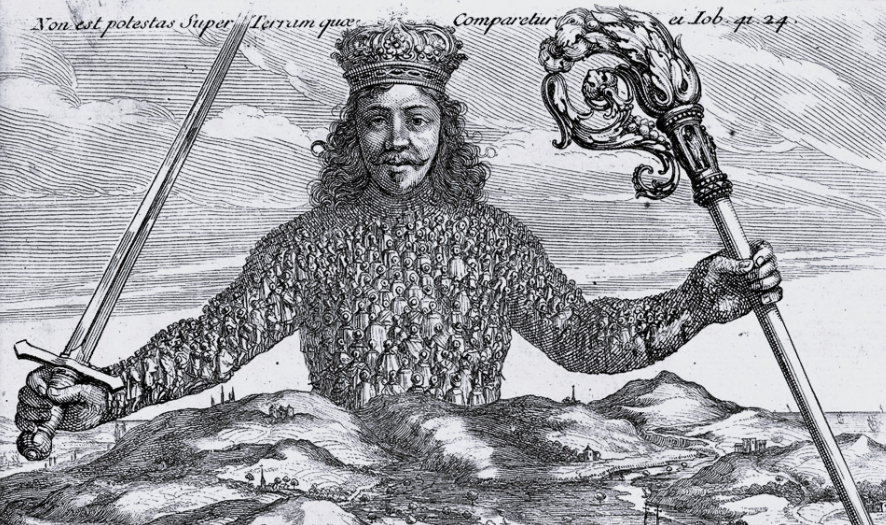
Credit: Abraham Bosse

MAGA died, the Iran war killed it, and a resurrection isn’t likely. 

So argues Christopher Caldwell, a titan of intellectual conservatism, in a recent piece on Donald Trump for the Spectator. “The attack on Iran is so wildly inconsistent with the wishes of his own base, so diametrically opposed to their reading of the national interest, that it is likely to mark the end of Trumpism as a project,” Caldwell writes. I’ve argued much the same in The American Conservative.

Replying to such critiques, the Trump administration has brandished polls showing that 100 percent of MAGA-identified voters still approve of the president and around 85 percent of them support the war, but this riposte is less devastating than it may appear. That MAGA voters approve of Trump is tautological. The question is whether MAGA “as a project,” in Caldwell’s words, can again cobble together the kind of coalition needed to win national elections. 

Looking at Trump’s approval ratings, the answer, increasingly, seems to be no. If you’d like to argue otherwise, I’d be happy to read, but this essay stipulates the death of MAGA and considers a different question: What’s next? The conservative-populist movement that Trump summoned has dominated the American right for a decade, but when he leaves office three years hence, either something new will take its place or a period of incoherence will commence. 

Right-wingers in recent years have propounded several alternatives: Catholic “integralism,” which seems unable to garner much support in our secular, erstwhile Protestant nation; “post-liberalism,” an empty signifier and mere negation; white nationalism, a dead end; CEO-style monarchism, which Trumpism has in effect only further delegitimized (hence the “No Kings” protests); and so on.

This essay proposes and adumbrates a different ideology, which I believe could not only glue together a winning coalition but also guide responsible governance: right-liberalism.

Please don’t puke on the pages of this august publication just yet. To be sure, “right-liberalism” normally signifies some wishy-washy form of moderate conservatism—what the author Sohrab Ahmari termed “David French-ism” after the crypto-liberal “conservative” columnist. But I have in mind something more authentically right-wing. (Some other term may be needed in public discourse, though “right-liberalism” works best for this essay.)

The raison d’etre of liberalism is individual liberty; of the right, community, tradition, and authority. There would seem, then, to be a tension at the heart of any right-wing liberalism. But it’s a tension familiar to everyone. We are all, at once, both individuals and members of groups, and this duality entails a life-long negotiation of our desires and duties. One advantage of right-liberalism is that it provides a framework for dealing with this tension.

Both right- and left-liberalism value individual liberty. But they differ markedly in their understandings of how it is achieved. For left-liberals, liberty is a natural property of individuals, and the trappings of artifice are its obstacles. This ideology legitimizes a politics of progressive reform, chipping away at hierarchies, laws, and other purported constraints on liberty—if not outright revolution, burning everything down to “emancipate” the individual. 

Right-liberals take a different, less adolescent view. They maintain that liberty, wherever it endures, is sheltered by the social and political order in which it is found. And they deduce that preserving liberty requires sustaining this order. 

Consider, briefly, lessons from three leading lights of the Western canon, all of whom have captured the imagination of rightists and liberals alike: Hobbes, Hegel, and Nietzsche. If that sounds like a snooze-fest, then you can skip to the final section; there I’ll apply those lessons, laying out a right-liberal approach to navigating left-liberal hegemony, winning elections, and governing the country in our coming post-MAGA age.

Political Theory

Readers of Thomas Hobbes encounter a paradox. The 17th-century English political theorist seems to have been both an arch-royalist and a liberal avant la lettre. 

According to Hobbes, free individuals enter into a social contract to erect a state that will protect their rights. So far, so liberal. But the product of their voluntary action is an absolute sovereign who acknowledges no limits on his right to rule over them. Immanuel Kant, the preeminent liberal political theorist, condemned Hobbes’s “quite terrifying” idea that “the head of state has no contractual obligations towards the people; he can do no injustice to a citizen, but may act towards him as he pleases.”

Something, liberals agree, has gone awry in Hobbes’s theory.

In recent decades, scholars have tried to split the difference between Hobbes’s absolutism and his liberalism. J​​ürgen Habermas agreed with Leo Strauss that Hobbes founded liberalism, but he detected that Hobbes also sacrificed “the liberal content of natural right” to the state. Alan Ryan drew something like the opposite conclusion, writing that “it would be absurd to call Hobbes a liberal even while one might want to acknowledge that he supplied many of the ingredients for a liberal theory of politics.” 

Many scholars, to sidestep the awkwardness of granting a radical monarchist the title of liberalism’s founder, have instead given that honor to a compatriot and near contemporary of Hobbes whom he deeply influenced: John Locke.

Contra these great thinkers, I think that there is no difference to split, that the seeming paradox of Hobbes’s ultra-right-wing liberalism is just that: seeming. For Hobbes both crafted a novel and “negative” concept of liberty as absence of impediments—the cornerstone of liberal theory—and discerned that, outside an overarching structure of political constraints, liberty eats itself. More prosaically, Hobbes believed that human predators exploit the absence of laws and state power to terrorize—and tyrannize—other community members.

The implications of this reading are profound: Liberalism, in its origins, is a right-wing ideology—with roots deeper than even so-called classical liberalism. 

In addition to discerning the necessity of state power for safeguarding what he termed the “true liberty of subjects,” Hobbes also recognized, more perceptively still, that the romanticization of “natural” liberty motivated civil subjects to tear away at the state. Political elites, resenting the sovereign and concocting schemes to grow their own power, were often happy to spur such rebellion along.

Other political theorists have deepened the right-liberal conception of liberty. For them, liberty doesn’t merely find shelter in the social and political order but is in some way constituted by it. Some such thinkers depict even the autonomous individual himself as an artifact of history, elevated out of his tribal beginnings by a long, tumultuous process that seems to have sought him as a goal. G.W.F. Hegel is the canonical figure most associated with this view.

Early in the Elements of the Philosophy of Right (1820), Hegel distinguishes between “concept” and what he calls “Idea.” A concept is an abstract formal structure, an Idea the instantiation of a concept in reality, and Hegel announces he is dealing with Ideas. To use an example that resonates with Hobbesian thinking, the political order of police, courts, and prisons may seem, to the left-liberal, like the antithesis of liberty. But the right-liberal knows that such an order is what the concept of liberty looks like in practice. (So don’t “defund the police” just yet!)

If history fashioned the free individual, then society must reproduce him each generation. Hegel saw a vital role in that process for family, civil society, and the state. Absent the shaping influence of strong families, no human being can develop into a full person whose choices are meaningful. Outside of civil society, where markets hold sway, no person can exercise freedom in pursuit of his self-interest. And without a state, no civil society can survive for long, and the individual cannot attain, as a citizen, the rights and duties that consummate his liberty.

Like Hobbes, Hegel was deeply suspicious of revolutionaries. Their “negative spirit,” Hegel believed, grew out of a confusion between Ideas and concepts and led them to destroy actual liberty in the mad pursuit of its “universal” abstraction. “Universal freedom can thus produce neither a positive achievement nor a deed,” Hegel wrote in the Phenomenology of Spirit (1807). “There is left for it only negative action; it is merely the rage and fury of destruction.”

Friedrich Nietzsche, our last right-liberal political theorist, shared with Hobbes and Hegel a distrust of this negative spirit, which he termed ressentiment. And he repudiated those who believe it leads to justice, rather than anarchy. Admittedly, he may have gone too far in his critique. Nietzsche held that morality itself, at least as we have known it, merely expresses the will-to-power of the weak and resentful. He thus championed a “transvaluation of all values” to reassert nobility and joie de vivre and to put equality and pity back in their (lowly) place.

To that end, Nietzsche saw fit to adopt a ruthlessly “critical” orientation toward the negative spirit of modern Europe. Or as he phrased it: to say No to the “No-saying spirit” and thereby say Yes to life. This radical edge of right-liberalism may come in handy whenever conservatism, as a temperament rooted in gratitude, proves insufficient to address social-political problems that are dauntingly comprehensive. In other words, this radical edge can come in handy today.

How about Nietzsche’s theory of liberty, then? Nietzsche was a much less systematic theoretician than either Hobbes or Hegel, but his understanding of liberty dovetails nicely with theirs. Like Hegel, Nietzsche understood the autonomous individual in historical terms. In On the Genealogy of Morality (1887), he writes:

If we place ourselves at the end of this tremendous process, where the tree at last brings forth fruit, where society and the morality of custom at last reveal what they have simply been the means to: then we discover that the ripest fruit is the sovereign individual, like only to himself.

And, like Hobbes, Nietzsche recognized the necessity of bashing the head of the lawbreaker who has shattered the social contract, of throwing him “back again into the savage and outlaw state against which he has hitherto been protected.” That sounds like Hobbes’s “state of nature” to me.

Thus, Hobbes, Hegel, and Nietzsche—three thinkers not often grouped together— share two views central to right-liberalism. They recognize the social and political character of true liberty, and they discern that the negative spirit threatens the very order that produces liberty. 

They share something else as well: an aversion to democracy, equality, and mass movements. Caldwell says, in his essay, that “Trumpism was a movement of democratic restoration.” Right-liberalism, by contrast, would be a movement of restoring liberty, properly understood. For that reason, it would be less populist than Trumpism, which is to say, its elitism wouldn’t hide behind the pretense that some rapacious strongman represents “the people” against the establishment.

Real Politics

Okay, enough with the egghead theorizing. I’ve sketched out a theoretical basis for right-liberal ideology. But what’s it all about, Alfie?

One advantage of right-liberalism is that it enables the right to dispense with the false hope that Americans are ready for post-liberalism. America is the citadel of Western liberalism, so getting Americans to reject that ideology in toto seems nigh impossible. Young people and educated elites are enamored by liberal ideals, and we should lure them, where possible, to the right. Even MAGA conservatives supported Trump in large part because of his promise to restore free speech, a crowning achievement of liberalism.

Better, then, to urge a rejection of left-liberalism in all its progressive and revolutionary guises. The political benefits of doing so go beyond cultural appeal. 

For while Trump has interrupted the ideological and cultural hegemony of left-liberalism, we should expect its resumption in the coming years. Worse, left-liberalism can turn tyrannical when its adherents gain power. A state controlled by left-liberals and guided by their ressentiment can be a very dangerous thing. Right-wingers will need to bolster the barrier separating the state from the individual, the family, and civil society. That barrier is the product of liberalism as it has evolved since Hobbes, and now is no time to erode it.

One reason for the tyrannical potential of left-liberalism is, paradoxically, its dual commitment to liberty and equality, both of which it construes as natural conditions unjustly abolished by “structures of oppression.” Left-liberals are perennially tempted to use state power to dismantle those structures, e.g., “systemic racism,” and you can be sure they’ll slip back into a destructive mood by the time Trump leaves the White House (though at least they might repair the half-demolished White House itself).

Moreover, liberty and equality make for an uneasy pairing, and left-liberals downplay one and promote the other as expedience demands. Thus, election results are annulled for producing illiberal outcomes, as has happened in Romania and as American liberals had hoped the Russiagate hoax would achieve, and rights are sacrificed to the mob, as when police tolerated the destruction of property during the Black Lives Matter riots in 2020.

Right-liberalism, by contrast, unambiguously favors liberty over equality, even as it inherently circumscribes liberty for the sake of preserving the ethical order within which it has been achieved. Thus, while right-liberals are committed to free speech, they see no problem with bans on pornography or even regulations of titillating imagery in public spaces.

Americans shouldn’t shy away from such uses of state power. The First Amendment was intended to protect political speech, and it’s a testament to the perversions of left-liberalism that it hallucinates a “right” to pornography while undermining our Constitutional right to express controversial opinions, as occurred during the Covid pandemic. Most Americans deem the consumption of pornography to be immoral but cherish the right to express unpopular views, so the right-liberal perspective on this issue could prove a popular one.

Similarly, most Americans value the freedom to move through public spaces without fear of the human predators in our midst, and they blanch at calls by left-liberals like Zohran Mamdani, the new mayor of New York City, to end the “carceral state.” Even New Yorkers, among America’s most devoted liberals, reliably punish mayors who fail to uphold public safety. That’s because law and order is popular and Americans intuitively grasp its compatibility with liberty.

Immigration restriction could be another political winner for right-liberals, for whom the “individual” is an empty abstraction unless he comes into being in a particular cultural context. Armed with this understanding of human nature, right-liberals should seek to preserve the American nation as an historic people and, to that end, restrict the mass influx of outsiders who threaten social cohesion.

Trump proved that a presidential candidate can win, and even attract Hispanic voters, on a platform of ending illegal immigration. But after high-profile, aggressive deportation moves—including a surge of immigration officers into Minneapolis—Trump has lost support on the issue. In my opinion, the White House’s strategy has been driven by the ressentiment of the top Trump advisor Stephen Miller, a manifestly hateful man, who seems more enthusiastic about afflicting foreigners and triggering Democrats than solving the immigration crisis.

A right-liberal immigration program would look different. MAGA’s commitment to democratic restoration entails fierce opposition to the “administrative state.” Right-liberals do not share MAGA’s aversion to the instruments of technocracy, which would include, in the case of immigration policy, taxing remittances, withholding welfare from illegal aliens if not all non-citizens, and compelling employers to verify the legal status of workers. This program would work better than splashy deportations and yield fewer sob stories for the media to harp on.

Right-liberals should bring a technocratic mindset to economic policy as well. Like Trump, they recognize the importance of domestic manufacturing and want the government to support it. America should not be dependent on hostile countries for critical supplies, and U.S. leaders should ensure that dignified, gainful work is available to family breadwinners. 

But unlike Trump, right-liberals understand markets and the economy as being, though locally embedded, abstract entities whose inherent rationality arises from the voluntary actions of buyers and sellers. And they eschew the personalistic and, frankly, corrupt approach to economics that the president instinctively practices. 

For example, Trump’s reckless tariff policy has generated significant uncertainty in the global economy, and it seems designed less to shore up U.S. manufacturing than to gain leverage for the president over world leaders and American CEOs. Right-liberal protectionism would look more like the Tariff Act of 1789—the first major legislation passed by the U.S. Congress—which set levies on most imported goods at a modest rate of 5 percent. Such a policy fits within a right-liberal model of patriotic capitalism.

On foreign affairs, right-liberals are America First but don’t see international laws, norms, and organizations as inherently corrosive to American interests. In the discipline of international relations, the school of thought called “liberalism,” pace common misunderstanding, endorses neither world government nor foreign interventions to spread democracy. Rather, it takes a broadly realist view of states as rational actors pursuing their interests, but emphasizes that institutions can facilitate mutually beneficial cooperation between them.

Trump, with his pathologically zero-sum thinking about all human interaction, has done significant damage to world order. He has ripped up arms control agreements that had stabilized relations with adversaries. He has weaponized economic interdependence against allies. And rather than avoiding unnecessary wars, as he had promised to do, he has used force and belligerent threats with little regard for second-order effects, ushering in a dangerous era of Machtpolitik.

Of course, right-liberalism doesn’t settle all political disputes, but it does provide a framework for thinking them through. For example, some right-liberals may take a live-and-let-live attitude toward homosexuality, which is where I stand on the matter. But others may oppose the debauchery of gay pride parades and believe that opening marriage to gay couples has compromised the essence of that ancient family institution.

As for the trans phenomenon, right-liberals can see that it arises from a negative spirit directed against the felt constraints of one’s own biology. A trans-identified person is acutely beset by the same general confusions about liberty that plague most Westerners today. Right-liberals would encourage young people to “become who they are,” as Nietzsche might put it, rather than hand them a dizzying list of genders to choose from. On this and other subjects, right-liberalism aligns with MAGA ideology but anchors a more nuanced understanding.

Without question, Trump has assembled one of the most impressive right-wing movements in history, but that movement has unraveled due to the war with Iran. The American right should prepare now to build something new upon the ground that Trump has cleared. Right-liberalism, I submit, or whatever we may want to call it, represents the best project to pursue.

The post MAGA’s Dead. What’s Next? appeared first on The American Conservative.

The Strait, Not the Nuclear Program, Is the Sticking Point With Iran 

The Strait, Not the Nuclear Program, Is the Sticking Point With Iran 

Freedom of navigation is the real bone of contention.

National Army Day March In Tehran As Ceasefire With US Continues
(Photo by Majid Saeedi/Getty Images)

Why is it so important for the U.S. to take and retain control of the Strait of Hormuz? No matter what else, why is this the only real nonnegotiable with Iran?

At first glance the nonnegotiable seems to be Iran’s nuclear program. This raises the question of what might be left of the program after massive bombing by the U.S. and Israel. The media makes much of the fact that some enriched uranium is supposedly still buried under one of the ruined sites, and of course no one should simply write off radioactive material in the hands of an adversary. But the more immediate concern is not what remnants of Iran’s nuclear program survived, but how easily any reconstruction effort could be detected from space and struck from a distance. That reality makes the nuclear issue containable. The genie is out of the bottle on bombing inside Iran, so any nascent efforts to reconstruct a nuclear program can be destroyed by the U.S. and Israel with little political fallout. It would be better if none of that had to happen, but it easily could, because agreement or no agreement, Iran does not have to play fair.

Understanding what the U.S. is really negotiating with Iran—the shifting of the balance of power in the Middle East—points to the one truly nonnegotiable term: the Strait of Hormuz. The Strait of Hormuz is an international waterway that must be open to shipping, free of violence, and free of tolls.

Granting control of the strait to Iran would set a catastrophic precedent. Would Houthi militants then try for formal control at the mouth of the Red Sea? What if Malaysia, Thailand, Indonesia, China or any of the other nation-states in the region lay claim to the Strait of Malacca? Never mind the Persian Gulf; over 94,000 vessels a year pass through the Strait of Malacca, making it the busiest strait in the world. It carries about 25 percent of the world’s traded goods, including oil, and Chinese manufactured products. For decades China has referred to the “Malacca Dilemma,” the fear that rivals could blockade this narrow, vital energy route, so it could be time to act. Just this week (coincidence?) China deployed ships to tighten control of the Scarborough Shoal in the South China Sea, roiling tension with the Philippines. And what about the Taiwan Strait, or any of the world’s other commercial chokepoints?

Since the days of the Barbary pirates, one of the core jobs of the United States Navy has been safeguarding global freedom of navigation, a principle that underpins international trade and economic stability. By maintaining a forward-deployed presence in key maritime chokepoints and with carrier groups in all oceans, the Navy ensures sea lanes remain open in accordance with international law. No one nation comes close to being able to play such a role. European sea power has not been able to do so since the collapse of the British Empire, and China still lacks the global blue-water navy and extensive world-wide base network to try.

At present China is willing to benefit from this stable maritime order without contributing much to it. Yet a world where it appears the order is breaking down, such as if Iran remains in control of Hormuz, could press China to act. While China still lacks naval reach, it may already be capable of asserting control over regional chokepoints like the Strait of Malacca, especially if it concludes the existing maritime order is eroding. For its own self-interest (oil) China also could expand diplomacy and arms sales to the new toughest kid on the Gulf block, Iran. Elsewhere, the Gulf states and maybe even allied countries in East Asia will have to soften ties with the U.S. in recognition of the new regional power of Iran.

But we don’t need to cede control of the Strait of Hormuz. Forcing it open is a military objective for which the Pentagon has planned for decades, and has in some form already been done twice. The Trump White House will remember in 2019 the Islamic Revolutionary Guard threatened to close the strait. It sabotaged four oil tankers in the United Arab Emirates and damaged two others with mines. But in the end Iran backed away from the fight. It could not afford a potential blockade of its oil exports along the lines of Venezuela. The U.S. can blockade the Strait at low cost in the Arabian Sea, away from Iranian interference. Iran also knows while it could harass and frighten, it can not seal the strait to all traffic in the face of a massive U.S. Navy deployment. This would morph from asymmetrical warfare Iran could execute, to peer-to-peer fighting, which if the U.S. was willing to escalate to, Iran could not survive.

Even more instructive is the Iran–Iraq “Tanker War.” Between 1984 and 1988, oil tankers and merchant vessels became targets for Iran in a campaign designed not to defeat an enemy navy but to strangle the Iraqi economy. After an unsuccessful gambit to reflag Kuwaiti tankers as American to warn off the Iranians, a change in American tactics neutralized the Iranian threat. The United States shifted from escorting tankers to confronting Iranian forces directly. The turning point came in April 1988, after a U.S. frigate struck a mine in the Gulf. The ship survived, but the incident triggered a massive American retaliation. In Operation Praying Mantis, U.S. helicopters disabled an Iranian ship laying mines, and sank three other Iranian boats. Navy warships shelled Revolutionary Guard bases and Iranian oil platforms. SEALs destroyed a platform as well. Navy and Marine elements would go on to selectively destroy multiple targets. The 31st Marine Expeditionary Unit (MEU) now in the Gulf would be able to carry out a similar strategy.

Having gone this far, the U.S. may need to go further. This power struggle between Washington and Tehran has been going on for a long time. This most recent round follows an emboldened Iran who watched the United States destroy or greatly weaken its two major enemies, Iraq and the Taliban, clearing both Iran’s eastern and western borders at no cost to Tehran. The American public went on to lose its taste for war, and Iran’s nukes fell off Washington’s once-sweeping martial agenda in the Middle East. Iraq became an Iranian subjugate even as Iran expanded its proxy fighting in Lebanon, knowing the U.S. had had enough.

It would be strategically devastating at this point for America to follow the regional empowerment of Iran through its failures in Iraq and Afghanistan by handing over a global lever of control. This regional, multi-generational power struggle is not a problem that will be solved in a single negotiation or a single conflict. But one principle must remain constant: The Strait of Hormuz cannot become a bargaining chip. If it does, the consequences will extend far beyond the Middle East, reshaping the global order in ways the United States may not be able to reverse.

Old sayings resonate in the Middle East. “The rug is never sold” reminds marketplace negotiators that no deal is ever final; there is always more to extract. That is useful context if U.S. officials sit down again with the Iranians for another bite at the apple. But amid the expected give-and-take, one issue must remain nonnegotiable: keep the Strait of Hormuz open.

The post The Strait, Not the Nuclear Program, Is the Sticking Point With Iran  appeared first on The American Conservative.