LIBERAL INSANITY: Mentally Ill Woman Released by Nebraska Courts Kidnaps and Slashes 3-Year-Old Boy in the Fa at Walmart Before Hero Cops Shoot Her

Police officer aiming a firearm at a woman in a parking lot while a child sits in a shopping cart nearby, capturing a tense moment.

Thank God for brave law enforcement officers.

Two Omaha police officers heroically saved a 3-year-old boy named Cyler on Tuesday morning by fatally shooting a violent, knife-wielding woman who had just abducted the young child from his caretaker inside a Walmart store and then slashed him across the face and head with a stolen butcher knife.

The suspect, 31-year-old who , is dead after officers had no choice but to open fire when she refused repeated commands to drop the weapon and began viciously attacking the defenseless child in the parking lot.

Police say Guzman forced the child’s guardian through the store and into the parking lot at knifepoint, effectively kidnapping the toddler in broad daylight.

When officers arrived, they were confronted with a rapidly escalating crisis.

Despite repeated commands to drop the weapon, Guzman refused, and then, in a shocking act of violence, slashed the young boy across the face.

That’s when officers acted. They opened fire, striking Guzman and ending the threat on the spot.

A person points a gun at a woman and child in a shopping cart, capturing a tense moment in a parking lot.
Credit: Omaha Police Department

According to the Omaha Police Department:

The Omaha Police Department’s Officer-Involved Investigations Team is investigating an incident that occurred Tuesday morning leaving one woman dead and a child injured.

Uniform Patrol Bureau officers responded to Wal-Mart at 1606 S 72nd Street for a “nature unknown” emergency call at 9:13 a.m. Initial information provided to 911 was from a female caller requesting police assistance. This female stopped providing information to the call taker. An additional 911 caller indicated there was a woman armed with a “large kitchen knife” with a young child.

A two-officer patrol unit arrived at the location where the officers immediately exited their cruiser to approach the armed woman, later identified as Noemi Guzman, 31, who was near the southern parking lot entry standing by a shopping cart with a 3-year-old boy inside. Ms. Guzman was making multiple threats with the knife.

Officers gave multiple verbal commands for Ms. Guzman to drop the knife. She refused to drop the weapon and cut the boy. The two patrol officers fired their service weapons striking Ms. Guzman.

The child’s guardian, along with a bystander, immediately removed the child from the cart and rendered aid to him. Officers began lifesaving measures on Ms. Guzman; however, she was pronounced dead at the scene.

The boy was taken to Children’s Hospital by Omaha Fire Department medics for treatment. The boy’s injuries are considered non-life threatening.

Investigators later determined through store surveillance footage that Ms. Guzman had shoplifted the knife from inside the store. She then approached the child and guardian in a shopping aisle, brandished the knife, and forced the guardian to walk ahead of the cart while the child remained inside.

Ms. Guzman directed them through the store and into the parking lot. Officers arrived shortly after Ms. Guzman, the guardian, and child exited the store and began walking east toward the parking lot entrance.

“The responding officers acted with professionalism and direct action to intervene and save a child’s life,” said Omaha Police Chief Todd Schmaderer. “The community can be reassured in knowing that Omaha police officers stand ready to act with courage and decisiveness in the most serious situations to protect the public.”

Omaha Mayor John W. Ewing Jr. thanked police for quick action that prevented a larger tragedy.

“I am grateful for the department’s professionalism and transparency,” he said.

The investigation remains ongoing. The Omaha Police Department Officer-Involved Investigations Team is being assisted by investigators from the Nebraska State Patrol, Douglas and Sarpy County Sheriff’s Offices.

A fundraising campaign was launched to help cover medical bills, therapy, and everyday expenses during Cyler’s recovery.

But as details emerge, this case is igniting outrage for another reason.

The suspect should never have been on the streets in the first place.

Records show that Guzman had a disturbing history of violent behavior, including allegedly attacking her own father with a knife, setting his home on fire, and breaking into a Catholic church rectory while a priest was barricaded inside.

Despite the severity of those crimes, Judge Russell Derr released her on a personal recognizance bond.

Following the initial release and subsequent legal proceedings, the court formally determined her mental state.

She was found not guilty (or not responsible) by reason of insanity for the felonies of assault, arson, burglary, and criminal mischief.

Instead of prison, a judge assigned her a community-based treatment plan in 2025, which included outpatient therapy and living with her family.

She was scheduled for an annual court review on June 12, 2026, to evaluate her progress, but this hearing was superseded by the fatal incident at the Omaha Walmart on April 14, 2026.

The post LIBERAL INSANITY: Mentally Ill Woman Released by Nebraska Courts Kidnaps and Slashes 3-Year-Old Boy in the Fa at Walmart Before Hero Cops Shoot Her appeared first on The Gateway Pundit.

Trump Feuds With Meloni Over Pope and Iran

U.S. President Donald Trump publicly rebuked Italian Prime Minister Giorgia Meloni on Tuesday, saying he was “shocked” by her refusal to join American and Israeli military operations against Iran.

“I thought she had courage, but I was wrong,” Trump told the Italian daily Corriere della Sera. “She’s unacceptable because she doesn’t mind that Iran has a nuclear weapon and would blow up Italy in two minutes if they had the chance.”

Trump said that he and Meloni had not spoken “in a long time” and accused Meloni of failing to support NATO efforts in the Strait of Hormuz, again describing the alliance as a “paper tiger.”

Meloni had announced the suspension of Italy’s defense cooperation deal with Israel on Tuesday, citing “the current situation.” (Israel described the instrument as a “memorandum of understanding from ‌many years ⁠ago that has never contained any substantive content.”) 

She had also criticized Trump for his feud with the pope. “I find President Trump’s words toward the Holy Father unacceptable,” she said in a statement on Monday. “The Pope is the head of the Catholic Church, and it is right and normal that he calls for peace and condemns every form of war.”

The post Trump Feuds With Meloni Over Pope and Iran appeared first on The American Conservative.

Four Catholic Priests Held HOSTAGE….

Four Catholic priests remain in the hands of Islamic militant groups in Nigeria as the country faces an escalating wave of violence against Christians. Over 7,000 Nigerian Christians were murdered by Islamic militants in 2025 alone, while thousands more were kidnapped for ransom or never seen again.

The Missing Priests

Father John Bako Shekwolo has been missing since 2019, kidnapped from the Archdiocese of Kaduna. Father Joseph Igweagu was taken in 2022 and has not been heard from since. Father Emmanuel Ezema remains in captivity with no confirmed release or proof of life. Most recently, Father Nathaniel Asuwaye was kidnapped on February 7, 2026, when gunmen raided his parish and residence in Karku, Kaduna State. His status remains unconfirmed.

Between 2015 and 2025, at least 145 Catholic priests were kidnapped and 11 killed in Nigeria. Kaduna was the deadliest state, with 24 priests abducted and seven killed. A communications director for one Nigerian diocese told Catholic News Agency that priests are easy targets because they are easily identified, generally unprotected, and their communities make extraordinary efforts to raise ransom. No priest comes out of captivity without ransom being paid, according to the source.

Epidemic of Abductions

Open Doors documented 2,830 Christians kidnapped in 2024. In the first seven months of 2025 alone, organizations recorded 7,800 Christians kidnapped, approximately 35 per day. The Observatory for Religious Freedom in Africa reported that over four years, the Fulani Ethnic Militia alone carried out over 21,000 abductions in the North-Central Zone and Southern Kaduna. In the Diocese of Minna alone, more than 90 churches have closed due to chronic insecurity.

Not all captives survive. Gunmen abducted four seminarians from Good Shepherd Seminary in Kaduna and released three, but killed 18-year-old Michael Nnadi after he refused to renounce his Christian faith. A man claiming responsibility later gave an interview stating he executed Nnadi because he would not stop proclaiming his faith in captivity.

What This Means

Violence in 2026 is already outpacing previous years, and with Nigerian general elections approaching, political tensions remain high. Federal and state intervention remains limited, and attacks continue on an almost daily basis across the North, East, and Middle Belt regions. The situation has been described by prominent voices as systematic persecution driven by Islamization and ethnic cleansing.

Sources

The Gateway Pundit: Kidnapped Priests and Christian Civilians Still Held by Islamists in Nigeria

Media Coverage of the War Has One Target: Trump

Media Coverage of the War Has One Target: Trump

The fourth estate is rooting against the president.

President Trump Returns To Washington From Florida On Sunday
(Photo by Roberto Schmidt/Getty Images)

Why does the U.S. mainstream media continue to mock America’s war efforts? Why does coverage of the Iran war appear to favor Iranian narratives?

Michelle Goldberg at the New York Times pulled no punches on where it thinks things stood just before the ceasefire: 

A slurring Trump rehashed a bunch of his Truth Social posts, alternately boasting about America’s military progress while threatening war crimes… He showed us that he has no plan to get out of the mess he created. One way to judge how the war is going is to look at which side is trying to wrap it up. U.S. intelligence agencies have assessed that “the Iranian government believes it is in a strong position in the war and does not have to accede to America’s diplomatic demands.”

Even after the ceasefire and plans to reopen the strait were announced, the Times could only sum up Trump’s power diplomacy as “the mark of an impulsive leader who is used to getting his way through coercion and unpredictability” and that he had “backed off.”

The Times goes on to review “American war crimes” and claims bombing only strengthened Iranian resolve. It concludes that “all we know is that he [Trump] has managed to give Iran the upper hand in this conflict while tanking the global economy and shredding America’s most important alliances.” Another headline claims the takeaway from the earlier rescue of the downed American airman was all of “Trump is Emboldened,” followed by “Trump Revels in Threats to Commit War Crimes in Iran” now that the missing airman is safe.

Another piece claims, “Iran has now demonstrated de facto control over much of the global economy. Its Parliament is considering whether to formalize the charging of fees for passage, and an Iranian official warned earlier on social media that the United States would not regain access to the strait.” The article goes on to place suffering on a scale of justice, expressing regret over the civilian deaths in Iran without mentioning those in Israel. It cryptically refers to “displaced millions” across the Gulf without indicating who they might be. It blames all these problems and more on Trump personally.

An op-ed headlined “Remember the Oil Shocks of the ’70s? This Is Going to Be Worse. Much Worse” depicts the global economy spiraling out of control by citing the cost of a gallon of gas. It fails to note the price for gas peaked at around $5 per gallon in June 2022 under the worst of the Biden inflation. Crude oil, varying between $88 a barrel and over $100, hit $116 in 2022 without the media writing in apocalyptic terms, never mind blaming one man. It has already dropped to $93 following the ceasefire.

The prize for most egregious telling of the Iran War story pre-ceasefire, however, goes to flagship Democratic journal Foreign Affairs, which features an article written by none other than Javad Zarif, the Islamic Republic’s former vice president, foreign minister, and UN representative. Zarif writes,

More than a month in, the Islamic Republic is clearly winning [the war]. American and Israeli forces have spent weeks incessantly bombing Iranian territory, killing thousands of people and damaging hundreds of buildings, all in hopes of toppling the country’s government. Yet Iran has held the line and successfully defended its interests. It has maintained continuity of leadership even as its top officials have been assassinated, and it has repeatedly hit back at its aggressors even as they strike at its military, civilian, and industrial facilities. The Americans and the Israelis who started the conflict with delusions of forcing capitulation thus find themselves in a quagmire without an exit strategy. The Iranians, by contrast, have pulled off a historic feat of resistance.

He concludes the U.S. must now effectively sue for peace with Tehran and remove the sanctions that have been in place for the 47 years, since Iran took over the American Embassy in Tehran and began an asymmetric war across the Gulf. If not, Zarif warns, there is “reason to continue fighting until the aggressors are adequately punished rather than to search for a negotiated ending.” A companion article by a former State Department official claims that “Tehran will now set the terms for peace.”

The dominant tone in high-visibility outlets frames Donald Trump’s decisions not just as controversial or risky, but as inherently unserious, worthy of ridicule, even dangerous. Late-night, top-tier op-eds, and even purported straight news analysis emphasize impulsiveness, strategic incoherence, or near-comedic personal motivations (the entire war is nothing but cover for the Epstein files!) behind decision-making. Thus every action is wrong, and every loss of American life, however tragic, is actually an exaggerated negative turning point. When a deadline is extended, it is seen as an example of weakness rather than a diplomatic tool. The troops, from the generals on down, once labeled by the media as the baby-killers of Vietnam, have morphed into a sort of victim themselves, forced to commit war crimes in a meaningless struggle.

Sen. John Fetterman (D-PA) accused the media of engaging in selective coverage that benefited Iran during the first 30 days of the war. “I read the entire political spectrum on Epic Fury. Iran now loves and learns from the media,” Fetterman said. “The media’s selective coverage rewards and reinforces Iran’s strategy. Media amplifies the one percent chaos Iran creates, while ignoring the 99 percent of Iran’s beatdown.”

From an ironic point of view, based on American media coverage, one can’t help but be impressed by what the Iranians apparently have accomplished. Despite weeks of bombing, the destruction of over 12,000 targets, the loss of layers of tested leadership, the effective end of its navy and air force, the loss of oil revenue through the Strait, and the end of relationships with all the other Gulf states, it seems the Iranians have brought America down to its knees, stuck in a quagmire watching the world collapse around it. Iranian actions are admired as tactically clever, disciplined, and strategically effective as they take American military and Israeli civilian lives. There is almost respect for the plucky Iranian ability to harm our own people. All after only some six weeks.

Criticism often focuses on this being a war without end. In comparison, what did the media say about the Vietnam War (1,018 weeks), or Iraq II (about 416 weeks depending on who is counting)? America’s longest war, in Afghanistan, went on for some 1,040 weeks. The 1991 air campaign in Iraq, part of universally praised (at the time) Operation Desert Storm, lasted for approximately six weeks, about the same as today’s Iran war and needed to be followed by a massive ground invasion. The media initially celebrated each of those wars, and in the case of Iraq II and Afghanistan, tolerated true quagmires for decades across multiple presidencies, going as far as agreeing to label flat-out escalations as the nicer-sounding “surges.” For years they allowed completely false claims about weapons of mass destruction to stand solidly as justification for war in Iraq, even as they have turned Trump’s own war objectives into an SNL skit.

During the Cold War, mainstream media often assessed the Soviet military and later the North Vietnamese with a degree of awe. The issue today is when only derision toward American leadership and blind praise for Iranian effectiveness are published. When a headline mocks a U.S. operation as chaotic while another describes Iran’s response as “measured” or “savvy,” the cumulative effect can feel less like reporting and more like creating an expectation. The United States, once the most powerful nation in the world with overwhelming technological capability, is recast as bumbling, while its adversary is granted the aura of competence and control.

Some tension among patriotism, objectivity, and partisanship is actually a good thing for the media to wrestle with. Intelligent skepticism is good. During the later stages of the Vietnam war, criticism centered on whether journalists had legitimately lost faith in U.S. policy. The debate was mostly whether the media turned against the war too soon, or if it was simply reflecting the emerging reality. A mostly shared narrative organically evolved over time. In contrast, the criticism today is that the media purposely practices distortion with selective coverage that purposely highlights or invents failures while ignoring progress.

It is too early to know how this war ends, or even whether the ceasefire will hold in the short term. But that is not the real issue here revealed by the media. The coverage of the current war comes down to the desire to humiliate Trump. The mess, from the gas pump to the Middle East writ large, is entirely Trump’s fault. He is bleeding out American pocketbooks and American soldiers’ lives for some unclear personal gain (if not just being duped by Israel). His purported eventual failure with Iran, amplified in lockstep by the media, is what will finally bring down the “King” when lawsuits, impeachments, Russiagate, pussy hats, and the Epstein files failed. When audiences watch American actions mocked while Iranian actions are admired even as troops suffer, the media’s side can become difficult to figure out. Helluva way to run a war, never mind a nation.

The post Media Coverage of the War Has One Target: Trump appeared first on The American Conservative.

The Politics of Data Center Opposition

The Politics of Data Center Opposition

Anti-tech backlash will be a major issue in the coming years.

fi-data-centers-monterey-park
Monterey Park, CA – April 01:
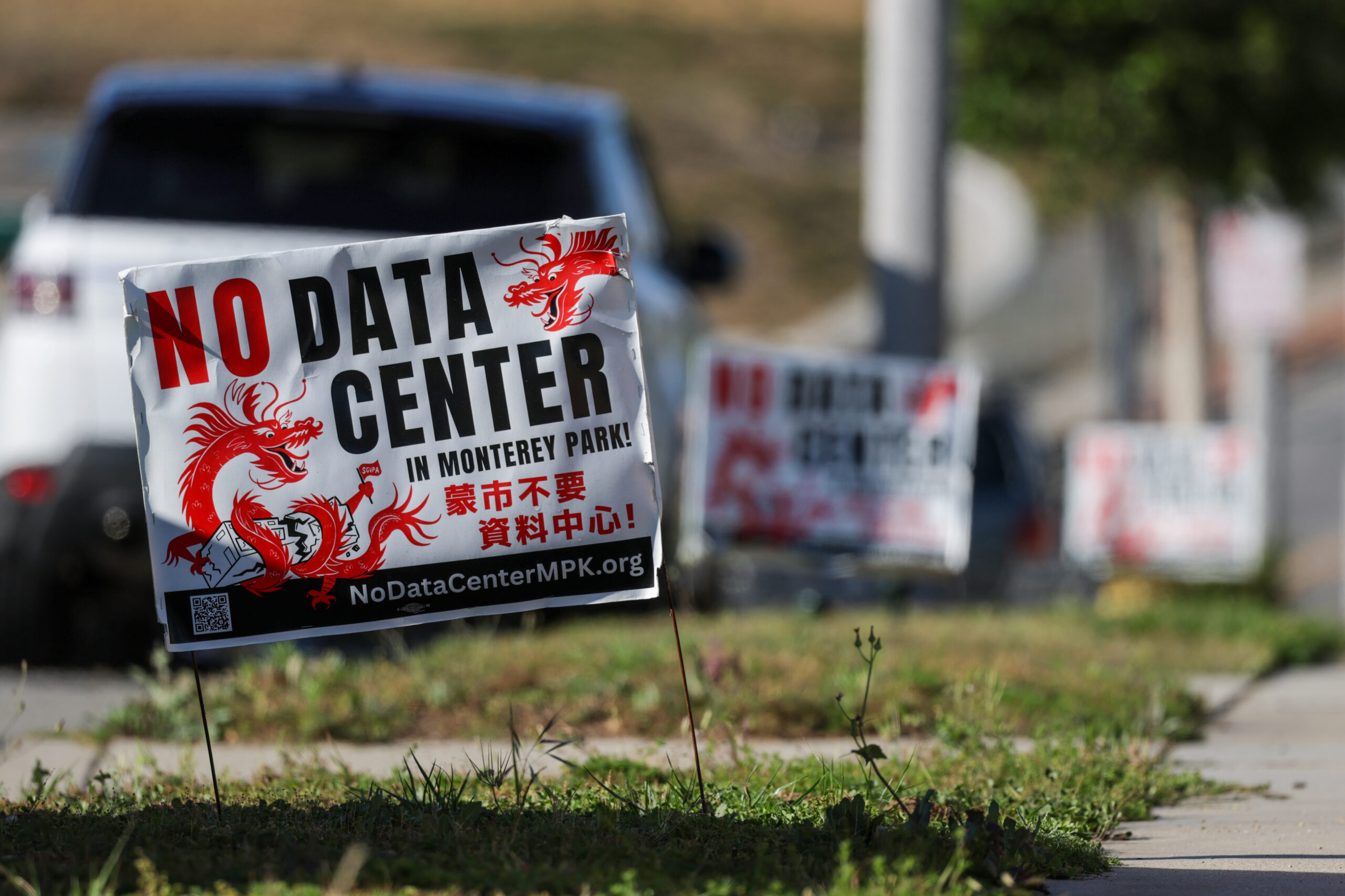
City officials had previously welcomed its plans to build a sprawling, new data center and the jobs and tax revenue that would follow, but suddenly city opposition to the plan spurred up. Signs of protest pepper front yards in a nearby residential neighborhood in Monterey Park, CA on Wednesday, April 1, 2026.
(Robert Gauthier/Los Angeles Times via Getty Images)

When the city council of Festus, Missouri, voted to approve a data center deal last month, the lawmakers unwittingly signed their own eviction notices. Voters last week ousted all four incumbents on the ballot due to their support for the deal. Anger over the move has also driven locals to start a recall effort against the mayor and the other city councilors.

Festus isn’t the only place that witnessed backlash against data centers last week. Voters in Port Washington, Wisconsin, backed a referendum to prohibit future construction of the centers in their town. An Indianapolis city councilor’s home was sprayed with bullets over the lawmaker’s support for data centers. 

These events illustrate the growing surge of hostility towards the tech installations. It’s a bipartisan opinion, with both Democrats and Republicans railing against them. Anti-tech sentiment is going to play a major role in upcoming elections, and data centers are going to be at the heart of that opposition. 

There are various reasons for opposing data centers. Much of the opposition in Festus was due to concerns that they would reduce property values, raise utility costs, and be a public nuisance. In addition to these matters, the left opposes the data centers for their apparent threat to the environment and representing corporate unaccountability. Elements of the right assail data centers for potentially threatening humanity and empowering the machines to take over. Tucker Carlson called, at least partially in jest, for bombing these centers two years ago.

Polls don’t exactly show widespread opposition towards the data centers. Multiple polls show a plurality of Americans actually support their development. But this is only an abstract issue to those surveyed. When directly faced with data centers in their own communities, voters regularly oppose them in overwhelming numbers. A Quinnipiac poll found that 65 percent of Americans oppose building AI centers in their own communities.

A recent Harvard/MIT poll also registered this sentiment in a survey that otherwise found public opposition in the minority. The primary concern with data centers among those polled isn’t that they would spike utility costs (even though many did worry about that). It was that the new installations would alter their communities and lower their quality of life. That opinion illustrates why voters turn against them when they’re built in their own towns. They view them as an unwanted disturbance to their life and communities. But Americans are fine with them being built—so long as they’re not near their homes.

It makes sense why so many 2028 hopefuls on both sides of the aisle want to oppose data centers. Three Democratic governors—Pennsylvania’s Josh Shapiro, Illinois’s J.B. Pritzker, and Maryland’s Wes Moore—abruptly reversed their efforts to attract data centers to their respective states and now stand against further expansion. Rep. Ro Khanna (D-NY), Pete Buttigieg, and Rep. Alexandria Ocasio-Cortez (D-NY) also loudly broadcast their opposition to data centers.

On the Republican side, Florida’s Gov. Ron DeSantis and Missouri’s Sen. Josh Hawley have made data center opposition a core part of their political agenda. 

“We’re going to make sure that we put Floridians first, that we look out for our own people, and not just have people get harmed by this rush to create data centers,” DeSantis said in a press conference last year announcing his desire to restrict these installations. 

“American families should not have to shoulder the burden of the rising electricity costs produced by data centers in Missouri and across the country. This is unacceptable,” the Missouri senator said in support of his bill with Democratic Senator Richard Blumenthal to stop data centers from raising energy costs.

The results of local elections show this is a popular issue, regardless of what the polls say. It’s part of a general backlash towards tech. Surveys reveal Americans are anxious about AI and its effects. Lawmakers in both parties want to restrict AI in response to voter worries. These ideas, especially at the state level, would curb American innovation and growth. Fifty different state regulatory regimes on AI would create a byzantine system that would disadvantage American AI while benefiting China. But politicians don’t seem to care about that. AI is a menace that must be stopped at all costs—even if these laws only strangle America’s own development of the technology, not the tech itself.

No American wants to see their property values reduced and their utility costs increased. But there are downsides to restricting or even ending data center development. Tech is one of the few boom areas of the American economy, driving growth in the stock market and in other sectors. Data centers drive job and revenue growth in places where they’re developed. The high demand for these installations gives towns and states leverage to set demands to benefit their residents. “These areas for engagement with Big Tech might involve advancing a local agenda for enhancing high-tech talent initiatives at local institutions and schools,” a Brookings Institution report noted on the possible demands towns could wring from data centers. “Alternatively, they might involve securing abundant computing resources for local academic work from an incoming hyperscaler, or they could entail enlisting partnerships in other forms of R&D [research and development] at local universities, startup companies, or entrepreneurial energy companies.” This leverage would also allow states and towns to eliminate the tax breaks and other goodies used to attract data center development. 

But these deals, even when made to lopsidedly favor local residents, may still be a tough sell to voters. The possible economic benefits may pale in comparison to fears over rising utility costs. In a similar vein, many Americans are voting to curb property taxes or outright ban them despite the obvious negative consequences to local infrastructure. These voters don’t mind that as they focus on the personal benefits they would accrue from not paying property taxes. We can see a similar mentality play out with data centers. It doesn’t matter if halting data center development may upend the national economy. To millions of Americans, they’re an unwanted nuisance and shouldn’t be built in the first place.

As we witness more defeats for data centers at the ballot box, more politicians will turn against them. It doesn’t matter if this will stunt economic growth and allow China to beat us in tech advancement. What matters for them is getting elected. When data center supporters have to worry about their home being shot up, it’s understandable why those with high ambitions would turn against them. 

It is guaranteed data centers will be an issue in 2028, and few (if any) presidential contenders will want to defend them. Anti-tech populism will be all the rage, even if the consequences may harm the economy.

The post The Politics of Data Center Opposition appeared first on The American Conservative.

How Trump Should Handle the Hormuz

How Trump Should Handle the Hormuz

A Tehran toll is suboptimal, but it beats the alternatives.

Vessels pass through Strait of Hormuz following US-Iran ceasefire
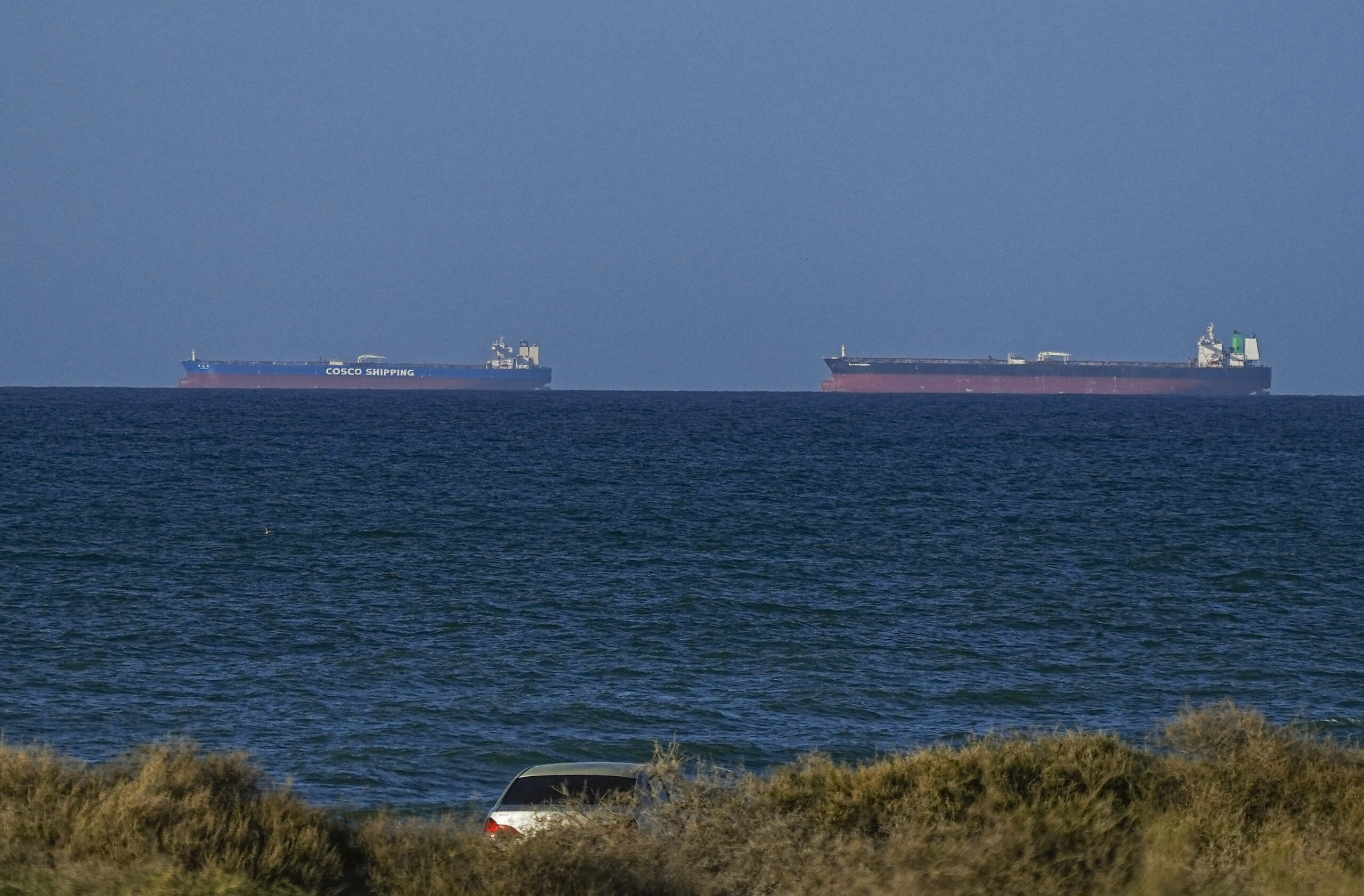
OMAN – APRIL 08: A view of the vessels heading towards the Strait of Hormuz following the two-week temporary ceasefire reached between the United States and Iran on the condition that the strait be reopened, seen in Oman on April 08, 2026. (Photo by Shady Alassar/Anadolu via Getty Images)

If Washington truly wants peace in the Middle East (a rather gargantuan if, I know) it will need to accommodate itself to reality: The U.S. can’t force Iran to accept all its hardline demands, so the White House needs to make meaningful concessions.

For over a year now, the Trump administration hasn’t been in a concessive mood. That’s one reason the American–Israeli war with Iran kicked off in late February. And it’s one reason the U.S. and Iran are having trouble reaching a stable peace agreement now, in the middle of a two-week ceasefire. Tomorrow during talks in Islamabad, they’ll have another shot to secure the peace.

The first round in Islamabad this weekend failed to produce a deal. That bad outcome wasn’t surprising, but comments afterwards by Vice President J.D. Vance, who led the American team, were nonetheless disappointing. Vance said that he and the other American negotiators had shown “flexibility” but that Tehran had “chosen not to accept our terms.”

Asked which American demands the Iranians had rejected, Vance answered, “The simple fact is that we need to see an affirmative commitment that they will not seek a nuclear weapon and they will not seek the tools that would enable them to quickly achieve a nuclear weapon.” Many analysts judged the statement was code for a de facto ban on uranium enrichment, which would foreclose Iran’s ability to produce nuclear fuel.

It would hardly be surprising if the talks had floundered on that demand alone. Iran has a right under the Non-Proliferation Treaty to enrich uranium for civilian energy purposes, and experts say Tehran won’t give it up. Joe Kent—a former Trump official who resigned last month, in protest of the war, from a top counterterrorism position in the White House—told The American Conservative that nuclear negotiations had been going well in early 2025 until the administration, under pressure from the Israel lobby, started to demand zero enrichment.

But another issue, newer and no less thorny, likely helped prevent the two sides from reaching an agreement this weekend: Iran’s control of the Strait of Hormuz, a key chokepoint for global trade. Tehran effectively closed the sea passage after the war began, to raise oil prices and thereby gain leverage over the United States. In recent weeks, Tehran has allowed some ships to pass through if they pay a toll.

Iranian officials told the New York Times that the Hormuz was a sticking point in the talks, along with the uranium issue and Tehran’s demand for the release of frozen assets. Meanwhile, an American official told Time magazine that Iran’s negotiators, during the talks, did not agree to fully open the strait and stop charging a toll.

The Hormuz crisis, and the mounting economic consequences, have been top of mind for many observers of the Iran war. As Vance left the podium at the end of the press conference, a reporter shouted, “Mr. Vice President, where does this leave the Strait of Hormuz?” 

It’s a good question, and if the war will soon be resolved, the answer may prove an ugly one: The Strait of Hormuz will be left under the control of Iran. Experts told TAC that Tehran’s leadership won’t soon relinquish the waterway. But they also noted—and here’s the good news—that Iran’s hold on Hormuz, if it continued after the war, wouldn’t be catastrophic for the U.S., the Middle East, or the global economy. Indeed, it might even bring some benefits.

One such expert is Eldar Mamedov, a longtime European diplomat and commentator on U.S.–Iran relations (and frequent contributor to TAC). Last May, Mamedov attended the Tehran Dialogue Forum and met with numerous Iranian leaders, including Speaker of the Parliament Mohammad Ghalibaf, who leads Iran’s negotiating team.

In Mamedov’s assessment, Ghalibaf is open to making a deal with the U.S., but he puts a “strong emphasis on national sovereignty,” meaning he won’t simply bow to American demands. “Apart from not being a dove himself,” Mamedov explained, “he also needs to manage far more hardline elements in the IRGC,” a key force in the Iranian military. Mamedov thinks the U.S. would have better luck getting a peace deal if it showed true flexibility on uranium and Hormuz.

Of course, allowing Iran to become the Hormuz guardian would be embarrassing for the White House. Rosemary Kelanic, an energy markets expert at Defense Priorities, said, “If the Tehran Tollbooth outlives Trump’s war, it will be a lasting reminder of U.S. policy failure, leaving the world worse off than the pre–Iran War status quo.” But Kelanic also said such a scheme could become a workable modus vivendi: “As unfortunate as Iran’s geographic leverage over Hormuz is, the ‘tollbooth’ itself could have a stabilizing effect, because monetizing safe transit through the strait would incentivize Iran to keep traffic flowing.”

The journalist Robert Wright said something similar when TAC’s Executive Director Curt Mills and I appeared on his podcast earlier this month. “Right now, reportedly, they’re charging $2 million per tanker,” Wright observed. “That comes out to about a dollar per barrel. The current war tax on oil is like $35 per barrel.” 

Moreover, Wright saw good reason to suppose that Iran wouldn’t charge exorbitant fees in the future. “These are rational actors, okay?” he said. “They’re not going to keep the price so high that the whole land infrastructure for transporting oil is rebuilt so it’s not dependent on the Persian Gulf.”

A Tehran tollbooth could even help the White House finesse other diplomatic challenges. Iran has demanded sweeping sanctions relief and U.S. reparations for the war. Both are politically difficult for the Trump administration, and the latter demand probably impossible. But if the U.S. gave a tacit greenlight to a toll in the Hormuz, the revenue could serve as a form of economic compensation.

At present, however, Trump seems disinclined to compromise on Hormuz. After this weekend’s talks broke down, he announced a U.S. naval blockade of the strait. “At some point, we will reach an ‘ALL BEING ALLOWED TO GO IN, ALL BEING ALLOWED TO GO OUT’ basis,” Trump wrote. And on Sunday, he said that he had instructed his negotiators to seek Iran’s capitulation: “I tell my people, I want everything. I don’t want 90 percent, I don’t want 95 percent. I told them, ‘I want everything.’”

But Trump had previously said the war could end without first addressing the Hormuz. Ahead of tomorrow’s negotiations, the Trump administration should figure out which is worse: the resumption of war or Iran’s continued hold on the strait. In my view, the answer is clear. Iranian control over Hormuz is suboptimal, but the concession could form part of an acceptable settlement, and U.S. military power has proved insufficient to reopen the strait anyway. 

If the Iran hawks complained, as they surely would, we might remind them the strait was only closed as a result of their preferred policies. A permanent Tehran tollbooth—and any other unsavory elements of a peace deal—would be an indictment of the war itself, not Trump’s efforts to end it.

The post How Trump Should Handle the Hormuz appeared first on The American Conservative.

Noted Theologian Joy Behar of The View: Jesus Didn’t Run Around Saying ‘I’m the Messiah’ (VIDEO)

Screencap of Twitter/X video.

Joy Behar of The View just made some comments about Jesus Christ that were so off the wall that even her co-hosts chimed in to point out how wrong she was.

The ladies were complaining about Trump’s recent social media post in which he appeared to be presented in the image of Jesus. Naturally, this gave the cast of The View something to be outraged about, even though some people on the show are clearly not even qualified to discuss the topic.

Maybe Joy should stick to other topics that are easier for her.

NewsBusters reported:

ABC News’s joyless Joy Behar was on a roll Tuesday. Aside from claiming The View wasn’t a group you wanted to pick a fight with (despite them being too cowardly to invite conservatives on the show), the nagging crone suggested that Jesus Christ would be “narcissistic” if he had acknowledged he was the Messiah. She flaunted her profound ignorance because even after she was told that Jesus in fact did say he was the Messiah, she insisted that even the Messiah would be “narcissistic” for saying such.

The conversation was sparked by President Trump’s now-deleted Truth Social post where many argued that he was portrayed like Jesus. In an attempt to argue how un-Christ-like Trump was, Behar falsely claimed Jesus never acknowledged that he was the messiah:

BEHAR: Yeah, but Jesus himself did not run around saying, “I’m the messiah. I’m the messiah.”

FARAH GRIFFIN: Uh, Jesus did kind of say ‘I am the messiah.’

[Crosstalk]

SARA HAINES: That’s exactly what Jesus said, ‘I am the messiah.’

[Laughter]

BEHAR: No, he did not. Jesus was more modest than that. Listen, I knew Jesus.

Here’s the video:

What an utter embarrassment.

Now seems like a good time to remind everyone that The View falls under the banner of ABC News.

The post Noted Theologian Joy Behar of The View: Jesus Didn’t Run Around Saying ‘I’m the Messiah’ (VIDEO) appeared first on The Gateway Pundit.
ADAM CAROLLA WAS RIGHT: New Report Describes Wildfire Rebuilding in California as a ‘Nightmare’

Shortly after the wildfires that ravaged southern California more than a year ago, Adam Carolla put out a video that quickly went viral.

Carolla’s message was pretty simple. He predicted that the rebuild process after the fires would be slow and painful for everyone involved.

In case you missed it, here’s the video:

Today, the New York Post released a story about the rebuild and how awfully it’s going. Caroola retweeted the story with a funny comment.

From the story:

Humiliating report reveals LA wildfire victims trapped in a rebuild ‘nightmare’

The rebuild of fire-ravaged Los Angeles was supposed to be a record-breaker, according to state and city leaders who promised one of the fastest recoveries in California history.

Instead, it’s looking more like another embarrassment for public officials according to a new damning report released Monday.

The new analysis shows just 34 homes have gone up in Pacific Palisades and Altadena in the 15 months since the devastating wildfires tore through — a shockingly sluggish pace that lags behind recoveries from other previous major California infernos.

Even more troubling: fewer than half of the nearly 10,000 destroyed properties have even applied for rebuilding permits.

Gov. Gavin Newsom and Mayor Karen Bass hyped a comeback following the fires, “faster than ever before.” Not anymore.

“There’s certainly no chance of them being this outlier of fast recovery,” disaster expert Andrew Rumbach told Politico. “It’s not physically possible at this point.”

Gavin Newsom and Karen Bass should resign.

The post ADAM CAROLLA WAS RIGHT: New Report Describes Wildfire Rebuilding in California as a ‘Nightmare’ appeared first on The Gateway Pundit.
WHAT CHANGED? Hollywood Elitists Who Donated Tons of Cash to Eric Swalwell’s Governor Campaign Suddenly Silent

An older man with gray hair speaks thoughtfully during an interview, dressed in a black jacket against a colorful background.

An older man with gray hair speaks thoughtfully during an interview, dressed in a black jacket against a colorful background.
Robert DeNiro on MSNBC

The donor list for Eric Swalwell’s now dead campaign for governor of California is a virtual who’s who of liberal Hollywood.

Robert De Niro, Sean Penn, Jon Cryer, Kathy Griffin and many others poured tons of cash into Swalwell’s coffers and yet now that his campaign and career have imploded under a shocking scandal, they are all silent.

Let the record show that these people apparently do not care about victims of rape and sexual assault. What other conclusion could one possibly reach?

Breitbart News reports:

Hollywood Elites Who Backed Disgraced Eric Swalwell Go Silent After His Resignation from Congress

With the now thoroughly disgraced former Congressman and California candidate Gov. Eric Swalwell resigning his seat in Congress and suspending his gubernatorial campaign, the left-wing Hollywood celebrities who were so loudly backing him have all of a sudden gone quiet.

A-listers like Sean Penn, Robert De Niro, and Jane Fonda have all gone radio silent in the wake of Swalwell’s crash and burn ending and many of his elite donors have decided not to say a word about their man’s fall from grace, the New York Post noted.

The paper points out that Sean Penn donated $15,000 to Swalwell and on several occasions met up with the California Democrat to show his support. Several others, such as Mad Men star Jon Hamm, rabid anti-Trumper Robert Di Nero, and Jon Cryer each donated $10,000 and often spoke up for Swalwell on social media and in interviews…

Disgraced comedienne Kathy Griffin also gave ten grand, as did TV producers David Bennet and Shawn Ryan, who both ponied up $10K. Before his shocking murder, film director Rob Reiner also gave the same amount to Swalwell. And Creative Artists Agency CEO Bryan Lourd topped them all by shelling out a $12,500 contribution.

The anti-Trump group ‘The Lincoln Project’ also contributed.

It would be different if Swalwell was still in the running and these people wanted to take a ‘wait and see’ approach to the scandal, but that it not what is happening. It’s over.

What is preventing these liberal hypocrites from speaking out?

The post WHAT CHANGED? Hollywood Elitists Who Donated Tons of Cash to Eric Swalwell’s Governor Campaign Suddenly Silent appeared first on The Gateway Pundit.

Heroic Oklahoma High School Principal Shot in the Leg as He Tackles Would-Be Shooter Before Gunman Opens Fire on Students (VIDEO)

Two individuals are engaged in a physical altercation inside a building with a checkered floor and large windows.

Two individuals are engaged in a physical altercation inside a building with a checkered floor and large windows.

A high school principal is being hailed a hero after he tackled a would-be shooter before the gunman opened fire on students last week.

Kirk Moore, the principal at Pauls Valley High School in Pauls Valley, Oklahoma, was reportedly shot in the leg as he charged the gunman.

The gunman was a former student, 20-year-old Victor Hawkins.

“When the principal and other school staff members spotted Hawkins, they attempted to subdue him, leading to a shooting,” the school said in a press release last week.

“The principal was the only individual injured during the incident,” it said.

“Because of the efforts of the school staff, they stopped Hawkins from potentially injuring other staff members and students,” the school said.

WKRC reported last week:

A high school principal was allegedly shot when he subdued a former student who walked into his school armed with a gun, protecting numerous students and staff members.

According to a post from the Oklahoma State Bureau of Investigation, officers responded to Pauls Valley High School at 2:21 p.m. on April 7 for a report of a shooting. Officers arrived on scene to find a man suffering from a gunshot wound, identified as the school’s principal Kirk Moore by the school district.

Moore was reportedly hospitalized in stable condition.

Investigators reportedly learned that a former student, 20-year-old Victor Hawkins, walked into the building armed with a loaded gun.

The newly-released surveillance video shows the principal immediately springing into action as Hawkins pointed his loaded firearm.

Moore tackled Hawkins and prevented him from shooting any students.

Hawkins was arrested and charged with two counts of pointing a firearm, one count of shooting with intent to kill, and two counts of unlawful carry, WKRC reported.

WATCH:

The post Heroic Oklahoma High School Principal Shot in the Leg as He Tackles Would-Be Shooter Before Gunman Opens Fire on Students (VIDEO) appeared first on The Gateway Pundit.