Hormuz Blockade: Europe Mobilizing Against the U.S., Not the Iran Regime

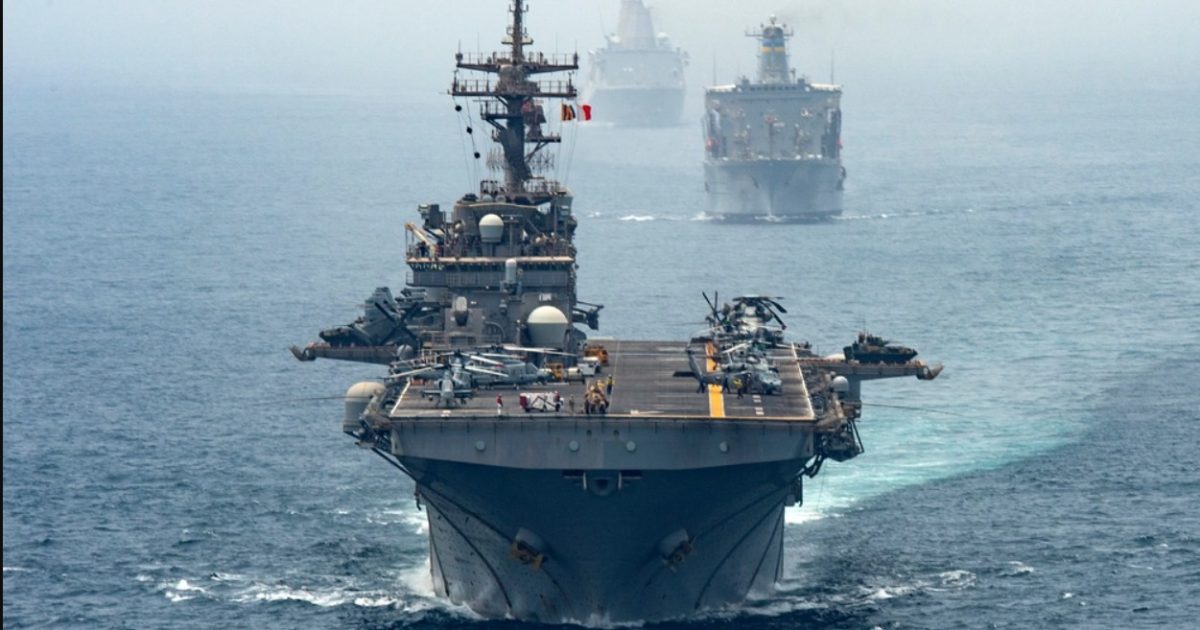
Naval vessels maneuver through calm waters, showcasing military ships with helicopters on deck during a maritime operation.

Naval vessels maneuver through calm waters, showcasing military ships with helicopters on deck during a maritime operation.
Europe refused to send ships to force the IRGC to reopen the Strait of Hormuz, but is now forming a coalition against the United States. Photo courtesy of the Defense Visual Information Distribution Service.

When President Trump announced on Truth Social that the U.S. Navy would blockade “any and all Ships trying to enter, or leave, the Strait of Hormuz,” he also instructed the Navy to interdict vessels that had paid tolls to Iran and to destroy mines Iran had placed in the waterway.

CENTCOM subsequently clarified the actual scope: the blockade applies to vessels entering or departing Iranian ports and coastal areas and does not affect ships transiting the strait to and from non-Iranian ports. The blockade is therefore a naval embargo on Iranian trade, not a closure of the strait to international shipping generally.

Trump took the action in response to Iran’s “world extortion.” The IRGC had imposed a de facto toll regime in the strait. The Tehran regime said that vessels would be required to submit documentation, obtain clearance codes, and accept IRGC-escorted passage through a single controlled corridor. Trump’s goal was to stop Iran from policing the strait and profiting from its closure while the rest of the world absorbed the economic damage.

Neither the U.S. nor Israel is dependent on oil transiting the Strait of Hormuz. Around the globe, the U.S. is the primary enforcer of the United Nations Convention on the Law of the Sea (UNCLOS), maintaining freedom of navigation for all countries. Trump’s request for Europe and other allies to support U.S. freedom-of-navigation patrols in the Strait of Hormuz was rejected.

Europe’s argument was that the U.S. took action against Iran unilaterally and therefore could not expect European support. President Trump’s position is that the U.S. has spent trillions defending Europe and keeping sea lanes open around the globe for 70 years, and it was reasonable to ask for reciprocity.

Instead, Europe blames Trump for the Hormuz closure, completely ignoring the fact that it is the IRGC, not the U.S., that has closed the strait.

Their refusal to help reopen it is a classic example of cutting off your nose to spite your face, since Europe’s energy supplies are at stake, not America’s. However, anger at Trump is mobilizing Europe to form a coalition to protect the Strait from America rather than from Iran.

At the same time, the IRGC warned that military vessels approaching the strait would be dealt with harshly. It is unclear whether the IRGC will allow European ships to counter American vessels. Either way, we are now in an upside-down world where Europe is siding with Iran, while Iran is threatening to sink European ships.

The Western media has also stopped reporting on atrocities committed by the IRGC, including executions of protesters during this ceasefire period. The media seems to have forgotten that over the past 47 years, Tehran has supported thousands of terrorist attacks through the IRGC and its proxies. The press has also stopped focusing on the missile and drone program that is currently threatening global shipping.

Not only is the world ignoring the IRGC’s repression of women, gays, and minorities, but the UN has nominated Iran to the Committee for Program and Coordination, a body that helps shape policy on human rights, disarmament, and terrorism prevention. UN Watch reported that the United States was the only member to dissociate itself from the decision.

They are also ignoring the fact that it is illegal under international law for the IRGC to charge a toll for the use of the Strait of Hormuz. Instead, they are fighting for their “right” to buy sanctioned oil and pay an illegal toll to Tehran.

The European response contains a significant contradiction. The EU has a legal ban on importing Iranian oil, reimposed under the sanctions snapback triggered in August 2025 by France, Germany, and the United Kingdom, which restored six UN Security Council resolutions covering nuclear and missile technology, arms, travel bans, asset freezes, and bans on the import, purchase, and transport of crude oil and petroleum products.

European ships cannot legally buy Iranian crude under EU law. The freedom of navigation Europe is mobilizing to defend therefore applies not to European purchasers but to third-party nations, primarily Asian buyers, transiting the strait without U.S. interdiction.

Canada, Australia, and New Zealand maintain similar frameworks, each prohibiting their citizens and entities from purchasing Iranian oil, with New Zealand adding a compulsory business registration scheme for any dealings with Iran in February 2026.

Peace talks in Islamabad collapsed after more than 21 hours of negotiations. Vice President Vance, who led the U.S. delegation, said Iran refused to commit to abandoning its nuclear ambitions.

Europe, however, now appears willing to tolerate both Iran’s nuclear program and its closure of the Strait of Hormuz, simply because Trump is taking action to resolve both problems permanently by removing the IRGC from power.

The post Hormuz Blockade: Europe Mobilizing Against the U.S., Not the Iran Regime appeared first on The Gateway Pundit.

Ireland Holding National Strike Today – “We Are SHUTTING DOWN HARD!” – UFC Freedom Fighter Conor McGregor

A large group of young boxers celebrating in a gym, showcasing their medals and team spirit after a successful event at Crumlin Boxing Club.

A large group of young boxers celebrating in a gym, showcasing their medals and team spirit after a successful event at Crumlin Boxing Club.

The entire country of Ireland is “SHUTTING DOWN HARD” on Monday.  The entire country of Ireland is shutting down tomorrow in protest. UFC Champion and Irish hero Conor McGregor shared … Read more

The post Ireland Holding National Strike Today – “We Are SHUTTING DOWN HARD!” – UFC Freedom Fighter Conor McGregor appeared first on The Gateway Pundit.

Pope Leo XIV FIRES BACK at Trump After President Targets Him with a Stinging Social Media Message (VIDEO)

Pope Leo XIV / Official broadcast

Pope Leo XIV has responded to President Trump’s explosive social media message last night, which attacked his woke politics and glaring hypocrisy.

As The Gateway Pundit reported, Trump delivered a blistering takedown of Pope Leo XIV, the first American-born pontiff, slamming the Vatican leader as weak on crime, disastrous on foreign policy, and far too cozy with the radical left.

Trump also noted that he recently hosted the Pope’s brother, Louis, at the White House, a man who actually understands the MAGA movement.

Trump wrote on Truth Social:

“Pope Leo is WEAK on Crime, and terrible for Foreign Policy. He talks about “fear” of the Trump Administration, but doesn’t mention the FEAR that the Catholic Church, and all other Christian Organizations, had during COVID when they were arresting priests, ministers, and everybody else, for holding Church Services, even when going outside, and being ten and even twenty feet apart.

I like his brother Louis much better than I like him, because Louis is all MAGA. He gets it, and Leo doesn’t!

I don’t want a Pope who thinks it’s OK for Iran to have a Nuclear Weapon. I don’t want a Pope who thinks it’s terrible that America attacked Venezuela, a Country that was sending massive amounts of Drugs into the United States and, even worse, emptying their prisons, including murderers, drug dealers, and killers, into our Country.

When asked by the Associated Press this morning about Trump’s pose, Pope Leo XIV refused to back down. He stated that he is sharing the message of the Gospel and suggested that Trump had no clue of its meaning.

The pope went on to say he did not view his role as a politician, but he would continue to speak his mind on inherently political matters such as war and multilateral foreign policy.

WATCH:

Pope Leo XIV: The message of the Gospel is very clear: “Blessed are the peacemakers.” I will not shy away from announcing the message of the Gospel.

I’m inviting all people to look for ways of building peace and reconciliation…Of ways of going forward any time that’s possible.

To put my message on the same plane as what the President has attempted to do here, I think, is not understanding what the message of the Gospel is.

I’m sorry to hear that (from Trump)…I do not look at my role as being political or a politician. I don’t want to get into a debate with him; I don’t think the message of the Gospel is to be used in the way some people are doing.

And I will continue to speak loudly against war and to promote peace, dialogue, and multilateral relationships among states.

Too many people are suffering in the world today. Too many innocent people are being killed, and someone has to stand up and say there’s a better way.

As TGP notes, however, the pope started this verbal fight with Trump after he condemned President Trump’s iron-fisted Iran warning as “truly unacceptable.”

By blasting Trump’s ultimatum to the bloodthirsty Iranian regime, the pontiff sided with the mullahs over American strength.

The post Pope Leo XIV FIRES BACK at Trump After President Targets Him with a Stinging Social Media Message (VIDEO) appeared first on The Gateway Pundit.

The 17th Amendment Broke the Founders’ Balance of Power — And Washington Grew Far Beyond Its Constitutional Limits

Historical document of the United States Constitution with a background of the American flag, featuring the preamble "We the People."

Historical document of the United States Constitution with a background of the American flag, featuring the preamble "We the People."
(U.S. Air Force graphic)

When the Founders designed the Constitution, they did something extraordinary.

They did not create a government based on a single stream of political power.

They created a system of balanced sources of authority, carefully structured so that no temporary political passion could easily overwhelm the rights of the people.

The House of Representatives was designed to reflect the will of the people directly.

The President was chosen by the Electoral College, ensuring that national leadership reflected both popular support and the union’s federal character.

And the Senate — critically — was designed to represent the states as sovereign political entities within the federal system.

Originally, United States Senators were chosen by state legislatures.

This was not a procedural technicality.

It was one of the Constitution’s central structural protections of liberty.

The Founders understood that political power must be divided not only among branches of government, but among different sources of consent.

The people would have their voice.

But the states — as political communities with their own interests, laws, and traditions — would have their voice as well.

The Senate was designed to ensure that the federal government remained a government of limited and delegated powers, not an engine of national consolidation.

James Madison explained the purpose clearly:

“The powers delegated by the proposed Constitution to the federal government are few and defined. Those which are to remain in the State governments are numerous and indefinite.” — Federalist No. 45

The Senate was a structural mechanism for preserving that balance.

And then, in 1913, the 17th Amendment changed everything.

The 17th Amendment Removed a Structural Protection Against Federal Overreach

The 17th Amendment shifted the selection of Senators from state legislatures to direct popular election.

On its surface, the change sounded democratic.

But structurally, it removed one of the Constitution’s most important checks on centralized power.

Before the 17th Amendment:

  • Senators answered to state legislatures
  • States had direct representation inside the federal government
  • Federal expansion could be resisted institutionally
  • State sovereignty had a permanent seat at the table

After the 17th Amendment:

  • Senators became national politicians
  • Campaign funding and media influence grew dominant
  • Senators became more responsive to national party pressures than to their states as sovereign entities
  • The states lost their direct structural defense inside the federal government

The change did not merely alter a voting method. It altered the architecture of power.

And over time, that architectural change has produced predictable results.

What Followed: Expansion of Federal Power Into State Domains

Without Senators accountable to state legislatures, the federal government gradually expanded its reach into areas traditionally governed by the states.

Among the commonly cited results:

  1. Expansion of federal regulation into state responsibilities
    Education standards, land use, environmental regulation, healthcare mandates, and labor rules increasingly originate in Washington rather than in state capitols.
  2. Growth of unfunded federal mandates
    Congress increasingly imposes requirements on states while leaving state taxpayers responsible for the cost.
  3. Increased dependence on federal funding
    Federal grants often come with conditions that influence state policy decisions, shifting practical control toward Washington.
  4. Centralization of policymaking authority
    Policy decisions affecting local communities are increasingly made by distant federal agencies rather than elected state officials.
  5. Weakening of federalism as a structural protection of liberty
    When states lose institutional influence inside the federal government, the balance of power shifts toward national consolidation.

The Founders did not design a system in which all major political decisions would flow through Washington.

They designed a system in which states would remain meaningful centers of political authority.

The 17th Amendment weakened that design.  And Washington grew.

The Founders Understood the Danger of Consolidated Power

Alexander Hamilton warned:

“Power over a man’s subsistence amounts to a power over his will.”  — Federalist No. 79

When political authority concentrates in a single national structure, citizens lose the protection that comes from multiple competing centers of power.

Federalism was never merely a technical arrangement.

It was a protection for liberty.

As George Mason warned:

“The powers of the general government being defined… the State governments retain all rights not expressly surrendered.”

The 17th Amendment blurred that boundary.

The Solution: Restore Structural Balance Through Constitutional Repair

The Constitution provides a lawful method for structural repair.

Article V allows the states to propose amendments through a Convention of States. This method totally bypasses Washington, D.C.

The Convention of States (https:\conventionofstates.com) movement has gained significant traction across the country, with 20 states already passing resolutions calling for a convention to restore constitutional limits on federal power.

Among the reforms widely discussed:

  • Term limits for members of Congress
  • Fiscal restraints on federal spending
  • Limits on federal regulatory authority
  • Reassertion of state sovereignty
  • Repeal of the 17th Amendment
  • Authority for states to recall U.S. Senators who no longer represent their state’s interests

These reforms aim not at partisan advantage, but at restoring the constitutional balance that protects self-government.

A Senator who knows that his or her position depends upon the confidence of the state legislature — or can be recalled by the state — is far more likely to defend the constitutional role of the state within the federal system.

Structural incentives shape political behavior.

The Founders understood this. They designed accordingly.

Restoring Federalism Strengthens Self-Government

The issue is not whether citizens should vote.

Citizens already elect governors, legislators, attorneys general, and many other state officials.

The issue is whether the states, as sovereign political communities, retain a meaningful role in shaping federal policy.

Without structural protections for federalism, political power naturally centralizes.

When power centralizes, accountability weakens.

When accountability weakens, self-government erodes.

The Founders did not intend for the federal government to become the primary decision-maker for every major public question.

They designed a system in which authority would be divided, balanced, and restrained.  Because only then will We the People remain free and the true sovereigns of our nation.

The 17th Amendment altered that balance.

And the consequences have accumulated for more than a century.

Self-Government Requires Structural Integrity

Free societies do not survive by accident.

They survive when constitutional structures align incentives with accountability.

When those structures weaken, power flows toward concentration.

Restoring balance does not require revolution.

It requires repair.

The Constitution itself provides the means.

The Convention of States movement represents one path toward restoring the federal structure that protects liberty.

Repealing the 17th Amendment — or restoring the states’ ability to recall Senators — would reestablish one of the Founders’ most important safeguards against centralized political power.

The Founders built a system intended to preserve liberty across generations.

That system worked because it balanced power among competing institutions.

We can restore that balance. And we should.

Because self-government depends not only on voting —

But on maintaining the constitutional structures that prevent the consolidation of power, that shift of power away from the citizen and to a Washington elite.

The Founders did not assume the system would maintain itself automatically.

They assumed each generation would bear responsibility for preserving it.

Benjamin Franklin was asked what form of government had been created. He replied: “A republic, if you can keep it.”

Keeping it requires vigilance. Keeping it requires structural understanding. Keeping it requires the courage to repair what has been weakened.

The Constitution still provides the means. The question is whether we will act.

Steve Wolfer is a retired software designer and psychotherapist who has been a constitutional conservative and libertarian for over half a century.

The views and opinions expressed in this article are those of the author and do not necessarily reflect the official policy or position of this publication.

The post The 17th Amendment Broke the Founders’ Balance of Power — And Washington Grew Far Beyond Its Constitutional Limits appeared first on The Gateway Pundit.

The Doomed Road to Tehran

The Doomed Road to Tehran

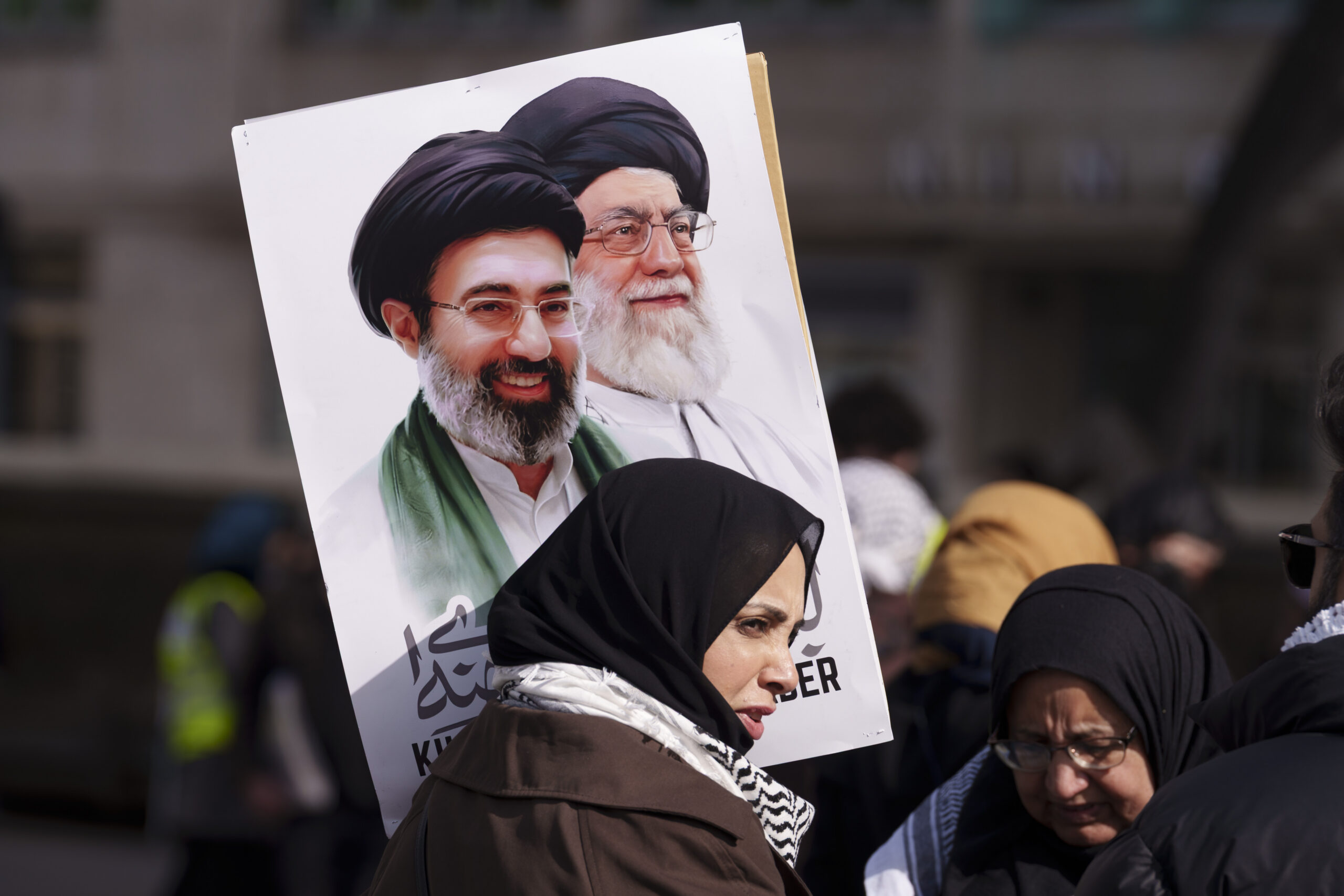
Policymakers have not understood that the Iran War is more akin to Vietnam than Iraq.

Al-Quds Day Protest
(Richard Baker / In Pictures via Getty Images)

The near constant refrain has been that they’ve been at war against us for 47 years, and now we are (finally) hitting back. It isn’t always obvious whether this claim is, in the late Senator Daniel Patrick Moynihan’s phrase, “boob bait for the bubbas” or believed sincerely. Like most claims in politics, there are some facts to support it. The Iranian regime has been hostile from its beginning. The collapse of the American-allied Shah’s regime, and the triumphant return to Iran of Ayatollah Ruhollah Khomeini with demonstrations in his favor larger than any seen in the history of the world, were undoubtedly a trauma for the United States. They occurred less than four years after the fall of Saigon. Khomeini’s revolution was followed quickly by an Iranian student faction’s seizure of the U.S. embassy in Tehran (the “nest of spies” they called it) and Jimmy  Carter’s inability to negotiate the release of the diplomats held hostage there. Without this humiliation, amplified every night by an entirely novel type of news-centered late night television, it is unlikely Ronald Reagan would have been elected president. So, through the cunning of history, the Iranian students helped produce America’s victory in the Cold War. 

What has also existed for two generations has been a back-and-forth debate within the highest reaches of the U.S. government about how, or whether, to seek more normal relations with the revolutionary government of Iran. The Reagan administration was divided on the issue, with Robert McFarlane and William Casey favoring overtures, Colin Powell, Richard Armitage, and Casper Weinberger opposed. Israel still maintained commercial and strategic dealings with Iran, to the irritation of a Washington that had sanctioned Tehran after the hostage seizure. (Trita Parsi has argued that Iran kept the pre-revolution Israel connection going primarily as a route to normalize relations with the U.S.). 

The Iran–Contra fiasco, a bizarre combination of an overture to Tehran blended with  clandestine funding for anticommunist rebels in Nicaragua, supported by Reagan himself and highly illegal to boot, left Washington wary of Iran “overtures” for a very long time. Iran’s allies in Lebanon continued to take Americans as hostages, which pained Reagan personally. Official Washington understood that Iranian-linked terrorism (in particular the deadly 1983 attack on the Marine barracks in Beirut) was not gratuitous but a seeming consequence of American military intervention in  Lebanon‘s civil war. Shortly after the Beirut bombing, Reagan withdrew U.S. forces after ousting the communist regime in a tiny Caribbean island to help mask the retreat. Near the end of Reagan’s second term, Zalmay Khalizad, an ambassador-level appointee who held major posts in the Reagan and both Bush administrations, drafted a memo advocating that the United States lift economic sanctions on Iran. Schultz read it, his face reportedly growing redder and redder as he proceeded. He scrawled a big NO in red magic marker across the front. Finally cooling down, he exclaimed, “Zal, this makes great geopolitical sense but no political sense.” 

It bears emphasizing that no one in Washington knew whether overtures to Tehran would lead to a détente and  productive normalization. “Moderates” in Iran often won competitive elections—though what their victories actually meant in relation to the ruling mullahs was never fully understood. Extremists sometimes won as well, including most famously Mahmoud Ahmadinejad, who called for the erasure of Israel from the map. 

With the demise of the Soviet Union, the perceived geopolitical stakes of Iran’s orientation diminished.  American oil companies hoped for access to Iran, and after the electoral victory of the moderate  Khatami  in 1997 seemed poised to get it.  But AIPAC was by then a powerful barrier to any sort of normalization. Israel had—with the seeming neutralization of Iraq after the first Gulf War—shifted to treating Iran rather than Iraq as its major strategic rival. Massively one-sided congressional resolutions were organized to forbid American commercial relations with Iran, and the White House, uncertain of its goals in any case, did not oppose them. 

The shock of 9/11 and the need to hit back at least at Afghanistan might have changed that. Large crowds of Iranians held candlelight vigils for the murdered Americans—something that occurred nowhere else in the Muslim world. Thousands observed a moment of silence in an Iranian  soccer game. Tehran offered Washington assistance in toppling the Taliban in Afghanistan, and American and Iranian diplomats engaged productively in the early months of the American war against the Taliban, including in intelligence cooperation. But these nibblings towards some sort of détente came to an abrupt stop after Iran was included in what Bush called the “axis of evil” in his 2002 State of the Union address.  Some administration principals had tried and failed to squelch that phrase. Iran immediately  downgraded its diplomatic teams meeting with Americans over Afghanistan. 

Neoconservative members of the Bush administration always opposed such overtures anyway. The pro-détente view, expressed in a memoir by the career diplomat James Dobbins, who was involved in the talks, was that Iran “wasn’t Switzerland, but more democratic than Egypt and less fundamentalist than Saudi Arabia” and could be dealt with as a country, not an irrational theocracy. That position lost, as it always did.  

What did change in the 2000s was that Iran had mastered the nuclear enrichment cycle and was rapidly becoming a potential nuclear power. The incoming Obama administration was determined to deal with that threat by negotiation; Israel wanted a military solution. President Barack Obama prevailed but in a kind of mixed decision, signing with Iran (and Russia, China and France, Germany, and Britain) an agreement which limited Iranian nuclear enrichment to well below weapon-grade levels and subjected it to close monitoring. But he lacked the votes to pass it as a Senate confirmed treaty and the agreement would have expired in the late 2020s. Israel vociferously opposed the measure and Netanyahu was invited by the Republican House leadership to speak against it. In the end, Obama was able to get the treaty enacted  and Iran’s nuclear march stymied, but the deal was consummated under such partisan duress that it never had a chance to become a springboard for a deepening détente. As a presidential candidate, Donald Trump labeled it “the worst deal ever” and jettisoned it in the second year of his first term. 

This abbreviated history (culled in particular from the outstanding Enduring Hostility by Dalia Dassa Kaye) illustrates the domestic political constraints on efforts to change the relationship with the Iranian regime. Every administration contained high-ranking officials who advocated efforts to explore détente with Iran. This was always problematic given Teheran’s apparent hostility.  Once Israel had turned definitively against the Tehran regime, with a Congress acting as AIPAC wanted, it was impossible. 

The absence of détente does not explain the current war. That required a Trump presidency. His most astute supporters realized from the start Trump was a leap into the dark. This view of a Trump presidency was well captured  by Michael Anton’s famous 2016 essay “The Flight 93 Election,” which suggested as ann analogy for electing a figure like Trump the plight of passengers whose plane was seized by hijackers on a kamikaze mission. It was better to storm the cockpit and somehow hope you would be able to land the plane yourselves than to sit passively and face certain death. Trump’s election was symbiotic with the already-visible radicalization of the Democratic Party. By Trump’s second victory in 2024, it was unambiguously clear the Democrats stood for open borders, intensification of racial quotas, and the mass transing of children—policies that would have been inconceivable to Bill Clinton in the 1990s or Obama in 2008. Storming the cockpit seemed to make sense. 

One  attractive point of Trump in all three of his races was his seeming disdain for the credentialed Washington foreign policy establishment, “the blob” in the coinage of the Obama staffer Ben Rhodes. The blob functioned to marginalize any questioning  of America’s global commitments and seemingly endless wars as “isolationist” or “extremist.” Trump had famously criticized the Iraq War, calling it “a big, fat mistake”; in his second term his lack of deference towards NATO, three generations after its formation, seemed refreshing, even necessary. Some members of his administration explicitly criticized NATO expansion, the disastrous policy that was the root cause of the bloody Ukraine war. Trump  seemed uniquely equipped to reject the whole blob mindset which led to forever wars and bloated defense budgets. He encouraged those who believed such a change was necessary, running unambiguously against Kamala Harris as the more prudent and peace-oriented candidate. 

It is now apparent that this was no more than a tactical election move, helpful to win a close race but with little real significance. Trump had always been fond of militaristic chest-thumping. Those who hoped for a more realist foreign policy told themselves this was a necessary camouflage, a way to make a less militaristic policies palatable to hawkish voters. Such rationales were an exercise in self-delusion. 

Whom did Trump appoint to key foreign policy positions? One can go into the upper-middle levels of the bureaucracy and find some Trump appointees in the restraint camp, knowledgeable and committed people who have learned lessons from the Iraq War. When push came to shove, they had no influence over key decisions. Who did? That isn’t exactly clear either. Trump has built up a cult of personality around himself; he sits on a kind of throne while those surrounding him either are or pretend to be his intellectual inferiors. There is a reason Democrats make Kim Jong Un jokes about Trump’s cabinet meetings, televised exercises in which cabinet members are apparently required to utter paeans to “President Trump’s leadership” in every third sentence. It creates an atmosphere where serious discussion cannot be held. 

Having forged an administration where there is little of the traditional expertise and experience that might have come from “the blob” and where sycophancy is the norm, Trump has also surrounded himself with old business cronies and family members. His Iran negotiations have been led by his son-in-law Jared Kushner and the real estate mogul Steve Witkoff. There are credible reports that neither understood enough about the nuclear fuel cycle to recognize whether or not Tehran was making significant concessions in final talks before Trump and Israel attacked Iran. Their performance raises the question of whether Trump actually wanted the talks to succeed. 

During Trump’s first term it was reported that the young Kushner’s father was so close to Bibi Netanyahu that the latter used to stay in Jared’s bedroom on visits to the U.S.—young Jared would move from bedroom to the couch. This unusually personal tie to a foreign power was largely forgotten by most people, who assumed that Jared Kushner’s primary goal in life was to make money. For his part, Witkoff was enough of a Netanyahu fanboy to be gifted a pager by the latter, a memento of Israel’s decapitation of part of Hezbollah’s leadership. Meanwhile, Secretary of War Pete Hegseth is a hardcore Christian Zionist who calls for the Third Temple to be reconstructed in Jerusalem. One might conclude that, though an American foreign policy guided exclusively by the blob was problematic, hardcore Netanyahu admirers were probably not the best possible choice for an “America First” alternative. 

Floating around the internet is a video of Bibi Netanyahu speaking before a group of West Bank settlers in 2001. The setting is casual; Netanyahu was out of office and not aware he was being filmed. Asked about a peace settlement with the Palestinians, he tells them not to worry, Israel will be able to circumvent it, to do what it wants. He is pushed: What about international condemnation, what about America? “I know America, America is a thing you can move very easily, move in the right direction. They won’t get in the way,” Netanyahu answers, moving on to elaborate on one tactic for obstruction.  

An example of supreme confidence, to be sure, but not without basis. A year later Netanyahu was asked to testify in Congress in favor of going to war in  Iraq,  where he helped to persuade lawmakers there was absolutely no chance that Iraq did not possess weapons of mass destruction. Thirteen years later he was in Congress again, invited to speak by the GOP leadership, to denounce Obama’s nuclear restriction deal with Iran. Netanyahu favored war then too, but Obama was able to say no to him. It is unlikely that, even in his wildest dreams, he imagined an American presidency where Jared Kushner would be the president’s principal Middle East advisor.

As newspapers were beginning to report that Trump was growing bored with the war he started and was looking to change the subject, the administration’s undersecretary of state for arms control, Thomas DiNanno  appeared on Capitol Hill to testify before the House Intelligence Committee. Congressman Joaquin Castro, concerned about potential nuclear fallout in a war in which both Iranian and Israeli nuclear sites had been targeted by missiles, asked DiNanno about Israel’s nuclear capabilities, specifically its nuclear weapons. DiNanno replied that he “can’t comment on that,” adding “you’d have to ask the Israelis.”  The San Antonio congressman persisted, and DiNanno remained  mum. Castro seemed puzzled, as DiNanno was the government’s leading expert on the nuclear proliferation issue that was at the center of Trump’s rationale for starting the war. 

The topic was taboo for the Trump administration, but is spoken of occasionally. Writing  in Foreign Affairs in 2012, Kenneth Waltz addressed it. Many will recognize Waltz as one of America’s leading international relations theorists; his classic Man, The State and War was often the first book assigned to fledgling international politics majors. In 2012, he was at the end of a long career, a semiretired professor at Columbia.  He noted that historically, every time another country has managed to shoulder its way into the nuclear club, other members “changed tack and learned to live with it.”  Aging baby-boomers might recall the time when the ascendance of “Red China”  into the nuclear club was greatly feared, because Americans understood the Chinese were incorrigible fanatics who did not care about human life—until Nixon went to China and Americans, almost instantly, stopped believing that. 

Unlike DiNanno, Waltz was not reluctant to address Israel’s nuclear program and what it meant.  “Israel’s nuclear monopoly, which has proved remarkably durable for the past four decades, has long fueled instability in the Middle East”  he wrote. “In no other region of the world does a lone, unchecked, nuclear state exist. It is Israel’s nuclear arsenal, not Iran’s desire for one, that has contributed most to the current crisis. Power after all, begs to be balanced.”

Waltz was only one top international relations scholar, and others might argue that Israel’s nuclear monopoly is not only morally just, but the only way to ensure stability in the Middle East (not that there has been much stability). Waltz could reply that there is much history behind the argument that nuclear deterrence basically works, and that a balance of terror is a better vehicle for avoiding war than the absence of one. At the very least one might want to see such theories debated, as the United States is now engaged in its second major war to ensure Israel’s nuclear monopoly in a still-young century. But even acknowledgment of the basic facts underlying the issue seems to be taboo.  

Americans soon grew to hate the Iraq War, but few found anything positive to say about Saddam Hussein’s government or, indeed, the Iraqi culture and civil society we were supposedly liberating. I would speculate that if Trump escalates the Iran War, and does not take an off-ramp that would be perceived as at least a partial defeat, the domestic cultural battle around the Iran will escalate as well, but with far more similarity to Vietnam than to the Iraq experience,  Americans not only grew to respect the North Vietnamese military (“the greatest light infantry in the world” was the commonplace phrase from American officers who fought them), but some came to admire North Vietnam as a society.  

Well before the 1968 Tet offensive forced Washington to recognize the Vietnam War would not be won, prominent American writers were visiting Vietnam, and implicitly or explicitly rooting for a communist victory. Mary McCarthy’s book Vietnam, which I read at 17 and recently reread, is a kind of template: The celebrated novelist was politically mainstream, a fellow traveler in her youth, a staunch  anticommunist when she woke up to what Stalinism was, a dear friend of Hannah Arendt, as great a foe of totalitarianism as any American person of letters could be.  But her visit to South Vietnam produced a scathing account of the war effort, with much attention paid to the boastful technological superiority of the American way of war.  Mocking the liberals who hoped for an honorable exit from Vietnam, she wrote “there is no honorable exit from a shameful course of action”—and called on the antiwar movement to study the Abolitionists, “the nearest thing to a Resistance movement the Republic has ever had.”  She thus gave her opposition to the war a moral component; Vietnam was not a worthy cause gone sour, or a waste of resources which could be better used at home. To oppose the war was to resist evil. 

Such sentiment, more suggested than shouted in McCarthy’s book, would soon become widespread in the antiwar movement. McCarthy would later go to North Vietnam and write admiringly of the people living under near constant American bombardment, all the while commenting whimsically on the ways their communist ideology sometimes posed barriers to deeper communication. Her call for extreme resistance to the war machine was soon taken up by a radical student left, some of whom openly embraced communist goals, and in the most extreme cases carried out terrorism inside the United States. For anyone who believes nothing like that is possible in the current context, we ought to recognize we are already in a moment where hatred of official Washington is mainstream. The movie One Battle After Another, which in its campy way presents left-wing terrorists sympathetically (America’s most famous leading man plays one), is in some measure a shout-out to the Weather Underground. It swept the Academy Awards. The vote was taken weeks before the U.S. launched a sneak attack on Iran by murdering its government and their families and destroying a girls’ elementary school and the pupils within it. The way the United States wages war, bombing from a safe distance, does not lead to admiration. Those seemingly afraid to fight mano-a-mano are not respected, no matter how much air power they wield—this is one observation the retired General Stanley McChrystal, who led the surge in Iraq, expressed in an interview with David French.  Those who struggle to carry on beneath the bombs are admired. This was the case in McCarthy’s narrative, and it is apparent in the first Western reports of what life is like in Tehran under American and Israeli bombing. There will be many more such accounts; the Iranians are eloquent people, with more fluency in American idiom than the Vietnamese communists.  Other writers and reporters, from America, Europe, and beyond will eventually make their way to Iran too, and will have a powerful impact.  Trump and Netanyahu’s  war, if it continues, will produce a moral revulsion against the United States like none of us have ever seen before.

The post The Doomed Road to Tehran appeared first on The American Conservative.

IT’S HAPPENING: Full U.S. Blockade of Ships Entering or Exiting Strait of Hormuz Will Begin Today at 10:00 A.M. ET

A submarine and a naval ship navigate through calm ocean waters, illustrating military maritime operations and naval collaboration.

A submarine and a naval ship navigate through calm ocean waters, illustrating military maritime operations and naval collaboration.
The guided-missile submarine USS Georgia (SSGN 729), front, transits the Strait of Hormuz with the guided-missile cruiser USS Port Royal (CG 73) and the guided-missile cruiser USS Philippine Sea (CG 58), not pictured, Dec. 21.

President Donald Trump announced that the United States will begin a full naval blockade of Iranian ports, effective today, April 13, at 10:00 A.M. Eastern Time.

Trump made the announcement directly to the American people on Truth Social:

“The United States to Blockade Ships Entering or Exiting Iranian Ports on April 13 at 10:00 A.M. ET. Thank you for your attention to this matter! President DJT”

Text post by Donald J. Trump announcing the United States' plan to blockade ships at Iranian ports on April 13, 2026, with engagement metrics displayed.
Screenshot

As The Gateway Pundit reported on Sunday, President Trump had already ordered the U.S. Navy to BLOCK “any and all ships trying to enter, or leave, the Strait of Hormuz effective immediately” after Iran defied his nuclear demands and continued their terrorist extortion racket on the world’s energy supply.

President Trump made the announcement via Truth Social:

“So, there you have it, the meeting went well, most points were agreed to, but the only point that really mattered, NUCLEAR, was not.

Effective immediately, the United States Navy, the Finest in the World, will begin the process of BLOCKADING any and all Ships trying to enter, or leave, the Strait of Hormuz.

At some point, we will reach an “ALL BEING ALLOWED TO GO IN, ALL BEING ALLOWED TO GO OUT” basis, but Iran has not allowed that to happen by merely saying, “There may be a mine out there somewhere,” that nobody knows about but them.

THIS IS WORLD EXTORTION, and Leaders of Countries, especially the United States of America, will never be extorted. I have also instructed our Navy to seek and interdict every vessel in International Waters that has paid a toll to Iran. No one who pays an illegal toll will have safe passage on the high seas.

We will also begin destroying the mines the Iranians laid in the Straits. Any Iranian who fires at us, or at peaceful vessels, will be BLOWN TO HELL! Iran knows, better than anyone, how to END this situation which has already devastated their Country.

Their Navy is gone, their Air Force is gone, their Anti Aircraft and Radar are useless, Khamenei, and most of their “Leaders,” are dead, all because of their Nuclear ambition.

The Blockade will begin shortly. Other Countries will be involved with this Blockade. Iran will not be allowed to profit off this Illegal Act of EXTORTION. They want money and, more importantly, they want Nuclear.

Additionally and, at an appropriate moment, we are fully “LOCKED AND LOADED,” and our Military will finish up the little that is left of Iran!”

CENTCOM confirmed it: Starting at 10 a.m. ET today, U.S. forces will implement a full blockade of all maritime traffic entering and exiting Iranian ports and coastal areas, including every single Iranian port on the Arabian Gulf and Gulf of Oman.

The blockade will be enforced impartially against vessels of all nations. Freedom of navigation through the Strait of Hormuz to non-Iranian ports will continue, but the terror regime’s ports are now effectively shut down.

“U.S. Central Command (CENTCOM) forces will begin implementing a blockade of all maritime traffic entering and exiting Iranian ports on April 13 at 10 a.m. ET, in accordance with the President’s proclamation.

The blockade will be enforced impartially against vessels of all nations entering or departing Iranian ports and coastal areas, including all Iranian ports on the Arabian Gulf and Gulf of Oman. CENTCOM forces will not impede freedom of navigation for vessels transiting the Strait of Hormuz to and from non-Iranian ports.

Additional information will be provided to commercial mariners through a formal notice prior to the start of the blockade. All mariners are advised to monitor Notice to Mariners broadcasts and contact U.S. naval forces on bridge-to-bridge channel 16 when operating in the Gulf of Oman and Strait of Hormuz approaches.”

This decisive move comes after high-stakes negotiations in Islamabad collapsed, with Vice President JD Vance confirming no agreement was reached after marathon talks with Iranian officials.

The post IT’S HAPPENING: Full U.S. Blockade of Ships Entering or Exiting Strait of Hormuz Will Begin Today at 10:00 A.M. ET appeared first on The Gateway Pundit.

Indoctrination Nation: Teaching British Kids Which Way To Vote

Indoctrination Nation: Teaching British Kids Which Way To Vote

Will teen suffrage give left-wing educators proxy ballots?

The Green Party Launches Local Election Campaign
TakiMag

I was once a schoolteacher in England, where it was drummed into us during training that it was wise to join a teachers’ union, lest one of the students, in revenge for poor grades, falsely accuse us of impregnating them behind the bike sheds during lunchtime. But which particular outfit to join? Certainly not the NUT (National Union of Teachers), the nation’s largest and most militant teaching union, whose name was apt: the far-left group contained more nuts than a constipated squirrel.

Today, the NUT no longer technically exists, having changed its name to the NEU (National Education Union) in 2017 as part of a merger. Yet despite the rebranding, its membership, if anything, is nuttier than ever. 

Class Clowns

The NEU recently held its latest conference in the noted left-wing stronghold of Brighton, one of the few places in Britain with a Green Party MP. There, they revealed their main priority for the year ahead: not improving teacher pay, nor lessening teacher workload, but “defeating fascism.” If any history teachers were present, they could have told delegates that had actually already happened, as far back as 1945.

Legitimate workplace issues were raised at the conference, of course. One delegate, Charlotte Lawrence, called for more protection of teachers from physical assault, with adults increasingly being “grabbed, kicked, punched, spat at, [and] cornered in classrooms.” Who was to blame for such sickening outbreaks of violence? Certainly not the violent children themselves, who were only acting out of “unrecognized trauma.” Charlotte suggested. Instead, it was the insufficiently left-wing government, which simply wasn’t providing schools with enough money to deal with the situation. How will more money help prevent delinquent children from punching their teachers? By bribing them to stop?

Lawrence’s analysis was typical of classic NEU thinking: Whatever the problem, blame it on the government of the day for being “too right-wing.” This was easy for them to do when the supposedly right-wing Conservative Party was still in power. In 2024, however, the more openly left-wing Labour Party entered office yet feral children didn’t suddenly cease attacking the adults around them with bricks and knives. How come? In NEU world, the only possible answer was that the Labour Party was just not left-wing enough.

A survey of the NEU’s 450,000 members shows 65 percent who voted Labour in 2024 would now vote for what the union’s current General Secretary Daniel Kebede called the “vision” of the Green Party. The actual current “vision” of the UK Green Party is of an inherently unstable alliance of radical Islam and radical communism, in which borders are abolished, millionaires taxed senseless, and public expenditure increased to infinity, on the grounds that more cash can always be printed. 

Kebede, however, prefers to present this more positively as being “a vision of education built on possibility rather than scarcity”: a fancy way of saying the Greens will throw more and more cash at teachers every day, endlessly, until in the end all the worst kids in the class finally stop all the stabbing. Tellingly, Kebede is a self-proclaimed Marxist of Ethiopian extraction, whose father fled Ethiopia for Britain to escape Marxism, only to find he’d accidentally helped give birth to it over here too in the shape of his own idiotic son.

Teaching Or Preaching?

With all this in mind, Zack Polanski, the leader of the Green Party of England and Wales, was asked to address the NEU conference in Brighton, doubtless in his capacity as a top national expert on the issue of Special Educational Needs (mainly his own). Polanski is currently courting Britain’s trade unions, hoping to persuade them to cut their traditional ties with Labour and begin funding him instead, in return for promised pay “rises,” as the Brits say. 

But as thanks for all his newly-printed £50 notes flying into their pockets, Polanski wanted something back from the teachers in return, too: political indoctrination of their students. “Education is at the heart of how we defeat the far right,” he explained, saying all children should be “equipped” to destroy this scourge during lessons. Teachers should provide their students with a new kind of education, one which “genuinely equips children for the world they’re growing up into – giving them the media literacy they need in a dizzying social media and fake news landscape.”

What kind of “fake news” did Polanski have in mind to eradicate from students’ minds? Certainly not the fake news that the planet only has ten more years left to live thanks to the continued burning of fossil fuels. NEU President Ed Harlow helpfully explained that the neo-Nazi “fake news” the new Green–NEU alliance wished to expunge was more like this: “We must reach into those [online] communities where the far right organize and say loud and clear that migrants are not to blame, Muslims are not to blame, trans people are not to blame.”

Ed didn’t then add, “It’s the bigoted old white Nigel Farage voters we should really point the finger at,” but he may as well have done. A motion was passed at the NEU conference officially committing the union and its members to “oppose” Farage’s conservative populist Reform UK Party, which is currently leading in national polls, for allegedly being “racist, fascist and far right.” According to Kebede, a Reform government would make UK schoolrooms “a real hostile place for children who are LGBT, black, migrant, refugee. As everyone knows, they should only be “a real hostile place” for those children who aren’t.

The NEU planned to use its political funding in part to campaign against Reform, calling on local union branches to affiliate themselves with units of Stand Up To Racism, a UK Antifa-like organization which provides bussed-in left-wing street muscle to oppose anti-immigration protests organized by ordinary local parents who selfishly don’t want their underage daughters being sexually molested by vulnerable adult asylum seekers outside their schools anymore. “This motion puts us clearly on the side of resistance,” one conference speaker said. No, it puts you on the side of the imported schoolgirl rapists. Aren’t teachers supposed to protect their students, not endanger them?

Schools of Thought

The NEU’s other main plan of attack was to devise and distribute “anti-racist teaching materials” to their classes to prevent Reform UK gaining power. Meanwhile, the Labour Party, imagining they will benefit from the left-wing nature of youth, has lowered the voting age to 16, allowing 1.7 million previously non-eligible schoolchildren to participate in the next scheduled 2029 election, a measure the NEU openly plans to abuse to indoctrinate children into never voting for Fascist Farage.

Unambiguously, the NEU’s plans are illegal. They go against Sections 406 and 407 of the Education Act 1996, which prevents UK schools from promoting “partisan political views” and compels them to offer a “balanced presentation of opposing views on political issues when they are brought to the attention of pupils.”

How can the NEU possibly hope to get away with this? By relying upon the fact such rules are never actually enforced. British schools are already teaching students Nigel Farage and the rest of Reform UK are Nazis anyway. Last year, it emerged that schools at a chain run by the private company Orion Education were using PowerPoint slides depicting the party as one step away from fascism, placing them next to a large swastika on a diagram of Britain’s main political parties. 

“How can political views lead to extremism?” asked the slides’ title, before explaining that, whilst Reform were not outright Nazis themselves, it was initial exposure to their anti-immigrant views which later led voters to becoming full-blown fascists. One minute, you simply wanted fewer Muslims raping your daughter, and the next, you wanted to gas the Jews. Reform was thus presented as a kind of gateway drug to extremism, causing people to “reject British values like mutual respect” or even begin to “reject the existing social order.” Yet, as Britain’s “existing social order,” post-Tony Blair, clearly does not work, why should it be deemed fascist to reject it? 

Polanski’s desired “media literacy” lessons, designed to steer kids away from “fake news,” were already in place in Orion Education schools too; other slides emphasized the need for kids to only read “trusted sites” like those of the left-wing Guardian and BBC, never right-wing newspapers like The Sun or Daily Mail, as these “often publish dramatic headlines about immigration,” i.e., truthful ones.

One school was even revealed to have placed a photo of Farage next to images of Hitler and Mussolini on an “educational” wall-display. Teachers tried to get around this by claiming they were helping address a “public safety concern” and that, far from reflecting “political bias,” they were “simply stating the facts around what is happening and that far-right and extreme views are harmful.” 

In such a heavily propagandized educational environment, students publicly admitting to supporting Reform are said to present a “safeguarding issue,” with phone calls being made home to warn parents their child is a Farageist Hitlerjugend: With 2029 only three years away, today’s 13-year olds must not be allowed to cast their vote for “Nazis.” But will they actually cast their votes for anyone at all?

Amusingly, a representative January survey of the first cohort of children due to be allowed to vote at age 16 demonstrated that not a single one was even aware of the change in policy. Once they did become aware, the majority said they did not agree with the measure, as they did not know enough about politics and were still far too mentally immature. Sadly, so are most of their teachers.

The post Indoctrination Nation: Teaching British Kids Which Way To Vote appeared first on The American Conservative.
Delcy Settles In

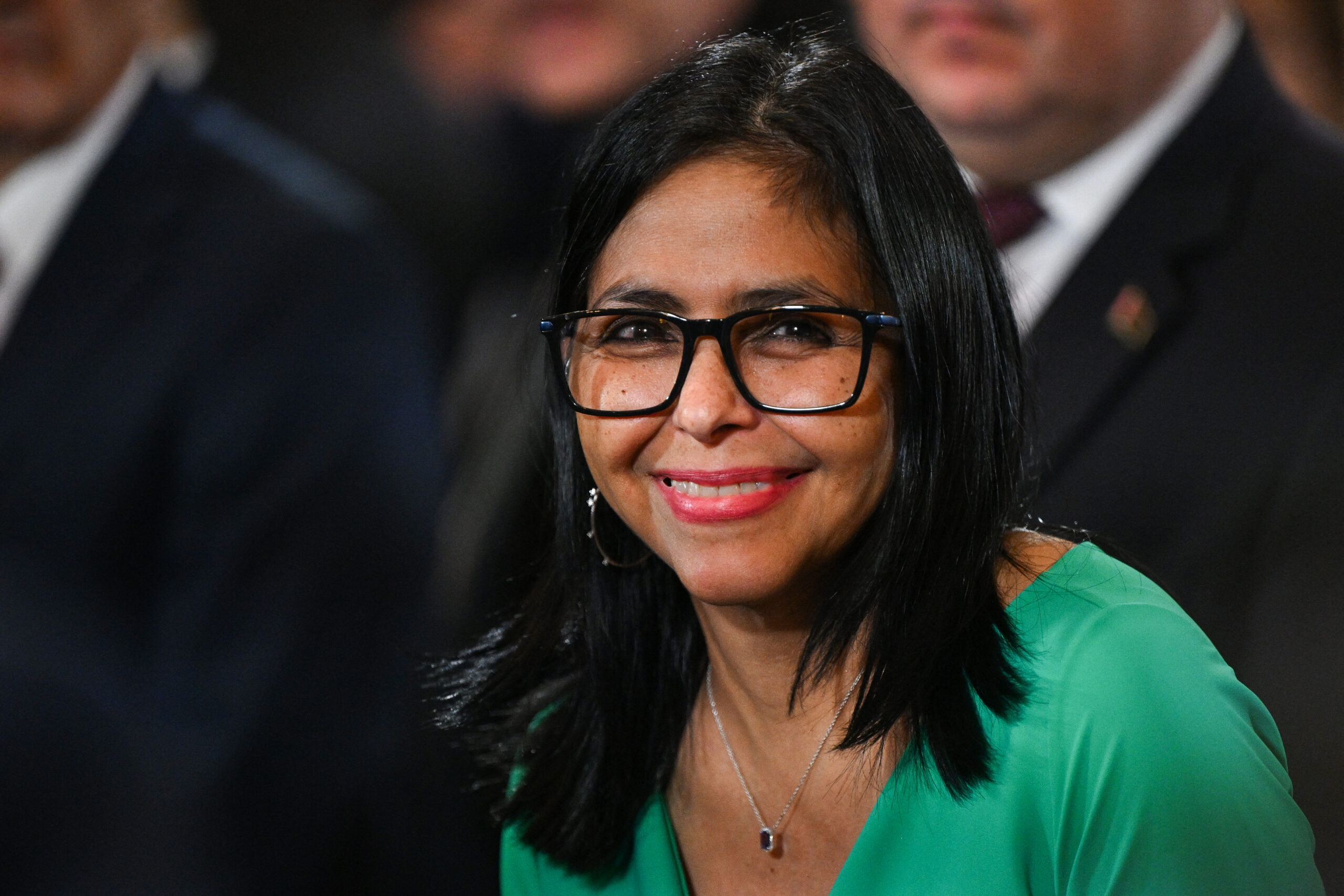
Delcy Settles In

Venezuela’s acting president has worked hard to make her new role permanent.

VENEZUELA-US-CONFLICT-CRISIS

Delcy Rodríguez’s 90-day term as “acting president” of the Bolivarian Republic of Venezuela officially expired earlier this month—but don’t expect her to go anywhere. Her predecessor, Nicolás Maduro Moros, currently languishing in a New York prison after his sequestration in a daring night raid by American troops, is well on his way to becoming an afterthought, despite legally still holding the post of president of Venezuela. He will not be greatly missed.

In his place, his erstwhile vice president is well on her way to making the presidential palace a comfortable, and permanent, home. Her administration is quietly consolidating power, promoting loyalists to key positions and beginning the process of dismantling the institutional structure Maduro inherited from Hugo Chávez and made his own. 

Last month, Rodríguez dismissed Minister of Defense Vladimir Padrino López, widely considered one of the most powerful men in the government, who held that post since being elevated to it by Maduro in 2014. His replacement, Gen. Gustavo González López, served for several years as the head of Venezuela’s sinister Bolivarian National Intelligence Service (SEBIN)—an agency that falls under the purview of the Office of the Vice President, where Delcy Rodríguez has served since mid-2018. Their collaboration appears to have been profitable to both parties: the new defense minister has been tasked with reforming the armed forces for the dawning new era and has gone about it with considerable promptness. The clumsy ideological slogans of the Bolivarian Revolution, which once graced all communications from the Ministry of Defense—¡Chávez vive, la lucha sigue! (Chávez lives, the fight continues!) for example— have all disappeared. Only the professional and innocuous ¡Venceremos! (We will triumph!) has been retained as a motto of the country’s armed forces.

Along with the replacement of Vladimir Padrino, Rodríguez has made a number of lower-profile changes in the government. The high command of the military has been almost entirely shaken up—no great surprise after its humiliating failure in January—and Rodríguez has replaced the heads of nearly half of all the ministries in her cabinet, including the ministers responsible for transportation, hydrocarbons, electric power, labor, housing, and communications. 

Emblematic of the changes is her dismissal of Eduardo Piñate as minister of Labor. Piñate, a fervent Marxist and a socialist agitator since the 1970s, became an important political figure in Venezuela after the Bolivarian Revolution. He was appointed by Maduro to serve as the presidential secretary of the United Socialist Party of Venezuela (PSUV), the legislative arm of Maduro’s movement, and served as minister of education, minister of labor, and governor of his home state of Apure before being appointed secretary of labor for a second time in 2024. Considered one of Maduro’s “strongmen,” along with figures like Diosdado Cabello and Jorge Rodríguez, he now finds himself on the outside. His replacement, Carlos Castillo, is a lawyer specializing in labor law who also serves as a judge on Venezuela’s highest court.

In addition to making personnel changes, Rodríguez is working hard on revising the rotten Bolivarian socialist economic structures that have sunk Venezuela into squalid poverty (all under the watchful eye of Uncle Sam and his pacific gunboat fleet). The most pressing matter concerns revitalizing Venezuela’s crumbling oilfields, a process Rodríguez began promptly by passing a new law opening up the oil and gas industry for private investment in January. The legal and regulatory regime is still far from what most oil companies would consider acceptable, but the country has taken the first few steps on the long road to unwinding Chavista expropriations and the nationalization of Venezuelan energy resources.

But the changes are not limited to the energy industry. On Thursday, the Venezuelan legislature approved a new law opening up the country’s mining industry as well, raising the prospect of expansive ventures in largely unexploited Venezuelan mineral resources. Venezuela has some of the world’s largest gold reserves and a wealth of other vital minerals, including rare earths. American interest in the sector is clear—Secretary of the Interior Doug Burgum visited Venezuela with dozens of mining executives in March—and would provide an opportunity for the country to vastly expand an essentially untapped sector of its economy. The endeavor is likely to prove much more difficult than it first appears—the Orinoco Belt, Venezuela’s mining region, is largely controlled by criminal organizations and drug cartels that profit from illegal gold mining—but could prove lucrative in the long-term.

The U.S. has reciprocated Delcy Rodríguez’s efforts to open the country and cooperate economically with American business. In March, it officially recognized her as Venezuela’s leader (a courtesy not extended to Maduro, who both the Trump and Biden administrations maintained was an illegitimate president after 2019) and announced that the two countries would reestablish formal diplomatic ties after seven years of suspension. Going further still, on April 1 the Treasury Department lifted its sanctions on Rodríguez—part of the process of allowing the president to take over the American subsidiaries of Venezuela’s state oil corporation, but no doubt a significant benefit to Rodríguez personally as well.

The ongoing transformation in bilateral relations has raised hopes and fears among Venezuela’s people and the opposition at home and abroad. The loosening economic measures and the promise of American investment are producing the first hope for meaningful economic recovery the country has had in a long time, a desperately needed prospect for the suffering populace. 

But there are also concerns from opposition politicians that the institutional legitimacy afforded by an economic boom and cooperation with the Americans could serve to legitimize and entrench her government, rendering a return to vigorous democratic competition impossible. It is likely for this reason that María Corina Machado, having been disappointed in her hopes to receive help from the Trump administration to supplant the Chavista government, is planning a dramatic return to the country regardless of the wishes of the United States.

Either way, Delcy Rodríguez and the Trump administration appear perfectly content with their current partnership. It may continue for a long time yet.

The post Delcy Settles In appeared first on The American Conservative.

Florida Cops Pull Dozens of Truck Drivers from Roads – Including Illegal Aliens With ‘Literally No Name’

Florida authorities announced that they recently conducted an enforcement crackdown for commercial trucks, resulting in 176 drivers being removed from service — and a few dozen immigration arrests.

Over the course of four days, Florida Highway Patrol and other agencies examined over 3,300 vehicles, according to a report from WKMG.

They observed many safety issues and tried to resolve them.

“The most dangerous things we see are cracked brakes and broken airlines,” Major Tom Pikul of Florida Highway Patrol told the outlet.

“If there is an air release in a brake line, they have no brakes.”

Florida Department of Law Enforcement Commissioner Mark Glass meanwhile said that authorities came across serious identification issues.

“Some of the driver’s licenses that we would find wouldn’t even have a name on the CDL — literally no name,” he revealed.

The enforcement action resulted in dozens of arrests — including 35 drivers on criminal charges and 42 on immigration violations.

Florida agencies put about 10 percent of the drivers they inspected out of service.

That level marked an uptick from past enforcement efforts.

The operation comes as state and federal authorities draw attention to the dangers of unqualified foreign truck drivers — some of whom are illegal aliens, and some of whom have limited English proficiency or familiarity with traffic laws.

In one recent example, a video from Florida Highway Patrol showed a semitruck moving across lanes on Interstate 75 — prompting several other drivers to call the police.

WOFL reported that the driver blew a 0.27 — seven times the legal alcohol limit for commercial drivers — during a breathalyzer test.

They even found alcohol in the front seat.

The driver lives in New York but originally comes from Uzbekistan, and body camera footage indicated that he had limited understanding of English.

U.S. Transportation Secretary Sean Duffy recently issued a final rule banning “unqualified foreign drivers from obtaining licenses to drive commercial trucks and buses.”

“For far too long, America has allowed dangerous foreign drivers to abuse our truck licensing systems — wreaking havoc on our roadways. This safety loophole ends today,” he said in a statement.

“Moving forward, unqualified foreign drivers will be unable to get a license to operate an 80,000-pound big rig. Under President Trump’s leadership, we are putting the safety of the driving public first. From enforcing English language standards to holding fraudulent carriers accountable, we will continue to attack this crisis on our roads head on.”

This article appeared originally on The Western Journal.

The post Florida Cops Pull Dozens of Truck Drivers from Roads – Including Illegal Aliens With ‘Literally No Name’ appeared first on The Gateway Pundit.

Daughter of Far-Left Ostroushko Family That Brutally Assaulted TPUSA Journalist Savanah Hernandez Publicly Denounces Family’s Cowardly Attack – “Violence is Never Acceptable… I Do Not Align With My Family’s Actions At All”

A young woman smiles in the foreground, while three individuals in a montage display intense emotions, highlighting a contrasting mood in the image.

The radical left just can’t help themselves, and now even their own family members are turning on them.

As The Gateway Pundit previously reported, conservative journalist and TPUSA Frontlines reporter Savanah Hernandez was viciously assaulted by a deranged far-left anti-ICE mob outside the Whipple ICE Facility in Minneapolis on Saturday during their unhinged “National F*ck ICE Day” meltdown.

The attackers weren’t random protesters. They were a family of radical extremists: Chris Ostroushko (the self-proclaimed “Minnesota Angry Man”), his wife DeYanna, and their daughter Paige Ostroushko (aka “MN Angry Daughter,” a University of Wisconsin-Stevens Point soccer player).

Video footage captured the entire cowardly assault: the family swarming Hernandez, blasting whistles in her ears, waving dildos in her face, screaming obscenities, punching her, and slamming her to the concrete simply because she was filming their public temper tantrum on a public street.

Hernandez wasn’t even conducting interviews, she was just doing her job as a journalist.

Hernandez has identified the family by name and is pressing charges. Law enforcement has confirmed charges are coming.

Hernandez wrote, “Paige, DeYanna and Chris Ostroushko. You’re not going to get away with this. I am going to do everything in my power to make sure you’re charged for the brutal attack you committed against me.”

The man who shoved Savannah Hernandez to the concrete was identified as Chris Ostroushko, the self-proclaimed “Minnesota Angry Man.”

But the real story gets even better, his daughter, Paige Ostroushko (who goes by “MN Angry Daughter” online).

When police moved in, Paige tried to resist arrest like the entitled radical she is. She was briefly detained but released.

Her boyfriend, however, wasn’t so lucky.

Paige’s boyfriend, 20-year-old Lorenzo Amadeo Garcia of St. Cloud, was arrested on probable cause for obstructing police. Garcia’s father was allegedly deported to Mexico.

Paige herself took to video to cry foul and rewrite history.

Now comes the stunning twist that exposes just how toxic this family’s far-left ideology has become.

In a powerful Facebook statement, another daughter and sister in the Ostroushko family, Desiree Ostroushko, has completely broken ranks and denounced the brutal attack on Savanah Hernandez. She wants the world to know she does NOT stand with her family’s violent leftist rage.

Smiling woman with long brown hair and green eyes in a bright indoor setting, wearing a light top and displaying a warm expression.
Desiree Ostroushko (Credit: Facebook)

Here is her full statement:

“I need to be very clear about where I stand.

I do not align with my family’s actions in this situation at all. I don’t agree with what was done, I don’t support it, and I don’t stand behind it in any way. Violence is never acceptable to me, no matter the circumstances, opinions, or political beliefs involved.

What happened to Savanah was wrong. Plain and simple. Everyone has a right to speak, to express themselves, and to be heard without fear of being attacked. That’s something I will always stand on.

I also want to be honest if politics is going to turn into violence, hatred, or harming other people, I will remove myself completely. I will not be part of that, even if it means creating distance from my own family. My values matter, and I refuse to compromise them.

This isn’t easy to say, but it’s important. I believe in respect, accountability, and doing what’s right even when it’s uncomfortable or painful.

I stand for peace. I stand for people being able to use their voice safely. And I will always stand on that.

[…]

I also want to add this for clarity this isn’t new for me.

I haven’t aligned with them or their behavior in years. I’ve seen and experienced enough firsthand to know the kind of actions they’re capable of, and it’s exactly why I’ve chosen to distance myself.

What you’re seeing now is not a reflection of me, my values, or the life I’m building. I stand firmly against it, and I always have.”

Desiree said in a separate comment:

“I’m his second daughter and I’ve experienced firsthand how he’s publicly and personally put me down simply because I don’t align with their beliefs. That’s a big part of why l’ve chosen to distance myself from them. Watching situations like this unfold only reinforces that decision.

This behavior is not something I stand for it’s honestly disappointing and disturbing.”

The post Daughter of Far-Left Ostroushko Family That Brutally Assaulted TPUSA Journalist Savanah Hernandez Publicly Denounces Family’s Cowardly Attack – “Violence is Never Acceptable… I Do Not Align With My Family’s Actions At All” appeared first on The Gateway Pundit.