Cepeda, Valencia, and De la Espriella Make Final Push as Colombia’s Undecided Voters Hold the Balance

Three political figures engaged in discussion, highlighting diverse perspectives on current issues in a formal setting.

The three main contenders for the Presidency of Colombia concluded their respective electoral campaigns this Sunday with massive public mobilizations, executing a final and aggressive strategic push to capture the critical undecided vote ahead of the first-round ballot next Sunday, May 31.

This looming election represents a historic turning point for the nation as citizens head to the polls to choose the successor to the current leftist incumbent, Gustavo Petro.

According to the latest and most rigorous polling data released by prestigious national survey firms such as Invamer, Guarumo, and AtlasIntel, the segment of voters who have yet to choose a candidate hovers right around the ten percent mark. This highly volatile margin is narrow enough to decisively tilt the scales for ruling-party leftist Senator Iván Cepeda, independent right-wing lawyer Abelardo de la Espriella, or conservative Senator Paloma Valencia, who currently absorb the vast majority of public support.

poll colombia

The battlefield of these popular demonstrations vividly exposed the deep ideological fractures splitting the nation, with intense political friction concentrating in the Caribbean region.

The progressive candidate, Iván Cepeda, gathered his grassroots base in the working-class sector of Barranquilla’s Carrera 50 par vial. Meanwhile, in that very same city, Abelardo de la Espriella orchestrated a massive display of pyrotechnics and modern tech to overflow the Malecón del Río, explicitly targeting the current economic model and demanding a total rejection of progressivism’s broken promises.

Concurrently, Senator Paloma Valencia chose to focus her message of law, order, and institutional integrity within the nation’s heartland, gathering over twelve thousand loyal supporters inside Bogotá’s Movistar Arena.

With this major show of strength, Valencia actively defied the recent morning polling numbers, loudly proclaiming to the crowd that her platform does not work to satisfy corporate media surveys, but rather to build a definitive victory at the ballot box by rescuing the private sector, restoring economic growth, and reinstating democratic security across the countryside.

This crucial democratic crossroads arrives amid an atmosphere of severe social tension, where families across the vast landscapes of the Hispano-American geography observe with profound alarm the visible consequences of institutional chaos, the sharp rise of organized crime in local neighborhoods, and the stagnation of private enterprise.

These troubling realities have transformed everyday street conversations into an absolute clamor for an immediate return to legality, legitimate authority, and social stability throughout the entire Colombian territory.

Small business owners in downtown commercial zones and independent workers are openly venting their complete exhaustion under heavy fiscal burdens and deteriorating public spaces, pleading for firm platforms that defend private property and guarantee a safe environment for their children.

Historical experience systematically demonstrates that the radical left habitually governs exclusively from the comfort of bureaucratic offices and detached globalist agendas, completely abandoning the everyday citizen to their fate while waving demagogic flags that tear down traditional family structures, undermine essential institutions, and plunge productive sectors into deep uncertainty and moral decay.

This toxic statist formula is exactly what working-class citizens intend to halt this Sunday through a conscious vote and a uncompromising defense of their national tradition.

Read more:

The post Cepeda, Valencia, and De la Espriella Make Final Push as Colombia’s Undecided Voters Hold the Balance appeared first on The Gateway Pundit.

Widow of ‘American Sniper’ Chris Kyle Hits Back Against Dem Senate Candidate for ‘Making Things Up’

Taya Kyle discusses comments made by Graham Platner during a Fox News segment on Memorial Day, featuring a background image of military personnel.

Taya Kyle discusses comments made by Graham Platner during a Fox News segment on Memorial Day, featuring a background image of military personnel.

Taya Kyle, widow of the late Navy SEAL Chris Kyle, accused Maine Democratic U.S. Senate candidate Graham Platner of making things up regarding her husband.

During a 2024 podcast interview, Platner claimed that Kyle ran up his kill count by shooting unarmed civilians while he served in a unit known as Task Force Bruiser.

“[Kyle’s] stories about how many people he was shooting certainly tracked with the behavior I witnessed [in Ramadi, Iraq]. It’s relatively easy to get high numbers like that if you’re a little less discriminating in your fire than, say, a more professional unit would be,” Platner said.

“I almost felt like there was like a weird practical joke being played on me by the war that, like, all these years later, I’m, like, having to, like… People are telling me, like, ‘Oh, look how great this guy is, these guys are amazing heroes’ — this whole incredible thing. The paragon of leadership, and I’m just sitting there, like, ‘Am I living in, like, an alternate reality?’ Because this is the exact opposite of my experience,” Platner, a Marine Corps and Army veteran who served three tours in Iraq and one in Afghanistan, added.

Kyle’s widow, Taya Kyle, responded, telling Fox News, “My family and I, my kids and I, we’d love to get on here and say, ‘It doesn’t matter when people say things like that’ … but the truth is, it does hurt.”

“Something like this, where it’s so obvious to us that [Platner] did not know him, that he’s making things up, that it’s the polar opposite of what Chris said and did, it cheapens it,” she added. “I can’t imagine anyone voting for somebody like that.”

Chris Kyle was shot and killed at a firing range in Texas in 2014 by a Marine Corps veteran suffering from post-traumatic stress disorder, whom he was trying to help.

Platner also smeared a U.S. Army veteran, who received a Purple Heart, for his service in Afghanistan.

In his since-deleted Reddit account, Platner wrote in 2019, “This video never gets old,” referring to viral footage taken by PFC Ted Daniels’s helmet cam during a clash with Taliban fighters in 2012.

“Dumb motherf***er didn’t deserve to live. At least his stupidity and fat a** wheezing are available for all future infantrymen to witness and hold in contempt. Poor marksmanship on the Taliban’s part is the only reason this mouthbreather made it home, he managed to make every possible s*** decision possible when it comes to small unit combat,” Platner wrote.

Daniels told The Washington Post in 2012 that he was hoping to draw fire away from his fellow squad members when he moved down a rocky hillside in the open before taking partial cover as bullets whizzed nearby. All his squadmates survived the engagement.

Daniels told the New York Post in an article published on Sunday regarding Graham’s 2019 comments, “I’m very thick-skinned, and he said it… I don’t want an apology, and any apology from him [Graham] at this point would definitely not be sincere.”

“What I’d really like is for [Sen.] Elizabeth Warren, [Senate Minority Leader] Chuck Schumer, [Sen.] Bernie Sanders, [House Minority Leader] Hakeem Jeffries, and everybody else on the far left to tell my children to their face that they are endorsing and supporting a man who said that their father should have not lived. Cheering on the death of their father,” the veteran said.

Daniels — who is 6′ 4″ — also questioned whether Graham would have the courage to confront him in person, rather than berate him on an online forum.

“I’m a pretty intimidating person to stand in front of, and it’s easy for them to shoot a mouth off behind a keyboard, but face to face, it’s crickets,” he said, adding, “and I kind of wonder what Graham Platner’s response would be if he were face to face with me.”

This article appeared originally on The Western Journal.

The post Widow of ‘American Sniper’ Chris Kyle Hits Back Against Dem Senate Candidate for ‘Making Things Up’ appeared first on The Gateway Pundit.

Fox News Issues Explanation After Guest Goes Mega-Viral for Allegedly Wearing a ‘Creepy Full-Face Mask’

Man with a distinctive neck appearance wearing a tan blazer, shown in a split image highlighting his facial expression and collar area.

Man with a distinctive neck appearance wearing a tan blazer, shown in a split image highlighting his facial expression and collar area.
Vice Admiral Robert Harward went viral last week after supposedly wearing a “creepy full-face mask.” Credit: Fox News screenshot

Fox News has issued a statement after one of its guests went viral for supposedly wearing a “creepy full-face mask” during his appearance on the network.

As The Gateway Pundit’s Cassandra MacDonald reported, social media users erupted on Thursday night after a Fox News segment featuring retired Vice Admiral Robert Harward went viral because he appeared to be wearing a “creepy full-face mask.”

Harward is a retired U.S. Navy Vice Admiral and decorated Navy SEAL. He has served as Deputy Commander of U.S. Central Command (CENTCOM), led special operations across multiple theaters, and is fluent in Farsi, having lived in Tehran as a teenager.

The topic of the interview was President Donald Trump’s hardline approach to Iran, including crushing sanctions, potential military options, control of the Strait of Hormuz, and the strategy of forcing the regime to capitulate without another nuclear deal.

Harward told viewers that Trump “has time on his hands” and can deliver a decisive strike. He stressed the importance of sustained economic pressure and naval strength over rushed negotiations.

But the clip did not go viral for what he was saying. Instead, social media was captivated by Harward’s neck, which had a dark line or what appeared to be a “separation” below the jawline and at the collar.

Immediately, people began insisting it was the edge of a hyper-realistic silicone full-face mask.

Others pointed out that his face looked “too smooth,” his expressions “stiff,” or that he “didn’t blink enough.”

WATCH:

Following the social media uproar, Fox News released a statement trying to explain what happened:

Vice Admiral Robert Harward appeared on FOX News Channel earlier this week via a remote, mobile camera operated by an outside vendor.

During the interview, lighting conditions in the van contrasted with the vice admiral’s jacket, which caused a shadow to appear on his neck.

Harward has not responded to the controversy at this time.

Do you believe Fox News’s explanation for what happened, or is something more suspicious afoot?

The post Fox News Issues Explanation After Guest Goes Mega-Viral for Allegedly Wearing a ‘Creepy Full-Face Mask’ appeared first on The Gateway Pundit.

How Africa Can Work

How Africa Can Work

A new book shows that development is not a matter of chance, but of policy.

CYCLING-ROAD-WORLD-RWA-MEN-ELITE-PODIUM
(Anne-Christine POUJOULAT / AFP via Getty Images)

How Africa Works: Success and Failure on the World’s Last Developmental Frontier by Joe Studwell. Atlantic Monthly Press, 435 pages.

It seems like every man who has given any thought to Africa, and many who haven’t, has a pet cause for Africa’s perpetual dysfunction, which usually conveniently lines up with his preexisting world view. In How Africa Works: Success and Failure on the World’s Last Developmental Frontier, Joe Studwell provides a refreshingly non-ideological look at what has worked in those African states that have experienced high levels of economic growth in the post-1960 independence era. Identifying Botswana, Mauritius, Ethiopia, and Rwanda as success stories, the text examines the broader issues in Africa and then focuses on those four states. The conclusion he reaches is that, like the great successes of Asia, the African states which have prospered have generally sought broad-based political support and then largely ignored the advice of “orthodox” economists, the World Bank, and the International Monetary Fund, and focused instead on the development of an agricultural economy to create consumer demand, imposed capital controls in their early stages of development, and focused on coherent, government-led development plans. Even for people like me, who know a lot about Africa and think about it all the time, Studwell has done a remarkable job at providing a clear picture of the continent’s problems and giving a realistic but optimistic assessment of what the future may hold in those states where the political leadership manages to maintain focus on successful developmental policies.

The clearest thesis of this text is that, in states that have become affluent, development has followed the same general process. The modern world, however, is “pulling the ladder up” on Africa by applying rules and concerns that our own countries did not have when they were poor. This is a fairly common criticism, and broadly true, but it isn’t always clear what a person means by it. One simple example is countries which got rich off of the energy provided by oil paying African nations not to develop their economy with fossil fuels, due to global carbon concerns. What is freshest about this book is that it avoids moralizing and instead is entirely practical, which is the attitude that needs to be taken towards Africa’s economic problems. 

For example, the book rejects the idea that democracy has any specific association with economic development, instead showing specific successful policy prescriptions that may be provided by any type of government (though he adds that democracy has other, non-economic, positive traits.) Similarly, he explains without moralizing why colonialism wasn’t economically positive for either side when practiced in Africa. Most notably, the text extensively discusses the garment trade as a rare form of low-skill factory work that can successfully be brought into undeveloped countries by outside firms and compete in global markets without subjecting readers to lamentations about “sweatshops.” Even slavery is primarily treated as an economic phenomenon, rather than subjecting the reader to constant admonitions about how slavery is morally bad and abusive towards slaves.

One of the most common misconceptions about Africa is that it is facing some sort of Malthusian population bomb. Africa as a whole has historically been extremely underpopulated, principally due to a high “disease burden” from parasites and other causes of early childhood death. It seems alarming that what was French Equatorial Africa has grown in population around 10 times since colonialism ended, but Africa had a population of only 230 million people in 1950, despite being about the size of the United States, India, China, and Europe combined.

It is a huge impediment to economic development simply to lack sizable cities, as Africa did at the start of the 20th century. Furthermore, there was no incentive to improve land, because there has been so much more arable land than people. Africa is only now reaching the level of population density that Asia had in 1960. We should remember that everyone at that time worried about Asia’s growing population; only three generations later, those same states are facing the opposite emergency. The reasons we imagine Africa to be overpopulated, beyond the distortions of the Mercator Projection making it appear smaller than it is, are that Africa’s population has grown faster than its economy, and that it has the least dense cities on Earth—commonly metal shacks stretching out endlessly instead of apartment buildings.

A common narrative of the failure of Africa’s post-colonial development is that they made the mistake of focusing on industrialization instead of improving agriculture. In many cases, the export plantations, often the only source of forex, were either broken up or given over to incompetent cronies of the new regime. There is truth to this, but the reality is that these plantations were always expensively subsidized by colonial governments in various ways, including infrastructure. What Studwell found is that for Africa’s development level it was much better to focus on smallholder agriculture, which is more efficient per acre. Part of the issue is that the greater “efficiency” of modern agriculture is in its low labor costs, and assumes a level of economic development that has consumers and an already occupied public. In reality, Africans spend a tremendous amount of time “milling around” because there are no jobs, and then those are people largely out of the economy, either as producers or as consumers. 

In short, without smallholder farmers making money there is also no work in the cities, and no one to buy consumer products. It is very difficult for a domestic industry to grow enough to become an export business unless there are local consumers, and this rural surplus also peoples the cities with workers, which is the process England went through before and during industrialization. Because of this, “extension programs,” such as those the USDA Extension Agents the U.S. supplied in the early 20th century, along with fertilizer and improved seed subsidies for smallholders, are wonderful for economic growth. I am reminded of a quote from William Jennings Bryan’s famous 1896 “Cross of Gold” speech: “The great cities rest upon these broad and fertile prairies. Burn down your cities and leave our farms, and your cities will spring up again as if by magic. But destroy our farms and the grass will grow in the streets of every city in the country.”

Though there are differences between the states featured in Studwell’s book, and nothing went perfectly for them, the most important trait of all four African success stories was competent administration and following a development plan. (Although in the case of Botswana, the country benefited the most from wisdom and integrity in managing its discovered diamond resources.) The main challenge Africa faces that differentiates it from Asia (which Studwell spent much of his career writing about) is that there tends to be a great deal of ethnic diversity and recently created states, whereas the Asian countries usually possessed a strong, preexisting national identity. When policies have the clear goal of public prosperity, it is fairly easy to get “buy-in,” though still important to present your case to the public. In every instance it is also crucial to not embrace politics of grievance, be it against former colonial powers or privileged groups within society.

Most notably, though, despite the 1980s African debt crisis, it was necessary to ignore the demands of the World Bank and the IMF and not to embrace free trade in goods nor currency to allow for domestic investment. It may seem obvious, both rationally and from the experience of history, that free trade between developed nations and undeveloped nations causes some problems for both, but this is anathema to the modern “orthodox” economist. A final interesting point is that, while I am among those who considered African foreign aid to largely be an unaccountable black hole, all of these successful African states received much more foreign aid than average, and it did help them. But the causality runs the opposite direction one would think: Donors favored those states due to their ability to finish projects on time and on budget, and thus to demonstrate that aid to Africa was accomplishing something. 

The book’s weakest point is its curious failure to mention the rapid growth of investment in Africa’s economy by the United Arab Emirates. This bothered me enough that I contacted the author seeking comment, who told me the primary reason for that exclusion was to keep the book focused. He also downplayed the importance of that story, and mentioned that international investments in Africa are commonly routed through Dubai, likening the situation to using Hong Kong to invest in mainland China. I do not find this latter part a convincing argument, both because Hong Kong is part of China and, more importantly, because many of the UAE investments are from conglomerates owned by the royal families, blurring the line between state policy and private interest. Yet applying the lessons of the text, I find that UAE investments in agricultural land and mining are less of a concern than I believed, while their investments in renewable energy and logistics infrastructure are profoundly helpful for Africa’s economic growth. (Their involvement in a myriad of African conflicts is genuinely outside the scope of the text.) This didn’t leave anything noticeably lacking from the narrative to a normal reader, but to someone such as myself who has the role of the UAE in Africa on the brain, it felt like a glaring omission.

Overall, How Africa Works is an incredible work that presents an optimistic picture for the future of a continent that may contain half of the world’s population by 2100. It is of vital importance that Africa’s economic growth manages to surpass its population growth, and there is every reason to believe that with the continent’s young, energetic, and increasingly well-educated population it can do so. In this book, Studwell has shown which developmental policies work in practice. I suppose all that remains is for the world’s economists to decide if these developmental policies can work in theory.

The post How Africa Can Work appeared first on The American Conservative.

Breaking: Woke Pope Leo Apologizes for Slavery, Claims Church Played Role in Trans-Atlantic Slave Trade

Pope addressing an audience while holding a microphone, wearing traditional papal attire and surrounded by individuals in a formal setting.

Pope addressing an audience while holding a microphone, wearing traditional papal attire and surrounded by individuals in a formal setting.

The Vatican is now apologizing for events that occurred centuries before anyone alive today was born.

Pope Leo XIV formally apologized on Monday for the Catholic Church’s role in “legitimizing” slavery, according to the Associated Press.

The apology reportedly appeared in Leo’s first encyclical, “Magnifica Humanitas,” which mostly focused on artificial intelligence.

“It is impossible not to feel deep sorrow when contemplating the immense suffering and humiliation endured by so many,” Leo wrote.

It was the first-ever official papal apology, and it assigned blame to the Vatican for the slave trade.

“For this, in the name of the Church, I sincerely ask for pardon,” the holy father added.

He called the church’s record on slavery “a wound in Christian memory.”

“The pope said that the church has long affirmed the dignity of every human being as the basis of its doctrine, ‘even if it took eighteen centuries for its full incompatibility with slavery to be explicitly recognized,’” the Associated Press article read.

“This constitutes a wound in Christian memory, one from which we cannot consider ourselves detached.”

His encyclical also mentioned that the Holy See had “intervened several times in order to regulate and legitimize forms of subjugation.”

“Yet neither can we deny or diminish the delay with which both society and the church came to denounce the scourge of slavery,” he wrote.

Since the beginning of his papacy last year, Leo, a Chicago native, has repeatedly embraced liberal policies and climate change narratives.

CBS News reported on his criticism of the U.S. government back in April, with regards to the Iran conflict and enforcement of federal immigration law.

The outlet declared that “Pope Leo’s church has emerged as a voice of moral opposition to the war in Iran and the crackdown on immigration.”

This article appeared originally on The Western Journal.

The post Breaking: Woke Pope Leo Apologizes for Slavery, Claims Church Played Role in Trans-Atlantic Slave Trade appeared first on The Gateway Pundit.

U.S. Military Launches Precision “Self-Defense Strikes” in Southern Iran – Neutralizing IRGC Threats to American Troops After Radical Regime’s Latest Provocations

Map highlighting Bandar Abbas in Iran, located near the strategic Strait of Hormuz, crucial for maritime trade routes.

The U.S. military has executed targeted self-defense strikes in southern Iran to protect our troops from escalating threats by the Iranian regime’s terrorist proxies and Islamic Revolutionary Guard Corps (IRGC) forces.

U.S. Central Command (CENTCOM) confirmed the operation Monday night, hitting two IRGC boats mining the critical Strait of Hormuz and a surface-to-air missile site in Bandar Abbas.

According to CENTCOM spokesperson Capt. Tim Hawkins, the strikes were carried out “to protect our troops from threats posed by Iranian forces” while officials insisted the U.S. was still exercising restraint amid the fragile ceasefire environment.

“Targets included missile launch sites and Iranian boats attempting to emplace mines. U.S. Central Command continues to defend our forces while using restraint during the ongoing ceasefire,” Hawkins added.

FOX News reported:

According to a senior U.S. official, two Iranian boats were spotted laying mines in the Strait of Hormuz, while forces also responded after a missile site had targeted U.S. warplanes.

The U.S. military eliminated both IRGC vessels and also struck the SAM, or surface-to-air missile, site in Bandar Abbas.

“These were defensive strikes,” the official told Fox News. The strikes do not indicate the ceasefire with Iran is over, two additional sources said.

This came after explosions were heard Monday in various regions across the Strait of Hormuz, with one explosion heard in Iran’s Bandar Abbas in the country’s south.

Other explosions were reported close to Sirik and Jask near the strategic waterway. The official confirmed Monday that the U.S. strikes were “over for now.”

WATCH:

President Trump had signaled earlier Monday that diplomatic talks with Iran were still progressing, but Tehran appears to have been playing a dangerous game, testing the limits while American negotiators pursued a potential agreement.

Trump wrote on Monday:

Negotiations with the Islamic Republic of Iran are proceeding nicely! It will only be a Great Deal for all or, no Deal at all — Back to the Battlefront and shooting, but bigger and stronger than ever before — And nobody wants that! During my discussions on Saturday with President Mohammed bin Salman Al Saud, of Saudi Arabia, Mohammed bin Zayed Al Nahyan, of The United Arab Emirates, Emir Tamim bin Hamad bin Khalifa Al Thani, Prime Minister Mohammed bin Abdulrahman bin Jassim bin Jaber Al Thani, and Minister Ali al-Thawadi, of Qatar, Field Marshal Syed Asim Munir Ahmed Shah, of Pakistan, President Recep Tayyip Erdoğan, of Türkiye, President Abdel Fattah El-Sisi, of Egypt, King Abdullah II, of Jordan, and King Hamad bin Isa Al Khalifa, of Bahrain, I stated that, after all the work done by the United States to try and pull this very complex puzzle together,  it should be mandatory that all of these Countries, at a minimum, simultaneously, sign onto the Abraham Accords.

Those Countries discussed are Saudi Arabia, The United Arab Emirates (already a Member!), Qatar, Pakistan, Türkiye, Egypt, Jordan, and Bahrain (already a Member!). It may be possible that one or two have a reason for not doing so, and that will be accepted, but most should be ready, willing, and able to make this Settlement with Iran a far more Historic Event than it would, otherwise, be.

The Abraham Accords have proven to be, for the Countries involved (The United Arab Emirates, Bahrain, Morocco, Sudan, and Kazakhstan), a Financial, Economic, and Social BOOM, even during this time of Conflict and War, with the current Members never even suggesting leaving, or taking so much as even a pause.

The reason for this is that the Abraham Accords have been great for them, and will be even better for everybody, and bring true Power, Strength, and Peace to the Middle East for the first time in 5,000 years.

It will be a Document respected like no other that has ever been signed, anywhere in the World. Its level of Importance and Prestige will be unparalleled! It should start with the immediate signing by Saudi Arabia and Qatar, and everybody else should follow suit. If they don’t, they should not be part of this Deal in that it shows bad intention. In speaking to numerous of the Great Leaders mentioned above, they would be honored, as soon as our Document is signed, to have the Islamic Republic of Iran as part of the Abraham Accords.

Wow, now that would be something special! This will be the most important Deal that any of these Great, but always in Conflict Countries, will ever sign. Nothing in the past, or in the future, will surpass it. Therefore, I am mandatorily requesting that all Countries immediately sign the Abraham Accords, and that, if Iran signs its Agreement with me, as President of the United States of America, it would be an Honor to have them also be part of this unparalleled World Coalition.

The Middle East would be United, Powerful, and Economically Strong, like perhaps no other area, anywhere in the World! By copy of this TRUTH, I am asking my Representatives to begin, and successfully complete, the process of signing these Countries into the already Historic Abraham Accords.

The post U.S. Military Launches Precision “Self-Defense Strikes” in Southern Iran – Neutralizing IRGC Threats to American Troops After Radical Regime’s Latest Provocations appeared first on The Gateway Pundit.

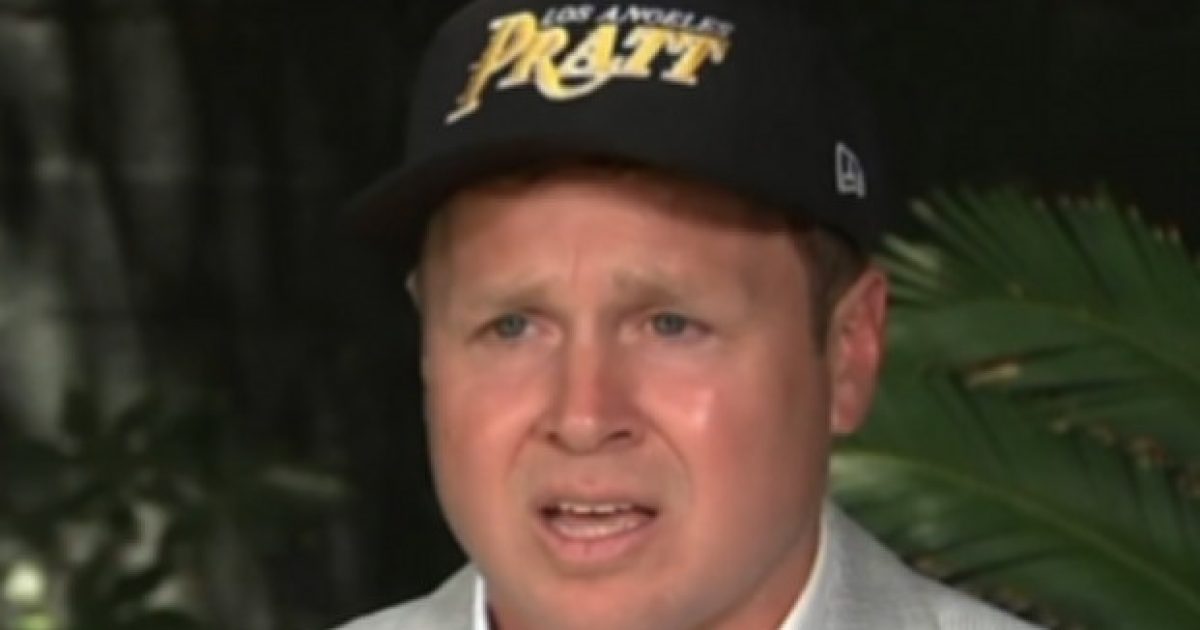
Spencer Pratt Educates Reporter About People Camping on LA Sidewalks: ‘They’re Not Homeless. They’re Drug Addicts.’ (VIDEO)

Screencap of Twitter/X video.

During a recent interview on ABC 7 in Los Angeles, mayoral candidate Spencer Pratt educated a reporter who questioned his ideas for dealing with the city’s massive homeless problem.

Pratt reminded him that most of the people living on the streets of LA are not even really homeless, but are primarily drug addicts who simply wish to live outside the system.

He also reminded the reporter that the vast majority of them are not even people from Los Angeles but people who came there to live this lifestyle.

Pratt pointed out that the city spends tens upon tens of billions per year on this problem and gets horrible results.

Partial transcript via ABC 7:

Josh Haskell: “What are your plans for the over 40,000 homeless in Los Angeles?”

Spencer Pratt: “Well, they’re not homeless. They’re drug addicts. Most of these people are addicted to fentanyl and meth. This isn’t Spencer making that up. There is places for all of these people to sleep in L.A. No matter what anybody tells you, we have housing and shelter for everyone that’s living on the street. They are choosing to be on the streets because they want to do drugs. They don’t want rules. They don’t want to listen. They want to have animals to abuse.”

Josh Haskell: “It’s going to take time to build a facility and money … How fast do you think you can do it?”

Spencer Pratt: “Literally, I went to Washington and I saw miles of the most insane, prefabricated housing and buildings. I asked all the CEOs of these companies, I said, ‘How long do these take?’ I met with FEMA and HUD … three days. Three days, and all of this is cheaper than trying to … kick senior citizens out of their buildings.”

Josh Haskell: “Where is this facility going to be?”

Spencer Pratt: “It’s on federal, beautiful, federal land property.”

Josh Haskell: “Where? In L.A. County?”

Spencer Pratt: “Well, when I’m mayor, I’ll go meet with the federal government and I’ll get the property. Right now, I’m just running, so I can’t give you the exact address because I don’t have the legal responsibility to go represent Los Angeles and say, ‘Can I have this land?’”

Watch the whole thing below:

He is right about all of this. This is why Pratt’s mayoral campaign is going viral.

He is saying things that have been needed to be said for years.

The post Spencer Pratt Educates Reporter About People Camping on LA Sidewalks: ‘They’re Not Homeless. They’re Drug Addicts.’ (VIDEO) appeared first on The Gateway Pundit.

THEY’VE LEARNED NOTHING: California Democrat Governor Candidate Tom Steyer Says ‘I’m Totally in Favor of Trans Athletes in High School’ (VIDEO)

Screencap of Twitter/X video.

Democrats learned absolutely nothing from the 2024 election and this proves it.

During a recent podcast appearance, Tom Steyer, the liberal billionaire Democrat running for governor of California, said that he is ‘totally’ in favor of trans athletes in high school.

This technically violates two public sentiments on this issue. Not only do people not want trans athletes in high school sports, people don’t want minors to be allowed to transition genders at all.

The 2024 election made the public’s position on this crystal clear but the Democrats just don’t care.

FOX News reports:

California gubernatorial candidate Tom Steyer defended transgender athletes competing in high school sports in a podcast posted on Sunday, arguing that excluding transgendered youth from athletics would worsen the emotional and mental health struggles many already face.

“I’m totally in favor of trans athletes in high school,” Steyer told “I’ve Had It” podcast host Jennifer Welch.

“When you understand the vulnerability, the stress, the danger of being a trans kid, and you understand almost half of them try to commit suicide, then you think, ‘We’re gonna punish those kids, we’re gonna cut them off from team sport.’ It’s like, no we’re not.”

Steyer made similar remarks when speaking to CBS Los Angeles but also branded dissidents for perpetuating a “right-wing attempt” to smear transgender individuals.

“To be clear, this is not some huge epidemic,” he said. “This is a right-wing attempt to victimize and villainize already vulnerable and desperate people, and my heart completely goes out to the people who are so sad, feel so rejected, and so unaccepted that half of them would try to kill themselves.”

Steyer is among a crowded field of Democrats vying to retain party control of the governorship once incumbent Gov. Gavin Newsom’s term expires.

See the video below:

How hilarious is it that Steyer is sitting in front of a sign that says tax billionaires? Someone should let him know that he is free to pay more money in taxes to the government whenever he wants to.

There is no need to change the tax law in order for that to happen.

The post THEY’VE LEARNED NOTHING: California Democrat Governor Candidate Tom Steyer Says ‘I’m Totally in Favor of Trans Athletes in High School’ (VIDEO) appeared first on The Gateway Pundit.

The Ancient Greeks’ Blackened Reputation

The Ancient Greeks’ Blackened Reputation

History’s winners take a beating at the movies.

Homer, The Odyssey.   Ulysses (Odysseus) killing the Suitors of his wife Penelope on the island of Ithaca
TakiMag
(Photo by Culture Club/Getty Images)

My friend Michael Mailer is an extremely talented film director and producer, most recently of Cutman and Little Audrey, the latter a true story about a little girl that created miracles. Michael’s father, the novelist Norman Mailer, taught me how to headbutt, and when I asked him if there was brain damage involved, he looked nonplussed. “Writers have harder heads than normal people,” he said. 

Be that as it may, Norman was a frustrated movie director. He introduced me to Elia Kazan, the renowned director, and Larry McMurtry, the great western writer whose Lonesome Dove and The Last Picture Show were made into a memorable television series and movie, respectively. The night Norman had Kazan to dinner in his Brooklyn house, I happened to be in a terrible mood. It had to do with women, what else? Kazan and I spoke in Greek to each other; my new friend asked me why I was down. Once I explained to him.he stood up from the table, came around to my side of it, put his hands on my shoulders and whispered to me in Greek: “All you have to do is be nice, and she will come back.” Sure enough, he turned out to be right. 

McMurtry also turned out to be as nice and as intelligent about the fairer sex as Kazan. I dined with him chez Mailer, this time with my wife Alexandra present, and McMurtry paid me the best compliment I have ever had. Even Norman was impressed. Then Larry and I dropped Alexandra off at home, and the two of us went drinking late into the night. We hit a couple of nightspots and ended the evening at five in the morning. Many years later he wrote nice things about me. 

The reason I bring these two talents up is because of how much I would love for them to still be around so I could ask them certain questions about casting. What would Gone with the Wind be like if a white woman had been cast as Mamie? Or for that matter, if a black actor portrayed Rhett Butler? Alas, Elia and Larry are filming and writing up in Heaven nowadays, but their legacies are reminders what real talents they were, and, on the other hand, how untalented the present bunch of moviemakers are. Only dense, totally giftless nincompoops do this sort of thing, casting actors of different color in well known roles. It is the only way to attract attention. The latest outrage is a movie of the Odyssey with a black Penelope pining away for 20 years, surrounded by suitors in Ithaca. As they say, you couldn’t make it up. But wait—this morning, while in the midst of writing this column, I read that it’s Helen of Troy that is portrayed by a black actress, not Penelope. Or perhaps both are. Who cares? 

The first book recounted to me as a child was the Iliad, and then the Odyssey. Hollywood’s ludicrous pandering to minorities was a very long way away. Helen was described as very white, very fair, and, of course, beautiful. In the Greek version she had been kidnapped by Paris. No Greek would ever admit that the wife of a Spartan king, any Spartan, in fact any Greek, would run away with a Trojan. I mentioned this fact to Jacques Sernas, a very feminine but extremely handsome French actor-gigolo whom I sat next to at a Riviera lunch very long ago. He played Paris in some trashy movie, in which the beautiful Rosanna Podesta portrayed Helen. At least I think so. He was not best pleased but very polite. Friends who had witnessed the exchange told me I had been a bully. The story made the Riviera rounds; some called it “The revenge of the Spartan.” 

Absurdity aside, and before quotas, I remember asking Elia Kazan why the ancient Greeks, with the exception of Achilles and Alexander the Great, were always depicted in a negative manner. Basically I was asking why Menelaus was shown to be fat, ugly and aggressive in the movies I had seen. If memory serves, he said because we were always the winners, hence the losers were shown in the nicest possible manner. 

Well, let’s get this straight once and for all: If Menelaus actually existed and was not a product of Homer’s imagination, he would have been neither fat nor ugly, because then the Spartans would not have elected him king. And here’s some unsolicited advice to the halfwits making “historical” movies in infantile dioramas: The actress playing Mrs. Danvers in Rebecca was nominated for an Oscar, but had she portrayed Mamie in Gone with the Wind, she would have been laughed off the screen. Ditto about Helen, Penelope, and Menelaus. Take it from an ancient Greek. I know better.  

The post The Ancient Greeks’ Blackened Reputation appeared first on The American Conservative.

Washington Risks Inflaming Sectarian Fears in Lebanon

Washington Risks Inflaming Sectarian Fears in Lebanon

Recent sanctions will entrench Hezbollah rather than weakening it.

LEBANON-US-DIPLOMACY-PROTEST
(Photo by MAHMOUD ZAYYAT/AFP via Getty Images)

In an unprecedented move, the Trump administration announced a decision to impose sanctions on officials in Lebanon’s military and security apparatus who are accused of aiding Hezbollah. The sanctions targeted a Lebanese Army general and a branch chief of the Lebanese Armed Forces’ Intelligence Directorate, marking the first time an American administration has taken such measures against members of Lebanese state institutions. Sanctions were also announced against members of the Lebanese Shi’ite Amal party, which is a close ally of Hezbollah, along with members of Hezbollah itself and Iran’s ambassador designate to Lebanon. 

“Today’s designations target individuals who are impeding Hizballah’s disarmament, including members of parliament, an Iranian diplomat violating Lebanon’s sovereignty, and Lebanese security officials who have abused their roles to benefit a terrorist organization,” read a statement from the State Department.

These designations come as Washington is taking up a more active role in Lebanon, hosting three rounds of direct talks between Lebanese and Israeli representatives, the first since 1993. The talks are being framed as part of a broader effort to reach a lasting peace between the two sides. Parallel efforts meanwhile are under way to crack down on Hezbollah. Prior to the recent sanctions, Secretary of State Marco Rubio revealed a plan to establish vetted Lebanese Army units tasked with Hezbollah’s disarmament. The Pentagon is also set to host a meeting between Lebanese and Israeli military officials next week, where it is expected that the issue of Hezbollah’s disarmament will be high on the agenda. According to media reports, the United States and Israel are pushing for Lebanese-Israeli military collaboration to end the group’s military presence in southern Lebanon, which is the country’s main battlefront with Israel.

That Trump is going further than any of his predecessors to disarm Hezbollah by sanctioning Lebanese security officials is another example of the immense and unprecedented influence Israel and its Washington allies exercise over American policy. Many of the prominent American “Israel Firsters”  that pushed for and cheered the war on Iran are the same people who have advocated a tougher stance against the Lebanese state as a way to force it to confront Hezbollah.

Earlier this year Senator Lindsey Graham (R-SC) cast doubt on the Lebanese Army’s credibility as a partner, after a brief and tense meeting with Lebanon’s Army Chief Rudolph Haykal in which the latter said that he does not consider Hezbollah a terrorist organisation.

The newly announced sanctions also appear to come from the playbook of the “Israel First” expert community in Washington.  David Schenker of the staunchly pro-Israeli Washington Institute for Near East Policy (WINEP) recently emphasized the need to rid the Lebanese Army’s ranks of individuals suspected of links with Hezbollah or harboring sympathies towards the group. Schenker’s colleague at WINEP, Hanin Ghaddar, argued during a congressional testimony in February that sanctioning senior officials in the Amal movement—Hezbollah’s Shi’ite ally and one of the targets of the latest sanctions—would go a long way in weakening Hezbollah.

As is the case with practically all the policies advocated by this camp, this path carries with it major risks. It is worth mentioning that all nine of the individuals recently sanctioned—including the two officials from the Lebanese military and General Security—belong to the Shi’ite sect. Washington risks creating a situation in which it will be seen as attempting not only to weaken Hezbollah but the entire Lebanese Shi’ite community. This is somewhat reminiscent of how the situation unfolded in Iraq following the U.S.-led war that toppled Saddam Hussein. American-administered policies like deba’athication—expelling members of the Ba’ath party from public sector jobs—led to a sense of Sunni marginalization, owing to the fact that many Ba’athists were Sunnis. That ended up working to the advantage of Abu Musab al-Zarqawi, the founder of Al Qaeda in Iraq, whose ideology planted the seeds for the later emergence of ISIS. Initially, at least, al-Zarqawi was able to attract a significant segment of Sunnis who saw in him their protector in post-Saddam Iraq.

While there are notable differences between the cases of Iraq and of Lebanon, there are nevertheless important commonalities. Like Iraqi Sunnis before them, Lebanese Shi’ites today consider themselves to be in an unprecedented vulnerable situation. This owes largely to two factors. The first stems from the recent Israeli military aggression against predominantly Shi’ite areas in Lebanon. According to UN experts, this aggression has taken place on an unprecedented scale. The second stems from the situation in post-Assad Syria and what many Lebanese Shiites likely perceive to be an anti-Shi’ite Salafi-jihadi threat leadership represented by the regime of Ahmad al-Sharaa.

There is evidence showing that an overwhelming majority of Lebanese Shiites see Hezbollah as their protector under this current situation. Based on a recent poll, 88 percent of the Shi’ite community are against the disarmament of the group.

By broadening its campaign to target not only Hezbollah but other Shi’ite political parties and members of this sect in the military and security services, the Trump administration will therefore probably reinforce the already existing sentiments among Lebanese Shi’ites that they have no one to turn to except Hezbollah. Rather than weakening the group, this will solidify its support and render its weapons a Shi’ite—as opposed to Iranian—cause. As a result, the prospects of sectarian strife resulting from any forceful attempts to disarm Hezbollah will increase even more, threatening to plunge the country into complete chaos.

The Trump administration would be better off if it ceases to heed the advice of the Israel Firsters on how to deal with Lebanon and the question of Hezbollah—not least given that this group has never attacked the United States. Fortunately, there are encouraging signs that the influence of the pro-Israel camp over Trump is waning, as Washington and Tehran appear to be on the verge of an agreement to avert further war.

The post Washington Risks Inflaming Sectarian Fears in Lebanon appeared first on The American Conservative.