Activist First Circuit Denies Trump Stay — $100,000 H-1B Fee Blocked, Opening Floodgates for Cheap Foreign Labor Over American Workers

According to USCIS data, India consistently accounts for the highest share of H-1B visa approvals, representing approximately 70% to 73% of all approved beneficiaries annually. (AI-Generated Image)

A three-judge panel of the radical First Circuit Court of Appeals on Friday denied the Trump administration’s emergency request to keep President Trump’s landmark $100,000 H-1B visa payment requirement in effect while the government appeals a lower court ruling that tossed it out.

The order leaves in place U.S. District Judge Leo T. Sorokin’s June 8 decision vacating the entire policy.

Sorokin, an Obama appointee, had ruled that the fee exceeded executive authority under the Administrative Procedure Act and was unconstitutionally ultra vires.

President Trump issued Proclamation 10973 on September 19, 2025, specifically to stop the rampant abuse of the H-1B program.

The proclamation found that employers had used the system to replace American workers with lower-paid foreign labor, driving down wages and undermining economic and national security.

It required the $100,000 payment to accompany new H-1B petitions for workers outside the United States, with limited exceptions for national interest cases. DHS and State Department officials then implemented the policy through fee schedules, FAQs, and related actions.

The 20 Democrat-led states that sued, California, Massachusetts, Arizona, Colorado, Connecticut, Delaware, Hawaii, Illinois, Maryland, Michigan, Minnesota, Nevada, New Jersey, New York, North Carolina, Oregon, Rhode Island, Vermont, Washington, and Wisconsin, claimed the fee would hurt their ability to staff public colleges, universities, schools, and healthcare systems.

Judge Sorokin agreed with the blue-state plaintiffs. He vacated the policy in full.

The Trump administration asked both the district court and then the First Circuit to stay that order pending appeal so the policy could remain in effect. The district court refused a full stay but granted a temporary administrative pause while the emergency motion was pending. On July 24, the First Circuit rejected the government’s request entirely.

The First Circuit panel, Chief Judge David J. Barron (Obama), Gustavo A. Gelpí (Biden), and Julie Rikelman (Biden), claimed the administration failed to make a “strong showing” it was likely to succeed on the merits.

They focused almost entirely on the claim that the $100,000 payment was an unauthorized tax-like burden requiring a clear congressional delegation, citing cases like Skinner while brushing aside the president’s broad statutory power under 8 U.S.C. §§ 1182(f) and 1185(a) to restrict the entry of aliens deemed detrimental to U.S. interests.

This is the same H-1B program The Gateway Pundit has repeatedly exposed as a scam that imports lower-paid foreign labor, often in IT and tech, to replace Americans.

Companies have taken thousands of H-1B approvals while laying off U.S. workers. The $100,000 fee was designed to force employers to value American talent instead of treating the visa system as a cheap labor pipeline.

The post Activist First Circuit Denies Trump Stay — $100,000 H-1B Fee Blocked, Opening Floodgates for Cheap Foreign Labor Over American Workers appeared first on The Gateway Pundit.

Mollie Hemingway Slams Teacher Unions: ‘No Other Institution in America Has Caused as Much Damage’ (VIDEO)

Screencap of Twitter/X video.

Conservative writer and political analyst Mollie Hemingway took a shot at teacher unions during a recent appearance on FOX News, claiming that no other institution in America has done as much damage.

It is an indisputable fact that the teacher unions donate almost exclusively to Democrats and work tirelessly to get Democrats elected.

It often seems as though these unions are more focused on elections than they are on the education of America’s children.

From The Federalist:

“No other institution in America has caused as much damage as the teachers unions over the last 50 years,” Federalist Editor-in-Chief Mollie Hemingway said on Outnumbered. “Part of it is that they are so politically biased. They’re one of the biggest arms of the Democratic Party. They run many of their get-out-the-vote campaigns and are just a major funder of the Democratic Party.”

See the video below:

There is some good news here.

Recent analysis found that the teacher unions are losing influence.

From WLNS News:

Teacher union power slipping nationally, MSU researchers say

Teachers’ unions have lost ground in education politics across most of the country since 2012, according to a new Michigan State University analysis, even as Michigan’s union strength increased two spots to rank 18th nationally.

The report, published by the Thomas B. Fordham Institute, found that 45 states and Washington, D.C. saw declines in the share of K-12 teachers who are union members, compared with 2012, the last time the researchers measured union strength nationwide. The findings suggest that other interest groups are increasingly shaping education policy alongside, or instead of, teachers’ unions.

“We often assume the teachers’ unions are the most influential actors in state education politics, but that narrative is no longer true in many places,” Rebecca Jacobsen, a professor in MSU’s Department of Educational Administration in the College of Education, said in a release…

Researchers noted that union strength was loosely tied to state political control. In the 2012 report, four of the strongest union states had Democratic governing trifectas, and researchers have said that figure has grown. The report also found that states with higher poverty rates tend to have weaker unions, regardless of membership or revenue.

Most people probably wouldn’t even notice the activity of these unions if they were more politically balanced, but they’re just not.

It’s a serious issue.

The post Mollie Hemingway Slams Teacher Unions: ‘No Other Institution in America Has Caused as Much Damage’ (VIDEO) appeared first on The Gateway Pundit.

SHOCKING: 75,000 Noncitizens Summoned for Jury Duty in New Jersey Every Year as State’s Voter-Roll Scandal Explodes

Approximately 75,000 noncitizens are summoned for jury duty in the Garden State every year, according to newly disclosed figures from the New Jersey judiciary.

The revelation comes as state officials are already scrambling to explain how thousands of self-identified noncitizens were improperly added to New Jersey’s voter rolls and how hundreds reportedly cast ballots.

You cannot make this up.

The New Jersey Globe reported that New Jersey processes more than one million jury summonses annually using records randomly selected from three state agencies: the Division of Elections, the Division of Taxation, and the Motor Vehicle Commission.

Pete McAleer, a spokesman for the New Jersey Administrative Office of the Courts, said roughly 20% of respondents report that they fail to meet at least one statutory eligibility requirement.

Approximately one-quarter of those disqualifications, an average of roughly 75,000 people annually over the past three years, were because the recipient was not a United States citizen.

Under New Jersey law, only American citizens are eligible to serve on juries.

The judiciary insists safeguards are in place to stop noncitizens from actually serving.

“Prospective jurors are asked about their citizenship and other qualifications when they complete the mandatory juror qualification questionnaire,” McAleer told the New Jersey Globe.

“Those who advance are reminded of the eligibility requirements during jury orientation and are directly questioned about their citizenship during jury selection by the judge and, as permitted, the attorneys,” he added.

Officials say there is no evidence that noncitizens have served on juries since the additional safeguards were implemented.

But that does not explain why approximately 75,000 noncitizens are being swept into the jury-summons process every year.

It also raises serious questions about the reliability of government databases used to administer elections and jury selection.

The Department of Homeland Security amplified the report Saturday, writing:

75,000 NONCITIZENS are called for jury duty in New Jersey EVERY YEAR. It’s clear New Jersey’s government databases are unreliable in ensuring only Americans are participating in our civic institutions.

As The Gateway Pundit previously reported, Democrat Governor Mikie Sherrill recently admitted that a “serious software error” in the state’s motor-vehicle system resulted in approximately 6,600 people who explicitly indicated they were not American citizens being registered to vote between June 2023 and June 2024.

According to Sherrill, fewer than 400 of those improperly registered individuals subsequently voted.

The Justice Department has since opened an investigation into the scandal.

Sherrill attempted to blame IDEMIA, the software contractor that transmits voter-registration information collected by the Motor Vehicle Commission.

But IDEMIA fired back, explaining that it merely transmitted the applications and that New Jersey’s own Division of Elections was responsible for reviewing the information and determining voter eligibility.

“Information submitted by IDEMIA must still be validated and adjudicated by the Division of Elections,” the company said, as The Gateway Pundit reported.

The jury duty numbers explode the scope of the same underlying failure. The same polluted government databases that dumped noncitizens onto the voter rolls are feeding the jury pools.

Voting has no equivalent real-time citizenship verification. Automatic voter registration through the Motor Vehicle Commission simply trusts the system, a system that has repeatedly proven it cannot distinguish a citizen from a noncitizen.

Micah Rasmussen of Rider University’s Rebovich Institute told The New Jersey Globe, the fact that jury selection is now demonstrably contaminated “widens the scope of the problem and heightens the need to act quickly and thoroughly to resolve it.”

The post SHOCKING: 75,000 Noncitizens Summoned for Jury Duty in New Jersey Every Year as State’s Voter-Roll Scandal Explodes appeared first on The Gateway Pundit.

Pete Hegseth Announces New Schools to Host Military Fellowship Program After Severing Ties With the Ivy League

Man in a formal shirt and tie speaking in an office setting with American and Air Force flags in the background, conveying a professional atmosphere.

Man in a formal shirt and tie speaking in an office setting with American and Air Force flags in the background, conveying a professional atmosphere.
Secretary of War Pete Hegseth/Image: @SecWar/X

Back in February of this year, War Secretary Pete Hegseth announced that the Pentagon was cutting ties with Harvard and other Ivy League schools for basically being too woke for the U.S. Military.

For years, these schools had a fellowship program affiliated with the military, but as Hegseth explained, it is impossible to serve in the military while being told by your college that the country you serve is a horrible place.

Now Hegseth has announced the schools that will take the place of the Ivies in this program.

The Hill reports:

Hegseth turns to University of North Carolina, Virginia Tech after cutting Ivy League ties

The Defense Department has selected the University of North Carolina at Chapel Hill and Virginia Tech to host a revamped fellowship program for senior military officers — the first universities approved after Defense Secretary Pete Hegseth severed partnerships with top universities.

The two universities will participate in the new Senior Service College Fellowship, a 10-month professional military education program that will serve as an alternative to traditional war colleges. Additional university partners will be announced at a later date, according to the department.

“We are deeply honored to participate in the Senior Service College Fellowship program. The program fits well within the context of our mission of service, and we take tremendous pride in our deep, longstanding relationship with the United States military,” Lee H. Roberts, UNC’s chancellor, said in a statement.

The announcement follows an earlier move from Hegseth to bar military officers from attending graduate programs at several elite universities including Harvard University, Brown University, Princeton University and Yale University.

Hegseth, who graduated from Princeton University and Harvard Kennedy School, argued that the universities had become “woke breeding grounds of toxic indoctrination.”

“We demand that senior service colleges work to sharpen our war fighters on genuine national security issues, not social justice activism,” the Pentagon chief said.

In case you missed it, this is the video of Hegseth back in February, explaining why this change was necessary.

The Ivy League schools could have made changes to avoid this but didn’t.

That speaks volumes about them and their priorities.

The post Pete Hegseth Announces New Schools to Host Military Fellowship Program After Severing Ties With the Ivy League appeared first on The Gateway Pundit.

Ex-Dallas Cowboys Star and Current NFL Announcer Tony Romo Arrested: Report

One of the NFL’s most recognizable faces — and voices — has found himself in a bit of trouble.

According to multiple reports, former Dallas Cowboys All-Pro quarterback Tony Romo was arrested Thursday night.

Fox News reported that Romo was apprehended in Milwaukee for allegedly driving while intoxicated.

Romo was reportedly stopped on a highway, and when asked to do a number of field sobriety tests, he performed poorly.

According to the Associated Press, Romo has some ties to the area, as he went to high school nearby in Wisconsin.

Romo was ultimately taken into custody, booked, and released, with his mug shot going viral on social media:

This arrest appears to have been the topper for an otherwise bad day for Romo.

The same day as the arrest, Romo participated in the Wisconsin Amateur Championship golf tournament, per the New York Post.

It was a rough day on the links, to say the least. The four-time NFL Pro Bowler finished 35 over par, which certainly isn’t “good” by any real golfing metric.

(Though it’s worth noting that the tournament’s winner did so with a score of 3-over-par.)

Romo has been very public about his passion for golf, saying it is rivaled only by football as far as sports go. And with football in the rearview mirror, his focus can go to the grand old game.

And while football certainly paid more — Romo won $60 at the tournament — he seems undeterred from pursuing his golf career so long as the NFL isn’t in season.

This arrest may deter both his golf game and his current career at CBS Sports as the color commentator alongside Jim Nantz on the network’s “A-Team.” That means the two get the network’s most premium game assignments, such as Super Bowl LVIII, which aired on CBS.

Romo spent his entire 13-year career with the Dallas Cowboys, suiting up for them from 2003 to 2016. While he racked up numerous accolades and awards, Romo is perhaps just as well known for a number of playoff failures that have haunted him.

Romo has never made it to the conference championship round, let alone the Super Bowl, in his career.

Upon retiring, Romo moved on to a broadcasting career, joining CBS Sports’ NFL announce team. After initial rave reviews for Romo’s consistently good announcing style, many viewers have felt like he’s regressed into a more up-and-down announcer.

Romo’s court date is set for Sept. 21.

This article appeared originally on The Western Journal.

The post Ex-Dallas Cowboys Star and Current NFL Announcer Tony Romo Arrested: Report appeared first on The Gateway Pundit.

Disgusting Media Headline: “Car Hits Crowd at Berlin Pride Parade” after Suspect from ‘Islamist Scene’ Plows Through Crowd Killing 1, Injuring 16

26 July 2026, Berlin: Police and emergency responders are on the scene in the Großer Tiergarten following the cancellation of Christopher Street Day (CSD). After a car struck and injured several people on the outskirts of the Christopher Street Day event in Berlin, police are searching for suspects. Photo: Sebastian Gollnow/dpa (Photo by Sebastian Gollnow/picture alliance via Getty Images)

You really can’t hate the legacy media enough!

On Saturday a suspect believed to be tied to Berlin’s “Islamist scene” plowed through the Berlin Gay Pride Parade killing at least one person and injuring 16 others.

The fake news headline reads, “Car Hits Crowd at Berlin Fest.”

Here are a few of the headlines following the jihadist attack:

The killer rammed his car into revelers at the annual Christopher Street Day celebration.

The Sun reported that the suspect then left the vehicle with a bladed weapon and attacked people in the park near the end of the parade route.

According to Bild.de, the man, currently at large, is known to be a member of the Islamist scene. He is believed to be Abdul B., 21. The manhunt for him is currently underway.

It was obviously an Islamist attack but the media is doing backflips to report the obvious to defend Islam.
These toxic media word games are getting old!

The post Disgusting Media Headline: “Car Hits Crowd at Berlin Pride Parade” after Suspect from ‘Islamist Scene’ Plows Through Crowd Killing 1, Injuring 16 appeared first on The Gateway Pundit.

Why All The Hype For Nixon?

Why All The Hype For Nixon?

Nixonmaxxers turn a good but flawed statesman into an idol.

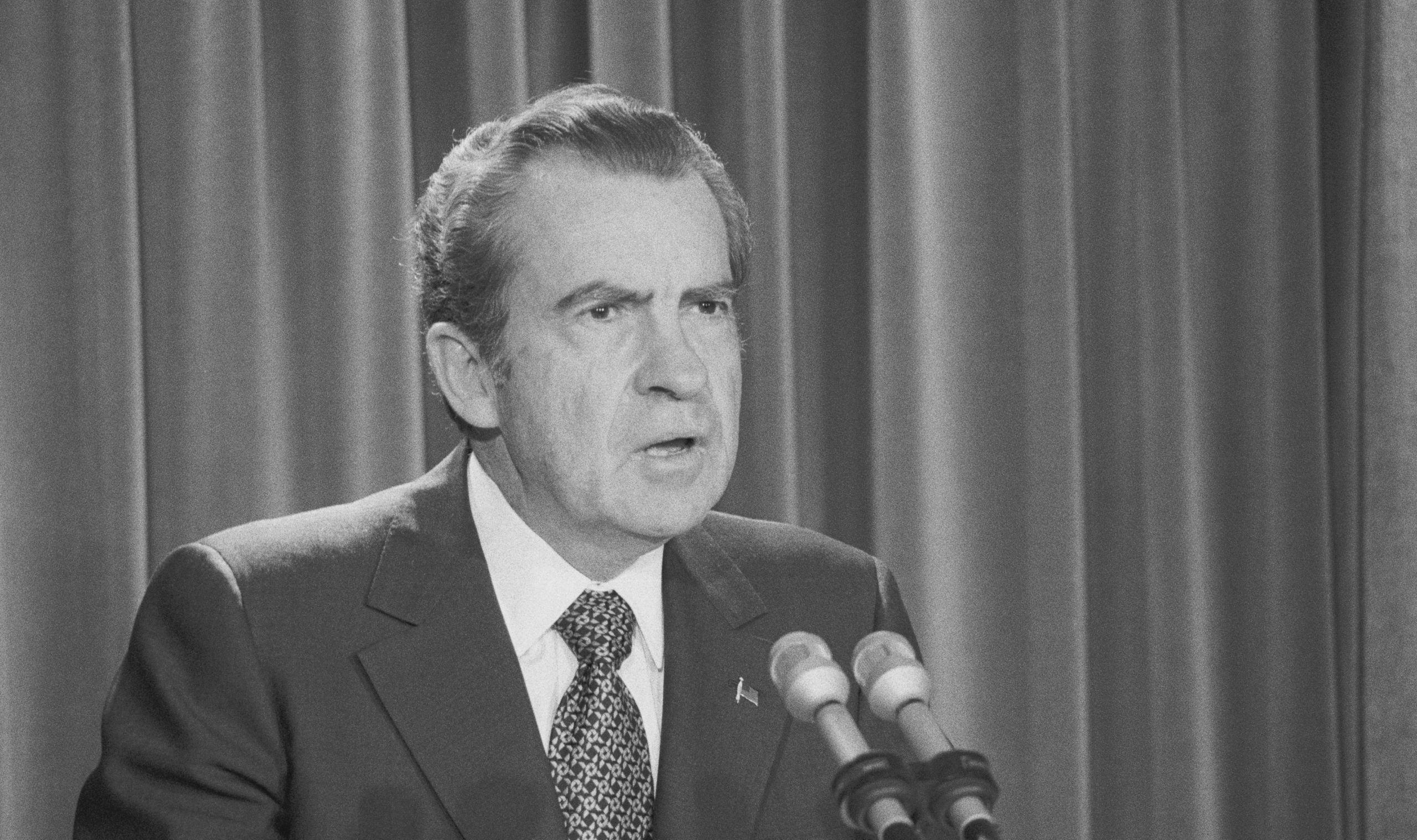
Portrait of Richard Nixon
(Bettmann / Contributor/Getty Images)

More than three decades after his death, Richard Milhouse Nixon is finally having his moment. A new generation of conservatives has come to admire the 37th president. They see him as the model Republican leader, far superior to Ronald Reagan and even Donald Trump. Hype edits of his speeches regularly go viral on social media. To those who partake in Nixonmaxxing, as the phenomenon has been dubbed, he is the man who nearly saved America—until the deep state took him out.

On the one hand, Nixonmania is a necessary corrective to the image propagated by the media over the past 50 years. His critics, basing their arguments mostly on hysteria and liberal hand-wringing, largely succeeded in portraying Nixon as one of the worst presidents in American history—a characterization that falls apart before the actual evidence.

But the new Nixon myth also has issues. Nixon had few substantive accomplishments as president, especially on the issues dear to the Online Right. While one of the better presidents when it comes to foreign policy, he had no real domestic achievements, aside from advancing liberal causes and programs. In many ways, the country actually got worse on his watch, with crime spiraling out of control and the economy plummeting. Nixon may not be responsible for these developments, but he certainly didn’t solve them.

What, then, explains the right’s newfound enthusiasm for Nixon? At its core, the hype is driven less by substance and more by the need for a New Right predecessor to Trump.

For years, the conservative movement idolized Reagan. Republican presidential candidates would always tout themselves as the next Gipper, playing up their admiration for the 39th president. The Reagan myth built him up as a neoconservative who only cared about foreign interventions and tax cuts. There were many Reagan admirers who praised him for signing the ’86 amnesty into law and argued Republicans should do the same in 2007 and 2013. 

The Online Right, naturally, found this extremely cringe. It embodied everything they hated about Conservatism Inc. And in their rejection of the GOP establishment, they also dispensed with Reagan, looking for other leaders whom they could more directly and compellingly connect with Trumpism. 

But there weren’t a lot who fit the bill. George Bush père was a one-term globalist. The colorless moderate Gerald Ford was obviously out of the question. And Eisenhower, accomplished though he might have been, was too stiff and too antiquated to replace Reagan as their guy.

That left Nixon. And in fact, he had a lot to recommend him. He was economically heterodox, he spoke up for the Silent Majority, he presented himself as a populist, he tried to fight the culture war, he was well read and intellectually curious, he addressed many controversial topics, he exhibited a certain kind of charisma, and liberals saw him as the devil incarnate. (If the left hates him so much, there must be something to him!) It’s much easier to imagine Nixon as a proto-Trumpian figure than it is to draw the same picture of Reagan or Eisenhower.

It’s also true that the rehabilitation of Nixon didn’t suddenly begin this year. It’s been a notable trend since at least 2023, with prominent right-wingers like Christopher Rufo, this magazine’s executive director, Curt Mills, and even the vice president of the United States touting Nixon’s virtues. Cannily, the Richard Nixon Foundation also recognized this burgeoning interest, and worked assiduously to pitch their man as someone aligned with the Trumpian moment. 

And now we get articles about how hot girls are allegedly obsessed with Nixon.

One gets the sense that this newest crop of enthusiasts is mainly there for the vibes. The Wall Street Journal recently interviewed several young Nixxonmaxxers, and seemed to struggle to find someone who could point to any of Nixon’s actual policies. The popular X personality and podcaster Comfortably Smug told the Journal that young conservatives like Dick because he’s a “heterodox middle finger to the establishment.” Rufo added that Nixon is worthy of veneration for having the right enemies, but didn’t explain what ideas animated Nixonism. One young female fan of Nixon did point to the 37th president’s enactment of Title IX and lowering the voting age for reasons to admire—but those aren’t exactly causes dear to the New Right.

There’s a good reason Nixonmania fixates on vibes rather than policy. There simply isn’t much to trumpet in the latter category.

Nixon won the 1968 presidential campaign promising to restore law and order, with an implied pledge to roll back the excesses of the civil rights revolution. He didn’t achieve either end. Crime continued to rise during his presidency, despite his claims in the ’72 campaign that his administration helped stem the tide of violence. Race riots died down, true, but it’s unclear whether his administration did anything to end them. Left-wing violence continued unabated, with the worst wave of leftist bombings happening during his presidency. Campuses were still rife with leftist agitation (witness Kent State). 

One could argue it was tough for a Republican president with a Democratic Congress to do anything about these menaces. That’s a fair point.But, there are no excuses for Nixon expanding the civil rights regime. Nixon significantly broadened affirmative action, ensuring that all government contractors now had to consider race when it came to hiring (great way to own the libs!). He signed the Equal Employment Opportunity Act, making it easier for the federal government to impose liberal dictates on private businesses. 

And when he was vice president, Nixon had vigorously championed a radical version of the 1957 Civil Rights bill. To his chagrin, it was neutered in the Senate by then–Majority Leader Lyndon B. Johnson. The bill Nixon favored would essentially become law under LBJ in 1964. That legislation provided the structure for undermining the Constitution and creating a racial spoils system, as Christopher Caldwell persuasively argued in The Age of Entitlement.

Nixon also signed the legislation creating Title IX. Today, this measure is appreciated by conservatives for giving them a tool to oppose trans athletes in girl sports. But before that, it was widely despised by conservatives for undermining meritocracy and due process. During the campus rape hysteria of the 2010s, Title IX allowed universities to punish otherwise innocent young men who were falsely accused of sexual assault and harassment. It also allowed universities to censor speech and to favor female athletes over male athletes in admissions. Nixon is the one who made it possible.

The 37th president also established the Environmental Protection Agency. Perhaps some of Nixon’s conservative fans see this as one of his major accomplishments, but while the EPA has done some good, it has also imposed draconian regulations on businesses and individuals. Hardly a clear conservative victory.

Many New Rightists admire Nixon for his economic heterodoxy. He was no dogmatic libertarian, that’s for sure. Yet his policies did little to help the economy. Unlike the conservatives who succeeded him, Nixon championed government solutions to economic problems. He imposed temporary wage and price controls and subsidized farmers to reduce crop output. His dramatic solutions did nothing to alleviate America’s woes and made the terrible economy of the 1970s worse. Economic heterodoxy isn’t always a good thing.

Then there is the judiciary. When Nixon came into office, he had to deal with a Supreme Court that had been reliably liberal since the days of FDR. And when he had the chance to pick his own justices, he did little to change this. Out of his four Supreme Court appointments, only William Rehnquist proved to be a reliable conservative. The three of the four on the court at the time ruled in favor of mandated busing in Swann v. Mecklenburg. Three out of the four ruled in favor of nationally legalized abortion in Roe v. Wade. And half of his picks ruled in favor of affirmative action in California v. Bakke. 

Trump is widely criticized by the Right for his court picks, but all three are still reliably conservative even though they don’t always rule the right way. Nixon went one for four. 

Foreign policy is the one area where Nixon had legitimate accomplishments. He ended the Vietnam War. He opened up China and consummated the Sino–Soviet Split. He countered leftism in Latin America while pulling off détente with the Soviet Union. He chucked aside liberal humanitarianism in favor of a clear-eyed realism that dealt with the world as it actually was, rather than as he might have wished it to be. America’s leaders can still learn a lot from Nixon on foreign policy.

And what of Watergate? The break-in and cover-up, such as it was, has forever tainted Nixon’s name, but the scandal was more a nothingburger than a grand scheme to end American democracy. Every president from FDR to LBJ spied on their political opponents to some degree. But unlike Nixon, they were largely able to rely on the FBI to do the job. Nixon had to turn to bumbling amateurs, which is why they got caught. Nixon fans argue that their man was trying to replace the deep state with a better intelligence apparatus, but if it was anything like the Watergate operation, the CIA and the FBI didn’t need to worry. G. Gordon Liddy and co. couldn’t outwit hotel security, much less threaten the pros.

Nixon was a fascinating man. He was a brilliant politician who knew how to navigate the tumultuous world of 20th-century America. He was also a serious thinker who pondered the deep questions of life far more earnestly and interestingly than the average politician. (He is probably the only president who enjoyed, and understood, Machiavelli and Nietzsche.) He doesn’t deserve the scorn he received from liberal critics, and he was right to hate the left-wing press.

But he’s not the great president Nixonmania imagines him as. He was an okay president. Eisenhower, Reagan, and, yes, Trump, racked up more accomplishments. Reagan’s cornball reputation makes it easy to mock him, but unlike Nixon, he tried to take on the civil rights regime and only failed due to lack of sufficient political support among his fellow Republicans. His policies helped reverse America’s economic decline and his foreign policy helped defeat the Soviet Union. His rhetoric may make right-wingers roll their eyes, but Reagan’s achievements can’t be denied. Even his greatest failure, the 1986 amnesty, was more the fault of Congress than his White House (it was also pitched as an immigration control measure rather than a reward for illegals).

Trump gets a lot of criticism from the right for allegedly not doing anything, but he’s done far more on the issues than Nixon. He has actually rolled back much of the civil rights regime, chipped away at affirmative action, and crippled DEI. He’s also the first president to significantly reduce immigration since Calvin Coolidge. The mass inflow of illegal immigration that Americans took for granted has essentially stopped under his watch. 

Of course, Trump has made mistakes—but then so did Nixon. And when it comes down to it, what matters most are results. Nixon is far from the worst president to admire, but his record doesn’t justify the current faddish idolization.

The post Why All The Hype For Nixon? appeared first on The American Conservative.

The Lessons Extracted from a Migraine

The Lessons Extracted from a Migraine

Is there something to be said for enforced stillness?

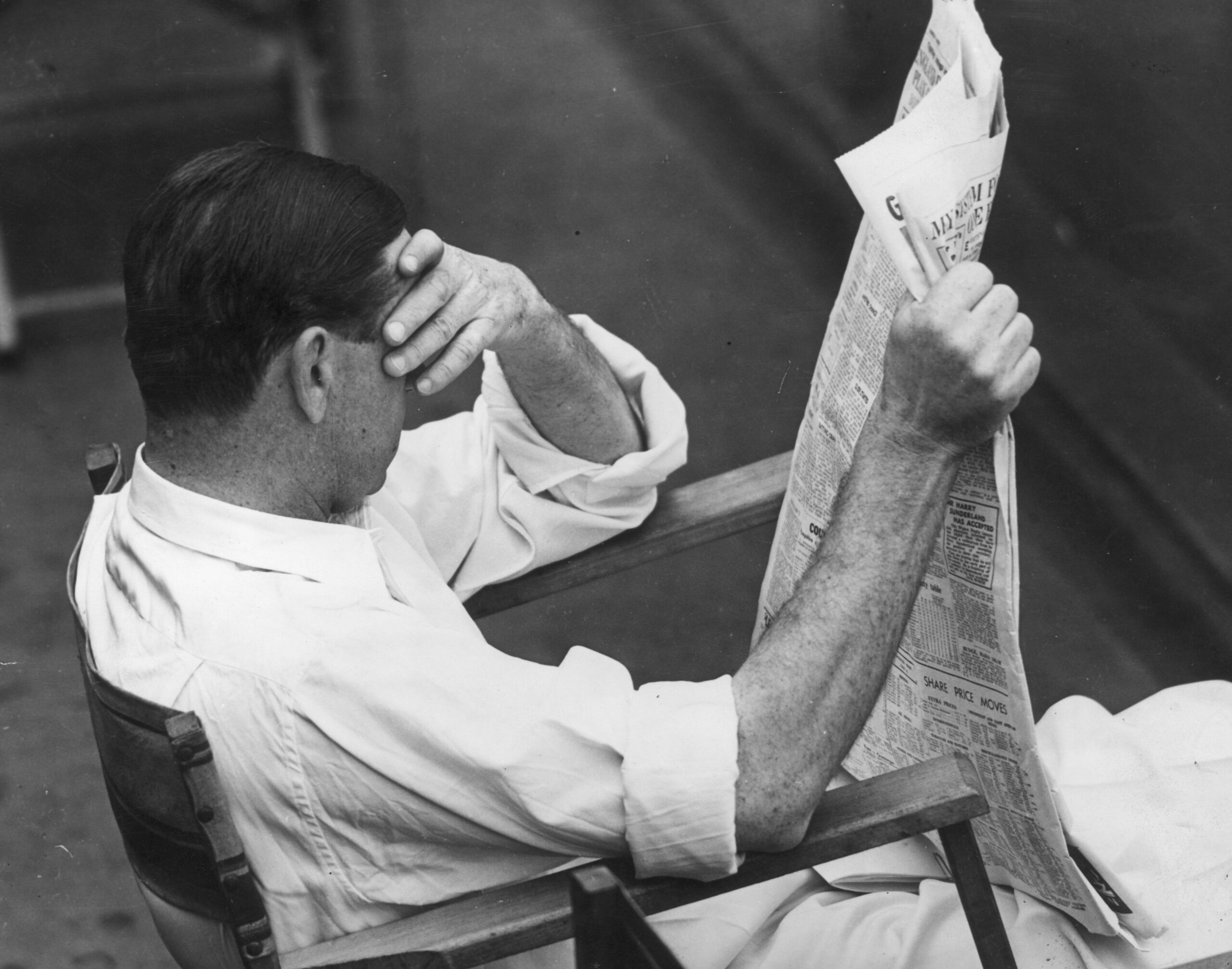
Broadsheet Reader

“I said I think that a guy who’s always interested in the condition of the world and changing it either has no problems of his own or refuses to face them,” said the novelist Henry Miller in a talking-head segment from Warren Beatty’s much-honored 1981 biopic of the Communist journalist John Reed, Reds.

Although the film itself worked overtime to aggrandize its protagonist—he was, after all, played by Beatty, then in full command of his charm and screen presence—Miller did the opposite: The sly, devilish author of Tropic of Cancer, Tropic of Capricorn, and other once-scandalous novels was attempting to cut Reed down to size. To put it bluntly, Miller was making the case that those who become whipped up by causes—Reed was a cheerleader for the catastrophic rise of Communism—do so not out of saintliness but out of boredom with, or myopia about, their own lives. (Perhaps that is why retired, presumably well-off Boomers are said to be so well represented at those wearisome, pointless “No Kings” protests we occasionally hear about.)

Yet there is a third condition essential to those “always interested in the condition of the world”: that they be free from a migraine headache. This was brought into sharp relief to me last week when, sidelined for nearly a full day by one of my blessedly infrequent migraines, I could not stir myself to care about anything—certainly not changing the world, or walking to the mailbox, or reading the book I had to finish for a review deadline later that week. All three seemed hopelessly Herculean when compared to the pain.

If you doubt my words, please consult the late writer Joan Didion, who, in her classic essay (perhaps her single best piece of writing), “In Bed,” offered her testimony as a migraineuse. “When I am in a migraine aura…I will drive through red lights, lose the house keys, spill whatever I am holding, lose the ability to focus my eyes or frame coherent sentences,” Didion wrote.

In other words, a migraine soaks up all the attention in the room—which is to say, its sufferer’s head. I have been beset by migraines on days when I had been looking forward to doing something or going somewhere, but the emergence of the migraine always—always—results in not only the cessation of those plans but also the disappearance of any regret for their cessation. In her essay, Didion described the way that a migraine’s pain distracts its victim from daily physical activities, but in my experience, it also makes impossible the more intangible act of thinking: The attempt to marshal brain power to contemplate the things that I have sacrificed to the migraine—the movie I’m missing or the walk I planned to take, let alone following or becoming invested in daily news—simply intensifies the agony. 

I mentioned earlier that my migraines are infrequent, and compared to earlier times in my life, that is true. I remember regularly getting them as a child, and I remember, too, the relief I felt when my parents elected to homeschool me, beginning in the third grade: Under this arrangement, if I suffered a migraine during the school day, I would have the option of retiring to my room—the march to darkness and quiet familiar to all sufferers—rather than facing multiple hours of clanging classrooms and screechy blackboards. (How eagerly I awaited the arrival of my father’s Volvo at 3 p.m. as I was powering through an awful headache in the second grade.) But, for whatever reason, my migraines waned as I entered young adulthood and remain infrequent in my middle age.

Last week’s migraine was a doozy, but my reaction to it was not what it might have been 10 or 20 years ago. Back then, upon the subsiding of the pain, I would have avidly resumed my activities and reconstituted my interests. After this last migraine, though, I felt less compelled to jump back into life than to proceed with caution. This time, I found I related to what Didion said about her condition, post-migraine: “For when the pain recedes, ten or twelve hours later, everything goes with it, all the hidden resentments, all the vain anxieties.” For her, a migraine was “a circuit breaker.”

My last migraine swept away all those worldly cares—the ones that would have been so deeply unimpressive to Henry Miller—and I have not been hasty, in the days since, to put them back. Maybe a migraine, for all its pain, is a call to meekness: a reminder that we needn’t bear the weight of the world, our profoundest ambitions, or our gravest fears, even when we feel well enough to do so. In a world so exhausting, so divisive, there are worse conditions to which to aspire.

The post The Lessons Extracted from a Migraine appeared first on The American Conservative.

Politicizing the Widdecombe Murder Shows Why British Police Are Despised

Politicizing the Widdecombe Murder Shows Why British Police Are Despised

The UK’s law enforcement is more oriented towards social peace than towards justice.

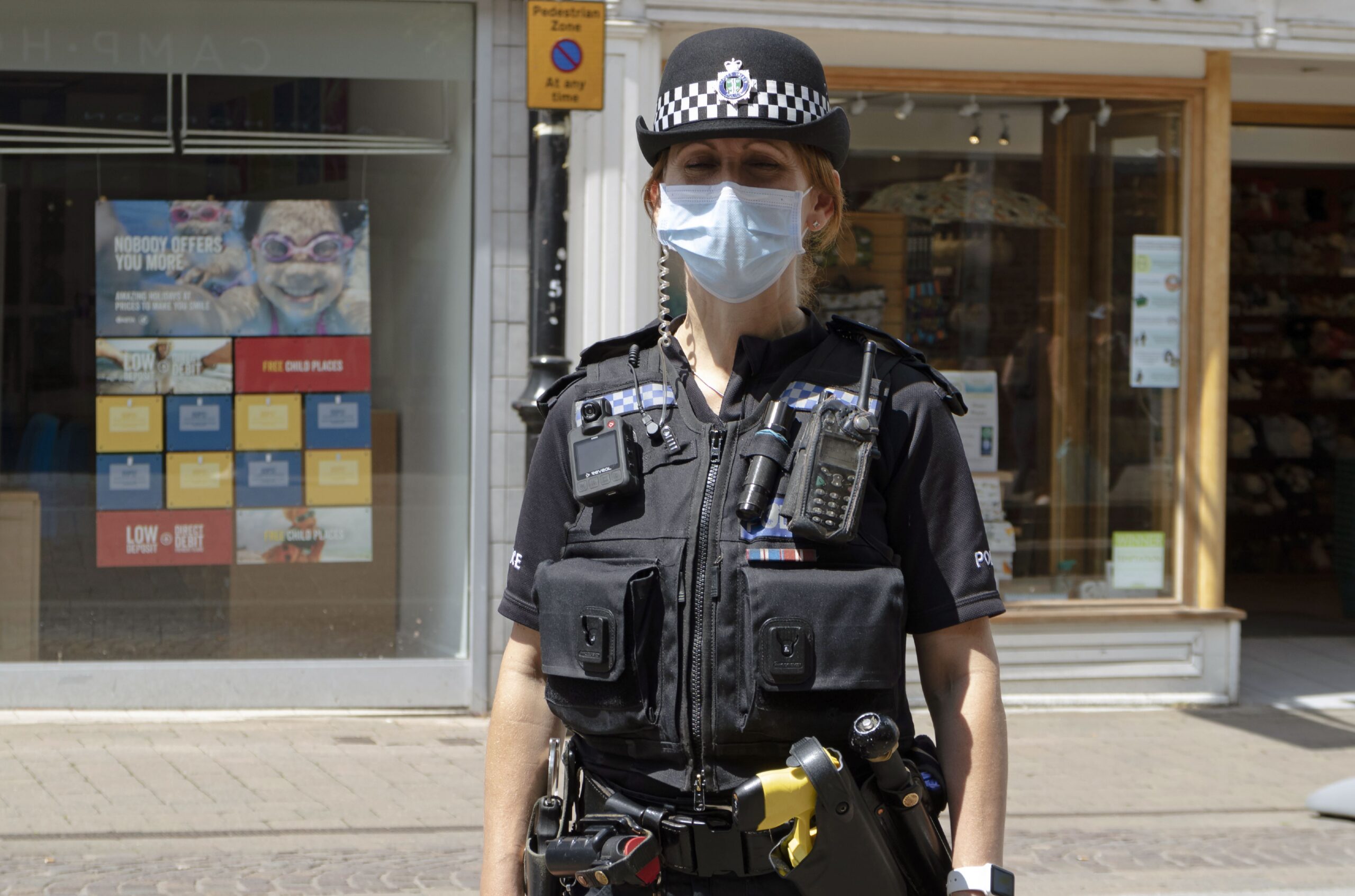
Policewoman wearing a mask patrols the High Street in Newbury, Berkshire during the Covid-19 epidemic, Newbury, Berkshire, England, UK.
TakiMag
Photo by: Peter Titmuss/Education Images/Universal Images Group via Getty Images

When I was about 6 or 7 years old, I was questioned by the British police. Two friends and I had been accosted in the park by a man who had exposed himself and masturbated. We did not really understand what he was doing, but I must have provided a description of this strange conduct to my mother, who called the police. 

A policeman arrived that evening, dressed in the reassuring uniform that the police wore at that time, rather than the fascist-militia type of uniform that they so often wear today. I was reading a book in bed when he arrived; I remember the book still, Noddy Goes to School, by Enid Blyton. I can still see its pink cover in my mind’s eye. 

There was a policeman in the Noddy books called Mr. Plod, and here, at the end of my bed, appeared a real live Mr. Plod! I was extremely proud: This was the high point of my importance so far in life, which, indeed, I have seldom equaled since.

In the years following, the British police have gone from being highly respected to being an almost universal object of contempt, despised by the habitual criminal and the most scrupulously law-abiding person alike. They are menacing to the innocent and impotent against the guilty; and, as more people with academic qualifications have entered the force, so it has lost any sense of overall purpose, or coherent understanding of what it exists for. The police have been sociologized into misunderstanding their function in society, while every police chief acts as if his purpose was to placate or defuse criticism in advance from pressure groups or minorities.

The police often present themselves now as if they were protectors of our emotions rather than of our property and lives. They are sometimes like psychotherapists with powers of arrest. After every murder or outrage, a police spokesman is sure to say that “our thoughts are with the victim,” when their thoughts should not be with commiseration but with finding the perpetrator. The insincerity of police pronouncements raises doubts about both their competence and their motives. The apprehension and proper punishment of the perpetrator is the best psychotherapy we could have. 

The absence of any clear idea of their function leads police spokesmen into uttering absurdities which reinforce the general contempt. After the murder last week of the 78-year-old politician Ann Widdicombe in her house in a remote village in Devon, an assistant chief of police said of the 28-year-old arrested suspect,  “At this time there is nothing to suggest that it [the murder] was politically motivated.”

Now, if the police suspicions were correct, the killer had driven 270 miles to Widdicombe’s home (and, presumably, 270 miles back). Widdicombe was a highly controversial figure, loved by many and detested by many. The fact that the suspect had driven so far to an isolated village and killed the one public political figure who lived there was at the very least prima facie evidence of political motive. It was not in itself proof of  such a motive, for other motives could be imagined: a contract killing, for example, in the pursuit of a private vendetta. But to say with a straight face that there was no suggestion, not even a possible hint, of a political motive was so stupid that it brought both the intelligence and probity of the police into disrepute.  

The policeman was not obliged to say anything about the suspect’s motives, or he could have said something completely anodyne, such as that all avenues were currently being explored. Why, then, did he resort to an obvious lie, something that he could not possibly have believed unless he were of subnormal intelligence?

Widdicombe was outspokenly conservative in her social views, and had left the Conservative Party, a former government of which she had once been a prominent minister, for Reform UK, which was her only hope for a genuinely conservative government in Britain. (Whether she was correct in this is another matter.) 

There is nothing like an assassination to create sympathy for a political party; a common murder has a much lesser effect in this respect. Probably the policeman did not want to be responsible for creating, or stimulating, sympathy for the Reform Party, even if what he said turned out later—as was very likely—to be false. At least he would be in the clear. But he would also have added to the public impression of an increasingly politicized police.  

There was another significant moment in his public message. He read from a text, looking downward, but when he came to the characterization of the suspect, “a 28-year-old white British man,” he looked up to lay special emphasis on the word “white.” 

If the man had been black but born in Britain, most likely he would have said, “a 28-year-old British man”; if he had been an illegal immigrant, he would have said merely “a 28-year-old man.”

In this tiny gesture, we see what the police, at least in their upper echelons, have come to see as their major function, namely the preservation of social and, in particular, racial peace, rather than the prevention and investigation of crime without fear or favor. And such confusion in the upper echelons, in turn brought about by pressure groups and political entrepreneurs, inevitably filters down to the police in the streets—or in the cars supposedly patrolling the streets.

This confusion as to the responsibilities of the police was what was responsible for the great scandal of the continued sexual abuse of young white girls (often themselves from appalling backgrounds) by gangs of men of Pakistani origin. The police were vastly more concerned to preserve what they thought was racial peace, and to avoid accusations of racism, than to prevent and investigate real and actual crimes that they well knew were being committed under their very noses. 

Needless to say, the police were never perfect. They were subject to temptations which they by no means always resisted (though many did). But now they inhabit a world of perpetual special pleading and outright lying; and, as the truth will set you free, so lies will make you contemptible.

The post Politicizing the Widdecombe Murder Shows Why British Police Are Despised appeared first on The American Conservative.

DEVELOPING: Houthis Target Saudi Aramco Oil Facilities as Trump Threatens “Major Military Punishment” for Houthi Agression

Iranian missile launch with the national flag in the foreground, showcasing military capabilities and defense technology during a test or demonstration.

Iranian missile launch with flag in the background, showcasing military capabilities during a test or demonstration.

The Iran-backed Houthis in Yemen targeted Saudi Arabia’s Aramco oil company on Saturday with missiles and drones, marking a significant escalation in the second front of the ongoing Iran conflict.

President Trump issued new warnings against Iran this week, threatening to hit one power plant or bridge for every ship they hit in the Strait of Hormuz after Iran attacked another tanker near the coast of Oman on Tuesday.

The President has further said that he is weighing a “massive” attack on Iran, which would be “bigger than ever before,” he said. “They haven’t received enough pain yet,” Trump said as US forces continued 13 hitting Iran nightly for nearly two weeks.

US forces on Thursday completed a 13th consecutive night of attacks against Iranian military capabilities in and around the Strait of Hormuz since the fighting resumed earlier this month.

Video from CENTCOM shows the most recent attacks from the nearly two-week-long airstrike campaign:

The Houthis’ latest attack on Saudi Arabia’s energy infrastructure comes after they attacked two ships in the Red Sea while imposing a naval blockade on Saudi Arabian ports and the Bab ​el-Mandeb Strait, connecting the Red Sea and the Gulf of Aden.

Per CBS:

The Houthis, an Iran-backed paramilitary group in Yemen, announced strikes on Saudi oil company Aramco’s facilities in Jizan and Yanbu on Saturday.

The Houthis fired “dozens of ballistic and cruise missiles and drones,” which successfully hit their targets, according to spokesperson Yahya Saree. The strikes or whether they were successful could not be independently verified.

The group also confirmed the military blockade of the Bab el-Mandeb Strait, the southern exit point of the Red Sea, remains in effect. The Houthis struck two Saudi-flagged commercial tankers in the Red Sea earlier this week, but had not struck any ships since then, bringing some calm to the region.

“We will not hesitate to expand our operations and escalate our actions based on developments in the coming hours and days, within the equation of a blockade for a blockade and an escalation for an escalation,” Saree said in a statement.

“There is no closure of the Bab al-Mandab Strait as some promote, and the announced Yemeni position by the Yemeni Armed Forces is limited to a naval blockade targeting only the Saudi side in response to its siege of Yemen and its refusal to accept any fair approach to a solution that guarantees the security, sovereignty, and independence of the Yemeni people,” Houthi negotiator Mohammed Abdusalam said Friday on X.

As The Gateway Pundit reported, President Trump threatened on Thursday to “hold Iran responsible” and inflict “major military punishment” upon Iran and the Houthis after the Iran-backed group began targeting shipping in the Red Sea on Wednesday.

“The U.S. will hold Iran responsible, in that the Houthis are a Surrogate and/or Proxy of Iran, and major military punishment will be inflicted upon Iran and, of course, the Houthis, themselves,” the President said.

US forces also took out an oil tanker in the Gulf of Oman on Saturday amid the US Navy blockade of Iranian ports.

Video from the mission released by CENTCOM shows US forces conducting a “verification boarding” on a Comoros-flagged tanker in the Arabian Sea and attacking a Mozambique-flagged tanker in the Gulf of Oman after it “attempted to violate the blockade multiple times.”

WATCH:

The post DEVELOPING: Houthis Target Saudi Aramco Oil Facilities as Trump Threatens “Major Military Punishment” for Houthi Agression appeared first on The Gateway Pundit.