Zohran Mamdani Posts Heartfelt Message About Career Criminal and Killer Who Died in Custody at Rikers Island: ‘Deeply Saddened’

Man with a beard and suit speaking thoughtfully in a well-lit indoor setting, conveying a sense of professionalism and engagement.

Man with a beard and suit speaking thoughtfully in a well-lit indoor setting, conveying a sense of professionalism and engagement.
NYC Mayor Zohran Mamdani appears on ABC’s “This Week” on June 28. Credit: ABC Screenshot

New York City Mayor Zohran Mamdani just posted a sad message on Twitter/X mourning the death of a career criminal who died at Rikers Island while awaiting trial for the murder of an innocent man at a laundromat in 2024.

Why is he always on the side of the criminals? Where is the sympathy for the victims?

Imagine being the family of the victim in this case and seeing the mayor cry about the death of the killer.

The New York Post reports:

Mamdani posts emotional message mourning accused knife-wielding killer —and is slammed by victim’s family

Mayor Zohran Mamdani publicly mourned an accused career criminal killer who died on Rikers Island this week — and the family of the victim slain in the sick, unprovoked attack is now livid, The Post has learned.

Hizzoner said on X that he was “deeply saddened” by the in-custody death — the seventh so far this year at the troubled jail complex — adding that, “my thoughts are with his family and loved ones as they grieve this loss.”

The inmate was identified as 41-year-old Clarence Woodward, an ex-con with nearly 30 arrests on his rap sheet, who was found unresponsive in his cell shortly after 5 a.m. Tuesday while awaiting trial for murder in the gruesome 2024 attack at a Bronx laundromat.

To the family of victim Jose Miranda, the mayor’s statement was “a slap in the face.”

“It’s terrible,” his grieving mother, Marisol Miranda, told The Post on Thursday, adding, “That’s not fair. That’s not fair at all.”

This is the full text of Mamdani’s tweet, which you can see below:

I am deeply saddened by the death of a New Yorker in City custody at a jail on Rikers Island early this morning. My thoughts are with his family and loved ones as they grieve this loss.

We do not yet know the cause of death, but we do know that too many New Yorkers have died on Rikers Island. The Department of Correction and its oversight partners will investigate the circumstances surrounding his death.

Our administration is fully committed to the critical work of creating better conditions in our city’s jail system and closing Rikers Island as quickly as possible.

It’s unreal.

What is WRONG with him?

The post Zohran Mamdani Posts Heartfelt Message About Career Criminal and Killer Who Died in Custody at Rikers Island: ‘Deeply Saddened’ appeared first on The Gateway Pundit.

Quebec’s Lessons for Conservatives

Quebec’s Lessons for Conservatives

Americans can learn from French Canadians’ successes—and failures—in preserving their culture.

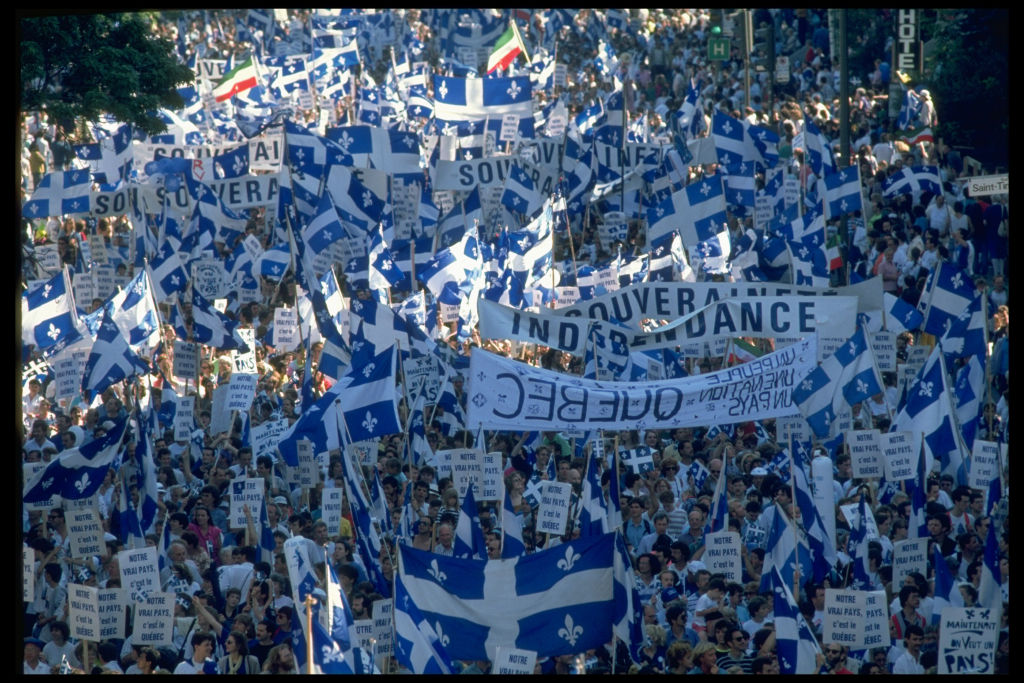
Pro-independence Quebeckers in sea of ba
(Steve Liss/Getty Images)

This side of the border, French Canadians don’t tend to make political waves. Despite a sizable population in northern New England, they have collectively only once played a significant role in American politics. This was in February 1972, when the so-called “Canuck Letter” helped scuttle Ed Muskie’s shot at the Democratic nomination for president. (The letter, now widely believed to be the work of Nixon staffers, alleged that Muskie had drawn a derisive parallel between New Englanders of French-Canadian extraction and southern blacks.)

But last weekend, the heirs of Champlain and Frontenac found themselves involved in matters of state below the 49th parallel. In a speech explaining the breakdown of U.S.–Canada trade talks, Canada’s Prime Minister Mark Carney claimed that American negotiators had issued last-minute demands that threatened “the French language and Québécois culture.” Although Carney didn’t provide much detail, subsequent reporting suggested the U.S. was pushing for changes to laws requiring streaming platforms like Netflix to promote francophone Canadian content, as well as requirements for bilingual labelling on goods sold in Canada.

Washington disputes this narrative. U.S. Trade Representative Jamieson Greer called it a “funny and fake story.” President Donald Trump has even gotten involved. “I would never interfere with Canadians speaking French!” he wrote in a Tuesday TruthSocial post, adding “I love French Canadians!”

As of writing, this little bit of the trade fracas, at least, seems to have been resolved. Dominic LeBlanc, the Canadian trade minister, said Thursday that the U.S. was “withdrawing its positions on discoverability and labelling”—a statement, incidentally, that makes me think the White House’s version might be the more accurate account (a quiet walkback seems dramatically out of keeping with Trump’s otherwise maximalist approach here).

But whatever actually happened around the negotiating table, it’s worth considering why this particular issue touched such a nerve.

It should be clear to all by now that the transmission of civilization across generations cannot be taken for granted, and that those who care about preserving their culture have every right to get prickly in the face of threats (real or imagined). This is true even when the cultural group in question possesses its own nation-state, as we are seeing across Western Europe today. And it is doubly true when—as is the case with French Canadians—that cultural group is a minority within a broader political system it does not control.

For it is indeed remarkable that, more than two and a half centuries after perfidious Albion gobbled up France’s North American empire, the 8 million or so francophones of Canada retain their unique linguistic and cultural identity amidst a continental sea of 389 million anglophones.

How did this happen? Partly it is due to luck, but mostly it comes down to deliberate choices made by French Canadians themselves.

Shortly after the British took possession of the Great White North, the conquerors tried to shore up social stability by providing space for their new subjects’ peculiar cultural habits. Students of our own revolution will recall that the 1774 Quebec Act gave the imprimatur to Catholicism and certain of the province’s French institutions—for which it was reviled in the 13 Colonies, where patriots saw it as the prelude to popery and arbitrary rule further south. (And it is true that Canada’s early British administrators, who were mainly military men of aristocratic backgrounds, preferred the docile, tradition-minded habitants to the troublesome anglophone merchants dominant in the colony’s few towns).

For the next century and a half, the major factor in the preservation of French Canadian culture would be the Church. Quebec’s ultraconservative clergy saw French as a safeguard against the secularism (or worse, Protestantism) that threatened to leach in from the rest of the country, and kept the language as the medium of instruction and exchange in the religious, social, and educational institutions they oversaw. During the 19th and early 20th centuries—the period of la survivance, or the survival—francophone Canada ranked with Ireland as one of the most devout and traditional societies in the Catholic world.

As the 20th century progressed, something that looked more like conventional nationalism began to emerge. Steered by figures like Henri Bourassa and Maurice Duplessis, French Canadians began to demand cultural and political concessions, ever more stridently opposing their English-speaking compatriots’ efforts to run the country as a more unitary state—not to mention the latter’s insistence on sending Canadian boys overseas every time Brittania found herself embroiled in a European war. Intense Catholicism remained part and parcel of this incipient nationalism, with the Church exercising firm control over the most important aspects of provincial life. 

And then came the Quiet Revolution. Beginning in the early 1960s, the faith underwent a collapse in Quebec whose suddenness and completeness still astonishes. From one of the most religious places on earth, it turned into the most secular province of a pretty secular country. (Why this happened when and as it did is a question for another column, although I suspect it tells us something about the fundamental unworkability of integralism—the explicit fusion of religious and political power—under modern conditions.)

Yet this did not spell the end of French-Canadian civilization. Fervent, secular nationalism rushed in to fill the void. Maîtres chez nous was the new rallying cry: masters in our own home. Quebec’s voters and politicians demanded new provincial powers from Ottawa and used these to enact increasingly strong protections for the French language. Some sovereigntists even eschewed the political process altogether, opting instead for bombings and kidnappings.

In two successive independence referendums, la belle province came close to leaving the country outright; the second of these, held in 1995, was a real nail-biter (Canadian union was saved by about 54,000 votes). Quebec nationalism became the sine qua non for success in provincial politics, and the regional scene is now dominated by nationalist parties of vaguely right-wing (the Coalition Avenir Québec) and left-wing (the Parti Québécois) flavors. 

For those interested, there are a couple lessons to draw from the efforts of our francophone neighbors to preserve their way of life. 

The first is to care: to care enough to be annoying about it, to care enough to prioritize it over ease and convenience and even—gasp!—maximizing economic growth. 

The second is to get comfortable seizing and using power. Had Quebec not fought tooth and nail for every concession from the national government, not rewarded politicians who prioritized culture and punished those who didn’t, and not planted a thicket of laws and regulations to make it as difficult as humanly possible to speak a language other than French, its unique civilization would likely have perished. Contemporary Louisiana, where the French language teeters on the edge of extinction and Cajun culture is basically a tourist attraction, provides a vivid illustration of what might have happened.

But with these lessons comes a warning: politics and culture can easily become a substitute for religion. Today’s Quebec is no one’s idea of a trad paradise; as few as 2 percent of its (nominal) Catholics attend church weekly. (On a recent trip up to the province’s Gaspé peninsula—once called “Canada’s Brittany,” both for its physical resemblance to the French region and its strong cultural conservatism—my brother and I struggled mightily one Sunday to find a church at which mass was actually being celebrated.)

A final thought, as the Great U.S.-Canadian Trade Spat continues apace: For all the talk out of this White House of “civilizationism” and saving the great cultural traditions of the West, often the greatest threat to these comes from the gravitational field created by America’s own gargantuan heft. Even were our president not openly talking about annexing Canada and renaming its natural features, our sheer cultural, economic, and technological power would be cause enough for concern. 

It was for this reason that the Canadian conservative George Grant argued, in the 1965 classic Lament for a Nation, that the disappearance of his country was an inevitability. But Quebec, he thought, might hold out the longest. “French Canadian nationalism is a last ditch stand,” he observed, but “the French on this continent will at least disappear from history with more than the smirks and whimpers of their English-speaking compatriots.” They would go out, he predicted, “with their flags flying and, indeed, with some guns blazing.”

The post Quebec’s Lessons for Conservatives appeared first on The American Conservative.

Can Burnham Thread the Needle on Israel–Palestine?

Can Burnham Thread the Needle on Israel–Palestine?

A ban on settlement trade may be the way to navigate the troubled waters of domestic and international politics.

BRITAIN-POLITICS-ECONOMY
UK Special Coverage

Andy Burnham is preparing the first significant change in British policy toward Israel since becoming prime minister: a ban on trade with Israeli settlements in the occupied West Bank, accompanied by further sanctions against individuals involved in settlement expansion. The immediate occasion is Israel’s decision to issue construction tenders for about 1,200 homes in E1, the strategically important tract east of Jerusalem that Britain and numerous other governments argue would drive a wedge through the West Bank and further obstruct the creation of a territorially contiguous Palestinian state. Burnham has joined the leaders of France, Germany, Italy, Canada, the Netherlands, and other countries in demanding that Israel reverse course; his government is now planning measures considerably more tangible than another diplomatic protest. More than 140 Labour MPs have already called for a prohibition on settlement trade, while the parliamentary group Labour Friends of Israel warns that distinguishing transactions implicating settlements from broader trade with Israel may be so difficult as to make the move effectively a wider boycott. Burnham is reportedly inclined to proceed—and, not insignificantly, to do so before next month’s Labour Party conference.

The scale of the change requires some disentangling, since governments, lobbyists, opposition groups, and activists all have reasons for framing things to suit their particular purposes. Under Keir Starmer, the previous prime minister, Britain’s policy toward Israel had already traveled a considerable distance. By the end of his premiership, the government had recognized a Palestinian state, restricted some arms exports to Israel, suspended negotiations on a new trade agreement, imposed four packages of sanctions against settlers and settler organizations, sanctioned two Israeli ministers, and explicitly advised British businesses against economic or financial activity in settlements. Nevertheless, Starmer preserved a reasonably clear line: His government opposed settlement commerce while insisting that Britain should continue to “distinguish and protect” trade with Israel itself. A legal prohibition would in practice cross that line. Advice would become compulsion, and sanctions directed principally at selected people and organizations would extend to an entire category of commerce.

This is therefore an escalation of an existing policy rather than the invention of a new one, and E1 supplies the government with an entirely conventional explanation for it. Britain has opposed the project for years. The latest international statement signed by Burnham describes the development as damaging the territorial contiguity necessary for a two-state settlement and warns businesses against participating in it. There are also practical difficulties, which officials have duly discovered: tracing the origin of goods and services can be complicated; Palestinian enterprises could suffer along with Israeli ones; and a narrowly conceived prohibition may prove less narrow in application. These objections may be sound. They also bring with them a political argument in which almost everybody has an interest in deciding how far the restrictions should extend—and in explaining why their preferred stopping point happens to be the right one.

Behind these immediate calculations lies one of the more burdensome domestic political inheritances Burnham received from Starmer: the latter’s handling of Israel and Gaza. The former prime minister’s remarks in an LBC interview shortly after October 7, in which he appeared to accept Israel’s right to withhold power and water from Gaza, provoked intense opposition within parts of Labour and among many Muslim voters; Starmer subsequently said that he had been referring to Israel’s right of self-defense rather than to the withholding of essential supplies, although by then the original formulation had acquired the independent political existence that unfortunate remarks tend to acquire once opponents discover a use for them. Over the following years government policy moved substantially—toward a ceasefire, restrictions on arms licenses, recognition of Palestine, sanctions against settlers and Israeli ministers, and increasingly severe criticism of Netanyahu’s government. But among a substantial body of Muslim and progressive voters, Starmer became identified with Labour’s initial position on Gaza before his later policies could revise the association.

The electoral damage to Labour has been substantial. Labour received an estimated 80 percent of Muslim votes in 2019 and 56 percent in 2024; by early 2026 its support among Muslim voters stood at 33 percent, while Green support had reached 30 percent. In areas with particularly large Muslim populations, Labour’s position was considerably worse. Gaza seems to have contributed to a much wider erosion of Labour support among younger and progressive voters. By early 2026 the scale of that erosion had become striking: One YouGov poll put Green support among 18-to-24-year-olds at 45 percent, while around a fifth of Labour’s 2024 voters were telling pollsters they had moved to the Greens. Gaza was by no means the sole cause of the movement, but an Opinium survey of Labour voters defecting to progressive parties found that 67 percent of those moving to the Greens regarded Labour’s position on Gaza as a factor in their decision. Burnham appears already to have recovered some of the lost ground: by August, YouGov put Labour support among 18-to-24-year-olds at 25 percent, up from 14 percent in June. 

The figures are volatile, but the political calculation is not especially mysterious. Labour has lost large numbers of younger voters to a party occupying a position to its left on Gaza, a substantial proportion of the defectors themselves say Gaza helped drive the decision, and some have already shown themselves willing to return under a different Labour leader. Political parties can endure the disapproval of people who would never vote for them with considerable equanimity. Recoverable former supporters demand more concentrated attention.

Burnham has handled this inheritance with some dexterity. During the leadership contest he apologized for Labour’s response to Gaza, saying that the party “didn’t get it right” and had been too slow to call for a ceasefire, while simultaneously praising the recognition of Palestine, sanctions, and arms restrictions introduced under Starmer. The arrangement could hardly be more convenient. Burnham inherits the latter policy while leaving much of the political liability accumulated during its formation with his predecessor. This does not make the apology insincere; Burnham may believe every word of it. Politics merely becomes considerably easier when conviction and differentiation from an unpopular predecessor arrive at the same destination.

The settlement ban would give that differentiation material form while allowing Burnham to decide where it stops. He has declined to pronounce Israel’s conduct in Gaza genocide, leaving the determination to international courts; he has neither endorsed a general boycott of Israel nor accepted demands for a complete arms embargo. (Momentum, Labour & Palestine, the Campaign for Labour Party Democracy, and the Palestine Solidarity Campaign will press for all or some of these measures at the Labour conference.) 

Burnham’s decision to move toward a settlement ban while resisting broader sanctions has opened a small but revealing contest over who gets credit for the change. Burnham has an interest in acting before the conference: A prime minister who announces an initiative on his own authority has changed government policy; a prime minister forced into the same policy by delegates has retreated. The practical result may be identical, but politics has never regarded authorship as merely an incidental detail. Campaigners, conversely, have an interest in establishing that their pressure produced the change, since yesterday’s successful pressure supplies an argument for tomorrow’s. With roughly a third of Labour MPs already supporting a trade ban, Burnham would have to spend political authority to resist a policy he has independent reasons to favor. New prime ministers generally discover enough unavoidable fights without manufacturing additional ones for the pleasure of demonstrating firmness.

The Greens introduce another incentive. Gaza has helped them attract progressive, younger, Muslim, and former Labour voters. A Labour government moving substantially on Israel threatens part of the political territory on which they have advanced. The obvious response is to move the point of differentiation further outward: If Labour prohibits settlement trade, the relevant test becomes a complete arms embargo, broader sanctions, or recognition of genocide. Political parties rarely celebrate a rival’s conversion by conceding that it has removed a reason for voting for them. Of course, none of this speculation requires doubting the convictions involved. Electoral competition has the useful property of making sincerely held convictions strategically serviceable.

Labour’s more pro-Israel voices operate under comparable incentives. Labour Friends of Israel opposes settlement expansion but has reasons to prevent a settlement prohibition from becoming a precedent for wider restrictions on Israel; pro-Palestinian organizations have reasons to establish precisely such a precedent. Burnham also inherits Labour’s experience of antisemitism under Jeremy Corbyn and has longstanding connections with Jewish organizations from his years in Greater Manchester. He has repeatedly condemned Hamas and antisemitism, previously opposed BDS, and appointed James Purnell, a former chair of Labour Friends of Israel, as his Downing Street chief of staff. None of this prevents a tougher policy toward Netanyahu’s government or the settlements; it does suggest the existence of boundaries Burnham has reasons to respect. 

Burnham consequently faces several constituencies rather than two camps. Foreign policy occasionally allows prime ministers to rise above domestic politics; Israel–Palestine, with impressive reliability, drags them back into it. And so Burnham wants to recover Muslim voters lost over Gaza and younger progressives moving toward the Greens—but he also wants to win over economically interventionist, culturally moderate working-class voters attracted to Reform, many of whom have little affinity with the language or political culture of Palestine activism. Within Labour, he must accommodate a parliamentary party considerably more critical of Israeli policy than it was a decade ago without allowing conference activists to appear to dictate government policy, while addressing concerns about antisemitism without simply inheriting Starmer’s political liabilities over Gaza. Abroad, Burnham must maintain relations with Israel and the United States while showing that British opposition to settlement expansion consists of something more than another expression of British opposition to settlement expansion.

The likely response from Washington adds another calculation. Burnham must satisfy three different audiences: his party, the British electorate, and the United States. A policy that brings political advantages with the first two may create problems for his dealings with the third. In London, the settlement ban brings several serious political advantages; in Washington, almost every one of those advantages looks different. A measure demonstrating independence and responsiveness at home may appear to a strongly pro-Israel American administration as another European attempt to subject Jerusalem to economic pressure. Burnham must therefore calculate not simply what Britain should do about Israeli settlements, but how much advantage gained at home is worth the diplomatic cost potentially incurred abroad.

The distinction between settlements and Israel consequently must perform an unusual amount of work. Burnham needs it domestically because it separates what his government proposes from the broader sanctions demanded by campaigners; within Labour it gives more pro-Israel figures grounds for arguing that the government has not adopted BDS; in Washington it allows Britain to describe the measure as directed against settlement activity rather than Israel. The same distinction can thus be offered to three audiences for three somewhat different purposes. Governments understandably cherish distinctions of such versatility.

The timing makes the calculation particularly delicate. Burnham is expected to meet Donald Trump face-to-face for the first time at the UN General Assembly in September and may subsequently visit Washington. One of his principal objectives will be to secure greater American assistance with air-defence missiles for Ukraine. He therefore proposes to enter his first substantial negotiation with Trump having adopted a policy to which the president may strongly object while simultaneously asking him for something Britain and its European allies badly want. Burnham has found areas in which accommodation with Trump costs him relatively little—his more permissive approach to North Sea oil and gas has been warmly received—and inherited others in which disagreement is unavoidable. Israel now joins the ledger. The important question is not whether Trump will approve the settlement policy; he probably will not. It is whether the disagreement remains confined to Israel or begins to make American cooperation with Britain more expensive elsewhere.

Ukraine makes the question unusually concrete. Burnham’s emerging policy there rests partly on greater British and European strategic responsibility for Ukraine while Kiev continues to depend on American military capabilities Europe cannot readily replace. London can talk about European defense production and strategic autonomy, but Ukrainian air defense still depends on American systems and American decisions. Burnham thus finds himself encouraging greater European independence while preparing to ask Trump for additional American assistance. There is nothing particularly anomalous about this—alliances have always mixed dependence with aspirations to reduce it—but presidential goodwill consequently possesses a value that cannot simply be omitted from Burnham’s calculation about Israel.

If the White House wished to make British policy expensive, it would hardly need to announce retaliation. There is a rich vocabulary for expressing displeasure without establishing a documentary connection between cause and consequence: Trade negotiations could become marginally more difficult, technology disputes somewhat less soluble, access less generous, defense requests less urgent, an intervention on Ukrainian missiles less forthcoming. Britain’s defense, intelligence, and nuclear relationship with the United States makes a serious rupture over settlement commerce improbable; it also makes smaller acts of American unhelpfulness potentially consequential. The “special relationship” increasingly describes not automatic agreement but an unusually dense collection of transactions from which neither side wishes to withdraw.

Burnham must therefore price American displeasure against domestic costs of retreat. If he abandoned a conspicuous settlement policy after objections from Washington, Labour MPs and activists could claim that the promised departure from Starmer had reached its limit as soon as the United States objected; pro-Palestinian organizations would acquire a particularly useful argument about British subordination; and the Muslim and progressive voters Burnham hopes to recover might draw similar conclusions. Accommodating Trump could therefore purchase advantages abroad for a cost at home, while resisting him could reverse the transaction. There is no position from which all the accounts balance.

Nor, again, is Burnham the sole practitioner of political calculation. British pro-Palestinian campaigners can use American opposition to strengthen an argument about British independence. More pro-Israel Labour figures can cite damage to relations with Washington in arguing against wider sanctions. The Greens benefit if Burnham appears constrained by Trump; a Burnham government that successfully resists American pressure deprives them of some of that advantage. What appears to be a bilateral foreign-policy disagreement is simultaneously raw material for several domestic political contests.

A settlement prohibition is therefore unusually useful because different constituencies can understand it differently. Pro-Palestinian campaigners can present it as proof that pressure works and hence as an argument for more pressure. Muslim and Green-inclined voters can treat it as evidence that replacing Starmer has changed something tangible. Labour’s foreign-policy mainstream can describe it as protection of the two-state solution. More pro-Israel Labour figures can insist that the line between settlements and Israel must now be held. Washington can be told that the measure does not constitute a boycott of Israel. The government can emphasize whichever interpretation best suits the audience immediately before it. Political compromises, after all, often depend less upon everyone agreeing on what has been decided than on different participants being able to explain the same decision differently.

The significance of Burnham’s initiative consequently lies not in a wholesale revision of British policy toward Israel, but in his attempt to establish a new Labour equilibrium before somebody else establishes it for him. Starmer had already moved policy substantially, but never escaped the political consequences of the position with which he began. Burnham starts from Starmer’s later position, repudiates aspects of the earlier one, and proposes to move further while suggesting boundaries around how far he intends to go. Pro-Palestinian organizations want those boundaries moved; more pro-Israel Labour figures want them held; the Greens need enough distance between their position and Labour’s to give defectors a reason not to return; Labour MPs possess constituency, ideological, and career considerations of their own; Washington has interests and constituencies of its own. It would be peculiar if Burnham alone entered this crowded marketplace equipped solely with principle.

Whether the arrangement survives events in Israel, Gaza, and the West Bank is another question. Middle Eastern governments have an inconvenient habit of making British political positioning obsolete before the press release has finished circulating. For the moment, however, circumstances have presented Burnham with the sort of policy choice politicians particularly appreciate: an argument of principle can be made for it; an external development supplies the occasion; a large part of his parliamentary party already wants it; it may help recover voters Labour has lost; and it distinguishes him from an unpopular predecessor. Against these advantages, Burnham must weigh the risk of incurring Washington’s displeasure at precisely the moment he is seeking U.S. help over Ukraine.

None of this should be taken to mean that Burnham, his supporters, or his opponents hold their stated convictions insincerely. Political analysis need not choose between conviction and self-interest quite so obligingly. Governments, parties, pressure groups, and campaigners generally possess both; the more revealing question is why a conviction long held becomes a policy suddenly worth pursuing. For Burnham, the answer appears to have a lot to do with the unusually favorable alignment of principle, party management, electoral repair, and political differentiation—and with his judgment that the resulting American bill, if one arrives, will remain affordable.

The post Can Burnham Thread the Needle on Israel–Palestine? appeared first on The American Conservative.

Six Months—and Counting

Six Months—and Counting

There’s no obvious end to the Iran War close at hand.

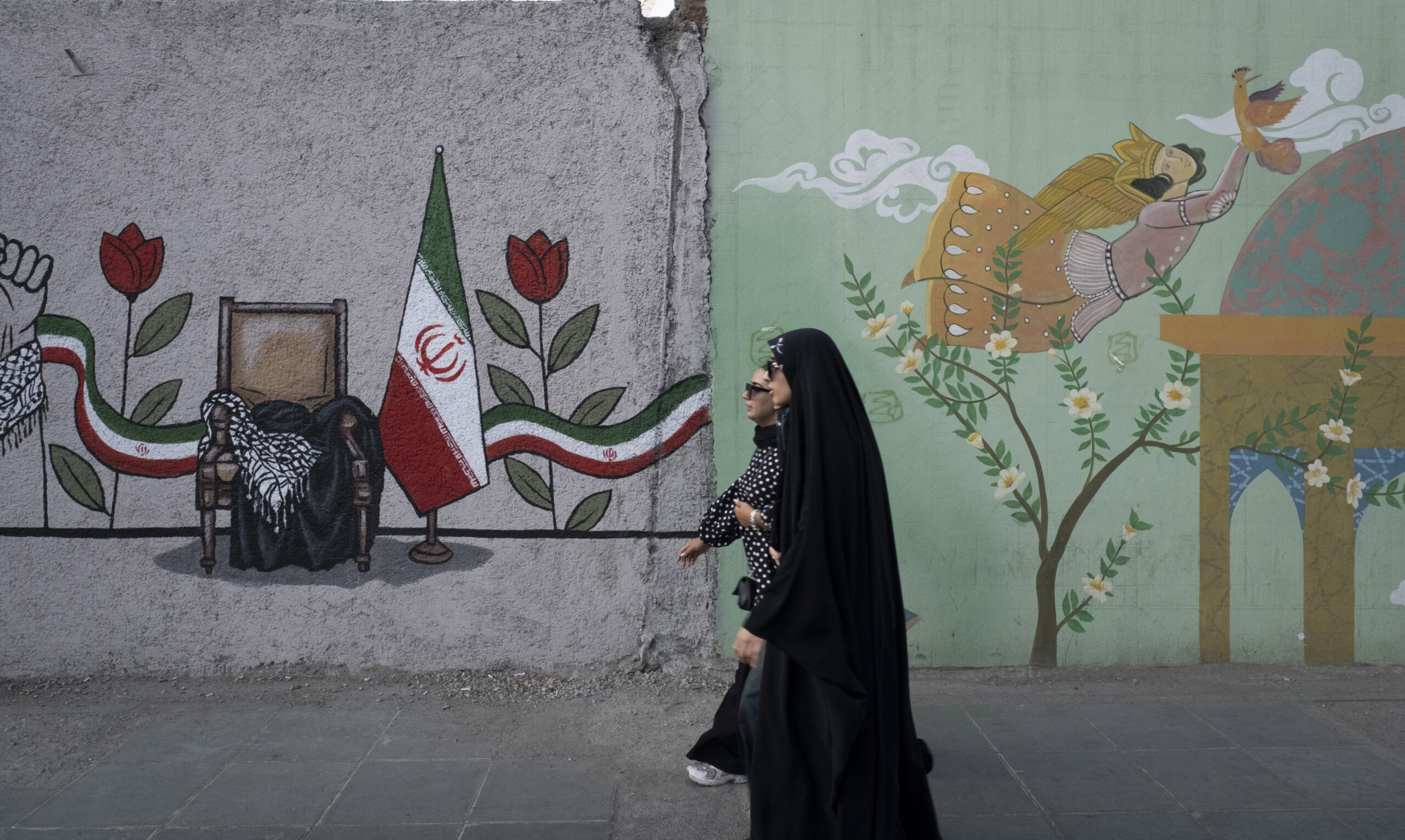
Daily Life In Tehran As Iran-U.S. 60-day Ceasefire Expires
Photo by Morteza Nikoubazl/NurPhoto via Getty Images

Today marks the semianniversary of the beginning of the Iran War. The most hysterical predictions have not been borne out, as they seldom are, but the reality has been unpleasant enough. A huge amount of American materiel has been expended without accomplishing the (admittedly unrealistic) political goal of ousting the ayatollahs, or even getting them to acquiesce under duress to some settlement advantageous to the United States. Energy flows from the Persian Gulf region are still constricted, and Brent crude prices are still floating between $85 and $90 per barrel. Iranian retaliatory strikes have sufficiently savaged American bases in the Middle East to render the U.S. military hesitant to use them. As ungemütlich as this is for us, it’s worse for our regional partners; to take just one recent illustration, data reported Wednesday show that Qatari natural gas exports are down by 96 percent since the outbreak of the war. 

So what’s the plan here? More of the same, evidently. We are maintaining our blockade on Iran—that is to say, closing Hormuz to open Hormuz—and ramping up sanction pressure yet again. You might be forgiven for skepticism; we have been sanctioning Iran with varying intensity for nearly 50 years, and, while this has certainly damaged Iran’s economy quite badly, it has not proven to be much of a winner for getting desired political outcomes. In his Monday announcement of “economic D-Day” (seriously, where do we get these names?), Treasury Secretary Scott Bessent made some ominous allusions to the idea that nations that do not cooperate with isolating Iran might be cut out of the dollar system. That would be something new, but is also the sort of thing that you can do only once and tends to invite exciting unintended consequences. (One also wonders whether it would actually work; the most comparable action, cutting Russia out of the SWIFT system in 2022, was supposed to bring the Bear to its knees in a month or less, but here we are all these years later.) Pakistan, which has served with zeal if not finesse as a mediator between Washington and Tehran, has already said that it will not cooperate with the new American sanctions, so an exciting test case may be in the offing. 

The intensified economic warfare on Iran may produce some movement, albeit not necessarily the sort the White House wants. The rumor swirling around Washington is that the administration, in a very bare concession to political reality, is holding off on further military action until after midterms—which ought to be a cause of doubt for those who would like to think that this can be finished off quickly with a sufficient application of force. But Iran also gets a say in when things turn hot again. If the Iranian economy becomes untenably dysfunctional, it is entirely plausible that Iran will take the escalatory initiative and start hitting American and allied assets in the region again, including perhaps energy infrastructure, as a way to retaliate against economic weapons for which it has no equivalent.

Despite these unattractive circumstances, the negotiating table does not seem like a very loved piece of furniture these days. President Donald Trump said Wednesday that he’s “in no hurry” to cut a deal with Iran, and Karoline Leavitt got to spend her last morning as White House press secretary touting “Operation Economic Outcast” (again with these names!) and reassuring the good folks watching Fox News that “no negotiations are happening.” High officials from Pakistan and Qatar visited Tehran this week, and it seems unlikely that (despite the disavowals of the Pakistani side) restarting diplomacy was not on their agendas. Yet there seems to be, to put it gently, little appetite on the American side, and not much more on the Iranian side. The U.S. wishes to return to the status quo ante in the Strait of Hormuz and secure some form of nuclear deal, although whether this might be limited to guardrails on weaponization or extend to the full dismantlement of Iran’s nuclear program is still obscure at this late stage. Iran wants to keep hold of the only effective stick it has found for hitting the Americans—that is, control of Hormuz—and continues to insist on its privileges under the Non-Proliferation Treaty. (Although one wonders whether the antinuclear fatwa is under reconsideration chez Mojtaba these days.) Iran also wants some kind of restitution for the economic damage it has suffered, which, depending on how Bessent’s campaign goes, may in fact be an existential concern for the Islamic Republic. It is difficult to see how these circles can be squared, short of a major reconsideration of premises by one party or other—a reconsideration that has probably been rendered politically impossible by the war. When you give and take in peace, that’s a deal; when you give and take in war, that’s a capitulation.

It’s been six months. There’s no obvious end in sight. Can this go on forever?

The post Six Months—and Counting appeared first on The American Conservative.

2 Iconic Breakfast Cereals Get MAHA Makeover

Lucky Charms marshmallows and Trix puffs are no longer getting their neon look from petroleum-based dyes.

General Mills said Wednesday that every cereal it sells in the United States is now made without those certified colors, the Associated Press reported.

The Minneapolis company is using colors from fruit, vegetables, and spices such as turmeric and paprika instead.

The change covers their full U.S. cereal lineup, not only the two best-known kids’ brands.

Bethany Quam, president of General Mills’ cereal business, said the company is “evolving with consumer needs while continuing to offer food that tastes great, delivers quality and provides value.”

The cereal finish line was a summer 2026 target the company set last year, according to a General Mills announcement.

School-food products sold for K-12 cafeterias already dropped the dyes in March, months ahead of schedule.

About 90 percent of the company’s U.S. grocery items are now free of certified colors. Cake mixes and fruit snacks such as some Betty Crocker products and Fruit Roll-Ups still have to convert by the end of 2027.

This is not the first time Trix has gone “natural.” General Mills reformulated that cereal to remove artificial colors in 2015. However, it reverted back to the old recipe due to popular demand after shoppers said they missed the brighter hues, AP noted.

The political climate is different now.

Health and Human Services Secretary Robert F. Kennedy Jr. has pressured food manufacturers to drop petroleum-based dyes as part of the Make America Healthy Again effort, according to the Washington Examiner.

Texas Attorney General Ken Paxton last year reached an agreement with General Mills to take synthetic dyes out of its products by the end of 2027 after investigating how the cereals were marketed.

Retailers have added their own pressure, with Target and Walmart announcing they would stop selling cereals with artificial colors.

The Food and Drug Administration last year banned Red 3 after animal studies raised cancer concerns. The agency has also said some children may be sensitive to certain dyes, though research on behavioral effects has been mixed.

WK Kellogg, which makes Froot Loops and Apple Jacks, has said it will remove artificial colors from its U.S. cereals by the end of this year.

Parents who grew up on the old boxes will notice the shift first in the bowl. The leprechaun and the rabbit are still on the boxes. The chemistry behind the color is not.

This article appeared originally on The Western Journal.

The post 2 Iconic Breakfast Cereals Get MAHA Makeover appeared first on The Gateway Pundit.

Two Lions Are on the Loose in Indiana and Authorities Have No Idea Where They Went

FILE PHOTO: An Asiatic lioness with her cub in Gir National Park. Photo by Priyank Dhami via Wikimedia Commons, licensed under CC BY-SA 4.0

Residents in Madison County, Indiana, are on edge tonight.

Indiana authorities have announced that two lions are reportedly on the loose in Madison County.

The Madison County Sheriff’s Office was first alerted about the lions on the loose after receiving a call from a man who spotted a female lion and her cub near his home.

A drone operator also called the sheriff’s office and confirmed spotting two exotic cats.

Per KTLA:

A search is underway in central Indiana for two lions, a mother and cub, believed to be on the loose. The Madison County Sheriff’s Office said it received a call around 10 a.m. Thursday from a homeowner who spotted the big cats moving through his property while looking out a back window.

“He got some binoculars, took a closer look and saw the harness on the (mother). And he watched it until it left his property moving southwest,” Sheriff John Beeman told KTLA sister station WXIN-TV. The sheriff’s department said it previously received a report from a drone operator confirming the sighting.

Authorities do not yet know where the lions came from. Beeman said they may have been illegally kept as pets or could have escaped while being transported through Indiana.

“According to the USDA, we have no known approved license holders in the area, but that doesn’t mean anything,” he said.

The lioness reportedly weighed about 300 pounds, while the cub was estimated to weigh roughly 150 pounds.

After a four-hour active search, which included ground units and thermal drones, the Madison County Sheriff’s Department was unable to spot the big cats.

The department has since released the following announcement: “While law enforcement has concluded the active search, residents in the area are encouraged to remain attentive and report any unusual animal sightings to local authorities immediately.”

The post Two Lions Are on the Loose in Indiana and Authorities Have No Idea Where They Went appeared first on The Gateway Pundit.

Watch: Hegseth Rights Another Biden Wrong – Upgrades Abbey Gate Heroes’ Awards After Previous Admin Wrongly Downgraded Them

Official at a podium in front of the American flag and Pentagon seal, addressing media at the Department of Defense in Washington, D.C.

Secretary of War Pete Hegseth gave honor where honor was due to three soldiers who acted heroically following the suicide bombing attacks at Abbey Gate in Kabul, Afghanistan, in August 2021.

Fox News reported that the Pentagon brass downgraded the original award submissions, as the Biden administration sought to quickly put the Afghanistan pullout disaster in the rear-view mirror.

“For half a decade, this building allowed bureaucratic caution, or maybe politics, to stand in the way of proper recognition,” Hegseth said on Wednesday, the fifth anniversary of the Abbey Gate attack. “Today, on this milestone anniversary, we declare that those days are over.”

“For too long, leadership in this capital city failed to match that frontline courage with administrative backbone, inappropriately downgrading the original award submissions that these men rightfully deserved,” Hegseth said.

“By upgrading these awards, we are stating clearly that America’s warriors will be fiercely supported and our military’s lethal edge will not be compromised by deskbound bureaucracy or lawyers in the cheap seats,” he added.

Hegseth presented upgraded Bronze Star Medals with “V” devices for valor to Gunnery Sgt. Jonathan Eby and Lance Cpl. Jordan Houston. Cpl. Michael Gretzon received the Navy and Marine Corps Commendation Medal with a “V” device for valor.

The “V” device is used to recognize specific acts of heroism versus more general meritorious service in combat.

Assistant to the Secretary of War for Public Affairs Sean Parnell, who chairs the Afghanistan Withdrawal Special Review Panel, which is examining the Abbey Gate attack and the overall Afghanistan withdrawal, posted video from Wednesday’s ceremony with the men receiving their upgraded awards.

Marine Corps Commandant Gen. Eric Smith recounted at Wednesday’s ceremony that Eby, as soon as he regained his footing following the bomb blast that killed or wounded half his platoon, took command and rallied his remaining Marines to establish security and evacuate the wounded.

Houston, who was briefly knocked unconscious by the blast and was wounded by shrapnel, stayed at his post to provide cover for his fellow Marines and lifesaving medical treatment.

And Gretzon was hit by shrapnel, which wounded his arm so severely that he applied his own tourniquet to stop the bleeding. After being bandaged up by medical personnel, he returned to his squad to help in the recovery effort until his platoon sergeant ordered him to the casualty collection point.

Hegseth said of the three men, “Rather than seeking cover, they stepped forward to secure the perimeter. They kept their fellow Marines focused and pulled the wounded to safety. Under direct fire, they risked their lives to protect their brothers and complete the evacuation.”

“Marines, on this fifth anniversary, your valor is now officially, permanently, and properly recognized,” he added. “You represent the very heart of peace through strength.”

How refreshing to have leadership at the War Department that honors true combat virtues like courage, loyalty, and honor.

Thankfully, it’s a far cry from the Biden years, when wokeness reigned supreme in the halls of the Pentagon.

This article appeared originally on The Western Journal.

The post Watch: Hegseth Rights Another Biden Wrong – Upgrades Abbey Gate Heroes’ Awards After Previous Admin Wrongly Downgraded Them appeared first on The Gateway Pundit.

LA Mayor Candidate Nithya Raman Gets DRAGGED for Bragging About a ‘Fixed’ Crosswalk – The Photo Will Blow Your Mind

Screencap of Twitter/X video.

Far left Los Angeles mayoral candidate Nithya Raman is getting dragged on Twitter/X for bragging about a ‘fixed’ crosswalk in the city.

She mentions in her tweet that the city received a complaint about the crosswalk in late 2025 and then happily announces that it just got completed, so that’s only about nine months, right?

Nine months, to do this:

Isn’t it great how they painted over the cracks?

The New York Post wrote about this:

Nithya Raman roasted for boasting about paint job on mangled street: ‘Lipstick on a pig’

Los Angeles mayoral hopeful Nithya Raman was mercilessly mocked after proudly gloating about a newly painted crosswalk in her district — despite the fact that the road remains cracked and broken.

The city councilwoman celebrated the crosswalk’s “makeover” at Sunset Drive and Bates Street in Los Feliz on Wednesday, sharing before-and-after photos of the intersection.

“The Los Feliz Neighborhood Council alerted our office in late 2025 to the need for a crosswalk at Sunset Dr. and Bates St., which has just been completed!” Raman wrote.

“Thank you to our incredible CD4 Field Team for continuing to problem-solve, push for solutions, and make our streets safer.”

But her boast backfired big time as critics zeroed in on the cracked pavement still visible beneath and around the freshly painted yellow stripes.

“So they put lipstick on a pig?” one X user quipped.

Los Angeles is pretty much doomed at this point.

The left got Spencer Pratt booted off the ballot and now the only choices are this moron or the incapable incumbent.

What an absolute mess.

The post LA Mayor Candidate Nithya Raman Gets DRAGGED for Bragging About a ‘Fixed’ Crosswalk – The Photo Will Blow Your Mind appeared first on The Gateway Pundit.

Obama Judge Talwani ONCE AGAIN Blocks President Trump’s Executive Order on Mail-in Ballots – After SCOTUS Decision Earlier this Week

Indira Talwani speaking at a Senate Judiciary Committee hearing, with water bottles and audience members visible in the background.

Indira Talwani speaking at a Senate Judiciary Committee hearing, with water bottles and audience members visible in the background.

Here we go again.

Judge Talwani late Thursday once again temporarily blocked key parts of President Trump’s executive order restricting mail-in ballots.

Earlier this month, in a separate case, US District Judge Indira Talwani, an Obama appointee, expanded her previous block on ’s executive order on mail-in voting.

The Boston-based Judge previously blocked President Trump’s March 2025 executive order, specifically his attempt to create a federal voter list.

In March 2025, President Trump signed Executive Order 14248: Preserving and Protecting the Integrity of American Elections.

Judge Talwani previously said, “The Constitution does not grant the President any specific powers over elections.”

On August 11, Judge Talwani blocked the US Postal Service from implementing Trump’s executive order that would make mail-in ballots more secure.

On Thursday, Judge Talwani once again blocked President Trump’s executive order in response to a new lawsuit that was filed on Wednesday.

Judge Talwani blocked the Trump Administration from implementing the executive order for 14 days.

The AP reported:

A federal judge on Thursday halted — at least for now — attempts to implement President Donald Trump’s executive order limiting mail voting.

The move stalled the directive for a second time only about a week before the first mail ballots are due to be sent out for the rapidly approaching midterm elections. U.S. District Court Judge Indira Talwani placed a 14-day hold on the government implementing the order in a case that could be headed back to the Supreme Court, which on Monday overturned an earlier ruling of hers that had blocked Trump’s order from taking effect.

Talwani wrote in her ruling, “Plaintiff states have neither time nor funds to design new mail ballots, seek approval of the new designs, order production of mail ballots, update their own election management systems, train election officials to use the USPS portal and upload citizen data to the portal, all before the midterms.”

The US Supreme Court on Monday upheld part of President Trump’s executive order restricting mail-in ballots on a separate case ahead of the .

On Monday, the Supreme Court paused Judge Indira Talwani’s August 11 ruling that blocked key parts of President Trump’s executive order restricting mail-in ballots.

Why is this allowed to happen?

The post Obama Judge Talwani ONCE AGAIN Blocks President Trump’s Executive Order on Mail-in Ballots – After SCOTUS Decision Earlier this Week appeared first on The Gateway Pundit.

Harry and Meghan Have Officially Left the U.S. and Returned to Britain: Report

Prince Harry and Meghan arrived back in Britain on Wednesday with their two children after six years in California.

A source close to the couple told NBC News last week that the family was returning for an “extended period,” not to resume official royal work.

The Duke and Duchess of Sussex, 41 and 45, flew privately from California with Prince Archie, 7, and Princess Lilibet, 5, according to British news outlets.

The Telegraph reported they landed around midday at Birmingham Airport.

A Sussex representative would not say where they will live, citing privacy and security.

The same representative confirmed the family brought their dogs and left their chickens at the Montecito, California, estate they have occupied since 2020.

They are expected to keep that house and a property in Portugal while basing themselves at a private, non-royal home outside London, the Associated Press reported.

British media said the children are enrolled to start school in September.

Harry and Meghan stepped back from working royal duties in 2020, saying they wanted to escape what they called a toxic press climate in Britain.

They later settled in Montecito, signed media deals, and publicly criticized members of the royal family in a Netflix series and in Harry’s memoir “Spare.”

Relations with King Charles III and Prince William have been strained for years.

The couple visited Charles at Highgrove in July. Palace officials have said the king welcomes seeing more of his son’s family in a private capacity.

Charles was informed of the relocation earlier this month, Reuters reported. There are no current plans for them to take on official duties.

Harry has spent years in court fighting the British government’s decision to strip him of automatic police protection when he is in the United Kingdom.

That security question is still hanging over the return.

The move does not, on paper, end their American life. Montecito remains in the picture, and Meghan’s lifestyle brand is expected to continue.

What has changed is the center of gravity. After six years of California as home base, the children will be in British classrooms and the parents will be living, for now, on Harry’s side of the Atlantic.

Whether the “extended stay” becomes a permanent homecoming is the part no official statement has settled.

This article appeared originally on The Western Journal.

The post Harry and Meghan Have Officially Left the U.S. and Returned to Britain: Report appeared first on The Gateway Pundit.