Dolly Parton’s Cause of Death Revealed

We all now know what caused legendary country music singer Dolly Parton’s death.

As The Gateway Pundit’s Cassandra Macdonald reported on Tuesday, Parton has passed away at age 80.

Her passing was announced on her Instagram account in a video by her nephew, Brian Seaver, on behalf of the Parton family.

“My name is Brian Seaver, son of Cassie Parton, and I’m representing the Parton and Owens family today, announcing the passing of my aunt, Dolly Rebecca Parton Dean, Sister, Sis, and Granny to one generation and Gigi to the next,” Seaver said.

Parton’s publicist Marcel Pariseau later revealed that the singer had died following “a brief battle with cancer.”

“After bravely facing a brief battle with cancer, Dolly departed her Earthly life today at the Vanderbilt-Ingram Cancer Center surrounded by loved ones,” Pariseau said in statement.

It was previously reported that Parton had been struggling with health issues, including kidney stones and related infections.

These came right after the death of her husband Carl Thomas Dean, who passed away in March 2025 at age 82.

Parton was born on January 19, 1946, in a one-room cabin in the Great Smoky Mountains of Pittman Center, Tennessee. She was the fourth of twelve children in a poor farming family.

She began performing as a child, singing on local radio and television, and moved to Nashville the day after high school graduation to pursue a music career.

As TGP’s Macdonald previously noted, in the 1970s, Parton became one of country music’s biggest stars with hits such as “Jolene,” “Coat of Many Colors,” and “I Will Always Love You.”

She even crossed over into acting with roles in The Best Little Whorehouse in Texas and Steel Magnolias.

She released dozens of albums over the course of her career, sold more than 100 million records, and earned numerous awards. These included several Grammys and inductions into the Country Music Hall of Fame and the Rock & Roll Hall of Fame.

Parton was also known for her extensive philanthropy, most notably the Imagination Library, which has distributed millions of free books to children.

She also built an incredibly successful business empire that includes the Dollywood theme park.

The post Dolly Parton’s Cause of Death Revealed appeared first on The Gateway Pundit.

Friendship With Trump’s America Can Be Fatal

Friendship With Trump’s America Can Be Fatal

The Iran War has undermined key U.S. partnerships.

260817-donald-trump-ew-609p-5ecfc6
Samuel Corum / Sipa / Bloomberg via Getty Images

Henry Kissinger famously (if apocryphally) said, “It may be dangerous to be America’s enemy, but to be America’s friend is fatal.” This may be the year the world finally got the message.

President Donald Trump said he wanted his legacy to be “the wars that we end—and perhaps most importantly, the wars we never get into.” It won’t be. Instead, he will be remembered by history as the president who squandered trust in and respect for Washington and brought the post–Cold War era of American hegemony to an end. Trump’s America leads by threats, punishments, and broken promises. It leads for its own short-term benefit and is followed out of fear.

Other NATO members are preparing for a world without U.S. leadership. Canada—America’s second largest trading partner—is proof that no country is safe. Trump has declared economic warfare on Canada with tariffs big enough to cripple its economy, and he has repeatedly threatened to make America’s northern neighbor the 51st state. He recently called the leadership of Canada “nasty.”

Nor is Canada alone. Denmark has faced American threats to seize Greenland. After Spain followed international law instead of Washington’s dictates and declined to join the war on Iran, Trump called the country “a wasted cause” and a “terrible partner.” At a press conference at the July NATO summit at Ankara, he told Treasury Secretary Scott Bessent, “We don’t want to do any trade business with Spain anymore…. I’d like you to cut it off…. I don’t want anything to do with Spain. Cut off all trade with Spain, please, including visits.”

The American friends who paid the highest price for the war on Iran are those who lie within easy striking distance of Tehran. The Gulf states lobbied Washington not to start the war. They are furious that their warnings were brushed aside and that the U.S., after sparking a regional war, failed to protect them.

The Gulf countries paid a heavy price for being America’s friends. Like many Western nations, they are looking beyond the American security umbrella and toward diversification. Earlier this month, Saudi Arabia, Pakistan, and Turkey signed a mutual defense pact.

Oman, in particular, has felt the sting of a betrayed friendship. The Gulf country has an uninterrupted history of good relations with the United States. It has frequently facilitated diplomacy and helped to get Washington out of jams. Over a decade ago, Oman helped the Obama administration secure a nuclear deal with Iran.  It mediated a ceasefire between the U.S. and the Yemeni Houthis last year. Most recently, Oman has played an indispensable role in mediating between Washington and Tehran in the current conflict. 

Nevertheless, Trump has twice threatened to bomb Oman. In May, Trump warned that Oman had to “behave just like everybody else, or we will have to blow them up.” On that occasion, the president seemed to be angry with Oman because it had entered into negotiations with Tehran about the countries’ joint control of the Strait of Hormuz. Those progressing discussions with Iran that led a frustrated Trump to threaten again this month, “If Oman gets in the way, we’ll bomb the s**t out of them.”

South Korea is another key partner feeling the pains of friendship with America, having become the target of Trump’s wrath, ostensibly over the war in Iran. The country is a linchpin of America’s defense strategy in Asia and has a 72-year-old mutual defense treaty with Washington. Secretary of Defense Pete Hegseth recently called South Korea a “model ally.” Camp Humphreys, in Pyeongtaek, is the headquarters of United States Forces Korea and is the largest overseas American military base in the world.

Nonetheless, Trump recently announced he had instructed Hegseth “to substantially reduce the Joint Military Exercises” being held with the Asian ally. Trump listed several reasons for the decision: South Korea denying his request to join “in the Denuclearization of the Islamic Republic of Iran,” Trump’s “very good relationship with Kim Jong Un, of North Korea,” and the “hostile” message the exercises send to Pyongyang. The last reason is fair. The first two are not.

Contra Trump’s insistence that North Korea “has been unthreatening and respectful,” it has most recently sided against the U.S. by providing military aid to Russia in its war against Ukraine. Additionally, Pyongyang has conducted several ballistic missile tests, including just days before Trump’s announcement, and expanded its nuclear weapons program. Trump’s surprise announcement induced significant uncertainty in South Korea and prompted its president to call for an accelerated push for military independence from America.

In just the past few weeks, Trump has flagrantly broken trust with U.S. partners. He reneged on a promise to allow Ukraine to manufacture Patriot interceptors, explaining that “those people you give the technology, they could someday turn on you.” And he altered the terms of a nuclear deal with Saudi Arabia the day after it was signed, demanding that the kingdom normalize relations with Israel before the agreement could take effect. That’s probably a nonstarter for Saudi Arabia.

Trump has fulfilled Kissinger’s warning about the dangers of being America’s friend. In the process, he has jeopardized U.S. leadership while making the world a more dangerous place.

The post Friendship With Trump’s America Can Be Fatal appeared first on The American Conservative.

Alaska: The Sleeper Race That Could Decide Control of the Senate

Alaska: The Sleeper Race That Could Decide Senate Control

Name confusion and the Last Frontier’s ranked-choice system may spell trouble for Republicans.

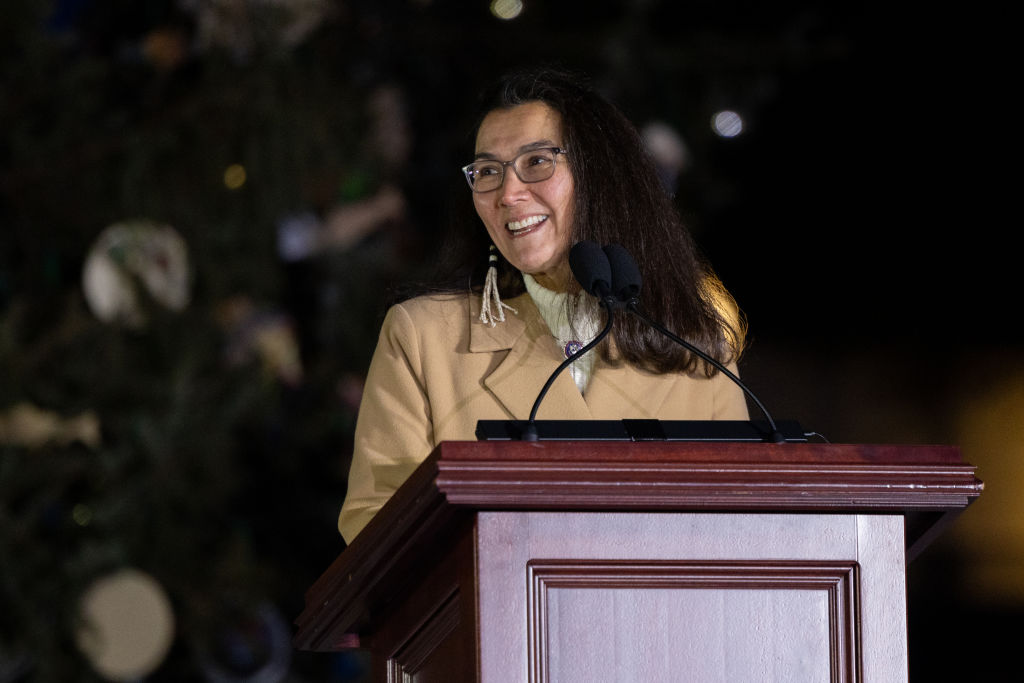
US Capitol Christmas Tree lit up in Washington DC
(Nathan Posner/Anadolu via Getty Images)

As the prognosticators and planners inside the Acela corridor were rolling out of bed last Wednesday morning, the votes in Alaska’s open Senate primary were still being counted. The former Democratic congresswoman Mary Peltola had opened a commanding lead over the Republican incumbent Sen. Dan Sullivan, notching 48.1 percent to Sullivan’s 42.7 percent (a margin that, with most of the votes now counted, has continued to hold).

Last week’s race doesn’t determine who gets Alaska’s Senate seat; rather, the nonpartisan primary simply narrows a crowded field to the top four vote-getters, who will then advance to a November general election that will be decided by ranked-choice voting. Both the GOP and Democratic nominees have cleared that bar comfortably. But the incumbent Republican will not be the only Dan Sullivan on the ballot in November. Dan Sullivan Jr., a retired schoolteacher and registered Republican, recently won a legal fight to stay in the race despite accusations of sabotage by the Alaska Republican Party. 

With the midterm congressional elections less than three months away, Republicans currently hold a 53–47 majority in the Senate. Democrats must pick up four seats to win the majority, a prospect that seemed unthinkable when President Donald Trump took back the White House in November 2024. But as the American economy struggles under the weight of the Iran War, and Trump’s approval numbers crater to historic lows, Democrats are surging nationally. And Alaska is one of the places where the shift is showing up.

Peltola’s strong performance wasn’t entirely surprising, even in a state Trump carried twice. The first Alaska Native and first woman to represent Alaska in Congress, Peltola made a name for herself as an independent operator in Washington, DC. Though a registered Democrat, Peltola has defended the oil industry vital to the Alaskan economy, supported gun rights in a state that lives for hunting, and shown a willingness to work with Trump when it could benefit her constituents, regardless of how it might look to other congressional Democrats. Running on the slogan of “Fish, Family, and Freedom,” Peltola highlighted her independent streak with a timely ad released on social media early Wednesday morning as the results were being finalized.

In Alaska, where ranked-choice voting has become the standard method of deciding elections, Sullivan Jr.’s inclusion has drawn the attention of Republican strategists bracing for a race that could come down to a fraction of a point. His candidacy is the kind of long-shot, trend-defying entry that regularly turns up in Alaska. In a state where voters and candidates often buck the simple logic of the two-party system, Sullivan Jr. is a unique feature, not a bug.

“I don’t think the Republican Party needs to be the MAGA party,” Sullivan Jr. told the New York Times reporter Kellen Browning. “My dad and my grandfather were Republicans who taught me my work skills, my skills to be a good father and a husband and how to be a kind human being.” In response to Sullivan Jr.’s candidacy, Trump’s Department of Justice issued two subpoenas on Wednesday to probe whether he had entered the race with the intent to confuse voters. 

Another wrinkle is the progressive Democrat David Leslie, clinging to fourth place by a mere 17 votes as of this writing. Though Peltola’s centrist stance on guns and the oil industry has frustrated Alaska’s small but potentially critical progressive base, she could benefit from Leslie’s potential inclusion on the general election ballot. If Leslie holds his fourth-place position and reaches the general, his supporters could play an outsized role in a ranked-choice election in which second-choice votes could be decisive.

How much the presence of Sullivan Jr. and Leslie will determine the eventual outcome is tough to discern. If no candidate receives a majority on the first round, the last-place candidate is eliminated, and those ballots are then redistributed according to the voters’ next choice. If Leslie makes the ballot and finishes in fourth, as he did in the primary, it’s reasonable to expect a decent share of those votes will end up with Peltola. It might be just enough to push the former congresswoman across the finish line. 

But if Leslie’s votes aren’t enough, Sullivan Jr., the man Republicans have cast as a spoiler, could become the decisive figure. With 2.4 percent of the primary vote (more than 3,000 votes), Sullivan Jr. would remain on the ballot after Leslie’s elimination and could force another round of counting. If he is eventually eliminated, where his supporters’ second choices go could determine whether the incumbent Dan Sullivan holds his seat. If critics of Dan Sullivan Jr.’s campaign are correct, perhaps that vote breaks in Peltola’s favor, earning him the spoiler label.

Alaska isn’t necessarily the most likely Democratic pickup, but it’s a seat that looked a lot more secure for Republicans six months ago than it does today. If Peltola can win Alaska, the prospect of Democrats capturing the Senate becomes far more plausible (Democrats would still need to win three more states to get to 51).

Peltola was always going to be a tough out in Alaska. She is a well-liked professional who has shown the capacity to operate in a bipartisan manner when it benefits her constituents. That’s a rare combination in Washington these days, and her pragmatism has helped make this a race Republicans can’t afford to take for granted. In a year when control of the Senate is an open question, the peculiarities of Alaska could make every vote count.

The post Alaska: The Sleeper Race That Could Decide Control of the Senate appeared first on The American Conservative.

Vice Presidential Elegy

Vice Presidential Elegy

J.D. Vance toplines the benefits of faith—but maintains his essential enigma.

HUNGARY-US-POLITICS-DIPLOMACY-VOTE
(Photo by Jonathan Ernst / POOL / AFP via Getty Images)

Communion: Finding My Way Back to Faith, by JD Vance, HarperCollins, 304 pages.

In 1990, the CNN founder Ted Turner called Christianity “a religion for losers.” Though compelled by a prudent regard for public opinion to apologize for this statement, it must be conceded the late media mogul had a point. Christ ministered to the poor and the sick, the widow and the orphan, the publican and the prostitute. His Kingdom was famously not of this world; condemned by His own countrymen, the Son of God died the agonizing death of a common criminal. And in the ensuing two millennia, the followers of Jesus have evinced an abiding concern for, and presence among, the lowly and the despised. Losers loom large.

But there has also been another dimension to the Christian experience. The faith spread like wildfire to become, by the end of the fourth century, the state religion of the Roman Empire. From a countercultural force, Christianity turned into The Establishment, which made its leaders and adherents responsible for affairs temporal as well as spiritual. Winners—great princes, high officials, wealthy merchants—were now an integral part of the flock. The tension thereby introduced has been with us ever since. 

And it stands at the heart of Communion: Finding My Way Back to Faith, J.D. Vance’s new book about his return to Christianity—though this time of the Catholic variety, rather than the nondenominational Protestantism of his youth.

For Vance has been on both sides. He grew up among America’s losers, in the forgotten hollers and post-industrial towns of Appalachia. And it was on their behalf that he entered public life: first as documentarian, shining a light on the poverty and dysfunction of his corner of the country in the best-selling Hillbilly Elegy; then as tribune, going to Washington to secure for these left-behinds the recognition, redress, and reform they deserved.

Yet Vance is also, on a personal level, an irrepressible winner. Since getting into Yale Law School sixteen years ago, the Ws have been stacking up. A lucrative investing foray into Silicon Valley; a near-universally acclaimed literary debut; a Senate seat before the age of 40; and now the vice presidency. What’s more, these prizes came not from a famous name or inherited wealth, but purely by dint of Vance’s perspicacity and discipline.

And now, of course, he is lieutenant to Donald Trump, the Ultimate Winner, a man who pursues and relishes and worships worldly success more openly, crassly, and zealously than any other figure in American history.

The vice president is undoubtedly conscious of this dynamic, even if he can’t quite say it out loud. But he doesn’t seem terribly bothered. He is, after all, hardly the first believer with an ostensibly God-fearing boss more preoccupied with things worldly than heavenly (just ask anyone who worked for Charlemagne—or King David).

More significantly, Vance finds in the gospels something beyond the problematization of power. For if Christianity makes these tensions acute, it also offers a blueprint for their management. The body of thought known as “Catholic social teaching” points the way. Vance is a great fan of this effort to use Catholicism to build a justly ordered society, and his memoir dwells at length on the influence that works like Rerum novarum (the famous encyclical of Pope Leo XIII upholding the dignity and welfare of labor against the overweening claims of capital) have had on his thinking.

Indeed, it is this aspect of religion—its utility as a guide to order both individual and collective conduct—that appeals most keenly to Vance.

As he tells us in the introduction:

What I saw around me, and what started my journey back to my faith, was that Christianity bore the best fruit. It was the set of ideas and practices that generated the most good, the most truth, and the most beauty of anything I’d ever encountered.

Hard for this Catholic to disagree with anything here; certainly the faith has generated the most good, truth, and beauty of anything in this fallen world. But inquiring minds want to know: Is Christianity itself true?

Interestingly, what might appear to be the central question is treated as a matter of secondary importance. 

Not that we are given much reason to doubt the sincerity of the vice president’s convictions. And he does try to show his readers that Christianity could be true, that many of the Reddit-y refutations of religion fail on their own terms.

But the arguments that swayed Vance, and which Vance in turn deploys to sway his readers, are fundamentally instrumental: Christianity will improve you as an individual and us as a society. (His wife, characteristically, perceived this with the greatest clarity: “Usha has said that the business of converting to Catholicism,” Vance writes, “was ‘good’ for me.”) 

I should hasten to add that this isn’t a bad reason to convert—not at all. Vance is genuinely interested in forming better citizens and building a better world; the Word of God is a sure and steady guide to both. And it is, in its own way, quite honest; in fact, it seems likely to me that the majority of the new arrivals in the pews were moved, at least initially, by a similar desire to obtain the fruits of Christianity. (That, anyway, is what brought this reviewer back to the Church some years ago.)

But it is a little strange to so completely elide the claim on which all other claims hang, particularly in a memoir of personal conversion. Consider that what was previously the most famous such narrative by a Catholic convert, Saint John Henry Newman’s Apologia Pro Vita Sua, is almost entirely concerned with explaining how its author came to believe that what the Church taught was objectively true. Although Newman, too, accepted the social utility of Catholicism, it was essentially immaterial to his case for the faith. The Church, he famously asserted, 

holds that it were better for sun and moon to drop from heaven, for the earth to fail, and for all the many millions who are upon it to die of starvation in extremest agony, as far as temporal affliction goes, than that one soul, I will not say, should be lost, but should commit one single venial sin.

This awful conviction of the truth of Christianity, and the sacrifice—even of the whole world!—that one must be prepared to accept for its sake, is rather alien to the chirpy tenor of Communion.

There’s another difference between this book and Newman’s Apologia. James Joyce, who knew something about literary style, had his alter ego Stephen Dedalus praise the sainted cardinal’s “cloistral silverveined prose.” Alas, no one would apply such descriptors to Vance’s latest effort.

It’s a great shame, because the vice president himself is not devoid of literary chops. Hillbilly Elegy was a wonderful read, an original story engagingly told. But Communion has little of the candor, fluency, or wit of that earlier work. It’s often starchy, and very much in the vein of a traditional political memoir. Platitudes abound; genuinely interesting episodes, like Vance’s entry into Peter Thielworld, are skipped entirely, while less interesting episodes, like his courtship of the future Second Lady, are belabored. (Respectfully, few indeed are the readers interested in a dozen pages on how much you love your wife.) 

Many of the edges have been sanded off. The fascinating ambiguities and frank observations of the first memoir have given way, in the second, to pious affirmations of orthodoxy and just-so stories. Even Mamaw has been bowdlerized (her frequent and creative cursing, one of the funniest motifs of Hillbilly Elegy, is here censored by prim and proper asterisks).

Some emphases have also changed. In that first book, Vance was quite honest about the kind of Christianity that existed among his family and neighbors, who were “deeply religious but without any attachment to a real church community.” 

“Despite its reputation,” he wrote,

Appalachia—especially northern Alabama and Georgia to southern Ohio—has far lower church attendance than the Midwest, parts of the Mountain West, and much of the space between Michigan and Montana. Oddly enough, we think we attend church more than we actually do….

The pattern of deception has to do with cultural pressure. In southwestern Ohio, where I was born, both the Cincinnati and Dayton metropolitan areas have very low rates of church attendance, about the same as ultra-liberal San Francisco. No one I knew in San Francisco would feel ashamed to admit that they don’t go to church. (In fact, some of them might feel ashamed to admit that they do.) Ohio is the polar opposite. Even as a kid, I’d lie when people asked if I attended church regularly. According to Gallup, I wasn’t alone.

Christianity was therefore a vague, individual affair; real, of course, and with cultural cachet, but lacking organic instantiation in the communal life of which the young J.D. partook.

But in Communion, there is a shift from interrogating stereotypes of Bible-thumping hillbillies to leaning into them. In an account of his great-grandmother’s funeral, we are told that:

Christianity wasn’t just a “belief” to us. It wasn’t a judgment we arrived at after evaluating the evidence. It was a practice, a way of life. It connected us to our ancestors and our progeny…. Losing my faith wasn’t, consequently, a primarily intellectual act. It was the equivalent of a divorce. I was severing myself from my roots as I understood them—from my family, the grandmother I’d just lost, the values I’d been taught.

(It would have been more interesting, and, I think, more productive, to consider why institutional Christianity underwent such decay—and whether it might be reversed—instead of gesturing toward the chthonic faith of the hill folk.)

Of course, there is a sense in which subjecting the text to extended critical interrogation is missing the point. This is primarily campaign literature; it was written more to exist and generate discussion around its author than to be, well, read.

Still, Vance is too compelling and perceptive a figure to write an entirely uninteresting book. His critique of the “GDP-first” lens through which so much of the right continues to look at economic policy is extremely important (the point about the pleasantness of Japan proving economics “fake” was particularly strong); so, too, is his attack on the excesses of tech and the attention economy. And his attempt to apply Catholic social teaching to the contemporary American context appears both genuine and salutary (even if it’s doubtful whether all this theorizing has much connection with what the White House is actually doing).

There are also occasional points of deeper personal revelation. Late in the book, Vance confesses that the destination of his soul after death doesn’t keep him up at night. “I don’t worry about what I will find on the other side of eternal sleep,” he says, adding that “even as a child, I never feared hell.” (It’s an interesting contrast with his boss, who told reporters last year he didn’t think he was “heaven-bound.”)

What, then, does the vice president worry about? “Death without triumph,” he tells us, “death knowing that your friends will be worse off… death without any certainty that your earthly labors will bear fruit.” “Civilizational death,” as he puts it elsewhere in the book—the possibility that our great deeds and traditions will eventually be consigned to oblivion.

Of course, he recognizes that these sentiments differ in some important ways from the worldview suggested by Christianity. There is even a whiff of pagan antiquity about them.

In fairness, every good statesman probably needs at least a dash of this, a little virtù to leaven his virtue. And a major part of Vance’s unique appeal is that he combines a genuine seriousness about ideas with a clear interest in—and growing comfort with—power.

But the trick is not to get too comfortable: not to allow the effects to entirely eclipse the cause, nor to let an interest in the fruits cause one to lose sight of the tree. Because when you’re winning so much, it can be easy to forget about the losers.

The post Vice Presidential Elegy appeared first on The American Conservative.

Have You Heard the Story About Dolly Parton Being Talked Into Singing a Song in a Pub While Vacationing in Ireland in 1990? (VIDEO)

Screencap of Twitter/X video.

The news of the passing of Dolly Parton today broke millions of hearts across the country. She is a true American icon.

Social media is flooded with people remembering her and one story in particular is going viral because it reminds us of how wonderful Dolly was as a person and how humble she was despite her fame.

Dolly was vacationing in Ireland in 1990 and had no plans to perform, but when she happened into a local pub, the guitar player performing there that night asked her to sing her song ‘Coat of Many Colors’ which he knew how to play.

Naturally, Dolly obliged them.

The Irish Star wrote about this back in 2023:

Dolly Parton’s visit to an Irish pub where she sang one of her most famous songs

Dolly Parton blew pub-goers in Co Kerry away in 1990 when she performed one of her most beloved songs. The legendary 9 to 5 hitmaker was on vacation in the stunning Irish county at the time and visited one of the country’s most iconic pubs, Páidí Ó Sé’s.

She was accompanied by her friend Walter Miller whose mother was buried in the area. Upon visiting the iconic pub, owned by legendary Irish Gaelic football manager Páidí Ó Sé, Parton was greeted by an eager crowd and was eventually convinced to perform for the punters there.

Handed a microphone, she decided to do a rendition of one of her most iconic songs, Coat of May Colors. In the clip posted on the pub’s YouTube channel, Dolly can be heard saying: “Hello my name is Dolly and I am here on vacation and I had not planned to sing tonight. I had planned on being entertained.

“I thank all of you for being fans and I’m having a great time.”

She continued: “The is a song I wrote that’s a true story from my own life and I’m sure a lot of you folks can relate to it.”

Watch the video below. This is special.

This is exactly what made Dolly Parton so amazing. She was at home wherever she was and she could talk to anyone.

She was truly one of a kind. Rest in peace, Dolly.

The post Have You Heard the Story About Dolly Parton Being Talked Into Singing a Song in a Pub While Vacationing in Ireland in 1990? (VIDEO) appeared first on The Gateway Pundit.

Victor Davis Hanson Compares Hakeem Jeffries and Chuck Schumer to Dr. Frankenstein, Unable to Control the DSA Monster They Created (VIDEO)

Screencap of Twitter/X video.

During one of his recent podcasts, conservative historian and scholar Victor Davis Hanson compared House Minority Leader Hakeem Jeffries and Senate Minority Leader Chuck Schumer to Dr. Frankenstein, suggesting that just like in the story, they are unable to control the monster that they created.

This is actually a perfect metaphor.

It actually applies to all of the leading voices in the Democrat Party, not just Jeffries and Schumer. They all allowed this ideology to creep into their party and now it is talking over and they have no idea what to do about it.

Townhall has more details:

The Democrat Party is being consumed from the inside out by the Democratic Socialists of America, and it has no one but itself to blame.

Victor Davis Hanson, a classicist, military historian, and Hoover Institution fellow, argued Monday that the DSA’s growing influence resembles Frankenstein. Democrat establishment figures, including House Minority Leader Hakeem Jeffries and Senate Minority Leader Chuck Schumer, he said, helped create a political monster they can no longer control.

“They were the Dr. Frankensteins, and they created this socialist Frankensteinian monster, and now it’s devouring them because they’re weak,” Hanson said.

And when you look at Hakeem Jeffries, he’s like a deer in the headlights. His eyes start rolling. Well, do you think you have the, you think that you have the votes to pass? Yeah, of course we do. And why wouldn’t we? You know, it’s just gibberish. And when you hear Chuck Schumer, it’s just, he bends over, and he reads off this script. We’re going to work very hard, and we’re going to elect Democrats. Well, does that mean we’re going to work very hard, and we’re going to elect Democrats? Does that mean you’re going to work with these socialists, or are there some that you can’t be in the same state? We’re going to work very hard, and who, I mean, I mean that. So they’re old, fuddy-duddy, ossified, calcified hacks.

Watch the video below:

The most ironic aspect of this is that of the DSA gets enough control within the Democrat Party, they will likely oust Jeffries and Schumer as leaders.

Many of them have spoken about it publicly.

The post Victor Davis Hanson Compares Hakeem Jeffries and Chuck Schumer to Dr. Frankenstein, Unable to Control the DSA Monster They Created (VIDEO) appeared first on The Gateway Pundit.

FOX News Just Hired a New Permanent Co-Host for ‘The Five’ – Here’s Who They Picked

Screencap of YouTube video.

The panel talk show ‘The Five’ of FOX News is one of the network’s consistently highest rated shows. It has been a total success.

Many hosts have come and gone over the years, with Greg Gutfeld and Dana Perino being the only two original hosts who are still with the show. Now they have added another new permanent host.

Emily Compagno, who has been a guest host on the show numerous times, will now be full time. She is a great choice.

FOX News just made the announcement:

Fox News’ Emily Compagno joins ‘The Five’ as new co-host

Fox News’ Emily Compagno will join “The Five” as the program’s new co-host, the network announced Monday.

Compagno will make her official debut as a mainstay on “The Five” beginning Sept. 8. She will be joining longtime co-hosts Greg Gutfeld, Dana Perino and Jesse Watters as well as rotating hosts Harold Ford Jr. and Jessica Tarlov who fill the liberal seat at the table.

“Fifteen years later, ‘The Five’ remains a powerhouse and appointment viewing for millions of Americans. Emily is a highly accomplished host whose energy and talent have made her a standout across FOX News Media, and we are thrilled to officially welcome her to the show,” Fox News CEO Suzanne Scott said in a statement.

“I couldn’t be more honored to join ‘The Five,’ a team I have long admired and have been fortunate to work alongside over the years,” Compagno said. “Having an official seat at the table on what I truly believe is the most fun show on television is an incredible privilege. I am grateful for the opportunity and can’t wait to get started.”

Compagno will step down as co-host of “Outnumbered” and a rotation of Fox News personalities will fill her seat until a permanent co-host is named.

Dana Perino and the rest of the team welcomed Emily to the show. Watch:

Congratulations to Emily on her new gig, and to the rest of the crew for their continued success.

Emily is a perfect addition to the show.

The post FOX News Just Hired a New Permanent Co-Host for ‘The Five’ – Here’s Who They Picked appeared first on The Gateway Pundit.

Separate Mobs Storm Pharmacy, Fast-Food Restaurant in LA ‘Street Takeovers’

California’s criminals now run the state.

This is not hyperbole to jab at California Democratic Gov. Gavin Newsom or Los Angeles Democratic Mayor Karen Bass, but an observation of the absolute chaos that unfolded during a “street takeover” that happened over the weekend in that city.

KTLA reported Monday on two separate break-ins that took place during two different takeovers less than 2 miles from each other.

One happened around 11 p.m. at the Lorena Pharmacy.

Footage began circulating on social media platform X showing the suspects at the doors, seemingly sawing through security bars to access it.

KTLA said they were seen leaving with baskets of merchandise.

Police told the outlet 100 people were in the area and as many as 10 people went in the store.

Only 15 minutes later in East Los Angeles, burglars reportedly broke into a Jack in the Box and stole two cash registers.

KTLA said that in the two incidents, no arrests have been made.

Real America’s Voice posted to X with footage of one of the takeovers, telling viewers the video was captured by a woman emerging from her home.

She appeared to walk outside on her front porch, seeing mobs of people in the streets and smoke filling the air as cars did burnouts.

Footage of people sawing through security bars and mobs in the streets looks like something from a third-world country.

This is the United States of America, the most prosperous and powerful country on Earth.

Can we really expect Democrats to keep businesses and neighborhoods safe at this point?

These are the same people who did not have fire hydrants with water ready as flames engulfed Los Angeles in January 2025.

Every incident like this reminds millions of Americans why Newsom must never be allowed anywhere near the executive office.

Under his leadership, a state that was once a powerhouse of commerce, industry, technological innovation, and entertainment has become a source of national embarrassment as residents flee in anger and frustration.

This article appeared originally on The Western Journal.

The post Separate Mobs Storm Pharmacy, Fast-Food Restaurant in LA ‘Street Takeovers’ appeared first on The Gateway Pundit.

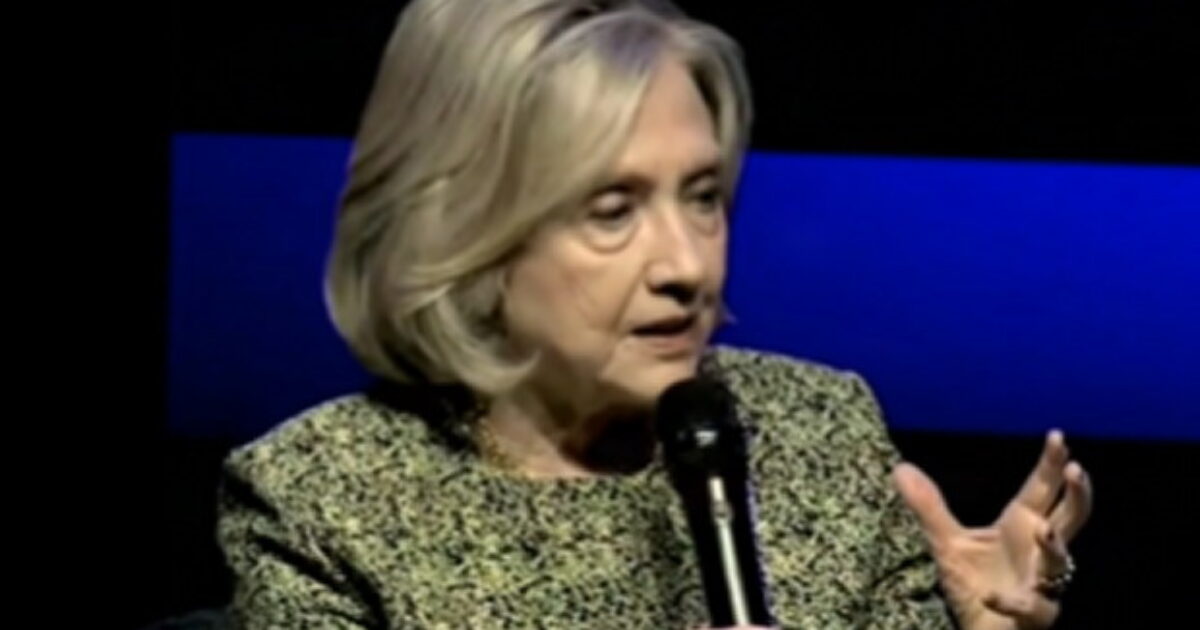
WHAT? Hillary Clinton Calls the Sudden Rise of Socialism in the Democrat Party ‘Healthy’ (VIDEO)

Screencap of Twitter/X video.

While speaking at a recent event, Hillary Clinton commented on the sudden rise of radical socialism in the Democrat Party, calling the development ‘healthy.’

Hillary is known for wanting to be in sync with any new development in among Democrats. Lots of Democrats have tried to tie themselves to this new movement within the party to make themselves seem ‘with it’ but Ms. Clinton’s analysis seems bizarre.

How is it healthy to embrace a failed ideology?

FOX News reports:

Clinton’s eyebrow-raising socialism take sparks brutal mockery: ‘Definition of insanity’

Former Secretary of State Hillary Clinton called the Democratic Party’s current “experiment” amid the rise of democratic socialist candidates “healthy,” drawing swift conservative backlash from critics who accused her of embracing the party’s socialist wing.

“The Democratic Party right now is, I think, going through a kind of experiment, like who can actually respond particularly to young people’s very real concerns about where they are at this point in their lives and what kind of future do they have for themselves? I think that is healthy,” said Clinton.

Clinton, a matriarch of the Democratic Party, defeated democratic socialist Sen. Bernie Sanders in the 2016 presidential primary. Her remarks come as socialist candidates increasingly challenge establishment-backed Democrats in races across the country.

Clinton spoke Monday in conversation with the Hamptons Institute, weighing in on the Democratic Party’s ideological direction as it searches for ways to connect with younger voters while democratic socialist candidates have increasingly notched wins during the primary season.

The moderator asked Clinton where she sees the future of the Democratic Party as it undergoes a “major upheaval between center-left and democratic socialists” during their conversation on diplomacy, national security and global leadership.

Here’s the video:

This is Hillary trying to remain relevant.

She has to be part of whatever the current thing is on the left.

The post WHAT? Hillary Clinton Calls the Sudden Rise of Socialism in the Democrat Party ‘Healthy’ (VIDEO) appeared first on The Gateway Pundit.

Darline Graham Wins GOP Senate Runoff Race in South Carolina

Senator Darline Graham (R-SC) says she stands with Trump and the filibuster needs to be done away with in candidate’s date.

Senator Darline Graham (R-SC) won her runoff election race in South Carolina for US Senate on Tuesday night.

Graham defeated Republican Ralph Norman in the race.

The race was close at 52% for Graham to 48% for Norman.

The Trump endorsement is too powerful.

President Trump already posted the news.

It looks like FOX News and Lawrence Jones were wrong about Darline.

The post Darline Graham Wins GOP Senate Runoff Race in South Carolina appeared first on The Gateway Pundit.