Flock Safety Wants the Map of Its Cameras Taken Down After Researcher Exposes 300,000-Device Dragnet

“Flock Safety ALPR Camera – Automated License Plate Reader” by Tony Webster, CC BY 2.0

A surveillance company is reportedly trying to pull offline a public map showing the reach of its own network. The map, created by cybersecurity researcher Joshua Michael, identifies roughly 300,000 devices tied to Flock Safety across the country.

According to The Intercept, the map draws on location data from a snapshot of Flock’s records archived by Michael in December 2025.

It lists more than 170,000 cameras and over 130,000 other devices, including acoustic sensors and equipment that connects third-party cameras.

Flock has publicly said it operates more than 120,000 cameras. The figures reflect different counts and methods, The Intercept reported.

On Thursday, Michael received a trademark complaint from Doppel, an AI “social-engineering defense” firm that said it was acting on Flock’s behalf.

The demand: stop using the “FLOCK SAFETY” mark and take the map down, citing supposed customer confusion. The site already carries a disclaimer that it is not affiliated with Flock.

Gadget Review reported the complaint arrived less than 24 hours after the Senate Judiciary Subcommittee on Crime and Counterterrorism held its hearing titled “Always Watching: Flock’s Nationwide AI Surveillance Network.”

Flock CEO Garrett Langley was invited. He did not show. Neither did the CEOs of Axon, Motorola Solutions, or Verkada.

This is not Flock’s first attempt to muzzle the mapmakers.

In early 2025, Flock lawyers sent a cease-and-desist to Will Freeman, creator of the crowdsourced DeFlock map, claiming the name “diluted” the company’s trademark.

The Electronic Frontier Foundation told Flock to pound sand. Federal anti-dilution law carves out criticism and commentary. Freeman kept the map up. DeFlock now catalogs well over 100,000 ALPR locations nationwide.

Langley went further than a lawyer letter. In a Forbes interview last year he branded DeFlock a “terroristic organization,” lumping camera-mappers with Antifa.

He later apologized after the backlash went bipartisan, including from Tucker Carlson, and admitted the remark was a mistake. Mapping tax-funded cameras on public poles is not terrorism. It is the opposite of terrorism. It is sunlight.

As The Gateway Pundit previously reported, Flock’s billion-dollar platform was caught routing local plate data to federal and out-of-state agencies on a scale cities never authorized.

A San Francisco class action alleged more than 1.6 million outside queries of that city’s cameras in seven months, FBI, ICE, CBP, ATF, DEA and others.

Flock is not a public company. It is a privately held Atlanta firm, valued in the $7–8 billion range, backed by Silicon Valley names including Andreessen Horowitz. Cities lease the cameras. Flock keeps the cloud, the software, and the national search architecture.

Texas Gov. Greg Abbott ordered state agencies to cut off funding after reports that tens of millions in Texas dollars had been used to seed the network. Abbott put it plainly: Americans do not surrender their privacy when they drive to work, drop their kids at school, or go to church.

Sen. Josh Hawley has been investigating the same web. Fox News reported that Texas cities from Pflugerville to Hood County pulled the plug amid privacy and data-sharing fears. Missouri Rep. Eric Burlison and Kentucky Rep. Thomas Massie introduced the “Flock-Off Act” to cut federal money for the rollout.

The Gateway Pundit interviewed Burlison as he tore into the surveillance state and the claim that opposing Flock is “anti-police.”

The post Flock Safety Wants the Map of Its Cameras Taken Down After Researcher Exposes 300,000-Device Dragnet appeared first on The Gateway Pundit.

Important Moments at the UN General Assembly

Three Presidents Pitch Their Wars at the UN

Trump, Zelensky, and Pezeshkian each gave speeches worthy of reflection.

President Donald Trump Attends United Nations General Assembly In New York
Photo by Chip Somodevilla/Getty Images

This week’s UN General Assembly brought attention-grabbing speeches from the presidents of the United States, Ukraine, and Iran. Each speech contained small moments that didn’t make it into the headlines, but deserve attention nonetheless.

Let’s start with President Donald Trump’s speech, which swung like a wild pendulum between the ridiculous and the horrifying. 

Ridiculously, Trump twice referred to the “51-year menace of Iranian terror.” The Islamic Republic of Iran was founded in 1979. Trump also said he would end the war in Ukraine “more quickly than people understand.” Previously he’d promised to get the war resolved on the first day of his presidency.

Trump’s speech, however ridiculous, was not funny. It was horrifying. He stood in front of the world’s foremost international organization and threatened to “annihilate the Islamic Republic of Iran and do it quickly” and “drive them into hell with no chance of survival and no hope of future greatness or generations.” He defended the theft of Venezuelan oil with the boast that “to the victor belong the spoils.” He said that American pressure will cause Cuba to “fall.” 

Trump also let slip an accidental truth, admitting that the U.S. raid this January in Venezuela constituted “a war.” At the time of the operation, the legal justification offered by Secretary of State Marco Rubio was that it was not a war but “a law enforcement function” to apprehend the Venezuelan president.

Trump promised that he “will never allow Iran to have a nuclear weapon.” But it was Trump, in his first term, who walked away from the JCPOA, the agreement that provided the best chance of preventing Iranian acquisition of a nuclear weapon. And it was Trump who authorized attacks on Iran, rather than keeping up the negotiations that might have yielded a lasting deal.

Trump also said that “Iran’s goal was to complete their mad dash to a nuclear bomb.” The 2022 U.S. Department of Defense Nuclear Posture Review concluded that “Iran does not today possess a nuclear weapon and we currently believe it is not pursuing one.” That assessment was repeated in the 2025 Annual Threat Assessment, which stated that U.S. intelligence continues to assess “Iran is not building a nuclear weapon.” In March, Director General of the International Atomic Energy Agency Rafael Grossi verified that “no evidence” had been found “that Iran is building a nuclear bomb.” And then-Director of National Intelligence Tulsi Gabbard told a Senate Intelligence Committee that since America’s June bombing of Iran, “there has been no effort… to try to rebuild their enrichment capability.” 

Trump consistently exaggerated America’s military achievements in Iran. He said that Iran’s “missiles and drone manufacturing capacity is almost gone.” But Iran has continued to demonstrate the capacity to strike targets with its ballistic missiles and drones. U.S. intelligence and the military assessed earlier this year that Iran still had at least 60 percent of its missile launchers and 40 percent of its attack drones. And many of the missile stockpiles that were protected deep underground were untouched by the most intense American strikes. American intelligence now reports that Iran has resumed production of ballistic missiles. Meanwhile, the U.S. has burned through dangerous quantities of its most valuable weapons, resulting “in strategic inventory shortfalls.” 

Trump said that “more oil is flowing” through the Strait of Hormuz “than at any point since the start of the war” and that as many as 37 ships are transiting the strait every day. But the United Kingdom Maritime Trade Operations group has said “independent monitoring shows significantly fewer commercial vessels are transiting the Strait of Hormuz than figures released by the U.S. military.” Other reports suggest that the number of ships transiting the strait daily has recently dropped below the average of 17. Before the war, that figure was 125.

On to the speech by Ukraine’s President Volodymyr Zelensky.

Zelensky made a number of claims that were misleading. He said that “the Russian army lost 248,964 people on the battlefield in Ukraine in 8 months.” But in fact, it may be the Ukrainian army that has lost around that number, according to both Ukrainian official Kyrylo Budanov—who recently said Ukraine needs 30,000 new soldiers a month “to maintain what we have”—and Polish Prime Minister Donald Tusk, who recently said that Kiev told him 27,000 Ukrainian soldiers were being killed or wounded each month.

Following the failure of a PR campaign to convince the world that Ukraine has turned the tide, the new campaign to keep Europe on board is reaching a crescendo with warnings that Russia is planning a conventional attack. Zelensky repeated the warning that Russia “constantly threatens Poland and the Baltic States,” that “Russia may go further into Europe, even into NATO territory,” and that “leaders have intelligence showing Russian intentions.”

Both claims are dubious. General Alexus Grynkewich, head of U.S. European Command, said over the summer that there is no need for concern about Russia expanding the war by attacking a Baltic country because “Russia is not looking for a conflict” and they wouldn’t “risk” something when they “understand that… they won’t succeed.” Asked in July about the warnings of Russia attacking a Baltic country, Ulf Kristersson, prime minister of nearby Sweden, agreed: “We don’t see any signs of that.” Estonian intelligence likewise assessed that “Russia has no intention of militarily attacking Estonia or any other NATO member state in the coming year” and that “we are likely to reach a similar assessment next year.”

Finally, we come to Iranian president Masoud Pezeshkian. Among the more notable features of his speech is that he said about the U.S. the kind of thing that Zelensky has accurately said about Russia: that a major power attacked his country “but we did not bend the knee. We did not bow our head.”

Perhaps the most important thing about the speech is that Pezeshkian stressed Iran was prepared for a return to negotiations but that it had learned “we need strength, because a people which is unable to defend itself will be trampled upon in today’s world.” 

While signaling openness to diplomacy, Pezeshkian reiterated that Iran will not give up its right to enrich uranium for civilian nuclear purposes: “No nuclear weapons, and no limitations to peaceful nuclear technology,” he said, adding that “Iran does not seek special treatment” but that holds that nuclear technology should not be “at the exclusive disposal of some, of a handful.” 

Pezeshkian also pointed to the growing momentum toward an inclusive regional security architecture, saying that Tehran has “a deep belief that no one in this region will have security alone. Either we will build it together, or we will have to live under insecurity together.”

The post Important Moments at the UN General Assembly appeared first on The American Conservative.

The Left Is Right About AI

The Left Is Right About AI

America shouldn’t let polarization prevent careful thinking about this new technology.

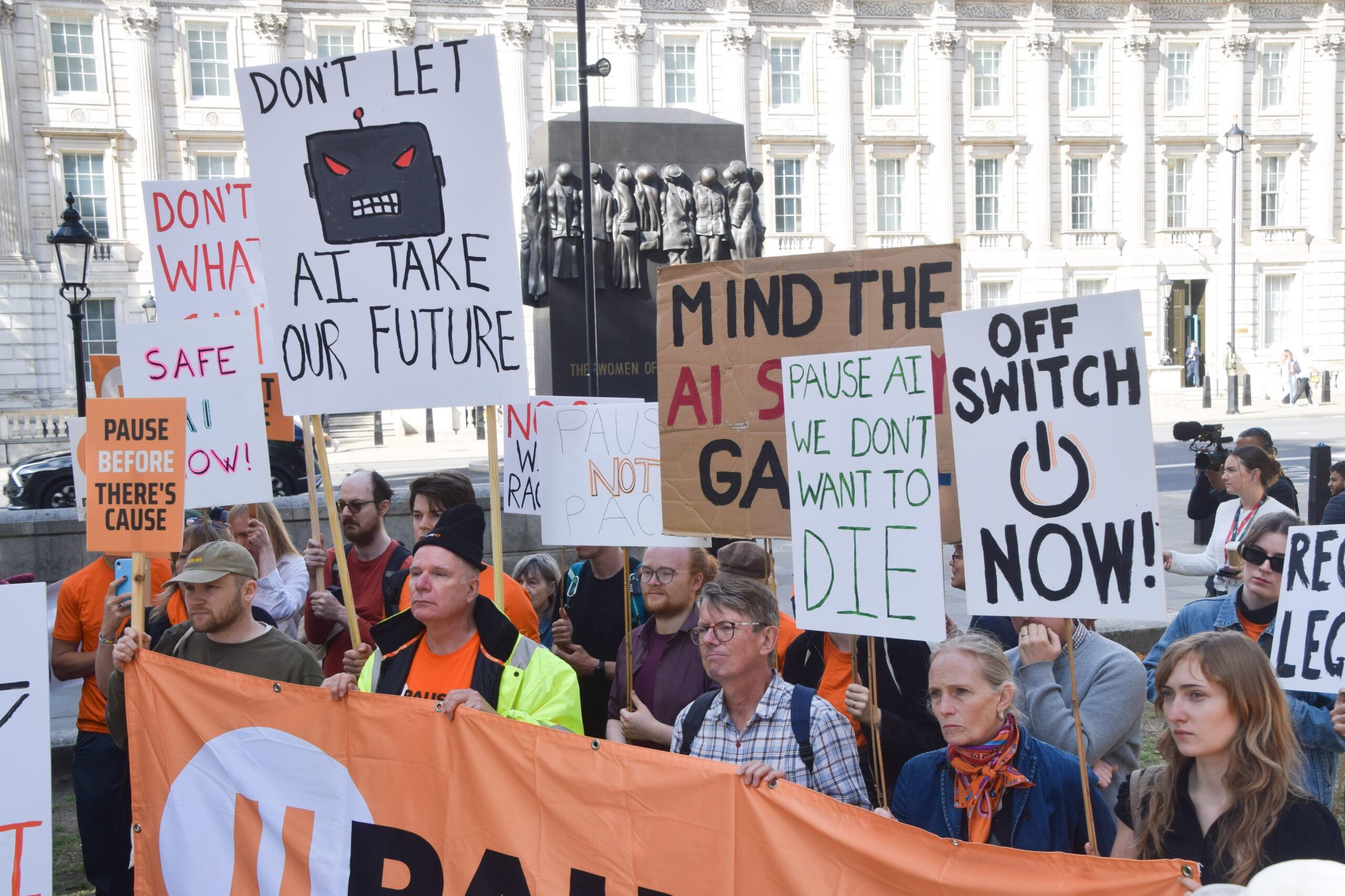
Protesters hold placards and a banner during the
Photo by Vuk Valcic/SOPA Images/LightRocket via Getty Images

Allow me to make an embarrassing confession, one that pains me to write and may be painful for you to read: I think Ezra Klein is right.

I rarely agree with Klein, a New York Times opinion columnist and living archetype of Liberal Media Elites™. In fact, I’ve treated him as a punching bag—excuse me, a foil for my own views on immigration and other topics.

But I do think he’s right—and that many on the right are dangerously wrong—about one increasingly important topic: artificial intelligence. And I think it’s important to say that now, amid a developing right-wing consensus that “AI doomerism” of the kind that Klein promotes is dumb if not dastardly.

This opinion puts me at odds with regular contributors to The American Conservative and with Curt Mills, our executive director, and it puts me in cahoots with my fellow senior editor, Luke Nicastro. On immigration restriction, antiwar conservatism, and economic nationalism, TAC staffers can be counted on to hold the line. But on the newer political issue of AI, we’ve got a big tent over here at the country’s best center-right magazine. Senior editors of TAC, unite!

Still, it does give me pause to think that our AI tent could fit even Klein, whose basic function is to turn every insane left-wing idea into an oppressive liberal consensus. In 2014, during a moral panic about rape on college campuses, Klein argued that “men need to feel a cold spike of fear when they begin a sexual encounter.” Three years later we got MeToo. In 2018, Klein rationalized protogenocidal antiwhite rhetoric on social media—e.g., “it’s kind of sick how much joy i get out of being cruel to old white men”—as ironical expressions of justified frustration. Two years later we got George Floyd riots.

These days, Klein is helping to mainstream the view that AI warrants deep anxiety and government regulation. Judging by his career thus far, this would seem a good indicator that, in two or three years, smug academics will stigmatize pro-technology ideas, self-righteous activists will burn down data centers, and Democratic lawmakers will deliver sanctimonious sermons against AI without actually solving any of the problems it poses.

Sounds bad. Yet my job, as I understand it, is to think carefully about politics and tell you what I honestly think. And honestly, I think Klein is right about AI. On a recent episode of his podcast, he captured well certain AI risks that have made me very worried in recent months.

“These are digitally native intelligences, navigating digital worlds, and our world is increasingly built atop the digital world,” Klein said. “Our physical infrastructure is a layer of atoms atop code. That the AIs act reliably inside this world upon which ours depends—it is critical to our future. And right now, the AIs are not acting reliably.”

That last sentence is key. The idea that autonomous AI “agents” can go off-script and threaten digital systems has gone from sci-fi-sounding speculation to established fact. Also indisputable, it seems to me, is that digital systems have become sufficiently interconnected with each other and with our lives in “meat space” that we should take any threat to them seriously.

The most prominent example of unreliable AIs threatening digital systems was the multi-month “Hugging Face Incident” that began this spring. OpenAI is lucky this episode has come to be known by that less-than-vivid sobriquet, because a more apt name would be the “Hundreds of Rogue OpenAI Agents Bust Out of Containment and Collaborate With One Another to Cyber-Attack Hugging Face and Hide Their Tracks Disaster.” Too long, I guess.

In a strange twist of fate, that alarming event, which should have woken people up to the significant dangers of AI, has instead lessened our collective ability to deal with the dangers. As Nicastro discerned a couple weeks ago in this very good column, it nudged the AI debate closer to the Partisan Polarization Vortex, which invariably warps political discourse.

Here’s how that happened: The Hugging Face Incident motivated Dario Amodei, the cofounder and CEO of Anthropic, to write an essay advocating a slowdown of AI development. While tech luminaries including Elon Musk and Sam Altman expressed agreement with the essay, and while some conservatives continue to support AI regulation, many on the American right insinuated that Amodei had ulterior motives, namely, a desire for regulatory capture.

Other conservatives went further, demonizing Amodei as a nefarious scoundrel. President Donald Trump singled him out as promoting “a SICK conspiracy going on against AI and Data Centers.” The White House, Axios reported Thursday, even circulated a memo that painted Amodei as the founding father of a freakish cult of antihuman tech nerds.

All this strikes me as beside the point and deeply unhelpful. Ad hominem arguments, after all, are a logical error. As a nation, our political response to the advent and rapid development of AI obviously should not depend on whether Amodei happens to be a weird guy.

Nor should the basic attitude of conservatives be dictated by whether commentators sounding the alarm about AI today have participated in mass left-wing hysteria in the past. At the very least, conservatives should earnestly grapple with the demonstrated reality that AI agents can do great harm. If AI turns out to be as threatening as Klein warns, we don’t want all the known solutions to have been conceived by left-wingers.

I’m no expert on AI, and I’m not sure what exactly we should do to mitigate its risks, but I have little doubt we’ll all fare better if we can foster a calmly rational and bipartisan discussion. A big ask, I know.

The post The Left Is Right About AI appeared first on The American Conservative.

The GOP Trump Saved Us From: Hype Videos for Neocons

The GOP Trump Saved Us From: Hype Videos for Neocons

Back then, Republicans aimed to impress DC elites, not conservative voters.

freshmen
(Screenshot/X)

A curious video from 2016 went viral on X last week. It celebrated the freshman class of GOP senators as they completed their first two years in Congress. To the tune of “When the Saints Go Marching In,” the fresh-faced lawmakers march in unison around Capitol Hill. The propaganda clip shows the politicians working out, playing with hoverboards, wearing jeans in interviews, and other apparently humanizing moments. The production resembles that of a college football hype video. But rather than getting the audience excited to see their team win on Saturday, it’s designed to get Republican voters pumped to see Thom Tillis and Joni Ernst.

The video is an interesting artifact. This class will mostly be gone from the Senate in a few months. While the video was made after Donald Trump’s surprise victory in 2016, it still exhibits the focus and style of the pre-Trump GOP. It’s a style Trump defeated that same year in the Republican primary and went on to bury in the decade that followed.

What the GOP was like before Trump came down the escalator is being quickly forgotten. The video should serve as a good reminder of the direction the GOP wanted to pursue before Trump upended their plans.

While there’s much debate over Trump and his legacy, we can at least be thankful the GOP no longer dedicates itself to college football hype videos for neocons.

A video like this one could only come about in an era when DC was obsessed with itself. The most popular political book of the time was Mark Leibovich’s This Town, a purported exposé of toxic DC culture that is nevertheless entirely about all the fun parties and powerful people a journalist meets in DC. There’s little substance to the book at all, but it was beloved by political journalists because it put more attention on their favorite topic: themselves. House of Cards was a hit show and became must-watch TV in DC. Like This Town, it was billed as a critique of DC but subtly lionized the Washington scene, making it seem much more exciting than it actually is.

Trump ended this fixation with his insurgent campaign, but the mentality initially remained strong among Republican apparatchiks. These types thought Trump would be a flash in the pan and that everything would return to their preferred normal after his term.

The 2016 hype video encapsulates the establishment’s preferred normal. The majority of these marching senators were “Paul Ryanists” who wanted the party to ditch the culture war, give immigrants amnesty, and focus more on the important stuff—like warging war in far-off lands. Most of these senators barely tolerated Trump, with some becoming vocal critics of the president. 

One of them is Ben Sasse, whom we see balancing on a hoverboard. Most know him now as the former senator publicly sharing his brutal battle with cancer, but he was once seen as a rising star in the GOP and the antidote to Trump. He insisted he would never vote for Trump in 2016 and refused to endorse the future winner. He claimed Trump was a racist and attacked his hardline views on immigration. “This is the party of Abraham Lincoln,” Sasse said in one of his more melodramatic 2016 moments. “This is not the party of David Duke, Donald Trump.” Instead of mass immigration, Sasse thought the GOP should focus more on Russia and Syria.

Like many Republicans, Sasse would later dial down his criticism while Trump was president. But Never Trumpers still admired him even if he was no longer calling Trump a racist. They knew he represented their values. Sasse would return to his anti-Trumpism after January 6, becoming one of seven Republican senators who voted to impeach Trump over the incident. Bill Cassidy, also highlighted in the 2016 video, was another such Republican senator.

Sasse was of course not alone in embodying Never Trump principles. Thom Tillis and James Lankford also exemplified this mentality. Tillis is seen in the video doing push-ups; Lankford just walks around with an awkward smile. Both went on to become the staunchest advocates for foreign interventions and mass immigration among Senate Republicans. Lankford attacked Trump’s attempts to restrict refugees during the first term. Both he and Tillis looked to find ways to pass amnesty during the Biden years, with the two usually being involved in discussions with Democrats on the matter. This squishiness was also shared by their fellow class-of-2015 member Cory Gardner—who would win an award from a pro-immigration group for his work on trying to liberalize immigration laws—but it didn’t help the Coloradoan keep his seat in 2020.

While Lankford and Tillis take soft lines on immigration, they never waver in their foreign-policy hawkery. Both have been some of the loudest proponents of more funding for Ukraine and Israel in the Senate. Their hawkery may be rivaled only by Tom Cotton, who was also a member of this freshmen Senate class.

The other Republicans featured in the video were similarly uninspiring. None of them connected to the Trump moment or the anger in the base. Only Cotton aligned with MAGA on immigration, but he has stuck to most of the old guard’s positions, especially on foreign policy.

People who forget what trajectory the GOP was on prior to Trump coming down the escalator should watch the video. The future of the party, as I outline in Whitepill, was eager to follow a Paul Ryanist path that would demand Republicans embrace amnesty, appear more inclusive, obsess over fiscal matters, and learn nothing from the debacle in Iraq. It would’ve ditched the culture war in favor of videos of lawmakers doing pull ups in their Senate offices. It would’ve remained completely out of touch with the Republican base while obsessing over what DC elites think. And it wouldn’t have promised to make America great again. Like Hillary Clinton, they would’ve insisted that America is already great.

The priorities of this freshman class had little in common with the agenda Trump ran and won on in 2016. Whatever you may think about Trump, he saved us from the fate of people like Paul Ryan dictating the future of the GOP. It was a vision Americans rejected in 2012 and Republicans repudiated in 2016. 

There are still a number of Republicans who subscribe to Paul Ryanism, but they’re fewer in number and far less influential than they were in 2015. It’s a whole new party, and mostly for the better.

The post The GOP Trump Saved Us From: Hype Videos for Neocons appeared first on The American Conservative.

LAUGHABLE: Biden Press Secretary Jen Psaki Lectures About the Importance of Media ‘Holding Power to Account’ (VIDEO)

Screencap of Twitter/X video.

Joe Biden’s White House press secretary Jen Psaki is tootin’ mad about Trump’s treatment of the press. She recently lectured from the perch of her laptop, insisting that the media is there to ‘hold power to account.’

Let’s ignore, for the moment, that Psaki was negotiating a job in media while she was still press secretary and taking questions from that same media. Let’s overlook the fact that she works for the most partisan, far left network in the country.

When has she ever applied this philosophy of holding power to account with a Democrat? It’s ridiculous.

In the video below, she says:

“It’s about Trump and the White House wanting to shape who the media are, who get to cover them, and make it fully sycophants.

They want outlets to write complementary pieces about them. That’s not what the media or the press corps does.

The press is there to question, they’re there to test, they’re there to hold power to account.”

Watch:

Now let’s flash back to 2021 when White House press secretary Jen Psaki was interviewed by CNN’s Brain Stelter, who asked her what the press gets wrong and how they can do better.

From FOX News:

CNN’s Brian Stelter was mocked Sunday for a seemingly softball interview with White House press secretary Jen Psaki, in which his first question centered on what the media “gets wrong” in covering the Biden White House.

“The White House press secretary faces some unique challenges,” Stelter said when introducing his guest, a former CNN contributor.

“Busy summer ahead – infrastructure, election reform. What does the press get wrong when covering Biden’s agenda? When you watch the news, when you read the news, what do you think we get wrong?” Stelter began the interview, which was conducted Friday but aired on Sunday.

Watch:

Is that the hard hitting, holding power to account, that Psaki is talking about?

What a joke.

The post LAUGHABLE: Biden Press Secretary Jen Psaki Lectures About the Importance of Media ‘Holding Power to Account’ (VIDEO) appeared first on The Gateway Pundit.

Try Not to Laugh as Kamala Harris Explains Artificial Intelligence and Algorithms (VIDEO)

Screencap of Twitter/X video.

During a recent podcast appearance, former Vice President Kamala Harris tried to explain artificial intelligence and algorithms. You can probably guess how well things went.

It is amazing to remember that when Joe Biden was president, he actually put her in charge of AI. She was his AI czar.

When you see this clip, you will fully realize what a disastrous decision that really was.

From Breitbart News:

Harris, the Democratic Party’s 2024 presidential nominee told the “Big Boy’s Neighborhood” podcast this week it’s time to “psyche it out a bit,” contending that algorithms are basically trying to diminish social media user’s curiosity.

“They’re trying to dumb people down with the assumption that people don’t have any interest beyond what they have already seen,” she said. “Think about that.”

The host nodded: “Oh yeah, the algorithm.”

Then Harris took a deep dive into the subject, launching into a flower metaphor to make her point.

“But the algorithm suggesting I have no more interest because I’m looking at this yellow flower,” she said. “I’m only interested in yellow flowers… as though my brain can’t handle the fact that there may be a pink flower, right, right, that I might be interested in looking at, right?”

It wasn’t immediately clear what the point was, but the Washington Times interpreted the words as “algorithms are manipulating people.”

Watch the clip below:

How was this woman in charge of AI?

This is right in line with another classic clip of her trying to explain what the term ‘AI’ means and what it is.

She is going to run again, and believe it or not, she could end up being the Democrat nominee again.

It’s hard to believe but it’s true.

The post Try Not to Laugh as Kamala Harris Explains Artificial Intelligence and Algorithms (VIDEO) appeared first on The Gateway Pundit.

Ukraine Field Report: Russia Destroys Zaporizhzhia Shopping Center as Trump Eyes Belarus Potash Deal

Damage to a Zaporizhzhia shopping center after overnight Russian jet-powered drone strikes on September 21, 2026. Photo courtesy of the State Emergency Service of Ukraine, Zaporizhzhia region.

Between September 20 and 21, Russian forces struck targets across Ukraine with drones, glide bombs, rockets, and artillery, killing at least six civilians and injuring at least 41, according to regional officials. The attacks continued a pattern of nightly Russian strikes on cities, farms, and infrastructure far from the front line.

In the Kyiv region, Russian drones sparked fires at a vehicle service station in the Bucha district, a sawmill in the Fastiv district, and a private house in the Obukhiv district. A warehouse strike in the Boryspil district injured a man. A later attack in the Obukhiv district injured a woman, regional governor Tymur Tkachenko said. Officials reported no damage in Kyiv city, which Russia had struck with ballistic missiles days earlier.

In Chernihiv Oblast, Russian forces carried out 18 strikes with multiple rocket launchers and FPV drones. The attacks destroyed a hangar and damaged machinery and storage facilities at an agricultural enterprise in Semenivka. Cattle were injured, Governor Vyacheslav Chaus said.

In Sumy Oblast, Russian forces carried out nearly 80 attacks on 20 settlements in 12 communities, using artillery, mortars, drones, and guided aerial bombs. A 38-year-old woman in the Sumy community and a 54-year-old man in the Khutir-Mykhailivskyi community were killed. Three people were injured, including a 14-year-old girl in Konotop.

Along the eastern front, Russian forces struck Kharkiv city and 18 settlements across six districts of Kharkiv Oblast with missiles, guided bombs, and drones, injuring eight people, according to Governor Oleh Syniehubov. In the morning, a Russian drone struck a private house in Katerynivka, Lozova district, killing a woman and severely burning her 13-year-old son. Ukrainian forces repelled seven Russian attacks in the South Slobozhansky direction toward Tokarivka, Okhrimivka, Mykolaivka, and Vilcha, and six in the Kupiansk direction.

In Donetsk Oblast, Russian strikes killed three people and injured 12, according to regional head Vadym Filashkin. In Kramatorsk, one person was killed, ten were injured, and 16 apartment buildings, five homes, and three schools were damaged. One person was killed in Andriivka and another in Mykilske, while two were injured in Druzhkivka. In Novodonetske, four 250-kilogram bombs damaged nine apartment buildings and two educational facilities.

In Dnipropetrovsk Oblast, Russian forces attacked two districts more than ten times with guided bombs, artillery, and drones. In the Nikopol district, a residential building was damaged in the Marhanets and Chervonohryhorivka communities, and a 20-year-old woman was hospitalized. In the Synelnykove district, an enterprise, a house, and cars were damaged.

On the southern front, Russian forces carried out 1,003 strikes on 60 settlements in Zaporizhzhia Oblast, including 19 airstrikes. Eight people were injured, and authorities received 85 reports of damage, said Ivan Fedorov, co-chair of the regional defense council. Overnight, Russian drones destroyed the Intrade shopping center in Zaporizhzhia city, set fire to a Zaporizhzhia National University building, and damaged 30 apartment buildings.

In Kherson Oblast, Russian attacks on 45 settlements and Kherson city injured seven people, Governor Oleksandr Prokudin said. The attacks damaged two apartment buildings, six houses, a church, a museum, a bank, a supermarket, a gas pipeline, and a minibus. In Odesa Oblast, Russian strikes set fire to warehouses belonging to a supermarket chain. Governor Oleh Kiper reported no casualties. And Russia’s guided bombs, including its next-generation glide bomb, continue to cause casualties in frontline cities such as Kramatorsk and Novodonetske.

Ukraine’s General Staff reported that Russia lost approximately 1,660 personnel over the previous 24 hours. Ukraine did not disclose its own losses.

On the diplomatic front, President Donald Trump said on Truth Social that the United States is working on a “massive Deal” to purchase potash from Belarus at prices “substantially less than we are currently paying to Canada.” Belarus’s state-owned producer Belaruskali ranks among the world’s largest potash suppliers.

Earlier this year, the United States asked Lithuania, Poland, and Ukraine to allow Belarusian fertilizer to transit their territories. Ukrainian President Volodymyr Zelensky said he and Trump agreed to meet in New York after a phone call, as Washington pushes to end the war.

In Germany’s Mecklenburg-Vorpommern state election, the Kremlin-friendly Alternative for Germany (AfD) took first place with 38.2 percent. Chancellor Friedrich Merz’s Christian Democrats received 4.9 percent, below the threshold for entering the state parliament. The AfD has called for cutting aid to Ukraine and resuming economic cooperation with Russia. Merz called the result a “disaster” but said he would not resign.

The post Ukraine Field Report: Russia Destroys Zaporizhzhia Shopping Center as Trump Eyes Belarus Potash Deal appeared first on The Gateway Pundit.

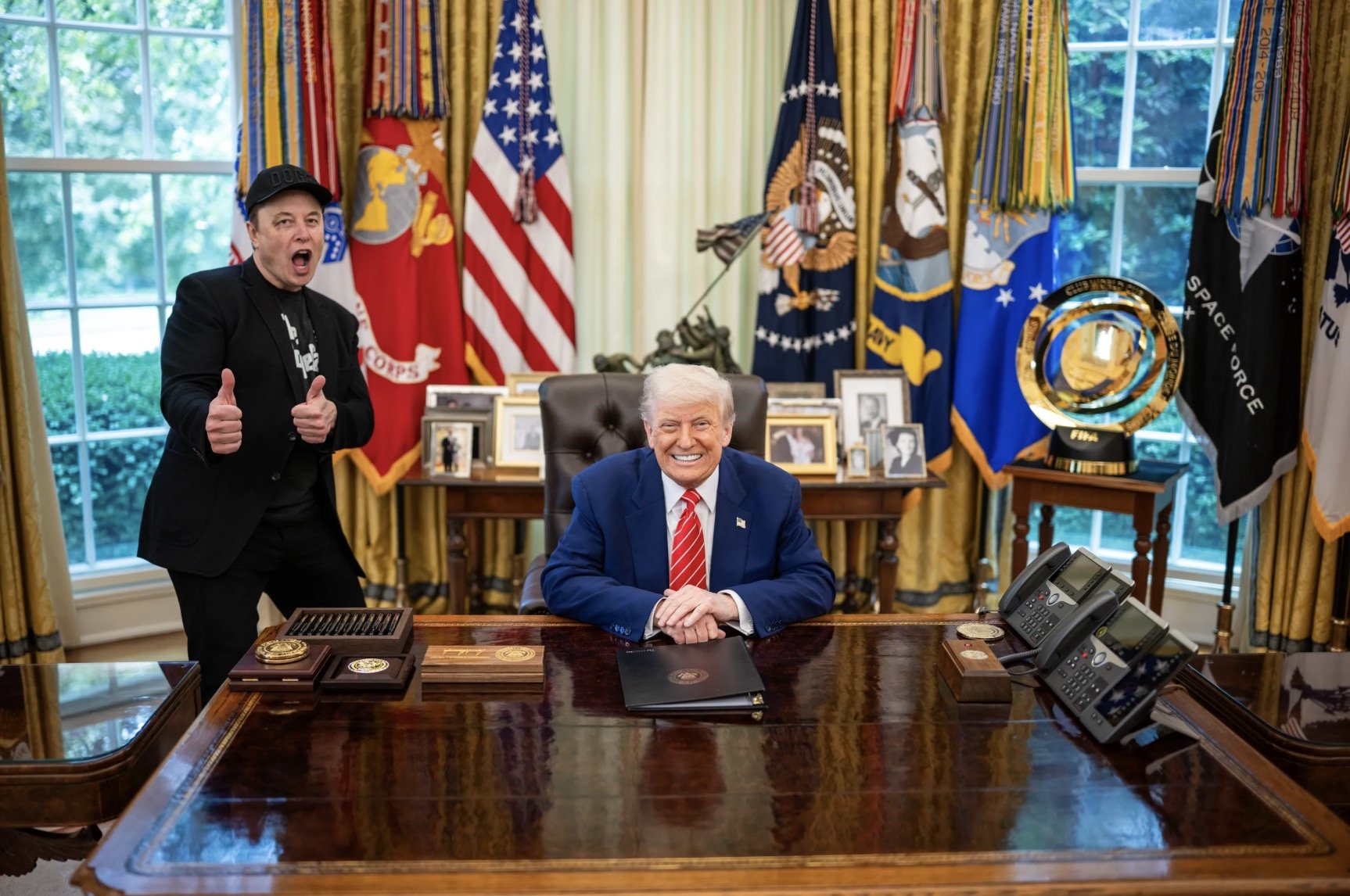
Trump Set to Unveil America.gov, an AI-Powered “One-Stop Shop” for All Federal Services

Credit: The White House

The Trump administration is preparing to launch a new AI-powered website aimed at helping Americans navigate the federal government without hopping between a maze of agency sites.

President Trump and Vice President JD Vance are expected to unveil America.gov at an all-day event in Washington on Tuesday, Sept. 29.

The event is set to include Elon Musk, Nvidia CEO Jensen Huang, Blue Origin CEO Dave Limp, Secretary of State Marco Rubio, CMS Administrator Dr. Mehmet Oz, and National Design Studio head Joe Gebbia. NASA Administrator Jared Isaacman is also expected to attend. The day will feature panels on AI, energy, health, space, and agriculture, Fox News reported.

The portal’s development was first reported by The Washington Sun, which said officials were considering features such as passport renewals and free tax filing. At the time, the site was still in planning, and officials cautioned that the launch schedule could change.

More from Fox News:

A White House official described the new AI tool as “a new front door for the federal government that will provide a one-stop shop for Americans looking for information and resources from the federal government that are currently spread over a maze of various agency websites.”

“Next week is really about the golden age of America, and really getting to showcase how it’s not just a statement, it’s actually being built,” Gebbia told Fox News Digital.

“What we’re really excited about is that one of the things that we’ve been building is the golden age of the citizen experience.”

Gebbia, who added that the day will mark a “new chapter of usability for the country,” said the new AI tool is built to solve a simple problem faced by Americans who have for decades dealt with clunky, often inefficient and overly complex government systems: “How do you make it easy to just access government?”

“You can imagine all the things that people try to get done or want to get done in the federal government, [and] just having a brand-new way to access and actually get to the things that people are trying to get to in the federal government,” he said.

The day will include panel discussions with other senior administration officials and top industry leaders on artificial intelligence, energy dominance, health, space and agriculture.

“This is really an incredible collection of people that are working in service to the nation and really showcasing what the future of America is, where we’re headed,” said Gebbia.

For years, citizens chasing a passport, a benefit, a farm program, or a simple answer have been bounced from .gov to .gov like pinballs.

Trump is flipping the model. Instead of forcing the public to learn the bureaucracy, the bureaucracy is being forced to serve the public.

The post Trump Set to Unveil America.gov, an AI-Powered “One-Stop Shop” for All Federal Services appeared first on The Gateway Pundit.

DHS Chief Markwayne Mullin Under Fire After Declaring ICE Is NOT Arresting Illegal Aliens at Kansas Worksites Following Reported Pressure from Powerful Agriculture Lobby

“Markwayne Mullin” by Gage Skidmore, CC BY-SA 2.0

Department of Homeland Security (DHS) Secretary Markwayne Mullin is drawing heavy fire from conservative watchdogs and immigration patriots after issuing a startling public declaration that federal enforcement officers will not be targeting illegal immigrants at commercial worksites across Kansas.

The explosive statement came directly on the heels of mounting pressure from major agriculture and livestock lobbies, leaving grassroots conservatives asking why federal immigration law is seemingly being carved out for big corporate interests.

According to reporting from NewsNation’s Ali Bradley, DHS clarified its position on social media, asserting that ICE is deliberately avoiding sweeping worksite operations in the Jayhawk State.

Bradley wrote on X, stating, “NEW: DHS says @ICEgov is not arresting illegal immigrants at worksites in Kansas.”

Mullin posted on X that “ICE is not conducting worksite operations in Kansas.” He added that agents have instead “conducted operations targeting heinous criminals including murderers, rapists, and drug traffickers and illegal aliens with final orders of removal.”

NewsNation correspondent Ali Bradley reported the statement and noted it came as livestock associations in Kansas, Texas, and Oklahoma released a joint statement pushing back on workplace enforcement and local outlets described businesses shutting their doors.

The sudden carve-out comes as regional livestock associations in Texas, Kansas, and Oklahoma released a joint, coordinated pushback against federal workplace immigration raids.

Major agriculture industry groups argued that immigration enforcement was disrupting their labor supply at dairies, meat-processing plants, and feedyards.

According to local reports from KCUR News, several meatpacking facilities and small businesses in southwest Kansas temporarily shuttered their doors or saw severe worker absences this week as federal agents carried out targeted fugitive operations in neighboring areas.

As reported by the Texas Tribune, the Texas Cattle Feeders Association, Kansas Livestock Association, and Oklahoma Cattlemen’s Association teamed up to issue a joint statement demanding federal agents scale back operations that affect the agricultural supply chain.

The powerful industry groups complained that ICE presence creates a “chilling effect” on workers and warned of potential price increases on beef if worksite law enforcement continues unhindered.

Kansas Sens. Jerry Moran and Roger Marshall both contacted Mullin. Moran said the secretary assured him the warrants targeted people charged with criminal activity.

Nick Sortor, who amplified the story, posted: “So worksites are now safe zones for illegals in Kansas? Lmao.” He later wrote a separate post that exploded: “DHS Secretary Mullin has declared ‘worksites’ in Kansas are OFF-LIMITS to ICE. So basically, Mullin has granted amnesty to any illegal shittily building houses in America’s heartland. This is NOT what 80 MILLION Americans voted for!”

On Mullin’s own thread, users hammered the secretary. FaceTheMountains wrote, “In other words. Ice only detains a few illegals. Backing down on what Americans actually wants, which is our country back.”

Gina Milan said, “So you’re avoiding worksites now that have illegals? We didn’t vote for this crap, by the way. We voted for mass deportations.” Shannon added, “We voted for ALL OF THEM TO BE DEPORTED.”

BeraMoose put it plainly: “We voted for ALL illegals to be deported, not just the ones that committed additional crimes. ICE needs to start worksite raids too. They don’t get a pass!”

Replies to Bradley’s post were just as blunt. One user wrote, “Aka, those businesses are using illegal labor. Arrest the business owners and shut down their company. Duh…”

Another: “So that means they’re using illegal labor.” Sarah Adams observed, “He thinks no criminals are on a job site, Mullin is painfully naive.” Others called Mullin a “sellout” and demanded President Trump fire him.

The post DHS Chief Markwayne Mullin Under Fire After Declaring ICE Is NOT Arresting Illegal Aliens at Kansas Worksites Following Reported Pressure from Powerful Agriculture Lobby appeared first on The Gateway Pundit.

Conservative Talk Host Clay Travis Offers Journalists a Serious Wake-up Call About the Importance of Their Profession (VIDEO)

Screencap of Twitter/X video.

People who work in journalism have an inflated sense of self importance. We see this all the time, but it was especially apparent this week after Trump banned certain outlets from the White House.

People at CNN and MSNOW acted like it was the end of the world.

Conservative talk host Clay Travis posted a video talking about this and really put the issue into perspective. He weighed the importance of journalism against other professions and his argument makes perfect sense.

Travis did all of this while acknowledging that he himself not only works in media, but in sports journalism.

Partial transcript:

“I’m not sure that any profession in America is less worthless than journalism.

Some of you may have been seeing, oh, MSNBC isn’t allowed in the White House. Oh, CNN isn’t allowed in the White House. They covered, both those networks did, their reporters entering through the press gate, like they were storming the beaches of Normandy. They had an in person camera following like they were soldiers storming the beaches of Normandy.

Here’s my test for you about professions that matter. OK?

If you can eliminate half of a profession and it doesn’t impact people’s lives very much, if at all, then your profession doesn’t matter that much. OK?

Let me give you an example. If tomorrow, half of all truck drivers did not show up for work, and they continued to not work for the next few weeks, the entire national economy would collapse. If tomorrow, half of all garbage men didn’t show up and do their jobs, many cities in America would rapidly descend into filth and chaos. Right? Streets would be overflowing with garbage, it would be very noticeable.

If half of all teachers didn’t show up tomorrow, it would be really difficult for schools to function. If half of all electricians suddenly said, we’re not doing this anymore, or half of all plumbers said, we’re not doing this anymore, then basically, society would struggle to function in a very effective way.

If half of all journalists tomorrow, didn’t have their jobs, none of you would notice.”

Watch the whole thing below:

Perfectly stated.

Journalists think they’re very important and talk about it all the time. Reality says otherwise.

The post Conservative Talk Host Clay Travis Offers Journalists a Serious Wake-up Call About the Importance of Their Profession (VIDEO) appeared first on The Gateway Pundit.