As Bessent Muscles Bank of Japan, the Fed and European Central Bank Set Their Own Courses

As Bessent Muscles Bank of Japan, the Fed and European Central Bank Set Their Own Courses

Inflation concerns and central bank responses have prompted evasive action from the Treasury secretary.

US Treasury Building
Photo by Al Drago/Getty Images

Last Wednesday, in the first rate hike in over three years, the Federal Reserve raised its benchmark rate—the Federal Funds Rate—by a quarter of a percentage point, to 4 percent. 

“Inflation is too high and has been for too long,” Chairman Warsh said in a press conference announcing the hike, adding that inflation had remained above the Fed’s target for more than five years.

This goes against the president’s repeated requests to lower interest rates in recent months (indeed, many saw Trump’s nomination of Warsh as predicated on the belief the latter would cut rates). It also throws a wrench in the plans of Secretary of the Treasury Scott Bessent, the self-proclaimed “leading bond salesman” in America, who faces a mounting debt crisis.

The Government Accountability Office reports that in fiscal year 2026, the Treasury will need to refinance $9.7 trillion, or about a quarter of the national debt. The Joint Economic Committee estimates as much as a third of the national debt will mature within 12 months. Doing so as Treasury yields climb to decade highs poses the risk of massive fiscal costs to pay off interest. Interest payments already surpass defense spending, and will make up an ever larger share of government expenditures when that debt is inevitably refinanced rather than retired (given that spending isn’t coming down). 

Warsh raising rates to fight energy-driven CPI inflation undermines Bessent’s refinancing efforts. But the Fed has not been complacent on the Treasury market, increasing its Treasury holdings by $366 billion since December 2025 and $97 billion since Warsh took the job as Fed chair—numbers that dwarf the Treasury’s own $6 billion in buybacks. The Fed appears to be replacing its maturing mortgage-backed securities with Treasury securities, but that isn’t enough to push down yields in the face of the Iran War, rising fuel prices, and the increasingly dire fiscal situation. 

And the inflation hawks are also making moves in other major central banks.

The European Central Bank (ECB), concerned by energy shocks and attendant inflation, just raised rates by a quarter of a percentage point to 2.5 percent—its second hike since the war between the United States and Iran began.

The ECB doesn’t seem optimistic about its trajectory, projecting that inflation will stay above 2 percent until at least 2028. This lays the groundwork for future rate hikes, should the conflict continue and inflation persist. An additional inflationary risk that is to some degree already a foregone conclusion is the shrinking gas stores that Europe relies upon for winter.

The Bank of England last week did not raise rates, but still struck a hawkish tone. The Wall Street Journal quoted Bank of England Governor Andrew Bailey:

So far higher global energy costs have had a limited effect on price and wage setting in the U.K. But the longer this volatility persists, the bigger the impact it will have on inflation, and the more likely it is we will need to raise the bank rate.

It’s really at the Bank of Japan (BOJ) where the shenanigans are most interesting. Bessent has made himself into a fiscal disciplinarian for the Japanese government and central bank, in an attempt to stave off a potential fiscal crisis for the largest foreign holders of U.S. Treasuries.

The yen plummeted against the dollar in August, leading the Treasury Department to engage in drastic measures to halt its fall—lest the Japanese have to sell their Treasuries to get the dollars necessary to buy yen. The Treasury boosted the yen by purchasing some of the currency, but is bound by the Exchange Stabilization Fund’s budget in ways that the Federal Reserve may not be.

Bessent wants to avoid Japan selling off Treasuries, which would push down bond prices and increase yields. He publicly encouraged the Federal Reserve to increase the cap of its repo facility (the Foreign and International Monetary Authorities) to accommodate stabilization of the yen. 

Using these facilities, the Federal Reserve gives the Japanese dollars that they will use to buy yen. In exchange, they are temporarily given the Bank of Japan’s U.S. Treasuries as collateral—which will be repurchased later with interest. This boosts the yen through purchases by the BOJ, but doesn’t change the secondary Treasury market itself.

The Fed did not act on Bessent’s call to raise the cap at the most recent Federal Open Market Committee meeting, but the Treasury secretary went further to encourage the Bank of Japan to help the Japanese government get its house in order.

Bessent views the Japanese as partially to blame for the yen slipping. Low interest rates have helped push the yen down, which puts Japan’s position on Treasuries in a precarious situation. By raising short-term rates to 31-year highs, the Bank of Japan was able to prevent itself from selling too many U.S. bonds under the cover of fighting inflation.

And inflation has become a new problem for Japan. While the central bank’s target is 2 percent, and inflation is 1.7 percent, the BOJ is still anxious to address rising prices stemming from the Iran War’s energy shock and the falling yen. Thus its rate hike was not unexpected, but is entangled with Secretary Bessent’s claims that he has “pretty good insight into what the Japanese, what the Bank of Japan is going to do.” 

“I am the house now,” he said.

In recent months Bessent has put public pressure on the Japanese government to get its fiscal situation under control so that its spending wouldn’t undermine the BOJ’s battle against inflation. If Japan’s bond yields rise while spending continues to grow, it will create larger issues for the Treasury, making the motive behind Bessent’s call for higher rates and fiscal tightening quite clear.

It appears that Bessent can wheel and deal his way into a favorable interest rate decision with the Bank of Japan. The Federal Reserve appears less amenable; as the Iran War and unrestrained spending continue to frustrate the administration’s desire for lower rates and lower prices.

Warsh has given an answer to the question, “Is he his own man?” But the White House may not like it.

The post As Bessent Muscles Bank of Japan, the Fed and European Central Bank Set Their Own Courses appeared first on The American Conservative.
Pakistan’s Defense Dilemma

Pakistan’s Defense Dilemma

The Mecca Pact creates new opportunities for Islamabad—and new headaches.

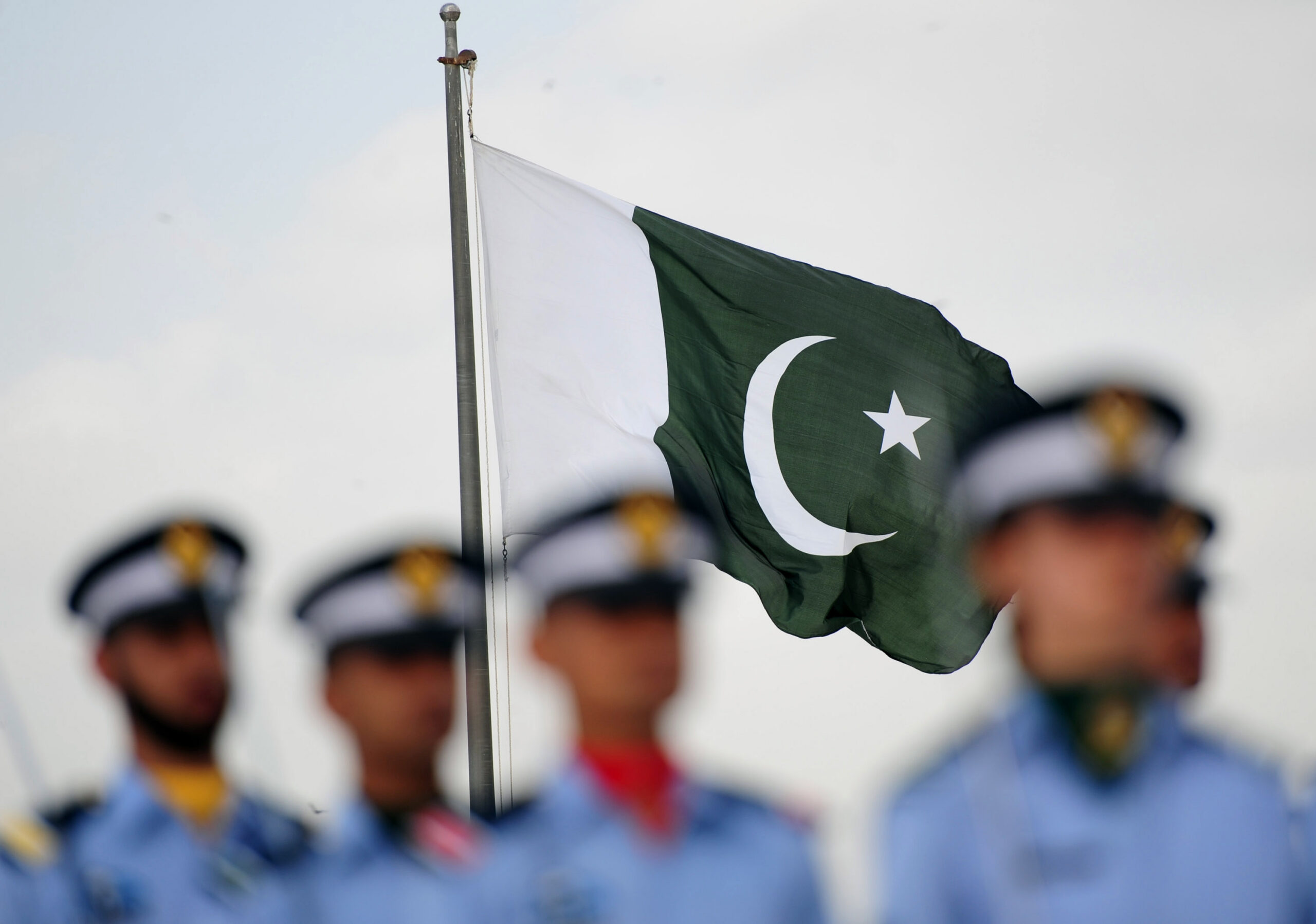
PAKISTAN-POITICS-DEFENCE-DAY
RIZWAN TABASSUM/AFP via Getty Images

Pakistan has long practiced a careful balancing act to manage relations with Iran and the Gulf Arab monarchies. But against the backdrop of the ongoing U.S.-Israeli war on Iran, and the emergence of Yemen and the Red Sea as the “Western Front” of this regional crisis, the balancing act is getting harder to sustain.

Pakistan has strong strategic and economic ties with Saudi Arabia and other Gulf Cooperation Council (GCC) members, and has long seen stability in the Gulf as important to its interests. So Islamabad naturally has no appetite for Iranian or Houthi attacks on targets in GCC states, and officials in Islamabad have been quick to condemn such aggression. At the same time, Pakistan has much at stake in its relationship with Iran, with which it also seeks stable and cordial ties. 

Geography dictates that Pakistan accept fundamental differences between its relationship with Iran and those with Gulf Arab states. The Pakistan–Iran border is long and difficult, and cross-border militant activity, particularly in Balochistan, is a persistent concern for both countries. Iran’s engagement with Afghanistan also affects Pakistani security interests in its near abroad. Nor is the relationship limited strictly to security. Pakistan has sought to expand bilateral trade and remains interested in energy cooperation, including the long-discussed Iran–Pakistan gas pipeline. Iran’s position on the Gulf of Oman also touches Pakistan’s maritime and economic interests, to say nothing of Tehran’s relationship with New Delhi.

Therefore, Pakistan’s regional balancing act requires recognizing that while Saudi Arabia is a crucial strategic, defense, and economic partner, Iran is Pakistan’s immediate neighbor. A serious deterioration in relations with Tehran could generate direct consequences for Pakistan’s border security, regional stability, and economic interests, underscoring why Islamabad has such strong incentives to preserve a functional relationship with Iran, independent of its desire to maintain its partnerships with Saudi Arabia and other GCC members.

Domestic politics matter too. Pakistan has a sizable Shia minority, which includes elements sympathetic to Iran, so there is a chance taking a harder line toward Tehran could trigger protests at home.

Pakistan wants to see the current U.S.-Iran crisis resolved as quickly as possible, which is why its government has invested considerable diplomatic energy in trying to de-escalate the conflict, seeking to position itself as a bridge between the two sides. Preserving that intermediary role requires Pakistan to avoid becoming an active belligerent.

Unveiled last month, the new Mecca Joint Defense Agreement—a security configuration consisting of Pakistan, Saudi Arabia, and Turkey—and Pakistan’s recently ratified defense pact with Kuwait stand to significantly complicate this delicate balancing act.

The latest Houthi attacks on Saudi Arabia are an early test of what these new security commitments actually mean. The Mecca pact does not appear to create an automatic obligation to fight if a member is attacked; rather it provides a framework for consultation and collective action. The affected country requests assistance under the agreement, and the members themselves determine what form that assistance should take. Nevertheless, such an arrangement can strengthen deterrence without guaranteeing immediate military response.

The alliance itself is still a work in progress. The military and policymaking integration necessary to implement such an agreement takes time. And, notably, Saudi Arabia has not actually requested direct Pakistani or Turkish military intervention. For now, Islamabad is more likely to contribute through diplomacy, intelligence, air-defense capabilities, and technological assistance, and perhaps supporting a multinational naval presence around the Bab al-Mandeb. (It’s worth noting that this past May, Pakistan reportedly deployed a detachment including 8,000 troops and 16 military aircraft to Saudi Arabia.)

There are good reasons for this restraint. Pakistan has previously resisted becoming a combatant in Yemen, highlighted by a parliamentary vote on April 10, 2015, to reject a proposal to join the Saudi-led military coalition fighting the Houthis. At that time, Pakistani parliamentarians vowed “unequivocal support for the Kingdom of Saudi Arabia” while also declaring that Islamabad “should maintain neutrality in the Yemen conflict so as to be able to play a proactive diplomatic role to end the crisis.”

Today, sending troops into the conflict would still carry serious domestic, economic, security, and diplomatic costs for Pakistan. More importantly, joining the war on the Saudi side could undermine Islamabad’s channels with Tehran and its effort to facilitate U.S.–Iran de-escalation.

Here is a dilemma. An alliance’s credibility ultimately rests on its members’ willingness to commit to collective defense in the face of real costs. If Pakistan consistently avoids direct military involvement, members and non-members alike may come to wonder how far the pact’s security guarantees actually extend.

Nevertheless, restraint should not automatically be interpreted as failure, especially at this early stage. Pakistan can contribute meaningfully, whether by diplomacy or through the provision of ancillary military support, in ways that don’t require the involvement of combat forces. The challenge for Pakistan is to use those contributions to demonstrate that its defense commitments are credible, without widening a regional war or endangering its role as a mediator.

The post Pakistan’s Defense Dilemma appeared first on The American Conservative.

On Iran, Republicans Want to Have It Both Ways

On Iran, Republicans Want to Have It Both Ways

Caught between voters and the White House, vulnerable GOP candidates try to oppose the war without opposing the war.

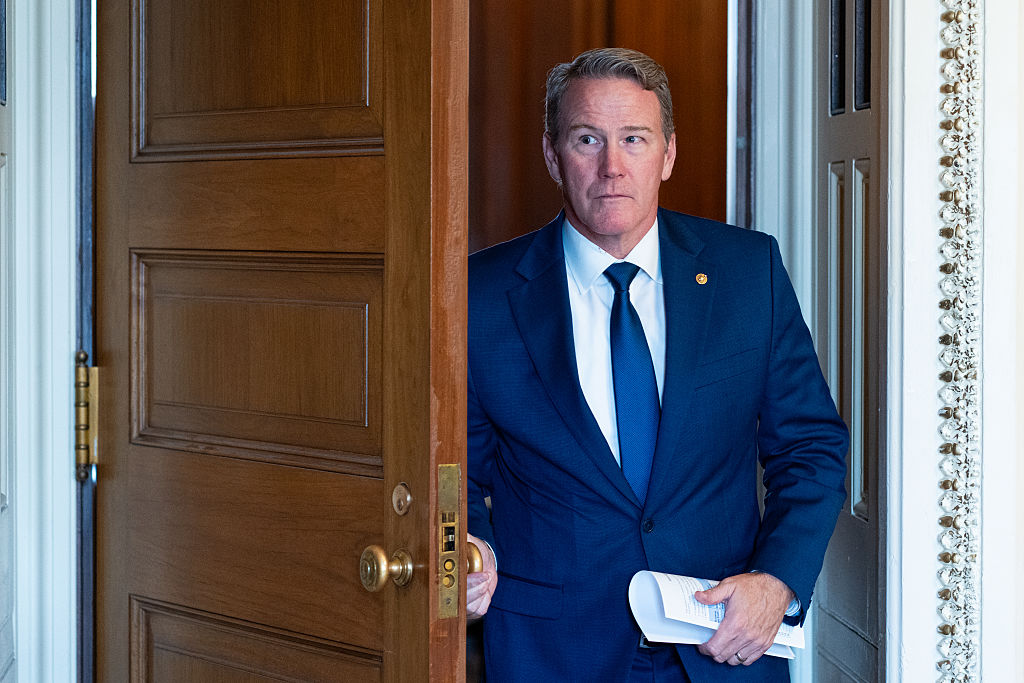
Sen. Jon Husted
(Bill Clark/CQ-Roll Call, Inc via Getty Images)

When J.D. Vance was elected to the Senate from Ohio in 2022, he won his race by a healthy 6-point margin. Four years later, his successor in that seat—Sen. John Husted (R-OH)—is down by between 4 and 8 points, depending on the poll. 

Midterms are always hard for the party in power, and GOP candidates this year face a number of headwinds. But let’s be honest: It’s the war, stupid. Voters in Ohio, like voters across the country, are furious at paying more for gas (and everything else) because the president got us into an unwinnable Mideast conflict at the behest of a foreign country. They’re tired of bearing the costs, and they’re tired of being lied to.

So Husted has sought to distance himself from this debacle. “The war needs to come to an end as quickly as possible so that we can lower gas prices,” he told POLITICO this week. “I don’t know anybody who doesn’t want this war to end.”

Of course, Husted is not just “anybody.” He is a sitting United States senator, a member of the body charged by our Constitution with deciding whether or not the country goes to war.

And, as fate would have it, that body had before it yesterday a measure to end the war Husted says he wants to end. Naturally, the junior senator from Ohio was a “yes.” Right?

Alas, no.

Husted joined 48 of his GOP colleagues (plus Democrat John Fetterman) in voting down H.Con.Res.89, a concurrent resolution that would have “direct[ed] the President to remove the use of United States Armed Forces from hostilities against the Islamic Republic of Iran.” 

In other words, he says it is imperative for the war to end, and is resolutely opposed to any measures to effect its conclusion. 

Unfortunately, Husted is far from unique. Rep. Ashley Hinson (R-IA), who is running for the Senate in Iowa, made headlines this week by calling for an “immediate end” to the Iran War. But she, too, refuses to do anything to bring this about, voting against a war powers resolution in the House as recently as last week.

Mike Rogers, the GOP’s Senate candidate in Michigan, at least has the luxury of not having been in Congress for the launch of our latest Mideast quagmire. So his statement in a video this week that “the war with Iran needs to end, and end quickly” might seem a bit more credible. But it amounted only to the expression of a vague wish; it was no more a call to action than my hoping aloud it won’t rain this weekend and spoil my camping trip. (And anyway, Rogers is a confirmed forever-war fan, even boasting after last year’s Iran strikes that he “was for all this when it wasn’t very cool to be for all this.”)

A few Republicans, for what it’s worth, have had the courage of their convictions on Iran. In last week’s House vote, seven GOP lawmakers actually supported an end to the war: Reps. Thomas Massie (KY) and Warren Davidson (OH), who have been consistent stalwarts for America First, but also Reps. Nancy Mace (SC), Brian Fitzpatrick (PA), Tom Barrett (MI), Mariannette Miller-Meeks (IA), and Zach Nunn (IA). (These last four are running in tight reelection campaigns.)

But that is seven out of 218. Barely 3 percent of House Republicans can be bothered to cast even a symbolic vote to reject the executive’s unconstitutional usurpation of Congress’s war powers and direct an end to the least popular war in American history.

Instead, the overwhelming approach has been to try to trick voters into thinking vulnerable GOP candidates are somehow “breaking” with the administration on Iran. To vaguely say the war is bad while studiously avoiding even the appearance of action—lest the White House take notice—and hope that voters don’t think too hard about what it is legislators are supposed to do.

The elevation of appearances over reality is an enduring feature of our politics, of course, and it’s not just restricted to war. Capitol Hill is far more of a stage for social media antics than a place to conduct affairs of state, a sad fact which has led at least one especially wise and persuasive columnist to conclude that Congress is fake.

But voters aren’t (always) as dumb as politicians think they are. And come November, I expect most will see through the ruse.

The post On Iran, Republicans Want to Have It Both Ways appeared first on The American Conservative.

WATCH: CNN Claims They Were Denied Access to Arrival Ceremony for Xi Jinping’s State Dinner – White House Responds

CNN on Thursday evening created another firestorm after they claimed that they were denied access to the arrival ceremony for Xi Jinping’s State Dinner at the White House.

Xi Jinping arrived at the White House for a State Dinner with President Trump and other high-profile guests.

WATCH:

After a legal showdown with CNN, Politico and MSNOW, President Trump admonished the fake news networks for refusing to cover Xi Jinping’s arrival to the White House earlier Thursday.

The networks were temporarily blocked from entering the White House grounds on Thursday after a federal judge issued a TRO blocking Trump’s media ban.

Trump blasted CNN and MSNOW for refusing to cover the beautiful ceremony.

“CNN and MSDNC’s Ratings have dropped considerably. The primary reason is NO CREDIBILITY! They only write badly about a man who won the Election IN A GIANT LANDSLIDE, winning all 7 Swing States, the Popular Vote, and 86% of the Counties, etc., and whose Popularity has grown because of the unprecedented SUCCESS our Country is having on both the World Stage, and at home. CNN and MSDNC, to show you how fake they are, today refused to cover one of the Biggest and Most Beautiful Events to take place in many years, the arrival at the White House of the Highly Respected President of China, Xi Jinping, and his beautiful wife, Madam Peng,” Trump said.

“The event was magnificent — Actually made for Television but, because they’re Fake News, and because they knew how good it would be, they didn’t want credit to be given to “TRUMP,” they refused to be there. That’s why they have such poor Ratings. Tonight’s State Dinner at the White House, for President Xi, will be spectacular! The Media will be in attendance,”

Later Thursday evening, CNN’s Erin Burnett said CNN was denied access to the guest arrivals for Xi Jinping’s State Dinner.

CNN’s Kristen Holmes claimed the network never received a response from the White House after they requested credentials for the event.

WATCH:

The White House responded to CNN’s latest gripe.

“This is a pre-credentialed event. Contrary to what the Fake News wants you to believe, they don’t just get to have free rein into every part of the White House, every event, and every press call,” the White House said

The post WATCH: CNN Claims They Were Denied Access to Arrival Ceremony for Xi Jinping’s State Dinner – White House Responds appeared first on The Gateway Pundit.

Greenland Deal Counters China and Russia, and It Cost the U.S. Nothing

Under Trump’s new Greenland deal, the United States gains permanent military access to the island and keeps Russia and China out of its bases and mines, without buying Greenland.”

On September 22, 2026, the United States, Denmark and Greenland signed an agreement in New York amending the 1951 U.S.-Danish defense agreement for Greenland. It will take effect once Denmark and Greenland complete the required parliamentary procedures.

The agreement has no end date and can be amended only by mutual consent. If Greenland becomes independent, Denmark and Greenland must ensure that it remains in NATO and assumes Denmark’s rights and obligations under the agreement.

The 1951 Defense of Greenland agreement allowed the United States to establish and operate defense areas that Denmark was “unable to establish and operate single-handedly.” Both countries’ flags fly over the areas. Where the U.S. operates a defense area, it may build and maintain facilities, station personnel, provide security, deepen harbors, and control ship and aircraft movements without compensating Denmark. These rights do not affect Danish sovereignty.

Under the 1951 defense agreement, the U.S. has exclusive jurisdiction over the defense areas it operates, offenses committed anywhere in Greenland by its military and civilian personnel and their families, and other people in those areas except Danish nationals. U.S. vessels, aircraft and forces may move between defense areas through Greenland and its territorial waters.

U.S. aircraft may fly over and land anywhere in Greenland. U.S. supplies enter duty-free, covered personnel are exempt from Danish taxes, and U.S. property remains U.S. property. These rights are granted “without prejudice to the sovereignty of the Kingdom of Denmark.” The agreement remains in effect for the duration of the North Atlantic Treaty.

The 2026 agreement builds on the 1951 framework. It allows the U.S. to expand operations at Pituffik Space Base, establish defense areas at Narsarsuaq and Mestersvig under terms the parties must agree on, and propose others. Denmark and Greenland will review requests for unmanned military installations through an accelerated process. U.S. aircraft may fly over and land anywhere in Greenland, while U.S. public vessels may travel underwater through its territorial waters. The agreement reaffirms Danish sovereignty and territorial integrity, and Denmark commits to strengthening its Arctic land, maritime, air, and space capabilities.

Article IX bars non-NATO countries from establishing military installations or maintaining a persistent military presence in Greenland unless the parties agree otherwise. Article X restricts states and investors outside NATO, NATO partner countries and the EU from gaining control, significant influence or access to sensitive non-public information in sectors such as mining and critical infrastructure when that access could threaten national security or public order.

The agreement identifies “the extraction of resources” and critical infrastructure as particularly sensitive sectors, citing adversaries’ efforts to expand their influence and control in Greenland. Article VII allows the U.S. to raise concerns about construction near its defense areas and commits the parties to counter espionage.

Russia and China both fall outside NATO. Greenland forms the western border of the Greenland-Iceland-United Kingdom (GIUK) gap, which Russian Northern Fleet submarines pass through to reach the Atlantic, Gen. Christopher Cavoli, then NATO’s top commander in Europe, told the Senate Armed Services Committee in April 2025 testimony. Pituffik, operated by the U.S. Space Force, operates missile-warning radar, and the 2026 agreement cites a possible Golden Dome missile-defense system among the reasons for U.S. military access to Greenland.

Trump stated that “Russia or China” would take over Greenland if the U.S. did not act. In 2018, China Communications Construction Company, a Chinese state-owned firm, bid on a $560 million project to build Greenland airports, and Denmark reportedly offered to fund the project instead. Greenland holds 1.5 million tons of rare earth reserves, the eighth-largest in the world, including the Kvanefjeld and Tanbreez deposits. Chinese firm Shenghe Resources is the second-largest shareholder in Kvanefjeld. No rare earth mining has started in Greenland yet.

No shots were fired, and the agreement provides for no payment to Denmark or Greenland. Earlier U.S. proposals involved money. In 1946, the United States offered Denmark $100 million in gold for Greenland, but Denmark declined. A separate proposal involved Alaskan land and oil rights. In January 2026, Reuters reported discussions among U.S. officials about paying Greenlanders $10,000 to $100,000 each. For about 57,000 residents, that would total $570 million to $5.7 billion. No formal offer followed.

Secretary of State Marco Rubio described the deal as coming at “zero cost to the U.S. taxpayer.” The U.S. will still pay to build and operate its bases. It must award related contracts to Greenlandic businesses “to the maximum extent possible,” taking their capabilities and the feasibility of the work into account.

The post Greenland Deal Counters China and Russia, and It Cost the U.S. Nothing appeared first on The Gateway Pundit.

New Jersey Governor Mikie Sherrill Demands Lieutenant Governor Dale Caldwell Resign After Investigation Found He Sexually Harassed Woman

New Jersey Governor Mikie Sherrill (D) demanded that her Lieutenant Governor, Dale Caldwell, resign after a report found that he sexually harassed a woman and repeated policy violations.

The investigation into Caldwell was sparked by an anonymous letter sent in May.

According to a 61-page report, Caldwell repeatedly made romantic advances toward a female staffer’s friend and after he was rejected, he made sexually charged comments to the staffer.

The staffer was so frightened that she avoided Caldwell.

The investigators also found that Caldwell tried to secure a promotion for an employee with whom he was romantically involved without properly disclosing the relationship.

Caldwell also abused his position by bringing uninvited personal guests to events without paying or obtaining the proper ethical clearance.

Dale Caldwell denied the allegations.

Governor Sherrill demanded Caldwell resign by Friday.

Full statement from Governor Mikie Sherrill:

Today, I’m announcing the conclusion and findings of an independent investigation into allegations regarding Lieutenant Governor Dale Caldwell. The investigation found that the Lieutenant Governor engaged in serious, repeated violations of state policy and failed to uphold the responsibilities of his office. I’m calling for his resignation and giving him until tomorrow to do so.

I hold everyone in my Administration to the highest ethical standard. We all have a duty to follow our state ethics and harassment policy and our Code of Conduct. Anyone who violates these will be held accountable.

These violations substantiated in the investigation reflect a pattern of behavior that does not meet the standards of this Administration. The ethical lapses persisted despite multiple warnings and trainings. The substantiated finding of sexual harassment is extremely troubling. I’ve seen firsthand how a hostile culture can undermine everyone’s ability to succeed. It’s insidious and ruptures the trust within an organization.

Leaders have an obligation to make sure everyone in an organization is bought into the mission and able to succeed. I take that responsibility incredibly seriously. My goal as Governor is to empower our hardworking public servants, so they can remain focused on serving our state.

As a former federal prosecutor, I’m committed to ensuring everyone is treated fairly. This investigation was thorough and impartial. It was initiated by the Chief Ethics Officer and conducted by a respected former state Attorney General.

The investigation fully examined the evidence, followed the facts, and protected everyone’s privacy. In my Administration, we are committed to doing what is right, not what is politically expedient.

The Lieutenant Governor’s resignation is necessary and in the best interest of New Jersey residents.

The President continues to undermine confidence in public service at the federal level. In New Jersey, I will not accept a culture that sweeps misconduct under the rug. We have to be better than that — people expect and deserve better.

I have dedicated my life to service. I know that jobs of public trust impact the lives of everyday people, and I deeply respect the oaths and responsibilities of these positions.

I will always put the interests of the people of New Jersey first.

The post New Jersey Governor Mikie Sherrill Demands Lieutenant Governor Dale Caldwell Resign After Investigation Found He Sexually Harassed Woman appeared first on The Gateway Pundit.

Long Island Town Approves Creation of Controversial Muslim School for Boys – With One Catch

Screencap of YouTube video.

In July, the Gateway Pundit reported on a proposed Muslim school for boys that was causing a huge stir on Long Island. Residents of the town of Bay Shore did not like the idea of a school in this location because it’s a residential area. Also, the proposed school was going to be a boarding school.

The facility used to be a Catholic seminary.

Now the town has approved the creation of the school with one catch. No boarding. It will be a day school.

The New York Post reports:

Long Island town OKs all-boys Muslim school — but 120 students can’t stay overnight

A controversial all-boys Muslim school that sparked massive backlash over plans to house 120 teens next door to a senior living community will no longer be allowed to board its students.

The town of Islip’s zoning board on Tuesday reversed a previous decision to allow The United American Muslim Association’s new school in Bay Shore to house the boys in a dormitory on campus — after being grilled by residents for five-straight hours in a July meeting, a spokesperson for the board told The Post.

“The Zoning Board of Appeals voted 3-1 to reverse the Building Division’s interpretation and determined that the proposed boarding component… is not a permitted accessory use to the parochial school under the Town’s zoning code,” the board said.

This means the all boys, Islamic-education-based school will still be allowed to open on the 13-acre waterfront campus, but its students will have to go home at the end of the day.

“The question before the Board is not whether a parochial school is a permitted principal use within the District — [Town code] expressly permits such use,” the board wrote in its decision, released Thursday.

Do you suppose liberals in the community will be policing this school to make sure it’s diverse enough?

How about LGBT content in the lesson plans and rainbow flags during pride month? Will the school be required to do all of that too?

It’ll be interesting to see how all of that goes.

The post Long Island Town Approves Creation of Controversial Muslim School for Boys – With One Catch appeared first on The Gateway Pundit.

Comedian Yakov Smirnoff Describes Escaping the Communist Soviet Union to a Stunned Joe Rogan (VIDEO)

Screencap of YouTube video.

Do you remember Yakov Smirnoff? He was a breakout standup comedy star in the 1980s but he is still around.

He recently appeared on the Joe Rogan podcast and described his life under communism in the Soviet Union and how he and his family eventually escaped. Rogan seemed stunned by the story.

It’s amazing that there are people who have lived in the freedom of America for their whole lives yet are stupid enough to want to revive communism here. They’re just historically illiterate.

FOX News reports:

Smirnoff said the process of getting a visa to America was only possible because of a deal involving the Carter administration, Soviet emigration and U.S. grain.

“[Carter] wanted to see some human rights in the Soviet Union. And the Soviet leadership was — they were starving. They didn’t have food. So, they needed food from America. So, Jimmy Carter made a deal that we’re going to give you grain, and you allow people to get out, and that’s how we were kind of exchanged for some wheat, you know,” he said. “That’s how we got out.”

“Wow. Holy s—, man … you sometimes need to be reminded how fortunate you are,” Rogan said of Americans like himself. “You know, Americans in particular, we’re very, you know, it’s not our fault. You know, people become accustomed to where they live. … And they think this is normal, which is one of the reasons why this push towards communism amongst young people is so infuriating to me.”

“But the solution is not to make the government decide who gets what because they never decide the right way,” he warned.

“They do what people do,” Rogan warned of communist officials. “What people do when they have power is they enact total control over the population so that they can maintain power, and then they live in luxury. And then you wait in line for bread, and that’s how it is all over the f—ing world.

“And if you step out of line, they shoot you. That’s where communism goes. So, what we need is, like, a more, a more moral and ethical version of capitalism.”

This video is cued to start at the 10:06 mark:

Isn’t it fascinating that all of the people who escaped communism to come to America don’t want to go back?

Why don’t leftists get this?

The post Comedian Yakov Smirnoff Describes Escaping the Communist Soviet Union to a Stunned Joe Rogan (VIDEO) appeared first on The Gateway Pundit.

Globalist Canadian PM Mark Carney Tells New York Times He’s Prepared for Military Action from America – Also Reveals His Scheme to “Diversify” Away from U.S.

Screenshot: cpac / Youtube

Far-left globalist Canadian Prime Minister Mark Carney appears determined to destroy whatever is left of the close friendship his nation once held with the United States.

On Wednesday, Carney gave an exclusive interview to the leftist New York Times, where he detailed his vision for pulling Canada away from America.

Carney started with a startling revelation: he and his country have been prepared for potential military action with America for roughly a year, should Trump move toward a military invasion.

He took Trump’s threats of making Canada the 51st state seriously, and carefully examined the possibility of a U.S.-led military invasion. Carney declined to discuss in detail what that involved.

Of course, this is just crazy. But Carney says not preparing for something so ludicrous would be “irresponsible.”

“I think you have a responsibility in these roles to look at extreme tail risk,” Carney told the Times.

“That’s just risk management,” he continued. “That’s not a base case, but it would be irresponsible not to prepare.”

In addition to supposedly preparing for war with America, Carney plots to pull his nation away from America’s orbit.

Carney told the Times that there are several areas where Canada must “diversify” away from America. This includes reducing reliance on Starlink, Elon Musk’s satellite systems, and not buying F-35 fighter jets.

“Starlink, we will diversify away from, no question,” Carney said.

Carney also revealed that he’s prioritized deepening economic relations with Communist China. This includes letting cheap Chinese-made cars flood the Canadian market, which will destroy the country’s domestic auto industry.

But Carney says he has no choice but to do so because of Trump.

“There are certain things, once you’ve seen them, you can’t unsee them, the Prime Minister added.

Carney is even enamored with an alternative global currency to the United States Dollar, believing it would provide “more flexibility.”

Mr. Carney on Wednesday also reiterated his long-held view that a global financial system wholly dependent on the U.S. dollar was unsustainable. A move to a multipolar system in which there are several reserve currencies would “provide more flexibility,” he said.

Unbelievably, Carney thinks that with this strategy, Canada “will be a better partner for the U.S. because of what we are doing.”

On a somewhat more positive note, Carney continues to hold out hope for a trade deal with America.

From The New York Times:

Carney said that a path remains to resuming negotiations with the United States that would revive the trade agreement that fell apart in late August.

“Is there a mutually beneficial trade deal between Canada and the U.S.? Absolutely, absolutely there is one,” Mr. Carney said. He said that he was interested, for example, in adding potash to the talks. Canada provides almost 90 percent of all potash, the key ingredient for fertilizer, imported into the United States.

Mr. Carney said that Canada, the United States, and potentially also Mexico could become “fertilizer independent” by securing special access to Canada’s potash, the world’s largest reserve. He added that the Canadian option was clearly better than buying potash elsewhere that would then need to be transported through the Black Sea or the Strait of Hormuz.

“I think this is a doable component of the deal, and there are other examples that exist, and we’re ready to work toward,” he added.

One can bet, though, that Trump will not take kindly to the other stuff Carney uttered in this interview. The Canadian Prime Minister has made clear who he deems worthy of friendship, and it’s not America.

And the Canadian people will ultimately pay the price.

The post Globalist Canadian PM Mark Carney Tells New York Times He’s Prepared for Military Action from America – Also Reveals His Scheme to “Diversify” Away from U.S. appeared first on The Gateway Pundit.

‘Trans-Identifying Nurse’ Charged With 4 Counts of Child Abuse After Abusing a Premature Baby Girl in the Hospital

Kieran Ansley

A now-former nurse at Helen DeVos Children’s Hospital in Grand Rapids, Michigan, has been charged with four counts of child abuse after a tiny premature baby girl in the neonatal intensive care unit was found with multiple broken bones and bruises covering her body, including her tongue.

The accused is 43-year-old Kieran L. Ansley of Niles, Michigan. A warrant was authorized in early September, WOOD-TV reported.

Ansley faces two felony counts of second-degree child abuse, each carrying up to 10 years in prison, and two misdemeanor counts of fourth-degree child abuse.

Ansley appeared in Grand Rapids District Court this week, remains free on bond, and is required to wear an electronic tether. The next hearing is set for early November.

The infant was born in November 2025 at 23 weeks, weighing one pound, one ounce. She spent months in the NICU fighting to live. By early April she had made it past her due date and was two days from going home.

“She was born at 23 weeks: 1 pound, 1 ounce,” grandfather Robert Steavens told WOOD-TV. “And she made it through her due date, ready to go home. And then two days before she was ready to go home, this happened.”

On the evening of April 2, the child’s mother left the unit with her daughter appearing fine. She returned about 6:30 a.m. the next morning.

Court records say Ansley “got up from his seat and ‘jogged’ to cut them off before getting to the room,” telling the family the baby had “slept through the night.”

The mother then saw a tongue that was “blue and almost black” and bruises that had not been there the night before, on the infant’s hands, arms, thigh, buttocks, abdomen, and tongue. Ansley reportedly told her the tongue color had been seen “in the past and it was not a big deal.”

A full skeletal survey found multiple fractures, including broken bones in both legs. Court documents state: “The totality of the findings resulted in a diagnosis of pediatric physical abuse.”

Staff who had cared for the baby on prior shifts said there was no evidence of trauma before that night. Records show 32 entries into the room that night, 27 of them by Ansley. Colleagues described Ansley that shift as flustered, scatterbrained, heated, overwhelmed, and “in over his head.”

Corewell Health, which operates Helen DeVos Children’s Hospital, issued the standard statement after the fact.

“The care and safety of our patients is our top priority, and we have zero tolerance for abuse,” a spokesperson told WOOD-TV.

“Upon receiving the allegation, we took immediate action and the former employee is no longer with our organization.” The hospital said it is cooperating with police. Hearts go out to the family, of course.

Ansley’s attorney, Damian Nunzio, told the court his client has “had many years working with ICU patients and he’s a very good person.”

The baby is now about 10 months old, home in Caledonia, and “doing wonderful,” the family says. They are trusting God and waiting on the courts.

Ansley, who appears to publicly identify as a transgender man, posted in a Facebook group for trans men in December 2025 that he was undergoing ‘top surgery.’

Screenshot: Facebook

The court record lists Heather Lynn Adams, Heather Lynn Ansley, and Heather Lynn Katt as aliases associated with Kieran L. Ansley.

Screenshot: Grand Rapid Court

This is not the first time The Gateway Pundit has reported on a NICU nurse accused of snapping the bones of helpless preemies.

In January 2025 TGP reported the arrest of Erin Elizabeth Ann Strotman, a neonatal nurse at Henrico Doctors’ Hospital in Virginia, after multiple newborns suffered “unexplainable fractures.”

Surveillance later showed Strotman putting her full weight on a crying infant and bending a baby’s legs until the feet reached the head. She later pleaded no contest to nine felony child-abuse counts involving nine babies. Prosecutors accepted a deal that left her with a three-year sentence.

The post ‘Trans-Identifying Nurse’ Charged With 4 Counts of Child Abuse After Abusing a Premature Baby Girl in the Hospital appeared first on The Gateway Pundit.