Illinois Teachers Union Reportedly Gave Peoria Public School Staff Cards Telling Them How to Document and Report ICE Agents, While Assisting Illegal Aliens

Every staff member at Peoria Public Schools in Illinois reportedly received cards from the Illinois Federation of Teachers union instructing them on how to document federal immigration agents and assist illegal aliens facing immigration enforcement.

Libs of TikTok posted an image of the cards on Thursday, writing, “A source tells me that all staff members at Peoria Public Schools in Illinois received these anti-ICE cards instructing them on how to dox ICE agents and assist illegal aliens.”

The account tagged DOJ Assistant Attorney General for the Civil Rights Division Harmeet Dhillon, urging her to investigate the union immediately.

“Just imagine what they’re indoctrinating your kids with…” the post concluded.

The cards are labeled “Guidelines for Bystanders: Documenting Federal Agent Activity” and carry the Illinois Federation of Teachers logo.

One side uses the left’s SALUTE acronym to direct staff to record the size (number of agents), activity (including violence, physical force, property damage, or “hate speech”), location, unit details such as names, badges, and uniforms, the time and date, and equipment including weapons, vehicles, and license plates.

A QR code instructs users to scan and send the documentation to the Illinois Coalition for Immigrant and Refugee Rights and the IFT.

The back of the card states that bystanders have the right to record federal agent encounters as long as they do not interfere with officers’ duties, and that they may remind a person being detained of constitutional rights such as the right to a judicial warrant, the right to remain silent, and the right to an attorney.

It includes a suggested statement to say, “I’m exercising my constitutional right to document. I’m not interfering.”

The card also lists refusals staff may make, including refusing a request to stop recording, to search or delete the recording without a judge’s warrant, or to unlock a phone or provide a passcode.

Neither Dhillon nor the Department of Justice Civil Rights Division had publicly responded to the post by Thursday evening.

Peoria Public Schools has maintained a “Safe Haven” resolution since 2017 that directs the district to refuse access to immigration officials seeking to enforce immigration laws except under certain unique and specified circumstances required by law.

In January 2025, after the Trump administration ended the prior policy limiting ICE activity at sensitive locations, then-Superintendent Sharon Desmoulin-Kherat sent a letter reaffirming the policy, stating the district has a legal duty to educate all children regardless of immigration status and that employees would direct any immigration officials to a designated safety director.

A local news station reported increased absences among students whose primary language isn’t English.

“The district also discussed purchasing Spanish language online courses to provide alternatives for concerned families,” the report stated.

Earlier this year, students at Richwoods High School walked out in protest of ICE activity, and board candidates discussed the issue at a public forum.

A Thursday report from 25 News Now described local leaders, including a Peoria School Board member, organizing a donation drive for families amid confirmed ICE presence in the area, with at least 10 people detained according to the Immigration Project.

Peoria Public Schools has not responded to confirm or deny whether it distributed the cards to all staff as of Thursday night.

The post Illinois Teachers Union Reportedly Gave Peoria Public School Staff Cards Telling Them How to Document and Report ICE Agents, While Assisting Illegal Aliens appeared first on The Gateway Pundit.

Bruising Allegations Rock Jackson County

When alleged child abuse crosses the line from concern to felony charges, it is because investigators believe multiple strands of evidence point in the same direction—coherent victim statements, physical indications that align with those accounts, and conduct alleged to be repeated rather than episodic. That is the through-line in Jackson County, West Virginia, where authorities charged a couple with six felony counts each after three children independently described what officials characterized as prolonged physical and emotional abuse.

The Short Version

  • Both adults were charged with six felonies each tied to alleged abuse and neglect of three children; counts include child abuse or neglect resulting in bodily injury and creating risk of injury.
  • Investigators say the children’s accounts corroborated one another and aligned with physical evidence collected, prompting felony filings.
  • Allegations describe repeated acts over time—hitting, choking, food and water deprivation, denial of bathroom access, and punitive exposure to animal waste.
  • Authorities allege one adult perpetrated direct abuse while the other witnessed conduct and failed to intervene, underpinning a neglect theory of liability.

What Authorities Say Happened and Why Charges Followed

Jackson County deputies and the sheriff publicly outlined a case built on three planks: convergent statements from all three children, physical evidence they say aligns with those accounts, and a pattern of behavior described as prolonged rather than isolated. Following interviews and evidence collection, prosecutors approved six felony counts for each adult. According to station reporting drawn from charging information and a sheriff’s press briefing, Erica Sayre faces three counts of child abuse resulting in bodily injury and three counts of child neglect creating a risk of injury; Clifford Sayre faces three counts of child neglect resulting in bodily injury and three counts creating a risk of injury. Sheriff Ross H. Mellinger said the children’s statements corroborated one another and matched what deputies documented, forming the basis to pursue felonies.

The alleged conduct is specific and varied: repeated hitting and choking, denying food and water, blocking bathroom use, forcing barefoot running on gravel, and placing soiled cat litter and dog feces in beds or on children’s belongings. Officials framed these as part of a sustained course of mistreatment rather than a single night of discipline gone too far. This differentiation matters in law. Felony child abuse or neglect charges in West Virginia often hinge on demonstrating a risk of serious harm or resulting bodily injury, and a repetitive pattern can show both culpability and dangerousness over time. Investigators also advanced a supervisory-liability theory against Clifford Sayre: that he witnessed abusive incidents and failed to intervene—conduct that, if proven, satisfies neglect offenses premised on omission as well as commission.

How Such Cases Move from Allegation to Felony Filing

Child abuse prosecutions start with intake—frequently via a referral to child protective services or a direct law-enforcement call—and progress only when investigators determine there is probable cause that a crime occurred and that the accused committed it. In practice, that threshold is usually met through a combination of victim statements and corroboration. In child cases, the quality of the interview is pivotal: best practice emphasizes open-ended, developmentally appropriate questioning that allows children to narrate events in their own words. Done well, this methodology produces accounts that are both detailed and, importantly, cross-consistent across siblings or separate sessions, which investigators here say they observed. Physical evidence is not always decisive—these cases often turn on testimony—but when items, injuries, or conditions are documented that track closely with what children describe, prosecutors gain confidence that the case can withstand preliminary hearings and potential trial.

Once detectives and prosecutors believe the evidentiary elements are present—act, mental state, causation, and injury or risk—charges are filed through criminal complaints and arrest warrants. The Jackson County filings reflect two different legal theories: direct abuse resulting in injury for one adult, and neglect (including failure to protect) resulting in injury and creating risk for the other. That charging split is not uncommon where investigators believe one caregiver was the primary actor and the other tolerated or enabled the conduct.

What The Allegations Describe—and Why Specificity Matters

Specificity is the fulcrum of child abuse litigation. Here, media summaries drawn from official briefings describe choking; repeated hitting; restricting essentials like food, water, and bathroom access; forced barefoot running on gravel; and punitive placement of animal waste in sleeping areas. Each allegation maps to discrete legal elements. Strangulation or choking can signal elevated dangerousness; deprivation of food or water can establish both physical harm and criminal intent; denial of bathroom use and forced runs on rough terrain serve as physical coercion. The alleged use of animal feces and soiled litter extends beyond unsanitary conditions to deliberate humiliation and psychological torment. In aggregate, these acts, if proven, are classic markers of prolonged physical and emotional abuse—precisely the pattern investigators say they encountered.

Officials also indicated the conduct involved all three children, which increases the number of counts and strengthens the argument that this was a systemic regimen in the household, not an aberrational episode involving a single child. Prosecutors typically charge by victim and by incident or time period, which is why the count sheets often reflect multiples of similar offenses when evidence supports repeated acts.

Where This Case Sits in West Virginia’s Child-Welfare Landscape

While the allegations here are unusually severe, West Virginia’s child-welfare system grapples with high contact rates compared with national norms. In 2024, the state recorded 40,718 child abuse and neglect referrals; 23,906 were screened in for a CPS response, and 5,110 children were identified as victims—a rate of 14.7 per 1,000 children. National federal reporting underscores that referrals and investigations are not synonymous with substantiated maltreatment; across reporting states, about 47.1 percent of referrals are screened in, a useful reminder that the pipeline narrows as cases move from allegation to verified finding and, in fewer cases still, to criminal charges. The present prosecution therefore sits at the sharper end of that funnel, where authorities contend the severity and corroboration justify felony action.

West Virginia’s advocacy and oversight infrastructure—child advocacy centers, state human services, and county prosecutors—has increasingly emphasized multidisciplinary response and trauma-informed practice. Evidence-based forensic interviews and coordinated case reviews aim to minimize retraumatization while producing reliable testimony. In complex cases with multiple siblings, that process can be decisive: consistency across separate interviews conducted to protocol often represents the strongest single pillar of proof besides medical documentation.

Legal Posture and What Comes Next

At this stage, the case moves through standard criminal procedure: initial appearances, bond determinations, discovery production, and potential preliminary hearings or direct presentation to a grand jury, depending on prosecutorial strategy. If the matter proceeds to indictment, the counts may be refined to track the most provable incidents with the cleanest corroboration; prosecutors often streamline to avoid overcomplication before a jury. Defense counsel, when appointed or retained, can test the voluntariness and reliability of statements, the chain of custody for physical evidence, and whether the alleged conduct, even accepted as true, satisfies each element of the charged offenses. As with any criminal case, charges are allegations, not findings; the adjudication occurs in court.

Why The Language Around Cases Like This Should Be Precise

High-emotion labels can capture public attention but do less to clarify what the law requires. The core here is not a headline phrase but the state’s claim that three children, interviewed separately, told materially the same story and that deputies documented real-world conditions consistent with those stories. That is what moves a case from suspicion to felony filing. In West Virginia’s overburdened child-welfare environment—where thousands of referrals annually are narrowed to a smaller subset of substantiated victims and an even smaller subset of criminal cases—the combination of convergent child statements and physical corroboration is the practical threshold for prosecution.

Sources:

foxnews.com, wsaz.com, people.com, ibtimes.co.uk, wowktv.com, wvnews.com, nypost.com, wchstv.com

Stadium Rules Collide With Culture War

The real dispute at Providence Park was not about a cotton T‑shirt; it was about where private venue control ends and fan expression begins in a supporter culture that has long treated the terrace as a political commons.

At a Glance

  • Video and first-person accounts show a coordinated group in XX‑XY Athletics shirts and a “Save Women’s Sports” banner being escorted out after refusing to leave when directed by security.
  • The trigger was expressive conduct—apparel and a banner—within a section known for organized supporter displays, not a generic dress-code infraction.
  • Rose City Riveters deny physical confrontation and frame the episode as the latest in repeated anti-trans agitation; the club previously cited “unapproved materials” to justify an earlier removal.
  • No published policy squarely bans the shirts themselves; the unresolved question is whether rules on signage, distribution, or disruption were applied consistently across viewpoints.

What actually happened: a contested enforcement episode, not a solved case

By every strong piece of evidence we have, a group of roughly 20 spectators revealed XX‑XY Athletics shirts during the second half of a Portland Thorns match and unfurled a “Save Women’s Sports” banner; stadium security then directed them to leave, and when they refused, escorted them out. Video shows two guards walking journalist Brandi Kruse up the aisle as she objects; her social posts describe the removal as forced and claim the group had been peaceful. Her account also alleges fans assaulted or confronted them before security acted, and that Portland police arrived afterward to provide safety as they exited. Those claims of assault, however, rest largely on participant accounts absent named assailants, police reports, or independently authenticated footage; they are allegations, not established findings.

Counter-narrative exists. The Rose City Riveters, the Thorns’ primary supporters’ group in the north end, told a local outlet they responded to the banner by masking it with flags and scarves and alerting security—denying any use of physical force. They characterized the incident as the third targeted provocation by anti-trans activists in their section and referenced a September 6 ejection of what they described as the same group. Thorns management, in separate reporting about that earlier match, said spectators were removed for distributing unapproved materials in violation of Fan Experience Guidelines—an administrative, not ideological, rationale.

The three systems colliding: venue control, supporter culture, and the culture war

To understand the friction, separate three overlapping systems. First, private venue authority: Providence Park, like most U.S. stadiums, is not a public forum. Teams and operators write guest codes, regulate signage, and eject patrons for noncompliance—especially where staff conclude that conduct disrupts the event or threatens safety. Second, the political tradition of the terrace: organized supporter groups across global football treat their ends as spaces for collective identity-making, with banners, tifo, and choreographed chants—frequently political, sometimes explicitly so. Supporter activism functions as a political practice, not merely fan enthusiasm; demands about who belongs and what messages are acceptable are fought in the stands as much as in league offices. Third, the culture-war front over sex and gender in sport: apparel that reads as opposing transgender inclusion will be interpreted within that wider conflict, no matter how carefully participants frame their goals. That interpretive frame travels with the shirts into the stadium—and shapes reactions to them.

Those systems do not share the same decision rules. A supporters’ section may accept ideological banners that fit its own community ethic while rejecting others as hostile incursions; a venue may prioritize safety and business risk; activists may seek confrontation to highlight perceived intolerance. The Portland dispute sits at that junction. The core facts point to an expressive display met by an ejection; the unresolved facts concern motive, consistency, and proportionality.

The policy fulcrum: what rule, applied how, to whom

The key legal and institutional question is narrow: which written rule did security enforce, and was that rule applied across comparable displays irrespective of viewpoint? The strongest documentation ties the October removal to a coordinated banner reveal following an instruction to leave that was refused, which plausibly implicates signage and disruption provisions—common in guest codes even if the shirts themselves are not proscribed. On September 6, the club pointed to “unapproved materials” distribution as the violation, a familiar bright line in stadium policies because handing out literature converts spectators into activists and congests aisles.

Selective enforcement remains an open claim, not a proven one. Kruse contrasts her group’s ejection with tolerance for other political displays and chants in the same venue; that is a testable allegation that hinges on records and tapes, not rhetoric. The evidence that would settle it is straightforward: incident logs identifying the cited provisions, radio traffic and supervisor notes, CCTV and broadcast angles showing contemporaneous displays, and consistent enforcement examples across recent matches. Absent that documentary backbone, each side can point to plausible mechanisms—either policy-compliant removal for coordinated disruptive conduct, or viewpoint targeting masked as process—and neither can decisively close the case.

What the video does and does not prove

Short clips clarify the end state—who was escorted out and how calmly or forcefully it occurred—but do not adjudicate cause. They rarely show the triggers security documented, the initial exchange when staff first approached, or the precise conduct of nearby fans. That incompleteness incentivizes both sides to narrate missing context; sharing complete, unedited footage from arrival through ejection, paired with venue CCTV, is the only way to replace inference with sequence. The same caution applies to assault claims: a credible accusation in a heated section deserves investigation, but confirmation rests on identified individuals, time-stamped angles, and police or medical documentation—not captions.

Why this matters beyond one match

American soccer is maturing into the global game’s politics of belonging. As supporter culture strengthens, the line between community guardianship and gatekeeping hardens, especially on questions that map to broader social divides. Venues, meanwhile, are refining guest codes shaped by liability, sponsor expectation, and hard-won lessons about escalation. When those two logics collide, the outcome teaches fans what kinds of speech survive the turnstile and tells clubs how much heterodoxy their curated in-stadium culture can bear. If enforcement is transparent and evenhanded—focused on conduct, time, place, and manner—it earns legitimacy from opponents as well as allies. If it is opaque or one-sided, it breeds escalation: larger banners, countermarches, and litigation.

There is a practical path forward. Publish the operative provisions in plain language. Clarify the approvals process for signage and choreography. Train stewards to distinguish content from conduct, and to document exactly which rule and behavior triggered an intervention. Commit to post-match transparency when controversies erupt: a brief, specific incident summary that cites the rule and the conduct, not values-laden character judgments. Those administrative choices cannot dissolve ideological conflict, but they can channel it—and they are the difference between a stadium that polices disagreement and one that manages it.

The bottom line

What is firmly established is an ejection linked to a coordinated expressive display; what is not yet established is whether that enforcement was genuinely about conduct or functioned as viewpoint discrimination against sex-based advocacy. The supporters’ group denies violence and frames the episode as repeated provocation; the club previously cited a neutral rule in a related removal. The shirts themselves are not explicitly banned in published codes reported to date; how banners, distribution, and coordinated reveals are treated—across all viewpoints—is the crux. Until the paper trail and the full video record surface, the Portland incident stands as a textbook case study in modern stadium governance: the terrace as political arena constrained by private rules, each side convinced it is defending the game’s community from being defined by the other.

Sources:

youtube.com, x.com, thenerdstash.com, sportandstate.com, foxnews.com, aol.co.uk, sports.yahoo.com, us.headtopics.com, portlandmercury.com, tandfonline.com, researchportal.helsinki.fi

War Memorial Decapitated – Judge Says Go

Smashing a war memorial is not just vandalism; it is an attack on a civic symbol that the law treats as categorically more serious—yet the decision to jail or release a defendant before trial turns on risk, not outrage.

At a Glance

  • Police detained a suspect at the scene of the Quantico-area Iwo Jima memorial, allegedly striking the statue with a sledgehammer; charges include two felonies tied to monument injury and property destruction.
  • Damage included the removal of one sculpted Marine’s head and visible harm to other portions of the limestone work, with repair costs preliminarily described as in the hundreds of thousands of dollars.
  • A judge later granted a $2,500 bond over prosecutorial objection, despite an ICE detainer; bail law requires individualized assessment of flight risk and danger, not punishment in advance of trial.
  • Federal and state law reflect elevated protections for military and historic memorials, underscoring why prosecutors treat such cases as more serious than ordinary vandalism.

What happened at the Iwo Jima memorial near Quantico

According to Prince William County Police and multiple contemporaneous reports, officers responding around 10:13 p.m. found a man actively damaging the Iwo Jima memorial with a sledgehammer and detained him without incident. The alleged conduct caused visually significant harm: one sculpted Marine’s head was removed, and other parts of the limestone piece were damaged. The suspect, identified in reports as Miguel Alonso Maldonado Soriano, was charged with felony destruction of property, trespass with intent to damage property, and felony injury to a monument—charges that mirror the conduct police say they interrupted at the scene. Early statements from police and the memorial’s stewards framed the repair bill as substantial, estimating total damage in the hundreds of thousands of dollars; the Marine Corps Heritage Foundation launched a restoration campaign soon after.

The memorial sits near the entrance to Marine Corps Base Quantico, a location that amplifies its symbolic weight. While this statue is a smaller limestone representation of the iconic Iwo Jima flag-raising, its function is the same: a public tribute to Marine Corps service and sacrifice. In legal and cultural terms alike, that category matters.

Why the charges are severe when monuments are harmed

American criminal law has long drawn a bright line around military and historic memorials. At the federal level, the Veterans’ Memorial Preservation and Recognition Act (VMPRA) criminalizes willful injury or destruction of monuments commemorating military service—exposing offenders to felony penalties, especially when damage is serious or the property is federal. Federal statutes protecting structures on national military parks underscore the same policy judgment: symbolic public property merits heightened protection because its harm radiates beyond the physical object to the civic meaning it carries. This framework helps explain the charging posture in Quantico. Even on local property, prosecutors can employ state felony counts tailored to monuments and high-dollar property damage; the point is to align penalties with both the tangible loss and the intangible breach of public trust that follows an attack on a war memorial.

In practice, “how much it costs to fix” is not the sole determinant of seriousness, but valuation still matters. Police and local reporting placed the likely repair into “hundreds of thousands of dollars” territory, a level consistent with specialized stone conservation, reconstruction of detailed sculptural features, and preventive stabilization to avoid long-term degradation after impact trauma. Those are not routine masonry tasks; they are conservation problems, which is why dedicated fundraising began almost immediately.

Pretrial release is not a referendum on the crime’s symbolism

After initial custody, Chief Judge Petula Metzler granted a $2,500 bond over the Commonwealth’s objection and notwithstanding an immigration detainer lodged by ICE. That outcome may feel incongruent with the gravity of striking an Iwo Jima memorial, but it is consistent with how bail law works: judges must decide whether a defendant is likely to flee or pose a danger that cannot be mitigated with conditions, not whether the charged conduct offends community values. Virginia courts increasingly rely on structured pretrial risk assessments alongside judicial judgment, separating failure-to-appear risk from dangerousness and tailoring release conditions accordingly.

This individualized risk model is by design offense-agnostic beyond the risk signals empirically tied to pretrial failure—prior nonappearance, prior convictions, pending cases, and the like—augmented by facts bearing on specific danger. That does not trivialize the alleged crime; it recognizes that pretrial detention is a regulatory tool aimed at risk management, not a pretrial sentence. In that light, the presence of an ICE detainer is a factor in logistics and potential custody transfer, but it is not itself a statutory basis to deny bond in a state criminal case. State judges set bail under state standards; immigration authorities act under federal authority on a separate track. The systems intersect, but one does not dictate the other.

Mechanics of damage, restoration, and valuation

Limestone, unlike bronze, yields under impact in ways that complicate restoration. A sledgehammer will shear and crush; fractures propagate micro-cracking that may destabilize adjacent planes. Reattaching a detached head or rebuilding a face requires more than adhesive and patching; conservators must recreate lost volumes with compatible stone or fillers, color-match weathered surfaces, and design reversible interventions that respect conservation ethics. The analogy curators often use is instructive: it is easier to replace a uniform panel than to invisibly repair a chiseled profile—particularly when viewers know the subject’s contours from an iconic image. These technical demands are why estimates escalate and why stewardship groups seek specialized teams rather than general contractors.

Restoration also entails site protection and staging, 3D documentation, potential casting or CNC milling from archival references, and post-repair monitoring for moisture ingress or freeze–thaw cycles. Add security upgrades to deter recidivism, and a six-figure bill becomes easy to justify. None of this affects guilt or innocence; it explains the felony posture and the foundation’s rapid mobilization to conserve what can be saved.

Where the law’s tensions actually live

Two principles collide in cases like this: the collective impulse to vindicate an attack on military memory, and the constitutional commitment to individualized, evidence-based pretrial decisions. The first animates felony statutes and public reaction; the second governs what happens between arrest and verdict. Bail determinations therefore resist simple alignment with public anger. Prosecutors are right to charge severely when the facts support it; judges are right to ask whether detention is the least restrictive means to manage risk. Both can be true.

What to watch as the case proceeds

Three developments will tell the story from here. First, the evidentiary record: body-worn camera footage, physical evidence like the sledgehammer, and conservator assessments will define both criminal liability and restitution. Second, the restoration plan and budget: a credible, itemized conservation pathway will either validate or revise early cost estimates as specialists scope structural and aesthetic repair. Third, the pretrial trajectory: compliance with bond conditions, appearance at hearings, and any new information about risk factors will either reinforce the court’s release decision or trigger reconsideration under Virginia practice. Each track is distinct, and together they determine outcome and consequence.

Sources:

redstate.com, people.com, princewilliamtimes.com, wtvr.com, wsfa.com, stripes.com, insidenova.com, abc6onyourside.com, potomaclocal.com, militarytimes.com, congress.gov

Iran War Day 244: Vance Proposes Peace Talks in Letter to Iranian Hardliner

Vice President J.D. Vance reached out to a key Iranian hardliner proposing a revival of peace talks, the New York Times and Wall Street Journal reported Wednesday. The proposal came in a letter delivered Sunday by Qatari mediators to Mohsen Rezaei, the secretary of the Supreme National Security Council. The vice president said in the letter that he would lead the American delegation and suggested the two sides meet soon.

President Donald Trump, who is mulling renewed strikes on Iran, read and approved the letter, according to the Times. “He asked me what I thought. I said, ‘if you want to do that, that’s OK,’” Trump later told reporters. But the president also downplayed the outreach, saying it pertained to getting “medical supplies” into Iran.

Oil prices dipped Thursday morning amid the reports of diplomatic outreach. The price of Brent crude fell 1.73 percent to $113.32 per barrel. 

A ship was reported burning in the Strait of Hormuz on Thursday, and Iran said three oil tankers had caught fire after striking sea mines in the waterway. In October, the Islamic Republic has escalated attacks in the Strait of Hormuz. The average price of regular gasoline in America was $4.23, down slightly from Wednesday.

The post Iran War Day 244: Vance Proposes Peace Talks in Letter to Iranian Hardliner appeared first on The American Conservative.

Bitter and Disgraced Democrat Graham Platner of Maine Snaps at Reporter: ‘Who the F**k Are You Weirdos?’ (VIDEO)

Screencap of Twitter/X video.

Remember Graham Platner? He was the Democrats’ first choice in the Maine Senate race, despite his Nazi tattoo and dark internet history. He was forced to drop out due to a credible accusation of rape and was replaced by Troy Jackson, who has his own issues.

A reporter for the New York Post recently caught up with Platner in Maine, just to check in on him, and he seems a little bitter.

He barely answered any questions before hopping into a truck and driving away.

Breitbart News reports:

Disgraced former Maine U.S. Senate candidate Graham Platner (D), whose political aspirations were ended over rape and sexual misconduct allegations, had an agitated exchange with a reporter while working again as an oysterman.

“Who the f–k are you weirdos?” Platner said to a reporter with the New York Post who approached him a week before the midterm elections in a video posted Thursday.

Platner had just paddled his kayak to shore when the Post approached him.

“What the f–k does it look like I’m up to? I’m being an oyster farmer,” he replied, when asked what he has been doing as his replacement, state Sen. Troy Jackson (D), battles incumbent Sen. Susan Collins (R-ME) for the seat.

Platner said that “it just seems to be, like, life man,” when the Post suggested his life may be more pleasant on the Maine coast than spending it campaigning and ending up in Washington, DC.

When asked how his oystering is going since dropping out of the race in July, he said, “It goes the way it always goes, friend.”

Here’s the video:

Who can blame this guy for being bitter.

He was a private citizen living his life until two geeks from the DSA showed up at his house and convinced him to run for Senate and that he could win.

He won the Democrat nomination and then was forced to drop out and his name was ruined in the process.

The Democrats should never be allowed to forget supporting him.

The post Bitter and Disgraced Democrat Graham Platner of Maine Snaps at Reporter: ‘Who the F**k Are You Weirdos?’ (VIDEO) appeared first on The Gateway Pundit.

Scott Jennings Tears Into Democrats Over ‘Sullivan’ Scandal in Alaska: ‘This is Literally Rigging the System’ (VIDEO)

Screencap of Twitter/X video.

Over on CNN tonight, lone conservative commentator Scott Jennings tore into the Democrats, and specifically Mary Petola, now that the ‘Dan Sullivan’ scandal has been exposed.

Jennings notes that Mary Petola is running against a supposedly ‘rigged’ system and that those words are even on her campaign materials.

And yet, it is Mary Petola herself, and her party, who are rigging the system against the voters of Alaska.

Transcript via Overton News:

Scott Jennings sat back and waited for the perfect moment to strike — and when he finally did, he exposed the hypocrisy at the heart of their scheme.

Jennings CALLED OUT Democrat candidate Mary Peltola for repeatedly campaigning against a supposedly “rigged system.”

That’s when he let them have it with both barrels.

JENNINGS: “This is LITERALLY RIGGING THE SYSTEM against the voters of Alaska!”

“Whether it’s illegal or not, I’m sure there’ll be an investigation.”

“I do think this entire election has been, you know, a little bit about the elites, and can the elites rig the system against me as a regular person?”

“There is no question, NO ONE here can question whether an elite, like Peltola, tried to rig the system in Alaska to steal this election.”

“That is exactly what happened. It is a rigged election by her own hand…”

Watch the video below:

Petola could be facing a world of trouble over this.

When Democrats say they want to win by any means necessary, they mean it.

The post Scott Jennings Tears Into Democrats Over ‘Sullivan’ Scandal in Alaska: ‘This is Literally Rigging the System’ (VIDEO) appeared first on The Gateway Pundit.

Another Missed Opportunity for Peace in Ukraine

Another Missed Opportunity for Peace in Ukraine

A story in the Financial Times reads like a spy novel, but highlights a familiar, and disappointing, pattern.

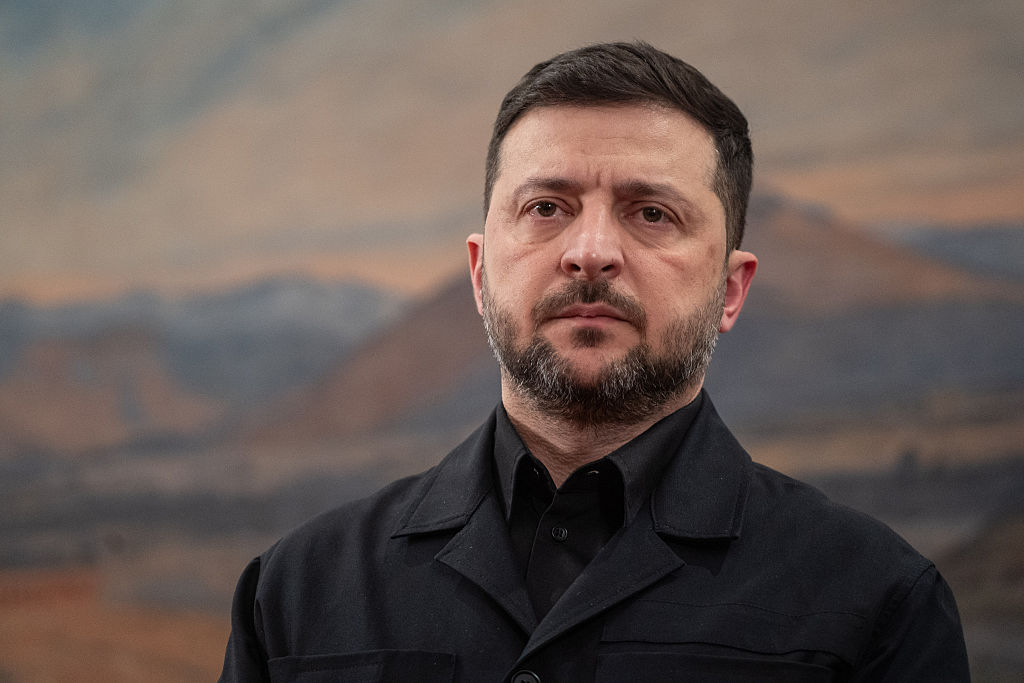
GREECE-UKRAINE-DIPLOMACY-ZELENSKY-VISIT
(Photo by NICK PALEOLOGOS/SOOC/AFP via Getty Images)

A story of intrigue that broke in the Financial Times last week reads more like a spy novel than a piece of investigative journalism: In 2022, during the Biden administration, two private American citizens established contact with the presidents of Russia and Ukraine and nearly brought peace to the world. But the story is credible. History will decide its significance.

The cast of characters is unexpected. Richard Conn, a Connecticut lawyer, teamed up with Bob Foresman, an investment banker. They successfully enlisted a former East German spy named Matthias Warnig, who called Russian President Vladimir Putin “my friend” and boasted personal access to him, and Alexander Rodnyansky, a Ukrainian film maker who had, reportedly, already helped set up the promising peace talks in Istanbul months before. The team—who gave their back channel the code name “the Platform”—reached deep enough into the Biden administration to carry a message from Eric Green, the senior director for Russia on the National Security Council. The message to be conveyed to Putin by Warnig assured the Russian leader that the U.S. was neither pursuing regime change nor trying to destroy Russia. The Americans, the message said, want peace.

Putin sent a message back, saying he had “no choice but to conduct military operations” but that he was “very open to negotiations.” But he wanted negotiations at a higher level and requested that Biden’s national security advisor, Jake Sullivan, call Putin’s aid Yuri Ushakov. In the weeks that followed, the Wall Street Journal has reported, Sullivan held confidential conversations with Ushakov “in an effort to reduce the risk of a broader conflict over Ukraine and warn Moscow against using nuclear or other weapons of mass destruction.”

The Financial Times reported three main points to the draft proposal. First, Russia would pull back to its prewar position and maintain control of Crimea and the parts of Donbas it had controlled before the Russian invasion. Second, Ukraine would recognize Russian control over Crimea and allow Russia to establish a land bridge to the peninsula. Third, the ceasefire would be ensured by protection from NATO states while Moscow began discussing a permanent security arrangement with Washington.

The Ukrainian opposition MP Oleksiy Goncharenko, who has confirmed the Financial Times story, clarifies that, though Ukraine had to recognize Russian control over Crimea, it did not have to “recognize it as Russian”—that is, de facto and not de jure recognition. Under the proposal, he says, Ukraine had to adopt a law “banning the return of Crimea by military means.” He also added two points to the outline of the proposal: that Russia would return the Zaporizhzhia Nuclear Power Plant to Ukraine and commit $300 billion in frozen assets to the rebuilding of Ukraine.

The reactions from Moscow and Kiev to this proposal were very different. Putin countered that Ukraine could not be allowed to join NATO, but he was willing to discuss the suggested frozen line as well as a security arrangement based on that discussed at the Istanbul talks. “If we can agree on the border and on NATO, then we can discuss everything else,” Putin reportedly told Warnig.

But, the Times reports, while Putin went through the document “line by line,” Rodnyansky “could barely get Zelenskyy and his powerful head of the president’s office Andriy Yermak to look at the documents.” They refused to make any concessions on Ukraine’s borders. 

The hope died in Kiev, and it was buried in Washington. Putin wanted the back channel certified. He had discussed the peace proposal in detail with Ushakov and a small circle of advisors. Now he wanted Ushakov to speak with Sullivan to confirm that “the Platform” had a mandate from the administration. Sullivan, according to Putin, did not oblige, denying the U.S. had approved the channel and insisting on the sufficiency of existing official channels.

The back channel was closed. The failure to sustain it in pursuit of peace represents yet another lost opportunity, hitherto unreported. Earlier lost opportunities include the American and European failure to press Ukraine on the Minsk Agreement when Putin was still pursuing it and the collapse of the Istanbul talks after the U.S. and UK pushed Ukraine off the diplomatic path to peace.

The story of the short-lived “Platform” back channel reinforces familiar themes of the Russia–Ukraine War. Though Zelensky and his European and American partners were insisting at the time, and continue to insist, that there is “zero evidence” that Putin is willing to negotiate in good faith, per the Times reporting, Putin appears, as he said, to have been “very open to negotiations.”  

It also undermines the claims of Putin’s uncompromising imperial ambitions and implacable devotion to annihilating Ukraine as a state. If this report is accurate, Putin was willing to return to the prewar borders in exchange for guarantees of Ukrainian neutrality.

And, per the report, as in the Istanbul talks before, Zelensky walked away from the chance for a negotiated settlement. While he told them that Putin could not, and should not, be negotiated with, he held in his hand a potential peace framework that Putin was prepared to negotiate.

Some former officials pushed back to the Times, saying Ushakov never brought up the topic of the back channel to Sullivan. Green questions the central diplomatic role of some of the figures reported as comprising “the Platform.” But Green not only knew about the channel, but used it to send a message to Putin. If there was a channel, there was a chance. Given the risks of the war, which Biden officials believed included a nuclear exchange, it did not matter how small a chance. But, as at Minsk and at Istanbul, the U.S. declined to pursue a potential pathway to peace.

The post Another Missed Opportunity for Peace in Ukraine appeared first on The American Conservative.

A Bold Proposal: Iran Should Join the Mecca Alliance

A Bold Proposal: Iran Should Join the Mecca Alliance

The Middle East needs a security architecture that includes Tehran.

Turkiye, Saudi Arabia and Pakistan sign trilateral joint defense agreement
Photo by TUR Presidency /Murat Cetinmuhurdar/Anadolu via Getty Images

Senior representatives of Saudi Arabia, Pakistan, and Turkey—the three members of the recently formed Mecca defense alliance—gathered in Tehran early this week for an unprecedented meeting with Iranian officials.

Their immediate purpose was to prevent another devastating confrontation involving Iran (especially important for the Gulf states who would likely bear the brunt of renewed hostilities). Yet the meeting also points toward something potentially far more significant: the initial phases of a new security order in the Middle East, in which regional powers, rather than the United States, assume primary responsibility for managing their affairs.

As such an architecture comes into being, one logical, if politically bold, step would be to invite Iran to join the Mecca Pact.

Of course, that probably won’t happen anytime soon, especially given tensions between Riyadh and Tehran. Yet Iran has responded positively to the Mecca alliance, and the talks this week appeared constructive. And the experience of the past five decades or so shows that no regional security arrangement can succeed if it permanently excludes a country of Iran’s size, capabilities, and geopolitical importance.

Given that the regime in Tehran shows few if any signs of crumbling even under extreme military and economic pressure, it should be clear that perpetual enmity offers diminishing returns. Accommodation is the only viable path forward. The leaders of Saudi Arabia, Turkey, and Pakistan seem to realize that. A regional nonaggression arrangement was reportedly discussed in the meeting in Tehran—the kind of common-sense diplomatic proposal that is both necessary and long overdue.

The circumstances surrounding the Tehran meeting underscore both the urgency of regional diplomacy and its limitations. The meeting took place under the shadow of a looming “round three” of the American-Israeli war on Iran that started in June 2025. The inconclusive result of this week’s elections in Israel has created a political deadlock that incentivizes Prime Minister Benjamin Netanyahu to escalate with Iran.

President Donald Trump has apparently come to despise the Islamabad Memorandum—the framework peace agreement that he signed with Iran in June, but which quickly fell apart—as a deal too favorable to Tehran. Trump appears to be seeking a face-saving way out of the current stalemate, which for him may mean another, more devastating bombing campaign, seemingly divorced from any clear and achievable strategic objectives (other than demonstrating American military might).

The fear in Riyadh and other Gulf capitals is that Tehran would retaliate by hitting their energy infrastructure to cause maximum pain to the global economy. This rising danger comes at a bad time for Saudi Arabia. Yemen’s Houthi rebels, who are aligned with Iran, have already been striking energy targets in Saudi Arabia and blocking the Bab-el-Mandeb Strait for critical Saudi oil shipments.

Riyadh wants Tehran to use its influence over the Houthis to stop these attacks, and Iran has seemingly been signaling a certain willingness to help, but there are limits to what it can do. The Houthis are a Yemeni movement, with their own history of grievances with Saudi Arabia. From 2015 to 2022, the hard-bitten militia fought the Saudis to a standstill at significant cost; its leaders are therefore unlikely to lay down their arms at a word of command from Tehran. 

Even assuming the Iranians had this leverage, though, it’s unclear whether they have sufficient incentives to restrain the Houthis—particularly given the threat of another U.S.-Israeli attack. At a time when Tehran aims to signal its preparedness for another round of fighting, what would it gain in exchange for expending political capital to rein in an allied militant group with demonstrated capabilities to strike targets in the region? 

A promise from Saudi Arabia to distance itself from any renewed American military campaign against Iran would help. But how would such a promise be implemented and verified? Tehran won’t squander its perceived leverage over the Houthis in exchange for vague, reversible promises from Riyadh.

Nevertheless, the Tehran meeting featured substantive discussions that reflected the growing realization that regional security is indivisible: No country can feel safe in an architecture predicated on the exclusion of others. 

This realization is a necessary precondition for building a more inclusive arrangement. Even with mutual trust still lacking, the expected withdrawal of the U.S. from the region and decline of American hegemony have spurred the Mecca alliance countries to change their approach to Iran. Saudi Arabia has learned its own lessons the hard way. When the Houthis closed the Bab-el-Mandeb and struck targets inside the kingdom, the U.S. did not come to Riyadh’s rescue. 

To the contrary, influential voices in Washington wanted to use the Saudi Crown Prince Mohammad bin Salman’s predicament to push him to join the Abraham Accords with Israel. Not only would such a move have been politically unpalatable for MbS given Israel’s treatment of Palestinians, but it would have also cemented Saudi Arabia’s subordination to the U.S. and Israel, and entrenched a regional organization centered on the exclusion of Iran.

Similarly, Turkey and Pakistan—which have their own complicated relationships with Iran—are not seeking confrontation. They understand that the destabilization that would surely ensue would cause severe ripple effects across the region: refugee flows, ethnic separatism, and major economic disruptions, all at a time when both countries already face significant security and economic challenges. Moreover, Ankara and Islamabad must take into account public opinion in their countries, and are loath to be seen as fighting America’s and Israel’s wars.

The Tehran meeting is therefore best understood not as an ad hoc diplomatic initiative, but as a possible first step towards a redefined security order in the Middle East. Mutual nonaggression commitments and confidence-building measures should be treated as the beginning of a long process of diplomatic engagement and, ultimately, integration of Iran with the Mecca alliance.

After the threat of U.S.-Israel strikes subsides, Iran’s membership would help address one of the region’s most persistent security concerns: Tehran’s alliance with the Houthis, Hezbollah in Lebanon, Iraqi militias, and other militant groups. Attempts to eliminate these groups using military force have failed. With a stake in regional stability and a valuable partnership with key countries in the region, Tehran would be more likely to use its leverage over these groups to rein them in.

Washington should welcome such an evolution. It would enable the U.S. to disentangle from the Middle East, to adopt a superior strategy—off-shore balancing—and to pursue a narrow, well-defined list of priorities: preventing a regional hegemon from rising, securing freedom of navigation, and dealing with terrorism if American vital interests come under threat. President Donald Trump has promised non-interventionism in the Middle East but failed to deliver. The Mecca pact offers him an unexpected pathway to fulfilling that pledge and focusing on the interests of the American people.

The post A Bold Proposal: Iran Should Join the Mecca Alliance appeared first on The American Conservative.

J.D. Vance Is the Man to End the War

J.D. Vance Is the Man to End the War

There is only one American high official with credible incentives.

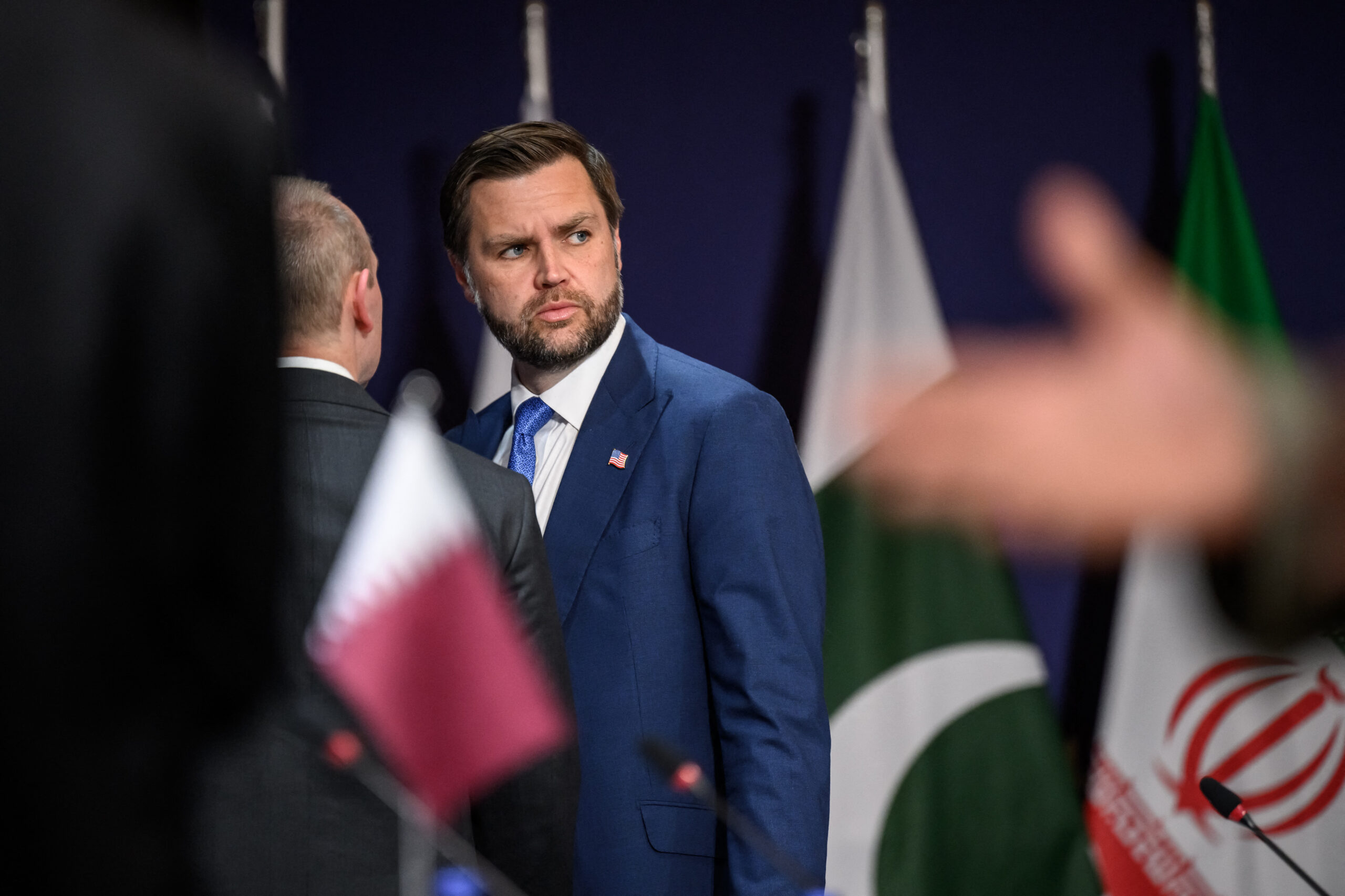
TOPSHOT-SWITZERLAND-US-IRAN-DIPLOMACY-WAR

The Wall Street Journal reported Tuesday that Vice President J.D. Vance has written a letter to Mohsen Rezaei, the gnarled old IRGC veteran who serves as the secretary of Iran’s Supreme National Security Council and is generally considered a center of hardline politics in the Islamic Republic. The contents of the letter were not disclosed, but the Journal said that President Donald Trump was aware of it.

That’s all to the good, by our lights. Conversations about the sincerity of Vance’s dovish credentials are to some degree basically beside the point; I say this as someone who has entertained plenty of doubts in a fairly blunt fashion. In this Machiavellian vale of tears, what a person believes in his heart of hearts doesn’t matter so much as what his material incentives are, and how he pursues them. (This is why I believe in tough laws, free markets, and, apparently controversially, not voting for politicians who do things I don’t like.) 

Vance is the only administration official with a material incentive—an existential one—for ending the war. For this very reason, he may also well be the only one who can accomplish it.

Esfandyar Bamtmanghelidj has written in these pages that Iranian policymakers have become pessimistic about making a deal with Trump because of his capriciousness and demonstrated reluctance to say no to his coalition’s hawkish faction. The underlying condition here is one that Trump himself has articulated in so many words: The president has no more elections to win personally. He has no material incentive to do things that are generally popular but potentially difficult; losing the midterms is unlikely even to affect his program all that much. 

And it’s not just Trump; it’s his people, too. While the war is not generally regarded as a smashing success inside the administration, based on my conversations with officials, there are few with the authority and the incentives to do anything in particular to stop it. (And, of course, some few do appear to be enjoying it hugely, like our simian secretary of defense.) The president has always had difficulty fighting his own people, especially in matters of war—see, for example, his failed effort to withdraw from Afghanistan—and, in this term, very few of his people have the inclination to fight with him. We are looking at a system with a lot of inertia.

Vance, on the other hand, has every kind of reason to wrap this war up: His political survival depends on it. When non-admin hawks like Sen. Ted Cruz of Texas run in 2028, they will have the luxury of saying that, while they supported the war, they’d have done it differently. Vance, however, will have to wear not just the war, but also the way it was prosecuted. If the war can be wrapped up and the economy returned to normal in short order, he can claim the victory—especially if he’s the face of the settlement. But if the war and its concomitant economic derangement are still live issues when he hits the trail, he will be vulnerable from both the antiwar and the prowar sides. 

In 2028, Vance will have a very short resume: a couple years in the Senate and four years as VP. Marco Rubio can sit the cycle out in Florida’s welcoming swamps and return as an elder statesman in 2032, after the Democrats have again inevitably made themselves the main target of national loathing. If Vance waits until ’32, he will have spent nearly as long podcasting or building purple-martin hotels as he had in politics. These things may matter less in the Trump era, but they do still matter. Vance’s best shot is ’28, and it’s no shot at all if we’re still at war with Iran.

But Vance’s unique vulnerability to the war makes him uniquely able to present a credible case for American peace overtures. Iranian policymakers are close if not always analytically correct observers of American politics. Someone whose actual political future depends on a durable, decent peace has a natural weight that is lacking in, say, special envoys who can sink back into their vast real-estate empires when the Trump show leaves the stage. 

For this to work, Vance will have to do the kind of subordinate maneuvering that our own Andrew Day described in respect of the Russia–Ukraine War, channeling Trump’s acute, concrete, and immediate concerns to build positive momentum. Since the war is in fact transparently the cause of most of our marquee problems at the moment—price rises, bond market insanity, the collapse of military readiness everywhere outside CENTCOM—this shouldn’t be too tricky for a smart boy like our vice president. 

The alternative is grim. If Vance’s act of diplomatic vaudeville appears to be cover for another eruption of intense combat operations—a widespread interpretation of earlier rounds of American diplomacy—it will neuter the official who is currently the administration’s best and only viable champion for ending the war and the political pain from it sooner, rather than later. If any of our neighbors up the road at 1600 Penn. are reading: Don’t do that.

The post J.D. Vance Is the Man to End the War appeared first on The American Conservative.