
The American Believability Crisis
Bad things happen when nobody takes you seriously.
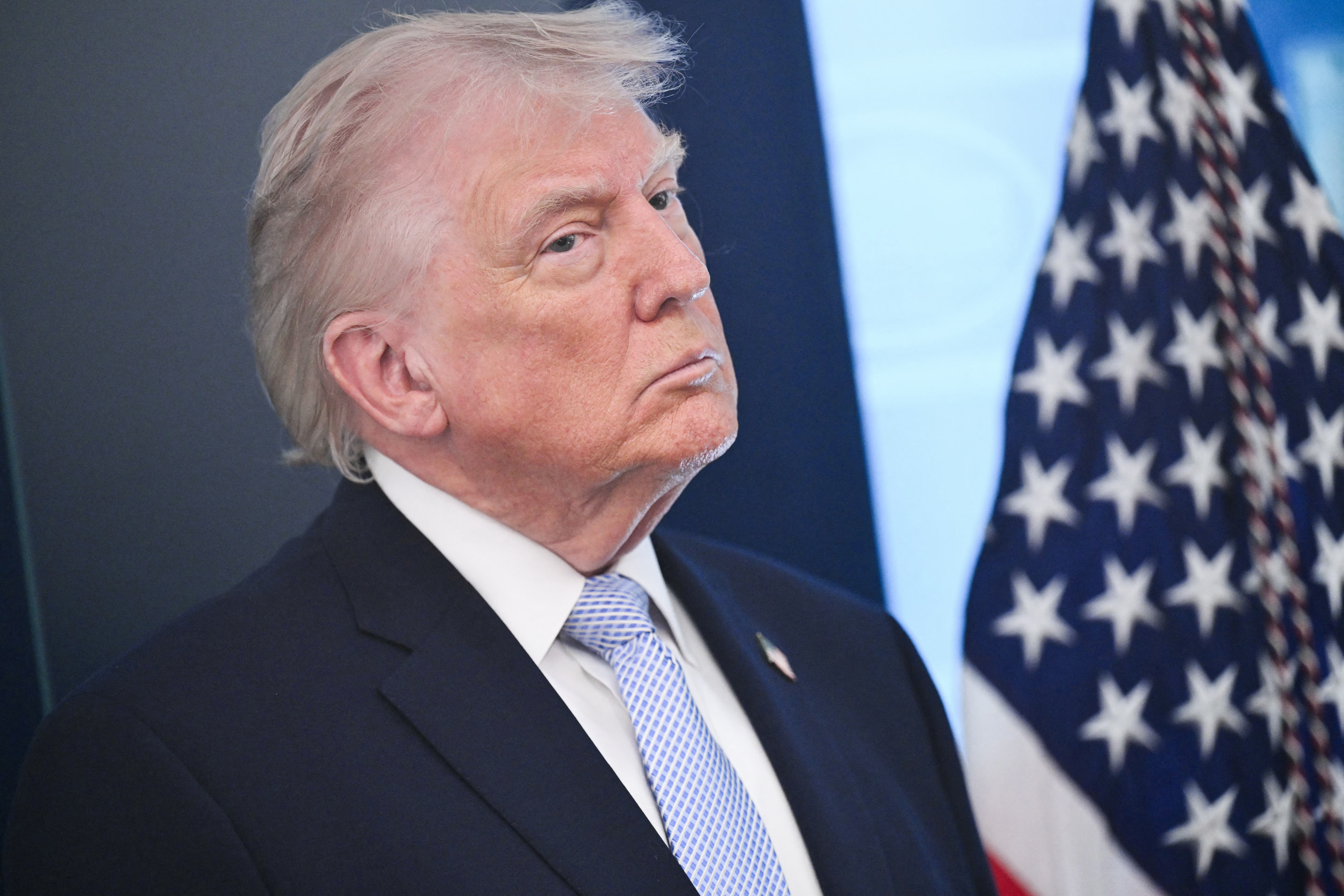
Last week, there was a lot of rumbling out of Washington about a massive escalation against Iran. Admiral Brad Cooper, who is currently the king of the wood in CENTCOM, had reportedly hatched a “go-big” option that would grievously damage Iranian military assets—in the depressed dialect of military press releases, “degrade their capabilities”—while drawing only a limited response, thus saving our dwindling supplies of defensive weapons. Conversations swirled about striking “Pickaxe Mountain,” an annex to the Natanz nuclear site and allegedly the resting place for Iranian nuclear materials. On Friday, President Donald Trump himself said the U.S. would “be hitting [the Iranians] very hard.” The same day, American officials leaked to the Wall Street Journal that an attack was imminent.
But the hand of mercy stayed the whip of calamity, or something. Trump on Sunday said the attack was off following interventions from our Gulf allies, who apparently haven’t been too hot on the idea of Iran wiping out their desalination plants and oil infrastructure in retaliatory strikes. The president further alleged that negotiations with the Iranians would be starting Monday, which the Iranians promptly denied. As of writing, everything remains a muddle, much as it has been since the collapse of the June 17 MOU into tit-for-tat slap-fighting.
A remarkable cycle! But perhaps not so very remarkable. People have started to notice that the administration has a propensity for extravagant threats followed by equally extravagant walkbacks, often in concert with the weekly operations of the markets. Following the Journal’s story, our own Andrew Day expressed skepticism that there would be any major attack—why would you telegraph such a thing?
I’d submit that this is a problem. It’s the flip side of something I identified in March, lo! these many months of war ago, namely the fact that America’s diplomatic credibility is not looking too good. The recurring revision of previously agreed-upon premises, the constant toggling between mediation channels, and most of all the apparent use of negotiations as cover for surprise attacks have made it difficult for other parties to take the U.S. at its word. This problem isn’t limited to adversaries like Venezuela and Iran. Two weeks ago, after signing an agreement with Saudi Arabia for the development of a civilian nuclear program, Trump fired off a social media post conditioning the agreement retroactively on Saudi normalization of ties with Israel—which, given the mood of the Arab street, amounts to nixing the deal.
When I wrote in March, I argued that the loss of diplomatic credibility would require the U.S. to lean more heavily on the application of force at a time when it was hoping to rely on this less. Hollowing out threats has much the same effect: As threats become less effective, there will be pressure to follow through on them to inflict coercion and, secondarily, to restore their credibility. Everything that isn’t physical coercion is being sapped of its power, and force is a limited, expensive, and messy technique; indeed, the fact that we have not fully committed ourselves to this path is a testament to how unpleasant even the authors of this war find its consequences.
Broadening the view, one could point to an even larger behavioral pattern of political lying (the new insistence that an impoverished and decrepit Cuba is a menace to the American homeland, the “Cartel de los Soles” two-step in Venezuela) and caprice (the continued Polly-put-the-kettle-on tariff circus). Nor is it a problem unique to this administration, although the scale of it might be. The Biden program also ran aground on obvious issues with the truth: its insistence that the economy was fine, the border was fine, the Covid madness was fine.
There’s a lesson here. Hypocrisy, deception, and a touch of unpredictability are no doubt useful, even necessary tools of statecraft. As most people who have been through normal childhoods know, though, the efficacy of a lie depends on the credibility of its teller. Perhaps that basically whiggish contention—your word must be your bond not because of the divine decrees of Moses, St. Paul, and Dale Carnegie, but because it’s the only way human systems can work—has something to it after all. Sometimes, honesty is the best politics.
But we wander far afield into metaphysics and worse. Let us return to the problem at hand. On Monday, Esfandyar Batmanghelidj reported in these pages that Iranian elites are growing skeptical that a deal with the United States is even possible—that they believe the U.S. is for structural reasons unable to commit to any sort of agreement that it will not subsequently undermine. This is dangerous; a semi-frozen conflict in the Middle East straining the world economy indefinitely is not an ideal outcome. And, of course, it was avoidable. But the question now is whether American negotiating credit can be salvaged, perhaps with some confidence-building measures like prompt follow-through on some of the concessive parts of the June MOU—sanctions relief and the like—or, at the minimum, by not issuing apocalyptic but empty threats. It may not yet be too late to turn over a new leaf, but it’s getting there.
The post The American Believability Crisis appeared first on The American Conservative.