
Congress Is Fake
The House and Senate have drained themselves of power and relevance.
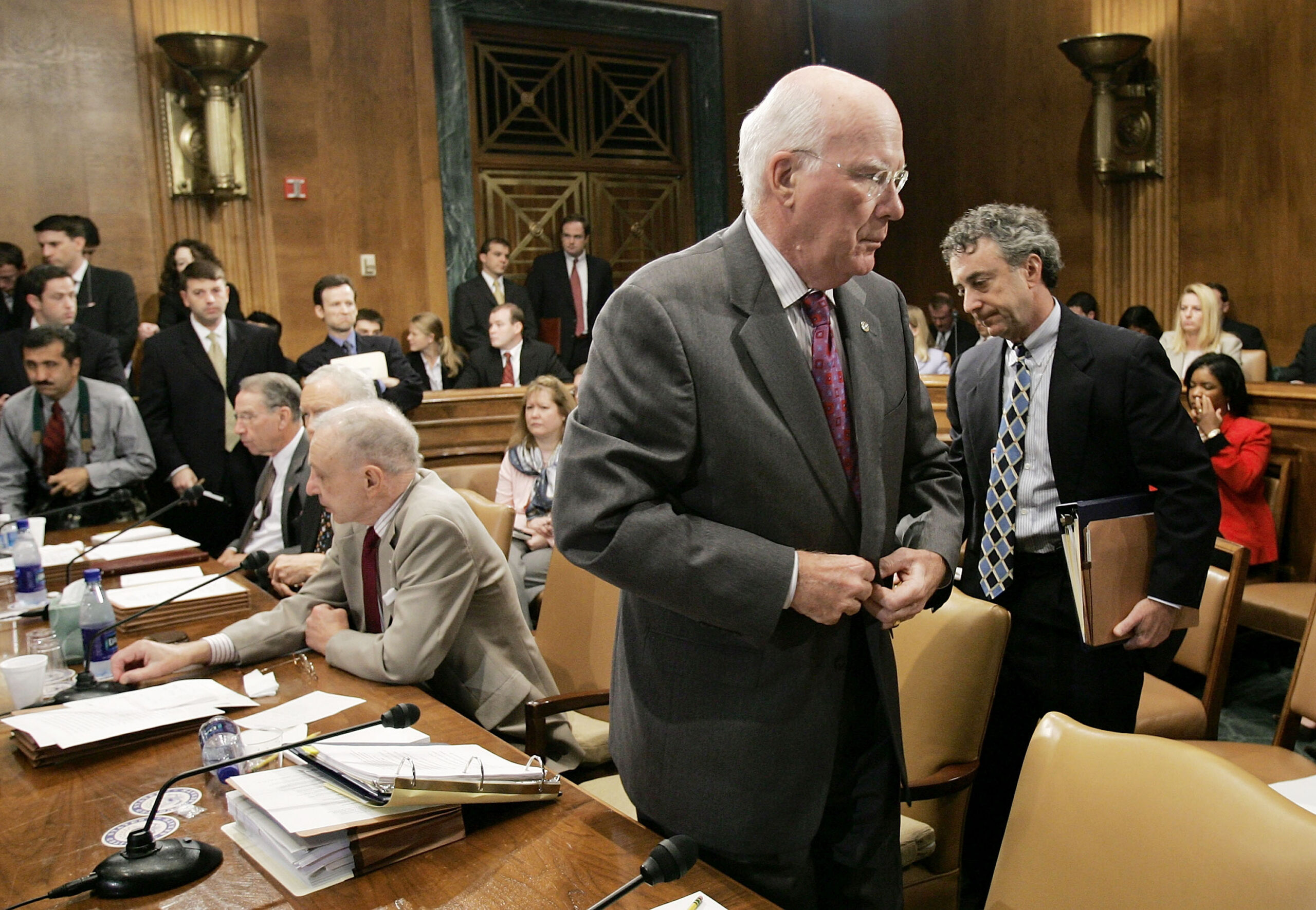
On July 26, Senator Mike Lee (R-UT) wrote a message to Senate Majority Leader John Thune (R-SD) in a post on X:
I hereby object to any effort to put the Senate into recess in August—at least until such time as the Senate has passed the SAVE America Act—and hereby request a roll call vote. Do not assume you have my consent. You do not.
On August 8, the Senate went into its customary August recess without objection. No roll call vote was held. The SAVE America Act (which would implement stringent national voter ID requirements, and is championed by both the president and the GOP’s right flank) remains unpassed.
In theory, Lee should have had serious leverage: Senate rules give considerable power to individual members, and the SAVE America Act is red-hot with the MAGA base (cognizant of this latter fact, Lee—or @BasedMikeLee, as his X account styles him—had been hyping the issue online for weeks). Reportedly more than 20 other Republican lawmakers had also agreed to back his effort, which meant the numbers were there to force a roll call vote. It all should have been enough to get the world’s greatest deliberative body to, well, deliberate.
But in the event, it was not. Based Mike Lee’s colleagues have places to be, and during August those places don’t include the Senate floor. Not to mention that the underlying bill has no chance of getting 60 votes, so unless Thune & co. were willing to go nuclear on the filibuster—and they’re not—all would have been for naught anyway. (Lee’s plan, for what it’s worth, involved the use of something called the “talking filibuster,” which would have forced Dems to stop the bill from passing via actual speechifying; this, too, is opposed by GOP leadership.) Finally, there is the fact that the SAVE America Act, though pitched as a panacea for all that ails party and country, secretly gives moderate Republicans the willies; these squishy pols would therefore strongly prefer to avoid a real vote.
So it was convenient to all concerned that this effort failed. Even the senior senator from Utah got something out of it: His anti-establishment credentials were burnished, especially among those unfamiliar with Senate procedure, and he was free to get back to posting about the existential importance of passing this bill.
It’s admittedly a little unfair to single out Lee, who is at least committing himself to something rather than wallowing in the cynicism and nihilism that seem to have eaten up so many of his confreres on Capitol Hill. But the whole episode does provide a neat illustration of a discomfiting truth: namely, that Congress is fake.
I mean this spiritually rather than literally, for it is true the bare minimum (usually) gets done. One can depend upon the government eventually being funded and executive branch nominees eventually being confirmed. The War Machine will also get its annual authorization (“must-pass” legislation, don’t you know). But good luck with anything beyond that.
A total of 18,350 bills have been introduced in the 119th Congress so far, which puts our current legislature near historical highs. But only 104 of these have been passed into law—fewer than at any time since before the Great Depression. (Even that figure is arguably too generous, since many of these enacted bills do very niche things like raise the retirement age for Capitol police officers or name a post office.)
Members of Congress are doing more posturing—introducing goofy “messaging bills” to grab a headline or cash in on a news cycle—and less bona fide legislating than ever before. Indeed, many seem to treat Capitol Hill more as a stage upon which to strut and preen before the eyes of donors than as a jobsite (but then again, I’m not aware of many other workplaces in America with a 3 ½ day workweek).
For another illustration of congressional fakery, consider committee hearings. Before working on the Hill, I had supposed that a hearing was a solemn, purposeful affair, in which the committee members sat down and gave their full attention to the witnesses (presumably experts or high officials) as they testified on weighty matters of state.
How naive I was! Hearings today are about generating viral clips. The witnesses are invited, not because they have some unique insight or perspective to offer, but because they are useful foils: They can either be relied upon to say what the committee wants them to say, or they will make excellent punching bags. And far from sitting in rapt attention throughout, the “down-dais” members (that is, everyone except the top Republican and Democrat) spend as little time in the room as possible. They arrive right when the proceedings open—thus securing a place in the questioning order—and then leave for other business. As they flit to and fro across the Capitol complex, some poor staffer stays to follow the order, furiously texting the office thread when the boss’s turn approaches. And the questioning itself doesn’t elicit information; rather, it gives the lawmaker a chance to look good for the cameras (either by touting some signature priority with the aid of a Good Witness, or by raining down righteous fury on a Bad Witness). The mark of a successful hearing is a video that does numbers on X or YouTube.
Perhaps most egregiously, Congress has lost all sense of itself as an institution with prerogatives and interests that transcend partisan affiliations. It doesn’t act like a coequal branch: When there is unified government, it cringes before the White House, and when power is divided, it is a reflexive (and impotent) source of opposition. The 119th Congress has therefore blithely allowed President Donald Trump to wage an illegal, asinine, and unwinnable war in the Middle East, just as the 117th Congress smiled and stepped aside as President Joe Biden elected to abandon the enforcement of immigration law altogether.
This unfortunate situation is, of course, the product of structural forces (like the dreaded “polarization”), but it is hardly an inevitable feature of modern civic life. In the ’70s, for example, Congress worked assiduously to rein in the imperial presidency, passing major, bipartisan bills like the War Powers Resolution and the Congressional Budget and Impoundment Control Act to reassert legislative authority. And even during the Reagan years, that old GOP warhorse Bob Dole used his perch as Senate majority leader to set up a congressional probe into the Gipper’s malfeasance on Iran-Contra (can one imagine John Thune, let alone Mike Johnson, doing something similar?).
In describing Rome’s transition from republic to empire, Gibbon reminds us that the emperors carefully maintained the forms of the legislature long after they had emptied it of all sovereign power. “The masters of the Roman world,” he writes, “concealed their irresistible strength and humbly professed themselves the accountable ministers of the senate, whose supreme decrees they dictated and obeyed.”
Thanks to the total lack of institutional identity or corporate spirit among our lawmakers, such manipulation by the executive is hardly necessary today. Though, interestingly, the near-total surrender of its prerogatives hasn’t entirely ingratiated Congress to the White House; indeed, by rendering itself so contemptible and pathetic, one gets the impression that what little resistance remains has become that much harder to bear.
In a press conference Monday, Trump rattled off examples of hard-left proposals to bulldoze our constitutional order: eliminate the presidency, dissolve the Supreme Court, abolish Congress’ upper chamber. But at that last item he couldn’t help but give a little chuckle: “You know, sometimes I’d like to get rid of the Senate too.”
The post Congress Is Fake appeared first on The American Conservative.