
How to Stop Chinese, Russian Support for Iran’s War Efforts
Ending the conflict would deprive U.S. rivals of a vehicle for retaliation.
Washington policymakers are easily shocked. They expect U.S. primacy. Even in war they presume deference to Washington. Easy victories. Pliable enemies. International support. Yet such events almost never happen.
Certainly, the surprise February attack on Iran, again amid negotiations, produced none of these results, despite President Donald Trump’s apparent assumptions to the contrary. He seems to have expected surviving Iranian officials to seek his approval before appointing new leadership. This was a fantasy perhaps understandable over 30 years ago, when President George H.W. Bush, preparing to attack Iraq, declared, “What we say goes.” But no longer.
But it isn’t just the president who overestimates American power. To their dismay, other officials and analysts note that both Russia and China are assisting Iran. For instance, Bradley Bowman and Cameron McMillan of the Foundation for Defense of Democracies are outraged and perhaps even a little shocked at Moscow’s and Beijing’s effrontery:
If Washington ignores these actions by Russia and China, Tehran’s regime will continue to become more resilient and lethal. That is likely to put additional pressure on U.S. munitions, exacerbate problems in the Strait of Hormuz and potentially cause more American casualties in a future conflict. A weak response from Washington will invite additional help for Iran as it seeks to rebuild its arsenal and defense-industrial base.
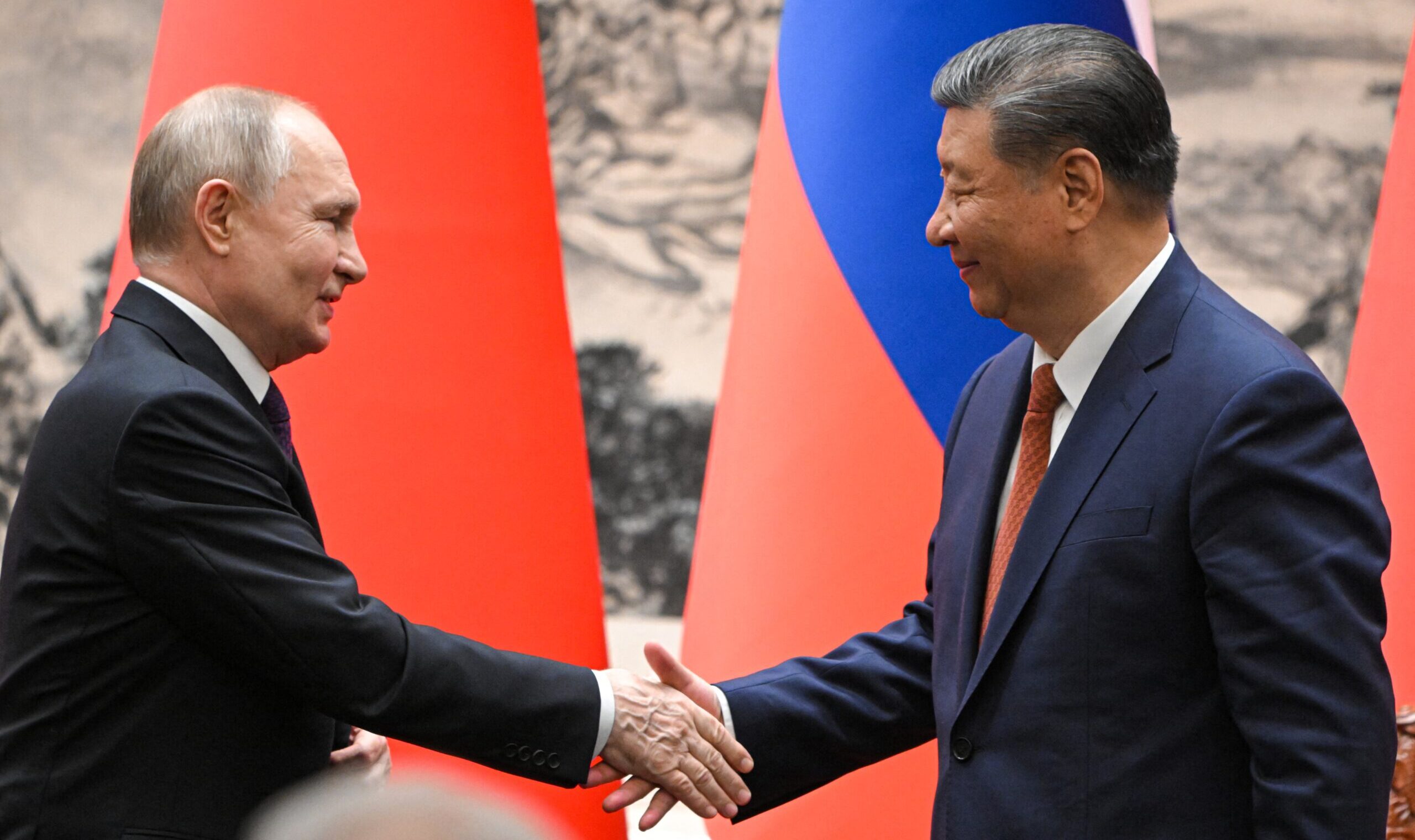
Yet “these actions by Russia and China” are a predictable response to Washington’s attempt to, in the words of both Presidents Joe Biden and Donald Trump, “run the world.” In fact, it would be surprising if both Russia, a great if declining power, and China, an incipient superpower, acquiesced to exorbitant and arrogant U.S. demands. While neither Moscow nor Beijing seeks direct conflict with America, they also are not willing to accept U.S. domination. Certainly not without resistance, including assisting others battling Washington.
How should the U.S. respond? Bowman and McMillan suggest more of the same. They write:
To block and deter China and Russia from propping up Iran, Washington and its allies should take decisive steps. These should include increasing intelligence and munitions support for Ukrainian offensive strikes and imposing sanctions on Beijing if it provides Iran with weapons systems or significant military components. The U.S. and its allies should also interdict Chinese chemical shipments that boost Iran’s ballistic missile program. Finally, Congress should require an annual report from the intelligence community detailing Beijing’s dual-use support to Iran and share that information with U.S. partners.
Increasing American support for Ukraine is unlikely to deter Moscow; indeed, it almost certainly has encouraged Russian support for Iran in the first place. After all, the U.S. has provided myriad forms of assistance to Ukraine, helping it kill thousands of Russians. (Washington did the same to the Soviet Union in Afghanistan.) America’s intelligence backing is extensive. The U.S. military helped plan Ukrainian operations. Unnamed Washington officials have taken credit for sinking the Russian flagship of the Black Sea Fleet and killing Russian generals. Even Trump admitted that America had been essentially doing for Kiev what Russia is now accused of doing for Tehran. Greater U.S. assistance for Ukraine would only spur increased Russian support for Iran.
As for Beijing, Washington is preparing to kill thousands if not tens or hundreds of thousands of Chinese in the event of a conflict over Taiwan. Senior U.S. officials openly talk about the possibility of war and justify almost any expenditure even vaguely labeled “national security” if it could put China at a disadvantage. Beijing’s leaders might be paranoid about U.S. plans, but they know, as Henry Kissinger once observed, that even paranoiacs have enemies.
Would Xi Jinping, China’s leader, nevertheless back down if confronted? Perhaps, but he appears to believe that Beijing has the advantage over the Trump administration. Although China would not go to war on Iran’s behalf, it appears ready to dare a weakened president to strike another economic blow as much against itself as against China. Sanctioning Beijing would further poison an already difficult relationship, putting the president’s desired bilateral trade pact beyond reach, and likely trigger retaliation, including in the sensitive area of rare earth exports. Interdicting Chinese exports to or imports from Iran would risk a direct confrontation with Beijing.
Publicizing Beijing’s support for the Islamic Republic would have minimal impact. The issue matters little to most of the world. Europe is far more concerned about indirect Chinese support for Russia. Saudi Arabia, the United Arab Emirates, and the other Middle Eastern nations are already well aware of Beijing’s continuing relationship with Iran.
A far better response to Russian and Chinese involvement in the Iran war would be to simply end the conflict. Effectively turning U.S. foreign policy over to the Israeli government—which views Iran as a chief adversary—violated the president’s responsibility to America and Americans. Attacking Tehran was a mistake both obvious and disastrous. Acting without first building support among allied states was foolish. Assuming a quick and easy victory was reckless. Waging war without a coherent strategy was military malpractice. Continuing the war encourages foreign adversaries to make potentially deadly mischief.
More generally, U.S. officials should eschew foreign wars which lack any essential purpose, and especially reject utopian regime change proposals. After scrapping the Iran nuclear deal in his first term, Trump has failed to sustain any serious effort at negotiations. Last year’s attack damaged Iran’s nuclear program but reinforced the case for the regime to develop nuclear weapons. This year Trump ignored Tehran’s willingness to make serious concessions and instead sought its unconditional surrender, which even his top advisers dismissed as extremely unlikely. Incredibly, the war is looking more foolish than President George W. Bush’s invasion of Iraq, failing to achieve any of its critical objectives, though it has been much less costly in terms of American lives lost.
Forbearance in matters of war and peace would reduce opportunities for Moscow and Beijing, as well as any other discontented adversaries, to undermine U.S. interests and cause Americans harm. Washington would also be better able to rally international support on its behalf. For the Trump administration to complain about foreign interference in America’s war of choice is manifestly absurd. No country interferes in the affairs of other nations more often. No government is more presumptuous in its demands. No nation more frequently uses force against other states.
Russian and Chinese intervention in the Iran war is unfortunate—Americans likely have died and certainly have been injured as a result. Yet the administration shares responsibility for the resulting harm. While Bowman and McMillan contend that Russia’s aid to Iran was “startling,” Moscow’s intervention was inevitable once an appropriate vehicle for retaliation against the U.S. appeared. Washington set a powerful precedent, doing everything that Russia has done, and much more. China’s role is no more surprising.
American policymakers long have viewed themselves as virtuous vestal virgins, entitled, even required, to purify the terrible world around them. Alas, no one else views the solons of Washington in such terms, and for good reason: They have repeatedly failed, often disastrously. It is time for the administration to stop doing needless harm to others by truly putting America first.
The post How to Stop Chinese, Russian Support for Iran’s War Efforts appeared first on The American Conservative.