
Rubio Shores Up U.S. Allies in South America
The Trump administration is betting that right-wing governments in the hemisphere can help tamp down on drugs, crime, and disorder.
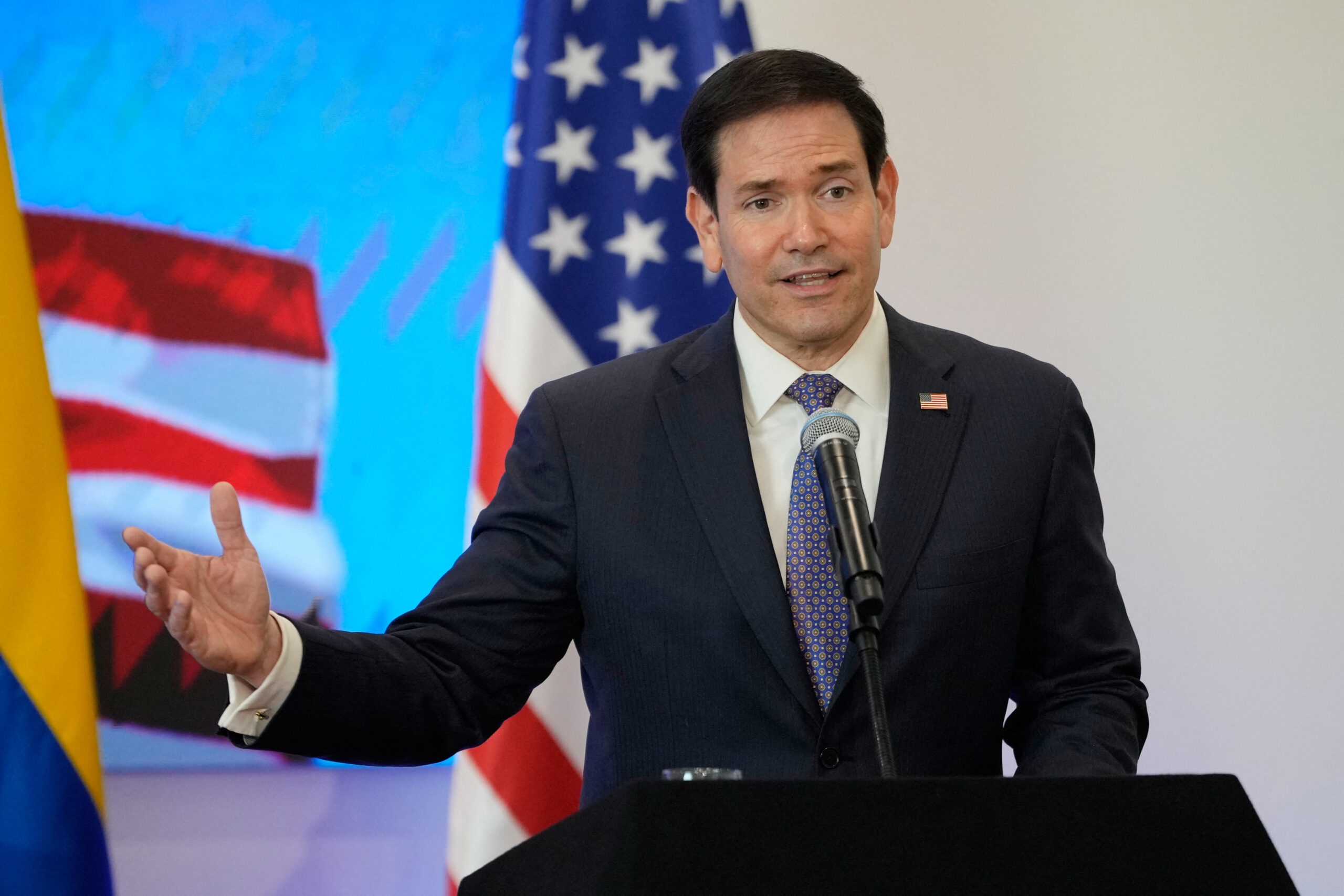
Secretary of State Marco Rubio wrapped up a tour of South America last week, as he looks to bolster ties with Ecuador’s President Daniel Noboa and the new administrations of Colombia’s Abelardo de la Espriella and Peru’s Keiko Fujimori.
Although the U.S. has been distracted of late by events in the Middle East, the Trump administration continues to view the Western Hemisphere as an important foreign policy focus, and so far the region has obligingly moved toward the administration’s policies and attitudes. Latin America has swung right sharply over the past several years: Since 2024, right-wing governments have been elected in Chile, Bolivia, Peru, Colombia, and Honduras, some with President Donald Trump’s explicit endorsement.
The administration is now working on reinforcing its ideological allies and turning them into more active partners in combating crime, drug trafficking, and illegal immigration. Rubio’s recent visit, his third to the region as America’s top diplomat, was part of an effort to demonstrate the United States’ commitment to that process.
Colombia, traditionally one of the United States’ most significant partners in Latin America, was the most important stop. The nation’s jungles and wildernesses harbor some of the world’s largest illicit drug-manufacturing operations. Much enforcement cooperation withered during the administration of the left-wing President Gustavo Petro, whose “Total Peace” campaign attempted (and failed) to bring cartels and organized crime leaders to the bargaining table for negotiations. The election over the summer of the conservative de la Espriella, who has American citizenship and campaigned on strengthening ties with the U.S., offers a sterling chance to restore that cooperation.
“Colombia wants to newly consolidate itself as the principal hemispheric partner for the United States on security,” de la Espriella said during his meeting with Rubio. The new Colombian president has taken significant steps to increase cooperation with the United States. Last month, Colombia joined the Shield of the Americas, Trump’s hemispheric security coalition, and de la Espriella has also asked for additional American training and intelligence coordination to assist in counternarcotics operations. In return, he hopes to increase American private investment in Colombia, a priority that has become all the more imperative after the country was rocked with a major earthquake just three days after de la Espriella took office.
Rubio’s visit proved a good chance for the U.S. to hold up its end of the bargain: The secretary of state brought with him an agreement for critical-mineral extraction and processing that could facilitate investment in the Colombian mining sector, as the U.S. seeks to improve its supply chain capacity and reduce its exposure to Chinese markets. Rubio and de la Espriella also signed a memorandum of cooperation for the development of a civilian nuclear program in Colombia, potentially opening up new possibilities for the Colombian energy industry.
The struggling nation of Ecuador also received an important visit from Rubio. Once a relatively safe and stable country, Ecuador has seen crime spike in the past five years as cartels have expanded their operations and taken over Ecuadorian ports to move their product. Ecuador now has one of the highest murder rates of any country in the world, complete with criminal gangs hijacking TV broadcasts and taking over prison blocks. President Daniel Noboa has attempted to address the problem with Bukele-style mano dura crackdowns, but so far his government has had little success curbing the rampant criminality of the country.
To assist Noboa in his efforts to return a semblance of order to the country, Rubio announced that the U.S. would launch a $10 million initiative to crack down on gang recruitment and money-laundering, in partnership with the Ecuadorian government. To complement the initiative, Rubio announced that the U.S. had designated a major Ecuadorian cartel, Los Tiguerones, as a foreign terrorist organization and a specially designated global terrorist group, statuses that expand the sanctions American institutions can levy against the group and individuals associated with it. Such designations have been a major part of the Trump administration’s efforts to crack down on organized crime in the region, applying techniques pioneered in the War on Terror to a new theater.
The U.S. also announced that it would provide Ecuador with several ships, including a Coast Guard cutter and five interceptor vessels, to support maritime drug-interdiction forces that operate with American counterparts. The White House will also ask Congress for another $45 million to supplement existing aid for Ecuadorian law enforcement and public order.
The assistance is sorely needed. Ecuador’s institutions appear incapable of dealing with the crisis. The military is poorly trained and equipped, corruption is rampant, and widespread violence, committed with apparent impunity, has left many Ecuadorians feeling like they have no choice but to comply with the gangsters’ demands.
Peru rounded out the secretary’s itinerary, and the new president, Fujimori, honored her guest by announcing that Peru would also join the Shield of the Americas. Peru is in far better shape than Ecuador, and most of its problems are political and self-inflicted—the country has had eight presidents over the past decade. Signs are good that Fujimori’s election will provide a much-needed period of political stability.
American cooperation with friendly governments in Latin America is the vital carrot to the Trump administration’s Western Hemisphere policy, in contrast to its coercive stick of tariffs and aggressive military intervention. Multinational cooperation is particularly important against cartels and other organized criminal groups, which are experts at avoiding crackdowns by shifting across state borders. The new focus on the Western Hemisphere means the U.S. can effectively play a coordinating role for countries across the region, allowing them to deploy their resources more effectively than they would be capable of doing on their own. Such assistance will be particularly helpful for Ecuador and Colombia, which have significant issues with cartels operating across borders. At a time when American military resources are under pressure elsewhere, rewarding allies that voluntarily contribute to shared policy priorities is an efficient way to advance peace and security in the region.
The post Rubio Shores Up U.S. Allies in South America appeared first on The American Conservative.