
Russiagate II: Loser Edition
Liberals are trotting out the 2016 playbook once again.
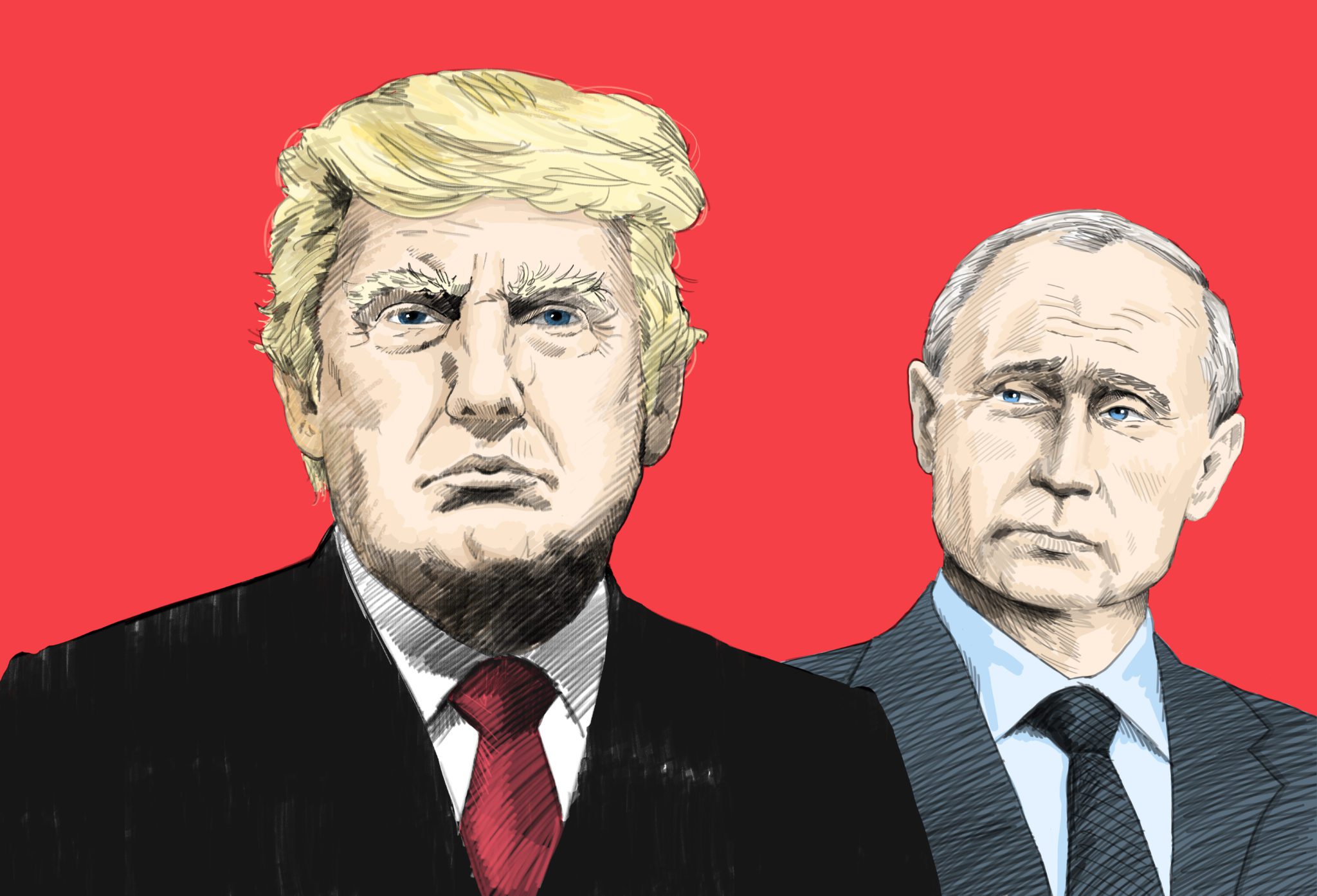
Remember Russiagate? Remember former British spook Christopher Steele’s dodgy dossier? Remember Crossfire Hurricane? Remember when it went nowhere and destroyed all trust in the FBI? We now have a decent idea what Russiagate was all about: It was intended to create a strong base of support among Democrats for a proxy war with Russia. The trick was to link this project with the political passions stirred up by Donald Trump. It worked like a charm. There is now an army of liberals who are almost as obsessed with Russian President Vladimir Putin as they are with President Trump.
Russiagate was a classic psychological warfare operation. It used the old propaganda technique of “association” to build up the idea that Putin and Russia were entwined in some foundational way with the right-wing populism then finding such purchase among the American electorate. The people behind Russiagate were frustrated with the realist foreign policy being pursued in Europe by the likes of President Barack Obama and former German Chancellor Angela Merkel. “Obviously,” Obama said in March 2014 after the Russian annexation of Crimea, “we do not need to trigger an actual war with Russia. The Ukrainians don’t want that. Nobody would want that.”
But Obama was wrong: Some people very much wanted that, including his own former Secretary of State Hilary Clinton. And to get their confrontation, they first needed to build a core base of support.
The Clinton campaign could have chosen any number of issues on which to attack Trump in 2016. With the benefit of hindsight—and, as Trump recently blurted out, “over a million [Ukrainians] killed”—it is now clear why they chose the Steele dossier. Russiagate may have been a flop legally; its basic disconnection from reality made it a nonstarter in the courts. But as a propaganda piece it was an enormous success. When the Obama administration trod lightly on the Crimea question, few Democrats questioned it. Indeed, many saw it as proof of his return to rational, level-headed foreign policy after the excesses of George W. Bush. After Russiagate, no Democratic president could get away with such realism without triggering a wave of condemnation from Putin-obsessed liberals.
Well, it is starting to look like there is an effort underway to summon the ghost of Russiagate before the midterms in November. It started in the same city out of which the Steele dossier emerged: London. Britain’s new Prime Minister Andy Burnham went on a popular politics podcast and stated that Russia had intervened in the Brexit referendum. This ran contrary to what investigations showed shortly after the election and was seen as so destabilizing that the head of MI5—Britain’s domestic counter-intelligence agency—felt the need to make a statement downplaying (though not denying) Burnham’s comments. Why was Burnham beating this dead horse? The clue came in the days that followed.
Around the same time as Burnham’s interview went live, reports started to circulate that Ukraine had managed to strike a Yandex facility in Moscow. Yandex is Russia’s primary internet technology company, roughly equivalent to their version of Google. Shortly after the strike, a Czech member of the European Parliament posted a dubious looking chart showing that after the strike on Yandex, online activity around Alternative für Deutschland (AfD) accounts plummeted. The chart had no source and looked AI-generated. What is more, it showed data up until October 15th but was posted on October 11th. The chart was such an embarrassment that even the BBC had to concede that it was disinformation. But not before prominent foreign policy voices like Ian Bremmer of Eurasia Group and even Zelensky himself seemed to endorse the idea that the Yandex strike had knocked out Russian propaganda accounts.
What a tantalizing possibility for your average liberal X user. The change in online political discourse that has taken place in recent years is partly a result of Elon Musk’s purchase of X, turning it into a space of open political discourse. But it is also part of a broader shift away from the pieties of the Obama-era liberal progressives. This shift has been jarring for many on the left, who have had to watch their previously hegemonic opinions become “cringe.” People previously heralded as “right-thinking” and “cool” have seen their worldview turned into a running joke in only three election cycles. Imagine if they could blame this shift on Russian propaganda bots that could be knocked out by a well-placed Ukrainian attack drone!
In the weeks prior to Burnham’s comments and the Yandex hysteria, there had also been attempts to find new financial links between the Trump administration and the Kremlin. The most promising of these for the neo-Russigaters seems to center on the Republika Srpska, the Serb-majority political body in Bosnia and Herzegovina. Publications like The New York Times and The Financial Times have recently run profiles about senior White House figures working for DC lobbying firms on behalf of Republika Srpska. (The political entity is currently living under cartoonish political constraints imposed by the European Union that effectively allow an EU-appointed judge to overrule domestic political decisions made by the democratically elected government.) But instead of engaging with the facts on the ground, the liberal publications focus on the fact that Republika Srpska’s leadership is “pro-Russian.”
This gives more speculative commentators the space needed to concoct a florid conspiracy wherein the government of Republika Srpska is not really lobbying for more political autonomy, but is instead a sort of front for Kremlin influence, operating as a proxy lobbyist for Putin in Washington. This focus on issues in the Balkans follows on from recent efforts by Republican Congressman Joe Wilson of South Carolina introducing the SRBIJA Act that targets Serbia itself as a Russian (and, apparently, Chinese) puppet. (The congressman had also previously tried to label Georgia as a Kremlin proxy, introducing the MEGOBARI Act in 2025.) Wilson and his ilk seem to know that keeping the anti-Putin dog and pony show going will require new targets after the Ukraine war.
The Israelis are getting in on the act too. In recent months, there has been a notable tendency of pro-Israel voices online to blame Russia for a variety of problems. Laura Loomer’s recent Damascene conversion is a case in point: She went from calling Zelensky a dictator to lauding him as a hero. No doubt this recent shift has something to do with the disappointing progress of the Iran war—and, since Russia and Iran are close partners, they probably see linking the conflicts as somehow geopolitically helpful. Israel’s Prime Minister Benjamin Netanyahu himself has used the Yandex attack as evidence that the Kremlin is directing bot networks to attack Israel and stir up antisemitism worldwide. If these indications are anything to go by, if we are not currently in World War III, we soon will be as conflicts across the world are linked together and given a common ideological framing.
The evidence suggests there will be a second attempt at Russiagate after the midterms. The immediate goal will no doubt be to shore up support for the Ukraine war. But smarter operators behind the scenes may also understand that the situation on the Ukrainian frontline is hopeless, and that it is highly unlikely that the conflict will still be raging by the time Trump leaves office. They are therefore looking for new places to continue their pressure campaign against Russia—the Balkans, the South Caucasus, anywhere Kremlin influence can be plausibly alleged.
But can a new Russiagate build the same momentum as the original? Probably not; politics, especially in America, rewards novelty. Yet rehashing the issue may nonetheless help Democrats somewhat, especially given the change in America’s geopolitical position since 2016.
For the plain fact is that in the wake of the Ukraine and Iran wars, American influence is collapsing globally. By the end of the Trump administration, the superpower’s reach will be a shadow of its former self. This presents the United States with two choices. One is to realize that the unipolar moment is over and adapt, maximally leveraging what power and influence the country still retains. The other is to take the “British option”: to stubbornly pretend that your empire still exists, and continue to meddle in the affairs of others even as your own society rots from the inside out. Indeed, it should come as no surprise that both Russiagate I and Russiagate II originated in London. The UK is trying to lure the United States down the same disastrous path that its foreign policy elite took after the collapse of the British Empire. The only question is whether the Americans will follow them into the abyss.
The post Russiagate II: Loser Edition appeared first on The American Conservative.