
Voters Don’t Want the Old GOP
Some MAGA critics are right that conservatives are mad, but dead wrong about what they really want.
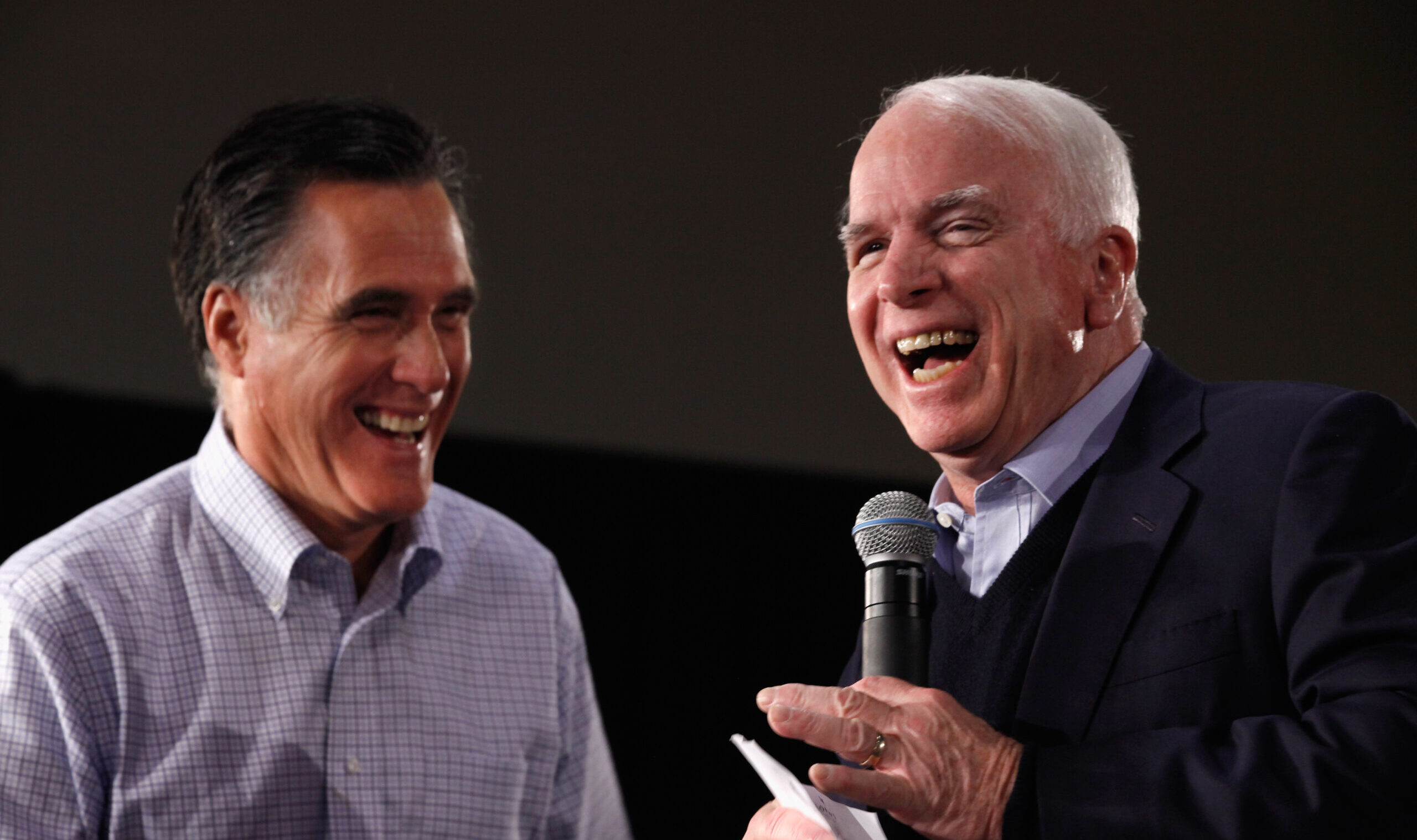
Donald Trump and his coalition have rocked the Republican party more than any other right-wing movement this century.
So much so that some Republicans now long for the party as it was before MAGA, the ostensibly “traditional” pre-Trump GOP.
Sen. Thom Tillis (R-NC) is one of them. The senator, who decided not to run for re-election this year, is promoting a new book that presents himself as, if not a Never Trumper, then at any rate a dissident from MAGA. “What [Trump’s] done is he’s created a coalition that, in my opinion, will not stay with Republicans once we go back to traditional Republican platform priorities,” Tillis said of the GOP’s future in an interview last week. “I think a lot of the elements of the populism that Trump created to expand a base that made him successful running for president, I don’t think that stays with the party long term.”
On X, The Blaze’s Auron MacIntyre shared a clip of Tillis saying this and added, “They’re admitting out loud that they’re running out the clock on Trump so they can return the GOP to factory neocon settings.”
MacIntyre is not wrong.
Another figure who longs for the GOP before Trump is Rahm Emanuel, the former chief of staff to President Obama who is currently making a bid for the 2028 Democratic nomination. He wants Democrats to embrace what he calls “McCain-Romney Republicans” who now vote Democrat.
“The top story from the 2026 cycle will be the electoral opening Democrats seized—and will have to maintain,” Emanuel wrote for the Wall Street Journal last Wednesday. “Most important, the McCain-Romney Republicans, who are politically homeless, need to be welcomed into Democrats’ governing and electoral coalition.”
Emanuel urged his fellow Democrats to make common cause with these kinds of centrist Republicans, and to avoid embracing the hard-left socialist Democratic candidates who are faring well at the moment.
“Millions of McCain-Romney voters are redefining their political identities, and they will be most responsible for Democratic gains in November,” Emanuel explained. “These voters don’t want to be associated with MAGA, and they see themselves as free agents.”
It’s true that many Republican voters who might go for Democrats this election don’t want to be associated with MAGA. But they might not want to revert to the supposed good ol’ days of John McCain, Mitt Romney and George W. Bush either.
President Ronald Reagan’s former Office of Management and Budget Director David Stockman shared Emanuel’s op-ed and added, “McCain-Romney neocon warmongering GOP campaign loot collectors from the MIC (military-industrial complex)? You are barking up the wrong tree, Rahm.”
Stockman is on point.
Tillis and Emanuel are both right that voters, and especially Republicans, are mad at Trump and his party, and most predict this anger will be on full display in the upcoming election.
But both are wrong to dismiss populism. The establishmentarian politics that Tillis and Emanuel represent within their respective parties is what so many voters were rejecting when they embraced the current “Drain the Swamp” president.
Populism is not only not the problem, it’s not likely to be going anywhere. The upcoming midterm elections won’t mark some return to party-elite form, but another populist revolt against the apparently insincere populism Americans voted for two years ago.
This isn’t rocket science: Trump’s coalition is mad because the erstwhile “no new wars” president who promised to put America first and keep prices low instead started a brand new war at the behest of Israel and the expense of working-class Americans. The Republican establishment was also on board with the war—until recently, when even a few historically hawkish candidates in tight races have started saying it should end.
On the Iran War, the issue that seems to be defining Trump’s second term the most, this president has delivered what the neocon favorite Mitt Romney seemed to promise as the 2012 Republican presidential nominee, and what the 2008 GOP nominee and neocon favorite John McCain campaigned on. Trump is now compared to that most “traditional” of 21st century Republicans, George W. Bush. The former president’s brother, Jeb Bush, has praised Trump for starting a war with Iran. Marc Thiessen, an alumnus of the George W. Bush White House, is a big fan of Trump and his war. And the neoconservative pundits Mark Levin and Ben Shapiro now praise Trump for having a foreign policy that looks a lot like what was on offer from McCain and Romney.
On the other side of the aisle, many of the Democrats challenging Republicans in seats once thought safe are finding success with populist campaigns that focus on combatting rising prices, opposing the overwhelmingly unpopular war, and, perhaps most amusingly, putting America First. Abdul el-Sayed, the Democrat who is running against “traditional” Republican Mike Rogers for Senate in Michigan, has regularly appeared on Fox News and constantly pitches to (former?) MAGA voters.
It’s worth noting that there was a Republican party before Trump, under whose banners Tillis was first elected to the Senate in 2014. This is how POLITICO reported Tillis’s victory in the GOP primary for that seat: “Tillis Beats Tea Party in N.C.: The GOP establishment scored a victory Tuesday when its preferred candidate soundly defeated a pair of grass-roots insurgents in a North Carolina primary.” One of those insurgents was Greg Brannon, who had the endorsement of the Tea Party Republican and war skeptic Rand Paul. (Paul, of course, won his own Senate seat in 2010 by running against the pre-Trump, pro-war neoconservative-marinated Republican brass.)
There was a Republican uprising against the party’s establishment well before Trump burst on the scene, and Tillis was definitely not part of it.
In fact, there was much dissent and intra-party challenging of Republican elites in those post-Bush years. Obama’s 2008 victory was largely a rejection of the old GOP and its wars, which McCain fully embraced, and Romney’s 2012 loss was due in no small part to Americans not wanting another extension of Bush-Cheney.
The “traditional” McCain-Romney Republicans haven’t been popular enough to win a presidential election since Bush in 2004, and the first Republican to do so won by calling Dubya a liar and his war in Iraq a “big, fat mistake.”
Now Trump is making his own mistake in Iran, and many of his 2024 voters appear eager to correct their mistake this year. Not because they yearn for a return to the Republican party as it was before him, but because Donald Trump promised to beat that party and dispose of it—and has failed.
The post Voters Don’t Want the Old GOP appeared first on The American Conservative.