
J.D. Vance Is the Man to End the War
There is only one American high official with credible incentives.
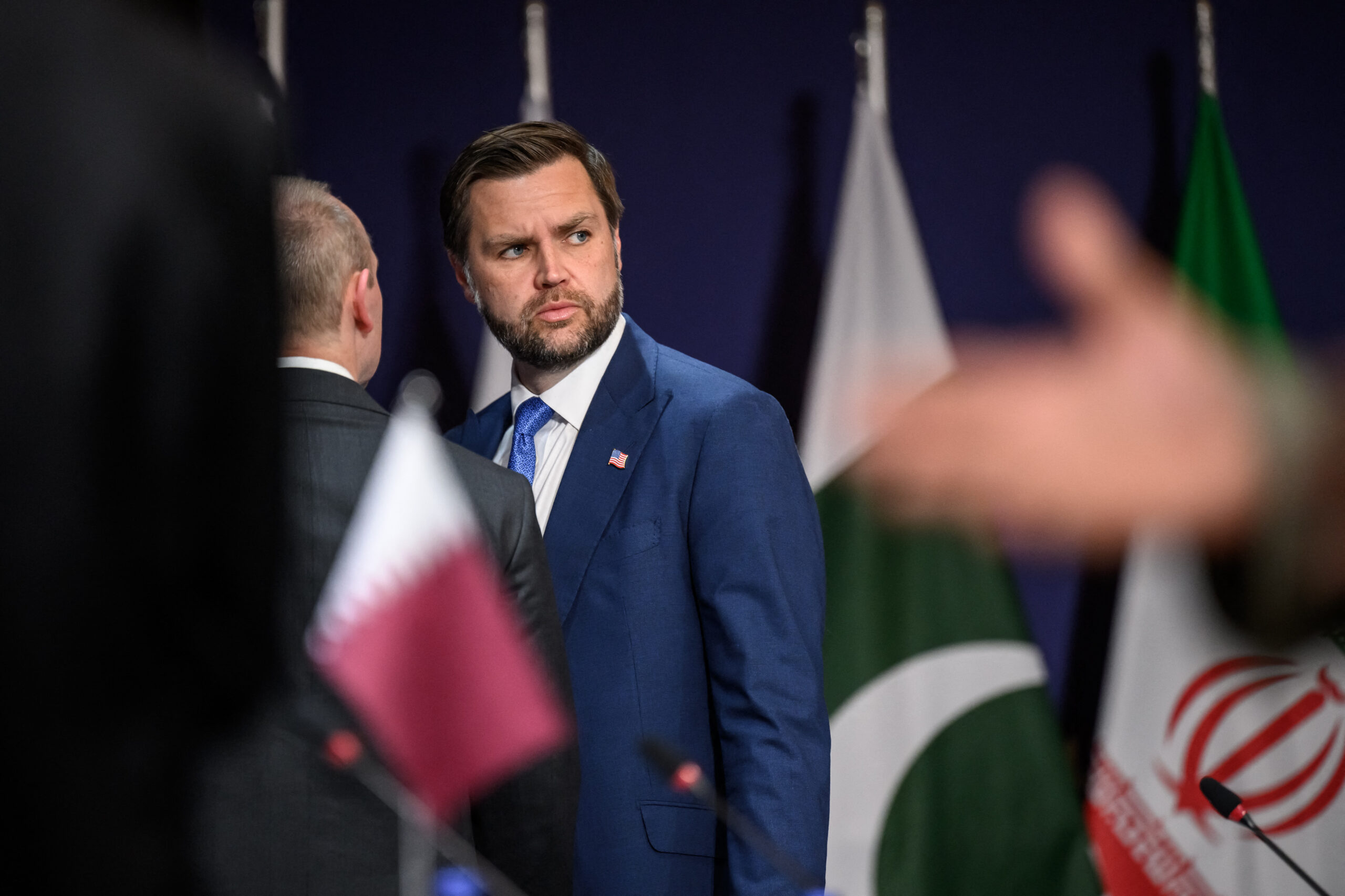
The Wall Street Journal reported Tuesday that Vice President J.D. Vance has written a letter to Mohsen Rezaei, the gnarled old IRGC veteran who serves as the secretary of Iran’s Supreme National Security Council and is generally considered a center of hardline politics in the Islamic Republic. The contents of the letter were not disclosed, but the Journal said that President Donald Trump was aware of it.
That’s all to the good, by our lights. Conversations about the sincerity of Vance’s dovish credentials are to some degree basically beside the point; I say this as someone who has entertained plenty of doubts in a fairly blunt fashion. In this Machiavellian vale of tears, what a person believes in his heart of hearts doesn’t matter so much as what his material incentives are, and how he pursues them. (This is why I believe in tough laws, free markets, and, apparently controversially, not voting for politicians who do things I don’t like.)
Vance is the only administration official with a material incentive—an existential one—for ending the war. For this very reason, he may also well be the only one who can accomplish it.
Esfandyar Bamtmanghelidj has written in these pages that Iranian policymakers have become pessimistic about making a deal with Trump because of his capriciousness and demonstrated reluctance to say no to his coalition’s hawkish faction. The underlying condition here is one that Trump himself has articulated in so many words: The president has no more elections to win personally. He has no material incentive to do things that are generally popular but potentially difficult; losing the midterms is unlikely even to affect his program all that much.
And it’s not just Trump; it’s his people, too. While the war is not generally regarded as a smashing success inside the administration, based on my conversations with officials, there are few with the authority and the incentives to do anything in particular to stop it. (And, of course, some few do appear to be enjoying it hugely, like our simian secretary of defense.) The president has always had difficulty fighting his own people, especially in matters of war—see, for example, his failed effort to withdraw from Afghanistan—and, in this term, very few of his people have the inclination to fight with him. We are looking at a system with a lot of inertia.
Vance, on the other hand, has every kind of reason to wrap this war up: His political survival depends on it. When non-admin hawks like Sen. Ted Cruz of Texas run in 2028, they will have the luxury of saying that, while they supported the war, they’d have done it differently. Vance, however, will have to wear not just the war, but also the way it was prosecuted. If the war can be wrapped up and the economy returned to normal in short order, he can claim the victory—especially if he’s the face of the settlement. But if the war and its concomitant economic derangement are still live issues when he hits the trail, he will be vulnerable from both the antiwar and the prowar sides.
In 2028, Vance will have a very short resume: a couple years in the Senate and four years as VP. Marco Rubio can sit the cycle out in Florida’s welcoming swamps and return as an elder statesman in 2032, after the Democrats have again inevitably made themselves the main target of national loathing. If Vance waits until ’32, he will have spent nearly as long podcasting or building purple-martin hotels as he had in politics. These things may matter less in the Trump era, but they do still matter. Vance’s best shot is ’28, and it’s no shot at all if we’re still at war with Iran.
But Vance’s unique vulnerability to the war makes him uniquely able to present a credible case for American peace overtures. Iranian policymakers are close if not always analytically correct observers of American politics. Someone whose actual political future depends on a durable, decent peace has a natural weight that is lacking in, say, special envoys who can sink back into their vast real-estate empires when the Trump show leaves the stage.
For this to work, Vance will have to do the kind of subordinate maneuvering that our own Andrew Day described in respect of the Russia–Ukraine War, channeling Trump’s acute, concrete, and immediate concerns to build positive momentum. Since the war is in fact transparently the cause of most of our marquee problems at the moment—price rises, bond market insanity, the collapse of military readiness everywhere outside CENTCOM—this shouldn’t be too tricky for a smart boy like our vice president.
The alternative is grim. If Vance’s act of diplomatic vaudeville appears to be cover for another eruption of intense combat operations—a widespread interpretation of earlier rounds of American diplomacy—it will neuter the official who is currently the administration’s best and only viable champion for ending the war and the political pain from it sooner, rather than later. If any of our neighbors up the road at 1600 Penn. are reading: Don’t do that.
The post J.D. Vance Is the Man to End the War appeared first on The American Conservative.