
What Masters of Horror Can Teach Us About AI
Science can be scary.
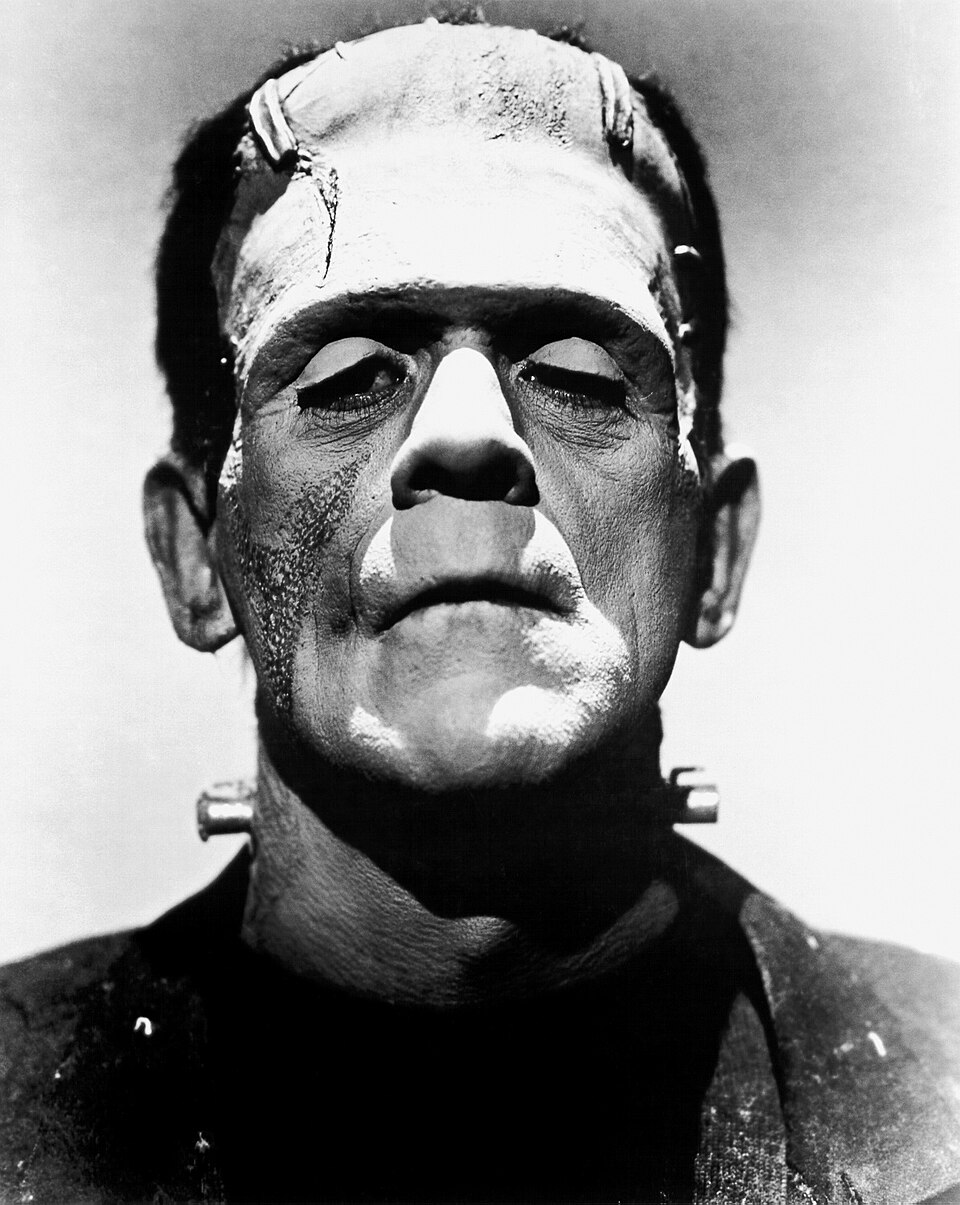
Every Halloween, I find myself revisiting the black-and-white horror classics of the 1930s. The Bela Lugosi Dracula, the Boris Karloff Frankenstein, the Claude Rains Invisible Man; these are relics from a more civilized era, vastly superior to the gory montages of jump-scares and viscera that pass for horror movies today.
I suppose part of my affinity for these films stems from nostalgia, or something akin to it; I wasn’t alive when the movies premiered, but growing up they were often on in my house around this time of year.
I have also found that they impart some useful lessons. For instance, it is wise to keep on friendly terms with at least one occultist—just in case. And if you absolutely must travel abroad to close a real estate deal with a shady aristocrat, best practice is to bring a friend.
But one lesson, in particular, seems common to all of these old monster movies: Don’t trust the science.
The 1931 Frankenstein presents the most obvious example, of course, with Boris Karloff driving home the grisly and tragic results of prying too deeply into Nature’s secrets. But a similar moral can be gleaned from Dr. Jekyll and Mr. Hyde (also released in 1931), in which—departing somewhat from the original Robert Louis Stevenson story—Jekyll brews up the elixir that turns him into the beastly Mr. Hyde in order to prove a scientific theory about man’s two natures. “There are bounds beyond which one should not go,” the unfortunate doctor’s colleague admonishes him early in the film; “I tell you there are no bounds!” Jekyll thunders back.
The Invisible Man (1933) features a similarly ambitious researcher, who defies his mentor and discovers the secret to invisibility—only to find that it has the minor side effect of making him criminally insane. Likewise The Island of Lost Souls (1932), which stars an unnervingly charming Charles Laughton as the twisted Dr. Moreau, breeding demented human-animal hybrids on a South Pacific island in the name of scientific progress. Even The Mummy (1932), which features a distinctly un-scientific monster, hews to this theme in its own way: The archaeologist who awakens the evil mummy Im-Ho-Tep refuses a friend’s pleas to re-inter his find, citing his responsibility to advance human knowledge. (“In the interests of science, even if I believed in the curse, I’d go on with my work!”)
At the risk of taking these old and sometimes goofy flicks too seriously, we seem to have basically forgotten this lesson today. And it strikes me that some of America’s best and brightest bear no slight resemblance to these protagonists.
Consider the fact that our entire tech sector is now organized around building a technology—AI—which its own creators believe is fraught with immense and in some sense unknowable risks. Yet we brush these ample but inconvenient warnings aside, intoxicated by what we can do. We reject constraint to go as fast and as far as possible.
Then, too, there is the actual nature of the technology that is being built. If its boosters are to be believed, AI will almost certainly outstrip even the smartest representatives of our species; it could advance beyond the ability of human beings to understand or control it; and it may actually achieve consciousness. We are confronted with an endeavor quite similar in its way to that of Doctors Frankenstein and Moreau.
Although I’m generally not a fan of revising language for political ends, there is a sense in which the president’s recent obsession with calling the tech “super intelligence” helps to clarify the issue. “Artificial intelligence” describes a tool, made by man for ends similar to those of the other tools he has built since chiselling that first stone handaxe sometime in deep prehistory. The modifier “super,” on the other hand, conveys the enterprise’s true ambition and singularity. It suggests a creation that may surpass its creator, and go beyond the bounds that have been set for us by God and Nature.
Of course, we don’t necessarily need Boris Karloff and Bela Lugosi to teach us to be wary of playing God. Our recent history is replete with incidents that should have taught us to respect our limits and trust more to our common sense than the dreams and promises of experts.
But fiction often strikes a nerve mere fact can’t hope to hit. And these old films were onto something important, I think. The desire to know, to improve man’s estate, to set eyes upon new and undreamt-of vistas is all well and good. But we risk disaster if we allow this urge to be pursued too heedlessly or taken too far. Humility and a sense of perspective are called for—and, sometimes, a little fear.
The post What Masters of Horror Can Teach Us About AI appeared first on The American Conservative.