
Burnham Takes an Ill-Considered Step Back Toward the EU
The UK is poised to surrender its sovereignty—and pay for the privilege.
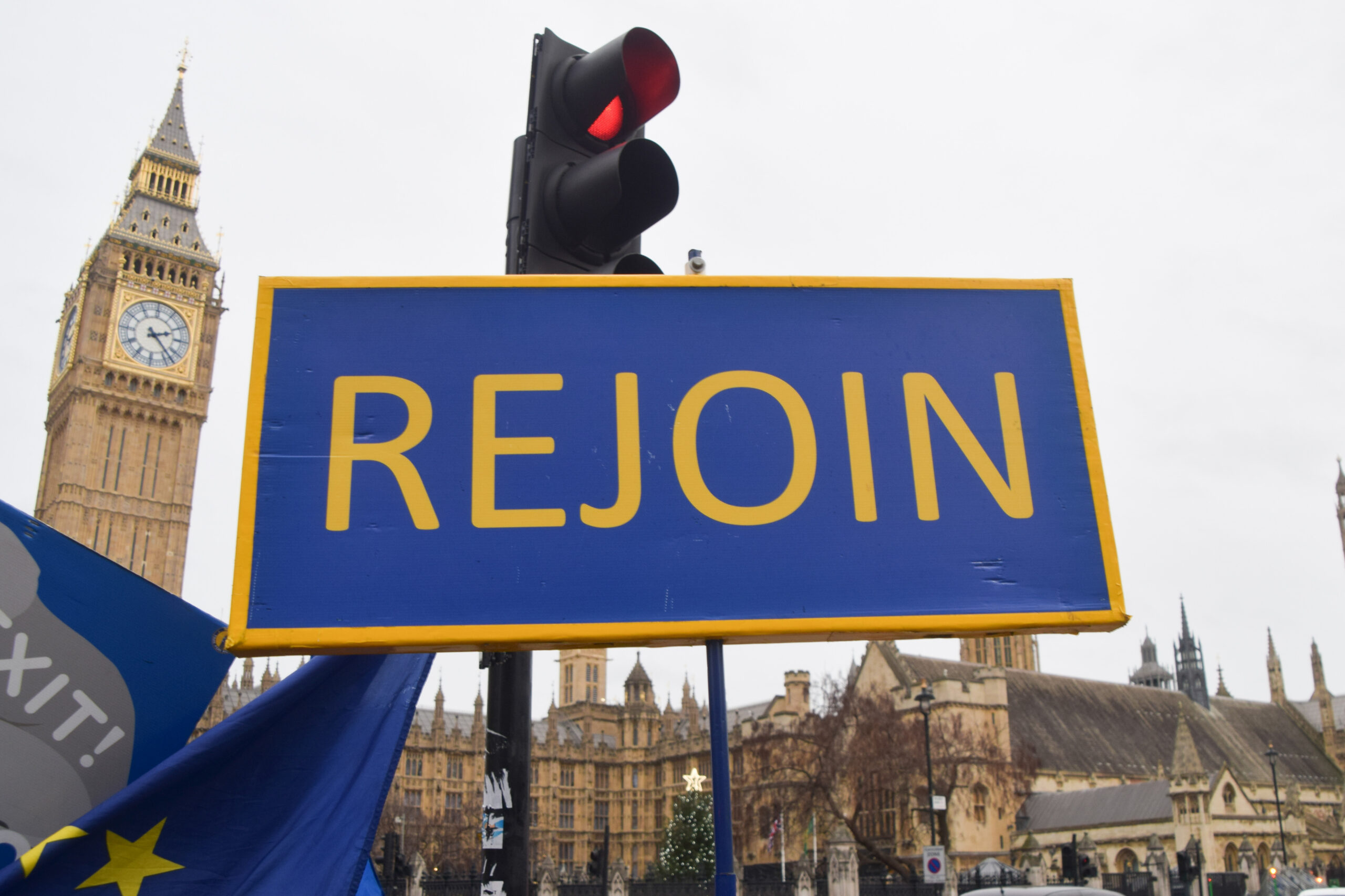
IIs Britain turning its back on a brief period of revitalized self-government? It certainly seems that way. Today, Prime Minister Andy Burnham is in Brussels for a summit with the European Union, the aim of which is to achieve a “reset” in relations between Britain and the bloc.
The prime minister claims to seek a “better deal” for the British public. He believes that the Trade and Cooperation Agreement—the free trade deal signed between Britain and the EU in 2020—falls short of what was promised to the British people originally and should be renegotiated.
Sadly, what he is proposing is not a pragmatic renegotiation of a free trade deal between equal parties. Quite the opposite, in fact. Burnham is planning on handing the EU real power over significant parts of the British economy and opening up the country to more migration—and he appears willing to pay for the privilege. The deal proposed (interestingly called a “Common Understanding”) would give the EU power over food standards regulations in the UK, align British carbon pricing with Brussels’ own system, commit the UK to follow the EU’s renewable energy directives, and even give European students discounted access to British universities at a time when many young Britons are financially stressed.
In short, the “reset” would turn the United Kingdom into a captive market for European food and goods exports, as well as a country to which EU states can offload their unemployed young people via a one-sided Youth Mobility Scheme.
If Britain enters into this arrangement, it will be obliged to follow EU rules it has had no hand in making, and will have to change many of its own existing laws. Pro-innovation policies like the adoption of gene-editing technologies may have to be abandoned to comply with EU regulations, which would spell the end of a nascent and dynamic industry. British manufacturers will have to pay higher energy costs by aligning with the EU’s Emissions Trading System, a carbon tax applied to industrial users. While extra fees might allow some British exporters the ability to sell goods to the EU without being subject to a Carbon Border Adjustment Mechanism, this imposes huge costs across the entire economy, and also adds an additional tariff barrier between British businesses and their customers in the United States and beyond. A leaked draft suggested that London would even agree to provisions regarding how it controls critical technologies, ostensibly in the interests of economic security. For those wondering what this portends, it could mean the surrender of British technological and regulatory advantages over the EU in sectors like artificial intelligence.
The terms of this arrangement have essentially been dictated by the European Union, and it shows. Britain will likely be obliged to contribute to the EU’s cohesion funds and even pay for EU regulators to determine whether British businesses are conforming to EU rules once again. After all, the EU needs the money, and in Britain’s Labour Party it has found a government willing to pay seemingly any price for friendship (or even just a pat on the head).
So why is Burnham doing this? The reset is clearly offensive to British democracy and to British self-governance. It is rare for a country to allow a foreign power to control so many of its own laws and regulations in peacetime. Minor trade easements for very small groups of British exporters to an economic bloc undergoing a lengthy period of stagnation are hardly the kinds of concessions the British government should expect for such a price.
The reset summit is, in reality, a step towards rejoining the European Union. It might not happen immediately, or even before the next general election, but all signs point that way. The EU has even hinted as much. It would like the UK to rejoin the Single Market, if not resume full membership of the bloc. This would entail huge budget contributions, into the tens of billions per year. This has been calculated at around £750 million per week, when one takes into account the size of the EU budget, Britain’s expected contribution, and the removal of the rebate originally negotiated by then-Prime Minister Margaret Thatcher.
This might prove popular among some voters. The public is dissatisfied with the state of the British economy, and many think Brexit was a mistake. Certainly, returning to the EU is one of the policies which unites Britain’s left-wing voters, who are otherwise rather fractured. But while headline figures suggest that rejoining would prove popular, the devil is always in the details. In this case, it’s the bill. Support for rejoining declines significantly once voters take into account the huge tax bill that would come with it, the likelihood of being shackled to EU migration policies, and the looming prospect of joining the euro.
More than anything else, the European question is going to define British politics for the next few years. While the Conservatives understandably dismiss this gambit as a “distraction” from the real issues facing the country—cutting welfare spending, freeing up the labor market, reducing crime and immigration—the government has made this issue the topic of the day, whether they like it or not. Reform UK is still recovering after a painful six months in which it slipped in the polls and lost the grip it had over the public narrative in 2025. Maybe this will offer an opportunity to regain relevance. For its part, the Burnham government seems happy to talk about this rather than its domestic agenda, as Labour MPs have found themselves incapable of taking decisions to improve the well-being of the British people.
At any rate, parties of the right must address the deficiencies of the UK–EU reset and the costs and dangers of rejoining. The principles of national self-governance, cooperation between equals rather than subordination, and economic sovereignty must be defended. Ceding real power over Britain’s economy to a bloc with a demonstrated interest in extracting money from the British public is a terrible act in and of itself. Disillusionment with Brexit might make the status quo hard to overcome, but this is a hurdle that Britain’s nominally sovereigntist political parties must vault.
It boils down to the question of who rules Britain. Britain should be governed by the British people, their will delivered in Parliament. Evidently the demands and expectations of this are too much for the current government, which would rather pass the reins to the unaccountable officials in Brussels. But if governing the country is too great a challenge for this particular crop of MPs, they might consider stepping aside and letting others have a go. They may have better answers, after all.
The post Burnham Takes an Ill-Considered Step Back Toward the EU appeared first on The American Conservative.