

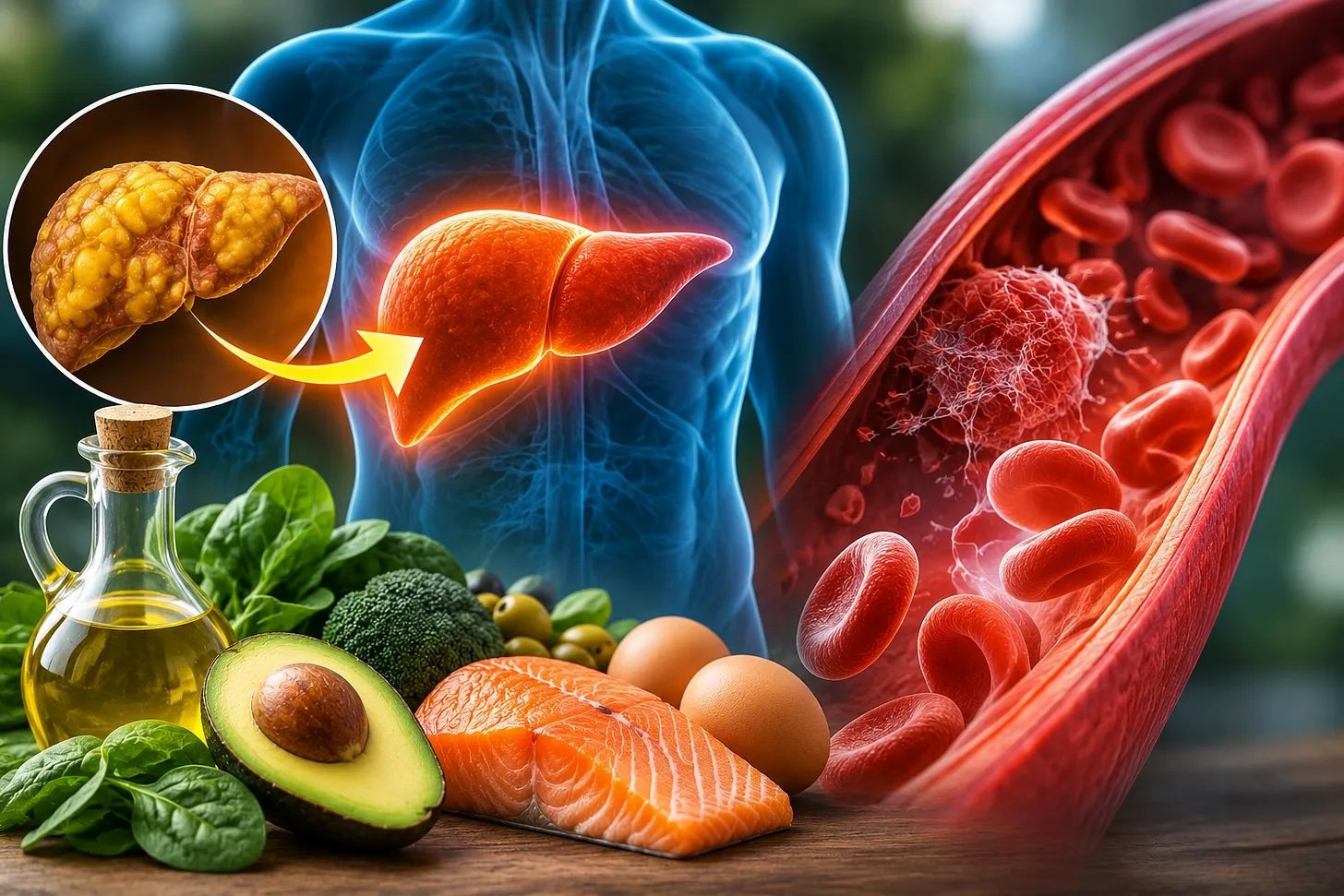
Every week, the GoldCare HealthDesk receives questions from readers looking for answers about their health. Our team selects two from the many submissions for Dr. Simone Gold to answer, offering clear medical insight, practical guidance, and the straight talk she’s known for.
The information provided is for educational and informational purposes only and is not intended as medical advice, diagnosis, or treatment. Always consult your healthcare professional about your individual health needs before making changes to your medications or treatment plan.
Question:
Can dietary adjustments and a good exercise regimen reverse mild fatty liver disease in a senior, or do these just keep it from getting worse?
Dr. Gold:
Yes. Even in your senior years, diet and exercise can often reverse mild fatty liver disease.
Your liver has a remarkable ability to repair and regenerate itself. And unlike scar tissue, the fat accumulating inside your liver cells isn’t necessarily permanent. By changing how your body processes and stores energy, you can reduce that fat and help restore healthier liver function.
Age doesn’t take away this ability. In fact, improving your diet and staying physically active can be especially beneficial as you get older, when insulin resistance becomes more common and muscle mass naturally declines.
One of the biggest misconceptions about fatty liver is that it comes from eating too much fat. In reality, excess sugar, alcohol, refined carbohydrates, and insulin resistance are major contributors.
When you eat carbohydrates, your body breaks them down into glucose and triggers the release of insulin. Insulin helps your cells use glucose for energy, but any glucose not used for energy is stored as fat. When insulin levels remain elevated, and your body becomes resistant to its effects, fat can accumulate in the liver.
Ordinary table sugar, known as sucrose, is made up of two sugar molecules: glucose and fructose. During digestion, enzymes break them apart, but your body processes them very differently.
While virtually every cell in your body can use glucose for energy, much of the fructose you consume is processed by your liver. When you consume excessive amounts of fructose, your liver converts some of it into triglycerides, a type of fat that can accumulate inside liver cells.
Fatty liver disease is now the most common chronic liver disease in the world, and we’re increasingly seeing it in young children. Pediatrician Dr. Robert Lustig calls sugar the “alcohol of the child,” drawing a parallel between the effects of excessive sugar and alcohol consumption on the liver.
Speaking of alcohol, it remains a major cause of fatty liver disease. If you already have fatty liver, I strongly recommend avoiding alcohol altogether.
The good news is that fatty liver disease, particularly in its early stages, can often be reversed.
How to reduce liver fat naturally
- Cut sugar and refined starches.
A healthy ketogenic or low-carbohydrate diet can help lower insulin levels and reduce the liver’s production of new fat. As your body becomes less dependent on carbohydrates for energy, it increasingly burns fat for fuel.
Focus on healthy fats such as butter, coconut oil, tallow and lard. Extra-virgin olive oil may have been blended with seed oils, so buy from a trusted source. Avoid sugary drinks, white bread, pastries, and other refined carbohydrates. Sugar is added to most processed foods, including virtually all mass-produced breads, rolls, and even pretzels, often as high-fructose corn syrup. Read labels and take appropriate action.
- Avoid alcohol.
Your liver breaks down alcohol, and doing so can interfere with fat metabolism and increase fatty acid synthesis, leading to fatty liver. Even if your fatty liver wasn’t caused by drinking, alcohol can make the condition worse and slow recovery. Avoiding alcohol is one of the simplest ways to help it heal.
- Start fasting intermittently.
When you go without food for ten or more hours, insulin levels fall, which allows the use of stored fat for energy.
You might start by avoiding snacks between meals and gradually extending your overnight fast. Some people work toward an 18-hour fast with a six-hour eating window. Longer fasts, including 20-hour or occasional 48-hour fasts, may produce faster results.
- Make sure you’re getting enough vitamin E.
Vitamin E is an antioxidant that helps protect cells from damage. Research has found that high-dose vitamin E supplementation can improve liver inflammation and certain signs of liver injury in some patients with metabolic dysfunction-associated steatohepatitis (MASH), the more inflammatory form of fatty liver disease.
- Exercise regularly.
Exercise helps your muscles use glucose more efficiently, improving insulin sensitivity and reducing the amount of fat accumulating in your liver. You don’t need extreme workouts. Walking, strength training, and other regular physical activities can reduce liver fat even before you lose much weight.
- Eat choline-rich foods. Choline helps your liver package fat into particles that can be transported out of the organ. Eggs, liver, meat, poultry, and certain vegetables are good sources.
How long does it take?
You may begin seeing improvements in liver fat within a few weeks, although more noticeable changes often take several months. Advanced disease, particularly when scarring is present, can take much longer to improve and may not be fully reversible.
The bottom line is that fatty liver is often reversible, particularly when caught early. The key is to reduce the metabolic conditions that caused fat to accumulate in the first place. Cutting sugar and refined carbohydrates, improving insulin sensitivity, eating nutrient-rich foods, and staying active can give your liver a chance to recover.
Question:
Since having COVID, my blood is clotted/coagulated, and I’m experiencing several health problems because of it. How can I improve circulation to my capillaries without pharmaceuticals?
Dr. Gold:
COVID can affect your circulation long after the infection itself has cleared. The virus can damage the lining of your blood vessels, increase inflammation, and activate platelets, the tiny blood components that help form clots. COVID-19 shots also are known to cause clotting and we recommend avoiding them.
There’s also an interesting discovery involving what scientists call microclots. Normally, when you cut yourself, your body produces a protein called fibrin. Think of it as a net that traps blood cells and helps seal the wound. Once the injury heals, your body breaks down that net.
Some researchers have found unusually persistent microscopic fibrin deposits in people with long COVID. They’re investigating whether these deposits interfere with blood flow through your capillaries, where oxygen and nutrients pass from your blood into your tissues.
The important distinction is that having symptoms after COVID doesn’t necessarily mean your blood is clotting abnormally. If you have actual blood clots, those require medical evaluation.
But there are several natural ways to support healthier circulation.
Start with the basics
Your blood vessels respond to what you eat, how much you move, and even how well you sleep.
- Cut sugar and processed foods. Excess sugar and refined carbohydrates can contribute to insulin resistance and inflammation, both of which can damage blood vessels. Focus on vegetables, healthy fats, and quality protein while avoiding ultra-processed foods and seed oils.
- Walk every day. Your muscles act like pumps, helping move blood through your body. Exercise also encourages blood vessels to produce nitric oxide, a molecule that helps them relax and widen so blood flows more easily. Start gently, especially if activity leaves you unusually exhausted.
- Take in adequate salt and water. Dehydration and salt depletion reduce blood volume and can make it harder for your body to maintain normal circulation.
- Prioritize sleep and reduce stress. Poor sleep and chronic stress can increase inflammation and interfere with healthy blood vessel function.
- Check your vitamin D. Low vitamin D has been associated with poorer vascular health.
- Don’t sit for too long. Getting up and moving regularly helps keep blood circulating, especially through your legs.
Natural compounds that may improve circulation
Certain foods contain substances that influence inflammation, blood vessel function, and blood clotting.
- Natto and nattokinase
Natto is a traditional Japanese food made from fermented soybeans. It contains nattokinase, an enzyme that has attracted attention because laboratory studies suggest it can help break down fibrin. Remember that fibrin is the protein net that holds blood clots together.
Natto is also rich in vitamin K2, which helps activate a protein that prevents calcium from accumulating in blood vessel walls. Because calcium deposits can make arteries stiff and less able to expand, they can interfere with healthy circulation. While K2 doesn’t dissolve blood clots, it may help protect blood vessels over time.
- Bromelain
Bromelain is a group of enzymes found in pineapple, particularly its stem. Like nattokinase, it has attracted attention for its potential effects on fibrin. Studies suggest bromelain may help break down fibrin and reduce inflammation by influencing some of the chemical signals that trigger swelling and tissue damage. It may also affect platelet aggregation, making platelets less likely to clump together.
- Fatty fish and omega-3s
Salmon, sardines, and mackerel are rich in omega-3 fatty acids, which help reduce inflammation in blood vessel walls and make platelets less likely to stick together and form clots. Omega-3s may also make red blood cells more flexible. Some capillaries are actually narrower than the red blood cells passing through them, so this flexibility is essential for delivering oxygen to your tissues.
- Garlic
Garlic contains natural sulfur compounds that may help prevent platelets from sticking together excessively. It may also support the endothelium, the delicate lining inside your blood vessels that helps regulate blood flow.
- Turmeric and curcumin
Curcumin, the active compound in turmeric, has anti-inflammatory and antioxidant effects. Laboratory research suggests it may also influence how platelets behave.
One challenge is that your body doesn’t absorb curcumin very efficiently. Black pepper contains piperine, which increases absorption, and consuming turmeric with healthy fats may also help.
- Vitamin E
Vitamin E helps protect cells from oxidative damage, including the cells lining your blood vessels. It may also make platelets less likely to clump together. You can get vitamin E from nuts, seeds, and leafy greens.
- Apple cider vinegar
Apple cider vinegar can modestly reduce the rise in blood sugar after meals. Since high blood sugar can damage blood vessels over time, better glucose control may indirectly support circulation.
At GoldCare, you can schedule appointments with clinicians who specialize in caring for patients with long COVID and vaccine-related injuries.
How long does recovery take?
Blood vessels can recover from some forms of injury, but that process takes time. Improving your diet, staying active within your limits, and addressing underlying metabolic problems may help over weeks or months.
However, long-COVID symptoms don’t all have the same cause. Fatigue, brain fog, and exercise intolerance can result from several different problems, not necessarily poor circulation or microclots. That’s why I’d first want to know whether you’ve actually been diagnosed with abnormal blood clotting or whether you’re experiencing symptoms you suspect are caused by it.
Have a question you’d like Dr. Gold to address in a future article? Please submit it here.
The post Ask Dr. Gold: Can Diet Reverse Fatty Liver? Plus, Natural Ways to Improve Blood Flow appeared first on The Gateway Pundit.