
Speaking Well of Charlatans
You’d miss the frauds if they were gone.
One should not speak ill of the dead, at least for a decent interval after their death, though what counts as decency in this context no doubt varies from case to case. In part it must depend upon the seriousness of the subject’s follies, vices, and misdeeds, and on his public prominence—that is to say, on how important it is that the public should have a correct opinion of him. One of the penalties of fame is that people will engage upon the delightful task of righteous derogation all the sooner after death.
Recently, on opening a learned journal, I read of the death of a man who, half a century ago, had been my colleague for a few years. My immediate reaction was one of sorrow and regret, perhaps tinged by anxiety: I too am of the age of approach to the Valley of Death. His obituary was fulsome.
I shall not name him but remember him as he appeared to me: namely, as something of a charlatan. Even the photograph of him in the obituary gave me that impression: stretched out on a sofa, as if he were having profound thoughts thereon.
His status as an intellectual always preceded him like the cold front on a weather map. He sometimes wore a cape, a wide-brimmed fedora or a beret, a neckerchief of many colours, two-tone shoes, and even on occasion a bandana. Sometimes he condescended to wear a suit, though of corduroy, which gave him a reputation for poetic inspiration. Young and impressionable, I bought a suit like his, though I could never wear it with his studied unselfconsciousness. I felt a fraud in it.
He had a slight speech impediment, which gave to his utterances a certain distinction, but the main reason for his reputation for profundity was that it was difficult for anyone to understand the import of what he was saying, so convoluted and sprinkled with unfamiliar technical terms was whatever he said. He managed to convey that the fault was in his listeners, rather than in his way of putting things, that they could not fully understand him. His was the kind of profundity that I suspected would have ceased to exist in the bright light of clarity.
He was perfectly affable and even hospitable. He was no puritan, though when he invited me to dinner the food usually consisted of beans and grains of which I had never heard and that were grown by the remote peasantry of many continents. He smoked, but nothing as vulgar or commonplace as a cigarette: rather, cheroots, probably imported from one of the lesser islands of the Indonesian archipelago. At the end of the first dinner to which he invited me, he asked me whether I would like to listen to some music, not an entirely neutral question insofar as few people would reply to it, “No, I would not like to listen to some music.” When I replied in the affirmative, he asked politely, “What would you like to listen to?” adding that he had recordings of nothing from after the 12th century.
My knowledge of that period of mankind’s musical history was slight, so I was obliged to leave the choice up to him. I think it was the first time I had ever heard Byzantine music, and probably the last. I wondered how anyone knew what Byzantine music sounded like but investigated the question no further. I came away with the odor of fraud in my nostrils.
I did not follow his career closely after that, and I was surprised to read in the obituary of the brilliance of his interdisciplinary contributions. It was, I thought, typical of him that he should be interdisciplinary: among xs he would be a y, and among ys he would be an x—that way, no one would rumble him.
Not only was he the author of several books, but occupied chairs in several prestigious institutions, and was visiting professor hither and yon. Perhaps he really was very distinguished, and the failure to appreciate his brilliance was mine. In my heart, I could hardly believe it, but my head told me that it might be so.
He was certainly not malicious (that is already quite a compliment) and any harm that he did, if indeed he was a charlatan, was very slight, for he was not a militant ideologist.
After reading his obituary, I reflected on the phenomenon of charlatanry. I suppose that I ought to be utterly opposed to it, but I think a world completely without it would be somewhat impoverished, or at least less interesting. It certainly does not automatically outrage me. I remember how on a bus in Colombia full of peasants, the salesman of an ointment got on and eloquently extolled the curative properties, almost as a panacea, of his worthless product. The peasants fell for it, and almost all of them bought a tin. At first, I wanted to tell them not to waste their money, that the product was fraudulent, but I soon realised that the man was not selling an ointment, he was selling hope—a commodity by no means to be despised. Which of us can live entirely without illusion?
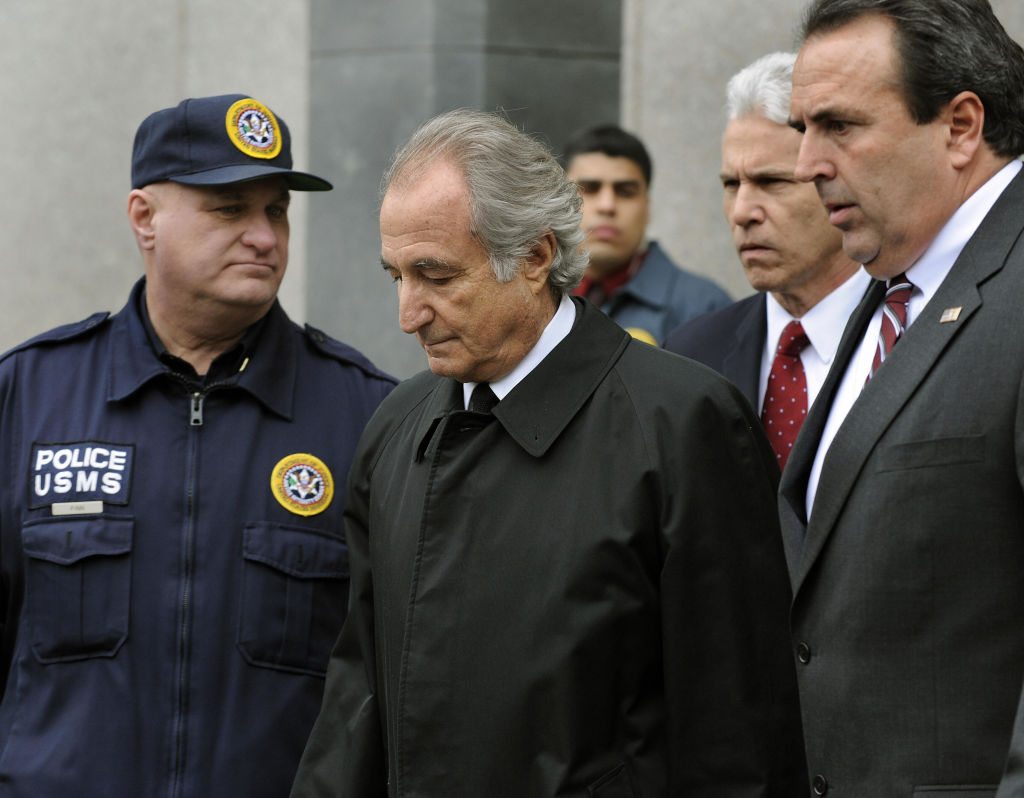
Of course, depending on circumstances, charlatanry can do real harm and cause real distress. I suppose the late Bernie Madoff was a charlatan who did immense harm and caused much suffering, though even so I had a sneaking admiration for his modus operandi, so original and so lacking in the flamboyance of most charlatans. A poem in Alice in Wonderland could be taken almost as a mission statement for charlatans:
How doth the little crocodile
Improve his shining tail
And pour the waters of the Nile
On every golden scale!How cheerfully he seems to grin,
How neatly spreads his claws,
And welcomes little fishes in
With gently smiling jaws!
Was my erstwhile colleague a charlatan? I cannot say for certain, but if he was, he succeeded in fooling grand institutions for years, indeed for decades, and acted as a kind of court jester. He got away with it. He was more interesting as a charlatan than he would have been as a serious scholar, in which case his work would have been merely dull, earnest and without enduring interest. As charlatanry, it would have achieved something more notable.
The obituary surprised me by the strength of my lingering affection for him.
The post Speaking Well of Charlatans appeared first on The American Conservative.