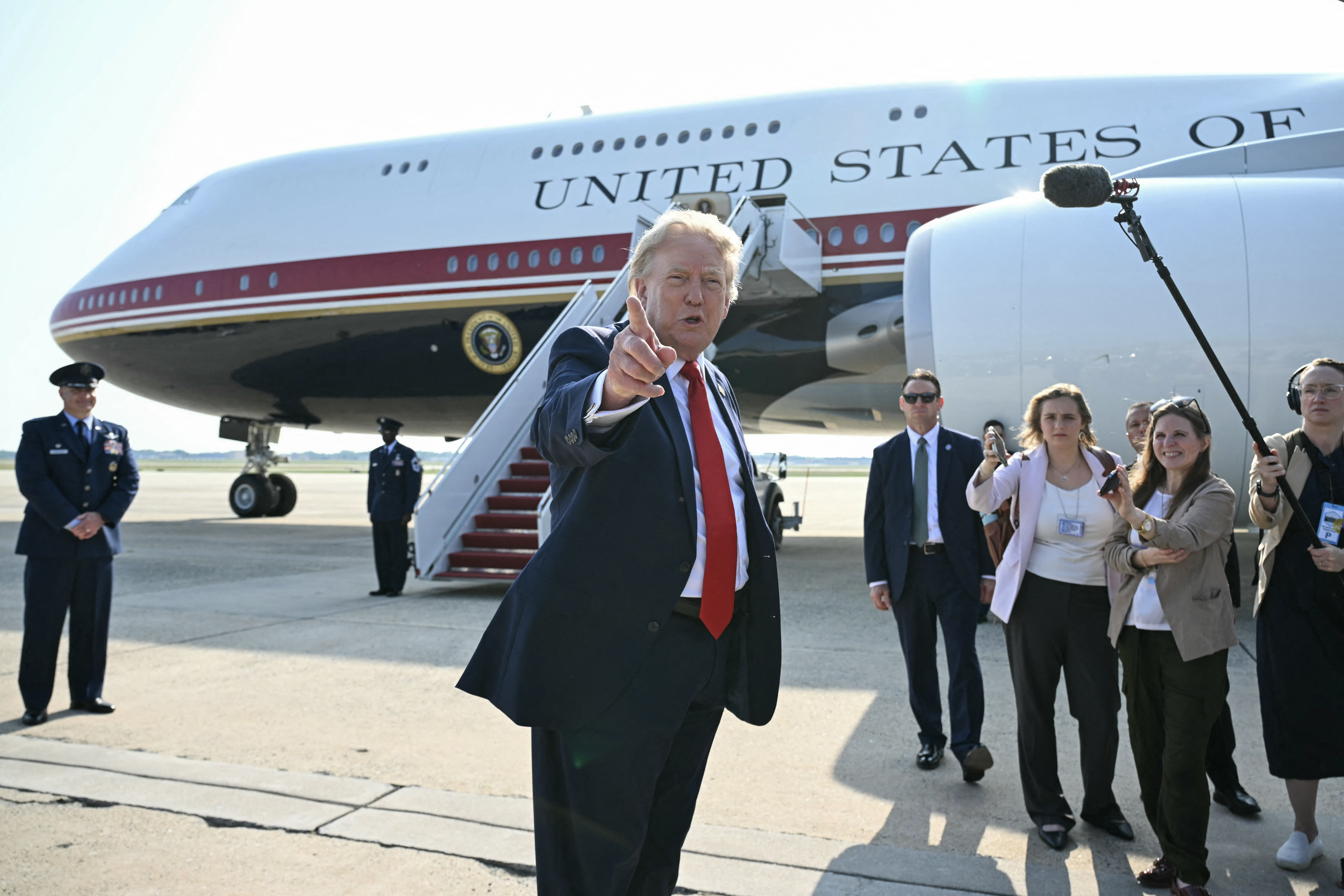
FAA Halts Departures After Network Failure

A single telecom failure froze every U.S. airport for hours, exposing how one weak link can stall a nation’s skies.

Story Snapshot

  • The Federal Aviation Administration halted all departures nationwide after a telecommunications outage disrupted air-traffic-control communications.
  • Transportation Secretary Sean Duffy said overloaded network devices caused inconsistent data, triggering a safety stand-down.
  • The ground stop lasted more than four hours and was lifted after the Federal Aviation Administration accounted for all flights.
  • Homeland Security officials said there was no sign of a cyberattack at the time, while investigations continued.

What Stopped America’s Flights

The Federal Aviation Administration ordered a nationwide ground stop after a telecommunications outage disrupted critical communications used by air-traffic controllers. Officials said departures were paused at all airports “out of an abundance of caution,” because unstable data can cause unsafe instructions to pilots. The halt affected Air Route Traffic Control Centers that guide planes between airports, not just local towers. The decision aligned with standard safety rules: when information is unreliable, flights do not launch.

Transportation Secretary Sean Duffy said the network experienced overloaded switches and routers, which began sending inconsistent data within air-traffic-control systems. He explained that the Federal Aviation Administration shut down operations to prevent controllers and pilots from acting on bad information. Officials reported that the outage created instability across multiple centers and approach facilities. That broad footprint supported a system-wide pause rather than airport-by-airport choices, which would have added confusion during a fast-moving failure.

How Long It Lasted and What Reopened the System

The nationwide halt stretched for more than four hours before the Federal Aviation Administration lifted the order and allowed departures to resume. Duffy announced that the ground stop ended after the agency verified system stability and accounted for all flights under its control. Airlines then faced a long recovery, including delays and cancellations as crews, planes, and gates fell out of place. Officials warned that ripple effects would last through the evening as schedules and connections reset.

The Department of Homeland Security said there was no indication of a cyberattack while systems were being restored. Officials described the assessment as current to that moment, based on standing checks and early reviews. The Federal Aviation Administration framed the cause as a telecommunications outage, which fits the wide reach and the way multiple centers reported disruptions. Agencies continued technical review and coordination with partners to confirm the exact failure point and sequence.

Why a Telecom Glitch Can Ground the Country

Air-traffic control depends on steady streams of radar data, flight plans, radio links, and networked systems that must agree. When devices overload and push conflicting information, controllers cannot trust the picture in front of them. The safest move is to stop departures until the data is clean again. Duffy’s account of overloaded routers points to a choke point where equipment capacity and traffic demands did not match in real time, forcing the shutdown to protect lives.

Past federal reviews show this problem is not new. After a 2023 outage in the Notice to Air Missions system, the Government Accountability Office said the Federal Aviation Administration found 51 of 138 systems were “unsustainable,” and another 54 were at risk. That review warned that aging and complex systems raise the chance of outages that spread fast across the network. The new event fits that pattern and renews calls to modernize core infrastructure.

What It Means for Travelers, Teams, and Trust

Airlines, sports teams, and families saw plans fall apart within minutes. Players and fans missed games. Workers missed shifts. Parents scrambled for childcare. These real costs land on regular people first, not on the agencies or vendors who run the systems. When one telecom issue can ground a continent, it confirms a fear shared across the political spectrum: the system is fragile, and accountability is thin when it fails.

Today’s outcome also reflects a basic promise: safety comes first, even when it hurts. The Federal Aviation Administration halted flights because controllers lost confidence in their tools, and that was the right call. But safety by shutdown cannot be the plan. The public has the right to expect modern networks, clear backup paths, and fast, honest updates. Congress and the administration will face pressure to fund and deliver fixes that outlast the next news cycle.

Sources:

youtube.com, abc7news.com, 6abc.com, cnn.com, nbcnews.com, abcnews.com, stlpr.org
Nvidia CEO Found Out About Honey Traps the Hard Way

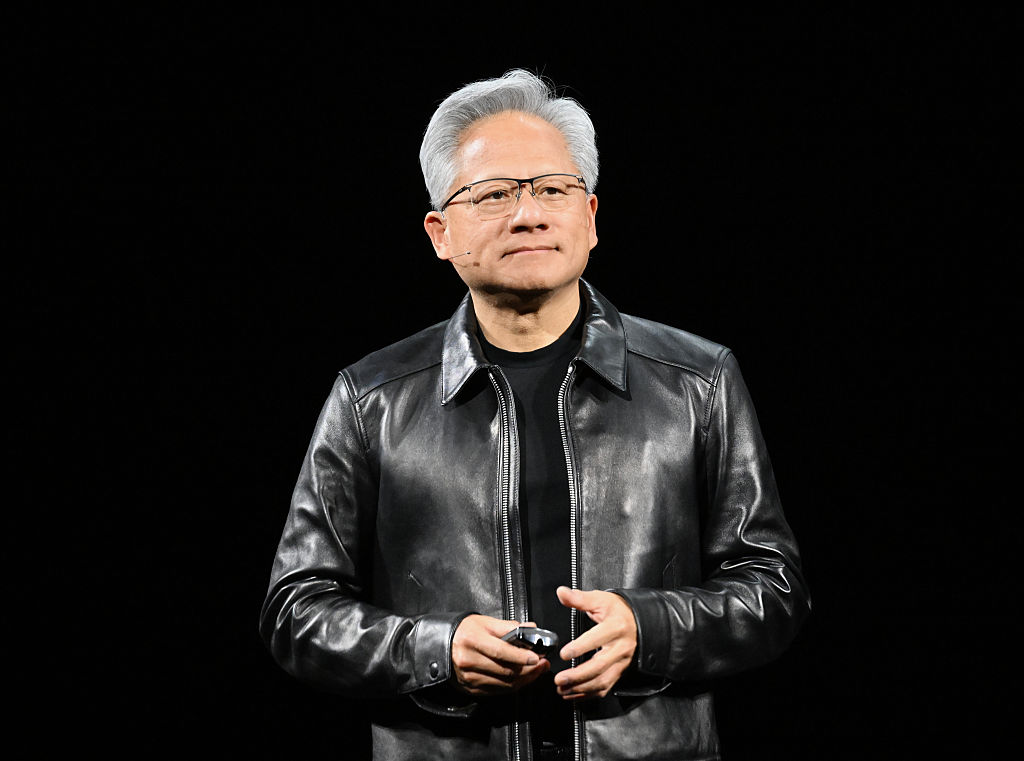
Nvidia CEO Found Out About Honey Traps the Hard Way

Romance with an espionage angle is one of China’s favorite tools.

Nvidia GTC Berlin
Photo by Soeren Stache/picture alliance via Getty Images

If you’re in China as a businessman or government official and are what women would call a “4” on the good-looks scale, and the Chinese woman who approaches you at the bar is an “8,” it is probably a honey trap. Leave your drink unfinished on the bar and get out of there. They don’t call spying the world’s second-oldest profession without good reason; sex and secrets have always made good bedfellows.

Ask the latest high-profile honey trap victim, the Nvidia CEO and U.S. citizen Jensen Huang. Huang, married for some 40 years with two children, worth billions of dollars, and custodian of some of AI’s most critical secrets, fell casually into an affair with a beautiful Chinese woman in Singapore. Allegedly, the Chinese Ministry of State Security (MSS) soon learned of the affair and may have recruited the woman to gather information from Huang—a textbook honey trap. At some point, U.S. intelligence agencies began monitoring the woman and informed Huang she may be an MSS spy. Beijing denies everything, and Huang has been made to step down as CEO of the company he built. Nobody is saying publicly what secrets the Chinese, the most likely winners here, may have acquired (if indeed she was a spy).

Though the press has had a grand time talking about the lurid details of the possible blackmail, that is not how most honey traps work. Many outsiders assume the point of the liaison between the spy and the target is to capture incriminating photos and naughty recordings. These are used to threaten the target with the end of his marriage, the loss of his job, maybe even jail time. He may then be blackmailed into working for the foreign spy service, an asset to be used however his new puppet-masters see fit. In some countries, an officer of the host nation’s intelligence service will actually burst into the hotel room to inform the target that his life as he knows it is over. (This practice is known as a “tiger trap,” and was a favorite technique in the old Eastern Bloc.)

But most of that is best reserved for spy movies. In real life, people trapped by blackmail will often do anything to escape, including ending their own life (a Japanese diplomat committed suicide in Shanghai in May 2004 after being finding himself in a honey trap). And the threat of exposure does not necessarily translate into endless control over another person’s behavior. It can often produce exactly the opposite reaction hoped for: resistance, escape, or cooperation with the victim’s own government to expose the local goons. Coerced people, like torture victims, also have a tendency to tell their controllers whatever they think they want to hear. Government officials from all sorts of countries receive counterintelligence tradecraft training in this and are specifically told to come forward at the first sign a honey trap may be being laid. That turns a prospective asset into a “burnt source.”

A better way to use a honey trap is to keep the relationship going. A hyper-wealthy man like Huang doesn’t need material perks, but for others the foreign spy service might supply off-the-beaten-path hotel rooms or a safe apartment (all bugged of course). Money for nice dinners and foreign trips can be passed along. The host country, in the case of foreign government officials, might surreptitiously make sure the target and his honey are not being surveilled by a third-party intel service on to something. In one instance, when an American target expressed interest in breaking up with his Beijing-planted girlfriend, she conveniently introduced him to her “friend,” who proved more to his liking. Targets also may facilitate access to additional prospective assets: Rich men are friends with other rich men, diplomats attend receptions with other diplomats, and so forth. The intelligence agencies often play the long con, not always seeking immediate recruitment or exploitation. The sex part is not the intel op; it is the facilitator of a relationship and the vetting that the target has access to the desired information. It just so happens that pillow talk is one of the best ways to learn how much someone knows.

Huang of course is just one of many people who have been caught in a honey trap; the practice is found throughout recorded history, because it consistently gets results. The MSS is particularly known for using the technique. Many will recognize Katrina Leung. Leung operated as a double agent for 18 years, maintaining parallel romantic relationships with her FBI handlers while simultaneously funneling classified U.S. materials back to Beijing. Also well-known is Fang Fang, a suspected MSS operative who targeted up-and-coming political figures, engaging in romantic relationships to build long-term political leverage (most notably with Democratic congressman Eric Swalwell).

Inside China itself, things got so bad that the State Department finally implemented a blanket ban on all U.S. government personnel in the country engaging in romantic or sexual relationships with Chinese nationals. Personnel with existing relationships had to end their relationships, leave the country, or apply for an exemption. For its part, China bans its own foreign ministry staffers from relationships with foreigners.

U.S. personnel face restrictions or requirements to report romantic or sexual relationships with nationals from other countries, though the list of those countries and the exact nature of the restrictions is classified. None however, at least as far as is publicly known, are as strict as those imposed on staff in China. Too bad no one told Jensen Huang about that.

The post Nvidia CEO Found Out About Honey Traps the Hard Way appeared first on The American Conservative.

‘No Deal’? Fine—Then Leave

‘No Deal’? Fine—Then Leave

President Trump should follow through on his recently discovered nugget of self-knowledge.

US-POLITICS-TRUMP

Sometimes a little humility is a good thing. President Donald Trump wrote in a Thursday social media post that he was removing Vice President J.D. Vance from the Iran file because no deal with Iran is necessary. This announcement was taken as qualified good news in some quarters, including here at The American Conservative. My colleague Andrew Day has pointed out from early in the war that Trump does not seem to have what it takes to cut a deal with the Iranians, and that just walking away from a destructive and politically toxic war without a negotiated resolution is better than the so far regrettably thematic fluctuation between intense diplomacy and intense combat. Trump’s statement seemed like an intellectual step toward Andrew Day Thought, which is good.

The problem is that this fresh thought technology was not accompanied by any kind of indication that we’ll walk away. “We’ve got their money, Hundreds of Billions of Dollars, and we’ve got their Strait!” Trump wrote. That seems like a recommitment to the status quo—physical blockade and sanctions—but without the ornamental flourish of passing the occasional note to the Islamic Republic via the Qataris. 

There is, of course, more than one way to skin the cat, and a sudden departure from the theater could be difficult to spin politically. (Although perhaps a big “Mission Accomplished” banner could do the trick.) Trita Parsi of the Quincy Institute has suggested Trump may wind up favoring a “Swiss cheese solution,” whereby the U.S. quietly starts easing the blockade and removing assets from the neighborhood. But in fact the U.S. is still moving assets to the neighborhood, including a third aircraft carrier; the Treasury is issuing new sanctions against Iran; CENTCOM intends to expand the blockade to cover land routes under the auspices of something called “Task Force Iron Gate.” (I’m begging anyone who will listen: Can we cool it with the silly names?) 

This all looks rather like the opposite of walking away. And without any negotiations ongoing at the moment, there are no possible goodies on the table to persuade Iran that discretion is the better part of valor, or, for that matter, any clear channel for rectifying chance misunderstandings that could lead to an unintentional escalation. Diplomacy is like Alcoholics Anonymous; as long as people keep coming back, it is to some degree working. Without diplomacy, well—it’s not exactly unfair to compare the parties involved to crazed dipsos on the loose and causing mayhem in the streets, is it?

The Trump administration has shown a consistent inability to pursue policies deliberately, consistently, and with strategic coherence on a timescale longer than about two weeks; this became clear no later than last April, when the White House launched its chaotic effort at trade rebalancing, a worthy goal that requires careful attention to detail and clarity about the actual intentions behind a given tariff. Indeed, the Iranians seem to think more and more that cutting a deal is impossible. (That’s what happens when you keep bombing people in the middle of negotiations.) For the White House, one strength of the economic war—fine, I’ll write it, “Operation Economic Outcast” (these names!)—is that it requires little strategic sophistication and can be tactically executed by some of the more competent members of the administration, like Treasury Secretary Scott Bessent. But, as I have written, the most optimistic outcome of the economic war is a new mess that we will have to clean up militarily. Short of the most optimistic outcome are a wide variety of unpleasant, uncontrolled escalation scenarios, particularly if the Iranians get desperate and decide that rolling the dice on more combat is a better bet than economic collapse. This is no way to run a railroad.

“No deal” is fine, if not optimal, but Trump needs to sh—ah, defecate or evacuate himself from the commode. Hanging around the Persian Gulf with heavy weaponry and no sort of engagement is just asking for something bad to happen. Otherwise, even unproductive negotiations seem like a safer bet. Let’s try to keep the drunks off the street.

The post ‘No Deal’? Fine—Then Leave appeared first on The American Conservative.

In Mexico, the CIA Is Playing a Dangerous Game

In Mexico, the CIA Is Playing a Dangerous Game

Covert operations south of the border threaten to spiral out of control.

Claudia Sheinbaum Daily Morning Briefing
(Cristopher Rogel Blanquet/Getty Images)

Last week, the New York Times shed new light on America’s covert activities in Mexico, including the recent deaths of two CIA agents in the border state of Chihuahua. The Times’ reporting shows how American intel officials built a relationship with a corrupt Mexican prosecutor, with the aim of establishing a base for counter-cartel operations. Because the Mexican government objects to U.S. spies operating in its territory, the CIA had to proceed with an extra degree of secrecy, working with state officials and other intermediaries to enable its presence south of the border.

The man at the center of the latest allegations is Guillermo Zuany Portillo, until May, Chihuahua’s anti-kidnapping prosecutor. In 2025, the State Department revoked Zuany’s U.S. visa over suspected cartel ties; four witnesses had previously accused the prosecutor of complicity in the 2022 murder of two police officers. Within months, however, Zuany’s visa was reinstated, as he took on the informal role of local pointman for the CIA. 

Zuany, per the latest Times reporting, connected U.S. intel operatives with Chihuahua state police with the aim of developing a new special forces unit. Once embedded in the police force, CIA agents helped to plan enforcement operations and identify targets for raids. They routinely participated in these missions—even providing covering fire on at least one occasion—though they were careful to always conceal their identities by wearing Chihuahua state insignia.

In April, this unit conducted its largest operation: a raid on a methamphetamine lab in the remote Sierra Madre mountains, on the border with the narco-ridden state of Sinaloa. Four CIA officers participated; during their return back, the team’s convoy had to navigate winding roads through difficult terrain. One of the vehicles, carrying two CIA agents, encountered visibility issues, and plunged 300 feet into a ravine—killing all onboard.

The incident sparked a political firestorm between Mexico’s left-wing president, Claudia Sheinbaum, and Chihuahua’s conservative governor, Maru Campos. Sheinbaum has strongly resisted pressure from the Trump administration to allow U.S. security personnel to work in the country; moreover, Mexican law prohibits foreign agents from operating without express authorization from the federal government. And so far as can be ascertained, the roles of the deceased CIA agents were never cleared with Mexico City: one entered on a tourist visa, while the other came on a diplomatic passport.

Campos claims that she had no idea what the CIA was doing in her state, though Zuany stated otherwise in a text with the Times. In May, Campos also reportedly authorized a joint surveillance hub with five US agencies in Ciudad Juárez. While the governor has thus far avoided impeachment proceedings, her attorney general, César Jáuregui, has been arrested and charged with treason for the CIA breach. And after the latest story broke, federal and Chihuahua prosecutors issued warrants for Zuany’s arrest; Zuany has since fled to the U.S. where he now is reportedly under the protection of the American government.

There is, of course, reason to believe that Sheinbaum—who has deepened security cooperation with Washington in other areas—is more aware of CIA activities in her country than she has let on. A March car bombing of suspected cartel members outside Mexico City was later revealed by anonymous intelligence officials to have been the work of the Americans, who allegedly coordinated with Mexican authorities. There are two big questions worth asking here. First, which U.S. intel operations does Mexico City know about? And second, how far is the White House willing to go on this?

The record from Chihuahua suggests that the Trump administration is using a variety of tools to facilitate CIA throughout the country. To that end, the administration appears to be pursuing closer—and extralegal—ties with pliant opposition state governments. 

Another is the revocation of visas and other potential punitive measures. Interestingly, visa revocations against elected officials have been deployed exclusively against politicians from Sheinbaum’s ruling Morena party, particularly those in areas along the U.S. border. Half of Mexico’s six border states are run by Morena, and half by opposition parties. Yet only Morena governors—Baja California’s Marina del Pilar, Sonora’s Alfonso Durazo, and Tamaulipas’ Américo Villarreal (although Villarreal has disputed the story)—have had their visas revoked, all over alleged cartel ties.

To be clear, none of the three Morena governors have been indicted, although the administration did take the unprecedented step of unsealing charges against the Morena governor of Sinaloa, Rubén Rocha Moya, earlier this year. And some opposition governors—Nuevo León’s Samuel García, for example, and Durango’s Estéban Villegas—are reportedly under investigation but can still travel freely to the U.S. 

The pattern suggests that White House pressure on Mexican politicians is inversely related to the latter’s willingness to work with U.S. intelligence agencies for better or worse. Paradoxically, many of the CIA’s targets in Chihuahua often escaped, leading state officials to suspect that the now fugitive and U.S.-protected Zuany was tipping them off. Here, it’s worth asking whether the White House is ultimately more concerned with expanding agency access south of the border for its own sake.

Another possibility—not mutually exclusive with the theory outlined above—is that the Trump administration is most interested in weakening the governing party ahead of next year’s legislative and state elections (including in four border states). Polling suggests that Morena and its allies will once again dominate, though they may well lose their congressional supermajorities and some governorships.

Whatever the case, Trump is playing a dangerous game south of the border. If, as suspected, the CIA is acting unilaterally against traffickers throughout Mexico, the potential for further casualties and blowback is immense. Since the 1985 killing of DEA agent Enrique Camarena, Mexican cartels have avoided targeting U.S. citizens and especially officials for fear of overwhelming reprisals. This could change in the event of a broader U.S. intervention.

Many Republicans, including ostensible restrainers, believe it’s worthwhile to trade an open ended conflict with the IRGC for an open ended conflict with Mexican drug lords. This view is deeply mistaken. A military intervention in Mexico is quite likely to spiral out of control, bringing with it the potential for a new forever war—this time in our own neighborhood. Worsening disorder in Mexico would have grave economic consequences for America (it is, after all, our largest trading partner); perhaps most importantly, it could stoke a new migration crisis that undoes at a stroke the signature accomplishment of Trump’s second term.

Unglamorous as it may seem, Washington is better off leveraging the competent security partner it currently has in Mexico City. Fentanyl seizures south of the border have risen to record highs while seizures north of the border have plummeted to record lows; Mexico has also illegally extradited nearly 200 kingpins to the U.S. And contrary to her image as a progressive heroine, Sheinbaum has undertaken a surprisingly successful crackdown against the cartels in part thanks to a policy of mass incarceration. 

Under Sheinbaum and Security Secretary Omar García Harfuch, monthly incarcerations have tripled relative to her Morena and opposition predecessors. If trends continue, Mexico’s prison population is set to rise to around 350,000 by the end of the president’s term, up from 220,000 in 2024. It is no coincidence that homicides have declined by roughly 50 percent since 2024. DEA Administrator Terry Cole has praised Harfuch for historic cooperation on security between both countries.

The Trump administration is currently reckoning with the disastrous costs of an aggressive military intervention conducted 7,000 miles away from the U.S. It would do well to avoid the risk of further adventurism on our very doorstep.

The post In Mexico, the CIA Is Playing a Dangerous Game appeared first on The American Conservative.

$7.2 Million Medicaid Fraud Case Conviction in Minnesota That Was Dismissed by Democrat Judge, Now Restored

A $7.2 million Medicaid fraud case conviction, tossed out by a leftist judge in 2025, has been restored by the Minnesota Court of Appeals.

There were originally six guilty verdicts against Abdifatah Abdulkadir Yusuf, which were reinstated by a three-judge panel. His healthcare business was the focus of the fraud.

The three-judge panel disagreed with Judge Sarah West’s view that Yusuf’s brother, Mohamed, was the one committing the fraud without Yusuf’s knowledge.

Yusuf was originally charged in June 2024 with stealing cash from Minnesota’s Medicare Program through the business he ran out of his home, called Promise Health. He was convicted by a jury in August of 2025.

Over a three-year period between 2019 and 2022, Promise Health made more than 40,000 claims deemed fraudulent. Witnesses testified at trial that the business charged the government for services that were never provided.

There was also evidence that Yusuf kept over $1 million from the business for himself. Authorities eventually discovered that over $400,000 was spent at luxury stores, including Canada Goose and Nordstrom.

Yusuf originally launched his business in 2018.

Judge Sarah West decided to acquit him in November 2025, going against the jury’s guilty verdict. It drew attention, especially since fraud has been in the news with Minnesota being front and center.

The three-judge panel was not convinced by Yusuf’s claim that he was unaware of the fraud.

New York Post Reported:

A conviction in a $7.2 million Medicaid fraud case that had been thrown out by a Democrat-appointed judge last year has been revived by the Minnesota Court of Appeals.

A three-judge panel on the Minnesota Court of Appeals ordered the six guilty verdicts reinstated against Abdifatah Abdulkadir Yusuf, whose healthcare firm was at the center of the fraud scandal.

The panel rejected Hennepin County Judge Sarah West’s determination that Yusuf’s brother, Mohamed, may have been behind the fraud without his knowledge.

The post $7.2 Million Medicaid Fraud Case Conviction in Minnesota That Was Dismissed by Democrat Judge, Now Restored appeared first on The Gateway Pundit.

Brave Circle-K Worker Fired for Defending Himself, Co-Worker as Video Shows 4 Would-Be Robbers Ramming Store with SUV

Kendrick Watson, a six-year employee at a Circle K in Stow, Ohio, was working the overnight shift on Nov. 2 when four men in stolen minivans rammed the storefront repeatedly around 3:30 a.m.

The impact shattered the glass entrance and knocked an ATM loose. Masked suspects then exited the vehicles and moved toward the store.

Watson, lawfully armed, fired seven shots, causing the men to evade the scene.

Police later arrested one suspect, Peirion D. Jackson, 25, of Cleveland, who was on parole for a prior robbery and linked to a gang, according to a report from WKYC.

Jackson now faces charges including robbery. Stow police and the city law department confirmed Watson’s actions were lawful and that he will not be charged with a crime.

After the incident, Circle K took Watson off the schedule under its no-weapons policy, according to the Akron Beacon Journal. He described the company’s response as disappointing after years of reliable work, including long stretches of consecutive shifts.

The company has not publicly explained its decision in detail beyond the policy.

Watson acted to protect himself and a coworker when a group that had already used a vehicle as a battering ram advanced on the store.

The alternative was to wait and see whether the men intended only property damage or something worse. Police treated the use of force as justified, while the employer treated the possession of the firearm that stopped the attack as disqualifying.

Overnight clerks at convenience stores are frequent targets precisely because they are isolated and the payoff can be quick.

When a company signals that employees who stop a violent attack will lose their jobs, it reduces the chance that the next clerk will be armed or willing to resist. Criminals notice patterns, so a store known for punishing self-defense becomes a softer target than one where resistance is possible.

Circle K has not increased the security of its employees by removing Watson. It has advertised that resistance carries a personal cost while the risk of attack remains.

Watson did not create the danger. He interrupted it. By rewarding those who caused the risk and penalizing the person who stopped it, Circle K turns a supposedly neutral application of the rules on its head.

Instead, it creates an incentive structure that makes the next overnight shift far riskier for whoever is left behind the counter.

This article appeared originally on The Western Journal.

The post Brave Circle-K Worker Fired for Defending Himself, Co-Worker as Video Shows 4 Would-Be Robbers Ramming Store with SUV appeared first on The Gateway Pundit.

White House Counsel Will Scharf Says There Will Be a “Vigorous Response” to Democrats Who Threaten the Trump Administration with Investigations – (VIDEO)

White House Counsel Will Scharf was on “Fox News Sunday” with host Shannon Bream to talk about the Democrats and their threats to investigate the Trump administration.

Ever since the midterms went in favor of the Democrat Party, various leaders have been threatening the Trump administration with investigations. Incoming Chairman of the House Oversight Committee, Rep. Robert Garcia, was one of them.

“This week, White House Counsel, Will Scharf, warns them about their plans,” Bream said.

“He says your letter was a threat. What was it meant to convey?” Bream asked regarding Rep. Garcia’s comments.

“The only shocking thing is some the terrible statements that Congressman Garcia has been making for weeks now. He said that his desire to investigate this administration was born out of his own pettiness. Pettiness is not a valid purpose to conduct oversight under our Constitution and under our laws,” Scharf said.

Counsel Scharf explained that the Democrats want to target everyone involved in the Trump administration from the President, all the way down to junior staffers. He said that will be met with a “vigorous response.”

“If that is the approach they are going to take, they are going to be met with a vigorous response from my office and from the Department of Justice every single time,” Scharf continued.

“You talked in the letter about that they may cross the line into blatant criminality. What crimes?” Bream asked.

“It’s very clear under our law and under our Constitution that Congress has certain oversight powers. Those oversight powers need to be related to a legitimate legislative purpose,” Scharf said.

“They can’t conduct oversight for the purpose of self-aggrandizement. They can’t conduct oversight for the purpose of threatening people,” Scharf explained.

“Any investigation conducted by our Department of Justice is gonna be predicated on the law and the facts of that particular case,” Scharf said.

“We are watching the new Democrat majorities. We are listening to what they are saying, and some of their statements have just been deeply, deeply troubling from a legal perspective,” Scharf continued.

Watch:

The post White House Counsel Will Scharf Says There Will Be a “Vigorous Response” to Democrats Who Threaten the Trump Administration with Investigations – (VIDEO) appeared first on The Gateway Pundit.

El Salvador’s Bukele Deploys Armed Robot Dogs as Troops Seize Haiti’s National Stadium

Nayib Bukele is a forward-thinking man who used to refer to himself as El Salvador’s CEO rather than its president and added Bitcoin to the country’s foreign currency reserves. Now he is deploying robot dogs against gangs in Haiti. Photo courtesy of the Government of El Salvador.

President Nayib Bukele, the man who defeated El Salvador’s gangs, is now taking on Haiti’s gangs with Salvadoran troops and robot dogs. Bukele has said that no gang, however powerful, can match the army of an entire country.

Bukele released video on Nov. 12 showing rifle-armed robot dogs alongside Salvadoran special forces during an operation to retake Stade Sylvio Cator, Haiti’s national soccer stadium in Port-au-Prince. Gangs had held the stadium since 2024.

Bukele wrote on X that the operation was carried out “under the bilateral agreement between the Haitian government and the government of El Salvador.” He said it involved the Haitian National Police, the Armed Forces of Haiti (FAd’H, Forces Armées d’Haïti), a government task force, and Salvadoran special forces. The Haitian National Police confirmed in a statement that it had taken “total control” of the stadium alongside the Salvadoran force.

Bukele said troops found “several human skulls” inside the stadium. “We will establish a base of operations at the stadium to advance from there into gang-controlled territories,” he wrote, according to an English translation published by The Haitian Times. He added, “I advise all gang members to leave the area before the offensive begins.”

The footage shows Salvadoran soldiers fitting rifles onto the four-legged robots inside the stadium and shows the robots moving down a hallway and climbing stairs. The rifles are mounted upside down on bolted metal brackets, with a metal rod running toward each trigger.

Judging by their shape, markings and sensor dome, the robots appear to be Go2 models made by China’s Unitree Robotics, which start at about $1,600. The rifles appear to be Israeli-made IWI ARADs, which El Salvador began issuing in 2022 to replace its M16s. Bukele did not say what role the robots played in the operation.

The Armed Forces of El Salvador first displayed the robot dogs publicly on Sept. 15, when the machines led the parade in San Salvador marking 205 years of Central American independence. The military introduced them as its new Robotic Canine Unit (Unidad Canina Robótica).

In 2024, U.S. Marine Forces Special Operations Command tested Vision 60 robots from Philadelphia-based Ghost Robotics fitted with rifle systems. The command said it was “not fielding this capability at this time.”

On Oct. 18, gangs ambushed four Salvadoran aviation technicians serving in Haiti with the UN-backed Gang Suppression Force (GSF). In response, Bukele dispatched between 2,000 and 2,500 troops, along with armored vehicles and attack helicopters, according to Tablet. As of Nov. 13, the four technicians remained missing. Gang violence in Haiti has killed more than 5,700 people this year.

On Oct. 29, Bukele wrote that El Salvador was financing 90 percent of the offensive, adding, “This is not an operation against the Haitian people, nor an invasion.”

Videos Bukele shared in early November show Port-au-Prince residents thanking Salvadoran troops as a military convoy moves through the streets. A man on a motorcycle rode up to the convoy and said in Spanish, “Bukele is my friend, that’s my father, thank you very much.” Bukele captioned the footage in Creole, “Sanble gang yo pa vle goumen avè n” (“It seems the gangs don’t want to fight us”). His government’s videos also carry a message to Haitians in Creole, English and Spanish: “We will help you take back your country,” according to the Associated Press.

Gangs terrorized El Salvador for years before Bukele took office. In 2015, the country recorded 6,656 murders, a homicide rate of more than 100 per 100,000 inhabitants. According to InSight Crime, it was the highest rate in the world outside a war zone. On March 27, 2022, gangs killed 62 people in a single day, and the Legislative Assembly approved a state of exception. Since then, more than 83,000 people have been arrested. El Salvador recorded 82 homicides in 2025, or 1.3 per 100,000 inhabitants, the lowest rate in its history. In August 2025, Bukele announced on X that the country had logged “1,000 days without homicides since the start of our government.”

Bukele argues that ending gang control is a matter of will. In October 2025, he said every sovereign state can end criminal control of its territory and that the difference lies in political will and institutional integrity. He asked why no U.S. state or Canadian province is controlled by cartels despite their vast uninhabited areas. At the National Prayer Breakfast in February 2026, Bukele told U.S. lawmakers that El Salvador’s transformation was also a spiritual battle and said the gangs “worshiped Satan, straight up, literally.”

Bukele has framed the Haiti mission in moral and religious terms. “We didn’t come to Haiti to make money, because no one is paying us to do it. We came to Haiti to fight against the wicked,” he wrote on X in October. On Oct. 23, an analyst compared the mission to Napoleon’s failed 1802 expedition to Haiti. Bukele responded on X that “God will grant us victory” and cited Deuteronomy 28:7: “The Lord will defeat your enemies who rise against you; they will come at you from one direction but will flee from you in seven.”

Tablet reports that the 2,000 to 2,500 troops were dispatched in response to the ambush. The National Prayer Breakfast took place on Feb. 5, 2026.

The post El Salvador’s Bukele Deploys Armed Robot Dogs as Troops Seize Haiti’s National Stadium appeared first on The Gateway Pundit.

Radical Ideology At Amherst: Professor Teaches ‘Anti-Racist Anti-Economics,’ Seeks to ‘Dismantle’ Traditional Economics

In the latest radical ideology being taught as fact at the University, according to a report at Campus Reform “An Amherst College economics professor is teaching courses that describe mainstream economics as an “oppressive neoliberal ideology” and seek to “dismantle” traditional economic frameworks, while students face $75,330 in annual tuition.”

The professor teaching this course is the “Willard Long Thorp Professor of Economics at Amherst College”.

The course he is teaching, or more accurately called brainwashing, is “Anti Racist Anti Economics”.

Calling a course Anti-Economics should be a hint of what to expect in terms of indoctrination.

The professor “earned her bachelor’s degree from Amherst in 1994 and a Ph.D. in economics from Harvard University in 2002. Her faculty biography describes her teaching approach as “Abolition Economics.”

This professor, who teaches this radical course, calls “mainstream economics a neoliberal ideology masquerading as objective social science” and argues that the discipline is complicit in “racism, misogyny, and imperialism.”

In other words, the typical left-wing indoctrination talking points are covered in this so-called course.

“The ECON-211 course description similarly claims economics conceals “its oppressive neoliberal ideology” behind claims of objectivity.”

This class is described as “a radical reintroduction to economics”.

At least they admit this course is radical, though not in a good way.

This same Amherst professor teaches “economics of race and gender,” more woke politics disguised as an economics course.

That previously mentioned course is described as “examining economic issues through hierarchy, power, inequity, discrimination, and injustice.”

Yet another course,  “ECON-205, ‘Pluralist Economics,’ scheduled for spring 2027, describes mainstream economics as ‘fundamentally neoliberal.”

“The course also examines the “interweaving of mainstream economics, capitalism, and white supremacy,” drawing on critical race theory, Black Marxism, Marxism, and Abolition Economics.”

This is Woke Race baiting disguised as economics bordering on Communism. This professor includes all the leftist catchphrases.

The hypocrisy is glaring as “Amherst’s 2026-27 tuition totals $75,330. Including $10,980 for housing, $9,340 for meals, and $710 in fees, direct annual costs reach $96,360 before financial aid.”

“The college estimates that educating each student costs approximately $140,000 annually, with endowment income and gifts helping cover the difference.”

As part of the course, Marxist indoctrination hypocrisy is the name of the game.

The post Radical Ideology At Amherst: Professor Teaches ‘Anti-Racist Anti-Economics,’ Seeks to ‘Dismantle’ Traditional Economics appeared first on The Gateway Pundit.

Hollywood Weirdo Hits Democrats with Woke List of Demands After Midterm Gains

John Leguizamo/Image @JohnLeguizamo/Instagram

Actor John Leguizamo is a typical Hollywood leftist and anti-Trump moron.

His take on a variety of issues is so reactionary and juvenile; even Bill Maher chastised him for his opinion unburdened by facts on immigration and Immigration and Customs Enforcement (ICE).

Maher reminded the lefty actor that countries have borders and that you can’t just have a ‘free-for-all’ approach to immigration as we had under Joe Biden.

Maher also calls out the hypocrisy of so-called sanctuary cities, noting that even places like New York were completely overwhelmed when they were forced to deal with a massive influx of illegals sent to them by border states.

But common sense isn’t getting in the way of Leguizamo’s demands for Democrats when they come back into power following the 2026 midterm elections.

In a video shared to social media, Leguizamo provided a laundry list of demands including abolishing ICE, shutting down detention centers, protecting sanctuary cities, ending family separation, and pursuing immigration reform.

“All right, my Project 2027 starting January 3rd. Get it done, Dems. All right, guarantee affordable healthcare, Medicare for All.”

“Strengthen Social Security, abolish ICE, shut down detention centers, end family separation, immigration reform, protect sanctuary cities, comprehensive gun reform.”

“Trial and convict Stephen Miller for ICE murders, impeach Todd Blanche, end Citizens United so there’s no dark money in government, transparency in lobbying, don’t fund countries that are committing human atrocities, abolish Electoral College. Hold presidents accountable. End presidential immunity.”

“Limit pardon power.”

“Term limits for Supreme Court justices.”

“Protect abortion rights and reproductive freedom.”

“Protect transgender Americans.”

“Close tax loops for billionaires.Billionaire wealth tax. End it. End corporate welfare.”

“Superfund public schools because there’s only one cure for public schools and that’s more money.”

“End unauthorized wars.”

“$20 minimum wage, a data center moratorium, ban super PACs, 10% credit card interest rate cap. Say no to Section 219 linking our Pentagon to other countries’ military.”

“Get it done. No more playing, no more absenteeism, no more nonsense. Get it done.”

Watch:

Read more:

Bill Maher Schools Lefty Actor John Leguizamo on Illegal Immigration: ‘Countries Have to Have a Border’ (VIDEO)

The post Hollywood Weirdo Hits Democrats with Woke List of Demands After Midterm Gains appeared first on The Gateway Pundit.