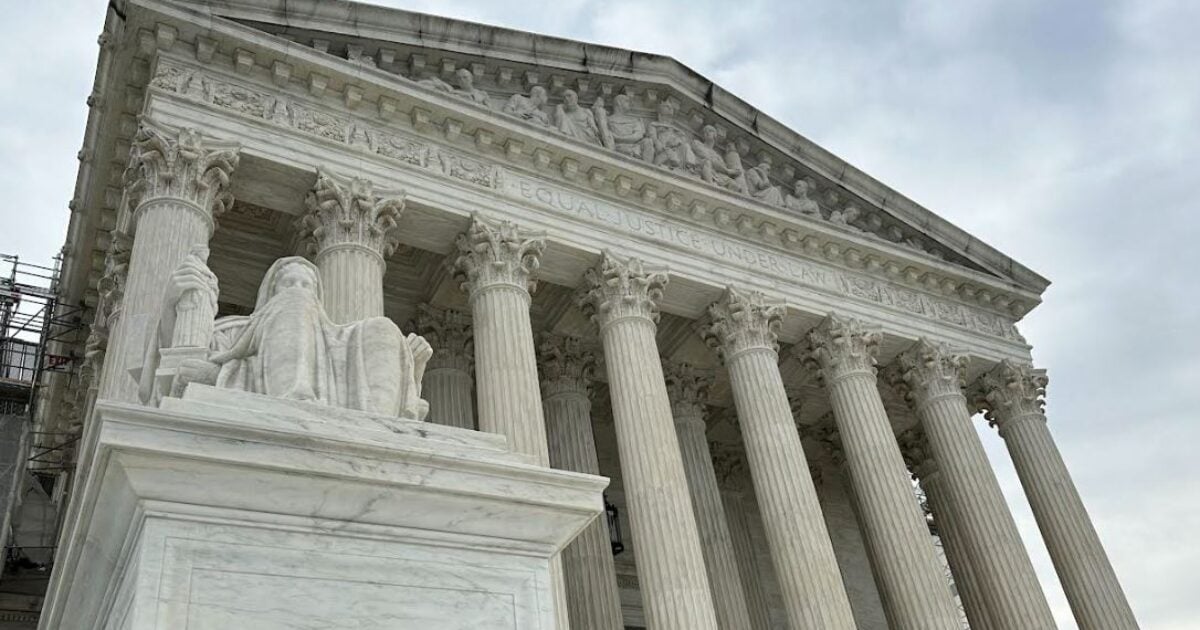
DEI Continues: DOJ Discovers Discrimination Against Whites and Asians at Ohio State Medical School Despite Supreme Court Ruling

The Department of Justice announced Wednesday that Ohio State’s medical school was found to have discriminated against white and Asian applicants in violation of federal law.

The DOJ’s Civil Rights Division cited admissions practices for the 2023, 2024, and 2025 incoming classes, saying that the school violated the Civil Rights Act of 1964, which prohibits discrimination based on color or race, according to a news release.

The Justice Department also mentioned the 2023 Supreme Court decision of Students for Fair Admissions v. Harvard, which effectively banned affirmative action.

Assistant Attorney General Harmeet Dhillon said, “Despite SFFA, OSU Med allows some applicants to bypass its own screening process and skip interviews solely because of the color of their skin.”

“A university’s admissions process, and all its stages, should apply equally to all applicants regardless of race,” she continued. “The use of a separate admissions process based on race is plainly illegal under federal law, and this Department will not allow these appalling practices to continue at OSU Med or any other federally funded higher ed institution.”

The release went on to describe how OSU used a “Holistic Approach” as a workaround to admit so-called “underrepresented minorities.”

In addition, the medical school’s admissions process has an interview stage, but the DOJ discovered that black applicants who are screened and interviewed “are about 2.8 times as likely to be admitted than Asian applicants with equal credentials.”

Moreover, federal officials said OSU operated a “side door” in its admissions framework that allowed certain applicants to gain acceptance without being scored or interviewed at all.

“Using this pathway, in 2024 and 2025 combined, black applicants were four times as likely to be admitted than white applicants, and no Asian applicants were admitted,” the release noted.

The DOJ rightfully pointed out that medical schools receive massive amounts of federal funding, and therefore must abide by federal law if they want to keep it.

“The Department will continue to investigate their compliance with Title VI, as interpreted by SFFA’s prohibition on race-conscious admissions,” the release concluded.

“Where a violation has been found, the Department will engage in settlement negotiations to ensure the school’s admissions practices are brought into compliance. If those efforts fail, the Department will file suit.”

This news comes about three weeks after the DOJ revealed that the University of California Los Angeles Law School discriminated against white and Asian applicants for years, using race as a major determining factor in admissions.

“Like many of its peer institutions, UCLA Law School runs a two-tiered admissions system whose academic bar for acceptance shifts up or down depending on the color of your skin,” Dhillon said.

UCLA was also threatened with litigation if they don’t comply with federal standards.

This is a crisis of unknown magnitude for the United States.

Not only does Diversity, Equity, and Inclusion still reign in academia, the media, entertainment, sports, banking, and corporations, but it’s beginning to creep into industries where life-and-death decisions are made on a daily basis.

When it comes to the law and medicine, federal officials must draw a line in the sand so that America knows it’s getting the best of the best. Not only are they two of the most prestigious and high-paying careers in existence, but they are extremely complex and consequential to everyday life.

It’s not like casting minorities in a Netflix role, or giving an “underrepresented group” a shot at climbing the corporate ladder. They are playing with fire here.

If you needed heart surgery to save your life, would you want the doctor who was admitted because of their race and cultural background? Or would you want the physician who had the highest scores and best results?

If you were wrongfully accused in a court of law, with your reputation and freedom on the line, would you prefer an attorney whose race or gender determined their success, or the one who earned their spot through sheer hard work?

When your baby needs brain surgery, will you choose the doctor who went to a medical school like OSU? Or will you seek out a qualified physician from an institution where these questions don’t even come into play?

It’s easy for those who support DEI and affirmative action to cheer from the sidelines about equality until a crisis comes crashing on their doorstep.

In their hour of need, can they honestly say they’d prefer a doctor or lawyer who was given preferential treatment, despite having lower test scores or less aptitude?

Merit-based achievement is what makes America great. If you’re the best person for the job, and you’ve achieved at a high level, you get rewarded.

Liberal lawmakers, activists, and academia, however, would prefer we all be used as guinea pigs in an equality experiment that uses guilt and racial division to eliminate any objective measuring stick. And where will we be at the end of all that?

When students who were given preferential treatment finally reach the end of the line and go out into the world, will they be able to provide the services our nation requires?

Or will we see a massive regression in the quality of care and support?

The only hope is for the government to pull all federal funding from schools that refuse to follow the law. The answer to solving discrimination is not more discrimination. That’s called revenge.

If you’re worthy, your actions and results will speak for you, no matter what your race, color, background, or life experience is.

Merit provides a comforting clarity that cuts through all other political nonsense.

If DOJ lawyers don’t go all the way on this, and fast, they’ll lose their window to make lasting change, thereby saddling America with a workforce whose credentials will constantly be called into question.

This article appeared originally on The Western Journal.

The post DEI Continues: DOJ Discovers Discrimination Against Whites and Asians at Ohio State Medical School Despite Supreme Court Ruling appeared first on The Gateway Pundit.

Italy and Albania: Communist Students, Antagonist Collectives, and the Flamingo Revolution

Across Europe, the protests are largely backed by left-wing groups. Albania is a special case, as the rioters are opposing a left-wing government. Photo courtesy of RAI TG1 via screengrab.

As France’s high school revolt peaked in October, Italy and Albania saw some of the worst violence outside France. In Italy, communist student groups modeled their actions on France, while militant far-left collectives took over cost-of-living marches. In Albania, a left-wing party leader joined the front lines of a revolt against Prime Minister Edi Rama’s Socialist government.

School occupations began in Turin on October 5 under the slogan “Let’s do as in France.” OSA (Opposizione Studentesca d’Alternativa, or Alternative Student Opposition), a communist high school organization, launched the occupations and called for “permanent” mobilization. OSA and its university counterpart, Cambiare Rotta (Change Course), a self-described communist youth organization, occupied schools in Turin and designated October 16 a national day of mobilization.

The conservative Italian daily Il Giornale describes them as youth organizations of Potere al Popolo (Power to the People) and the Rete dei Comunisti (Network of Communists), and frequent organizers of protests ending in clashes with police. Potere al Popolo, a far-left party founded as an electoral list in 2017, won 1.13 percent in the 2018 national election. Il Giornale calls it one of Italy’s last communist parties. The Rete dei Comunisti is a Marxist-Leninist network founded in Bologna in 1998.

On October 16, OSA’s “No Meloni Day” brought students into 40 cities, with clashes in Turin and Bologna. An OSA representative cited the mobilizations in France and Europe as the model. About 700 students marched in Bari, where participants said they were building toward an October 30 general strike called by USB (Unione Sindacale di Base, or Grassroots Union), a militant rank-and-file union.

On October 17, CGIL (Confederazione Generale Italiana del Lavoro, or Italian General Confederation of Labour), the country’s largest labor confederation, held a national march in Rome with more than 100 associations in the La Via Maestra (The Main Road) alliance. Its Tuscan branch includes Arci and Anpi. Arci (Associazione Ricreativa e Culturale Italiana, or Italian Recreational and Cultural Association) is a left-leaning network of social clubs. Anpi (Associazione Nazionale Partigiani d’Italia, or National Association of Italian Partisans) represents the World War II anti-fascist resistance and its successors.

That day, cost-of-living marches called by Italia in Piazza (Italy in the Square), a social-media initiative describing itself as apolitical, turned violent in several cities. In Bologna, Carrelli Vuoti (Empty Shopping Carts) called the march with three local far-left groups: Cua, Crash, and Plat.

Cua stands for Collettivo Universitario Autonomo (Autonomous University Collective). In Italy, autonomous collectives are far-left groups independent of parties and unions, run by open assemblies, and favoring direct action such as occupations and unauthorized marches. On October 6, Cua led a Bologna march in solidarity with the French protests.

Laboratorio Crash (Crash Laboratory) is a self-managed social center whose earlier occupied buildings in Bologna were cleared by authorities. The city later assigned it the former municipal dairy building. A councilor from Fratelli d’Italia (Brothers of Italy), Prime Minister Giorgia Meloni’s party, now demands that the allocation be revoked. Plat, the Piattaforma di Intervento Sociale (Social Intervention Platform), was formed in 2020 by Crash, the radical union SI Cobas, and other groups to campaign on wages, housing, and climate.

Cua and Plat activists led an unauthorized march of about 500 people. The clashes injured 75 police officers; 5 people were arrested, including 4 minors.

In Turin, Italy’s national news agency ANSA reported that antagonist collectives, social centers, and the pro-Palestinian milieu took control of the march. Antagonist collectives are militant far-left groups opposed to the state and established parties. Social centers, often occupied buildings, serve as their political and cultural hubs. The pro-Palestinian milieu is the loose network of activist groups organizing pro-Palestinian street protests in Italy.

In Milan, ANSA reported that those attacking police were youths from outlying neighborhoods, some waving Albanian flags in support of the Tirana revolt. They were not black bloc, the masked militants who move together to attack police and property. Police described hundreds of youths from those neighborhoods and other provinces moving in small groups without recognizable coordination. Nationwide, 197 people were identified, 28 arrested, and 141 officers injured. An Italia in Piazza organizer accused antagonist groups of taking over the march.

Violence resumed in Milan on Sunday, October 18. Several hundred hooded protesters burned trash bins and looted Decathlon, Arc’teryx, and Vodafone stores. Police took 271 young people to police stations and arrested 32, including 23 minors and 13 foreign nationals. Another 28 were referred to judicial authorities. Meloni condemned the violence and called a government meeting.

In Albania, the protests grew from the months-long Flamingo Revolution, named for the flamingos of the protected Vjosa-Narta wetland. The movement opposed luxury tourism development there and on Sazan Island linked to Jared Kushner, President Donald Trump’s son-in-law. Protests turned violent on October 13, when students threw bricks at the Education Ministry, and police responded with tear gas.

Protesters attacked more than eight public institutions, including the Prime Minister’s Office, Constitutional Court, and Bank of Albania, with stones, flares, and Molotov cocktails. By October 17, police chief Skënder Hita reported 167 arrests and 132 officers injured over five days.

Arlind Qori, leader of Lëvizja Bashkë (Together Movement), has attended the protests. Founded in 2022, the left-socialist party won one seat in the 140-member parliament in 2025, when Rama’s Socialist Party won 83. On October 13, Qori called on Albanians to rise with students. The next day, on a program of the Albanian daily Koha Jonë, he said the movement would bring down Rama “by any means”. On October 18, he told officers that most police side with the people in a revolution.

The Albanian revolt is not solely left-wing. The conservative Democratic Party, the main opposition with 50 seats, led by former Prime Minister Sali Berisha, also backs the students’ demands. Rama blamed the opposition for the violence. Hita said very few detainees were students and attributed the violence to individuals from Albania and abroad, without providing details.

Albanian flags on Milan’s streets showed support for the Tirana revolt. Organized left-wing groups were active in both countries: communist students and far-left collectives organized Italian marches, while Qori joined Albania’s protests and urged wider participation. Their involvement, however, does not establish who directed all the violence. Milan police described youths moving without recognizable coordination. Albania’s police chief said few detainees were students.

The post Italy and Albania: Communist Students, Antagonist Collectives, and the Flamingo Revolution appeared first on The Gateway Pundit.

Michigan Voter Explains to CNN’s Dana Bash That the Democrats Are No Longer the Party of the Working Class (VIDEO)

Screencap of Twitter/X video.

CNN’s Dana Bash recently spoke to a voter in Michigan who calmly explained to her that Democrats are no longer the party of the working class.

That may have been the case years ago, but these days every time a Democrat opens their mouth, they’re talking about trans issues, defending criminals, defending illegal immigrants, or how much they hate Trump. That’s it.

Trump is by far, a greater defender of the working class than anyone in today’s Democrat Party. Deep down, they know this and it drives them bonkers.

In the video, the man says: “Back in the day when my parents were Democrats, they represented the working class. They’ve lost that. They’ve moved so far to the left. We love our country. We don’t want to lose it. That’s the truth.”

Watch:

This is why when you hear far left DSA candidates talk, they bring up the working class in every other sentence. They know absolutely nothing about America’s working class, but consultants have told them to say it over and over.

This is what the far left thinks the working class is, according to AOC: “Working class was a euphemism for race and gender, and it was really about a very specific and only one slice of the working class.”

Watch:

It’s nothing more than a talking point to them, and one that they don’t even understand.

The post Michigan Voter Explains to CNN’s Dana Bash That the Democrats Are No Longer the Party of the Working Class (VIDEO) appeared first on The Gateway Pundit.

AOC Claims the FBI and DOJ That Democrats Used to Investigate Trump Are Now Corrupt and Must be Investigated (VIDEO)

Screencap of Twitter/X video.

AOC of New York was recently in Maine campaigning for Troy Jackson.

During her remarks, she went off on a tangent about the FBI and the DOJ, suggesting that both agencies are corrupt and must be investigated.

Why? Because they’re going after her good friend Ilhan Omar.

AOC had no problem with the FBI or the DOJ when Democrats were using them to investigate Donald Trump, because that was just different.

Transcript via Real Clear Politics:

REP. ALEXANDRIA OCASIO-CORTEZ (D-NY): First and foremost, everything that we are seeing unfold right now is an absolute weaponization of the Department of Justice and the Federal Bureau of Investigations, point blank period. And I want to zoom out, you know, if you’re having a conversation with someone that isn’t sure about the details of what’s happening in the news and whatnot, just know that it has been standing practice in order to protect the integrity of our elections that the FBI and the DOJ do not take actions like these within a certain time frame of an election, regardless of what is happening in any circumstance of an investigation.

And so the very fact that this is happening in October and September tells you, period, that these agencies have been weaponized and compromised. So what we have to do, whether it’s this, whether it’s the corruption that we’ve seen with crypto and the ballroom and all of these things, is that we’ve known that Kash Patel has purged the FBI of many serious investigators. We’ve known that the Department of Justice has also been weaponized in its absolute groundless indictments of everyone from Tish James to Jerome Powell and so on and so forth.

Day one, we need to be opening investigations into the heads of every single one of these agencies, and we need to hold them accountable. I’m talking subpoenas. I’m talking investigations.

Watch the video:

It’s all fake outrage. She is such a hypocrite.

The post AOC Claims the FBI and DOJ That Democrats Used to Investigate Trump Are Now Corrupt and Must be Investigated (VIDEO) appeared first on The Gateway Pundit.

Why is Latin America Swinging to the Right?

Why is Latin America Swinging to the Right?

The Western Hemisphere’s rightward turn has more to do with thermostatic politics than the demise of USAID.

BRAZIL-ELECTION-RUNOFF-CAMPAIGN
Photo by Miguel SCHINCARIOL / AFP via Getty Images

With the apparently imminent triumph of Flávio Bolsonaro in the Brazilian presidential runoff, the Latin American right is reaching heights not seen for decades. One by one, the bulwarks of leftism in the region have fallen: the Peronists of Argentina to Javier Milei, Evo Morales’ Bolivian socialists to Rodrigo Paz, Nicolás Maduro of Venezuela to American special forces wielding deadly discombobulators, Gabriel Boric of Chile to José Antonio Kast, Colombia’s Gustavo Petro to Abelardo de la Espriella, and now, it seems, Lula da Silva to Bolsonaro. The last major bastion of the Latin American left is Mexico, where President Claudia Sheinbaum has shown little appetite for defying the United States. A smattering of minor powers rounds out the pathetic list of the region’s remaining left-wing governments: Nicaragua, Belize, Guatemala, Uruguay, and Cuba.

What explains this rout of the Latin American left, which only a few years ago seemed almost invincible? Some commentators on the right have suggested that the Trump administration has facilitated the turn, pointing, for example, to the dismantling of USAID, which they say funneled American foreign aid to left-wing causes and organizations. The White House’s efforts to rein in foreign aid distribution, however, while useful in their own right, are probably not a significant contributor to the political wave sweeping Latin America. The real reasons for the shift are more structural in nature; as such, they are both more prosaic and more profound.

This is far from the first time right-wing governments have swept the Western Hemisphere. In 2000, Latin America was governed predominantly by conservative parties. Vicente Fox’s National Action Party had broken the death grip of the Institutional Revolutionary Party in Mexico, bringing an end to the “perfect dictatorship”; Alberto Fujimori was blundering through his final days as president-turned-dictator-turned-president-again in Peru; Hugo Banzer, once the military dictator of Bolivia, had returned to govern the country again, this time as a democratically elected president; and Fernando Cardoso was enjoying his second term as president of Brazil, having been reelected two years prior to great popular acclaim (in the process crushing a much younger Lula da Silva, his principal rival). Even the minor Latin American countries, from Costa Rica to Uruguay, were nearly all controlled by some flavor of conservative.

The George W. Bush administration hoped to capitalize on this to remake the hemisphere. “Should I become president, I will look south, not as an afterthought, but as a fundamental commitment of my presidency,” Bush pledged during the 2000 campaign season, and his administration poured billions into Colombia and Mexico in a mostly unsuccessful attempt to smash the cartels and end the flow of drugs into the United States. But the Latin American prosperity the Bush White House hoped would come from right-wingers liberalizing their economies and embracing democracy never really materialized.

In fact, conservative dominance of Latin America at the turn of the century proved short-lived. Disillusioned voters turned back to the left, hoping that socialist economic policies might provide more concrete improvements to their quality of life. By 2008, the region had been swallowed up by the “pink tide,” a current that carried into power a generation of left-wing icons: Lula in Brazil, Rafael Correa in Ecuador, Evo Morales in Bolivia, Daniel Ortega in Nicaragua, Michelle Bachelet in Chile, and Cristina Fernández de Kirchner in Argentina. 

Like democratic systems everywhere, Latin American politics is largely thermostatic: Voters grow frustrated with the government in power as it generates grievances, accumulates failures, and becomes associated with the political irritants of the day. Eventually, the popular backlash becomes strong enough that no policy program or charismatic leader can overcome it, and voters throw out the incumbents. The alternative does not even need to be particularly attractive—opposition parties with poor track records in government are frequently the beneficiaries of this trend, because voters have short memories and prefer parties whose great offenses they have forgotten to those whose offenses, though lesser, are daily paraded in front of them.

And Latin American political movements have plenty of opportunities to aggrieve their voters. The promised economic boom is always just around the corner, but never arrives; the politicians who yesterday denounced the graft of their predecessors are today outed for having secret mansions in Miami and hidden bank accounts in the Bahamas. Javier Milei was catapulted to an unanticipated victory in 2023 by savaging the Argentine political class for its corruption and self-dealing; now he is confronting his own corruption scandals.

In other words, though it may be true that “the left hasn’t won a single presidential election in Latin America” since we gutted USAID, it would be foolish to expect the trend to last. Indeed, whether the Trump administration’s destruction of the agency has any relation to this shift remains an open question—political slush funds and patronage from the U.S. have frequently aided the global left, but elections can be surprisingly hard to buy.

Apart from the general thermostatic trends, the Latin American right has benefited from other, more significant tailwinds than the abolition of USAID. South American countries have recently begun to experience their own illegal immigration crisis, driven almost entirely by Venezuelans fleeing the collapsing economy of the Maduro regime. Stopping mass migration and securing national borders, previously issues that barely registered with the public, have become major priorities, creating a political environment that played directly into the hands of the right (which has always been the champion of law and order). This issue may, ironically, soon fade away thanks to the Trump administration’s actions in Venezuela.

Another significant boost to the image and prestige of the Latin American right is the performance of President Nayib Bukele in El Salvador. Many a would-be caudillo has promised to bring down the mano dura (“iron fist”) and restore order and security to a broken society; Bukele has actually delivered. The transformation of El Salvador—from the most dangerous country in the hemisphere to a place that is by many metrics safer than the United States—is a more convincing pitch for Latin American right-wingers than any campaign speech or ad could be.

HED: Why is Latin America Swinging to the Right?

DEK: The Western Hemisphere’s rightward turn has more to do with thermostatic politics than the demise of USAID.

With the apparently imminent triumph of Flávio Bolsonaro in the Brazilian presidential runoff, the Latin American right is reaching heights not seen for decades. One by one, the bulwarks of leftism in the region have fallen: the Peronists of Argentina to Javier Milei, Evo Morales’ Bolivian socialists to Rodrigo Paz, Nicolás Maduro of Venezuela to American special forces wielding deadly discombobulators, Gabriel Boric of Chile to José Antonio Kast, Colombia’s Gustavo Petro to Abelardo de la Espriella, and now, it seems, Lula da Silva to Bolsonaro. The last major bastion of the Latin American left is Mexico, where President Claudia Sheinbaum has shown little appetite for defying the United States of America. A smattering of minor powers rounds out the pathetic list of the region’s remaining left-wing governments: Nicaragua, Belize, Guatemala, Uruguay, and Cuba.

What explains this rout of the Latin American left, which only a few years ago seemed almost invincible? Some commentators on the right have suggested that the Trump administration has facilitated the turn, pointing, for example, to the dismantling of USAID, which they say funneled American foreign aid to left-wing causes and organizations. The White House’s efforts to rein in foreign aid distribution, however, while useful in their own right, are probably not a significant contributor to the political wave sweeping Latin America. The real reasons for the shift are more structural; as such, they are both more prosaic and more profound.

This is far from the first time right-wing governments have swept the Western Hemisphere. In 2000, Latin America was governed predominantly by conservative parties. Vicente Fox’s National Action Party had broken the death grip of the Institutional Revolutionary Party in Mexico, bringing an end to the “perfect dictatorship”; Alberto Fujimori was blundering through his final days as president-turned-dictator-turned-president-again in Peru; Hugo Banzer, once the military dictator of Bolivia, had returned to govern the country again, this time as a democratically elected president; and Fernando Cardoso was enjoying his second term as president of Brazil, having been reelected two years prior to great popular acclaim (in the process crushing a much younger Lula da Silva, his principal rival). Even the minor Latin American countries, from Costa Rica to Uruguay, were nearly all controlled by some flavor of conservative.

The George W. Bush administration hoped to capitalize on this to remake the hemisphere. “Should I become president, I will look south, not as an afterthought, but as a fundamental commitment of my presidency,” Bush pledged during the 2000 campaign season, and his administration poured billions into Colombia and Mexico in a mostly unsuccessful attempt to smash the cartels and end the flow of drugs into the United States. But the Latin American prosperity the Bush White House hoped would come from right-wingers liberalizing their economies and embracing democracy never really materialized.

In fact, conservative dominance of Latin America at the turn of the century proved short-lived. Disillusioned voters turned back to the left, hoping that socialist economic policies might provide more concrete improvements to their quality of life. By 2008, the region had been swallowed up by the “pink tide,” a current that carried into power a generation of left-wing icons: Lula in Brazil, Rafael Correa in Ecuador, Evo Morales in Bolivia, Daniel Ortega in Nicaragua, Michelle Bachelet in Chile, and Cristina Fernández de Kirchner in Argentina. 

Like democratic systems everywhere, Latin American politics is largely thermostatic: Voters grow frustrated with the government in power as it generates grievances, accumulates failures, and becomes associated with the political irritants of the day. Eventually, the popular backlash becomes strong enough that no policy program or charismatic leader can overcome it, and voters throw out the incumbents. The alternative does not even need to be particularly attractive—opposition parties with poor track records in government are frequently the beneficiaries of this trend, because voters have short memories and prefer parties whose great offenses they have forgotten to those whose offenses, though lesser, are daily paraded in front of them.

And Latin American political movements have plenty of opportunities to aggrieve their voters. The promised economic boom is always just around the corner, but never arrives; the politicians who yesterday denounced the graft of their predecessors today are outed for having secret mansions in Miami and hidden bank accounts in the Bahamas. Javier Milei was catapulted to an unanticipated victory in 2023 by savaging the Argentine political class for its corruption and self-dealing; now he is confronting his own corruption scandals.

In other words, though it may be true that “the left hasn’t won a single presidential election in Latin America” since we gutted USAID, it would be foolish to expect the trend to last. Indeed, whether the Trump administration’s destruction of the agency has any relation to this shift remains an open question—political slush funds and patronage from the U.S. have frequently aided the global left, but elections can be surprisingly hard to buy.

Apart from the general thermostatic trends, the Latin American right has benefited from other, more significant tailwinds than the abolition of USAID. South American countries have recently begun to experience their own illegal immigration crisis, driven almost entirely by Venezuelans fleeing the collapsing economy of the Maduro regime. Stopping mass migration and securing national borders, previously issues that barely registered with the public, have become major priorities, creating a political environment that played directly into the hands of the right (which has always been the champion of law and order). This issue may, ironically, soon fade away thanks to the Trump administration’s actions in Venezuela.

Another significant boost to the image and prestige of the Latin American right is the performance of President Nayib Bukele in El Salvador. Many a would-be caudillo has promised to bring down the mano dura (“iron fist”) and restore order and security to a broken society; Bukele has actually delivered. The transformation of El Salvador—from the most dangerous country in the hemisphere to a place that is by many metrics safer than the United States—is a more convincing pitch for Latin American right-wingers than any campaign speech or ad could be.

Delivering the kind of transformation that Bukele has accomplished is a tall order for any government—and, indeed, may not be possible outside of the unique circumstances of El Salvador. But for the Latin American right-wing wave to last, that is what they will need to deliver. Otherwise, expect yet another pink tide in 2030.HED: Why is Latin America Swinging to the Right?

DEK: The Western Hemisphere’s rightward turn has more to do with thermostatic politics than the demise of USAID.

With the apparently imminent triumph of Flávio Bolsonaro in the Brazilian presidential runoff, the Latin American right is reaching heights not seen for decades. One by one, the bulwarks of leftism in the region have fallen: the Peronists of Argentina to Javier Milei, Evo Morales’ Bolivian socialists to Rodrigo Paz, Nicolás Maduro of Venezuela to American special forces wielding deadly discombobulators, Gabriel Boric of Chile to José Antonio Kast, Colombia’s Gustavo Petro to Abelardo de la Espriella, and now, it seems, Lula da Silva to Bolsonaro. The last major bastion of the Latin American left is Mexico, where President Claudia Sheinbaum has shown little appetite for defying the United States of America. A smattering of minor powers rounds out the pathetic list of the region’s remaining left-wing governments: Nicaragua, Belize, Guatemala, Uruguay, and Cuba.

What explains this rout of the Latin American left, which only a few years ago seemed almost invincible? Some commentators on the right have suggested that the Trump administration has facilitated the turn, pointing, for example, to the dismantling of USAID, which they say funneled American foreign aid to left-wing causes and organizations. The White House’s efforts to rein in foreign aid distribution, however, while useful in their own right, are probably not a significant contributor to the political wave sweeping Latin America. The real reasons for the shift are more structural; as such, they are both more prosaic and more profound.

This is far from the first time right-wing governments have swept the Western Hemisphere. In 2000, Latin America was governed predominantly by conservative parties. Vicente Fox’s National Action Party had broken the death grip of the Institutional Revolutionary Party in Mexico, bringing an end to the “perfect dictatorship”; Alberto Fujimori was blundering through his final days as president-turned-dictator-turned-president-again in Peru; Hugo Banzer, once the military dictator of Bolivia, had returned to govern the country again, this time as a democratically elected president; and Fernando Cardoso was enjoying his second term as president of Brazil, having been reelected two years prior to great popular acclaim (in the process crushing a much younger Lula da Silva, his principal rival). Even the minor Latin American countries, from Costa Rica to Uruguay, were nearly all controlled by some flavor of conservative.

The George W. Bush administration hoped to capitalize on this to remake the hemisphere. “Should I become president, I will look south, not as an afterthought, but as a fundamental commitment of my presidency,” Bush pledged during the 2000 campaign season, and his administration poured billions into Colombia and Mexico in a mostly unsuccessful attempt to smash the cartels and end the flow of drugs into the United States. But the Latin American prosperity the Bush White House hoped would come from right-wingers liberalizing their economies and embracing democracy never really materialized.

In fact, conservative dominance of Latin America at the turn of the century proved short-lived. Disillusioned voters turned back to the left, hoping that socialist economic policies might provide more concrete improvements to their quality of life. By 2008, the region had been swallowed up by the “pink tide,” a current that carried into power a generation of left-wing icons: Lula in Brazil, Rafael Correa in Ecuador, Evo Morales in Bolivia, Daniel Ortega in Nicaragua, Michelle Bachelet in Chile, and Cristina Fernández de Kirchner in Argentina. 

Like democratic systems everywhere, Latin American politics is largely thermostatic: Voters grow frustrated with the government in power as it generates grievances, accumulates failures, and becomes associated with the political irritants of the day. Eventually, the popular backlash becomes strong enough that no policy program or charismatic leader can overcome it, and voters throw out the incumbents. The alternative does not even need to be particularly attractive—opposition parties with poor track records in government are frequently the beneficiaries of this trend, because voters have short memories and prefer parties whose great offenses they have forgotten to those whose offenses, though lesser, are daily paraded in front of them.

And Latin American political movements have plenty of opportunities to aggrieve their voters. The promised economic boom is always just around the corner, but never arrives; the politicians who yesterday denounced the graft of their predecessors today are outed for having secret mansions in Miami and hidden bank accounts in the Bahamas. Javier Milei was catapulted to an unanticipated victory in 2023 by savaging the Argentine political class for its corruption and self-dealing; now he is confronting his own corruption scandals.

In other words, though it may be true that “the left hasn’t won a single presidential election in Latin America” since we gutted USAID, it would be foolish to expect the trend to last. Indeed, whether the Trump administration’s destruction of the agency has any relation to this shift remains an open question—political slush funds and patronage from the U.S. have frequently aided the global left, but elections can be surprisingly hard to buy.

Apart from the general thermostatic trends, the Latin American right has benefited from other, more significant tailwinds than the abolition of USAID. South American countries have recently begun to experience their own illegal immigration crisis, driven almost entirely by Venezuelans fleeing the collapsing economy of the Maduro regime. Stopping mass migration and securing national borders, previously issues that barely registered with the public, have become major priorities, creating a political environment that played directly into the hands of the right (which has always been the champion of law and order). This issue may, ironically, soon fade away thanks to the Trump administration’s actions in Venezuela.

Another significant boost to the image and prestige of the Latin American right is the performance of President Nayib Bukele in El Salvador. Many a would-be caudillo has promised to bring down the mano dura (“iron fist”) and restore order and security to a broken society; Bukele has actually delivered. The transformation of El Salvador—from the most dangerous country in the hemisphere to a place that is by many metrics safer than the United States—is a more convincing pitch for Latin American right-wingers than any campaign speech or ad could be.

Effecting the kind of transformation that Bukele has accomplished is a tall order for any government—and, indeed, it may not be possible outside of the unique circumstances of El Salvador. But for the right-wing wave to last, that is what Latin America’s conservatives will need to deliver. Otherwise, expect yet another pink tide in 2030.

The post Why is Latin America Swinging to the Right? appeared first on The American Conservative.

What Is Another Round of Bombing in Iran Actually Going to Achieve?

What Is Another Round of Bombing in Iran Actually Going to Achieve?

The definition of insanity is doing the same thing and expecting a different result.

Secretary Of War Hegseth Hosts Korean Defense Minister At The Pentagon
Photo by Chip Somodevilla/Getty Images

There is an awful lot of smoke going up around the whole war thing these days. The USS Theodore Roosevelt is in transit to the Persian Gulf region, where it is expected to arrive late next month. Pete Hegseth popped over to Israel Monday for a quick visit to Benjamin Netanyahu, whose air force has been engaging in some rather scary-looking maneuvers around Iranian airspace. Iran’s Foreign Minister Abbas Araghchi penned an op-ed for the Financial Times discouraging the U.S. and company from taking another crack at his employer; Mohsen Rezaei, secretary of the Islamic Republic’s Supreme National Security Council, gave comment to Drop Site News to the same effect, albeit with a lot more growling and baring of teeth. The State Department is sending folks home, and the number of troops at regional bases is being reduced. The New York Times reports that the next round of strikes is planned for after the American midterm elections

Sometimes you have to restate the obvious—dirty work, but someone has to do it: Another round of strikes is unlikely to accomplish this war’s stated political goals, which themselves change on a regular basis. While never-ending, mindless destruction for its own sake has its charms, I guess, generally speaking a war is supposed to accomplish something; the “something” here has been at various times and non-exclusively the end of the Iranian nuclear program, reopening the Strait of Hormuz (which was open before the war), and regime change. The going theory among the teeming intellects downtown appears to be that yet another movement in the symphony of death, in concert with Scott Bessent’s exotic economic maneuvers, will get the Iranians to cry uncle and/or provoke a change of management in Tehran.

Anything is possible, but I wouldn’t hold my breath. Even if you ignore the actual public support for the Islamic Republic that this war has engendered, an indigenous uprising against the regime would likely provoke a civil war. Such a scenario won’t make the Hormuz safe or secure Iranian nuclear assets; energy markets will continue to make unhappy faces and low moaning noises until there is something like a settlement. Iran is not Syria; it is simply too large for us to indulge in a decade-long luxury war there. Instability will demand continued and intensive American attention until there’s a resolution. 

But, if we fall short of triggering a civil war and the regime remains securely ensconced, why would the Iranians be more tractable after yet another round of bombing? What will make this time different? (And if there is something substantively different about this approach, why didn’t we try it before burning through years’ worth of Patriot interceptors and compromising our force posture everywhere else in the world?)

If this line of questioning seems repetitive, that’s because it is. There has been a fundamental disjunction of military means and political ends from the very beginning of this war (really, since the 12-Day War, but we can afford to be generous when there are so many more recent and egregious stupidities to anatomize). Getting Iran to—to what? To dismantle its nuclear program completely? To give up its newfound leverage in the Hormuz? To embrace liberal democracy? The answer continues to change, depending on the day and which creeping thing from the administration is doing the talking. In any case, getting Iran to do it, whatever it is, can only be accomplished by negotiation or the application of main force. (Welcome to the academic discipline of international relations.) Main force is expensive and painful, and you always need more of it than you think; even after a couple years of indiscriminate air war, Nazi Germany didn’t fall until there was a ground invasion, and it went down fighting tooth and claw. The ceiling for negotiated outcomes may be lower, but diplomacy is less costly and less painful.

But, as the song says, you can’t get what you want ‘til you know what you want. Political prudence is about matching means to ends. While the baboon-like Hegseth and his catamites at CENTCOM may find meaning and pleasure in death per se, the actual humans in the administration should reconsider blowing another few dozen billion dollars on more of the same. A fresh round of bombing is unlikely to move us closer to economic normality and a stable settlement in the Middle East; nor is it likely to move the Republicans further away from the electoral pillory, not just in the midterms, but in 2028. The fundamentals haven’t changed. Why hasn’t our strategy?

The post What Is Another Round of Bombing in Iran Actually Going to Achieve? appeared first on The American Conservative.

Supreme Court Says New Hampshire Can Ban Voters from Using Student IDs at Polls in Midterms – Ketanji Brown Jackson Dissents

The Supreme Court on Thursday ruled 7-1 that New Hampshire can indeed stop voters from using student IDs at polls during the midterm elections.

The high court paused a lower court’s ruling that allowed student IDs to be using as a form of voter identification.

Liberal Justice Ketanji Brown Jackson dissented.

“I respectfully dissent because—even, and perhaps especially, when an election is looming—I would not disturb a clearly justifiable federal-court order issued to ensure that the public receives accurate information about a State’s electoral processes,” Ketanji Brown Jackson wrote in her dissent.

The Hill reported:

The Supreme Court on Thursday ruled New Hampshire’s top election official can fully stop voters from using their student IDs when showing up to the polls in the midterms — a request backed by the Republican National Committee (RNC).

A lower judge ruled officials had improperly gone further than a new state law placing restrictions on student IDs to get a ballot.

The judge said the state still needed to consider student IDs alongside other evidence when a voter lacks other ways to prove their identity.

The Supreme Court chastised the judge for intervening too close to November’s contests.

The high court has said such orders can cause voter confusion, known as the Purcell principle. The opinion points to the recent legal whiplash over Missouri’s redistricting as one recent example.

“Here, the District Court did not point to anything that would justify deviating from that principle,” the majority wrote in its unsigned, one-paragraph opinion.

The post Supreme Court Says New Hampshire Can Ban Voters from Using Student IDs at Polls in Midterms – Ketanji Brown Jackson Dissents appeared first on The Gateway Pundit.

Katy Tur of MSNOW Says She is Having Doubts About Midterm Polling in Texas After Traveling There (VIDEO)

Screencap of YouTube video.

If you listen to Democrats, the media, and polling firms, you might believe that Texas is about to turn bright blue. Yet if you spend any time with actual Texans, you probably have a very different view.

This is what happened to Katy Tur of MSNOW. She recently said on the air that she has become ‘skeptical’ about midterm polling in Texas after she spent some time on the ground in the state.

Tur even went so far as to wonder if pollsters are just reporting what they think people want to hear.

From Mediaite:

MS NOW anchor Katy Tur spoke to Puck News co-founder Peter Hamby on Thursday about the latest polling heading into the midterms and whether or not Democrats may be overestimating their lead.

“All right, Peter’s back with us. Let’s talk about polling. Is this just a product of pollsters really not wanting to be wrong and trying to invent ways to say, ‘We could be wrong, maybe it’s this,’ because the polling does look so outrageously bad for Republicans right now?” Tur asked during the conversation…

“Yeah, and there’s also just a feeling. This is what I was getting when I was in Texas, and I’m a little more skeptical of the polling in Texas, having been there, because I did just get a lot of ‘I’m going to vote for the team,’ which was the message from Angie Nixon, which means you have a terrible candidate. But the polling, or the Republican impulse, is so deeply ingrained in Texas, and it feels like it’s hard to break, which makes me wonder about what you found, or what you’re reporting about, which is: are pollsters getting honest answers, or are they just getting the answers that people think they want to hear?” Tur replied.

Here’s the clip:

Polling has become almost useless.

We now have two polling companies in this election cycle alone which have been revealed to be completely fake.

They’re destroying their own industry.

The post Katy Tur of MSNOW Says She is Having Doubts About Midterm Polling in Texas After Traveling There (VIDEO) appeared first on The Gateway Pundit.

Watch Elizabeth Warren SQUIRM When Questioned About Billionaires Funding the Democrats in the Midterms (VIDEO)

Screencap of YouTube video.

Senator Elizabeth Warren of Massachusetts was recently grilled – on CNN of all places – about the fact that despite all of the Democrat Party’s complaints about billionaires, they are being funded for the midterms by quite a few of them.

The whole billionaire thing on the left is so tiresome. It all goes back to Bernie Sanders. He used to be the only one who talked about it but now they all do.

Of course, they all conveniently look the other way when a billionaire is ready to hand them a massive campaign donation.

It’s still hard to believe this conversation happened on CNN.

FOX News reports:

Sen. Elizabeth Warren, D-Mass., got defensive in a new interview as she railed against billionaire donations in politics and was asked about Democrat Troy Jackson revealing multiple billionaire donors, as well as a large possible donation from Michael Bloomberg.

CNN’s Kaitlan Collins said during an interview with Warren that Bloomberg had given about $80 million to help Democrats win the midterms after noting that Elon Musk had contributed $276 million to Republicans.

Collins asked Warren, “You’re someone who has said billionaire donors should not be in politics. Given what you’ve said, do you want Michael Bloomberg’s help here?”

“Look, what I want is to get this kind of money out of politics,” Warren said. “Right now, the Republicans know that their only chance, as they see it, to be able to hang on to the House and the Senate and some of these governors’ mansions is to be able to just drown people in money, to be able to run all the ads on TV, to lie, to cheat, and that there won’t be any opportunity for Democrats to be able to respond.”

“We need to push back because, this campaign, this 2026 midterm, really is about the money or the people. Because the Democrats have got the people on their side. The Republicans have got the money, and they think if they can spend it, they can maintain control of this country, and I sure hope they’re wrong,” Warren said, arguing for a “very different” system.

Watch the video:

Democrats love their talking points about billionaires because it stokes a sense of class warfare.

Not only do they not mind being divisive, they see it as a campaign strategy.

The post Watch Elizabeth Warren SQUIRM When Questioned About Billionaires Funding the Democrats in the Midterms (VIDEO) appeared first on The Gateway Pundit.

Bukele Cleaned Up El Salvador and Is Now Tackling Haitian Gangs

El Salvador’s President Nayib Bukele built a mega-prison and locked up gang members, driving the crime rate to single digits and spurring an economic boom. He has criticized Mexico’s government for failing to control the cartels, and now he is determined to clean up Haiti. Photo: Nayib Bukele’s Twitter profile picture, September 2024.

El Salvador’s President Nayib Bukele announced on Oct. 21 that he had launched a military operation to rescue four Salvadoran aviation technicians kidnapped by gangs in Haiti. Addressing Haitian gang leaders directly, Bukele warned, “We have already dealt with the gangs in El Salvador, and we can deal with you too,” according to the Haitian Times. The statement carries weight because of what Bukele accomplished at home.

In 2015, El Salvador’s homicide rate stood at 103 per 100,000 inhabitants, among the highest in the world outside a war zone. Bukele took office in June 2019, and in March 2022 his government declared a state of exception against the MS-13 and Barrio 18 gangs. According to figures presented by El Salvador’s Security Cabinet, annual homicides fell from 3,962 in 2017 to 2,398 in 2019, 495 in 2022, 114 in 2024, and 82 in 2025.

Justice and Security Minister Gustavo Villatoro reported a 2025 rate of 1.3 per 100,000, down from 1.9 the previous year, and stated that all 82 cases had been resolved with arrests. Of those killings, Villatoro said 43 stemmed from social disputes, 31 from family disputes, and eight from general crime, with none attributed to gangs.

Haiti presents a larger challenge. Gangs control an estimated 70% of Port-au-Prince, and according to the United Nations, gang violence has displaced nearly 1.5 million people. From January through mid-September 2026, more than 5,700 people were killed or injured and more than 230 were kidnapped.

In May 2025, the U.S. State Department designated the Viv Ansanm gang coalition and the Gran Grif gang as Foreign Terrorist Organizations. Viv Ansanm, formed in September 2023 as an alliance of the G-9 and G-Pèp factions, has attacked prisons, government buildings, and the main airport, and its campaign forced the resignation of former Prime Minister Ariel Henry.

On Sept. 30, 2025, the UN Security Council adopted Resolution 2793, converting the Kenyan-led Multinational Security Support mission into a Gang Suppression Force (GSF) authorized at up to 5,550 personnel. The vote was 12-0, with China, Russia, and Pakistan abstaining. The GSF now has more than 2,000 troops on the ground from countries including El Salvador, Chad, Jamaica, and Guatemala, and its mandate has been extended through March 2027.

El Salvador had initially joined the predecessor mission in early 2025 with a narrow role. Bukele said the mission “consists only of pilots and technical personnel” whose main job is medical evacuation. In early October 2026, however, El Salvador’s Legislative Assembly passed a law extending the deployment for one year and authorizing the deployment of civilian and military personnel according to the mission’s needs, expanding the contingent’s role beyond medical evacuations.

On Oct. 18, gangs opened fire on an armored vehicle carrying the four Salvadorans in the Santo area of Croix-des-Bouquets, northeast of downtown Port-au-Prince. According to Bukele, the men were returning from buying food at a local supermarket. It was the first major attack on the GSF since it began operating.

The men escaped the burning vehicle, but contact was lost. Bukele said they were abducted. The area is controlled by gangs including Chèn Méchan, Kraze Barye led by Vitelhomme Innocent, and 400 Mawozo led by Lanmo Sanjou. Innocent and Sanjou are sanctioned by the UN and the United States. No group has claimed responsibility.

Bukele posted his warning on X in Spanish and Haitian Creole, sharing a video of armored vehicles with shattered windows moving through smoke. He demanded the hostages be returned alive and unharmed, stating that the current operation was nothing compared to what would follow if they were not.

Haiti’s government called their release an “absolute priority” and convened a meeting at the prime minister’s office to strengthen operations alongside the GSF. U.S. Ambassador to the UN Mike Waltz condemned the kidnapping and reaffirmed full U.S. support for the rescue effort. As of Oct. 22, the fate of the four men remained unknown.

Bukele proved that eliminating crime in El Salvador was just a matter of will. He has criticized Mexico’s government for failing to control the cartels, saying that no matter how strong a cartel or gang is, it has a fraction of the firepower of the national army. Win or lose in Haiti, it remains to be seen whether Mexico will take a cue.

Meanwhile, Costa Rica, a country that does not even have an army, is following Bukele’s example. On October 14, President Laura Fernández inaugurated the CACCO, a maximum-security prison built to hold about 5,100 inmates, using plans donated by El Salvador. Fernández thanked Bukele for his cooperation. It seems that Latin America is turning. It remains to be seen whether Haiti, a country that has always been underdeveloped and violent, is salvageable.

The post Bukele Cleaned Up El Salvador and Is Now Tackling Haitian Gangs appeared first on The Gateway Pundit.