WATCH: Harry Styles Pauses Madison Square Garden Concert to Honor Criminal Illegal Alien Shot by ICE in the Bronx

Harry Styles paused his sold-out Saturday show at Madison Square Garden and asked the crowd to take a moment for Oscar Belgal, the criminal Dominican national illegal alien ICE agents shot in the Bronx as he attempted to use his vehicle as a weapon while they were trying to arrest him.

Styles, who is from England and not American, wore short shorts while lecturing the crowd.

“I just want us to take a moment to think about Oscar Belgal tonight,” Styles said. “I want us to just think and remember to just look after each other.”

“It is up to us to make these cities that we live in places we want to see, it is up to us make the world a place we want to see and give to our children, so please continue looking after each other. And remember, your friends, the people you love, the people who don’t look like you, and aren’t born where you are from — they deserve respect and love and dignity and justice.”

The crowd cheered.

WATCH:

People on X quickly called out the wealthy musician’s hypocrisy.

“Harry Styles, a British millionaire stood on stage at Madison Square Garden and lectured Americans about respecting illegal immigrants,” an account called American AF wrote. “Harry Styles doesn’t even live here. His main home is in Hampstead, one of the richest neighborhoods in London, where he’s spent around £18 MILLION buying up four houses on the same street to build a private compound with a gatehouse. His first house there sits behind high walls and gates. The neighborhood is 78% white, and only 2% of residents are Black..”

The account added, “Nothing says ‘open borders’ like buying out the whole block so nobody can get near you.”

Belgal, 28, was shot in the neck around 4:20 p.m. on October 8 as agents were trying to take him into custody.

DHS described him as an illegal alien with ties to the Trinitarios gang.

Belgal has a prior conviction for grand larceny and multiple arrests for assault, robbery, drug possession, and weapons possession.

Federal officials said he refused to get out of the car and smashed into two government vehicles.

A child in the vehicle, believed to be his, was not hurt.

Belgal is expected to survive and is being held at the Metropolitan Detention Center in Brooklyn.

The post WATCH: Harry Styles Pauses Madison Square Garden Concert to Honor Criminal Illegal Alien Shot by ICE in the Bronx appeared first on The Gateway Pundit.

After SDF Dissolution and U.S. Exit, Kurds Face Threats on Both Sides of the Syria-Iraq Border

Syrian Democratic Forces troops practice responding to enemy contact during a training exercise in Deir el-Zour province, Syria, on January 25, 2019. U.S. Army photo by Sgt. Arjenis Nunez, courtesy of Air University.

On October 9, in the northeast Syrian city of Hasaka, armed men opened fire on three Kurdish brothers, one of them 16 years old, as they drove home in a car flying the Kurdistan flag. The attack came during two days of pro-government Arab demonstrations, where protesters tore down Kurdish symbols and some carried a portrait of Saddam Hussein.

The violence shows how exposed Syria’s Kurds have become. The Syrian Democratic Forces (SDF) have been dissolved as an independent military force, Washington has withdrawn coalition forces from Iraq and reduced its military presence in Syria, ISIS cells are active along the border, and Kurds in Iraq face continuing drone strikes.

The October attacks were not the first. In September, a Kurdish soldier was abducted near Hasaka and later killed by gunmen believed to belong to a prominent Arab clan. He was serving in a Syrian army brigade made up of former SDF fighters. Security forces said they had identified the main suspect but made no arrest.

Unrest had also occurred in Kobane in September. On September 12, inmates rioted at a Kurdish-run prison. The ensuing fire killed at least seven prisoners, according to Syrian state media. Rudaw, a Kurdish media network based in Erbil in Iraq’s Kurdistan Region, put the death toll at nine. The Syrian Observatory for Human Rights said the riot began over plans to transfer inmates to Aleppo.

A Rudaw reporter in Kobane said government security forces sent to restore order chanted Islamic slogans and threatened Kurds. In many cases, Damascus and local officials have avoided prosecuting perpetrators on either side in an effort to keep the peace.

The SDF was formed in 2015 with U.S. support and led the ground campaign that defeated ISIS in Syria, including liberating Hasaka. A Syrian army offensive in January 2026 seized much of Hasaka governorate, pushing the SDF back into Hasaka and Qamishli. A ceasefire and integration agreement followed in late January, and government forces entered Hasaka city on February 2.

On August 24, Washington removed Syria from its list of state sponsors of terrorism. The next day, at the presidential palace in Damascus, commander Mazloum Abdi declared the SDF’s mission over and announced its dissolution as an independent military force. U.S. envoy Tom Barrack credited President Trump with making the integration possible. President Ahmed al-Sharaa named Abdi a presidential adviser on August 27.

On September 3, former SDF units began handing over heavy weapons and equipment to the Defense Ministry in Hasaka. Sipan Hamo, a senior SDF commander, was named deputy defense minister. Syria’s new army also includes Turkish-backed factions that spent years fighting the Kurds.

The Wall Street Journal reported in February that the U.S. was withdrawing roughly 1,000 troops from Syria, beginning with the al-Shaddadi base in Hasaka province and the al-Tanf garrison. In Iraq, the final coalition forces left on September 30, and the headquarters of Combined Joint Task Force–Operation Inherent Resolve relocated to Jordan. Central Command said U.S. forces continue counter-ISIS operations in Syria alongside coalition partners and the Syrian government. President Trump hailed the withdrawal as a victory, saying ISIS had been “completely decimated.”

ISIS remains active on both sides of the border. Iraqi Foreign Minister Fuad Hussein warned that its fighters could cross from Syria into Iraq. Syrian authorities had recently dismantled an ISIS cell operating across four provinces, arresting four leaders and seizing explosives prepared for attacks.

On October 5, militants attacked a Federal Police 9th Brigade position in Kirkuk’s Hawija district. ISIS also targeted security cameras in a Hawija village twice within 24 hours. Iraq’s Security Media Cell reported airstrikes against ISIS on October 11.

Analysts say Iraq’s border defenses cannot fully compensate for the loss of coalition intelligence, aerial surveillance, and long-range reconnaissance. Syria faces similar gaps.

Earlier this year, the U.S. transferred more than 5,700 adult male detainees from northeastern Syria to Iraqi custody. Syrian government forces took control of al-Hol, a camp holding relatives of suspected ISIS members, on January 20. Officials said it was emptied and closed on February 22. Human Rights Watch reported that many residents left in a chaotic, unplanned manner. At the time, the smaller Roj camp remained under Kurdish control and was also slated for closure.

In Iraqi Kurdistan, Kurds also face drone attacks. On July 31, three drones struck bases belonging to the Organization of Iranian Kurdistan Struggle (Khabat) near Erbil and in Nineveh province. In August, Prime Minister Masrour Barzani said Iranian drones had struck his personal office and the home of the head of the Parastin security agency.

On October 8, two explosive drones struck a Khabat camp in Erbil province, starting a fire. No one was injured, and no group claimed responsibility. A security officer suggested a possible Iranian link based on the pattern of previous targets.

The October attack ended more than a month of relative quiet and was the first since the coalition removed its air defense systems at the end of September. The New Region reported that Iran and affiliated groups had launched more than 1,000 drone and missile attacks on the Kurdistan Region since the U.S.–Iran war began on February 28, 2026. The Kurdistan Regional Government has repeatedly called on Baghdad to stop attacks launched from or through Iraqi territory.

Syria’s Kurds now depend on a central government army that includes their former enemies. They no longer have the independent armed forces they built over a decade or the backing of U.S. troops that once supported them.

The post After SDF Dissolution and U.S. Exit, Kurds Face Threats on Both Sides of the Syria-Iraq Border appeared first on The Gateway Pundit.

The $64 Million Harrisburg Question

AI-generated image.

This story originally was published by Real Clear Wire

By Ryan Zickgraf

A few weeks before Gov. Josh Shapiro arrived in Harrisburg to make a splashy announcement of $64 million toward a revitalization plan for the capital city, local officials faced a far less photogenic task: finding $2.3 million to return to the state. The city had failed to finish a playground project at Reservoir Park before its grant deadline expired, despite multiple extensions. Indeed, in Pennsylvania’s capital, even free money apparently requires more administrative competence than we can reliably supply.

That’s why the mood in Harrisburg is flickering somewhere between cautiously optimistic and carefully pessimistic after Shapiro’s September 28 announcement of $64 million in public and private investment — including $22.7 million of state money —under the banner“Harrisburg Works for All of Us.” Given the city’s current moribund state, that slogan almost feels ironic — it barely works. It’s too bad the plan’s long-term success relies heavily on the two parties least equipped to deliver it: a corrupt, incompetent mayor in Wanda Williams and a do-nothing City Hall often at war with her.

First, the good news. On paper, there is plenty to like: a new downtown hotel, improvements to the criminally underutilized Susquehanna Riverfront, and funding to develop a master plan to revitalize City Island. There’s also vague talk of improving public safety technology and parking woes. But for nearly every nice bullet point in Shapiro’s Harrisburg agenda, there’s a caveat or an incomplete grade.

What no one will say is that this plan is a compensation package for the partial withdrawal of the state government. This is a company town, and that company is the Commonwealth of Pennsylvania. It’s by far the biggest landlord here, and it pays no property taxes. Harrisburg became a ghost town during Covid, and six years later, it still hasn’t fully returned to its pre-2020 self. Why? Despite a return-to-office mandate, many Commonwealth employees have stayed fully remote or work hybrid, and the old five-day lunch crowd is a thing of the past. Shapiro’s Space Optimization & Utilization Project (SOUP), released in 2025, reflects this new reality; it shrank the government’s office footprint in Harrisburg and beyond to cut costs. In the end, there was no reason to keep up the facade of big office spaces with fewer people.

The savings make sense on the state’s balance sheet. But what’s good for Pennsylvania taxpayers is bad for Harrisburg on the ground, and the scarcity of state workers has helped fuel the doom-loop effect. Walk downtown on a Monday or Tuesday morning, and you’ll find nearly as many homeless people shuffling through the streets near the green-domed Capitol building as state workers. Over the last three years, restaurants, pharmacies, and other needed retail have closed, and a stretch of Second Street resembles a post-apocalyptic wasteland, with trash in the streets and people sleeping in doorways of abandoned buildings. When pasta joint Pastorante closed in mid-2025, the owner cited declining business, neighborhood bar fights, the odor of marijuana everywhere, and a shop window shattered by gunfire. They moved to nearby Steelton, which isn’t exactly fleeing to a crime-free paradise.

Nearly half of the state’s funding ($11 million) in Shapiro’s “Harrisburg Works for All of Us” plan is earmarked to help developer Harristown Enterprises convert 333 Market Street — the tallest building in the city — into a proposed 130-room Courtyard by Marriott hotel. The tower, which was formerly the state Department of Education headquarters, was vacated earlier this year thanks to SOUP. There’s a certain circularity here: the state leaves a building, then subsidizes funding someone else to occupy it. Still, converting obsolete offices into somewhere people might want to stay is a reasonable response to a downtown that can’t count on the lunchtime sandwich economy. But the follow-up question is what they’ll encounter when they leave the hotel lobby.

What Harrisburg visitors won’t be able to enter anytime soon in nearby Midtown is half of the historic Broad Street Market, which first opened during the Civil War. Its fire-damaged brick building is both a beloved neighborhood institution and an increasingly expensive monument to Harrisburg’s faceplanting failures. At a September construction update, officials said completion was expected next summer — a full four years after the fire — with the rebuild now projected to cost $23.7 million, with much of the additional work involving a collapsed wall and the foundations and shoring needed to stabilize the building. The state’s $2.25 million contribution, included in Shapiro’s package, won’t even cover the increase in the project’s price tag. If you want a one-building summary of Harrisburg in the 2020s, here it is.

Unfortunately, the dysfunction extends well beyond the market. Wanda Williams, now in her second term, has managed to combine the petty entitlement of an old-fashioned machine politician with remarkably little evidence that she can operate the machine. Consider her use of a city-owned dumpster to clear out her home without paying the required fees, which led to a state ethics investigation and settlement. Even her repayment check arrived late.

Her personnel disputes are more consequential. Former public works director Nate Spriggs alleged that Williams retaliated against him after he refused to promote her son and raised concerns about favoritism. Williams denied the allegations, and the city admitted no wrongdoing, but taxpayers still paid the tab for a $150,000 settlement. More recent, finance director Robert Kennick said he was fired after opposing salary increases that he believed lacked sufficient justification. Then came the extraordinary spectacle of the administration’s own spokeswoman warning the city council about her cronyism and incompetence. This summer, communications director Mischelle Moyer lost her job after an investigation into an anonymous letter she wrote warning council that the parks department staff were “fumbling” $1.9 million and that “the Mayor has once again fast-tracked jobs showing favoritism over qualifications.” The city called it a false “diatribe.” A few weeks later, it mailed the Reservoir Park money back to the state. Council President Danielle Hill said it plainly: “The ball was dropped.” Oops!

City Council, meanwhile, has become the other combatant in a long-running municipal civil war. After council defunded several senior positions in Williams’ administration, including roles occupied by unconfirmed appointees, Williams sued to restore the salaries and lost. But the judge who upheld council’s authority also warned that leaving key jobs unfilled could have severe consequences for city government and urged both sides to negotiate. Residents were effectively paying lawyers to establish which officials had the authority to leave them without a functioning administration.

While the city council and the mayor battle in City Hall or court, basic needs go unmet. For instance, a July 4 storm knocked out power to thousands of Harrisburg residents. As a result, trees fell, utility lines came down, and older residents and people with medical needs were left in apartments without air conditioning during dangerous summer heat. Yet for much of the next day, residents received no clear, timely emergency bulletin explaining what help was available, where cooling centers were open, who to call, or what the city was doing to assist vulnerable residents.

Then there’s the public safety problem. Crime remains a blight. Homicides fell to 14 last year from 22, which is real progress, but assaults rose, and roughly a quarter of the police bureau’s sworn positions sit vacant. The same week of Shapiro’s announcement, there was a drive-by shooting a block from my Midtown home, and my friends were interviewed about shell casings outside their house. Nobody died, and I saw no news coverage. Over the past year and a half, I’ve personally had my e-bike and my car stolen. When I sought help, I was told to file a report online and that staffing shortages left police with little capacity for nonviolent property crime. The state’s answer is a promise to “partner with” city police “to identify funding to modernize and expand use of technology.” No dollar figure is attached, and it feels woefully undercooked, but perhaps that’s because it’s the city’s responsibility.

A pattern emerges in “Harrisburg Works for All of Us” in that much of it awkwardly sidesteps the mayor and city council. The Harrisburg Regional Chamber & CREDC and the Pennsylvania Downtown Center led the plan, and most of the funding is earmarked for developers or non-profits. It’s as if the state and the business class have quietly concluded that the fastest route to a better downtown runs around the Rev. Dr. Martin Luther King Jr. City Government Center, and they are probably right.

Part of what’s embarrassing for the city is that it’s had its own redevelopment plan gathering dust. In November 2021, after seven years of drafting, City Council approved a 246-page comprehensive plan, the city’s first since 1974. It imagined a mixed-use development beside the Broad Street Market, refreshment kiosks in Riverfront Park, and a grand downtown gateway. Five years on, almost everything in the plan remains a rendering, and about the only person talking about it — Basir Vincent — lost his City Council bid last year.

I desperately want this plan to work. I live here, and I’d prefer not to spend the next few years accumulating material for another column like this one. Harrisburg has a beautiful riverfront, handsome, walkable neighborhoods, and small-business owners and entrepreneurs like nightlife king Justin Browning, whose persistence sometimes borders on a cry for help. There’s a city worth saving here, and Shapiro deserves credit for putting money towards saving it.

But his check won’t staff a police shift, process a building permit, or supervise the market’s reconstruction. Before Harrisburg gets too carried away imagining its next renaissance, it might want to show it can finish building a playground.

Ryan Zickgraf is a writer based in Harrisburg. He is a columnist at UnHerd. Follow him on X at @ryan_zickgraf.

This article was originally published by RealClearPennsylvania and made available via RealClearWire.

The post The $64 Million Harrisburg Question appeared first on The Gateway Pundit.

JUST IN: Ilhan Omar Releases Defiant Statement After Federal Agents Raid Her DC Residence

Minnesota Democrat Rep. Ilhan Omar generated a lot of backlash after she called herself Somalian first, Muslim second -- and didn't mention being American at all.

Minnesota Democrat Rep. Ilhan Omar generated a lot of backlash after she called herself Somalian first, Muslim second -- and didn't mention being American at all.

Muslima Rep. Ilhan Omar released a statement after federal agents raided her DC residence on Monday morning.

As The Gateway Pundit reported earlier, federal agents raided the DC-area residence of far-left Democrat Muslima Rep. Ilhan Omar (D-MN) early Monday morning as part of an ongoing criminal investigation into her paperwork.

Federal HSI agents arrived at Ilhan Omar’s home at 6 am and removed boxes of evidence.

The Justice Department secured a search warrant for Ilhan Omar’s home.

For years, Ilhan Omar has dodged credible reports claiming she married her own brother to defraud US immigration.

According to her limited bio on the far-left Wikipedia, Ilhan Omar divorced her second husband, Ahmed Nur Said Elmi, in 2011.

Ilhan’s second husband, Ahmed Nur Said Elmi, is her brother.

Ilhan Omar remained defiant on Monday and said Trump has targeted her with baseless lies.

“I’m ok. Make no mistake: this is an attempt to target political enemies and weaponize federal law enforcement. For ten years, Trump has targeted me with baseless lies and smear campaigns. This is just the latest escalation in his campaign of political intimidation,” Omar said.

“I will not be silenced,” she said.

The Democrat leadership lashed out at President Trump after the raid.

“For years, Donald Trump and far-right extremists have relentlessly targeted Congresswoman Omar with vile personal attacks and baseless accusations. Now, less than 30 days until the midterm election, his violent mass deportation machine has descended upon the home of a duly elected Member of Congress and her family,” House Democrat leadership said in a statement.

The post JUST IN: Ilhan Omar Releases Defiant Statement After Federal Agents Raid Her DC Residence appeared first on The Gateway Pundit.

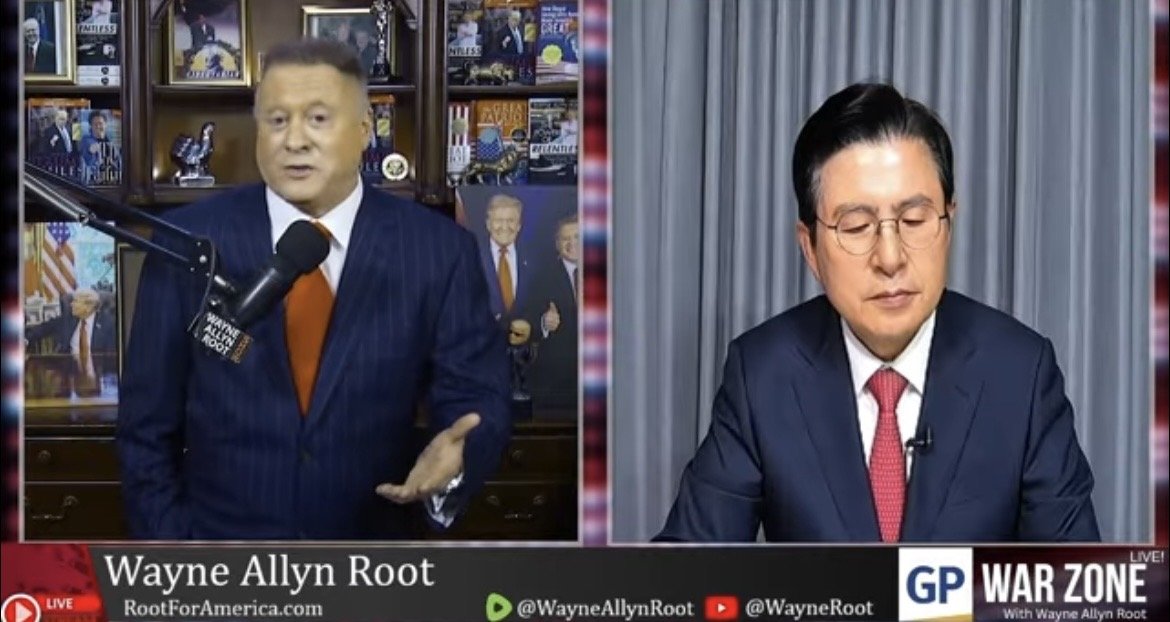
Former Prime Minister of South Korea Warns America That China & CCP Stole 2020, and Are Now Trying to Steal Midterms. Here is the Shocking Interview with Wayne Allyn Root

Wayne Allyn Root sat down a few days ago with the former Prime Minister and President of South Korea to discuss what’s happening in South Korea- they’ve had their elections rigged and stolen by China and the Chinese Communist Party.

But what came out of the interview should shock and horrify every American. The way South Korea’s election was stolen is an EXACT match with how America’s elections are being stolen. A match in every way. It’s the exact same game plan.

And the former Prime Minister of South Korea- now facing a prison term for “insurrection”- warns it’s the same culprit stealing elections in both countries with this same game plan- China and the Chinese Communist Party.

He warns the CCP is working hard right now to steal America’s upcoming midterms.

Here is a transcript of the TV interview.

Underneath this written transcript is a link to watch the entire actual TV interview.

Wayne Allyn Root:

All right, Wayne Allyn Root here with the man who served as the acting president of South Korea from 2016 to 2017. Served as the prime minister of South Korea from 2015 to 2017. We’re very honored to have Mr. Prime Minister Wong Kuan with us today. Thank you for joining us.

Hwang Kyo-ahn:

I’m happy to meet you. Thank you for having me.

Wayne:

It’s my honor. please introduce yourself to my American fans and tell us about your political career and your political service. So, we understand your background.

Hwang Kyo-ahn:

I served as South Korea’s Minister of Justice, Prime Minister, and acting president. During President Trump’s first term, I spoke with him by phone three times. I also served as the chairman of Korea’s main conservative party. In 2020, the party suffered a defeat in the general elections because of election fraud. Since then, I’ve been fighting to expose and prevent election fraud for the past six years. I founded an election watchdog organization called Election Justice Army. We monitored elections, gathered evidence, and took cases to court, took our messages to the streets. However, Korea’s main conservative party, the People Power Party, or the PPP, dismissed election fraud as “conspiracy theories,” moved in a pro-China direction, and refused to join the fight against election fraud. That’s the reason why I left the PPP last year and founded the Freedom and Innovation Party. The Freedom and Innovation Party is the only pro-America MAGA party in Korea. Thank you.

Wayne:

Well, your answer is very interesting because it sounds like parallel things are happening in our two countries. It sounds like in 2020, you suffered the exact same fate as President Trump. They stole the election from you. And these elections are being rigged and stolen in America. And it sounds like they’re being rigged and stolen in South Korea as well. Very similar parallel lines between our two countries. And you seem like the Donald Trump of South Korea.

Hwang Kyo-ahn:

Well, thank you. I take it as a compliment. Well, Korea has early voting, which is very similar to mail-in voting in the United States. Serious concerns have been raised about irregularities in the early voting process, including manipulation of turnout figures and problems involving voting and counting procedures. During the June 3rd local elections this year, ballot shortages disrupted voting at a number of polling stations, and now this is under investigation by the special prosecution. However, a thorough investigation is difficult because of what I believe is an entrenched election fraud cartel. The courts that ultimately rule on these cases are so closely intertwined with the election commissions that they effectively operate as one. In Korea, election commissions at each level are cheered by sitting judges. As a result, election invalidation lawsuits brought before the courts have all been dismissed. Against this backdrop, it has become extremely difficult to resolve these concerns within Korea itself.

Wayne:

Wow. There’s no question we’re in a parallel universe here. Our two countries are having the exact same crisis. And I would guess that the same group is manipulating American elections and South Korean elections.

Is my guess correct? The Chinese Communist Party.


Hwang Kyo-ahn:

That is exactly right. It is the CCP of China and also politicians in Korea that are closely aligned to China and North Korea. They are anti-South Korea and anti-American forces. China in its pursuit of global dominance has made not only the United States, but also South Korea a key US ally and the country closest to Beijing, a battleground for unrestricted hybrid warfare. So, South Korea is facing a crisis right now.

Wayne:

I’m willing to bet- and again, I’m just guessing here- that in China they don’t allow mail-in ballots. They don’t allow voting without proper ID, and they would never allow you to vote without proof that you’re a Chinese citizen. China doesn’t allow any of the things that they want to allow in America and South Korea to rig and steal elections.

Hwang Kyo-ahn:

That’s also an accurate depiction. There is a global cartel that is rigging elections worldwide and the free world including United States and South Korea are the victims.

Wayne:

So here in America, it wasn’t just rigged and stolen elections against President Trump. They tried their best to put him in prison for the rest of his life. He was persecuted by the deep state and by these terrible people in government. Is that happening in your country too? Have they tried to persecute you? Have they tried to put you in prison? Are they trying to destroy your life?

Hwang Kyo-ahn:

It’s the same in Korea. I’ve met with lots of Americans and they all agreed, when they saw what’s going on in Korea. It’s the same in America. So, it’s the same in Korea, same in America. When Dr. Frank came to visit South Korea to monitor elections, he looked at everything. He looked at the evidence, looked at what’s going on, and kept on repeating- it’s the same in America, same in Korea. So, the election fraud is happening the same way in Korea as well as in America. So, we need to join hands, join forces, in order to eradicate and fight against election fraud together.

Wayne:

And I’m sure it’s not just in America and South Korea alone. I’m sure it’s going on in every major country of the world. You’ve got the Deep State, and you’ve got the government swamp, and you’ve got the Chinese Communist Party everywhere in the world trying to steal elections.

Hwang Kyo-ahn:

Well, there is an organization called Aweber that was established in South Korea during the Obama administration. Through a web, election fraud is being exported to countries around the world and South Korea has become a global hub for election fraud and a testing ground for it. Right now, there’s 111 member countries in the Aweb. Aweb also signed an MOU with USAID and they’re using South Korea’s foreign aid funds to provide electronic voting and counting machines to countries including the Democratic Republic of the Congo. In the aftermath in the Democratic Republic of the Congo and Kenya, there were protests and they even came to South Korea over election fraud that happened in their respective countries. South Korea’s National Election Commission has not only exported electronic voting and counting systems through a web, but it also had held discussions with senior officials from Europe, Africa, and Brazil.

One man stands out in particular, I’m not sure whether you’re familiar with Paul DeGregorio. Well, he’s been associated with the EAC, Dominion, and Smartmatic. Paul DeGregorio came to South Korea and provided training to AVA officials and he also brought China into an international election exhibition. So, election fraud has been going on and taking place worldwide. Amazing. South Korea’s former president tried to investigate concerns about election fraud and election integrity and the result is he was convicted of insurrection and sentenced to life in prison. This is outrageous. As someone who has written a book on South Korea’s National Security Act, I have argued again and again that declaring martial law is a constitutional power of the president and President Yun’s action to declare martial law did not constitute insurrection. The National Assembly where many lawmakers have been elected through fraudulent elections ultimately impeached President Mun. Because of my position, I too was arrested on charges of inciting insurrection and I am currently on trial. So, if President Trump were ever to declare martial law, I would urge him to make sure it is carried through decisively.

Wayne:

What a story! It sounds exactly like what’s happened and happening in the United States of America, and may yet happen permanently in America.

Was the current president of South Korea elected through election fraud? Tell us about his policies towards China and North Korea. And let me guess, yes, I’m guessing he was elected through election fraud, and I’m betting and guessing China’s fingers are in all of it, and all the election fraud. And I’m betting his policies favor becoming friendly with China and North Korea.

Hwang Kyo-ahn:

That is exactly true. The current government is accelerating its pro-China anti-American policies. That’s not what most of the people of Korea want. At the same time, South Korea’s military has been weakened to the point of being virtually disarmed. Visa-free entry for Chinese nationals has seriously undermined public safety in Korea. Korea had once been known for being very safe, but now people feel endangered.

Wayne:

So, first of all very scary- it’s come down to the entire world against President Trump, and me, and you- and we’re the lone figures fighting all of this by ourselves. Terrible.

Hwang Kyo-ahn:

Well, it’s a lonely fight, but thanks to President Trump and to America, I’m able to keep up the fight boldly and courageously.

Wayne:

Last question of our interview. My question would be, what advice would you give to President Trump and to his Republican party, my party, to try and win the midterms and prevent election fraud, which is in about one month, our midterms, and I believe Democrats will try and steal them. What would be your advice to prevent this from happening to President Trump and my Republican party?

Hwang Kyo-ahn:

I fully understand the urgency. Well, requiring ID to vote is simply common sense. When people oppose even such a basic safeguard, this raises the question of whether election fraud is the underlying intent. Checking voter ID is perfectly reasonable and legitimate. But as we have seen in Korea, voter ID alone cannot prevent election fraud. We also need strong monitoring at polling stations. In Korea, our election justice army is doing exactly that. But even if we prepare against all of these problems, I believe they will still find a way to carry out election fraud. That’s why given the current situation in the United States, emergency measures such as pausing the election may be necessary to address election fraud. I believe exposing election fraud in South Korea first could also help America. President Trump could point to Korea as a case study and make his case to the American people for why he believes an election should be paused. The presidents of both Brazil and South Korea fell to election fraud. With all my heart, I hope America will fight election fraud and win. America’s victory will be a victory for justice and order around the world. The Freedom and Innovation Party and I will stand with America. That’s why I cry out. We go together.

Wayne:

I agree. I agree. A fitting ending. Very fantastic ending. Please know Mr. Prime Minister that I was the gentleman in America who invented the idea of a “National Security Emergency for Elections.” You brought up the word “emergency.” That’s exactly what I’ve advised President Trump. President Trump and I have done 17 interviews together. And in my 17th interview three weeks ago, I advised him to declare a “National Security Emergency” for this election which would allow President Trump to impose by the federal government, voter ID, proof of citizenship, paper ballots and end large scale mail-in ballots. I recommended all of that and he’s thinking about it right now, and I’m hoping he does that.

Hwang Kyo-ahn:

Yes, we support President Trump, and I urge all Americans to support President Trump.

Wayne:

Mr. Prime Minister, we appreciate everything you’re doing, and we say God bless you. Thank you for all you’ve done, Mr. Prime Minister serving as acting president of South Korea from 2016 to 2017. Serving as prime minister of South Korea from 2015 to 2017. Prime Minister Wang Quo and thank you. God bless you. Thank you very much.

Hwang Kyo-ahn:

God bless you. God bless America.

You can watch the entire TV interview here:

https://youtu.be/99owrOPgYzA

ABOUT THE AUTHOR: Wayne Allyn Root is a CEO, businessman, best-selling author, and national conservative TV and radio host, who has interviewed President Trump 17 times. Watch Wayne’s TV shows on Real Americas Voice TV- “America Speaks” weeknights and “America’s Top Ten Countdown” on weekends- and his daily video podcast “WAR Zone Live presented by The Gateway Pundit” daily at 4:30 PM ET/1:30 PM Pacific at TheGatewayPundit.com. His website is ROOTforAmerica.com. Read Wayne’s latest fun book, “How Illegal Immigrants Have Made America Great.” It’s 100+ blank pages. The joke is on Democrats!

The post Former Prime Minister of South Korea Warns America That China & CCP Stole 2020, and Are Now Trying to Steal Midterms. Here is the Shocking Interview with Wayne Allyn Root appeared first on The Gateway Pundit.


Ukraine Field Report: Russian Glide Bomb Kills 30 on Kramatorsk Buses as Pryluky Death Toll Reaches 22

Two passenger buses after a Russian guided bomb strike in Kramatorsk, October 8, 2026. Photo courtesy of DSNS, Donetsk region.


A Russian guided bomb struck two passenger buses in Kramatorsk on the morning of October 8, killing 30 people. Russian drones also hit an energy facility serving Kyiv, while attacks killed or wounded civilians in eight regions. Regional reports put the day’s toll at 42 civilians killed and 87 injured.

The Kramatorsk strike occurred at about 10:00 as the buses traveled along a city street. Donetsk Oblast head Vadym Filashkin reported 20 injured. Ukrinform identified the weapon as a UMPB D-30SN guided bomb. Regional police said some victims were badly burned, and the emergency service said Russian drones circled the site, forcing rescuers to take cover.

“The Russians are deliberately targeting civilians,” Filashkin said. He ordered public transport suspended in Kramatorsk and Sloviansk. President Volodymyr Zelensky said, “This strike will not go without our response.”

Elsewhere in Donetsk Oblast, Russian aircraft dropped three bombs on Bilenke, killing three people and damaging 22 private houses. An FPV drone struck a car near Zoloti Prudy, injuring two people. These attacks brought the oblast’s daily toll to 33 killed and 22 injured.

Overnight, Russia launched 142 attack drones at Ukraine, including 82 jet-powered drones. The Air Force said air defenses downed or suppressed 126, with hits recorded at seven locations.

Energy Minister Denys Shmyhal said Russia struck an important energy facility serving Kyiv. Ukrenergo shut off parts of the grid supplying the capital, and water pressure dropped in five Kyiv districts. Drone strikes continued throughout the day, with one hitting a four-story commercial building in the Solomianskyi district. Mayor Vitali Klitschko reported four killed and 19 injured in Kyiv on October 8. The capital has faced repeated drone attacks, including strikes that hit a school earlier this month.

In Kyiv Oblast, attacks on the Bucha and Fastiv districts injured five people and damaged homes, a school, and a kindergarten.

In Sumy Oblast, Russian forces carried out nearly 40 attacks on 21 settlements, leaving one man dead and 14 people injured. The injured included two 12-year-old boys wounded in a rocket artillery strike on Sumy city. The region has faced sustained bombing for weeks.

Russian forces attacked Dnipropetrovsk Oblast more than 40 times. A guided bomb killed two men, both 62, in Vasylkivka, and attacks injured two men in the Nikopol district. In Kharkiv Oblast, strikes on Zolochiv and Khotimlia injured three people, following attacks that killed five earlier this month.

In southern Ukraine, Russian forces carried out 1,039 strikes on 51 settlements in Zaporizhzhia Oblast, killing two people and injuring 18. In Zaporizhzhia city, a missile strike injured 13 people, including three children, and a drone killed a driver.

Russian shelling of 39 settlements in Kherson Oblast injured four people, including a child. In Odesa Oblast, a drone attack destroyed 14 cars in a parking lot and damaged an animal shelter, killing one animal. In Rivne Oblast, a drone set fire to a civilian enterprise, with no injuries reported.

Meanwhile, rescuers in Pryluky, Chernihiv Oblast, worked through the night clearing a five-story apartment building struck by a Kh-101 cruise missile on October 7. The emergency service said the death toll from that attack rose to 22, including five children. Another 54 people were injured, including seven children.

Ukraine also struck targets inside Russia. The General Staff confirmed a hit on the Gazprom Neftekhim Salavat refinery in Bashkortostan, saying the plant supplies the Russian army. A drone strike shut down a Yandex data center in Sasovo, Ryazan region, disrupting Yandex Cloud and other services. The General Staff reported Russian losses of 1,830 personnel over the previous 24 hours, bringing its cumulative estimate to 1,547,780.

On the diplomatic front, Zelensky said Ukraine’s negotiating team, comprising Budanov, Kyslytsya, Arakhamia, and Umerov, would meet Kushner and Witkoff in the United States on October 9. Secretary of State Marco Rubio said in September that Trump had invited Putin to December’s G20 summit in Miami.

South Korea announced it would recall Ambassador Park Hee-chang after Zelensky disclosed the transfer of two North Korean prisoners of war to Seoul in his September 23 UN speech. Seoul said the disclosure violated a confidentiality agreement.

In Chisinau, Moldovan President Maia Sandu said, “If this winter in Ukraine is as difficult as the whole world expects, we are ready to receive as many people as need safety.” More than one million Ukrainians have arrived in Moldova since 2022.

The post Ukraine Field Report: Russian Glide Bomb Kills 30 on Kramatorsk Buses as Pryluky Death Toll Reaches 22 appeared first on The Gateway Pundit.

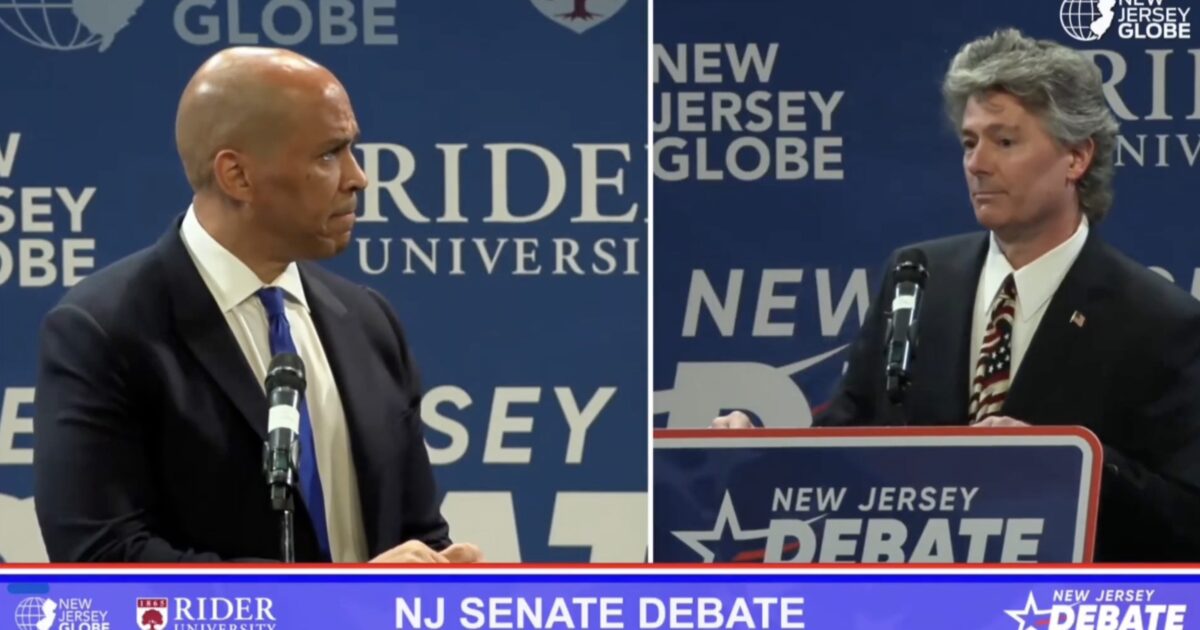
WATCH: Navy Vet GOP Senate Candidate Justin Murphy Stuns Cory Booker in NJ Debate — Tells Trump to “Finish” Iran War, Put on Cowboy Hat and “Kick Some Ass” as Crowd Erupts

Republican Senate candidate Justin Murphy delivers a fiery response on the Iran war as Democrat Sen. Cory Booker looks on during a heated New Jersey Senate debate.

New Jersey Republican Senate nominee Justin Murphy delivered a blistering, no-nonsense response on the war against the Iranian regime during his only debate against longtime Democrat incumbent Cory Booker, bringing the house down at Rider University and leaving the usually verbose Booker looking stunned.

Asked by New Jersey Globe moderator David Wildstein what he would advise President Trump if the president called and said he would do whatever Murphy wanted on Iran, the Navy veteran didn’t hesitate.

“Finish it,” Murphy declared.

“Finish that war in a positive manner. We can’t wait halfway through and decide we don’t want to do this anymore. The Iranian Islamic Revolutionary Guard Corps is a radical terrorist organization that has deprived the Iranian people and the Persian people of their history and of a decent life. They have murdered, raped, tortured, assassinated, promoted, and promoted terrorism all throughout the world, especially in the region of the Middle East. They are a cancer on human existence.”

Murphy then reached back to the 1979 U.S. Embassy hostage crisis that many Americans still remember vividly.

“I remember as a young boy watching those walls of our— November of 1979, watching the radical Islamic terrorists storm over the walls of our embassy and 52 Americans held for 444 days. And ever since November of ’79, the IRGC in Iran has done nothing but export terror, murder, rape, oppression, and assassination to the region and to the world. And it’s time it stops. Four decades is enough. The Iranian people have suffered enough.”

He closed with the line that has since gone viral: “And I would say, Mr. President, put your cowboy hat on and get out there and kick some ass and get this done and done right.”

The crowd’s reaction was immediate and enthusiastic. Booker’s expression, by contrast, told the story of a Democrat who has rarely faced this kind of direct, unapologetic pushback from a Republican challenger on the stage.

Booker had just finished attacking Trump’s decision to confront the regime, calling it “one of the most colossally stupid things the president has ever done” and claiming the United States is now stuck in “another Middle East quagmire.” He later dismissed Murphy’s stance as “yahoo cowboy foreign policy” and “false bravado,” insisting military force should only be a last resort after diplomacy.

Murphy, who served four years in the U.S. Navy aboard the USS Comte De Grasse (including time in the Persian Gulf during the Iran-Iraq War) and previously served as Tabernacle Deputy Mayor, rejected the quagmire framing outright.

He has argued the regime’s nuclear ambitions make delay catastrophic and that the IRGC’s decades-long export of terrorism must end.

WATCH:

The post WATCH: Navy Vet GOP Senate Candidate Justin Murphy Stuns Cory Booker in NJ Debate — Tells Trump to “Finish” Iran War, Put on Cowboy Hat and “Kick Some Ass” as Crowd Erupts appeared first on The Gateway Pundit.

President Trump and Putin Show that They Control Supply and Demand of Oil and Gas and the Endgame Is Near

Ukrainian leader engaged in conversation while adjusting an earpiece, with a national flag in the background.

President Trump and Putin Show that They Control Supply and Demand of Oil and Gas and the Endgame Is Near

Last Refuge shared the following:

Here’s another incredible viewpoint…

The post President Trump and Putin Show that They Control Supply and Demand of Oil and Gas and the Endgame Is Near appeared first on The Gateway Pundit.

WNBA EMBARRASSMENT! Angel Reese and Atlanta Dream Forced Into Tiny 3,500-Seat Arena for Championship Finals After NBA Games and Concert Take Priority

Screenshot

The Atlanta Dream, featuring the perpetually controversial Angel Reese, will host their home games in the 2026 WNBA Finals in a venue that seats just 3,500 fans, roughly the size of a large high school gym, after failing to secure anything bigger.

According to USA Today, the Dream’s efforts to move Games 3 (October 22), 4 (October 24), and a potential Game 6 (October 29) to State Farm Arena, which holds more than 17,000, have collapsed.

State Farm is already booked for singer Sombr’s concert and two Atlanta Hawks regular-season games, including the Hawks’ home opener.

Attempts to secure Gas South Arena (up to 13,000 seats) or Georgia Tech’s McCamish Pavilion (about 8,600) also hit roadblocks.

Barring a last-minute miracle, the games stay at Gateway Center Arena in College Park, Georgia, the Dream’s regular home since 2021.

This comes days after the franchise announced a multi-year deal to play all home games at State Farm Arena starting in 2027, touting “record growth,” a 400% jump in season-ticket members, and the “passion of our fans.” The timing is awkward.

The Dream hosted several regular-season and earlier playoff games at the larger arena this year, drawing strong crowds, yet the championship series gets the tiny building.

This comes days after the franchise announced a multi-year deal to play all home games at State Farm Arena starting in 2027, touting “record growth,” a 400% jump in season-ticket members, and the “passion of our fans.” The timing is awkward. The Dream hosted several regular-season and earlier playoff games at the larger arena this year, drawing strong crowds, yet the championship series gets the tiny building.

In recent weeks, TGP reported that viewership cratered after Caitlin Clark and the Indiana Fever were eliminated, dropping sharply as the “wokest league in professional sports” continued its pattern of favoring drama, questionable officiating, and preferred personalities over the one player who actually filled arenas and drove ratings.

The post WNBA EMBARRASSMENT! Angel Reese and Atlanta Dream Forced Into Tiny 3,500-Seat Arena for Championship Finals After NBA Games and Concert Take Priority appeared first on The Gateway Pundit.

Earn A Generous Welcome Bonus And Pay No Interest Until 2028

A luxury black marble credit card resting on a pile of hundred-dollar bills, symbolizing wealth and financial transactions.

Note: The information provided here or in any related communications is for informational purposes only and should not be considered as financial advice. We do not provide personalized investment, financial, or legal advice. Gateway Pundit benefits from purchases made through our sponsors.

A luxury black marble credit card resting on a pile of hundred-dollar bills, symbolizing wealth and financial transactions.

Every month you pay interest on a credit card balance, that’s money straight out of your pocket … and it adds up fast.

Our credit card experts reviewed dozens of cards and found one worth your attention right now: This 0% intro APR card lets you pay no interest until 2028 on purchases and balance transfers.

But here’s the part some people miss — this card also lets you earn a generous bonus just for hitting a simple spending threshold you’d probably meet anyway, plus up to 5% cash back on everyday purchases.

No annual fee. No gimmicks. Whether you’re paying down a balance or planning a bigger purchase, this card could save you hundreds on interest.

Don’t sleep on this — click here to learn more.

The post Earn A Generous Welcome Bonus And Pay No Interest Until 2028 appeared first on The Gateway Pundit.