New Study Finds International Communists and Radical Leftists Are Leading French “Student” Protests – Only 1 in 3 Groups Are Students or Youth Groups

Commies on the march…

Less than one in three organizations leading the violent “student protests” in France are student groups or youth groups.

The rest of the groups are international agitators and communist groups.

They’ve launched their revolution on the West in France. How soon before these same communist, anarchist groups bring their violence to the streets of America!

Behind all of the chaos and street unrest is the American-born, Shanghai-based tech tycoon and communist Roy Singham.

Tech billionaire and communist Neville Roy Singham -screengrab

Singham is accused of being behind the anti-ICE riots, the anti-Trump protests following the arrest of Maxist tyrant Nicholas Maduro in Venezuela, the anti-Trump Iran protests, Cuban propaganda in the US, and the “anti-Kings” protests in the US, to name a few.

And, Roy Singham is central to all of these staged and paid for protest movements in the US today.

The fake news WILL NEVER report on this. They must agree with him.

And now, we learn that Neville Roy Singham is indirectly funding the rioting in France.

FOX News Digital also reported that less than one-in-three groups linked to the French protests are student or youth groups.

A Fox News Digital investigation has found that a transnational network of far-left communist and socialist organizations is seizing on France’s fiery student protests to advance a wider political and ideological agenda, using tactics deployed in the United States over the past decade to amplify unrest, deepen divisions and project an image of chaos.

Earlier in the week, BreakThrough News splashed another headline across the front of its website: “French students shut down schools in historic strike against austerity,” mobilizing “with support from unions and progressive forces.”

But those “progressive forces” aren’t limited to students demanding education reform as part of their “Lycéenne Mobilisation,” or high school student mobilization.

From France to the United States, the United Kingdom, Brazil, Greece and India, adults with deep pockets are tapping France’s school protests and turning a domestic education dispute into a platform for broader political and ideological confrontation. BreakThrough News is a pro-communist propaganda outlet based in New York City, funded by an American-born, Shanghai-based communist tech tycoon, Neville Roy Singham, who has financed a network of communist and far-left groups in the U.S. that have capitalized on grievances to stoke similar street unrest for almost a decade.

A Fox News Digital investigation traces how a movement that the media is mostly framing as students protesting deteriorating school conditions is actually part of an extensive infrastructure of unions, communist activists, far-left political parties and international media organizations that are organizing demonstrations, calling strikes, mobilizing supporters and broadcasting the unrest around the world with “BREAKING” alerts.

In a digital analysis of scores of news articles, social media posts and public statements, Fox News Digital has identified 50 organizations in the French student protest movement and its wider network of supporters and international amplifiers, revealing an activist ecosystem extending far beyond the students who launched the demonstrations.

Of the network of 50 groups, 15 are student or youth groups, including several communist youth movements and a Muslim student association.

From our previous reporting–

The Gateway Pundit’s Antonio Graceffo reported that Singham is the funder behind the communist part network that is fueling the anti-ICE protests across the US.

FBI Confirms Investigation Into Foreign Funding as Violence Spreads to 25+ Cities, and Cash Trail Leads Back to the Chinese Communist Party.

The anti-ICE riots engulfing Los Angeles and spreading to more than 25 American cities are not the spontaneous uprisings the mainstream media wants you to believe.

It all goes back to the Communist Chinese.  Aren’t you glad the American presidents and political leaders helped shape that communist regime into what it is today?

The post New Study Finds International Communists and Radical Leftists Are Leading French “Student” Protests – Only 1 in 3 Groups Are Students or Youth Groups appeared first on The Gateway Pundit.

Iran Wary Day 227: Oil Prices Climb as Trump Mulls Joining Yemen War

The price of Brent crude oil on Monday morning topped $105 per barrel—a two-week high—amid an escalation in fighting between Saudi Arabia and the Yemeni Houthis, an Iran-aligned group. President Donald Trump said Saturday he may join Saudi Arabia’s retaliatory strikes following attacks by the Houthis including on the main international airport in Riyadh.

The skies over Riyadh were empty on Monday as Saudi Arabia maintained a suspension of operations at the airport.

Iran said Sunday night it had offered to mediate between Saudi Arabia and the Houthis. “Insisting on a military approach and ignoring a political solution will further complicate the current situation,” said a statement published by the Iranian foreign ministry on social media. While the Houthis are often described as a “proxy” of Iran, regional experts say they act independently of Tehran in pursuit of their own distinct objectives.

A 2022 truce between the Houthis and the Saudi-backed Yemeni government forces broke down in recent months. The resumption of fighting in Yemen, as well as successful Houthi attacks on Saudi Arabia, have raised fears of an escalating regional war drawing the U.S. and Iran back into major direct hostilities.

Iran’s national security advisor said Sunday that Tehran would target digital infrastructure in the Gulf if fighting with the U.S. resumed.

The post Iran Wary Day 227: Oil Prices Climb as Trump Mulls Joining Yemen War appeared first on The American Conservative.

HERE WE GO: Canadian Military Prepares for Possible “U.S. Invasion” as Globalist PM Mark Carney Takes Trump’s 51st State Warnings Seriously

Credit: The White House

Canadian Prime Minister Mark Carney has publicly confirmed that his government has prepared for a once-unthinkable scenario: a military invasion by the United States.

The revelation was highlighted in an October 3 report by the BBC titled “Why Canada is preparing for a (long shot) US invasion.”

According to the BBC, Canada’s military is considering hypothetical scenarios involving American military action as relations between Ottawa and Washington deteriorate under President Donald Trump’s second administration.

The extraordinary development follows months of political and economic confrontation between President Trump and Canada’s political establishment, particularly over trade, national sovereignty, defense spending, and Trump’s repeated suggestions that Canada could become America’s 51st state.

And now Canadian officials are treating the possibility seriously enough to incorporate it into national security planning.

In a September 23 interview with The New York Times, Carney acknowledged that his government had considered the possibility of military action by Washington.

“I think you have a responsibility in these roles to look at extreme tail risk,” Carney told the Times.

“That’s just risk management,” he continued.

The prime minister stressed that an American invasion was not his government’s expected scenario, but argued that ignoring even highly improbable threats would be irresponsible.

When pressed about whether Canada had undertaken specific preparations, Carney declined to elaborate.

According to reporting cited by the BBC and earlier Globe and Mail accounts, Canadian military planners modeled a hypothetical American attack for the first time in a century.

The model projects U.S. forces overwhelming Canada’s strategic land and sea positions within a week, or as little as two days, after which Canadian forces would shift to guerrilla-style tactics resembling those used against U.S. and allied troops in Afghanistan.

Officials indicated that Canada would look to allies such as Britain and France for support. Canada’s defence chief has also pushed for a massive expansion of reserve forces, including up to 300,000 lightly trained citizen soldiers.

Military experts quoted by the BBC described an actual invasion as highly improbable given deep integration through NATO and NORAD. Former Royal Canadian Air Force Lt.-Gen. Christopher Coates noted that planners never previously considered an attack originating from U.S. territory.

The White House responded directly: “President Trump has done more than anyone to protect the great people of Canada.”

Trump has previously stated that the use of military force against Canada is “highly unlikely” and that he prefers economic leverage to achieve political objectives.

This isn’t the first time Mark Carney has flexed his non-existent military muscles against the United States.

As The Gateway Pundit previously reported, Carney previously issued aggressive threats against Washington over Greenland, bizarrely hinting at military action and invoking NATO’s Article 5 to “defend” Denmark against American interests.

Carney has repeatedly signaled that Canada must abandon its historic posture toward the U.S., telling global elites at the World Economic Forum in Davos that “middle powers like Canada” need to break away from American leadership and pivot toward globalist networks.

Now, the regime in Ottawa has taken its anti-Trump hysteria to full-blown military delusions.

The post HERE WE GO: Canadian Military Prepares for Possible “U.S. Invasion” as Globalist PM Mark Carney Takes Trump’s 51st State Warnings Seriously appeared first on The Gateway Pundit.

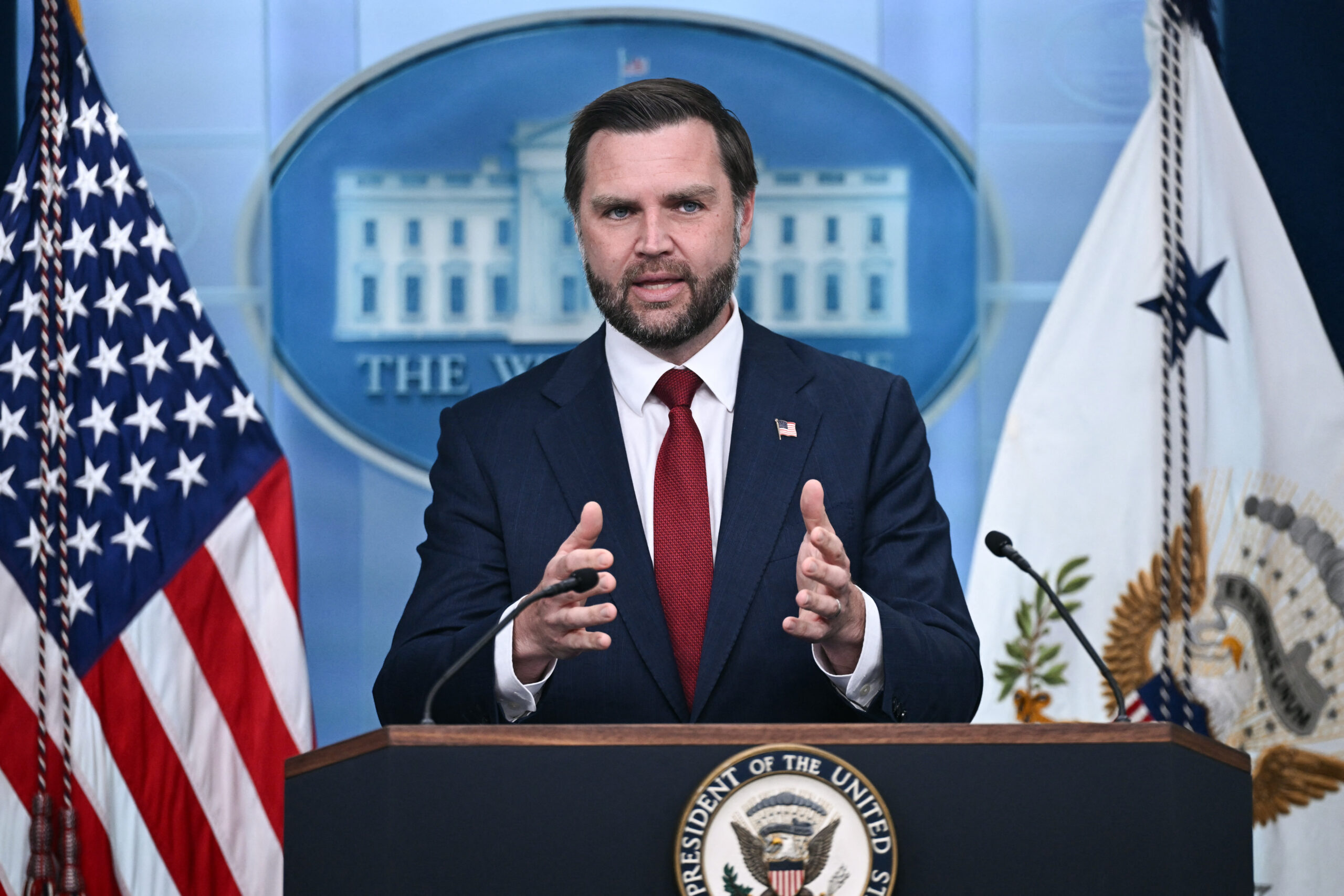
What I Saw and Heard in Vance Country

What I Saw and Heard in Vance Country

Southeast Ohio is a long way from New York City.

US-POLITICS-VANCE
Photo by Brendan SMIALOWSKI / AFP via Getty Images

People in Meigs County, Ohio, though polite, do not like to talk to strangers, which may be why election polling here is often inaccurate. To hear their candid views, you need to be someone they already trust, or with someone they do, in my case a college friend originally from this part of southeast Ohio. I had seen New York City on this same trip, and wanted to see some of the rest of the country.

Meigs is considered by many to be the northwestern fringe of Appalachia—not a hard argument to make. Many people live on farms, as their Scotch-Irish immigrant ancestors have for the last 200 years. The farms are far apart. Everyone is connected to one of the tiny towns in the area by old land surveys, modern tax collection, regional high schools, or by the church they drive in to attend.

The soil is not bad, though rocky in places, and farming is encumbered by hills. Summer is hot and humid, but the intermittent rain makes it easy to grow fruits and vegetables. People live off that in large part, selling to wholesalers and in small stands erected close to the main road. Signs were advertising cucumbers and sweet corn when I was there, so fresh they’d make Trader Joe himself blush. Many families also make crafts and raise bees for honey, which they sell to tourists who drive out from Columbus for a day in the country. The best local stuff, however, is offered by the area’s small Amish community. The Amish are shy, and you generally only know you’re in their neighborhood when you start to see the yellow and black “horse and buggy” caution signs.

This place feels as far away from New York City as one can get without time travel. The people out here voted Trump into office twice—“three times,” they’ll say with a chuckle—because they felt abandoned by the pre-Trump, city-dwelling elites. Folks are worried but not terribly concerned about the latest Mideast war. Every town has war memorials, many displayed at high schools and showing the names of local boys lost. They have gotten through that before and expect to do so again. The military is revered because it is one of the few government institutions they believe still sees them. They know Trump didn’t always tell them the truth, but he did speak directly to them, and that counted.

They like Vice President J.D. Vance but remain a little unsure. His roots are from the right place, however, and that matters around here. The possibility of anyone I spoke with voting for a democratic socialist is roughly the same as their voting to shut down the Dairy Queen in July. According to one source, Meigs County is around 79 percent Republican; more importantly, 71 percent of adults typically vote, solidly above the U.S. average. The Democrats should take note as they try to retake Ohio in this year’s elections.

Many in the area rely on food stamps. Yet people tend to see their benefits as deserved, since most work and pay taxes, unlike the way they see the people in big cities, who they think depend on the same assistance across multiple generations. It takes little more than a bottle of beer to hear anecdotes suggesting this perspective is racially tinged, as is locals’ view of democratic socialism. Public opinion here is still shaped by local daytime conservative talk radio shows listened to in the truck. Being here you understand that the jumbled beliefs people hold do not always make sense—but they vote based on those beliefs, whether you find them logical or not.

You sadly cannot talk about rural America anymore without talking about drugs. The Ohio Department of Health says Meigs County struggles with a high rate of drug overdose deaths, mostly due to fentanyl and meth. The county is one of the harder-hit areas of the state: In 2023, it recorded an age-adjusted unintentional drug overdose death rate of 94 deaths per 100,000 people. No one I spoke with admitted to any drug use or knowing anyone who used or sold drugs, but it is telling that there are 13 listed drug and alcohol rehabilitation centers in or around nearby Pomeroy, a town of only 1,573 people. It is easier some days not to try getting back on your feet.

This was not my first trip to this area. I went to high school and college in various parts of Ohio, and think I know these folks. I wrote a book about southern Ohio that was published long before Hillbilly Elegy came along. So I know more than to traffic in clichés about rural America, the meth, the uneducated adults with no teeth who went Republican because they hated the color of Obama’s skin. This place and its people are much too complex to be reduced to fodder for the Trump-era culture war.

After the elections in November, Meigs County will still be here. Most of its children will stay put as they grow older, while the political reporters who parachuted in will move on to the next election and the next town that supposedly explains America. Meanwhile, the distance between places like this and New York will grow.

The post What I Saw and Heard in Vance Country appeared first on The American Conservative.

Open Borders Do Not Fund Schools

Open Borders Do Not Fund Schools

Decreased school attendance may hurt some districts temporarily, but it ultimately helps state budgets.

Yellow,School,Bus,Driving,Along,A,Suburban,Street,In,The

Credit: image via Shutterstock

Mass deportation sometimes causes school districts to lose funding in states that don’t plan for sudden attendance losses. In Texas, a newspaper tried to use this fact to argue against immigration enforcement. All it did was remind the public that the federal government needs to apply the law consistently before the problem of illegal immigration gets out of hand for local schools.

This past April, the Houston Chronicle ran a story titled “Kids Missing from Schools.” It focuses on how school districts lose funding when stricter immigration enforcement leads to fewer immigrant students, whether through forced removals and self-deportations or because illegal alien parents keep their children home out of fear

Texas schools receive around $6,000 per student from the state, based on average daily attendance. When students’ families get deported, a district therefore loses money the following school year. This is a real inconvenience, albeit a temporary one. Districts cut programs, lay off staff, and reduce bus routes after attendance falls for any reason. In the end, they adapt.

According to a 2024 poll, most Americans don’t believe taxpayers owe anything to the children of trespassers and visa overstayers. However, many do blame public education’s failure on a lack of funding. Convincing readers that deportation harms education is a smart strategy to turn them against it. 

The Chronicle complains that 20 Houston-area districts lost a combined 8,300 immigrant students between the 2024–25 and 2025–26 school years, with nearly 4,000 alone from the Houston Independent School District (ISD). Those are drops in the bucket. Findings from the University of Houston’s Education Research Center, for instance, show that Houston ISD, the state’s largest district, enrolled nearly 177,000 students in 2024–25.

Deportations alone did not drive down attendance in those districts, which the story admits. Data from the Baker Institute suggest Houston ISD’s immigrant student losses represent roughly half of its overall student decline of 7,919. And in the Cypress-Fairbanks ISD, year-over-year immigrant student growth simply slowed, even as overall attendance fell 2.7 percent.

The share of revenue these districts lost was smaller than their attendance dips would suggest. Spring Branch ISD lost $6 million, or 1.2 percent of its revenue, against a 3.1 percent decline in enrollment. Cypress-Fairbanks ISD lost $13 million, or 1.1 percent of its revenue, against its 2.7 percent decline. Meanwhile, property tax audits in the Cypress-Fairbanks ISD turned up an unexpected $26 million, more than offsetting its loss of state funding.

Texas lacks “hold harmless,” a rule that would cushion sudden attendance drops by phasing down funding. But any shortfall districts may experience represents a gain for the state’s budget and its taxpayers because of how the state funds education.

Property-wealthy districts that raise more than the state’s allotment must send their excess tax dollars to the Foundation School Program (FSP), a process known as “recapture” or “Robin Hood.” Property-poor districts that don’t raise enough tax to trigger recapture then receive state aid from the FSP in proportion to their need.

No matter where illegal alien families live, the state budget loses. If they live in a recapture district, their children’s school attendance lowers the district’s contribution to the FSP. If they live in a non-recapture district, the state must send that district more money. So, although deportations often cost individual districts a little, they improve the state’s bottom line.

Even that modest trade-off is limited to states like Texas. States with “hold harmless” provisions insulating district funding levels against enrollment fluctuations have less fiscal reason to object to mass deportations. New York, for instance, has guaranteed districts at least the prior year’s funding since 2008.

In Plyler v. Doe (1982), the Supreme Court ruled that states cannot deny children of illegal aliens a free education. This burdens border states when the federal government doesn’t secure the border, because reduced-price lunches, bilingual aides, and building expansion aren’t free.

The real danger comes when presidents ignore immigration law in the country’s interior. This signals de facto amnesty and serves as a magnet for more illegal aliens. That influx then forces districts to add new classrooms, and often new schools, on the assumption that the new enrollment is permanent. When voters inevitably elect a president to restart deportations, districts can cut operating costs with little pain. However, they cannot easily slash debt, leaving taxpayers to cover the capital costs on buildings for nonexistent students.

People should suspect an ulterior motive behind any cost-benefit analysis from opponents of immigration enforcement. Even if the Chronicle is sincere in its concern for the modest funding loss that deportations cause, enforcing immigration law consistently from the start would prevent districts like those around Houston from losing revenue for which they should never have planned.

The post Open Borders Do Not Fund Schools appeared first on The American Conservative.

How Israel Conquered the Latin American Right

How Israel Conquered the Latin American Right

From Bukele to Bolsonaro, the region’s conservatives have learned to love Zionism.

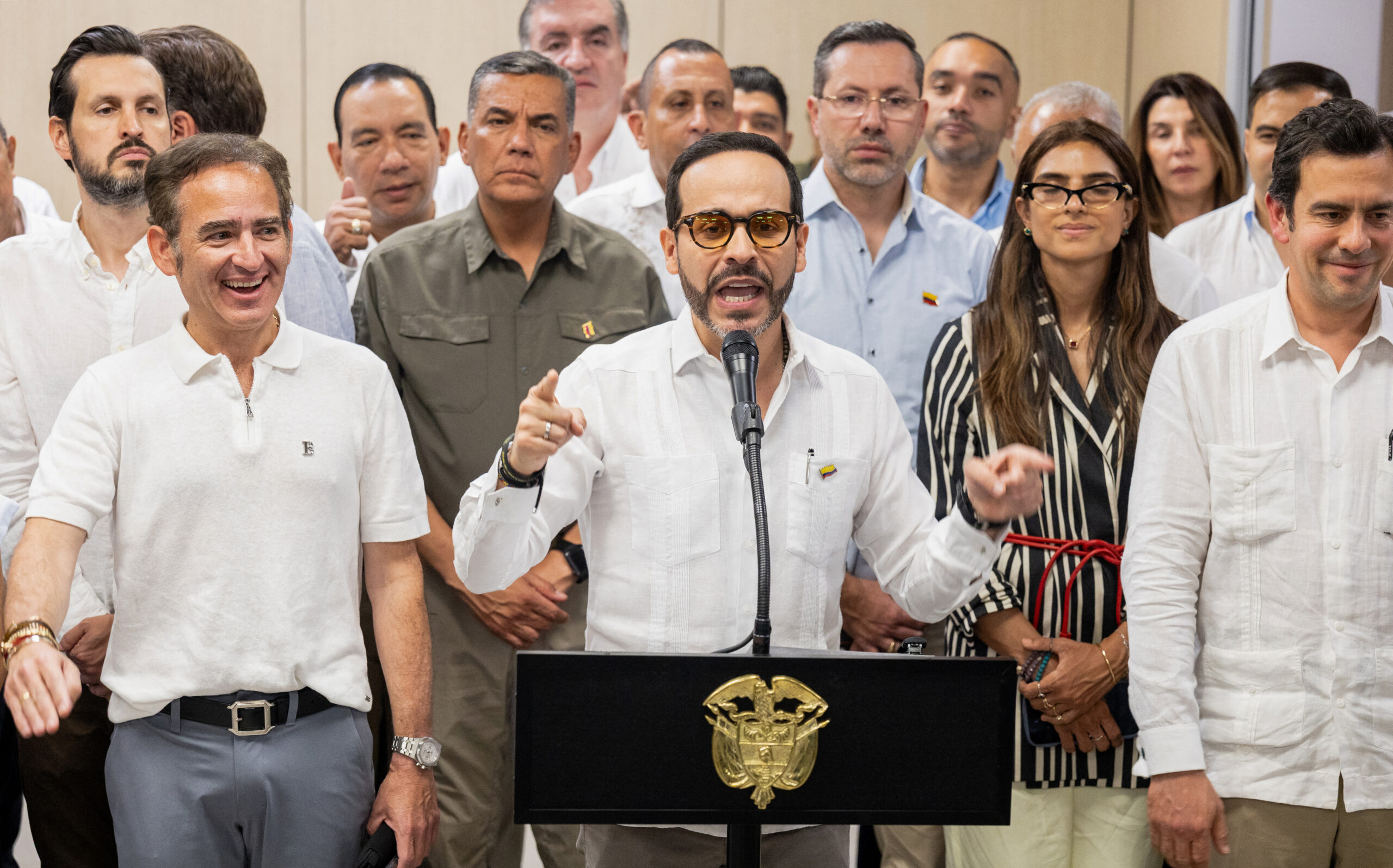
COLOMBIA-CONFLICT-DRUG
(Marco PERDOMO / AFP via Getty Images)

Among the first acts of Colombia’s new president Abelardo de la Espriella was to formally recognize Israel’s claim over the Golan Heights. Months earlier, Brazilian presidential candidate Flávio Bolsonaro—who is currently locked in a tight race with the incumbent Lula da Silva—had met with Israeli settlers in the occupied West Bank, for whom he expressed his “full support.” (Bolsonaro the younger also stated that as president, his first international visit would be to what he and Israeli supremacists call “Judea and Samaria.”) 

From Santiago to Tegucigalpa, Latin America’s latest wave of right-wing governments have deepened relations with Israel—even as most of the region’s residents remain skeptical.

Outside of a few Central American countries, public perceptions of Israel are overwhelmingly negative in Latin America. In 2026, Pew found that 60 percent of Chileans, 56 percent of Colombians, 55 percent of Argentines, 54 percent of Brazilians, and 50 percent of Peruvians had an unfavorable view of Israel (favorable views ranged between just 21 and 29 percent). In the same countries, nearly two-thirds of respondents said they had “no confidence” in Israeli Prime Minister Benjamin Netanyahu. What, then, explains the stark discrepancy between public opinion and the positions of right-wing governments?

There are basically three factors at play. As I argued in the last edition of this magazine, the first centers on the self-hatred of Latin American elites, and the related worship of purportedly more developed countries—most notably, the United States and its allies. From the perspective of highly educated, right-wing businessmen and politicians, support for Israel is a low-cost, high-visibility way of signaling fealty to Washington and especially the Trump administration. The second finds its motive force from evangelical pulpits, Pentecostal megachurches, and the Zionist outreach that has quietly built a religious infrastructure for pro-Israel politics. In many states in the region, Israel’s multinational lobby has cultivated an evangelical electorate with considerable political sway. Finally, security ties with Israel have helped some of the region’s governments to accomplish their own strategic goals (including, in some cases, the surveillance of political opponents).

***

Of all of the region’s right-wing leaders, Colombia’s Abelardo de la Espriella is arguably the emphatically and cynically pro-Israel. For years, de la Espriella—a millionaire lawyer for drug traffickers—was a self-described atheist, until he converted to Catholicism prior to launching a presidential bid. In tandem with his newfound religiosity, he also acquired a fervent Zionism, mediated by an elite network of diplomats, Jewish community leaders, and evangelical pastors. In 2025, the then-candidate met privately with the Israeli Foreign Minister Gideon Sa’ar, who later thanked de la Espriella for his recognition of Israel’s sovereignty over the Golan Heights. And by June 2026, de la Espriella was saying he believed that Netanyahu had done what was necessary in Gaza to defend Israelis and that Colombia would “restore and strengthen its relationship with the State of Israel like never before.”

An investigation by the Colombian publication Revista Raya found that during the election, Colombia’s Evangelical Confederation, Cedecol, organized prayer vigils in favor of the now president. Cedecol’s vice president, the pastor Rodrigo Barreto, also met personally with Israel’s President Isaac Herzog during the World Cup. (Notably, the confederation also promotes pilgrimage packages to the Holy Land through a partnership with the Land Tours, an international travel agency whose Colombian representative campaigned openly for de la Espriella.)

Evangelical pastors such as Raúl Rubio, who has worked with the Israeli land development organization Keren Kayemeth, have played prominent roles in the new president’s campaign and government. Last November, Rubio addressed a de la Espriella rally at Bogotá’s Movistar Arena, promising the crowd that the candidate would restore ties with Israel. Days later, de la Espriella pledged to relocate Colombia’s embassy to Jerusalem, a move that now appears to be in motion. 

Unsurprisingly, the former Israeli consul in Colombia, Kobi Valer, spent years cultivating relationships with conservative politicians, including arranging trips to Israel for Colombian journalists and influencers during the Gaza offensive. In the wake of de la Espriella’s victory, Israel’s Diaspora and Antisemitism Minister Amichai Chikli celebrated the result on X as marking not just the “collapse of populist socialist ideologies” but “the strengthening of Israel’s position on the continent.”

On security, five decades of arms deals and cooperation with Israel have brought arguably as much harm as good to Colombia. In the 1980s, an Israeli mercenary firm headed by former IDF colonel Yair Klein trained the death squads that later coalesced into the infamous, far-right paramilitary United Self Defense Forces of Colombia (AUC); the group’s founder, Carlos Castaño spent part of the ’80s training in Israeli military schools before returning home to Colombia. A Colombian court later sentenced Klein in absentia to more than a decade in prison for his role in creating the AUC; he served time in a Russian prison, but ultimately avoided extradition to Colombia. Decades later, Klein said that the landowner and future right-wing President Álvaro Uribe was among those who helped finance his activities, a claim Uribe has denied.

Since 1994, moreover, Colombia’s state arms manufacturer, Indumil, has produced the Galil rifle using Israeli components. In 2024, former president Gustavo Petro revealed that Colombia’s police intelligence directorate, DIPOL paid Israeli spyware firm NSO Group $11 million in cash for Pegasus software during the preceding Duque administration. The purchase was partly financed by Washington and allegedly used to intercept the communications of journalists and opposition figures (purportedly including Petro himself).

In contrast to de la Espriella, the Zionism of Chile’s José Antonio Kast seems comparatively deep-seated, if still a product of elite opinion on the Right. A member of the conservative Catholic Schoenstatt Apostolic Movement, Kast slammed his progressive predecessor Gabriel Boric for severing ties with Israel. Among his first acts as president-elect was a phone call with Netanyahu—a striking gesture in a country home to the largest Palestinian diaspora outside the Middle East and least positive attitudes in the region towards the Jewish state. Unlike in Colombia, moreover, it’s hard to argue that Kast’s Israel overtures have served any meaningful strategic interest.

In narcoterror-stricken Ecuador, President Daniel Noboa has been among Israel’s most active defenders. In May 2025 he toured the Western Wall in Jerusalem, telling Netanyahu that Israel and Ecuador “have the same enemies,” whom he pledged to “fight to the end.” Days later, Noboa condemned the supposed threat posed by the Muslim Brotherhood inside Ecuador. In a move clearly aimed at toadying to Jerusalem and Washington, the banana tycoon-turned-president officially designated the group as a terrorist organization December 2025. For context, the number of Muslims in Ecuador is thought to be in the neighborhood of 500-2,000, or roughly 0.01 percent of the population. If there is indeed an Ecuadorian branch of the Muslim Brotherhood, its membership likely numbers in the single digits. 

More consequentially, Noboa’s embrace of Zionism has come with Israeli hardware attached. In 2022, the Ecuadorian government signed a $65 million contract with Israeli firm Elbit Systems for more than 130 armored vehicles, which have since been deployed in the country’s ongoing drug war. During a 2025 trip to Jerusalem, Noboa told reporters he had discussed cooperation on security at Ecuadoran ports and border crossings with Israeli and Emirati officials.

Arguably the most bizarre defender of Israel in the Americas is Argentina’s self-proclaimed anarcho-capitalist president, Javier Milei. Since taking office in December of 2023, Milei has visited the Holy Land three times, and last year became the first Argentine head of state to address the Israeli Knesset. Milei is also the engineer of the so-called “Isaac Accords” (a play on Trump’s Abraham Accords), which aim to deepen ties between Israel and Latin America. Netanyahu has called Milei “a great friend of Israel”; during the summer World Cup, the prime minister personally relayed his well-wishes to “Javier”, playing on the phonetic similarity between Milei’s first name and the Hebrew word for friend—chaver. 

For his part, Milei has described the U.S.-Israel bombing campaign against Iran as “the right thing to do,” framing Argentina and Israel as “brothers in suffering.” In 2024, the Milei administration signed a multi-year defense cooperation agreement with Israel, establishing contracts for cyber capabilities, drones, munitions, and communications equipment. The following year, the Argentine president was awarded the Genesis Prize—otherwise known as the “Jewish Nobel”—for his unwavering support of Israel. Milei subsequently donated the $1 million cash prize to the newly established American Friends of the Isaac Accords.

The Argentine president has even expressed an intention to convert to Orthodox Judaism after leaving the presidency—a stunning statement considering that, until 1994, Argentine presidents were constitutionally obligated to profess the Catholic faith.

Outside of Central America, Brazil poses the clearest illustration of the religious roots of support for Israel. Since 1990, self-described evangelicals have grown from under 9 percent of the Brazilian population to nearly 30 percent, becoming in the process a key conservative voting base. In 2016, the former President Jair Bolsonaro (2019–23) was baptized in the Jordan River, a move that helped consolidate his support among evangelicals. At the time, the powerful evangelical caucus in congress—a group that currently includes around 40 percent of the Chamber of Deputies and 25 percent of the Senate—was demanding the relocation of Brazil’s embassy to Jerusalem. Wary of jeopardizing halal meat exports to Arab markets, Bolsonaro stopped short on the embassy move, though he did deliver on other priorities such as appointing the evangelical pastor André Mendonça to the Supreme Court. 

Jair’s sons Eduardo and Flávio—the latter of whom is in the midst of his own presidential campaign—have made repeated pilgrimages to Israel, meeting with Netanyahu and Knesset Speaker Amir Ohana. In February, Eduardo stated alongside his brother that “it’s hard to find a point where we disagree with Israel.” On the campaign trail, Flávio has repeatedly referred to Brazil’s so-called Judeo-Christian heritage with eyes on evangelical voters.

Funnily enough, the criminal underworld of the Bolsonaros’ political base of Rio de Janeiro offers a disturbing coda to the influence of evangelical Zionism. One of the city’s most powerful drug gangs is the evangelical Terceiro Comando Puro (TCP), which uses the Israeli flag on its drug packaging and dubs a cluster of favelas it controls the “Complexo de Israel.” The TCP’s leader, Álvaro Malaquias Santa Rosa, alias “Peixão,” has framed his activists in explicitly Pentecostal terms, presenting himself as operating by divine will. Another prominent evangelical gang, the Povo de Israel, originated inside Rio’s prison system, growing to roughly 18,000 incarcerated members, or 42 percent of Rio’s prison population.

Of the region’s many Zionists, by far the most sincere are the right-wing leaders of Central America’s increasingly evangelical republics. Evangelicals represent around 40 percent of the population in Costa Rica, El Salvador, Honduras and Guatemala, making them the largest religious group in many places. Unsurprisingly, this has correlated with a marked shift toward Israel on the part of the region’s governments. In 2018, Guatemala relocated its embassy to Jerusalem, and Honduras followed suit in 2021. 

In the case of Honduras’s far-right National Party, loyalty to the Jewish state has seemingly paid outsized rewards. Under autocratic president Juan Orlando Hernández (JOH)—who was sentenced to 45 years in an American prison for trafficking 500 tons of cocaine—Honduras’s relationship with Israel went far beyond purely religious sympathies. In December 2016, Hernández traveled to Jerusalem for the second time in just over a year to finalize a $209 million military cooperation agreement with Israel’s Defense Minister Avigdor Lieberman—the largest in Honduras’ history, including upgrades to the country’s aging F-5 and A-37 fighter jets, a new offshore patrol vessel, Skylark drones, and, tellingly, millions of dollars’ worth of cybersecurity and surveillance systems.

With the Nationals out of power following the 2021 election of the left-wing Xiomara Castro, Israel nonetheless remained a factor in Honduran politics. A cache of leaked audios published earlier this year by Spain’s Canal Red—dubbed Hondurasgate—purported to show that Israeli officials working alongside the Trump administration helped engineer JOH’s pardon as well as a disinformation campaign in favor of now-President Nasry Asfura. “The prime minister of Israel is going to support us,” a voice alleged to be that of JOH is heard saying in one recording, crediting Israeli officials with securing his release and pardon. The recordings also describe Asfura’s own 2025 election—won after Trump threatened to cut off U.S. aid unless the National Party prevailed—as a placeholder arrangement ahead of JOH’s planned return to the presidency. The pair further detailed plans for a new U.S. military base in Honduras and legislation favorable to Israeli and American AI investment. 

By far the most curious and uniquely cynical case in Central America is that of El Salvador’s Nayib Bukele. A descendent of Muslim and Christian Palestinian immigrants, Bukele’s father converted from Christianity to Islam in the 1980s, became an imam, and founded four mosques in El Salvador. Nonetheless, the Salvadoran strongman built much of his career by courting evangelical voters. Amid questions over his faith, Bukele declared himself alongside allied pastors as a devout disciple of Jesus Christ. Despite his Palestinian ancestry, the millennial president has been an ardent defender of Israel’s campaign in Gaza, drawing an explicit parallel between Hamas and the infamous MS-13 street gang. (Nevertheless, El Salvador has yet to relocate its embassy to Jerusalem.)

Perhaps the most ambiguous instance of Israel’s outreach in Latin America is its involvement in Mexico. Prior to the 2018 election of the former President Andrés Manuel López Obrador (AMLO) of the ruling left-wing Morena party, Israel maintained a close diplomatic and commercial relationship with centrist and right-wing governments in Mexico, based in part on the sale of Israeli arms and surveillance technology. Parts of this relationship have survived under Morena, mostly thanks to Mexico’s entrenched federalism.

During the administrations of Felipe Calderón and Enrique Peña Nieto in the late 2000s and 2010s, Mexico deepened security ties with Israel, becoming the first foreign client of Pegasus spyware in 2011 (the deal was reportedly struck at a strip club between NSO representatives and Mexican officials). Mexico also acquired Israeli surveillance drones, including the Hermes 450 and Dominator XP. Peña Nieto’s government deployed Pegasus not so much against the country’s infamous cartels but allegedly against journalists, human rights lawyers and AMLO’s 2018 campaign. 

Just months after attending former Israeli prime minister Shimon Peres’s funeral in Jerusalem, Peña Nieto met with Netanyahu in Mexico City where he accepted an Israeli offer to help Mexico “develop” Central America. Critics read the statement as offering cover for furthering Israeli arms sales with Mexico’s southern neighbors. By the time AMLO took office in 2018, Mexico was dubbed the “most prolific user” of Pegasus, a practice that has evidently continued under Morena.

As with the leadership of the Democratic Party in the United States, some left-wing parties in Latin America have maintained relatively good relations with Israel. In the case of Morena, a surprising minority of its members—mostly at the state level—has kept up relations with Israeli counterparts. In keeping with Mexico’s historic policy of nonintervention, both AMLO and the current President Claudia Sheinbaum, who is Jewish, have generally avoided commenting on events in the Middle East, including whether Israel’s offensive in Gaza was a genocide until 2025. 

In September of 2024, Morena governor Salomón Jara presided over a handover ceremony for assault rifles purchased from Israel Weapon Industries for Oaxaca’s state police. Under Mexican law, only the military-run Department of Defense, Sedena, may legally buy or sell arms. Sedena, however, is obligated to purchase orders made by individual state governments ,meaning that Mexico’s 32 governors (irrespective of party) can effectively set their own procurement policies. Oaxaca officials, for instance, claimed that the assault rifle deal ran through Sedena; AMLO later insisted that the contracts had been signed directly by the state. Whether at the state or national levels, Mexico has purchased at least $50 million in equipment and services from Elbit Systems, Israel Aerospace Industries and Rafael Advanced Defense Systems, including Elbit’s Hermes 900 drones.

Right-wing Zionism in Latin America ultimately boils down to three interrelated factors. On one level, support for Netanyahu acts as a credential to be flashed at Washington and potentially cashed in for rewards: security assistance, bailouts, tariff relief, diplomatic cover, or pardons. On another level, particularly in Brazil and Central America, support for Israel taps a genuine and rapidly expanding religious constituency, one with significant political clout. Finally, there are countries—most notably Colombia, Ecuador, and Mexico—for which Zionism serves a more strategic purpose, by securing access to munitions, defense equipment, and intelligence capabilities. (Of course, security ties with Israel have just as often led to public harm, particularly when used by incumbents to persecute opponents.)

Outside Central America, the cold electoral truth is that the recent triumphs of Latin American conservatives have occurred in spite of their Zionism, not because of it. Right-wingers in the region would do well to recall a previous generation of conservatives—and yes, many of their leftist peers—who have adhered to a more pragmatic foreign policy. They could also point to longstanding support from the Catholic Church in favor of a two-state solution and Palestinian Christians. For the moment, however, it seems that the Latin American right is standing firm in its support for Israel. Time will tell if this trend endures.

The post How Israel Conquered the Latin American Right appeared first on The American Conservative.

Chick-fil-A Takes Stand Against AI Trend McDonald’s Embraced, Holds the Line on ‘Human to Human’ Service

Customers who enjoy Chick-fil-A can still expect to hear “My Pleasure” from a human rather than a robot for the foreseeable future.

Chick-fil-A CEO Andrew Cathy said that the company will not incorporate artificial intelligence ordering at their restaurants, CNBC reported on Oct. 4.

While the fast food chain will explore AI integrations for other components of their work, they have no plans to add AI voice ordering in their drive-thrus, unlike many of their competitors.

“From our experience, we really want that hospitality to be human to human,” Cathy described in an interview with CNBC.

“We’re not gonna substitute that interaction with technology, because we feel like that hospitality is so important to create that warm environment for consumers.”

Cathy reflected on how Chick-fil-A, which has maintained its tradition of closing on Sundays, is seeking to balance innovation with longtime practices centered on customer and employee experience.

“I look at driving this business like driving a race car — there’s a reason that the windshield’s bigger than the rearview mirror,” Cathy said.

“It’s important for the rear view to be grounded on where you are, and there are things that we think about our purpose, our mission, that won’t change, but everything else we have to be able to evolve and change.”

CNBC noted that the American Customer Satisfaction Index has ranked Chick-fil-A as the leader in the fast food industry with respect to customer satisfaction for more than a decade.

Cathy described the approach to technology as “human plus.”

“We think about all these new things into the future, about how will people want to receive food in the future?” he noted.

“As you think about drone delivery and all the other kind of things that could be coming, it’s a fun time in the industry, to think about all the possibilities of what we can do to make a better experience for our guests.”

Other fast food chains are pioneering new AI integrations in their drive-thrus even as Chick-fil-A resists the trend.

McDonald’s launched a technology called ArchIQ to help with drive-thrus, automated inventory tracking, and connected equipment such as computer vision, per a Sept. 25 report from Restaurant Dive.

The company expects ArchIQ to reduce human labor hours and operational complexity, meaning that employees can focus more on customer experience.

This article appeared originally on The Western Journal.

The post Chick-fil-A Takes Stand Against AI Trend McDonald’s Embraced, Holds the Line on ‘Human to Human’ Service appeared first on The Gateway Pundit.

HUH? Mental Hospital Denies Talarico Received Treatment After Claiming They Would “Never Disclose, Confirm, or Deny Who Our Patients Are Here”

“Where is James Talarico?” ad by Ken Paxton

The mental health hospital, where James Talarico was allegedly treated during his nearly two-week absence from the campaign trail, has come out denying that Talarico was ever at the facility. 

This comes after the facility allegedly violated HIPAA privacy laws when an employee reportedly disclosed to reporters that he was at the facility.

As The Gateway Pundit reported, an employee at the Lindner Center of HOPE in Mason, Ohio, allegedly confirmed on Saturday during a recorded phone call that Talarico had been “just discharged” from the facility.

However, Talarico’s team denied the claim, saying “Talarico was home in Austin, Texas, recovering from the flu.”

BREAKING: James Talarico Was Reportedly in Ohio Mental Health Hospital During Mysterious Disappearance – Talarico Campaign Responds! (AUDIO)

Talarico also ran to multiple outlets for interviews on Sunday and came out, denying the claims and notably changing his previous account of his doctor’s visits.

“I just went to my primary care physician, but it wasn’t anything worse than, you know, a nasty case of the flu,” Talarico said on Sunday after previously claiming that he went to an urgent care facility in Dallas. We have contacted the Talarico campaign, asking why his story changed and whether they would be willing to release records from the doctor’s visits in the interest of transparency, but we have not heard back yet.

“That’s not true,” he said of the claim that he was in a mental hospital. “I just had the flu, and I feel much better. But it’s a good reminder that you can’t believe everything you read on the internet.”

WATCH:

Now, the Lindner Center HOPE has also come out denying that James Talarico was ever there.

“Representative James Talarico has never received treatment from Lindner Center of Hope,” they said in a statement late Sunday.

Typically, a mental health facility cannot confirm or deny whether a specific person has been treated there due to HIPAA.

Additionally, earlier leftist influencer Brian Krassenstein called the Lindner Center of Hope, and an employee said, “We would never disclose, confirm, or deny who our patients are here.” She added that the “marketing team is aware” of the rumors going around after another employee allegedly said that Talarico was admitted to the facility.

Asked to deny the earlier claim made by an employee, the woman simply responded, “We would not disclose any patient information.”

LISTEN:

The post HUH? Mental Hospital Denies Talarico Received Treatment After Claiming They Would “Never Disclose, Confirm, or Deny Who Our Patients Are Here” appeared first on The Gateway Pundit.

Why the New White House Press Secretary Katie Zacharia Is a Huge Blessing for Us All!

Why the New White House Press Secretary Katie Zacharia is a huge blessing to us all.

President Trump announced he had found his new White House Press Secretary, and she was Katie Zacharia.  Katie is an attorney and a mother of four.  She spent time in China and appears to be very conservative.

He announced his pick, and Ms. Zacharia responded.

What people don’t know is that we are lucky to have Ms. Zacharia.

Here is another picture making the point.

Ms. Zacharia is an example of the blessings of being pro-life.

Congratulations to all.

The post Why the New White House Press Secretary Katie Zacharia Is a Huge Blessing for Us All! appeared first on The Gateway Pundit.

Iowa Republican Nominee for Governor Zach Lahn Discusses Plan to Look Out for Farmers (VIDEO)

Republican nominee for Iowa Governor Zach Lahn was on “Fox News Sunday” with host Shannon Bream to talk about his candidacy in the 2026 midterm election.

Lahn explained that he supports Iowa farmers and that his family has been in agriculture for many decades. He also told viewers that he is not a politician and that this is his first time running for public office.

The Food and Environment Reporting Network had some concerns about President Trump’s tariffs and other issues, including the high cost of fertilizer.

“How will you manage that relationship? President Trump versus the people of Iowa, when you think they are in conflict?” Bream asked.

“From the very beginning, my campaign has been about how do we put farmers first in this. You know, my family has been involved in agriculture for a 130 years in this state,” Lahn said.

“I’ve been talking about the same things, about big corporations that are consolidating power, taking choice and competition away from our farmers, that are creating monopolies in the market,” Lahn continued.

“I’ve talked about things that even sometimes the President disagrees with, like importing more beef. I want to grow our herd here,” Lahn explained.

“I’ve been able to maintain an independent message on this because I’m not a politician. Never ran for office. This is my first time doing this,” Lahn said.

“I got in because of these issues. Because I’m watching what’s happening on the ground with our agricultural community,” Lahn said.

“The way you maintain an independent voice is that you get with the people on the ground, and that’s what I’ve done through townhall after townhall, meeting with people and understanding the issues they are facing,” Lahn explained.

“Washington DC will have their issues. I’m here to put Iowa first, and that’s what I’ve been doing since the very beginning of this campaign,” Lahn said.

Lahn also talked about the MAHA movement and said that Secretary Robert F Kennedy Jr is doing great work with HHS.

“I think that you know, Secretary Robert F. Kennedy Jr has been trying very hard. He is an absolute warrior on these issues. What you run into is that Washington DC is a broken machine with entrenched interests, corporate influence, like permeating every part of it,” Lahn explained.

“As he is trying to root this out, he is facing an unbelievable amount of difficulty and pushback,” Lahn continued.

Watch:

The post Iowa Republican Nominee for Governor Zach Lahn Discusses Plan to Look Out for Farmers (VIDEO) appeared first on The Gateway Pundit.