WNBA prevents Enes Kanter Freedom from sitting in the seats he purchased for the WNBA game in State Farm Arena on Wednesday night

WNBA prevents Enes Kanter Freedom from sitting in the seats he purchased for the WNBA game in State Farm Arena on Wednesday night.

Enes Kanter Freedom was not allowed into the seats he purchased for Wednesday night’s WNBA game.  He had courtside seats, but he was not allowed to sit in them.

Enes Kanter Freedom discussed the situation on the phone before the game.

When he arrived, Enes Kanter Freedom was prevented from entering State Farm Arena in Atlanta by the police.

Yahoo Sports claimed that the WNBA provided him with box seats for his safety, which is why he was not allowed in his seats on the floor.  They claimed Kanter Freedom was concerned about his safety.

At a game earlier this year, Kanter Freedom sat in a seat behind the basket and he was kicked out of the arena when players verbally attacked him.

Enes Kanter Freedom received attention when he said he was going to make himself eligible for the WNBA draft because the league would not define who a woman is. Men playing in the league are apparently eligible to play, but Enes Kanter Freedom is not.

The WNBA is apparently fine with men who are “transitioning” to women playing in the league. This action put the WNBA in a quandary because this position makes it difficult to determine what is a woman. This is what Enes Kanter Freedom is pointing out.

Only one woman in the WNBA has stood up for women in women’s sports. She doesn’t want men playing in the WNBA. She has been vilified by the WNBA for letting her position be known. She is Missouri’s all-time scoring leader, Sophie Cunningham.


The post WNBA prevents Enes Kanter Freedom from sitting in the seats he purchased for the WNBA game in State Farm Arena on Wednesday night appeared first on The Gateway Pundit.

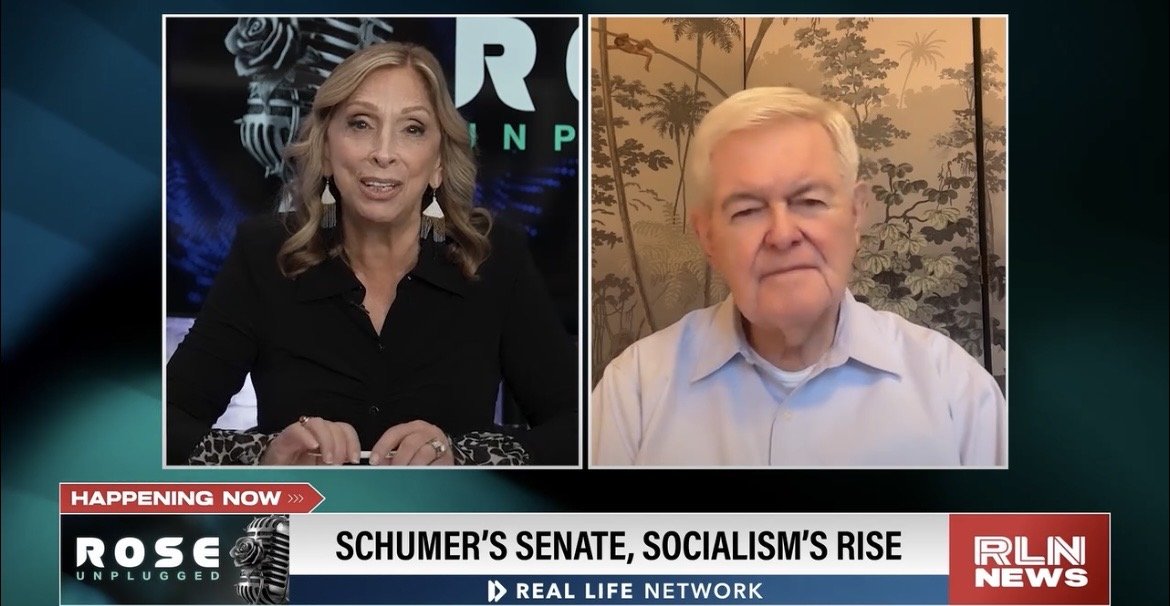
Rose Unplugged: Newt Gingrich’s Midterm Predictions (VIDEO)

With the November 3rd midterms almost here, Rose Unplugged started a special series: “For Such a Time as This.”

In this series, Rose talks with people deeply engaged in the political process about why these elections matter, what they hope to see, and what to expect on Election Day.

First, former Speaker of the House Newt Gingrich, the architect of the 1994 Contract with America. That written promise was signed on the Capitol steps by more than 300 Republican candidates, broke forty years of Democratic control of the House, and made him the 50th Speaker.

He looks back at what Washington missed in 1994 and what a Contract with America for 2026 would look like. He also talks about the rise of DSA-endorsed candidates and Mayor Zohran Mamdani’s New York, and what a Chuck Schumer Senate would mean for President Trump’s judges, nominees and agenda. Then he shares the hopeful vision in his new book, America’s Golden Age: Trumpism and an Era of Limitless Possibilities (out October 20th): AI and robotics rebuilding American manufacturing, abundant nuclear energy, and an America ready for its 300th birthday in 2076. He also has a message for young people who’ve been told the American dream is over.

Next, Dr. Jim Garlow of Well Versed, which brings biblical teaching to government leaders, heads to the heartland. Kansas hasn’t sent a Democrat to the U.S. Senate since 1932. Now Senator Roger Marshall’s race is rated a Toss-Up, and one poll has it tied at 45 percent.

Dr. Garlow grew up on a farm in North Central Kansas. He explains why electing Adam Hamilton would be a serious mistake, and how believers can tell biblical compassion from a political agenda. He also covers what it means for the pro-life cause to have a physician in this seat, and why one heartland race could decide who controls the Senate. Finally, he describes what an Esther moment looks like for the church this year.

Pray for our nation, stay informed, and make your voice heard on November 3rd.

WATCH:

Learn more: www.Gingrich360.com

The post Rose Unplugged: Newt Gingrich’s Midterm Predictions (VIDEO) appeared first on The Gateway Pundit.

Trump Calls South Carolina Democratic Senate Nominee “Tranny Annie Andrews” – Accuses Her of “Child Abuse” and Calls for Her Medical License to Be Revoked (VIDEO)

President Trump holds a midterm rally in Clemson, South Carolina – October 21, 2026

President Trump tore into Senator Darline Graham’s Democratic Senate opponent on stage at his South Carolina rally last night, using his new nickname and going off on her support for transgender mutilation of children. 

Trump previously debuted a variation of the moniker in a Truth Social post earlier this month, calling her “Annie ‘Trannie’ Andrews,” slamming her for supporting “Transgender for Everyone.”

“Darline’s running against a radical left lunatic named Tranny Annie Andrews,” Trump said in Clemson, South Carolina, on Wednesday as the crowd erupted in cheers for the non-PC nickname.

He went on to say Tranny Annie “would be the most extreme and crazy left-wing politician ever elected in this state.”

“I know the state so well, I mean every record I’ve got, and she’s not winning this state, but she’d be the most extreme and one of the most crazed people in the entire country. It would be a disaster,” Trump said.

“She’s a fanatical transgender activist. How the hell do you run in South Carolina?” he continued, trolling Biden for forgetting what state he was in numerous times. “Am I in a different state, maybe, like Biden, remember?”

“She claims to be a moderate, but she’s really a rabid advocate for taxpayer-funded child sexual mutilation, and that’s nothing she can do about it. That’s where she is, and she’s never going to change,” Trump said.

“She’s a mutilizer. You know what a mutilizer is? That’s a person that doesn’t do good things.”

“Tanny Annie advocates giving puberty blockers to young children, and even supports giving sex toys and other obscene materials to seriously confuse young people and children. That’s not good. It’s what I call child abuse,” Trump continued.

He then called on Andrews to “have her medical license revoked,” adding, “Take it away, and she should not be allowed to run for office.”

Trump went on to outline Tranny Annie’s other radical policies, calling her an “anti-gun extremist” and highlighting her F rating from the National Rifle Association. “I mean, that might be more important. I don’t know, transgender or F rating. I’m not sure. It’s pretty close, pretty close to being unpopular in this state,” he said.

WATCH:

Tranny Annie has a long history of supporting “trans kids,” “gender affirming care” for minors, and men in women’s sports, despite now trying to distance herself from past comments.

In a recent ad, Andrews appears, wearing a white lab coat and a stethoscope, claiming she is against men playing in women’s sports and transgender surgery for minors. She claims that these are just lies being pushed by Darline Graham.

However, her past tells a different story. In 2022, Andrews slammed South Carolina’s Save Women’s Sports Act, calling the legislation “shameful” and “actively harmful.”

“This is shameful legislation that does nothing to protect or support women or children in SC. In fact, it is actively harmful,” she wrote, adding, “I will always support trans youth.”

In 2023, she shared a report from ABC, which read, “Gender-affirming hormone therapy improves the mental health of transgender adolescents and teenagers, a new study released Wednesday in the New England Journal of Medicine showed.”

“New ⁦@NEJM⁩ study confirms what previous studies have shown. STOP PLAYING POLITICS WITH KIDS,” she wrote.

Also in 2023, she shared a truly deranged article about a 12-year-old girl transitioning at the Medical University (MUSC) of South Carolina, where Andrews used to work as a pediatrician. The article reads, “Three-year-old Mia was taking a bath with her younger sister, Isabella, when she turned to her mother and asked, “When is my tail going to fall off? Her mother, Rebecca, was taken aback, until she realized the child was talking about a penis.”

The article further notes that the South Carolina legislature passed a budget “banning MUSC from using state-allocated money to fund ‘furthering the gender transition’ of youth under 16.”

“The consequences of playing politics with kids are very real. Everyone who played a role in abandoning these kids should be ashamed. As should those that didn’t fight to protect them. Trans kids are kids,” she wrote on X.

In 2024, she wrote on X that she “got involved in trans healthcare when I got involved in people healthcare,” adding “because trans people are people and trans kids are kids.”

The post Trump Calls South Carolina Democratic Senate Nominee “Tranny Annie Andrews” – Accuses Her of “Child Abuse” and Calls for Her Medical License to Be Revoked (VIDEO) appeared first on The Gateway Pundit.

TRUTH: Red-Pilled Investor Bill Ackman Says Democrat Party Has Become Crazy, Radicalized, and Anti-American (VIDEO)

Screencap of Twitter/X video.

Investor Bill Ackman used to vote for Democrats. Today? Not so much.

During a recent appearance on a podcast, Ackman said that the Democrat Party is in the worst shape that it’s ever been in, in the 250 year history of the country. He said that the party has become crazy, radicalized, and anti-American.

Ackman became a public Trump supporter during the 2024 election and hasn’t looked back.

FOX News reports:

Investor Bill Ackman called the Democratic Party “crazy, radicalized and anti-American” during an interview on Tuesday, arguing that the party is “in a very bad place.”

“I think the Democratic Party is in the worst place it’s ever been, in the 250-year history of the country,” Ackman told Katie Miller, host of the “Katie Miller Podcast.” “I think it’s become like this crazy, radicalized, you know, anti-American thing. I think it’s — and by the way, I think there’s some very high-quality Democrats, you know, senators and, sure, some congressmen — but the party itself, I think, is in a very bad place.”

Ackman specifically named Sen. Chuck Schumer, D-N.Y., as someone he used to be friendly with but now believes has “compromised” on his values.

“And I think the problem with people who’ve chosen to be a politician for a career, you either have to get with the party in order to continue, or you get primaries,” Ackman said. “You know, actually, Senator Schumer, I had a good relationship with him over the years. I thought he was a good man. But in recent years, I felt he’s just trying to keep his job.”

“And, you know, that’s the really low point for politicians when they’ll compromise on their values, and they’ll support, you know, a quasi-terrorist, perhaps running for Senate in Michigan, because they have to for the party,” Ackman said. “Stuff like that to me is, or terrorist supporter, is not, that’s, I find that pretty, deeply concerning.”

Here’s the video:

The Democrats were already drifting towards the edge, but the introduction of the Democratic Socialists of America (DSA) in their party really sent them to loony land.

It’s just not the same party anymore.

The post TRUTH: Red-Pilled Investor Bill Ackman Says Democrat Party Has Become Crazy, Radicalized, and Anti-American (VIDEO) appeared first on The Gateway Pundit.

The Iran War’s One Benefit

The Iran War’s One Benefit

The scale of American defeat may—finally—force a foreign policy reckoning in Washington.

US-IRAN-ISRAEL-WAR

Over seven months after Operation Epic Fury started on February 28, it’s difficult to avoid the depressing conclusion that the United States has been exposed as something close to the “pitiful, helpless giant” President Richard Nixon warned of 56 years ago. Nixon, of course, used the phrase to rally an American public disillusioned with the Vietnam War. But the descriptor also applies to today’s ongoing war against Iran—a war the majority of Americans thought was a mistake at the outset.

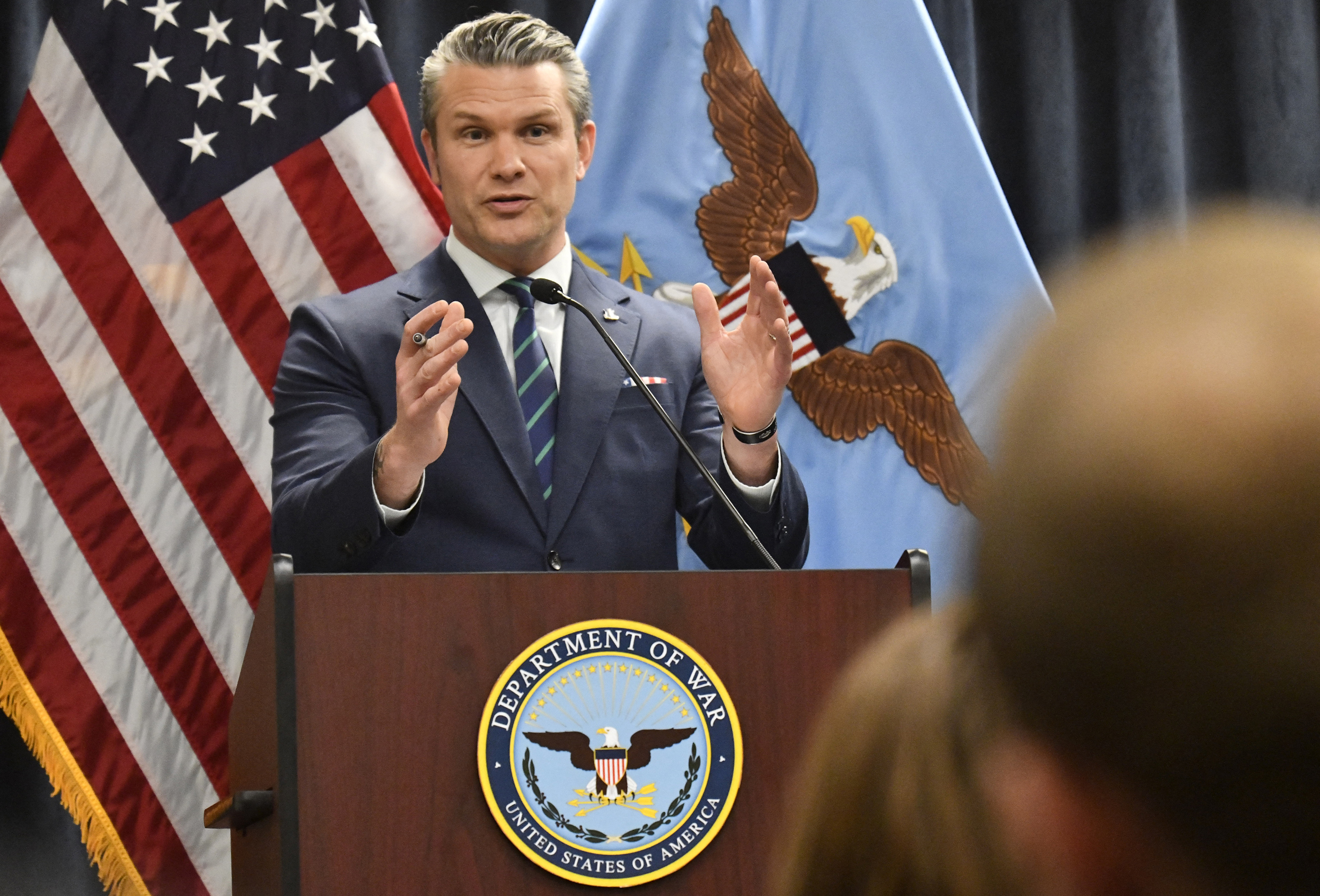
In its eagerness to defend the decision to go to war and spin a narrative of victory, the Trump administration has spent months explaining to the American people (and our allies abroad) just how much damage has been inflicted on Iran’s military infrastructure. When he is not assuring the nation that the war will be over after the midterm elections, President Donald Trump repeatedly claims that the Strait of Hormuz, the strategic waterway the Iranians have turned into its greatest source of leverage, is under complete U.S. control. Defense Secretary Pete Hegseth is quick to note the Islamic Revolutionary Guard Corps’s diminishing capacity. And Treasury Secretary Scott Bessent, in his quest to throw around Washington’s considerable financial heft, speaks as if the Iranian economy is only a few short weeks away from total implosion. 

Yet it’s been glaringly obvious for a while now that the administration is wearing rose-colored glasses. The reality is the geopolitical equivalent of a smelly dumpster-heap of economic costs, military strain, and strategic malfeasance. By now, the list is long and well-known to anybody even vaguely paying attention to the news. Oil flows through the critical Strait of Hormuz have been throttled by Iran for months. By the Pentagon’s own admission, the war has cost U.S. taxpayers over $40 billion (and that’s a low estimate, since it doesn’t account for the extensive damage Iran has inflicted on bases in the region). Our munitions cupboard is running empty, with the U.S. military using up over 60 percent of its entire stockpile of air defense interceptors and many of its high-end (“exquisite”) precision munitions, including the all-important Army Tactical Missile System (ATACMS). Washington’s Asian allies and partners, including Japan and Taiwan, are seeing their own orders of U.S.-manufactured missiles delayed for months, if not years. Others, like South Korea, watch as U.S. air defense equipment normally stationed to defend the region is moved to the Persian Gulf. 

The blows to U.S. credibility can’t be swept under the rug either. Although foreign policy analysts tend to assume the worst whenever the U.S. is compelled to end its involvement in overseas conflicts—the U.S. withdrawals from Vietnam in 1973 and Afghanistan in 2021, for instance, didn’t precipitate the irreversible decline of U.S. power in Europe and Asia many predicted at the time—the “little excursion” Trump opted to wage in the Persian Gulf has thrown more than a few wrenches into the U.S.-sponsored order the conventional Beltway establishment is so fond of defending. Gulf Arab leaders, once confident in the strength and durability of U.S. security guarantees, are now sitting in their opulent palaces wondering whether the United States is truly the best horse to back. With Iranian missiles and drones slamming into buildings in Dubai and oil pipelines damaged, the very U.S. bases and outposts in their respective countries that were constructed to strengthen deterrence against Tehran are looking more like antiquated museum pieces.

Yet all hope isn’t lost. With every setback comes an opportunity to reassess the situation and plan next steps accordingly. As pointless as the conflict has been on its own terms, it also has the potential to serve as a moment of positive transformation for the Middle East and America’s military presence there. For if the Iran War has underscored anything, it is that the regional order our foreign policy establishment has pursued for the past three and a half decades—one in which the United States acts as the Mideast’s chief external referee and security provider—has outlived whatever usefulness it once had.

That is just as well. The last quarter-century is chock full of examples of this approach undermining rather than bolstering geopolitical stability. Ultimately, what the Middle East and America need above all else is less of each other. When it comes to security commitments, each is better off without the other.

The United States currently operates a constellation of long-standing bases and smaller facilities stretching from the southeastern tip of the Arabian Peninsula to Western Turkey. Although it depends on how one counts, there are over 20 sites in the Middle East to which the U.S. military maintains access, with many of these—Al-Udeid Air Base in Qatar, for instance—serving as major, permanent bases. Despite repeated efforts by U.S. presidents over the last 15 years to downsize American military presence, tens of thousands of U.S. servicemembers remain deployed in the region. U.S. defense officials try their best to keep at least one U.S. aircraft carrier in the vicinity during peacetime. 

Today, the large U.S. military posture in the Middle East elicits a mere shrug. But it wasn’t always so. During the Carter and Reagan administrations, the Middle East was only considered vital to the extent that its energy resources were threatened by the Soviet Union, America’s superpower rival at the time. U.S. naval maneuvers in the Persian Gulf and Red Sea were hardly as intense as they are now. (The one exception was the 1987–88 U.S. Navy operation, dubbed Operation Earnest Will, which escorted Kuwaiti oil tankers during the Iran–Iraq War.) On some occasions, the mission flared into violence, such as when a U.S. Navy ship hit an Iranian mine on April 14, 1988 and retaliated by destroying several Iranian oil platforms.

The genesis of the current U.S. force posture can be traced back to the 1991 Gulf War, when roughly a half a million U.S. troops, in coordination with a multilateral coalition including Arab states, expelled the Iraqi dictator Saddam Hussein’s army from Kuwait. After approximately a month of heavy U.S. airstrikes and a U.S. ground war that lasted 100 hours, President George H.W. Bush announced the conclusion of major combat operations. 

Still, the end of the war didn’t bring an end to the large U.S. military presence. The March 1991 U.N. Security Council Resolution that formalized the ceasefire mandated tough terms on Saddam: destroying all of Iraq’s weapons of mass destruction programs; eliminating all Iraqi missiles beyond the range of 93 miles; bringing all of its nuclear-related materiel into the custody of the International Atomic Energy Agency; and mandating Baghdad’s unconditional cooperation with a special U.N.-authorized commission. Thus it virtually guaranteed that the Iraqi dictator would try to skirt his obligations. And sure enough, that’s precisely what happened, giving the George H.W. Bush administration reason to keep U.S. forces around Iraq to compel its compliance. By August 1992, U.S., French and British combat aircraft were patrolling no-fly zones in roughly two-thirds of Iraq. 

Throughout this period, the United States struck multiple defense agreements with Gulf Arab states that remained petrified about more Iraqi aggression. Although Saddam’s army was bloodied and defeated, Bahrain, Kuwait, Qatar and the United Arab Emirates still viewed U.S. troops on their soil as the best insurance policy. In October 1991, seven months after the Gulf War ended, Bahrain struck a deal with Washington, which allowed the U.S. military to stockpile defensive equipment on the island and granted U.S. servicemembers access to its naval and air facilities. A similar deal was signed with Qatar in 1992 and with the UAE in 1994. This, combined with the Clinton administration’s “dual containment” policy of both Iraq and Iran, two adversaries that Washington believed could upend the regional balance of power, virtually guaranteed a continuous U.S presence there. George W. Bush’s war on terrorism after the 9/11 attacks, which culminated in a trillion-dollar occupation of Iraq whose reverberations are still felt 23 years later, only brought the United States deeper into a swamp so sticky that his successors have failed to get out of it. 

If the United States was once believed to be the Middle East’s chief stabilizer, the war with Iran has turned this image into a caricature. Rather than keeping the peace and preserving a stable regional balance, its self-defeating actions churn up conflict. Instead of maintaining deterrence, it attracts the very kinds of attacks a forward U.S. military deployment is designed to prevent. U.S. bases, which Washington’s Arab partners bet were key enablers of stability for their countries, are not strong points, but vulnerabilities. Based on satellite imagery and public reporting, hundreds of buildings on U.S. military bases in at least eight Mideast countries have been damaged by Iranian fire during the course of the conflict. Facilities long presumed to be impenetrable to disruption, like the headquarters of the U.S. Navy’s Fifth Fleet in Bahrain, are now seen as so vulnerable to Iranian assaults that re-supply operations have to be undertaken at Diego Garcia, more than 2,000 miles away. 

For defense planners, the war is forcing a much-needed reevaluation of how the U.S. military conducts operations in the region and whether the juice of an unending presence there is worth the squeeze for U.S. security interests. Damaged U.S. military infrastructure, which would cost billions to repair, has generated conversations in the Pentagon about whether continuing with the status-quo is the right move. The same outposts in Kuwait, Bahrain, the UAE and Qatar that were seen as sound investments in the 1990s and early 2000s no longer look so wise in 2026. When the war is all said and done, there is a decent chance of U.S. forces re-deploying from the Persian Gulf to areas further west, perhaps to western Saudi Arabia, Jordan and Israel. There are likely some officers in the office of the Joint Chiefs of Staff, as well as on the staffs of the various U.S. combatant commands, who would prefer the Trump administration to kick the Middle East further down its list of priorities. They have a point. The war has not only laid bare the fallacy of America’s grand ambitions in this part of the world but also depleted the Pentagon’s stockpile of munitions to such an extent that U.S. defense officials have had to beg defense manufacturers to speed up the production process.

The Arab states are highly unlikely to sever their defense relationships with the United States anytime soon. Qatar, for instance, deepened its own ties with Washington in September 2025, a decision that came about in part due to Israel’s attempted assassination of a senior Hamas official in Doha weeks earlier. Saudi Arabia continues to spend tens of billions of dollars on U.S. defense platforms; according to the Stockholm International Peace Research Institute, 77 percent of Riyadh’s defense imports between 2021–25 came from the United States.

Even so, the Trump administration’s rush into a war no country in the Middle East outside of Israel wanted, and the inability of U.S. bases to provide much protection, is a giant red-neon warning light to Gulf states that for decades have relied on Washington for external protection. The message: New security arrangements must be made, or at least explored. In August, Saudi Arabia, Turkey and Pakistan signed the Mecca Joint Defense Agreement, whose central tenet—an attack on one is an attack on all—is identical to NATO’s Article 5. Weeks later, Kuwait, one of Iran’s most persistent targets, clinched its own defense accord with Pakistan, with a focus on bolstering security at Kuwait’s borders. The UAE has even strengthened relations with Israel and reportedly allowed the deployment of Israeli air defense systems in its territory early in the Iran War.

The U.S. foreign policy establishment will likely look at all these moves as a reflection of American weakness. Trump, some will argue, has degraded U.S. credibility to the point where some of its most longstanding security partners now see Washington as part of the problem rather than the solution. 

But so what if they do? The reality is that the United States and the Middle East could use a divorce. From the 2003 invasion of Iraq and the 2011 air campaign over Libya to U.S. involvement in Syria during that country’s 14-year-long civil-war, the record of U.S. interventions is one of hubris, failure, and unanticipated costs.

In the process, Washington winds up creating a whole slew of additional stressors that the people of the Middle East ultimately have to live with. During the invasion and occupation of Iraq, those unwanted repercussions included the growth of Al Qaeda branch that in later years turned into the Islamic State, a sectarian civil war that killed tens of thousands, and the growth of Iranian influence in a country that had historically served as Tehran’s chief balancer. In Libya, it was the implosion of the state, the proliferation of warlords and militia groups, and ultimately a massive surge of migration to Europe. America’s most recent war of choice is no different in this respect—just ask the Kuwaitis, Iraqis and Qataris, all of whom have seen their energy exports and associated revenues plummet as the Strait of Hormuz remains bottlenecked by the Islamic Revolutionary Guard Corps. 

The United States hasn’t learned much of anything from its previous follies, so you can’t blame the Gulf Arab states in particular for changing how they do business. After all, who wants to put their faith in a clumsy actor who has the power to upend the regional equilibrium? Thanks to Trump’s war, lessening dependence on what’s left of the U.S. security umbrella is now an acknowledged goal in Mideast capitals; across the region, countries are pursuing solutions ranging from developing their domestic arms industries to building regional alliances.

Many inside the Beltway will likely seek to discourage these conversations from happening. Worried about the loss of U.S. power, Washington may seek to offer even more military assistance to these states as a desperate form of compensation. 

But this would be a mistake. Instead, we should let the chips fall where they may. Rather than squelch discussions over a post-American Middle East, Trump and whoever comes after him should encourage them. Ideally, the United States should force the issue by removing its own forces, particularly the assets in large, permanent bases that are so vulnerable to Iranian strikes. This will all come as a big shock to the current orthodoxy, which typecasts any retreat as a defeat of epic proportions. But it would not be the first time a U.S. president decided to boldly cut the country’s losses, and it will not be the last either. 

The sooner Americans abandon their quest to police the Middle East, the sooner the region will achieve lasting geopolitical stability.

The post The Iran War’s One Benefit appeared first on The American Conservative.

Prepping a Postmortem for Zelensky’s Presidency

Prepping a Postmortem for Zelensky’s Presidency

The Ukrainian leader faces escalating crises.

BRITAIN-UKRAINE-CONFLICT-DIPLOMACY

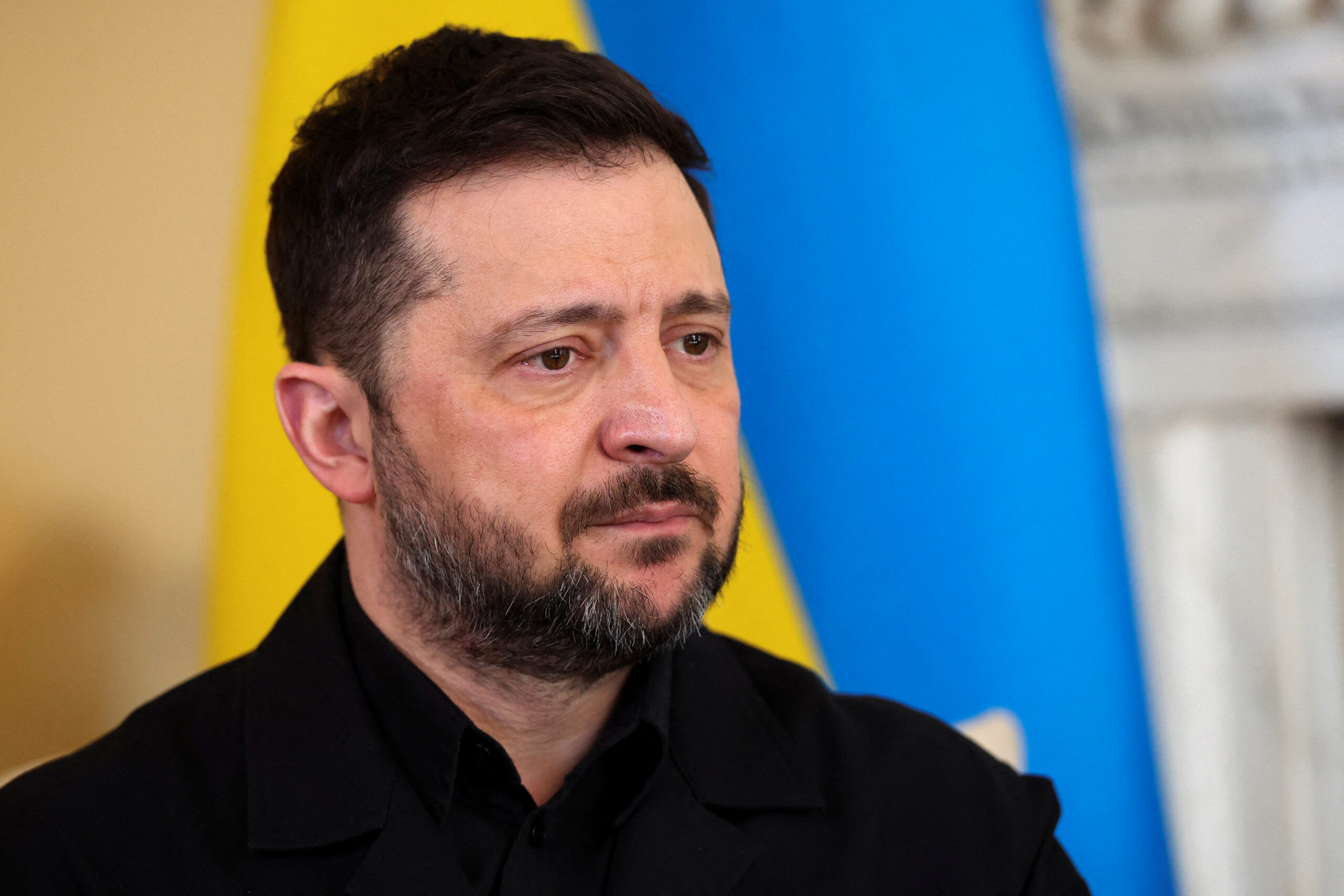
Like the man in Monty Python and the Holy Grail, Ukraine’s President Volodymyr Zelensky may be crying, “I’m not dead.” It is too early to perform a postmortem on Zelensky’s political career. But it may not be premature to attempt an analysis of his deteriorating condition and struggle to survive.

Zelensky’s strength is being undermined on four fronts: overall domestic support, support from his party, financial support from Europe, and a collapsing relationship with President Donald Trump.

Polls show that Ukrainians, who wanted Zelensky to lead them through the war, no longer want him to lead them after the war. Indeed, having fed Ukrainians with fantastical promises of pushing Russia out of all Ukrainian lands and being welcomed into NATO, and having depended on a cooperative relationship with Ukrainian ultranationalists who oppose a compromise peace with Moscow, Zelensky may have put himself into a position where his presidency cannot survive the war. Polling shows a collapse of domestic support for Zelensky, suggesting that he would lose by a wide margin in the next election.

But, while the foreign media has been entirely focused on the war, domestic attention in Ukraine has also turned to corruption. Zelensky was elected on the twin platform of making peace with Russia and ending Ukraine’s self-destructive corruption. He has delivered on neither.

A key metric is Zelensky’s trust rating. Asked recently which political figures they trust, Ukrainians ranked their president a damning sixth, with only 18 percent of respondents fully trusting him. His main potential political rivals, Valeriy Zaluzhny, Kyrylo Budanov, and Mykhailo Fedorov are all more trusted. A fifth of those who say they do not trust Zelensky cite corruption as the main reason, and 72 percent of Ukrainians say he is personally responsible for corruption in his government. Amid his latest spat with Trump, one recent poll found Zelensky’s trust rating had risen, but the overall trend is still bad, and the rally-around-the-flag effect may prove fleeting. Zelensky has hurt himself with his handling of a snowballing corruption scandal that is reaching deeper and deeper into his inner circle.

And Ukraine’s president is not only losing ground with voters—he’s also losing the support of his party, which once was solidly behind him. He is being confronted by unfamiliar resistance, with dozens of MPs in his Servant of the People party boycotting or rebelling. His legislative supermajority is reportedly at risk as a result of defections. 

The lack of support at home also puts in jeopardy EU funding on which the Ukrainian government relies. Ukraine is facing a massive budgetary shortfall totaling tens of billions of dollars. Kiev wants money promised by the EU for 2027 to be provided sooner. But the release of badly needed funds from the EU is contingent on the Verkhovna Rada, Ukraine’s parliament, enacting corruption reforms—and Zelensky’s party has refused to pass such measures. Even a package of tax bills that was passed last week and that could unlock $4.3 billion dealt only with less controversial items, and avoided addressing many of the more serious demands being made by the EU.

Earlier this month, the EU rejected Zelensky’s appeals and refused to accelerate payments to cover the shortfall, again tying funding to corruption reform. According to Slovakia’s Prime Minister Robert Fico, neither Slovakia nor Hungary will participate in another EU loan to Ukraine. Other, more pro-Ukraine EU nations would have trouble filling the gaps. France, for example, is convulsed by riots motivated in part by the rising cost of living, and populist critics of the establishment are quick to remind voters of the vast sums that have already been sent to Ukraine. The right-wing leader Marine Le Pen, currently the favorite to win France’s next presidential election, recently said that, if she wins, Paris will cut financial aid to Ukraine.

But Zelensky’s biggest challenge comes from Ukraine’s most crucial supporter. Shaky relations with U.S. presidents are nothing new for Zelensky. In the first year of the war, when Joe Biden authorized further military assistance for Ukraine, Zelensky complained about what he wasn’t getting. Biden reportedly “lost his temper” during a call with the Ukrainian leader. “Raising his voice,” he told Zelensky to “show a little more gratitude.” The next year, Thomas Friedman of the New York Times reported, “There is deep mistrust between the White House and President Volodymyr Zelensky of Ukraine—considerably more than has been reported.”

But Zelensky managed those challenges. Even following last year’s public debacle that saw Trump throw him out of the Oval Office, Zelensky was able to repair his relationship with Trump. That work has now exploded.

Earlier this month, Trump made three decisions that seemed to collectively amount to a breaking point for a reluctantly conciliatory Zelensky. He made a deal with Russia’s President Vladimir Putin that would allow Russia to sell diesel fuel, he announced a surprise energy ceasefire that demanded Ukrainian armed forces stop all strikes on Russian refineries, and he waived new sanctions on Russia.

This trio of announcements apparently led Zelensky to conclude that his conciliatory approach was no longer working. According to a person close to Zelensky, he let it be known that “plain speaking” was now needed, and he made the decision to publicly criticize Trump.

Zelensky said Trump’s behavior “is certainly not how partners should treat each other.” When Ukraine struck another Russian refinery, Trump said Zelensky “better damn well stop.” Zelensky said Trump was not being fair or honest. He called Trump weak, and juxtaposed his leadership to the “real leaders” in Europe. Trump fired back, declaring, “I think it’s time for Ukraine to get a new president…. I suggest they get a new leader who can make a deal.” Trump later expanded: “I think if they are going to end up with a settlement of some kind, they are not going to do it with him.” On Monday, Trump added, “To be honest, I think it’s time for somebody else to negotiate on behalf of Ukraine.”

The gloves were off, and Zelensky was in danger of losing Trump. The military-grade version of Starlink, which Ukrainians use for battlefield communications, as well as U.S. early warnings of incoming Russian missiles went silent. “He is not a good guy for us to deal with,” Trump said of Zelensky Friday, adding that he is “more difficult to deal with than Putin.” Zelensky, he said, had “destroyed that country.”

When Russia kept pounding Ukraine’s electricity grid with drones, ballistic and hypersonic missiles, and with access to U.S. intelligence was restricted, Zelensky defied Trump’s orders, letting it be known that the block on attacking Russian refineries was off.

Zelensky is a political survivor, but the latest constellation of crises is the most difficult challenge to his leadership yet.

The post Prepping a Postmortem for Zelensky’s Presidency appeared first on The American Conservative.

BOOM! Mike Rogers Calls Abdul El-Sayed a LIAR to His Face During Debate ‘This is a Pattern’ (VIDEO)

Screencap of Twitter/X video.

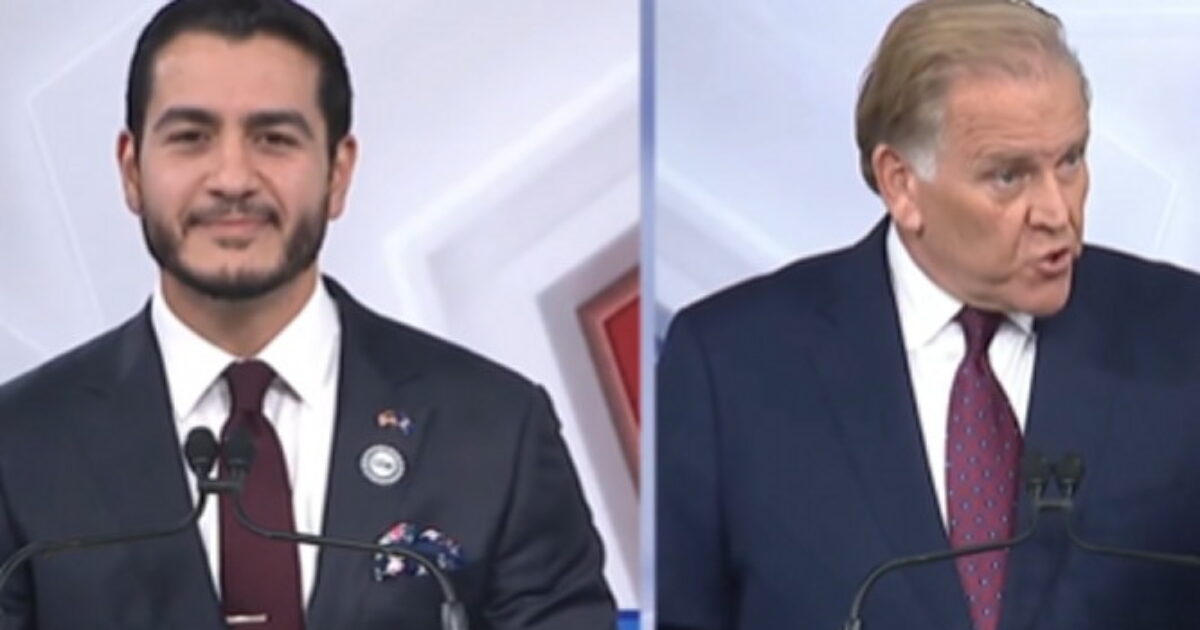
Republican Mike Rogers and Democrat Abdul El-Sayed had another debate tonight in the race for U.S. Senate in Michigan and things got a little heated.

Rogers called out El-Sayed as a liar and as proof offered numerous examples.

All El-Sayed could do to respond was offer dumb smile and shake his head.

Eric Daugherty has details:

BREAKING: Mike Rogers is DECIMATING Abdul El Sayed in front of Michigan voters in a pure masterclass

“He lied about being an Egyptian dual citizen.”

“Did you lie about his relationships with an organization that should give us all pause [Muslim Brotherhood]? Yep, he did.”

“Did you lie on your resume? Yep, did. You lied about being a physician.”

“He lied about some of his stances on these positions as he’s flipped again.”

“This is a pattern that we need to understand!”

Rogers is going RAPID FIRE mode and everyone sees Abdul’s lies!

This is the same case his new ad makes about Mohammed’s family ties to the Muslim Brotherhood, and now he’s saying it straight to voters’ faces

Watch the video below:

In another moment, El-Sayed criticized Rogers for taking corporate money but Rogers threw it right back in his face.

From Overton News:

Democrat Abdul El-Sayed tried to take a sneaky shot at Republican Mike Rogers over corporate donations during their debate, only to have Rogers completely flip the script on him moments later.

Rogers EXPOSED El-Sayed for going straight to Chuck Schumer to BEG for corporate money — while attacking Rogers over the very same issue.

ROGERS: “It’s a little bit rich to me that my opponent talks about corporate donations…”

“He snuck into Chuck Schumer’s office, and asked and begged for corporate money.”

“And you see it on TV today. $35 million of corporate PAC money flowing all over this state.”

“It’s hypocritical.”

Watch:

Abdul El-Sayed is just not good at this.

The post BOOM! Mike Rogers Calls Abdul El-Sayed a LIAR to His Face During Debate ‘This is a Pattern’ (VIDEO) appeared first on The Gateway Pundit.

(VIDEO) Trump Responds to Ilhan Omar Saying “Not to My Knowledge” When Asked if She Married Her Brother

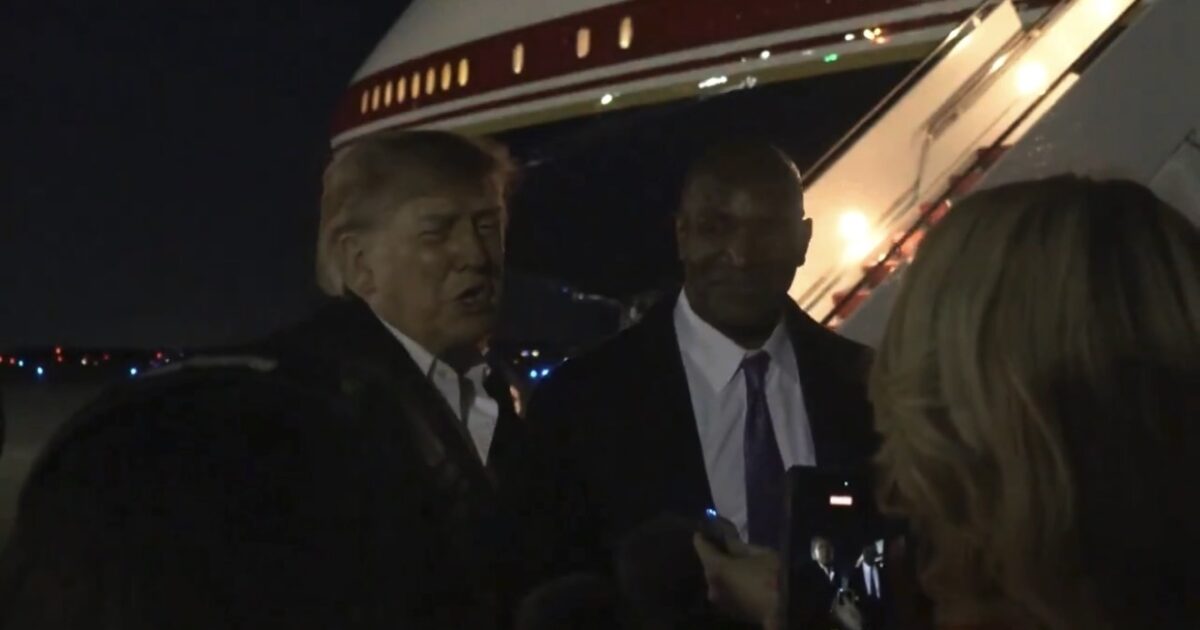
President Trump speaks to reporters with Evander Holyfield at Joint Base Andrews

President Trump on Wednesday said Ilhan Omar’s near-admission that she married her brother, suggesting she didn’t have knowledge of any blood relation, was “not a good answer.”

As The Gateway Pundit reported earlier, Ilhan Omar, during an interview on MS Now on Wednesday, said “not to my knowledge” when asked if she was related to her former husband, Ahmed Nur Said Elmi.

She laughed awkwardly when Chris Hayes asked about claims that she had married her brother, then made the stunning admission.

WATCH:

This comes as the criminal fraud investigation is believed to be using Omar’s DNA to prove she married her own brother and committed immigration fraud.

Trump responded to Omar’s slip upon arriving in Washington, DC, after his rally in South Carolina on Wednesday night.

“Yeah, well, ‘not to my knowledge,’ that’s not a good answer,” he said.

“That’s an answer that a lot of us assume.”

Boxing legend Evander Holyfield, who joined the President in South Carolina, was seen laughing next to Trump.

WATCH:

The post (VIDEO) Trump Responds to Ilhan Omar Saying “Not to My Knowledge” When Asked if She Married Her Brother appeared first on The Gateway Pundit.

A Better Way Than Bossing Europe

A Better Way Than Bossing Europe

President Trump should tell Western allies what the U.S. will do and let them decide how to respond.

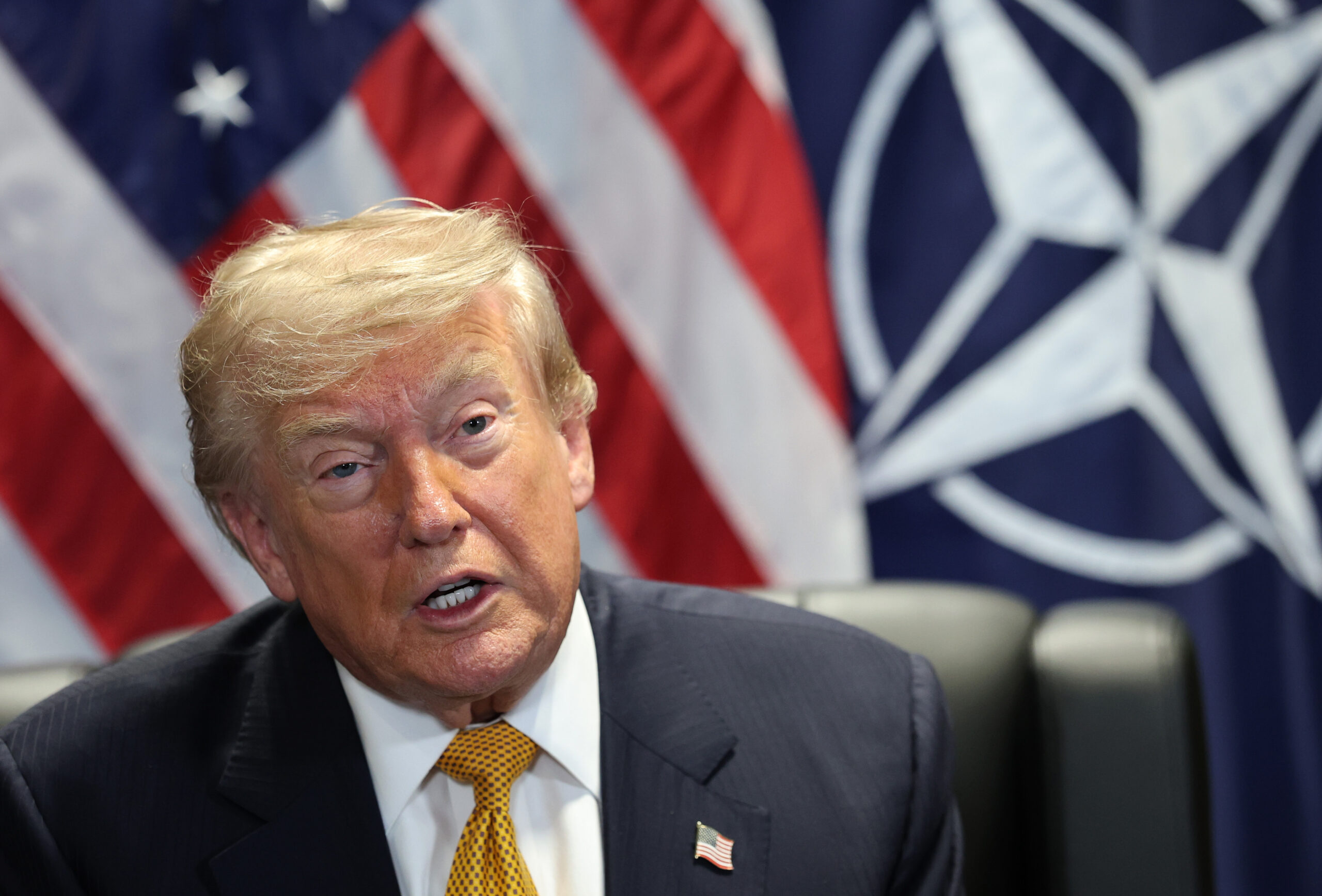
2026 NATO Leaders Summit In Ankara
(Photo by Win McNamee/Getty Images)

President Donald Trump wants the Europeans to spend more on their militaries. A lot more. His hectoring—and, more important, Russian President Vladimir Putin’s threats—have spurred continental defense efforts. 

Many NATO officials sound confident about Europe’s capabilities, even defiant. In September, Secretary General Mark Rutte grandly announced that “if the Russians want to do something against Finland or one of the Baltic nations or Poland or whichever country in NATO, we will see a build up… [and] if there is a build up, we will see it and we will deal with it, if anything happens.” Gen. Alexus Grynkewich, the supreme allied commander for Europe, said something similar a couple weeks later: “Let there be no doubt: should war come, we will block, blunt any attack, and then, if it does not cease, we will break the forces conducting aggression against us.”

Yet Europe’s defense remains largely dependent on the United States. And despite Washington’s demands, increasingly tumultuous political dynamics are limiting European military outlays. In the UK, the new prime minister, Andy Burnham, is looking at a $47 billion budget gap. The dicey fiscal situation is exacerbated by rising interest rates, which threaten a fiscal “black hole” and bond crisis. Despite promises to spend more on the military, the British government announced this week it was cutting some $2.7 billion from front-line army equipment, as Burnham’s chancellor tries to balance the budget by trimming defense. 

Other countries face even greater challenges. France’s Marine Le Pen, the right-wing leader favored to win next year’s presidential election, recently said of aid to Ukraine: “Financially, we can’t do it anymore.” And over the weekend, France endured a wave of rioting and violence that is likely to bring severe economic as well as political consequences. Reports the Telegraph:

France is bracing for a fresh sell-off in government debt after a wave of violent protests erupted across the country… Higher borrowing costs will pile more strain on the country’s troubled public finances, while also stoking fears that the violence will lead to a more populist, free-spending candidate coming to power.

Nor is France alone in confronting domestic turbulence. The populist right is rising across the continent, and it is generally critical of devoting more resources to the military. According to Politico Europe: “In France, Italy, Belgium, Germany, Poland and Romania, [populist] parties are looking to turn voters’ cost-of-living concerns into opposition to aid for Kiev, and rejection of higher national defense budgets and a greater role for the EU in defense.” Protests against higher security outlays have spread across the continent. In many European nations, including France, Germany, Italy, Poland, and Spain, discontented publics oppose increasing taxes to spend more on the military.

The frustration of the Trump administration is therefore likely to grow, and it may respond by applying greater pressure to recalcitrant governments. For instance, Washington has recently taken to playing NATO favorites, holding exclusive meetings with “model allies.” Elbridge Colby, the Pentagon’s policy chief, claimed “the idea is to pull the whole alliance along.” However, last month Trump sounded less welcoming when he declared, “Hundreds of Billions of Dollars was given to Ukraine and NATO, free of charge, that Europe would have paid for—If they were only asked, but we will be asking for that money, though somewhat belatedly!”

Yet Washington’s European allies are ever less inclined to heed the president. In a recent Politico Europe piece, Italian parliamentarian Lia Quartapelle was quoted offering a blunt assessment: “We realize [Trump] cannot be trusted and we are on our own.” Former Ukrainian foreign minister Dmytro Kuleba explained that the Europeans “have got used to him” and, moreover, are “drowning in their own problems.” And Daniel Fried, a former U.S. diplomat and assistant secretary of state, noted:

Trump wants Europe to do more militarily, but it must buy American… But we can’t sell to the Europeans because of our needs, so they will have to wait even though they can’t build it themselves. Nonetheless, they have to carry the load in Ukraine without us. That’s utterly inconsistent, and they are exasperated by it.

The president once threatened to pull U.S. forces from the continent—a move that is long overdue eight decades after the end of the Second World War. The Cold War was a unique moment, but it too has now passed. Russia is much less threatening than the Soviet Union; Europe is now capable of providing for its own security. As Poland’s Prime Minister Donald Tusk admitted, it makes no sense for some (adjusting his numbers) 540 million Europeans to expect 350 million Americans to defend them from 140 million Russians. He concluded: “We must rely on ourselves, fully aware of our potential and with confidence that we are a global power.”

However, many European governments have continued to resist U.S. pressure and slow-walk their response to Trump’s demands. His oft-hostile rhetorical flourishes notwithstanding, the president has done little to press his point, instead using European defense dependence to engage in economic extortion and demand painful commercial concessions. And the Europeans seem to have basically accepted this state of affairs, admitting that complying with the administration’s trade and investment demands is the price of preserving the American defense dole.

The result is a bad deal for everyone. Although the Europeans get a cheap defense ride, they remain dependent on an increasingly unhappy, irascible, inconsistent, and unreliable ally. They can’t be certain that America will race to the rescue in an emergency, especially if it blames them for being ill-prepared. Yet Uncle Sam’s protection still encourages confrontation with Russia, making a crisis more likely—even though the U.S., an ocean away, might actually choose to stay out of a conflict.

The United States continues to underwrite Europe’s security, forcing Washington to maintain an oversize military and risk American lives and wealth on behalf of prosperous, populous allies able to defend themselves. Yet the Europeans are ever less willing to follow American geopolitical dictates, despite enjoying a de facto subsidy for their more generous welfare states. And Trump’s commercial extortion hurts Americans more than it helps them, raising prices, distorting trade, and inflaming conflict.

Washington should instead encourage the emergence of Europe as a friendly, if at times competitive, geopolitical player, able and ready to promote shared economic, political, and other international objectives. To do so, the administration should stop trying to micromanage European military efforts. Instead, Washington should explain what it intends to do and offer to assist Europe in adapting its policy accordingly. If the U.S. reduces its commitment to the continent’s defense, European governments will have to assess security threats and implement appropriate policies, including the creation of sufficient military forces. That means balancing perceived international threats with domestic imperatives. How Europeans respond should be up to them, not Washington.

Should the United Kingdom and other European NATO members spend more on their militaries? That is their decision, and their decision alone. Should Washington force Americans to subsidize the Europeans? No, irrespective of what the latter are willing to spend. Both sides should respect each other’s interests. In doing so, Washington should treat European governments as allies, not dependents. That would be a worthwhile agenda for a president who promised to put America first.

The post A Better Way Than Bossing Europe appeared first on The American Conservative.

NEW: Ilhan Omar Search Warrant Identifies Her by Brother/Husband Name, “Ilhan Nur Said Elmi, a/k/a Ilhan Abdullahi Omar” – DOJ Reveals Search Warrant Still Not “Fully Executed”

Credit: Fibonacci Blue

The Department of Justice on Wednesday revealed in a court filing that the search warrant against Somali Rep. Ilhan Omar names her as “Ilhan Nur Said Elmi, a/k/a Ilhan Abdullahi Omar” and that the search warrants have not been fully executed or completed. 

The revelation comes as the criminal fraud probe heats up and appears to be investigating various different crimes.

Fifteen news organizations asked a federal court last week to unseal the search warrant and other judicial records in the case against Ilhan Omar.

In a government motion filed on Wednesday, the DC US Attorney’s Office requests an extension to the deadline to respond to the news outlet’s requests “until after the subject search warrant has been fully executed,” indicating that there may be more items, records, and locations under warrant.

Federal law enforcement has already raided her home, seized her phone, computer, and passport, obtained Omar’s DNA, and subpoenaed her family members, amid the sprawling investigation.

Officials believe that Omar may have lied on her papers, constituting fraudulent citizenship. Border Czar Tom Homan and DHS Secretary Markwayne Mullin have both suggested that she lied to obtain citizenship and could be deported.

As The Gateway Pundit reported, however, the investigation is not just focused on Omar’s immigration and whether she lied to obtain citizenship, according to US Attorney Jeanine Pirro.

Pirro said in an interview last week that there are “several investigations going on,” suggesting that the civil or criminal issues and other financial crimes may be involved, including Omar’s financial disclosures and $30 million net worth. Trump also simultaneously signaled that the probe is centered on Omar’s “money that was stolen from her fraudulent activities in Minnesota.”

House Oversight Committee Chairman James Comer also recently sounded the alarm on Ilhan Omar’s husband’s shady “winery” business, which he says was “shut down because of fraud,” revealing that they were selling empty barrels of wine to investors.

In the new motion to keep the records relating to their investigation under seal, the DOJ writes, “Before the Court are three Applications to unseal ex parte materials and proceedings related to a federal search warrant for the personal residence in the District of Columbia of Congresswoman Ilhan Nur Said Elmi, a/k/a Ilhan Abdullahi Omar (the “Subject”). See Case Nos. 1:26-mc-00144 (14 press organizations), 1:26-mc-00145 (New York Times Company), 1:26-mc00147 (Judicial Watch, Inc.).”

Notably, “Nur Said Elmi” is the same name as her biological brother, whom she married in 2009.

Conservative attorney and Article III Project Senior Counsel Will Chamberlain suggested that the “DOJ believes she is present in the United States under a false identity”

Ilhan Omar broke her silence on the investigation in a social media video on Tuesday, begging for more donations to “fight Trump and his administration,” claiming the investigation is meant to “intimidate me and so many people right before the midterm elections.”

She laughably claimed that Trump is “running scared” and said that she will be “out there campaigning alongside all of you and making sure that we beat back all of this and that we win in the midterms, win the House, win the Senate, and hold this administration accountable.”

WATCH:

President Trump on Tuesday told reporters that he believes Ilhan Omar “might go to jail,” while slamming her culture and home country of Somalia as a “real sh*t house.”

Trump Says Ilhan Omar “Might Go to Jail” – Calls Somalia a “Real Sh*t House”

The post NEW: Ilhan Omar Search Warrant Identifies Her by Brother/Husband Name, “Ilhan Nur Said Elmi, a/k/a Ilhan Abdullahi Omar” – DOJ Reveals Search Warrant Still Not “Fully Executed” appeared first on The Gateway Pundit.