WHOA! Ohio Gubernatorial Candidate Amy Acton’s Mother Appears in Attack Ad: “She’s a Liar… She’s lied her entire life.”

Amy Acton’s mother accuses her of lying about her life story in campaign ad

In a move that is sure to send shockwaves through the Ohio gubernatorial election, Donna Arthur, the mother of Democratic candidate Amy Acton, has come out calling her daughter a “liar” and urging people not to vote for her. 

Donna Arthur and Amy Acton are estranged. Action claims that she was neglected as a child after her parents divorced at age three and that “she lived in 18 different places in a 12-year period, including in a tent one winter, before eventually going to stay with her dad and his relatives.”

Arthur has previously accused Acton of exaggerating or inventing stories about her childhood, including abuse from her stepfather between the ages of 9 and 12.

Now, in a new anti-Acton ad circulating on social media, Donna Arthur is seen telling voters, “don’t let her become your governor,” and that she’ll make Ohioans’ lives “worse.”

“I love my daughter, but when I saw her lying about her opponent — it’s not easy for a mother to say this, but Amy has a serious problem,” Arthur says in the ad.

“She is a liar. She lies about her past. She says she grew up living in a tent. None of that is true. She’s lied her entire life.”

“My daughter needs help, and she can’t help you if she needs help herself. People can change, but first they have to tell the truth, and my daughter still isn’t doing that,” she continues.

“Don’t vote for people who lie. Don’t let her become your governor. If you think she’ll make your life better, you’re fooling yourself. It will only get worse.”

WATCH:

This comes after Acton accused Republican Vivek Ramaswamy of using artificial intelligence to lie about her family earlier this month in a hoax that got fact-checked by local media.

Clevland.com points out two lies in the recent Acton ad:

1. “Using AI to lie about my family”

The Ohio Republican Party posted an AI-altered image of Acton’s car that changed its license plate to read “Drunk Mom.”

The edit was in reference to a 2019 incident that involved Acton and her husband getting into an argument, prompting her daughter to call 911. The daughter told police that her mother had been drinking, but no charges were filed.

2. “Fact-checkers call the ads false, vile and repulsive”

Acton’s also claims that fact-checkers have deemed Ramaswamy’s ads “false, vile and repulsive,” even though her quoted source isn’t what she says.

The ad cites an opinion piece by Brent Larkin for cleveland.com in which he criticized the attacks against Acton. That is not the same as a fact check.

The Gateway Pundit has previously reported on Acton’s questionable past involving possible alcohol abuse, her apparent intoxication on the campaign trail, and viral attempted hoax when her campaign tried to manufacture a story about an “armed attack” at a campaign event.

“While attending the Canfield Fair, an armed individual lunged at Dr. Acton, injuring multiple people,” Acton campaign communications director Addie Bullock claimed last month before the narrative collapsed.

MORE:

Amy Acton’s “Armed Man Lunged” Narrative COLLAPSES as Prosecutor Reveals Video Shows Man Recording and Calling Out Her Name — Weapons Never Drawn, No Threats Found

The post WHOA! Ohio Gubernatorial Candidate Amy Acton’s Mother Appears in Attack Ad: “She’s a Liar… She’s lied her entire life.” appeared first on The Gateway Pundit.

Alberta Province Holds Separation Vote: Polls Open Late – Results Incoming…

Mark Carney’s war on Trump is not going so well. The country is enduring a job loss crisis. Screenshot: cpac / Youtube

Voters in oil-rich Alberta province in Canada held its vote Monday on whether or not to separate from the Canada and the far left leadership that is destroying our great northern neighbor.

The polls were held open late with the last scheduled late-closing location at 10 PM Alberta Time – or Mountain time in the US.

The results are being held until all voting locations are closed.

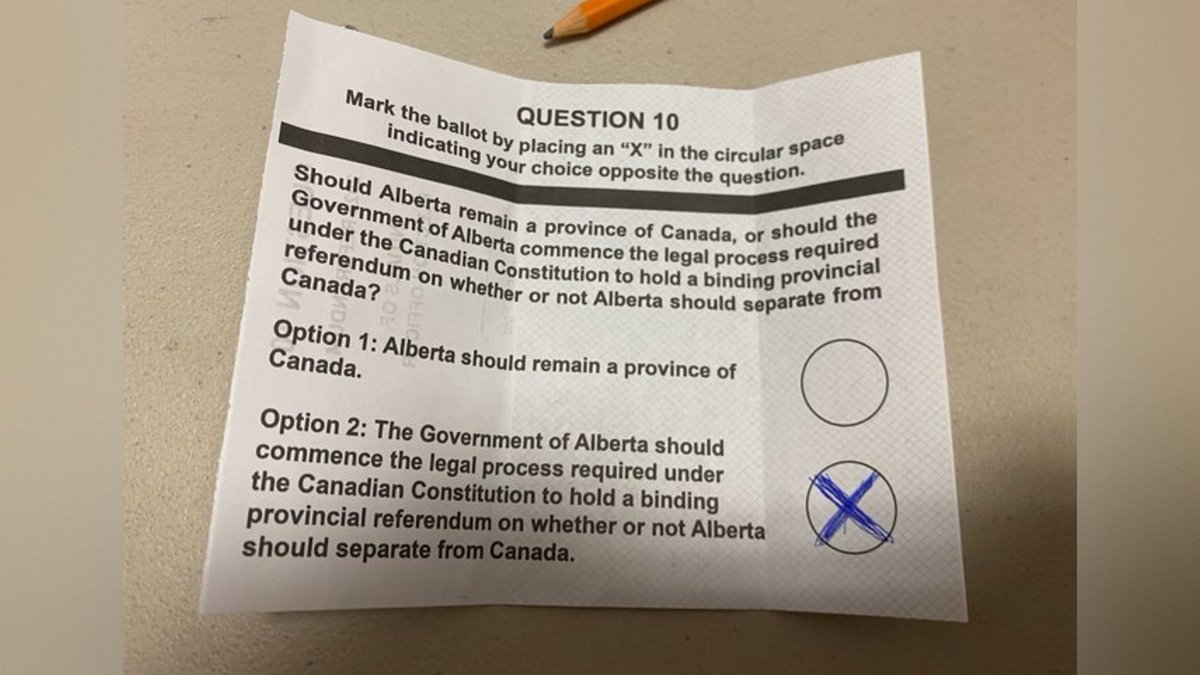
Alberta referendum ballot –

According to the Alberta Elections page:

This is a non-binding, consultative referendum. A “No” (Remain) result changes nothing legally. A “Yes” (Leave) majority would not start separation: under the federal Clarity Act and the Supreme Court’s 1998 Secession Reference, only a clear majority on a clear question obliges Ottawa and the provinces to negotiate — and any actual secession would require a constitutional amendment.

Either way, the political consequences arrive immediately; the legal ones, if any, would take years.

** Here is another page for viewing results.

About 23% of Canadians are immigrants since Canada opened its arms to the world. This the highest immigrant share in more than 150 years!

More than 1.35 million Albertans, or 43% of eligible voters, cast advance or special ballots ahead of Monday’s referendum, according to the AP.

Alberta residents are tired of being ignored.

The results will be released shortly…

The post Alberta Province Holds Separation Vote: Polls Open Late – Results Incoming… appeared first on The Gateway Pundit.

Former Democrat Senator Joe Manchin of West Virginia to Campaign for Republican Candidate in Key Senate Race

Joe Manchin, the former Democrat Senator of West Virginia who turned independent, is now going to campaign for a Republican in one of the races that could determine the outcome of the Senate.

Manchin is headed to Maine to campaign for Senator Susan Collins.

The left already hate Manchin for leaving the Democrat Party and this should just drive them further into rage.

FOX News reports:

A top Senate Republican whom Democrats are salivating at the chance to unseat is getting an unexpected assist from a former member of their own party, delivering a political snub to Senate Minority Leader Chuck Schumer.

Former Sen. Joe Manchin, who left the Democratic Party to become an independent before retiring from the Senate, is making a swing into Maine to support Sen. Susan Collins, R-Maine, the lawmaker’s campaign confirmed to Fox News Digital.

Collins is locked in a tight race against former Maine state Sen. Troy Jackson as she seeks a sixth term in the upper chamber. The race has remained close after it was shaken up earlier this year when Graham Platner dropped out after a sexual assault allegation rocked his campaign.

Manchin’s visit on the trail with Collins, first reported by Semafor, comes as Schumer and Democrats have tried to paint Collins as a rubber stamp for President Donald Trump, though she has often broken with the president during his second term, most notably on his signature legislation, the “one big, beautiful bill.”…

His foray onto the campaign trail in Maine on Wednesday will come just 24 hours before another major surrogate for Democrats will make her way to Vacationland: Rep. Alexandria Ocasio-Cortez.

Jackson has had other progressive heavyweights join him on the campaign stump, too, including Sens. Elizabeth Warren, D-Mass., and Bernie Sanders, I-Vt.

Good for him.

It’s no surprise that Manchin likes Collins. They are both moderates.

Collins has never enjoyed wide support from conservatives but she is getting it in this election cycle because the alternative is so awful.

The post Former Democrat Senator Joe Manchin of West Virginia to Campaign for Republican Candidate in Key Senate Race appeared first on The Gateway Pundit.

Guilfoyle Flamed Out—Other Ambassadors Burned the Night Away

Guilfoyle Flamed Out—Other Ambassadors Burned the Night Away

U.S. reps abroad once worked and played hard, but now, we don’t even need them.

GREECE-US-POLITICS-DIPLOMACY
TakiMag
(Mark Schiefelbein / POOL / AFP via Getty Images)

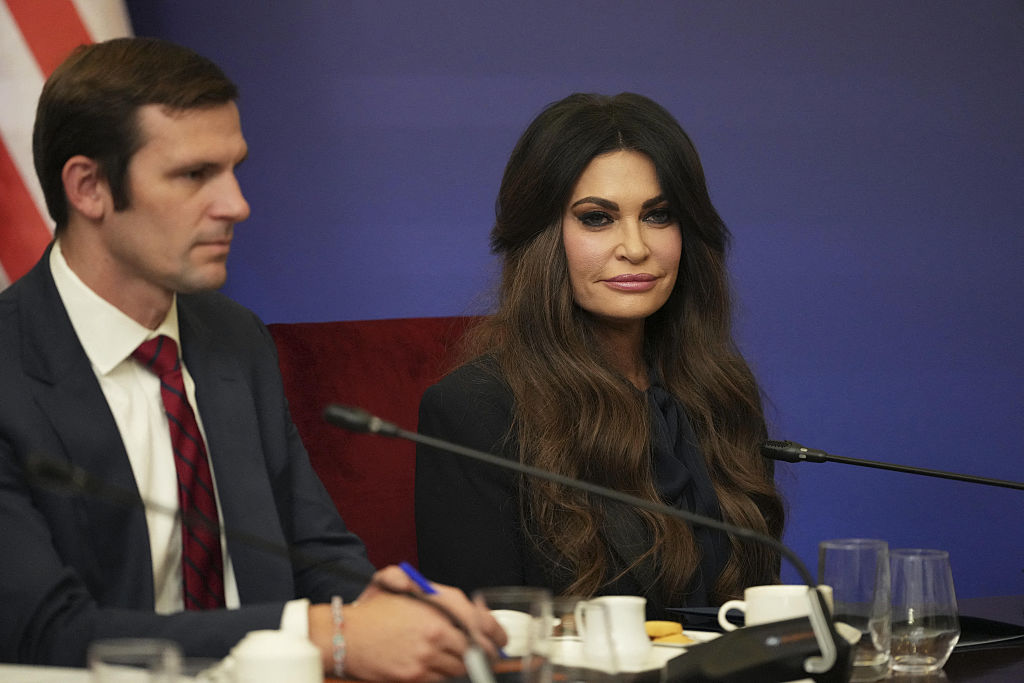
Boy oh boy, Ben Franklin must have turned over a bit—until she threw in the towel, that is. Ben was, after all, our first sort-of ambassador to France, and I say “sort-of” because we hadn’t as yet become a country, n’est-ce pas, as they say in the land of fromage. Kimberly Guilfoyle was our latest ambassador to Greece, though she hasn’t as yet become very diplomatic.

Our now ex-ambassador to the ancient country of Greece embarrassed both Uncle Sam as well as old Hellas. It would have been more appropriate had she been sent to, er—less sophisticated places like Liberia or somewhere nearby. But Athens, Greece? The ex-wife of Governor Gavin Newsom, and ex-girlfriend of Trump Junior, was named ambassador to Greece to get her out of the Trump family hair, but Stormy Daniels would have behaved more gracefully, or so some Greek wits think.  

“It’s not all her fault, we should never have accepted her,” is the opinion of the few proud Hellenes I contacted. An old friend of mine was a bit harsher: “She looks like a third-class Playboy bunny, and she was here representing Uncle Sam.” I have to agree, however harsh my fellow countryman was being on her. The Greek Foreign Ministry should have found some diplomatic excuse when Kimberly was named. After all, diplomacy is based on lying with good manners, and God knows Trump could use some of the latter.  

The worst-ever appointment was sending the ex-criminal Charles Kushner— father of the supposedly great diplomat and certainly great fundraiser for himself, Jared Kushner—to the city where Ben Franklin once reigned supreme with France’s intellectuals. Kushner harangued the French about antisemitism, forgetting that his job was to look out for America’s interests, not only those of his coreligionists. 

Kimberly arriving in Gstaad, Switzerland, at Christmas accompanied by a very recently rich Greek tycoon was not the most elegant thing for an American ambassador to do, but then, Kimberly was not exactly a Clare Booth Luce type of diplomat. Clare was a beauty, physically as well as where brainpower is concerned. She could argue, reason, and convince any male counterpart, and I used to play gin rummy with her because my father bought her old apartment at 993 5th Avenue. She was in her late sixties and still sexy as hell, and she flirted. As our ambassador to Italy during the ’50s, she got the job more than done as she was smarter and better informed than all the Italians and Americans involved put together. She charmed Italian communist politicians and had them drooling.

Henry Cabot Lodge was named our man in Saigon by JFK, and he warned Kennedy that the south’s leadership depended on corruption, whereas the north was geared for war. He resigned when LBJ decided to enlarge the war and send more and more American troops. 

Needless to say, even poor Kimberly did not do so much damage to America as David Milstein, a top official in the U.S. embassy in Jerusalem, who is entrusted with much of the mission’s portfolio by Ambassador Mike Huckabee. Milstein altered reports and quashed others critical of Israel. He might as well have been an Israeli agent working for that country rather than Uncle Sam. He retains his position, instead of having been fired and prosecuted. Such are the joys of the U.S.-Israel relationship. 

What I don’t get is why we continue to have ambassadors. Modern communications made them redundant long ago, so now they’re simply paybacks to rich donors and nothing else. And, in a way, I feel sorry for Kimberly. Greek nightlife begins at 1 AM and goes on until 4 or 5. Americans were shocked to read their ambassador was out until 3 AM, whereas some Greeks thought her a sore sport for going home early. (If I sound misogynistic, I apologize and hope all future ambassadors to Athens are women.)

Never mind. Before I moved to my present address on Park Avenue, I lived in a townhouse three houses away from some African consulate. Never have I seen so many noisy drunks emerge nightly as from that establishment. I once exchanged words with one of my neighbors, an African diplomat who threatened me about something—he was drunk—but then settled down and bragged about how rich his country was. It was and remains one of the poorest in the world. 

But back to ambassadors and good-time Charlies. My very close friend and the former Dominican ambassador to Cuba, Porfirio Rubirosa, was married five times, and three of his wives were the three richest women in the world: Flor de Oro, daughter of Rafael Leonidas Trujillo, strongman of the Dominican Republic; Doris Duke of the American tobacco fortune; and Barbara Hutton of the 5- and 10-cent stores. Rubi and I boxed every day before breakfast, worked the ponies, and pursued the high life in Paris. My father blamed Rubi for turning me into a playboy instead of a shipping tycoon. Rubi laughed it off. 

He died as a man should, driving very fast in his Ferrari at 5 AM returning home after a long night at Jimmy’s, a Paris nightclub, back in June 1965. Ambassadors should have been declared redundant after him.

The post Guilfoyle Flamed Out—Other Ambassadors Burned the Night Away appeared first on The American Conservative.

These Conservatives Fought an Ill-Fated War, but Recovered and Won the Next Election

These Conservatives Fought an Ill-Fated War, but Recovered and Won the Next Election

J.D. Vance could learn a thing or two from Harold Macmillan.

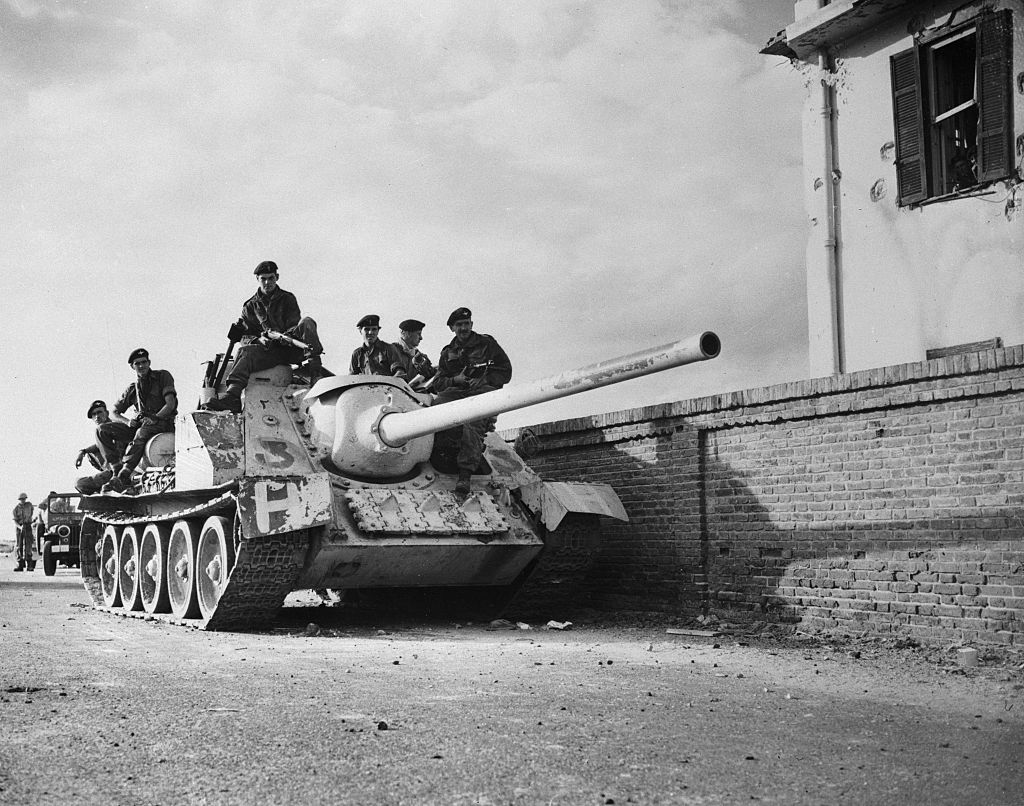
The Suez Crisis 1956:British Troops on Tank

The Anglo leader looked across the globe and saw a Muslim nation, which had already been stirring things up, potentially threatening a vital waterway. At the same time, Israel had its own beef against that country, and was pushing for a joint first-strike. So together, the two governments launched a military attack. 

But things did not go well. Casualties were low, but the political blowback was shattering. 

Is this a sketch of the ongoing conflict between the United States and Iran? Some might so assert, and that can’t be helped. Yet these are the outlines of the Suez Crisis of 1956. 

Back then, Britain, Israel, and also France joined together to “safeguard” the Suez Canal and to take the anti-colonialist Egyptian leader, Gamal Abdel Nasser, down a peg. Not many celebrate that conflict, but for those who do, 70th anniversaries are coming up, starting with October 29, when Israel commenced Operation Kadesh, followed a few days later by the Anglo-French Operation Musketeer. 

The attacks were a military success, but a political failure. Amid international uproar, a ceasefire was declared, and the foreign forces were soon withdrawn, leaving Nasser to declare victory. Many cheered his willingness to stand up for the liberationist aspirations of not only Arabs, but also the entire Third World (then a fresh phrase, coined four years earlier). 

So yes, history rhymes, and yet each historical moment sounds its discordant notes. For instance, back in 1956, the U.S. strongly opposed the Suez operation. President Dwight Eisenhower, a retired general, had seen enough of fighting; in fact, when he came into the White House in 1953, his top priority was to settle the Korean War, which he did. The 34th president was, for sure, a determined Cold Warrior against the Soviet Union, but he wanted to keep the focus on opposing communism, not snuffing out the various nationalisms then springing up, including in Egypt. As they say in the Army, the main thing is to keep the main thing the main thing—and for Eisenhower, that meant containing Moscow, not Cairo. 

Moreover, Ike’s secretary of state, John Foster Dulles, epitomized an earlier era in U.S. diplomacy, when the State Department strove to be even-handed—critics said, pro-Arab—in the Middle East. 

Eisenhower and Dulles worried that the Suez invasion would inflame the Egyptians and others, driving them toward the Soviets, who were encouraging movements of “national liberation.” So as the crisis unspooled, Washington and Moscow found themselves on the same side, telling the invaders to get out. 

Suez is generally reckoned as the last hurrah of British imperialism. Yes, there’d still be overseas missions to come, but, with the glaring exception of Tony Blair’s invasion of Iraq, the United Kingdom’s appetite for wars of choice had basically abated. (The story of France is similar; as for Israel, well—it’s different.) 

Yet there’s another aspect to the Suez saga that should be heartening to conservatives, if not neoconservatives: Parties of the right might make a geopolitical mistake, but if they can fix it, changing their errant ways, they can recover their political standing. Indeed, they can win even bigger in the next general election. That’s what happened in the UK back in the 1950s, and the precedent is worth a ponder. 

In the meantime, here’s an American precedent to consider: When U.S. presidents launched wars of choice that didn’t turn out well, their instinct was often to double down—and it was costly for them and their party (as well as, of course, for the country). 

For instance, as the Vietnam War started to look quagmire-y in the mid-1960s, President Lyndon B. Johnson sent more troops. The results were huge defeats for Johnson’s Democrats in the 1966 and 1968 elections (including the loss of the presidency). Similarly, as the Iraq War turned into a disaster in the mid-2000s, President George W. Bush hung tough on the “moral clarity” of the mission and then “surged” more troops. For their part, the voters didn’t approve: Bush’s Republicans were walloped in the 2006 and 2008 elections, including again the loss of the White House. The lesson is clear: If you make a mistake, get out as quickly as you can. 

The British prime minister who ordered the Suez attack was Anthony Eden, a capital “C” Conservative. The revulsion against him was severe; his health suffered a collapse that was described, publicly but unconvincingly, as a purely physical ailment. In search of relief, Eden traveled not to a hospital, but to the Caribbean, spending nearly a month at the Jamaican estate of the James Bond novelist Ian Fleming. 

Upon his return to London, Eden agonized for another month before announcing his resignation on January 9, 1957. Doctors’ orders, he claimed. (Wags said Eden had committed Suez-cide.) Interestingly, once freed from the stresses of office, Eden lived another 20 years, unrepentant about his military misadventure. (The idea that a leader wouldn’t wish to admit a mistake is unsurprising—it’s certainly familiar to American Republicans, surveying their party’s presidents over the last few decades.) 

Yet now the Suez saga starts to get decidedly cheerier for the party of the right—and offers hope to conservatives on this side of the Atlantic. 

Eden’s successor at 10 Downing Street was Harold Macmillan, who had been serving in the cabinet as chancellor of the exchequer. So Macmillan’s portfolio was finance, not foreign policy. As a member of the team, he had supported Operation Musketeer, albeit while harboring private concerns; his own preferred solution was a peaceful and international economic consortium to subsume the Canal controversy in foreign investment. That was, of course, a road not traveled, but when the fog of war was lifted, Macmillan had no clear fingerprints on the Suez stinker. 

That fuzziness served him well in the byzantine succession process that followed Eden’s withdrawal: Macmillan was acceptable to the Edenite dead-enders in the Conservative Party, as well as to more dovish members. 

One of the most acute studies of the man captures his essence. Macmillan: A Study in Ambiguity was the title of Anthony Sampson’s 1967 analysis. Sampson quotes Macmillan’s assessment of the situation, given to his son-in-law: “I think Anthony’s going to have a rough ride for the next few weeks. In fact, I shouldn’t be surprised if he lost his seat.” 

Mindful that Macmillan was more positive in public, Sampson raised, and then dismissed, the theory that Macmillan had actually encouraged Eden to launch the war, so that he, Macmillan, who was three years older, could get the younger man out of the way. (For what it’s worth—probably more for theatricality than veracity—this sneaky scenario was included in the Netflix miniseries The Crown.)

The new premier’s most urgent task was repairing Britain’s relationship with the United States; as Randolph Churchill would write: 

Among the most serious consequences of the Suez debacle was that it nearly destroyed the Anglo-American alliance. It was one of Mr Harold Macmillan’s greatest acts of statesmanship that he was able to heal the breach so very soon after he became Prime Minister.

Macmillan’s great strength was measured deliberation. He was, after all, a chess player and a reader who preferred novels to newspapers.

Born in 1894 to bourgeois wealth—the family business, Macmillan & Co., was even then a publishing powerhouse—young Harold would seem to have had it easy. Yet he had to overcome adversities, from a bullied childhood to a cuckolded marriage. 

And, most profoundly, the experience of the First World War. Macmillan volunteered for the army, where he met men very different from those he had known at Oxford. As he told his family in a letter from the front:

A company has just passed my house, back from a long route march, singing wonderfully the dear soldier songs, with silly words and silly tunes, but which somehow seem, sung by their great childish voices, from the depths of their very lovable hearts, the most delicate music and the most sublime poetry. Indeed, of all the war, I think the most interesting (and humbling too) experience is the knowledge one gets of the poorer classes.

In 1915, he was shot through his right hand; for the rest of his life, he could never manage a firm handshake. 

Macmillan recovered well enough to be sent back to the front, where, at Ginchy, France, on September 15, 1916, he sustained his most grievous wound. Macmillan biographer D.R. Thorpe sets the scene, incorporating Macmillan’s own words of recollection:

Caught by machine-gunners from the left flank, Macmillan was hit in the left thigh and in the pelvis, and “rolled down into a large shell-hole, where I lay dazed, but not—at first at least—unconscious.” For the next ten hours he intermittently dozed, treated himself with morphine, feigned death as Germans skirted round the shell hole.

He was rescued from no man’s land by Company Sergeant Major Norton and a team of stretcher bearers. These experiences left him with both only a lifelong shuffling gait and a deeper social outlook: 

He developed an empathy for those who suffered with him, and for the first time an understanding of those who had not had the advantages of his upbringing and education… and resolved after the war to pursue the Disraelian political ideal of “One Nation.”

So while Macmillan was always a Conservative in politics, he was also always a moderate, rejecting both laissez-faire and socialism. In 1938, by then a rising figure in Parliament, he published a book that defined his corporatist worldview. Its title: The Middle Way. 

Fast-forward to 1957. As recalled by yet another Macmillan biographer, Alistair Horne, one Tory member of Parliament wrote at the time that “everybody feels such a load of depression, because an ill man was led by illness into folly.” The MP was referring, of course, to Eden. Horne continues:

The country at large had never felt flatter, more discouraged, more bewildered or more uncertain of the future. The picture was of a Britain thoroughly menaced, at odds with America, all her alliances shaken after Suez. The nation too had become infected by Eden’s disordered bile duct.

Yet while the psychological impact of Suez was seismic, by a cold numerical reckoning, it was something of a blip. In a week of fighting, just 16 British soldiers were killed (add to that 10 French soldiers and 177 Israelis; Egyptian losses, meanwhile, were closer to 1,000). 

So here we can pause over a parallel on Iran today. While the political backlash against the Iran war has been enormous, nevertheless, a utilitarian calculus might count this conflict as small in the scheme of things. As this author observed in these pages nearly three months ago, American deaths in the Iran conflict total fewer than two dozen; even after an upward revision in October, the figure remains small. For purposes of comparison, in 2025, a total of 828 American service personnel died of various causes while on active duty. 

The point here is not to minimize the carnage of the Iran war. Rather, a look at actual numbers can help put matters into proportion. Indeed, perspective helps make clear the possible analogy to that earlier misfired Mideast war, seven decades ago, which hurt the responsible political party, but not for long—once that party made the right repairs.

The beginning of the Conservative recovery after 1956 could be seen in the way the war was framed by opponents, who attributed it to Eden personally. During the fighting, Aneurin Bevan—a longtime Labour mainstay, soon to be the party’s spokesman on foreign affairs—roared to an anti-war rally at Trafalgar Square:

Sir Anthony Eden has been pretending that he is now invading Egypt to strengthen the United Nations. Every burglar of course could say the same thing; he could argue that he was entering the house to train the police. So, if Sir Anthony Eden is sincere in what he is saying, and he may be, then he is too stupid to be a prime minister.

Echoing Bevan, The Daily Mirror, then the largest-circulation newspaper in Britain, headlined “Eden’s War.” 

The opposition’s focus on Eden was, in fact, a gift to the Conservatives, because once the singular bogeyman was gone, the Tories didn’t look so bad; neither Macmillan nor anyone else in his government talked about “finishing the job” in Egypt. As for imperialism in general, some 14 British colonies gained their independence during Macmillan’s tenure; in 1960, his “wind of change” speech in South Africa received worldwide attention. 

With their fears of endless war allayed, and with Macmillan’s charming of Eisenhower and Dulles, Britons could return to domestic concerns, and were free to recall the privation suffered under six years of Labour rule, 1945–51, when the socialist regimen was price controls and queues. (The National Health Service, enacted under Labour, was, of course, enduringly popular; Macmillan’s Conservatives wisely made their peace with the NHS, even as they tweaked it.)

Macmillan’s truly was the Middle Way, tilting only slightly to starboard. Margaret Thatcher recalled in her memoirs, with a tincture of right-wing disdain, “The natural path to promotion and success at this time lay in the centre of politics and on the left of the Conservative Party.”

As Macmillan said of his governing philosophy, “Our first objective must be to keep the party together, at all costs united.” With that in mind, in a 1957 address to his fellow Tory MPs, he paddled toward platitudes, while keeping his partisan pointedness: 

I hear a lot of silly talk about the Left and the Right. To the broad stream of our philosophy there are many tributaries. Indeed we are always adding to this flow as the Parties of the Left break up into a kind of delta of confusion. And so our great river flows on triumphantly to the sea.

Macmillan posted a sign on the door to the Cabinet room: “Quiet calm deliberation disentangles every knot.” Thorpe adds that the new PM was eager to disentangle one knot in particular: “He made sure that this coded distancing of himself from the frenetic atmosphere of the Suez crisis became widely known.” Indeed, writing from the vantage point of 2011, Thorpe detailed Macmillan’s irenic activities and added his own tart comment: “Unfortunately, the lesson was not heeded at the time of the Iraq invasion in 2003.”

Providentially, the British electoral calendar gave Macmillan time to breathe, and he made the most of it, focusing on peace and prosperity. “Let’s be frank about it,” he said in 1957, “most of our people have never had it so good.” 

Then, in his 1959 re-election campaign, Macmillan’s party operatives sharpened the contrast with the socialists: “Life’s better with the Conservatives. Don’t let Labour ruin it.” Voters agreed: The Tories were returned with an increased majority in Parliament. Even Thatcher, first elected to Parliament that year and well to the right of her leader, recalled, “On top of the sense of prosperity, there was an awareness that in Harold Macmillan Britain had a statesman capable of acting a distinguished role on the international stage.” (In fact, Macmillan’s big-tent governance made room for Thatcher: She would later accept a junior ministerial position.) 

For a time, he was so popular that he was dubbed “Supermac,” and the moniker was only semi-ironic. Yet by 1963, Macmillan was almost 70 years old; four decades in public life had worn him down, and so he left office. 

His was a worthy career in service to his country. Amid all the terrors and radicalisms of the 20th century, Macmillan had steered the ship of state on a safe and steady course. To be sure, other successful politicians on the right have had the same idea: In the 1920s, Republicans won on “normalcy” and “Keep Cool with Coolidge.” In the 1950s, Konrad Adenauer’s Christian Democrats won West German elections using the slogan Keine Experimente! (“No experiments!”). And in 1984, the Reaganite GOP reminded voters, “It’s morning again in America… Why would we ever want to return to where we were less than four short years ago?” 

This is the obvious winning formula for parties of the right: We’re careful, we won’t do risky or dumb things. Most conservatives think they think that way—the challenge is to prove it. And so if a conservative leader veers off track, well, the conservative party had better get back on track, for the sake of the country, as well as itself. 

In America today, the electorate does not seem pleased with its leadership. The incumbent party faces severe challenges, and yet the opposition party, too, is mistrusted. Still, somebody has to win in November, and the auguries bode better for blue than for red. 

Yet whatever happens in 2026, the more consequential election comes in 2028. In the meantime, if we listen carefully, we can hear the historical rhyme of Vice President J.D. Vance with Macmillan. To be sure, Vance was not born rich, and yet he, too, is a book-reading war veteran, well placed in the succession order. 

Still, there’s a rip in the rhyme: It’s known that Vance privately opposed the Iran war, whereas Macmillan supported the folly of Suez. But, just like Macmillan in the 1950s, Vance is a team player and a party-builder—for better or worse, he’s no Thomas Massie. The VP keeps his focus on the other party. 

In September, Vance said, “I’m not asking anybody to agree on every single policy of the administration. What I am asking you to do is to recognize the contrast with the radicals.” Continuing in that vein, he added, “Do not throw the baby out with the bath water. Don’t give the country over to a bunch of crazy people because you happen to disagree with us on a policy issue here or there.” These points are now, in fact, a feature of his stump speech. 

Whatever happens in the 2026 elections, we can look ahead to 2028 and anticipate that the Democrats—including their ascendant hard left—will be emboldened. This will put their foibles more fully on display, and so make them more vulnerable, as Vance already suggests, to a thorough comparing-and-contrasting. 

If Republicans can get back to being the normal party of peace and prosperity, they can say in 2028, in the spirit of Macmillan’s successful campaign of 1959, “Life’s better with Republicans. Don’t let Democrats ruin it.”

Of course, the preceding paragraph starts off with a big “if.” Can the GOP put foreign war in the rearview mirror, as did Macmillan? Some are already comparing the Iran war to Suez, and yet some had earlier compared the Iraq War to Suez—and yet obviously that lesson then didn’t stick. So in 2028, a victory-minded Republican will have to work extra hard to convince voters that this time, the GOP president will stick to a vision of prudent restraint. Be a normal conservative, pushing peace and prosperity, not regime change somewhere in the Middle East. 

If so, the same Republican can then put the onus on Democrats for their abnormal ideas and impoverishing agendas (and yes, point to the riots in France as a warning of what happens when progressive open-border policies meet the engorged welfare state). 

We can’t yet know whether such messaging will win in 2028. Yet the British version won in 1959. And we know that history rhymes. 

The post These Conservatives Fought an Ill-Fated War, but Recovered and Won the Next Election appeared first on The American Conservative.


Is Europe Doomed?

Is Europe Doomed?

Shocking scenes out of France show a continent in crisis.

TOPSHOT-FRANCE-SOCIAL-DEMO
(Pascal LACHENAUD / AFP via Getty Images)

When France sneezes, it used to be said, all Europe catches cold. One need only consider the French Revolution, 1848’s “Springtime of the Peoples,” or even the student protests of May 1968 to see the point: There is something about France that allows her to act as both catalyst for and barometer of profound shifts in European order.

One wonders whether the riots currently convulsing the Hexagon will prove the latest illustration of this phenomenon. For the past few weeks, malcontents in their tens of thousands have taken to the streets of cities across the country, demanding—something. The demonstrations started with students, who claimed to be opposing poor conditions in schools and problems with the admissions system for higher education. But the schoolkids were soon joined by trade unionists and radicals of all stripes, and the targets of their wrath expanded to encompass fuel prices and the rising cost of living, government budget cuts, a lack of attention to left-wing priorities, and, ultimately, the notion of authority itself. 

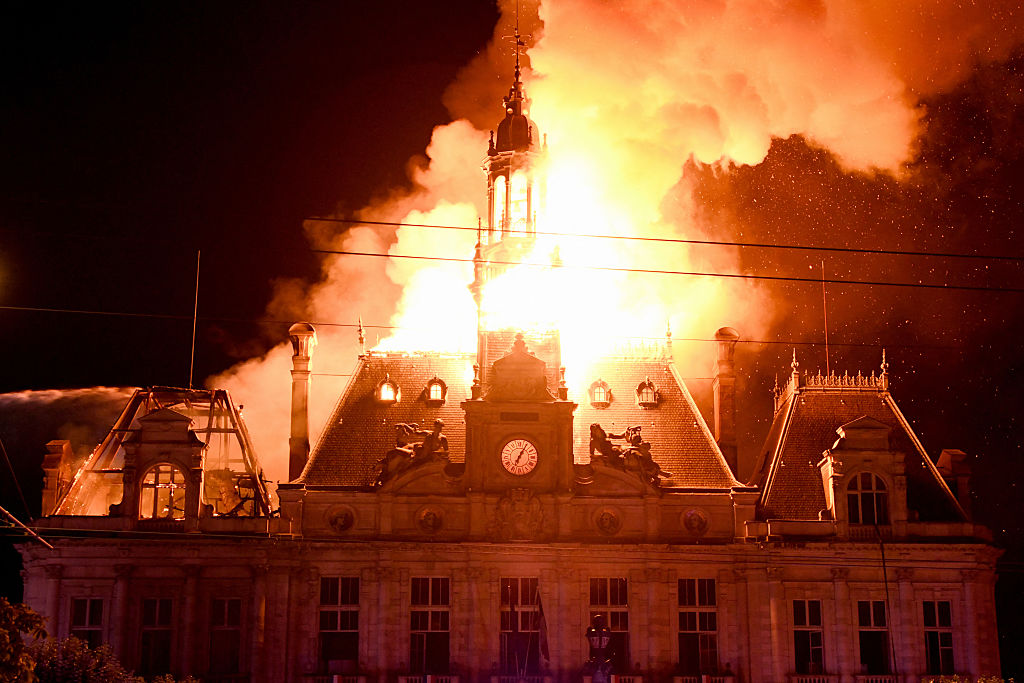
Now protests, in the Gallic tradition, do not tend to display the primness and decorum one might find in a stateside “No Kings” gathering. But this weekend they degenerated into levels of chaos and violence unusual even by French standards. The world was treated to the spectacle of looting, wanton property destruction, and brutal physical assaults across France; nearly 1,000 police officers and gendarmes were injured, and over 2,400 arrests were made between Saturday and Sunday. The degeneracy was perhaps best summed up by an arson attack on the town hall of Limoges, a grand old building that survived two world wars before finally succumbing to the senseless spasms of the mob.

Already, at least a little of the unrest has spread beyond France’s borders. In the past few days, we have seen a few similar demonstrations break out in Madrid, Milan, Lisbon, and Brussels. And there may be good reason to expect further propagation, because the conditions that produced them are common to most European countries.

Consider first the material circumstances. France, like the United States, is in the midst of a cost of living crisis, one that is squeezing ordinary people across the board. But its crisis is more acute and more painful in certain key areas—notably, the oil and gas necessary for commercial transportation, industrial production, and residential heating—and French leaders have far less ability to control the underlying causes (that pesky war in the Mideast, for example). 

Moreover, this crisis is unfolding against a backdrop of both anemic economic growth and—critically—looming fiscal crisis. Much has been written about France’s burgeoning public debt and its unconquerable addiction to the financing of extraordinarily lavish benefits via deficit spending. And although the United States is no model of fiscal rectitude, the dollar is hegemonic and we write the rules of the global financial system. France has vastly less cushioning; and the risk of a default has jumped appreciably of late, spooking the government enough for it to actually propose cuts to spending. (Quelle horreur!) The result, of course, is fury and resistance (the protests, at least initially, being an obvious example of this), which tends to paralyze efforts to fix the problem and so worsen the situation.

Then there is the issue of immigration. Whatever the ethnic composition of the rioters and looters—I leave it to the reader to parse the various videos and documentary evidence circulating online—it is clear that mass migration has produced profound and perhaps unbridgeable social fractures. Nearly 12 percent of the French population is foreign-born; of these 8 million or so residents, many lack either the desire or the ability to assimilate into a society that is far less capable of absorbing and integrating newcomers than our own republic. And these excluded millions are, in turn, keenly aware of the uneasiness of their position. The result is a situation of enduring hostility; moments of crisis therefore find large pools of opportunists with little attachment to the existing order and much to gain from its unravelling. 

Finally, there is the utter bankruptcy of the political establishment. Emmanuel Macron has been president of France for 10 years and has an approval rating of 15 percent. And although his initial pitch was—as one sage commentator pointed out on X—to forestall the very explosion of popular anger we see occurring today by fixing its underlying causes, it is undeniable that the project of macronisme has failed. It has failed to get France’s economic and fiscal house in order. It has failed to shore up order or meaningfully enhance French power or security. And it has failed to unify the French people. Finally forced to address the nation on Sunday, Macron blamed far-left agitators and “delinquents” for the mayhem, and dutifully promised to both “hear the anger and act on its causes” and “firmly uphold republican order.” (His government also pressed for limited local curfews.) But few of his countrymen seemed to take their president seriously. More compelling was the conclusion of the journalist Vincent Trémolet de Villers: 

If the ultra-left, criminals, and looters can turn France upside down in a matter of hours, it is first of all because a technocratic monarchy—intoxicated with its own self-importance—has methodically razed all the moral, security, cultural, and economic safeguards that allow a society to remain standing.

The three failures sketched above may have progressed the furthest in France. But she does not suffer alone. All Europe faces this confluence of severe economic headwinds, mass migration, and an utterly feckless political class.

So, to address the question raised by this article’s heading: Is this it? Is Europe doomed?

The right-wing, anti-establishment parties currently surging in countries like France and Germany offer some prospect of rejuvenation. If things continue to break their way—still a big if—the National Rally, the AfD, and similar forces could replace the current crop of European elites with leaders who grasp both the urgency of the challenge and the necessity of decisive action. But though populists may shore up their political orders and address themselves earnestly to the problem of migration, they are unlikely to find a way out of the continent’s material dilemma. Economic competitiveness will continue to falter, the affordability crisis will probably worsen, and the technologies that will determine future positioning—one thinks especially of AI—may pass Europe by entirely.

And obviously, if the populists fail to take power, Europeans will continue on their current trajectory. The present political establishment is more likely to launch a war with Russia than to get serious about mass migration.

All this suggests pessimism is warranted. Continued decline, though not entirely inevitable, is far more probable than not. Yet, even if these protests continue to spread, the collapse is unlikely to happen all at once, in a sudden conflagration. Rather, it will be a sad drama playing out over years and decades. For if, as Adam Smith famously observed, there is a lot of ruin in a nation, how much more is there in a continent?

The post Is Europe Doomed? appeared first on The American Conservative.

(VIDEO) Trump Trolls Protesters at Rally as Crowd Chants “USA” – “Now Mom and Dad Slap Him Around, They Say, ‘I Voted for That Man’”

President Trump speaks at a midterm rally in Wichita, Kansas – October 19, 2026

The leftwing hecklers were out in force during Trump’s rally in Wichita, Kansas, on Monday, and Trump responded by trolling each of them from the stage. 

At least four agitators attempted to interrupt Trump’s rally, but he flipped it right back onto them as the massive crowd chanted “USA” and shouted the protesters out of the arena.

“You know what he is? They’re paid protesters. They’re paid protesters,” Trump said after the first interruption, and the crowd erupted in USA chants.

WATCH:

When a second protester tried to make headlines, Trump responded with fire.

“Now he goes home to mom and dad, they slap him around, they say, ‘I voted for that man.’ They voted for me,” Trump said, adding, “you know they’re paid.”

“They’re paid protesters. Every once in a while, you know, you see some, and it’s actually very dangerous to be in it,” he added as another was heard.

“Oh, here’s another one. Listen to that one. I can tell by the voice they get paid. They get paid.”

WATCH:

Trump then trolled the leftwing media during an apparent third interruption, pointing to his massive crowds inside and outside of the arena.

“So, we have two and a half people did that, and tomorrow the headlines are going to be Trump has to go through massive protests. No, we have, you know, they have 5000 people standing outside watching a jumbotron right now,” Trump said as supporters erupted in cheers.

WATCH:

During a fourth interruption, Trump called out the losers who are throwing their lives away for cheap instead of getting a real job.

“You know the amazing thing, the amazing thing, these kids get paid $250 for that, and then they ruin their whole lives because they get arrested, and they’ve got it for their whole life,” Trump said.

“I don’t like to do it. Actually, a lot of times I say don’t do it, but they get 250 bucks, and they scream some stupid thing. Their parents go crazy, but you know, they get $250, and they get put up in jail sometimes; they destroy their entire lives. It’s such a shame.”

“Somebody’s got to speak to them,” he added.

WATCH:

The post (VIDEO) Trump Trolls Protesters at Rally as Crowd Chants “USA” – “Now Mom and Dad Slap Him Around, They Say, ‘I Voted for That Man’” appeared first on The Gateway Pundit.

RIGHT ON CUE: Elissa Slotkin Tries to PLAY THE VICTIM After Threatening Young People Thinking of Working for Trump (VIDEO)

Screencap of Twitter/X video.

A few days ago, Democrat Senator Elissa Slotkin of Michigan detailed how she wants to go after Trump’s inner circle in an effort to intimidate young people who may be thinking of going to work for the Trump administration.

Trump responded today, calling out Slotkin and her entire party for this.

Slotkin then ran straight to CNN to paint herself as the victim in all of this, and of course, Jake Tapper was happy to oblige her.

Transcript via Curtis Houck:

“I mean, first of all, it’s not — it’s not a veiled threat, right? I mean, threatening the Second Amendment is threatening for someone to get shot. And I think there’s been plenty of people, Democrat, and Republican, independents, who would say, like, can we just not threaten violence against each other for our words? He’s certainly precipitated a whole wave of threats against myself. But my staff, including doxing my staff, and this is part of a sort of strategy of intimidation that these people use.

And, you know, this is someone who Donald Trump thought of as a potential attorney general and then luckily thought better of it. But I just think that this is kind of part and parcel of this toxic culture of threatening violence because you disagree with someone. The President threatened to have me, you know — investigated, arrested, and hanged for sedition, and followed through with the investigation, and near-arrest part.

And this guy’s just threatening violence. And it is — again, I imagine what kids think about when they’re just scrolling Twitter — my nieces and nephews — and they see someone threaten violence because of words. It’s just — it shows you how toxic these people have become online.”

See the video below:

She could have just apologized for her inflammatory remarks, but no – she’s the victim in all of this.

It’s all so predictable, isn’t it?

The post RIGHT ON CUE: Elissa Slotkin Tries to PLAY THE VICTIM After Threatening Young People Thinking of Working for Trump (VIDEO) appeared first on The Gateway Pundit.

James Comer: Ilhan Omar’s Winery Sold Empty Barrels of Wine to Investors (VIDEO)

Close-up of a woman with a headscarf and large earrings, alongside a California Certificate of Cancellation for a Limited Liability Company.

Close-up of a woman with a headscarf and large earrings, alongside a California Certificate of Cancellation for a Limited Liability Company.

Earlier this year, Ilhan Omar’s husband’s questionable California winery LLC was officially dissolved just nine days after she quietly amended her financial disclosures to slash her reported wealth from millions down to peanuts.

As The Gateway Pundit previously reported, Omar’s husband Tim Mynett’s ESTCRU LLC (also known as eStCru Wines) was at the heart of a suspicious asset explosion that rocketed the couple’s net worth to as high as $30 million before suddenly vanishing into thin air.

In February, House Oversight Committee Chairman James Comer sent a letter to Omar’s husband, Timothy Mynett, about the sudden wealth.

After receiving the letter, Omar quietly amended her financial disclosure on March 26, 2026, dramatically revising her reported wealth downward, from what had appeared to be potentially millions in assets to a far more modest range between $18,000 and $95,000.

Her office scrambled to explain away the massive discrepancy, blaming what they described as an “accounting error” tied to her husband’s business liabilities. According to Omar’s team, the original filing failed to properly deduct debts, creating what they called a “misleading picture of far greater wealth.”

And what happened next? On April 4, 2026, just nine days after that amended filing, ESTCRU LLC was officially terminated.

During a Fox News interview, House Oversight Chairman James Comer said Ilhan Omar’s husband was selling empty barrels of wine to investors.

“From our initial investigation of Omar and her financial disclosure form, there are multiple fronts where you could get a search warrant issued,” House Oversight Committee chairman James Comer said to Fox News host Trey Gowdy.

“Not only was there a huge discrepancy in the financial disclosure form, there was the winery that was the big base of her $25 million listing on her financial disclosure form,” Comer said.

“That winery has, according to the press, been shut down because of fraud. They were apparently selling investors barrels of wine to be aged, but there was nothing in the barrels,” Comer added.

WATCH:

The feds raided Ilhan Omar’s DC residence last week and seized boxes of evidence.

Federal investigators have been probing the immigration paperwork filed by Ilhan Omar’s father.

Last week, the Associated Press and NBC News reported that, according to sources, federal investigators were also probing Ilhan Omar’s financial records.

The post James Comer: Ilhan Omar’s Winery Sold Empty Barrels of Wine to Investors (VIDEO) appeared first on The Gateway Pundit.

Watch CNN’s Dana Bash BEND OVER BACKWARDS Trying to Defend Radical Leftist Abdul El-Sayed From Mike Rogers (VIDEO)

Screencap of Twitter/X video.

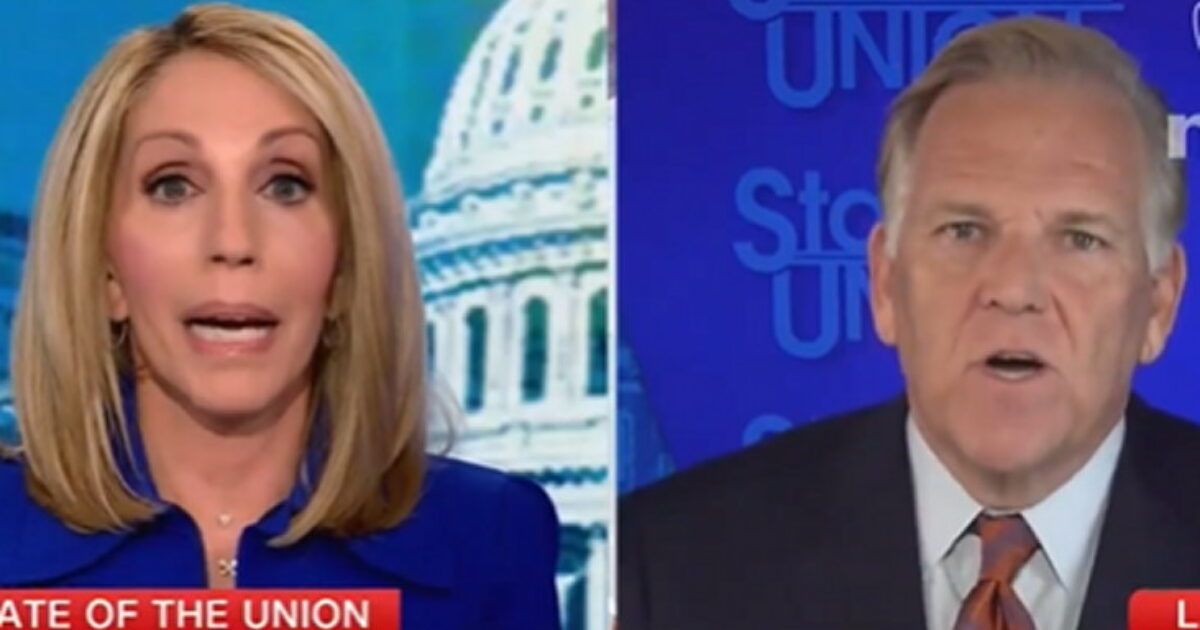
Republican Mike Rogers of Michigan appeared on CNN today and was peppered with questions from host Dana Bash, who repeatedly went out of her way to defend Abdul El-Sayed, the radical leftist who is running as a Democrat in the race.

As you’ll see in the video below, Bash continually filibustered over Rogers, insisting on his reaction from Trump’s recent remarks about El-Sayed.

When it comes to El-Sayed saying he has no connections to the Muslim Brotherhood, Dana Bash is more than willing to just take his word for it and clearly can’t understand why Rogers won’t do the same.

At one point, Rogers asks her why the media is so committed to defending El-Sayed but she doesn’t answer, of course.

Townhall has details:

“The President is effectively calling your opponent a terrorist,” Bash said. “You’re a former special agent with the FBI, former Intelligence Chair in the House. Are you comfortable with that?”

“Listen, I’ve never called him a terrorist. I wore the uniform of the United States of America so people can pray any way they want. That is not the issue here. What has become the issue is his relationship, and his family relationship with the Muslim Brotherhood, which is banned in five Muslim countries,” Rogers said. “He wants to play the victim, this is not about that.”

“This is about the way you think, not the way you pray. This is about your ideology and how dangerous it is,” Rogers continued. “I mean, he has a long history of supporting the Muslim Brotherhood. Which, by the way, diminishes women’s role in society just as they did when they took over in Egypt in 2012 and 2013. He supported that regime. He called for the purging of the press. He called for a purging of the police. If I were a member of the press, I’d start looking at this.”

You know this was a good answer, by the way, Bash responded.

“Congressman, I just want to go back to what the President said,” Bash interrupted.

“I don’t speak for the President,” Rogers replied.

Watch the video below:

It’s as if Rogers is arguing with a member of El-Sayed’s campaign.

The post Watch CNN’s Dana Bash BEND OVER BACKWARDS Trying to Defend Radical Leftist Abdul El-Sayed From Mike Rogers (VIDEO) appeared first on The Gateway Pundit.