ICYMI: Newt Gingrich on Republican Odds in November: “We Will Win One of the Most Shocking Off-Year Elections in American History” (VIDEO)

Former House Speaker Newt Gingrich predicts a Republican landslide in November.

Former Speaker Newt Gingrich predicts a “shocking” Republican win in November.

This is not the first time he has gone against the pollsters and won!

Newt Gingrich boldly publicly predicted that Donald Trump would win the 2016 presidential election.⁠

Newt made the prediction on August 18, 2016, during an appearance on Fox News’ Hannity, he said:

“I’m going to go out on a limb tonight and you can keep this tape and remind me about it after the election, OK? Donald Trump’s going to win. Donald Trump’s going to win because in the end the country is not going to reward big banks and big unions and big bureaucracies and big donors and big corruption by voting for a big liar. And in the end, the country is going to say, you know, whatever Trump’s weaknesses may be, he’s a sincere guy trying very hard to get this country back on the right track.”

He repeated the prediction that Trump would win in the same interview.

Later in the fall of 2016, via Breitbart, Newt continued to forecast improving numbers for Trump and a Brexit-style surprise outcome.⁠

Now, Newt Gingrich is making a similar prediction for the 2026 election.

Trump and MAGA win again!

Newt Gingrich: Clarissa (Gingrich) and I were very deeply shaped by doing a movie called “Nine Days That Changed the World” about Pope John Paul II, Saint John Paul II, going back to Poland for the first time in 1979 and shaking the entire Soviet Empire. His consistent statement was, quoting Christ, “Be not afraid.”

…So I think personally, I’ll go out on a limb and say I think the odds are much better than even that by Election Day, we will win one of the most shocking off-year elections in American history.

Democrat-socialists are just too damn scary.

Here is Newt’s prediction recently on the Sean Hannity podcast.

The post ICYMI: Newt Gingrich on Republican Odds in November: “We Will Win One of the Most Shocking Off-Year Elections in American History” (VIDEO) appeared first on The Gateway Pundit.

Kemi’s Comeback

Kemi’s Comeback

The Tory party leader has effected a surprising turnaround in the Conservatives’ political fortunes.

TOPSHOT-BRITAIN-POLITICS-CONSERVATIVE-CONFERENCE
UK Special Coverage

Olukemi Olufunto Adegoke “Kemi” Badenoch has been the leader of the UK Conservative Party since November 2024. Just consider that for a moment. 

A political party that too many elements of the progressive establishment still insist is synonymous with xenophobia and racism is now led by a capable black woman who says she is “to all intents and purposes a first-generation immigrant.” She is the progressives’worst nightmare.

Badenoch was actually born in Wimbledon, London, in January 1980. But that was only because her mother, Feyi Adubifa, a professor of physiology at the University of Lagos in Nigeria, had travelled briefly to London to give birth at St. Teresa’s Maternity Hospital because she had gynecological problems. This made Kemi unknowingly a British citizen, though she didn’t realize she was eligible for a British passport until she was a teenager.

She returned to the UK from Nigeria at 16 and went on to study computer systems engineering at Sussex University. Badenoch joined the Conservatives in 2005 and became MP for Saffron Walden in 2017. She served as Business and Equalities secretary under the last Conservative prime minister, Rishi Sunak.

She says it was “the soft bigotry of low expectations” that led her to conservatism. And there was no shortage of low expectations after she became leader of the party after the Conservatives’ disastrous 2024 general election. As recently as at the 2025 Conservative conference, she was being written off as a dud by media commentators and Tory insiders.

The former Conservative senior adviser, Dominic Cummings, called her “lazy, brittle and delusional” and warned that the Conservative Party faced extinction under her leadership. Her personal ratings were almost as bad as those of Liz Truss, the Conservative prime minister who lasted only 49 days in office in 2022. 

Badenoch was regarded as abrasive, shallow, inexperienced, and generally not up to the job. After the Conservatives were routed in the May 2025 local elections, commentators began forecasting her and her party’s imminent demise. Nigel Farage’s Reform UK seemed to have eclipsed the Conservatives as the leading party of the political right and was dominating the opinion polls.

But what a difference a year makes. 

In the latest polls, the Conservatives have edged ahead of Reform. Badenoch’s personal ratings have improved by 20 points. She is now being celebrated by some as the most combative Conservative leader since Margaret Thatcher.

Badenoch’s revival can usefully be traced to November 2025 and her brutal reply to the then Labour Chancellor, Rachel Reeves’s Budget in the House of Commons. Reeves had claimed that criticism of her conduct of the Treasury was motivated by misogyny.

“Let me explain to the chancellor, woman to woman,” she said, eyeballing the chancellor over the Dispatch Box, “people are not complaining because she is female; they are complaining because she is utterly incompetent.” When the prime minister, Keir Starmer, then appeared to exchange words with Reeves, Badenoch said with mock concern, “Aw. Is he mansplaining you? Do you want help?” This is not the way feminists are supposed to behave, especially black feminists.

Reeves lost her job when Andy Burnham took over as Labour prime minister from  Starmer in July 2026. Badenoch is also being credited as having played a major role in the downfall of Starmer by exposing his woodenness and penchant for policy U-turns.  

It’s too early to say that Badenoch has seen off the challenge from Reform. But  her reviews are now nothing short of sensational.

The respected historian Niall Ferguson calls her the “Black Thatcher” and says she will be the next prime minister. The Times commentator Fraser Nelson calls her “absolutely electrifying” and the first “true Conservative” in decades. Even the rapper Nicki Minaj has declared herself a fan. 

Conservatives appreciate Badenoch not just for her knock-‘em-down style of politics but because she defends traditional values of sound money, hard work, low taxation and reduced borrowing. She is not just a populist opponent of illegal immigration, though she insists that she would stop the boats. 

She is not ashamed to give tax breaks to the wealthy. At the Conservative Party Conference this month, she promised to abolish inheritance tax on family homes, whatever their value, if the Conservatives won the next election. She is not afraid of praising businessmen for creating jobs and being essential for economic growth.  This is not the progressive “BBC” view. 

It might seem strange that the party of Churchill and Thatcher ever departed from these values. Yet under successive Tory prime ministers after 2010, taxation was allowed to rise to levels unseen in the UK since the 1950s. Under post-Brexit policies introduced by Boris Johnson, net immigration rose to nearly one million a year.

The Labour Prime Minister Andy Burnham is not wrong in claiming that the foundations of the UK’s crippling debt pile were built by the Conservatives in the decade before 2024. The relentless rise in welfare costs (one in ten Britons now receive sickness and disability benefits) also began under the Tory watch.

So Badenoch has a job to do distancing herself from the legacy of previous Tory administrations, of which she was a member, and persuading a sceptical UK that the Conservatives can be a responsible party of government. It will take more than a few good performances at Prime Minister’s Question Time in the Commons to persuade the country of that.

But Badenoch has certainly asserted her authority over her party. She has made clear that candidates for election must subscribe to her values and policies. These include a commitment to leave the European Convention on Human Rights, which right-wingers blame for Britain’s inability to deport illegal migrants.

Badenoch has departed from recent Tory administrations, such as Boris Johnson’s, in revoking the commitment to deliver net zero greenhouse gas emissions by 2050. She wants drilling to resume in the North Sea to reduce energy costs.

But it is perhaps in the so-called culture wars that Kemi Badenoch has marked out uncompromising new Tory territory. She wants to replace multiculturalism in schools, overhaul the Equality Act, and prioritise meritocracy. This black politician is committed to ending identity politics and promises to prohibit public bodies, like the NHS, from imposing DEI diversity quotas for hiring and promotions.

The Tory leader has used her race and gender in a very different way than that expected of minorities rejecting the tired dogmas of “structural” racism and misogyny. “Women are women and men are men,” she says, “you cannot change your biological sex.” She says doesn’t play the race card, yet no one could call her a “coconut.” No one would dare. She doesn’t suffer fools, especially progressive ones. The left has had difficulty coping with Badenoch precisely because she doesn’t conform. Black people and women are supposed to be victims. Whatever else she is, Olukemi Olufunto Adegoke Badenoch is nobody’s victim.

The post Kemi’s Comeback appeared first on The American Conservative.

Do We Actually Need Ambassadors?

Do We Actually Need Ambassadors?

Critics of Trump’s diplomatic staffing don’t address why it’s important to have a top man on the ground in the Zoom era.

GREECE-US-POLITICS-DIPLOMACY

During my more than two decades at the State Department as a diplomat, my well-meaning mother often asked what I’d have to do to make ambassador. The answer was simple: Dad would have to die young, and Mom would then have to donate the whole estate to the winner of the next presidential election. Then I’d get appointed ambassador to a small, unimportant country. For so many reasons, I am glad Dad lived to a ripe old age, and that Mom looks forward to taking care of the Humane Society in her will instead. I would have made a terrible ambassador.

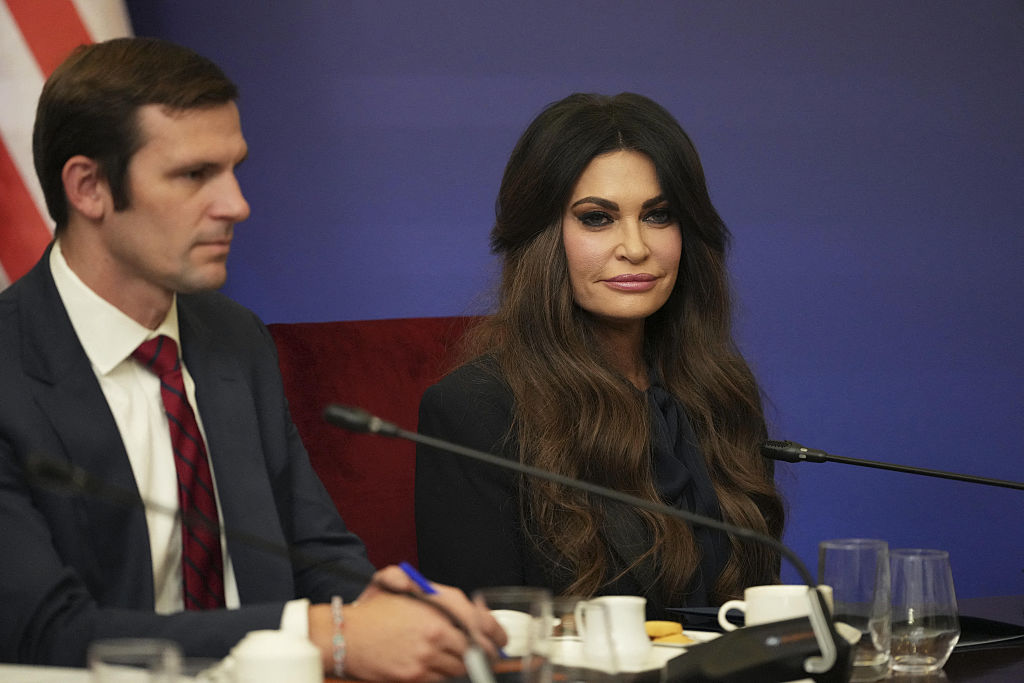
Since 1960, 72 percent of America’s ambassadors to desirable posts in Western Europe and the Caribbean have been political appointees like the recently departed Kimberly Guilfoyle, as I might have been if the plan with Mom had worked out. Their primary and often only qualification is spending big on the guy who won the presidency. Career diplomats on the other hand are often promoted as ambassador into politically less important hardship posts, no donation required. All must be confirmed by the Senate. The United States is unusual among developed democracies in the scale of political ambassadorial appointments. Unlike the U.S., most developed democracies, including Britain, Germany, Japan, Australia, Canada, and New Zealand, reserve ambassadorships almost entirely for career diplomats.

So while the debate over political ambassadors versus career diplomats has gone on for more than a century, in 2026 the more interesting question may be whether we need ambassadors in every capital at all. What useful and productive thing was Guilfoyle doing in Greece anyway?

It is important to have a good person in the role; he acts as the personal representative of his country’s leader, in America’s case, answerable to the Oval Office. He receives confidential instructions from the White House before taking up his job abroad, and for many political ambassadors, can often pick up the phone and call the president and cabinet officials directly. I was in the room as a subject matter expert when ambassador Howard Baker simply picked up the phone and dialed Vice President Dick Cheney at his ranch in Wyoming and untied a significant bureaucratic knot that was burdening our relationship with Japan. This demonstrates something well-connected political ambassadors can uniquely do. On the other hand, communication inside an embassy can be problematic for political appointees; many Foreign Service Officers (FSO) see them as outsiders come to mess up their way of doing things and slow-walk ambassadorial initiatives because they are sure they know better. Political appointees, especially those taking leave from large businesses to serve, also tend to spend a lot of their time back in the U.S., creating friction with the staff.

In the American system, because most career ambassadors owe their own bottom-line allegiance (and pension) to the State Department, communication is often not that close and friendly with the Executive under most circumstances. A White House unsure of whether the State Department is even on its side will be unlikely to be reassured by a career ambassador in place, not to mention State’s long-standing institutional resistance to too many political appointees in general. Careerists usually do have strong host-country knowledge and maybe language skills. Some, however, can get too deep into the weeds on administrative, visa, or personnel matters a political appointee usually leaves to subordinates, and some use their new-found authority to settle old scores or pursue personal projects adjacent to core foreign policy. 

The ambassadorial title remains the profession’s highest achievement. It would be surprising if ambitious FSOs did not aspire to it. But just being the most qualified for anything inside State is rarely enough. That leaves plenty of careerist yes-men around looking to get into an ambassador’s chair.

The struggle over who is better at the job, political appointees or careerists, will never conclusively end. It has been a factor of American diplomacy for decades, under all flavors of administrations. The mainstream media negatively focus on some of Trump’s ambassadorial choices, but to anyone familiar with diplomacy it is nothing more than another round in a century-old political argument.

The new question, unique to the second Trump administration, is whether or not the president should appoint anyone at all, career or political, to a particular ambassadorial job. Trump currently has 92 ambassadorial seats empty, with either the candidate stuck in the Senatorial confirmation process or the chair simply left vacant by Trump’s choice. The same number of empty offices at comparable points of their presidencies was only 54 under Biden, and 55 under the first Trump administration. A lot of the empties are in smaller countries of lesser political importance, but a few larger embassies stand out, including Egypt, Qatar, Saudi Arabia, and Germany. Some have pending nominees, some do not. Senate intransigence aside, this seems to be by choice. The real question is, however, how much it matters.

Any American embassy without an ambassador is led by a charge, someone temporarily in the ambassadorial role, typically the embassy’s deputy chief of mission (DCM). The DCM is usually a State Department career FSO, typically the most experienced and senior one at post, and often has done multiple tours in the country in subordinate roles. This seems like the kind of person State would want in charge, yet the American Foreign Service Association and most rank-and-file FSOs curiously complain about not having enough career officers in leadership roles. One wonders whether for some critics the temporary nature of the title itself has become too much the issue.

Things are complicated by the fact that until something goes wrong, most ambassadors work without real oversight. One of the criticisms in Dennis Jett’s excellent book American Ambassadors is the lack of standards and definitions of success for an ambassador. They report to the president after all, who is usually too busy to pay much attention to things on a day-to-day basis in Lesotho, no matter who the ambassador is. Underlings in the embassy by culture and negative experience tend to be sparse in their suggestions upward, and State has little of the military’s tradition of after-action summaries, tough lessons-learned reports, and sincere historical evaluation of mistakes. Ambassadors tend to choose their own path. Some try to be local celebrities, scoring photo-ops and ribbon-cuttings and hosting VIPs. Others focus near-exclusively on American business promotion abroad, while others remember their own days in the bureaucracy and dive deep into political or economic reporting. This all further complicates what is and is not a “good” ambassador. So do we really need them?

Some Democrats think so. Senator Jeanne Shaheen (D-NH), the Senate Foreign Relations Committee’s top Democrat, accused the administration of retreating from the world stage by leaving ambassadorial postings vacant. “China has ambassadors in nearly every country it has diplomatic relationships with, advancing its interests at the expense of America’s,” she said in a statement. Yet she and others rarely provide specific examples of what America’s ambassadors are doing or might be doing. Critics rarely identify policy outcomes that required a Senate-confirmed ambassador rather than a competent charge. That is the problem in these discussions, an unwavering belief that diplomatic presence is inherently valuable, even when its measurable effects are difficult to identify, and that if we’re not careful China will do it better. Remember of course the exact argument was made during the Cold War about the Soviet Union, leading the U.S. to open embassies in countries with little global importance, only to close them when priorities changed.

Ambassadors are increasingly curiosities left over from the 19th century, a past when Washington, DC, needed trusted representatives empowered to make decisions a world away. Embassies as they exist today were created for a world without Zoom, encrypted messaging, presidential and cabinet travel, celebrity special envoys, global media reporting, and easy direct leader-to-leader calls. It raises the question in 2026 that few people are willing to ask: If 92 embassies can function for months without ambassadors, how indispensable were those ambassadors in the first place?

The post Do We Actually Need Ambassadors? appeared first on The American Conservative.

When a Populist Becomes the Deep State

When a Populist Becomes the Deep State

Recep Tayyip Erdoğan has been the most influential Turkish statesman in a century. Will his project survive him?

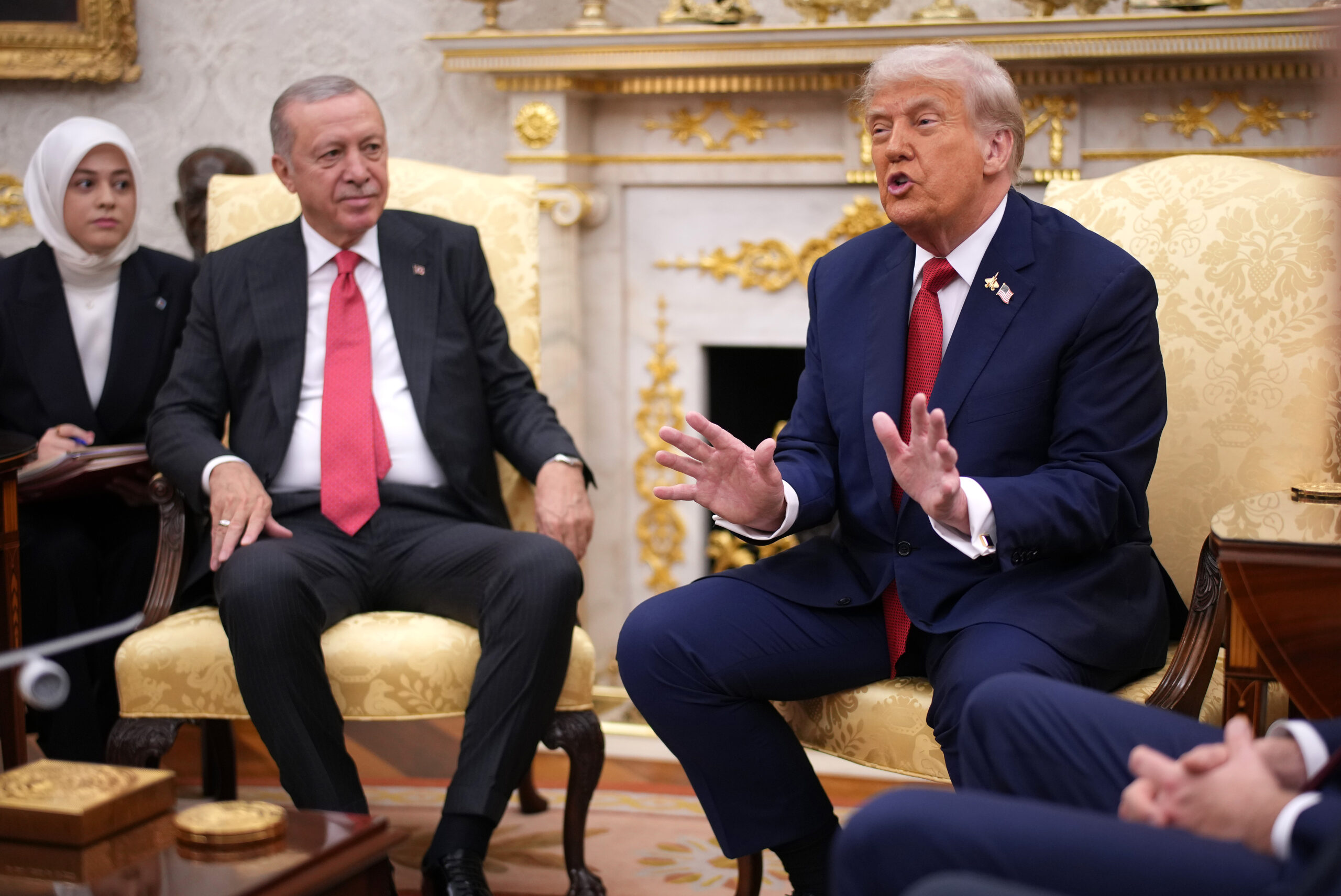
Turkish President Recep Tayyip Erdogan Meets With Donald Trump At The White House
(Andrew Harnik/Getty Images)

The Iran War has, for good reason, subsumed all coverage of the broader Middle East in the Anglophone media, and God knows there’s plenty there to fill the column inches. Still, one wonders: What on earth is going on in Turkey?

In the parlance of the craps table, President Recep Tayyip Erdoğan is on a heater. Last May, the Kurdistan Workers’ Party (PKK), a terrorist ethnic separatist group, was notionally dissolved after its imprisoned leader, Abdullah Öcalan, called for it to lay down arms. In a visit to Washington last September, the Turkish president secured a memorandum of understanding for developing a civilian nuclear program and grab-bag of defense goodies, including jet engine sales. At July’s NATO summit Ankara, President Donald Trump (who said he was attending the powwow only because of his affection for his Turkish counterpart) made favorable indications about lifting sanctions to allow Turkey to acquire American F-35 jets. European leaders praised Turkey’s role in stabilizing Syria after Assad—in whose ouster Turkish arms and support were decisive—and discussed deeper cooperation with Turkey’s defense industry. References to Erdoğan’s interference with opposition parties and his crackdown on critics in the media were negligible. Nor does his outspoken criticism of Israeli operations in Gaza seem to turn off pro-Israel leaders like Trump. In August, he signed a mutual defense agreement—the Mecca Defense Alliance—with his counterparts from Riyadh and Islamabad. 

Erdoğan has contended in the top ranks of Turkish politics for 30 years, but now he is playing at the big table in the international casino—a long way from the uncertainty of the coup attempt of 2016, when he and his future were caught literally up in the air. Despite the president’s high-flying capers abroad, all is not well at home. At writing, Turkey’s inflation rate is almost 30 percent, admittedly far down from a high of about 85 percent in 2022. Growth, which has been robust through the Erdoğan years, is slowing. Even as Turkey’s hard power appears to increase, Turks are feeling less secure; in a July 2025 poll, in the immediate aftermath of the so-called 12-Day War, 71 percent of respondents said that Turkey should start developing nuclear weapons. 

At the same time, Erdoğan’s political tactics are becoming more overtly repressive, engendering further public dissatisfaction. Hassling the press has become the standard way of doing business in Turkey, and barely draws international comment anymore. Most recently and spectacularly, the Erdoğan-appointed judiciary in May voided the leadership elections of the Republican People’s Party (CHP), the oldest political party in the country and the main opposition party, to instate Kemal Kılıçdaroğlu as chairman over the somewhat more dynamic Özgür Özel. What ensued can be described only as excellent television: Riot police broke into CHP headquarters physically to remove Özel from the premises. Acrimony broke out, accusations of government stoogery flew, and Özel insulted Kılıçdaroğlu’s mustache. Finally, in July, 

Özel and most of the party with him broke away from the court-sanctioned CHP to form a new party, inventively christened the Yeni Parti—the New Party. Among those who endorsed the Yeni Party is the relatively young, telegenic, and popular Ekrem Imamoğlu, the jailed and suspended mayor of Istanbul, who had been expected to be CHP’s 2028 presidential candidate. In his July speech announcing the party schism, Özel accused the derin devlet—the “deep state”—of persecuting Erdoğan’s political adversaries.

This is an ironic and amusing turn of events. “Deep state” is an originally Turkish term, used to describe the elite complex that preserved the republic’s Kemalism—which is to say, in large part, preserving the preeminence of CHP, Mustafa Kemal’s party. 

There’s a long and convoluted history here. Atatürk established a secular republic on the continental European model. He removed any reference to Islam from the Turkish constitution, abolished the legal office of the caliph, and launched a series of reforms to cultivate a secular Turkish nationalism and degrade traditionally powerful religious structures: banning Sufi lodges, bringing religious education under the tutelage of the state, imprisoning restive sheikhs, and “purifying” the Turkish language by purging words of Arabic and Persian origin (or finding “Turkish” etymologies for them of varying plausibility). Briefly, the Arabic call to prayer was banned and a Turkish version mandated. Unsurprisingly, much of this top-down, elite program was unpopular with the people; the Turks have been Muslims for a thousand years, and many of Turkey’s ethnic minorities have a particularly close relationship with the practice of Islam, notably the Kurds. Contrary to the impression created by Western-facing Kurdish nationalists, largely dominated by the secularist, leftist Kurdish Workers’ Party (PKK) and its affiliates, Kurdistan was the vibrant center of much of the Ottoman Empire’s religious life.

This period engendered the great antithetical poles of modern Turkish politics: secularism versus political Islam, elitism versus populism, nationalism versus pluralism. It is a testament to Atatürk’s greatness that he was able to contain these contradictions. Also to his pragmatism. (For all the work of the language reformers, Atatürk never abandoned his graceful Ottoman prose style. Evidently a single state dinner at which he haltingly delivered a speech written in “pure Turkish” was enough for him.) His successor, İsmet İnönü, was a figure of less stature, who relied more heavily on the tools of state repression to advance the Turkish project, jailing more dissidents—particularly religious dissidents—and for a time banning political parties besides the People’s Republican Party (CHP). 

These things can’t go on forever. İnönü grudgingly allowed free elections in 1950, which brought the handsome, popular Adnan Menderes of the Democrat Party (DP) to the premiership. Menderes liberalized Turkish economic policies; he also eased state repression of religious institutions, most symbolically restoring the Arabic call to prayer. The secularist elite grew agitated at Menderes’s policies; in 1960, the generals couped him and hanged him. Among his last official acts was restoring the Ottoman-era name of the general staff of the military. İnönü returned as prime minister the year after.

This shocking episode became the precedent for much of Turkey’s subsequent political history. Popular politicians with more overt affinities for Islam and Turkey’s prerepublican history strove for power to be knocked back by the secularist elites in the army, the judiciary, and the CHP—that is, the derin devlet, the deep state. In this way, Turkey came early to a condition now spreading in Western democracies. The liberal mirage—the idea that structures of governments like the courts, the police, and the military are nonpolitical or extrapolitical administrators—has never really obtained in Turkey. 

And, in some way, Erdoğan was also the earliest of the 21st century’s wave of successful right-wing populists. Born to a ship’s captain in a poor neighborhood of Istanbul, he worked odd jobs as a street vendor before coming of age in the ferment of the 1970s. The sometimes violent right-wing student movements of which he was a member had a revisionist nostalgia for the Ottoman Empire and argued for the centrality of Islam to Turkish identity. The poet Necip Fazıl Kısakürek, who called for the reopening of Hagia Sophia as a mosque, was a rallying point for the restless and politically disenfranchised Turkish youth. In 1974, Erdoğan won a prize for a recitation of one of Kısakürek’s poems and met the poet himself.

It was Erdoğan’s remarkable gifts as a reciter and orator that got him in trouble. In 1994, he won the mayoralty of Istanbul for a political party associated with the moderate and eccentric Islamism of Necmettin Erbakan, who, among other things, wanted to ban lending at interest and middleman professions. In 1997, in the midst of the so-called postmodern coup against Erbakan’s government, Erdoğan recited a version of a poem by the early Turkish nationalist writer Mehmet Ziya Gökalp that included militaristic references to Islam. The deep state sprang into action; in March 1999, after appeals and sentence reductions, Erdoğan began four months’ imprisonment for violating the secularism laws. The day he entered prison, he released an album of poem recitations, Bu Şarkı Burada Bitmez (“The Song Doesn’t End Here”), which became the year’s best-selling album in Turkey. There was a whiff of Mandela about him when he was released and, just short of four years later in 2003, assumed the premiership with his new electoral vehicle, the Justice and Development Party (AKP).

In another whiff of Mandela, what followed was a mix of progress, corruption, and repression. AKP was billed as a technocratic party, with old Erbakanist developmental policies given a veneer of optimistic, new-century, good-government reformism. (Significantly, the party’s logo, a light bulb, was a symbol suggested to Erdoğan by Kısakürek years before.) In the low-inflation global macroeconomic environment of the early 2000s, keeping interest rates down and opening up capital markets was what everyone was doing, under the influence of Islamist political economy or not. Early in his tenure, he sought reconciliation with ethnic minorities in the historical Turkish orbit, including both the Republic of Armenia and Turkey’s own Kurdish population, whose historical conflict with the Turkish state was so much bound up in the secularization Erdoğan’s own political tradition opposed. The War on Terror scrambled the greater Middle East and with it these early overtures; but in the following years, Erdoğan proved himself to be adaptable, some might say unprincipled, in his foreign policy, leading to the recent triumphs.

Alongside this Western-friendly suite of policies was his campaign against the deep state. Much of this, in concrete terms, came down to restaffing the government with his own counterelite, largely drawn from Turkey’s religious fraternities. This proved to be a tough row to hoe; in 2016, adherents of Fethullah Gülen’s Hizmet organization, who had replaced many of the old-line Kemalists in the police and the military, attempted to seize power in some sort of combination with Kemalist elements in July 2016. There was enough luck and happenstance in this story that some critics still insist the Gülen coup was a false-flag operation justifying the sweeping purges that followed. While the full tale will probably not be told for years, the preponderance of public evidence suggests that it was in fact a good-faith effort. But it is true that purges followed the Gülenist coup (and two other supposed conspiracies, “Sledgehammer” and “Ergenekon,” both of which are prima facie less believable). Erdoğan has been thorough; hence we return to Özel’s complaint that the deep state is after him.

Much remains to be done: a final political settlement for the Kurdish question, the consolidation of Turkey’s place in the emerging order in the Middle East, the on-again, off-again steps toward closer relations with Europe, dealing with the economy. But Erdoğan is old. He turned 72 in February; he now walks with a slight stoop, and that resonant voice is a touch hoarser than it was. As with every elderly head of state, rumors about his health occasionally swirl through the press. He is expected to run for another five-year term in 2028, but it is difficult to imagine another after that. Inevitably the question: What will happen to his project when he has left the stage?

Any political settlement based in part on repression has inherent weaknesses; these are especially pronounced in Turkey, which has never entirely successfully found a stable political outlet for popular dissatisfaction. Erdoğan’s particular project also has a particular weakness in its inability to deliver consistent economic success, a driver of disgruntlement everywhere and in all times. Yet the likeliest opposition—the old CHP—is sclerotic and now literally fragmented, and it was the hatred it engendered in a large part of the population that enabled AKP’s rise in the first place. If the Yeni Parti can shed the old baggage and function as a normal party, and get around the workings of a now-hostile state machinery, perhaps İmamoğlu will complete his own recapitulation of Erdoğan’s career. Otherwise, it is only a question of succession on the AKP side.

Hakan Fidan, the current foreign minister, is an obvious contender. He has worked with Erdoğan for a long time, and was his chief of intelligence during the Gülenist coup attempt. He has overseen the great foreign-policy successes of Erdoğan’s late career, especially the pacification of Syria. Loyalty and competence go far. And foreign policy chops specifically may be a desideratum in the near future: Israeli politicians keep making nasty noises in the direction of Ankara. Erdoğan’s second son, Bilal, has occasionally been mentioned, but has kept a relatively low profile; while he is deeply involved in his father’s network of nonprofits, he has taken little active role in politics. Selçuk Bayraktar, Erdoğan’s son-in-law, is a more impressive character. An MIT-trained engineer, he is the chairman and CTO of Baykar, the beating heart of Turkey’s conspicuously successful drone industry. The persistent challenge for AKP (and for Turkey) has been to generate growth without the distorting effects of inflationary policies or corruption; putting a successful businessman in charge has had a recurring appeal for economically disgruntled democracies going back at least to Crassus. Yet it is difficult to imagine any of these characters filling Erdoğan’s enormous role in the modern Turkish state. 

Here we find the classic problem of the populist politician. To advance his agenda effectively requires becoming the establishment, at which point his operation becomes prey to all the dysfunctions that weakened the prior establishment and enabled his ascendancy; or, alternatively, he must concentrate power and command in his own person, which will leave his agenda helpless when the man himself has moved into the great political beyond. In Turkey, there has been a little bit of both.

The post When a Populist Becomes the Deep State appeared first on The American Conservative.

Crowd Erupts as Jerry Seinfeld Turns Tables on Anti-Israel Hecklers, Says He’s ‘Sending’ Their Ticket Money ‘to Israel’

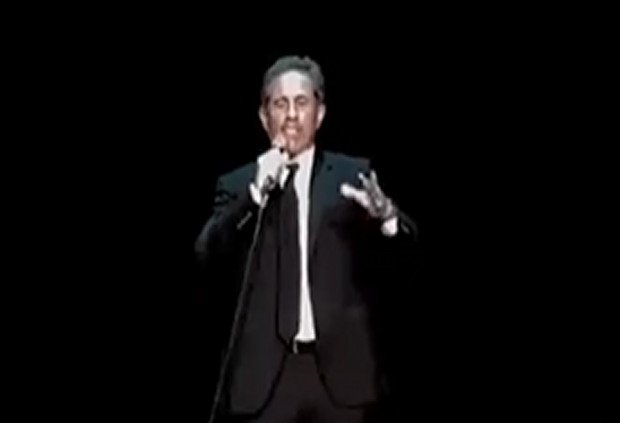
Jerry Seinfeld refused to let anti-Israel hecklers disrupt his recent performance in Chicago.

The actor and comedian, who appeared at the Chicago Theatre on Oct. 9, got the last laugh by mocking the protesters as they were escorted away by security, according to a report from Fox News.

One woman shouted at him, “Twenty-two thousand Palestinians who are children now are killed with our taxpayer money, and you’re making jokes!”

Seinfeld responded by dancing on stage in a mocking fashion, calling himself “racist,” and declaring, “It’s a genocide. I’m into it.”

The comedian also vowed, “I’m gonna find out how much your ticket was and I’m sending it to Israel!”

In the wake of the heckling, the Anti-War Committee Chicago and the Chicago branch of the U.S. Palestinian Community Network said they were responsible for the incident.

“Friday’s disruption sent a clear message: Those who defend Israel’s genocide and ethnic cleansing of Palestinians in Gaza and throughout Palestine will be met with protest and are not welcome on Chicago’s stages without opposition,” the groups wrote on Instagram.

Fox News noted that Seinfeld, who is Jewish, has been the target of several protests criticizing his support for Israel.

When Seinfeld delivered a commencement address at Duke University in May 2024, dozens of students walked out.

Some of them were holding Palestinian flags.

Seinfeld came back to the school in September 2025 to introduce Omer Shem Tov, a freed Israeli hostage, at a campus event.

That event was also met with protests.

“Free Palestine is, to me, just — you’re free to say you don’t like Jews. Just say you don’t like Jews,” he told the protesters.

“By saying ‘Free Palestine,’ you’re not admitting what you really think,” he said.

“So, it’s actually — compared to the Ku Klux Klan, I’m actually thinking the Klan is actually a little better here because they can come right out and say, ‘We don’t like blacks, we don’t like Jews.’ Okay, that’s honest.”

This article appeared originally on The Western Journal.

The post Crowd Erupts as Jerry Seinfeld Turns Tables on Anti-Israel Hecklers, Says He’s ‘Sending’ Their Ticket Money ‘to Israel’ appeared first on The Gateway Pundit.

Obama Presidential Center Hits Jaw-Dropping Total Cost of Over $1 Billion, Tripling Past Estimates

The cost for the Obama Presidential Center in Chicago, Illinois, is now forecasted to exceed $1 billion, which is nearly three times the initial estimated cost for the project.

Fox News, which confirmed the figure on the basis of newly released financial information, reported that the project also opened five years past schedule.

“While we continue to reconcile costs and plan ahead for additional capital improvements, we anticipate our total cost for constructing the campus is approximately $1 billion — again, all raised in private contributions,” Emily Bittner, the Obama Foundation’s vice president of communications, told Fox News.

“This includes investments in additional public art, insurance, scope changes in our Home Court, project management and exhibit installation, among other categories.”

It was supposed to open in 2021 after between $300 million and $350 million in construction costs.

But the Obama Presidential Center ultimately opened in June of this year, when costs were estimated at $850 million.

Beyond serving as a museum about the Obama administration, the building serves as the headquarters for the Obama Foundation.

The campus has a public library branch and an athletic center.

The building, unlike other presidential libraries, does not house original presidential records.

The newly released financials also show the Obama Foundation bringing in significant resources, even though fundraising varies from year to year.

In 2025, the entity brought in $151 million, a decline from $195 million in 2024.

In 2023, they had raised $129 million, and in 2022, they brought in a much stronger $311 million.

The Obama Foundation’s borrowing also increased as the project progressed, from $15 million at the end of 2025 to more than $63 million by July of this year.

The organization borrowed the funds to handle short-term costs related to the construction.

Brian Mittendorf, a nonprofit accounting professor at the Ohio State University, told Fox News that although the Obama Foundation has substantial resources, much of their assets are tied to the new campus.

“In terms of the organization’s overall financial health, again, I would say financial health looks quite good,” he described.

“They have a decent amount of cash, investments, liquidity, and so on. So it’s not like they’re in financial difficulty by any means.”

“Bottom line to me: I don’t see a short-term financial distress here, but I do see an organization that has tied up a lot of its resources in its buildings, which means more costs to come and the need for more revenues to make this sustainable,” Mittendorf added.

This article appeared originally on The Western Journal.

The post Obama Presidential Center Hits Jaw-Dropping Total Cost of Over $1 Billion, Tripling Past Estimates appeared first on The Gateway Pundit.

Giant Wooden Crucifix Fatally Crushes Priest During a Livestreamed Mass as He Preaches About Death (VIDEO – Warning on Content)

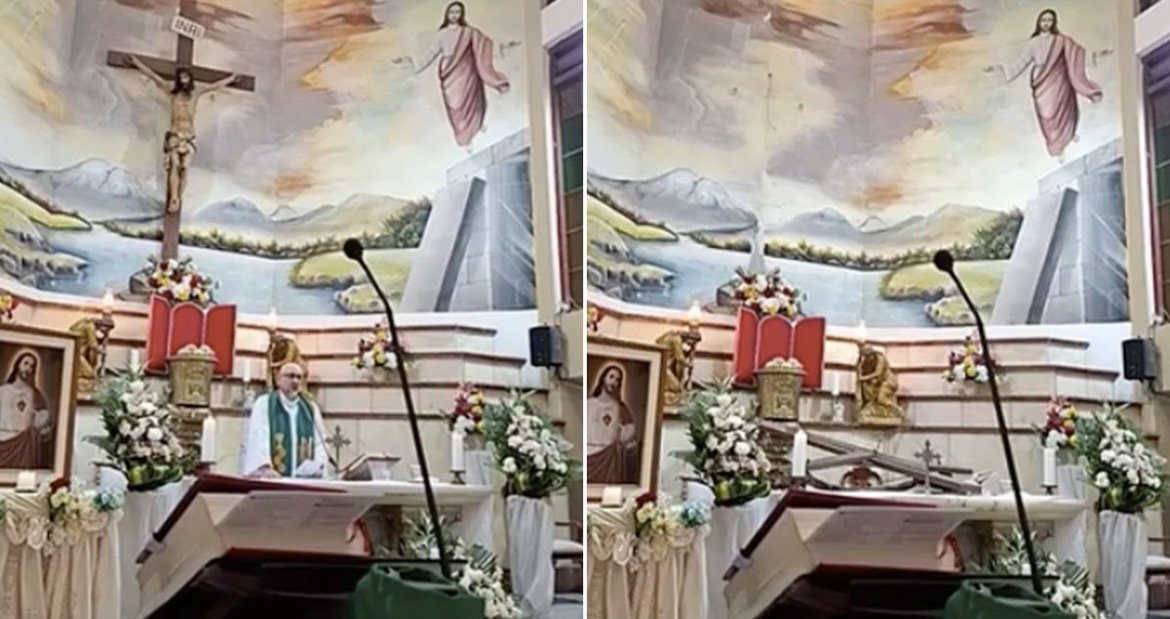
A giant wooden crucifix dislodged from the wall during Mass and fatally crushed a Catholic priest in Ecuador this weekend.

Father Patricio Alfredo Sánchez Molinari was celebrating Mass in Guayaquil, Ecuador on Saturday when the crucifix fell on top of him.

In his last sermon, the priest told the parishioners to spend their time wisely because “one day we all die.”

“Dear brothers and sisters, one day we will all die, and the time we spent on trivial things will prove far less meaningful than the time we invested in God,” said Father Patricio Alfredo Sánchez Molinari.

“The quality time we gave to Him, to our brothers and sisters, to our spouses, to our children, and to our families,” he said. “That is time well spent, dear brothers and sisters.”

Moments later, parishioners watched in horror as the crucifix fell on top of the priest and crushed him.

Worshippers rushed to help Father Sánchez Molinari.

“Father! Father!” a woman shouted as she called for an ambulance.

The Archdiocese confirmed the priest died of his injuries.

“We announce that our beloved Father Patricio Alfredo Sánchez Molinari, CSsR, who served as parish priest of Our Lady of Perpetual Help Church in the Central Vicariate, has departed to the Father’s House to enjoy His presence and His glory,” the Archdiocese said in a statement.

“Eternal rest grant unto him, O Lord. And let perpetual light shine upon him. May he rest in peace. Amen,” the Archdiocese said.

WATCH (warning: distressing content):

The post Giant Wooden Crucifix Fatally Crushes Priest During a Livestreamed Mass as He Preaches About Death (VIDEO – Warning on Content) appeared first on The Gateway Pundit.

Student Groups Make Demands! Leftist Coalition Demands University of Arizona Ban ICE

According to Campus Reform, “A coalition of left-wing student and community organizations is demanding that the University of Arizona in Tucson ban federal immigration agents from campus, provide free legal representation to individuals targeted by immigration enforcement, and cut ties with certain federal border security programs.”

This coalition of radical left groups announced this campaign on October the 12th sending a list of so-called demands to President Suresh Garimella and the Office of the General Counsel.

These leftist activists gave an ultimatum of 5 p.m. Oct. 23 to respond.

This so called “coalition” of leftists making demands includes “UA Resist, Feminists Organized to Resist, Create, and Empower (FORCE), Planned Parenthood Generation Action, Students for Socialism, the National Lawyers Guild’s campus chapter, DeFlock Tucson, and United Campus Workers of Arizona.”

Among the crazy radical demands this coalition is making includes “barring Immigration and Customs Enforcement (ICE) and Customs and Border Protection (CBP) from university property, student housing, and Banner Hospital.”

They wish to have free lawyers for illegals among other absurd accomodations.

“Additional proposals include prohibiting the Department of Homeland Security from attending university job fairs, restricting the sharing of student information with federal immigration authorities, and removing surveillance equipment that tracks individuals without warrants.”

These demands and ideas are absurd and a disrespect of the rule of law yet one would not expect anything different coming out of today’s colleges.

“The coalition also demands the abolition of the National Center for Border Security and Immigration within the university’s Eller College of Management.”

These coalitions are a conglomarite of left wing and radical causes described on the schools own website as FORCE “a feminist group” and describes “Planned Parenthood Generation Action as an advocacy group focused on abortion and ‘reproductive health care.’

This activism comes on the heels of immigration enforcement affecting foreign students at U of A.

“In its public announcement, the coalition accused the university of “ongoing silence and complacency” while students and workers face immigration enforcement.”

These students have clearly been brainwashed to believe the leftist talking points demonizing immigration enforcement and the rule of law.

As of yet the University has not accepted these unreasonable demands whether they will in the future remains to be seen.

The audacity of leftist students to make demands of university officials shows an inverse sense of right and wrong.

The post Student Groups Make Demands! Leftist Coalition Demands University of Arizona Ban ICE appeared first on The Gateway Pundit.

Italian Prime Minister Giorgia Meloni Calls Out ‘Gangs of Thugs’ Rioting Across Europe

governo.it, CC BY 3.0 IT <https://creativecommons.org/licenses/by/3.0/it/deed.en>, via Wikimedia Commons

On Sunday, French President Emmanuel Macron finally responded to the Islamo-Marxist riots and, unsurprisingly, he chose to blame his fellow French citizens. Italy’s Prime Minister Giorgia Meloni, however, is calling the rioters exactly what they are….thugs.

Originally framed as ‘student’ protests that ignited over so-called crowded classrooms and teacher shortages, the protests expanded to other cities and countries and became violent as Muslim migrants used them as an excuse to take over the streets.

The violence has spread to Italy, Albania and Belgium.

The Gateway Pundit reported that Italy’s wave began on October 5, when students occupied high schools in Turin and Rome. By October 15, dozens of schools were occupied from Milan to Naples.

During the national “No Meloni Day” strike on October 16, the left-wing collective Osa claimed 400,000 students marched nationwide. In Turin, protesters threw stones and bottles at police. The Questura reported three minors arrested for aggravated resistance, two of them carrying pepper spray and one carrying stones, and said more than 50 protesters had been identified. In Rome, hooded protesters threw firecrackers and paper bombs at the Education Ministry, and high school students burned U.S. and Israeli flags.

On Saturday, thugs attacked the Cathedral in Milan.

Meloni said on X, “Once again, the women and men of the Law Enforcement Forces have had to face the violence of criminals who, even through organized groups, exploit demonstrations to seek confrontation and sow chaos.”

“To all of them goes my full solidarity and sincere thanks. Because they were there to safeguard the safety of citizens, workers, merchants, and all the people who have the right to live their city without fear and without seeing it laid to waste and set ablaze by gangs of thugs.”

“We stand with you.”

Read more:

From Milan to Tirana: Europe’s Student Riots Reach Italy and Albania

The post Italian Prime Minister Giorgia Meloni Calls Out ‘Gangs of Thugs’ Rioting Across Europe appeared first on The Gateway Pundit.

Wokeness On Steroids! Portland State science features ‘decolonized library,’ ‘Critical Race spatial lens’

Portland State University took the weird step of “using what its architecture firm calls a ‘Critical Race spatial lens,’ incorporating a ‘decolonized library’ and other spaces intended to expand how students engage with science, according to a Campus Reform report.

“BORA Architecture, the firm behind the project, describes the design as an effort to address “historical inequalities” in science education.”

In case there was any ambiguity as to what this was referring to, “BORA says it engaged black, indigenous, and other students of color in discussions that influenced its design decisions.”

“Our design process leveraged a Critical Race spatial lens to address historic inequalities in science education,” the firm states.

Apparently Portland State never got the message that “we don’t need to do this anymore.”

The era of Wokeness and CRT may be over in much of the country, but clearly that has not reached the so-called institutes of “higher learning”.

“BORA also describes a community gathering room, a food and plant teaching kitchen, and a “decolonized library” as spaces that “push beyond typical Westernized lab offerings.”

As usual, Western culture is being demeaned in academia; sadly, this has become par for the course.

“Political scientist and professor Bruce Gilley criticized the terminology in a post on X, writing, “My university’s new science building features a ‘decolonized library’ and alternatives to ‘Westernized lab offerings.’”


“In a follow-up comment, Gilley wrote, “And remember, only conservatives ‘ban’ books. Leftists merely ‘decolonize’ them.”

This was a courageous comment for a professor to make in today’s schools groupthink.

“The firm’s project description does not specify which traditional laboratory offerings it considers “Westernized” or explain precisely how the Critical Race framework altered the building’s scientific facilities.”

CRT, like DEI, is not educational but rather undermines education and instead promotes an agenda based on race and ethnicity.

As has been established, the American public, by electing President Trump, has rejected wokeness, yet many colleges continue to impose the woke agenda on the student body.

The post Wokeness On Steroids! Portland State science features ‘decolonized library,’ ‘Critical Race spatial lens’ appeared first on The Gateway Pundit.