TRIGGERED: Leftists Lose Their Minds Over Rep. Brandon Gill’s Columbus Day Tweet

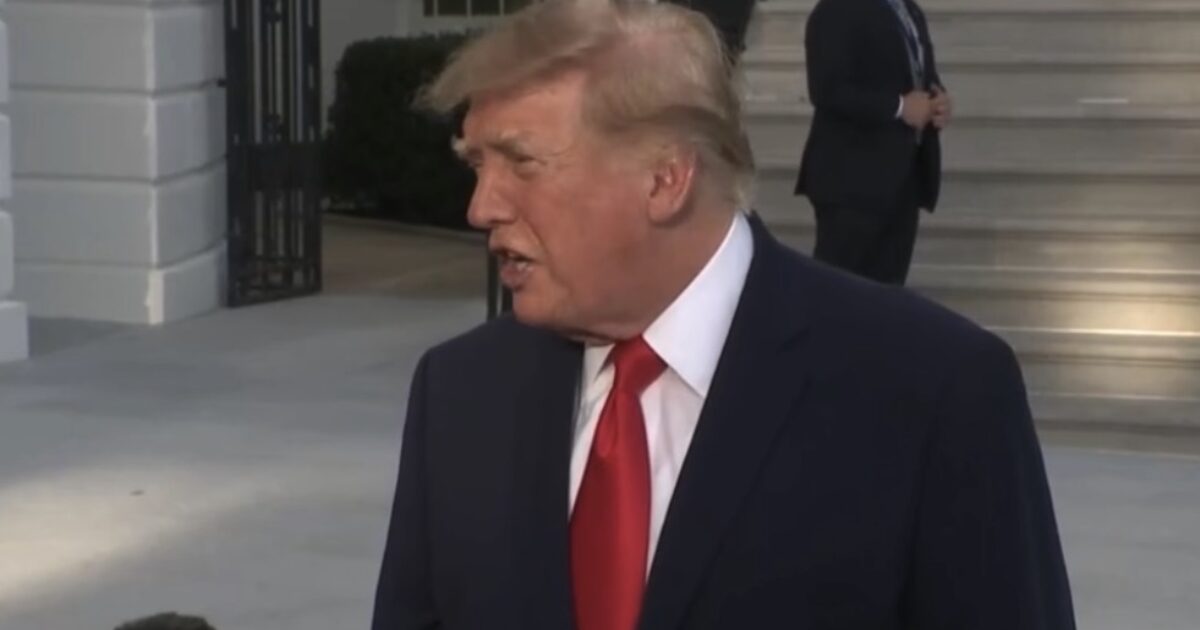
Screencap of Twitter/X video.

Rep. Brandon Gill of Texas has triggered a whole bunch of lefties for simply writing a tweet about Christopher Columbus on Columbus Day.

When did it become controversial to celebrate Columbus Day and Christopher Columbus?

At some point in recent decades, the left decided that Columbus was an evil figure, who is responsible for the deaths of any native Americans who ever crossed paths with him. Of course, what it’s really about is their hatred of Western Civilization.

Here’s Gill’s tweet:

Here are some of the crazy responses from the left:

What is WRONG with these people?

The post TRIGGERED: Leftists Lose Their Minds Over Rep. Brandon Gill’s Columbus Day Tweet appeared first on The Gateway Pundit.

Georgia Democrat Jon Ossoff Headed BACK TO HOLLYWOOD to Raise Money for His Campaign

During a rally in Atlanta, Georgia, Democratic Senator Jon Ossoff attacks President Trump’s relationship with aide Natalie Harp. Screenshot

Democrat Senator Jon Ossoff is headed back to see his friends in liberal Hollywood to raise money for his campaign.

We say he is headed ‘back’ there because he just made a similar trip in September with his buddy James Talarico.

Isn’t it fascinating that Democrats have to keep traveling to Hollywood to find campaign donors rather than relying on the people who live in the state they are running to represent?

Breitbart News reports:

Sen. Jon Ossoff (D-GA) is heading back to Hollywood for yet another fundraiser, this one headed by Miramax CEO Jonathan Glickman and United Talent Agency CEO David Kramer.

The fundraiser will be held in Hancock Park on October 19 and will be attended by several Hollywood executives, chief among them being Glickman and Kramer, per Politico:

Other listed co-hosts include prominent Hollywood attorney Tom Hoberman, whose clients have included Elizabeth Taylor and Faye Dunaway; Ellen Goldsmith-Vein, the CEO of the Gotham Group management company; and filmmaker Grant Heslov, whose producing credits include Argo and Good Night, and Good Luck. It is scheduled for 15 days before Election Day.

The get-in price for the event in the tony LA enclave is $250, with the cost plateauing at $7,000. Several of the co-hosts are prominent Democratic donors; Glickman and his wife, Christy Callahan, have held dozens of fundraisers at their Hancock Park home, including events for Kamala Harris, Cory Booker and Raphael Warnock.

Republican Mike Collins, who is running against Ossoff in Georgia, had the perfect response to this news.

It’s a fair point.

If Jon Ossoff wants to represent the people of Georgia, why is he spending so much time campaigning in Hollywood?

The post Georgia Democrat Jon Ossoff Headed BACK TO HOLLYWOOD to Raise Money for His Campaign appeared first on The Gateway Pundit.

How Trump Made the World Go Nuclear

How Trump Made the World Go Nuclear

The 47th president has been a disaster for nonproliferation.

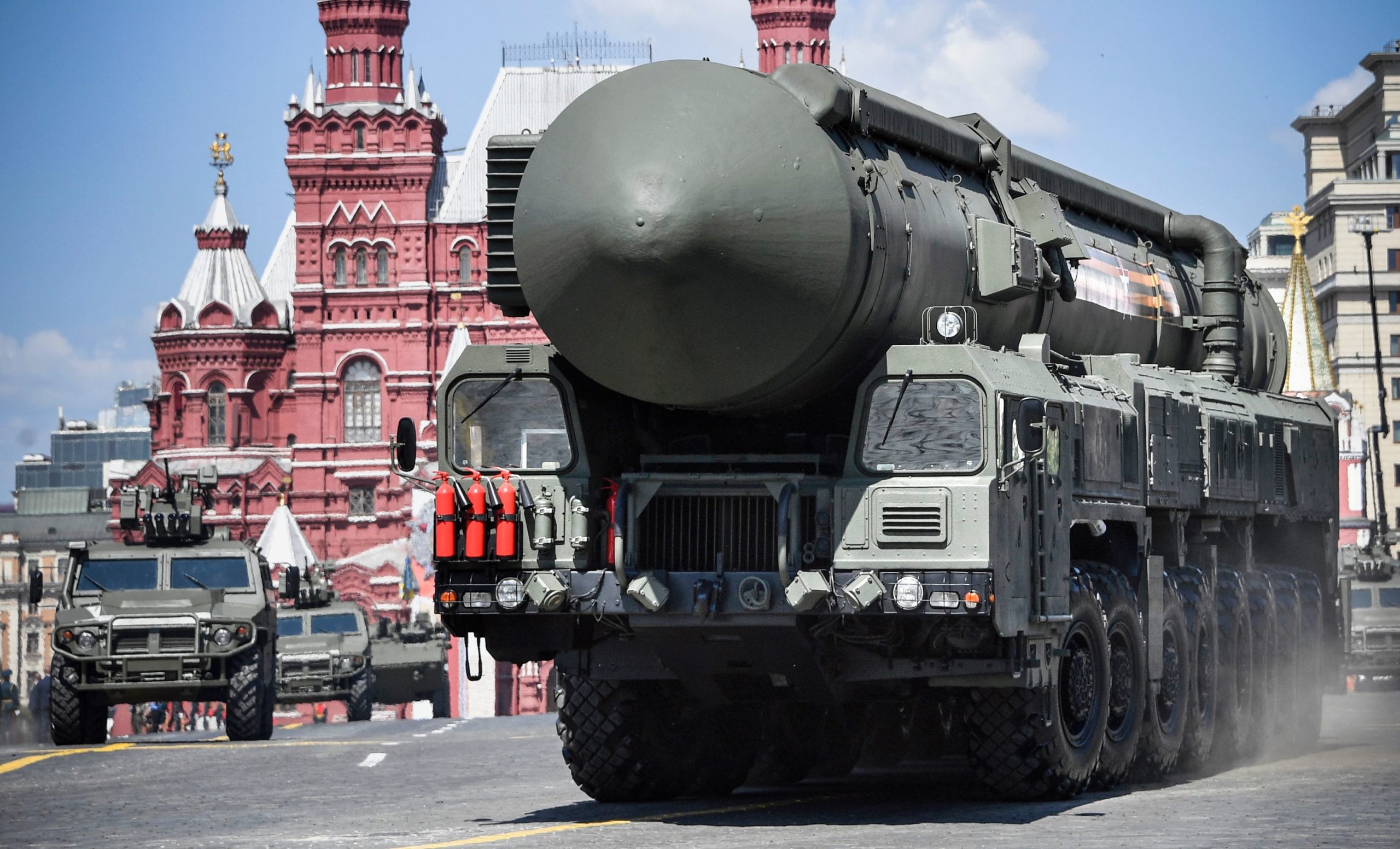
RUSSIA-HISTORY-WWII-POLITICS-ARMY-HEALTH-VIRUS
(Photo by Alexander NEMENOV / AFP) (Photo by ALEXANDER NEMENOV/AFP via Getty Images)

President Donald Trump thinks big. “I like making deals, preferably big deals,” Trump writes in The Art of the Deal. “That’s how I get my kicks.” Go big or go home (the latter being a palatial Manhattan penthouse atop a golden tower with your name on it). That was Trump’s philosophy in the business world, and that’s his philosophy as president of the United States.

At the beginning of term two, Trump said he wanted to make a big deal, not a big war, with Iran. But diplomacy—tedious, boring, often hinging on the smallest of technical details—isn’t how Trump “gets his kicks.” Negotiations did seem promising for about a month, until the Trump administration started making big demands, namely, that Iran cease enriching uranium even at levels well below weapons grade.

That was a nonstarter for Tehran, as The American Conservative and other institutions repeatedly warned, so instead of a deal, we got a war—bigger and longer than Trump expected. The president underestimated Iran’s resilience and the intensity of its retaliation, though the Islamic Republic had threatened to ignite a conflagration that would consume the Middle East. He dismissed warnings from Dan Caine, America’s highest-ranking general, that Iran would close the Strait of Hormuz, a vital artery for the global energy trade. He expected the war to last mere weeks if not days.

Yet here we are.

The war has been a catastrophe for American interests, emptying stockpiles of key defensive munitions even as Iran has managed to wreck U.S. bases in the region. At least 18 American service members have been killed and more than 800 wounded. Oil prices have rocketed, worsening general inflation and raising risks of global recession. The illegal war—undeclared by Congress, unprovoked by Iran, and unnecessary by any reasonable metric—subverts the U.S. Constitution and makes a mockery of the UN Charter.

But the fallout could prove even bigger and more dramatic than all that. For while Trump claims he acted to prevent Iran from acquiring nuclear weapons, the war has made that outcome more likely, not less, experts told TAC. Moreover, it has undermined the cause of nuclear nonproliferation across the Middle East and beyond. “The clear lesson coming out of this for countries that are not friends of the United States would be: get a nuclear weapon,” Rosemary Kelanic, a Middle East expert at Defense Priorities, told The American Conservative. 

And it’s not like Trump resorted to military action only after exhausting diplomatic options—quite the contrary.

Back in 2018, Trump pulled out of the 2015 Joint Comprehensive Plan of Action—aka the JCPOA, or Iran nuclear deal—despite Iran’s continued compliance. Under that agreement, the United States provided sanctions relief and Iran accepted restrictions on its nuclear program beyond those it had already agreed to as a signatory to the Non-Proliferation Treaty (a cornerstone of international law in force since 1970). After Trump withdrew from the deal and imposed “maximum pressure” sanctions, Tehran began enriching uranium far beyond the limits imposed by the JCPOA. It also, eventually, curtailed the additional access it had granted to inspectors from the International Atomic Energy Agency.

Since returning to the White House in January 2025, Trump has attacked Iran twice, both times amid nuclear negotiations and alongside Israel, a bitter enemy of the Islamic Republic. While U.S.–Israel strikes have set back Iran’s nuclear program, they’ve done even more damage to America’s diplomatic credibility—and prompted Tehran to reconsider its nuclear policy. “The Iranians have lost faith in the Americans as good-faith negotiating partners,” said Daryl G. Kimball, executive director of the Arms Control Association. “So that is leading them to look at a secret nuclear weapons program.”

The way things are headed, Trump 2.0—and especially the calamitous Iran War—will accelerate the demise of a global non-proliferation regime that has worked better than many had expected at its inception during the darkest years of the Cold War. In Kimball’s telling, Trump has eschewed arms-control negotiations with adversaries—“one of the classic and proven tools of U.S. foreign policy,” Kimball noted—reverting instead to “blustery threats” and ham-fisted diplomacy that relies on his personal relationships with foreign leaders. “He has nothing to show for it,” Kimball added.

Nothing good, anyway.

Beijing is expanding its own nuclear arsenal, in part to shore up its deterrence capabilities vis-à-vis Washington. Meanwhile, the New START treaty with Moscow expired this February, and Trump rebuffed an offer by Russia’s President Vladimir Putin to extend the accord’s limitations on the number of deployed nuclear weapons. After New START died, the White House didn’t seem very eager to allay fears of a 21st-century nuclear arms race, to put it mildly.

“In the five days since the last remaining nuclear treaty between the United States and Russia expired, statements by administration officials have made two things clear: Washington is actively weighing the deployment of more nuclear weapons, and it is also likely to conduct a nuclear test of some kind,” reported the New York Times. “Both steps would reverse nearly 40 years of stricter nuclear control by the United States, which has reduced or kept steady the number of weapons it has loaded into silos, bombers and submarines.”

Amid the uncertainty, even America’s friends are drifting away from their nonproliferation commitments. Three days after the American-Israeli surprise attack on Iran this late February, President Emmanuel Macron announced the first expansion in decades of France’s nuclear arsenal. “To be free, we have to be feared,” Macron said. Officials in other European nations apparently share that sentiment. Asked by TAC whether any non-nuclear-armed European countries had started to consider getting the bomb, the foreign minister of one small European nation answered yes—his own.

Of course, America’s European allies are reacting less to the Iran War than to other emanations of Trump’s erratic and confrontational persona: his threats against Greenland, tariffs against the European Union, and perceived unwillingness to defend NATO partners against any future attack by Russia. But beyond Europe, the Iran War itself has caused some U.S. partners to eye nuclear weapons.

In the Middle East, Saudi Arabia seeks uranium enrichment capabilities, signing a civil nuclear deal with the U.S. that experts warn could ignite a regional arms race. Riyadh is motivated, in part, by the ongoing Iran quagmire and perceived need to build a latent nuclear capability to deter Tehran, an historic rival. Saudi Crown Prince Mohammed bin Salman has said for years that if Tehran ever acquires nuclear weapons, Riyadh will need to do the same. Moreover, America’s inability throughout the war to protect Saudi Arabia from attacks by Iran and its allies—especially the Yemeni Houthis—has prompted the Kingdom to diversify the sources of its own security.

The odds of nuclear proliferation have also grown in East Asia. “With Washington focused on the Middle East, the world desperate for energy, and Asian allies unsure of the future, the possibility of multiple nuclear-armed states in Northeast Asia looks dangerously plausible,” warns Joshua Kurlantzick, a regional expert at the Council on Foreign Relations.

The region, Kurlantzick notes, is heavily reliant on oil and natural gas from the Gulf and thus acutely impacted by the supply crunch. To meet energy needs, Japan and South Korea have mulled an expansion of their nuclear programs, despite risks of a Chinese backlash. As the Trump administration moved weapons systems from East Asia to the Middle East to support its Iran War, the two nations grew concerned about the reliability of U.S. security guarantees. Officials and analysts in Seoul and Tokyo began asking whether their nations should not only expand their civilian nuclear programs—but weaponize them.

From Eurasia to the Middle East to the United States itself, nuclear proliferation increasingly looks like a plausible long-term consequence of the second Trump administration. Such an outcome would be not only depressing, but the very opposite of what Trump had said he wanted in early 2025. Back then, America’s 45th-and-47th president unexpectedly made global denuclearization a foreign policy priority. And he wasn’t talking about some technocratic add-on to extant international law. True to form, Trump teased a new grand bargain among the United States, China, and Russia, the great powers of the world system and the states with the largest nuclear arsenals.

He first floated the idea in early February 2025, during a speech at the glitzy, uber-elite World Economic Forum in Davos, Switzerland. “I want to see if we can denuclearize, and I think it’s very possible,” Trump said. He reiterated the proposal days later. “You could destroy the world 50 times over, 100 times over, and here we are building new nuclear weapons, and they’re building nuclear weapons,” Trump told reporters in the Oval Office, referring to China and Russia. “We’re all spending a lot of money that we could be spending on other things that are actually hopefully much more productive.”

A year and a half later, a U.S.–China–Russia denuclearization pact seems downright fanciful. Fyodor Lukyanov, a prominent and well-connected political analyst in Russia’s capital, told TAC that U.S. militarism generally—and Trump’s Iran War in particular—had all but killed any prospects for eliminating nuclear weapons. “As far as the general issue about ‘denuclearization’ is concerned, I think that everybody understands that this notion is utopian now,” Lukyanov said. “The nuclear factor is back as a political tool, maybe even a military one.”

One major problem, as Kelanic and Kimball also emphasized, is that American aggression has demonstrated the vulnerability of states that lack a nuclear deterrent. “The cause of events is very clear,” Lukyanov said. “Those who abandoned the nuclear program—Iraq, Libya, now Iran—are being attacked, while those who completed the program—North Korea—are untouched.” Moscow insiders assess that Trump’s war not only gave Iran added incentive to acquire a nuclear deterrent, but exposed Tehran’s folly in failing to do so before now.

Apparently, Iranian elites see things much the same. “By all accounts, the war has dramatically changed the debate in Iran, including within the Iranian security establishment, about weaponization,” said Trita Parsi of the Quincy Institute for Responsible Statecraft. “There is a strong narrative now, right or wrong, that had Iran built the bomb, the U.S. and Israel would never have attacked it, just like the U.S. has not attacked North Korea.”

Both Lukyanov and Parsi were quick to mention the fatwa—a type of Islamic legal ruling—against nuclear weapons issued by Iran’s Supreme Leader Ali Khamenei, who always insisted that Iran’s nuclear program was solely for peaceful energy purposes. While some analysts have dismissed the fatwa as irrelevant if not a ruse, others judge it to be real, binding, and sincere—at least until early this year. Khamenei, of course, was killed in the opening strikes of the current war, and the fatwa seems to have died with him.

Even before Khamenei’s assassination, Iranian officials stressed that the fatwa could be rescinded. In 2021, an intelligence chief said the Islamic Republic would drop it if “pushed in that direction” like a “cornered cat.” Last year, amid a growing sense that war was inevitable, members of the Islamic Revolutionary Guards Corps—a hardline force of the Iranian military—urged Khamenei to cancel it, apparently to no avail. But Khamenei’s son and successor, Mojtaba, appears more amenable to the views of hardliners, who increasingly are calling on Tehran to exit the NPT and build the bomb. “It is noteworthy that the new supreme leader has not renewed his father’s fatwa against weaponization,” Parsi said.

If he’s been listening to the U.S. president’s recent speeches, the new Khamenei’s amenability has probably only grown. “If they had a nuclear weapon, I’d be calling the supreme leader,” Trump quipped at a campaign rally this September. “And I’d be saying, ‘Mr. Supreme Leader, how are you, sir? Is there anything we can do for you?’ As opposed to bombing the crap out of them.” The crowd roared, and Trump continued, using repetition to drive home the point: “We cannot let Iran have a nuclear weapon, it’s very simple. We cannot let them have a nuclear weapon.”

The irony, of course, is that “bombing the crap out of them” has only made Iran more likely to get the bomb, at least in the long run, and especially compared to what Trump might have achieved through earnest diplomacy. Despite Trump’s claim to have achieved “the essential Denuclearization of Iran,” Tehran retained its enriched uranium and Iranian scientists haven’t forgotten how to conduct the full nuclear fuel cycle, which they mastered long ago. The Islamic Republic will reconstitute its nuclear facilities and, this author predicts, make a dash for the bomb—if it’s not doing so already.

And the human wrecking ball known as President Donald Trump didn’t smash only that part of the nonproliferation order holding Iran back from weaponizing its nuclear program. No world leader could fail to notice that Iran was attacked precisely because it lacked a nuclear deterrent. Nor could anyone fail to hear the implicit nuclear threat contained within Trump’s pledges to wipe out Iranian civilization and unleash a level of military destruction not seen since World War II.

The president seems to have been bluffing, but can anyone doubt that a man obsessed with so meager a concept as bigness finds himself drawn, at least unconsciously, to pushing the big red button?

The post How Trump Made the World Go Nuclear appeared first on The American Conservative.

The Tories Still Do Not Want to Address Immigration

The Tories Still Do Not Want to Address Immigration

The crowd at last week’s Conservative Party Conference had questions that the party is uninterested in answering.

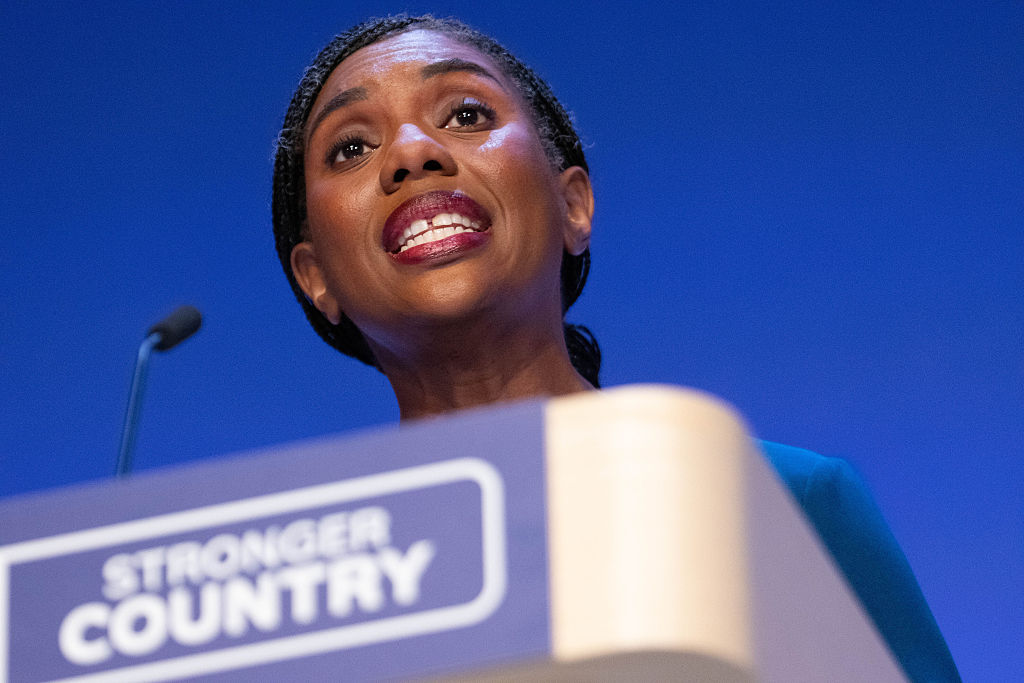
Conservative leader Kemi Badenoch addresses delegates at the
UK Special Coverage
(Gary Roberts/SOPA Images/LightRocket via Getty Images)

Over the summer, the British government continued to struggle to control its borders. Despite falling overall numbers of arrivals, illegal immigrants have still successfully landed on British beaches, evading the authorities, and the state’s response has been instead to focus on arresting protesters and anti-immigration activists. 

After years of telling the British people that the government would stop the boats and “smash the gangs” who are trafficking people over, while presiding over the opposite, the British state is lurching into a crisis of legitimacy over immigration. The government has abandoned its half-hearted deal with France to return illegal immigrants across the Channel and now appears to be coordinating with the French authorities to land dinghies of illegal immigrants on British shores and usher them into taxpayer-funded accommodation.

Meanwhile, attempts to reduce migrant access to welfare and delay permanent settlement of low-wage migrants who arrived in the wake of the pandemic seem to be dying a death by a thousand cuts, picked away by Labour MPs whose ideology boils down to open borders welfarism. This may bake in the rapid demographic change seen in the last five years, increase the welfare burden significantly, and make reversing it much harder politically and constitutionally. 

As such one might expect immigration policy to be one of the main themes of the Conservative Party’s annual conference, which was held last week in Birmingham. Immigration is consistently rated by the British public as either the most or second-most pressing issue facing the country, and with evident justice: After all, the composition of a nation informs its culture, its economy, and its fiscal viability. 

Regrettably, there was little mention of immigration on the program. One center-right think tank, the Centre for Policy Studies—founded by Margaret Thatcher in the 1970s—hosted the only discussion on immigration at this year’s conference, which I’ll detail below. (My own organization, the Prosperity Institute, ran two events, one on Brexit and the other on the future of the health service, promoting some of its recent research. It did, however, run two events related to immigration at last year’s conference, where the subject was similarly underdiscussed.) Individual organizations in the wider conservative ecosystem are free to deploy their resources as they see fit, but the subject of immigration was a notable absence this year. 

Despite some broad mentions of immigration in the speeches of the party leader Kemi Badenoch and Shadow Home Secretary Chris Philp, the overwhelming atmosphere of the conference was of a party which was far keener to talk about other things. There was a strong sense among many activists that they would prefer the party to try to revive an imagined liberal victory of 2015, in which the Tories won a small majority under David Cameron, instead of the giant 2019 victory under Boris Johnson, which put Brexit and border control at the center of the Tory proposition. 

I was fortunate enough to speak on the single panel addressing immigration. The absence of immigration on the conference’s agenda was certainly felt by members of the audience at this panel. One asked why there were so few discussions on it, and hoped that the party would devote serious time thinking about the operational realities of border control, deportations, and the future visa regime. He was certainly right. To the credit of the two Conservative MPs speaking at the event, they agreed with the thrust of his question, and stated their commitment to developing detailed plans for making this a reality, and also to leaving the European Convention on Human Rights (ECHR). But the problem of trust remains. If reports that the party is targeting the so-called “Waitrose woman”—code for affluent, socially-liberal women who shop at the country’s most premium supermarket—are true, then it is likely that meaningful action on border control will sit in tension with this strategy.

The panel focussed on immigration and its relation to brain-drain. The Boriswave comes into the country, and Britain’s young and frustrated leave; so the framing goes. It is undeniable that modern Britain is not a friendly place to its young and aspirational. The jobs market for new graduates is brutal, with hiring scaling back across sectors. This isn’t just a consequence of greater AI deployment; it is downstream of the Labour government introducing new taxes on employment, forcing minimum wages to unsustainable levels, and adding a raft of expensive employment rights which have made hiring junior staff prohibitively expensive. This is on top of a brutal housing market that has already been immiserating Britain’s millennials and zoomers for nearly two decades.

So there is certainly an element of truth in framing mass immigration and brain-drain as two sides of the same coin. Audience members suggested the malaise facing Britain’s young isn’t just about economic policy; it’s about the country changing before their eyes in a way they did not like and felt they could not control. One attendee remarked on the changes he had observed in his lifetime living in Luton in Bedfordshire. Luton is an industrial town known for car manufacturing in the northern commuter belt of London. Despite being set in the midpoint between the rolling Chiltern Hills, bucolic Hertfordshire, and agricultural Cambridgeshire, the town itself has become heavily Muslim in the last two generations, with a large population of people from Pakistan and their descendants. 

Luton is a segregated town, with a radical and dangerous element in its Muslim population. In 2009, a group of Muslims protested against the homecoming parade of the Royal Anglian regiment, local soldiers returning from a tour of duty in Iraq. This was followed by a group of radical Muslims from Luton staging a poppy-burning protest in London in 2010. It was in this environment that the English Defence League was established, a nationalist street movement founded by Tommy Robinson. Luton should be looked at as a case study in the failure of mass immigration, yet today it is ignored by the political class out of embarrassment. 

Questions about demographic change and whether it can be undone suggested an audience which was crying out for answers to the greatest question of the day from a party uninterested in providing them. Despite the Conservatives and Reform UK alike aligning in theory on quite a similar immigration policy, the tone of Conservative Party Conference 2026 suggested the Tories were apathetic about addressing it in much detail or with much vigour. Immigration was largely treated through the lens of stopping illegal immigration rather than taking a more radical—and necessary—approach to stopping mass legal immigration. American readers may see a parallel with establishment conservatives of their own. 

Indeed, when Tory MP Katie Lam raised the importance of “cultural coherence” when considering immigration policy last year, she was criticized by her own party, despite the fact she was talking about its own agreed immigration policy. It seems that the party is happier to bank its policies to leave the ECHR and extend the settlement period for new migrants and talk about other things closer to its comfort zone. 

The Conservative Party has had a reasonably successful past few months. Its leader, Kemi Badenoch, has secured her position at the helm of the party and is the strongest she has been since her election as party leader in 2024. The party is benefiting from the troubles facing Reform UK over its donation scandal. But it is impossible to shake the impression that it is becoming complacent and returning to a comfortable corner discussing taxation and defense, rather than thornier issues like demographics and immigration. This is unwise. The demographic trends are clear, and they are not friendly to either the Conservatives or Reform UK in the medium term. If the party is serious about returning to power, not just once but for multiple terms, it must be serious about immigration and multiculturalism, and serious about ending and reversing 30 years of political vandalism.

The post The Tories Still Do Not Want to Address Immigration appeared first on The American Conservative.

Daughters of the American Revolution Boots Texas Chapter for Objecting to Allowing Trans Women to Join

Screencap of YouTube video.

Daughters of the American Revolution is a history organization which caters to women who are related to people who fought in the American Revolution.

In recent years, the leadership of the group has gone woke and wants to admit biological men who identify as women. Many individual members objected to this.

In Texas, one chapter stood up and objected to the policy and leadership has just voted to dissolve that chapter. They are claiming that it’s not because of their objections to admitting trans members.

FOX News reports:

Daughters of the American Revolution axes chapter that challenged transgender membership

The Daughters of the American Revolution (DAR) voted Saturday to disband its Martha Laird Chapter in Texas that fought to bar transgender women from joining the historic organization, citing violations of its national bylaws.

In a letter to chapter members, DAR Organizing Secretary General Marguerite Hogan Fritsch announced that the National Board of Management had approved the chapter’s dissolution by a two-thirds majority vote.

“On October 10, 2026, at the meeting of the National Board of Management of the National Society, Daughters of the American Revolution a resolution passed by two-thirds majority vote to disband the Martha Laird Chapter, NSDAR,” Fritsch said in the letter. “The actions of the chapter have been found in violation of Article XIX, Section 4 of the Bylaws of the National Society Daughters of the American Revolution,” the letter continued.

The letter did not identify the specific conduct that constituted a violation or state whether the chapter’s opposition to transgender membership contributed to the decision.

The National Society Daughters of the American Revolution confirmed to Fox News Digital that the organization had voted to disband the local Texas chapter but denied it was due to its views on membership.

Just amazing.

This video is a few months old, but if you want to understand how all of this unfolded, this breaks it all down.

This classic tweet from internet humorist Iowahawk really sums up the situation.

The post Daughters of the American Revolution Boots Texas Chapter for Objecting to Allowing Trans Women to Join appeared first on The Gateway Pundit.

President Trump Gives Shout Out to Sophie Cunningham at Ohio Rally: “We Like Sophie Cunningham… You Probably Wouldn’t Mind Her on Your Team – to Help with Attendance” (Video)

President Trump gave a shout-out to Sophie Cunningham at his Youngstown, Ohio rally on Monday night.

President Trump gave a shout-out to courageous and beautiful WNBA star Sophie Cunningham on Monday night at his Ohio rally.

President Trump held a rally on Monday night in Youngstown, Ohio for Republican candidates Vivek Ramaswamy and Senator John Husted.

During the rally President Trump gave a shout-out to WNBA super-star Sophie Cunningham.

Cunningham is currently the second most popular player in the league behind basketball sensation Caitlin Clark.

Sophie made headlines this year when she spoke out against biological men playing in women’s sports – a view held by only 73% of Americans!

President Trump recognized Sophie at his Monday rally.

President Trump: “We like Sophie Cunningham? I like her. You have a lot of men wanting to go and watch her. She’s beautiful. You’re not allowed to say that anymore, however, as a politician. Please, please, let me take it back. Anytime a politician says a woman is beautiful, that’s generally the end of his political career in the modern-day politic world.

But Sophie is a beautiful young woman. You probably wouldn’t mind her on the team, not to help you with points. But to help you with attendance. The attendance would be quite good.”

Via Jon Root.

Unfortunately, the WNBA

The post President Trump Gives Shout Out to Sophie Cunningham at Ohio Rally: “We Like Sophie Cunningham… You Probably Wouldn’t Mind Her on Your Team – to Help with Attendance” (Video) appeared first on The Gateway Pundit.

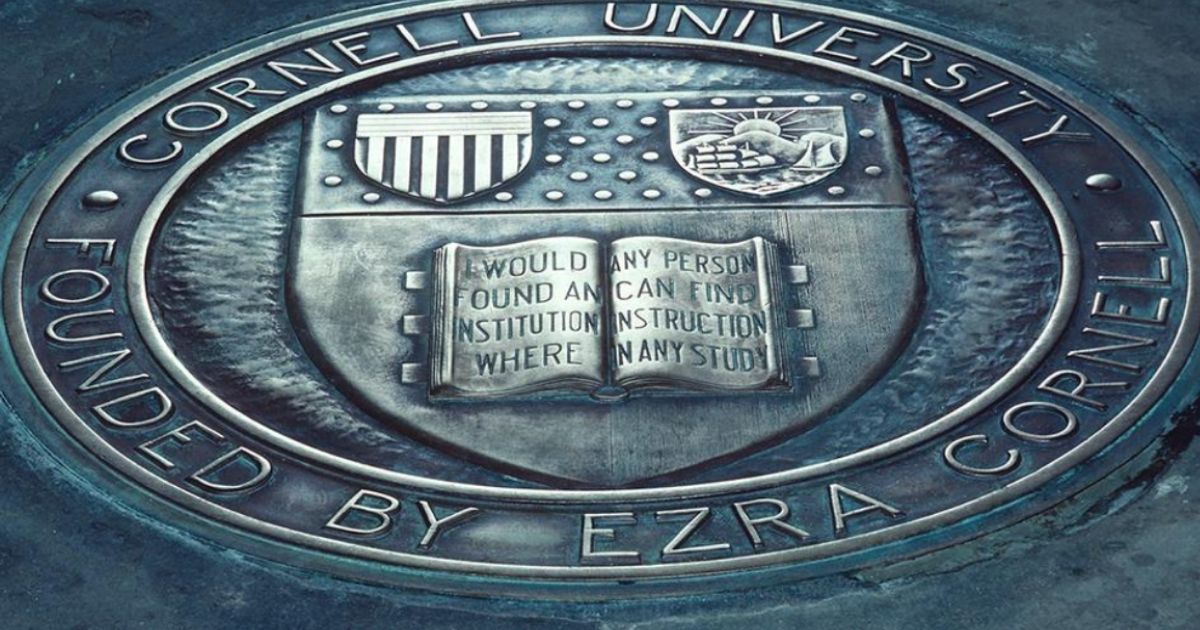
New Jane Doe Cornell 7 Texts Show Alleged Victim Was Not Incapacitated During Alleged Assault, Frat Bro Says

Cornell Jane Doe’s text messages with Jonathan Newell (obtained by TMZ)

Newly released text messages from the Cornell University rape case, involving seven fraternity brothers and one woman, show what one of the accused men argues is evidence that she was not incapacitated during the alleged assault. 

The then-20-year-old Cornell University student, who remains anonymous under the pseudonym Jane Doe, filed a lawsuit last month against seven Chi Phi fraternity members, claiming she was drugged and gang-raped in October 2024. Jane Doe argues in part that she was incapacitated and unable to consent the night of the alleged rape.

TMZ obtained messages from the night of the alleged assault that show text messages between Jane Doe and a roommate at 3:05 am, when the alleged rape was occurring.

In the messages, she is asked, “You coming home [tonight]?” and she responds, “idk.”

“At least one of the accused claims it shows Jane Doe was not incapacitated,” according to the outlet.

According to TMZ,

The text exchange occurred somewhere between a half hour and an hour after she says multiple men were snorting ketamine off her body and she was so out of it she couldn’t process what was going on. One of the accused claims the texts show Jane was able to read, process, and respond … therefore she was not incapacitated.

This comes after the bombshell release of additional messages in which the woman wrote that she “really liked” being with the men and that “non[e] of the sexual stuff was illegal” two days after the encounter. She further slammed other students who were gossiping about the orgy, writing, “anything anyone has to say about the [gangbang] is out of their jurisdiction.”

“I don’t think we should feel any shame for the part. our body our choice [as f*ck],” she further wrote. She even admitted to voluntarily taking ketamine and snorting the drug off one male’s penis.

It wasn’t until more than two weeks later, and after she was uninvited from one of the fraternity’s parties, that she reported the incident as a rape to the police.

As NBC reported, just days after her “our body our choice” comments and apparent acknowledgment of a consensual “[gangbang],” she wrote in another message, “my reputation is destroyed and I’m utterly ashamed.”

A week later, NBC reports, she was uninvited from one of their parties, and she turned, saying, “y’all aren’t my friends. y’all are covering your asses.”

WHOA: “Our Body Our Choice ASF” – Cornell Jane Doe Texts Frat Bro She “Really Liked” Gangbang but Caught “Heat” in Campus Gossip, Says Snorting Ketamine Off P*nis Was “Insane/Jaw Dropping”

The post New Jane Doe Cornell 7 Texts Show Alleged Victim Was Not Incapacitated During Alleged Assault, Frat Bro Says appeared first on The Gateway Pundit.

Trump Says He’s “Not Sure” Russian Strikes on Ukrainian Power Plant Violated Ceasefire – “There’s Been Violations on Both Sides” (VIDEO)

Trump speaks to reporters at the White House

President Trump suggested that Russia did not violate the ceasefire in its attack on Ukraine yesterday, saying Ukraine is also guilty of violating the ceasefire. 

Trump announced a ceasefire on Sunday, which he says both sides agreed to “because I said they agreed.”

When asked about the latest Russian attack, he slammed Ukrainian President Volodymyr Zelensky and Russian President  Vladimir Putin, saying they “have to get together and end that ridiculous war.”

As The Gateway Pundit reported, Russia launched strikes on a Ukrainian power plant on Sunday, just hours after Trump announced an “energy ceasefire” between Ukraine and Russia, which Zelensky had said he supports.

JUST IN: Russia Strikes Ukrainian Power Plant After Trump Announces Energy Ceasefire, Zelensky Says (VIDEO)

This came after Trump announced that the US would start purchasing diesel from Russia, and Zelensky still attacked a Russian diesel export facility, sparking a back-and-forth between Trump and Zelensky. Trump went off on Zelensky multiple times on Saturday, calling for him to hold an election and “get a new president,” and accusing him of dragging out the war the day before announcing the ceasefire.

When a reporter said on Monday, “Russia already violated the ceasefire and attacked Ukraine last night,” Trump responded, “Well, I’m not sure about that, and we’ll take a look. All I know is that Zelensky and Putin have to get together and end that ridiculous war. This month, they lost 32,000 people in that war, and it’s ridiculous”

“So, they have to get together and get it done,” he added.

Trump was later pressed by a reporter on claims that Russia and Ukraine never agreed to the ceasefire he announced yesterday.

“Well, they agreed. You know why? Because I said, ‘you agree,'” Trump fired back. “They agreed because I said they agreed, and that thing has to get settled. That war is a disaster,” he added, highlighting the massive death count again.

“That war has to be over with.”

Trump further said there were “violations on both sides” of the ceasefire.

WATCH:

The post Trump Says He’s “Not Sure” Russian Strikes on Ukrainian Power Plant Violated Ceasefire – “There’s Been Violations on Both Sides” (VIDEO) appeared first on The Gateway Pundit.

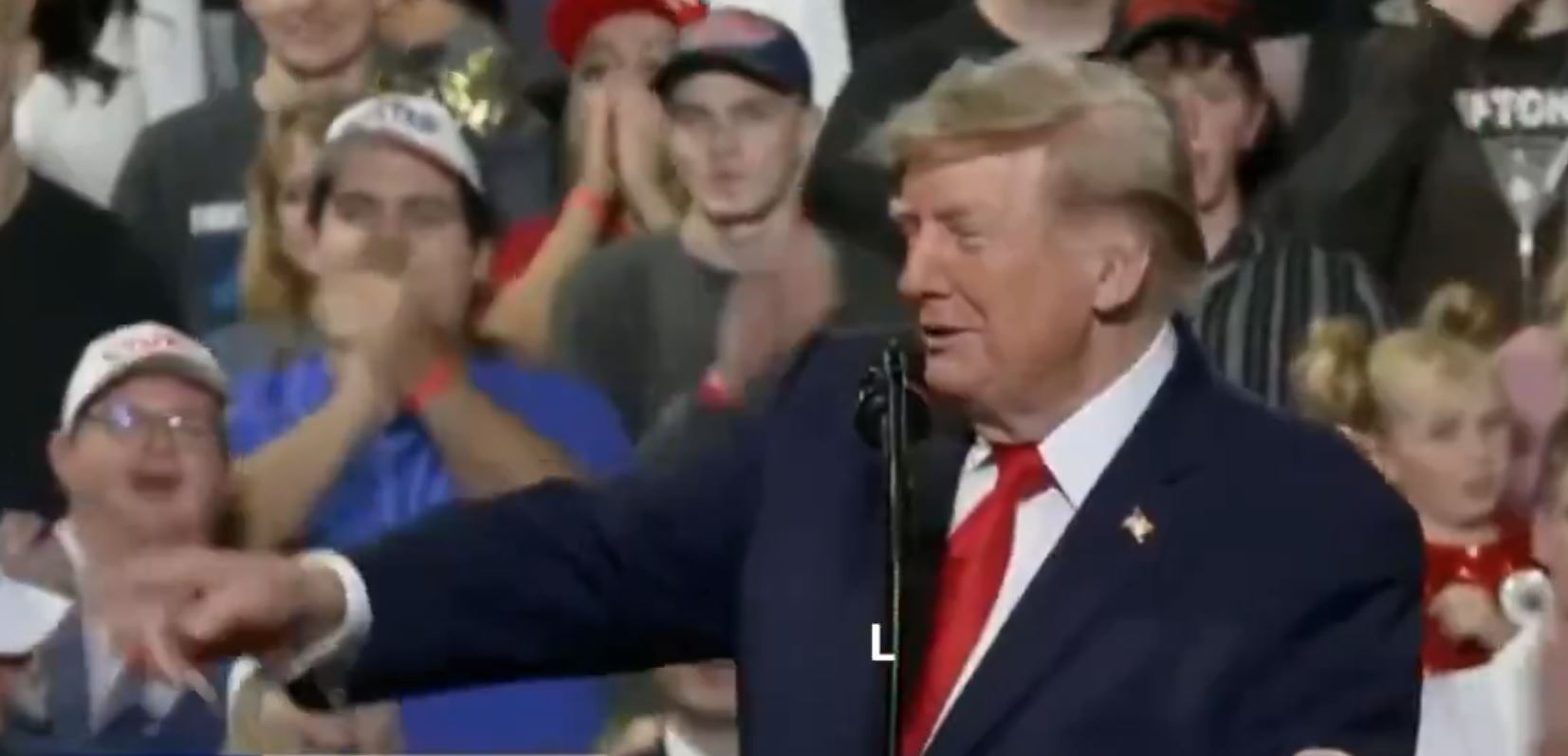
WATCH: “He’s Gotta Go on a Diet, He’s a Fat Guy, Wow!” – Trump Trolls Several Protesters, One Obese Lunatic PUMMELED by Supporters Before Police Haul He/She Out!

Protester hauled out of Trump’s Youngstown rally after brawl with supporters

Several protesters tried to interrupt Trump’s rally in Youngstown, Ohio, on Monday, but it backfired when they turned into laughingstocks, and one got whooped during a brawl in the crowd.

At one point, the crowd erupted in “USA” chants as Trump called out a “paid protester.”

Video from the scene showed whatever it was then getting pummeled in a brawl with another supporter, then being held down as police quickly rushed to take the agitator out.

Trump then appeared to misgender whatever that thing is. “He’s a paid protestor. They’re all paid. They get paid by the lefties in order to destroy our country; they’re scum,” Trump said.

“But he’s going back home to mom. He’s going back home to mom. Look at him. Look at him. Terrible. Don’t we love law enforcement?”

Then Trump got a look at Free Willy, wearing his or her cropped shirt as police hauled it down the aisle. “Oh, he’s got to go on a diet. He’s a fat guy. Wow! Wow!” Trump commented.

“Gotta go on a diet fast. We all do,” Trump said as the crowd continued chanting “USA!”

WATCH:

Trump went on to troll another agitator who was hauled out with a flag or banner of sorts. The crowd chanted “USA” as police took her out.

“She was very quiet. What flag was that? Was that the Palestinian flag?” Trump said after she was escorted out.

“You know the one I like the best? I shouldn’t say this, should I? The one I like the best is Gays for Palestine. Gays for Palestine! You know what they do if you happen to be gay? They throw you off the top of a building. That’s the one I like the best: Gays for Palestine,” he continued.

“They bring you to the top of the tallest building they have, which isn’t too tall, by the way, doesn’t have to be, and they push you off the top of the building. And yet, I see all the time gays for Palestine. How about women for Palestine? They treat them almost as badly.”

WATCH:

As The Gateway Pundit reported, another fat whale of a woman was hauled out of the rally after interrupting Senator Jon Husted’s speech.

She then started wrestling with the police and flipped off the crowd!

MORE:

They’re Not Sending Their Best… Another Fat, Homely Democrat Whale Is Tossed from Trump Ohio Rally – Screaming and Flipping Off Crowd All the Way! (VIDEO)

The post WATCH: “He’s Gotta Go on a Diet, He’s a Fat Guy, Wow!” – Trump Trolls Several Protesters, One Obese Lunatic PUMMELED by Supporters Before Police Haul He/She Out! appeared first on The Gateway Pundit.

HORROR AT SIX FLAGS: Man Allegedly Flung from Seat on Goliath Roller Coaster Dies After Hitting Ride Multiple Times — Victim Captured in Souvenir Photo

A horrifying tragedy unfolded Monday at Six Flags Over Georgia after a man reportedly fell from the park’s massive Goliath roller coaster and died, triggering an emergency response and forcing terrified passengers to evacuate the ride while it was stopped high above the ground.

According to WSB-TV Channel 2 Action News, a man reportedly fell from the Goliath roller coaster, one of the park’s largest and most recognizable attractions.

Witnesses described the horrifying moments surrounding the incident, although authorities have not yet confirmed exactly how the victim fell.

Witness Cody Alcorn told local outlets the man “fell and hit the car three different times.” He added that the falling victim was captured on their souvenir photo from the day: “He was in our pictures.”

A souvenir photo from the Goliath roller coaster at Six Flags Over Georgia reportedly captured the man who fell to his death. (Screenshot: X)

The Goliath roller coaster was subsequently stopped, leaving other passengers stranded on an elevated section of the track.

Aerial footage captured by WSB-TV’s NewsChopper 2 showed riders being evacuated from the attraction four at a time as emergency personnel responded to the scene.

Six Flags Over Georgia confirmed the tragic death and released a statement expressing condolences to the victim’s family.

The park said:

“We are deeply saddened by the guest incident at our park today. Our thoughts and heartfelt condolences are with the guest’s family, friends, and loved ones. We are also providing support to the guests and team members affected.”

The company added that park employees and local authorities responded immediately and that Six Flags is cooperating with investigators.

The park declined to release additional details about the victim, citing the family’s privacy, and directed further questions to the Cobb County Police Department.

The Goliath roller coaster is one of Six Flags Over Georgia’s signature attractions.

According to the official Six Flags website, the massive steel hypercoaster reaches a height of 200 feet and speeds of approximately 70 miles per hour.

The ride, which opened in 2006, features a 170-foot initial drop, another drop of 175 feet, and a 540-degree spiral. Riders can experience forces of up to four times the force of gravity.

The post HORROR AT SIX FLAGS: Man Allegedly Flung from Seat on Goliath Roller Coaster Dies After Hitting Ride Multiple Times — Victim Captured in Souvenir Photo appeared first on The Gateway Pundit.