EXCLUSIVE: European Researcher Bernadette Conrads Uncovers the Shadowy Reach of USAID Across Europe — Deep State Dollars, Election Meddling, and Censorship Campaigns Exposed

Jim Hoft with Bernadette Conrads, Head of Communications for MEP Petr Bystron of Germany’s populist Alternative für Deutschland (AfD)

In an explosive sit-down interview with The Gateway Pundit’s Jim Hoft back in March, European researcher Bernadette Conrads delivered a chilling exposé on the sprawling influence of USAID and its deep state-funded allies operating across the European continent.

Conrads, who currently serves as Head of Communications for MEP Petr Bystron of Germany’s populist Alternative für Deutschland (AfD), has spent the last five years tracing a tangled web of taxpayer-funded NGOs, censorship initiatives, and foreign election interference stretching from Washington, D.C. to Brussels.

While USAID may present itself as a harmless humanitarian initiative, Conrads warns it’s anything but.

“Foreign aid? No. It’s not about aid—it’s about control,” said Conrads. “It’s about censorship, regime change, and election interference.”

Her findings confirm what conservatives in America have long suspected: USAID and its sister organizations, like the National Endowment for Democracy (NED), according to Conrads, are merely fronts for the CIA and other unelected power centers in the U.S. government.

These groups allegedly launder influence through NGO cover operations, rig foreign elections, silence dissenting media, and export the very same “deep state” corruption President Donald Trump has vowed to dismantle.

Conrads: “I think I’ve been interested in this topic for about five years—not specifically in USAID. I’m not an expert on USAID, but on these kinds of structures. There are many money pots like USAID. There’s also the National Endowment for Democracy. There are plenty of these organizations—organizations that work with the CIA and are deep state entities active around the world.

They create regime changes, control our media, and use so-called NGOs as covers for their operations. They call them NGOs—Non-Governmental Organizations—although they are funded by U.S. taxpayers. That’s a very crazy thing.

I’ve followed these structures over the past few years many times because I was constantly confronted with them. I faced media censorship—not directly by our governments, who also attempt such control—but very strongly by organizations like these, which are funded by USAID.”

Back in January, President Trump froze all foreign aid spending on Day 4 of his second term. Less than two weeks later, Elon Musk—appointed by Trump to lead the newly empowered DOGE group—completely shut down USAID. Musk called it “an organization beyond repair.”

In response, a rogue leftist judge in D.C. ordered Trump to reinstate $2 billion in aid payments—an absurd ruling that has ignited a new constitutional crisis over who really runs the country: the elected president or a network of unelected bureaucrats and activist judges.

“This isn’t about charity,” Hoft said during the interview. “This is about global control. About silencing voices like Gateway Pundit—using American dollars and foreign fronts to do it.”

Conrads and I both shared personal examples of USAID-linked organizations like NewsGuard, OCCRP, and the Center for Countering Digital Hate, which have taken direct aim at independent conservative media on both sides of the Atlantic—including The Gateway Pundit itself.

Jim Hoft:
Absolutely. We’re seeing that. In fact, Gateway Pundit was a victim of this. USAID gave money to this organization in the United Kingdom—it was the Center for Countering Digital Hate. And this group then went to Google and said, “You need to shut down the ads on Gateway Pundit.”

So this is a British censorship group that worked to get our ads in the United States taken off of our site—and they were using U.S. taxpayer dollars from USAID to do that. They were successful, and we found out about it not because we read about it, but because the founder of the Center for Countering Digital Hate went in front of the Parliament there and bragged that he had removed ads from Gateway Pundit.

He mentions us by name in front of the British Parliament. And that doesn’t happen every day—when you hear a U.S. website getting attacked by someone in the UK. After some research and as more information came to light, we found out that it’s USAID that was funding his organization.

(Note: The Center for Countering Digital Hate partnered with USAID-funded Restless Development to censor and blacklist Covid ‘disinformation’ before the 2022 midterm elections including content from The Gateway Pundit.)

They were doing this—I think—across Europe. They were shutting down voices. I don’t know if they still are or not, but it’s shocking that that’s where that money was going.

Bernadette Conrads:
Absolutely, it’s true. That’s the thing. You see, we are all confronted with USAID—or were confronted with it—in the last few years. And I always tried to find out: where do these attacks come from?

I did a deep dive, and the names that showed up in the end—where my research stopped—it was always like the National Endowment for Democracy or USAID. It always ends there. You go through organization after organization, and in the end, there is USAID or the NED.

And it’s the taxpayers’ money going into all these operations.

We had a similar experience. I founded Der Status, a German-speaking Austrian alternative news project. I founded it with two colleagues from another newspaper.

We had these attacks also. It was like fact-checks exploded—these fact-checkers coming up during COVID. There were all, I think, these organizations from the U.S. who told us what was right and what was wrong. It’s just censorship.

They call it fact-checking, but it’s censorship. The information we gave—later, scientists proved it was right, what we said. But fact-checkers said, “No, that’s not true. There’s no proof. It’s not right.”

They’re always using these Orwellian strategies to call…

Bernadette Conrads:
Censorship becomes fact-checking. Dictatorship becomes democracy. Slavery becomes freedom. And so on. That’s what they always do.

It’s the same with USAID. Yeah, “foreign aid.” No. It’s not about aid—it’s about control. It’s about control and oppression.

It’s also about regime-changing strategies. It’s about election fraud, also. But I think we’re going to talk about this topic later.

Jim Hoft:
Oh yeah, absolutely. Yeah, that’s amazing.

We had the same problem in the United States, where they were fact-checking us—and we had people from overseas fact-checking our articles. People from China were fact-checking Gateway Pundit, and it was the same thing.

It’s probably the same issues that you were pointing out—that the virus was made in a lab. We had photos from inside the Wuhan lab before anyone.

And we had some great sources from inside China who were sending us things. And they would fact-check us and say, “No, that’s incorrect.”

Two or three years later, we find out: actually, that was 100% true. Fauci even admits it, and we have the emails now.

But this is what they do to shut us down. And it’s tragic that they were doing the same thing in Europe—and with U.S. dollars.

Was it just Facebook that was doing this to you? In the U.S., the social media giants got involved, and then they were censoring—conservative, mostly—independent media.

But is that where you were? Were you censored by them, or was it other groups?

In perhaps one of the most outrageous revelations, Conrads explained how Bluecoat, a U.S.-linked censorship tool used in authoritarian regimes like Iran, is now being employed inside the European Parliament itself to block conservative websites like Der Status, a German-Austrian alternative news outlet Conrads co-founded.

Bernadette Conrads:
No, absolutely not. There we come to the OCCRP Network. It’s called Organized Crime and Corruption Reporting Project—blah, blah, blah.

It’s like, very nice guys, and they have their partnerships—and they control most of the huge media organizations in Europe. And it’s funded by USAID, as WikiLeaks showed. WikiLeaks showed that this was funded by USAID.

This OCCRP network had their own fact-checkers, and they transported it to this legacy media—telling them which websites were trustful and which were not.

It doesn’t end there. It’s not just about trust with your readers or viewers (if you do video).

It’s also about being published on social media platforms. But also—we had the situation at the European Parliament. We were in a situation where we were censored by a technical organization called Blue Coat.

Blue Coat is a U.S. program. The European Union uses it, obviously, and it banned our website in European institutions.

Some politicians and their staff called me and told me—back then, when I was not at the European Union—that our website was banned. I investigated this case, and I was like, “Okay, how did that work out?” I knew why.

A few months before we were blocked there, we got a question via email from a company called NewsGuard.

NewsGuard is also one of those NGOs that is government-funded. It’s a U.S. company, and it’s also funded by the European Union—as MEP Virginie Joron showed before. She’s a French MEP, and she’s also interested in these cases.

They were successful. They organized that we were blocked—because they said we would spread disinformation.

I let people check afterward. I asked them to check—experimentally—if you could watch porn at the European Parliament. And yes, you could watch hardcore porn.

But you could not read Der Status there. Because that’s “too dangerous” for staff to do any research—because they said, yeah, it was disinformation we spread about COVID.

Jim Hoft:
That company, obviously, has hit a lot of media outlets in the United States—NewsGuard.

But it only targets one side of the aisle. It only targets… If you’re conservative or independent media, they’ll challenge everything you do.

It doesn’t matter what the mainstream says—they, in the United States, have produced lie after lie for about eight years. It just keeps stacking up—all their lies.

And yet, they never get a flag from NewsGuard. It’s just the smaller, independent media—and that’s their target.

And we found, too, that it was the United States Defense Department that was funding NewsGuard—that was giving some money to NewsGuard.

So, yeah—it’s just a horrible organization that was created just to censor, silence, and blacklist independent media.

Conrads also discussed the unholy alliance between U.S. intelligence, taxpayer-funded NGOs, and George Soros’s Open Society Foundations, which are deeply entangled in shaping “acceptable” narratives around the world.

“Soros is not like the rich philanthropist who does it just for fun—what he does. He works for the government, in my opinion, for the deep state government of the U.S. That’s why he does that. He’s just a regime-changing operationist, and he uses this National Endowment for Democracy money to organize these regime changes.

And what was interesting: he also organized the travel of refugees during the refugee crisis in 2015. It was his organizations that were in Africa, hiring people to go to Europe and helping them with plans. He also educates people in African prisons through his organizations.

And yes, he’s a very important factor in political science as well, as he has his own universities and his own “science”—because nearly every democracy index you find in political science is somehow funded by a Soros organization.

So, with his organizations—aligned with the interests of the U.S. deep state—he defines what is a democracy and what is not.”

She also revealed that former CIA and NSA chief Michael Hayden is now a top advisor at NewsGuard, and famously bragged, “We kill people based on metadata.” This Orwellian mindset, Conrads says, underpins the global censorship-industrial complex.

Just weeks before the 2024 European elections, the USAID-funded OCCRP network orchestrated a coordinated media smear campaign against Bystron and other AfD (Alternative für Deutschland) candidates using fabricated ties to “Russian influence.” Mainstream outlets across the EU parroted the false narrative in lockstep—only to drop it after the ballots were cast.

“It was a show. A political hit job to sway the elections—and it worked,” Conrads said.

Despite the attacks, the AfD performed well, but Conrads insists the outcome was tainted by foreign interference—this time, not from Moscow, but Washington.

In response, MEP Petr Bystron has tabled a resolution calling for a full EU investigation into USAID, NED, and the Soros network’s influence across Europe. His proposal seeks to expose:

  • All European media outlets and NGOs receiving U.S. government-linked funding
  • Instances of electoral manipulation and regime change operations
  • Censorship infrastructure built by U.S. “fact-checkers” and spyware firms
  • The exportation of American “color revolution” tactics into Europe

“It’s time to ban these fake NGOs from operating in our democracies,” Conrads declared.

Conrads closed the interview with a powerful warning—and a rallying cry.

“Trump has his experiences with this deep state, and he really wants to fight it now. I think he suffered from this deep state in his first period also. I think that’s why he’s very focused to understand what’s going on, what are the reasons for the situation to become as we had it. Now, What’s going on is a revolution, in my opinion. It’s a revolution in the US of common sense and of truth and freedom and honesty. And that’s so amazing. I hope that we are going to get this situation in Europe also. But here, it’s very dangerous now because our leaders, they freak out as they lose all these control from the US. They’re like chicken without hats or something. They don’t know what to do and they freak out and they try to pervert all the instructions they got before from organizations like the National for democracy and so on. I think that’s a very dangerous situation.”

WATCH:

The post EXCLUSIVE: European Researcher Bernadette Conrads Uncovers the Shadowy Reach of USAID Across Europe — Deep State Dollars, Election Meddling, and Censorship Campaigns Exposed appeared first on The Gateway Pundit.

ABLECHILD: Mental Health Parity Runaway – How Expanding Coverage Is Bleeding Insurers Dry with No Proof of Patient Recovery

Mental Health Parity Runaway: How Expanding Coverage Is Bleeding Insurers Dry with No Proof of Patient Recovery

Republished with permission from AbleChild.

Connecticut’s attempt to further expand mental health parity through its recent legislative proposal highlights a critical and growing challenge for health insurers—one that threatens the financial stability of the entire insurance industry. Over the past decade, insurers have been mandated to provide mental health and substance use disorder coverage on par with medical and surgical benefits, but this policy has come at a steep and ever-increasing cost.

Health insurance companies have effectively been held hostage by the behavioral health industry, which continues to add new diagnostic labels and expand the criteria for coverage. As more conditions are recognized and more treatments are demanded, insurers face escalating claims without any clear evidence that these interventions are producing better outcomes for patients. In fact, despite years of increased spending and expanded coverage, there is no verifiable data showing a meaningful rise in the number of people who actually recover or experience significant improvement from mental health treatments.

The financial consequences for insurers are profound. Mental health parity laws have led to a surge in claims and payouts, with no end in sight as the behavioral health sector grows. The Connecticut Office of Health Strategy and other industry reports show that behavioral health costs are rising faster than other healthcare expenses, and the disparity between behavioral and physical health spending continues to widen. Insurers are forced to absorb these costs, which in turn drives up premiums for all policyholders and reduces the industry’s capacity to invest in other areas of care.

Moreover, insurers are increasingly liable for the outcomes of treatments that lack objective, biological markers or proven efficacy. When adverse events, including suicides, occur during or after treatment, insurance companies are left to cover the financial fallout, even as the scientific basis for many interventions remains contested.

The defeat of Connecticut’s latest parity bill is a necessary reprieve. The industry cannot sustain unchecked expansion of coverage for mental health conditions that are defined more by consensus than by science. It is time for policymakers to re-examine mental health parity laws based on rigorous evidence, not just political pressure or industry lobbying. Without such scrutiny, insurers will continue to face mounting losses, and the promise of improved mental health outcomes will remain unfulfilled.

AbleChild is a 501(3) C nonprofit organization has recently co-written landmark legislation in Tennessee, setting a national precedent for transparency and accountability in the intersection of mental health, pharmaceutical practices, and public safety.

What you can do.  Sign the Petition calling for federal hearings!

Donate! Every dollar you give is a powerful statement, a resounding declaration that the struggles of these families will no longer be ignored. Your generosity today will echo through generations, ensuring that the rights and well-being of children are fiercely guarded. Don’t let another family navigate this journey alone. Donate now and join us in creating a world where every child’s mind is nurtured, respected, and given the opportunity to thrive.  As a 501(c)3 organization, your donation to AbleChild is not only an investment in the well-being of vulnerable children but also a tax-deductible contribution to a cause that transcends individual lives.

The post ABLECHILD: Mental Health Parity Runaway – How Expanding Coverage Is Bleeding Insurers Dry with No Proof of Patient Recovery first appeared on Joe Hoft.

The post ABLECHILD: Mental Health Parity Runaway – How Expanding Coverage Is Bleeding Insurers Dry with No Proof of Patient Recovery appeared first on The Gateway Pundit.

FBI Compromised by Cartel Hacker Who Gained Control of Cameras, Multiple Left Dead in Fallout

Unidentified computer hackers associated with the Sinaloa drug cartel were able to garner phone records from the FBI, then used Mexico City surveillance cameras to compromise key informants and witnesses so they could murder them back in 2018, a new report showed.

This information was disclosed to the Justice Department in an Inspector General audit of the FBI’s efforts to “Mitigate the Effects of Ubiquitous Technical Surveillance,” according to Fox News.

The report cited the case against Joaquin “El Chapo” Guzman, who used to lead the cartel, but who was extradited to the United States back in 2017. While federal authorities were working the case, they were alerted to the hiring of a hacker “who offered a menu of services related to exploiting mobile phones and other electronic devices.”

The hacker “had observed people going in and out of the United States Embassy in Mexico City and identified ‘people of interest’ for the cartel, including the FBI Assistant Legal Attache (ALA T), and then was able to use the ALA T’s mobile phone number to obtain calls made and received, as well as geolocation data, associated with the ALAT’s phone,” the audit read.

“According to the FBI, the hacker also used Mexico City’s camera system to follow the ALAT through the city and identify people the ALAT met with,” the report continued. “According to the case agent, the cartel used that information to intimidate and, in some instances, kill potential sources or cooperating witnesses.”

The audit also highlighted how modern technology has “made it easier than ever for less-sophisticated nations and criminal enterprises to identify and exploit vulnerabilities created by” data from everyday items like smartphones and personal computers.

Some within the U.S. intel community, including CIA officials, described the threat as being “existential.”

This should send a message to the U.S. that computers have become the new battlefield. And we are still vulnerable in this area.

Even if the federal government expanded funding and continued using all the technology at its disposal, drug cartels can still gain the upper hand.

One of the greatest investments the country can make — aside from cyberterrorism units and the training of current agents — is specialized education for our young people.

By training a new generation of hackers to counteract these anonymous killers, we ensure that there’s a future firewall against murder, financial crimes, blackmail, and other efforts to harm the nation.

This would require major education reform that removes propaganda from the classroom and restores a culture that values merit-based achievement.

The audit also revealed the lengths a drug cartel will go if they see someone standing in their way.

President Donald Trump understood this threat when he issued an executive order designating certain cartels as terrorist organizations.

Trump’s action rightfully stated, “International cartels constitute a national-security threat beyond that posed by traditional organized crime, with activities encompassing: convergence between themselves and a range of extra-hemispheric actors, from designated foreign-terror organizations to antagonistic foreign governments.”

It also explained how they’ve developed “complex adaptive systems, characteristic of entities engaged in insurgency and asymmetric warfare” while managing to infiltrate “into foreign governments across the Western Hemisphere.”

“The Cartels have engaged in a campaign of violence and terror throughout the Western Hemisphere that has not only destabilized countries with significant importance for our national interests but also flooded the United States with deadly drugs, violent criminals, and vicious gangs,” the order read.

Trump added, “The Cartels functionally control, through a campaign of assassination, terror, rape, and brute force nearly all illegal traffic across the southern border of the United States.”

They might as well be a rouge state. And they’re hellbent on handing out human misery for higher profit and personal power.

The only answer is to eliminate them through any means necessary, including the continued advance of hacking and counterterrorism technology at every level.

This article appeared originally on The Western Journal.

The post FBI Compromised by Cartel Hacker Who Gained Control of Cameras, Multiple Left Dead in Fallout appeared first on The Gateway Pundit.

RINO on the Loose! Senator Thom Tillis Launches Tirade Against Trump’s ‘Big, Beautiful Bill’ After Announcing Retirement—Says It Will “Break Promises” to Medicaid Recipients

It didn’t take long after Senator Thom Tillis (R-NC) announced his retirement for the mask to come off.

Just hours after revealing he won’t seek re-election, the North Carolina senator took to the Senate floor and unleashed a scathing tirade against President Trump’s signature “Big, Beautiful Bill” — a sweeping America First legislative package aimed at slashing wasteful spending and ending taxpayer-funded handouts to noncitizens.

One of the key provisions in the bill? Defunding Medicaid for illegal aliens, refugees, and asylum seekers.

But apparently, that was too much for Senator Tillis.

Tillis tried to justify his no vote by touting his past life in “management consulting” and his old Speaker days in North Carolina.

Tillis whined that the bill’s Medicaid reforms would hurt North Carolina by cutting billions in provider taxes.

Tillis brazenly claimed that Trump would “break his promise” to Medicaid recipients — comparing Trump’s reforms to Barack Obama’s infamous lie: “If you like your doctor, you can keep your doctor.”

Tillis: Republicans are about to make a mistake on health care and betray a promise. It is inescapable that this bill in its current form will betray the very promise that Donald J. Trump made in the Oval Office—or in the Cabinet Room, when I was there with Finance—where he said, “We can go after waste, fraud, and abuse on any programs.”

Now, those amateurs that are advising him—not Dr. Oz, I’m talking about White House health care experts—refuse to tell him that those instructions to eliminate waste, fraud, and abuse all of a sudden eliminate a government program that’s called the provider tax. We have morphed a legal construct that admittedly has been abused and should be eliminated into “waste, fraud, and abuse”—money laundering.

WATCH:

The post RINO on the Loose! Senator Thom Tillis Launches Tirade Against Trump’s ‘Big, Beautiful Bill’ After Announcing Retirement—Says It Will “Break Promises” to Medicaid Recipients appeared first on The Gateway Pundit.

Britain Does Not Exist

Britain Does Not Exist

A new book on British foreign policy sheds light on much but overlooks a deeper darkness.

Prime Minister Keir Starmer Hosts European Council President Antonio Costa
(Benjamin Cremel-WPA Pool/Getty Images)

British Grand Strategy in the Age of American Hegemony, by William D. James. Oxford, 272 pages, $100.00

You may not care about grand strategy, but grand strategy cares about you. 

That’s the upshot of a new-ish academic book, British Grand Strategy in the Age of American Hegemony, by the political scientist William D. James.

James seeks to show that the United Kingdom, though it has acted in America’s shadow since the mid-1940s, remains a “grand strategic actor.” Britain’s state planners, James contends, have lately forgotten that fact. Some have convinced themselves that modern democracies cannot act grand-strategically, since their foreign policies are the output of messy and often contentious domestic politics rather than centralized decision-making. And some London leaders have come to believe that only great powers such as America, China, and Russia possess the agency to formulate and execute a grand strategy.

Scholars of international relations, for their part, have collectively produced a dizzying array of interpretations and criticisms of the concept of grand strategy, judging by James’s adroit review of the literature. Many political scientists reject the concept entirely, convinced that the messiness of world events does not permit the kind of coherent, long-term planning that the concept of grand strategy implies. James’s intervention into this morass constitutes an effort (by no means the first) to rehabilitate the concept for scholars and statesmen alike. 

James offers a no-nonsense definition of grand strategy as “the highest level of national security decision-making, where judgements over a state’s overarching objectives and interests, its security environment, and its resource base, are made.” He concedes that statesmen put up with a great deal of uncertainty and ambiguity but maintains that they must, nonetheless, get on with the business of marshalling public resources in pursuit of the national interest. And he eschews the “prescriptive approach” that first endorses a particular grand strategy and then evaluates foreign policies based on how well they live up to it. 

That doesn’t mean the book is devoid of evaluation. Among James’s conceptual contributions is the notion of proportionality, a yardstick by which to measure grand-strategic performance. A proportionate grand strategy sustainably matches means and ends in pursuit of prudently calculated national interests. Yardstick in hand, James surveys the historical record to see how Britain has stacked up. “Whether the British do grand strategy should not be in question,” James writes. “Put bluntly, the real question is: have they been any good at it?”

James’s answer: They’ve been okay at it, overall. Or rather, they used to be quite good, then they were mediocre, and by the early 2000s, they were catastrophically bad. 

That, at least, is the impression one gets from the middle chapters of James’ book, respectively devoted to three case studies: the decision in the Second World War to delay the “second front” and, in the meantime, wear down German power in peripheral theaters; the Cold War decision to withdraw from military bases “East of Suez” and concentrate on defending Europe; and the decision not only to join the U.S.-led Iraq War in 2003 but to commit heavily to it. James judges the first decision to be proportionate and even wise, the second to be well-formulated but too hastily executed, and the third to be a grand-strategic disaster.

These conclusions are not exactly earth-shattering, but the textured historicizing that informs them is well-done, often riveting, and sometimes humorous, as when James recounts an act of impromptu personal diplomacy. After Japan’s attack on the U.S. Pacific Fleet at Pearl Harbor, Prime Minister Winston Churchill visited Washington to build rapport with President Franklin Roosevelt and ensure that the U.S., as it entered the war, would adopt a Germany-focused grand strategy favorable to British interests. James writes: 

During his lengthy stay in the White House, the president and prime minister spent many hours in each other’s company. On one occasion, the presi- dent caught the prime minister as the latter emerged from a bath. A fully exposed Churchill quipped that ‘the prime minister of Great Britain had nothing to hide from the president of the United States’. The two men evidently enjoyed a jovial working relationship. Roosevelt would later remark to Churchill: ‘it is fun to be in the same decade with you’.

As the passage makes clear, James, to his credit, thinks and writes more like an historian than a political scientist (indeed, he seems to be in the midst of a disciplinary switch), exhibiting an impressive capacity to get inside the minds and personalities of statesmen. Contra revisionist histories, Churchill, for example, is persuasively depicted as a serious, resilient, and patient grand strategist who could find an opportunity to advance British interests even when caught with his pants off.

James does, in at least one instance, succumb to an occupational hazard of political science, namely, rendering a truism as an academic discovery and law of politics: “The cases bear out the prediction that domestic political actors would play a marginal role when the state faces an existential and pressing threat.” In political science, the “prediction” game often amounts, as here, to rigorously proving the obvious. At the same time, it makes inevitable the future dilution of one’s proof with ad hoc caveats to account for exceptions. (Do domestic political actors, such as independent media and oppositional parties, play a major role in North Korea, whose only pressing threat is its own political insanity?) 

Nevertheless, on the whole, James does not treat politics as a closed mechanical system that admits of scientific theorizing, but as a realm of contingency, prudence, and (at its best) artful statecraft.

One of James’ purported discoveries is genuinely surprising: that one less-than-artful statesman, Prime Minister Tony Blair, wasn’t President George W. Bush’s “poodle,” as many critics have called him. 

In James’s telling, Blair, in choosing to deploy 46,000 British troops to Iraq in March 2003, acted on the basis of the prime minister’s own judgments about the national interest. Blair genuinely believed that the Iraqi dictator Saddam Hussein posed a profound threat to Britain, and he determined that joining Bush’s war would give London influence over Washington on important matters, such as the need to secure approval from the United Nations and to resolve the Israel–Palestine crisis. This analysis of Blair bolsters James’s contention that the UK, rather than being a mere American satellite, has possessed the autonomy to act grand-strategically.

James’s treatment of Blair’s motivations and miscalculations is illuminating, but the “poodle” point is less than convincing. The slur, after all, was a piece of political rhetoric offered by critics of Blair’s approach to British-American relations. To appraise its accuracy according to standards of empirical scholarship misses the point.

Moreover, James himself shows that Blair, though he hoped to gain influence over the White House in return for British military support, promised to give that support no matter what. When the British Defense Secretary Geoff Hoon advised Blair to notify U.S. leaders that Britain would join the war only if certain preconditions were met, the prime minister demurred. Blair instead destroyed his own leverage, promising Bush in the opening sentence of a July 2002 letter, “I will be with you, whatever.” I don’t have a poodle, but if my oversized mutt acted with such deference, our leash-free hikes would go much more smoothly.

Poodles aside, British Grand Strategy in the Age of American Hegemony is an impressive debut book from a manifestly erudite young scholar. James achieves his main objective: demonstrating that British statesmen from the 1940s to the early 2000s made foreign policy decisions at a level above and beyond battlefield strategy, where generals hold sway.

Moreover, James shows that better grand strategizing is badly needed in London today. In one alarming passage, James assesses Britain’s military preparedness in light of the ongoing Russia–Ukraine war. “The British have fewer than twenty frigates and destroyers and are reducing their tank fleet to 148 units…. Ukraine reportedly destroyed over 1,000 Russian tanks in the twelve months after February 2022.” The disconcerting data offer just the latest evidence that President Donald Trump, who is pushing Europe to boost defense spending, is a blessing in disguise for the old continent. 

Still, a glaring omission compromises the practical utility of James’s book, for Europe—and the entire Western world—suffers from a problem more fundamental than even defense-industrial deficits. After waves of mass migration, Western nations have ceased to be nations at all, or at least, they have ceased to be the nations they were. 

That James waves away the profound relevance of national identity to foreign policy is surprising, since on the final page of the book he quotes George Orwell’s observation that it was “of the deepest importance to try and determine what England is, before guessing what part England can play in the huge events that are happening.”

The quote comes from Orwell’s essay “England Your England,” a reflection on the distinctiveness of peoples and the charming characteristics of the English people in particular, such as their “love of flowers.” The preconscious solidarity of Englishmen, Orwell wrote, brought advantages “in moments of supreme crisis,” when “the whole nation can suddenly draw together and act upon a species of instinct, really a code of conduct which is understood by almost everyone, though never formulated.”

In England today, as in other Western nations beset by rapid demographic transformation, such organic unity has been jeopardized if not already lost. Prime Minister Keir Starmer seemed cognizant of the crisis in May when he warned that out-of-control migration was turning Great Britain into an “island of strangers, not a nation that walks forward together.”

James, by contrast, evinces little awareness of the problem, though after quoting Orwell, he does signal some concern about the most conspicuous reaction to it: “rising nationalism.” No single book can address every issue, of course. But fundamental political problems, almost by definition, impinge on virtually all political matters. And the death of the West surely impinges on the matter of British grand strategy. After all, a state will have trouble calculating its national interests if the population it represents comprises multiple nations with disparate interests. And the myriad national groups visible on the streets of London today make the English, Scots, Welsh, and even the non-British Irish seem indistinguishable by contrast. 

A prime minister may be able to craft a workable grand strategy amid disagreements in Parliament and despite disorderliness beyond Britain’s maritime borders, but can he do so when within those borders the country is growing ever less coherent and more distrustful, when the nation has swapped the virtue of patriotism for xenophiliac political correctness, and when Britons feel themselves to be strangers lacking common purpose rather than citizens with inherited duties to king and country? Within our lifetimes, I fear, we will find out.

In the 20th century, as James carefully shows, British grand strategy survived America’s rise to superpower status, but in the 21st, it may not endure the demise of Britain as a distinct historical community. In an era when globalism has obliterated the boundaries that constitute the multiplicity of cultures, what Western statesmen govern are not nations, but jumbled patches of a cosmopolitan blob. And it’s hard to see why anyone, whether statesmen or regular citizens, would sustain the passion to defend the patches for much longer.

British Grand Strategy in the Age of American Hegemony deals with a very different, more patriotic, and more united Britain than the discordant medley we see on the Isles today. The book’s contributions to our historical knowledge are real and meaningful. But as a guide to the present and future of Britain, it suffers from a rather serious limitation: Britain no longer exists.

The post Britain Does Not Exist appeared first on The American Conservative.

And Now We Present… Me!

And Now We Present… Me!

American superficiality is drawing on deep wells.

San,Francisco,,Ca,,Usa,-,May,1,,2022:,A,Man

The cover of my 1959 paperback edition of Erving Goffman’s classic Presentation of Self in Everyday Life sports a photo of what I believe to be Christine Jorgensen and two female impersonators. It’s impossible to know, of course, if the two other figures in the picture are merely transvestites or, like Jorgensen, underwent surgery to change their sex. You can be reasonably sure, in either case, that more recent editions of the book will not have any such covers. 

And to be fair, in some regards, these days we’re all in drag. We’re encouraged to concoct an image of ourselves and how we want to “present” to the public. Each of us, especially as we advance in the world of work, must have a “personal brand.” These days branding “isn’t just for companies,” a “director of content strategy” at Northeastern University grad school tells us. Personal branding is now “an essential aspect of professional life.” MBA programs offer courses in how to develop your personal brand. The CEO of a consulting firm who suggests hiring a “personal branding professional” to help in this journey of self-discovery offers 5 C’s of personal branding. Another expert gives us 5 P’s. Yet another provides 5 A’s. 

To develop your personal brand, you need to “figure out who you are,” which might take some effort. “Be introspective.” Ask yourself, “What motivates me?” Once you’ve answered such questions, you need to “believe in yourself,” or at least in this mental and social construct you have settled on. Only then can the rest of the world accept you for who you are, or at least for who you say you are. 

What you choose to do with your life is, of course, wrapped up in who you have decided you are. And it’s only after you’ve settled on who you are and how you want others to see you that you can rise in the world of work. You must “follow your bliss,” as Joseph Campbell would say.  

If all this begins to sound like the yoga instructor who says, “you be you,” this should come as no surprise. Make Your Own Job: How the Entrepreneurial Work Ethic Exhausted America, published earlier this year by Harvard University Press, traces the connections between the “personal growth” and “self-help” ideologies, and what the author sees as their unholy alliance with American capitalism. Building on Goffman and others, author Erik Baker traces this “intellectual moonshine,” as Drew Calvert in Commonweal calls it, back to the New Thought movement of the Gilded Age. Then, in time, came Dale Carnegie, Napoleon Hill, and Norman Vincent Peale, who performed one of Donald Trump’s weddings. It remains with us today, Calvert writes, in the form “of personal-growth seminars, advice podcasts, and the bright, encouraging schlock filling space in airport bookstores.” All of these help us “find ourselves.”

A kind of Gnosticism seems to be operating here—this now deeply ingrained belief that we all have this real, yet hidden, “true self,” and the meaningful life is one of finding that “self” and embracing it. We have come to accept this as a matter of faith, and in a consumerist culture that prizes “choice” above almost everything else, we not only find this real self, we can also choose it—and the pronouns by which this real self is to be identified. It is no longer a matter of who we are but of who we “identify as.” 

Or we can just fake it, gambling on where we think there is advantage to be gained. George W. Bush faked it, and not especially well. This child of wealth and position—grandson of a U.S. senator and son of a president—“had to decide to be a regular guy,” Thomas de Zengotita wrote in his 2005 book Mediated: How the Media Shapes Your World and the Way You Live In It. This was a “lifestyle option.” When W. played “his role as protector of the ‘Merican people,” he was performing, striking

the postures of Texas manliness—the arms held out from his body, fist side forward, swinging as he strides, and all the rest. That was how he decided to distinguish himself from patrician Easterners back home, people among whom he failed so utterly to be otherwise distinguished, coasting through those intimidating schools, clowning…at the club.]

Everybody does it, high and low, sons of Kennebunkport and the people who work on their cars. For those who actually have to get jobs, the self-help ideology that Baker describes constitutes “the rot festering at the core of” our economic system, requiring an unhealthy psychological investment in the work we do. And this ideology is no longer limited to our professional lives, if it ever was. Personal branding, for those with sufficient means, extends to all areas of our lives, including our gender. When, half a century ago, Rose and Milton Friedman told us we are Free to Choose, I’m not sure this was what they had in mind.

The post And Now We Present… Me! appeared first on The American Conservative.

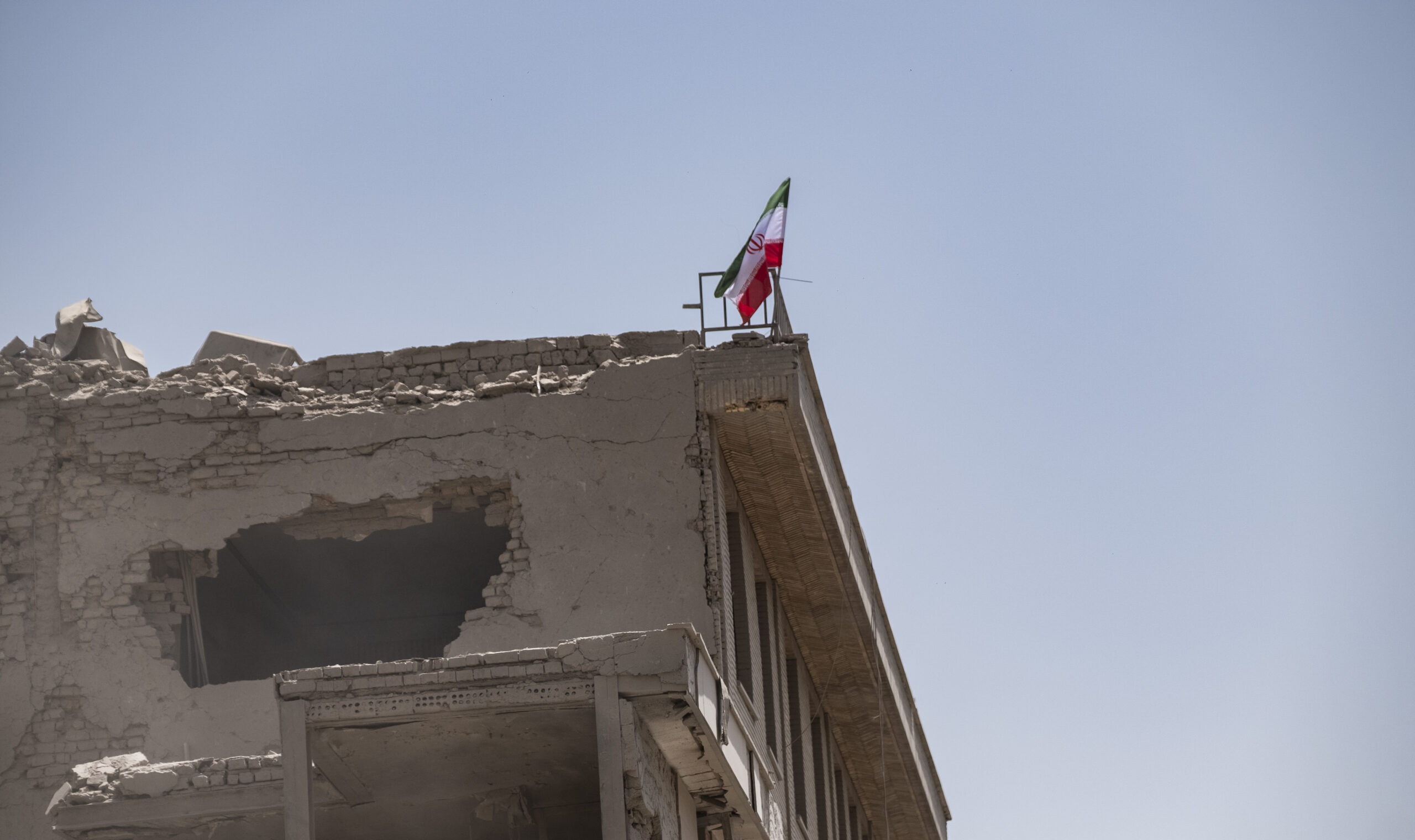
What Will Iran Do Next?

What Will Iran Do Next?

There’s every reason to think Tehran will seek deescalation.

Iran-Israel War, Aftermath

Credit: NurPhoto/Getty Images

The world now knows Trump’s initial play. But what of Iran’s next move? Here history suggests a course forward, which, if history is indeed our guide, says diplomacy is the endgame. What matters most to Iran is regime survival, and some form of diplomacy is the only path.

Look back at the previous time the United States “bombed Iran,” the assassination on January 3, 2020 of Qasem Soleimani, the powerful Iranian major general and the head of the Quds Force, in a U.S. drone strike near Baghdad International Airport in Iraq. Soleimani was an almost mythical figure in Iran; when I visited there prior to his death, I saw his face painted on massive wall murals next to the religious leaders of the country.

Soleimani was in charge of Iran’s overseas militia and terrorist operations, and directed the Shia resistance to the U.S. occupation of Iraq. He quite literally had American blood on his hands and, through his charisma and tactical skills, played a critical role in Iran’s regional reach. The U.S. killing him so overtly—like a mafia hit, everyone was intended to know who did it—was expected to set off a massive and global retaliation by Iran. President Trump, then in his first term, was accused of starting World War III (#WWIII was trending on Twitter) and kicking off a new cycle of violence against American forces in the region. Sleeper cells would be activated and a new front in the Iraq War was said to be imminent. Sound familiar?

Instead, despite the rhetoric—Supreme Leader Ali Khamenei vowed “harsh revenge”—Iran’s response was tepid. A few days after the assassination, Iran launched “Operation Martyr Soleimani,” sending all of 16 missiles against U.S. bases in Iraq, including at Al-Asad airbase and Erbil. No Americans were killed. Sound familiar?

Then-Foreign Minister Mohammad Javad Zarif tweeted that Iran had finished fighting and would not actively pursue further escalation. For his part, Trump launched no military counter-attack, although he spoke of further economic sanctions, and gestured at future agreements. Everyone called it quits.

Because Iran is a semi-developed nation, unlike other locales for American adventures overseas, it can be effectively destroyed from the air, as the Israelis and U.S. have demonstrated. It suffers from a massive technological disadvantage in any conflict with the U.S., which will retaliate against any aggression. Trump’s America will take a punch to throw back two.

Further, America is no longer dependent on Persian Gulf oil. There are threats by Tehran to close the Straits of Hormuz, but Iran needs the oil to flow more than the U.S. does. (By Washington’s current calculus, who cares about Europe’s and China’s needs?) Thanks to sanctions, Iran is almost totally dependent on oil exports, Tehran’s biggest source of external income. The oil industry’s massive infrastructure can be bombed, and most of it has so far been untouched by Israel and America. Iran’s military operates in large part out of fixed sites. It has a weak navy, and its bases are vulnerable to bombing and mining. The Iranian military is ranked globally below Indonesia. Iran knows it will never find itself in a fair fight, especially stripped as it is now of its nascent nuclear threat. That has changed everything.

The Iranian government is a tense coalition of elected civilians, unelected military officials, and theocrats. The population under them is of two minds; it is happy to chant Death to America, but equally open to the idea of finding a way out from under sanctions that would open them to the world.

Iran 2025 understands its limits. Despite more saber rattling—Iran’s Defense Minister Aziz Nasirzadeh warned recently “all U.S. bases are within our reach and we will boldly target them”—Iran has endured many provocations without significant escalation: U.S. troops landing in-country in a failed hostage rescue in 1980, U.S. support for Iraq in the Iraq–Iran war, the U.S. killing some 300 innocents in a civilian aircraft in 1988, U.S. invading and occupying Iran’s eastern border during the Iraq War and its western approaches in the Afghan War.

In 2003, in response to Iranian diplomatic overtures following the War on Terror’s initial American military successes, George W. Bush declared the country part of an “Axis of Evil.” In 2007, U.S. forces raided an Iranian diplomatic office in Iraq and arrested several staffers. The U.S. has maintained crippling sanctions for decades, helped execute the 2010 Stuxnet cyberattack that destroyed many Iranian nuclear centrifuges, and another 2019 cyberattack—not to mention whatever the Israelis have done covertly. Nothing led to a wider war. Soleimani died in this context. And look what it has not done so far in response to Israel dismantling its nuclear program piece by piece: no dirty bomb on Tel Aviv, no terror acts against Israel or the U.S. anywhere in the world, no known major cyber attacks, no activation of the Houthis to attack shipping in the Gulf, no proxy attacks against vulnerable American enclaves in Iraq.

The lobbing of missiles into Israeli cities and Qatar is by no means inconsequential, but it is within the accepted (and expected) boundaries of tit-for-tat. No one could have expected Iran to do nothing and history would not support that. Limited retaliation is an expected part of the calculus of the Israeli and America strikes; the New York Times even reported that Iran “coordinated the attacks on the American air base in Qatar with Qatari officials and gave advanced notice that attacks were coming to minimize casualties.”

What will happen next is probably up to Trump (and Israel). But what will happen after that is in Tehran’s hands. Their goal is regime survival first of all, some sort of modus vivendi with Israel and the West in second place. The decades-long strategy to match Israel as a regional nuclear power has failed. What was bombed once by Israel and the U.S. can be bombed again. History suggests Iran will absorb the next blow, and seek a diplomatic solution to assure its own survival. Washington seems to agree; “We’re not at war with Iran,” Vice President J.D. Vance said. “We’re at war with Iran’s nuclear program.” This is a watershed moment in the modern history of the Middle East.

The post What Will Iran Do Next? appeared first on The American Conservative.

Muslim Immigrant Recruited For Jihad in Chicago


Statea USA, CC BY-SA 4.0 via Wikimedia Commons

According to CBS News, A Chicago-based Muslim has been “convicted of using social media to recruit ISIS operatives and try to spread violent jihad and encourage people to carry out attacks on behalf of the terrorist group.”

Fortunately, President Trump has defeated ISIS. Unfortunately, Islamic radicalism still exists and Biden’s open border allowed potential jihadists into the country. Sadly, some in the West remain asleep at the wheel.

Per CBS:

Following a bench trial in federal court in Chicago, Ashraf Al Safoo, 41, was convicted of one count of conspiracy to transmit threats in interstate commerce, one count of conspiracy to intentionally access a protected computer without authorization, four counts of intentionally accessing a protected computer without authorization, and four counts of providing material support to a foreign terrorist organization.

Al Safoo was arrested in October 2018, following a raid at his home in the Budlong Woods neighborhood.

Federal prosecutors said he is a naturalized U.S. citizen who was born in Iraq, and moved to the U.S. in 2008.

He was accused of working with ISIS to various social media accounts to spread propaganda supporting violent jihad and recruit operatives to carry out terrorist attacks for the Islamic State.

This convicted jihadist was born in Iraq and was accused of working with ISIS to spread propaganda and recruit jihadis.

Among the evil he promoted were violent attacks during Christmas, as well as celebrations of terrorist attacks and mass shootings.

Al Safoo encouraged jihadis to “cause confusion and spread terror within the hearts of those who disbelieved.”

The ideology of Islamic jihadists remains a threat to Western Civilization. Fortunately, President Trump has made it harder for them to come into the country and cause harm in America, although there are likely already sleeper cells in America from Islamic countries who came in under Biden.

One jihadist video ” featured a computer-generated image of a family standing around a Christmas tree, with a castle in the background, before cutting to images of explosions, featuring images of dead and injured children.”

Al Safoo faces a potential of up to 130 years in prison and a date for sentencing has been set for October 9th.

The post Muslim Immigrant Recruited For Jihad in Chicago appeared first on The Gateway Pundit.

Absurd! Smith College Offers $5K Course for Teens on ‘Queer Love Stories’ as well as ‘Reproductive Justice’

For a cost of close to $5,000, high schoolers can now be taught about “black feminism”, “reproductive justice,” and “trans lives,” as if that’s what was missing from their education till now.

This is being offered by a private liberal arts college in Massachusetts according to Campus Reform.

According to Campus Reform, “The summer program appears on Smith College’s website under the title “Women, Gender, & Representation.”

During this program, students will take six classes in women’s and gender studies.

The studies include such insane categories as “Play Like a Girl: Gender in Sport,” “Rest as Resistance: Black Feminism & Radical Interiority,”  ”Queer Love Stories” and other insanity.

According to Campus Reform, in the Gender in Sport course “students will learn about “critical feminist and queer theories,” and the web page also calls “gender” a “social construction.”

“[W]e interrogate the histories of gender in sport and physical education and use critical feminist and queer theories to decipher the ways sport creates, supports, and resists dominant ideologies of inequality,” the description says.

Sadly, many schools remain dens of immorality and un-American activity.

In “Global Reproductive Justice,” students will study abortion rights after the overturning of Roe v. Wade. Specifically, they will ask consider questions such as “[w]hat does it mean to live in a Post-Roe world,” “[w]hat is the history of reproductive justice,” and “[w]hat are the legacies of protest movements for and against access to reproductive health care.”

These biased courses are just the latest examples of leftist secular “values” being thrust upon American students.

As the name of this course implies,  “Queer Love Stories” will teach about love from many different “orientations” including “asexual”, “questioning” and “pansexual” whatever that means.

The idea of sharing these ideas with young students remains repugnant to most, yet the tyranny of the minority in this case rules.

The post Absurd! Smith College Offers $5K Course for Teens on ‘Queer Love Stories’ as well as ‘Reproductive Justice’ appeared first on The Gateway Pundit.

Notorious Melania Hater Allegedly Stepping Down: Could First Lady Get Overdue Honor?

First lady Melania Trump has no shortage of critics, seemingly due merely to her proximity to President Donald Trump.

From rumor-mongering celebrities to Democratic lawmakers with axes to grind, Melania Trump often seems to face as much criticism as her much more public-facing husband.

Even within the spaces Melania was once ostensibly a part of — like the fashion and modeling world — she has faced an unusual amount of scrutiny.

Just look at longtime Vogue editor-in-chief, Anna Wintour.

One of the traditions afforded most first ladies is a glamorous Vogue cover and fawning piece in the long-running fashion outlet.

Former first lady Jill Biden got one during her lone term in the White House, as did fellow ex-first lady Michelle Obama.

In-between them, however? No such dice for Melania. And it’s very much because of Wintour.

“Mrs. Trump … was informally barred from the magazine by Ms. Wintour, who, when asked about featuring Mrs. Trump in the magazine, said in 2019, ‘I don’t think it’s a moment not to take a stand,’” the New York Times reported in 2021.

This is worth mentioning in 2025 because reports have just surfaced that Wintour will actually be leaving her post at Vogue after 37 years running it.

“The sunglasses-and-bob-sporting industry powerhouse announced she’s seeking a new ‘head of editorial content’ for American Vogue during a staff meeting Thursday morning, according to a company spokesperson,” the New York Post reported.

(Of note, the Post added that Wintour had fostered “a reputation for being cold, controlling and intimidating” since joining the publication in 1988.)

So could this sudden “bob-sporting” void pave the way for Melania Trump to finally get her overdue Vogue cover?

Alas, probably not.

While Wintour is stepping down from American Vogue, she will remain in her post with parent company Condé Nast as global chief content officer and remain as Vogue’s global editorial director, as well.

That means whoever replaces Wintour as editor-in-chief will still have to report directly to their predecessor — all but eliminating any hope for an intrepid editor-in-chief to pitch a Trump cover article.

Despite all that hoopla, Melania Trump has also made it clear that she’s unbothered by Wintour’s snub and may not even give them the time of day should they approach her.

“To be on the cover of Vogue doesn’t define Mrs. Trump,” a White House representative told the Times after its 2021 article.  “She’s been there, done that long before she was first lady.

“Her role as first lady of the United States and all that she does is much more important than some superficial photo shoot and cover.”

This article appeared originally on The Western Journal.

The post Notorious Melania Hater Allegedly Stepping Down: Could First Lady Get Overdue Honor? appeared first on The Gateway Pundit.