Climate Alarmists Wrong: Increased Economic Damage Doesn’t Prove Storms Are Getting Worse

Photograph showing the damage to houses and trees in Washington following the 11/17/2013 tornado. Photo courtesy of Mrluckypants via Wikimedia Commons

One of the indicators that climate alarmists use to push the climate crisis narrative is the increasing cost of storms.

The logic appears straightforward: a storm that did $10 million in damage must be more severe than one that did $1 million in damage, and since storms cost less money in the past, they claim this proves that storms are getting more severe.

They also set dollar thresholds for severe storms, and since more storms exceed this dollar threshold, they claim that severe storms are occurring more frequently.

However, this reasoning fundamentally misunderstands the economic factors driving storm damage costs.

According to data from the National Oceanic and Atmospheric Administration (NOAA), since 1980, there have been 403 billion-dollar weather disasters in the United States, with tropical cyclones causing over $1.5 trillion in total damage.

In 2024 alone, the U.S. experienced 27 billion-dollar disasters resulting in $182.7 billion in damages. Climate activists point to these numbers as evidence of worsening storms, but this analysis reveals a critical flaw in their methodology.

The $1 billion threshold used to classify “severe” storms is fixed and not adjusted for inflation beyond the basic Consumer Price Index.

According to NOAA’s Climate.gov, this flawed approach has resulted in 57 events since 1980 that were originally below the billion-dollar threshold but are now classified as billion-dollar disasters simply due to inflation.

This artificial inflation of severe storm counts creates the false impression that dangerous storms are becoming more frequent when, in reality, the monetary threshold has simply lost its meaning over time.

Inflation has turned million-dollar storms into billion-dollar ones. The effect is clear in historical comparisons. Hurricane Katrina caused $125 billion in damage in 2005—equivalent to $200 billion today, according to WCNC.

Hurricane Harvey’s $125 billion in 2017 would equal about $159 billion in 2024, a $33 billion jump in just seven years. Most striking is the 1926 Great Miami Hurricane, which cost $105 million at the time but would have caused $236 billion in 2018, per the Washington Post.

These examples show how inflation alone can make storms seem far more “severe” over time.

Apart from inflation, another driver behind escalating storm costs is the massive increase in population and development in hurricane-prone areas.

According to research published by The Washington Post, the combined population of the 15 counties hit by Hurricane Milton’s hurricane-force winds grew from 3.7 million people in 1980 to 9.1 million in 2023, more than doubling, while the area’s economic activity quadrupled over the same period.

Data from the Center for Climate and Energy Solutions shows that there are nearly 50 million homes and at least $1.4 trillion in assets within an eighth of a mile of the coast, with U.S. coastal populations growing by roughly 35 million people between 1970 and 2010.

When hurricanes strike these increasingly populated and developed areas, the damage costs naturally skyrocket regardless of the storm’s actual intensity.

When researchers account for population growth, development, and inflation, the apparent trend in storm severity vanishes.

A study in Nature Sustainability, cited by The Washington Post, found that once hurricane damage is adjusted for increases in people and property, the rising destruction trend disappears.

Similarly, research in the Bulletin of the American Meteorological Society shows no significant trend in normalized U.S. hurricane losses since 1900. As the researchers noted, this is expected, landfalling hurricanes have not increased in frequency or intensity from 1900 to 2017.

Contrary to climate activist claims, actual storm frequency data reveals no significant increase in severe weather events.

According to the Environmental Protection Agency’s Climate Change Indicators, since 1878, approximately six to seven hurricanes have formed in the North Atlantic every year, with roughly two per year making landfall in the United States.

The total number of hurricanes and the number reaching the United States show no clear overall trend since 1878.

This finding is supported by peer-reviewed research published in Nature Communications, which found that “recorded century-scale increases in Atlantic hurricane and major hurricane frequency are consistent with changes in observing practices and not likely a true climate trend.”

The study concluded that apparent increases in storm frequency are better explained by improved detection and reporting methods rather than actual changes in storm patterns.

When they claim severe storms are becoming more frequent, what they mean is that more storms now exceed an arbitrary damage threshold, resulting from more people with more expensive homes and more possessions living in storm-prone areas.

Rather than a climate crisis, it seems more like a matter of personal choice, and perhaps questionable judgment.

The post Climate Alarmists Wrong: Increased Economic Damage Doesn’t Prove Storms Are Getting Worse appeared first on The Gateway Pundit.

JUST OUT: Roseanne Barr to Screen Her New Film “Rosanne Barr Is America” at The Gateway Pundit Vindicated Conference in Las Vegas, Aug. 9-10

Roseanne Barr Is Back!

And, Roseanne and documentary film maker, author and political commentator, Joel Gilbert, will screen their new film “Roseanne Is America” at The Gateway Pundit sponsored

“Vindicated: Heroes who stood up to the Deep State” conference in Las Vegas August 9-10 at the Ahearn Hotel.

You can purchase your tickets here.

For years, the legendary Roseanne Barr was America’s most popular and beloved comedian. Her groundbreaking TV show, Roseanne, revived working class humor and earned legions of fans for America’s “domestic goddess.” Often political, Roseanne fearlessly addressed the issues of family, class, race, gender, and gay rights. In 2012, Roseanne Barr even ran for president. The Roseanne Show was number one in the 1990s, and revived in 2018 with excellent ratings. However, when Roseanne posted a tweet about the Iran nuclear deal and Obama ally Valerie Jarrett, the lifelong civil rights activist was promptly accused of racism over the misunderstood post. Roseanne and her show were abruptly “cancelled.”

In Roseanne Barr is America, the still hilarious and highly opinionated Roseanne recounts the untold story of her unusual upbringing and her extraordinarily successful career in comedy and television. A master storyteller, Roseanne exposes the sinister political forces and the twisted “cancel culture” that must be overcome for America to survive as a free nation. An impassioned lover of America, Roseanne explains in her uniquely entertaining way her views on today’s pressing issues and the path forward. As viewers will quickly come to understand, Roseanne Barr is America!

** Following the film Roseanne Barr will answer questions virtually with producer Joel Gilbert about the film.

Comedian Roseanne Barr and producer Joel Gilbert.

When The Gateway Pundit started organizing our Las Vegas Conference on August 9-10, we had NO IDEA what was about to transpire in Washington, DC.

The Gateway Pundit has always supported those American heroes who were unjustly persecuted by the Washington, DC Deep State.

We frequently reported on the horrific persecution of American heroes like General Michael FlynnRudy GiulianiRoger StonePresident Donald Trump and others.

We ALWAYS knew they were innocent men and American patriots.

In August we are bringing several of these courageous men and women together under the same roof.

Purchase your tickets today! Come witness history!

The post JUST OUT: Roseanne Barr to Screen Her New Film “Rosanne Barr Is America” at The Gateway Pundit Vindicated Conference in Las Vegas, Aug. 9-10 appeared first on The Gateway Pundit.

As U.S. and EU Strike Deal, Canada Is Left Behind

Canada Loses Trade War with U.S. Digital illustration created by ChatGPT based on user request. This image is an original AI-generated work and is free to use without copyright restrictions.


After President Trump imposed steep tariffs on Canada over trade imbalances, subsidies, and national security concerns, Ottawa refused to negotiate. Instead, it bet on forming a trade and security pact with Europe that excluded the U.S. But after Trump closed “the biggest deal in history” with the EU, Canada now finds itself isolated as Europe moves forward, this time, with America, not Canada.

In March 2025, newly appointed Canadian Prime Minister Mark Carney made Europe, not the U.S., his first foreign stop, meeting with leaders in France and the U.K. and declaring Canada “the most European of non-European countries.” Carney emphasized the need to “diversify” Canada’s trade and security ties, arguing the country had grown too reliant on the U.S.

In June, Canada and the EU signed a defense and trade partnership and launched talks on digital trade. Ottawa hoped this new alliance would offset U.S. pressure. But after President Trump secured a massive trade deal with the EU on July 27, leaving Canada out, those hopes collapsed.

Despite enjoying some exemptions under USMCA, Canada still faces steep U.S. tariffs, with more threatened in August. Isolated and sidelined, Canada now finds itself with neither Europe nor the U.S. firmly in its corner.

It is mathematically puzzling that Canada, China, or the EU could believe they can maintain export levels after losing access to the U.S. market. With a population of 340 million and an average annual income around $80,000, Americans are among the world’s most eager consumers.

There is no other market with comparable scale, purchasing power, or appetite for imported goods. Since these economies are already trading extensively with one another and the rest of the world, reshuffling trade between them cannot compensate for the loss of access to the U.S.

Canada is particularly vulnerable. Over three-quarters of its goods exports go to the U.S., and nearly half of its imports come from the U.S., revealing the asymmetric nature of the relationship. Provincial economies are deeply tied to this trade: U.S. exports account for 34% of Alberta’s GDP, 33% of New Brunswick’s, and 25% of Saskatchewan’s. Additionally, about 70% of Canadian goods exported to the U.S. are used in American manufacturing, reflecting tightly woven supply chains vulnerable to disruption.

Import dependency is also uneven across provinces. Saskatchewan imports 80% of its goods from the U.S., followed by Manitoba at 76% and Alberta at 63%. Jobs linked to U.S. trade are heavily concentrated in Ontario (42%), Quebec (21%), Alberta (15%), and British Columbia (11%), meaning that any shock to U.S.-Canada trade disproportionately harms key provinces and sectors.Bottom of Form


The trade war has already inflicted significant damage on Canada’s economy. According to Statistics Canada, Canada’s share of goods exports to the U.S. dropped to 68.3% in May, down from the 2024 monthly average of 75.9%. Exports to non-U.S. countries hit a record high in May, rising 5.7%, but this wasn’t enough to offset the overall decline. TradeImeX data shows that Canadian exports to the U.S. fell 15.7% in April alone.

Currency markets reacted sharply. The Canadian dollar, already weakened by 7.7% in 2024, fell below 70 U.S. cents by December and continued to hover around 69.5 cents through early 2025, according to Bank of Canada data.

Employment also suffered. Statistics Canada reported 1.6 million unemployed people in May 2025, a 13.8% year-on-year increase. The average job search duration rose to 21.8 weeks, up from 18.4 weeks the previous May. While the unemployment rate dipped slightly to 6.9% in June, broader labor conditions deteriorated.

Manufacturing was hit hard. Output declined by 1.3% year-on-year in February, and sales dropped 1.4% in March. TD Economics reported a 0.1% GDP contraction in April, falling short of Statistics Canada’s projections.

The EU has come to its senses and agreed to grant Americans a fair deal—something we’ve never had before. China is still in negotiations, and while the likely outcome is a tariff reduction, they will almost certainly violate the agreement again, just as they did with the Phase One deal during Trump’s first term. Canada, facing no viable alternatives and an overwhelmingly asymmetric dependence on the U.S., will have no choice but to negotiate—and ultimately accept U.S. terms. The past seven months of economic instability and rising prices in America are simply the short-term cost of securing better trade deals and higher incomes for years to come.

The post As U.S. and EU Strike Deal, Canada Is Left Behind appeared first on The Gateway Pundit.

Manhattan Shooter UNMASKED: Shane Tamura’s Deadly Rampage! | Elijah Schaffer (VIDEO)

Welcome to The Gateway Pundit’s Week-in-Review with Elijah Schaffer, where he covers the top 5 stories throughout the last 24 hours.

ARTICLE 1: BREAKING: Manhattan Mass Shooter Identified: 27-Year-Old Shane Tamura from Las Vegas

ARTICLE 2 Colorado Democrat Says it’s ‘Dangerous’ for Tulsi Gabbard to Make Accusations Against Obama (VIDEO)  

➤ MyPillow: MyPillow is offering two limited-time sales: a closeout on percale bedsheets in any size or color for $25, with eleven colors available until sold out, and a free introductory 3-pack of REV7, a sugar-free, caffeine-free energy drink with Cognizin and Go BHB for clean, sustained energy without crashes. Order at MyPillow.com with promo code ELIJAH or call 800-210-8491.

ARTICLE 3:  Trump’s Former Impeachment Lawyer David Schoen Flips the Script: Uses Democrats’ Own Argument to Prove Obama Can Still Be Impeached, Stripped of Immunity, and Indicted for His Crimes

ARTICLE 4:  Cramer Drops F-Bomb on Live TV Over Trump’s Latest Blockbuster Trade Deal (VIDEO)

Oxford Club: Warren Buffett, Ken Griffin, and even Elon Musk recognize oil’s enduring value, with Buffett investing over $50 billion in energy and Griffin boosting his oil investments by 150%. Yet, Wall Street overlooks a smarter alternative to stocks: a unique investment offering monthly royalty checks from America’s richest oil fields. For just $25, you can own a direct stake in oil-producing properties—not company shares—and start collecting payouts. Learn more about 2025’s top oil royalty opportunity at https://www.elijahoil.com.

ARTICLE 5: WNBA: Days After Demanding “Pay Us What You Owe Us”, Game Halted and Fan Ejected Because a Player Lost her Wig on the Court

Please leave your opinions / comments on these stories below as Elijah reads every single one and appreciates your perspective.

The post Manhattan Shooter UNMASKED: Shane Tamura’s Deadly Rampage! | Elijah Schaffer (VIDEO) appeared first on The Gateway Pundit.

Scott Bessent Reaffirms U.S. Economic Strength Under Trump

At a time of global uncertainty, where international markets face inflationary pressures, energy crises, and geopolitical conflicts, a bold and clear statement has captured the attention of analysts, entrepreneurs, and investors alike. In a recent interview, Republican Representative and renowned financial strategist Scott Bessent was asked directly by a reporter:
“Where would you invest your money if you were still running a hedge fund?”
His answer was short, firm, and patriotic: “In the United States.”

Though brief, the statement reflects a deep understanding of the current

The post Scott Bessent Reaffirms U.S. Economic Strength Under Trump appeared first on The Gateway Pundit.

Scott Jennings Explains How He Went From Trump Skeptic to Trump Supporter (VIDEO)

Screencap from Twitter/X video.

Scott Jennings may be the smartest person on CNN, but he wasn’t always a Trump supporter.

During a recent appearance on the PBD podcast, Jennings explained that when Trump first appeared on the scene, he didn’t ‘get it.’ He says it became clear in time.

He also suggests that the fact that Trump’s opponents are so reflexively against anything he says or does, also pushed him to Trump.

The Daily Caller has more:

Scott Jennings Breaks Down How He Went From Trump Skeptic To Fierce Supporter

Republican strategist Scott Jennings explained on “The PBD Podcast” Tuesday why he became a staunch supporter of President Donald Trump after previously not comprehending his appeal.

“The Daily Show” ran a segment posted to YouTube on Friday featuring Jennings criticizing Trump in the past before embracing the president. “The PBD Podcast” co-host Adam Sosnick mentioned the segment and asked Jennings what changed his opinion on Trump.

“Well, I’ve voted Republican my whole life. And I did vote for him three times. But like everybody else, I didn’t get it. I mean, I readily admit I did not get it. I did not understand it,” Jennings said. “I did not get how this guy who hadn’t been a Republican was coming along to take over the Republican Party. I just — I did not get it. And so over time, I began to realize what he was doing. And I also began to realize the choice. And in 2024, for me, there was no — I mean, [former Vice President] Kamala Harris versus Donald Trump? The idea of common sense versus whatever it is she was selling.”

See the clip below:

Jennings also made a great point about the Democrats’ absurd new obsession with Epstein. Watch:

Jennings remains the best thing that has ever happened to CNN. This is why.

The post Scott Jennings Explains How He Went From Trump Skeptic to Trump Supporter (VIDEO) appeared first on The Gateway Pundit.

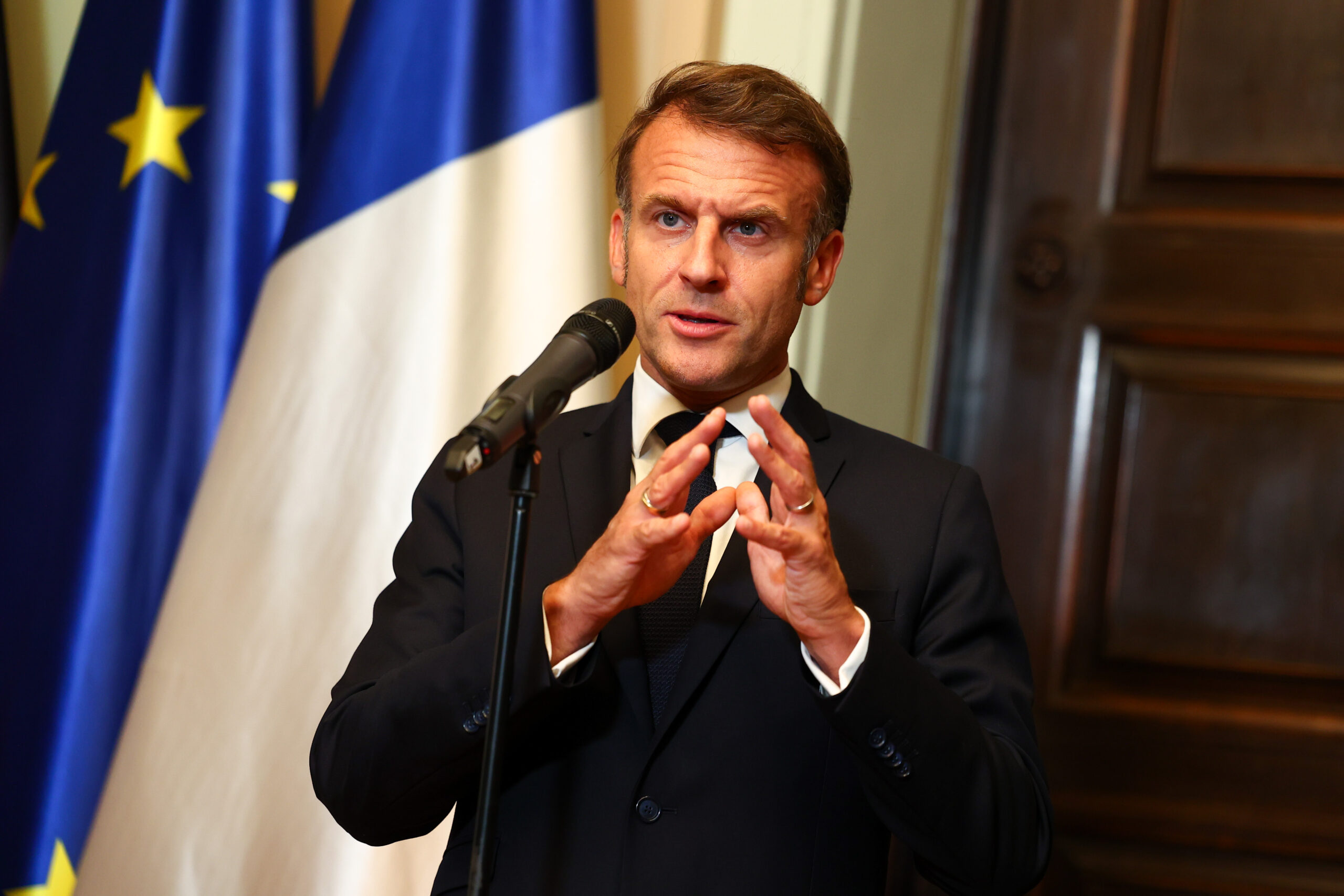
Why Macron’s Palestine Gambit Matters

Why Macron’s Palestine Gambit Matters

The French president’s recognition of a Palestinian state tips the world diplomatic balance away from the U.S. and Israel.

Macron And Merz Meet In Berlin

After the French President Emmanuel Macron announced last Thursday that France will recognize the state of Palestine, several U.S. and Israeli leaders dismissed the move as merely symbolic. But this week brought signs that Macron’s announcement is having a real effect on international politics—not least British Prime Minister Keir Starmer’s own announcement that his government will also recognize a Palestinian state unless Israel agrees to end the catastrophe in Gaza and forswear annexation in the West Bank.

That might come as a surprise to officials who last week not only dismissed Macron’s move but mocked the French leader in remarkably undiplomatic fashion. U.S. Ambassador to Israel Mike Huckabee led the charge. “Macron’s unilateral ‘declaration’ of a ‘Palestinian’ state didn’t say WHERE it would be,” Huckabee wrote Friday on X. “I can now exclusively disclose that France will offer the French Riviera & the new nation will be called ‘Franc-en-Stine.’”

Israel’s Finance Minister Bezalel Smotrich, an extremist settler in the occupied West Bank—which Israelis call “Judea and Samaria”—also reacted with sarcasm. On X, Smotrich wrote:

I thank President Macron for providing yet another compelling reason to finally apply Israeli sovereignty over the historic regions of Judea and Samaria, and to definitively abandon the failed concept of establishing a Palestinian terro[r]ist state in the heart of the Land of Israel.

The comments appeared to indicate that Macron’s gambit would prove at best hopelessly ineffectual, at worst catastrophically counterproductive. President Donald Trump took the former view. “What he says doesn’t matter,” Trump told reporters Friday. “That statement doesn’t carry any weight.” 

But if Macron’s announcement “doesn’t matter,” then why have opponents of Palestinian self-determination reacted to it with such venom? In truth, recognition does matter in international affairs, which is why Israel and its Western backers, unlike most nations, have steadfastly refused to acknowledge Palestinian statehood in the first place.

Scholars of international relations have taken a keen interest in recognition, borrowing the concept from social theories of personal identity. According to Justia, an online resource for law students, two theories of recognition prevail in the study of international law. The “constitutive theory” says that a “state does not exist until it receives recognition.” By contrast, the “declaratory theory,” to which most scholars subscribe, holds that recognition “is merely an acknowledgment of an existing situation.” Even so, “an entity likely has a stronger claim to statehood when it has received recognition from many other states.”

For France in particular to join the majority of states in recognizing Palestine is significant. A nuclear-armed power, France is a permanent member of the United Nations Security Council (UNSC), an advanced G7 economy, and the mightiest nation in Europe, taking into account the various dimensions of power: economic, military, cultural, and diplomatic. In recognizing Palestine, Macron has used his nation’s geopolitical prominence to create a permission structure for—and ramp up pressure on—other European leaders to follow suit.

Following Macron’s announcement, all eyes were on Starmer and the United Kingdom, where the next day a parliamentary foreign affairs committee called on the government “to recognise the state of Palestine while there is still a state to recognise.” Not wanting to get on America’s bad side, Starmer has been reluctant to take that step, even as he’s drawn attention to the “unspeakable and indefensible” suffering in Gaza and declared that “statehood is the inalienable right of the Palestinian people.”

But on Monday, Trump appeared to acknowledge that Starmer had every right to follow Macron’s lead. “I don’t mind him taking a position” on the issue, Trump said in Starmer’s presence when asked about Palestinian statehood. Starmer seems to have interpreted that remark as a green light, as the next day his government edged closer to the French position. If Britain does indeed join France, the U.S. would be the only permanent UNSC member not to recognize Palestinian statehood, with China, Russia, and the two European powers on the other side.

Evidently, Macron’s announcement really does matter, and it has perceptibly shifted the conversation among world leaders.

It has also done so in the media and among the general public. How many Americans know that some 147 of the UN’s 193 member states (including 11 European Union nations) already recognize the state of Palestine? Thanks to media coverage of Macron’s announcement, many Americans now do.

Here’s another fact that may interest them: Of the top 20 most populous nations in the world, only the United States and two of its vassals—Japan and Germany—do not recognize Palestinian statehood. Citizens of those three nations may start to ask: If Paris can recognize Palestine, then why cannot their own governments, which claim to support a two-state solution?

Macron’s surprise announcement came amid mounting international pressure on Israel. Mainstream newspapers such as the New York Times are not only highlighting the acute famine conditions in Gaza but casting doubt on Israeli claims that the UN and Hamas—and not Israel—are to blame for blocking food aid. The Times has reported on several incidents of Israeli troops killing desperate Palestinians at aid delivery sites. It even published an article by an Israeli professor of the Holocaust who now concludes that “Israel is committing genocide against the Palestinian people.”

British news media has, if anything, been even more critical of Israel. Good Morning Britain last Friday aired an alarming interview with a British doctor who provides medical care in Gaza. He said that Israeli border officials confiscate baby formula from incoming doctors and that Israeli soldiers on occasion seemed to target the genitals of children with gunshots, as though a “game was being played.”

As more and more Westerners begin to see the dark gravity of the Gaza crisis, Macron’s announcement offers a ray of hope, putting the focus on possible long-term solutions. Of course, Israel and its most loyal American supporters have rejected Macron’s solution as impractical and somehow dangerous. But their condemnations only reveal how unserious they are about finding a humane solution to the Israel–Palestine dispute.

“A Palestinian state in these conditions would be a launch pad to annihilate Israel—not to live in peace beside it,” the Israeli Prime Minister Benjamin Netanyahu said. “Let’s be clear: the Palestinians do not seek a state alongside Israel; they seek a state instead of Israel.” The statement amounts to a mixture of projection and mendacity. Members of Netanyahu’s own government, including Smotrich, have been candid about their own annihilationist plans for Gaza: ethnic cleansing and Israeli annexation. Moreover, Macron had said that France’s recognition of statehood was predicated on Palestine’s “fully recognizing Israel.”

Mark Dubowitz of the Foundation for Defense of Democracies, a DC think tank that promotes Israeli interests, has vilified Macron for “appeasement” of Hamas. “Macron gave a gift to Hamas—and Smotrich—setting back peace by decades,” Dubowitz said Thursday. The accusation doesn’t hold water. 

It’s hard to see how Macron gave a “gift” to Hamas. His announcement on social media accompanied a letter to the president of the Palestinian Authority, which partially governs the West Bank. “You condemned the terrorist attacks of 7 October 2023 and called for the immediate release of the hostages held by Hamas, and for the latter to be disarmed and to withdraw from the governance of Gaza,” the letter read. “You underline the Palestinian Authority’s commitment to fulfilling all its governance responsibilities in all Palestinian territories, including Gaza.”

As for Smotrich, Dubowitz was apparently suggesting that the right-wing settler would, in response to Macron, accelerate his push to seize the West Bank. But world leaders cannot allow Israeli extremists to blackmail the international community in this fashion. In any case, Smotrich and his ilk have long pushed to build more settlements in the West Bank, evict Palestinians from the territory, and thus create “facts on the ground” that make a Palestinian state impossible.

Macron’s bold announcement brings Europe closer to the global consensus on Israel–Palestine. Moreover, it positions the French president as the European leader par excellence. It implicitly acknowledges the gulf between the collective West and Israel and reaffirms Christian values of peace, equality, and universal dignity. 

France has been a friend of America since before the founding of our republic, providing vital support during our war of independence. In the 21st Century, when Israel was pushing us to attack its Mideast adversaries, France backed us in Afghanistan but told us the truth about Iraq: A war there would prove disastrous and unjust. Today, as France stands against Israel’s brutal assault on Gaza, the U.S. should honor its oldest alliance and stand beside its civilizational partner.

The post Why Macron’s Palestine Gambit Matters appeared first on The American Conservative.

The Time Has Come for Trump’s America-First Realism

The singular purpose of American foreign policy should be to advance American interests.

It’s a seemingly simple and obvious statement, but it represents a significant break with the philosophy that has animated U.S. foreign policy for the past three decades.

As a senator deeply invested in our nation’s security, I’ve long argued that our leaders must embrace a new doctrine of American realism to confront the challenges of the 21st century. President Donald Trump’s “America First” approach has done just that, unapologetically putting American power—both military and diplomatic—to use in service of American interests on the world stage.

This shift in our nation’s global posture has already had a dramatic effect. Take the example of NATO. For decades, American presidents politely asked NATO allies to increase defense spending, only to be met with half-hearted responses and stagnant budgets. Dwight Eisenhower warned of a “dry well” in 1953, just four years after NATO’s founding. Lyndon Johnson pushed for burden sharing to offset American military expenses in Europe. George W. Bush pressed for greater burden-sharing during our post-9/11 wars. Barack Obama reiterated the call after Russia’s annexation of Crimea in 2014, with Defense Secretary Robert Gates bluntly warning against Europe’s “demilitarization.” Yet by 2017, only three allies had met the 2 percent GDP target agreed to in 2014.

But Trump demanded accountability and got results. By insisting that our European allies shoulder more of their own defense burden, Trump forced a long-overdue reckoning that culminated in a surge of European defense spending. At the 2025 NATO Summit, our allies committed to a new target of 5 percent of GDP on defense by 2035. European nations are now enacting significant increases in their military budgets. This shift, brought about in part by Trump’s leadership, will allow the United States to redirect as much as $100 billion annually from Europe to more pressing priorities in the Asia-Pacific.

Like it or not, Trump’s approach has bolstered transatlantic security in a way no recent president has managed. This isn’t bluster; it’s realism at work. The president is not preoccupied with what Charles Krauthammer described as “the vain promise of goo-goo one-worldism.” He does not think in terms of “liberal international norms” or Wilsonian universalism. His grand strategy is guided by real, material American interests—and he has none of his predecessors’ aversion to direct, candid, muscular assertion of those interests in dealings with our friends and foes alike. Tough love achieved what decades of diplomatic niceties could not.

But this story isn’t just about Europe, where large-scale conflict has already broken out with tragic consequences. Rather, it reflects a broader shift toward pragmatic realism in our alliances—a shift exemplified by men like Elbridge Colby.

As under secretary of defense for policy, Colby has spent the past two decades asking the hard questions that Permanent Washington has studiously avoided. His 2018 National Defense Strategy rightly identified China as our primary geopolitical threat, and his Marathon Initiative has emphasized the need for alliances grounded in clear commitments, not vague assurances. So why is the foreign policy establishment now feigning shock and outrage as he puts these principles into action?

 A recent POLITICO piece, featuring numerous unnamed “sources” from inside or close to the administration, took Colby to task for his challenge to the reigning foreign policy consensus. One source bitterly remarked, “He has basically decided that he’s going to be the intellectual driving force behind a kind of neo-isolationism that believes that the United States should act more alone, that allies and friends are kind of encumbering.”

Colby’s realist approach is far from “neo-isolationism,” but it does stand in stark contrast to the Wilsonian idealism that has dominated our foreign policy elite for too long. Idealists have wagered American blood and treasure on the supposed goodwill of other nations, prioritizing international summits and diplomatic pageantry over hard-nosed strategy. They’ve spent years at Davos and the global security conferences building relationships that look good on paper but crumble under pressure. Meanwhile, before 2020, U.S. taxpayers covered roughly 70 percent of NATO’s defense spending; our Indo-Pacific partners were left with ambiguous roles, inviting miscalculation from adversaries like Beijing.

Colby’s strategy is working. Australia is trending toward 3.5 percent of GDP in defense spending. Japan has approved a record-high defense budget of nearly $59 billion. Taiwan has boosted its budget by 8.5 percent amid escalating Chinese military exercises. The June 2025 naval tensions in the South China Sea underscore the urgency: Deterrence requires clarity, not cocktail-hour platitudes. By hardening our alliances now, Colby is attempting to prevent conflict, not courting it. Realism, grounded in national interest and the logic of deterrence, outperforms idealism’s wishful thinking every time.

The foreign policy establishment’s failure to ask these questions earlier reveals their priorities: galas over strategy, pageantry over preparedness. It’s time to move beyond that. A leaner U.S. presence in Europe, paired with a fortified Indo-Pacific coalition, sends the right signal to our adversaries. I commend Colby for leading this effort and urge my colleagues to embrace this pragmatic path.

The next war won’t be averted by toasts or speeches. It must be deterred by strength, resolve, and accountability. As Europe finally steps up and Asia braces for the long competition ahead, let’s ensure America’s foreign policy serves our people first. That is the legacy of Trump and Colby—a legacy we must secure.

The post The Time Has Come for Trump’s America-First Realism appeared first on The American Conservative.

U.S. Attorney Jeanine Pirro Announces ICE Crackdown in ‘Sanctuary’ Washington, DC (VIDEO)

Screencap from Twitter/X video.

Former FOX News host and current U.S. Attorney for Washington, DC, Jeanine Pirro, announced today that her office is working with ICE to remove illegals who are ’embedded’ in the system in the DC area.

Pirro explains that the Washington, DC city council has worked very hard to prevent this from happening, which is an outrage.

She also notes that these people have been able to remain undetected for so long because no one was even asking for their status before now.

WCBM News reports:

No More Sanctuary: Pirro Cracks Down on Illegal Immigration in D.C.

Jeanine Pirro, former host of Judge Jeanine at Fox News and current interim United States attorney for the District of Columbia, has announced that to combat DC’s sanctuary city policies, the immigration status of all defendants entering the DC justice system will be verified.

Pirro said that this new policy, which is in line with President Trump’s directive to “Make D.C. Safe and Beautiful,” will ensure that illegal immigrants are no longer clogging up the DC justice system. Previously, there was no such verification system, and illegal immigrants were treated as typical defendants, either facing conviction for their crimes or acquitted and released back out into DC.

Pirro posted the following on Twitter/X:

“We are now trying to identify those illegals who are currently burrowed in our criminal justice system, who’ve identified themselves either as citizens or individuals with actual legal status who do not have status or are illegal. Previously, there was no questioning them, and there was certainly no verification of that.”

“[We’re] working with ICE to identify those individuals already in the system that we can then find out from ICE what their status is. Previously, no one even asked. They would just literally go through the system and either be convicted and possibly go to jail and be found not guilty and be released. But the DC City Council has worked very hard to make sure that these individuals avoid any contact with ICE.”

Watch her video below:

Pirro was clearly a great choice for this role.

The post U.S. Attorney Jeanine Pirro Announces ICE Crackdown in ‘Sanctuary’ Washington, DC (VIDEO) appeared first on The Gateway Pundit.

Evacuations Underway as Tsunami Sirens Go Off in Hawaii After 8.7 Magnitude Earthquake Strikes Off Russia – Trump Posts Warning

As reported earlier, a powerful magnitude 8.7 earthquake struck near Russia’s Kamchatka Peninsula on Tuesday evening (early Wednesday local time).

Evacuations were underway after a tsunami warning was issued for all of Hawaii.

Tsunami alerts were issued for Alaska and the entire US West Coast.

The first tsunami wave is expected to hit around 7:15 local time in Hawaii.

Tsunami waves are expected to hit California’s coast after midnight PST.

A Maui resident posted a video to X of a tsunami siren blaring:

Live look at Hawaii (and Japan):

A tsunami hit Kamchatka, Russia:

Fox News reported Tuesday’s earthquake off Russia may be one of the 10 biggest quakes ever recorded.

WATCH:

President Trump posted a statement about the earthquake and tsunami warning.

“Due to a massive earthquake that occurred in the Pacific Ocean, a Tsunami Warning is in effect for those living in Hawaii. A Tsunami Watch is in effect for Alaska and the Pacific Coast of the United States. Japan is also in the way. Please visit tsunami.gov/ for the latest information. STAY STRONG AND STAY SAFE!” President Trump said.

The post Evacuations Underway as Tsunami Sirens Go Off in Hawaii After 8.7 Magnitude Earthquake Strikes Off Russia – Trump Posts Warning appeared first on The Gateway Pundit.