THREAT FROM BEYOND? Controversial Study Suggests Intergalactic Object Nearing Planet Earth Could Be a Hostile Alien Ship

AI-Generated image by Grok – 3I/ATLAS is cruising past the Solar System.

Another week, another UFO-related story for us to laugh or worry about – and this is a big one.

Back in October 2017, the first object from outside the Solar System was discovered: the Oumuamua. The unusual shape, the lack of a comet trail, and the fact that it sped up as he left the galaxy left scientists puzzled and was fertile ground for all kinds of speculative theories, with Harvard’s Avi Loeb suggesting that Oumuamua might be an alien spacecraft.

Fast-forward to 2025, when another ‘mysterious intergalactic object’, named 3I/ATLAS, is cruising past Earth – and you will never guess what scientists are suggesting now.

Yes.

A controversial new scientific study alerts that 3I/ATLAS could potentially be a ‘hostile’ alien spacecraft coming to attack our planet in November.

The New York Post reported:

“’The consequences, should the hypothesis turn out to be correct, could potentially be dire for humanity’, the researchers wrote in the inflammatory paper, which was published July 16 to the preprint server arXiv, South West News Service reported.”

Avi Loeb is back with his theories:

3I/ATLAS has just been discovered on July 1, speeding toward us at more than 130,000 mph, and it has been determined to be a intergalactical comet.

“However, in the new paper, the trio of researchers suggested that it might be a piece of extraterrestrial spy technology in disguise.

One of the researchers, Avi Loeb — a prominent Harvard astrophysicist known for linking extraterrestrial objects to alien life — previously made waves after floating the theory that 2017 interstellar object ʻOumuamua could be an artificial recon probe sent by an alien civilization, based on its odd shape and acceleration.”

Loeb believes that the 3I/ATLAS’s trajectory suggests an alien origin.

“The object’s speed — which was significantly faster than ʻOumuamua and other objects — and the fact that it entered our solar system from a different angle than its predecessors offer ‘various benefits to an extraterrestrial intelligence’, Loeb wrote in a blog post.

One benefit is that 3I/ATLAS will make close approaches to Jupiter, Mars and Venus, which could allow aliens to stealthily plant spy ‘gadgets’ there, Loeb wrote.”

Read more:

THE GREAT HOAX IN THE SKY: AARO Report Shows Many UFO Conspiracy Theories Were Disseminated by the Pentagon To Disguise Secret Weapons Programs

The post THREAT FROM BEYOND? Controversial Study Suggests Intergalactic Object Nearing Planet Earth Could Be a Hostile Alien Ship appeared first on The Gateway Pundit.

Illegal Alien Released into US by Biden Tries to Stab ICE Officers

According to Homeland Security, there has been an 830 percent increase in attacks on ICE agents. With a complicit left-wing media and leftist politicians’ increasing rhetoric against ICE agents, it’s not surprising.

An illegal alien from the African country of Senegal, Bass Ndiaye, was arrested on July 17th for being in the US illegally. When he was in custody at an immigration building, he allegedly got access to a pair of scissors and tried to stab ICE officers and other illegal alien detainees. ICE officers were able to stop and disarm him in a timely manner.

Ndiaye was caught initially and released at the border in October 2023 by the Biden regime. As a result of the previous administration’s lack of enforcement at the border, ICE agents and American citizens’ lives are in danger from criminal illegal aliens.

Ndiaye is facing a potential 20-year sentence with a federal charge of using a dangerous weapon to assault a Federal officer.

Fox News reported:

An illegal alien from Senegal was charged with assaulting U.S. Immigration and Customs Enforcement (ICE) officers and other detainees with a deadly or dangerous weapon.

The Department of Homeland Security (DHS) announced the charges against Bass Ndiaye in a statement released Thursday.

According to the statement, Ndiaye was arrested July 17 and taken to a federal immigration building in New York City for processing.

While awaiting processing, Ndiaye allegedly grabbed a pair of scissors and attempted to stab ICE officers and about a dozen other detainees. He was quickly disarmed and subdued by ICE officials.

“This criminal illegal alien who [was] released into the country under President Biden will face justice for his violent crimes,” DHS Assistant Secretary Tricia McLaughlin said in a statement. “Our ICE law enforcement are facing an 830% increase in assaults against them,” Fox News reported.

TGP has been consistently reporting assaults on ICE by illegal alien criminals. Earlier this month, it was reported that there was a 700 percent increase in assaults on ICE officers.

It has jumped to well over 800 percent in just a short time.

The post Illegal Alien Released into US by Biden Tries to Stab ICE Officers appeared first on The Gateway Pundit.

Team Obama Concocts a Silly Scheme to Try to Rescue Themselves Following Obama’s Treasonous Actions in Russia Hoax Scandal

Aides who worked for Barack Obama are desperate to shut down the burgeoning scandal surrounding their former boss and have devised a laughable plan to prevent it from reaching the public further.

As The Gateway Pundit’s Jim Hoft reported, Gabbard released her second batch of previously undisclosed documents on Wednesday morning. These documents include more proof that Barack Obama directly gave the order to publish the Russia Collusion hoax, knowing there was no proof to back it up.

Page three of this latest document drop shows that then-President Obama ordered the release of documents, knowing there was no evidence to back them up. Obama didn’t just know about the Russia hoax – he directed it. All to delegitimize Trump’s historic win.

Obama also helped cover up the blackmail Vladimir Putin had on Crooked Hillary Clinton, including her numerous health issues.

Several deep state hacks affiliated with Obama also helped push the Russia Hoax and are in hot water. One person who should be particularly concerned is former CIA Director John Brennan.

George Washington University law professor Jonathan Turley says he could face criminal charges.

Former Director of National Intelligence James Clapper is already so worried that he has lawyered up.

Now, NBC News reveals that Team Obama is desperate to find a way to ensure the scandal eventually dissipates and put a stop to more “unchecked allegations.”

From NBC News:

To former aides who worked in Barack Obama’s White House, the Trump administration’s allegations of “treason” carried the stench of desperation from a president straining to shift the focus from a burgeoning scandal around Jeffrey Epstein.

Still, they’re grappling with how to contain the unprecedented accusations National Intelligence Director Tulsi Gabbard has leveled, even as they dismiss them as asinine, interviews with more than half a dozen people who worked in Obama’s White House or on his campaigns reveal.

These people say the events of the last week have turned into a messaging balancing act between unnecessarily giving oxygen to the claims that Obama ordered a false intelligence analysis to show Russia had worked to help Trump win the 2016 election and leaving the potential for unchecked accusations to balloon. Many of those who talked to NBC News were not authorized to speak publicly about strategy.

What is their brilliant scheme? It turns out that they plan to reach so-called Republicans via newspaper editorial boards and via members of Congress.

“The battle now is to play this even to make sure that thoughts don’t start to creep into more mainstream” audiences, a former Obama administration official said. That person said it was important to reach “mainstream Republicans,” who would listen to editorial boards and those in Congress who deemed the allegations against Obama as “beyond the pale.”

Do they actually think any GOPer, even more moderates, care one bit what the Wall Street Journal or Washington Post has to say?

Moreover, how many are going to listen to leftists and RINOS in Congress who dismiss Obama’s treason as a nothingburger?

One former Obama hack, Ned Price, decided to try anyway. He wrote a piece Fox News published on Wednesday titled: “Americans should beware of Gabbard’s ‘dangerous distraction’ with revisionist history of 2016 election.”

It’s safe to say that it did not work as the scandal only grew.

The post Team Obama Concocts a Silly Scheme to Try to Rescue Themselves Following Obama’s Treasonous Actions in Russia Hoax Scandal appeared first on The Gateway Pundit.

DOGE Unleashes New AI Deregulation Decision Tool Targeting 200,000 Federal Regulations- Aims to Slash 50% by January 2026

AI-generated image.

The Department of Government Efficiency (DOGE) has announced a new AI reregulation tool that could slash Federal regulations by as much as 50%.

A Washington Post exclusive notes that the tool, the ‘DOGE AI Deregulation Decision Tool,’ “is supposed to analyze roughly 200,000 federal regulations to determine which can be eliminated because they are no longer required by law.”

The Post reviewed a PowerPoint presentation dated July 1 that outlines the specifics.

“Roughly 100,000 of those rules would be deemed worthy of trimming, the PowerPoint estimates — mostly through the automated tool with some staff feedback. The PowerPoint also suggests the AI tool will save the United States trillions of dollars by reducing compliance requirements, slashing the federal budget and unlocking unspecified “external investment.”

DOGE shared on X, “The AI-driven deregulation push at DOGE isn’t just streamlining red tape—it’s surgically targeting bureaucratic bloat that’s choked agencies for decades.”

“The system cross-references 15,000+ regulations against statutory authority, flagging provisions where agencies exceeded congressional mandates. Take HUD’s Public Housing reforms: AI identified 1,200+ redundant compliance checks in tenant verification processes, enabling targeted cuts that maintain oversight while eliminating 40% of administrative overhead.”

“This isn’t blanket deregulation—it’s precision calibration.”

“The $175B savings milestone proves the model works, with contract cancellations like the $2.9B ORR influx facility termination showing real fiscal discipline. Critics miss the point: when you replace 500 pages of procurement rules with 50 pages of blockchain-encoded smart contracts, you’re not weakening governance—you’re modernizing it.”

“The goal? Replace voluminous compliance theater with algorithmic accountability that actually works.”

See more here.

The post DOGE Unleashes New AI Deregulation Decision Tool Targeting 200,000 Federal Regulations- Aims to Slash 50% by January 2026 appeared first on The Gateway Pundit.

Riley Gaines Fires Back at Critics After She Accomplishes Alcatraz Feat While 31 Weeks Pregnant

33Riley Gaines shot down social media naysayers who were critical of her Alcatraz swim earlier this month, which she did while 31 weeks pregnant.

Alongside U.S. Navy SEALs and her husband, Gaines swam 1.25 miles to shore from the notorious prison island — a feat she also achieved last year when she wasn’t expecting, according to Fox News.

“Escaped Alcatraz at nearly 31 weeks pregnant. I’m basically just a human submarine for baby girl,” Gaines wrote on the social media platform X on Friday.

Critics rebuked Gaines — a conservative activist for women’s rights in sports — for making the swim while pregnant.

But Gaines took to her Outkick podcast “Gaines for Girls” to address the criticisms, saying her swim “broke the minds of liberals.”

“This guy says, ‘I guess putting your baby at risk for clicks was a decision,’” Gaines said, quoting one user. “I wonder where he got his doctorate? I didn’t know Twitter had so many OBGYNs or doctors who suddenly know more about pregnancy and exercising when pregnant than my OB did, who cleared me to do this.”

“This person says, ‘Maybe not the best time to swim in the ocean, lol, but what do I know?’” Gaines quoted. “Nothing, actually. You know nothing — at least about pregnancy and, again, exercising during pregnancy.”

“This person says, ‘Why do this when you’re pregnant,’” Gaines continued reading. “‘Seems dumb, pointless, and not worth it.’ Again, I think I feel so great, and I have the entire time, because I have done things like this regularly, whether being pregnant or not being pregnant.”

Gaines’ responses to other comments can be viewed in the full podcast episode below.

Gaines graduated from the University of Kentucky, where she was a 12-time All-American swimmer, according to the Independent Women’s Forum.

In 2022, she entered the political arena after she was forced to compete with self-described transgender athlete William “Lia” Thomas. Gaines ultimately tied for fifth with Thomas at the NCAA women’s swimming championships, CNN reported.

“I think we should send a thank-you note to people like Will Thomas, I really do, signed and sealed by me,” Gaines told Fox News Digital in March. “I will sign the thank-you note, I will write it, because I believe he handed us the election.”

This article appeared originally on The Western Journal.

The post Riley Gaines Fires Back at Critics After She Accomplishes Alcatraz Feat While 31 Weeks Pregnant appeared first on The Gateway Pundit.

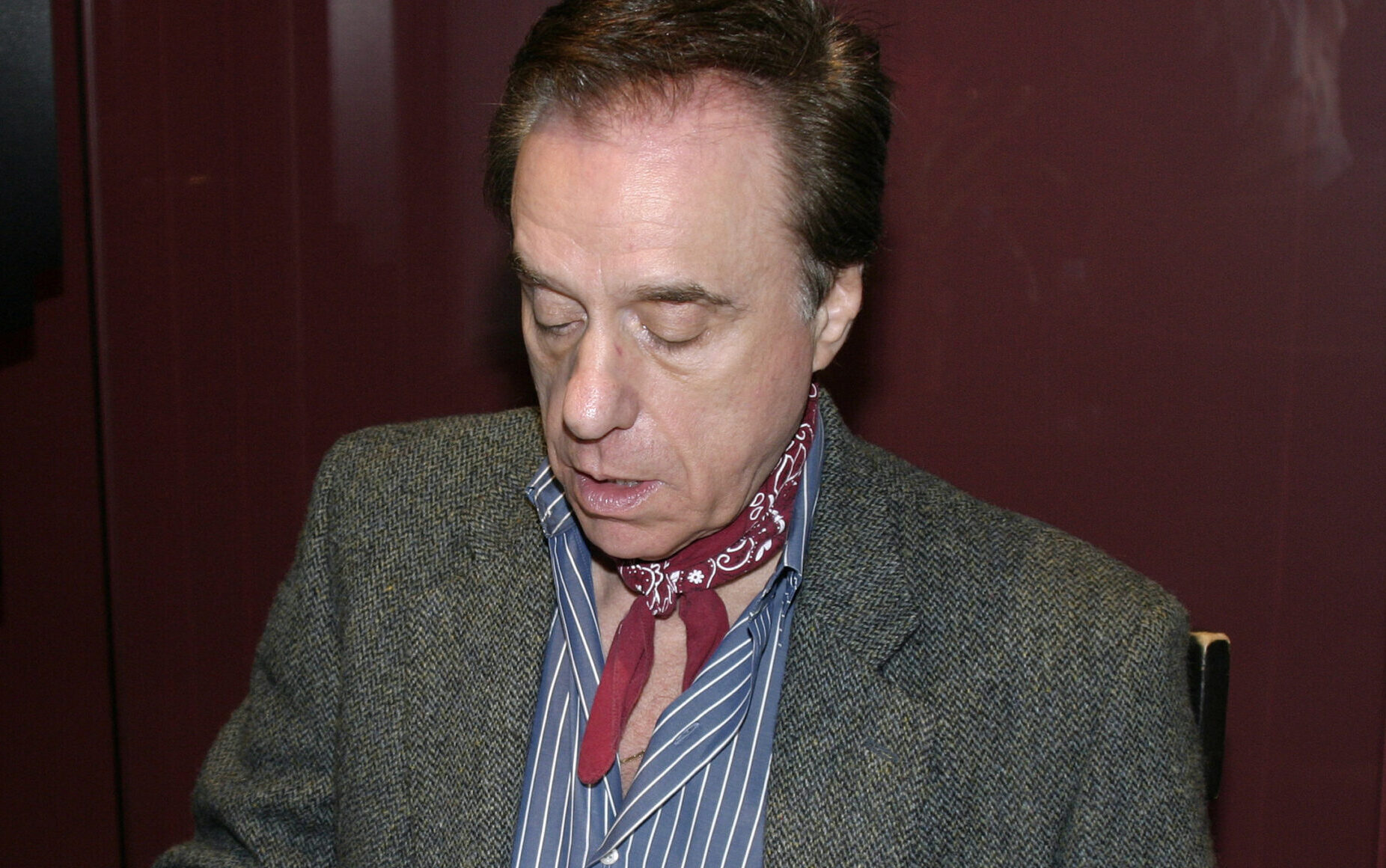
Missing Peter Bogdanovich

Missing Peter Bogdanovich

The death of a great American director has brought, for me, an unmissable absence.

Peter,Bogdanovich,Signs,Copies,Of,His,New,Book,"who,The

Like everyone else who knew him, considered him a friend, or otherwise fell into his orbit, I have with difficulty learned to live without phone calls, voicemails, or emails from Peter Bogdanovich.

The Oscar-nominated director—whose classic films include The Last Picture Show (1971), What’s Up, Doc? (1972), and Paper Moon (1973)—died on January 6, 2022, at the age of 82. Since we lived very far apart, in fact, in different worlds—I in Ohio, he, for most of the time I knew him, in southern California—the cessation of his communiques has been the most tangible evidence of his absence. He would have turned 86 this coming Wednesday, but I am certain that nothing, not even increasingly advanced age, would have gotten in the way of his wanting to talk about movies, especially his own.

We had reason to be in touch because, at the unlikely age of 20, I managed to arrange an interview with him for an ambitious, career-spanning article I was writing about his work. It took less effort than you might imagine to reach him: I knew a film critic, Bill Krohn of Cahiers du Cinema, who knew his longtime assistant, Iris Chester, who put me in touch with his office in New York, where he was then living (and was then shooting, including on the night I first called him, episodes of The Sopranos, in which he appeared as Lorraine Bracco’s psychiatrist). In my experience, far less notable celebrities—those who had not known Alfred Hitchcock, starred in a movie directed by Orson Welles, or directed the youngest-ever Oscar winner, Tatum O’Neal, as he had—could be far more difficult to reach.

I embarked on our first conversations with something of a mandate. Even at 20, I had spent about a third of my life studying his movies with the conviction that they represented something almost unprecedented in American culture, especially movie culture, which thrives on the new, the startling, the shocking: a conscious attempt to turn back the clock. He came to prominence in the late 1960s, but, in much the manner of a certain prominent magazine editor, he stood athwart movie history, yelling Stop. “I’m afraid it’s largely a twentieth-century critical fashion to value originality as the main criterion of a work of art,” he wrote in 1973. “And yet, Ecclesiastes tells us, ‘There is no new thing under the sun,’ and around 1785 a certain Mme. Bertin, milliner to Marie Antoinette, is supposed to have said, ‘There is nothing new except what is forgotten.’”

Peter Bogdanovich, though, didn’t forget, especially the movies he had cottoned to as a youth: the American sagas of John Ford, the Westerns of Howard Hawks, the comedies of Ernst Lubitsch. Enthusiastically, perhaps a bit naively, he attempted to make movies in the manner of his forebears. “I was just trying to pick up the ball for American movies that were made for the whole family,” he told me. In the freewheeling 1970s, he made three movies that received a G rating: the screwball comedy What’s Up, Doc?, the Henry James adaptation Daisy Miller (1974), and the Cole Porter musical At Long Last Love (1975). In an atmosphere in which his peers Scorsese, De Palma, Friedkin et al. were routinely traipsing over boundaries of form, content, and ordinary decency, Bogdanovich decided to hold himself to the good rules: tell a good yarn, elicit empathetic performances, leave the audience with a moral—or, at least, with a spring in their step. For a spell, it worked; What’s Up, Doc? and Paper Moon were among the megahits of their era. 

Because I articulated all of this with some cogency, Peter seemed to feel he had found in me a kindred spirit. “You seem to know the answers to some of this stuff,” he said during our first conversation, and cheekily, I must admit that I did: My interview technique with him often consisted of making assertions about his work with which he would agree and on which he would elaborate. This pattern persisted for the next 18 years, during which time I interviewed him for a book (Picturing Peter Bogdanovich), worked with him on preparing a collection of interviews (Peter Bogdanovich: Interviews), and stored away information and observations for a biography of him, on which I am now working. 

Near the end of his life, I had the satisfaction of knowing that a favorite filmmaker genuinely felt that I understood his intentions. When, in 2021, I wrote a 50th-anniversary appreciation of The Last Picture Show for this magazine, I remember him being politely quizzical about the outlet—“Where did this appear?” he asked me. Though a conservative in artistic temperament, he was not one in politics. But, ever eager to accept a kind word, he did not object to being celebrated in a magazine with that word in its title. I have no reason to believe he disagreed with my argument that Picture Show, though R-rated in ways I believe he eventually regretted, was conservative to the extent that it valorized the cowboy ethics of Sam the Lion (Ben Johnson) and lamented the aimlessness of its assorted teenage layabouts (Timothy Bottoms, Jeff Bridges, Cybill Shepherd). That same year, unbeknownst to me, he recommended me to Sony Pictures Home Entertainment to write an essay to accompany a new 4K release of Picture Show. He died before he could read it.

Of course, I learned early on that his personal life had nothing like the clarity and coherence of his movies. On the set, he may have channeled Howard Hawks, but in life, he too often fell victim to the sins of the world. He did not cover himself in glory in breaking his vows to his first wife and the mother of his daughters, production designer Polly Platt. Controversial affairs, financial desperation, and one truly grim tragedy followed: He had a romance with the model Dorothy Stratten, who was killed by her estranged husband. 

The director Bob Rafelson, who was among the producers of The Last Picture Show, told me that his initial impression of Bogdanovich was that he was “a regular guy”—not a “Dennis Hopper-style, Jack Nicholson-style, dope-smoking-style member of the generation.” Yet, Rafelson said that he felt he had misunderstood Bogdanovich. “I can only say that, of all the people who worked for the company, his life has been as astonishing as anybody’s, perhaps more so,” Rafelson said, and I am certain he meant “astonishing” in the fullest sense of the word. What can I say except that it is impossible to reconcile the orderliness of art with the unruliness of men.

After Peter died, I interviewed the director Robert Benton, who met Peter in the 1960s and later co-wrote What’s Up, Doc? “Peter would call you when he needed to get something from you,” Benton told me. “When the phone rang, and it was Peter, I knew he wanted something—even if he wanted me to see a picture, whatever it was.” This is true. Peter often contacted me when he wanted me to read something he had written, listen to a podcast in which he was mentioned, or watch Turner Classic Movies or Netflix to see which version of one of his movies was being shown. Yet, now that such asks have ended, I have found myself missing them—and the man who made them.

The post Missing Peter Bogdanovich appeared first on The American Conservative.

America’s Military Is in Big Trouble

America’s Military Is in Big Trouble

U.S. leaders are marching the armed forces down the path of self-destruction.

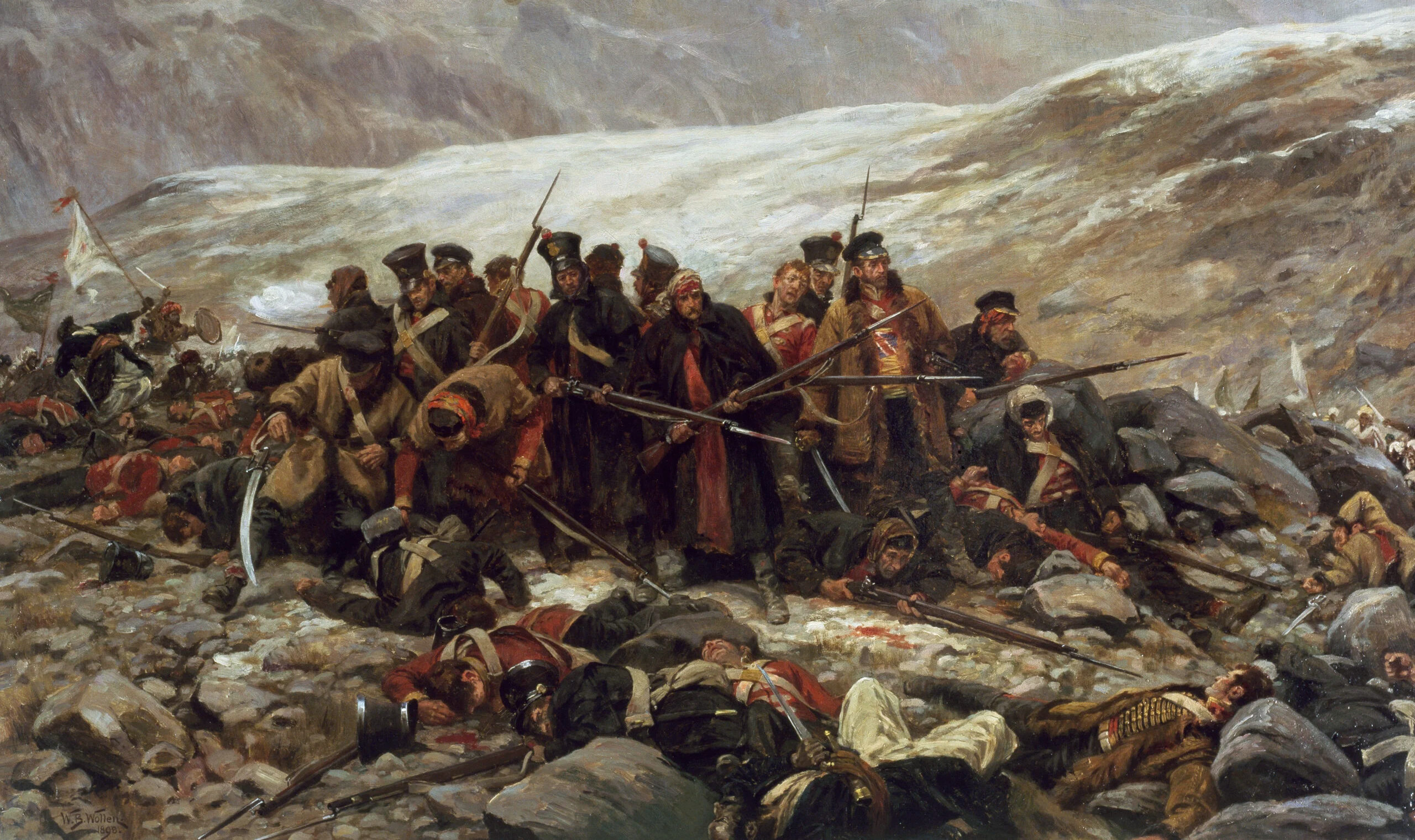
The_Last_Stand,_by_William_Barnes_Wollen_(1898)

Big change in the military is typically framed as a “revolution” or “transformation” and is almost always about “innovating” and “adapting” to new technology. Yet the most important—and most worrisome—form of change is usually not driven by technology. 

Simply, it is the loss of military effectiveness, often coming as a rapid-onset decline. Armed forces that have reached “peak war” status in victorious and decisive battle can—and do—quickly lose their combat edge. An extreme example is the U.S. Army during the American Civil War. In 1865, it was the greatest army on earth. Within months it was demobilized, its expertise gone.

Of course, some of this is natural. Long-service legionary armies are drained by years of peace. Battle-scarred veterans age out and retire, and junior assault leaders rise at last to command an army of green young officers untested in combat. Next time they lose. This is the way of things.

Sometimes, when an adversary surprises with a hot new “wonder weapon,” technology can suddenly shift the goal posts of military effectiveness. Yet there are other, and arguably more likely, ways in which a “peak war” force can lose its edge, and fast. Here are four non-tech roads to rapid onset military decline, with historical examples that should feel familiar. So too should the danger, which lies in an unravelling that goes unnoticed or denied, and thus unaddressed, until it is too late to remedy.

First, the unexpected rise or resurgence of a rival power can dramatically shift the terms of military effectiveness. This is a relative shift, but it is very real. In 1860 the French Army, by reputation, was the world’s best. In the preceding five years it had defeated both the second- and third-ranked armies in open battle. Yet just six years later, the esteemed Austrian army was blasted by a new nation—the German Confederation—which had no legacy military reputation at all. Rather than triggering wholesale, top-to-bottom Armée reform and a national mobilization, however, France’s superb but way too small all-volunteer force turned instead to “game changer” technology like the mighty Mitrailleuse. When the reckoning came for France just four years later, defeat was not merely complete; it was shameful.

Second, there is the habit-forming lure of fighting lesser militaries. In the last two decades of the 19th century (1878–1899), Britain’s army and navy fought Ashanti, Zulu, Afghans, Egyptians, Sudanese (twice), and faced down the armies of the Tsar with ironclads alone—and everywhere, every time, victory was theirs. Yet these were “little wars” against outclassed, tribal fighters. When, however, the British Army ran into the Afrikaners, the “very model of a modern Major General” was shockingly, and repeatedly, humiliated—names like Majuba, Stormberg, Magersfontein, and Colenso shook the Empire. The British Crown needed 10 times the troops—gathered from across the world empire—to at last defeat the Boer Commandos. Yet only eight years after its victory in the Second Boer War, Parliament handed the whole of South Africa over to the former enemy, with the face-saving consolation that it became a British Dominion. Worse was to come, in World War I.

Third, there is the temptation to live inside “peak war” legend. The 18th century’s God of War, Frederick the Great, transformed Prussia—by force of will—from just another Holy Roman principality to a full-fledged European Great Power, on par with Britain, France, Austria, and Russia. His battle record begged comparison to the war-deities of antiquity: Marius, Scipio, and Caesar. Frederick’s army,  assiduously crafted, molded its collective mind to his vision of war. Long after his passing, Soldaten and Generalen alike saw themselves as anointed. A celestial baton had been passed on, forever. Enter Napoleon. The Prussian General Staff had a whole decade to watch the new way of war that Napoleon had wrought. As it turned out, the smug Prussians were not the spiritual progeny of Friedrich der Große after all. Their army was crumpled in just one day at Jena–Auerstedt. Eleven days later, Bonaparte rode in triumph through Berlin.

Fourth, there is the army hollowed out by agendas at home. Here, America is our historical exemplar of rapid onset decline. We call it the Vietnam War. In 1965, the U.S. delivered into hot battle perhaps the best army America ever sent to war. Contrary to common lore, only one-in-eight was a draftee. The Korean war was just 12 years in the historical rearview, and World War II only 20. Yet just seven years later, the U.S. Army was broken. Why? If you send millions of men into battle, with no touchstone mission and no measure of victory, all sacrifice will be in vain, and deadly demoralization will follow. Added to this, like a proverbial “stab in the back”: the very ruling elite that sent this army into battle turned around and betrayed it. America’s soldiers were fingered for the horror-failure of a misbegotten war, while the “best and the brightest” who made it happen were spared the reckoning they deserved.

So, has the U.S. military today lost its military effectiveness, and how should it be appraised in light of these four historical scenarios of military decline?

As for scenario one, the rapid and unexpected rise of a rival: That is easy. The People’s Liberation Army Navy of China came out of nowhere in little more than a decade to surpass a once-peerless U.S. Navy. Moreover, its entire power is concentrated where it counts, while the USN is spread thin everywhere. When Beijing made its bid to become a world-class naval power after 2012, Washington just kept plodding along on the high seas. It still plods along today, only more so.

As for Russia, America’s foreign policy elites have long assumed it could be swatted away like a mosquito. In 2014 it was simply “a gas station with nukes.” In 2022, they declared it was doomed to collapse, taking down the dictator Putin and his loathsome regime. For the past three-and-a-half years—as a stoic Russia mobilized to win its war in Ukraine—our sneering contempt remained unmoved. NATO narcissism and denial, and its unshakeable faith in “game changer” weapons, has brought the U.S.-led West to the brink of shameful defeat.

What of scenario two, glorying in beating chump fighters? In America’s case, there was little glory to be had. Twenty years of feckless “small wars,” “irregular conflict,” and “counterinsurgency”—during which several millions of people were killed—garnered no victory and sometimes brought humiliating defeat. Recall also that in 1878 six clunky British ironclads faced down a Russian army at the gates of Constantinople. By contrast, U.S. Navy “super carriers,” missile cruisers, fighter jets, and drones failed to dent or deter the determination of Yemen’s “primitive” Houthi tribesmen this year.

As for scenario three, living large on past military victory against a regional power, America’s military emerged from its “100-Hour War” in the early 1990s against the evil-mustachioed Saddam as Gods of War incarnate: a state of transcendence that U.S. elites convinced themselves would attain for all time. For a decade after 1991, the soldiering world feasted on its Olympian perch, assured by talk of the “end of history” that their tenure was immortal. Military doctrines like “Rapid Decisive Operations” and “Effects Based Operations”—and the attendant presumption that anything could be done by the U.S.—were the orthodoxies of the day. As with all orthodoxies, truth was anathema, and reality soon harshly reasserted itself. The Iraq War that George W. Bush launched in 2003 was like a slow train wreck, exposing these delusions of godhood. Yet they were still, stubbornly believed.

Scenario four, the hollowing-out at home, unfolded throughout the armed forces after 2009 and ramped up after 2020. Ruling (Blue) elites declared a transformation of American life that went by the name“woke.” Moreover, their wider agenda needed a “Vanguard Party” that through federal law would drive a military metamorphosis, which in turn would become the tip of the spear for radical change nationwide.

The prime directive of all fighting forces—to win wars—was ditched by Blue regimes that put their urgent social agenda above the defense of the nation. How did this affect U.S. military effectiveness? First, recruitment plummeted, as stoic men from America’s heartland were increasingly alienated from a military that seemed to prize racial and gender diversity over effectiveness in combat.

Add to this a hard push to normalize and publicly privilege LGBTQ+ demands, and replacing merit with quota, and a military crash-and-burn is not hard to imagine. The Trump administration has, thankfully, put a stop to much of the madness. A post-2024 Blue Defense policy trajectory would have deep-fried US military effectiveness in a decade. Still, social engineering in America’s armed forces has had deleterious consequences.

The senior military command deserves blame for America’s march down the first three roads to rapid decay. However harsh, such corrosion is their responsibility. Only root-and-branch reform will staunch the bleeding quickened by their cupidity, corruption, vanity, and hubris. 

Responsibility for the fourth, and darkest, road to decline, however, lies with civilian leadership. When elected officials and their political appointees abandon soldiers for whatever banner slogans promise political power, this betrayal becomes the force multiplier of rapid-onset decline. Such political malpractice creates an open wound, sapping the soldier’s very will to fight, sacrifice, and endure privation. 

Do America’s political and military leaders have the will and competence to correct course? Perhaps, but only in the next war, when it will be too late. After that, they will end up as a sad footnote of history, and the military they misled, once the envy of the world, will be seen as the very model of a fighting force that—eyes wide shut—marched blindly to tragic decline and fall.

The post America’s Military Is in Big Trouble appeared first on The American Conservative.

Trump Administration Greenlights Chevron’s Venezuela Oil Drilling

Trump Administration Greenlights Chevron’s Venezuela Oil Drilling

The decision follows negotiations that led to the release of 10 American prisoners in the county.

Oil,Pump,Rig.,Oil,And,Gas,Production.,Oilfield,Site.,Pump

Credit: ded pixto/Shutterstock

Chevron will resume its oil extraction operations in Venezuelan territorial waters, according to a report published by the Wall Street Journal Thursday. The decision by the Trump administration is a step towards a more conciliatory policy with the Maduro government, and follows shortly after an arrangement was reached to free 10 American prisoners in exchange for the release of 250 Venezuelan nationals being held in the CECOT prison in El Salvador.

The proper diplomatic posture towards Venezuela has been a matter of fierce debate within the administration since the beginning of President Donald Trump’s second term. During his first four years in office, Trump pursued a “maximum pressure” campaign against the authoritarian Maduro government, placing harsh sanctions on the country in 2019 after a disputed election resulted in the U.S. recognizing Juan Guaidó as legitimate president of Venezuela. Since his inauguration in January, however, the Trump administration has vacillated between the high-pressure approach of the president’s first term and a more conciliatory approach.

The debate over Chevron’s drilling activities in Venezuelan territories already featured in that debate, and at the time it appeared that the issue had been definitively settled in favor of a confrontational posture towards Maduro. The approaching expiration date of Chevron’s license resulted in an open breach within the administration in mid-May: Special Envoy Ric Grenell, who had just negotiated a prisoner release, told Steve Bannon on air that the license would be renewed; in response, Secretary of State Marco Rubio posted on X that the license would expire as planned. Rubio’s position was supported by Latin America hawks in Congress, including representatives Mario Díaz-Balart (R-FL), María Elvira Salazar (R-FL), and Carlos Giménez (R-FL). Grenell was supported by a number of MAGA populist insiders, including Bannon and Laura Loomer, who argued that Chevron’s withdrawal would effectively hand over the Venezuelan oil fields to China.

At the time, Rubio and the hawks carried the day, and a new license was drawn up that allowed Chevron only the bare minimum of maintaining its existing infrastructure. Further drilling looked to be off the table. But with a new agreement in the process of being drawn up, it seems that Grenell’s party may have achieved victory for the long-term.

While the details of the new license have not been revealed, and may not yet have been determined, sources say that the agreement will not allow the Maduro government to profit from any oil extracted during the operations. This, however, is without doubt a legal and economic fiction. The Venezuelan government has no incentive to allow Chevron to use their oilfields without profiting from the partnership. The workarounds—in-kind swaps of oil for goods have been mentioned—will accomplish much the same result, furnishing the government with imports of cash value equal to the worth of extracted oil and allowing them to use the money that would have been allocated to those purchases for other purposes.

There are a number of benefits that the Trump administration may hope to gain by cultivating a working relationship with the Maduro government. The continued acceptance of deportation flights is a significant one, given the large number of Venezuelan illegal immigrants in the U.S. Additionally, the Trump administration may hope to reduce Chinese influence in Latin America through cooperation with Maduro. But the continued effectiveness of such a relationship remains a major question. Maduro may be willing to take advantage of opportunities offered by the U.S. from time to time, but he is well aware that his continued leadership of Venezuela is contrary to American interests in Latin America. He certainly has not forgotten American support for would-be deposers Juan Guaidó and Edmundo González. Whatever cooperation the U.S. can achieve with Maduro will be only on grounds he finds immediately beneficial, and there can be no doubt that he will not hesitate to injure American interests in the future if he finds it to his advantage.

For now, however, the Trump administration believes they have a winning hand. The release of American prisoners and continued acceptance of deportation flights are proof that diplomatic engagement with the Venezuelan government can achieve concrete policy goals. The resumption of Venezuelan drilling by Chevron promises to lower American gas prices and boost American industry by increasing the supply of oil to Gulf Coast refineries. At a time when the administration’s diplomacy abroad has suffered repeated setbacks, even small victories close to home could prove politically precious.

The post Trump Administration Greenlights Chevron’s Venezuela Oil Drilling appeared first on The American Conservative.

Mollie Hemingway: Media Not Reporting New Russiagate Developments Because ‘They Were Complicit’ in Original Crime (VIDEO)

Screencap from Twitter/X video.

Mollie Hemingway of The Federalist recently appeared on FOX News and suggested that the liberal media is not reporting the explosive new details about the Russia collusion hoax because they were ‘complicit’ in the original crime in 2016.

This is exactly right.

During Trump’s first term, liberal outlets would eagerly repeat any detail that was leaked to them no matter how outrageous the claims. Now that Tulsi Gabbard is revealing details that directly implicate former President Obama and others, the same outlets are strangely uninterested. It’s so clear what is going on here.

Transcript via Real Clear Politics:

MOLLIE HEMINGWAY, THE FEDERALIST: What happened, when you go back to 2016, is the Obama administration hid intelligence showing that Russia’s meddling in the 2016 election was no big deal. They suppressed that because they didn’t want Donald Trump to know about it. Then they immediately began leaking to the Washington Post and to the New York Times false things, things that weren’t true, the opposite, that Russia had conspired with Trump to steal the election.

And the Washington Post and New York Times, when they were asked to publish these things that were not true, they just went ahead and did it. They took the word of John Brennan and other sources like that who had made these false claims. Then the Obama administration manufactures a completely fake intelligence assessment, again with this claim that Russia had conspired with Trump to steal the election.

And they leaked that to the media as well. Well, when they were receiving these leaks, the media did whatever these people wanted. They pushed this absolutely delusional conspiracy theory for years.

And now that we know that, and it was a fake story. Now that we know the real story, and the real story is shocking, the Obama administration suppressed real intelligence and then they manufactured fake intelligence for the purpose of undermining a legitimately elected administration. The media are hiding it.

And why? Because they were complicit in the crimes that were committed.

See the video below:

The vast majority of the American media functions as nothing more than an arm of the Democrat party and it has never been more obvious.

The post Mollie Hemingway: Media Not Reporting New Russiagate Developments Because ‘They Were Complicit’ in Original Crime (VIDEO) appeared first on The Gateway Pundit.

Colbert Sees Viewership Surge After Cancelation News But STILL Getting Clobbered in Ratings by Greg Gutfeld

This. Is. Hilarious.

After news broke that The Late Show with Stephen Colbert is being canceled, the show experienced a surge in viewership, yet he is still being beaten in the ratings by Greg Gutfeld.

People on the left, including members of congress, are pushing a conspiracy theory that Colbert was canceled for political reasons because he is so critical of President Trump. The truth is that The Late Show has been losing upwards of $40 million a year for CBS.

Even with all the attention Colbert has received recently, he still can’t catch Gutfeld in ratings.

Mediaite reports:

Colbert’s Ratings Spike After Cancellation News But Fox’s Gutfeld Leaves Him in the Dust with Major Gains

Fox News host Greg Gutfeld continues to post stellar ratings, even topping Stephen Colbert who saw a significant bump after news of his show’s cancellation.

Colbert’s Late Show enjoyed a bump to 2.4 million viewers just days after it was announced the show would be ending in the coming months. For the year thus far, Colbert has averaged around 1.9 million viewers, according to Nielsen data. In the coveted 25-54 demo, it’s averaged just under 300,000.

The bump is impressive, but Fox News’ Gutfeld! continues to dominate other late night programs. When Late Show drew 2.4 million viewers less than a week after news of its cancellation, Gutfeld drew 3.1 million viewers. For the year thus far, the show has averaged 3.1 million viewers and nearly 400,000 in the key demo. Since the announcement of Late Show’s cancellation, Gutfeld has posted 11% and 4% gains in overall viewers and the key demo.

Recent analysis has found that the guest list on Colbert’s show was basically a revolving door for Democrat politicians and left wing journalists.

It’s really not difficult to see why more people tune in to watch Gutfeld. His show is about laughs. Colbert was basically a boring left wing sermon, night after night. Who wants to watch that?

The post Colbert Sees Viewership Surge After Cancelation News But STILL Getting Clobbered in Ratings by Greg Gutfeld appeared first on The Gateway Pundit.