Marty Supreme Lives Up to the Hype 

Marty Supreme Lives Up to the Hype 

Timothée Chalamet proves why he’s already one of the greats.
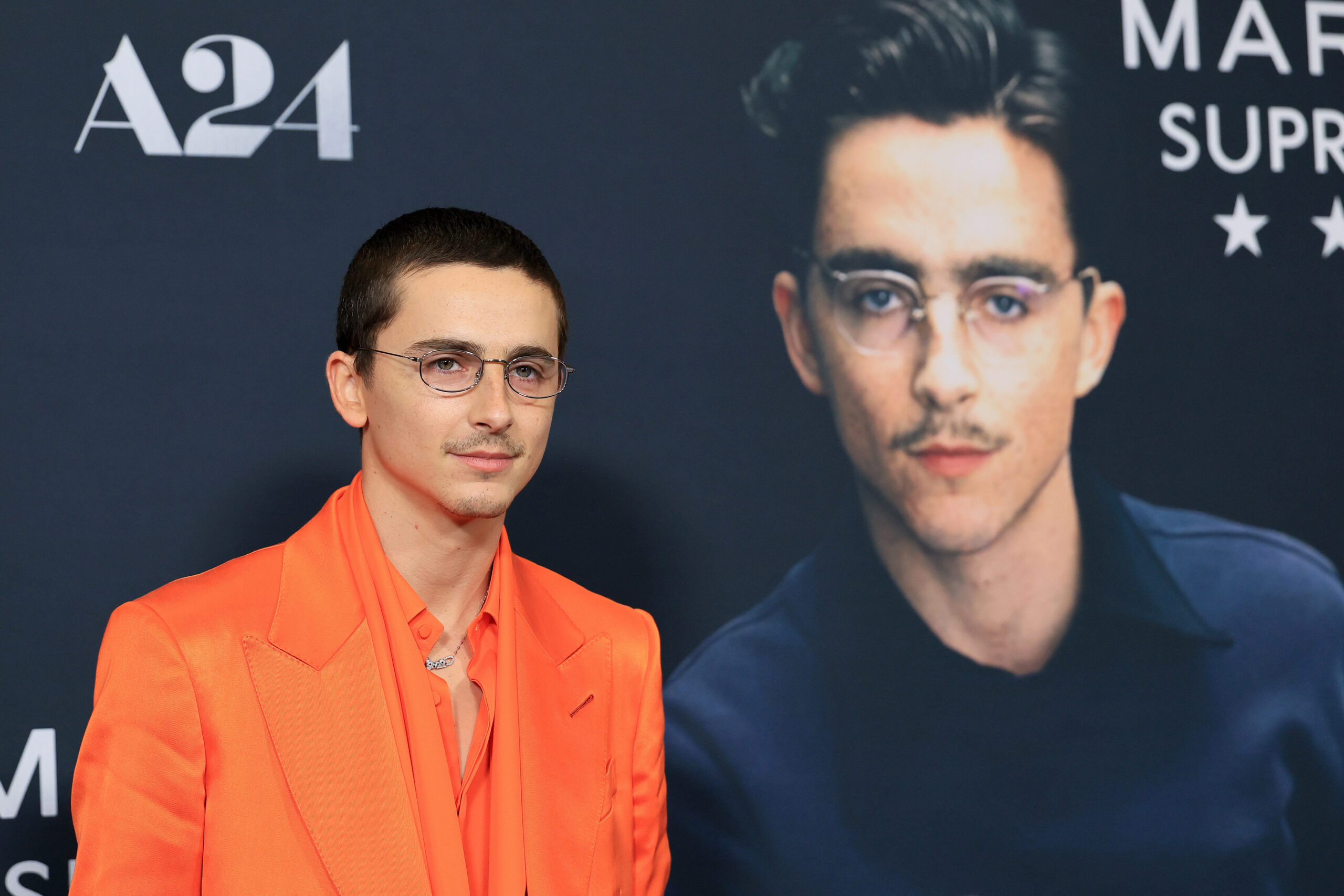
A24's "Marty Supreme" New York Premiere

Marty Supreme is not a film about ping pong. Technically, it’s a film about table tennis. But at its core, Supreme is really a film about a young kid with dreams. Big dreams. The type of dreams so big that to even utter them aloud yields resentment. 

Lead actor and producer of the film, Timothée Chalamet, delivers the sterling, knockout performance of his young career thus far. Chalamet, who rose to the task as the Lisan al-Gaib in the sci-fi film Dune and worked tirelessly to recreate Bob Dylan in the biopic A Complete Unknown, here plays the protagonist Marty Mauser.

Set in New York City in the 1950s, Supreme is the story of Mauser, a shoe salesman whose singular goal in life is to become the first American table tennis champion of the world and to enjoy himself along the way. Living at home with his mother in a run-down apartment building, he impregnates a childhood friend who is desperate to attach herself to Mauser’s dreams of a better life. But Mauser is no father figure, and his cunning, conniving ways lead him across the oceans in pursuit of his ultimate goal: infamy. 

Gwyneth Paltrow plays support as an aging theater actress whose loveless marriage to an ink pen tycoon, brilliantly played by that Kevin O’Leary, leads her to be swept away by the cagey and confident Mauser. Paltrow is fantastic in the role and her luminous beauty, even at 53, shines across each and every frame. In the defining role of her late career, Paltrow stuns in strapless gowns and layered tweed attire as she and the decades-younger Chalamet find an improbable but highly charged sensual energy in every scene shared together.

The market for interesting and original American films is small these days. In the age of high-fidelity, on-demand streaming services, the movie-going experience that defined the latter half of the 20th century and created a subculture of buzzy, significant indie films has waned. But 2025 has seen a smattering of strong American efforts, from P.T. Anderson’s One Battle After Another to Ari Aster’s Eddington. And Supreme takes its place among the very best of them.

Costume designer Miyako Bellizzi is operating at her full capacity here, dressing each star in vintage attire befitting the times. Chalamet’s pleated high-waisted trousers and double-breasted suits help make the 30-year-old actor look mature and sophisticated despite his youth. The costuming alone is reason enough to see the film, and I expect Bellizzi to be a favorite to win this year’s top prize for attire at the Oscars. 

Legendary production designer Jack Fisk, best known for his fruitful relationship with American auteurs Terrence Malick, David Lynch, and P.T. Anderson, turns in another exemplary entry in a career defined by creating iconic and sublime visual styles for America’s great visual masters. For Supreme, the 80-year-old Fisk was in charge of decorating soundstages and creating elaborate sets from New York City to Japan. Thanks to his meticulous work, the film looks immaculate. Heavy blacks, saturated blues, and luminous creams make the New York City of old come alive again. 

The director, Josh Safdie, is one half of the brother team that created Uncut Gems and Good Time, two masterpieces of new American cinema that have made the pair the darlings of indie filmmaking. Josh’s brother Benny debuted his own first feature this October, the Smashing Machine, an Oscar vehicle for Dwayne “The Rock” Johnson. By my estimation, the film failed to live up to its months-long hype and suggested the pair might be at their very best when working together. But the wild success of Supreme, which is earning rave reviews across the industry, proves Josh can hold his own.

Perhaps the most enthralling aspect of the film, however, is owed to the genre-bending work of musician Daniel Lopatin, the electronic music pioneer better known by his stage name Oneohtrix Point Never. Using mostly synthesizers, Lopatin’s hazy soundtrack is a lush mix of psychedelic, ambient, and austere techno tones that similarly helped create the otherworldly atmosphere that paced and made Uncut Gems one of the most inspired American films of all time. Here, Lopatin does the same, mismatching the electronic aura of the new age with the brilliant costuming and architecture of the old world. It shouldn’t work, but it does, and it adds a level of uniqueness not often found in big-budget affairs. 

With the release of Supreme over Christmas week, A24, the American film studio best known for producing buzzy, creative films by up-and-coming directors, earned its biggest box office opening since its founding 13 years ago in New York City. The film has also become the third-biggest Christmas Day opening of all time for an R-rated film.

The hype surrounding the film is mostly owed to Chalamet, who has openly stated his desire to be considered one of the great actors of all time. He embarked on a whirlwind media tour in support of the film, popping up at a screening of the film, in character during a rap video with up-and-coming Liverpool artist EsDeeKid, and even atop the Sphere in Las Vegas. His exhilarating performance and unyielding promotion of Supreme as “an American film” proves he is at the very top of new talents in the film world.Clocking in at a nearly three-hour runtime, Supreme is a film that could easily find lapses in momentum but never loses its audience. The rapid, machine-gun style editing is fitting for a kid on the run, and I never once lost interest in the plot. I can’t say enough about Chalamet. He is a revelation here. If he hadn’t already proved himself one of the greats of the modern age, he’s done it with this film. See it in theaters.

The post Marty Supreme Lives Up to the Hype  appeared first on The American Conservative.
The Nations Countering Israeli Influence Over Trump’s Gaza Policy

The Nations Countering Israeli Influence Over Trump’s Gaza Policy

For now, the interests of the Gulf states align with those of President Trump.

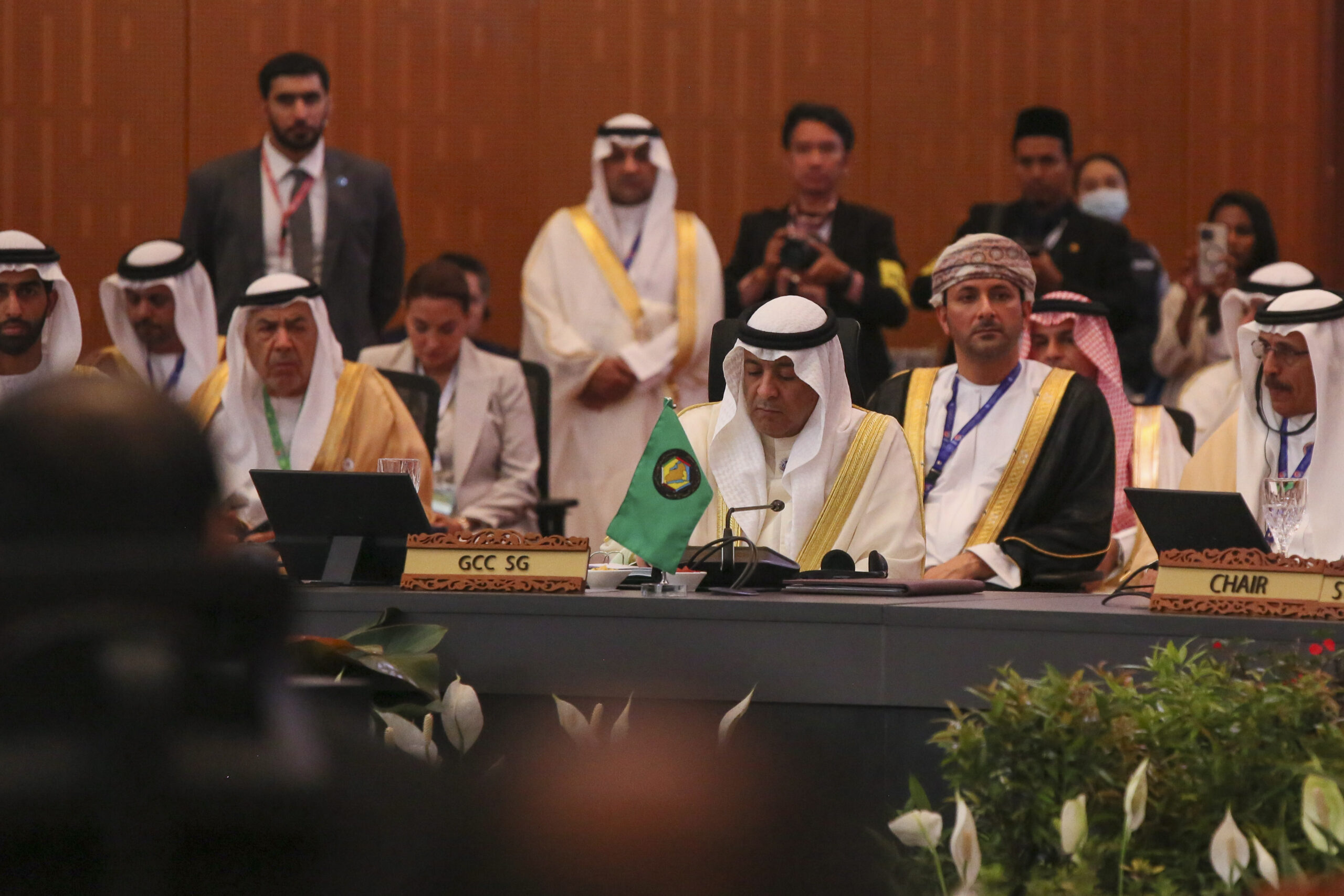
Secretary General of the Gulf Cooperation Council (GCC)

Implemented on October 10, 2025, the Gaza ceasefire remains in effect. It is, however, under considerable strain due to repeated Israeli violations that so far have killed at least 414 Palestinians but have at least stopped short of triggering a return to full-scale hostilities. Clearly, the “ceasefire” is a mere deescalation arrangement, though one that powerful actors in the region would like to strengthen into a real foundation for peace.

Persistent doubts regarding the truce’s durability have fostered a measure of alignment among the six Gulf Cooperation Council (GCC) members—Bahrain, Kuwait, Oman, Qatar, Saudi Arabia, and the United Arab Emirates (UAE)—with each urging the Trump administration to pressure Prime Minister Benjamin Netanyahu’s government to adhere to the ceasefire and to engage constructively in the subsequent phases of the 20-point peace initiative

Although the long-term viability of the ceasefire remains uncertain, Gulf leaders will likely seek to capitalize on their personal relationships with President Donald Trump and their ability to operate within the transactional mode of diplomacy that he favors. They hope to coax him into pressuring Israel not to sabotage the current ceasefire, as it did in March 2025 by unilaterally ending the first ceasefire negotiated by Trump’s team just prior to his inauguration in January.

or GCC members, Israel’s war on Gaza has posed a complex set of strategic and political challenges. The Gulf states remain dependent on Washington as their principal security guarantor. At the same time, they are acutely aware of public sentiment at home and across the wider Arab world, where solidarity with Palestinians and anger toward Israel and the United States have surged since the war began in October 2023. These competing political pressures have forced Gulf leaders to navigate a series of delicate balancing acts. 

Moreover, the Gaza conflict’s spillover into the Red Sea, coupled with the 12-day Israel–Iran war in June, underscored the extent to which Israeli military actions have contributed to broader regional instability, heightening the GCC members’ sense of vulnerability. Against this backdrop, Oman’s foreign minister remarked at the Manama Dialogue conference this November that, from the perspective of the Gulf monarchies, Israel, not Iran, has long been regarded as a primary source of regional unrest and insecurity. Such threat perceptions of Israel have heightened after the country carried out an unprecedented military strike against Doha in September, bringing Israel’s borderless aggression into the GCC for the first time.

That strike, and the increasing tensions more broadly, have created a political challenge for Trump, who supports strong ties with both Israel and the GCC. The latter nations hold at least one key advantage over Israel when dealing diplomatically with the U.S. president: He has sought to cultivate an image as a “peacemaker” and “dealmaker” intent on resolving conflicts inherited from his predecessor. Central to this effort is his aspiration to be remembered as the American leader who ended the Gaza war. 

Within this context, Gulf leaders—most notably, Qatar’s Emir Tamim bin Hamad Al Thani, Saudi Arabia’s Crown Prince Mohammed bin Salman, and the UAE’s President Mohammed bin Zayed—have recognized an opportunity to influence Washington’s regional approach. The success of MbS, alongside Turkish president Recep Tayyip Erdogan, in persuading the Trump administration to lift sanctions on Syria in May 2025 underscored the ability of Gulf leaders to influence U.S. policy. That intervention ran counter to the goals of Israel and America’s pro-Israel lobby while advancing the Gulf states’ strategic interests. Trump’s purported determination to help resolve the nearly three-year conflict in Sudan also resulted from a persuasion campaign by MbS this November and speaks to these same dynamics.

On the question of Gaza and other regional issues, the GCC states and Israel, together with their respective advocates in Washington, are likely to continue exerting competing pressures on the Trump administration, with the two factions steering U.S. policy in divergent directions. This marks a contrast from 2017–2018, when Saudi Arabia, the UAE, Bahrain, and Israel were largely on the same page when it came to lobbying the first Trump administration to impose “maximum pressure” on Iran. Back then, Gulf Arab–Israeli alignment against Iran was, to a notable degree, reshaping important aspects of the Middle East’s geopolitical order. In the current period, while Israel continues pursuing its maximalist aims in its grander quest to further degrade what remains of the Iran-led “Axis of Resistance,” the GCC members are prioritizing regional stability in the interest of advancing their own ambitious visions for economic development and diversification. Thus, the Gulf states welcome détente with Tehran even as they remain suspicious of Iranian intentions in the Arab world.

As Trump faces mounting domestic calls to condition American support for Israel and to avoid deeper entanglement in protracted Middle Eastern conflicts, GCC members perceive an expanding opportunity to position themselves as Washington’s most pragmatic and capable partners in advancing U.S. interests across the region. This effort aligns with Trump’s core objectives of fostering economic growth at home, promoting stability in key conflict zones abroad, and maintaining U.S. competitiveness in emerging technologies such as artificial intelligence.

For now, the GCC states are aligning themselves with Trump’s 20-point Gaza peace initiative. The plan gained further international backing, and with that greater legitimacy, once the UN Security Council adopted Resolution 2803 in November.

The fact that Qatar, Saudi Arabia, and the UAE—joined by other major players in the Arab-Islamic world, including Egypt, Indonesia, Jordan, Pakistan, and Turkey—endorsed the U.S. draft through a formal joint statement, reaffirming the support they had signaled during their meeting with Trump on the sidelines of this year’s UN General Assembly in New York, proved instrumental in advancing the resolution through a divided Council and persuading several hesitant members to support the text. Russia, rather than casting a veto, ultimately abstained, reflecting Moscow’s desire to avoid alienating its Arab-Muslim partners.

The resolution’s reference to a “credible pathway towards Palestinian self-determination and statehood,” and its insistence that responsibility for day-to-day governance in the nearly devastated enclave be entrusted to a purely Palestinian technocratic body, rather than one comprising non-Palestinian experts as envisioned in the White House plan, clearly reflect the influence of the Arab-Muslim states.

Ultimately, GCC states regard Trump’s Gaza initiative as burdened by significant shortcomings. Still, there is a broad recognition in the Gulf that the ceasefire, which was secured through sustained U.S. pressure on Israel, has dramatically reduced the scale of death and destruction in Gaza. In this sense, the prevailing attitude among GCC members might best be described as one of pragmatic acceptance: taking what can be gained, even from a flawed arrangement. 

This shared view among Gulf leaders was reinforced at the 46th GCC summit, held in Manama earlier this month, where Bahrain’s King Hamad bin Isa Al Khalifa called for Trump’s plan to be fully implemented and described it as “a positive step toward reducing escalation.” A few days later, speaking at the Doha Forum, Qatari Prime Minister-cum-Foreign Minister Mohammed bin Abdulrahman Al Thani pushed back against claims that a ceasefire is even in effect in Gaza, arguing that such a designation would require Israel’s complete withdrawal from the enclave. “What we have just done is a pause,” he told attendees. Doha’s top diplomat further emphasized that “it’s not enough” to address Gaza alone without confronting the “root” causes of the conflict and guaranteeing rights for Palestinians, not just in the Strip but also in the West Bank.

Looking ahead, the Gulf states are likely to encourage the Trump administration to intensify pressure on Israel, with the second phase of the ceasefire set to begin in the first two weeks of 2026. Their goal is not only to preserve the fragile ceasefire in Gaza but also to convince Washington to use its considerable leverage to pressure Israel into a full withdrawal from Gaza while preventing ethnic cleansing in the West Bank. They also want Washington to restrain Israeli military operations elsewhere in the region, including in Lebanon, Syria, Yemen, Iran, and, above all, the Gulf itself. In pursuing this objective, the Gulf monarchies will likely seek to deepen their coordination with China, Europe, and Russia to broaden international support for their position.

By maintaining tight Gulf unity, leveraging their unique access to Trump, and meaningfully engaging various global powers, the GCC members seek not only to prevent a descent back into catastrophic violence in Gaza, but also to steer Washington toward a more sustainable strategy in the broader region. Whether this moment of tentative alignment between Gulf interests and the Trump administration’s political incentives can be translated into real peace in Gaza—let alone lasting stability in the Middle East—remains highly uncertain. 

At least for now, however, the Gulf states appear determined to seize narrow diplomatic openings to shape, rather than merely react to, Trump’s approach to the region.

The post The Nations Countering Israeli Influence Over Trump’s Gaza Policy appeared first on The American Conservative.

How Trump Can Push Europe to Secure Ukraine

How Trump Can Push Europe to Secure Ukraine

Kiev should become a one-of-a-kind member of the European Union.

European Leaders Join Ukrainian President Zelensky For White House Meeting With Trump

First, the good news: President Donald Trump, just before a Sunday meeting with Ukraine’s President Volodymyr Zelensky in Florida, said that peace talks to resolve Russia’s war in Ukraine are in the “final stages.”

The bad news? In context that quote turns out not to be good news. Standing next to Zelensky, the U.S. president told reporters,

We’re in final stages of talking and we’re going to see. Otherwise, it [the war] is going to go on for a long time. It’ll either end, or it’s going to go on for a long time, and millions of additional people are gonna be killed. Millions. And nobody wants that.

Sounds bad.

During a joint press conference that followed their behind-closed-doors meeting, the two presidents sounded notes of optimism, but signs of tangible progress were scarce, and Trump alluded to unnamed “thorny issues.” 

Perhaps the thorniest of all: the issue of security guarantees. Both Ukraine and Russia, before making a deal, want some assurance that the other won’t treat peace as a mere pause in fighting and then restart the war at an opportune moment. As always in the high-stakes game of international politics, no leader wants to be a sucker, and every state tends toward paranoia about its security.

One big reason this issue has proved so thorny is that measures which would enhance Ukraine’s security would seem to diminish Russia’s, and vice versa. Zelensky wants to join NATO, the Western military alliance, but that’s a nonstarter for the Kremlin. Moscow wants to “demilitarize” Ukraine, but that would leave Ukraine defenseless against its larger neighbor. (Though this Russian war aim seems to allow some wiggle room, and foreign policy analysts have outlined the kind and quantity of indigenous military capabilities that would enable Ukraine to deter, but not threaten, Russia.)

Now, some actual good news: There’s a creative way out of this impasse. Moscow has indicated it would permit Kiev to join the European Union. And the EU has a mutual defense arrangement that would amount to a long-term security guarantee for Ukraine if it joins the Union.

This guarantee would be credible. The relevant clause of the EU treaty doesn’t actually require signatories, when one member is attacked, to fight a war on its behalf, but instead to render it assistance. After Putin’s limited invasion of Ukraine in 2014 and its full-scale invasion in 2022, European nations demonstrated their unwillingness to fight Russia over Ukraine, but they’ve certainly provided a great deal of military assistance.

Ukrainian accession to the EU would solve other problems as well. It would serve as an alternative to unattainable NATO membership, allowing Kiev to join the West—an aspiration of most Ukrainians—and Zelensky to say that the war hadn’t been in vain. And since EU membership entails an obligation to respect minority rights, Moscow would gain some assurance that Ukraine’s ethnic Russians would be protected.

Unfortunately, a major roadblock hinders Ukraine’s path to the EU: Members are wary about admitting Kiev, in part because its huge wheat and grain exports would threaten their own farmers. And even if they greenlighted its accession, the process to join would take several years, perhaps a decade or longer. But to make peace, Ukraine needs security guarantees now, not a promise of guarantees in 2035.

Here’s where some creativity is needed. The EU could incorporate Ukraine into its mutual defense arrangement tout de suite while outlining a years-long path to its full economic and political membership.

Call it the “reverse Ireland.” The EU’s mutual defense clause includes this important qualifier that, in effect, allows members to opt out of the policy: “it does not affect the neutrality of certain Member States.” Ireland, most famously, invokes this qualifier to maintain its neutrality, as have a few other states including Austria. 

Ukraine could do the opposite, opting into the benefits and obligations of mutual defense while forgoing other features of EU membership during a transition period. This arrangement would be unusual, even sui generis. But desperate times call for desperate measures, and since World War II, few times, if any, have been more desperate for Europe and Ukraine than this one. 

European leaders have repeatedly pledged to give Ukraine security guarantees and to support Ukraine’s accession into the EU. With peace talks apparently moving into the end game, its put-up-or-shut-up time.

Washington should nudge Europe’s pro-Ukraine capitals toward this creative solution, and it should lean on those EU members, notably Hungary, who most resist Ukrainian membership. The Trump administration has prioritized military retrenchment from Europe, which requires that European nations take more responsibility for security on their continent. A “reverse Ireland” for Ukraine would help accomplish this top foreign policy goal of the White House.

Putin, facing the prospect of Ukraine’s imminent participation in the EU’s defense framework, likely would raise objections. But the Trump administration has done a good job of repairing U.S.–Russia ties and building mutual trust. Through careful diplomacy and credible pledges to shut NATO’s door to Ukraine in exchange, the White House, I suspect, could induce the Kremlin to sign off on the scheme.

Zelensky, for his part, would regard the solution as inferior to security guarantees provided by the U.S., the world’s leading superpower. Indeed, Zelensky is now complaining that even the security guarantees which Trump is evidently offering Ukraine are insufficient, since they would last for “only” 15 years. “I told [Trump] we would really like to consider the possibility of a 30, 40, 50 year [guarantee],” Zelensky revealed after the Sunday meeting.

Zelensky’s presumptuous demands, if honored, could doom negotiations. Strong American security guarantees for Ukraine wouldn’t be credible, and they’d cause serious political and geopolitical headaches for the Trump administration. Moscow might continue the war to prevent a military partnership between the U.S. and Ukraine, and Trump’s MAGA supporters wouldn’t be happy if the U.S. entered yet another entangling alliance with a faraway nation. 

Trump should make clear to Zelensky, as he did in February, that Ukraine doesn’t “have the cards.” And he should insist that Europe, not America, take the lead in providing Ukraine security guarantees. A “reverse Ireland” for Ukraine might just be the best way for Europe to do so.

The post How Trump Can Push Europe to Secure Ukraine appeared first on The American Conservative.

U.K. Metropolitan Police to Require Officers to Declare Freemason Membership

Credit: Geograph Britain and Ireland

The United Kingdom’s Metropolitan Police Service (MPS) has introduced a new policy requiring its officers and staff members to declare whether they are Freemasons.

The MPS wrote in a statement on X, “There have been calls going back a number of years for the role of Freemasonry in policing to be properly addressed, including as a recommendation in the report of the Daniel Morgan Independent Panel.”

“We strongly believe that failing to act on these calls would further damage trust not only among the public but also other officers and staff,” added the MPS.

In response to the new policy, the United Grand Lodge of England has sued the MPS.

The United Grand Lodge of England in a press release wrote, “In the light of the legal position, the failure of the Met consultation process, and in order to prevent damage to members, UGLE intends to seek a judicial review of the decision in the High Court and has sent a “letter before claim” to the Met outlining the action it intends to take.”

LOOK:

Per The Guardian:

Freemasons have demanded an emergency injunction from the high court to halt the Metropolitan police’s new policy that orders officers to tell their bosses if they are members of the organisation.

The Freemasons filed papers in London on Christmas Eve and claim the Met’s policy amounts to “religious discrimination” against Freemasons who are also police officers.

They say the Met commissioner, Sir Mark Rowley, “is making up the law on the hoof” and accused his force of “whipping up conspiracy theories” about the influence of Freemasons. The Met has vowed to fight back as it sees the policy as part of its fight to restore trust and credibility, and a case currently under investigation involves claims of masonic influence and alleged wrongdoing.

In December, the Met said anyone who was part or had been a member of a “hierarchical organisation that requires members to support and protect each other”, must declare it.

The MPS has faced pressure from the public for over three decades to require officers to disclose Freemasonry membership.

The pressure increased after the Daniel Morgan Independent Panel investigated the still unsolved 1987 murder of private investigator Daniel Morgan.

The Panel concluded that corruption within the Metropolitan Police Service, including hidden ties to organizations such as Freemasonry, could create conflicts of interest and compromise internal police investigations.

It further noted that “one detective involved was a Freemason who later went to work with a prime suspect, and that 10 police officers who were prominent in the Daniel Morgan murder investigations were Freemasons”.

The post U.K. Metropolitan Police to Require Officers to Declare Freemason Membership appeared first on The Gateway Pundit.

NY Times Editorial Board Member Has Possibly the Dumbest Take of All on Somali Fraud in Minnesota (VIDEO)

Screencap of Twitter/X video.

Mara Gay of the New York Times is a special kind of stupid. Whenever she is brought on to cable news to comment on an issue, you know you’re in for a hot take.

In this case, she was on Morning Joe, offering her opinion on the Somali fraud scandal that is still unfolding in Minnesota.

She suggested that this was the result of the ‘weaponization’ of government, which doesn’t even make any sense.

Transcript via Real Clear Politics:

JONATHAN LEMIRE: And, Mara, this is a story that’s really gained a lot of traction among conservative media members, among MAGA folks online, including members of the Trump administration. Vice President JD Vance was posting about it the other day. There’s a lot we don’t know here just yet, but it does give off at least a sense—and we’ll see where the facts take us—but at least we can safely say this: it seems like Republicans are eager to be talking about something else amid a lot of the bad news surrounding the president right now.

MARA GAY, NEW YORK TIMES COLUMNIST: Right. Well, sure. These were funds that were meant to help feed hungry people during the COVID pandemic, to help keep people in their homes who were at risk of homelessness. So, first of all, if there is fraud there, that should be fully investigated—no matter where it is, whether it’s in a Democratic-led state or a Republican-led state. Absolutely, it should be investigated.

The question is, why is this a priority in a different kind of way? The politicization of the DOJ and the FBI is undeniable. So whether they are reliable narrators is the big question. This is what happens when you weaponize and politicize federal agencies that are not meant to be politicized.

I think the American people are right to ask the question: can we trust you? And that’s a sad thing to say as an American.

Here’s the video:

It’s just amazing. People on the left can’t admit when something is indefensible. They also think no one remembers anything, even if it was recent.

The post NY Times Editorial Board Member Has Possibly the Dumbest Take of All on Somali Fraud in Minnesota (VIDEO) appeared first on The Gateway Pundit.

New Report Appears to Confirm Covenant School Shooter Audrey Hale Bought Guns With Student Loan Money

The Covenant School, Public domain, via Wikimedia Commons

If you needed another reason to dislike student loan programs, you’re in luck.

The FBI has just released more pages from the manifesto of Covenant School shooter Audrey Hale, which suggest that she bought the guns used in the 2023 shooting with money she had from a Pell Grant.

Hale’s parents suggested this two years ago and this report appears to confirm that.

The Tennessee Star reports:

Latest FBI Release of Covenant School Manifesto Files Appears to Confirm Trans-Identified Killer Bought Guns with Pell Grant Money

The FBI on Monday released another 230 manifesto pages written by Audrey Elizabeth Hale, the biological female who identified as a transgender man on March 27, 2023, when the 28-year-old killed six at the Covenant School in Nashville, the Christian elementary school she once attended.

This latest journal appears to have been written sometime in late 2021, and includes lengthy sections about the weapons the killer planned to use to commit a mass shooting at a school sometime that year.

Following multiple pages full of weapons to purchase, the journal includes a page labeled “Account Savings Record,” which appears to reference the Free Application for Federal Student Aid (FAFSA). It also records multiple payments received from Nossi during the period when Hale attended the Nossi College of Art and Design in Nashville.

“FASFA [sic] grant checks started at $2,050.86,” wrote Hale at the top of the entry.

The page then lists a series of apparent ledger entries, starting with, “$2,656.87 (x3 checks from Nossi).” The next ledger entry states, “+$530.00 (x1 check Nossi) ($3,186.87).”

This reference to Hale’s federal student aid, located in the writings next to her entries about guns she considered buying, appears to corroborate the claims made by her parents to Metro Nashville Police Department (MNPD) detectives in 2023, when they told law enforcement their child purchased the firearms using federal Pell Grant money.

She apparently hated religion too, but that seems pretty obvious, doesn’t it?

It’s impossible to know what kind of hatred makes a person do what she did, taking the lives of innocent children and adults. She was clearly possessed by rage. It’s a shame no one close to her noticed it before the shooting.

The post New Report Appears to Confirm Covenant School Shooter Audrey Hale Bought Guns With Student Loan Money appeared first on The Gateway Pundit.

WHAT COULD GO WRONG? New York Governor Kathy Hochul Backing Zohran Mamdani’s Plan for Universal Child Care

New York Governor delivers a speech at a press conference with officials, highlighting key issues and initiatives, with the state seal prominently displayed in the background.

New York Governor delivers a speech at a press conference with officials, highlighting key issues and initiatives, with the state seal prominently displayed in the background.
New York Gov. Kathy Hochul flanked by Democrat lawmakers as she announces support for so-called “medical aid in dying”

New York Governor Kathy Hochul is putting support behind Zohran Mamdani’s plans for universal child care in New York City. Talk about a bad sense of timing.

She is doing this as a fraud scandal is unfolding in Minnesota involving billions of dollars and daycare centers. It’s beyond tone deaf, given the enormity of the scandal.

What happens if people start looking into possible similar types of fraud in New York and find it? That could put a damper on Mamdani’s plans.

The New York Post reports:

Hochul throws weight behind Mamdani’s multi-billion dollar universal childcare plan — but doesn’t say who’s going to pay or how

Gov. Kathy Hochul said she’s bullish on Zohran Mamdani and strongly hinted that she plans to make a big splash in 2026 by pushing to enact a multi-billion dollar taxpayer-funded universal child care program — a priority for the incoming socialist mayor.

“I think he [Mamdani] is going to surprise a lot of people,” Democrat Hochul said Sunday on 77 WABC the “Cats Roundtable” radio program.

“Everybody — let’s give him a chance,” she said…

But Democrat Hochul, who is seeking re-election to a second four-year term next year, said “there’s an awful lot of alignment” between her and democratic socialist Mamdani — particularly citing universal child care.

“Affordability and driving down the cost of living in this great city,” she told host John Catsimatidis.

Hochul telegraphed that she’ll make state-funded universal child care a key part of her 2026 policy agenda, which she has discussed at length with Mamdani.

Mamdani proposed to pay for his $6 billion “no-cost” childcare for every New Yorker aged 6 weeks to 5 years by raising taxes on corporations and boosting incomes on the top 1% of income earners, generating an estimated $9 billion combined.

People can’t help but notice the similarity to what is happening in Minnesota.

Mamdani claims he is going to pay for this program by just taxing the rich a little more. We’ll see how that works out.

The post WHAT COULD GO WRONG? New York Governor Kathy Hochul Backing Zohran Mamdani’s Plan for Universal Child Care appeared first on The Gateway Pundit.

MSNBC’s Rebrand as MSNOW Has Not Helped Their Ratings – In Fact, They’re Going Down

MSNBC’s new name will be MSNOW – Screencap of Twitter/X video.

When MSNBC was forced to break away from MSNBC and rebrand as MSNOW, many people suggested that it would have a negative effect on their ratings, which already weren’t great.

The problem for MSNOW, other than their insane hosts and completely unhinged commentary, is that without the backing of MSNBC they lost their aura of legitimacy. It looks like they got cut loose – which they kind of did. It’s almost like they were too crazy for NBC News.

And of course, FOX News is still kicking their butts in the numbers.

This report from TV Insider is from last week, but the numbers haven’t changed since then:

Fox News Scores Record Ratings: See How CNN & MS NOW Compare

Fox News is ending the year on a high note, scoring its best ratings ever in a non-election year while giving primetime broadcast networks a run for their money.

According to Nielsen Media Research, released on Monday (December 15), Fox News averaged 2.72 million primetime viewers and 287,000 viewers in the key Adults 25-54 demo in 2025. This was up 14 per cent in total viewers and 18 per cent in the demo compared to 2024.

In comparison, MSNBC (now MS NOW) averaged 923,000 total viewers (down 25 per cent on 2024) and 81,000 demo viewers (down 39 per cent), and CNN averaged 580,000 total viewers (down 15 per cent) and 105,000 demo viewers (down 29 per cent).

The story was the same in total day viewership, with Fox News leading with 1.7 million viewers (up 18 per cent on 2024) and 185,000 demo viewers (down 1 per cent). CNN averaged 436,000 viewers (down 9 per cent) and 71,000 demo viewers (down 22 per cent), while MS NOW averaged 552,000 viewers (down 30 per cent) and 49,000 demo viewers (down 42 per cent).

Will they try to do anything different? Of course not. In fact, they’ll probably just double down on their Trump Derangement Syndrome.

It’s not difficult to understand why people are not tuning in to watch MSNOW, but if this trend continues into 2026 they may become MSGONE.

The post MSNBC’s Rebrand as MSNOW Has Not Helped Their Ratings – In Fact, They’re Going Down appeared first on The Gateway Pundit.

Pam Bondi Issues Damage-Control Statement After Explosive Backlash Over DOJ’s Alleged Failure to Act on Massive Minnesota Somali Fraud

President Donald Trump holds a press conference with Attorney General Pam Bondi and Deputy Attorney General Todd Blanche on Supreme Court Victory (White House).

After days of mounting outrage from conservatives and independent journalists, Pam Bondi issued what many are calling a damage-control statement in response to growing accusations that the DOJ allegedly sat on one of the largest fraud scandals in modern U.S. history, the billion-dollar Minnesota Somali fraud network that looted taxpayer-funded welfare, daycare, COVID, and Medicaid programs.

The statement came only after independent investigative reporter Nick Shirley exposed the staggering scope of the corruption, centered largely in Minnesota’s Somali nonprofit ecosystem, and after conservatives erupted over the apparent lack of urgency from federal authorities while hundreds of millions vanished.

In her statement, Bondi acknowledged the work of independent journalists and attempted to assure Americans that the United States Department of Justice has been quietly investigating the fraud for months.

According to Bondi:

  • 98 individuals have been charged
  • 85 are of Somali descent
  • More than 60 have already been convicted

She warned lawmakers that “more prosecutions are coming,” adding, “Buckle up.”

Bondi praised U.S. Attorney Daniel Rosen and local Minnesota media for assisting in building cases.

Pam Bondi wrote on X:

MINNESOTA FRAUD:

@NickShirleyyy’s work has helped show Americans the scale of fraud in Tim Walz’s Minnesota.

@TheJusticeDept has been investigating this for months. So far, we have charged 98 individuals – 85 of Somali descent – and more than 60 have been found guilty in court.

We have more prosecutions coming… BUCKLE UP, LAWMAKERS!

I am incredibly grateful to our U.S. Attorney Daniel Rosen and @DMNnews for their dedicated and ongoing work to uncover this fraud and build strong cases against its perpetrators.

Here are a few examples of the cases we have prosecuted with other federal partners like @SecScottBessent.

Scam 1: FEEDING OUR FUTURE — THE LARGEST COVID-19 FRAUD CASE CHARGED IN THE COUNTRY

  • Claimed to serve children millions of free meals during COVID — few, if any, were ever fed

  • Submitted fake invoices and fake rosters of kids purportedly receiving meals

  • 78 defendants charged to date | 57 defendants convicted

  • 72 of the defendants are of Somalian descent | 5 defendants are currently fugitives in Africa

  • Millions of taxpayer dollars in fraud proceeds were sent overseas to East Africa and the Middle East

  • Ultimate price tag? $300–400 million

In August, we successfully secured the conviction of the Feeding Our Future scheme leader, Abdiaziz Shafii Farah.

And just last month, we sentenced Abdimijad Mohamed Nur — another key player in the Feeding Our Future scheme — to 10 years in federal prison and ordered him to pay millions in restitution.
https://www.justice.gov/usao-mn/pr/feeding-our-future-defendant-sentenced-10-years-prison

  • And the crimes in this case don’t end here…

Scam 2: JUROR BRIBERY

Not unlike what you would see in the corrupt Somali judicial system, defendants in the Feeding Our Future case intimidated a cooperating defendant and attempted to bribe jurors.

  • 3 defendants delivered a bag containing $120,000 in cash to a juror’s house the night before closing arguments

  • They promised more money if the juror voted to acquit all 7 trial defendants

  • They offered this argument: “We are immigrants; they don’t respect or care about us”

https://www.justice.gov/usao-mn/pr/75th-defendant-charged-feeding-our-future-fraud-scheme

Scam 2: JUROR BRIBERY (continued)

According to the defendants, “[T]he government kept attacking Somali culture . . . [and] was very racist.”

  • This claim is ludicrous: the government was fighting the unprecedented level of fraud being committed

https://www.justice.gov/usao-mn/pr/fifth-juror-bribery-defendant-pleads-guilty-scheme-bribe-feeding-our-future-juror

Scam 3: AUTISM TREATMENT MEDICAID SCHEME

  • Many defendants from the Feeding Our Future scam also set up fake “autism clinics”

  • Parents in the Somali community reported their children diagnosed as autistic, brought them into daycares disguised as “clinics,” and received huge financial kickbacks

  • The state government program underwriting this scam was supposed to cost $20 million

  • Somehow, it ballooned to $200 million — at taxpayers’ expense

https://www.justice.gov/usao-mn/pr/first-defendant-charged-autism-fraud-scheme-0

Scam 4: MEDICAID FRAUD

  • Fraudsters identified Minnesota’s Medicaid coverage program for Housing Stabilization Services — a program meant to help people with disabilities, senior citizens, and people with mental illnesses

  • Then, they started sham LLCs and began signing up drug addicts and others in halfway houses for services that were NEVER provided

  • The program was supposed to cost $2.6 million per year — it exploded to $125 million per year

https://www.justice.gov/usao-mn/pr/defendants-charged-first-wave-housing-stabilization-fraud-cases

We are working hand-in-hand with partners like @SecScottBessent, @Sec_Noem, @SecretaryTurner, and @SecretaryLCD to continue unraveling this scheme — and we will continue charging and convicting those behind it.

Thank you to @NickShirleyyy and local media in Minnesota for doing the kind of journalism that so many outlets used to do.

The people of Minnesota deserve better.

The post Pam Bondi Issues Damage-Control Statement After Explosive Backlash Over DOJ’s Alleged Failure to Act on Massive Minnesota Somali Fraud appeared first on The Gateway Pundit.

(VIDEO) Trump Trolls Fake News Again with Lunch Offer – “Some of Them Think it’s Terrible, it’s a Bribe… You Can Stand in the Driveway and Melt”

Donald Trump speaking at a podium with an Israeli flag in the background, emphasizing a key point during a public address.

Donald Trump speaking at a podium with an Israeli flag in the background, emphasizing a key point during a public address.

During another comical moment at Mar-a-Lago on Monday, President Trump offered the leftwing media lunch as they covered the day’s events at his home, noting that, despite his hospitality, they won’t cover him fairly.

Ahead of Trump’s meeting with Netanyahu at his Mar-a-Lago home, their sixth meeting since Trump returned to office in January, Trump offered the press food while he was busy having a private lunch with Netanyahu.

“If you’d like, you can come up and have lunch like you did yesterday,” Trump told the press. “Would you like that or not? You want that?” he added, noting that “some of them think it’s terrible, it’s a bribe.”

“A bribe for $25? I don’t know,” he said. “If you’d like, you can go, and if you don’t, you can stand in the driveway and melt, all right?”

He then credited aide Margo Martin, describing her as “a star” and “too nice” before calling out the media, saying, “she’s too nice to you, and you’re not nice to us, but that’s okay.”

Reporters could be heard enthusiastically accepting his offer and laughing at the remarks.

WATCH:

Trump: We’re going to have a big meeting, and we’ll see you in a couple of hours, if you’d like. And if you’d like, you can come up and have lunch like you did yesterday. Would you like that or not? You want that? Because some of them think it’s terrible, it’s a bribe. But, you know, a bribe for $25? I don’t know.

If you’d like, you can go, and if you don’t, you can stand in the driveway and melt, all right? But if you want— will you work on that Margo? Is Margo doing a good job? She’s a star. She’s too nice. Her only problem, she’s too nice to you, and you’re not nice to us, but that’s okay. Margo, take them up and have a beautiful lunch, and we’ll see you later.

As The Gateway Pundit reported, Trump similarly trolled the media on Sunday during his meeting with Ukrainian President Volodymyr Zelensky, asking the press, “Would you like to have some food? Or do you consider that a bribe?”

After instructing Margo Martin to take the press outside and feed them, Trump added, “That should guarantee good stories. But it won’t. They’ll go out of their way to make a point.”

Trump Hilariously Roasts Fake News Media During Zelenskyy Meeting at Mar-a-Lago: ‘Would You Consider Lunch a Bribe?’ (VIDEO)

The post (VIDEO) Trump Trolls Fake News Again with Lunch Offer – “Some of Them Think it’s Terrible, it’s a Bribe… You Can Stand in the Driveway and Melt” appeared first on The Gateway Pundit.