Dozens of Idiotic Leftist Protesters Swarm California Restaurant After Mistaking TSA Agents for ICE (VIDEO)

Crowd gathers at night outside a building for lease, with police presence and a person holding a Mexican flag.

Crowd gathers at night outside a building for lease, with police presence and a person holding a Mexican flag.

Dozens of protesters swarmed a California restaurant on Wednesday evening after mistaking TSA workers for ICE agents.

The TSA agents, who were off duty and simply trying to have dinner, had to call for help because the situation escalated so rapidly.

According to a report from FOX 11 Los Angeles reporter Matthew Seedorff, the incident took place at the Ten-Raku restaurant in Lynwood, where the federal employees were dining.

The protesters chanted and surrounded the restaurant, with some waving Mexican flags.

Seedorff, who was on the scene, attempted to speak with an apparent organizer of the protest, but they said they “don’t trust Fox.”

“No comment, I just don’t trust Fox,” the anti-ICE activist declared.

When Seedorff went inside to speak to the restaurant employees, the organizer followed him in and told them, in Spanish, not to speak to him.

WATCH:

LA County Sheriff’s deputies were called to the scene and managed to disperse the crowd.

The TSA agents were safely escorted out without injuries.

No arrests were made, despite the clear harassment and intimidation.

The Department of Homeland Security has reported an unprecedented 1,300% increase in assaults against ICE officers and a 3,200% increase in vehicular attacks, thanks, at least in part, to the radical rhetoric being spewed by Democrat politicians.

The post Dozens of Idiotic Leftist Protesters Swarm California Restaurant After Mistaking TSA Agents for ICE (VIDEO) appeared first on The Gateway Pundit.

OUTRAGE: New Jersey Gov. Mikie Sherrill Announces “ICE Tracking Portal” — Urges Public to Film and Report Federal Agents

A woman with long hair, wearing a blue blazer and pearl necklace, speaks thoughtfully during an interview on a talk show set.

A woman with long hair, wearing a blue blazer and pearl necklace, speaks thoughtfully during an interview on a talk show set.
New Jersey Gov. Mikie Sherrill launches an “ICE tracking portal,” urging the public to film and report federal immigration agents

Newly inaugurated New Jersey Governor Mikie Sherrill (D) has announced the creation of a state-sanctioned surveillance tool designed to track, monitor, and harass Immigration and Customs Enforcement (ICE) agents operating within the state.

Sherrill, a radical Democrat who has previously smeared federal officers as “Trump’s militia,” unveiled the so-called “ICE Activity Reporting Portal” this week.

The state-funded website explicitly encourages New Jersey residents to act as spotters for illegal aliens by filming federal agents and uploading the footage to a government database.

Speaking on The Daily Show Wednesday evening, Sherrill compared ICE agents to the “secret police” forces she encountered while deployed as a naval officer.

The radical governor also said she is working with Acting Attorney General Jennifer Davenport to ensure New Jersey residents know their rights and to launch an online portal allowing the public to upload cell phone videos of ICE agents operating in the state.

Sherrill:
“I’ve already met with the AG. We are putting out information to help New Jerseyans know their rights. We are not going to allow any ICE raids to be staged from state properties.

And we are also going to be standing up a portal so people can upload all their cell phone videos and alert people. If you see an ICE agent in the street, get your phone out. We want to know.

Because they have not been forthcoming. They will pick people up. They will not tell us who they are. They will not tell us if they’re here legally. They won’t check. They’ll pick up American citizens. They picked up a five-year-old child.

We want documentation, and we are going to make sure we get it.”

WATCH:

The post OUTRAGE: New Jersey Gov. Mikie Sherrill Announces “ICE Tracking Portal” — Urges Public to Film and Report Federal Agents appeared first on The Gateway Pundit.

Drug Smears EXPLODE After Rubio Hearing…

A viral smear claiming Secretary of State Marco Rubio “took drugs” during Senate testimony collapses under the one thing activists can’t spin: the actual record of what happened in the room.

What Actually Happened at the Rubio Hearing

Secretary of State Marco Rubio appeared before the Senate Foreign Relations Committee to defend U.S. policy toward Venezuela after the capture of Nicolás Maduro.

Reports describe a contentious hearing, including an interruption by a protester with a “Hands off Venezuela” message and sharp exchanges with senators about drug trafficking and military force. The most sensational online claim—that Rubio took drugs mid-testimony—has no supporting evidence in the reporting.

The available descriptions of the hearing point to ordinary flashpoints for high-stakes testimony: interruptions, time pressure, and pointed questions.

Rubio’s moments of frustration, including refusing to be boxed into “yes-or-no” frames about drug trafficking and related political controversies, are documented as verbal pushback rather than any verified medical or chemical impairment. In short, the public-facing record shows an official defending policy under fire, not proof of misconduct.

Why the “Drug” Rumor Spreads Fast in a Political News Cycle

The rumor’s velocity is the story—and it fits a familiar pattern. Short clips, selective quotes, and emotional framing can turn a tense exchange into an internet “diagnosis” within minutes, even when full context contradicts the insinuation. In this case, the underlying event already involved narcotics, cartel networks, and a Maduro narrative tied to drug trafficking, making it easier for bad-faith commentary to blur policy talk into personal allegation.

For conservative readers who watched institutions weaponized during the Biden years—through selective enforcement, narrative laundering, and “fact-free” culture-war pile-ons—the Rubio episode reads like another attempt to delegitimize a Trump administration official by insinuation rather than proof. The stronger the administration’s posture on border security and counter-narcotics, the more incentives exist for opponents to shift the conversation from results to ridicule.

The Venezuela Policy at the Center of the Hearing

The hearing’s real substance was U.S. strategy after Maduro’s capture and the administration’s stated objective of shaping a “friendly, stable, prosperous” Venezuela. Reporting describes an approach that includes counter-narcotics cooperation, the first serious talks in roughly two decades, continued pressure on trafficking routes, and an oversight mechanism for Venezuelan oil revenue tied to public services. The policy is framed as limiting cartel influence while reducing malign foreign footprints.

That same reporting also notes domestic political friction. Democrats raised objections about costs and priorities during a weak U.S. economy, while some lawmakers questioned how far executive power can extend in ongoing strikes and enforcement actions. Separately, legal and humanitarian blowback has surfaced, including litigation connected to deaths from anti-smuggling actions. Those criticisms may be politically charged, but they are still distinct from—and far more provable than—an evidence-free “drug use” allegation.

Constitutional Friction: War Powers, Oversight, and the Limits of Executive Action

One of the most important undercurrents is the constitutional boundary line between Congress and the White House. Reporting indicates the hearing unfolded amid war-powers debate tied to U.S. strikes and the broader Venezuela operation, with Republican leadership and Vice President JD Vance associated with blocking a measure to constrain the administration. For constitutional conservatives, the key question is whether the mission stays limited, lawful, and accountable—because precedent matters.

Even supporters of tougher action against narco-states should separate two issues: whether the policy is effective and constitutional, and whether online rumor mills can be allowed to replace evidence. The Rubio “drug” claim does not clear even a basic verification bar. The more productive debate is the one the Senate was actually having: how to choke off cartel pipelines, prevent another mass-migration spiral, and keep executive power tethered to constitutional guardrails.

Sources:

Secretary of State Marco Rubio testifies about Venezuela at Senate Foreing Relations Committee hearing

Rubio defends Venezuela operation, says military force still an option if leaders defy U.S.

venezuela-rubio

Secretary of State describes plan for US oversight of Venezuela

Tampon Tim Walz Says He Will ‘Never Again’ Seek Elected Office — Months After Floating a Presidential Run (VIDEO)

Business professional speaking in an elegant setting, wearing glasses and a suit with a blue tie, engaged in a serious conversation.

Business professional speaking in an elegant setting, wearing glasses and a suit with a blue tie, engaged in a serious conversation.
Tim Walz on MS Now

Just over a year after his unsuccessful run for vice-president of the United States, Minnesota Governor Tim Walz has said he will “never again” seek elected office.

Walz, who served as Kamala Harris’s running mate in the 2024 presidential election, made the remark during an interview with MS Now.

“I will never run for an elected office again,” he said. “Never again.”

“Look, I recognize that I’m a lightning rod,” he continued.

“I know they hate me personally, and they take it out on my constituents.”

Walz recently announced that he would not seek re-election as governor after it emerged he had overseen billions of childcare fraud at the hands of the state’s large Somali community.

It also comes amid the ongoing clashes in Minnesota between Immigration and Customs Enforcement (ICE) agents and far-left protesters. 

“Every minute I spend defending my own political interests would be a minute I can’t spend defending the people of Minnesota against the criminals who prey on our generosity and the cynics who prey on our differences,” he said in a statement this month.

His announcement to leave politics for good comes less than a year after he floated the idea of running for the presidency himself.

“Look, I never had an ambition to be president or vice president. I was honored to be asked.”

“If I feel I can serve, I will. And if nationally, people are like, ‘Dude, we tried you, and look how that worked out,’ I’m good with that.”

“If I think I could offer something, I would certainly consider that.”

Failed 2024 Democratic VP Nominee Tim Walz Reveals He Will “Certainly Consider” 2028 Presidential Run

Walz has also ramped up his rhetoric in recent weeks, comparing ICE agents arresting illegal aliens to Nazi’s sending Anne Frank to Auschwitz.

“Allow our children to go back to school. We have got children in Minnesota hiding in their houses, afraid to go outside,” Walz said.

“Many of us grew up reading that story of Anne Frank. Somebody’s going to write that children’s story about Minnesota.”

The post Tampon Tim Walz Says He Will ‘Never Again’ Seek Elected Office — Months After Floating a Presidential Run (VIDEO) appeared first on The Gateway Pundit.

Homan Promises ‘Justice is Coming’ to Those Funding and Organizing Interference with ICE Operations in Minneapolis

Press conference in Minneapolis featuring a speaker in a suit, with the American flag and departmental flags in the background, indicating a live broadcast.

Press conference in Minneapolis featuring a speaker in a suit, with the American flag and departmental flags in the background, indicating a live broadcast.

Border Czar Tom Homan told reporters Thursday that “justice is coming” for those who fund and organize efforts to disrupt immigration enforcement operations in Minneapolis.

Real America’s Voice reporter Ben Berquam asked Homan, “Can you talk to us about what’s being done with the leadership on these Signal chats, on these WhatsApp chats, that are organizing the attacks against you, the obstruction against you? Are we going to be arresting those individuals, as well?”

Homan responded, “About the organization and the funding of the attacks on ICE, I’m not going to answer a lot about that, because I’m not gonna show our hand, but they’ll be held accountable. Justice is coming.”

He went on to state, “We’ve got to all remember … what started this. Four years of an open border, when millions of people were let into this country, unvetted.”

“The politicians that are continually attacking us — where were they the last four years, when the number of women and children sex-trafficked went to an all-time high? Where were they when a quarter of a million Americans died from fentanyl coming across the border?” Homan said.

“Now, we’re just trying to respond to what happened the last four years, and keep this country safe. And we’re arresting a lot of public safety threats and taking them off the streets.”

A reporter asked Homan to respond to a video shared Wednesday on social media showing Alex Pretti getting into a violent confrontation with federal agents more than a week before he was shot by Border Patrol officers during a skirmish with them on Saturday.

The footage from Jan. 13 showed Pretti, apparently armed (as he reportedly was again on Saturday), screaming at federal agents, “Assault me, motherf***er!” As one officer got into his vehicle, Pretti spat at him. He then kicked the SUV’s taillight multiple times, causing it to break off.

Warning: The video below contains vulgar language that some readers may find offensive  

Agents responded by getting out of their vehicles, grabbing the Pretti, and pushing him to the ground. However, they ultimately let him go.

Homan declined to comment on the Jan. 13 video or Pretti’s death, saying he wants to let the investigation play out.

“The president, one of the words he said to me when I came up here, he said he doesn’t want to see anybody die,” Homan said. “I don’t want to see anybody die, even the people we’re looking for. I don’t want to see anybody die.”

Fox News correspondent Alexis McAdams, who was on the ground in Minneapolis, posted on Sunday on social media, “I’ve covered a lot of protests. Never seen anything quite like this. Organized is an understatement.”

“These people have spotters … all over the city,” she told Fox News host Sean Hannity earlier this month. “So they see who pulls in and out of the federal building, whether they’re ICE agents or not. They want to track you down, they want to put you in a database, and then it’s shared, according to DHS sources, through Signal chats.”

A former Special Forces soldier who served in Afghanistan posted Sunday on social media, “What’s unfolding in Minneapolis right now isn’t ‘protest.’ It’s low-level insurgency infrastructure, built by people who’ve clearly studied the playbook.”

“Signal groups at 1,000-member cap per zone. Dedicated roles: mobile chasers, plate checkers logging vehicle data into shared databases, 24/7 dispatch nodes vectoring assets, SALUTE-style reporting (Size, Activity, Location, Unit, Time, Equipment) on suspected federal vehicles,” the Army veteran noted.

This article appeared originally on The Western Journal.

The post Homan Promises ‘Justice is Coming’ to Those Funding and Organizing Interference with ICE Operations in Minneapolis appeared first on The Gateway Pundit.

BREAKING: President Trump to Nominate Kevin Warsh as Chairman of the Federal Reserve

Business professional in a suit speaking during an interview at the Hoover Institution, focusing on economic and policy discussions.

Business professional in a suit speaking during an interview at the Hoover Institution, focusing on economic and policy discussions.

President Trump is expected to nominate Kevin Warsh as the next Chairman of the Federal Reserve, according to Bloomberg News.

President Trump told reporters at the “Melania” premiere at the Trump Kennedy Center that he will make the announcement on Friday morning.

“I’ll be announcing the Fed Chair tomorrow morning,” President Trump told reporters from the red carpet on Thursday evening.

WATCH:

The New York Post also reported that Trump plans on nominating Kevin Warsh to replace Jerome Powell:

President Trump plans to announce on Friday that he will name Kevin Warsh, the former Federal Reserve governor, replace Jerome Powell as Federal Reserve chair, The Post has learned.

After meeting on Thursday with Warsh, a former Fed governor and Stanford University professor, Trump later called Warsh and asked him if he would accept the position — and he did, sources tell The Post.

Rick Reider, a top executive at giant money manager BlackRock emerged as a top candidate in recent days. But Reider on Thursday was informed he would not get the appointment, people close to him say.

The other two top candidates — National Economic Council director Kevin Hassett and Fed Gov. Christopher Waller — have recently been given lower odds.

President Trump has repeatedly slammed Fed Chairman Jerome Powell over his monetary policy.

The Fed announced this week that it is freezing interest rates, prompting Trump to call Powell a moron.

“Jerome ‘Too Late’ Powell again refused to cut interest rates, even though he has absolutely no reason to keep them so high,” Trump said on Truth Social.

“We should have a substantially lower rate now that even this moron admits inflation is no longer a problem or threat,” Trump said.

The Federal Reserve cut interest rates by 75 basis points – or 0.75% – in 2025.

The post BREAKING: President Trump to Nominate Kevin Warsh as Chairman of the Federal Reserve appeared first on The Gateway Pundit.

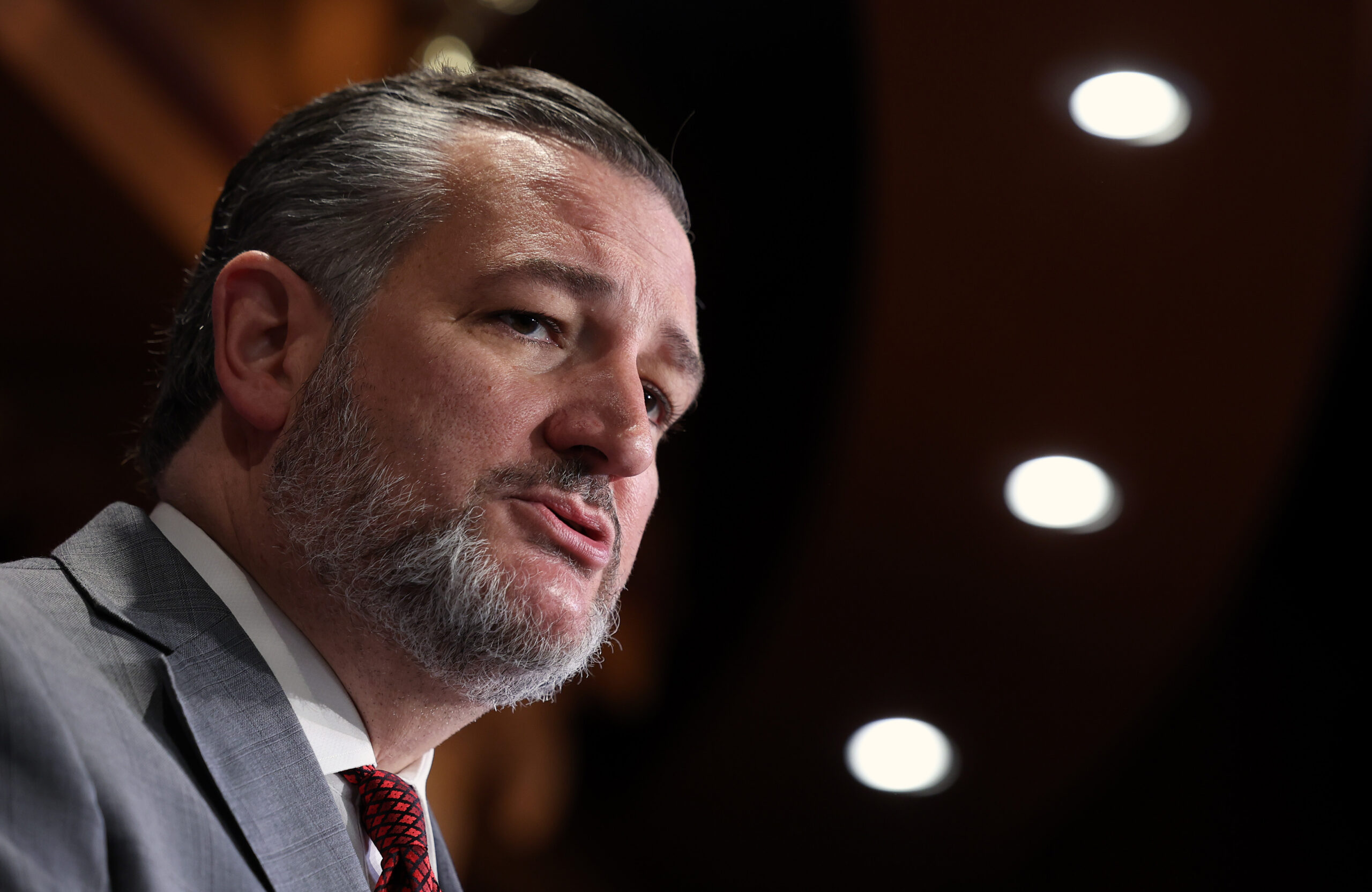
Will Ted Cruz Go Anti-Trump in 2028?

Will Ted Cruz Go Anti-Trump in 2028?

The Texan senator seems ready to risk a counterrevolution within the GOP.

Republican Senators Hold Capitol Hill News Conference To Discuss The Southern Border

President Donald Trump suggested this week that he may put Ted Cruz on the Supreme Court. It was not meant as a compliment, as he explained how it would be easy to get the Texas senator confirmed. 

“The Democrats will vote for him because they want to get him the hell out and the Republicans will vote for him because they want to get him the hell out, too,” Trump said at a press conference attended by Cruz and many other GOP lawmakers. 

The remark was probably meant to needle Cruz. Axios reported over the weekend that the senator attacked the president and vice president in comments to donors. Cruz is building himself up for another presidential run that will pit him against J.D. Vance. 

It’s expected he would set himself apart from his primary foe. But Trump is another matter. He’s the undisputed leader of the Republican Party and will remain beloved by the base in the next election. It’s a risky move for any GOP hopeful to position himself as anti-Trump. It’s expected that nearly all primary challengers will try to claim that they are the true successor to the Don in ’28. But Cruz could be charting another path in his bid to present himself as the only candidate who can restore the GOP to its pre-MAGA state. 

And that means telling donors how much he hates Trump’s policies.

Cruz’s presidential ambitions are nothing new. He’s been laying the groundwork for a campaign since last year. To make himself look like the next GOP leader, Cruz has made Tucker Carlson his number one enemy. Vance’s friend serves as a convenient way to assail the VP and denounce his non-interventionism. He made this clear in his comments reported by Axios: “Tucker created J.D. J.D. is Tucker’s protégé, and they are one and the same,” he told donors. It’s rare for Cruz to make a public appearance without condemning Carlson and anti-Israeli sentiment within the party. It’s obvious Cruz wants to fight for the old guard’s neoconservative foreign policy and despises the America First orientation of the New Right. 

But this isn’t his only qualm with Trumpism. He seems to want to bring back every aspect of the Paul Ryan era that Trump defenestrated.

His anti-Trump comments to donors were centered on trade and tariffs. He said that he confronted the president about the matter in the White House, telling the commander-in-chief that his trade moves would destroy Republicans at the ballot box. “You’re going to lose the House, you’re going to lose the Senate, you’re going to spend the next two years being impeached every single week,” Cruz allegedly told Trump. Trump’s alleged response: “F**k you, Ted.”

Cruz added to donors that he would fire any staffer who echoed Trump’s comments on tariffs. “That is not language we use,” he proclaimed.

That’s not the only Trumpian language Cruz disagrees with. In a recent podcast, he bemoaned the White House’s rhetoric about leftists who were killed interfering with immigration enforcement, saying the admin needs to tone down its rhetoric. While saying the shooting of Renee Good was justified, he emphasized that “escalating the rhetoric doesn’t help, and it actually loses credibility.” He argued that “everyone who has anything resembling a conscience is horrified by what’s happening in Minneapolis” and claimed both sides are at fault.

“On one side, they view every shooting as an absolute tragedy, as evidence that America has become Nazi Germany,” he said. “On the other side, you see some people that seem pretty eager to celebrate a violent and lethal confrontation with law enforcement.”

The senator warned that Trump’s strong rhetoric would alienate suburban voters, particularly women. 

Cruz didn’t directly criticize the ICE raids, and he made sure to praise the president’s immigration record. But the comments were highlighted by the media as an example of Republican lawmakers’ growing skittishness around the president’s immigration policies. The senator would endear himself to many GOP donors if he did turn on the raids. Corporate interests have lobbied Trump to ease off deportations. Cruz could try to seek their support by publicly sharing their opinion in the next presidential race.

It’s clear that Cruz’s problem with Trumpism isn’t just about Israel and foreign policy; it’s with the entire package. His 2028 bid will be an obvious attempt to restore the old guard and cast out the America First tendencies of the New Right. The Chamber of Commerce and other Business First donors will love this, but it may struggle to win actual primary voters. It will also pit Cruz against the leader of the Republican Party.

GOP voters overwhelmingly approve of Trump. The latest YouGov poll has 85 percent of Republicans approving the president’s job performance. It’s highly unlikely that these voters will suddenly turn on Trump by 2028. They’ve stuck with Trump ever since the 2016 primary, through controversies, impeachments, and indictments. Ron DeSantis and other 2024 candidates bet that the base would turn on Trump in the last election. They proved grievously mistaken, and the 45th president easily won the primary. 

Trump won’t be on the ballot in 2028, but he will still weigh heavily on the primary. It would be stupid for any candidate to follow in the footsteps of DeSantis and Nikki Haley and present themselves as the anti-Trump candidate. It will draw the wrath of the president and primary voters. But Cruz may be forced to do so to set himself apart from Vance and earn the support of the donor class that wants the return of the old GOP. 

It won’t be a smart move with actual voters, but it will bring in a lot of money.

The post Will Ted Cruz Go Anti-Trump in 2028? appeared first on The American Conservative.

How Many Times Do I Have to Write This Column About Iran?

How Many Times Do I Have to Write This Column About Iran?

Regime change would still be a catastrophe, and it’s hard to see what the point of anything else is. 

Iranians In Mexico Protest Against The Islamic Republic

A lot of smoke is going up around the Persian Gulf—metaphorical for now. In response to the Islamic Republic’s brutal crackdown on protests earlier this month, President Donald Trump announced that he’d let slip the dogs of war if the regime started shooting people in the streets. The usual sort of excitement ensued among the usual suspects. The U.S. is continuing to sanction the bejeebus out of Iran—per Treasury Secretary Scott Bessent, “Make Iran Broke Again”—and, for the time being, it seems as if all is quiet on the Greenlandic and Venezuelan fronts. Pivoting to the Western Hemisphere is hard work; why not take a little break with our favorite leisure activity, lobbing ordnance into the desert?

What are we actually going to do? The tea leaves are contradictory. On the one hand, it is not clear what the target would be, or what the provoking incident would be—in the sequel to the crackdown, Trump has downplayed reprisals and has largely stopped talking about Iran. The administration has shown a strong preference for making a very loud case for why high-profile military actions must be taken: In last June’s strikes on Iran, restricting the nuclear program had already been a theme for months, capped by the usual laughable claims about imminent breakout; in the months leading up to the bizarre capture of Nicolas Maduro, there was a hurricane of specious claims about drug trafficking, oil, peer adversaries, and so on. (The exception to this, as always, is AFRICOM operations, which often receive just bare recognition after the fact.) So but really: What are we going to do? Extradite the ayatollah to the Southern District of New York? Use the discombobulator on Araghchi? Invite the loose ends of the Syrian Defense Forces to cut up a little bit in Iranian Kurdistan? I would say that none of this seems terribly serious, and, while that is hardly a guarantee it won’t be tried, it nevertheless is true that nothing here leaps out as the obvious Trump preference. 

On the other hand, we have chopped a carrier group into CENTCOM, and usually you don’t mass warships in a theater if you aren’t planning to do something with them. Trump is on the internet bellowing about how he’s prepared to reprise Venezuela: “Hopefully Iran will ‘Come to the Table’ and negotiate a fair and equitable deal – NO NUCLEAR WEAPONS – one that is good for all parties.” (Of course, the U.S. at this point has rejected multiple deal frameworks kiboshing Iranian nuclear weapons, which does not inspire confidence that this is a good-faith call for talks. It also bears pointing out that the administration now has a well-established record of engaging in diplomacy and then using force in the midst of negotiations.) The Europeans are doing their usual embarrassing Freudian thing of aping American aggression. Iran’s President Masoud Pezeshkian is clearly worried—worried enough that he’s issuing directives for what to do if the central government is functionally wiped out. The hawkish factions have built up a narrative of strength if Trump strikes and weakness if he doesn’t; Obama’s Syrian redlines are the gift that keeps on giving.

So let’s say we go for it—try to bring down the whole thing. Immediately before last June’s strikes, in a column predicting that bandwagoning on Israel’s air campaign would leave unfinished business that encourages further intervention down the road (that has aged well, hasn’t it?), I gave a quick run-down on why the prospects of regime collapse are unappealing:

It is worth repeating in detailed terms that regime change, whether spontaneous or by some near-to-middle future intervention, is not an attractive prospect. While the ayatollahs are not popular—low voter turnout in Iranian elections does not speak to enthusiastic support for the system—it is not clear that there is a desirable alternative waiting in the wings. Reza Pahlavi, the eldest son of the last shah of Iran, does not seem like a serious man, and the fact that his own PR is casting him in the role of Israeli client seems unlikely to make him popular among his countrymen who just got bombed by the Israelis. The MEK is, for the lay audience, Baathism without the charm or sophistication, with some light cultism mixed in to keep things fun. If the army seizes power, would you bet against revanchism following a national humiliation like this? And, at the same time, do you feel confident that a Shia ISIS equivalent will not emerge? Chaos in Iran, especially an Iran with the technical base of a nuclear threshold state, is not good for an America that is trying desperately to pay less attention to the region so it can play whack-a-mole in more important theaters.

None of the fundamentals have changed since when I wrote that last June (although we do now know that our strikes did something less than “obliterate” the Iranian nuclear sites). It’s lazy to drop block quotes from things you’ve already published, but it’s also lazy to keep playing with the same stupid policies. I’ll wait for the White House to give me something fresh to work with.

Perhaps most likely (as suggested by my colleague Andrew Day) is some sort of choreographed strike and counterstrike that keeps everyone’s domestic audiences basically happy and doesn’t really change anything. This would be a relief on some level. But the question then is Why, and that’s a tough one for the gang at 1600 Penn.; the answer is, I suppose, Because.

The post How Many Times Do I Have to Write This Column About Iran? appeared first on The American Conservative.

Salvaging a New START

Salvaging a New START

It is too late to execute a full reextension of the nuclear arms control agreement, but the U.S. can take steps toward stability with Russia.

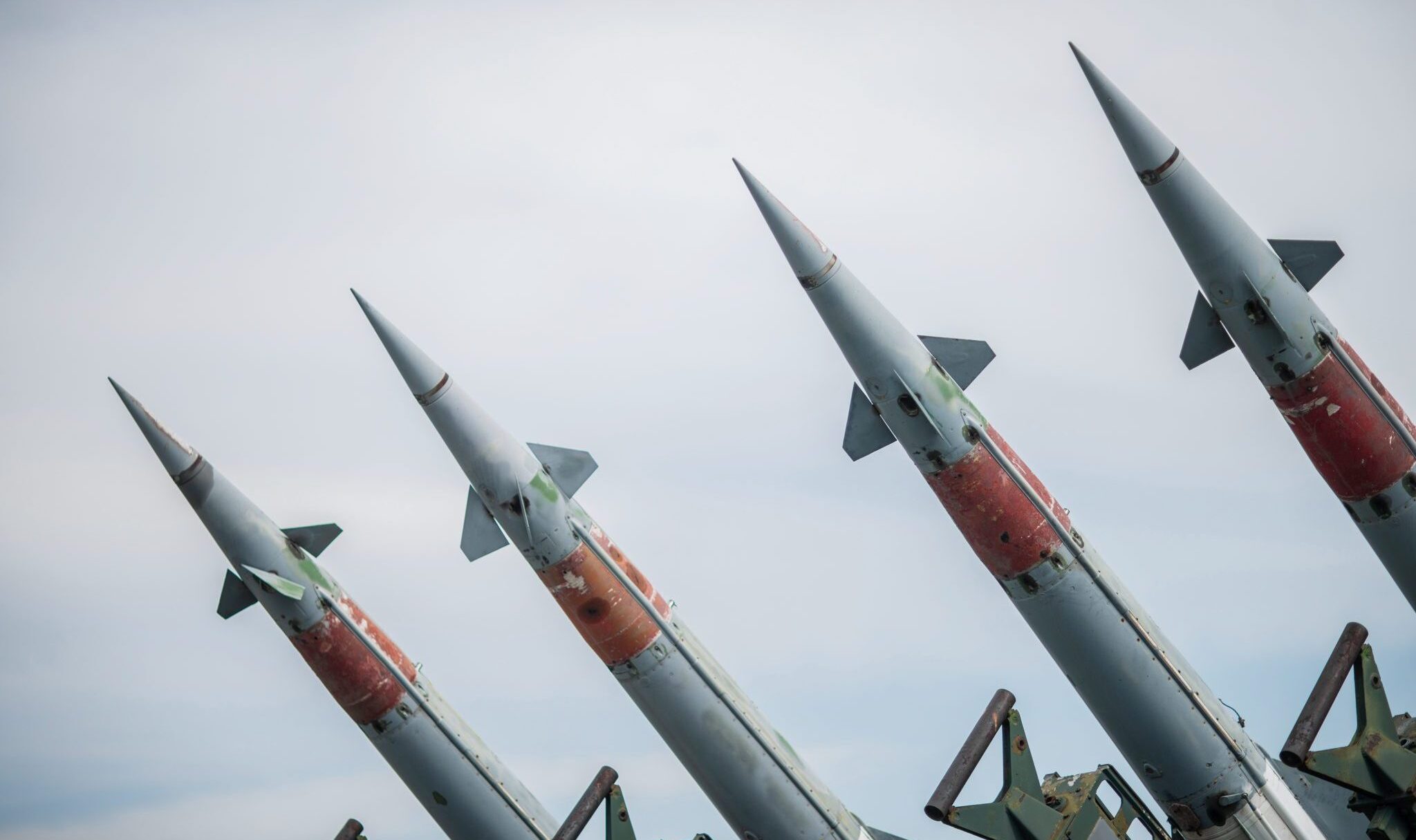
Russia,,Togliatty,-,August,13,,2018:,Nuclear,Missiles,With,Warhead

On February 5, 2026, the New START treaty, the last nuclear arms control agreement between the United States and Russia, will expire. Many will be glad to see it go, especially after Russia suspended participation in the treaty’s data-sharing and inspection mechanisms (but did not withdraw) in 2023. 

But the treaty’s end brings few benefits and lots of risks to the United States, especially as Washington tries to stabilize relations with rivals like Russia and China. It’s probably too late to prevent the agreement’s demise, but the Trump administration could still take steps to mitigate some of the more serious potential consequences by sticking to New START’s caps and limitations, at least in the short term. 

For those not paying attention, New START’s pending expiration may come as a surprise. But even those who have been watching closely would be forgiven for feeling confused about how we got here, preparing for the end of what most considered to be a mutually beneficial arrangement. 

After all, it was just several months ago that President Donald Trump himself responded positively to the offer from his Russian counterpart, Vladimir Putin, “to continue observing the … central quantitative restrictions” for one year if the United States did the same. Though Trump declared at the time that the plan sounded “like a good idea to me,” his administration issued no formal response to the Russian proposal. 

When asked again, in January 2026, about the treaty’s looming end date, Trump was noncommittal. “If it expires, it expires. We’ll do a better agreement,” he said, explaining that he hoped a new deal would also include China. But this is mere wishful thinking.

Anyone around in 2018 will remember that Trump made a similar promise when he pulled out of the JCPOA, arguing that he could get a long-term deal that limited Iran’s nuclear and ballistic missile programs and constrained Iran’s regional influence. Eight years later, such a deal remains elusive. Iran’s nuclear program is more advanced and its ballistic missile arsenal deeper than in 2018, even as the United States prepares for what may be a second round of airstrikes on Iranian military targets in just the past 12 months. 

When it comes to getting China involved, Beijing has flatly refused to participate in arms control talks with Washington until its own arsenal of nuclear weapons reaches parity with the United States’, something that remains many years away. In reality, a nuclear arms control agreement with Russia is likely a requirement to get China on board eventually, even if this comes only down the road. 

So how did Trump go from supporting some kind of extension to ready to let the treaty lapse in a mere four months? 

A rather unlikely explanation is that the issue simply slipped through the cracks for an administration trying to end the war in Ukraine, get a trade deal with China, work toward peace in the Middle East, and take on the whole of the Western hemisphere. Given any administration’s limited bandwidth, this is possible, but the importance of the issue calls the theory into question. 

More plausibly, Trump’s advisors may have decided that they could not move ahead on strategic stability talks—or any other Russia–U.S. bilateral issues—until the war in Ukraine comes to an end, for fear of the bad political optics of returning to business as usual with Moscow while the conflict is ongoing. 

This would be both understandable and a huge mistake. Strategic stability with Russia, the country with the largest nuclear arsenal, is simply too essential to the United States and its national security to be tied to the outcome of war in Ukraine, where U.S. stakes are at best very low. Maintaining the current nuclear balance is not a giveaway to Russia. Instead, it is a move with huge security and economic benefits for the United States. In other words, it aligns clearly with Trump’s commitment to put America first.

Perhaps the most worrying potential explanation for the Trump administration’s willingness to let New START lapse is that its nonchalance on the issue is an indication that the president and his advisors already plan to exceed the treaty’s current caps on warheads and launchers or to break through other limits and requirements set by the treaty’s terms. 

Though the Trump administration may not release a nuclear posture review this year, the National Defense Strategy does address U.S. nuclear capabilities, declaring an intention to “modernize and adapt our nuclear forces accordingly with focused attention on deterrence and escalation management amidst the changing global nuclear landscape.” This statement is too vague to draw clear conclusions but given growing concerns about the risk of nuclear cooperation between Russia and China, it is certainly possible that the Trump administration is looking to increase its number of deployed warheads or missiles or to take other steps to expand and diversify the U.S. nuclear arsenal.

If true, this would be the wrong move for at least three reasons. First, it is unnecessary. What is required for effective nuclear deterrence is a nuclear posture and stockpile that can credibly withstand an adversary’s first strike and threaten to impose unacceptably high costs on that adversary in retaliation. The United States already has rough nuclear parity with Russia and a nuclear triad that assures a U.S. second strike. This remains true in the face of modest changes to Russia’s nuclear posture or that of other adversaries. As a result, the United States can effectively safeguard the homeland from nuclear attack even if Moscow and Beijing (which has a much smaller nuclear stockpile) team up or if Russia surreptitiously exceeds New START commitments.

Second, any effort to deploy more nuclear warheads or delivery vehicles or expand the U.S. nuclear posture in other ways will be extremely costly. Already efforts to modernize and upgrade U.S. nuclear capabilities have cost billions and are years behind schedule. Given limited U.S. resources and competing demands—both in the national security space and the domestic sphere—such costs do not make sense, especially when a larger nuclear stockpile will do little to make the United States safer. 

Finally, a U.S. move to exceed New START’s limits will only encourage Russia to do the same, drive China to invest more to speed its nuclear buildup, increase the risk of miscalculation, and perhaps incite proliferation elsewhere as well, including among U.S. adversaries like Iran. Such proliferation may be inevitable at this point, but Washington should avoid steps that make it more likely where possible. 

With less than a week to go, a comprehensive deal with Russia on New START is out of reach. But the Trump administration still could signal its intention to stick to the treaty’s current caps, matching Russia’s year-long offer, at least on an informal basis. Such a move would not prevent the United States from filling gaps in its nuclear capabilities, such as investing more in tactical nuclear weapons or building out its conventional arsenal, and it would also come with benefits, even if it ultimately does not save the treaty. Most importantly, it would avoid doing further damage to the U.S.–Russia relationship and avoid new tensions that could derail Ukraine peace negotiations. It would also signal U.S. restraint to other nuclear and near-nuclear powers, delaying any “race for the bomb” a little longer.  

Trump may be the ultimate dealmaker, but in this case, he would be better off hanging on to the agreement he has—or what parts of it he can salvage—a little longer before trying to get a better one. 

The post Salvaging a New START appeared first on The American Conservative.

Trump Turns the Tables on Reporter Asking About Amazon’s Decision to Pay Millions For Melania Documentary (VIDEO)

Donald Trump and Melania Trump are seen walking together, with cameras capturing their appearance at a public event.

Donald Trump and Melania Trump are seen walking together, with cameras capturing their appearance at a public event.

President Trump and First Lady Melania arrived at the Trump Kennedy Center on Thursday evening for the “Melania” premiere.

“Melania” documents the 20 days leading up to President Trump’s second inauguration.

Trump sparred with reporters as he walked the red carpet.

A New York Times reporter asked President Trump about Amazon’s $40 million bid for the documentary.

“Amazon paid $75 million to make and market this film. It is an exorbitant fee….” a New York Times reporter said to Trump.

Trump interjected, “And who are you?”

“New York Times,” the reporter replied.

“Ugh! The New York Times… Fake News New York Times,” Trump said.

Another reporter asked President Trump about Amazon’s bid for Melania’s documentary.

“What do you say to those who are critical of the fact that Amazon gave $40 million to acquire the rights of this movie?” the reporter asked President Trump.

President Trump turned the tables on the reporter.

“Well, I think they’d have to go and ask President Obama who got paid a lot of money and hasn’t done anything! So, if you take a look at others they’ve been paid a lot of money. Melania really produced! She’s done a great thing,” Trump said.

WATCH:

The post Trump Turns the Tables on Reporter Asking About Amazon’s Decision to Pay Millions For Melania Documentary (VIDEO) appeared first on The Gateway Pundit.