Close Foreign Consulates in U.S. Sanctuary Cities

Close Foreign Consulates in U.S. Sanctuary Cities

Diplomats in consulates from migrant-sending countries like Mexico are conspiring to undermine immigration law enforcement.

Mexicans In Los Angeles Vote In Mexico's General Election

All major countries, such as Germany, Japan, and Australia, have a network of consulates across the United States. These consulates engage in many legitimate diplomatic activities, such as trade promotion and cultural outreach, as well as serving as platforms to assist their citizens. Los Angeles is home to over 90 consulates, while Chicago has over 80

The largest consulate networks are maintained by migrant-sending countries, such as Mexico, Honduras, Guatemala, El Salvador, and others, all with massive national diasporas in the United States. For these governments, their activities in support of their citizens in the U.S. dwarf all their other diplomatic activities. Mexico, with some 40 million persons in El Norte, around 5 million illegally present, has the largest network with an unprecedented 52 consulates scattered across the American interior. 

El Salvador has 22 consulates attending to the needs of its huge migratory population. Some 25 percent of all Salvadorans live in the U.S.; over 1 million are illegal migrants. Honduras has 15 consulates, supporting 1 million illegal migrants; Ecuador, 13 consulates and over half a million illegals; the Dominican Republic, 11 consulates and 200,000 illegals; and Colombia, 13 consulates, 400,000 illegals. It is a long list that goes beyond the Western hemisphere and includes other countries like India and the Philippines. 

Although poorly understood by Americans who have virtually no contact with them, these consulates contribute in subtle (and sometimes not subtle) ways to America’s ongoing immigration chaos and lawlessness. All diplomats dedicated to this support work—known in the trade as consular officers—have a legitimate right to assist their citizens, including even those unlawfully present. But the problem is that many of these consulates have openly joined forces with America’s domestic sanctuary resistance movement. Consulates are off the reservation when their diplomats are conspiring against and resisting Trump administration policies to detain and remove illegal migrants. 

Almost all migrant-sending countries consider the Trump administration’s goals to carry out large-scale repatriation of their citizens against their national interest. Mexico, El Salvador, and others want to maintain their vast populations, including the illegals, anchored in the United States—working, receiving benefits, and serving as conduits for more future migration. Massive repatriations would cut the vast remittances foreign nationals send home (which provide, for example, Mexico some $65 billion annually and make up a staggering 25 percent of El Salvador’s economy). Moreover, the massive return of migrants threatens the fragile status quo in all these sending countries.

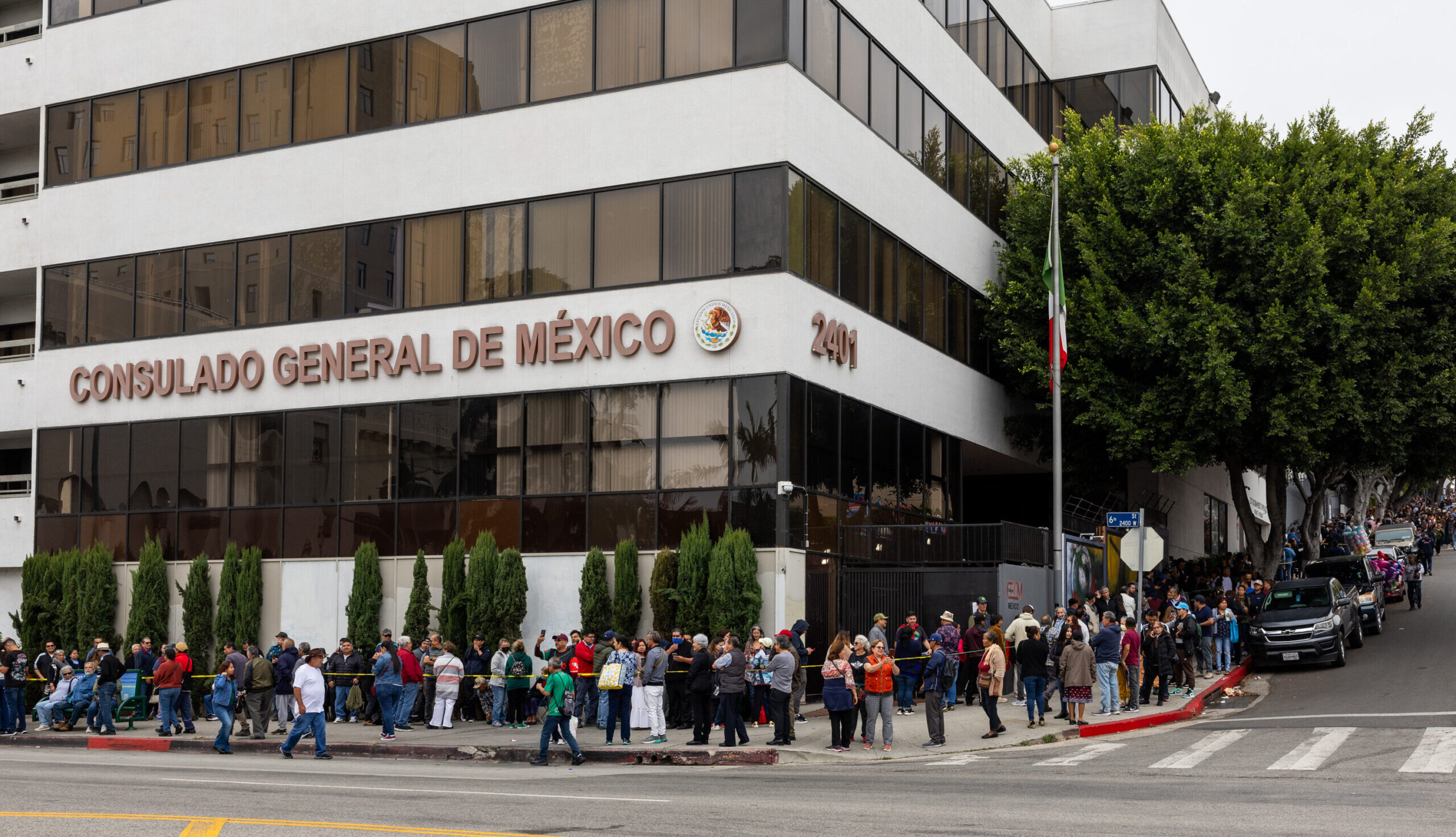
It is no surprise that these foreign consular networks are natural allies with radical American sanctuary activists, journalists, NGOs and local officials. A typical example is Los Angeles Mayor Karen Bass, who traveled to the inauguration of Mexico’s President Claudia Sheinbaum to trumpet their common values. The mayor and president cheered Los Angeles as the world’s second-largest “Mexican city” and committed to a strong ideological alliance on migration issues. LA authorities and the city’s large Mexican consulate are implementing that partnership by thwarting federal ICE agents. Bass is the face while Mexican diplomats operate behind the scenes.

Most sanctuary cities are following the same strategy: forbid federal agents from using city property or resources and create so-called ICE-free zones, as Mayor Brandon Johnson proclaimed in Chicago. Working with foreign consular officials, city authorities also “document” illegal migrants (issue them “identity” cards), as Denver has done, so the foreigners have “lawful status.” All these sanctuaries encourage spies to monitor, observe, and share intelligence on ICE agents, their movement, and locations. This latter kind of information, of course, was provided to radical activists like Alex Pretti who was killed in Minneapolis as he harassed ICE agents. 

Foreign consular officers are particularly valuable to the resistance apparatus because of their exceptional communication and feedback lines into migrant communities. In Chicago and other cities, Mexico runs its so-called “consulates on wheels” (mobile consular staff) that move through migrant neighborhoods, under diplomatic status, to collect information and warn its nationals about ICE enforcement raids. In addition, consular officers are allowed to meet with arrested migrants, making it possible for diplomats to go inside federal holding facilities and collect even more information. 

Foreign consulates not only work with sanctuary city officials, but also with a wide network of migrant NGOs, church groups, Democratic politicians, and anti-ICE American activists. One particularly effective part of these nullifiers consists of legal advocacy groups like the Coalition for Humane Immigrant Rights (CHIRLA), the National Immigrant Justice Center (NIJC), and others. These groups use gathered information to go to federal court to litigate before like-minded judges. Interestingly, the Mexican government actually provides resources or funding to CHIRLA and other NGOs, which helps them to sue the Trump administration. Many American observers might believe that foreign governments should not be bankrolling NGOs to thwart U.S. federal law. 

The existence of these consulate networks demonstrates how Washington’s domestic immigration law enforcement, like it or not, is also front-line U.S. foreign policy. It is the U.S. State Department—specifically, the Office of Foreign Missions—that has the first responsibility to monitor and determine whether foreign officials are engaging in conduct inconsistent with their diplomatic privileges or consular status. It is State that has legal authority to accept or reject the requests of foreign governments to open consulates outside of their embassies in Washington. 

In all of this, State is guided by the rules set down in the obscure Vienna Convention of Consular Relations, an international treaty that governs the activities of consular officers in foreign countries. The Vienna Convention authorizes diplomats to work on behalf of their citizens through recognized consular activities, e.g., providing legal assistance in individual cases, emergency financial loans, and needed documentation. But diplomats are supposed to stay very clear of open public advocacy in the host country. Going to social media to denounce federal law enforcement, conspiring with sanctuary city officials, and funding lawsuits through NGOs should be considered activities inconsistent with the Vienna Convention. Such conduct should result in diplomats being declared persona non grata and the closure of consulates. 

In managing this panoply of foreign consulates, the State Department has regrettably lost the thread of U.S. national security interests. For example, State authorized consulates for Honduras, El Salvador and Guatemala in obscure border cities such as McAllen, Texas, because those governments wanted their diplomats to assist their nationals after illegally crossing the southern border. Moreover, illegal populations are rewarded, because their numbers are used in the calculus to determine how many consulates a foreign government should be permitted.

Similarly, the State Department has been heedless of the fact that illegal diasporas over decades have flocked to sanctuary cities and states, particularly in California, Illinois, New York, and Massachusetts. Secretary Marco Rubio’s new leadership team in Foggy Bottom needs to remake the mistaken mindset prevalent among too many State officials that the department has no role in domestic enforcement of U.S. visa laws and unlawful presence statutes. 

State must no longer ignore the fact that many foreign consulates have gravitated from passive activities against the implementation of U.S. immigration law to, as in the Mexican example, active resistance to Washington’s policies. Mexico’s 52- consulate network in the United States is the largest of any foreign government in another single country, by far, in the world. Exercising dubious judgment, the State Department authorized Mexico to open 21 consulates general and 31 consulates. (A “consulate general” is a larger facility with more staff than a consulate; in a few cases, a consulate general may even be bigger than the parent embassy in Washington. While there are slight legal differences, for all practical purposes, these buildings and their staff enjoy the same immunities and privileges that accompany an embassy.) All the Mexican consulates are staffed by career diplomats; none of these 52 is an “honorary consulate,” which is typically run by one unpaid, part-time staffer working out of a home or private office. 

Peter Schweizer’s new book Invisible Coup documents that the Mexican consular network in the United States is doing much more than issuing passports. These consulates, in fact, are the backbone of a fifth-column strategy to maintain control of the Mexican diaspora in the U.S. with the goal of resisting assimilation, holding on to the second generation, and exercising political influence in Gringolandia. The former Mexican President Andrés Manuel López Obrador, known as “AMLO,” built out this network and bluntly mobilized it to engage in partisan activities such as resisting the election of Donald Trump and undermining U.S. border security measures. Typical of this was AMLO’s smear campaign against Florida’s law criminalizing human smuggling (AMLO predictably called it “racist”) in which the Mexican president had his consular envoys denounce Florida’s Governor Ron DeSantis. 

When President Joe Biden was in the White House, he never once rebuked his Mexican counterpart’s political meddling, nor instructed the State Department to expel any Mexican diplomats. Now, with Trump back in the saddle, President Sheinbaum is much more cautious than AMLO, but her diplomats have still crossed the line into unacceptable activities, as Schweizer’s book clearly documents. 

The State Department should start by reducing the number of accredited foreign consulates from countries with large numbers of unlawfully present nationals. Those consulates ripe for closing are the ones conspiring with the most defiant sanctuary cities; certainly, Los Angeles and Chicago should be on the target list. The howl of disapproval will be vociferous, but none of these sanctuary cities has any authority, beyond State Department’s permission, to host a Mexican or any other foreign consulate. The State Department can act quickly in these matters, when it wants, as it showed in shuttering the Chinese consulate in Houston in 2020 over spying concerns.

Like the affected sanctuary cities, foreign governments will vehemently protest and threaten tit for tat retaliation, but those will be empty threats. Despite the possible diplomatic contretemps, the U.S. objective is not to start an unnecessary squabble with Mexico (although Trump would certainly win such a brouhaha), but to signal to Sheinbaum and to her successors that bilateral migration issues are now fundamentally different. Just as the Trump administration has secured the southern border, Washington will no longer tolerate the Mexican government’s turning its diplomats into policy advocates on U.S. territory. 

Now is the time to act. Mexican and other consulate activism is part of America’s deep immigration chaos. The State Department must address this problem.

The post Close Foreign Consulates in U.S. Sanctuary Cities appeared first on The American Conservative.

Arming the Kurds to Fight Iran Is Madness

Arming the Kurds to Fight Iran Is Madness

It will achieve nothing but instability and carnage.

IRAQ-KURDS-PESHMERGA-GRADUATION

The Trump administration may have planned a rapid fall of the Iranian regime after the assassination of Supreme Leader Ali Khamenei and a quick victory that would force Iran to agree to its terms. They may have planned for a precision victory that would be quick and not spread across the region, like the mission in Venezuela. But it seems not to have happened. Iran is losing the war, but the regime has not collapsed, the people have not risen up, Tehran is not yielding to U.S. demands, and there is a great danger of the war spreading and destabilizing, not only the region, but beyond.

Washington faces the possibility of leaving a devastated Iran with its regime still in place to rebuild its civilian nuclear program, its missile program, and its ties with its regional proxies, potentially leading to another war in a few years. Searching for a plan B among a whirlwind of changing justifications and goals for the war, the Trump administration is considering one that would risk a war that would last longer and spread wider.

There are multiple reports that the U.S. is considering arming Iranian Kurdish opposition forces in Iraq in support of an invasion into Iran. The Kurds make up a large ethnic minority in both Iran and Iraq. Their ancestral land covers parts of Iran, Iraq, Turkey and Syria. There are thousands of Kurdish soldiers inside Iraq along the Iraq–Iran border, primarily in the Kurdistan region of Iraq.  

The Trump administration has reportedly been “in active discussions with Iranian opposition groups and Kurdish leaders in Iraq about providing them with military support.” On March 1, President Donald Trump spoke with Kurdish leaders in Iraq and asked them “to enable Iranian Kurdish fighters based in Iraq to move into Iran.” One Kurdish party he spoke to says “Trump was clear in his call. He told us the Kurds must choose a side in this battle—either with America and Israel or with Iran.” Though the call reportedly went well, the Kurdish leaders “expressed reservations about getting involved in any ground invasion into Iran.”

Iran’s Foreign Minister Abbas Araghchi has warned of “terrorist movements” at the border with Iraq, and hundreds of Kurdish fighters have crossed from Iraq into Iran in preparation for a possible attack. Part of the bombing of Iran has focused on targets in western Iran and Kurdistan Province. Kurdish leaders say the bombing is meant to facilitate an infiltration from Iraq. The strikes have hit Revolutionary Guard facilities, police stations, and border guard posts. According to video analysis by the New York Times, “the strikes have been concentrated on locations near highways that run from the Iraq-Iran border into Iran.”

The CIA began work to arm Kurdish forces several months before the war. They have provided “small arms to the Iranian Kurdish forces as part of a covert program to destabilize Iran.” 

The strategy is meant to provide a menu of outcomes. Kurdish forces could be used to increase pressure on regime change or to encourage an uprising in Iran. According to one U.S. official, the goal would be to “take over a specific territory in the Kurdish region inside Iran in order to challenge the regime and inspire a broader uprising.” An incursion from Iraq could also force Iranian forces to respond, drawing them out into the open where they could become targets for fighter jets. Others suggest that the idea would be for Kurdish armed forces to occupy Iran’s security forces, helping Iranians to take to the streets without getting massacred. An invasion from Iraq and a Kurdish uprising could also create instability and a security crisis.

The status of the plan remains unclear. The New York Times reports that American officials are still “debating the utility of a Kurdish invasion” and that “the White House had not yet decided whether to send the Kurds into Iran.”

White House Press Secretary Karoline Leavitt denies it, insisting that, though “Trump has spoken with Kurdish leaders,” he “has not agreed to any plan to arm them to overthrow the Iranian government.”

A senior Iranian Kurdish official told CNN that “Iranian Kurdish opposition forces are expected to take part in a ground operation in Western Iran, in the coming days.” Axios reports that Kurdish, American, and Israeli officials told them that “several Kurdish Iranian factions are preparing for a possible ground offensive against Iran’s regime in the northwestern part of the country.”

Government officials in Iraq tell a different story. Kurdish regional government officials deny involvement in plans to send armed fighters into Iran. Nechirvan Barzani, president of the semi-autonomous Iraqi Kurdistan region, said it “must not become part of any conflict or military escalation that harms the lives and security of our fellow citizens.” According to Iraq’s national security adviser, Qasim al-Araji, Iraq will not permit Kurdish groups “to infiltrate or cross the Iranian border to carry out terrorist acts from Iraqi territory” and says that the “Kurdistan Region’s Interior Ministry has sent Peshmerga security reinforcements to the border strip with Iran” to prevent it. Iraq’s Prime Minister Mohammed Shia al-Sudani has also said that “the Iraqi government will under no circumstances allow any threat to be directed at Iran from Iraqi territory.” The New York Times reports that officials in Iraqi Kurdistan “seem to have complied” with an Iraqi government order “not to allow Iranian Kurdish militants to cross the border.”

One of the Kurdish leaders who spoke to Trump, Bafel Talabani, also received a call from Araghchi. On that call, Talabani “emphasized the importance of finding peaceful solutions to the issues.”

If the plan proceeds, the result could be catastrophic. A ground invasion from Iraq could prolong the war and increase the number of deaths. It could also make the war harder to contain and spread it to other regions. It could potentially draw in, not only Iraq, but Syria and Turkey. Turkey could also be problematic because, as Stephen Zunes, Professor of Politics and Program Director for Middle Eastern Studies at the University of San Francisco told The American Conservative, since Turkey and Iran work together “in their suppression of Kurdish fighters in their two countries, the U.S. would essentially be undermining a NATO ally.” So the plan could create division and strife in NATO.

Since the Persian majority in Iran “would not welcome a Kurdish incursion,” the strategy could lead to ethnic strife and civil war in which different ethnic and other groups are pitted against each other in a fragmented and weakened Iran. Granted, this may well be part of the American intention. Zunes says that supporting the Kurds may be one way of America achieving its goal of turning Iran into a failed state.

It could also hurt the Kurds. Trump is not arming the Kurds to support them in their quest for a homeland. Consistent with a long pattern of history in American-Kurdish relations in which the Kurds are used as an instrument and then abandoned, including by Trump, the danger is not only that Kurds would get killed in the fighting, but that they would, once again, be abandoned—leading, as Zunes says, “only to more suffering.”

Though ethnic strife could serve American goals, the Kurdish plan could subvert them by also working the opposite way. The Iran expert Trita Parsi says that “Tehran believes a land invasion will help unify the population against invaders and separatists.”

The war against Iran has already destroyed Iran, destroyed international law and killed too many people. Arming a Kurdish incursion from Iraq would not likely change the outcome of the war. It is a mad idea that mocks history and risks bringing Iraq and other countries into the war, while further destabilizing the region and Iran.

The post Arming the Kurds to Fight Iran Is Madness appeared first on The American Conservative.

Trump’s Name Will Be on the Tallest Tower in Australia as Trump’s Company Makes International Real Estate Move

Donald Trump smiles and points while wearing a blue suit and red tie at a public event, with a backdrop featuring stars and text.

Donald Trump smiles and points while wearing a blue suit and red tie at a public event, with a backdrop featuring stars and text.

The Trump Organization signed a deal to construct a skyscraper in Australia that will immediately become the tallest building Down Under.

The 91-story tower, which will cost just over $1 billion to build, will loom over the Gold Coast in the state of Queensland, per a Feb. 23 report from NBC News.

“Australia’s tallest building will be a Trump Tower, right in the middle of Surfers Paradise — it’s great for Queensland tourism, and fantastic for Australia,” Altus Property Group, the company developing the property, said in a statement.

The building will include more than 270 apartments, shops, a beach club, and a pool, as well as a “six-star resort hotel,” per NBC News.

The tower will also come emblazoned with the family name of the current President of the United States.

“It won’t have a Four Seasons or Ritz Carlton brand above the front door, but it will say ‘Trump.’ And that means it is a no-expense-spared, highest-possible-quality building — the best in the world.”

Eric Trump, the son of President Donald Trump and the executive vice president of The Trump Organization, voiced his excitement for the project on social media.

“I am so proud to announce what will soon be the tallest building in Australia — Trump International Hotel & Tower Gold Coast,” he wrote.

“This marks our first venture into Australia — an extraordinary country in every respect — and I couldn’t be more excited to help shape its iconic skyline forever. More to come…”

A description on the Trump Hotels website said the building “redefines beachfront sophistication with world-class amenities, iconic design, and uninterrupted Gold Coast views.”

David Young, the CEO of Altus, said he cold-called Ivanka Trump back in 2007 in the hopes of securing the deal, according to a report from The Independent.

Nearly two decades later, the project has finally come to fruition.

“Importantly, the building is Australian-owned and Australian-built. It is an Altus subsidiary, Altus Resorts Pty Ltd, that makes the decisions on the fit-out, within the Trump design requirements,” Young added.

The developer said the deal was signed on Feb. 14 at Mar-a-Lago.

This article appeared originally on The Western Journal.

The post Trump’s Name Will Be on the Tallest Tower in Australia as Trump’s Company Makes International Real Estate Move appeared first on The Gateway Pundit.

Roberto “Beto” Bazán Salinas, High-Ranking Gulf Cartel Operator, Arrested in Guanajuato for Smuggling Cocaine, Methamphetamine, and Marijuana into the United States

Image of a suspect in a drug trafficking case, marked "Captured," highlighting law enforcement success in combating illegal drug activities.

Image of a suspect in a drug trafficking case, marked "Captured," highlighting law enforcement success in combating illegal drug activities.

This is a Gateway Hispanic article.

The post Roberto “Beto” Bazán Salinas, High-Ranking Gulf Cartel Operator, Arrested in Guanajuato for Smuggling Cocaine, Methamphetamine, and Marijuana into the United States appeared first on The Gateway Pundit.

Sen. John Kennedy: Trump Had “No Choice” But to Strike Iran (VIDEO)

Image of two prominent figures, one in traditional attire and the other in formal business wear, discussing political matters in a formal setting.

Image of two prominent figures, one in traditional attire and the other in formal business wear, discussing political matters in a formal setting.

WATCH: Sen. John Kennedy: Trump Had “No Choice” But to Strike Iran

Senator John Kennedy is pushing back against growing criticism from Democrats over President Donald Trump’s recent military strikes against Iran.

During a new interview on Newsmax, Kennedy made the case that Trump’s actions were not the beginning of another endless Middle East conflict—but rather an effort to prevent a far larger and more dangerous war from erupting.

“President Trump did not start a war by entering Iran,” Kennedy said during the interview. “He is trying to stop a war.”

The Louisiana senator explained that intelligence briefings and basic strategic realities point to the same conclusion: Iran’s leadership had no intention of abandoning its nuclear ambitions.

According to Kennedy, Iran’s ruling regime—which he described as religious zealots—was actively rebuilding its military capabilities after previous strikes earlier this year.

“They were not going to ever stop trying to develop a nuclear warhead,” Kennedy said.

Kennedy noted that after the United States bombed Iranian targets in June, the regime quickly began rebuilding its missile arsenal and expanding weapons production.

“They were manufacturing hundreds of missiles a month,” he explained.

Even more concerning, Kennedy said, was Iran’s growing cooperation with global adversaries.

The regime’s strategy, according to the senator, involved working with China and Russia to produce such a massive stockpile of missiles that any attempt to strike Iran would risk triggering a regional catastrophe.

“Their game plan was to manufacture enough missiles with the help of China and Russia so that no one could attack them without them blowing up the entire Middle East,” Kennedy said.

“And we could not allow that to happen.”

Critics—particularly on the Left—have argued that Trump needed congressional authorization before launching the strikes. Some media outlets (like MSNOW, CNN) and Democrat lawmakers have framed the operation as the start of another Middle East war.

But Kennedy rejected that narrative, arguing that the military objectives are limited and clearly defined.

According to the senator, the mission has several specific goals: destroy Iran’s remaining nuclear weapons infrastructure, eliminate its missile and drone manufacturing capabilities, cripple its naval forces, and dismantle the military networks controlled by Iran’s Revolutionary Guard.

“To destroy their manufacturing facilities for missiles and drones, to destroy their navy, which we have done,” Kennedy said. 

“To destroy all the infrastructure for their army and the Revolutionary Guard.”

After those objectives are achieved, Kennedy said the United States intends to leave.

The goal is not long-term occupation or nation-building—policies widely blamed for America’s past failures in the Middle East.

Instead, the senator suggested the strikes could weaken the regime enough that the Iranian people may eventually challenge their rulers themselves.

“Hopefully we will have undermined the religious zealots sufficiently,” Kennedy said, “so that the people of Iran can rise up and try to do something about it.”

Kennedy also made clear that Trump has no interest in sending American troops into Iran.

“I do not believe the president will put boots on the ground,” he said. “I do not believe he wants to stay there permanently. I do not believe he wanted to do this.”

Kennedy added that the president ultimately faced a difficult reality.

“I think he had no choice.”

The debate over the strikes is likely to intensify in Washington in the coming days. 

While many Democrats have criticized the operation, many Republicans argue that failing to act would have allowed Iran to expand its nuclear and missile programs even further—putting both the United States and its allies at risk.

For supporters of the president, Kennedy’s message is simple: Trump’s decision was not about starting a war.

The Patriot Perspective has recently switched its main platform from Rumble to YouTube, and we would greatly appreciate it if our old subscribers would subscribe to us there. [HERE]

The post Sen. John Kennedy: Trump Had “No Choice” But to Strike Iran (VIDEO) appeared first on The Gateway Pundit.

Security Lines Out the Door- Airports Across the County in Disarray Thanks Democrat Shutdown of DHS

Transportation Security Administration officers assist travelers during security screening at an airport checkpoint, ensuring safety and compliance with regulations.

Transportation Security Administration officers assist travelers during security screening at an airport checkpoint, ensuring safety and compliance with regulations.
U.S. Department of Homeland Security (DHS)

Airports across the country are in disarray thanks to the Democrats’ shutdown of DHS.

In mid-February 2026, Congress failed to pass funding legislation, resulting in a partial shutdown of the U.S. Department of Homeland Security (DHS).

Funding for DHS expired on February 13, 2026, affecting agencies like the Transportation Security Administration (TSA), Federal Emergency Management Agency (FEMA), Coast Guard, and cybersecurity operations.

Democrats in Congress have refused to support funding bills without reforms to rein in Immigration and Customs Enforcement (ICE) and Customs and Border Protection (CBP), citing concerns over aggressive deportation tactics and incidents like the killing of two Americans by federal agents in Minneapolis.

House Speaker Mike Johnson (R-LA) ripped Dems for prioritizing politics over national security, especially amid heightened threats from the ongoing U.S.-Iran conflict (Operation Epic Fury).

On Wednesday, during a press conference, Speaker Johnson stated, “Now is the time to be vigilant at home and to ensure that all of our doors are locked, so to speak.”

“And yet, as all this is happening, we have Democrats running around here playing political games in Congress. It’s infuriating. They’ve shut down the very agency that is responsible for securing the homeland.”

As the shutdown continues, Americans are paying the price for the political tantrum with long lines at TSA security that are adding hours to travel time and causing travelers to miss flights.

As of early March 2026, the shutdown has lasted over three weeks, with no immediate resolution in sight, though negotiations continue amid pressure from the White House and escalating international tensions.

DHS shared on social media. “SECURITY LINES OUT THE DOOR. Americans are now missing their flights because of the Democrats shutdown of DHS.”

“Their political stunt is forcing patriotic TSA officers to work without pay — leading to financial hardship, absences, and crippling staffing shortages.”

“Enough is enough: Democrats must fund DHS NOW.”

TSA lines at Houston’s Bush Airport are currently exceeding THREE HOURS.

WGNO reports officials in New Orleans are advising passengers to arrive at least three hours before their expected departure time.

The post Security Lines Out the Door- Airports Across the County in Disarray Thanks Democrat Shutdown of DHS appeared first on The Gateway Pundit.

GOP Senate Won’t Pass SAVE AMERICA ACT, Instead Vote to Hang Plaque Honoring Those Who Killed Trump Supporters on Jan 6

Plaque honoring law enforcement and individuals who protected the U.S. Capitol during the events of January 6, 2021, recognizing their bravery and dedication.

Plaque honoring law enforcement and individuals who protected the U.S. Capitol during the events of January 6, 2021, recognizing their bravery and dedication.

The GOP-led Senate won’t pass the SAVE AMERICA ACT but will pass a law to place a plaque promoting the Jan 6 lie in the Capitol.  Far-Left MSM NBC reported … Read more

The post GOP Senate Won’t Pass SAVE AMERICA ACT, Instead Vote to Hang Plaque Honoring Those Who Killed Trump Supporters on Jan 6 appeared first on The Gateway Pundit.

Alabama Takes Key Step to Prevent St. Paul-Style Church Disruptions

Alabama House Republicans advanced a new measure meant to deter church disruptions with substantial prison sentences and fines.

The legislation, filed as House Bill 363, comes weeks after left-wing activists invaded a church service in St. Paul, Minnesota, over one of the pastors’ work with U.S. Immigration and Customs Enforcement.

House Bill 363 would charge those who similarly interrupt religious services in Alabama with up to 10 years in prison and fines of $15,000 or more, according to a report from the Alabama Reflector.

It passed in the Alabama House on Tuesday with a vote of 75 to 27.

“This bill would provide that if an individual enters upon the premises of a church building to intentionally disrupt a worship service by engaging in a riot, unlawful protest, or disorderly conduct, or otherwise engages in the harassment of any other individual in the worship service, the individual would be guilty of the offense of disruption of a worship service,” the legislation said.

“This bill would also provide that if an individual enters upon church property contiguous to where a church worship service is being held with the intent on obstructing the ingress or egress to the property, and obstructs the ingress or egress to the property, the individual would also be guilty of the offense,” it added.

Alabama State Rep. Greg Barnes, a Republican, defended the bill on the House floor, saying that it “is a religious protection bill that protects all religions, not just churches, synagogues.”

“And that’s a very narrowly tailored, narrowly scoped bill,” he said, per the Alabama Reflector.

But some members of the House Democratic minority contested the bill on the floor.

“I think the absolute worst place that you could take away a person’s right to disagree is in the church. I don’t understand how you say that,” Alabama Democratic State Rep. Sam Jones said in reaction to the bill.

“It seems to me that we think that criminalizing acts change behavior. It doesn’t.”

Alabama State Rep. Chris England, another Democrat, even claimed that Jesus Himself would face prison time under the legislation.

“Under this particular piece of legislation, when Jesus went out there and flipped over some tables, he would have been a Class C felon,” he argued.

The bill protects any “bona fide duly constituted religious society or ecclesiastical body of any sect, order, or denomination,” such as churches, mosques, and synagogues, as well as “other religious real property.”

It will now be considered by the Alabama Senate.

This article appeared originally on The Western Journal.

The post Alabama Takes Key Step to Prevent St. Paul-Style Church Disruptions appeared first on The Gateway Pundit.

Oil Prices Skyrocket 17%+ Crossing $100 Barrel Amid Iran Escalation — President Trump Fires Back: ‘Short-Term Pain’ for Long-Term Peace

Workers walking on a metal pier toward an offshore oil rig in calm blue waters under a clear sky.

Workers walking on a metal pier toward an offshore oil rig in calm blue waters under a clear sky.
Iraq’s Khawr Al Amaya Oil Platform (KAAOT) (Credit: U.S. Navy photo by Mass Communication 2nd Class Nathan Schaeffer/Released)

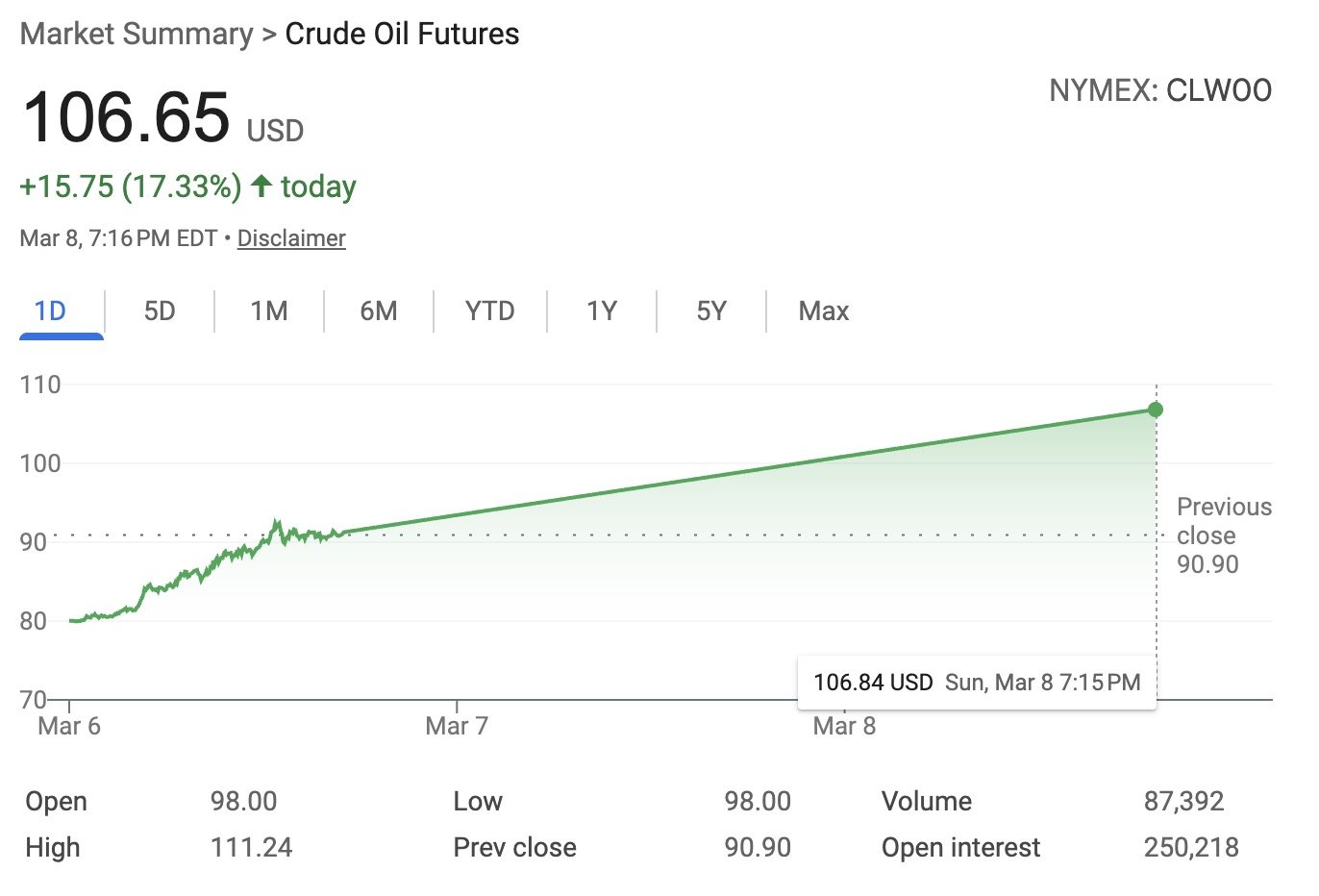
Oil prices exploded over 17% on Sunday, blasting past the $100 per barrel mark for the first time since the early days of Trump’s decisive strikes against the Iranian regime.

Crude oil futures market summary showing a price of 106.65 USD, with a 17.33% increase today, highlighting significant market activity on March 8.
Screenshot: Google Finance

As markets reacted to the latest round of U.S. airstrikes under Operation Epic Fury, the “BIGGEST bombing campaign yet” as Treasury Secretary Scott Bessent revealed just days ago, crude futures surged amid fears of disrupted supplies from the volatile Middle East.

West Texas Intermediate (WTI) crude jumped 16.2% to $102.45, while Brent crude, the international standard, spiked 15.8% to $105.67

According to Google Finance, “Global oil supplies are currently falling approximately 20 million barrels per day short of requirements due to the conflict. Regional producers like Kuwait and Iraq have curtailed output, with Iraqi production reportedly falling by about 70% in key fields as shipping risks escalate.”

This comes hot on the heels of Iran’s desperate attempts to rebuild its shattered missile factories and proxy networks, which our brave forces have been dismantling piece by piece.

On Saturday night, Israel’s public broadcaster KAN reported that the Israeli Air Force struck oil storage depots and refinery facilities in Tehran.

Israeli officials confirmed that the operation focused on fuel depots and energy infrastructure believed to support Iran’s military operations.

After the Tehran refinery was targeted, Iran’s Islamic Revolutionary Guard Corps (IRGC) said it fired missiles at the Haifa refinery in Israel.

But President Donald J. Trump isn’t backing down. In a bold Truth Social post this evening, the Commander-in-Chief dismissed the short-term pain as a necessary step toward crushing the Iranian nuclear threat once and for all.

“Short term oil prices, which will drop rapidly when the destruction of the Iran nuclear threat is over, is a very small price to pay for U.S.A., and World, Safety and Peace. ONLY FOOLS WOULD THINK DIFFERENTLY!”

As TGP reported earlier this week, White House official Jarrod Agen outlined the long-term plan to seize Iran’s massive oil reserves from terrorist hands.

According to Agen, the turmoil currently rattling global energy markets is a short-term cost that will ultimately deliver a strategic victory for the United States and its allies.

“This is a long-term gain because what we want to do is get such massive oil reserves in Iran out of the hands of terrorists,” Agen said.

“What we’re going to experience here in the short term is highly outweighed by the long-term benefit because ultimately, we’re not going to have to worry about these issues in the Strait of Hormuz because we’re going to get all of the oil out of the hands of terrorists.”

The post Oil Prices Skyrocket 17%+ Crossing $100 Barrel Amid Iran Escalation — President Trump Fires Back: ‘Short-Term Pain’ for Long-Term Peace appeared first on The Gateway Pundit.

WI Congressional Candidate Kevin Hermening Understands Iran’s Brutality Better than Most: Spent 444 Days as a Hostage in 1979

Smiling man in a blue shirt and vest stands confidently with arms crossed in a bright industrial setting.

Smiling man in a blue shirt and vest stands confidently with arms crossed in a bright industrial setting.
Republican Kevin Hermening, who spent 444 days as an Iranian hostage, is running for the House./Image: Kevin Hermening-Facebook

Kevin Hermening, a Republican running for the House in Wisconsin Republican, knows the brutality of the Iranian regime better than most.

In 1979, 66 Americans were taken hostage. Hermening, who was a young Marine at the time, and 51 others were held captive by the Islamic Republic for the entire duration of the conflict, 444 days.

The New York Post notes, “Hermening was in solitary confinement for 43 days, held in a 5×10 room, handcuffed and blindfolded at first.”

“They kept me separated because there was a long period of time where they didn’t believe that I was, ‘only a Marine security guard,’ ” he said.

One friend held captive saw his weight drop from 350 pounds to just 150 pounds during the ordeal. Another captive, Col. Charles Scott, “had three of his teeth busted off with rubber hoses during his interrogations.”

Despite his experience, Hermening has hope for Iran’s future as its regime leaders have come under attack.

“Just like it was a great day for me when I was ultimately freed along with my colleagues, I think it’ll be a great day some day … that the Iranian people are able to pursue their version of a liberal democracy, or at least moving in that direction.”

Hermening shared his support of American efforts in Iran on social media noting, “As a veteran, I know the weight of sending Americans into harm’s way.”

“Military action is never something we should take lightly. It requires clarity, purpose and steady leadership.”

“I support President Trump’s decision to act to protect American lives and confront a regime that has targeted Americans, armed our enemies, and destabilized the entire region for more than four decades.”

“Most of all today, I’m thinking about the men and women in uniform carrying out this mission. I’m grateful for their
courage, and I’m praying for their safety and safe return. Freedom is precious. I’ve learned that personally. And it is
always worth defending.”

The post WI Congressional Candidate Kevin Hermening Understands Iran’s Brutality Better than Most: Spent 444 Days as a Hostage in 1979 appeared first on The Gateway Pundit.