


This is a Gateway Hispanic article.
The post Brazilian healer John of God, promoted by Oprah Winfrey as an inspiring figure of spiritual miracles, sentenced to 118 years in prison for sexual rapes appeared first on The Gateway Pundit.
The post Brazilian healer John of God, promoted by Oprah Winfrey as an inspiring figure of spiritual miracles, sentenced to 118 years in prison for sexual rapes appeared first on The Gateway Pundit.


Technological innovation doesn’t always yield good results.
Even as electronic devices are championed as the best means of learning for youth — with a massive price tag — we aren’t seeing dramatic improvements in students’ performance.
On Feb. 23, Techspot published an article citing the beginning of the tech takeover in the classroom under former Maine Democratic Gov. Angus King.
In 2002, King created a program to put Apple laptops in middle schoolers’ repertoire. By 2024, the federal government had used a staggering $30 billion to follow his state’s plan, getting tablets and laptops to students across the country.
This seemed like an obvious shift in the right direction on paper: The world is becoming more technological. Students will use these devices in the workplace, so why not familiarize them now?
But neuroscientist Jared Cooney Horvath laid out the adverse impacts of this decision to the U.S. Senate Committee on Commerce, Science, and Transportation.
According to Horvath, Gen Z is the first cohort to see declining test scores compared to their predecessors. He found an inverse relationship between academic performance and time using digital devices.
“This is not a debate about rejecting technology,” he told lawmakers. “It is a question of aligning educational tools with how human learning actually works. Evidence indicates that indiscriminate digital expansion has weakened learning environments rather than strengthened them.”
Techspot cited studies showing 3,000 university students spent two-thirds of time on their school laptops engaging in material unrelated to classwork.
Fortune found that in 2017, test scores weren’t improving after King’s program.
A study published in OxJournal made a worrying conclusion regarding technology and attention deficit hyperactivity disorder.
The research “established an evident correlation between digital media use and the prevalence of ADHD in contemporary society. This applies for all age demographics, depending on the setting, such as being in school or in a workplace.”
“The earlier we immerse our children’s underdeveloped minds in digital media, offering them instant fulfillment, the higher the likelihood that an attention-deficit disorder will emerge as they mature,” the study continued.
“This inhibits individuals from focusing their selective attention on a particular task, as well as reduces their divided and sustained attention.”
A traditionally minded educator — or most conservatives — could have seen this coming.
Laptops were introduced as cutting-edge tools to help students prepare for the future.
The traditional means of learning — call it pencil and paper, a chalkboard, or even parchment and quill — were used for so long for a reason.
These were — and in many cases still are — the most effective means of grasping classroom material.
Culturally, the norm is innovation and progress for the sake of it.
If something can change, it should.
But that change may not always be for the best.
This article appeared originally on The Western Journal.
The post Brutal Numbers: Schools Spent $30 Billion on Laptops… and They Seem to Have Made Kids Dumber appeared first on The Gateway Pundit.
The spat over glyphosphates shows how much work is to be done in securing a healthier America.

If herbicides are toxic by design—engineered to kill living organisms—then pretending they are harmless is dishonest. And if our entire food system currently depends on them, pretending we can eliminate them overnight without consequences is unserious.
This is the tension President Trump’s recent executive order has forced the Make America Healthy Again (MAHA) movement to confront, and for good reason.
The administration announced in February that it would invoke the Defense Production Act to secure domestic supply chains for key agricultural chemicals, including glyphosate. Immediately, backlash erupted among MAHA leaders and the millions of parents who helped fuel the movement’s political rise.
“MAHA Moms” turned out for President Donald Trump in a big way in 2024, swinging firmly to the right. More than 8 in 10 MAGA Republican parents identify with the MAHA movement, according to a poll late last year. Thought leaders, from the MAHA Institute’s Calley Means to the Culture Apothecary host and Turning Point spokesperson Alex Clark, have been good-faith partners to the Trump Administration over the past year. That alliance is being tested.
The debate over agricultural herbicides is not new. It is the product of decades of policy choices. MAHA leaders argue, however, that how we choose to address this challenge will shape Americans’ health and our natural inheritance for generations to come. The MAHA conviction is simple: We should not build a food system that slowly makes Americans sick.
Glyphosate sits at the center of this debate. A growing body of research, along with billions of dollars in cancer-related settlements, has raised serious questions about its long-term impact on human health and biodiversity. Many agricultural communities report elevated rates of chronic disease. Parents worry about early exposure in children. Farmers themselves face mounting concerns about resistant weeds and declining soil vitality—and a loss of biodiversity in the surrounding environment.
Yet the dependence is real.
While Health and Human Services Secretary Robert Kennedy Jr. acknowledged this dependence on a podcast, he also agreed with the host that “we are dependent on something that we know makes us sick.” There is currently no cost-effective, scalable alternative to glyphosate that can maintain current national crop yields. Remove these inputs overnight, and food prices surge, yields fall, and American farms collapse at an even faster rate.
This is the governing challenge.
Our current agricultural system did not emerge naturally. For decades, federal policy incentivized monocultures, maximum yield, chemical inputs, and short-term efficiency. Farmers adapted to the rules Washington wrote, and those incentives locked producers into chemical dependence. Now Washington has a responsibility to help unwind that dependence without bankrupting the very families who feed us.
Trump did not build this system, but he did inherit this reality. To the administration’s credit, securing agricultural supply chains is a legitimate national security priority. The United States cannot rely on adversarial nations for critical inputs that sustain our food production. Food security and defense readiness are pillars of sovereignty. But supply chain security at the cost of deeper chemical entrenchment—and blanket immunity for manufacturers—rightfully gives many Americans pause.
Over the past decade, chemical companies have paid tens of billions of dollars to settle claims tied to glyphosate-based products. That scale of litigation reflects real concern. Securing domestic production should not mean shielding corporations from accountability or denying families their day in court. The Kentucky Republican Rep. Thomas Massie’s No Immunity for Glyphosate Act reflects that principle: Sovereignty and accountability are not mutually exclusive.
At the same time, we cannot ignore economic reality. There is no ready substitute that can instantly replace glyphosate without raising costs and destabilizing production. Tilling, for example, damages the soil and adds costs for hardworking American farmers producing our food. If herbicides are toxic by design, the real question is not whether we use them. It is how fast we can replace them with something safer without crashing the food supply in the process.
If anything, this conundrum means that America must once again rise to the occasion. Precision robotics; laser-guided weed control; biological inputs; regenerative systems that rebuild soil health and reduce reliance on blanket spraying: Farmers across the country are already experimenting with these tools. Markets are beginning to scale them. Federal policy should accelerate that transition, not slow it.
America has solved harder problems than this. From modern medicine to the technologies we now carry in our pockets, Americans have long treated challenges as opportunities to build something better.
The ultimate goal should be to phase out harmful herbicides in a way that does not penalize American farmers for abundant food production. Put simply, we must grow food that does not slowly poison us. While a fully developed, commercially available solution does not yet exist, our long history of American ingenuity leaves no room to doubt that, in the not-so-distant future, it will.
The American tradition is defined by a can-do spirit. We can secure supply chains without deepening dependency. We can protect farmers without abandoning families harmed by unsafe products. We can invest in innovation without pretending the status quo is acceptable. We all want a future better than the one we have today.
These chemicals, with their known harms and trade-offs, cannot be our forever. We must feed our families today while building a safer, healthier world for our children.
The post The Trump Administration Risks Losing Its MAHA Credentials appeared first on The American Conservative.
The Democrats are as toxic to voters as ever.
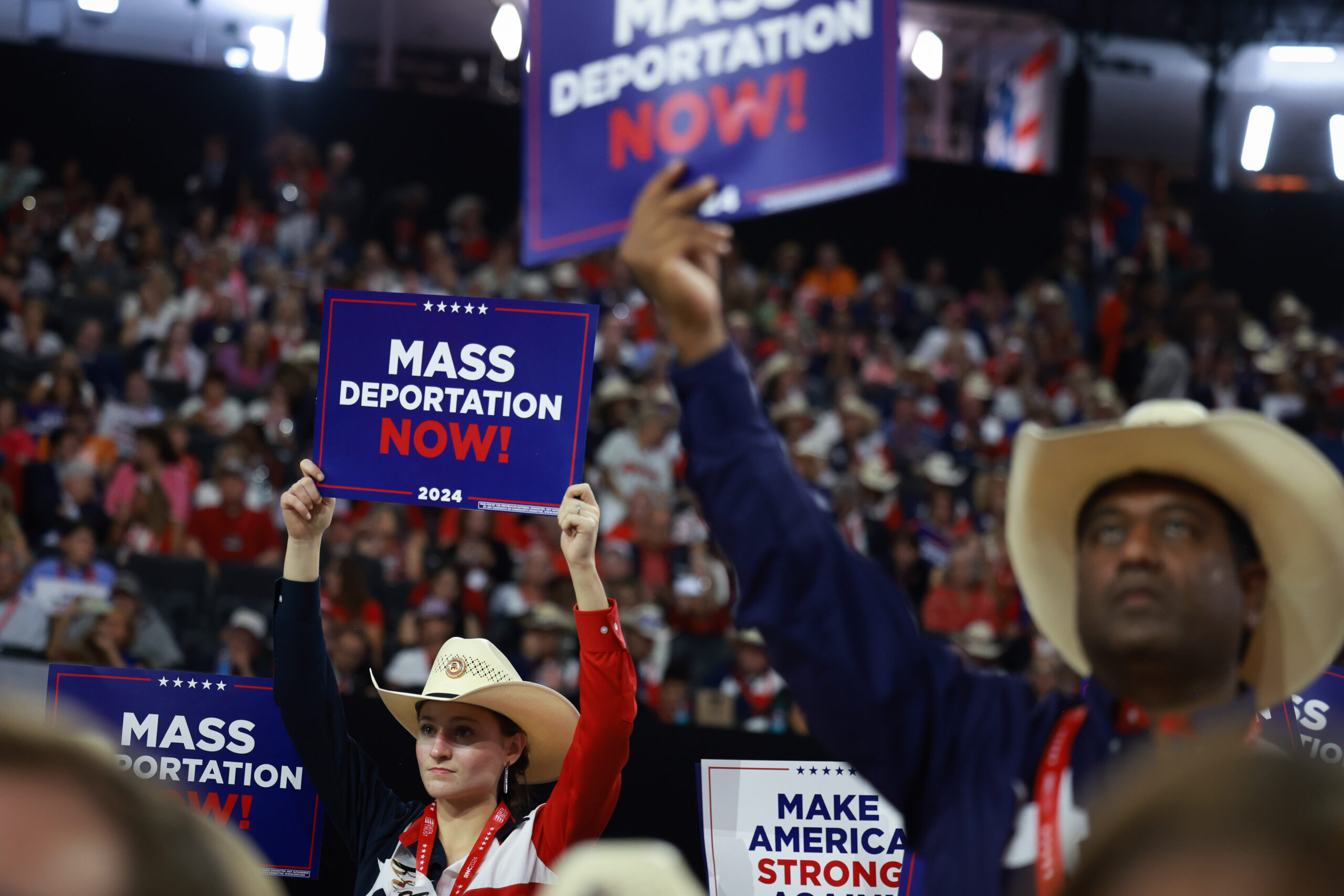
One month removed from hyperventilating over the accidental killing of two fellow citizens in Minneapolis, it is time for Republicans to regroup and recognize their surprisingly strong position in the lead-up to the upcoming midterm elections. Blindly accepting predictions of a midterm whipping overlooks the events of another historical period framed by polarization and confrontations in the street.
In the year leading up to Minneapolis, the Democratic Party was in complete freefall. The party had lost sizable portions of long-standing constituencies and had fallen behind in registrations. Its leaders were feckless and its brand was toxic. If the party had hope, it was the historic pattern of the incumbent party losing ground during the midterms.
In the wake of Minneapolis, nothing has changed in the Democratic Party, but the discussion has inexplicably shifted from achieving an upset to anticipating the inevitable.
Yes, the president’s party generally loses House seats in midterm elections; since 1946, the president’s party has lost 18 out of 20 election cycles. This pattern, however, obscures a significant discontinuity.
First, between 1954 and 1994, the Democratic Party was the House. During this 40-year period, both Democratic and Republican presidents would lose House seats in the midterm. Yet, regardless of whether the president was a Democrat or not, the public continuously voted for Democratic control of the House.
Second, in 1994, Democratic control of the House finally came to an end, after which the two parties traded the majority several times.
The House has turned over five times since then. And by wide margins. In 1994, the Democrats lost 54 seats. In 2006, Republicans lost 31. In 2010, Democrats lost 64. In 2018, Republicans lost 40. Undoubtedly, public disapproval of the incumbent president can be determinative.
But the pattern has also been disrupted three times.
In 1998, the Democrats gained five seats and, in 2002, the Republicans won eight seats. In the former, voters were rejecting Republican overreach over the Clinton-Lewinsky scandal; in the latter, voters were rallying to the flag after 9/11. In 2022, the Democratic Party lost nine House seats. However, in this instance, the loss was the second-lowest since 1946 and the turnover reflected the near-even split in the House. If the Republicans were to lose nine seats in 2026, the House would revert to the Democrats.
The saving grace for Trump is that America First conservatism has transitioned from an insurgency to majority party status, whereas the Democratic Party is moving in the opposite direction, a shift reminiscent of the party’s transformation from 1968 to 1972, a turbulent period punctuated by a tragedy akin to Minneapolis.
In May 1970, members of the state National Guard confronted antiwar demonstrators on the campus of Kent State University and, amid the confusion, shot and killed four students and wounded nine. Nixon had derided the protesters as “bums” only a day earlier and Democrats hoped the incident would injure him permanently and ensure his defeat in 1972. (The Democrats misunderstood their fellow Americans; a subsequent Gallup poll revealed a majority of respondents blamed the protesters for the tragedy.)
The incident not only deepened antiwar militants’ and diehard liberals’ antipathy toward Nixon, but also increased their determination to take over the Democratic Party.
In 1971, the Democratic Party was the majority party, controlled both houses of Congress, and held the edge in party identification. A January poll showed Senator Edmund Muskie, the party’s vice-presidential nominee in 1968, had a narrow lead over Nixon, establishing him as the frontrunner. In July, the 26th Amendment extended the vote to millions of 18- to 21-year-olds, a constituency the Democrats claimed as their own.
Nevertheless, the divisions that had erupted at the 1968 convention had only worsened.
In Congress, the northern and southern wings of the Democratic majorities clashed repeatedly. Disputes over civil rights, Vietnam, military spending, and the draft led the two blocs to vote differently on 38 percent of all recorded votes, the highest level since 1960.
Most significantly, the party adopted nominating reforms that substantially moved decision-making from the party’s professional political establishment to its voters via the primary system. Moreover, the reforms mandated specific quotas for traditionally underrepresented groups.
The commission that devised the reforms had been led by Senator George McGovern, a stalwart liberal and leading opponent of the Vietnam War. McGovern declared for the presidency but polled far behind Muskie and other major candidates. Nevertheless, McGovern was obviously advantaged by his intimate knowledge of the revised nominating process as well as an ideological constituency primed to turn out for primaries and populate the new group quotas.
McGovern lost to Muskie in New Hampshire, but by summer’s end McGovern had assembled an insurmountable lead in the delegate count.
The convention awarded McGovern the nomination and introduced a new militantly progressive party to the country. However, the ultra-liberal platform repelled the party regulars, who either withdrew to the sidelines or defected to Nixon.
That fall, McGovern led the party to its greatest defeat in a generation; Nixon won in a historic landslide and nearly won the youth vote.
McGovernite liberalism has animated the party ever since. Arch-liberals, leftists, and progressives soon constituted the preponderance of the party’s congressional representatives and its most activist wing.
More consequentially, McGovernite liberalism constituted a “punitive liberalism” that sought to punish America for a seemingly inexhaustible list of sins—greed, racism, xenophobia, misogyny, homophobia, slavery, genocide, environmental destruction, militarism, and imperialism. Possessing the levers of government, liberals set about enacting affirmative action, environmental restrictions, and welfare entitlements; and seeking accommodation with the Soviet Union.
Voters reacted by overwhelmingly electing Republican conservatives to the White House in three of the next four elections.
McGovern’s coalition eventually triumphed 32 years later in the form of Barack Obama. Democrats enacted national health care and diversity initiatives, but voters rightly detected the threat to the economy and the value of merit. Unfortunately, it took eight years under Obama (and four under a senile figurehead) to demonstrate the absurdity and destructiveness of the progressive agenda.
Upon Donald Trump’s election in 2016, the left underwent a collective psychological disintegration unprecedented in American history. Lurching even further to the left, the Democratic Party has embraced democratic socialism and a Marxist multiculturalism eager to regiment the economy and institute a DEI gleichschaltung. The next generation of Democrats encompasses committed socialists or charlatans enacting a bait and switch.
On immigration, Democrats would grant rights and privileges no self-respecting community would ever grant to those who violate its integrity.
The American public wants a secure border and the deportation of those who violated it. Over the course of three elections, the number of voters supporting a stronger border policy only increased. In 2024, the voters awarded Trump and America First conservatives unified control of the government and the mandate to do so.
Republicans should in no way cede ground in undoing illegal immigration and upholding election integrity.
Like Nixon in Vietnam, Trump has already recalibrated the DHS presence in Minneapolis. Calling for changes in tactics is reasonable; agreeing to partial deportation and abandoning the SAVE Act is capitulation.
If the Democratic Party supports an open border, then let them explain why. Have Democrats explain to the public what ends unlimited immigration serves. Have them face victims of crimes and explain why their perpetrators’ illegal crossings were condoned. Have them explain why policy should be dictated by mob action in the street. Have them explain the hypocrisy of requiring identification to shovel snow but not to vote.
Ultimately, what are congressional majorities for if not to enact long-standing objectives? When the Democrats lost Kennedy’s Senate seat, they did not retreat from passing nationalized health care; they may have lost the majority in the next midterm, but Obamacare is going nowhere. Funding DHS in full and passing the SAVE Act are worth a majority.
Just as McGovern and the New Left offended the silent majority in 1972, Ocasio-Cortez, Mamdani, and the neo-socialists taking over the Democratic Party will only horrify and repel the common-sense majority in 2026 and 2028.
The post After Minneapolis, Republicans Still Have a Midterms Advantage appeared first on The American Conservative.
Limited resources are being used up at the expense of other theaters.

The United States is running out of ammunition in our war with Iran. The Trump administration has repeatedly struck Iran after failing to reach a deal over Tehran’s nuclear program. Most recently, President Donald Trump said the conflict could go on for as long as “four weeks.” But each day the war goes on, the more America uses scarce missiles that will take billions of dollars and years to replace. The sooner the United States can declare victory and go home, the better it will be for Washington’s ability to conventionally deter China, Russia, and North Korea.
Among Washington’s objectives are the degradation of Iran’s military capabilities, the reduction of oil flowing to China, and for a different, more compliant leadership to emerge in Tehran. That last aim carries the greatest probability of an extended conflict. This is because regime change from the air is not possible without armed conflict on the ground—either through a U.S.-led invasion or from a local revolt of Iranians and their military against their government. Given the Iranian people are not armed, any revolution would have to come from their own military, which so far has remained loyal to the regime.
Secretary of Defense Pete Hegseth recently said this will not be another endless war of nation-building. That’s good, and the American people should demand no boots on the ground. But the war aim of “regime change” or “regime adjustment” is still worrisome. Such a war aim is an existential threat to the Iranian government, meaning they have little to lose and will fight all the longer and harder.
Iran will have new leaders anyway because most of the old ones are now dead. But that does not mean the new ones will agree to every one of Washington’s terms. All Washington can do is hope for part of the Iranian military to revolt and then to hope any resulting civil war does not cause more regional chaos than it is worth. But hope is not a strategy.
Regardless of whether a new nuclear deal can be had, America can still declare victory and should do so soon. Iran’s military is wrecked, most of its leaders have been killed, and it still has its nuclear program set back years. The United States should quit while it is ahead and refocus on China, Russia, and North Korea. Save our offensive missiles and defensive interceptors in case we need them later and let the embers in Iran be a warning to would-be adversaries.
Otherwise, we risk using up vital weapons that could be needed in an emergency to defend our bases and troops elsewhere. Consider these costs: The Patriot PAC-3 interceptor is around $4 million per missile. The Navy’s Standard Missile-2 and -6 cost about $2 million and $4 million each. The Standard Missile-3 costs up to $28 million each. And Tomahawk cruise missiles run about $1.3 million each.
The production lead time for these weapons stretches to two or three years, meaning it could take half a decade or more to replenish each arsenal. And these costs don’t account for the human toll on our service members or the operational costs of every warship and plane, from parts to fuel to supplies and maintenance. What happens if a new emergency arises and those weapons platforms could also be needed elsewhere?
According to a 2023 CSIS report and a 2024 Heritage Foundation report, U.S. munitions stockpiles across several critical categories were already well short of what a major conflict would require. That should be cause for alarm.
China, Russia, and North Korea remain deterred because they judge aggression against the U.S. and our allies as too costly. This deterrence holds because it is credibly backed up by our arsenal. But you can bet they are counting how much of our munitions stockpile is being used up. What if they decide our redlines don’t mean much if our high-tech weapons have no ammunition to shoot?
Any sober Iran policy should be balanced with the need to preserve the arsenal needed to deter China, Russia, and North Korea. A prolonged war with Iran hollows out that strength precisely when those countries are watching for weakness. The administration should weigh carefully the risks of an extended conflict. The costs of getting this wrong will likely have reverberations beyond the Middle East.
The post An Extended War With Iran Will Weaken American Deterrence Against China and Russia appeared first on The American Conservative.

Pro-Palestinian activists in Richmond, Virginia have painted a watermelon mural on a local building. The seeds of the fruit are arranged to spell out ‘Free Palestine.’
The watermelon has long been a symbol of Palestinian activism, but it is also seen by many as a black stereotype and some black residents are not cool with the painting as a result.
This is a classic case of woke leftism being aligned with racist tropes and not even realizing it.
WWBT News reports:
Richmond mural supporting Palestine sparks debate over watermelon imagery in Black community
A mural is drawing attention from Black community leaders who say they don’t have a problem with the message, just the watermelon imagery.
The mural, at the intersection of Brookland Boulevard and North Avenue in Richmond’s Northside neighborhood, depicts a darker-skinned Palestinian woman holding a slice of watermelon, with the seeds spelling out “Free Palestine.”
Dr. Faedah Totah with Virginia Commonwealth University said the symbol traces back to 1967, when Israel occupied the West Bank and Gaza Strip and banned the Palestinian flag.
“The Palestinian flag has four colors, red, white, black, and green, which also happens to be the color of a slice of a watermelon,” Totah said. “So, what ends up happening when you ban the flag is that people become creative in finding different ways to express their national identity.”…
The mural is located in a historically Black neighborhood undergoing gentrification. Jonathan Davis, the former president of the Richmond Crusade for Voters and also a former president of the Battery Park Civic Association, said the imagery gave him pause.
“I was taken aback because of the imagery that it represents, a watermelon up to the mouth of a Black woman,” Davis said. “So to me, understanding the history of our people and what happened during the Jim Crow era and how those images were used to demean us and make fun of us and ridicule us and run us out of the business, it really bothered me.”
How awkward.
Antizionist activists painted a large mural of a Black woman eating a watermelon with the caption “Free Palestine”
This was done in an historically Black neighborhood in Richmond, Virginia where some locals believe that the imagery plays into racist tropes and should be removed pic.twitter.com/iFFYPjegOI
— Jonathan Eric Lewis (@LewisJonathanE) March 7, 2026
This puts local leaders in a rather tricky situation, doesn’t it? Which side are they going to take?
The post Pro-Palestine Activists in Virginia Paint Watermelon Mural, Angering Black Residents Who Say it’s Racist appeared first on The Gateway Pundit.


The post Protests Erupt in Havana After More Than 60 Hours Without Electricity as Anger at Communist Government Grows appeared first on The Gateway Pundit.

Trump hater Bruce Springsteen is doing a ‘No Kings’ tour this spring to celebrate his Trump Derangement Syndrome, but fans are quickly finding out that tickets for the shows come with a king sized price.
Springsteen has faced criticism over this same issue in the past. It doesn’t look like he has changed anything, despite the complaints.
At least rich liberals will be able to afford to see the shows, right?
The New York Post reports:
Springsteen fans outraged over pricey tickets for ‘No Kings’-themed tour; ‘a woke joke’
His “Glory Days” with some fans have passed him by.
Bruce Springsteen’s fans are furious over the legendary rocker’s astronomical ticket prices for his upcoming “Land of Hope and Dreams” tour, which critics argue are unaffordable for his “working class fanbase” and contradict his Man of the People image.
The woke New Jersey billionaire is pushing the anti-President Trump “No Kings” agenda in his advertising campaign for the 20-date tour with his E Street Band — but is ironically charging prices fit for royalty, at up to $3,000 a ticket.
“I couldn’t be more disappointed in the Boss … how do these outrageous ticket prices reflect the land of hopes and dreams? The hopes and dreams of poor people who can’t afford your tickets,” one outraged fan commented on Springsteen’s Instagram post announcing the tour.
“You are also catering to upper middle class and the rich. Isn’t that what we’re fighting?”
“No Kings tour, but priced for a king. What a dbag,” another pointed out.
Is anyone really surprised by this?
The hypocrisy is so thick here it would require a chainsaw to cut through it.
Up to three thousand dollars for one ticket.
“No Kings tour, but priced for a king. What a dbag,” another pointed out. https://t.co/DSQlI8F8Uq
— Gena
(@ReallyJustG) March 7, 2026
$3000 tickets to rail against the rich and powerful as a voice for <cough cough> the common man.
https://t.co/jLs9EDfFhu
— FugitiveMama (@fugitivemama) March 7, 2026
Classic limousine liberal, charge outrageous prices, and make millions for themselves, while preaching about capitalism and the evils of it. What a joke. https://t.co/XlRjBrhQkq
— The Mad Moderate (@moderate_mad) March 8, 2026
He just cares so much about the common man. The very wealthy, common man, apparently.
The post Fans Outraged by Massive Cost of Tickets for Lefty Bruce Springsteen’s ‘No Kings’ Tour appeared first on The Gateway Pundit.

Marco Rubio 2.0 is pretty amazing. He has turned out to be one of the most effective members of the administration in Trump’s second term.
If you look back at certain aspects of Rubio’s past however, it makes a lot of sense.
A speech that Rubio made about Iran on the Senate floor in 2015 is currently going viral because it has aged perfectly. Rubio had Iran’s number over a decade ago.
In the speech, he is talking about the Obama Iran Deal and what it would do. He nailed it.
Partial transcript via Townhall:
“I do want to be recorded for history’s purposes before I know what is going to happen in regards to this if it goes through. Iran will immediately use the money that it’s receiving in sanctions relief to begin to build up its conventional capabilities,” Senator Rubio said at the time. “It will establish the most dominant military power in the region outside of the United States and it will raise the price of us operating in the region.
They’re going to build anti-access capabilities, rockets capable of destroying our aircraft carriers and ships. They’ll continue to build these swift boats that are able to come on us, these fast boats that are able to swarm our naval assets. And they’ll make it harder and harder for U.S. troops to be in the region.”
They’ll also work with other terrorist groups in the region to target American servicemen and women. And they may or may not deny that they’re involved, but they will target us and raise the price of our presence in the Middle East until they hope to completely pull us out of that region. They’ll also continue to build long-range missiles, missiles capable of reaching the United States.
Those are not affected by this deal. And they’ll continue to build them as they’ve been doing. And then at some point in the near future, when the time is right, they will build a nuclear weapon.
“And they will do so because at that point they will know that they have become immune, that we will no longer be able to strike their nuclear program because the price of doing so will be too high,” he added. “This is not just a work of imagination. It exists in the world today.”
Watch the whole thing below:
FLASHBACK: Then-Senator Marco Rubio tears into President Obama’s proposed Iran nuclear deal, predicting the threat it posed to America and future generations:
“I want to be recorded for history’s purposes, if nothing else, to say that those of us who opposed this deal understood… pic.twitter.com/pUyIs2N3TV
— Fox News (@FoxNews) March 5, 2026
There is no one in the Democrat party who has foreign policy chops like Marco Rubio. He is truly in a class of his own.
The post This Marco Rubio Speech About Iran From 2015 is Going Viral Because it Aged PERFECTLY (VIDEO) appeared first on The Gateway Pundit.

Abigail Spanberger and other Virginia Democrats ran on a campaign of affordability, but it is becoming ever more clear that this was a lie.
Since taking power just weeks ago, they have moved to increase and create new taxes on everything from car ownership to dog walking, and they are trying to redistrict Republicans out of existence.
Now we are learning that they want to require schools to teach that January 6th was an ‘insurrection.’
It’s all about controlling the narrative.
Law Professor Jonathan Turley writes at his blog:
Virginia Democrats Move to Require Teaching Jan. 6th as an “Insurrection”
Virginia Democrats are moving to require teachers to tell students that Jan. 6th was an “insurrection” and effectively bar them from referencing “peaceful protests” or election irregularities. The characterization of the riot as an insurrection is historically and legally false. However, any parents who want to send their children to Virginia public schools would have to accept this form of indoctrination as part of their children’s education.
In the last election, Democrats campaigned as moderates, including Abigail Spanberger. Once in control of the Governor’s mansion and the legislature, however, they have moved quickly to the far left in a flurry of measures. Democratic legislators just voted themselves almost a 300% increase in salaries. They will need it. They are moving to increase taxes on ride shares, concerts, counseling, leaf blowers, Amazon deliveries, DoorDash, Uber Eats, ammunition, and other areas.
However, HB 333, drafted by Del. Dan I. Helmer of Fairfax, raises serious concerns over academic freedom and free speech.
This is a summary of the bill:
“prohibits any such program of instruction, any accompanying curriculum or instructional materials, or any instruction provided by a teacher as a part of such program of instruction from (i) describing, portraying, or presenting as credible a description or portrayal of the actions precipitating or involved in the January 6, 2021, insurrection as peaceful protest or (ii) stating, suggesting, or presenting as credible a statement or suggestion that there was extensive election fraud that could have changed or actually changed the results of the 2020 presidential election. The bill requires any such program of instruction, any accompanying curriculum or instructional materials, or any instruction provided by a teacher as a part of such program of instruction to describe the January 6, 2021, insurrection at the United States Capitol as an unprecedented, violent attack on U.S. democratic institutions, infrastructure, and representatives for the purpose of overturning the results of the 2020 presidential election.”
This is one of the reasons that Democrats take such a keen interest in the issue of education. They want to be in charge of who writes history and how it is taught.
The post Virginia Democrats Moving to Require Schools to Teach That January 6th Was an ‘Insurrection’ appeared first on The Gateway Pundit.