From Ships to Drones and Missiles: Iran’s Dwindling Arsenal

U.S. aircraft carrier docked in harbor with tugboats assisting and crew members gathered on deck, showcasing naval operations and maritime activity.

U.S. aircraft carrier docked in harbor with tugboats assisting and crew members gathered on deck, showcasing naval operations and maritime activity.
Iran has no aircraft carriers. The U.S. has deployed the USS Abraham Lincoln, pictured here, along with the USS Gerald R. Ford, positioned in the Arabian Sea. Photo courtesy of PACOM (U.S. Navy photo by Mass Communication Specialist 2nd Class Danielle A. Baker/Released)


Iran’s primary weapons against regional U.S. military bases and Israel are its ballistic missiles. Iran also maintains an extensive drone force and a navy, which it has used to attack shipping in the Persian Gulf, the Gulf of Oman, and the Strait of Hormuz.

After just six days of conflict, however, Iran’s naval assets, missile stockpiles, and drone supplies are being rapidly depleted. And unlike the United States, Iran cannot replenish them while its production facilities and launch infrastructure are under sustained bombardment.

Some reports claim that as many as 17 Iranian surface ships and one submarine have been destroyed. Satellite images reviewed by BBC Verify indicate that a wave of U.S. and Israeli strikes has destroyed or damaged at least 11 Iranian naval vessels since Saturday, along with missile bases and nuclear-related facilities. Images from the Konarak naval base and the Bandar Abbas port facility, which houses the headquarters of the Iranian navy on the Strait of Hormuz, show smoke rising from multiple ships.

Among the vessels reportedly destroyed was the IRINS Makran, Iran’s largest naval ship, which had been converted to serve as a drone carrier. Satellite imagery showed thick smoke pouring from the vessel while docked at Bandar Abbas. Maritime security firm Vanguard reported that the IRIS Bayandor, IRIS Naghdi, and IRIS Jamaran were also destroyed. The firm further claimed that the IRIS Shahid Bagheri, a modern drone-carrier ship launched in 2025, had been sunk, although BBC Verify said it could not independently confirm that claim.

The commander of U.S. Central Command, Admiral Brad Cooper, said that 17 Iranian vessels, including the navy’s “most operational” submarine, had been destroyed. According to Global Firepower, Iran’s navy ranks 35th in the world. It is comprised of 109 vessels, including 0 aircraft carriers, 0 helicopter carriers, 0 destroyers, 7 frigates, 3 corvettes, and 25 submarines. The rest are small patrol boats and support ships. None of its submarines are nuclear. The Iranian navy relies on a fleet of diesel-electric attack submarines, including Russian-made Kilo-class, indigenous Fateh-class, and smaller Ghadir-class midget submarines designed for shallow-water operations and coastal defense.

Cooper said that for decades Iran had harassed international shipping, adding that there was currently not a single Iranian vessel underway in the Arabian Gulf, the Strait of Hormuz, or the Gulf of Oman. Some vessels may have been obscured by cloud cover or smoke in satellite images, or may have been struck at sea, making independent verification difficult.

Analysts cautioned that Iran still retains the ability to carry out unconventional maritime attacks using drones, mini-submarines, and vessels linked to its shadow tanker fleet. Analysts from MAIAR said Tehran could also deploy smaller fast-attack craft armed with anti-ship missiles if its larger warships continue to be targeted. Iran could also disrupt commercial shipping by mining key routes in the Strait of Hormuz or launching drone attacks on tankers and port infrastructure.

Satellite imagery also indicates strikes at facilities near Natanz, a key location in Iran’s nuclear program. The International Atomic Energy Agency said the buildings struck provided access to the underground enrichment facility and that no radiological consequences were expected from the damage. The overall scale of damage to Iran’s military infrastructure remains unclear as strikes continue and Israeli attacks have also targeted security headquarters in Tehran.

Apart from the navy and its drone stockpile, Iran’s primary weapon of mass chaos is its missile cache. Iran was estimated to have had about 2,000 missiles before the June conflict with Israel and the U.S., during which it fired at least 500 missiles at Israel. After the conflict, shipments of precursors from China increased dramatically, suggesting that Tehran was scrambling to rebuild its stockpile.

In recent months, the IDF says Iran invested significant effort to restore missile production capabilities, manufacturing dozens of projectiles per month. According to The Times of Israel, as of the February 11, 2026 rally marking the anniversary of the Islamic Revolution, the IDF assessed that Iran possessed approximately 2,500 ballistic missiles.

According to Adm. Cooper, Iran had launched more than 500 ballistic missiles and over 2,000 drones since the campaign began, as of March 3.

Although Iran is not launching missiles at the rate it did in June, it has still used up at least 20% of its missile stockpile already.

Iran’s ability to replenish its missile stockpiles is being greatly limited. Secretary of War Pete Hegseth explicitly listed destroying Iranian missile production as a core U.S. objective, stating, “Destroy Iranian missiles, destroy Iranian missile production, destroy their navy and other security infrastructure.”

The IDF struck multiple missile-production facilities in Tehran on March 2–3, including a production center in the Khojir area used for surface-to-surface and surface-to-air missile components, the IRGC’s main production center for solid missile fuel, and a chemical factory producing missile components and fuel.

The IDF reported destroying 300 Iranian missile launchers since the conflict began, consistent with an Israeli media report of a 70% drop in Iranian missile fire toward Israel. The combined U.S.-Israeli force has explicitly designed its campaign to destroy Iran’s ballistic missile capabilities before its own interceptor stockpiles are depleted.

Similarly, the Institute for the Study of War said the decline in Iranian missile attacks against Israel and the United Arab Emirates suggests that efforts to destroy ballistic missile launchers have been effective. Satellite images also show damage to multiple structures at the headquarters of the Islamic Revolutionary Guard Corps and nearby government institutions, including the National Defence University and the Intelligence Ministry. Former CENTCOM commander General Joseph Votel said some strikes appear designed to weaken the regime’s internal security apparatus and its ability to control the population.

Iran is known for its production of drones and other unmanned systems, including aerial and aquatic vehicles. It developed a large fleet of UAVs, including the Shahed series one-way attack drones designed to be launched in waves to overwhelm air defenses or accompany missile salvos. Gulf News reports that the strategic logic was always quantity over quality, cheap enough to produce in large numbers but expensive for defenders to intercept.

Adm. Cooper reported that, as of March 3 Iran had launched more than 2,000 drones since the campaign began. Drone launch sites were listed as explicit targets from the opening hours of Operation Epic Fury on February 28. U.S. precision strikes specifically destroyed Iranian Shahed-136 kamikaze drone launch sites as of March 4.

The IRGC’s drone carrier IRIS Shahid Bagheri, Iran’s first domestically produced drone carrier capable of embarking up to 60 UAVs including Shahed-136 loitering munitions, was struck and disabled within hours of the operation beginning on February 28. This eliminated Iran’s mobile sea-based drone launch capability.

Iran retains a stockpile of medium- and long-range drones, but without point defenses being restored and with production sites under sustained attack, the ability to replenish fired drones during active hostilities is severely constrained.

This is fundamentally a war of attrition. The side that exhausts its arsenal first will be forced to the negotiating table. But the two sides are not absorbing damage equally — Iran’s military infrastructure, naval assets, production facilities, and leadership are being systematically destroyed, while U.S. forces, though not without casualties, are operating largely from outside Iran’s effective strike range and absorbing almost no damage in return.

The post From Ships to Drones and Missiles: Iran’s Dwindling Arsenal appeared first on The Gateway Pundit.

Hands Off Iran Protests: The Left Mourns the Ayatollah

Protesters hold signs advocating for peace and against military action towards Iran during a demonstration in a public park.

Protesters hold signs advocating for peace and against military action towards Iran during a demonstration in a public park.
Hands Off Iran, “We Love the Ayatollah,” and “Globalize the Intifada” protests seem horribly misguided, the result of an advanced psyop campaign. Photo by Diane Krauthamer, CC BY 4.0 (https://creativecommons.org/licenses/by/4.0/), via Wikimedia Commons.

White liberal women are now marching in the streets of American cities holding photos of Ayatollah Khamenei and signs that read “Globalize the Intifada” and “Hands Off Iran.” They are supporting their own extinction, and they do so to spite President Trump.

We are now living in an upside-down world where the Ayatollah, who tortured and killed hundreds of thousands of people over the past decades, is being defended by Western activists. Furthermore, women have almost no rights under strict Islamic law, yet these women are protesting in favor of a man who would have had them tortured, jailed, and possibly executed.

Yudval David, a Fox News commentator and a member of the Middle East Forum, told The Gateway Pundit in an interview that there have been marches all over the world where members of the Iranian diaspora have gathered in front of American and Israeli embassies to lay wreaths of flowers and sing and shout “thank you,” because they believe they are finally being freed from a repressive regime that has killed so many innocent people.

He went on to say, “Now, in contrast, we’re seeing people in Western countries, in democracies in Europe and the United States, people who claim to be progressive or woke or, in the United States, Democrats or left-leaning liberals, who have been so manipulated by the disinformation and misinformation propaganda of Iran that they’re saying, ‘Hands Off Iran.’ Meanwhile, they’re ignoring the human rights plight of Iranians. So I plead for them to meet the Iranians, to speak with Iranians, and to truly understand what this is all about.”

He agreed that this was as irrational and unthinking as liberals protesting to send Maduro back to Venezuela. The Venezuelan people finally got rid of the dictator and might have a chance at freedom and democracy, but some person with green hair and a nose ring in New York or California thinks Venezuela would be better off with Maduro, and Iran would be better off with the Ayatollah.

“There are different ways of understanding it,” David said. One explanation, he argued, is that many activists have been influenced by movements and forces that have effectively “brainwashed” them.

“Iran has financed and supported Hamas, Hezbollah, the Houthis, the Muslim Brotherhood,” he said, adding that the regime has also funded movements that spread onto college campuses across the West.

As a result, he argued, activists who claim to support the Palestinian cause and human rights are now largely silent because they cannot oppose the nation-state that helped fund and shape the movements that define them.

“And I think that’s the reason why we’re seeing so much silence,” he said. “It’s utter hypocrisy, and it’s truly evil.”

David concluded that more people need to challenge what he described as “the hateful, bigoted hypocrites of these far left-leaning movements, the Marxist, socialist, communist movements, the Islamist-supporting movements.”

“Queers for Palestine” was one example David gave of what he described as a movement that is profoundly misguided and Darwinian. They are supporting an Islamist movement that would kill them.

David argued that Iran understands it is unlikely to win a direct military war against the United States and Israel, even though its proxies continue trying. Instead, he said, Tehran is pursuing an ideological strategy. According to David, the regime seeks to weaken its adversaries from within by influencing political and activist movements in Western democracies.

He said this strategy helps explain why some activists across Europe, the United States, and Canada support Islamist movements despite the contradiction with their own political values. In his view, they have been manipulated as part of a broader effort to reshape democratic societies.

“It doesn’t make sense for people who enjoy the rights that a democratic country provides to support an Islamist movement and an Islamist country that would not only take those rights away but kill them,” he said.

David added that the freedoms enjoyed by participants in the “Hands Off Iran” movement would not exist in Iran. “None of those freedoms would be allowed in Iran,” he said, arguing that they would also not exist in countries governed by Sharia law or radical Islamist movements.

When asked who is funding the protests, he said, “We all know who the grand puppet master behind all of this is, the Islamic Republic, but it’s also Qatar, even though Iran has also fired rockets at Qatar. I don’t think these two nations, which fund Islamist and jihadist movements, should be trusted. We have organizations like WESPAC that funnel money into the United States from questionable sources, and there are other organizations like that which allow foreign money to come into the United States.”

WESPAC (Westchester People’s Action Coalition) Foundation is a left-of-center nonprofit founded in 1974 that supports the BDS movement and has served as a fiscal sponsor for numerous anti-Israel groups. WESPAC previously served as the fiscal sponsor for Students for Justice in Palestine, Within Our Lifetime, the U.S. Palestinian Community Network, the Palestinian Feminist Collective, Adalah-NY, and the Palestinian Youth Movement USA.

WESPAC’s sources of income are mostly unknown, and its funding is largely obscured through donor-advised charities.

The Samidoun Palestinian Prisoner Solidarity Network, which is closely linked to the Popular Front for the Liberation of Palestine (PFLP), has had its leadership call on participants to salute the military wings of Hamas, Palestinian Islamic Jihad, the PFLP, as well as Hezbollah and other Iranian-backed terror groups. WESPAC’s network overlaps with this ecosystem, though Samidoun is not listed as a direct WESPAC-sponsored group.

Another organization of concern is the Council on American-Islamic Relations (CAIR). CAIR was named as an unindicted co-conspirator in the 2007 Holy Land Foundation terrorism-financing trial, the largest successful prosecution of terrorism financing in U.S. history, where it was identified as an associate of the Muslim Brotherhood.

CAIR received an early grant from the Holy Land Foundation, which was later designated a Specially Designated Global Terrorist by the U.S. Treasury for funding jihadist organizations. CAIR was never charged with any crime.

Ghassan Elashi, a founding board member of the Texas branch of CAIR and a leader of the Holy Land Foundation, was sentenced to 65 years in prison after being convicted of conspiracy to provide material support to a designated foreign terrorist organization, money laundering, and related charges.

The FBI suspended all formal contacts with CAIR due to evidence it says demonstrates a relationship between CAIR and Hamas.

“How this organization is still allowed to thrive is beyond me,” David exclaimed.

“CAIR has funneled money into many different organizations as part of an Islamist, which is different from jihadist, cause,” he said.. He explained that Islamism seeks to spread a radical Islamic movement through sociopolitical means, including politics, social-justice campaigns, and activist organizations.

David added that the movement has also manipulated public discourse by promoting the term “Islamophobia” whenever critics raise concerns about other forms of racism, bigotry, or hatred, which he argued does not make sense.

“It’s still shocking that these white, non-religious, liberal progressives are practicing performative activism,” David said. He argued that the activism cannot be genuine if it is limited to slogans placed on protest signs, without deeper efforts to understand the issues involved.

David said the Iranian regime has remained in power for 47 years largely through repression. “They survived through fear, execution, prison, torture, and violent crackdowns on peaceful protest,” he said.

He urged Western activists to listen to Iranians living abroad. “They need to speak to the Iranian diaspora,” he said, describing it as essentially “a nation in exile,” made up of millions of people forced from their homeland but who have not abandoned the dream of a free Iran.

He added that the recent U.S. and Israeli strikes have created a sense of hope among many in the Iranian diaspora that they may one day be able to return to a free and democratic Iran. But apparently white liberals want the Ayatollah and the repression to continue.

The post Hands Off Iran Protests: The Left Mourns the Ayatollah appeared first on The Gateway Pundit.

HACKTIVIST UPRISING: U.S. Networks Under Siege…

Iran-linked hacktivists are mobilizing to unleash a wave of cyber attacks on U.S. state and local governments, threatening to disrupt critical infrastructure and expose Americans’ personal information in retaliation for recent U.S.-Israeli military strikes.

Hacktivist Groups Coordinate Retaliatory Operations

The Multi-State Information Sharing and Analysis Center issued urgent warnings this week following a weekend U.S.-Israeli bombing campaign that crippled Iran’s internet infrastructure. Randy Rose, MS-ISAC Vice President for Security Operations and Intelligence, told security professionals that Iran-aligned hacktivist groups operating outside Iran’s borders are mobilizing for coordinated cyber operations against American targets. These groups have already demonstrated their capabilities, with the DieNet group launching distributed denial-of-service attacks on U.S. ports and the Fatimiyoun Cyber Team claiming successful code injections and personal data theft from a U.S. township government. This coordinated response represents a significant shift from previous independent hacktivist operations to unified targeting strategies.

Critical Infrastructure Faces Escalating Threats

TJ Sayers, MS-ISAC Senior Director for Threat Intelligence, detailed how Iranian regime guidance provided to hacktivist groups before hostilities escalated now drives their operational tempo. The attacks target state and local government networks, financial services, energy sectors, and telecommunications infrastructure with low-level disruptions including website defacements and service outages. Security experts warn these initial probing attacks could escalate to more destructive operations if military tensions continue. The Iranian drone strikes on Amazon Web Services data centers in the United Arab Emirates demonstrate hacktivists’ willingness to target physical infrastructure supporting digital services. This approach threatens not just government operations but also private sector entities relying on cloud infrastructure and Israeli-manufactured technology components.

Disinformation Campaigns Threaten Public Trust

MS-ISAC experts identified a concerning pivot toward artificial intelligence-enhanced disinformation operations designed to undermine American resolve. Randy Rose warned that hacktivist groups plan to deploy deepfake technology creating false narratives about the conflict, specifically targeting Western coalition unity and public support for U.S. military operations. These psychological operations represent a long-term strategy to fracture political will without directly attacking hardened military networks. The combination of nuisance-level cyber disruptions causing service outages and sophisticated disinformation campaigns exploiting AI technology poses dual threats to both operational continuity and democratic discourse. Security analysts note this represents Iran’s adaptation of decade-long “invisible war” tactics, leveraging proxy forces while state-sponsored actors remain strategically quiet, possibly sheltering from kinetic warfare impacts.

State and Local Governments Vulnerable to Attacks

The targeting of subnational government entities reflects hacktivists’ recognition that state and local networks often lack the robust cybersecurity defenses of federal agencies. Recent breaches exposed personally identifiable information from township databases, demonstrating how even small municipalities face sophisticated threat actors backed by foreign regimes. The Cyber Islamic Resistance group has claimed successful data-wiping attacks on U.S. and Israeli logistics networks, while multiple hacktivist collectives coordinate their target selection for maximum disruptive impact. Energy sector vulnerabilities particularly concern security professionals, as operational technology environments controlling physical infrastructure face spear-phishing campaigns and potential destructive malware deployment. Recorded Future’s Insikt Group assessed that escalating military hostilities significantly increase the likelihood of destructive cyber operations progressing from Gulf targets to direct attacks on American critical infrastructure networks.

The blurred lines between independent hacktivist groups and Islamic Revolutionary Guard Corps-directed operations enable sophisticated disruption while maintaining plausible deniability for the Iranian regime. Security experts emphasize that American communities face immediate risks from these coordinated cyber campaigns, with service disruptions, data breaches, and supply chain interference already materializing. The shift from state-sponsored quietude to proxy activism demonstrates how authoritarian regimes exploit non-state actors to wage asymmetric warfare against American interests while avoiding direct attribution. State and local officials must immediately enhance cybersecurity postures, recognizing that the cyber battlespace now extends to every township, port authority, and public utility serving American citizens.

Sources:

Iran-linked hacktivists could target governments, experts warn – Defense One

Iran-linked hacktivists could target governments, experts warn – Nextgov

Iranian Cyber Proxies Active, But Nation-State Hackers Quiet – Gov Info Security

Montana Republican Sen. Steve Daines Abruptly Drops Out of Reelection Race Minutes Before Filing Deadline

Smiling man in a brown jacket and cap stands in a field with mountains and snow in the background, showcasing a rural landscape.

Smiling man in a brown jacket and cap stands in a field with mountains and snow in the background, showcasing a rural landscape.

Montana Republican Senator Steve Daines abruptly withdrew from his reelection bid on Wednesday, just minutes before the official filing deadline for the 2026 Senate race.

Coming in just eleven minutes before the official filing deadline in Helena, Daines, the Chairman of the National Republican Senatorial Committee (NRSC) and a powerful figure in the GOP hierarchy, has left the party in an absolute state of chaos.

The two-term Republican senator confirmed Wednesday in a video statement posted on X that he will not seek a third term in the U.S. Senate.

Steve Daines:
Serving the people of Montana in the U.S. House and the U.S. Senate for the past 13 years has been the greatest honor of my professional career. I’m grateful to God for allowing me to serve, but after much careful thought, I’ve decided not to seek reelection. Prior to public service, I spent 28 years in the private sector. While I found those years very rewarding, they didn’t compare to the fulfillment I found in public service. I’m energized, I’m encouraged, and I’m ready for whatever comes next.

I’m also very thankful to have served alongside President Trump and my colleagues in the Senate. Together, we built a conservative majority on the Supreme Court. We spearheaded Republican control of the U.S. Senate. We delivered the largest tax cut in U.S. history. We unleashed American energy dominance and secured our southern border.

We also enacted the bipartisan Great American Outdoors Act, the most significant conservation achievement in half a century. And we forged stronger ties with critical allies around the world. I’m especially indebted to my exceptional staff, who have worked tirelessly each day to serve Montanans. Thank you for creating countless raving fans through your efforts.

And finally, I’m most grateful to my sweet wife, Cindy, of 39 years. For the past 13 years, Cindy has selflessly dropped me off at the airport at 5 a.m. on most Mondays for that commute back to D.C. Together, Cindy and I look forward to the next chapter—cherishing moments with our seven grandchildren, spending a bit more time in Montana, and continuing to make a difference.

WATCH:

The timing of this announcement couldn’t be more suspicious. By waiting until the final moments to pull the plug, Daines has effectively boxed out potential MAGA challengers who might have been preparing to jump in.

Within minutes of Daines stepping aside, Montana U.S. Attorney Kurt Alme filed paperwork to run for the seat, immediately positioning himself as the leading Republican candidate.

Alme’s candidacy received a rapid endorsement from Donald Trump, who praised Daines and signaled his support for the new GOP contender.

Trump wrote that Daines had decided to “pass the torch” to Alme, calling the former U.S. attorney his preferred successor for the Senate seat.

Trump wrote on Truth Social:

Steve Daines, of Montana, is one of our truly Great United States Senators. He honorably served for 12 years in the Senate, and 2 in the House of Representatives.

He did a job like few others are capable of doing but, sadly for our Country, Steve’s Term is up, and he has decided to leave the Senate and, “pass the torch” to Kurt Alme, my TRUMP 45 and TRUMP 47 U.S. Attorney.

In fact, if Kurt didn’t have the highest level of aptitude and talent, Steve would have remained exactly where he is but, Kurt is exceptional, and I will be giving him, based on Steve’s strongest recommendation, my Complete and Total Endorsement. Governor Greg Gianforte and Senator Tim Sheehy have also Endorsed Kurt.

A Highly Respected Criminal Prosecutor in my Administration, and distinguished Harvard Law School Graduate, Kurt knows the Wisdom and Courage it takes to ensure LAW AND ORDER, advocate for our Heroes in Law Enforcement, and strongly support our Military and Veterans.

As your next Senator, Kurt will fight tirelessly to Grow our Economy, Cut Taxes and Regulations, Champion our Farmers and Ranchers, Promote MADE IN THE U.S.A., Unleash American Energy DOMINANCE, Keep our Border SECURE, Stop Migrant Crime, and Protect our always under siege Second Amendment.

Kurt Alme is an exceptional person, and will do a fantastic job as your next United States Senator from the Great State of Montana — HE WILL NOT LET YOU DOWN!

The post Montana Republican Sen. Steve Daines Abruptly Drops Out of Reelection Race Minutes Before Filing Deadline appeared first on The Gateway Pundit.

It’s Time to Remind President Trump That Senator John Cornyn Is Not MAGA – Not Even Close

U.S. Senator speaking at the podium in a legislative chamber with a water bottle visible in the background.

U.S. Senator speaking at the podium in a legislative chamber with a water bottle visible in the background.

Senator John Cornyn is a Deep State RINO Never to be Trusted.   No matter what the lying Deep State promises him, some things are too broken to make a deal … Read more

The post It’s Time to Remind President Trump That Senator John Cornyn Is Not MAGA – Not Even Close appeared first on The Gateway Pundit.

I’ve Read 50,000 Epstein Emails and I Need About 50,000 Showers

I’ve Read 50,000 Epstein Emails and I Need About 50,000 Showers

The Department of Justice has left in the salacious content, but redacted much of the relevant information.

Patrick McMullan Archives

I’m only about 100,000 pages into the Epstein files, so these are just my preliminary observations, but clearly the Department of Justice abused its redaction pen. One of my own columns, printed in full, appears in the files, sent from XXXXXXXXX, to XXXXXXXXX, with a cc to XXXXXXXX. Or maybe it was XXXXXXXX — I always get those guys confused.

Although the column is available online and wherever fine publications are sold, the DOJ redacted one name from it: “Haley Robson,” an Epstein victim-cum-procurer.

Robson’s name is not a secret. She’s been publicly identified at least since 2009 as an Epstein associate. Ironically, she’s also been one of the loudest voices denouncing the many redactions in the files.

She’s right. Way, way too many names have been X-ed out. I’m guessing the DOJ must have gone through at least 70,000 redactor pens.

The law expressly disallows redactions “on the basis of embarrassment, reputational harm, or political sensitivity.” So why has the Department of Justice blacked out the names of adult men—or women, God help us—sending emails to Epstein that say things like this:

a) “P*ssy hunters!!”

Yes, that’s it. That’s all the email said.

b) “Subject: Hi from PB Hi J, Hope you can find a great guy for REDACTED :)) her p*ssy is getting wet”

Remember the good old days, back when we were outraged about “grabbing p*ssies”?

c) One email is entirely redacted except … “Has discovered the distraction of p*ssy, I assume. Well, I say good for him.”

I’m almost certain this wasn’t a reference to some cat lover.

d) “Love whats wrong with you you sound like a dirty old guy!! You’re surrounded by tits all day long… “

No, definitely not about cats.

e) “no one can beat your p*ssy network”

Thanks to all the redactions, we’re not even sure which banks these guys work for.

f) “I’ll send car pics and updates as they come 🙂 all set for her trip. Photos to come. …her tits are great! ;)”

By the way, her eyes are up here, fellas.

g) “Meet me at class 9:30 so Many hot girls promise … Promise an abundant of young p*ssy flesh ….. Love A”

Epstein may have been a serial statutory rapist, but give the guy credit: He was always very punctual.

h) “All I need later is to bring REDACTED over and have her p*ssy;)))”

Okay, but just promise me you won’t objectify her. She’s still a person. She’s got a name. It’s XXXXXXXXXX.

Sure, it would be embarrassing to have one’s name attached to these emails, but the law says redactions are permitted only for “clearly unwarranted invasion[s] of personal privacy.”

Perhaps if these emails were being produced in response to a scandal involving, say, the Federal Railroad Safety Act of 1970, then revealing the senders’ names would be an unwarranted invasion of privacy. But this is a case expressly about an international sex ring, the collection of kompromat, and the entire absence of law enforcement.

The names of men joking about their carnal knowledge of Epstein’s girls is precisely why Congress ordered the files released. (Well, that and the possibility of impeaching Trump.)

Not only names, but way too many faces are blacked out. (And I’m ordinarily a big fan of people working in blackface.)

The files include a boatload of photos from Epstein’s private collection, showing men having every kind of sex with young girls. The girls’ faces are blacked out, obviously—but so are the men’s. Ordinarily, showing their faces would be a wild violation of their privacy, but the law clearly states that redactions are not allowed for “embarrassment” or “reputational harm.”

These guys were either Epstein’s co-conspirators or his marks. Even if the girls were of age and the sex was consensual, those photos could still be used for blackmail (and the occasional Christmas card photo).

If we saw their faces, it could explain why it took so long to bring Epstein to justice. It might help answer the peculiarly unresolved mystery of who told Alex Acosta, the U.S. attorney who struck the second plea deal with Epstein, that he “belonged to intelligence”? (Why do we still not know that?)

Shockingly, the New York Times, remembering that it’s a newspaper, has done fantastic work on the files. Only because the paper pursued the matter did the government un-redact a face in one photo. It showed a Mount Sinai doctor performing surgery on a girl laid out on Epstein’s dining room table—an unheard-of ethical breach. Based on other files, the Times figured out it was Dr. Jess Ting. But, when contacted by the paper, he denied it. After the DOJ unredacted the photo, showing Ting’s bright, smiling face, he stopped returning the paper’s calls.

Only 2.9 million pages to go. 

COPYRIGHT 2026 ANN COULTER
DISTRIBUTED BY IMPOLITE DEBATES

The post I’ve Read 50,000 Epstein Emails and I Need About 50,000 Showers appeared first on The American Conservative.

Will a Political Murder in France Engender a New Cordon Sanitaire?

Will a Political Murder in France Engender a New Cordon Sanitaire?

The far left is giving the rest of the French political spectrum little choice.

FRANCE-POLITICS-INVESTIGATION-ASSAULT-DEMO

French mainstream politics has its repertoire of watchwords, chief among them “faire barrage” (block the path) and “front républicain” (republican front). These exhortations have in the last two presidential elections applied to the candidate for the nationalist right Rassemblement National (National Rally), Marine Le Pen. The cordon sanitaire has been weakening amid burgeoning support for the RN, but it now is making a surprising comeback: as a call to prevent the far-left coalition La France Insoumise (LFI) from gaining power after a grisly murder has changed the political calculus. 

LFI’s “politics in a new key” have been apparent for a while. The party leader Jean-Luc Mélenchon’s rhetorical extravagances are legion. He has barked at policemen conducting an investigation into his party’s finances, shouting “la République, c’est moi” in his best Louis XIV tribute act. He has courted sections of the restive Arab Muslim electorate of the banlieue with unceasing antisemitic sorties, particularly after October 7, 2023.

His deputies are no better. Sebastien Delogu, now the faction’s candidate for the mayoralty of Marseille, physically menaced an RN deputy at the opening of the new parliament in July 2024. Mathilde Panot, the bloc’s leader in the National Assembly, screams at her opponents in the chamber with the ferocity of a fishmonger. Raphael Arnault, a black-bloc “antifascist” militant serving in the party’s parliamentary caucus, has been placed among those who are fiché S, France’s equivalent of the terrorism watchlist. 

Despite this record, the center and center-left have been willing to play ball with LFI. In snap parliamentary elections in July 2024, the parties of—LFI, the Socialists, Communists, and the Greens—gathered behind the banner of the “New Popular Front.” In the second round of the vote, when LFI candidates faced off against RN contenders, President Emmanuel Macron’s Renaissance faction urged its voters to back the LFI representative. Once again, and for the last time, the anti-RN coalition held, but only because it also included LFI, a party whose behavior is itself inimical to liberal democratic norms and practice.

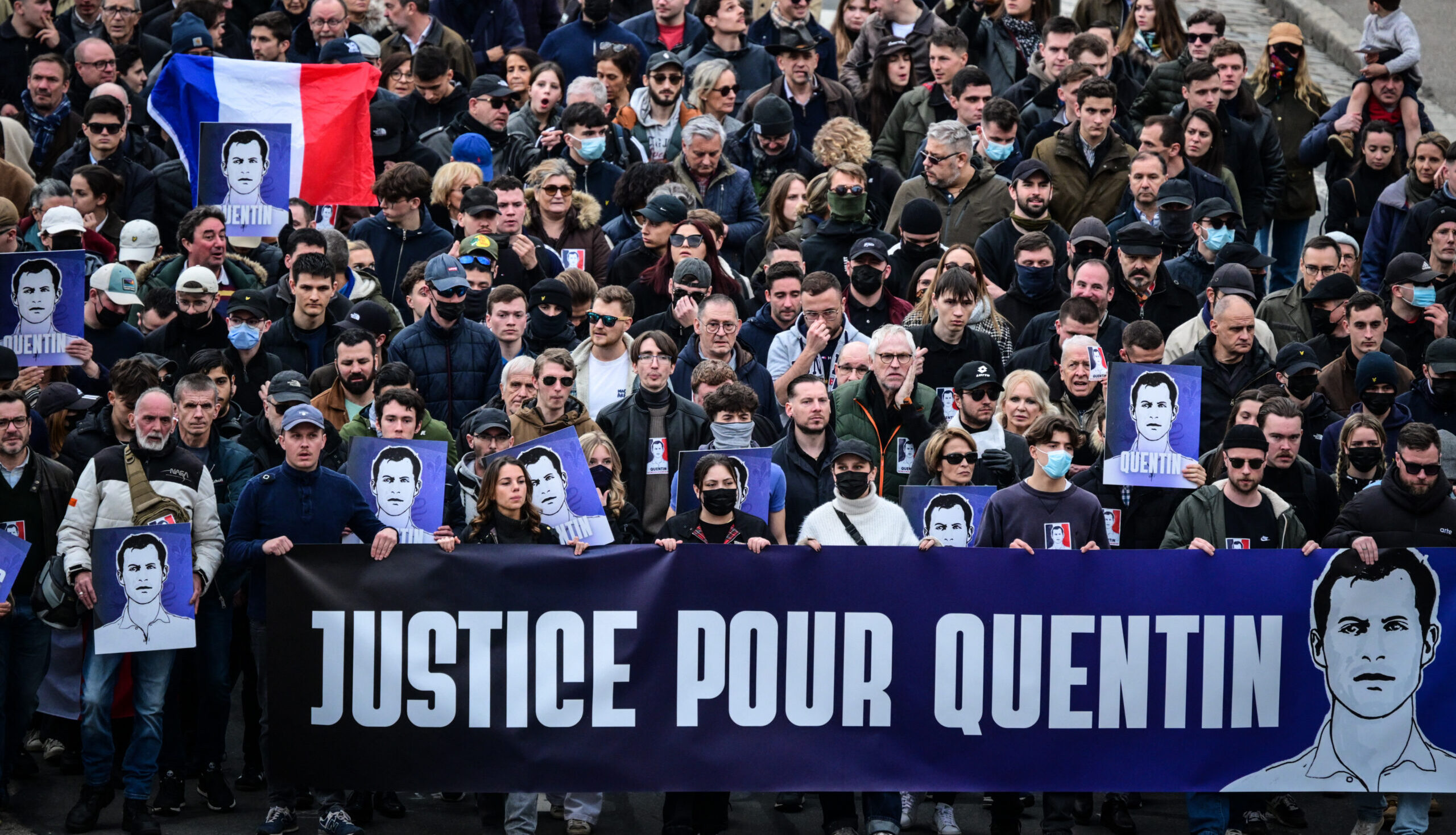
On the night of February 12, Quentin Deranque, a student at Sciences Po Lyon, was beaten to a pulp by far-left militants posted outside an event for the LFI European Parliament Member Rima Hassan. Deranque, an activist of the nationalist right, had been protesting with Nemesis, a feminist, anti-migration collective.  He died of his injuries two days later.

Subsequent news reports revealed that LFI’s “security detail” was composed of adherents of a far-left black-bloc group called “La Jeune Garde” (Young Guard), which the French state has been trying to forcibly dissolve since last year. The aforementioned Raphael Arnault is the co-founder of that group, and several of his parliamentary aides, two of whom were taken into police custody for questioning, are members.

Rather than expressing contrition for its proximity to the far-left Jeune Garde, LFI lashed back with whataboutism. Panot alleged that attention to Deranque’s murder is a distraction from the greater problem of far-right violence. Melenchon has presented himself and his party as the victim, deploring a “wave” of demonization targeting LFI. 

The repercussions have torn through the political scene. Laurent Nunez, the country’s interior minister (a post that in France resembles the role of Britain’s home secretary), has reclassified LFI as “extrême-gauche” (far-left) in electoral documents. Macron has echoed this language in a radio interview, and his party has now adopted a policy of “ni-ni”: neither the RN nor LFI.

Other left-wing parties now face growing pressure to disavow LFI. This could have immediate electoral consequences: French voters head to the polls in a matter of days to choose municipal representatives. Gregory Doucet, the Green mayor of Lyon, where the murder occurred, has been forced to equivocate on whether he would include LFI in his coalition if reelected.   

Voters are also aghast at LFI’s involvement in the l’Affaire Quentin. The pollster Odoxa found in a February 18-19 survey that 57 percent of respondents felt Melenchon had not reacted properly to the incident (against 13 percent who responded in the affirmative). Sixty-one percent pronounced themselves ready to impose a cordon sanitaire against LFI in the upcoming municipal elections, including 46 percent of Socialist Party sympathizers. As a point of comparison, Odoxa found in December 2025 that 46 percent of respondents envisaged casting anti-RN votes in local contests. In a hypothetical face-off in the second round of the presidential election between Melenchon and the probable RN candidate, Jordan Bardella, polls show the latter would carry the day by a 30- or 40-point margin. 

The RN is now reappropriating the rhetoric of the cordon sanitaire, with Bardella clamoring for an anti-LFI coalition in order to protect democratic debate. Despite protestations from Macronists and the center-right that the RN also sits outside the “republican arc,” the RN’s formulation captures an electoral reality.

The center cannot hold: LFI and RN now garner too much of the vote to successfully isolate both. This had been laid bare in the National Assembly, where the RN (and its allies) and LFI occupy 211 of 576 seats. The ni-ni forces of the center, center-right, and center-left have been barely able to fend off no-confidence votes since this parliament began sitting in July 2024; passing a budget has required herculean measures. Polls now indicate that next year’s presidential election could indeed pit Mélenchon against Bardella in the second round. In that scenario, the center will lose the luxury of the ni-ni and be compelled to choose. Not whether to impose a cordon sanitaire, but which cordon sanitaire.

The post Will a Political Murder in France Engender a New Cordon Sanitaire? appeared first on The American Conservative.

Small Fires Everywhere: The Wages of Boomer Foreign Policy

Small Fires Everywhere: The Wages of Boomer Foreign Policy

The Iran war incurs deferred costs for a splash of excitement now.

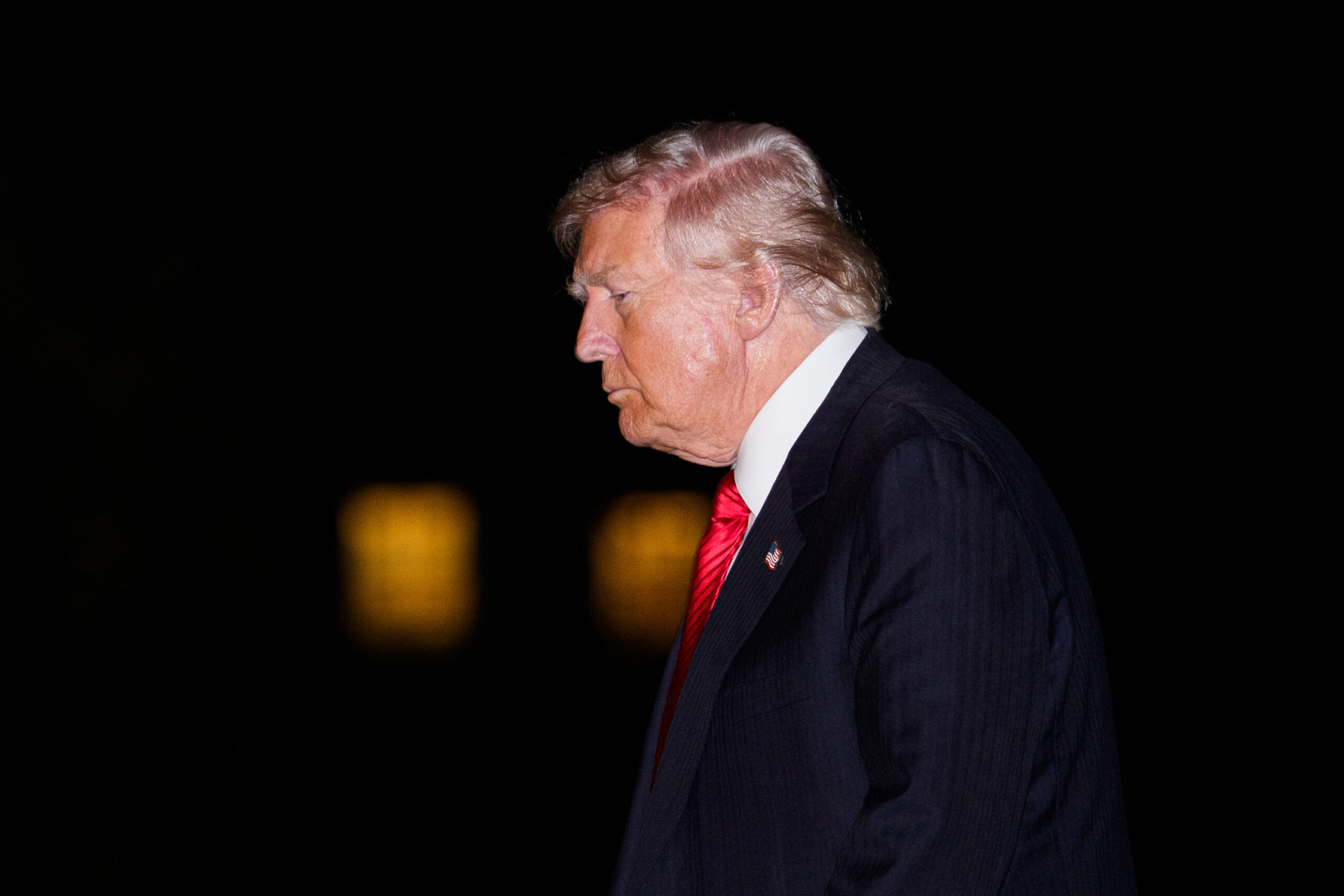
President Trump Arrives At The White House After Weekend At Mar-A-Lago

Baby Boomers should be remembered in domestic terms for enervating the U.S. economy with Total Boomer Luxury Communism. That generation vacuumed up current and future revenues to fund their luxe retirements, while young people struggle to find good jobs and homes while staring down a desolate future of debt and constraints.

President Donald Trump’s foreign policy is very much a Boomer foreign policy, and in a similar sense. The second Trump administration has lit small fires across the world and let them burn, while accruing the costs of putting them out well into the future.

It could be seen early with Venezuela. In September 2025, Trump began bombing Venezuelan small boats, first on the basis that they were to blame for the fentanyl crisis; this policy morphed into a larger campaign having to do with cocaine and the Maduro regime itself. Perhaps remembering his own rhetoric about regime-change wars, Trump had Gen. Dan Caine draw up a tactically excellent plan to snatch Nicolas Maduro and his wife and bring them back to the United States on drug charges.

This approach satisfied no one, but even so, the costs were low. The Miami crowd was upset Trump stopped short of installing Maria Corina Machado, going so far as to claim she “doesn’t have the support within or the respect within the country” to govern, despite her stand-in candidate having won in a landslide in 2024 after she was banned from running. For their part, the America Firsters were upset because the mission seemed like a Boomerish lark—an ’80s movie with Arnold Schwarzenegger taking on some moustachioed Latin dictator—that had little to do with how we live at home.

But Trump wriggled out of this by punting. Secretary of State Marco Rubio announced there would be three phases to follow: stabilization, recovery, and transition. This of course raised the question why Maduro’s former vice president and successor Delcy Rodriguez would help the United States move from phase two to phase three. She seems far more likely to pocket the gains from stabilization and recovery and put roadblocks in the way of transition.

But the costs of this policy resurfaced faster than Trump hoped. In a twist that should have surprised no one, Machado announced days ago that she would be returning to Venezuela in the coming weeks. The likely response of Rodriguez and former Maduro henchmen Diosdado Cabello and Vladimir Padrino should also surprise no one—they are going to seek to imprison her or worse. Then Rubio and Trump will be left with a decision: Do they let the regime in Caracas do with her what they will, or do they try to fight her into power? The costs of their January policy seemed so far away, but somehow they resurfaced within months.

Similarly with Iran. The president’s most profound foreign policy instinct is casualty-aversion. This is a noble and sensible sentiment. It also recommends a restrained foreign policy. Given that big foreign policy goals often incur a large butcher’s bill, those unwilling to incur big costs should avoid big foreign policies.

Not so with Trump. In Iran, the president has married grandiose ends to limited means. Perhaps knowing that the nuclear and ballistic missile arguments were duds, Trump threw a bit more spaghetti at the wall. Though he was at pains not to use the dreaded term “regime change,” Trump announced that “all I want is freedom for the [Iranian] people.” But freedom for the Iranian people is not going to arrive on the back of a Tomahawk. 

To steal a phrase from George W. Bush, Trump is the “decider” and there is very little rhyme or reason to who influences the decider. This all should have been foreseen in the Signalgate chats from one year ago. The Signal chats were the functional equivalent of a Cabinet meeting, with the vice president, secretary of state, secretary of defense, and others all debating the policy of launching another military campaign against the Houthis in Yemen. Just when the debate was heating up, the president’s vice chief of staff came onto the thread, shutting down the discussion with news that the president had already decided.

What’s the point of being a Cabinet member if this is how decisions are made? What is the point of having a Cabinet at all?

Trump’s foreign policy is straight from the Boomer playbook: Party today, and push the costs out as far as possible into the future. On the welfare state, it’s taken generations for the fiscal math to break through. On foreign policy, the costs might come much sooner. Possibly soon enough to consume the second Trump presidency. Hopefully Trump has someone around who will tell him this. Hopefully he will listen.

The post Small Fires Everywhere: The Wages of Boomer Foreign Policy appeared first on The American Conservative.

The U.S. Supreme Court Just Handed Trump a Massive UNANIMOUS Win on Immigration With the Opinion Authored by Justice Jackson

U.S. Supreme Court justices posing for an official group portrait, featuring nine members in black robes against a red curtain backdrop.

U.S. Supreme Court justices posing for an official group portrait, featuring nine members in black robes against a red curtain backdrop.
Formal group photograph of the Supreme Court as it was been comprised on June 30, 2022 after Justice Ketanji Brown Jackson joined the Court. The Justices are posed in front of red velvet drapes and arranged by seniority, with five seated and four standing…Seated from left are Justices Sonia Sotomayor, Clarence Thomas, Chief Justice John G. Roberts, Jr., and Justices Samuel A. Alito and Elena Kagan. .Standing from left are Justices Amy Coney Barrett, Neil M. Gorsuch, Brett M. Kavanaugh, and Ketanji Brown Jackson…Credit: Fred Schilling, Collection of the Supreme Court of the United States.

The U.S. Supreme Court does not reach unanimous decisions very often, especially when it has something to do with Trump, but it happened today.

The nation’s highest court just ruled in Trump’s favor on immigration and immigration judges, saying that federal courts must defer to rulings by immigration judges. The decision makes it harder for people to abuse our asylum system.

The opinion on this decision was even written by Justice Ketanji Brown Jackson, a liberal Biden appointee.

FOX News reported:

Justice Jackson authors unanimous SCOTUS opinion handing Trump an immigration win

Justice Ketanji Brown Jackson authored the Supreme Court’s unanimous ruling Wednesday ordering federal appeals courts to defer to immigration judges when reviewing asylum decisions, bolstering the executive branch’s authority in immigration cases and handing the Trump administration a win as it pushes an aggressive deportation agenda.

Jackson, a Biden appointee and one of three liberal justices on the high court, wrote that immigration laws require federal courts to use a “substantial-evidence standard” when reviewing immigration judges’ decisions about whether an asylum seeker could face “persecution” if deported.

Jackson emphasized the high bar courts must meet before overturning an immigration judge’s findings, potentially making it more difficult for migrants to challenge their deportations as the Trump administration cracks down on illegal immigration.

“The agency’s determination… is generally ‘conclusive unless any reasonable adjudicator would be compelled to conclude to the contrary,’” Jackson wrote.

This is huge news.

There isn’t much reporting about this in the liberal media. Isn’t that curious?

The post The U.S. Supreme Court Just Handed Trump a Massive UNANIMOUS Win on Immigration With the Opinion Authored by Justice Jackson appeared first on The Gateway Pundit.

Dem Rep. Steve Cohen to Angel Families: ‘It’s Terrible What Happened to Your Children and Family Members, BUT… (VIDEO)

Screencap of Twitter/X video.

Rep. Steve Cohen of Tennessee just proved that there is nothing too low for Democrats.

While speaking to Angel Families during a hearing, he said that he was sorry for them and for what has happened to their families, then threw in a ‘BUT’ and went on to tell them that their family members are more likely to be murdered by American citizens.

Is it really too much to ask for Democrats to act like human beings once in a while? To set aside their talking points and just express some common decency?

Breitbart News reported:

During a House Judiciary Committee hearing on Wednesday, Rep. Steve Cohen (D-TN) told Angel Families who were present in the audience that he was “sorry,” but that Americans are more likely to be murdered by fellow Americans than illegal aliens.

“For the folks that are here and your families, I’m sorry. It’s terrible what happened to your children and family members, but they are more likely, American citizens are more likely to be attacked by United States citizens who are not undocumented who came here and who were born here,” Cohen told Angel Families. “[Americans] are more likely to commit these crimes.”

Several Angel Families, whose loved ones have been murdered by illegal aliens, sat behind Department of Homeland Security (DHS) Kristi Noem as she faced the committee.

Following Cohen’s comments, officials at the Immigration and Customs Enforcement (ICE) responded, calling the statement “reprehensible.”

Here’s the video:

People who saw this on Twitter/X were not impressed.

All he had to do was say that he is sorry for their loss, but he just couldn’t do it. He had to get the left wing talking point on the record.

The post Dem Rep. Steve Cohen to Angel Families: ‘It’s Terrible What Happened to Your Children and Family Members, BUT… (VIDEO) appeared first on The Gateway Pundit.