Sharks in the Caribbean Show Traces of Cocaine, Study Shows

A graceful shark swims through clear blue waters, showcasing its streamlined body and keen eyes in a vibrant marine environment.

A graceful shark swims through clear blue waters, showcasing its streamlined body and keen eyes in a vibrant marine environment.
Caribbean reef shark – Photo by Albert Kok/Wiki Commons

‘Cocaine sharks’ are a thing, now.

A group of Brazilian scientists published a study in the journal Environmental Pollution that is causing concern.

They have discovered traces of cocaine, caffeine, and painkillers in sharks swimming in waters around the Bahamas.

The animals are getting ‘hooked’ as a result of an uptick in marine pollutants.

The New York Post reported:

“’Pharmaceuticals and illicit drugs are increasingly recognized as contaminants of emerging concern (CECs) in marine environments, particularly in areas undergoing rapid urbanization and tourism-driven development’, the researchers wrote while describing the troubling […] trend.”

This is the first time sharks tested positive for cocaine in the Bahamas.

Researchers analyzed blood samples from 85 specimens and drug-tested for both legal and illegal substances.

“Of the samples, a shocking 28 sharks spanning three species tested positive for drugs, the most common of which was caffeine. This was followed by acetaminophen and diclofenac, the active ingredients in the popular painkillers Tylenol and Voltaren.

Meanwhile, two of the animals tested positive for cocaine, which researchers attributed to them chomping on drug packets that fell into the water.

‘They bite things to investigate and end up exposed’, study author Natascha Wosnick of the Federal University of Paraná in Brazil, told Science News.”

Read more:

SHARKTOPUS! New Zealand Scientists Release Wild Video Depicting an Octopus Surfing on Top of a Shark

The post Sharks in the Caribbean Show Traces of Cocaine, Study Shows appeared first on The Gateway Pundit.

NYC Mayor Mamdani Calls for Abolishing ‘Rogue Agency’ ICE, Just Days After Subway Killing of 83-Year-Old Veteran by Four-Time Deported Illegal (VIDEO)

Man speaking at a press conference with a cityscape background, surrounded by other individuals in formal attire.

Man speaking at a press conference with a cityscape background, surrounded by other individuals in formal attire.

New York City Mayor Zohran Mamdani called for the complete abolition of Immigration and Customs Enforcement on Friday, labeling the federal agency a “rogue” and “reckless” entity that “delivers nothing toward the furthering of the cause of public safety.”

Mamdani made the statement during a press conference announcing new street safety efforts.

The mayor claimed he has told President Donald Trump both privately and publicly that ICE should be abolished, saying the agency causes fear among New Yorkers and operates with “a level of impunity.”

“I’ve also been public about my belief that ICE is an entity that should be abolished, and that is critically important in our city, where we’ve seen too many New Yorkers living in fear of even going to what would otherwise be routine immigration check-ins,” Mamdani said.

WATCH:

The comments come just days after a deadly subway attack in the city on 83-year-old Air Force veteran Richard Williams by an illegal alien who had been deported multiple times.

Williams died from injuries after he was shoved onto the tracks at the Lexington Avenue-63rd Street station in Manhattan.

The suspect, 34-year-old Honduran Bairon Posada-Hernandez has been charged with murder.

According to the Department of Homeland Security, Posada-Hernandez had been deported from the United States four times previously and is described as a “serial criminal.”

Mamdani has not issued any public statement specifically addressing the murder of Williams by the illegal alien.

The mayor’s office referred questions about whether Posada-Hernandez would be turned over to ICE to the Department of Corrections, which said it processes ICE detainers only in line with New York’s sanctuary city policies, according to a report from Fox News.

Fox reports:

Reporters did not question Mamdani about the recent murder of 83-year-old Air Force veteran Richard Williams, who died after he was allegedly shoved onto New York City subway tracks by an illegal immigrant from Honduras. Mamdani has yet to publicly comment on the killing.

When asked if Honduran national Bairon Posada-Hernandez, 34, would be turned over to ICE, the mayor’s office referred Fox News to the Department of Corrections (DOC).

A DOC spokesperson said the agency processes ICE detainers “consistent with local law,” which limits cooperation.

Under city law, ICE is only notified if there is a detainer backed by a judicial warrant (I-200 or I-205), and the person has a qualifying recent conviction for a violent or serious crime.

It is unclear if ICE will be notified or take custody of Posada-Hernandez, who has been deported from the U.S. four times, according to the Department of Homeland Security (DHS).

DHS has asked for the killer to be handed over, saying in a statement, “Posada-Hernandez is a serial criminal and four-time deported illegal alien who NEVER should have been able to walk our streets and harm innocent Americans. He is now facing murder charges. We are calling on New York sanctuary politicians to not release this murderer. Please join us in praying for Mr. Williams’ family, friends, and loved ones.”

Mamdani also endorsed the upcoming “No Kings NYC” protest planned for Saturday in Manhattan, calling protests “an incredibly effective way for New Yorkers to both organize together” and a chance to show that opponents of ICE are “one of a growing coalition.”

“What these rallies are — are also an opportunity to realize that you are not in the minority when you have those beliefs. You are, in fact, one of a growing coalition of people who want to see a shred of decency, dignity and humanity come back to our city and our country’s politics,” Mamdani said.

The post NYC Mayor Mamdani Calls for Abolishing ‘Rogue Agency’ ICE, Just Days After Subway Killing of 83-Year-Old Veteran by Four-Time Deported Illegal (VIDEO) appeared first on The Gateway Pundit.

Iran’s Multi-Year Plot Against Trump REVEALED…

Iran’s Revolutionary Guard cyber operatives have spent years executing one of the most audacious digital election interference campaigns in modern American history, targeting the inner circle of a presidential candidate with precision that should alarm every citizen concerned about national security.

The Anatomy of Iran’s Election Interference Campaign

The Justice Department’s September 2024 indictment revealed a sophisticated Iranian operation that went far beyond amateur cybercrime. Three unnamed IRGC cyber actors executed a coordinated assault on American democracy, stealing confidential materials from Donald Trump’s presidential campaign and the personal accounts of his closest advisors. The hackers operated under the alias “Robert,” a digital phantom designed to mask the Iranian government’s fingerprints. This wasn’t opportunistic hacking but calculated state-sponsored warfare aimed squarely at influencing the outcome of an American presidential election.

Targeting Trump’s Inner Circle With Surgical Precision

The hackers demonstrated remarkable intelligence about their targets, zeroing in on figures whose communications would yield maximum political damage. Susie Wiles, Roger Stone, and attorney Lindsey Halligan found their private correspondence compromised. The operation employed classic phishing techniques, with attackers posing as legitimate tech support from Microsoft and Google to gain access to WhatsApp accounts. Between late June and early July 2024, stolen Trump campaign documents began arriving unsolicited in the personal email inboxes of Biden campaign associates. None responded, and Harris campaign spokespeople later denied any direct contact with the hackers.

The Broader Pattern of Iranian Cyber Aggression

This wasn’t Iran’s first rodeo in American election interference. The IRGC’s cyber units have conducted hack-and-leak campaigns since at least 2020, targeting U.S. officials across administrations. The escalation traces directly to heightened tensions following the 2018 U.S. withdrawal from the JCPOA nuclear agreement. What distinguishes the 2024 operation is its scale and brazenness. Former CISA Director Chris Krebs confirmed Iran’s multi-pronged efforts specifically targeted Trump, while Microsoft intelligence documented parallel Russian operations aimed at different candidates. The asymmetric nature of foreign interference reveals sophisticated understanding of American political divisions.

Private Sector Steps Up Where Government Gaps Exist

Major tech companies became essential partners in disrupting the Iranian campaign. Meta, Microsoft, Google, and Yahoo detected suspicious activities, blocked compromised accounts, and shared critical intelligence with federal investigators. This public-private collaboration proved vital in limiting the damage. The FBI’s Washington Field Office led the investigation, benefiting from the tech sector’s ability to identify patterns invisible to traditional law enforcement. Christopher Wray, FBI Director during the initial investigation, warned that Iran couldn’t hide behind keyboards. His successor, Kash Patel, inherited an ongoing probe that intensified when hackers reversed their May 2025 claim of “retirement” and threatened new leaks.

The Threat That Refuses to Fade

After briefly signaling to Reuters they were stepping back in May 2025, the “Robert” hackers resurfaced with renewed threats. They now claim possession of approximately 100 gigabytes of emails from Trump’s inner circle, threatening to sell or release the materials. Attorney General Pam Bondi characterized it as an attack by a “rogue group” and vowed protection for officials and prosecution for perpetrators. The timing proved particularly provocative, coming after U.S. military strikes on Iranian targets. This pattern suggests the cyber operations serve dual purposes: electoral interference and retaliation for kinetic military actions against Iranian interests.

The broader implications extend beyond one election cycle. No evidence suggests the leaked materials actually influenced voting outcomes; Biden campaign associates ignored the unsolicited emails, and mainstream media largely declined to publish stolen documents. Yet the operation succeeded in sowing distrust, forcing expensive security upgrades, and demonstrating American vulnerability to foreign digital intrusions. The indictments set important precedents for holding state sponsors accountable, even when extradition remains unlikely. Future election security depends on maintaining the public-private partnerships that helped contain this threat and expanding defensive measures across campaigns and government communications networks.

Sources:

Three IRGC Cyber Actors Indicted for ‘Hack-and-Leak’ Operation Designed to Influence the 2024 U.S. Presidential Election – U.S. Department of Justice

Iran-linked hackers threaten release of new trove of emails stolen from Trump’s inner circle after strikes – Fox News

Iranian hackers sent Biden campaign info stolen from Trump – Politico

Iran hackers sent stolen Trump campaign info to Biden campaign, FBI says – CBS News

Iranian hackers sent information stolen from Trump campaign to Biden, FBI says – ABC7 Chicago

NEW: Tiger Woods Seen Leaving Jail After DUI Arrest (VIDEO)

Black SUV with illuminated headlights captured at night, showcasing sleek design and modern features, parked in an industrial setting.

Screenshot

Golf legend Tiger Woods was released from custody late on Friday night after he was arrested on suspicion of driving under the influence. 

Woods was taken into the Martin County Jail in Florida on Friday and held for several hours.

Upon his release, he was filmed and photographed leaving in a black SUV.

Reporters were hollering with surprise upon seeing him in the car.

WATCH:

As The Gateway Pundit reported, Woods, 50, was involved in a rollover car accident on Friday afternoon in Jupiter, Florida, and subsequently arrested and charged with a DUI.

Despite blowing a 0.00 on a breathalyzer test, he refused to submit a urinalysis test and was arrested in accordance with state law, a Sheriff’s deputy said in a press conference.

Woods swerved and crashed into a “pressure cleaner truck” while attempting to pass at a high speed in his Landrover and rolled his car, according to the deputy. He also exhibited “signs of impairment.”

Nobody was injured in the crash.

President Trump responded to the incident on Friday, telling reporters, “I feel so badly. He’s got some difficulty.”

“There was an accident, and that’s all I know. A very close friend of mine, he’s an amazing person, an amazing man, but some difficulty,” Trump added.

MORE:

BREAKING: Tiger Woods Involved in Major Rollover Car Crash in Florida – Arrested For DUI (Sheriff Presser)

The post NEW: Tiger Woods Seen Leaving Jail After DUI Arrest (VIDEO) appeared first on The Gateway Pundit.

Report: Why Does the UK Appease Tehran Despite the Dangers to Itself?

Silhouettes of soldiers and military vehicles in front of a cracked Iranian flag, symbolizing themes of conflict and national identity.

Silhouettes of soldiers and military vehicles in front of a cracked Iranian flag, symbolizing themes of conflict and national identity.

For years the UK has put the lives of their citizens in jeopardy because of the lure of profits from financial dealings with the mullahs.

By Sophie Baron-AmirTeymour and Banafsheh Zand

Why has the government of the United Kingdom pursued a policy of appeasement towards the Islamic Regime of Iran – no matter which party was resident in Downing Street – over the past 47 years despite the multitude of attacks committed by the Islamic Regime against UK citizens and institutions? After Tehran fired a missile at the UK-US base on the Indian Ocean island of Diego Garcia, proving incidentally that the appeasers were wrong to state that Iran did not have the capacity to strike at Europe, one Iranian analyst produced a video offering an explanation – the UK has been earning money from dealings with the Islamic Regime.

Rhum Gas Field – The UK Earns Money Keeping Iran Sanctioned
During the 1970s, when under the Shah’s leadership the National Iranian Oil Company (NIOC) not only regained control of Iran’s oil resources (in 1973) but also began oil exploration in other parts of the world in partnership with other oil companies, NIOC began drilling in the North Sea with British Petroleum (BP). In 1977, they discovered the Rhum natural gas field and agreed to share ownership 50-50. For technical reasons, it was not profitable to actually begin producing gas until 2005. In 2010, when the European Union placed sanctions on Tehran due to the Islamic Regime’s nuclear program, gas production was suspended. Three years later, however, Parliament passed a law allowing BP to resume production with the 50 percent that is Iran’s share of the profits held in escrow – minus “management fees” and what BP considered what would have “Iran’s share of production costs.” By the time sanctions were removed in 2016, £26 million of Iranian funds were earning interest for UK banks, including the £1.1 million in management fees.

UK Housing Secretary Steve Reed addresses concerns over Iran's missile capabilities and their potential threat to European capitals following tensions related to Diego Garcia.

In 2018, sanctions were reimposed on Tehran and BP sold its half of the Rhum field to Serica Energy. Iran’s share of the earnings were reassigned to a Jersey trust supposedly not tied to Tehran – the Channel Islands are, incidentally, notorious hotspots of both tax evasion and money laundering – and by 2022, increased production and higher prices led to Rhum earning £1.2 million a day. Total data for earnings until 2026 are unavailable but the numbers indicate that the UK has earned quite a bit from Iran’s being controlled by an internationally rogue regime.

Read the rest here.

The post Report: Why Does the UK Appease Tehran Despite the Dangers to Itself? appeared first on The Gateway Pundit.

This Blunt Comment About Communism Explains Why so Many People on the Right Love Marco Rubio 2.0 (VIDEO)

Screencap of Twitter/X video.

When it comes to Trump’s second administration, Marco Rubio has been a pleasant surprise for conservatives. People expected him to do well as Secretary of State, but it’s fair to say that he has exceeded pretty much everyone’s expectations.

In many ways, he is like the ‘new and improved’ Marco Rubio – Now with more conservatism!

Today, as he was exiting Air Force One, a journalist asked him a bout Cuba and he gave a response that included an epic comment about communism.

PJ Media has details:

On Thursday, Secretary of State Marco Rubio addressed the press, both at Donald Trump’s Cabinet meeting and before boarding a plane to Paris for the G7 Foreign Affairs Ministerial. He had what many have called a “mic drop” moment because he didn’t hold back on his thoughts about how what we’re doing in Iran is a “favor to the world” and how other countries need to “step up.”…

“Mr. Secretary, on Cuba, two questions. So for decades you have been a proponent of regime change, but now there seems to be a sense that perhaps President Trump would be happy with a win which would only entail an economic deal,” the reporter asked.

Rubio responded, “You said there’s a sense. Where do you get that sense from?”…

“Do you still want regime change or would you be okay with an economic deal?” the reporter asked.

Rubio responded with a mini lesson on communism (emphasis mine):

What do you mean an economic deal? Look, Cuba’s economy needs to change, and their economy can’t change unless their system of government changes. It’s that simple. Who’s going to invest billions of dollars in a communist country? Who’s going to invest billions of dollars in a communist country run by incompetent communists, which is even worse than communists. The only thing worse than a communist is an incompetent communist.

Here’s the video:

Rubio was such a great choice for this role.

The post This Blunt Comment About Communism Explains Why so Many People on the Right Love Marco Rubio 2.0 (VIDEO) appeared first on The Gateway Pundit.

JUST IN: House Passes Short-Term DHS Funding Bill in Late Night Vote

The House of Representatives late Friday night passed a short-term DHS funding bill.

The House voted 213-203 to fully fund the Department of Homeland Security for 8 weeks.

Three Democrats joined the Republicans and voted to fund the DHS.

The short-term bill is likely dead on arrival in the Senate.

Senators have already left DC for a two-week Easter vacation.

The Hill reported:

House lawmakers on Friday passed a Republican bill to fund the Department of Homeland Security (DHS) in its entirety for eight weeks, after GOP leaders rejected a Senate-passed bill that would exclude money for immigration enforcement.

The partisan package was a nod to conservative immigration hawks, who hailed Speaker Mike Johnson (R-La.) for pushing it through. But it has no chance of passing the Senate and ensures that the weeks-long DHS shutdown will become the longest in history.

The tally was 213-203, with three centrist Democrats joining every voting Republican in supporting the bill.

The late-night vote came after a tumultuous day on Capitol Hill, sparked by Johnson’s rejection of a bipartisan Senate deal to fund most of DHS while withholding money for immigration enforcement operations under U.S. Immigration and Customs Enforcement (ICE) and Border Patrol.

The House voted late Friday night after rejecting the Senate-passed bill earlier in the day.

House Freedom Caucus leaders and Speaker Johnson rejected the Senate’s bill because it didn’t fully fund ICE agents.

The Senate very early Friday morning, after a marathon session, unanimously approved a voice-vote package to fund the Department of Homeland Security, except for Immigration and Customs Enforcement (ICE) and key parts of Customs and Border Protection.

Democrats flat-out refused to support full funding without gutting immigration raids and deportation operations.

Instead of fighting for the full funding, Thune and the Senate GOP folded in the dead of night, when no one was watching.

The post JUST IN: House Passes Short-Term DHS Funding Bill in Late Night Vote appeared first on The Gateway Pundit.

Capitalism Has Its Uses—Bernie Says So

Capitalism Has Its Uses—Bernie Says So

Plus: staring Zoomers and a fresh war.

Artificial Intelligence Data Center Moratorium Act

Bernie Sanders (I-VT) and Ro Khanna (D-CA) want to impose a 5 percent wealth tax on billionaires, which seems predictable enough. This tax would bring in $4.4 trillion over the next decade, apparently, which would then be passed along—minus administrative overhead, of course—to people in households making less than $150,000 a year.

Sanders and Khanna, of course, won’t pocket any of the money themselves, but that’s okay. They already make $174,000 a year, hardly a princely sum these days, but more than most Americans take home. Their pay also comes, of course, from taxes—these paid by everyone, not just billionaires. 

Bernie, even on his meagre salary as a United States Senator, is feeling no pain. By now, it’s well known that he owns three homes and knows better than to try to hide the fact. 

“Do I own three residences? Yeah, I do,” he admits. “I live here in Burlington, Vermont. We live in a middle-class neighborhood. Nice house. Guess what? I’m a United States senator and I own a home in Washington, DC, as do most senators—you live there year after year…. And guess what? Like many thousands of people in the state of Vermont, I have a summer camp. It’s a nice one on Lake Champlain. That’s it.” 

Ah, the irony of it all! Sanders did not buy three homes on his salary as a senator. He “wrote two best-selling books,” he reminds us, including It’s Okay to Be Angry About Capitalism. (Thanks, Bernie, for your permission.)

Now comes an entire book, Bernie for Burlington: The Rise of the People’s Politician and the Transformation of One American Place, in which the author Dan Chiasson devotes nearly 600 pages just to the eight years Sanders spent as that city’s mayor. In the New York Times Book Review in early March, Alexander Nazaryan writes that it is “impressive but frustrating.” 

Chiasson seems to worship Bernie, which is not always the case with those who know the man. Sanders clearly inspires loyalty in his fans—not least in this book’s author—but he can also be abrasive, irascible, and tactless. As one advisor wrote in a 1982 memo to him, “You are not nice to people.”

Maybe not, but St. Bernard means well, and that’s what socialism is all about, right? Intentions are everything. Results, in the long run, matter less than the stated objectives of the visionaries earnestly paving our highways to Hell. 

Bernie for Burlington, at least for those of us not under the Sanders spell, sounds like hard going. It takes Chiasson 257 pages just to get to our hero’s first campaign for mayor, and while he makes Burlington “the place to see socialism in action,” Bernie could also, when the need arose, morph into “a classic ribbon-cutting mayor” and (are you ready?) “an innovative capitalist.” 

He’s no Marxist, the publication Democratic Left reassures us. He’s not for the “withering away of the state,” Mark S. Malaszczyk of the Long Island Democratic Socialists of America writes, but for “preserving [it] as a tool for public welfare.” What idealistic people Bernie’s age not so long ago denounced as the national security state, the military-industrial complex, and the Establishment now provide a “social safety net within a mixed-market economy.” 

Bernie’s a “socialist,” of course, but his socialism “is a form of social democracy—a philosophy that respects private property while prioritizing human dignity, much like the progressive reforms of the early 20th century.” 

This is comforting, especially since Bernie’s impact beyond the Green Mountain State remains considerable. While his fans can point to “few robust legislative accomplishments,” in Nazaryan’s words, he “has cleared the way for younger, more charismatic democratic socialists, including Alexandria Ocasio-Cortez and Zohran Mamdani.” 

This is by no means an authorized biography—Bernie and wife Jane did not cooperate—but “it is not clear how much they would have had to add.” They could hardly have made the book more fawning than it already seems to be. 

“By collapsing the distance between himself and his subject,” the Times’ reviewer says, Chiasson “turns history into a sales pitch.” That hallmark of capitalism, it turns out, also serves a useful purpose. 

We finally saw Guillermo del Toro’s Frankenstein, which was almost two-and-a-half years in the making and is two-and-a-half hours long. The cinematography, critics say, is “stunning.” Variety’s review comes closer to my own reaction. With all its operatic overkill, Frankenstein “buckles under its own weight.” I almost always enjoy Charles Dance and Christoph Waltz, but their roles here end all too soon. I also found Mia Goth’s Lady Elizabeth Harlander quite fetching, but the more I have learned about this actress (can we still say actress?), the less I like. 

Mia Goth cannot be her real name, I thought, but evidently it is. Mia Gypsy Mello de Silva Goth, it turns out, really is the name she was assigned at birth, as we are now instructed to say. In 2016, she and Shia LaBeouf, who met on the set of Nymphomaniac, got hitched in Las Vegas at a ceremony officiated by an Elvis impersonator. If a Las Vegas ceremony with an Elvis impersonator officiating doesn’t tell the world they are serious about marriage, I don’t know what would. 

What puts me off mainly about this woman is that in almost every picture I see of her—and I’ve looked for them—she is gazing out at the rest of us with what I understand is called the Gen Z Stare. This disdainfully uncomprehending look, which Aubrey Plaza and Billie Eilish also affect, is associated with service workers being asked apparently idiotic questions. 

We’ve gone, it seems, from “the customer is always right” to “the customer is always stupid.” 

So, we are at war again, and people are rightly disturbed. But a proper response to such occurrences, Albert Jay Nock wrote, is to ask, “What did you expect?” That’s the question that

ought to be put every time a story of State villainy appears in the news. It ought to be thrown at our public day after day, from every newspaper, periodical, lecture platform, and radio station in the land; and it ought to be backed up by a simple appeal to history, a simple invitation to look at the record.

The post Capitalism Has Its Uses—Bernie Says So appeared first on The American Conservative.

Pakistan’s Big Moment

Pakistan’s Big Moment

The only Islamic nuclear power is in an unusually commanding position following the outbreak of the Iran War.

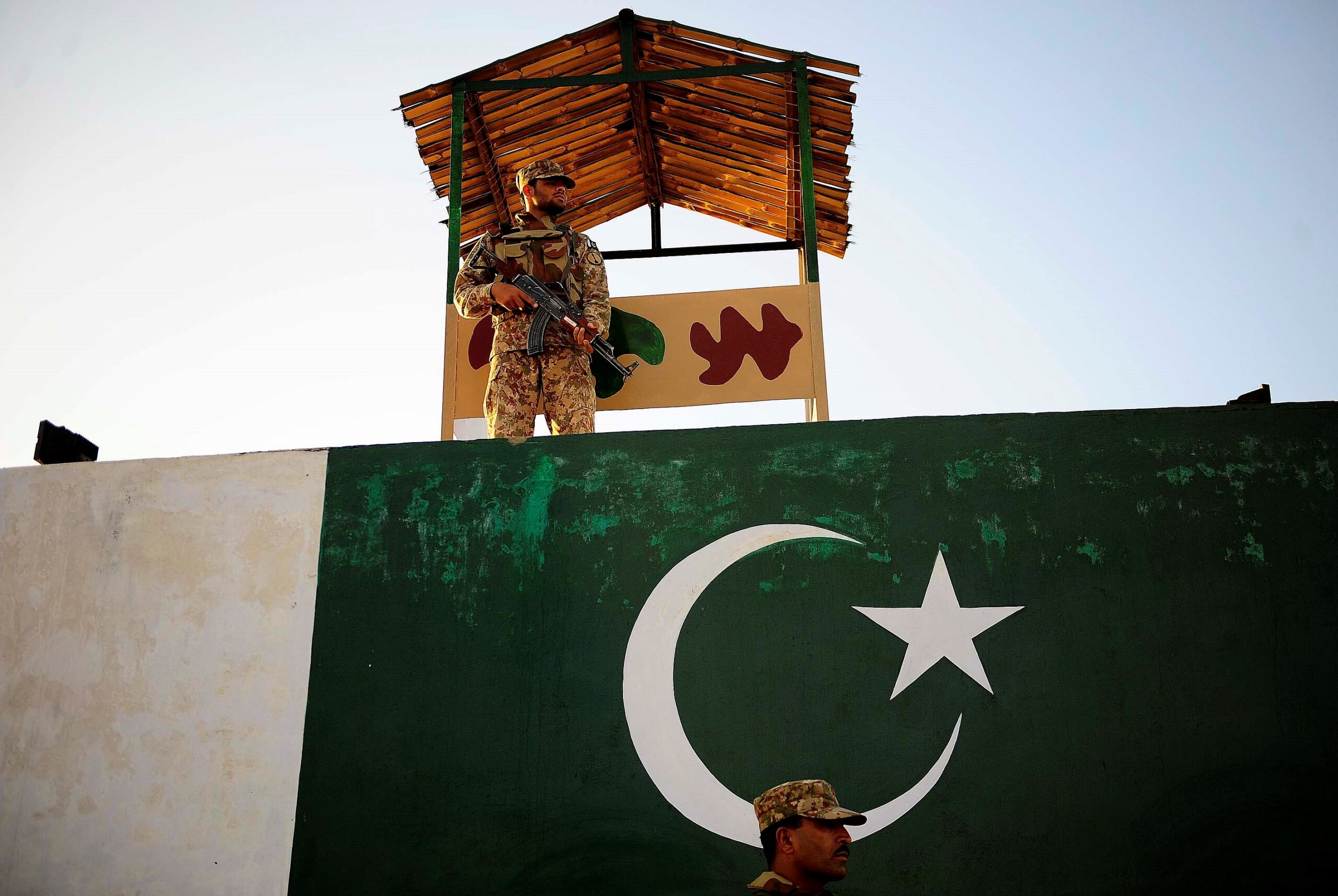
Pakistan's Military operations Against Taliban In North Waziristan Reach Final Stages

Pakistan has never been a country credited with strong civilian institutions or good long term thinking. The country is nominally led by the unpopular Shehbaz Sharif, who answers to the Chief of Defense Forces Asim Munir, who holds the real power. Sharif was empowered after his predecessor, Imran Khan, ran afoul of the general. Khan wound up in prison and Sharif wound up in charge. This wasn’t out of the ordinary for Pakistan. In the almost 80 years that the country has existed, more than 20 people have served as prime minister. Not one has completed a full term.

Despite this remarkable history, the country remains secure. While it is in some sense a basket-case, taking IMF after loan after IMF loan, the ability of various powers to use it as a conduit has served it well since independence. From alliance with America during the Cold War and Global War on Terror to sustained friendship with China, the country has had no shortage of foreign benefactors. These are ultimately alliances of convenience, serving partner countries’ interests—as illustrated in episodes like the U.S. funding the Afghan mujahideen via Pakistan—and sometimes overlapping with Pakistan in trying to destabilize India. 

Beyond the periodic butterfly eyes from foreign powers, the Pakistani state has one tool at its disposal that has ensured its long-term survival even if not long-term success: its nuclear program. The country’s bombs were developed in the ’80s and ’90s, shortly after India developed their own. Pakistan has shared the knowledge beyond their borders already; the North Korean program was developed with their assistance. In light of the explosive end to the attempted nuclear negotiations between Iran and the United States, the country has become even more important as the sole power in the Islamic world with nuclear weapons.

In September 2025, the Pakistani government signed an agreement with the Saudi Arabian government to strengthen their alliance and in January of 2026, the Pakistani government announced plans for Turkey to join that alliance. The Saudis have a seemingly bottomless checkbook for weapons acquisition and a desire to project power in the Middle East. From watching Iran it has become abundantly clear that the path to do that is through a nuclear weapon. Ankara is also investing in military buildup, and with Israel telegraphing that it is likely to be in the country’s sights, the Turks have incentives of their own to secure better weapons. Pakistan has already demonstrated a willingness to play fast and loose with nuclear proliferation; why would they hold back when it comes to an alliance that the three parties see in civilizational terms?

The Saudis are in some sense seeing a long-term investment pay off. They host the largest Pakistani diaspora in the world, whose remittances are a significant part of Pakistan’s economy. There is a historical background as well; they funded seminaries in Pakistan for generations that have helped engender support for a more radical Islam in the country’s domestic politics. They’ve provided so much economic support that the country renamed one of the biggest cities in the Pakistani province of Punjab in their honor: Lyallpur was turned into Faisalabad in honor of then King Faisal of Saudi Arabia. In some sense, the alliance from last year was formalizing this arrangement. In another sense, the recent war makes that a lot more important.

Similar dynamics are at play with Turkey, even if the alliance is based more on defense than anything else. Ankara provides drones to Islamabad, including advanced ones like the Bayraktar TB2, and is looking at setting up factories for their domestic production within Pakistan. Given how important these weapons have been in recent wars, like those between Ukraine and Russia or Iran and the United States, Pakistan has a strong incentive to support Turkey’s industrial production and stand against those attempting to degrade it. 

Given the extent to which nuclear power is the only real currency in the Middle East that prevents a country from being invaded, every country without a nuclear benefactor in their corner would be foolish to not pursue an alliance with a country that will either allow you to develop them or will credibly threaten to use them on your behalf. Luckily for the Saudis and Turkey, Pakistan fits the bill.

The post Pakistan’s Big Moment appeared first on The American Conservative.

As Iran War Spirals, Trump Can’t Fool Markets Forever

As Iran War Spirals, Trump Can’t Fool Markets Forever

The president has tried to contain economic turmoil by creating a false impression of diplomatic progress.

US-ECONOMY-MARKETS-OIL

One of the most bizarre contradictions of Trump’s war on Iran has been the wide gap between the scale of the war’s disruption to energy infrastructure and shipping and the surprisingly muted response from financial markets. Iran has made clear that its strategy is to impose severe economic pain on the United States, Israel, and the wider global system by keeping the Strait of Hormuz shut. If that threat were being fully priced in, argues the author Matt Stoller on Substack this week, oil prices would likely be far higher and equities far lower. 

Instead, despite the possibility of a historic supply shock, markets have remained comparatively calm, with the price of Brent crude oscillating rather than surging steadily. Stoller offers a convincing explanation for recent market behavior, arguing that it is the consequence of the Trump administration’s broader war strategy to manipulate the markets through coordinated propaganda.

Events this week, in which the White House released fake news reports of ceasefire talks to end the war, provide ample evidence for Stoller’s thesis. After Iran threatened costly retaliation, President Donald Trump on Monday softened his threats against Tehran and suggested a peace deal was in the works, pushing back a self-imposed deadline to “obliterate” Iran’s power plants by five days. On Thursday afternoon he extended another 10 days.

That Monday announcement triggered an immediate market response with oil prices falling sharply and U.S. stocks recovering some of the war’s losses as traders interpreted the delay as a possible sign that the conflict may end soon. Wall Street’s instant reaction was no doubt facilitated by corporate media, which suggested that a deal was in the works, with outlets like Bloomberg running headlines on Monday morning that said “Ceasefire Talks Get Underway,” while investment blogs signaled to investors: “Oil Prices Drop Over 5% Amid U.S.-Iran Negotiations.”

In the days that followed, Trump and a parade of anonymously sourced corporate media reports further suggested that some kind of ceasefire or backchannel diplomacy with Iran was underway. CNN, citing unnamed “regional sources,” even claimed Tehran had requested talks with Vice President J.D. Vance, preferring him over Steve Witkoff and Jared Kushner, who are reportedly seen as representatives of the Israeli government rather than the American one.

Yet despite the flood of reports treating seriously Trump’s claims of ceasefire talks, it had been perfectly clear since at least Monday morning that the Iranians never had any intention of negotiating for a ceasefire at this point, a position they have repeated throughout the course of the week through Iranian media statements which have been suppressed by American outlets.

Shortly after Trump’s post on Truth Social Monday morning, Iran’s Mehr News, citing a statement from the Iranian Foreign Ministry, denied Trump’s claim that any talks had occurred. A few hours later, Iran’s Speaker of Parliament Mohammad Ghalibaf confirmed Iran’s position on X, saying that “no negotiations have been held with the US.” He added that claims otherwise constitute “fake news” being “used to manipulate the financial and oil markets and escape the quagmire in which the US and Israel are trapped.”

On Wednesday morning, a spokesman for Khatam al-Anbiya Central Headquarters addressed Trump with the message: “Do not call your defeat an ‘agreement.’” Dismissing recent Israeli media reports that Iran and the U.S. are engaged in ceasefire contacts, the spokesman mocked Washington, asking whether its internal divisions had reached the point where it was now “negotiating with itself.” Later, Iran’s Fars News Agency, citing an informed source, said that Tehran rejected a U.S. ceasefire proposal and viewed any negotiations with Washington as “illogical” while the war continues.

Finally, in response to a 15-point proposal transmitted to Iran by the Trump administration (and seen as something like an Israeli wish list) Iran sent back conditions of their own to resolve the conflict. Those terms included ending attacks and assassinations, guarantees the war won’t restart, full compensation for damages, and a region-wide end to attacks, including those launched by the Israelis. 

Indeed, a senior Iranian official told Drop Site News that Tehran’s conditions for ending the war would include reparations as well as a simultaneous ceasefire in Iran, Lebanon, and Iraq, while ruling out any negotiations over Iran’s ballistic missile program. Most importantly, the official indicated to Drop Site that Iran would not accept a ceasefire given their experience with the last one they accepted to end the 12 Day War in June, which was “exploited to buy time for another U.S.-Israeli war.” 

Validating Iranian concerns, an Israeli official told Sky News this week to take Trump’s talk of a ceasefire “with a grain of salt.”

It is unclear what Trump will do this weekend. But what is abundantly obvious is that Trump is now trying to manage a war he cannot control. 

On the one hand, Trump is constrained by oil markets and treasury yields, which threaten to raise borrowing costs and increase the odds of a broader market selloff. Trump cannot afford a real oil shock or stock market collapse mainly because his donor class is tied to Wall Street, his own approval rating is already declining and vulnerable on gas prices, and the broader U.S.-led order depends on continued confidence in American stocks and dollar-denominated assets.

Yet at the same time, Trump is being pushed in the opposite direction by Israel and its army of loyalists in the U.S., who forecast that their regime change efforts will take up to a year to fulfill and who benefit from a well-greased delivery system to feed the president premium-grade pro-war propaganda meant to convince him to escalate. 

On reliably pro-Israel Fox News, which the president is believed to watch daily, hawks like Keith Kellogg, Trump’s former Russia–Ukraine envoy, are encouraging Trump to “put boots on the ground…the way the Romans used to do it” and “take Kharg Island,” an Iranian territory not far from the mainland. Meanwhile U.S. military officials are compiling video highlight reels of the day’s biggest U.S. strikes on Iranian targets and reportedly filtering out bad news about the conflict, with one official telling NBC news that Trump’s briefings tend to draw better feedback from his aides when they focus on U.S. victories rather than the full battlefield picture. Those reports follow the pattern observed by Joe Kent, who resigned last week from his position as director of the National Counterterrorism Center over the Iran war. Kent recently said that “key decision-makers were not allowed to come express their opinion to the president” and that “there wasn’t a robust debate” around the decision to go to war in the first place.

Caught between competing pressures, Trump appears to have chosen escalation broadly in line with Israel’s objectives—with the Pentagon requesting $200 billion to continue the war—while pursuing those objectives at a tempo designed to reassure the investor class and avoid triggering market panic.

While Trump has been able to play that balancing act for a few weeks, it is unclear how much longer he will be able to do so. Eventually Trump will be required to present either a credible off-ramp or a decisive battlefield outcome, the latter of which seems unlikely given Iran’s continued ability to match U.S.–Israeli escalations. 

Iran has indicated that any serious path to de-escalation would require Trump to restrain Israel not just in Iran, but in Lebanon as well, where Israel has invaded and occupied the southern region. But if recent history is any guide, that is precisely the step that President Trump is least willing to take.

The post As Iran War Spirals, Trump Can’t Fool Markets Forever appeared first on The American Conservative.